

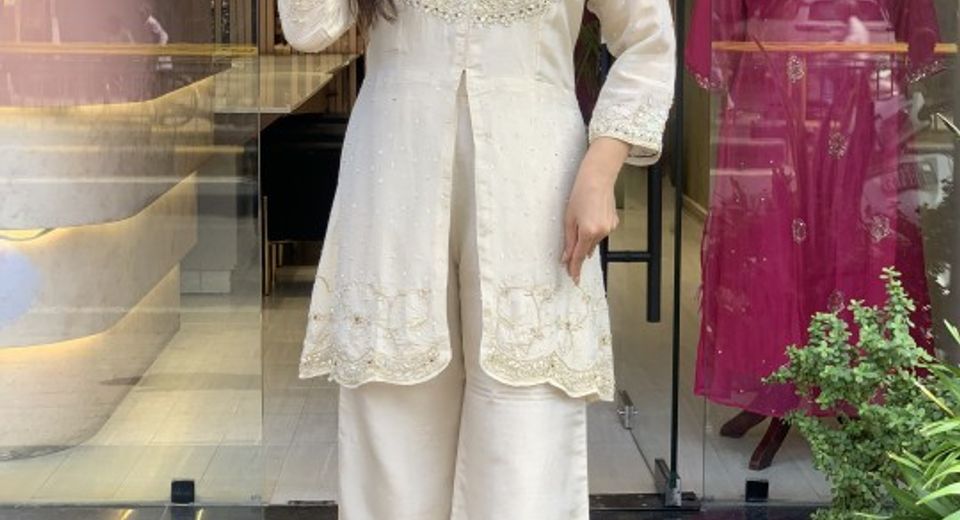
What works with each bottom style for footwear with salwar suits depends on hem width, ankle visibility, fabric weight and the amount of movement you need. A narrow churidar can take a visible jutti or heel, while a wide palazzo usually needs a clean sandal or a slightly raised sole so the trouser doesn't pool at the floor. The right shoe should support the silhouette, not compete with embroidery or make the hem difficult to manage.
Footwear also changes the perceived proportion of a salwar suit. A pointed toe lengthens a straight trouser, a low block heel adds height without destabilising a gathered Patiala, and a flat jutti keeps a traditional outfit grounded. The following guide separates common bottom styles and gives practical choices for weddings, workdays, festivals and long family functions.
What Works With Each Bottom Style for Footwear With Salwar Suits?
Churidar bottoms pair most reliably with juttis, pointed flats, low block heels and slim sandals because the close fit leaves the ankle and shoe visible. Straight pants suit clean mules and pointed-toe footwear, while palazzos and shararas benefit from sandals or heels with enough height to keep the hem clear of the ground. Patiala salwars need stable, low-profile shoes that balance their volume without disappearing under the gathers.
Before choosing a pair, check three measurements: the trouser hem height, the widest point of the bottom and the amount of standing or walking involved. A shoe that looks elegant with a floor-length Anarkali may be impractical with a cropped cigarette pant. A 2 to 3 inch block heel is usually easier to wear for several hours than a narrow stiletto, particularly when the salwar suit has a wide or heavily layered bottom.
Churidar Bottoms Need Visible, Refined Footwear
Churidar bottoms work best with footwear that remains visible at the ankle, including embroidered juttis, pointed flats, kitten heels and slim strappy sandals. The gathered fabric around the calf already creates detail, so a shoe with a defined toe or a small amount of shine gives the lower half a deliberate finish.
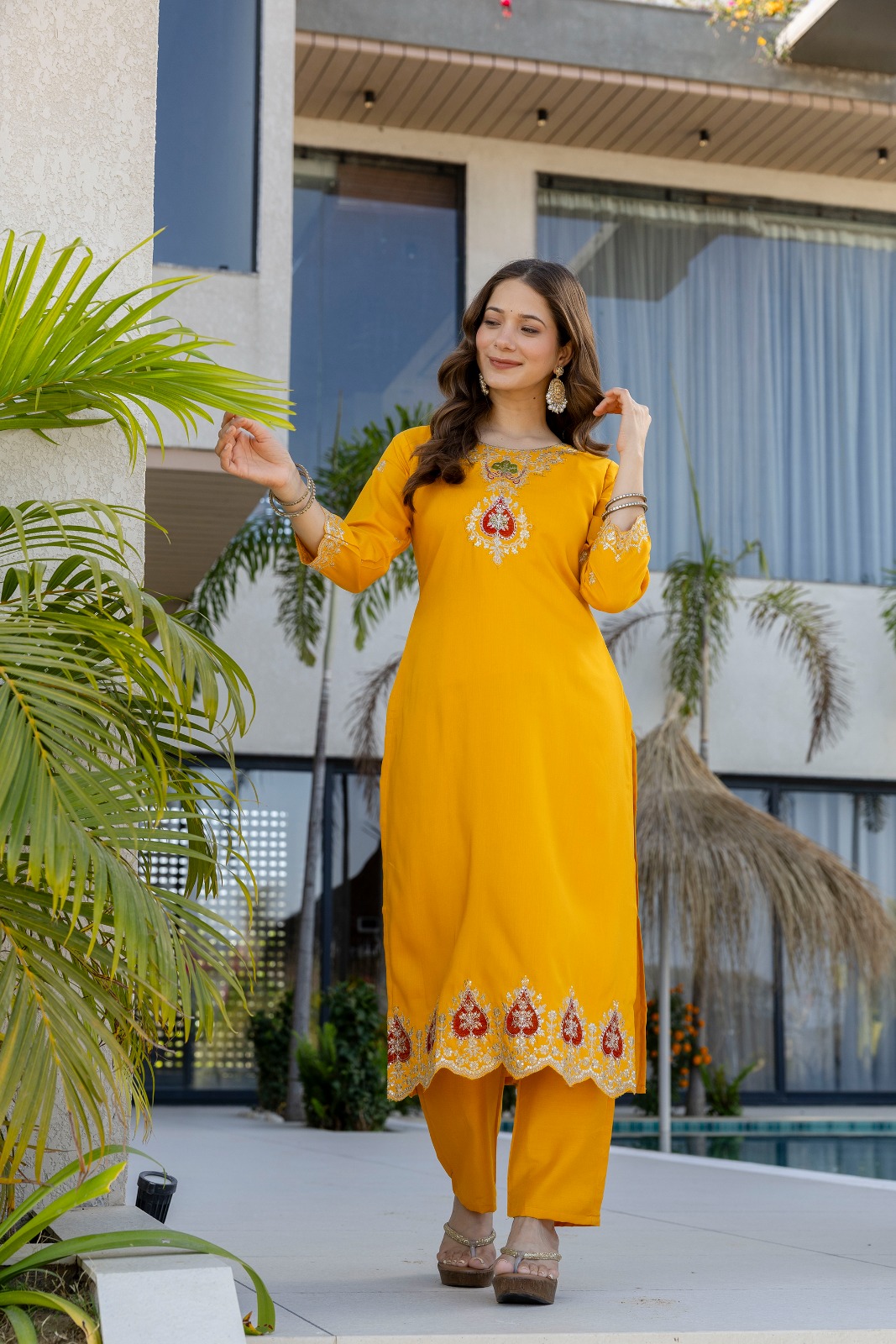
For daytime wear, choose tan, ivory, gold or muted metallic juttis. A pointed jutti can visually extend the foot without adding height, which works well with a straight kurta or a shorter kameez. A low block heel is useful when the churidar ends slightly above the ankle, because the raised heel prevents the lower leg from looking visually shortened.
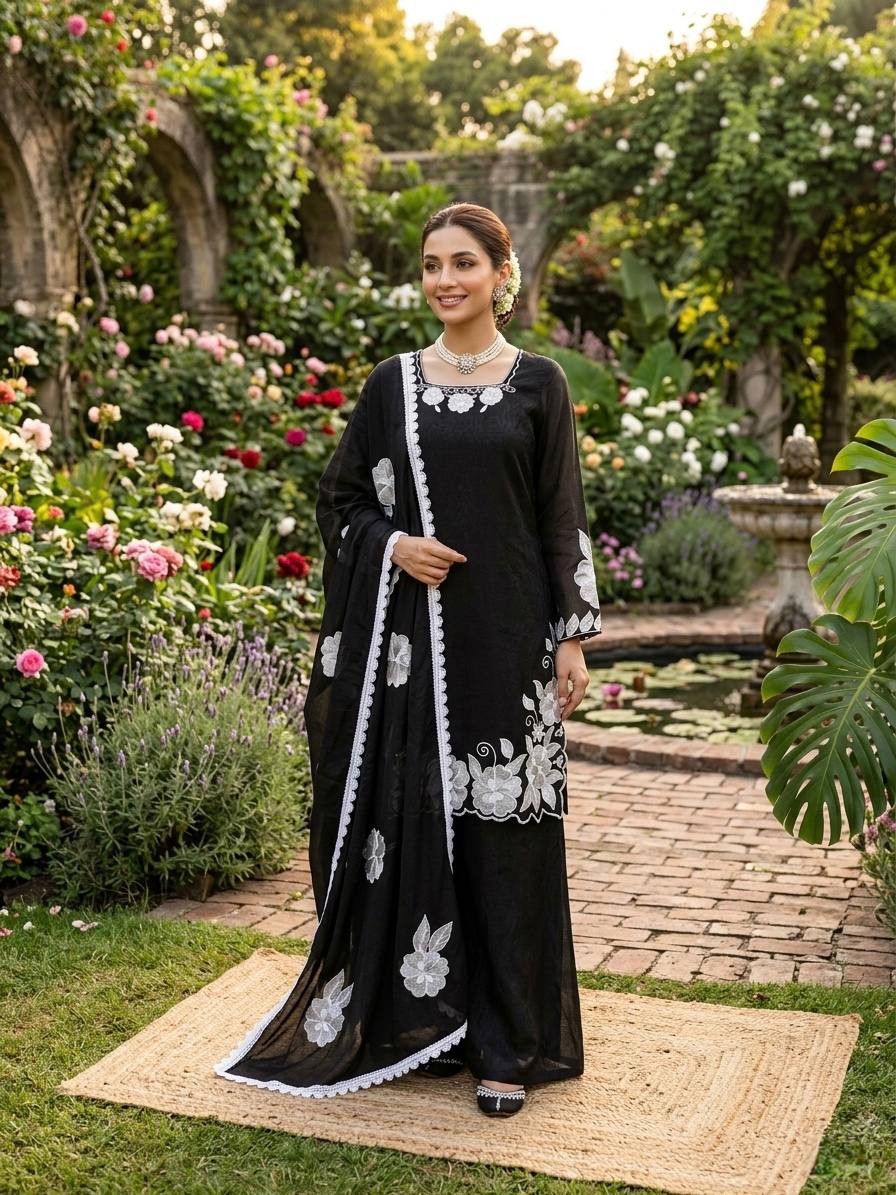
For a dressier suit, match the shoe to one secondary colour rather than automatically choosing the dominant colour. Gold footwear can pick up zari, while rose-gold sandals can echo warm pink or rust embroidery. The Black White Floral Embroidered Readymade Salwar Suit can be balanced with black juttis for a graphic look or antique-gold flats for a softer festive finish.
What should be avoided with churidars?
Very bulky sneakers, oversized platform soles and wide ankle straps can interrupt the gathered line of a churidar. Avoid a shoe that catches on the ankle folds or makes the fabric bunch over the heel. If the churidar is made from a slippery synthetic blend, test the shoe indoors because friction from decorated straps may pull the fabric during walking.
Straight Pants and Cigarette Pants Prefer Clean Lines
Straight pants and cigarette pants pair best with pointed-toe flats, low mules, narrow block heels and simple sandals. The tailored lower line looks polished when the shoe has a similarly neat outline rather than a heavily ornamented, rounded shape.
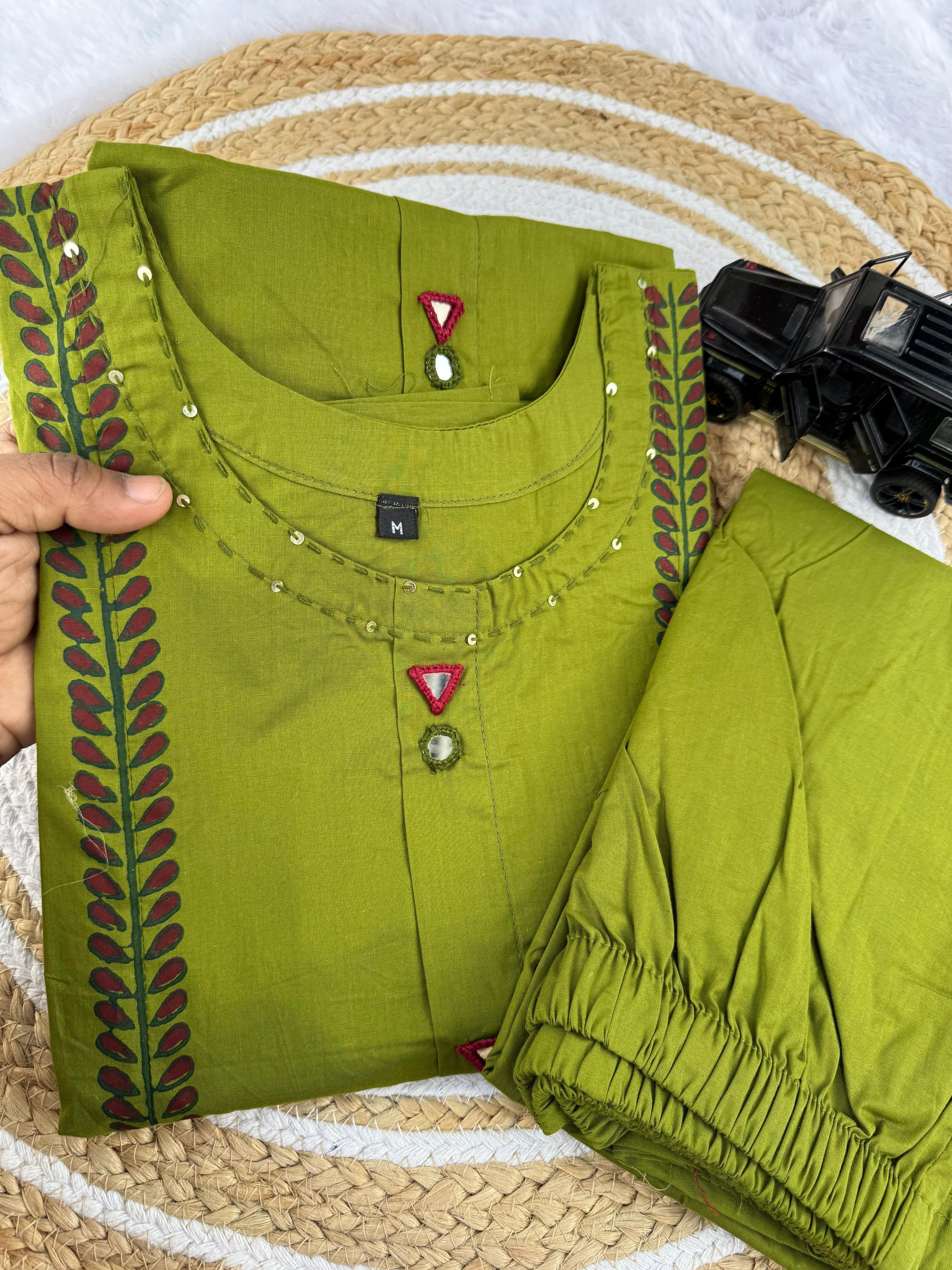
A pointed flat is a practical choice for office dressing because it adds length without creating the formality of a high heel. A two-inch block heel works with a long straight kurta and keeps the trouser hem from brushing the floor. For a cropped cigarette pant that ends above the ankle, a slingback or a slim sandal leaves enough skin visible to preserve the clean taper.
The Black Red Fendy Silk 3 Piece Readymade Salwar Suit Set can take black pointed mules for an evening appearance or deep red footwear when the rest of the accessories are restrained. The black-and-red combination benefits from a deliberate colour repetition; adding a third bright shoe colour can make the outfit look disconnected.
Minimal footwear doesn't mean plain footwear. A small metal buckle, woven texture or tonal embroidery can connect the shoe to the dupatta border without competing with a printed or embellished kameez. With the Pista Royale Salwar Suit, champagne, beige or soft gold footwear usually preserves the freshness of pista green better than stark black.
Palazzo Salwar Suits Need Height and an Unbroken Fall
Palazzo bottoms work best with heeled sandals, wedges, platform sandals and pointed mules that create enough clearance for the wide hem. The shoe should lengthen the leg beneath the fabric while remaining stable enough for a broad walking stride.
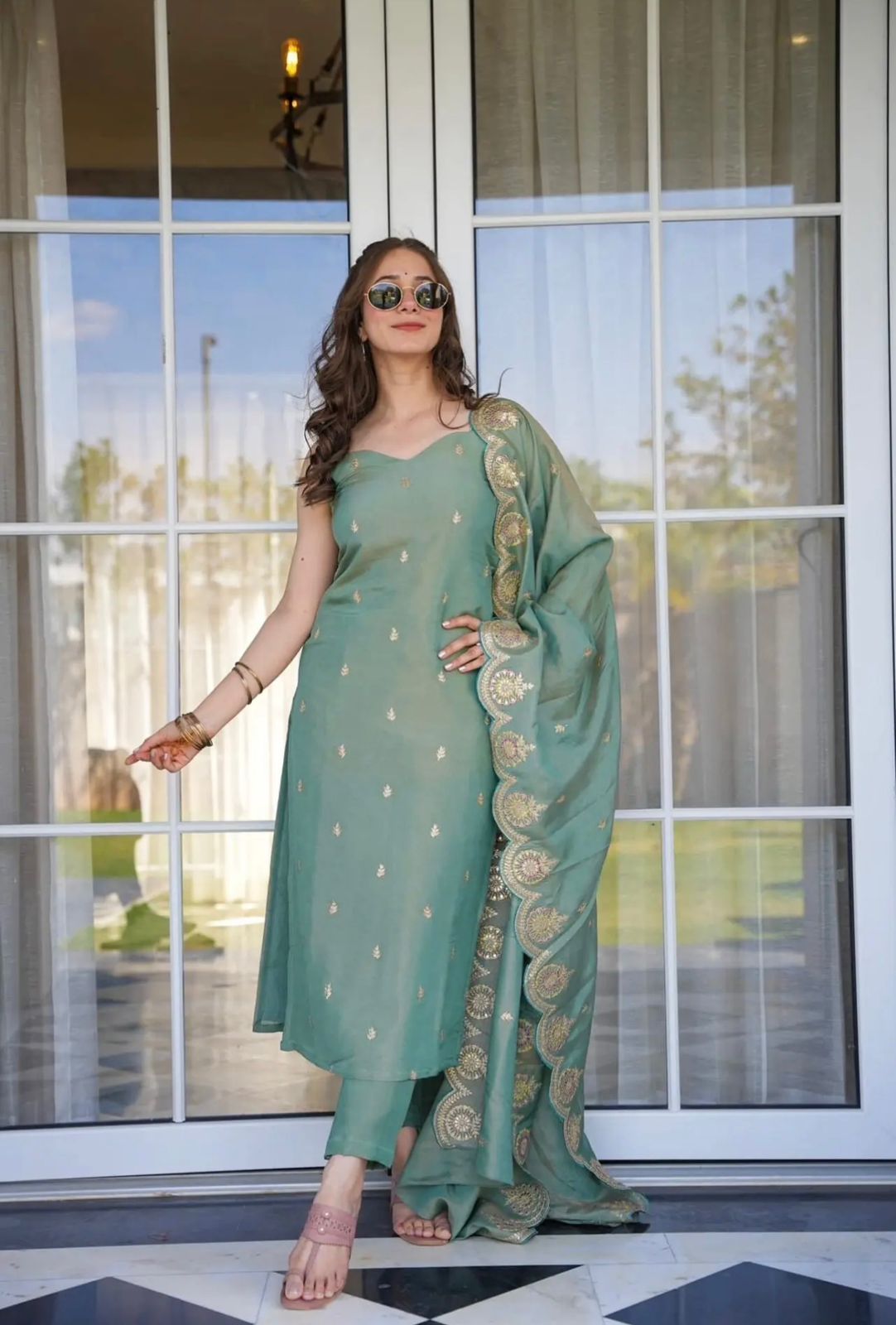
Measure the palazzo hem while wearing the footwear you intend to use. An useful target is approximately 1 to 1.5 centimetres of clearance from the floor for indoor events, although outdoor venues may require more clearance because uneven ground catches long hems. Do not buy a high heel after the trouser has been tailored unless the hem has been checked again; the palazzo may look too short when worn with flats.
Wedges are particularly practical for palazzos at garden functions because the continuous sole is less likely to sink into grass than a stiletto heel. A block heel offers a similar advantage on tiled floors. Choose a sandal with a secure ankle strap when the palazzo fabric is very wide, since loose slip-ons can come off as the trouser moves around the foot.
Maroon Wedding Wear Embroidered Palazzo Suit Set already has a substantial festive presence, so a gold or champagne sandal usually works better than a heavily embellished shoe in a contrasting colour. For a quieter daytime look, a maroon or nude block heel keeps the focus on the embroidery and maintains a long vertical line.
Patiala Salwars Need Stable Shoes That Handle Volume
Patiala salwars pair best with Punjabi juttis, kolhapuris, low block heels and cushioned sandals. These choices support the gathered volume of the bottom without adding an unstable or visually oversized shape at the feet.
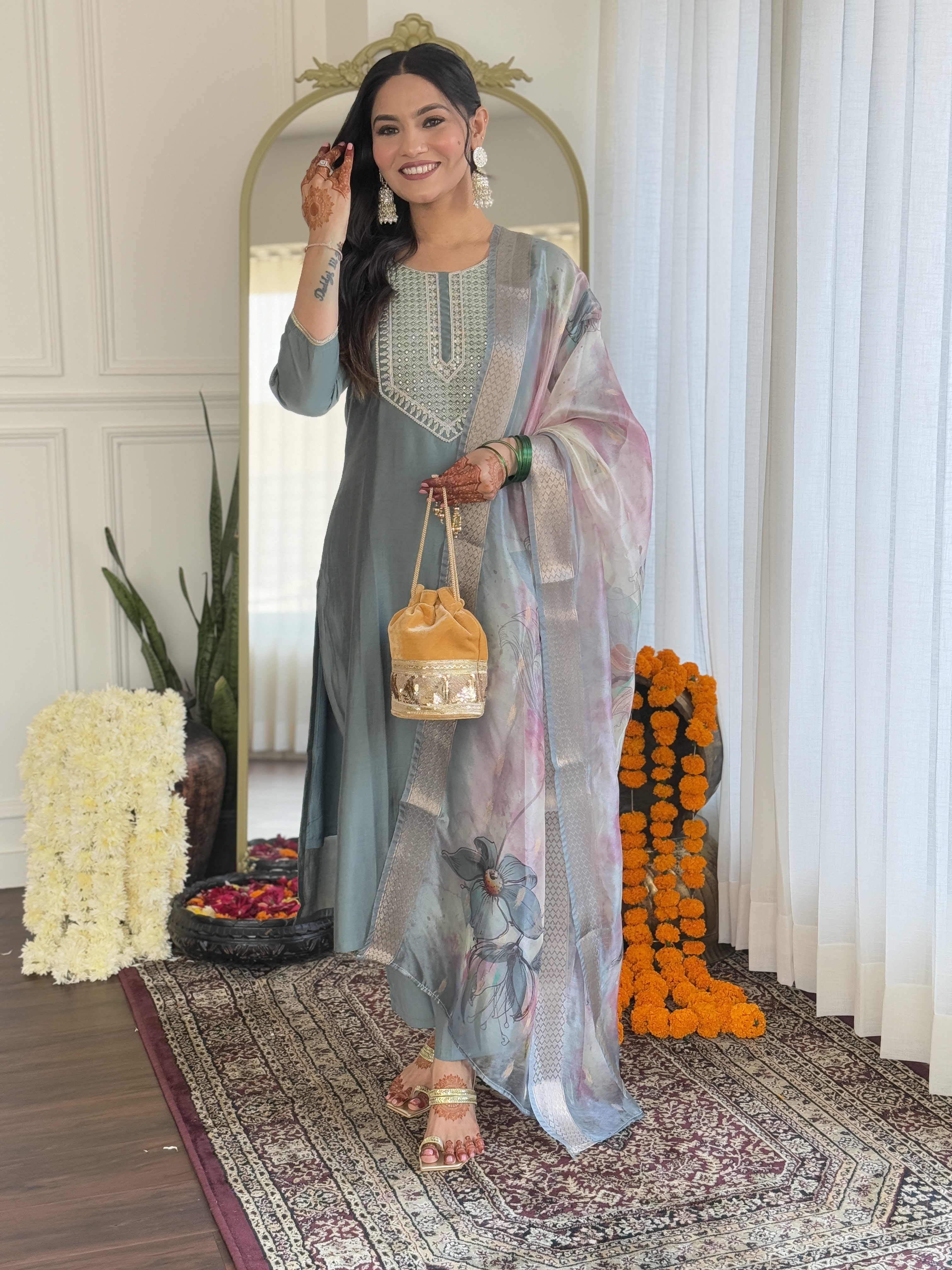
Punjabi juttis are the most intuitive match because their flat profile and pointed or gently rounded toe reflect the heritage character of a Patiala suit. A leather or fabric upper with a firm sole is preferable to an extremely soft flat that folds under the foot. Kolhapuri sandals can work for daytime cotton or printed suits, especially when the straps repeat a tan, brown or metallic detail in the outfit.
Use a low block heel when the Patiala is long or when the kameez is heavily layered. A heel between 1.5 and 2.5 inches gives lift without making the gathered fabric swing awkwardly. Very high stilettos tend to create a mismatch: the delicate heel looks visually insubstantial beneath a generous Patiala silhouette and can be difficult to manage while sitting on the floor.
The Punjab Patiala Salwar Suits collection naturally lends itself to juttis, but a simple sandal can modernise the proportion for a summer gathering. Keep the footwear relatively uncluttered when the Patiala fabric has a bold print or strong contrast. The shoe should finish the outfit rather than introduce another pattern at ankle level.
Sharara and Gharara Bottoms Need a Controlled Flash of Footwear
Sharara and gharara bottoms pair best with embellished sandals, low-to-medium block heels, narrow wedges and dressy juttis that appear briefly as the fabric moves. The flared hem already creates drama, so the footwear should provide sparkle or height without becoming a second focal point.
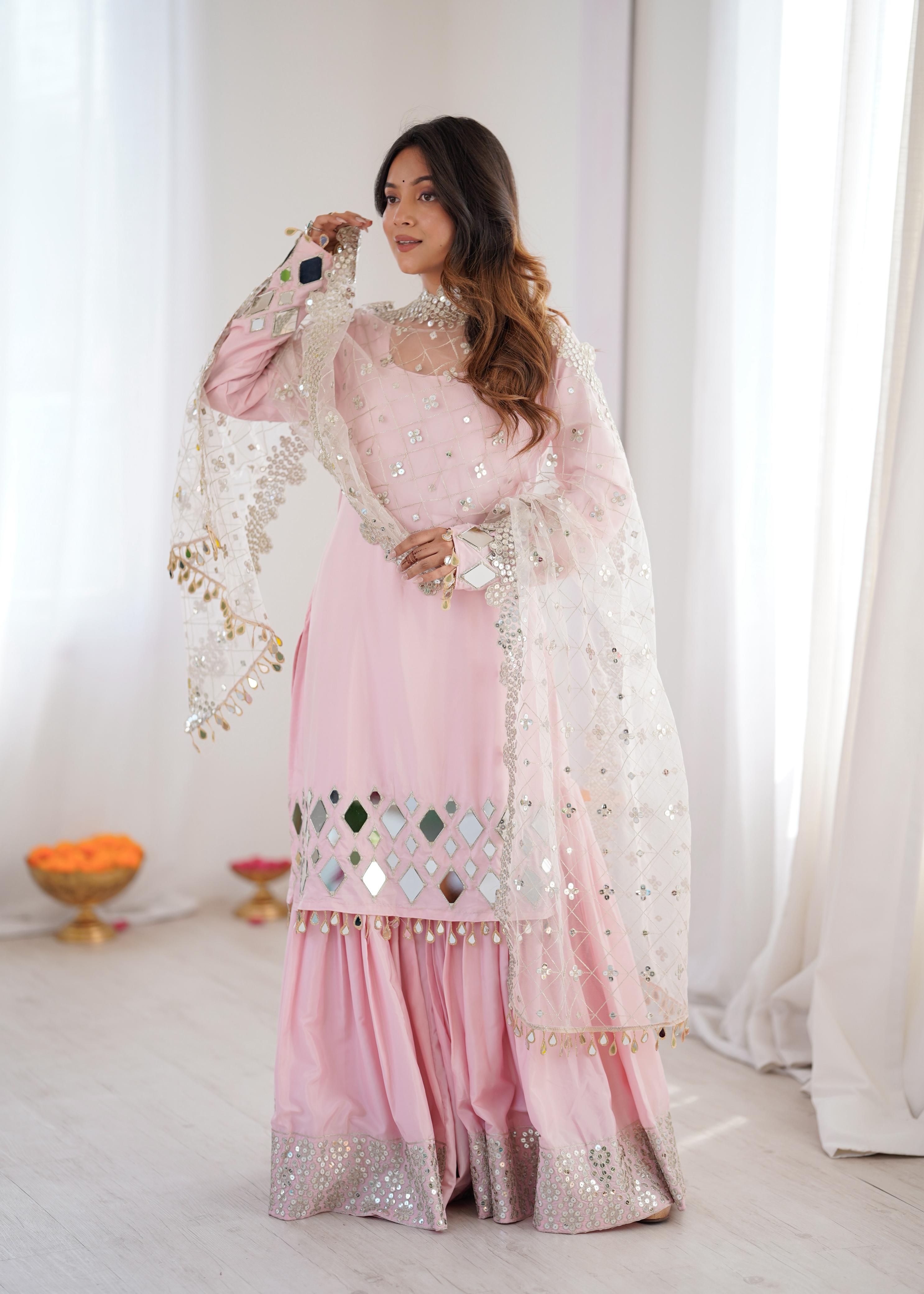
A sandal with a secure toe band is useful for shararas because the fabric can swing outward while walking. Choose a heel that feels stable when the hem brushes against the ankle. A 2 to 3 inch block heel is a reliable compromise for wedding functions: it raises the flare, supports a longer kurta and remains easier to stand in than a thin heel.
Ghararas often have a structured flare from the knee, making the space between the hem and the floor visually important. Metallic footwear in antique gold, silver or champagne can fill that space without adding colour noise. For a very ornate gharara, plain satin or matte leather sandals often look more sophisticated than fully sequinned shoes.
don't choose footwear solely by matching the dupatta. Check whether the lower hem reveals the shoe when seated, climbing stairs and taking a full step. A beautiful pair that catches in the flare can damage delicate fabric and make the wearer walk with shortened, uncomfortable steps.
How Fabric, Print and Occasion Change the Shoe Choice
Fabric weight and surface decoration should determine how elaborate the footwear becomes. Banarasi silk, velvet-like festive fabrics and dense embroidery can support structured heels or metallic sandals, while Chanderi, cotton and light printed fabrics usually look more balanced with juttis, kolhapuris or simple flats.
The Elegant White Cording Threadwork Salwar Suit is suited to pearl-toned flats, white sandals, silver juttis or nude footwear because these colours preserve the clarity of white threadwork. A black shoe creates a sharper contrast and can work for an evening event, but the rest of the accessories should repeat that black detail at least once.
Printed suits benefit from extracting one quiet colour from the print. Kalamkari Print Salwar Suits can take tan leather footwear, rust sandals or muted gold juttis depending on the background. Gujarat Bandhej Salwar Suits often look natural with colourful juttis or neutral sandals, while Odisha Sambalpuri Salwar Suits can be grounded with black, rust, cream or woven-texture footwear.
For work or daytime errands, prioritise arch support, a padded footbed and a heel under 2 inches. For a Haldi ceremony, washable or easy-to-clean footwear is sensible because turmeric, flower petals and outdoor dust can stain delicate uppers. For a wedding reception, metallic block heels provide occasion polish while reducing the balance problems associated with narrow high heels.
Colour, Toe Shape and Comfort Rules That Prevent Styling Mistakes
Neutral footwear is the safest choice when the salwar suit has more than three strong colours, while tonal footwear is more flattering when the outfit is monochromatic. Black works with black, jewel tones and graphic prints; tan and nude work with warm daytime palettes; gold and silver work best when the outfit already contains warm or cool metallic detail.
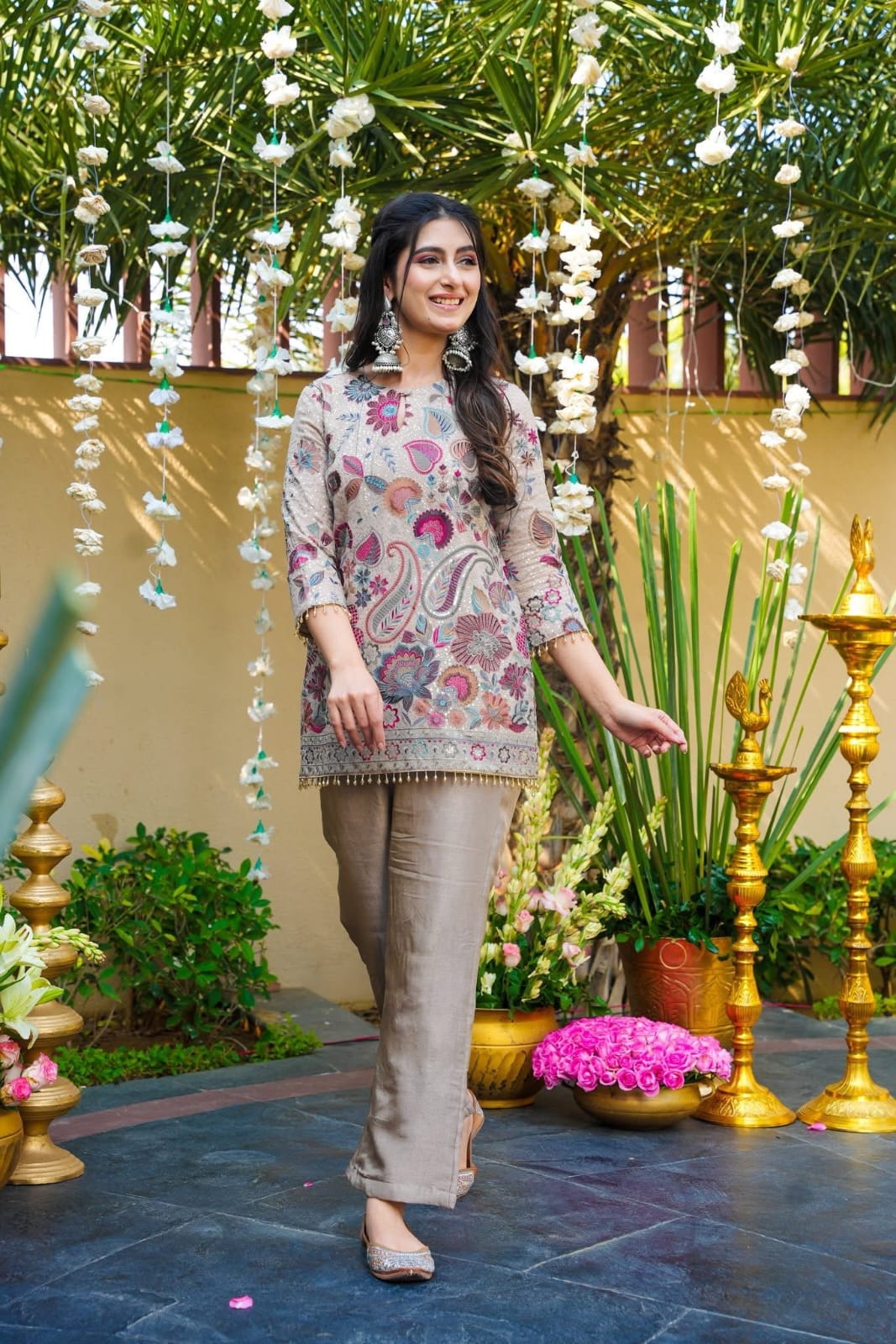
Toe shape changes the apparent length of the leg. Pointed toes lengthen straight pants and churidars, almond toes offer a softer effect, and rounded toes make a time-honoured flat feel more casual. Wide feet usually need a broader toe box rather than a tightly pointed shoe; discomfort will change posture and undermine even the most carefully planned outfit.
Try the complete combination at home for at least ten minutes. Walk upstairs, sit cross-legged if relevant, take a full stride and check that the hem doesn't drag, twist or catch under the sole. Break in embroidered juttis before a long event, carry blister plasters, and avoid wearing an untested shoe for the first time at a wedding.
The Off White Threadwork Salwar Suit with Green Jacquard Dupatta demonstrates why the shoe should respond to both the kameez and the dupatta. Green, ivory, antique gold or nude footwear can connect the two pieces without overpowering the threadwork. A heavy black platform would create a much harder visual base unless the outfit is deliberately styled with black jewellery or a black bag.
A Quick Matching Method Before You Get Dressed
The fastest reliable method is to identify the bottom silhouette first, check the hem clearance second, and choose colour and ornamentation third. This order prevents a striking shoe from dictating an unsuitable trouser length.
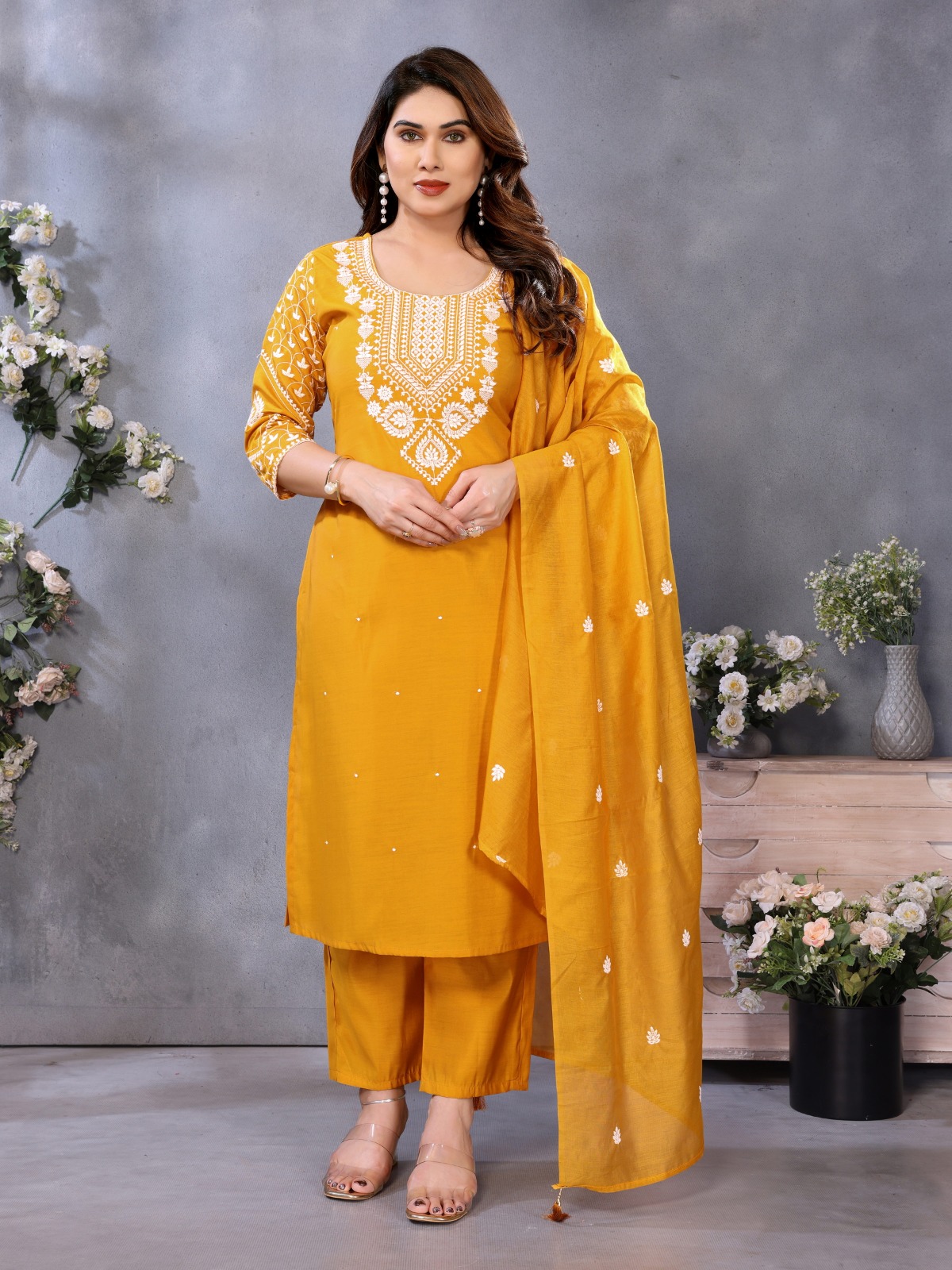
- Identify the bottom: label it as narrow churidar, tailored straight pant, wide palazzo, gathered Patiala or flared sharara.
- Check the hem: wear the intended shoe and confirm that the fabric stays clear of the floor while walking.
- Choose stability: select flats for long standing, block heels for moderate lift, and wedges for soft or uneven outdoor ground.
- Repeat one detail: echo a colour, zari tone, leather texture or embroidery accent instead of matching every accessory exactly.
- Test movement: sit, climb a step and walk briskly before committing to the pair for a full event.
Collections such as Maharashtra Paithani Inspired Salwar Suits can be styled with gold juttis or low block heels when their classic colour richness calls for polish. The same practical rule applies across contemporary co-ords: the Stylish Rust Orange Ethnic Co-Ord Set for Women can take tan sandals for daytime or antique-gold heels for an evening gathering, provided the hem remains mobile.
Good footwear styling is finally a proportion decision supported by comfort. When the shoe respects the width, length and movement of the salwar bottom, the complete outfit looks intentional whether the ultimate choice is a flat jutti, a kolhapuri sandal, a wedge or a block heel.
Common Footwear Questions for Every Salwar Suit Bottom
Which footwear looks best with a palazzo salwar suit?
Heeled sandals, wedges, platform sandals and pointed mules usually work best with palazzo salwar suits because they keep the wide hem from dragging and create a longer line. Choose a stable heel and check the hem while wearing that exact pair.
Can I wear juttis with a Patiala salwar suit?
Yes, Punjabi juttis are one of the most balanced choices for a Patiala salwar suit. Their flat profile suits the gathered volume, and a firm sole provides better support than an extremely soft flat.
What shoes should I wear with a churidar for a wedding?
Embroidered juttis, pointed flats, kitten heels and low block heels all work with a wedding churidar. Match the footwear to a secondary colour or metallic detail in the suit so the shoe complements rather than competes with the embroidery.
Are heels necessary with a sharara suit?
Heels are not necessary with a sharara suit, but a low or medium block heel can keep the flare clear of the floor and improve proportion. Dressy flats or embellished sandals are suitable when comfort or extended standing matters more than added height.
What footwear is suitable for a straight salwar suit for work?
Pointed flats, simple mules, narrow block heels and slim sandals are suitable for a straight salwar suit at work. A heel under 2 inches and a clean toe shape usually provide polish without making daily walking uncomfortable.
How high should heels be with a palazzo or sharara?
A 2 to 3 inch block heel is a practical height for most palazzos and shararas because it provides clearance and stability. The correct height depends on the tailored hem, so test the complete outfit and leave roughly 1 to 1.5 centimetres of floor clearance indoors.


