

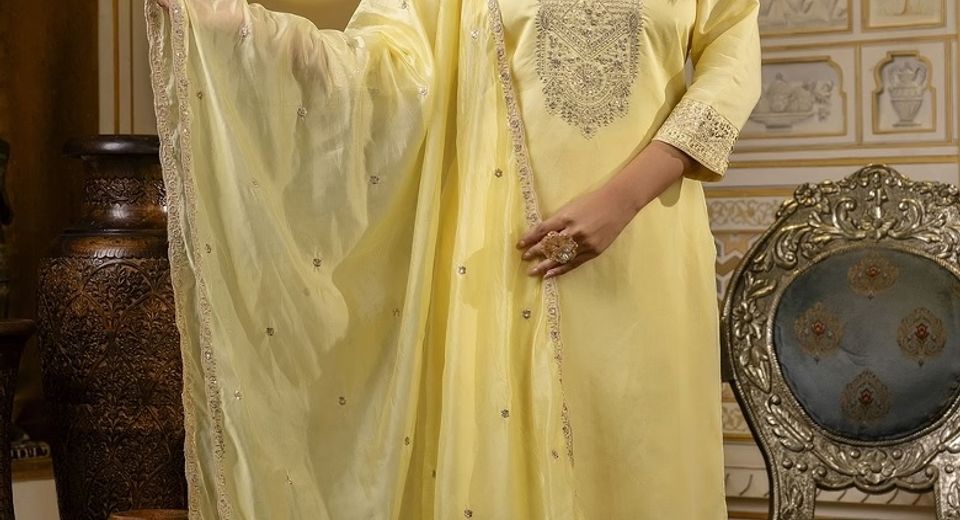
What to Wear With Three-Quarter Sleeve Kurtis for a Balanced Outfit comes down to proportion, not just matching colours. A kurti ending at the mid-forearm already creates a strong horizontal line, so the bottom, dupatta and accessories should support its length and volume. Straight pants create a neat vertical shape, palazzos add movement, and a dupatta can either lengthen the outfit or make it look crowded. The right combination also depends on whether the kurti is cotton, Chanderi silk, muslin, georgette or a heavier silk weave.
What to Wear With Three-Quarter Sleeve Kurtis for a Balanced Outfit
A three-quarter sleeve kurti pairs most reliably with a bottom that contrasts its volume and repeats one colour from the kurti or embroidery. A fitted or gently tapered bottom works with a flared kurti, while a palazzo or wide-leg bottom works best with a straight, short or lightly structured kurti.
The sleeve length gives the outfit a polished, versatile character because it leaves the wrist visible without exposing too much arm. That visible wrist space matters: a watch, slim bangles or a bracelet can be seen clearly, and the outfit doesn't need oversized jewellery to look finished. Balance also comes from keeping one part relaxed and another part controlled.
A straight kurti with wide palazzo trousers distributes volume across the outfit, whereas an A-line kurti with very wide palazzos can look bulky if both fabrics are stiff. A flowing Lavender Georgette Kurti Pant Set with Embroidery & Dupatta already contains a coordinated silhouette, so styling should focus on clean footwear and restrained jewellery rather than adding another dramatic layer.
How Should Bottoms Be Chosen for a Three-Quarter Sleeve Kurti?
Bottoms should be chosen according to the kurti's hemline, width and fabric weight. The most dependable choices are straight pants, cigarette pants, palazzos, narrow trousers and salwars with controlled gathers.
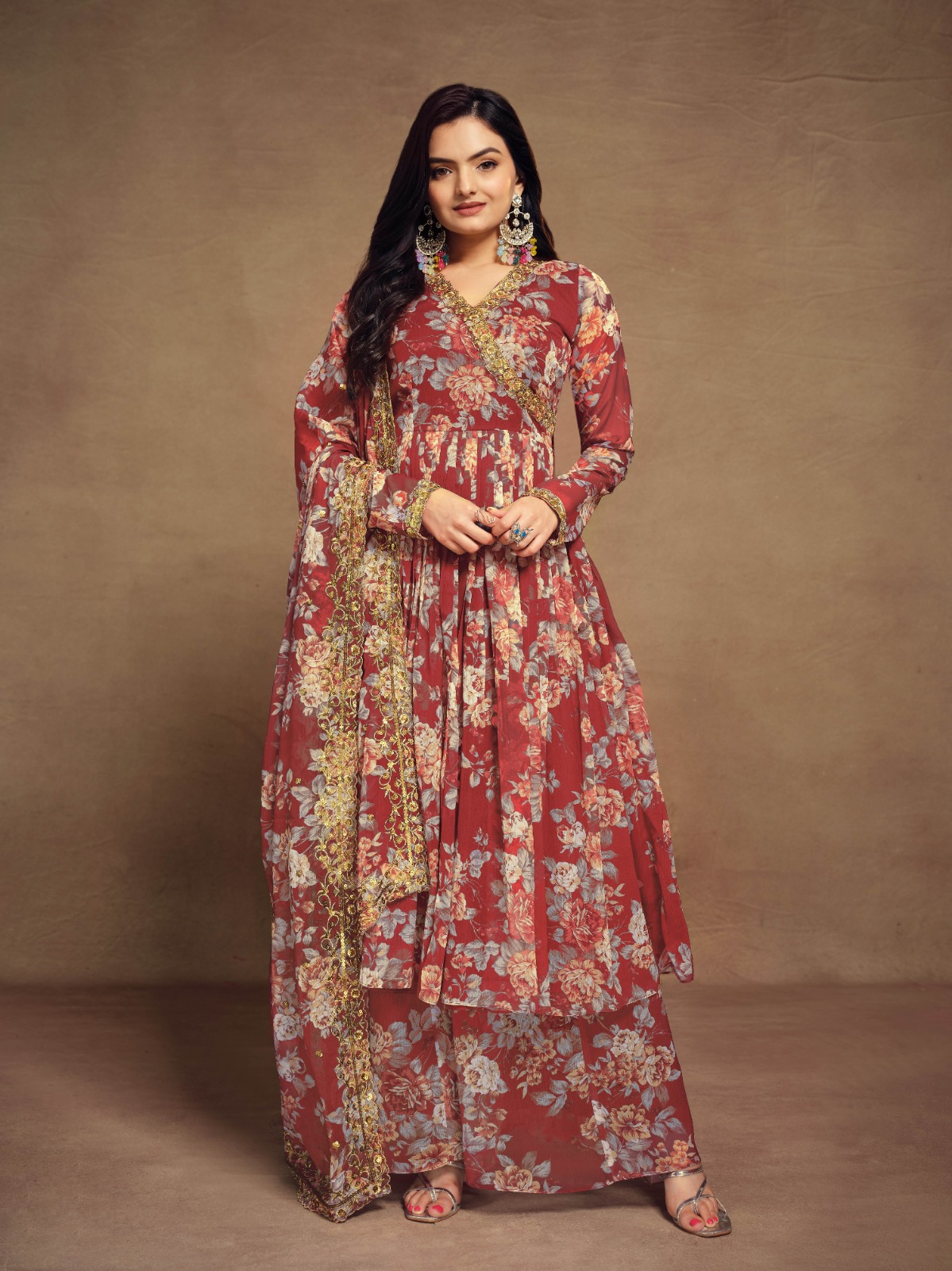
Straight pants and cigarette pants
Straight pants create the longest, cleanest line under a kurti and suit office dressing, daytime events and petite frames. Choose a hem that ends at the ankle or just above the foot, because excess fabric pooling below the kurti can make the whole outfit appear shorter.
Cigarette pants are especially useful with a longer straight kurti or an embroidered kurta. Their narrow shape prevents dense embroidery around the chest and sleeves from competing with a wide lower half. Cream Chanderi Silk Kurti Pant Dupatta Set for Women demonstrates why a matching pant works: the crisp lower line allows the sheen and delicacy of Chanderi silk to remain visible.
Palazzos and wide-leg pants
Palazzos work best with short, straight or lightly flared kurtis because their width needs room to move. Choose a soft fabric such as georgette, muslin or fluid rayon when the kurti has embroidery, and reserve crisp, voluminous palazzos for a simpler kurti.
Mauve Crunchy Silk Embroidered Kurti Palazzo Set for Women can be styled with low-profile sandals because the palazzo already supplies movement and the crunchy silk contributes surface texture. Avoid adding a heavily pleated dupatta and large layered necklaces at the same time; three strong volume points can overwhelm the sleeve line.
Salwars and Patiala-inspired bottoms
Salwars and Patiala-style bottoms add traditional volume and suit shorter kurtis, especially for festive or regional dressing. The kurti should usually be less flared when the salwar has pronounced gathers, and the dupatta should be draped in a way that leaves the sleeve and shoulder visible.
Punjab Patiala Salwar Suits provide a useful styling reference for this proportion. A fitted three-quarter sleeve kurti, gathered Patiala bottom and lightweight dupatta create contrast between the controlled upper body and fuller lower body. A heavy, long Anarkali with the same gathered bottom would distribute too much volume vertically and horizontally.
Which Kurti and Bottom Lengths Look Most Proportional?
A kurti ending around mid-thigh to just above the knee generally works with straight pants, cigarette pants and palazzos, while a knee-length kurti can support both slim bottoms and moderate-width trousers. The correct length depends on height, hem volume and the visual weight of the fabric.

For a petite wearer, a kurti that ends several inches above the ankle creates more visible leg length when paired with ankle-length pants. Matching the bottom colour closely to the kurti can extend the vertical line, while a high-contrast bottom creates a more noticeable break at the hem.
Taller wearers can comfortably use longer straight kurtis with narrow pants or shorter kurtis with wide-leg palazzos. A long kurti with palazzos can still work, but the kurti should have side slits or a lighter drape so the fabric doesn't form one uninterrupted block.
Three-quarter sleeves also make cuff and wrist placement important. A bracelet or watch should sit below the sleeve edge rather than disappear under it. If the sleeve is embroidered, choose one slim wrist accessory instead of stacking several pieces over a detailed border.
How Do Fabric and Embroidery Change the Outfit Balance?
Fabric weight determines how much volume an outfit can carry before it looks visually heavy. Chanderi silk, Banarasi silk, georgette, muslin, cotton and crunchy silk each behave differently under the same sleeve and hemline.
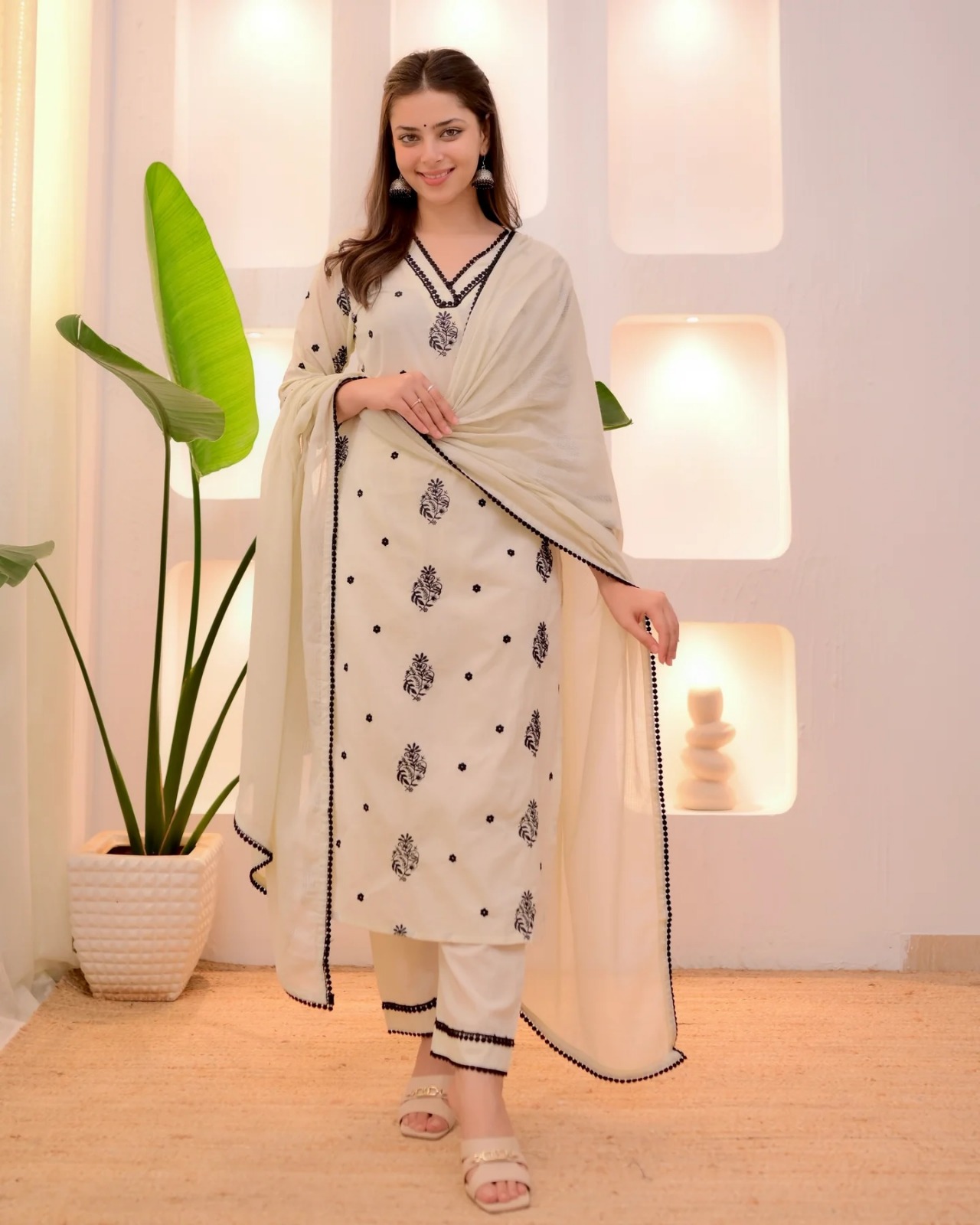
Chanderi silk has a light, slightly crisp fall that suits straight pants, narrow trousers and moderate-width palazzos. Embroidery on Chanderi silk can catch light, so matte accessories such as pearl, wood or brushed-metal jewellery often create a calmer finish than highly reflective statement pieces.
Pastel Blue Embroidered Chanderi Kurta Set with Dupatta needs only a small contrast, such as silver-toned earrings or a deeper blue sandal, because the fabric and embroidery already provide detail. A slim straight pant keeps the outfit airy, while a bulky bottom would hide the delicate fall of Chanderi silk.
Georgette drapes close to the body and is useful when a kurti has a longer hem or a dupatta with a soft fall. Georgette suits a narrow pant particularly well because the fluid fabric follows the body without adding stiffness at the ankle.
Muslin feels lighter and more relaxed, making it a good choice for daytime dressing and warm weather. Purple Hand Printed Muslin Kurta Set Women | Varnavi Online can be kept balanced with simple tan sandals, a small shoulder bag and minimal metal jewellery rather than a heavily embellished dupatta.
Cotton supports crisp everyday combinations, particularly when the design includes hand printing or small-scale embroidery. Yellow Embroidered Cotton Kurti Pant Set with Dupatta can be worn with neutral footwear and a dupatta draped over one shoulder, allowing the yellow to remain the central colour without introducing too many competing shades.
Silk blends and richer silk surfaces are more appropriate for evening gatherings, festive lunches and family celebrations. Mustard Silk Embroidered Kurti Palazzo Dupatta Set has enough sheen and colour depth to carry gold-toned earrings, but a broad gold necklace may compete with embroidery near the neckline.
When Should a Dupatta Be Added, and How Should It Be Draped?
A dupatta should be added when it completes the silhouette, provides modesty or introduces useful contrast; it doesn't need to be heavily pleated to look intentional. The drape should leave at least part of the three-quarter sleeve visible so the outfit retains its defining proportion.
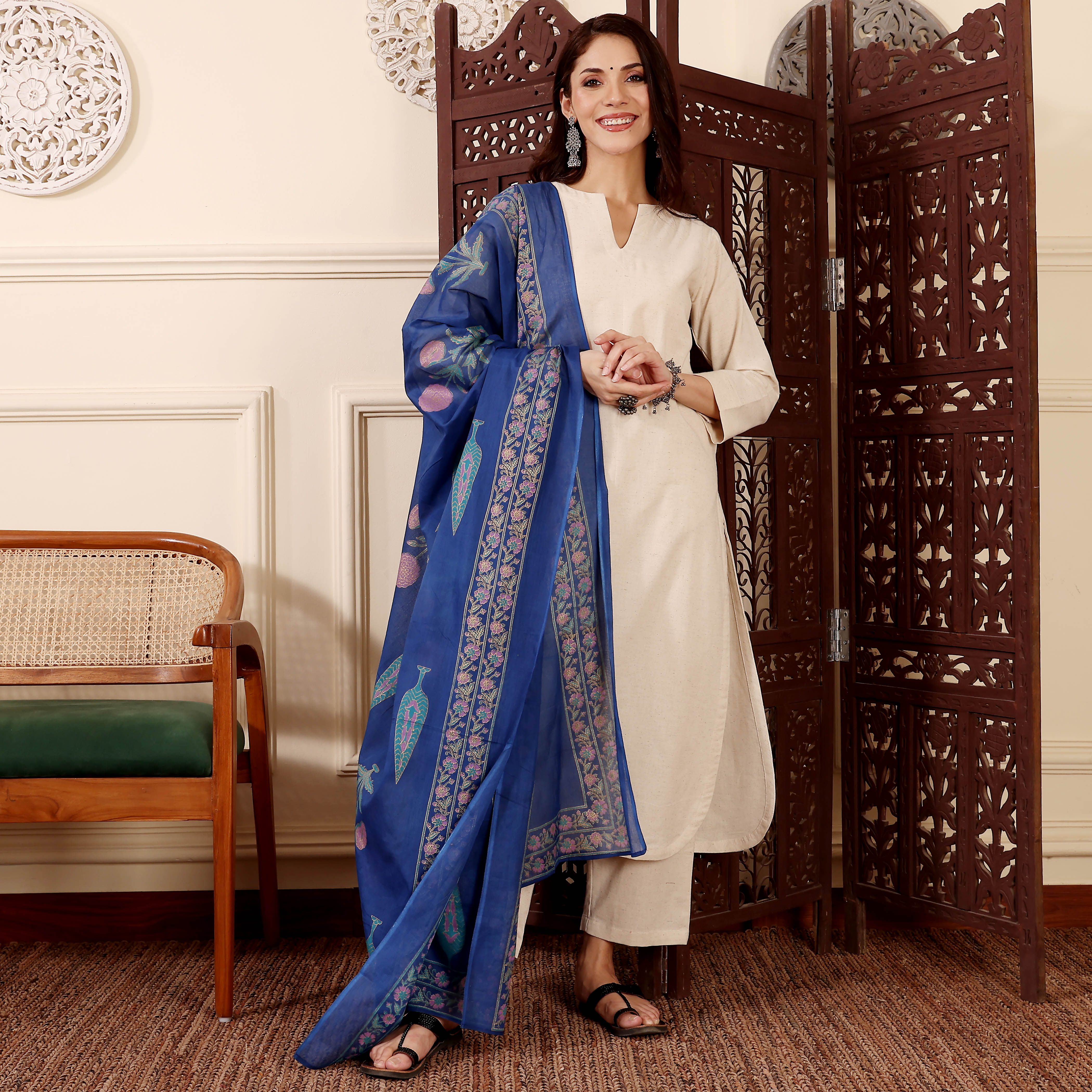
For a clean vertical effect, place the dupatta over one shoulder and let one end fall near the knee. This method works with straight pants and longer kurtis because the hanging fabric repeats the vertical line of the outfit. A narrow front fold prevents the chest area from becoming bulky.
For a heritage salwar suit appearance, drape the dupatta across both shoulders with the centre resting lightly near the back of the neck. Keep the front folds slim when the kurti has embroidery or when the sleeves include a border. This arrangement is practical for greetings, sitting and movement at family functions.
For printed or regional styling, an open shoulder drape can show the kurti pattern without hiding the sleeve. Kalamkari Print Salwar Suits and Odisha Sambalpuri Salwar Suits often provide strong textile character, so the dupatta should frame rather than cover the print. A plain bottom in a colour drawn from the print helps the outfit look considered.
Maharashtra Paithani Inspired Salwar Suits can be styled with a neatly folded dupatta when the border is the main feature. Keep the fold narrow enough to show the three-quarter sleeve and avoid adding a competing statement stole.
When the dupatta is highly embellished, avoid a large brooch, thick layered necklace and oversized earrings together. One focal point near the face and one quieter accessory at the wrist are usually enough for a balanced three-quarter sleeve look.
How Should Colours Be Coordinated Without Making the Outfit Flat?
Colour balance works best when an outfit uses one dominant colour, one supporting neutral or related shade, and one small accent. Matching every piece exactly can make a coordinated set look flat, while too many unrelated colours can break the visual flow.
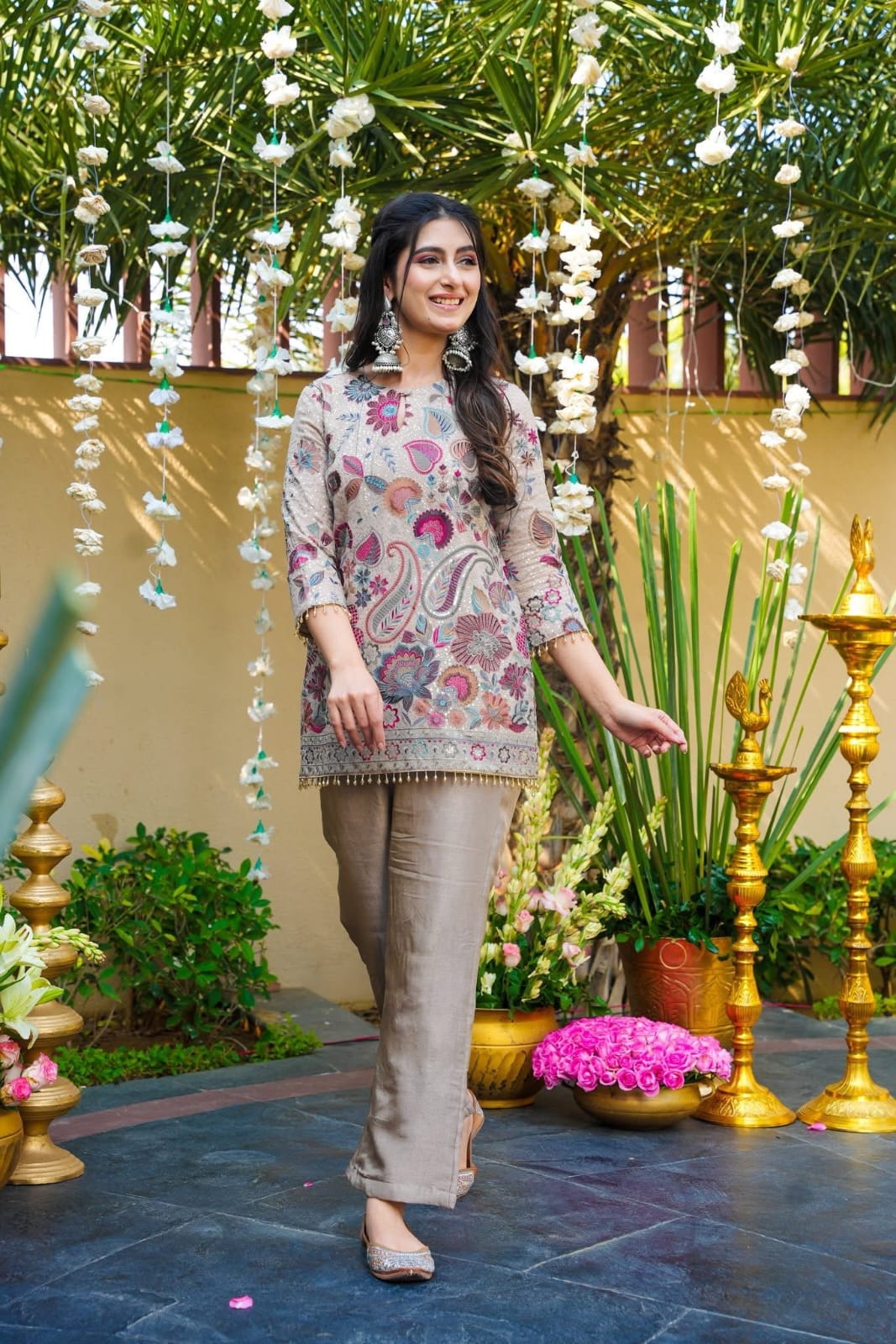
Monochromatic dressing is a reliable option for work and daytime events. A lavender kurti with a slightly deeper purple bottom and silver jewellery creates depth without a harsh colour break. A maroon kurti with beige or muted gold accessories gives a similar result for evening wear.
Complementary contrast should be limited to one major element. A mustard kurti may work with deep green, burgundy or indigo accents, but the accent should appear in the dupatta border, footwear or jewellery rather than in every component.
Maroon Viscose Chanderi Silk Embroidered Kurta Set for Women can be finished with antique-gold earrings and beige footwear for a warm, low-contrast look. A deep green or indigo dupatta would create more contrast, but the jewellery should then remain simple.
Gujarat Bandhej Salwar Suits offer another useful colour principle: let a small accent shade from the print reappear in the footwear or bangles. Repeating one minor colour makes a bright outfit feel coordinated without requiring an identical shade in every garment.
Which Footwear and Jewellery Complete the Look?
Low-profile footwear and jewellery that echoes the outfit's finish usually complete a three-quarter sleeve kurti without disturbing its proportions. Choose footwear according to the bottom width and jewellery according to the neckline and sleeve detail.
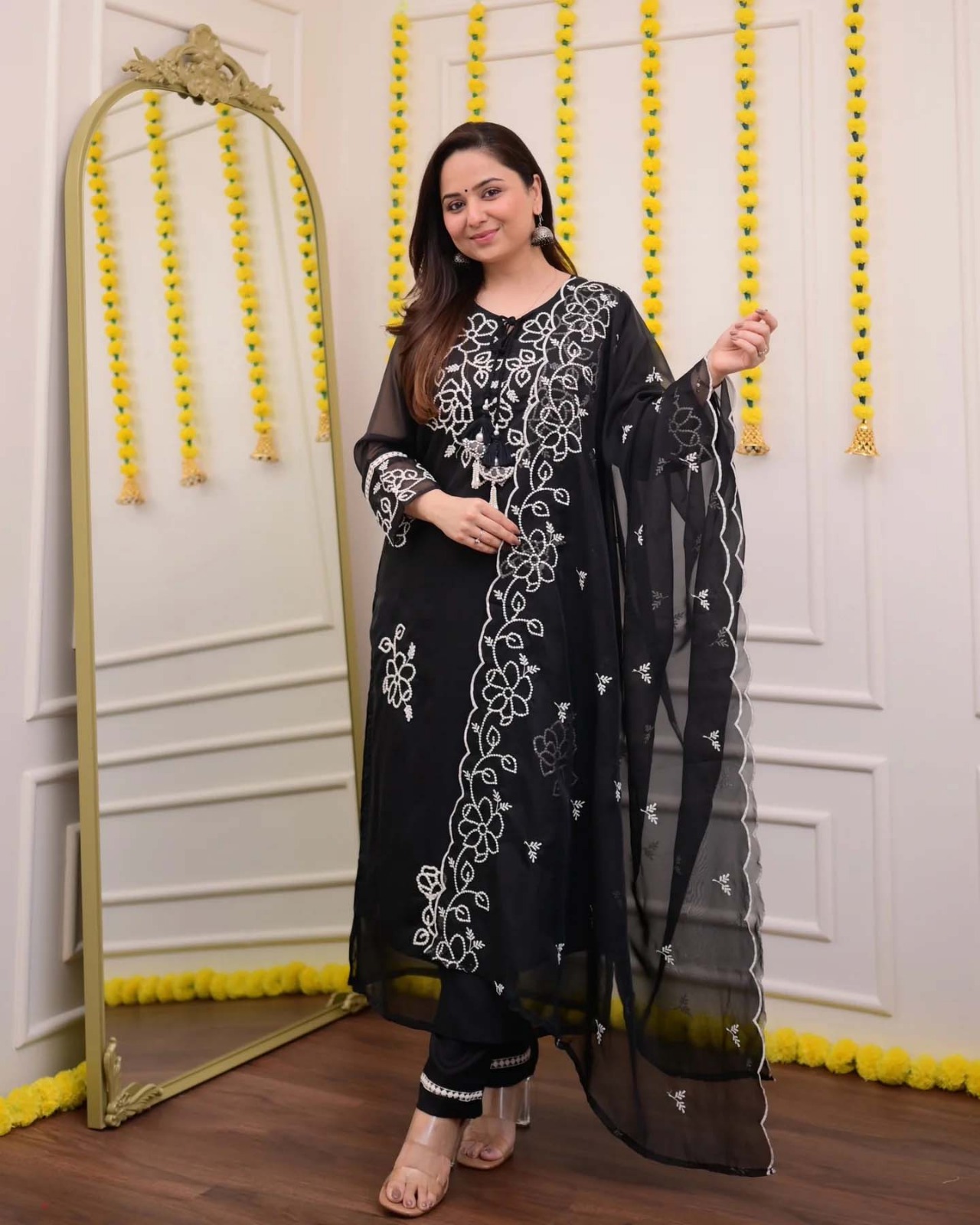
Juttis, kolhapuris and flat sandals suit straight pants, cotton kurtis and daytime salwar suits. Pointed flats or low block heels extend the line beneath cigarette pants and work well for office dressing. Block heels between 1.5 and 2.5 inches can add height without causing a wide palazzo hem to drag.
Silver jewellery pairs naturally with cool pastels, blue, purple and printed cotton, while gold or antique-gold jewellery complements mustard, maroon, cream and silk surfaces. Pearl studs or small hoops are useful when the neckline and sleeves already contain embroidery.
A three-quarter sleeve leaves enough wrist space for one watch, a slim kada or two narrow bangles. Avoid placing a wide cuff directly over a heavily embroidered sleeve border, because the cuff can conceal the design and make the forearm look crowded.
How Can One Kurti Set Be Adapted for Different Occasions?
The same three-quarter sleeve kurti can move from daytime to festive dressing by changing the bottom, drape, footwear and jewellery rather than replacing every component.
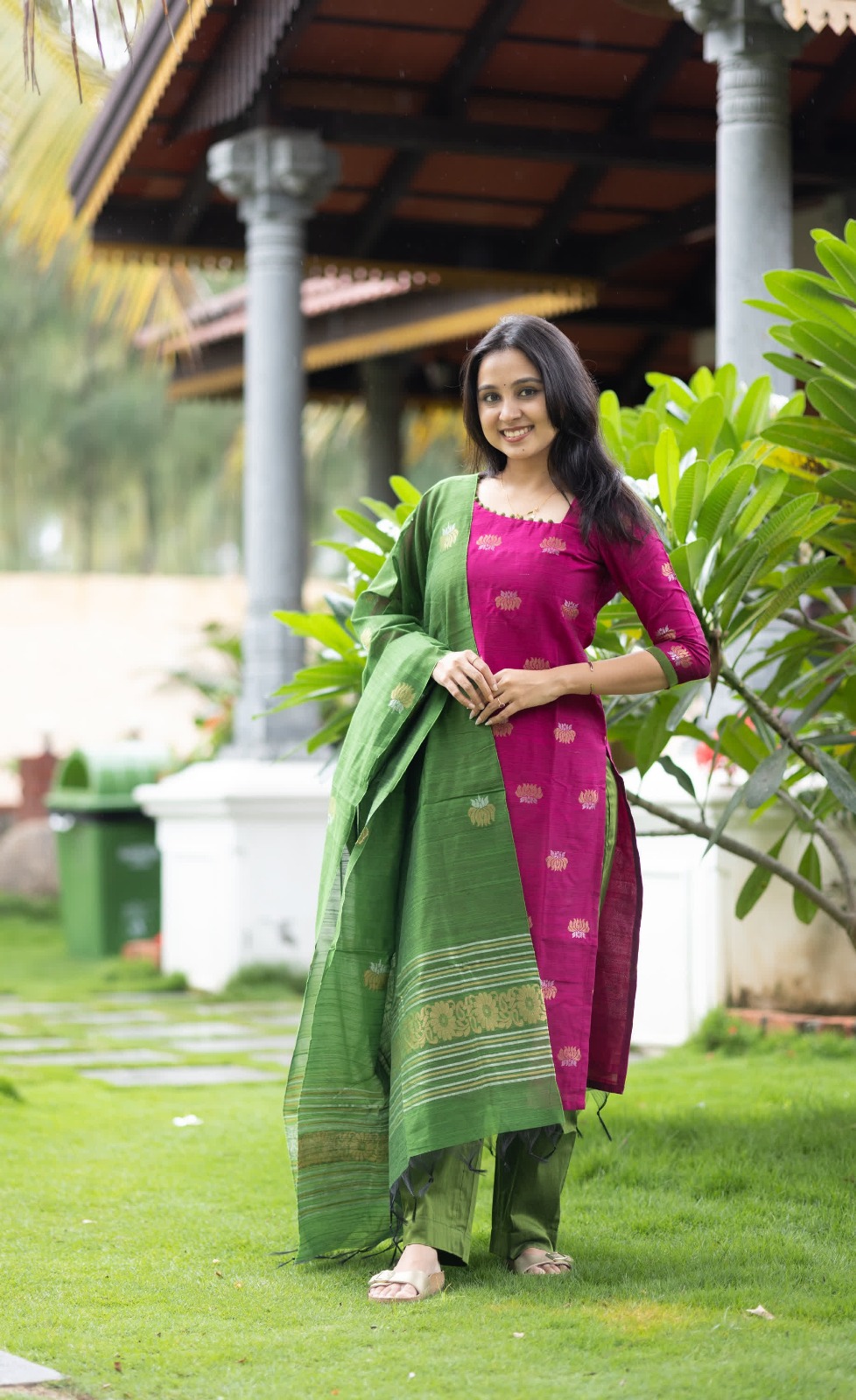
For work, choose straight pants, a compact shoulder drape or no dupatta, closed flats and small earrings. Keep embroidery moderate and select a structured bag that doesn't compete with the sleeve or kurti hem.
For a family lunch, use a printed or pastel kurti with palazzos, flat sandals and a lightweight dupatta. A soft side drape creates movement while preserving comfort during sitting and travel.
For a Haldi ceremony, cotton, muslin or light georgette is practical because these fabrics are breathable and easy to move in. Yellow, mustard and warm pink can be styled with minimal jewellery, secure footwear and a dupatta pinned near the shoulder if active movement is expected.
For an evening celebration, silk, Chanderi silk or a richly embroidered set can be paired with a narrow heel, a compact clutch and one stronger jewellery element. Let either the neckline, earrings or dupatta border lead the styling; giving all three equal emphasis can make the outfit look overworked.
A useful final check is to view the outfit from a distance of about two metres. The sleeve, kurti hem, bottom width and dupatta should form a clear sequence rather than four unrelated horizontal breaks. When one garment is wide or highly detailed, keep the neighbouring pieces simpler, and the complete salwar suit will look intentional without needing excessive accessories.
Common Questions About Styling Three-Quarter Sleeve Kurtis
What pants look best with a three-quarter sleeve kurti?
Straight pants, cigarette pants and narrow ankle-length trousers are the safest choices because they create a clean vertical line. Palazzos also work well when the kurti is straight or lightly flared and made from a soft fabric.
Can I wear a palazzo with a long three-quarter sleeve kurti?
Yes, but the long kurti should have side slits, a fluid fabric or a relatively narrow silhouette. A stiff, heavily flared kurti combined with very wide palazzos can make the outfit look bulky.
How should I drape a dupatta with a three-quarter sleeve kurti?
Drape the dupatta over one shoulder for a longer vertical line, or place it across both shoulders with narrow front folds for a traditional salwar suit look. Keep part of the sleeve visible so the three-quarter length remains noticeable.
Which jewellery suits a three-quarter sleeve kurti?
Slim bangles, a watch, small hoops, pearl studs and medium-sized earrings suit most three-quarter sleeve kurtis. Choose silver for cool colours and gold or antique gold for mustard, maroon, cream and silk outfits.
Are three-quarter sleeve kurtis suitable for workwear?
Three-quarter sleeve kurtis are suitable for workwear when paired with straight pants, modest necklines, comfortable closed flats and restrained embroidery. Solid, printed cotton, muslin and lightly detailed Chanderi silk are practical choices for an office wardrobe.
How can I style a three-quarter sleeve kurti for a Haldi ceremony?
Choose breathable cotton, muslin or lightweight georgette in yellow, mustard, pink or another cheerful shade. Wear secure flats, minimal jewellery and a dupatta pinned near the shoulder so the outfit remains comfortable during active movement.


