

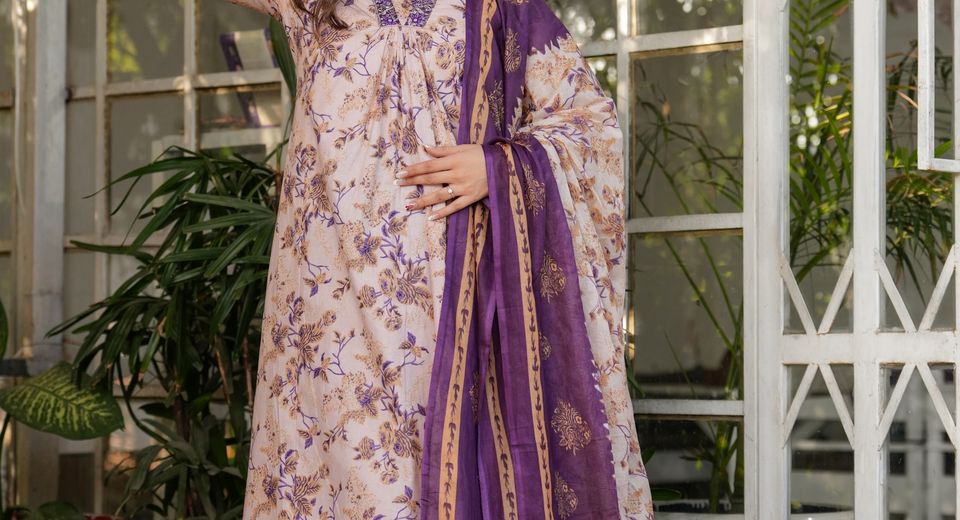
What to Measure First When Buying a Salwar Suit Online can determine whether a beautiful three-piece set feels comfortable or needs immediate alteration. The most useful starting points are your bust, waist, hip and preferred kurta length, not your usual small, medium or large label. Online size names vary between sellers, while body measurements provide a more dependable comparison. A soft measuring tape, a well-fitting inner layer and five quiet minutes are enough to create a practical measurement record before you place an order.
Salwar suits combine several garments with different fitting requirements. A kurta may need room at the bust and upper arm, trousers may need comfort at the hip and thigh, and a dupatta usually has no fixed size. Measuring each relevant area prevents the common mistake of choosing a size only from the kurta's chest measurement.
Why body measurements matter more than your usual size
Your usual clothing size is only a reference because Indian ethnic-wear charts are not completely standardised. One seller's medium may be designed for a 36-inch bust, while another seller's medium may allow a different measurement or a different amount of ease. A salwar suit described as straight, palazzo, Patiala or Anarkali can also use a different fit philosophy.
Body measurements give you a repeatable basis for comparing products. If your bust measures 38 inches and a size chart lists a 40-inch garment bust, the two-inch difference represents wearing ease, assuming the chart refers to the finished garment. If the chart lists a 38-inch body bust, the garment may be cut larger, but you should confirm the chart's terminology before ordering.
Readymade suits also vary according to construction. A fitted bodice, princess-seam kurta or heavily embroidered panel may offer less practical flexibility than a loose straight kurta. A product such as Black Red Fendy Silk 3 Piece Readymade Salwar Suit Set should therefore be assessed through its measurement chart and silhouette, rather than through its printed size label alone.
What to Measure First When Buying a Salwar Suit Online
Measure your bust first, followed by your waist, hip and the length you want from shoulder to hem. These measurements affect the largest number of fit decisions in a salwar suit, although sleeve length, armhole comfort and trouser length can also determine whether the set feels wearable.
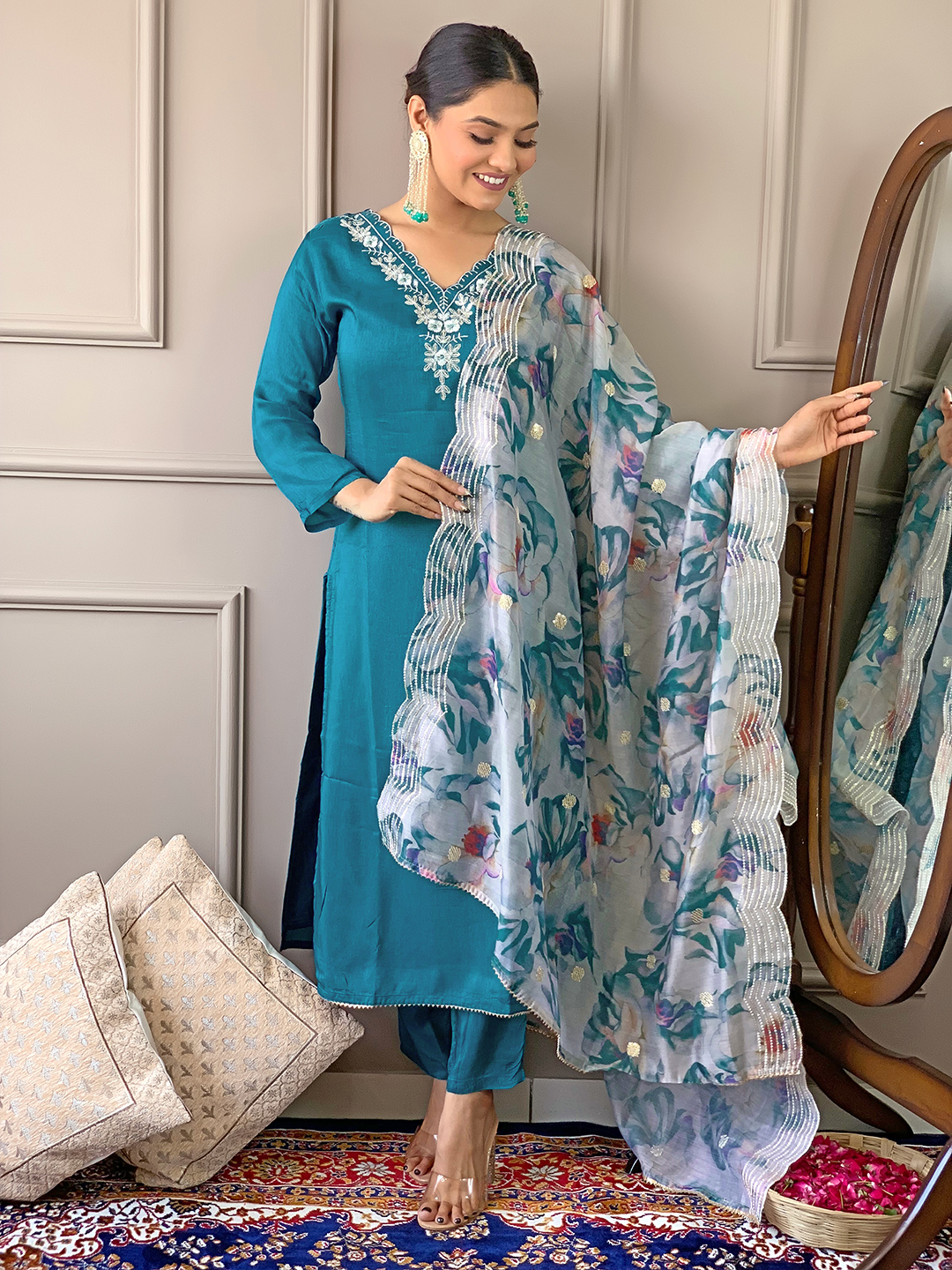
Bust measurement
Measure the fullest part of your bust with the tape parallel to the floor. Keep the tape comfortably touching your clothing without pulling it tight, and keep both arms relaxed at your sides. Do not measure over a bulky sweater or a padded layer that you would not normally wear with the suit.
Bust measurement is especially important for straight kurtas, fitted kurtas and embroidered designs. A garment that's too narrow across the bust can pull at the buttons, distort embroidery and restrict arm movement. An Embroidered Salwar Suit Set for Women may look relaxed in its product photograph, but the size chart remains the reliable source for checking its actual fit.
Waist and hip measurement
Measure your natural waist at the narrowest point of your torso, or at the point where you normally wear the lower garment if the product gives a garment-waist measurement. Measure your hips around the fullest part of your seat, usually 7 to 9 inches below the waist, while standing with your feet together.
Hip measurement is crucial for trousers, churidars, palazzos and narrow salwars because the lower garment must pass over the hips before it reaches the waist. A Black White Floral Embroidered Readymade Salwar Suit may have a forgiving kurta but still require careful hip comparison if its trousers have a more structured cut.
Kurta length and sleeve length
Measure kurta length from the highest point of your shoulder, close to the neck, down to the hemline you prefer. Measure over a similar kurta if you want to reproduce a familiar proportion. For sleeve length, measure from the shoulder seam to the point where you want the sleeve to finish, keeping your arm slightly bent.
Kurta length changes the visual balance of a suit. A knee-length straight kurta pairs differently with palazzos than a calf-length Anarkali, and a petite wearer may prefer a shorter hem to avoid overwhelming the frame. Product photographs can make a garment appear longer or shorter because of model height, camera angle and footwear.
Shoulder, upper arm and trouser measurements
Measure shoulder width from one shoulder point to the other across the back. Measure the fullest part of the upper arm if you often find sleeves restrictive. For trousers, record your waist, hip, inseam or outer-leg length and preferred ankle opening when the listing supplies those details.
Shoulder and upper-arm measurements become more important when a kurta has set-in sleeves, structured embroidery or a narrow armhole. A loose body doesn't automatically mean loose sleeves. A Pista Royale Salwar Suit can fit comfortably through the torso while still needing an upper-arm check if the sleeve is tailored.
How to take accurate measurements at home
Use a flexible tape measure, stand upright and ask another person to read the tape for the most consistent result. Wear a thin camisole or the undergarment you expect to wear with the salwar suit, and keep the tape level rather than letting it dip at the back.
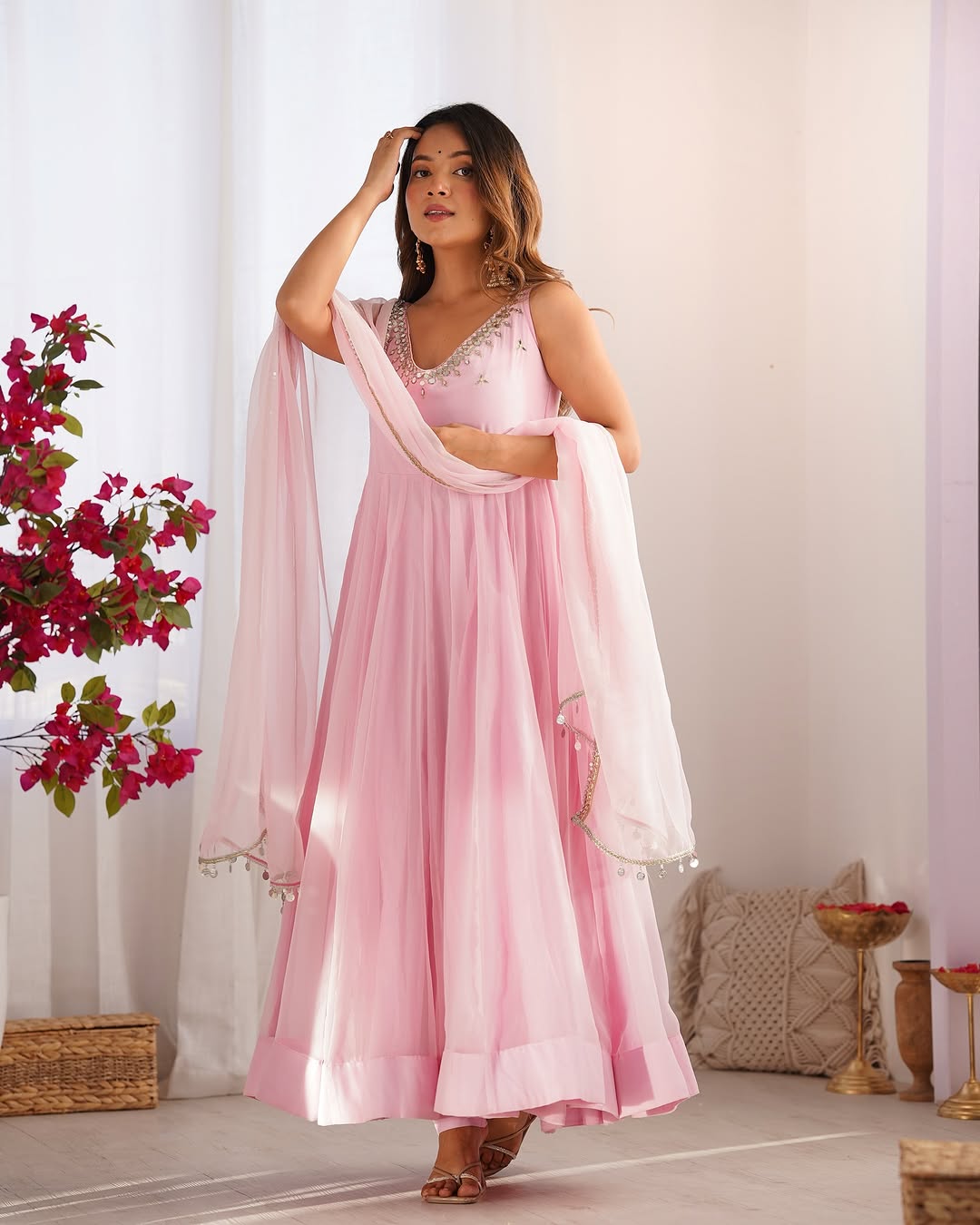
- Stand naturally with your feet together and breathe normally.
- Place the tape flat against the body without twisting or compressing soft tissue.
- Take each measurement twice and record the larger consistent reading if the numbers differ slightly.
- Write measurements in inches or centimetres, then use the same unit as the product chart.
- Record the date because body measurements can change and old notes can lead to an avoidable sizing error.
A measuring tape should not leave a deep mark on the skin. Pulling the tape tighter can produce a smaller number, but it doesn't create a better-fitting garment. If you fall between two listed sizes, compare the garment's construction, fabric and alteration options before choosing.
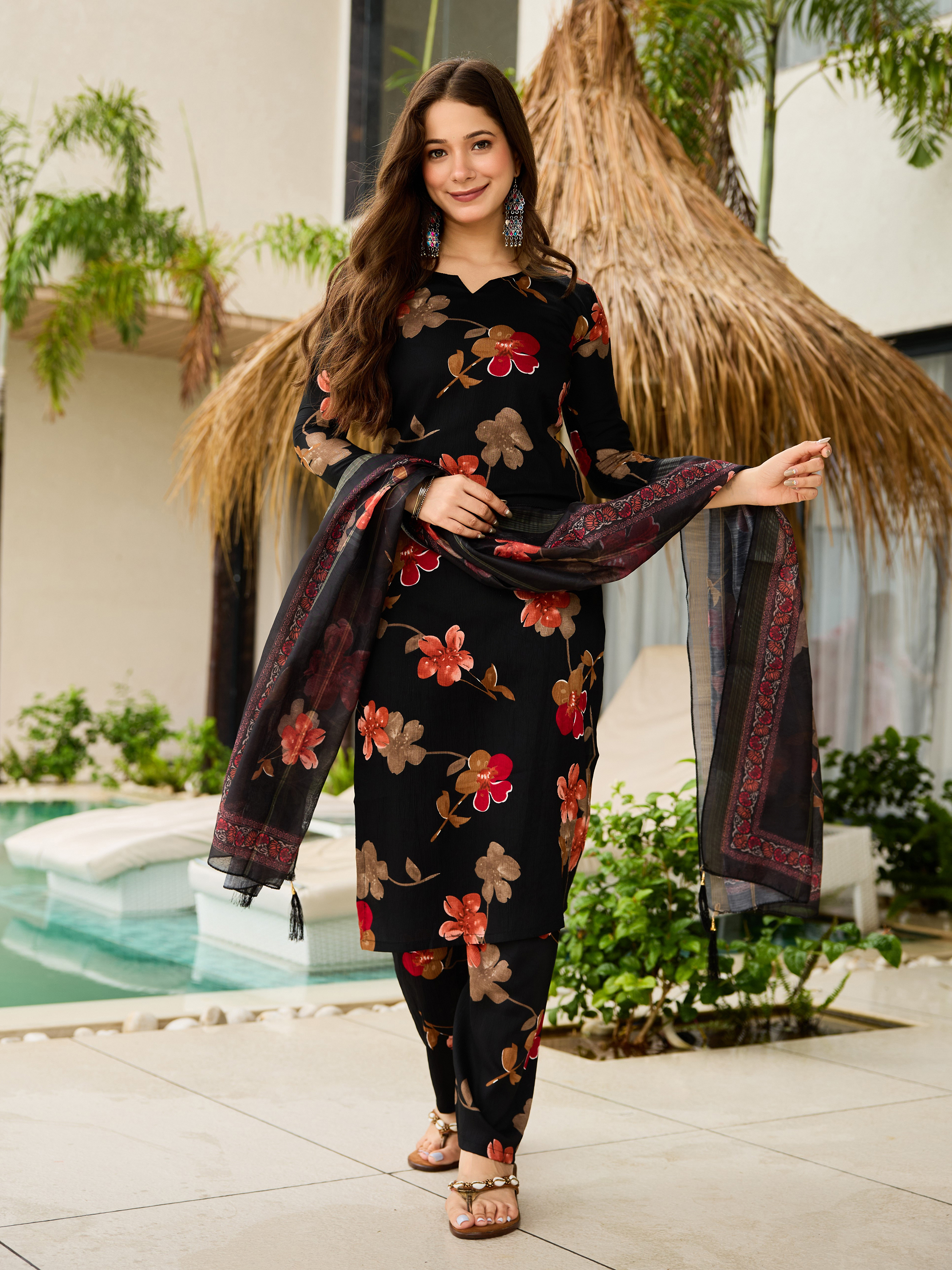
Photographs can support styling decisions but can't replace measurements. The model's height, posture and pinned-back styling may make the kurta look more fitted than it will appear on an unpinned body. A Midnight Black Blossom Salwar Suit, for example, should be judged by its listed length and measurements rather than by the model's proportions alone.
How to read a salwar suit size chart correctly
A salwar suit size chart should tell you whether its numbers describe body measurements or finished garment measurements. Confirm that distinction before comparing your notes with the chart, because the same number can mean different things depending on how the seller presents it.
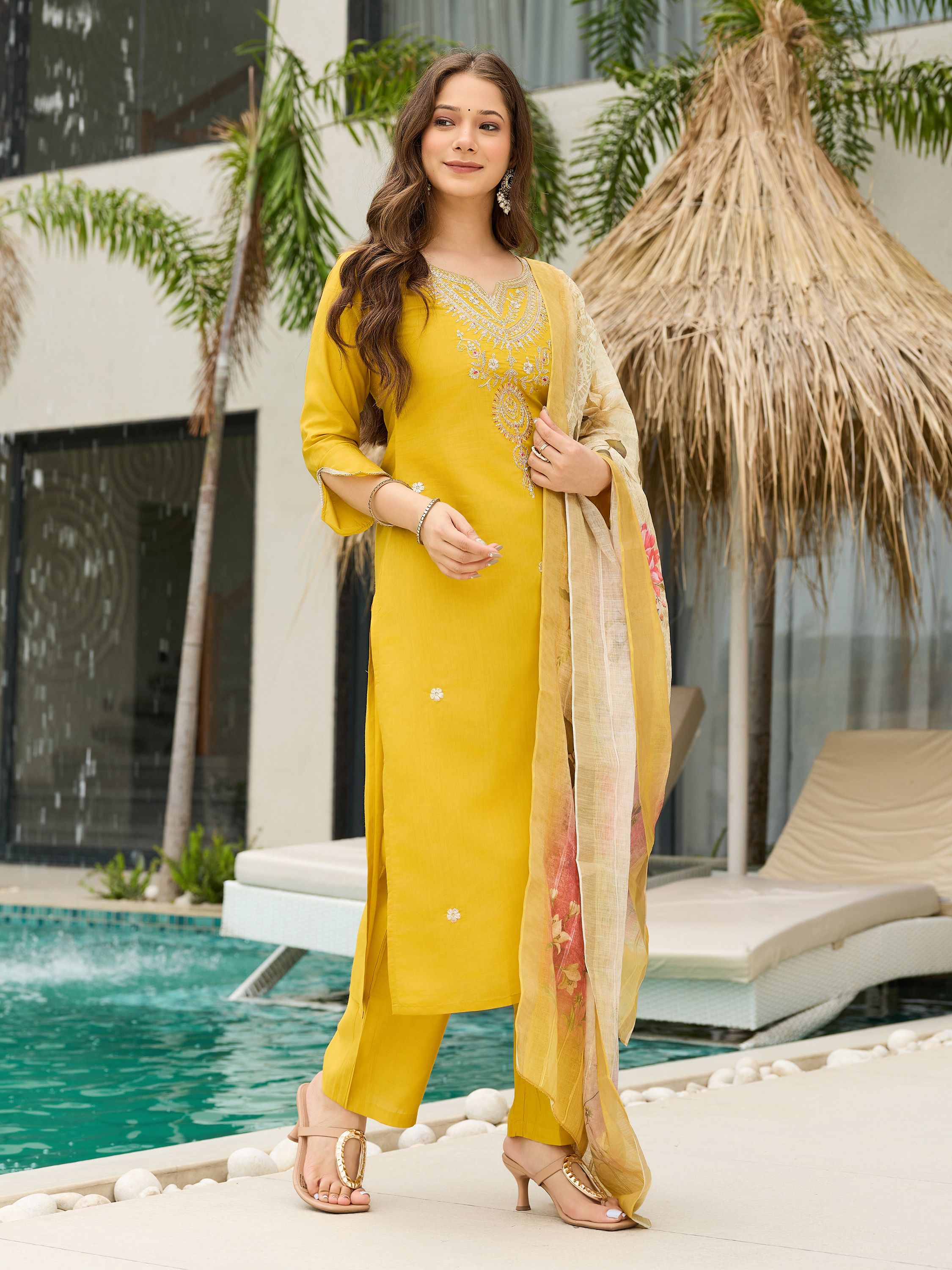
Body size versus garment size
A body-measurement chart recommends a garment size based on the wearer's bust, waist and hip. A garment-measurement chart describes the finished kurta or trouser dimensions and usually includes additional ease. Product pages sometimes use phrases such as "bust size," "chest," "garment bust" or "actual measurement," so read the labels carefully.
Ease is the extra room between your body and the garment. A straight kurta may need a modest amount of ease for sitting and lifting your arms, while a loose Anarkali may already provide substantial volume through the skirt. Silk, brocade or densely embroidered fabrics may feel less forgiving than lightweight fabrics, even when their numerical measurements are similar.
Choosing between two sizes
Choose the larger size when your most important body measurement exceeds the smaller chart range and the garment can be altered at the side seams. Choose the smaller size only when the chart confirms enough room at the bust, hip and upper arm for comfortable movement.
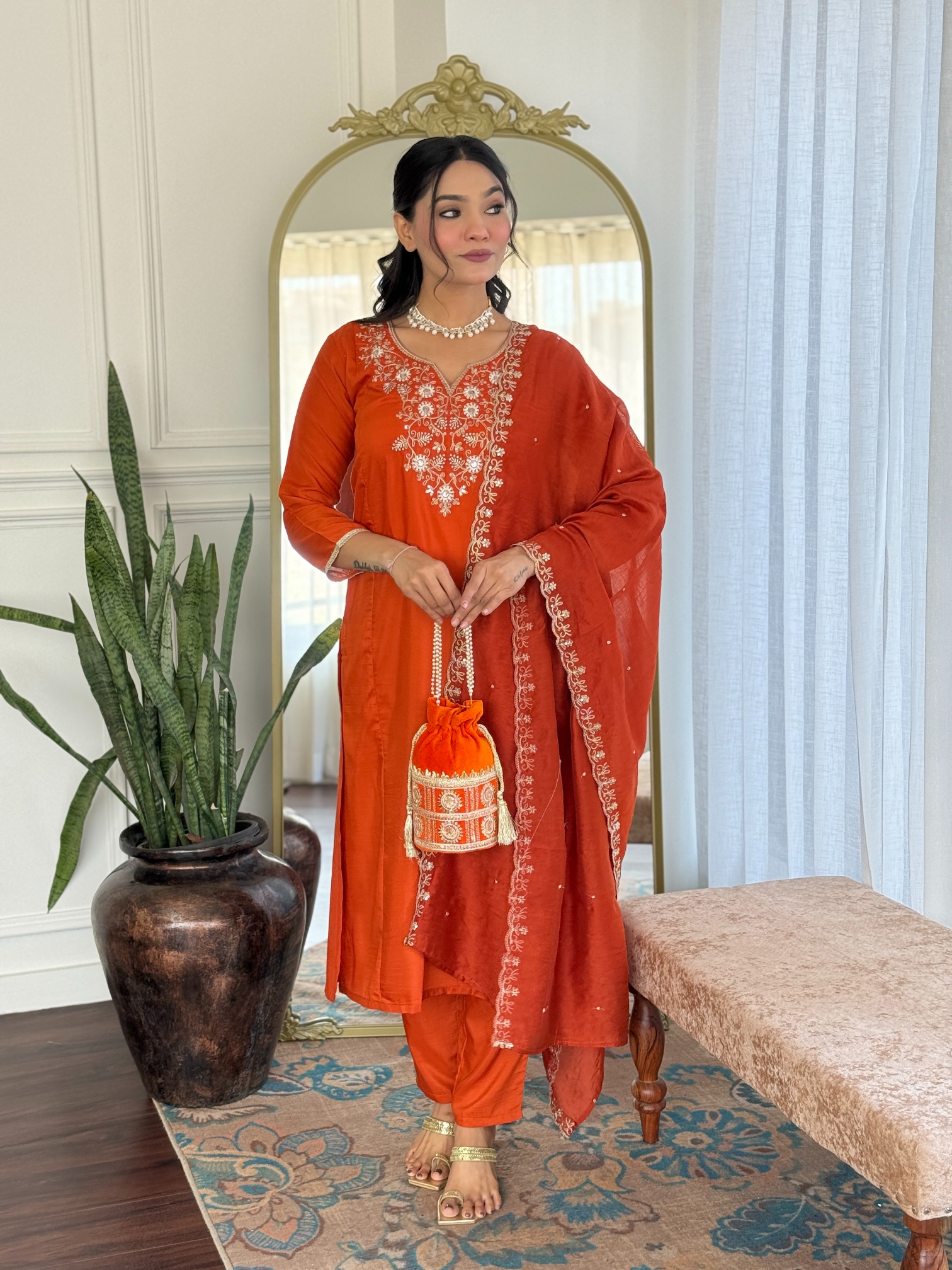
Alterations can reduce excess width more easily than they can add missing fabric, especially around embroidery, side panels and trouser seams. A Rust Orange Embroidered Readymade Suit Set for Women may be a strong candidate for minor waist or side-seam adjustment, but a tight bust or insufficient hip room may be difficult to correct without disturbing the design.
Match measurements to the salwar suit silhouette
The correct measurements depend partly on the silhouette because each salwar suit shape distributes fabric differently. Compare the measurement most affected by the cut instead of relying on one universal rule for every suit.
- Straight suits: Compare bust, hip and kurta length because the side seams usually fall in a relatively direct line from the underarm to the hem.
- Anarkali suits: Check bust, shoulder, upper arm and yoke length because the lower flare generally provides more room below the waist.
- Palazzo suits: Check hip, waist, rise and trouser length because wide legs don't guarantee adequate room at the waistband or seat.
- Patiala suits: Check waist, hip, rise and total salwar length because pleated volume can change how the lower garment sits and drapes.
- Churidar-style trousers: Check calf, ankle and inseam measurements when supplied because the gathered lower leg is intentionally closer to the body.
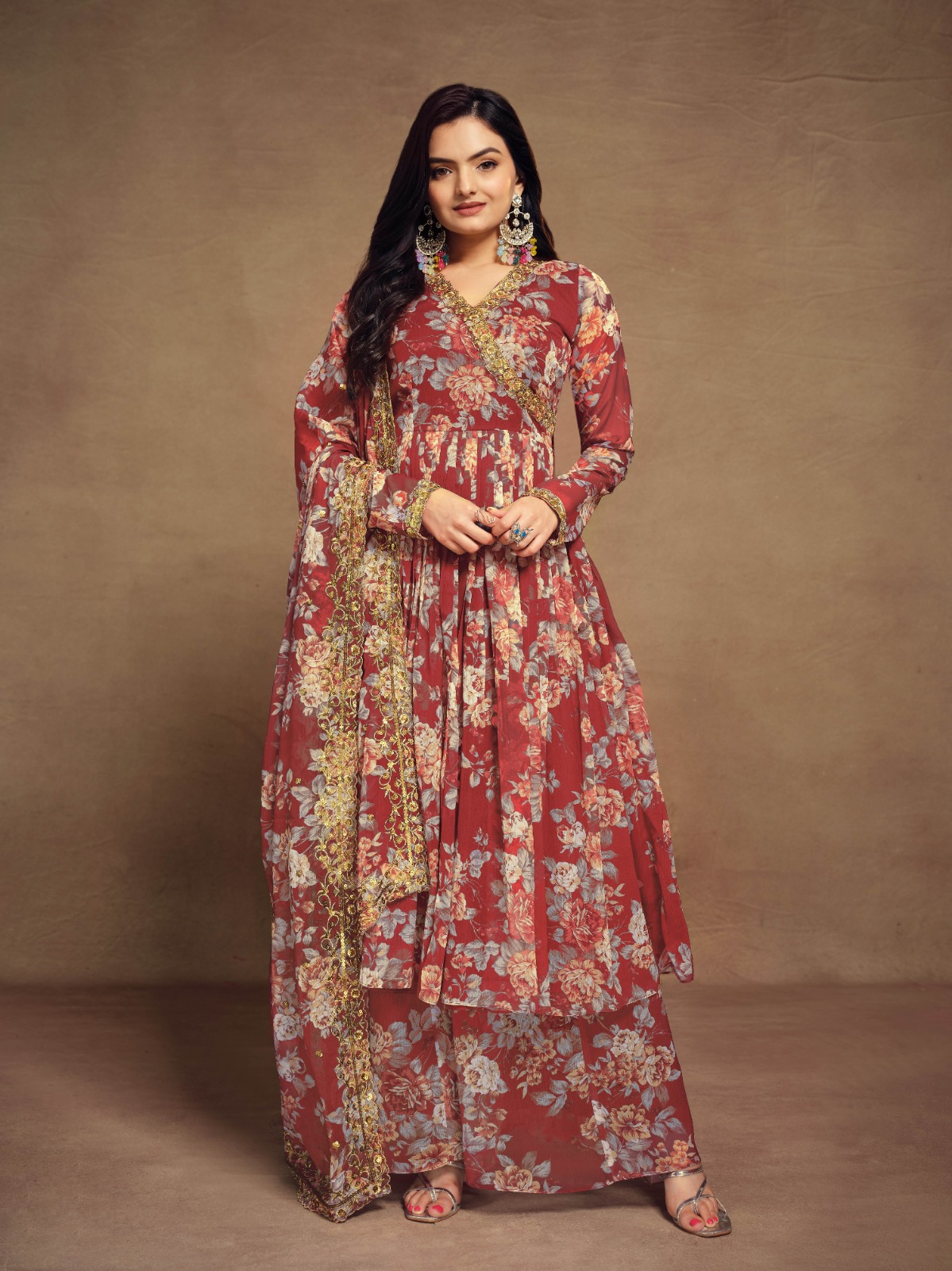
The same logic applies to regional design influences. Punjab Patiala Salwar Suits typically require careful attention to the lower garment's waist, rise and volume. Maharashtra Paithani Inspired Salwar Suits may place more visual emphasis on borders and woven-style motifs, making accurate kurta length useful for preserving the intended proportion. Kalamkari Print Salwar Suits and Odisha Sambalpuri Salwar Suits can suit different silhouettes, so print preference should not replace a fit check.
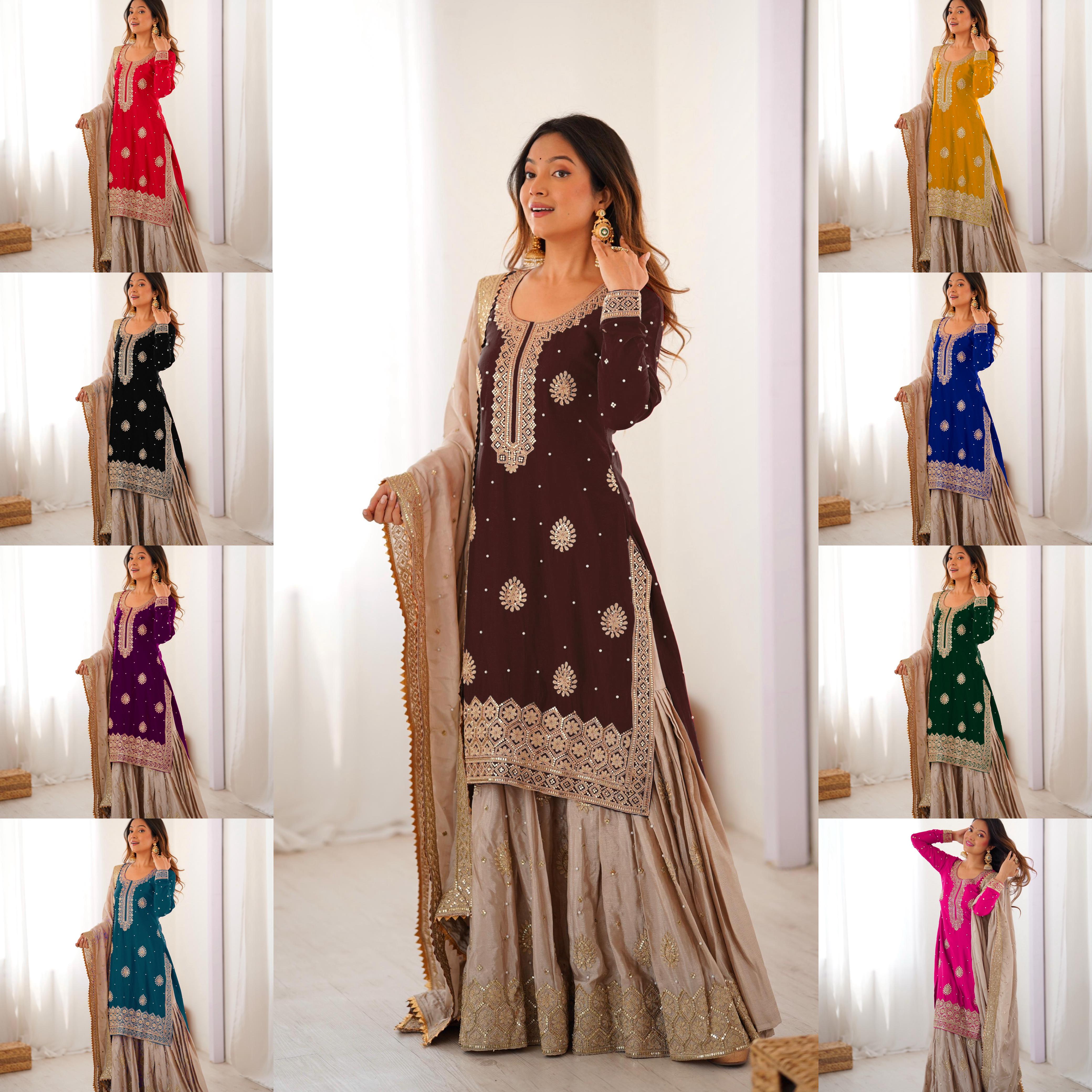
For a festive set, allow room for the clothing you'll actually wear underneath. A Designer Yellow Salwar Suit with Dupatta may be styled with a camisole and a lightweight inner layer, while a Maroon Wedding Wear Embroidered Palazzo Suit Set may be worn with a more structured blouse or lining. The correct choice depends on the planned styling, not only on the body's bare measurement.
Fabric, lining and construction change the fit
Fabric affects comfort, ease and the amount of alteration a salwar suit can tolerate. Banarasi silk, for example, usually has more body than soft cotton and may not yield as readily at a tight seam; a silk-blend or lined garment can also feel warmer and less flexible than an unlined one.
Check whether the product description names lining, stretch, sleeve construction, closure type and adjustable elements. An elasticated trouser waist can accommodate a small range, but elastic doesn't solve insufficient hip or thigh room. A side zip may produce a neater fit but offers less adjustment than a drawstring waist.
Embroidery and zari can influence alteration decisions. Tailors may avoid cutting through dense zari borders, mirror work or heavily embroidered panels because moving the seam can damage the pattern. A well-fitting size at the bust and shoulder is therefore particularly valuable when the kurta contains concentrated surface work.
Colour and pattern also affect how fit is perceived, but visual camouflage should never justify buying the wrong size. Dark shades such as black can look streamlined in a photograph, while a bold floral or regional print can make seams less obvious; neither changes the actual room needed for movement.
What to check before placing the order
Before buying, review the size chart, product measurements, fabric composition, included pieces and alteration information on the individual listing. A three-piece set may include a kurta, lower garment and dupatta, but the lower garment's construction can differ significantly from another set with the same label.
- Confirm whether the listed size refers to your body or the finished garment.
- Check the kurta length against a garment you already own.
- Confirm whether the trousers are elasticated, drawstring, zipped or fixed-waist.
- Look for sleeve, shoulder, hip and trouser-length details when available.
- Check whether the dupatta is included and note its stated dimensions if draping coverage matters.
- Read the care instructions because dry-clean-only fabrics may behave differently from washable cotton after repeated use.
Save a screenshot or note of the chart used for your order. Size charts can be updated, and the record helps you compare a future purchase from the same seller. A measurement notebook containing bust, waist, hip, shoulder, sleeve and preferred kurta length can make repeat online shopping considerably faster.
After delivery, try the suit over the intended inner layer before removing tags or beginning alterations. Lift your arms, sit down, walk several steps and check whether the trouser waistband stays in place. A suit that looks correct while standing may reveal pressure at the bust, hip or armhole during ordinary movement.
Small alterations that improve an otherwise good fit
Minor alterations can refine a salwar suit when the shoulders, bust and hips already have adequate room. Common adjustments include shortening the kurta, taking in side seams, changing sleeve length and adjusting a drawstring or waistband.
Large alterations are riskier when the garment has embroidery, lining, borders or a carefully placed print. A tailor should inspect the seam allowance before promising to add width. If the garment is tight across the bust, upper arm or hip, returning it for a better size is often safer than attempting to rebuild the garment.
Kurta length is usually one of the simpler changes, although a patterned or embroidered hem requires careful matching. Trouser length can also be adjusted when there's enough hem allowance, but shortening a palazzo or Patiala can alter its intended volume and proportion.
The most reliable online purchase comes from matching your measurements to the garment's cut, fabric and construction together. Measuring bust, waist, hip and length first removes much of the uncertainty, while a final check of sleeves, rise and ease helps you avoid a suit that fits only in a product photograph.
Common Questions About Measuring for an Online Salwar Suit
What measurement should I take first for an online salwar suit?
Take your bust measurement first because the kurta's chest and arm movement depend heavily on it. Follow with waist, hip and preferred kurta length, then check sleeve and trouser measurements when the listing provides them.
Should I choose a salwar suit size by bust measurement or waist measurement?
Use the measurement that corresponds to the garment's most fitted area, which is often the bust for the kurta and the hip for narrow trousers. Compare both measurements with the seller's chart rather than choosing from bust or waist alone.
How much bigger should a salwar suit be than my body measurement?
The required extra room depends on the silhouette, fabric and whether the chart shows body or finished garment measurements. A straight suit needs practical ease for sitting and movement, while an Anarkali may have more room below the waist; use the product chart instead of adding a fixed number blindly.
How do I measure kurta length for a salwar suit?
Measure from the highest point of your shoulder near the neck to the hemline you prefer. Compare that number with a similar kurta you already wear because model height and camera angles can make online photographs misleading.
What should I do if my measurements fall between two salwar suit sizes?
Choose the larger size when the smaller size is tight at the bust, hip or upper arm and the garment has simple side seams that can be altered. A tailor can usually reduce excess width more easily than add fabric to an embroidered or lined garment.
Why does a salwar suit size chart not match my usual clothing size?
Indian ethnic-wear size charts vary because sellers use different body measurements, garment ease and silhouette standards. Your bust, waist, hip and length measurements provide a more dependable comparison than a familiar small, medium or large label.


