

What to measure before ordering readymade blouse measurements online goes beyond recording your bust size. Shoulder width, underbust, armhole depth, blouse length, sleeve opening and garment ease all affect whether a saree blouse feels comfortable. A five-minute measuring routine can prevent pulling across the bust, slipping at the shoulder or an awkward hemline above the saree waist.
This guide explains how to take each measurement, how to compare body numbers with finished garment measurements, and how padded, sleeveless, cotton and silk blouses change the fitting decision. The method works for a simple readymade cotton blouse, a designer readymade blouse and an embellished Banarasi silk style.
What to Measure Before Ordering Readymade Blouse Measurements Online
Measure your full bust, underbust, shoulder, armhole, upper arm, blouse length and sleeve length before ordering. Record every number in inches or centimetres, and use the same unit shown in the seller's size chart.
Wear the bra you normally plan to wear with the blouse. A padded push-up bra can add several centimetres to the bust and produce a blouse that feels tight with your everyday saree bra. Stand naturally with your arms relaxed, keep your feet together and don't pull in your stomach.
- Full bust: Wrap the tape around the fullest part of the bust, keeping the tape level across the back. The tape should touch the body without compressing the bust.
- Underbust: Measure directly below the bust, where a blouse band or lower edge may sit. Underbust is particularly important for fitted and padded blouses.
- Shoulder: Measure from the end of one shoulder bone to the other across the back. Do not measure around the outer curve of the arms.
- Armhole: Place the tape around the shoulder joint and underarm. Leave one finger inside the loop so the measurement isn't restrictive.
- Upper arm: Measure around the fullest part of the upper arm. This number matters when a blouse has sleeves or a narrow arm opening.
- Blouse length: Measure from the highest point of the shoulder, close to the neck, down to the point where you want the blouse to finish.
- Sleeve length and opening: Measure from the shoulder point to the desired sleeve end, then measure around the arm at that endpoint.
Take every measurement twice. If two results differ by more than 0.5 inch, measure again instead of averaging the numbers. A second person can help keep the tape horizontal across the back and shoulder.
How Do Body Measurements Differ from Garment Measurements?
Body measurements describe your body, while garment measurements describe the finished blouse; the two figures should not always be identical. The difference between the body measurement and the garment measurement is called ease, and ease allows movement, lining, padding and closures.

For example, a person with a 36-inch full bust may prefer a finished blouse measuring 37 to 38 inches at the bust, depending on the fabric and desired fit. A stretch cotton blouse may work with less extra room than a rigid silk or brocade blouse. A padded blouse may need more consideration at the bust even when the stated finished measurement appears generous.
Check whether a size chart gives body measurements or finished garment measurements. If a chart lists "bust 36," look for notes, a measurement diagram or a product description that clarifies what the number means. When the information is unclear, compare the chart with a blouse you already own and like wearing.
Lay that well-fitting blouse flat without stretching it. Measure straight across the bust from underarm to underarm and multiply by two. Repeat across the waist or lower edge, measure the shoulder seam, and check the length from shoulder to hem. This comparison is often more accurate than choosing a familiar S, M, L or XL label because size labels vary between makers.
How much ease should a readymade blouse have?
A fitted woven blouse generally needs about 1 to 2 inches of bust ease, while a structured blouse may need close to 2 inches for comfortable movement. A stretch cotton blouse may need less ease, but the shoulder and armhole must still permit natural movement. A looser blouse can have more ease, although excess fabric may fold beneath saree pleats.
Ease also depends on the closure. A blouse with back hooks needs enough room for the hooks to close without pulling. A side-zip blouse requires smooth alignment along the seam. A front-open blouse may sit differently from a back-open blouse even when both have the same bust measurement.
Which Measurements Matter Most for Cotton and Silk Blouses?
Shoulder, armhole and bust measurements matter most for woven cotton or silk because these fabrics usually provide limited stretch. Cotton can soften with wear, but a tight shoulder or armhole won't become meaningfully larger. Silk may relax slightly with use, yet a restrictive blouse should not be ordered with the expectation that the fit will correct itself.
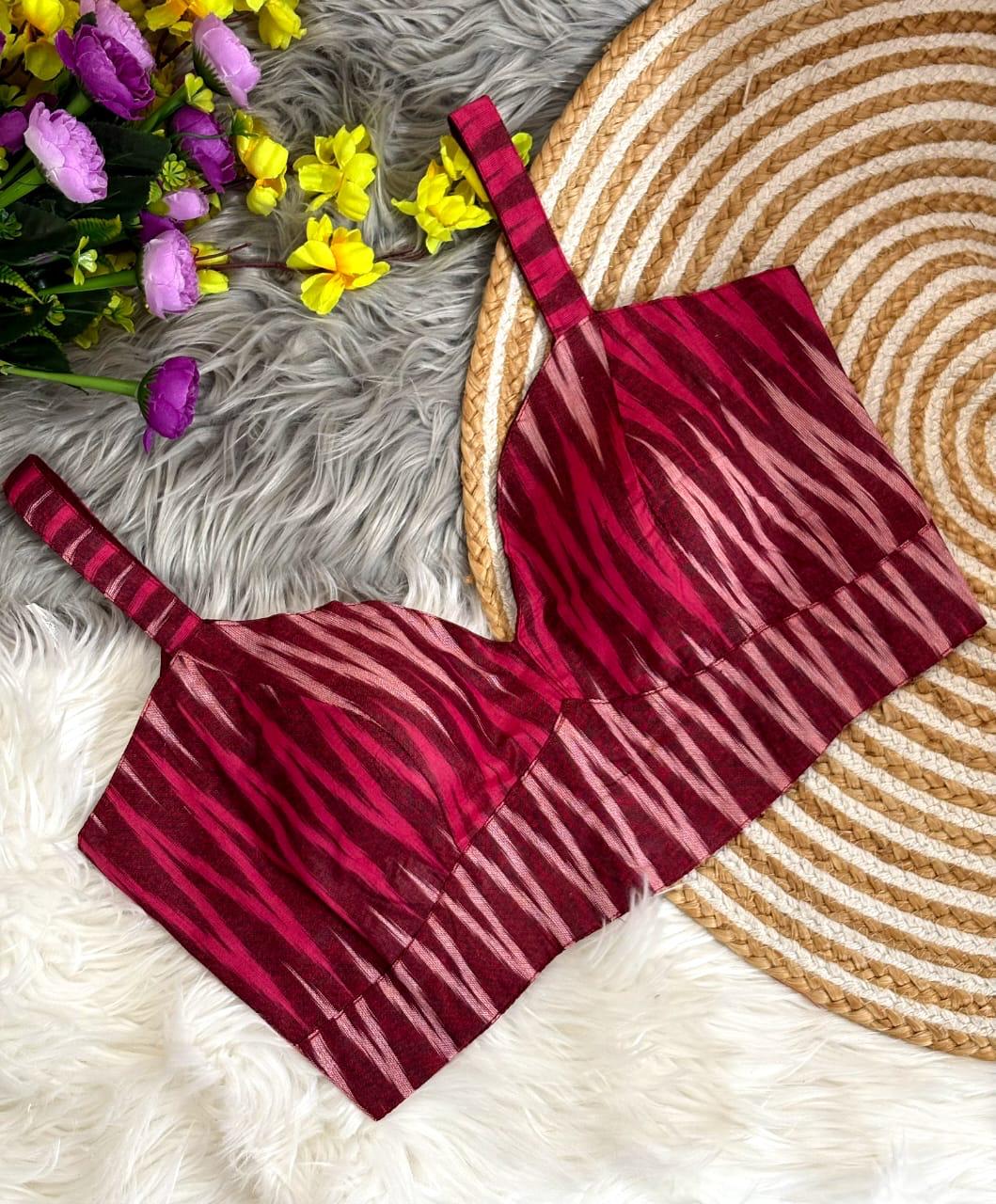
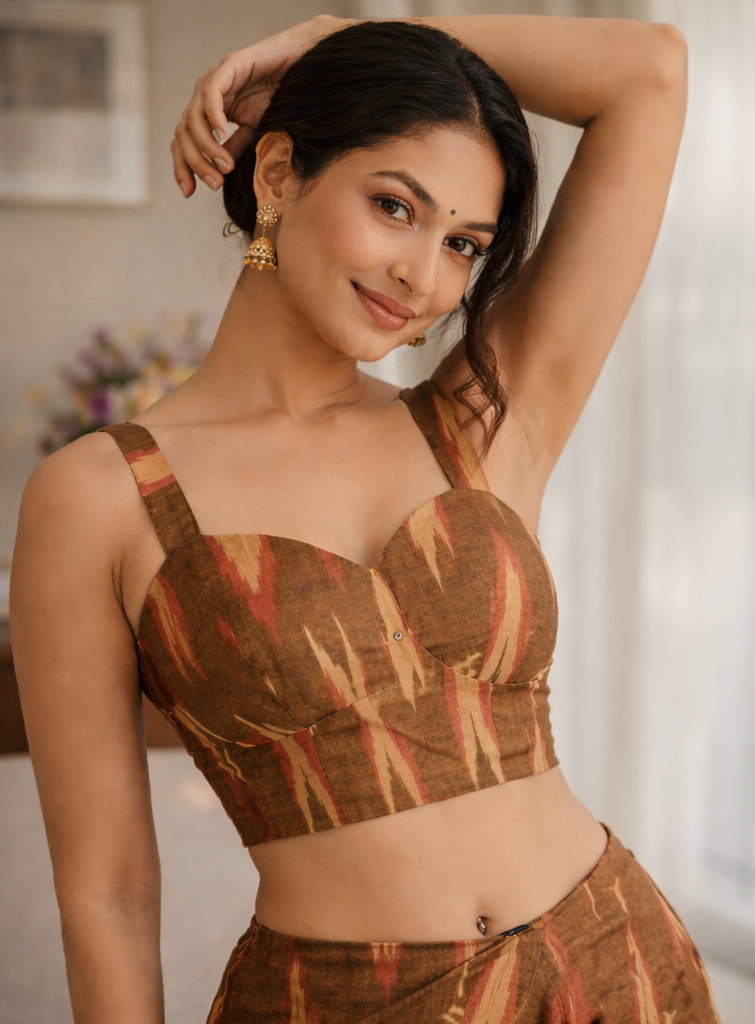
The Ikkat Cotton Padded Blouse for Women Sleeveless should be checked at the bust, underbust and armhole. Sleeveless construction removes sleeve-opening concerns, but the armhole can still cut into the underarm if the depth is too shallow.
The Brown Ikat Cotton Padded Blouse Sleeveless Stylish and Cream Ikat Cotton Padded Blouse Sleeveless Trendy also call for attention to the side seam and lower edge because padding can make the front feel fuller than an unlined cotton blouse. Compare the blouse with the bra you intend to wear rather than with your unpadded body measurement alone.
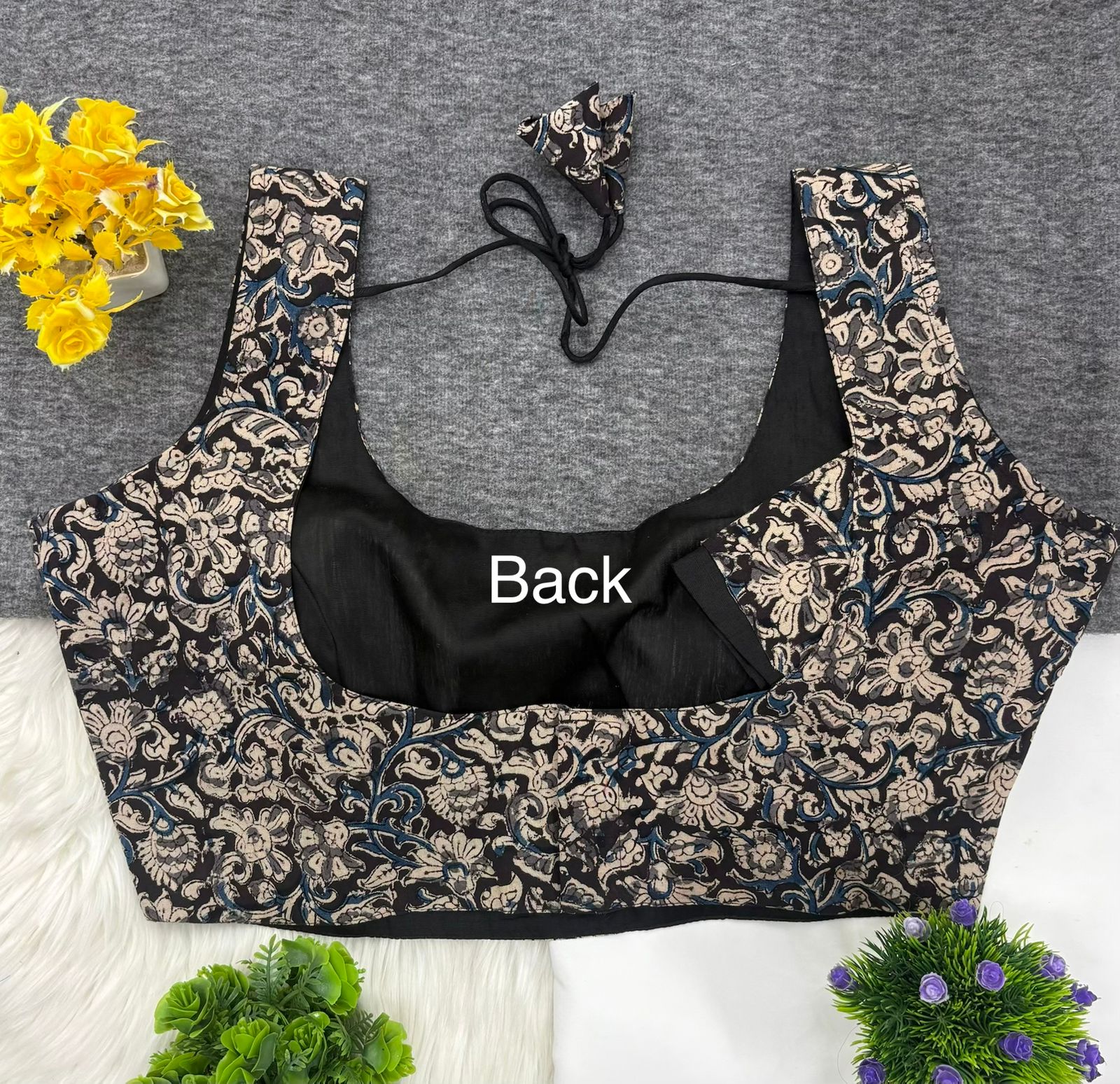
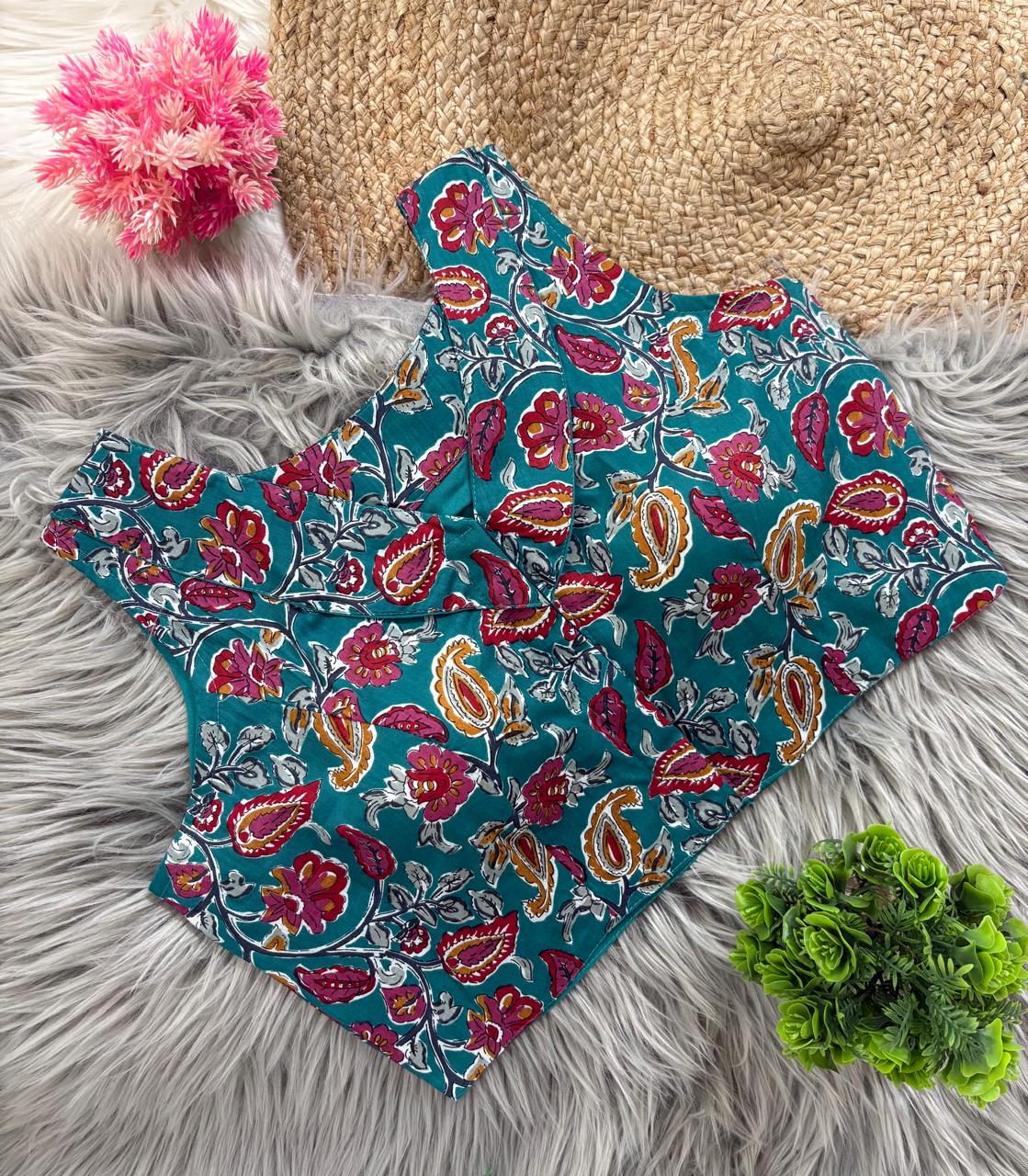
The Pure Kalamkari Cotton Padded Blouse for Women shows why fabric structure matters. Printed cotton may feel breathable, but a padded and lined construction can sit more firmly against the body than an unlined cotton blouse. Check whether the product description gives separate information about padding, lining or bust cups.
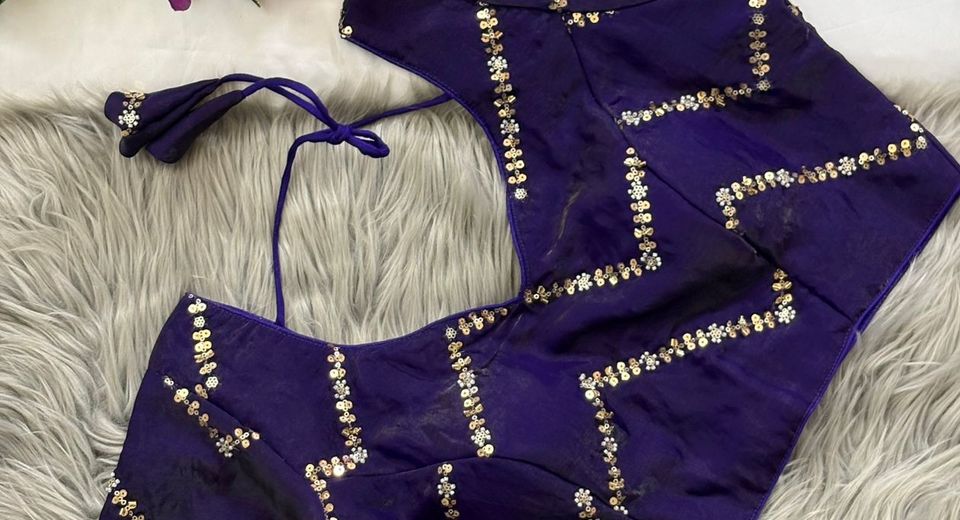
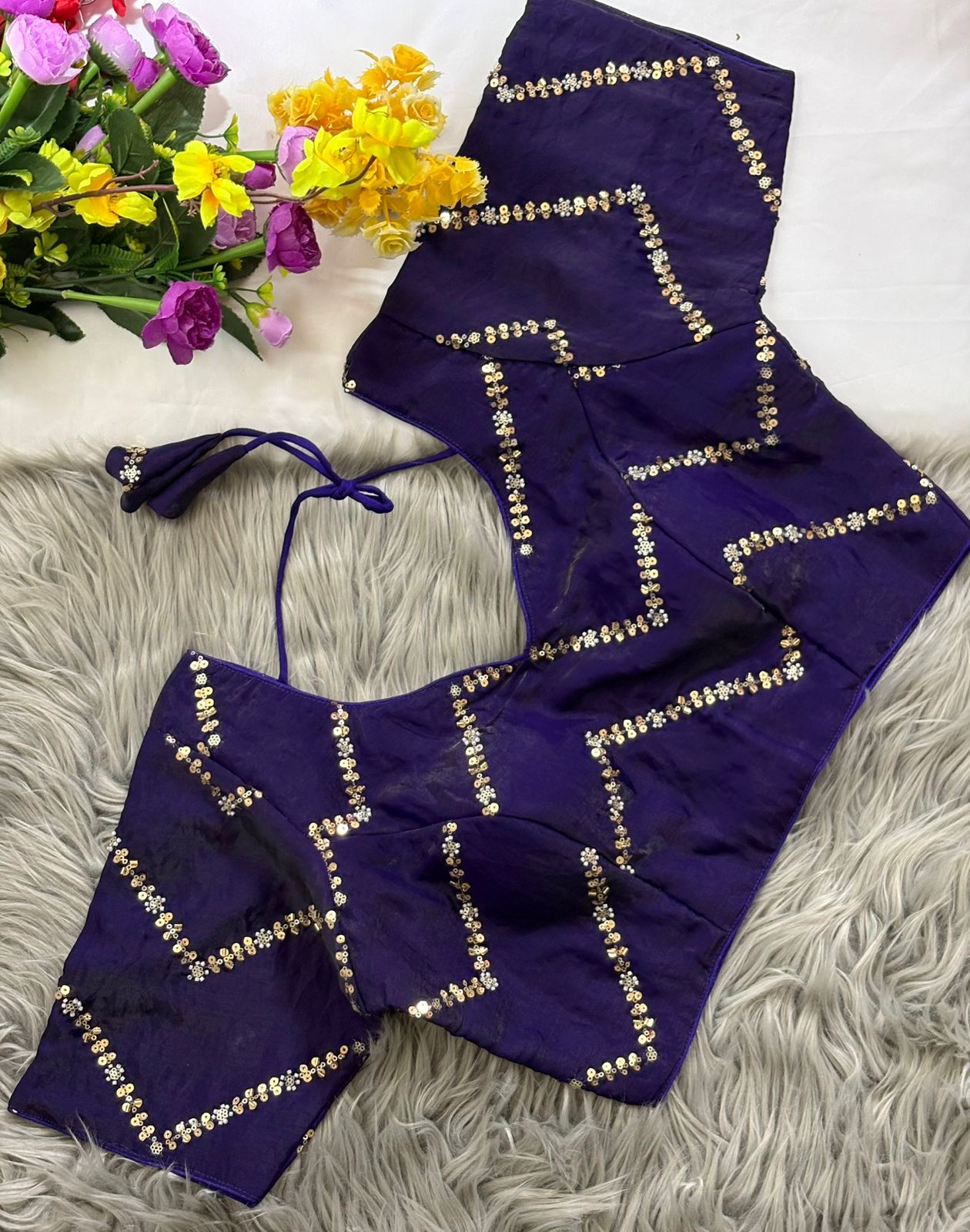
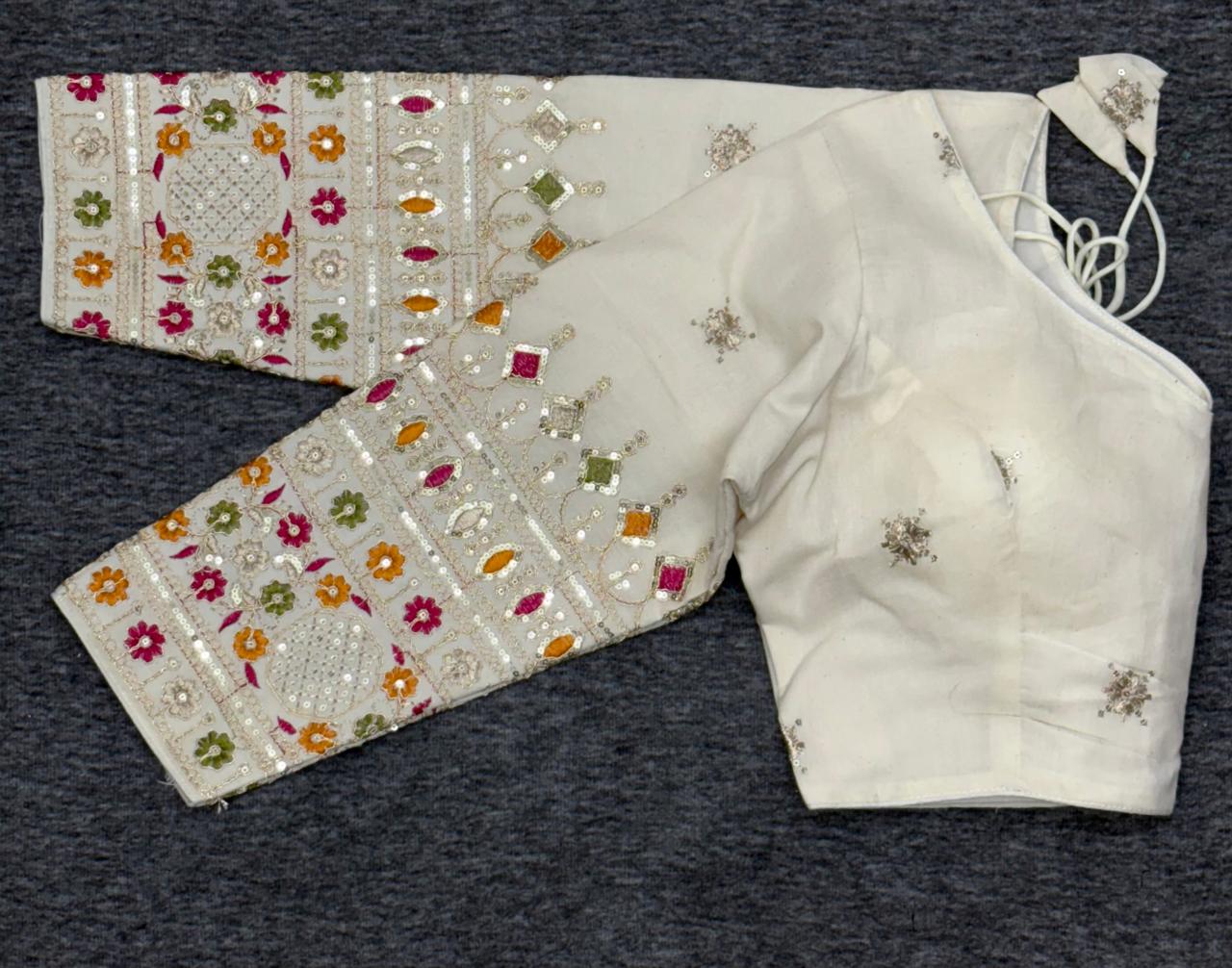
Silk requires a close look at shoulder width and bust ease because creasing can show clearly on a smooth surface. The Fendy Silk Zigzag Moti Work Readymade Blouse includes decorative work that may add visual and physical structure, so allow enough room for sitting, reaching and folding the arms.
The Banarasi Silk Golden Jari Padded Blouse for Women combines a richer woven surface with padding. Compare its finished measurements with a blouse that has a similar lining and construction rather than with a thin cotton blouse. Zari and embellishment can also make a garment less forgiving if it's stretched repeatedly.
How Should You Measure a Padded or Sleeveless Blouse?
Measure the bust over the bra you'll wear and compare underbust, armhole and shoulder measurements separately for a padded or sleeveless blouse. Padded cups alter the front shape, while sleeveless armholes depend heavily on their depth and curve.
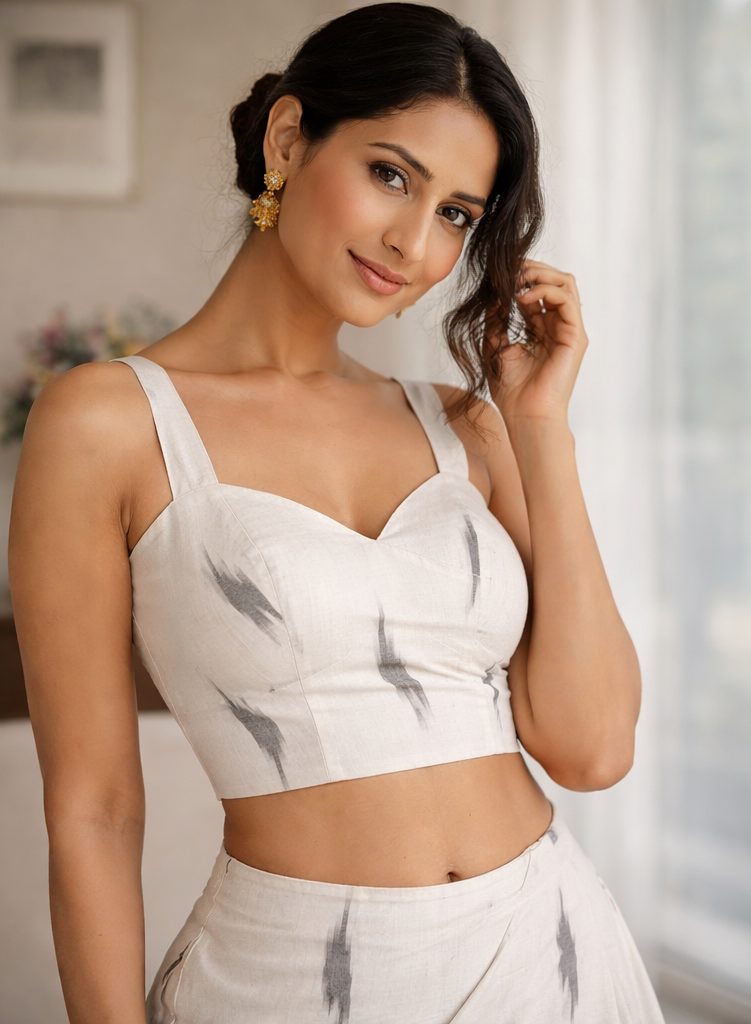
don't measure only the fullest point of the bust when buying a padded blouse. Check whether the product has fixed cups, removable pads or a lightly lined front. Fixed cups accommodate less variation in bust shape, and a cup that's too small may create horizontal lines or spilling at the upper edge even when the overall bust circumference fits.
For a sleeveless blouse, use an existing sleeveless blouse as a comparison garment. Measure the armhole curve if possible, and note whether the underarm sits high or low. A low armhole may feel comfortable while standing but expose the bra band when the arm is raised. A high armhole may look neat with a saree but restrict movement if the opening is narrow.
The Kalamkari Cotton V Neck Collar Blouse for Women adds neckline depth to the fitting decision. Measure the shoulder and bust first, then check whether the V-neck shape suits the neckline of your blouse bra. A V-neck can appear deeper when the blouse pulls across the bust, so accurate bust ease protects both comfort and the intended design.
What Should You Check on a Readymade Blouse Size Chart?
Check the measurement unit, measurement type, closure, fabric composition, lining and alteration policy before choosing a size. A size chart is useful only when you know whether its numbers describe the body or the finished garment.
- Units: Confirm whether the chart uses inches or centimetres. One inch equals 2.54 centimetres, so a unit mistake can make a blouse unusable.
- Key points: Look for bust, waist, shoulder, armhole and length rather than selecting by bust alone.
- Stretch: Note whether the fabric includes elastane or is described as stretchable. Pure cotton, Banarasi silk and many brocade fabrics have little natural give.
- Closure: Back hooks, side zips, front openings and tie-ups affect how much room is needed around the body.
- Padding: Check whether the cups are fixed, removable, lightly padded or heavily structured.
- Alterability: Side seams with extra allowance are easier to adjust than tightly finished seams with no spare fabric.
When your measurements fall between two sizes, choose according to the largest non-stretch measurement that can't be altered easily. For many blouses, that measurement is the shoulder or armhole rather than the bust. A tailor can reduce a slightly loose bust more easily than enlarge a shoulder seam with no extra fabric.
How Can You Compare an Online Blouse with a Blouse You Own?
Compare the online garment chart with the flat measurements of a blouse that fits comfortably in a similar fabric category. A direct comparison reveals how the new blouse will sit more reliably than a size label.
Choose a blouse with a similar construction. Compare a padded blouse with another padded blouse, a sleeveless blouse with another sleeveless blouse, and a lined silk blouse with another lined silk blouse. A loose cotton blouse isn't a useful benchmark for a fitted Banarasi silk blouse because the amount of ease and structure differs.
Measure the reference blouse across the bust, lower edge and shoulder. Measure its length from the shoulder seam to the hem, then compare sleeve length and armhole if relevant. Note whether the reference blouse closes comfortably when you sit, lift your arms and bring your elbows forward.
A useful fit check is to record the smallest measurement that feels comfortable in your existing blouse. If the new blouse's shoulder is narrower, its armhole is shallower or its bust is smaller, the new garment may feel restrictive even if the labelled size is larger. Product photographs can show design proportions, but photographs can't replace a measurement chart.
How Do Saree Pairings Affect Blouse Length and Fit?
Blouse length should match the saree drape, waist position and intended styling rather than following one universal number. A designer saree with a high-waisted drape may suit a shorter blouse, while a relaxed everyday drape may need a hem that provides more coverage.
Test the desired length with the saree you plan to wear. Pin or tuck a measuring tape at the expected waistline and check where the blouse hem would fall. A very short blouse may expose the midriff when the saree shifts, while a long blouse may overlap the saree waistband or distort the pleats.
The Blue Linen Cotton Floral Print Saree with Plain Dark Border can help illustrate proportion when paired with a plain or lightly detailed blouse. A dark border already creates a strong horizontal line, so the blouse length and lower edge should sit cleanly rather than bunching over the border. Measure for the actual drape height instead of copying the length of a blouse worn with a different saree.
Consider movement before finalising the size. Raise both arms, sit on a chair and bend slightly forward while wearing the bra used for measurement. If the blouse pulls across the bust, digs into the armhole or lifts several centimetres at the back, the garment needs a different size, more ease or professional alteration.
What Can a Tailor Alter After an Online Blouse Arrives?
A tailor can usually adjust side seams, hooks, straps and sometimes length, but shoulder width, armhole shape and cup placement are harder to change cleanly. Alteration possibilities depend on seam allowance, lining, padding and embellishment.
A slightly loose bust can often be reduced through the side seams. A blouse that's too long may be shortened if the hem design permits it. Hooks can sometimes be moved to gain or remove a small amount of room, although moving them won't correct a fundamentally narrow shoulder.
Major enlargement is more difficult. A tailor may need matching fabric to widen a blouse, and matching Banarasi silk, zari or printed Kalamkari cotton can be challenging. Redesigning a tight armhole can affect the sleeve, neckline and lining. Order the closest suitable size instead of relying on extensive post-purchase alteration.
Keep the original tags and avoid washing, ironing or removing padding until the fit has been checked. Try the blouse with the intended bra and saree, inspect the seams in daylight, and follow the seller's exchange or alteration instructions within the stated timeframe.
A Final Measurement Checklist Before You Place the Order
Confirm every critical number and construction detail immediately before checkout. Measurements can change slightly, and an old size chart may not represent a new product or fabric.
- Full bust measured over the intended bra.
- Underbust recorded for fitted or padded styles.
- Shoulder width checked against a comfortable blouse.
- Armhole and upper-arm measurements checked for sleeved designs.
- Blouse length tested against the intended saree drape.
- Finished garment measurements distinguished from body measurements.
- Fabric stretch, lining, padding and closure reviewed.
- Size selected using the largest difficult-to-alter measurement.
- Exchange and alteration terms read before removing tags.
Accurate measurements can't eliminate every fit difference because bodies, patterns and fabrics vary, but they substantially reduce guesswork. A readymade blouse becomes a practical online purchase when the measurement chart, fabric behaviour and intended saree styling are considered together.
Common Questions About Measuring for a Readymade Saree Blouse
How do I measure myself for a readymade blouse online?
Measure your full bust, underbust, shoulder, armhole, upper arm and desired blouse length while wearing the bra you will use with the blouse. Compare those numbers with the seller's chart and check whether the chart lists body or finished garment measurements.
Should a readymade blouse measurement be the same as my bust measurement?
Not usually. A finished blouse generally needs additional ease for movement, lining, padding and closures, so its bust measurement may be about 1 to 2 inches larger than the body measurement for a fitted woven style.
How do I choose a size when my measurements fall between two sizes?
Choose according to the largest non-stretch measurement that cannot be altered easily, usually the shoulder or armhole. A tailor can often reduce a slightly loose bust more easily than enlarge a narrow shoulder seam.
How should I measure for a padded blouse?
Measure your bust over the bra you plan to wear and check the underbust, shoulder and armhole as well. Also confirm whether the blouse has fixed or removable pads, because cup construction affects the fit even when the overall bust measurement is correct.
Can a tailor alter a readymade blouse that is too tight?
A tailor can often reduce a loose bust, adjust hooks or shorten the hem, but enlarging a tight shoulder, armhole or padded cup is difficult without extra matching fabric. Check seam allowance and alteration terms before ordering.
Do cotton and silk blouses need different measurements?
The body measurements are the same, but the amount of ease may differ. Woven cotton and silk usually have limited stretch, while lining, zari, padding and embellishment can make a silk blouse less forgiving, so compare it with a similarly structured garment.


