

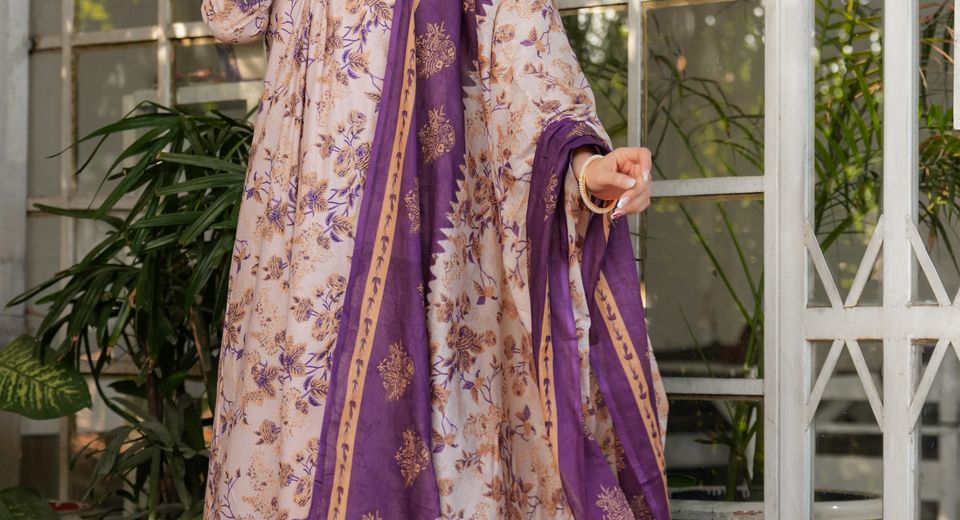
What to look for in the kurta bottom and dupatta for pear-shaped bodies becomes much easier when you assess the complete outfit rather than the kurta alone. A pear-shaped body commonly has a narrower shoulder line, a defined waist and fuller hips or thighs. The most useful styling goal isn't to conceal the lower body; it's to create visual balance through proportion, fabric fall, colour placement and controlled volume.
A well-chosen salwar suit can do that with three practical decisions: select a bottom that skims instead of clings, choose a kurta hem that finishes at a flattering point. Position the dupatta so that it adds interest around the upper body without creating bulk at the hips. The right fit should also allow comfortable sitting, walking and movement, especially in Indian festive settings.
Start with the silhouette: balance, not camouflage
A balanced silhouette gives similar visual importance to the shoulders, torso and lower body. Pear-shaped proportions usually benefit from a little detail near the neckline, sleeves or upper chest, while the lower half looks cleaner in fabrics that fall vertically and don't stop at the widest part of the hip.
Look at the outfit from a distance of two to three metres, because overall proportion matters more than a single embroidered motif. A narrow shoulder line paired with a very wide sharara or heavily gathered salwar can make the lower half appear broader. A moderate-width pant, a lightly flared trouser or a straight salwar generally creates a longer uninterrupted line.
Colour contrast also affects balance. A lighter or brighter kurta with a slightly deeper bottom can draw attention upwards, while a matching three-piece set creates a continuous column of colour. Neither approach is mandatory. The important factor is where the strongest contrast, print or embroidery sits.
Use the kurta hem as a visual boundary
A kurta hem that falls below the fullest part of the hip usually creates a smoother line for a pear-shaped body. Mid-thigh to just above the knee is often versatile, while a longer straight kurta can work beautifully when the fabric is fluid and the side slits allow movement.
Avoid choosing a hem only because a measurement chart labels it "long." Check where the hem lands on your own body. A hem ending exactly at the widest point of the hip can draw a horizontal line there, particularly when the hem has contrast piping, heavy embroidery or a bright border.
An A-line kurta can accommodate the hip while creating gentle movement below the waist. A straight kurta works when the side seams provide enough ease and the fabric doesn't pull across the seat. Anarkali silhouettes need careful assessment because multiple gathers beginning at the waist can add volume below the waist; a lightly flared Anarkali is usually easier to balance than a very full one.
What to look for in the kurta bottom and dupatta for pear-shaped bodies
What to look for in the kurta bottom and dupatta for pear-shaped bodies is a combination of controlled width, vertical fall and upper-body interest. The bottom should follow the body without outlining every curve, and the dupatta should create length or width near the shoulder rather than adding a thick horizontal band across the hip.
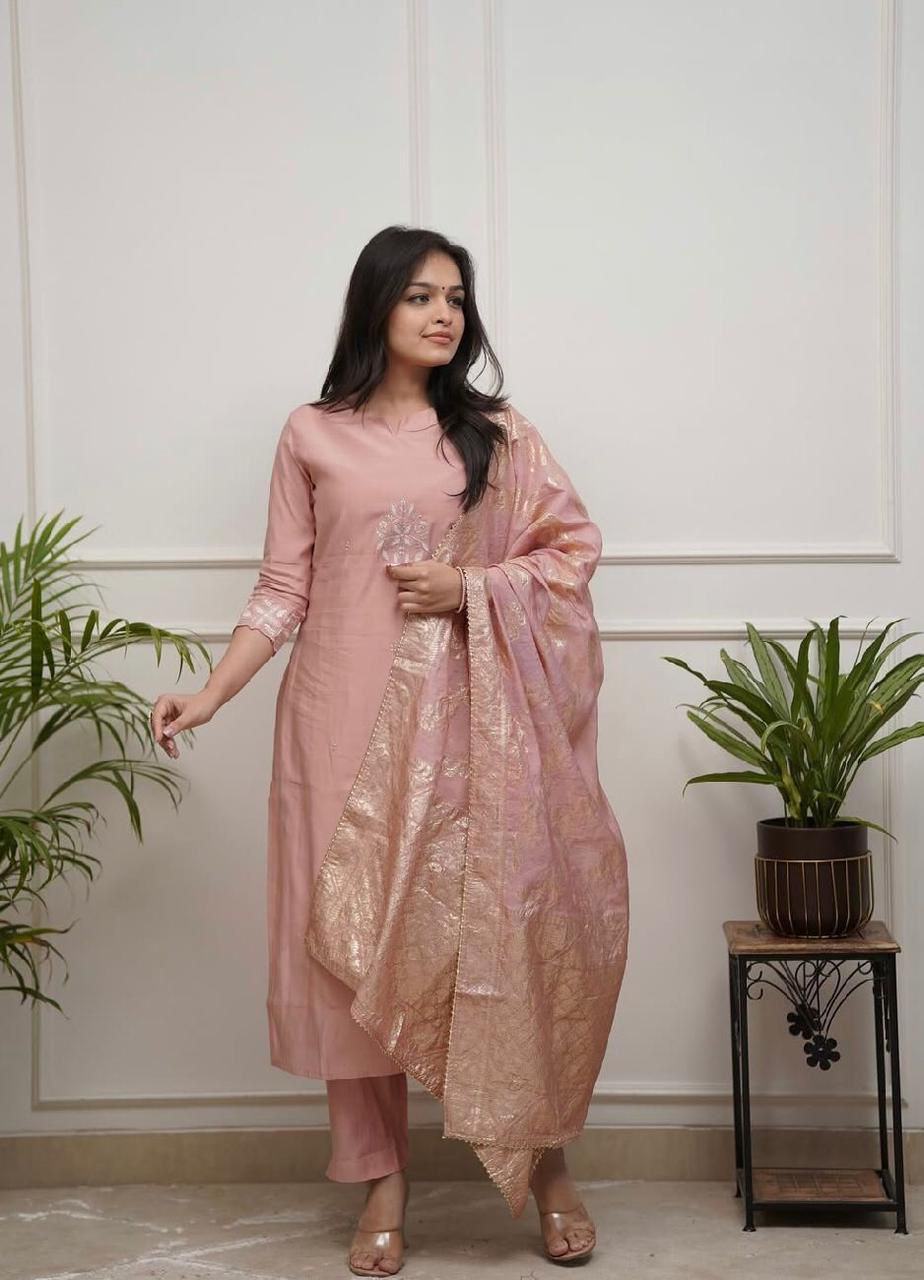
Straight pants are a dependable option because the hem width remains relatively consistent from knee to ankle. Choose enough ease for sitting, but avoid excessive fabric pooling around the thighs. A trouser with a flat front, a clean waistband and a moderate ankle opening usually looks sharper than a heavily pleated bottom.
Palazzo pants can work when the fabric is lightweight and the kurta is long enough to cover the upper hip. Fluid crepe, lightweight silk blends and soft cotton can fall elegantly, whereas stiff fabric can project outward from the widest point. A palazzo with an all-over bold print may require a quieter kurta and dupatta to prevent visual weight from concentrating below the waist.
Salwars and Patiala bottoms carry intentional volume, so they need proportionate styling. A fitted or semi-fitted kurta that extends over the hip can prevent the outfit from looking bottom-heavy. The Punjab Patiala Salwar Suits collection illustrates why pleat direction and fabric softness matter: vertical folds can look rhythmic, while stiff pleats can expand the silhouette.
Choose bottoms according to fabric behaviour
Fabric behaviour matters more than the name of a bottom style. Cotton with a firm hand may hold a straight shape, while viscose Chanderi silk can offer a softer fall with a subtle sheen. Chanderi should be checked for transparency and lining, especially when the bottom is pale or lightly woven.
The Brown Embroidered Cotton Kurta Pant Dupatta Set Women is a useful example of how cotton can support a clean pant silhouette for daytime dressing. The Cream Floral Cotton Kurta Set with Pant and Dupatta shows another practical principle: a breathable cotton set can remain visually balanced when the print is distributed across the outfit instead of concentrated only at the hips.
Bottom styles that usually work well
Moderately straight pants, softly tapered trousers and lightly flared bottoms usually suit pear-shaped proportions because each style provides ease without adding unnecessary width. The best choice depends on the kurta length, fabric weight and the amount of detail on the lower half.
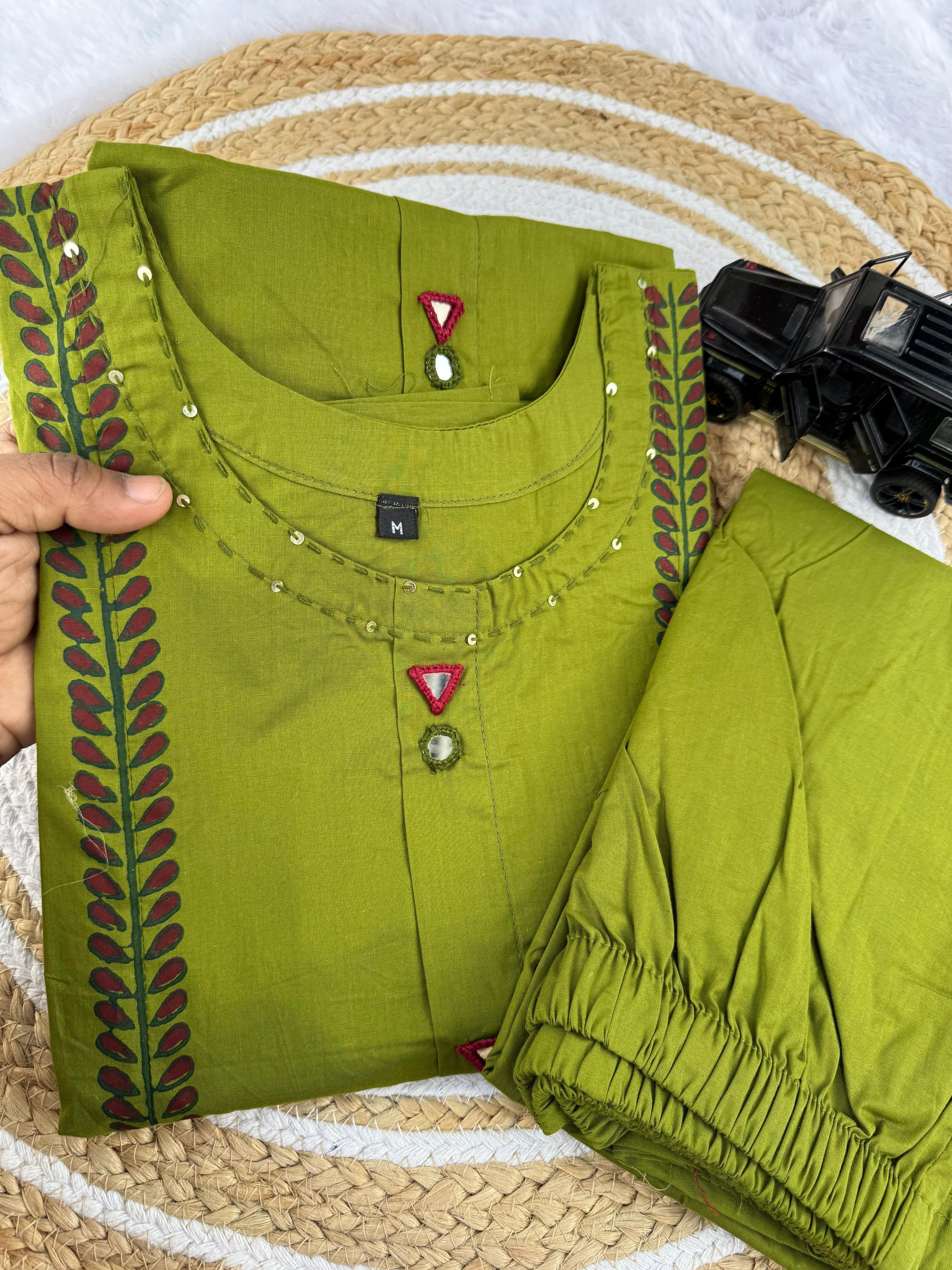
- Straight pants: Select a fabric with enough drape to skim the thighs and a hem that doesn't grip the ankle. A trouser opening of approximately 13 to 16 inches can look balanced for many ready-to-wear sets, although personal measurements should take priority.
- Cigarette pants: These can look elegant under a longer kurta, but they should not be skin-tight at the knee or calf. A little ease prevents the fabric from pulling upward and visually shortening the lower body.
- Soft palazzos: Choose fluid fabric, a covered elastic or flat-front waistband and a kurta that reaches at least the upper thigh. Avoid very stiff, heavily patterned palazzos if the kurta already has substantial hip-level embroidery.
- Lightly flared trousers: A subtle flare balances the shoulder line without producing the dramatic volume of a full sharara. The flare should begin below the hip rather than at the widest part of the thigh.
- Patiala or gathered salwar: Use a longer kurta, a defined neckline and a dupatta that sits higher on the torso. This combination lets the traditional volume look intentional rather than accidental.
Very thin leggings can emphasise the difference between the waist, hips and ankles when paired with a short kurta. A short straight kurta with a narrow bottom isn't automatically wrong, but the proportion needs to be deliberate. Adding a longer outer layer, a stronger neckline or a shoulder-focused dupatta can make the outfit feel more complete.
Dupatta placement can change the entire outfit
Dupatta placement is one of the fastest ways to redistribute visual attention on a pear-shaped body. A drape that creates a clean vertical line from the shoulder to the side of the thigh usually lengthens the frame, while a thick horizontal fold placed across the widest part of the hip can add visual width.
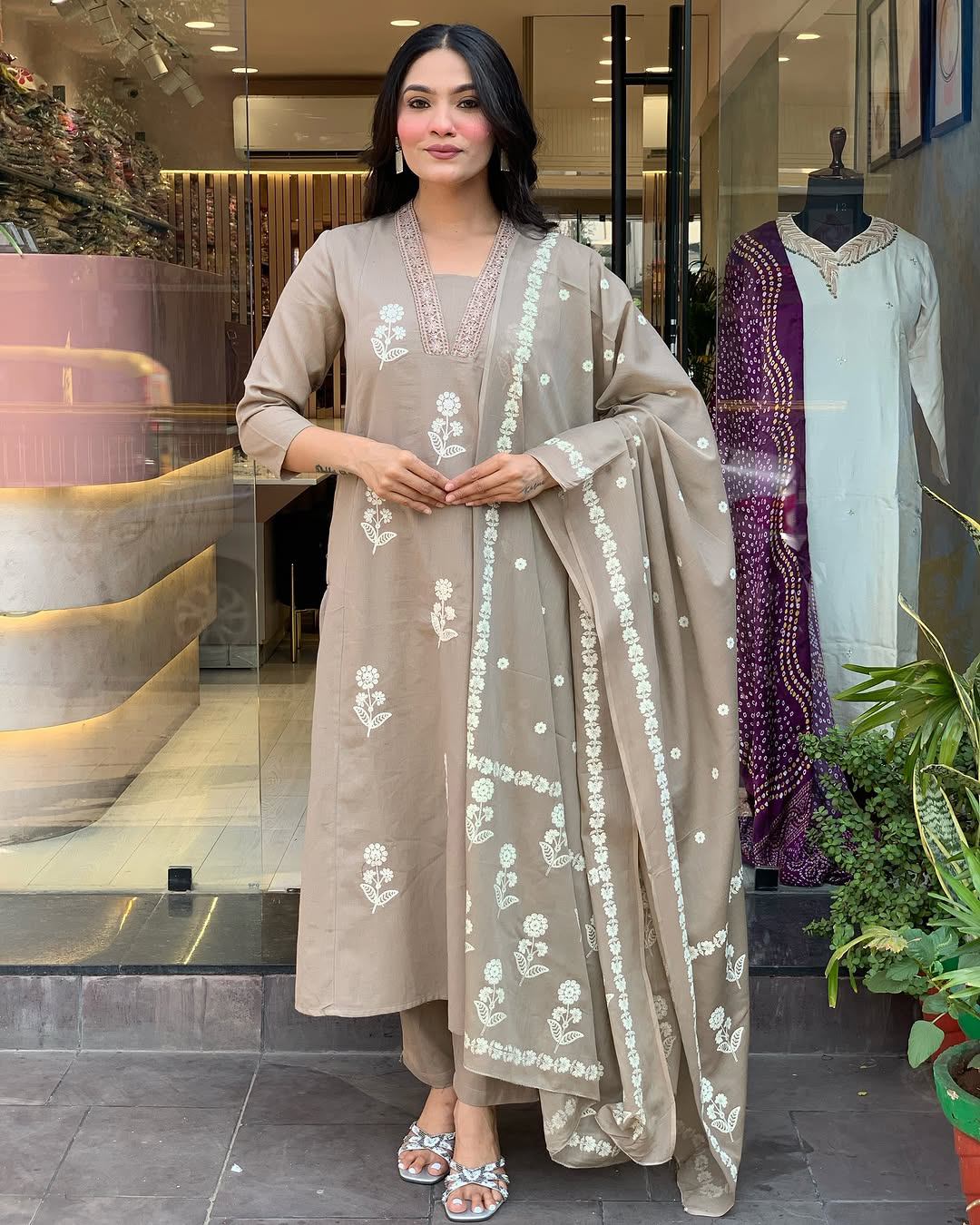
The classic one-shoulder fall works well when the dupatta is secured near the shoulder and allowed to travel vertically along the side of the body. Keep the front panel relatively narrow if the fabric is bulky. Pinning the dupatta at the shoulder and near the waist can prevent it from sliding into a heavy bunch around the hip.
A front-open drape can add width around the upper torso, especially when the dupatta has a border, zari detail or a brighter colour. Keep both front ends similar in length and let them fall from the shoulders rather than tying them tightly at the waist. A loose V-shaped fall can also direct the eye toward the centre of the body.
Match the drape to the fabric
Light to medium-weight fabrics are easiest to arrange because they create shape without excessive bulk. Chanderi, soft cotton, silk and viscose blends each behave differently: Chanderi can hold a crisp pleat, cotton can feel structured, silk can cling or slip, and viscose usually gives a fluid fall.
The Pastel Blue Embroidered Chanderi Kurta Set with Dupatta and the Pink Embroidered Chanderi Kurta Set with Dupatta demonstrate why a coordinated Chanderi dupatta can be draped in narrow pleats rather than folded into a thick roll. A crisp border placed over one shoulder can bring attention upward, particularly when the kurta neckline or sleeve also carries embroidery.
When a dupatta has a wide border, place the border vertically along one side or diagonally across the upper torso. Avoid allowing a heavy border to sit exactly across the fullest hip. A narrow border or scattered motif is more forgiving when the dupatta is worn over both shoulders.
Prints, embroidery and colour placement
Print and embroidery placement should support the silhouette by giving the upper body enough detail and keeping the lower body visually orderly. This doesn't mean choosing only dark bottoms or plain fabrics; it means observing where the strongest pattern sits.
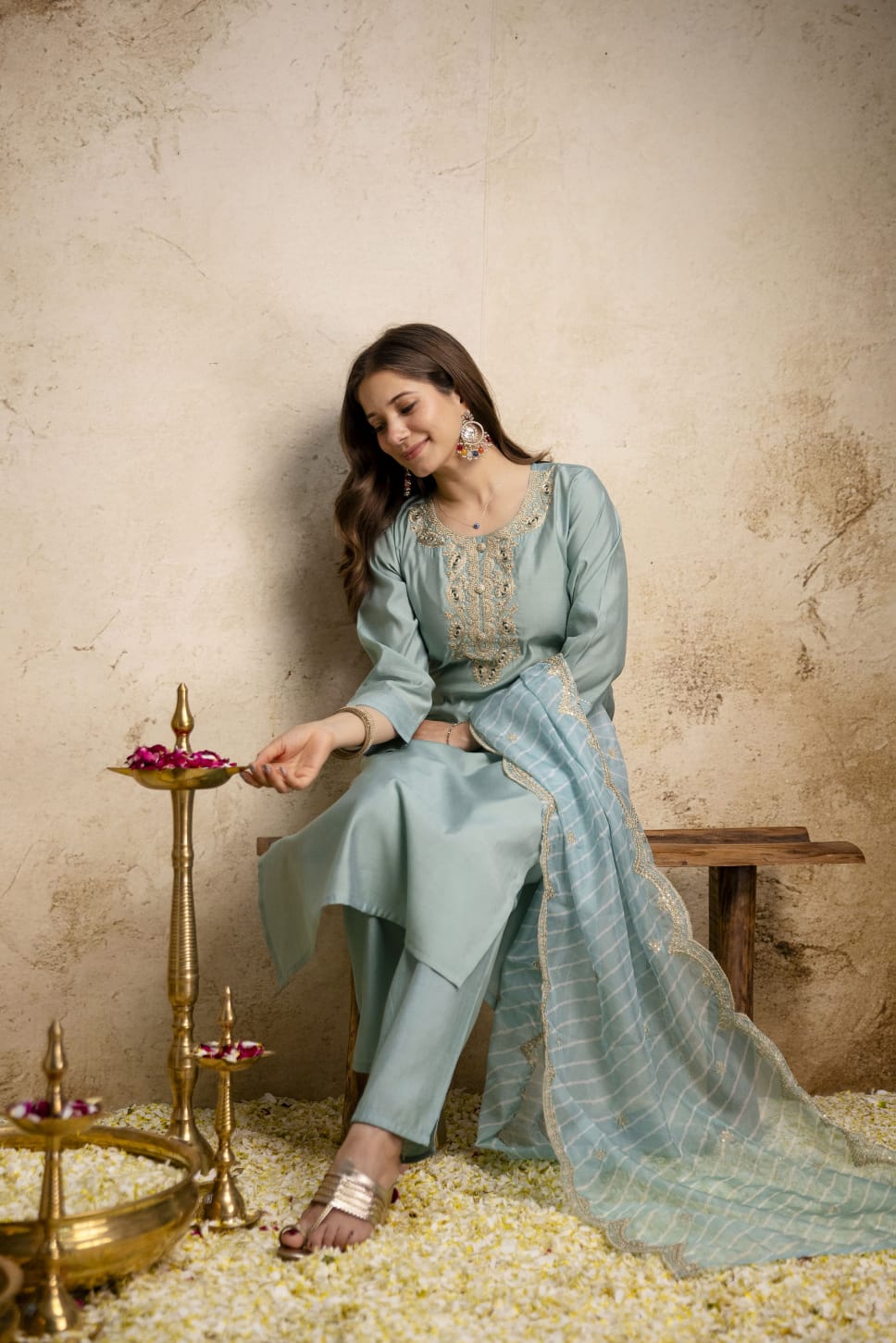
Neckline embroidery, shoulder motifs, contrast sleeves and earrings can build interest above the waist. Vertical panels, small repeated motifs and narrow borders can lengthen the kurta. Large motifs placed at the widest hip point can draw attention there, especially when the rest of the outfit is plain.
Floral prints can be very wearable when the scale is moderate and the base colour remains calm. The Chic Red Floral Silk Kurta Pant Dupatta Set for Women uses the visual richness of silk and floral patterning, so the cleanest styling approach is to keep the drape vertical and avoid adding a bulky waist knot.
Regional textile-inspired collections offer useful print ideas. Kalamkari Print Salwar Suits (Copy) can be styled with a quieter bottom if the kurta carries a dense narrative print. Gujarat Bandhej Salwar Suits often bring lively pattern and colour, so a restrained dupatta fold can stop the complete outfit from becoming visually crowded. Odisha Sambalpuri Salwar Suits can be balanced through a longer kurta and a simple straight bottom when the textile pattern is the main feature.
Maroon Viscose Chanderi Silk Embroidered Kurta Set for Women offers a different lesson: a darker, softly lustrous set can create a continuous line, while controlled embroidery adds interest without requiring a contrasting bottom. If the outfit is monochromatic, use neckline, sleeve and dupatta details to bring focus toward the face.
Fit checks to complete before buying
A salwar suit fits well when the wearer can sit, walk, raise both arms and close the side slits without strain. A size chart is useful, but body measurements and garment measurements answer different questions, so compare both whenever the information is available.
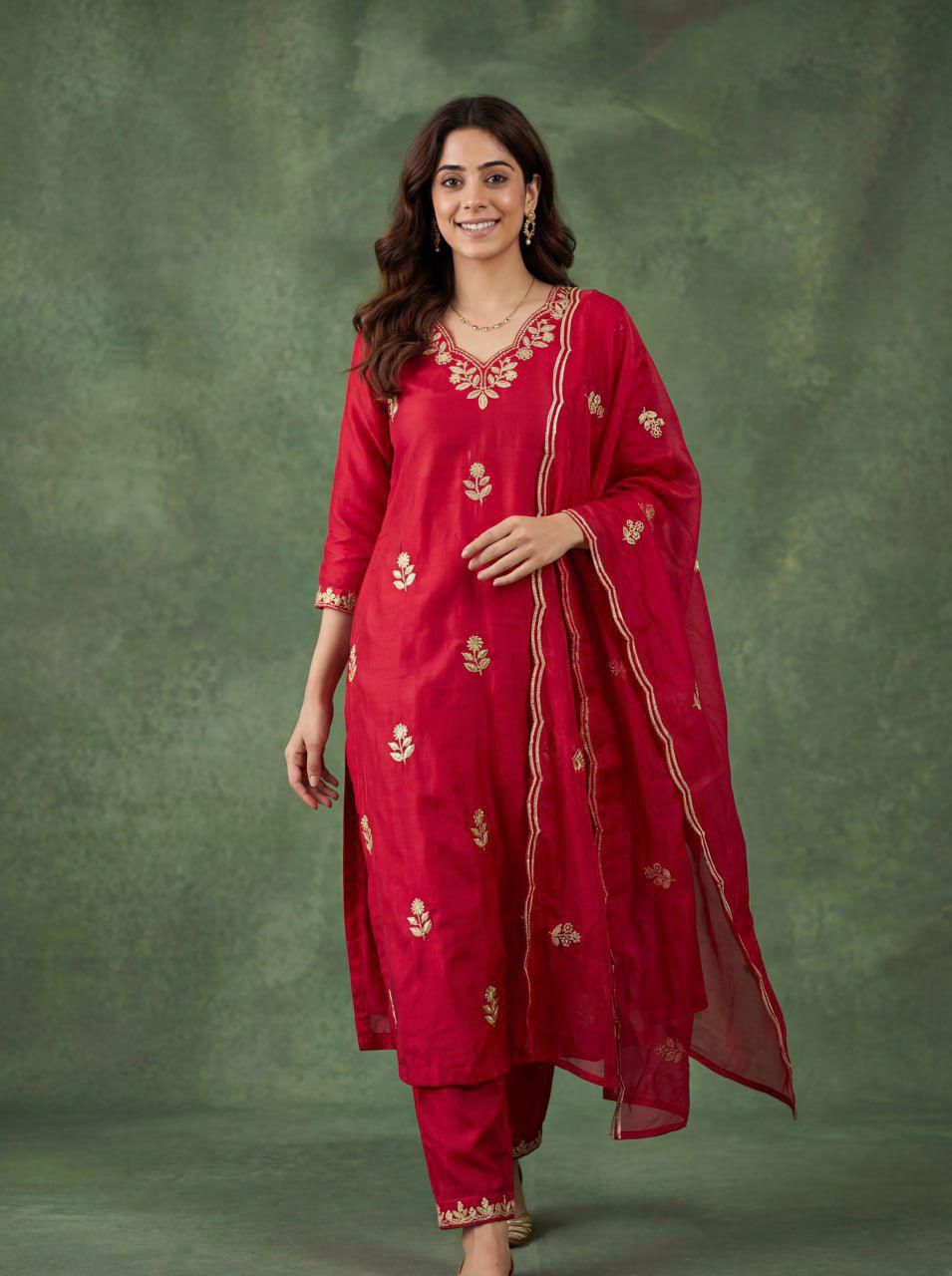
- Measure the fullest hip: Keep the tape level around the fullest part of the seat and add wearing ease. A straight kurta should not pull diagonally from the side slit or across the back.
- Check the bottom rise: The rise must allow sitting without cutting into the waist or creating tight horizontal folds under the seat. A drawstring can offer adjustment, but it can't compensate for insufficient hip room.
- Inspect the thigh and knee: Walk several steps and sit on a chair. Pulling at the thigh indicates that a narrower pant may not provide comfortable movement.
- Locate the kurta hem: Try to visualise the hem against the fullest hip. If the hem ends there, consider a slightly longer length or a fabric with more fluid fall.
- Test the dupatta width: Hold the dupatta over one shoulder and check whether the border lands at the hip, knee or ankle. A very wide dupatta may need narrower pleats to avoid excess volume.
The Brown Embroidered Kurta Pant Dupatta Set for Women can be considered through these fit checks rather than by colour alone. The same method applies to the Mustard Embroidered Chanderi Kurta Set for Women - Varnavi., where the kurta length, Chanderi structure and dupatta border should be assessed together.
Build occasion-appropriate proportions
Daywear generally benefits from breathable cotton, moderate prints and bottoms that allow easy movement. A cotton straight pant with a longer kurta is practical for work, family visits and daytime celebrations. Keep jewellery near the neckline or ears if the dupatta is plain, because small upper-body details can balance a simple silhouette.
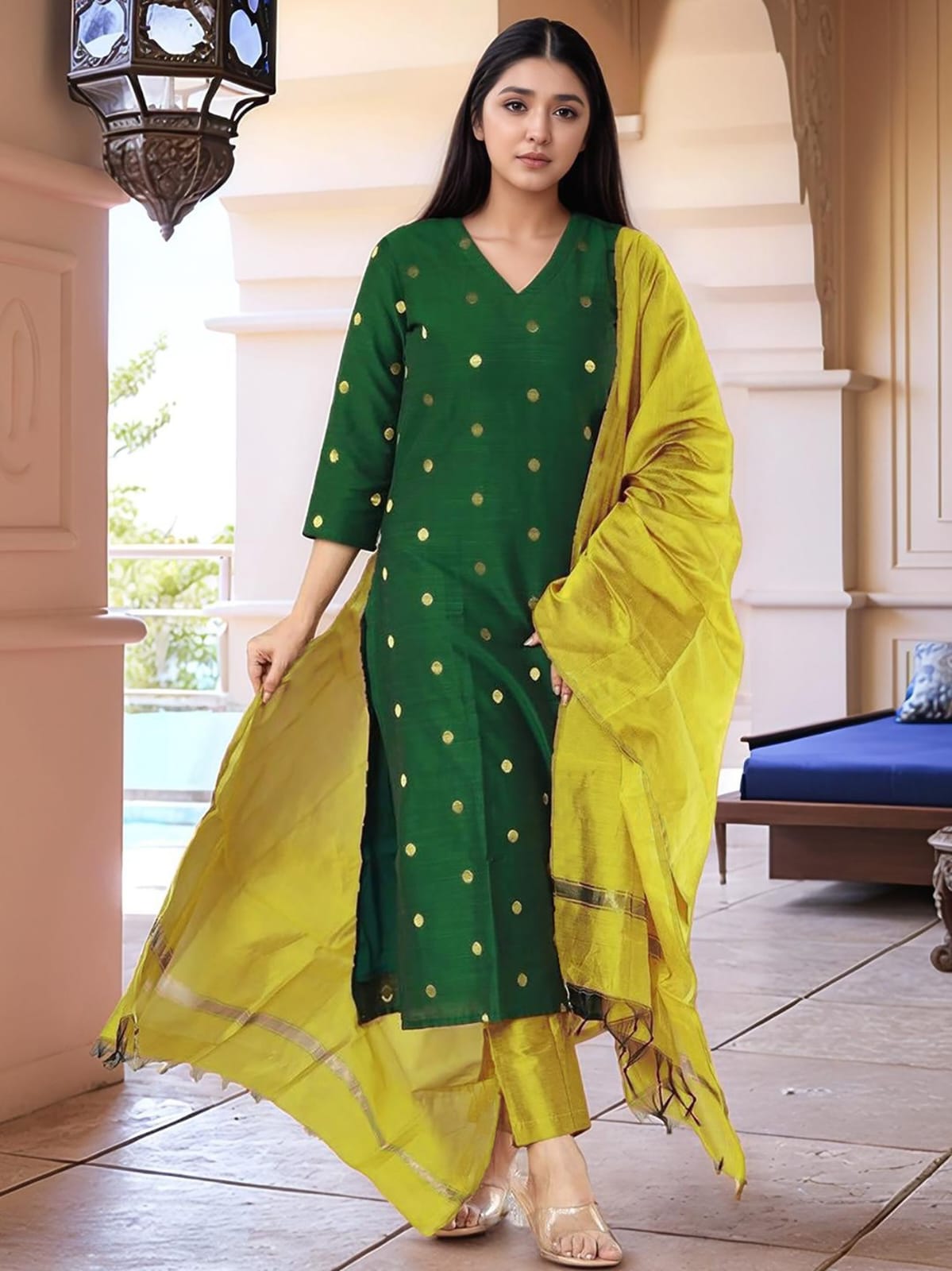
Festive dressing allows more sheen, embroidery and border work, but the volume should still be distributed intentionally. Maharashtra Paithani Inspired Salwar Suits can carry a richer border or lustrous accent, so pair a decorative dupatta with a clean bottom rather than adding gathers, heavy ankle detail and a wide border at once.
For an evening event, a silk or viscose Chanderi set can look polished with pointed footwear and a shoulder-focused drape. The Maroon Viscose Chanderi Silk Embroidered Kurta Set for Women can be styled with a slim clutch and longer earrings to keep attention near the face. A darker monochrome palette is especially effective when the garment line remains smooth from shoulder to ankle.
For a Haldi ceremony, movement and washability deserve equal attention. Choose a bottom that won't trip during rituals, pin the dupatta securely and avoid a drape that needs constant adjustment. Yellow, pink and mustard can look festive without requiring excessive embellishment, particularly when floral or regional motifs provide the visual interest.
A practical formula for choosing the complete set
What to look for in the kurta bottom and dupatta for pear-shaped bodies can be reduced to a simple formula: keep the lower silhouette smooth, place the strongest detail above the waist, and use the dupatta to create length or controlled shoulder width.
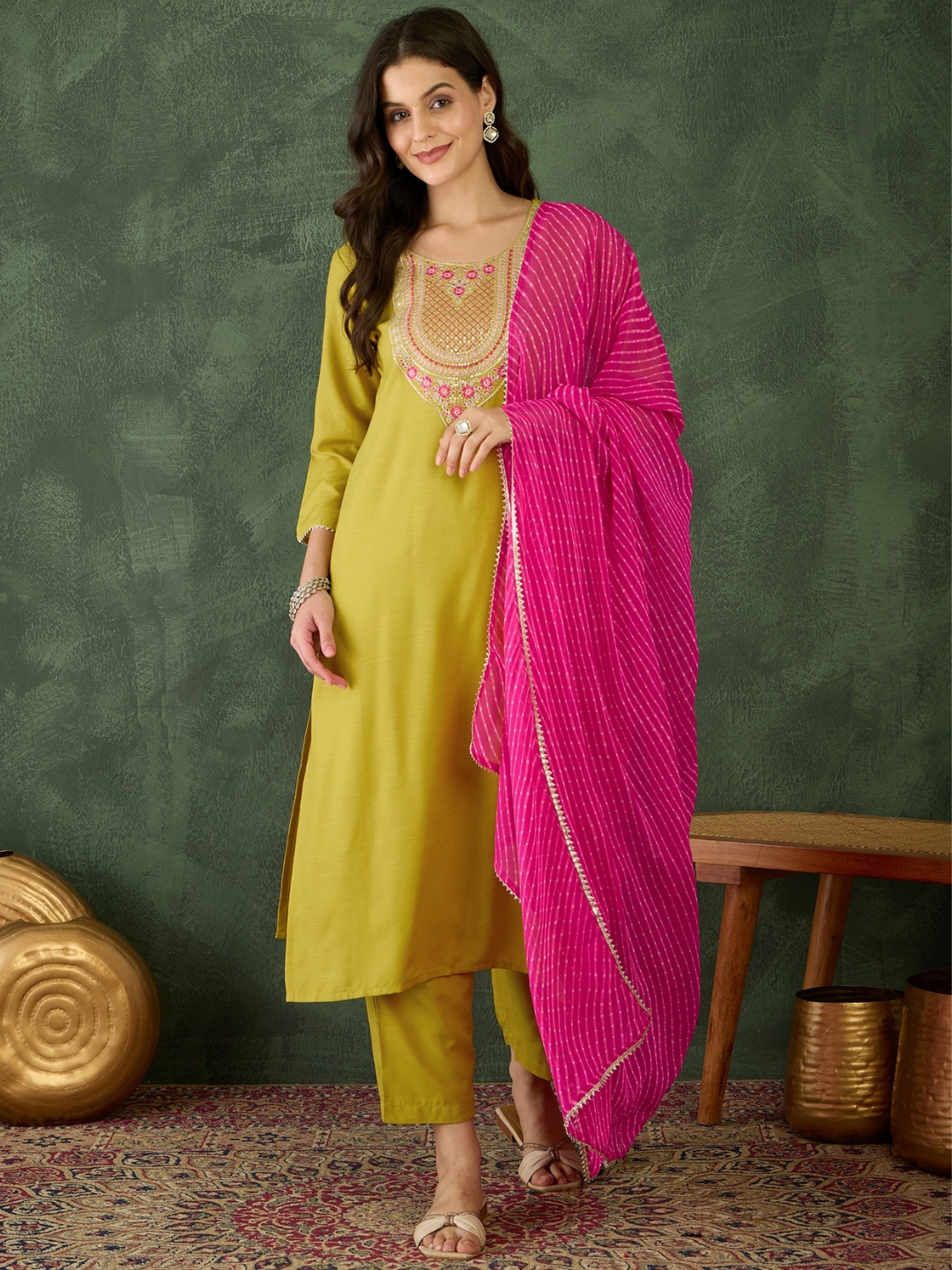
Begin with the bottom. Pick straight pants, a softly tapered trouser or fluid palazzo according to the kurta length and fabric. Next, check the hem. Choose a length that passes the fullest hip or falls deliberately well above it, rather than stopping accidentally at the widest point. Finally, arrange the dupatta with a secure shoulder pin, a clear vertical fall and minimal bulk around the hip.
Most importantly, treat body-shape advice as a set of options rather than restrictions. A pear-shaped body can wear a short kurta, a printed palazzo, a Patiala salwar or a bright dupatta when the complete proportion is intentional. Comfort, movement and personal style remain the final tests of a successful salwar-suit choice.
Common Questions About Kurta Bottoms and Dupattas for Pear-Shaped Bodies
Which kurta bottom is best for a pear-shaped body?
Straight pants, softly tapered trousers and fluid palazzos usually work well for pear-shaped bodies because they provide ease without adding uncontrolled width at the hips. Choose the bottom according to the kurta length, fabric fall and amount of lower-body embroidery.
Can pear-shaped women wear palazzo pants with a kurta?
Yes, pear-shaped women can wear palazzo pants when the fabric is fluid and the kurta covers the upper hip or falls longer. Avoid very stiff fabric and pair a wide palazzo with a cleaner kurta or a vertically draped dupatta.
How should a dupatta be draped on a pear-shaped body?
A shoulder-to-side vertical drape or a front-open drape usually creates a balanced line. Pin the dupatta at the shoulder, keep bulky folds away from the fullest hip and use a border vertically or diagonally across the upper torso.
Should a pear-shaped woman wear a short or long kurta?
Both lengths can work, but the hem should not accidentally stop at the widest point of the hip. A longer straight kurta or a short kurta worn with a structured, moderate-width bottom can create a deliberate and balanced proportion.
Are Patiala salwars suitable for pear-shaped bodies?
Patiala salwars can suit pear-shaped bodies when the volume is intentional and supported by a longer or semi-fitted kurta. A dupatta placed higher on the torso and upper-body neckline detail can balance the generous pleats below the waist.
Which fabrics are comfortable and flattering for pear-shaped salwar suits?
Soft cotton, viscose Chanderi silk, fluid silk and lightweight Chanderi can all work well when the garment has enough hip ease. Fabric weight matters: stiff cloth can project outward, while fluid cloth usually creates a longer, smoother fall.


