

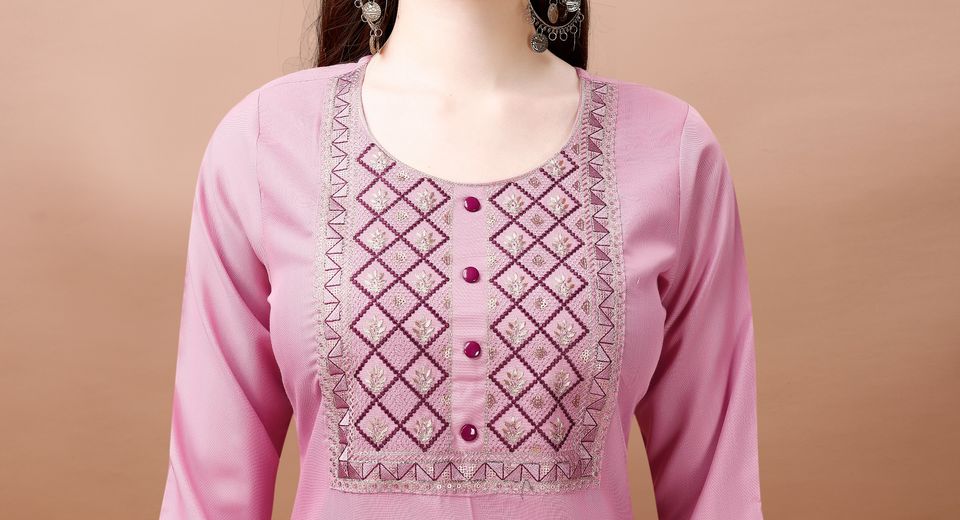
A well-fitted salwar suit should let you sit, reach forward and raise your arms without pulling across the chest. What to look for in the kurta bottom and dupatta for fuller busts begins with proportion: the lower half and the dupatta should support the kurta's shape rather than add visual weight directly over the bust. Small decisions about trouser width, hem length, fabric and drape can make a three-piece outfit feel substantially more comfortable.
Fuller-bust dressing doesn't require hiding the body or choosing only loose, dark clothing. The useful goal is controlled ease: enough room at the bust, a clean fall through the torso, and a lower half that creates visual balance. The following checks work for cotton salwar suits, Chanderi kurta sets, silk-blend outfits and festive embroidered designs.
What to look for in the kurta bottom and dupatta for fuller busts
The most important choice is a bottom and dupatta combination that balances the volume of the kurta without making the outfit feel bulky. A straight or gently tapered bottom usually creates a long vertical line, while a medium-width palazzo or well-shaped Patiala can add proportion below the waist when the kurta isn't excessively flared.
Measure the bust, waist, hip and preferred trouser length before choosing a set. The bust measurement needs the greatest ease in the kurta, but the hip measurement determines whether a pant or palazzo hangs smoothly. A practical starting point is 2 to 4 inches of ease at the bust for a woven kurta, depending on personal comfort and the garment's cut. Tightness at the bust can't be corrected by changing the dupatta.
For the dupatta, check the finished width, length and fabric weight. A width of approximately 36 to 44 inches gives useful coverage without creating a thick folded band across the chest. A 2.25 to 2.5 metre dupatta offers enough length for a shoulder drape or a front-falling style on most adults, although height and styling preference change the result.
Which kurta bottoms create balance?
Straight pants, slim cigarette pants and moderate-width palazzos are the most reliable bottom shapes for balancing a fuller bust. Each silhouette creates a different proportion, so the correct choice depends on the kurta's length, flare and fabric.
Straight pants and cigarette pants
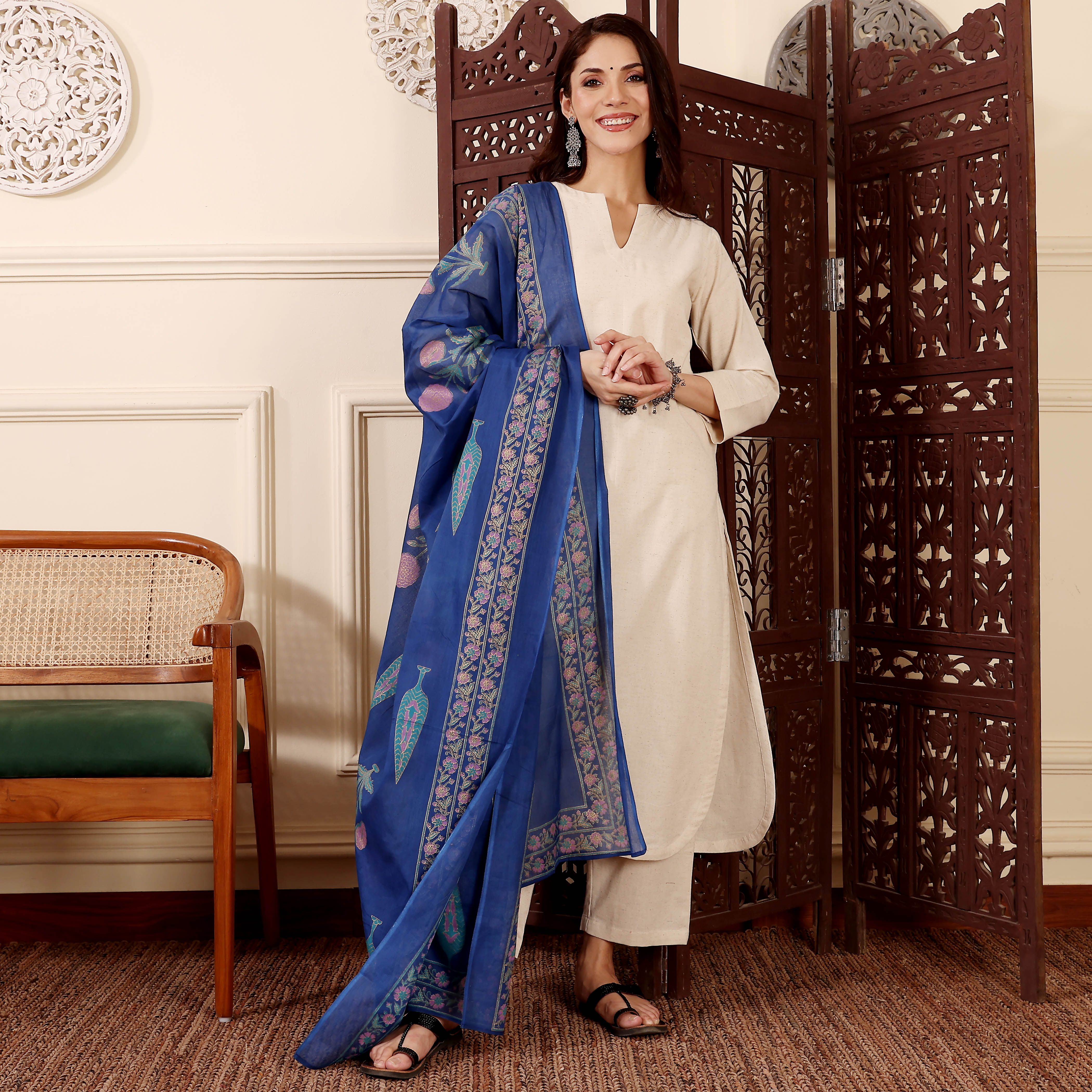
Straight pants create a continuous vertical line from the kurta hem to the ankle. Straight pants work particularly well with a kurta that ends around the knee or lower calf because the narrow lower shape prevents the outfit from looking wide from top to bottom. A 14 to 18 inch finished leg opening often gives a neat line without clinging uncomfortably.
Cigarette pants suit shorter straight kurtas and structured outfits. Choose a waistband that lies flat rather than cutting into the abdomen, and avoid a very tight ankle if sitting or climbing stairs is important. Brown Embroidered Cotton Kurta Pant Dupatta Set Women demonstrates how a trouser-based set can keep the lower half visually calm while the kurta carries the surface detail.
Palazzos and wide-leg pants
Palazzos balance a fuller bust when the kurta is relatively straight, lightly flared or side-slit. A wide leg adds volume below the waist, making the complete silhouette feel intentional rather than top-heavy. A fluid cotton or silk-blend palazzo usually falls better than a stiff, heavily gathered version.
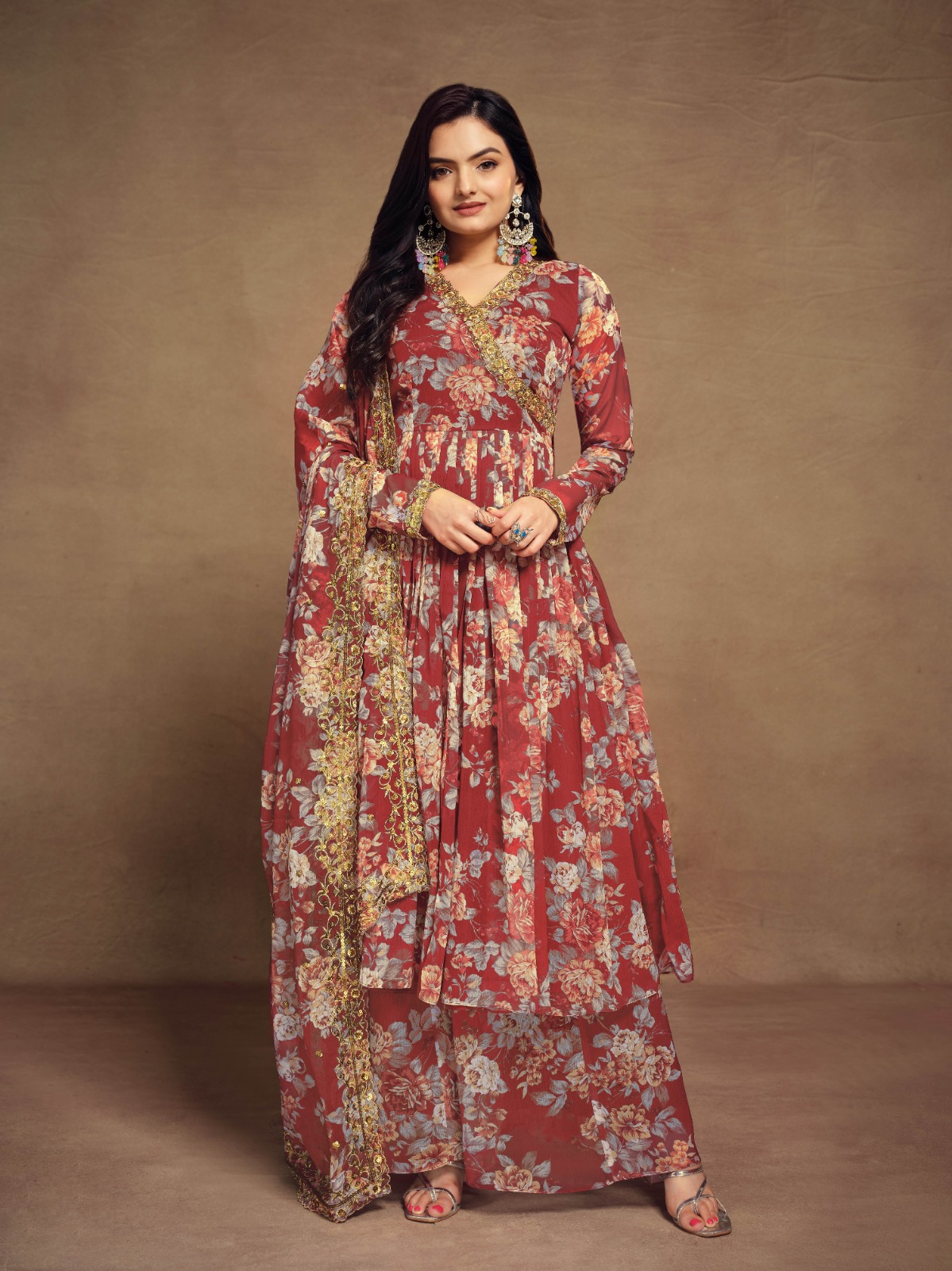
Pairing a very flared Anarkali with an extremely wide palazzo can create unnecessary volume at both ends. A straight pant is generally more proportionate under a strong Anarkali flare. Cream Floral Cotton Kurta Set with Pant and Dupatta brings an useful reference for an easy, coordinated silhouette in which the pant doesn't compete with the floral kurta.
Patiala and gathered bottoms
Patiala bottoms work best when the kurta is comparatively simple and reaches the upper thigh or knee. Multiple pleats add horizontal volume around the hips, so the fabric should drape rather than stand away from the body. Punjab Patiala Salwar Suits are especially useful for understanding this traditional proportion, where a shorter kurta and fuller lower garment create deliberate balance.
Heavy gathering directly below a long, ornate kurta can make the outfit look crowded. If the kurta includes dense embroidery or a broad border, choose a less gathered bottom or a plain fabric that lets the silhouette breathe.
How should the kurta length and hem work with the bottom?
The kurta hem should leave enough visible bottom fabric to establish a clear vertical proportion. A knee-length kurta usually works with straight pants, cigarette pants or moderate palazzos, while a calf-length kurta needs a narrower bottom unless the design is intentionally wide and fluid.
Use the following practical proportions as a starting point:
- Shorter kurta: Pair a kurta ending around the upper thigh with a palazzo, Patiala or straight pant, depending on the amount of gathering.
- Knee-length kurta: Choose a straight pant or medium-width palazzo for a clean, balanced line.
- Calf-length kurta: Prefer a slim or straight bottom unless the kurta has a deliberate Anarkali or panelled shape.
- High-low hem: Use a simple bottom because the uneven hem already creates movement.
Side slits also matter. A slit beginning around the hip allows a straight pant or palazzo to fall without pulling across the seat. A closed or very narrow side seam can make a wide bottom bunch under the kurta. When buying online, compare the garment's hip measurement with your own rather than relying only on the labelled size.
A set such as Pink Embroidered Chanderi Kurta Set with Dupatta shows why fabric structure affects proportion. Chanderi has a light, slightly crisp fall, so a clean straight bottom can prevent the overall outfit from becoming visually diffuse.
Which dupatta fabrics and widths are easiest to manage?
Medium-weight, fluid dupattas are generally easiest to manage over a fuller bust because they drape without creating a thick ridge. Cotton, lightweight silk blends and soft Chanderi can all work, provided the border isn't excessively stiff or wide.
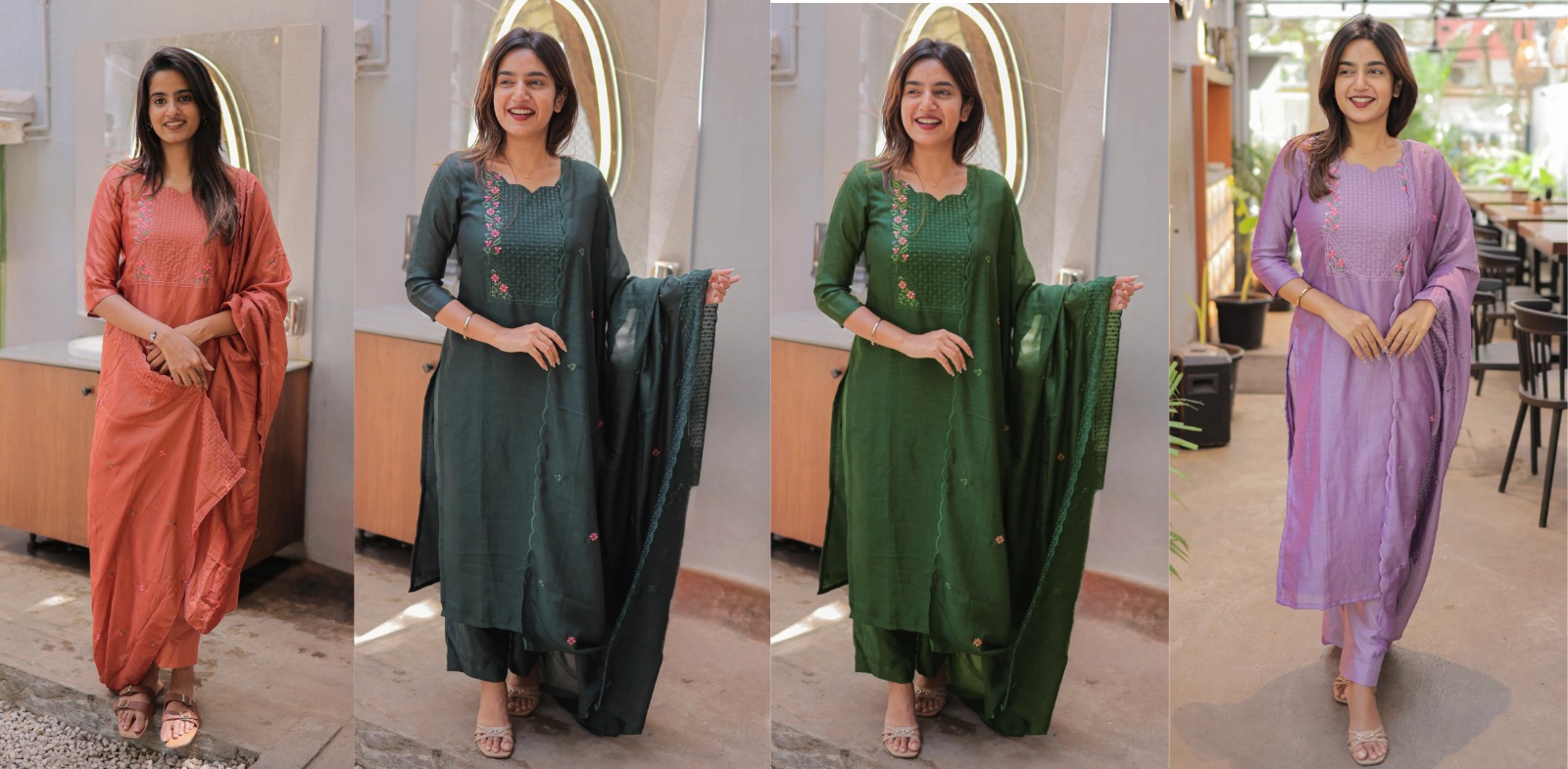
Very slippery fabrics can slide off the shoulder, while very crisp fabrics can sit away from the torso and add width. Zari borders, dense embroidery and multiple layers of fabric also increase the apparent weight of a dupatta. A narrow zari edge can frame the outfit attractively; a broad, stiff zari panel placed across the chest may feel restrictive.
Look for a dupatta with enough width to cover the bust diagonally rather than one that has to be wrapped tightly. A 36 to 44 inch width is an useful range for most shoulder and front drapes. Pastel Blue Embroidered Chanderi Kurta Set with Dupatta illustrates how a lighter colour and delicate surface work can keep the drape visually gentle, even when the dupatta adds coverage.
Dupatta borders and motifs
Place a strong border along the outer edge of the dupatta instead of folding the border into a thick horizontal strip across the bust. Small or spaced motifs create a more even surface than a dense central cluster. If the dupatta has a large motif, position the motif slightly to one side or let it fall below the bust line.
Bandhej, Kalamkari and Sambalpuri textiles offer different pattern scales and visual rhythms. Gujarat Bandhej Salwar Suits can provide lively dotted pattern without requiring heavy embroidery, while Kalamkari Print Salwar Suits often use directional floral or narrative motifs that can be allowed to fall vertically. Odisha Sambalpuri Salwar Suits bring a strong woven pattern language, so a plain or minimally detailed kurta bottom can keep the complete outfit balanced.
Which dupatta drapes give comfortable coverage?
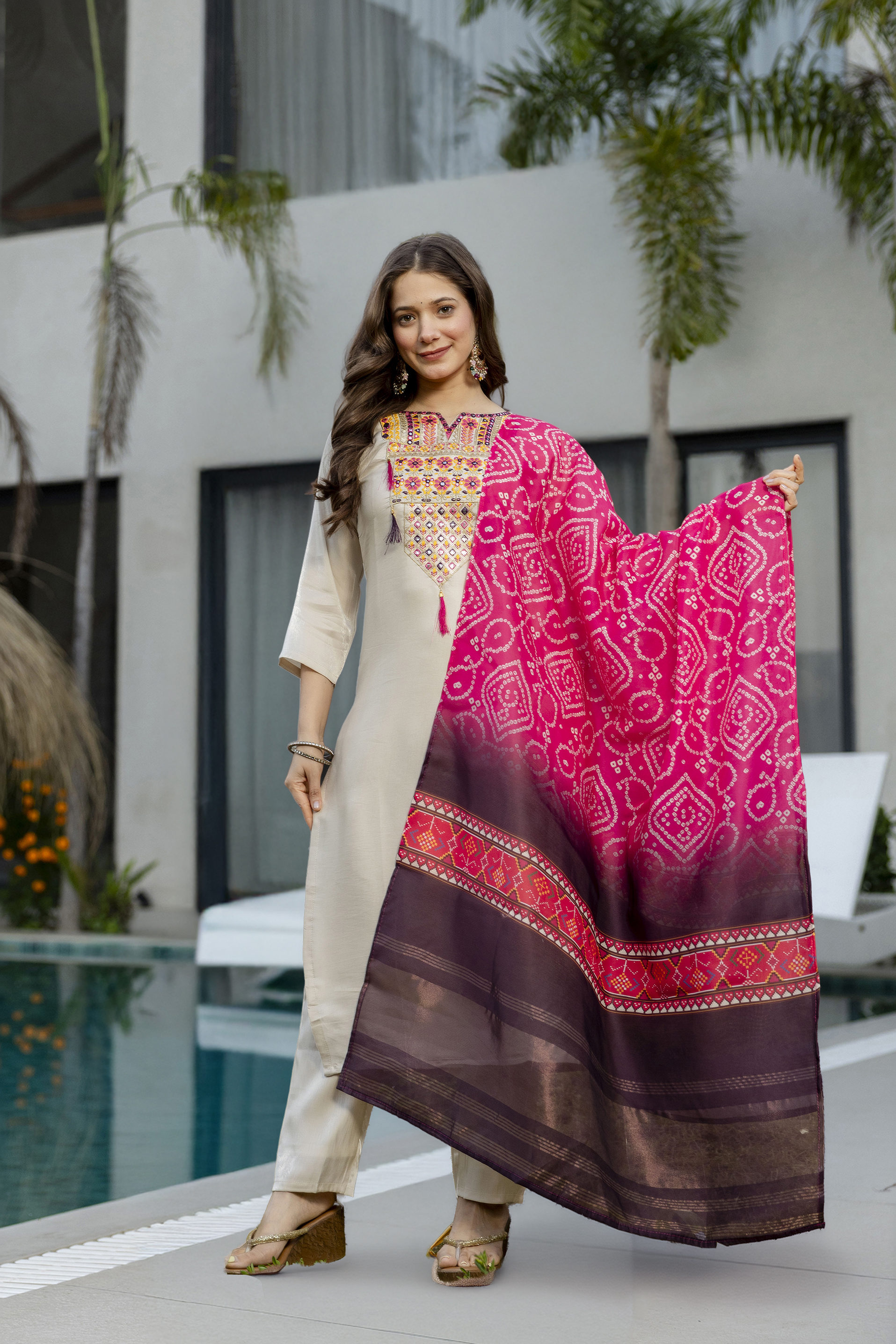
An one-shoulder vertical drape, a controlled front drape and a soft diagonal drape usually give the best combination of coverage and movement for a fuller bust. The ideal arrangement keeps fabric near the chest smooth rather than tightly pleated.
One-shoulder vertical drape
Place the dupatta over one shoulder and allow both ends to fall vertically, with one end reaching the front and the other falling toward the back. This arrangement lengthens the body visually and avoids a thick band across the bust. Secure the shoulder with a small concealed pin or brooch if the fabric moves.
Soft diagonal drape
Start at one shoulder, cross the dupatta diagonally over the torso and let the opposite end fall near the hip. A diagonal line breaks up horizontal width and can offer secure coverage without wrapping the chest tightly. Keep the diagonal relaxed; pulling the fabric taut can create strain at the neckline and armhole.
Front-falling drape
Place both ends over the shoulders so the dupatta falls on either side of the torso. This style works well with a long kurta and a coordinated pant because the two vertical panels create length. Avoid making the front pleats too narrow or too numerous, since many compact pleats can create a thick central strip.
Pinning should support movement rather than flatten the bust. Use one pin at the shoulder and, if necessary, a second pin near the side seam. Pinning the dupatta directly at the fullest part of the bust can cause puckering and make the fabric pull whenever you move.
How do colour, embroidery and fabric change the proportion?
Colour continuity and controlled surface detail can make the outfit look longer and more balanced. A bottom close in colour to the kurta creates a visual column, while a contrasting bottom draws attention to the hips and legs.
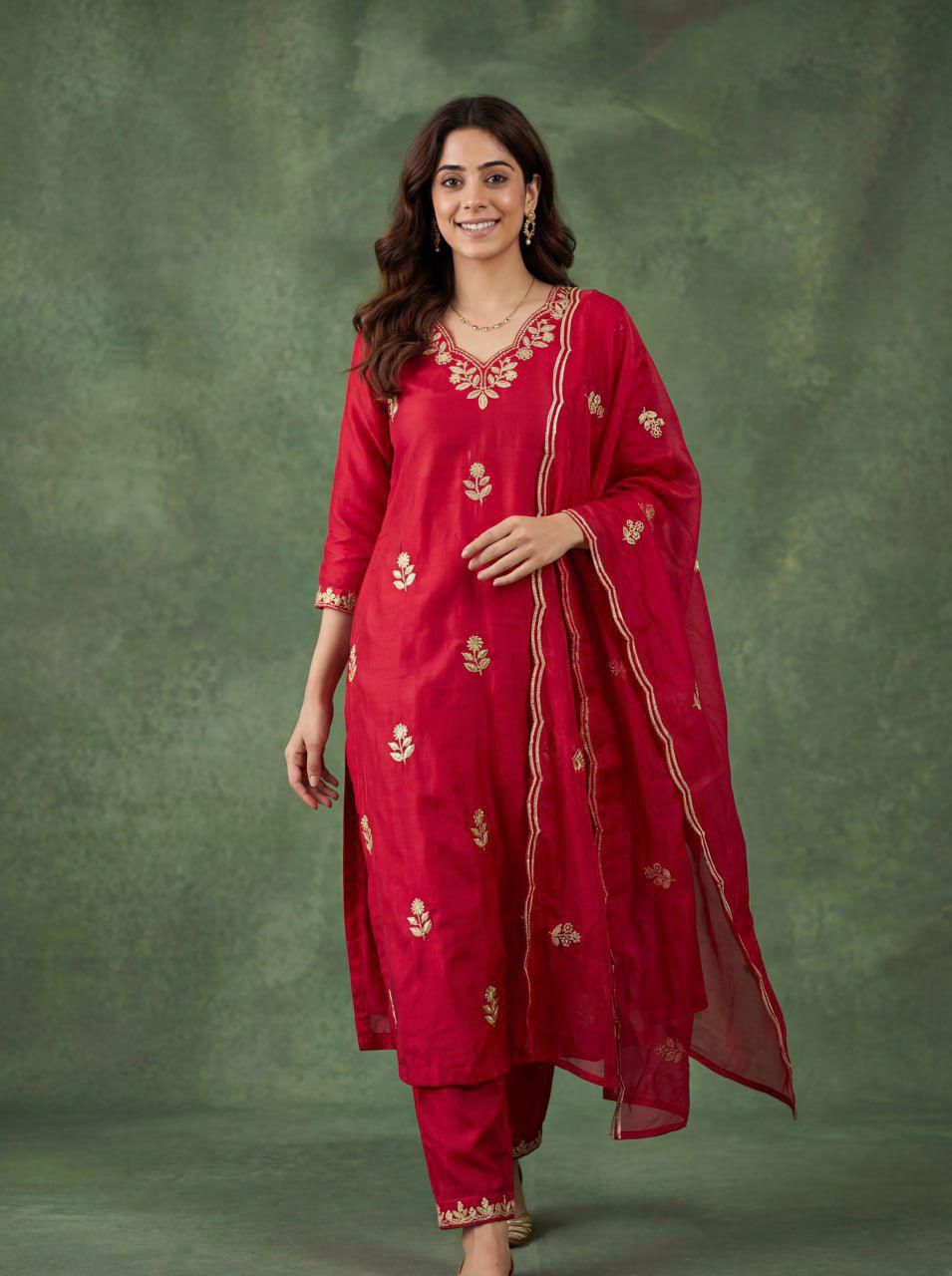
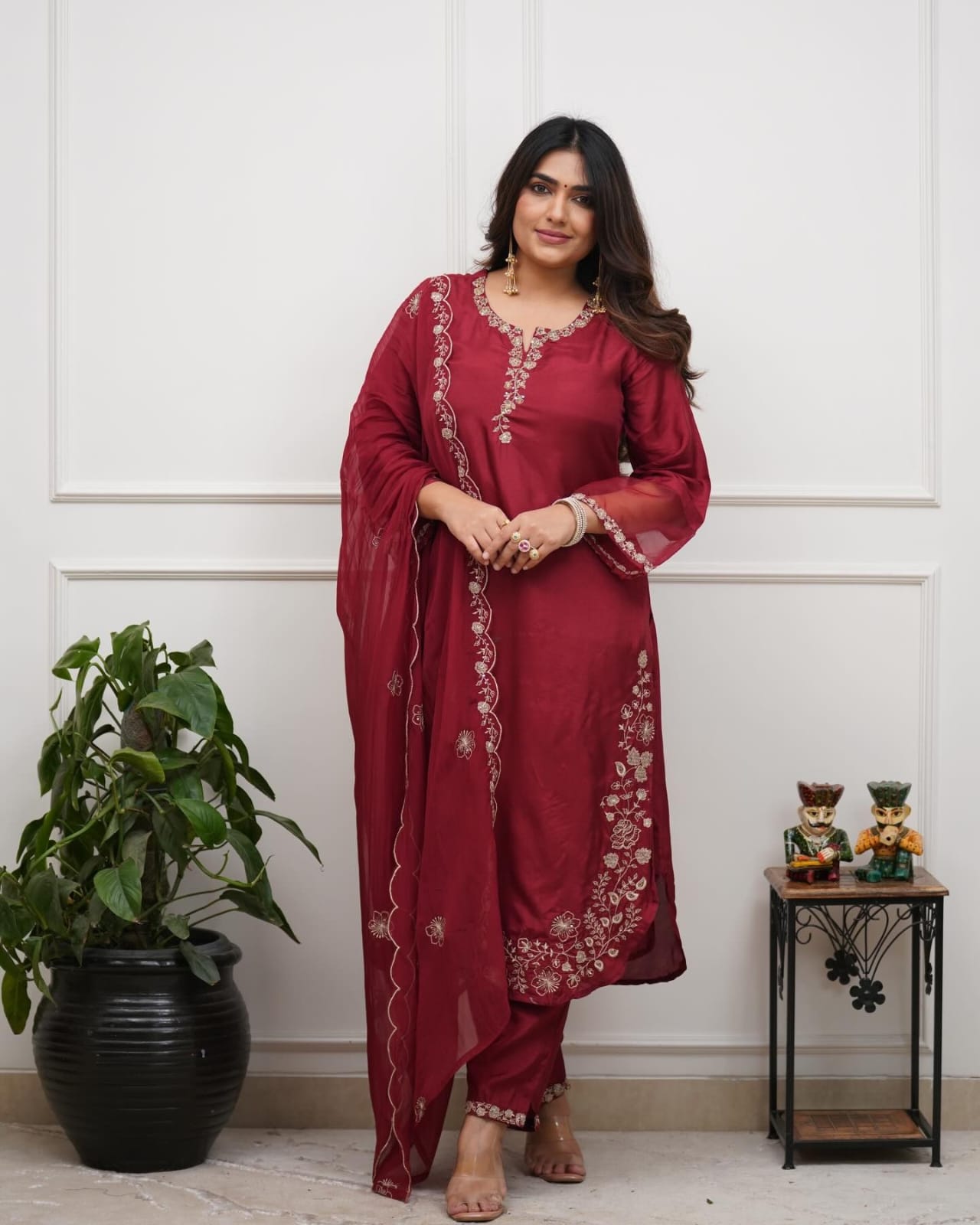
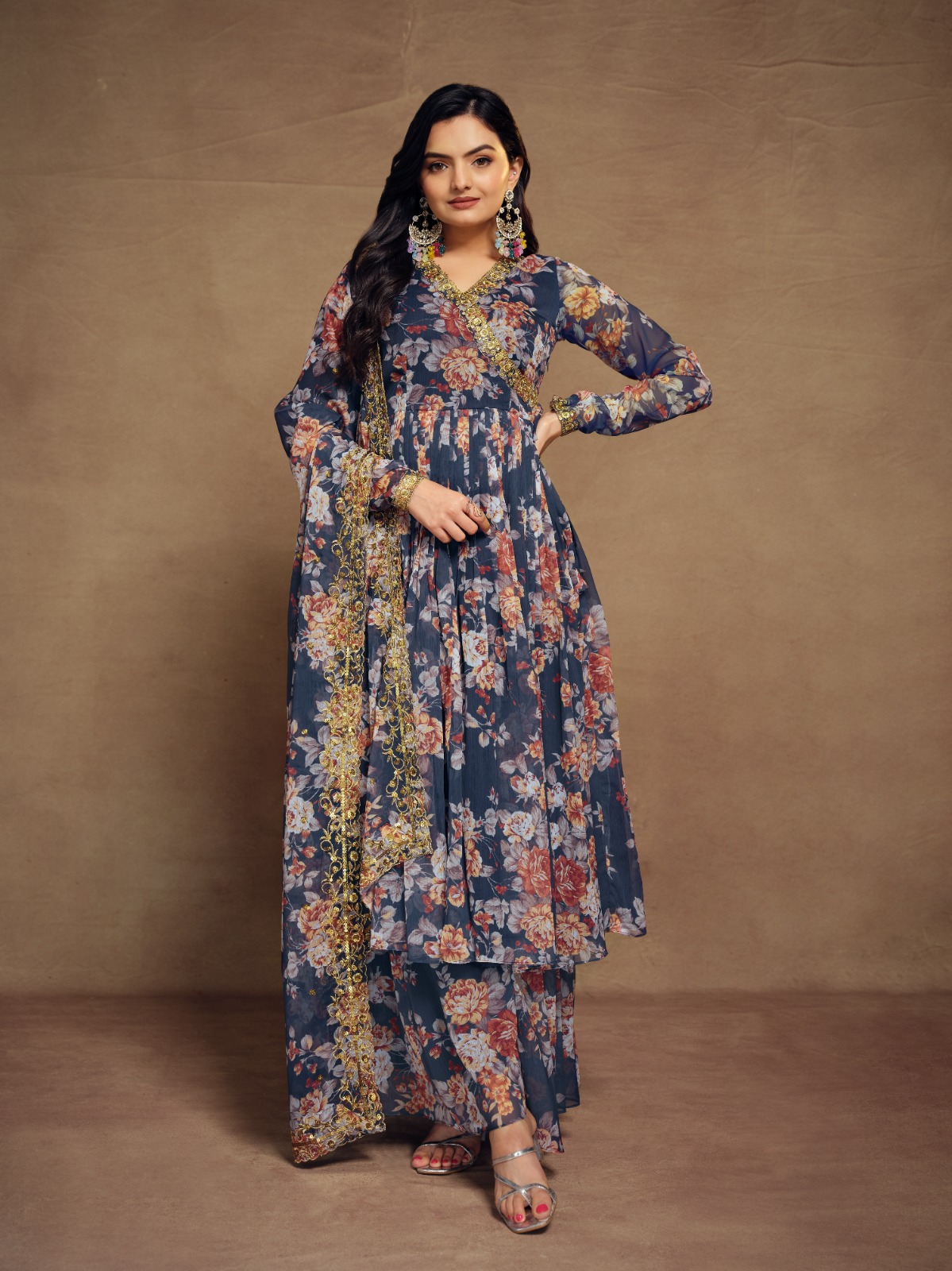
For an embroidered kurta, a plain or lightly textured bottom usually provides the strongest balance. Chic Red Floral Silk Kurta Pant Dupatta Set for Women uses the coordinated three-piece format effectively because the pant and dupatta allow the floral silk kurta to remain the focal point. Black Floral Silk Blend Kurta Pant Dupatta Set Women gives another example of how a darker coordinated lower half can create a steady base beneath a printed or embellished upper section.
Colour contrast isn't forbidden; its placement matters. A darker bottom with a medium-tone kurta can ground the outfit, while a bright bottom can add width and emphasis around the hips. Maharashtra Paithani Inspired Salwar Suits are a good setting for studying strong colour relationships, particularly when a classic border or contrast element is already prominent.
Embroidery should be assessed by location as well as density. Vertical embroidery, side motifs and narrow borders tend to guide the eye up and down. A broad horizontal panel at bust level can add width and weight. Brown Embroidered Kurta Pant Dupatta Set for Women demonstrates why the scale of embroidery should be considered together with the bottom: a quieter pant lets the detailed kurta retain definition.
What should be checked before buying a salwar suit online?
Check the garment measurements, fabric composition, lining, closure and return-sized fit before placing an online order. A product photograph can't show whether a bust seam, armhole or waistband will feel comfortable during movement.
- Compare measurements: Measure over the fullest part of the bust while wearing the bra or inner layer intended for the outfit. Compare that number with the garment's actual bust measurement and stated ease.
- Inspect the armhole: A low armhole can pull the kurta upward when the arm moves, while a very wide armhole may expose the side of the bust. Reviews mentioning arm mobility are especially useful.
- Check the trouser rise: A sufficient rise prevents the waistband from rolling below the abdomen when sitting. The waist and hip measurements should both be available for a reliable comparison.
- Read the fabric details: Cotton may soften after washing, Chanderi may retain a light crispness, and silk blends may require gentler care. Fabric behaviour affects both drape and comfort.
- Assess the dupatta size: Confirm length and width, especially if coverage or a cross-body drape is important. A short dupatta may force tight pleating at the chest.
- Test movement at home: Walk, sit, lift both arms and reach forward while wearing the complete set. A comfortable outfit should not pull at the bust, crotch, shoulder or waistband.
Choose the outfit based on the complete silhouette rather than the kurta alone. A set such as Mustard Embroidered Chanderi Kurta Set for Women - Varnavi. Can be evaluated by checking whether the Chanderi kurta's structure is balanced by the bottom's width and the dupatta's border weight. Alterations are often practical when the shoulders and bust fit well but the trouser length or waist needs adjustment.
Common mistakes that make a salwar suit feel unbalanced
Common proportion mistakes include pairing a long, heavily flared kurta with a very wide bottom, choosing a dupatta that's too short to drape comfortably, and pinning thick pleats across the fullest part of the bust.
Another frequent problem is selecting a bottom by waist size alone. A trouser that fits the waist but is tight at the hip can pull the kurta sideways and create unwanted folds. Conversely, a very loose palazzo can add volume without giving the outfit a deliberate shape.
Overlooking fabric weight also causes discomfort. A heavy embroidered dupatta may drag on one shoulder, while a stiff border may keep rolling toward the neck. If the kurta already contains zari, sequins or dense embroidery, a lighter dupatta and simpler bottom generally make movement easier.
The most dependable final check is visual and physical: stand in front of a mirror, then walk and sit. The neckline should remain in place, the kurta should fall from the bust rather than cling beneath it, the bottom should hang without twisting, and the dupatta should stay secure without being tightly wrapped.
Questions About Choosing Kurta Bottoms and Dupattas for Fuller Busts
Which bottom is best for a fuller bust with a straight kurta?
Straight pants and moderate-width palazzos are usually the best choices for a straight kurta and fuller bust. Straight pants create a long vertical line, while palazzos add controlled volume below the waist. Choose the bottom according to the kurta length and the fabric's fall.
How should a dupatta be draped over a fuller bust?
A soft diagonal drape or one-shoulder vertical drape usually offers comfortable coverage without adding a thick horizontal band across the chest. Keep the fabric relaxed and pin it at the shoulder or side seam instead of pinning directly over the fullest part of the bust.
Is an Anarkali suitable for a fuller bust?
An Anarkali can suit a fuller bust when the bust area has enough ease and the flare begins below the fullest part of the torso. Pair a strongly flared Anarkali with a straight or narrow bottom rather than an extremely wide palazzo to avoid excess volume.
What dupatta width works well for fuller-bust styling?
A dupatta approximately 36 to 44 inches wide generally provides useful coverage without creating excessive bulk. A length of about 2.25 to 2.5 metres is suitable for many shoulder and front drapes, although height and preferred styling can change the ideal measurement.
Should the kurta and bottom be the same colour?
A similar-colour kurta and bottom create a continuous vertical column and can make the outfit look longer. Contrasting bottoms also work when the contrast intentionally grounds the silhouette, but a bright or heavily patterned bottom will draw more attention to the lower half.
How can someone check the fit of a salwar suit before keeping it?
Wear the complete outfit and check the bust, armhole, hip, waistband and trouser rise while walking, sitting, raising both arms and reaching forward. The kurta should not pull across the bust, the waistband should not roll, and the dupatta should remain secure without tight wrapping.


