

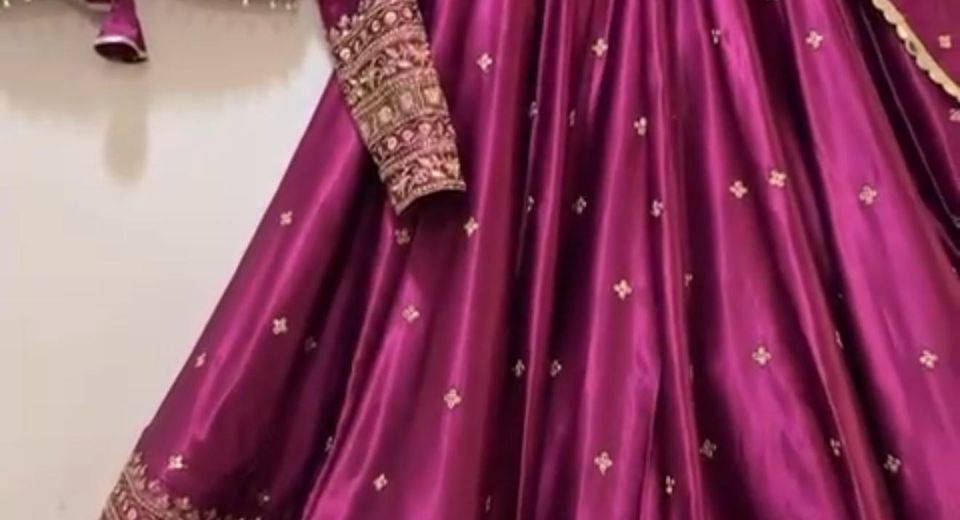
A polished lehenga photograph can hide uneven stitches, sparse motif placement or rough finishing unless you know where to zoom. What to look for in online product photos for lehenga embroidery quality begins with evidence: sharp close-ups, consistent motif spacing, secure thread ends, a clean reverse side and photographs taken in more than one kind of light. The goal isn't to demand handmade perfection from every garment, but to distinguish durable, intentional embroidery from surface decoration that only looks impressive at a distance.
What to Look for in Online Product Photos for Lehenga Embroidery Quality
Look first for clear evidence of stitch control, motif density, edge finishing and material security rather than judging embroidery by sparkle alone. A good product page should show the lehenga from a full-length view, a waist-to-hem view, a close-up of the main motif, the blouse, the dupatta border and, ideally, the reverse side.
Image quality affects what a buyer can reliably assess. A photograph with at least 1500 pixels on its longer side usually reveals more than a compressed social-media image, while a product image photographed from two metres away can't prove that sequins are attached evenly. Use the zoom function at 200% to 300%, but remember that extreme digital enlargement can create false jagged edges.
Compare several photographs of the same garment. If the motif appears dense in one image and almost empty in another, the difference may come from lighting, pleat position or a digitally enhanced photograph. A trustworthy listing keeps the colour, silhouette and embroidery proportions reasonably consistent across front, back and detail views.
Why does a full-length photograph matter?
A full-length photograph shows whether embroidery is distributed deliberately across the skirt, blouse and dupatta. Close-ups alone can make a small decorative patch appear to cover the entire lehenga, so check how the motif looks in relation to the complete garment.
Read the Motif Density and Placement
Motif density tells you how much of the visible fabric is decorated and whether the design has a planned rhythm. Examine the skirt in horizontal sections: waistband, upper skirt, mid-skirt, hem and flare. Look for a clear transition between areas rather than random clusters of flowers, vines, butis or geometric elements.
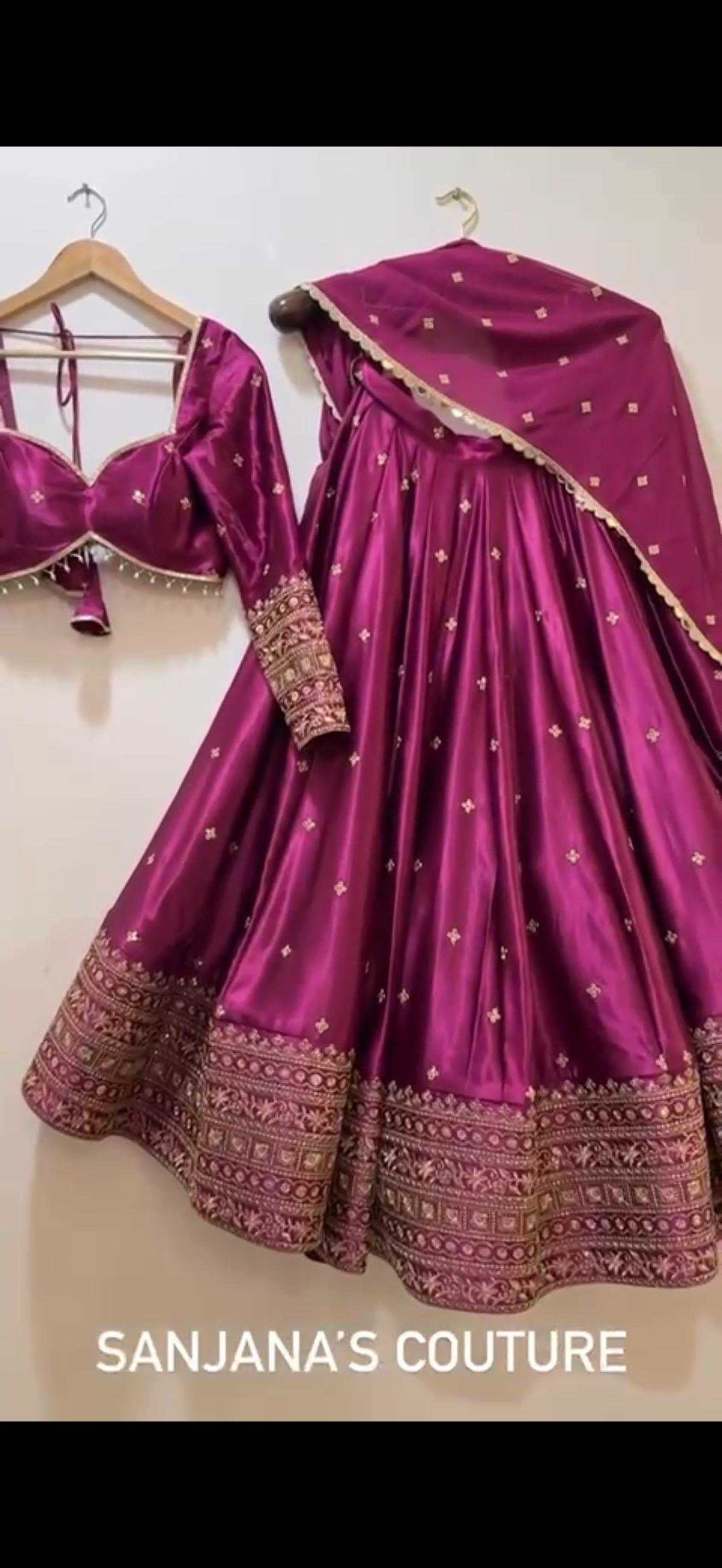
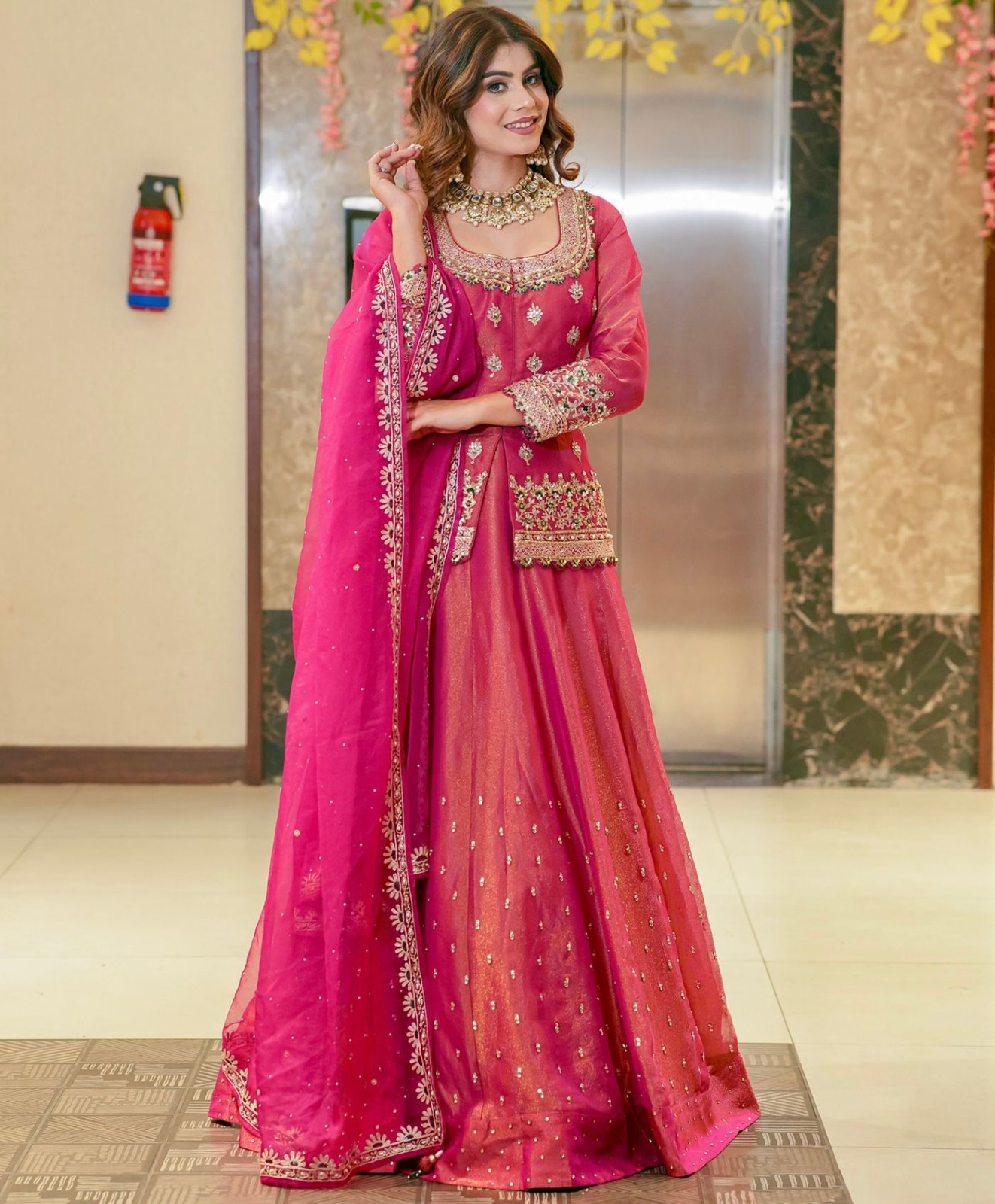
Heavy embroidery doesn't automatically mean superior quality. A well-spaced pattern on Roman silk can look more refined than crowded threadwork on a shiny base. The Magenta Satin Embroidered Lehenga Set Online and the Dusty Pink Satin Embroidered Lehenga Set Online are useful examples of why surface, colour and motif spacing need to be judged together: satin reflects light. A photograph may make moderately embellished areas appear denser than they're.
Check whether the design follows the shape of the garment. A broad border should sit parallel to the hem, vertical vines should remain reasonably aligned with the panels, and repeated butis should not suddenly shrink or expand without a design reason. Small variations can occur in handwork, but abrupt changes across adjacent panels may indicate hurried production or image distortion.
How can you judge embroidery coverage from one photo?
Estimate embroidery coverage by comparing decorated areas with visible base fabric in the skirt's upper, middle and lower sections. If only a single close-up is available, treat the stated embroidery coverage as unverified and look for a model photograph showing the full flare.
Designers often use heavier work at the hem and lighter work near the waist to preserve movement and comfort. That arrangement is practical, not a quality defect. A lehenga with a concentrated hem border and scattered motifs may be easier to walk in than an equally expensive skirt covered uniformly from waist to hem.
Inspect Stitch Types, Threads and Embellishments
Different embroidery materials create different quality clues. Threadwork should appear anchored at regular intervals, zari should follow a clean line, sequins should lie flat, and beads should not pull the fabric into puckers. Product photographs can't reveal every construction detail, but close-ups can expose repeated problems.
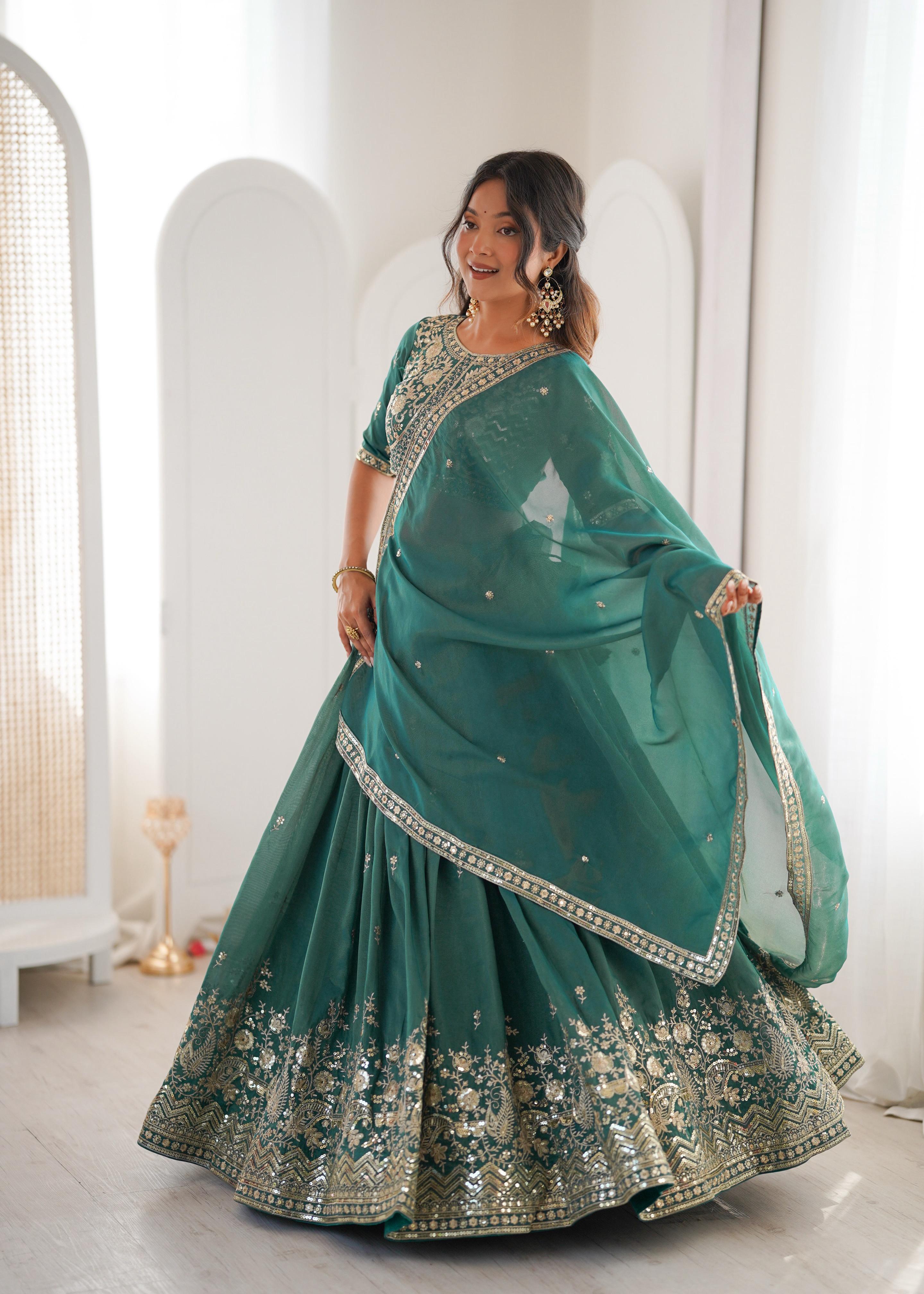
For threadwork, inspect curves, flower petals and narrow outlines. Smooth curves usually show controlled stitch direction, while broken lines, loose loops and visibly changing thread thickness suggest inconsistent tension. Machine embroidery often has a highly regular stitch pattern; regularity isn't inherently inferior, but loose thread tails and skipped stitches are warning signs.
Zari deserves separate attention because metallic thread can look bright even when it's loosely secured. Look for clean turns at corners and a stable line around paisleys or borders. If zari seems to float above the cloth, casts long loose shadows or disappears at several points along one motif, ask the seller for a closer image before ordering.
Sequins should overlap or align according to a visible pattern, with no large accidental gaps inside a supposedly filled motif. Beads and stones should sit in the centre of their embroidered settings instead of leaning into one another. A close-up of the Cream Peacock Embroidered Net Lehenga Set for Women or the Pink Embroidered Roman Silk Lehenga Set Online can help a shopper compare how net and silk show embellishment differently. Net may reveal spacing more clearly, while silk can disguise small puckers through its sheen.
What do loose threads reveal?
Loose threads reveal a possible finishing problem when they appear repeatedly at motif edges, seams or the hem. One short thread can result from trimming after production, but multiple tails in different photographs suggest that the embroidery may not have been properly secured.
don't pull a thread visible in a product image or after delivery. A safer test is to look for knots, backstitching, heat-sealed machine ends or dense anchoring at the boundary of the motif. Embroidery that ends abruptly without a visible securing point may unravel faster during wear or dry cleaning.
Use the Reverse Side and Border as Quality Evidence
The reverse side gives the clearest available evidence of how embroidery has been secured. A tidy reverse side should show controlled thread paths, limited loose ends and no large areas where adhesive has stiffened the fabric. A completely hidden reverse side doesn't prove poor construction, but it means the buyer has less evidence.
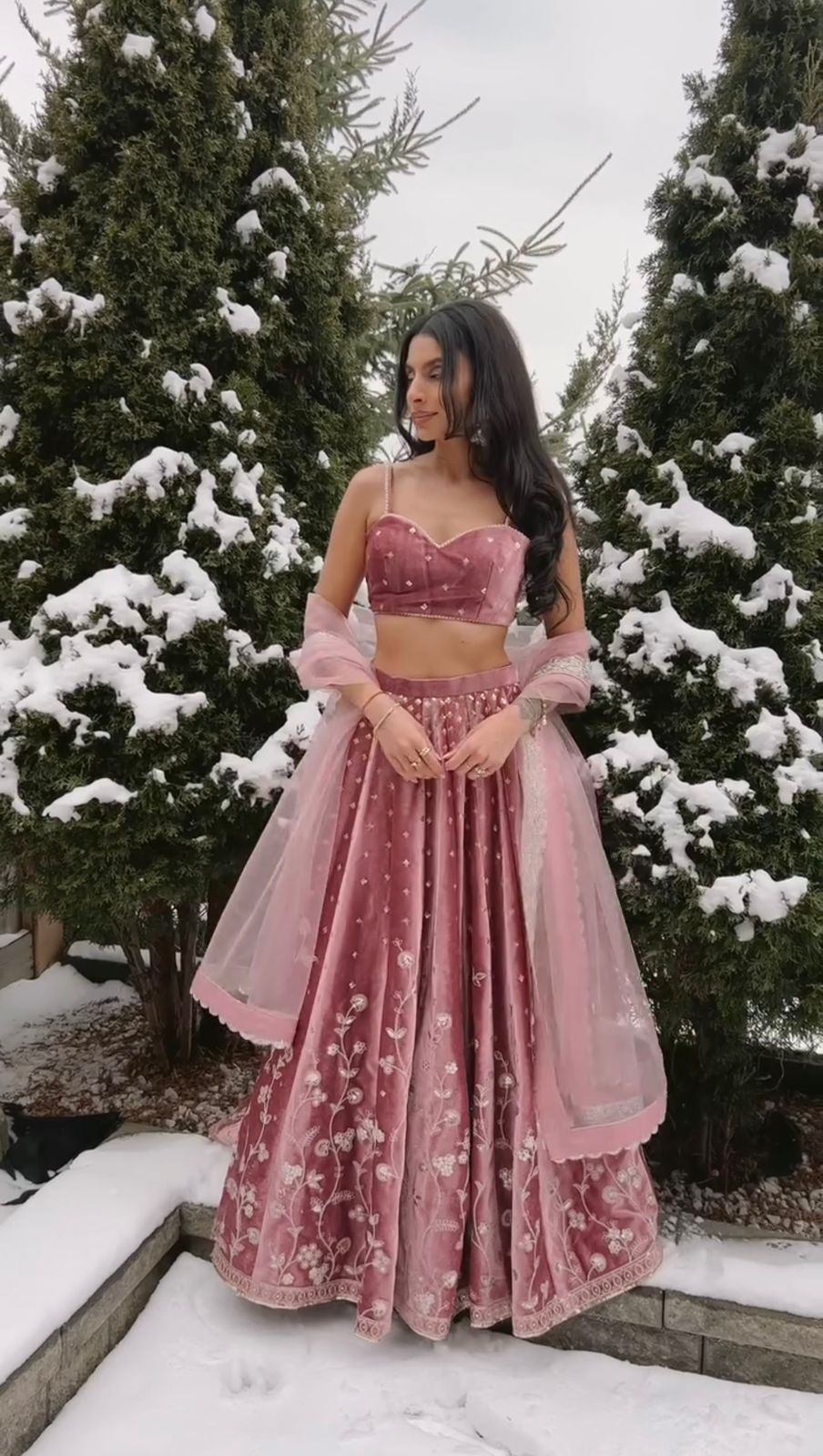
Ask for a reverse-side photograph when the lehenga has dense threadwork, zari, sequins or stones. Look for excessive thread bridges between motifs. Short bridges are normal in some machine embroidery, whereas long strands can catch on jewellery, bangles or garment hooks. Check whether the lining covers the embroidery safely and whether any scratchy backing could touch the skin.
The hem is another high-stress area. The lower border should remain straight when the skirt is hanging naturally, and the embroidery should not bunch where the border meets the flare. A photograph of the skirt laid flat can show whether the border follows the curve or has been attached with uneven tension.
In the Lime Floral Embroidered Butterfly Net Lehenga Set and the Pastel Grey Embroidered Butterfly Net Lehenga Set, the net base makes border alignment especially important because thin fabric can reveal puckering more readily than opaque silk. Compare the top edge and lower edge of the border, not just its decorative face.
Separate Fabric Shine from Embroidery Quality
Lighting can exaggerate shine, colour and embellishment, so assess a lehenga in at least two types of product photography. A frontal studio image reveals colour and overall layout, while a side-angle image shows raised sequins, thread texture and possible puckering more honestly.
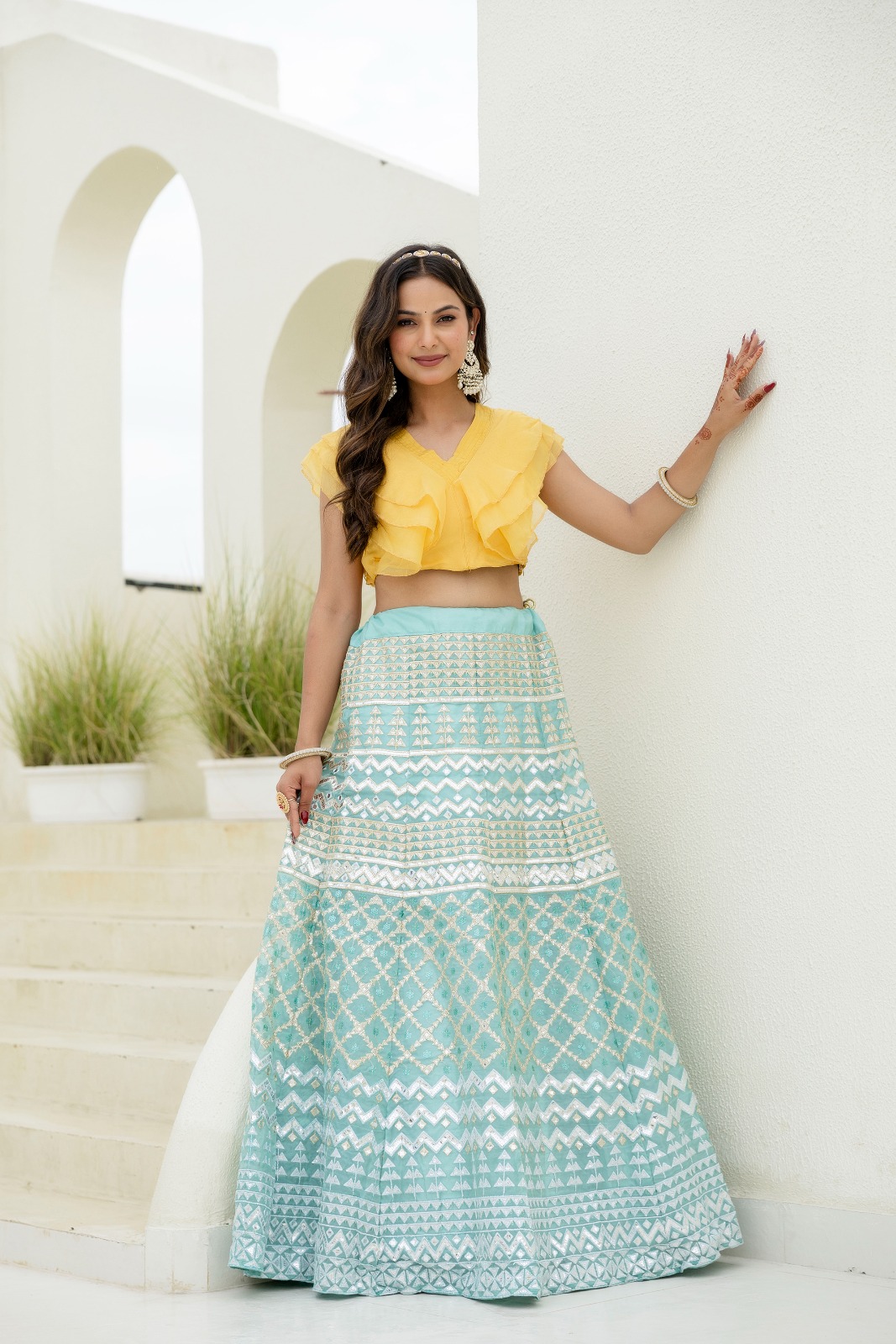
Satin and silk reflect a direct light source and may conceal shallow wrinkles in one frame while making them obvious in another. Net fabric can appear fuller when photographed with a petticoat or underskirt, so don't mistake volume for dense embroidery. A pale base may make pastel threadwork look lighter than it will under indoor evening lighting.
Check the relationship between the product photograph and the written description. Terms such as "embroidered," "sequin work," "threadwork," "zari," and "stone detailing" don't all describe the same finish. A garment may combine machine threadwork with hand-applied sequins, and neither method alone determines durability. The Wine Pink Embroidered Silk Lehenga Set Online and the Designer Threadwork Silk Lehenga Choli Set with Dupatta illustrate why the stated material and decorative technique should be read together rather than reduced to the word "designer."
Which lighting is most useful for judging embroidery?
Soft daylight and angled side lighting are most useful for judging embroidery texture, while direct frontal lighting is useful for checking colour and overall motif placement. A photograph taken only with a strong flash can flatten threadwork and make metallic details look brighter than they're.
Compare the embroidery colour with a known reference when possible. Pure white backgrounds can make ivory fabric appear yellow, and warm indoor lighting can turn blush pink into dusty rose. Colour variation is separate from construction quality, but colour accuracy matters when coordinating a blouse, jewellery or bridesmaid group.
Check the Blouse, Dupatta and Wearability Clues
Embroidery quality should be assessed across the complete set, because a well-finished skirt doesn't guarantee an equally finished blouse or dupatta. Inspect the neckline, sleeve edge, waistband, dupatta border and tassel attachments in separate close-ups.
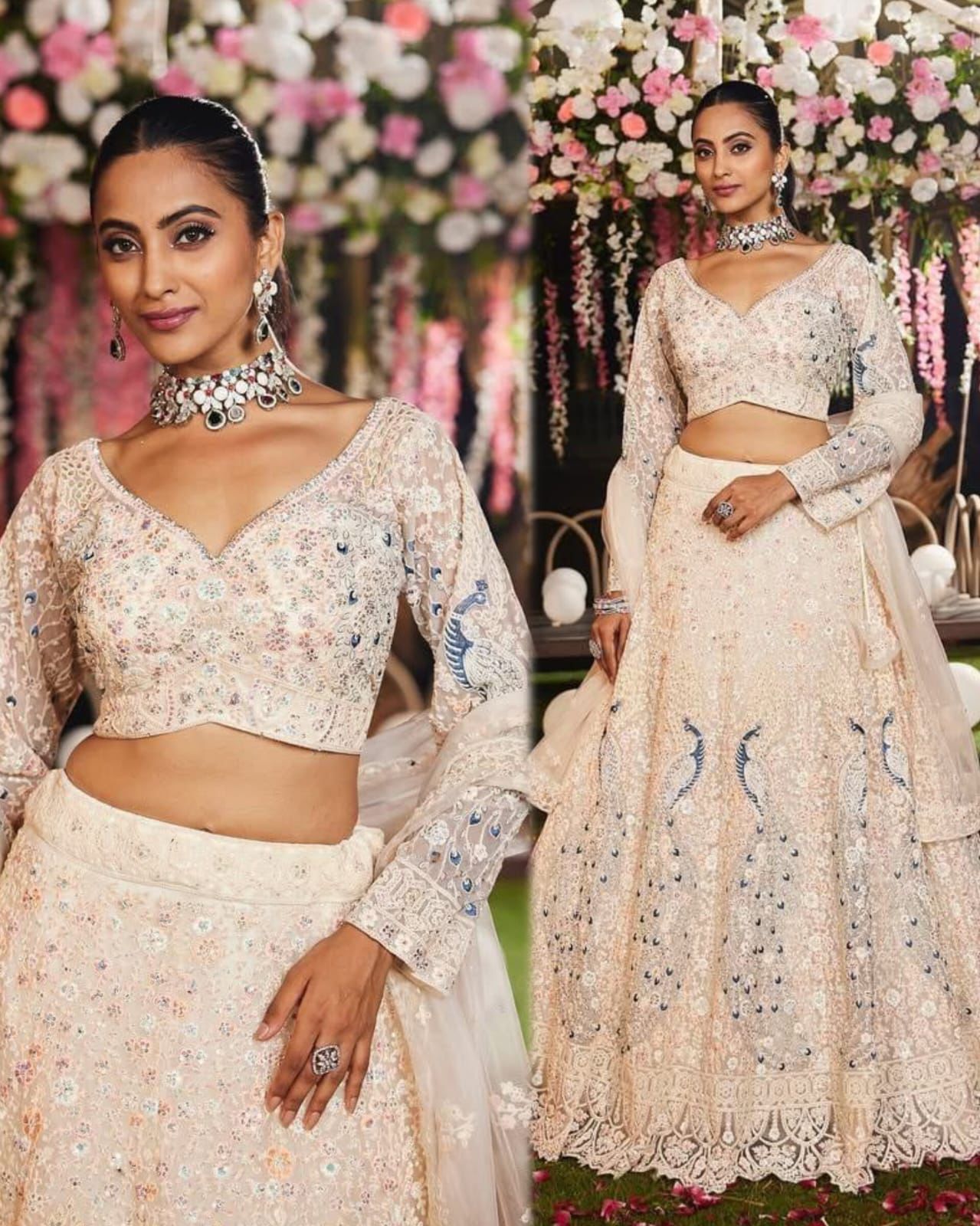
The blouse needs particular attention at curved areas. Embroidery should follow the neckline without cutting awkwardly into the seam allowance, and heavy stones should not sit directly on a fold that will experience tension. Sleeve hems should look balanced on both sides, while the waistline should not show large gaps where the blouse joins the skirt.
Dupatta embroidery is often lighter than skirt embroidery because a dupatta must remain flexible. Check whether the border is attached straight and whether sequins or zari have been placed close enough to the edge to risk snagging. Tassels should appear securely knotted or stitched rather than merely looped through a narrow hem.
Collections labelled Pink Lehengas Under 4000 with 50% Discount, Silk Lehengas Under 3000 and Bridesmaid Lehengas Under 5500 can help establish a realistic comparison range, but a lower price doesn't automatically indicate poor embroidery. Compare the number of panels, fabric type, lining, embellishment density and finishing before comparing prices.
Turn Photos into a Practical Buying Decision
A simple evidence score helps prevent one glittering close-up from deciding the purchase. Give one point each for a sharp motif close-up, a full-length front image, a visible hem, a blouse detail, a dupatta detail, a reverse-side image and consistent lighting across photographs.
Six or seven points indicate that the listing provides useful visual evidence. Four or five points justify asking questions before purchase. Three points or fewer mean that embroidery quality can't be judged confidently from the page, regardless of how attractive the model photograph appears.
Ask focused questions instead of requesting a vague "real picture." Useful questions include: Are the sequins stitched or glued? Is the embroidery machine-made, hand-finished or a combination? Does the skirt have a lining? Can you share a close-up of the hem and reverse side? Are loose threads trimmed before dispatch? What is the finished skirt length and flare?
Save screenshots of the product photographs and description before ordering, especially when the item is discounted. Documentation helps you compare the delivered garment with the listing and makes a quality query more precise. Photograph the package, labels and embroidery in daylight on arrival, before wearing the lehenga or removing protective tags.
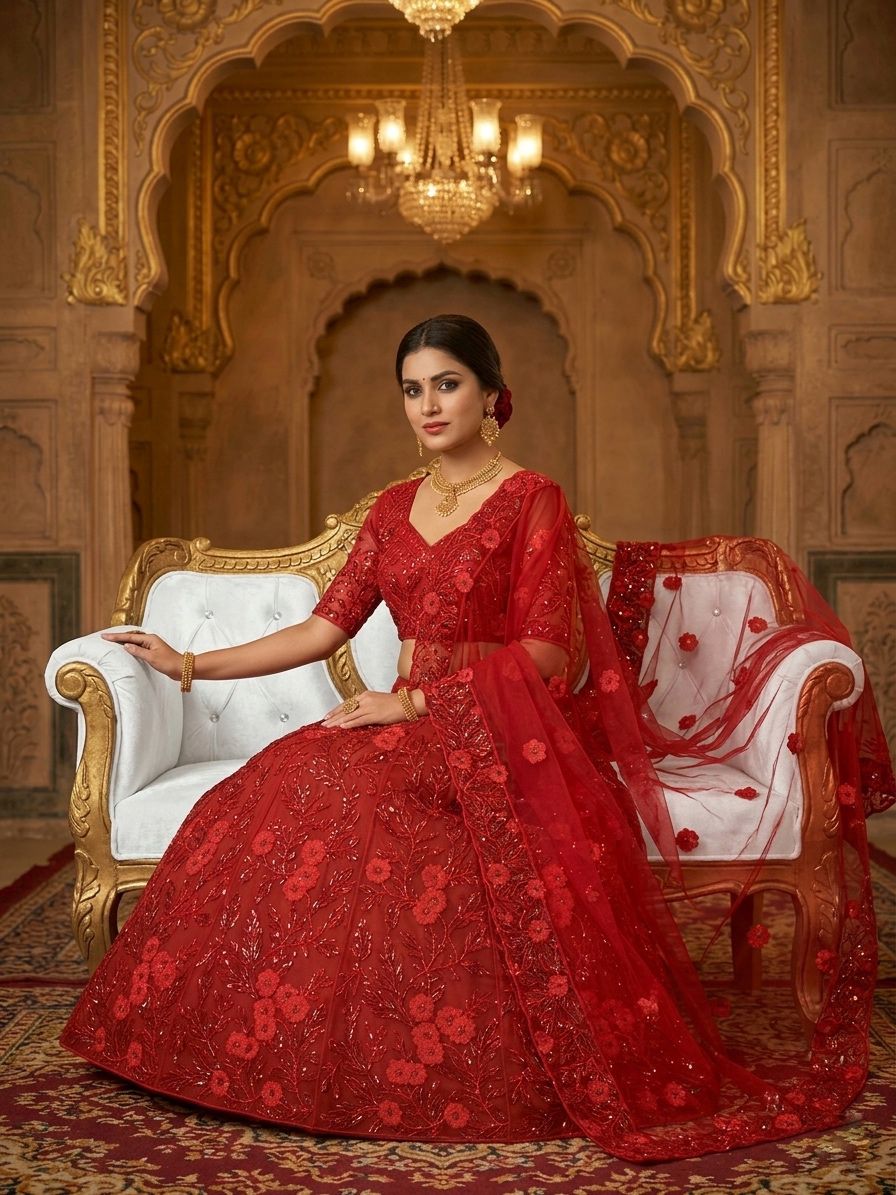
Price context should be considered alongside construction. A heavily embellished bridal-style lehenga generally requires more material, labour and reinforcement than a lightly embroidered Haldi ceremony skirt. The Net Lehengas Under 4500 with 51% Discount and Haldi Lehengas Under 5500 collections may contain different levels of surface work because occasion, base fabric and intended wear are different. A practical buyer asks whether the embroidery suits the planned number of wears, not whether every garment resembles couture.
Red Flags That Deserve a Second Look
Repeatedly blurred close-ups, inconsistent garment colours, cropped hems and descriptions that use several decorative terms without specifying the work are common reasons to pause. A listing should not need exaggerated sparkle or heavy filters to communicate its construction.
- Motifs disappear at the seam or border without a visible design reason.
- Sequins appear glued in irregular piles rather than stitched or secured in a repeatable pattern.
- The skirt is shown only in a folded position, hiding the flare and hem.
- One photograph shows a wide border while another shows a narrow border on the supposedly same garment.
- The reverse side is never shown for dense embroidery and the seller can't provide a detail image.
- Thread tails, puckering or snagged netting appear in several independent views.
These signs don't prove that a lehenga is unwearable, but they reduce confidence in the listing. Choose a garment with enough visual evidence to support the quality claim, then confirm measurements, lining and return conditions separately. Embroidery photographs can reveal construction clues, but photographs can't replace checking the delivered garment promptly.
Questions Shoppers Ask About Judging Lehenga Embroidery Online
How can I check lehenga embroidery quality online?
Check sharp close-ups of the motifs, hem, blouse and dupatta, then inspect stitch regularity, loose threads, sequin placement and border alignment. A full-length photograph and a reverse-side image provide stronger evidence than a single glittering front view.
How do I know whether lehenga sequins are stitched or glued?
A close-up may show a small thread anchor or regular stitch passing through each sequin when sequins are stitched. Glued sequins often sit in irregular clusters or show a shiny adhesive edge, although only a seller's construction confirmation can provide certainty.
Does heavy embroidery mean a lehenga is better quality?
Heavy embroidery does not automatically mean better quality. Secure stitches, balanced motif placement, a stable hem, suitable lining and clean finishing matter more than the total amount of decoration.
Why should I ask for a reverse-side photo of a lehenga?
A reverse-side photo shows loose thread bridges, unsecured ends, bulky adhesive and backing that may irritate the skin. A tidy reverse side supports confidence in finishing, although some garments conceal the underside with a lining.
How does lighting affect online lehenga embroidery photos?
Direct light can make zari, sequins and satin look brighter while hiding shallow puckers. Daylight and angled side lighting reveal texture more accurately, so compare several images rather than judging from a flash photograph alone.
What should I ask a seller before buying an embroidered lehenga?
Ask for close-ups of the hem, blouse, dupatta and reverse side, and confirm whether the work is machine-made, hand-finished, stitched or glued. Also ask about lining, finished measurements, loose-thread trimming and the expected colour in daylight.


