

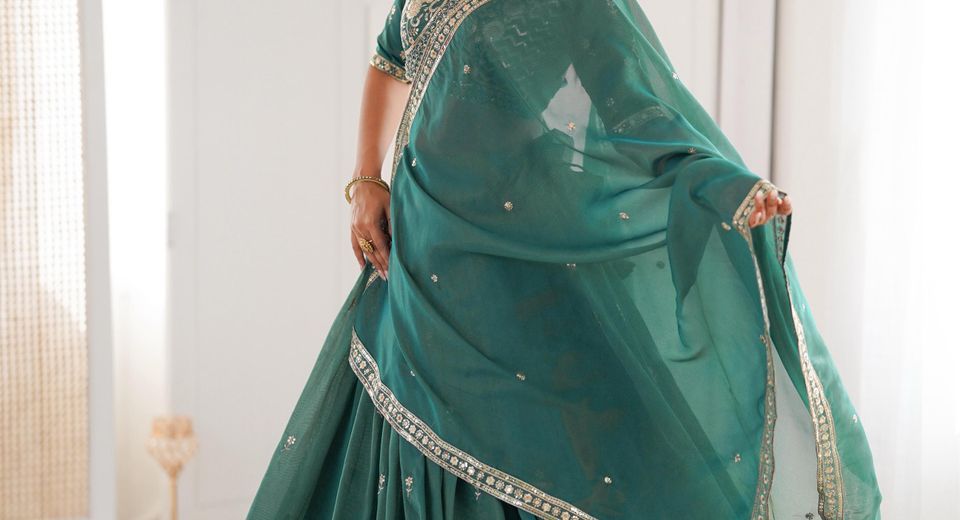
A silk lehenga can look dramatically different from one listing to another because "silk" may describe a natural fibre, a silk blend, or a commercial fabric name. What to Expect From Silk Lehengas Before You Buy begins with checking the exact fabric label, construction, measurements and care instructions rather than judging only by photographs. Those details determine whether a lehenga feels fluid, structured, breathable, heavily embellished or easy to rewear.
What to Expect From Silk Lehengas Before You Buy
Expect a silk lehenga to have a more noticeable body, sheen and formal appearance than many lightweight synthetic skirts, but don't assume every silk-labelled lehenga has the same fibre content. Banarasi silk, raw silk, art silk, Roman silk, butter silk and Chinon silk can differ substantially in texture, weight, fall and maintenance.
Natural silk generally has a soft, irregular lustre and can feel warm yet breathable. Raw silk has a slightly nubby surface and enough firmness to support a fuller silhouette. Banarasi silk is associated with woven motifs and zari, while Kanjeevaram silk is known for a heavier hand and traditional contrast borders. Commercial terms such as Roman silk and butter silk may refer to blended or synthetic constructions, so the product specification matters more than the word "silk" alone.
A silk lehenga usually photographs well because its surface catches light across pleats and embroidery. The same sheen can make colour look brighter in direct lighting, so a phone photograph should not be treated as an exact colour guarantee. A wine, fuchsia or emerald shade may appear deeper indoors and more vivid under event lighting.
Which silk fabric should you choose?
The right silk fabric depends on the silhouette, weather, duration of wear and amount of surface work. A structured raw silk skirt suits a formal evening, while a lighter silk blend may be more comfortable for a daytime family function.
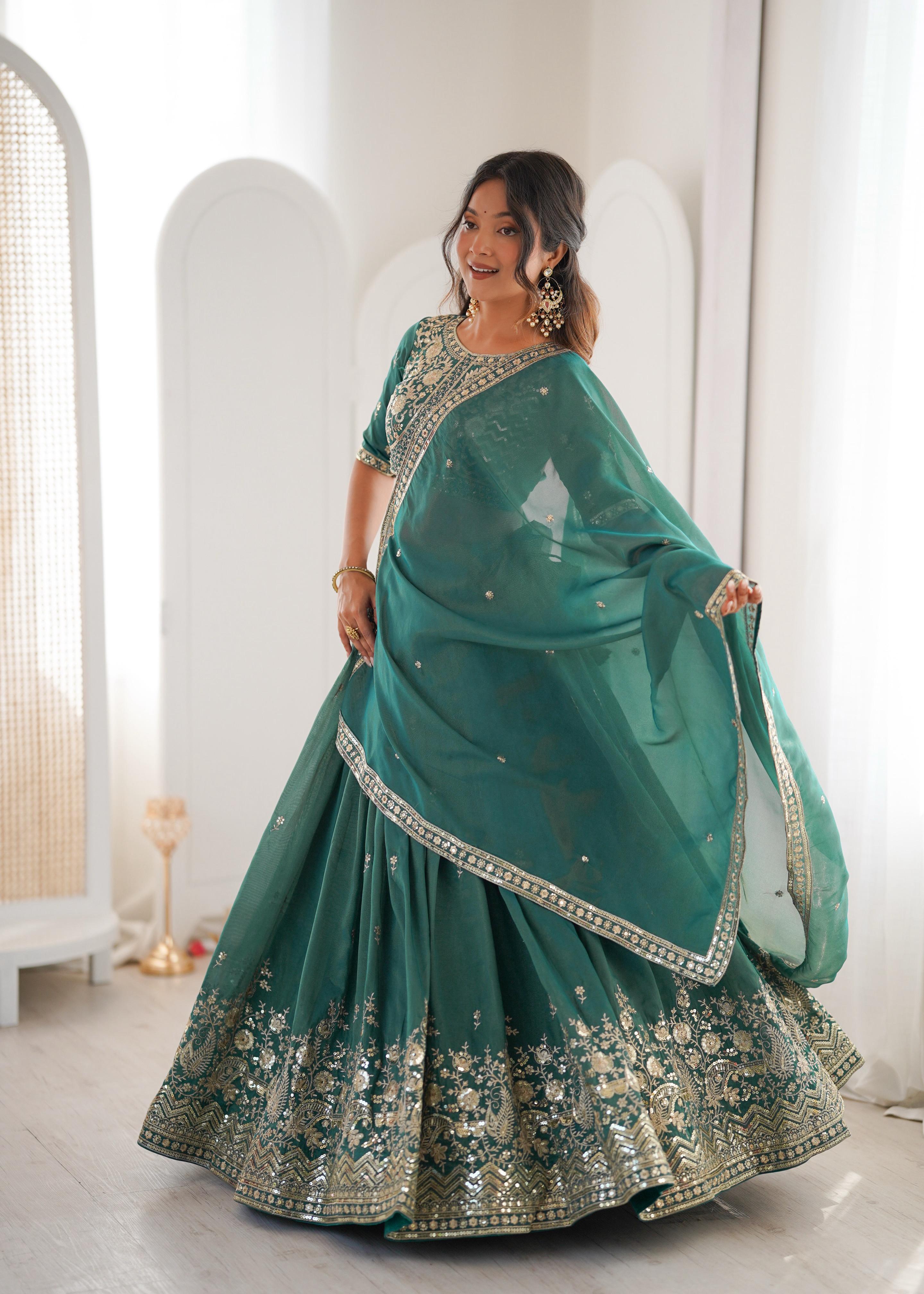
Natural silk and raw silk
Natural silk offers a luxurious hand feel and graceful light reflection, but natural silk garments may require gentler care and cost more than blended alternatives. Raw silk is useful when you want a lehenga with a firm waist, defined pleats and a skirt that holds volume without excessive net layers.
Banarasi silk works particularly well for heritage wedding styling because woven zari and motif patterns supply visual richness without relying entirely on stitched embellishment. A Banarasi silk lehenga can feel heavier around the skirt, especially when the weave includes metallic yarn. Kanjeevaram-inspired colour combinations bring a temple-border effect, although the product description should confirm whether the garment is actually made from Kanjeevaram silk.
Silk blends and named commercial fabrics
Silk blends and commercial silk-look fabrics are often lighter, more affordable and easier to produce in vivid colours than pure silk. Roman silk can have a smooth, polished appearance; butter silk is commonly chosen for a soft, flowing fall; Chinon silk can feel light and drapey, especially in embellished designs.
The Designer Threadwork Silk Lehenga Choli Set with Dupatta illustrates why construction details deserve attention: threadwork, blouse structure and dupatta finishing can influence comfort as much as the skirt fabric. The Pink Embroidered Roman Silk Lehenga Set Online and Multicolor Printed Butter Silk Lehenga Choli Set are useful examples of how a "silk" label can cover very different surface effects and styling moods.
How should a silk lehenga fit?
A well-fitting silk lehenga should sit securely at the natural waist, leave enough room for sitting and walking, and keep the blouse comfortable when the arms move. The waistband should not dig into the body, while the skirt should not rotate or pull diagonally after the drawstring or fastening is adjusted.
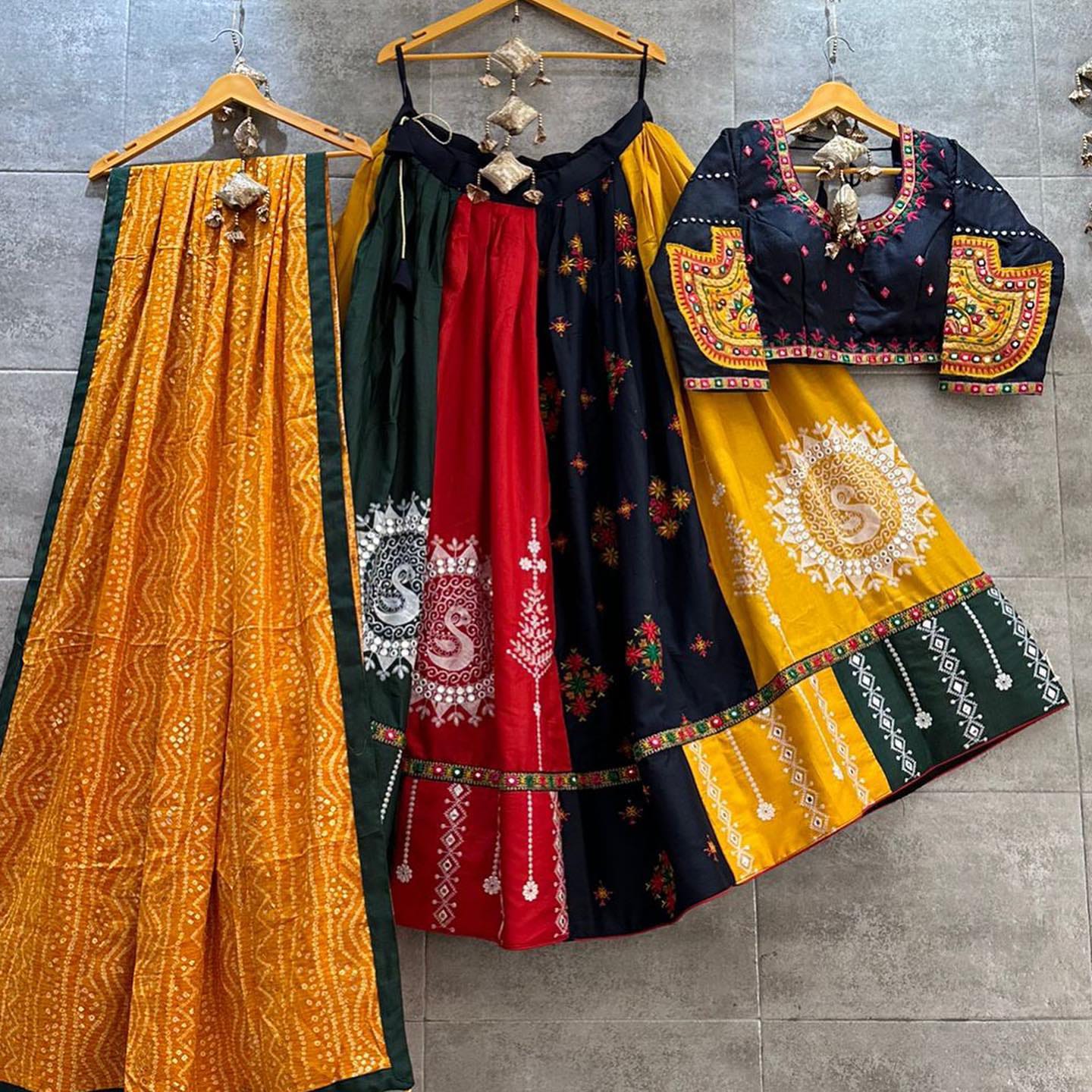
Measure the natural waist, fullest hip, bust and shoulder width with a flexible tape. Take the waist measurement while standing normally rather than pulling the tape tight. Compare those numbers with the garment's size chart because a ready-to-wear size labelled L or XL doesn't have a universal measurement across sellers.
Check whether the lehenga uses an elastic waistband, drawstring, hook-and-eye closure, side zip or a combination of fastenings. A drawstring gives useful adjustment for small changes in fit, but a heavily embellished waistband may become uncomfortable if it carries the full weight of the skirt. Hook placement can also affect whether the blouse overlaps securely at the bust.
Blouse measurements deserve separate attention. Confirm bust, under-bust, waist, armhole, sleeve length and blouse length when those details are available. A blouse with a narrow armhole may restrict movement during dancing, while a very deep neckline or short length may require alteration before the event.
Ask about alteration allowance before ordering. Many lehenga skirts permit waist adjustment, but embroidery, side seams and lining can limit how much a tailor can change. A product listed as semi-stitched may offer more flexibility than a fully stitched garment, but semi-stitched construction can also require professional finishing.
What do lining, layers and embellishment change?
Lining, can-can, gathers and embellishment determine the lehenga's volume, weight and comfort. Fabric composition alone can't tell you whether a skirt will stand away from the body or fall close to the legs.
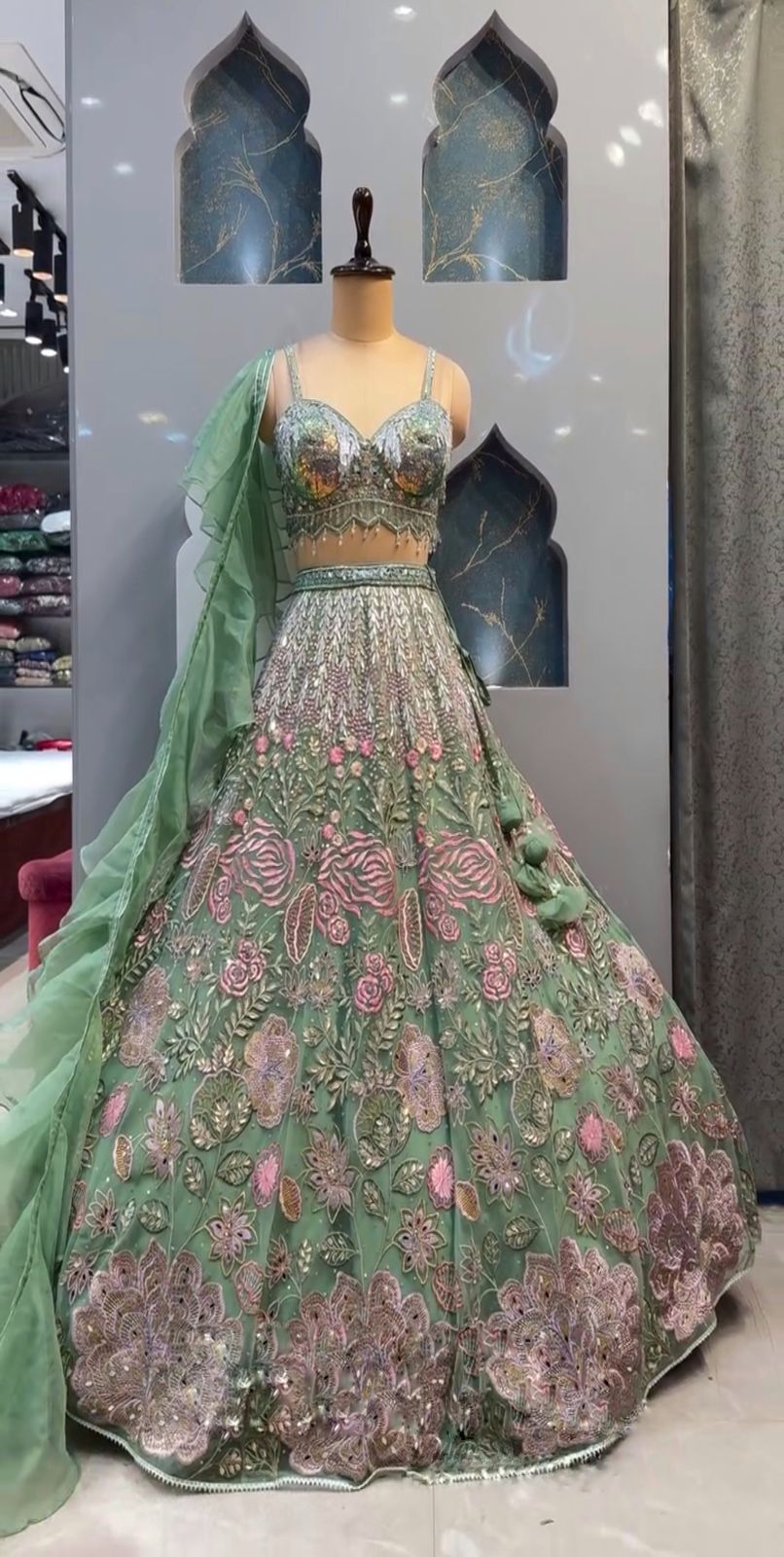
A cotton or polyester lining can reduce friction and make the skirt easier to wear, while a satin-like lining may help the lehenga slide over a petticoat or shapewear. A lining that ends shorter than the outer skirt can cause the hem to cling or reveal the lower layer while walking. Check the lining length if the listing provides it.
Can-can adds stiffness and flare, which creates a dramatic bridal silhouette but can make sitting in a car or on a low chair less convenient. Multiple gathered panels add volume without the same rigid effect. A long event with substantial walking generally calls for moderate volume and a manageable hem rather than the maximum possible flare.
Sequins, zari, beads and dense threadwork add visual depth but also increase weight and the chance of snagging. The Green Chinon Silk Sequins Embroidered Lehenga Set and Pink Chinon Silk Sequins Embroidered Lehenga Set Sale show how sequined surfaces create evening impact; such garments should be checked for secure embellishment, smooth inner seams and a lining that prevents scratchiness.
Inspect the dupatta as part of the full outfit. A narrow dupatta may be easier to pin for dancing, while a wide, heavily decorated dupatta can pull on the blouse neckline. Confirm whether the dupatta has a finished border, attached tassels, a four-side hem or raw edges that need additional finishing.
How can you judge quality from an online listing?
You can judge an online silk lehenga more reliably by comparing the specification, measurement chart, close-up photographs and customer-service information. A polished model photograph is helpful for styling but can't reveal fabric thickness, inside finishing or actual weight.
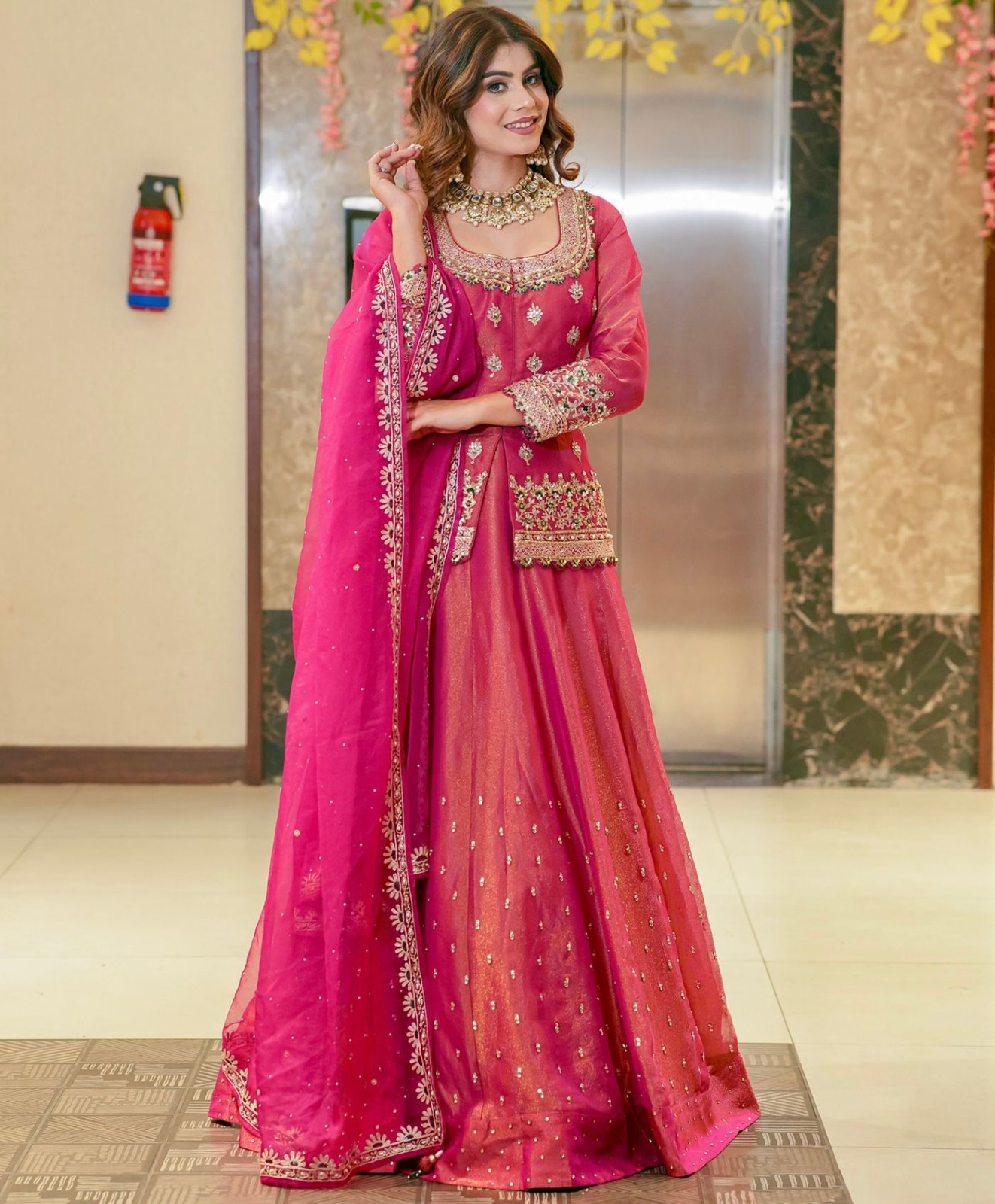
- Read the fibre description: Look for terms such as pure silk, silk blend, art silk, polyester, Roman silk, butter silk or Chinon silk. Do not treat a fabric name as proof of natural silk content.
- Check the components: Confirm whether the set includes the lehenga, blouse, dupatta, can-can, belt or only selected pieces. Product titles often contain "set" while the detailed description gives the authoritative list.
- Compare measurements: Record skirt length, waist range, blouse measurements and dupatta dimensions. A standard skirt length around 42 to 45 inches may suit many adults, but height, footwear and desired floor clearance still matter.
- Inspect close-ups: Look for even embroidery, clean borders, secure sequins, consistent printing and a smooth hem. Zoomed images can reveal whether zari is woven into the material or added as surface work.
- Check transparency and lining: Light colours and lightweight fabrics may need full lining, particularly under strong indoor or outdoor lighting.
- Confirm dispatch and alteration timing: For a wedding, allow at least two to three weeks for delivery, fitting and possible tailoring rather than scheduling an online order immediately before the event.
Price should be interpreted alongside fibre, workmanship and set contents. A low-priced silk-look lehenga may be an excellent choice for a single celebration, but it should not be compared directly with a handwoven Banarasi silk or a densely embellished bridal garment. Collections such as Silk Lehengas Under 3000 and Pink Lehengas Under 4000 with 50% Discount can help with budget planning, provided the material and construction details are read carefully.
Which silk lehenga suits each event?
A daytime ceremony usually benefits from a lighter fabric, breathable lining and moderate embellishment, while a night wedding can support deeper colours, metallic zari, sequins and greater skirt volume. The right choice balances the dress code with practical movement.
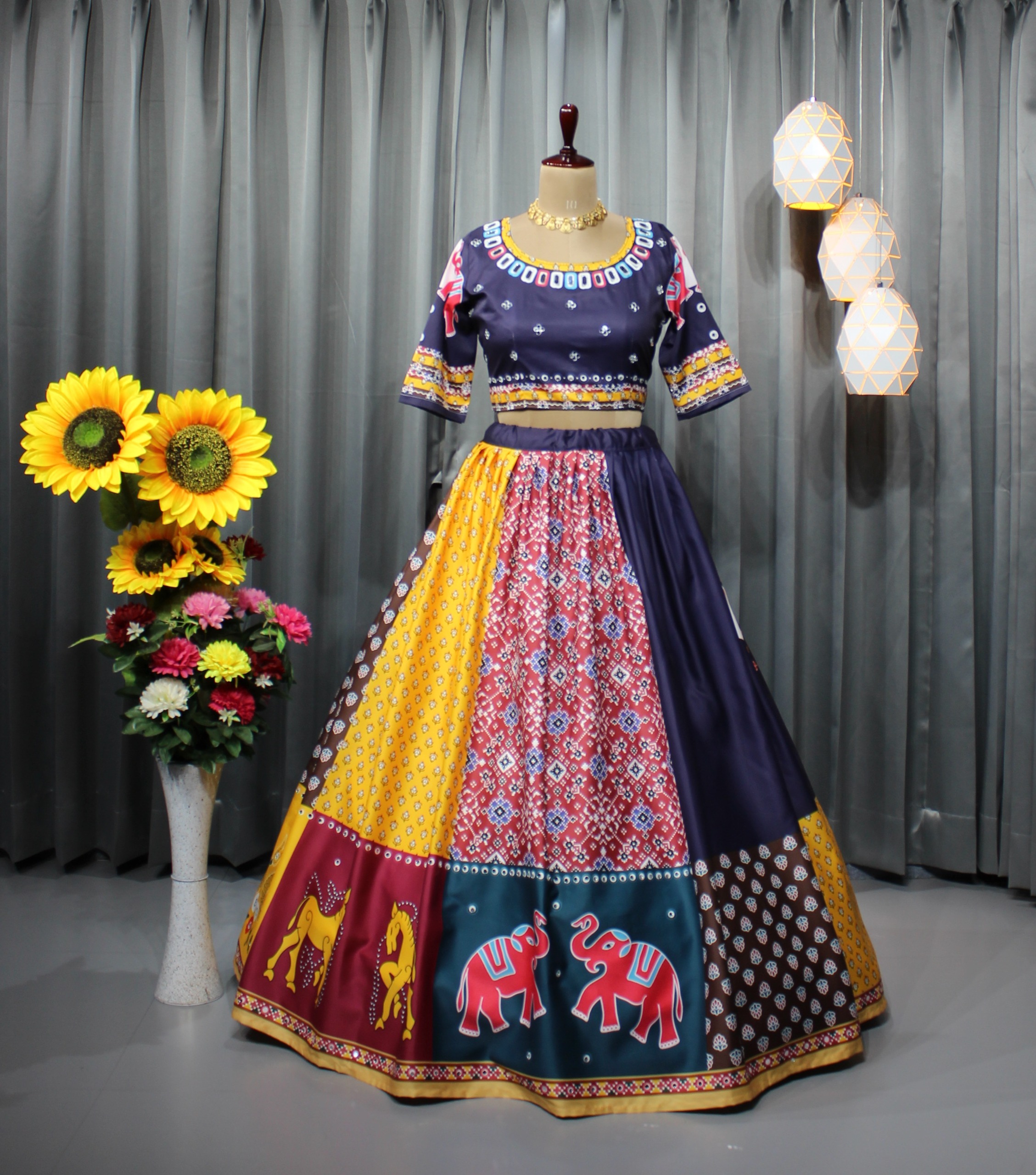
For a Haldi ceremony, yellow, marigold, green, pink and orange work naturally with the bright setting. A printed or lightly embroidered butter silk lehenga can be comfortable in warm weather and easier to clean than a heavily embellished skirt. The Haldi Lehengas Under 5500 collection reflects the need for festive colour and a practical budget, although the care label should still be checked before purchase.
For a bridesmaid role, coordinate with the wedding palette without copying the bride's embroidery density or exact colour. A multicolour skirt can work with a plain blouse and restrained jewellery, while a single-colour skirt allows more freedom with a contrasting dupatta. Bridesmaid Lehengas Under 5500 is an useful budget category when several outfits need to be coordinated.
For a reception or sangeet, structured fabric, sequins and reflective threadwork create movement under artificial light. The Wine Pink Embroidered Silk Lehenga Set Online gives a deep, formal colour direction, while the Colorful Patch Print Butter Silk Lehenga Choli Set demonstrates how print can provide personality without the weight of all-over embellishment.
For a younger, daytime or travel-friendly wardrobe, the Stylish Multicolor Butter Silk Lehenga Choli Set can be styled with minimal jewellery, flat footwear and a shorter dupatta drape. The garment becomes more reusable when the blouse and dupatta can be paired with other skirts, palazzos or sarees.
How should a silk lehenga be styled for comfort?
Comfort improves when the outfit's footwear, underlayers, blouse support and dupatta placement are planned together. A silk lehenga that looks balanced in a static photograph can become difficult to manage if the hem is too long or the dupatta is pinned to a weak point.
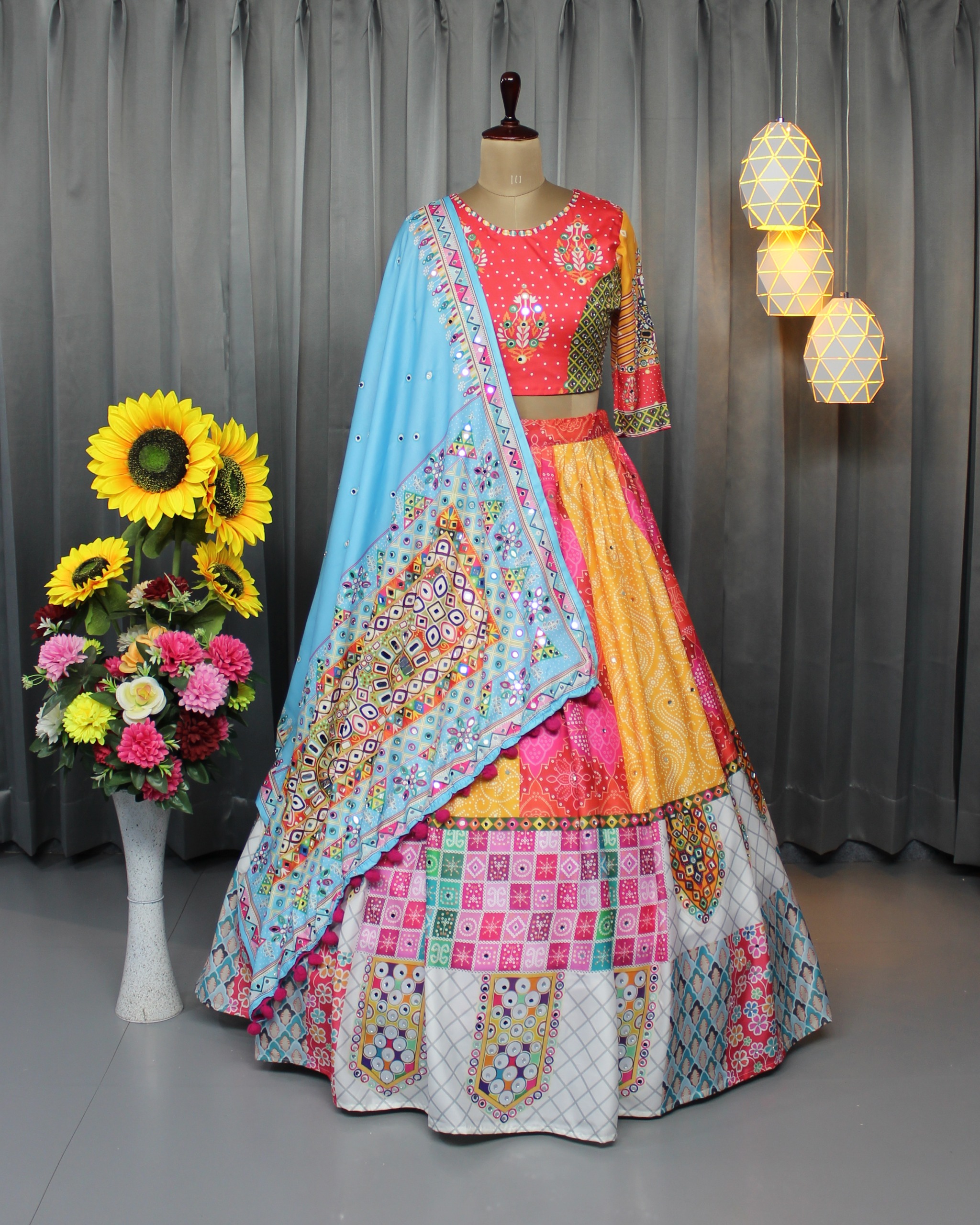
Wear the shoes you expect to use before finalising the skirt length. A floor-grazing hem may work with three-inch heels but drag with flats. For outdoor functions, a slightly shorter hem or block heel reduces contact with dust, grass and uneven ground.
Choose seamless or low-bulk innerwear under a smooth skirt, and use a supportive blouse construction for heavier bust areas. A well-placed hook, sturdy shoulder seam and correctly sized armhole prevent repeated adjustment during photographs and dancing.
Pin the dupatta at the shoulder and, when appropriate, at the waist to distribute weight. Avoid placing all the fabric on one shoulder if the border or embellishment is heavy. Test sitting, walking up stairs, raising both arms and turning before leaving for the event.
Jewellery should respond to the lehenga's surface. Zari and sequins already reflect light, so a smaller necklace with statement earrings can prevent visual overload. A printed butter silk skirt may welcome more classic jewellery because the fabric itself has less metallic density.
How do you care for a silk lehenga after wearing it?
Most silk lehengas should be aired, spot-treated cautiously and stored away from direct light rather than machine-washed. The care label takes priority because natural silk, polyester blends, sequins and zari respond differently to water and heat.
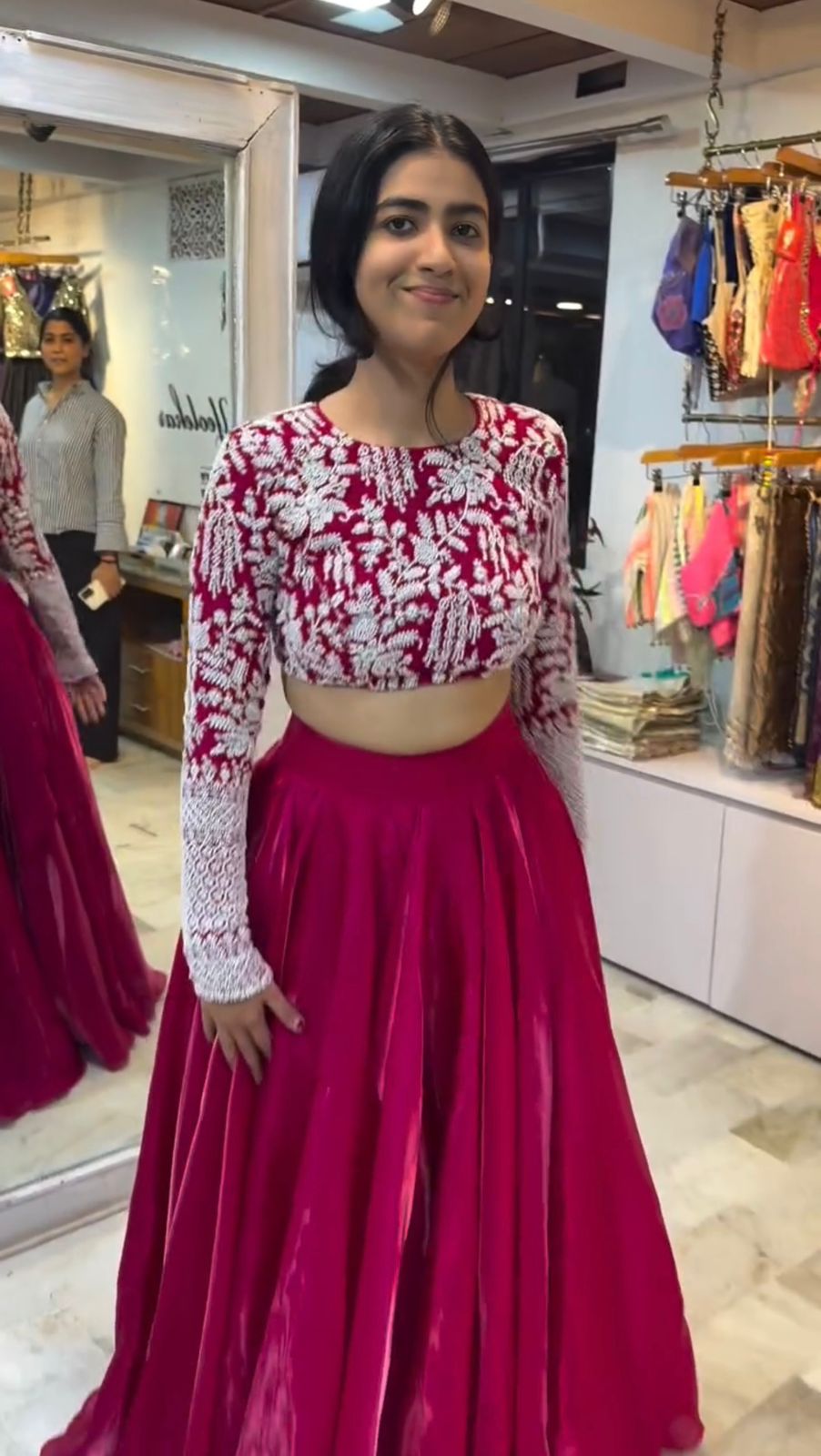
After wearing the garment, hang the skirt and blouse in a shaded, ventilated room for several hours. Remove jewellery and pins carefully so they don't catch threads or sequins. Blot a fresh spill with a clean, dry cloth; rubbing can spread pigment and damage surface embroidery.
Use professional dry cleaning for natural silk, dense zari, extensive sequins or uncertain stains. Do not apply perfume, deodorant or hair spray directly onto the fabric, since alcohol and oils can mark silk surfaces and metallic work. Test any home cleaning method on an inconspicuous inner section only after checking the label.
Store the lehenga in a breathable cotton garment bag rather than sealed plastic for long periods. Fold heavy embroidered panels with acid-free tissue or clean muslin between layers to reduce pressure marks. Refold the garment every few months, keep it away from damp walls, and avoid hanging a very heavy skirt for years because the waistband can stretch.
Photographs and product labels can't answer every question, so ask for clarification about fibre content, lining, blouse stitching, alteration options, colour variation and wash care before paying. A careful five-minute check can prevent an unsuitable silhouette, an uncomfortable blouse or a care requirement that doesn't match your wardrobe.
Questions to Ask Before Ordering a Silk Lehenga
Are all silk lehengas made from pure silk?
No. Silk lehengas may use natural silk, silk blends, art silk, polyester or commercial fabric names such as Roman silk, butter silk and Chinon silk. Read the fibre-composition and care details instead of relying on the word "silk" in the title.
Is raw silk better than butter silk for a lehenga?
Neither fabric is universally better; raw silk gives a firmer, more structured silhouette, while butter silk is often lighter and softer in fall. Choose raw silk for defined volume and butter silk for easier movement or a relaxed daytime style.
How do I choose the correct silk lehenga size online?
Measure your natural waist, fullest hip, bust and shoulder width, then compare those measurements with the seller's chart. Also check the closure type, blouse measurements, skirt length and available alteration allowance before ordering.
Can I wear a silk lehenga to a Haldi ceremony?
Yes, but a lighter silk blend or printed butter silk design is usually more practical than dense zari or heavy sequins in a warm, active Haldi setting. Choose a manageable hem, secure the dupatta and follow the care label if turmeric stains occur.
How should I wash an embellished silk lehenga?
Most embellished silk lehengas should not be machine-washed, and professional dry cleaning is safer for zari, sequins and dense embroidery. Air the garment after use, blot spills without rubbing and follow the specific care label.
How early should I buy a silk lehenga for a wedding?
Order at least two to three weeks before the wedding so delivery, fitting, alterations and a trial wear are possible. Heavily embellished or semi-stitched garments may need additional tailoring time.


