

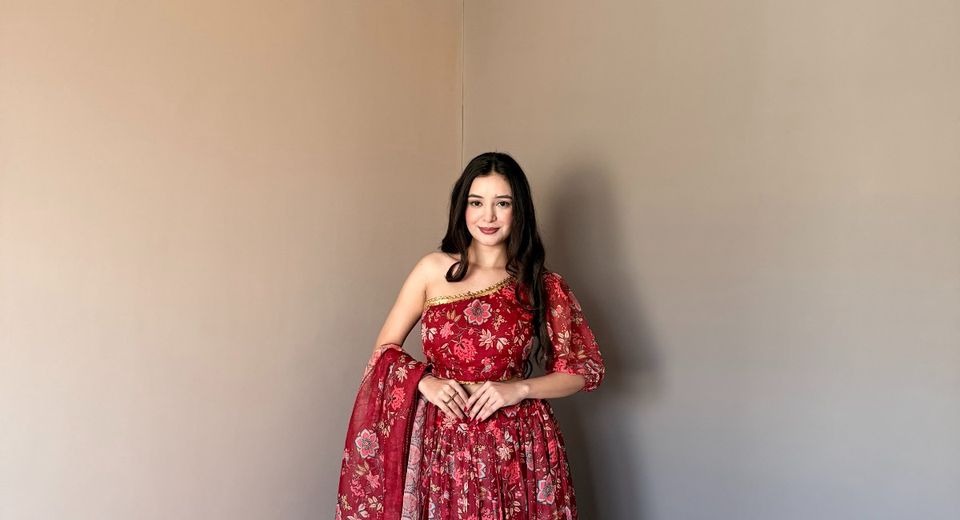
Choosing a lehenga for a tall frame becomes much easier when the fitting decision starts with measurements rather than height alone. What to Check in the Waist, Skirt Volume and Blouse for Lehengas for Tall Women comes down to three connected points: where the waistband sits, how much fabric creates the skirt's flare, and whether the blouse has enough length and structure to balance the torso. These details matter for readymade, semi-stitched and fully stitched choli shopping, especially when ordering online for a wedding.
A tall woman doesn't automatically need the longest skirt or the largest flare. The correct result depends on waist-to-floor length, torso length, footwear, bust placement, blouse finishing and the weight of the fabric. A few measurements taken before shopping can prevent a skirt that looks cropped, a waistband that rolls down or a choli that leaves an unintended gap.
What to Check in the Waist, Skirt Volume and Blouse for Lehengas for Tall Women: Begin with Measurements
The essential measurements are natural waist, high hip, full hip, shoulder width, bust, shoulder-to-waist length and waist-to-floor length. Measure while wearing the footwear planned for the event, because a lehenga cut for flats may look short with heels and a skirt cut for high heels may drag on the floor.
Measure the waist at the exact height where the lehenga will sit. A high-waisted skirt rests near the narrowest part of the torso, whereas a low-waisted design sits closer to the high hip. Measuring only the narrowest point can produce an inaccurate fit when the garment is designed to sit lower.
Record the waist-to-floor distance from the waistband position to the floor, not from the natural waist unless both points are identical. Keep the measuring tape straight over the fullest part of the hip. Allow approximately 1 to 2 inches of floor clearance for easier walking, depending on the height of the shoes and the thickness of the hem.
Ask whether a listed skirt length includes the waistband, lining, can-can and hem border. A skirt described as 44 inches long can have a different finished length depending on whether the measurement begins at the top edge of the waistband or below the waistband seam. Product measurements are useful only when the starting and ending points are clear.
How should a lehenga waistband sit on a tall woman?
A lehenga waistband should sit securely at the intended waistline without cutting into the ribs or slipping toward the upper hip. A fitted waistband usually needs about 1 inch of wearing ease, while 2 inches may be more comfortable for sitting through a long wedding function.
Check waistband depth as well as circumference. A 2- to 3-inch waistband gives a stable anchor for a heavily embroidered bridal skirt. A narrow elasticated waistband can be comfortable for a lightweight festive set but may provide less control under a heavy dupatta or dense zari work.
A tall woman with a long torso may prefer a broader waistband because the additional horizontal line can make the transition between blouse and skirt look intentional. A tall woman with a shorter torso may prefer a narrower waistband and a higher skirt position to avoid making the midsection appear compressed.
What to Check in the Waist, Skirt Volume and Blouse for Lehengas for Tall Women: Skirt Length and Flare
The right skirt for a tall frame has enough length and controlled volume to balance the body without becoming difficult to walk in. Skirt proportion depends on the position of the flare, the number of panels, the fabric and the amount of stiff lining or can-can.
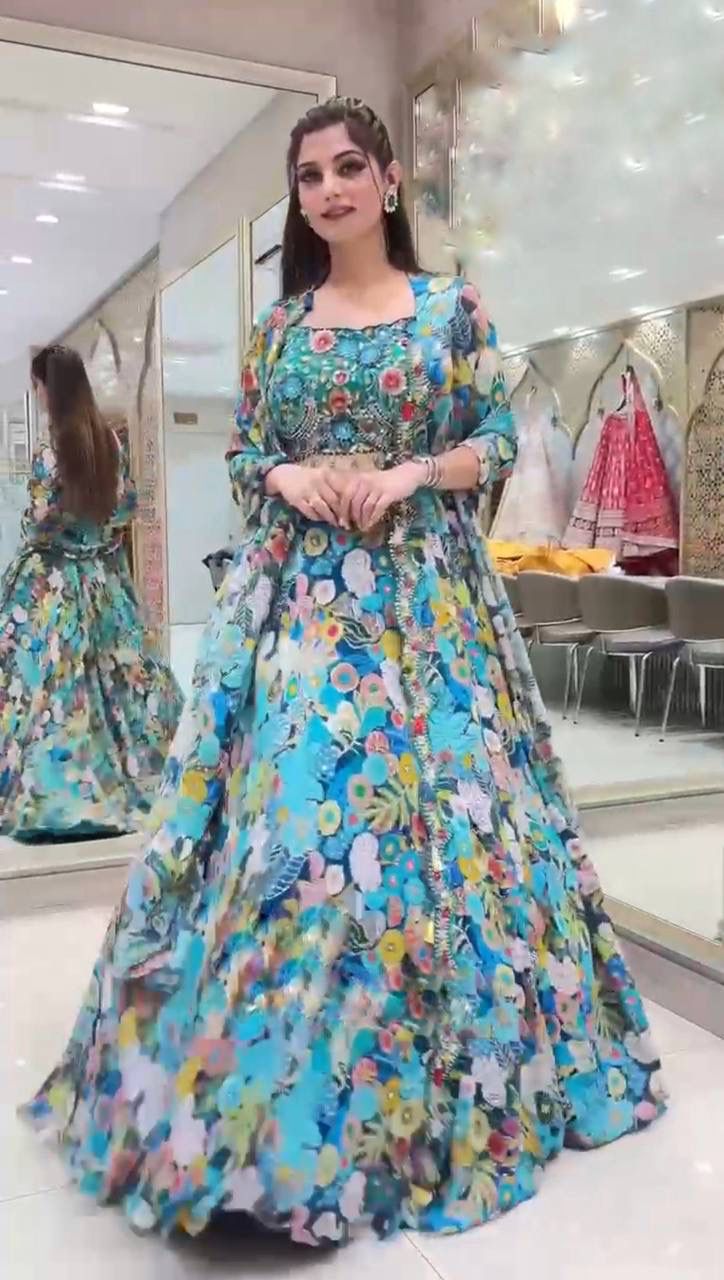
A moderate flare of approximately 3 to 4 metres is versatile for many festive lehengas. Bridal skirts with 4.5 metres or more create a fuller effect, but they also need stronger waistband support and sufficient room around the feet. A wide flare isn't automatically more flattering if the wearer must constantly lift the hem.
Check where the skirt begins to widen. Panels that open gradually from the waist produce an A-line shape. Panels that remain close through the hip and widen near the knee create a mermaid silhouette. A tall woman can carry either shape, but a mermaid skirt needs careful knee and calf measurements because limited walking ease becomes noticeable during dancing or climbing stairs.
Fabric changes the apparent volume. Organza holds a crisp shape and can add horizontal width. Georgette falls more softly and often creates a fluid line. Chinon can offer a smooth, lightweight drape, while silk and dense embroidery add weight that may pull on the waistband. The Red Floral Organza Lehenga Set with One Shoulder Blouse demonstrates why structured fabric and a strong neckline should be judged together rather than separately.
The Pastel Floral Georgette Lehenga Set with Ruffle Blouse offers a softer proportion. Georgette generally follows the body more closely than organza, while a ruffle adds movement around the upper torso. Check whether the ruffle ends at the waist or extends toward the hip, because that finishing point changes the apparent torso length.
How much skirt volume works for a tall frame?
Moderate to generous volume usually works well for a tall frame when the waistband, blouse and footwear are proportionate. The most useful choice depends on shoulder width, hip shape, fabric weight and the amount of movement required at the event.
A tall woman with narrow shoulders may benefit from moderate flare combined with sleeve or neckline detail that adds visual balance above the waist. A tall woman with broader shoulders may comfortably wear a fuller skirt because the upper and lower halves already have more visual weight.
Check the hem in motion rather than only while standing. Walk ten steps, sit on a chair, turn around and climb one step if possible. A skirt that looks elegant when stationary but catches under the feet isn't practical for a sangeet, reception or Haldi ceremony.
What to Check in the Waist, Skirt Volume and Blouse for Lehengas for Tall Women: Choli Length
The correct blouse length is determined by torso length, bust placement, waistband height and desired midriff coverage, not by overall height alone. Measure from the highest shoulder point over the bust to the intended lower edge of the choli.
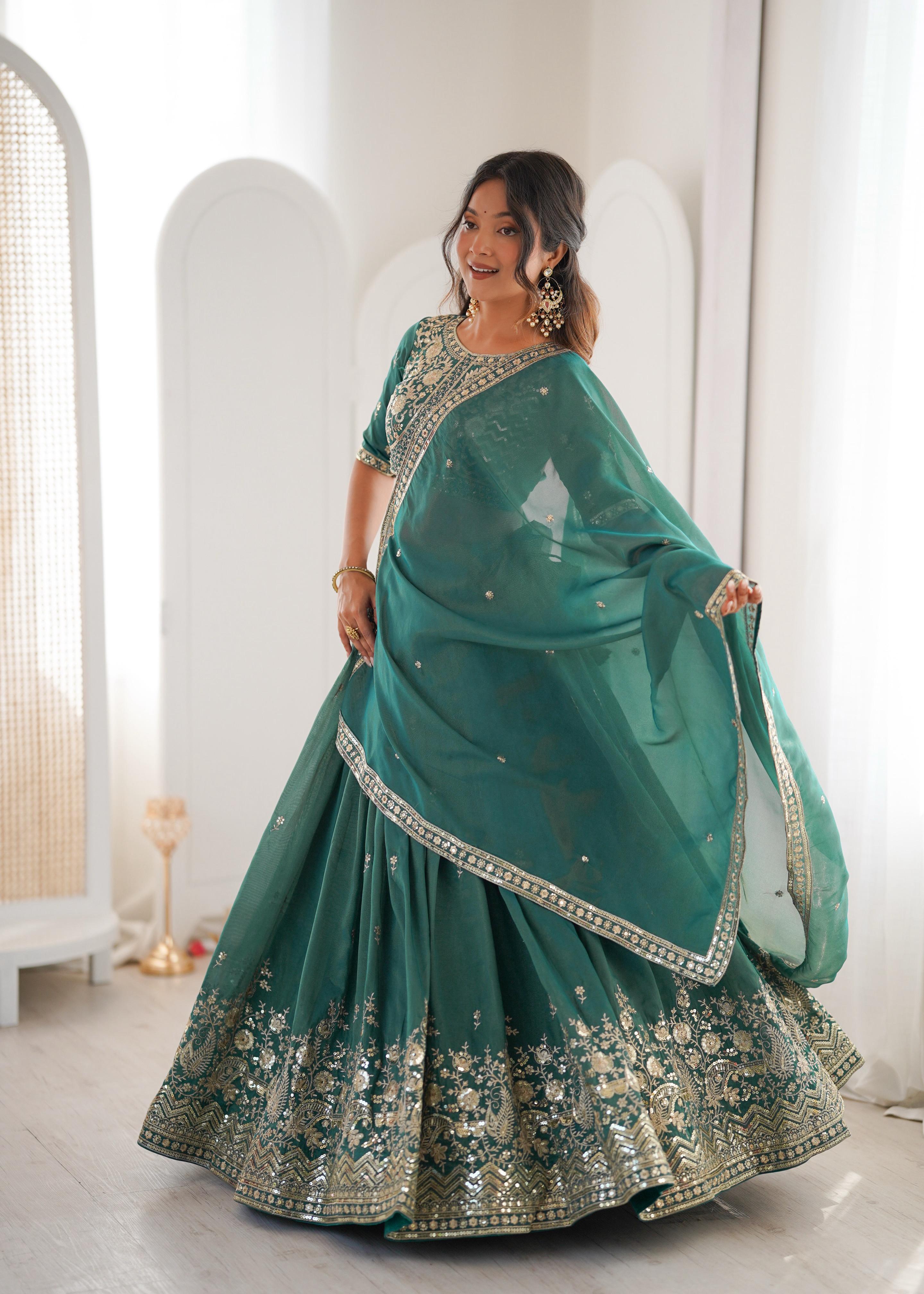
Also record shoulder-to-waist and shoulder-to-high-hip measurements. These figures show whether a standard blouse will finish too high on a long torso or become unnecessarily long on someone who is tall mainly because of long legs. The lower edge of the blouse should meet the skirt's waistband cleanly without overlapping it awkwardly.
A blouse ending at the natural waist creates a defined separation between choli and skirt. A longer blouse reaching the high hip brings more coverage and can work with a low-waisted lehenga. A crop blouse can suit a high waistband and a contemporary styling preference, provided the wearer is comfortable with the amount of midriff shown.
Blouse construction matters as much as length. Princess seams, darts and shaped side seams help the garment follow the bust. A broad shoulder seam prevents sleeves from appearing misplaced. Check armhole depth and upper-arm circumference in addition to bust size, because a deep armhole can make a blouse feel loose even when the bust measurement is correct.
The Mint Embroidered Lehenga Set with Net Dupatta and Designer Threadwork Silk Lehenga Choli Set with Dupatta show why blouse structure needs separate attention. Net and silk create different levels of visual weight, while embroidery placement can draw the eye upward or downward. A tall woman should assess the finished choli length, neckline and sleeve placement instead of choosing by colour alone.
Which blouse details balance a tall woman?
A defined neckline, visible sleeve structure or a carefully placed border can balance a tall frame without making the torso look longer. Square necklines, high necklines, elbow-length sleeves and wider shoulder details create different visual endpoints.
Vertical embroidery can reinforce a long, graceful line, but too many uninterrupted vertical details may make a narrow frame appear longer. Horizontal borders at the neckline, sleeve or blouse hem can introduce balance. The best placement depends on whether the wearer wants to emphasise height or create a more compact proportion.
For girls or younger wearers, comfortable coverage should take priority over copying an adult bridal silhouette. Adjustable hooks, a lined bust, secure shoulder seams and comfortable sleeve openings matter during long ceremonies and active movement.
What to Check in the Waist, Skirt Volume and Blouse for Lehengas for Tall Women: Readymade Choices
Readymade lehengas are suitable when the waist, hip and blouse measurements already fall within the garment's alteration range. A readymade design isn't necessarily a poor choice for a tall woman, but the finished skirt length and blouse measurements must be confirmed before purchase.
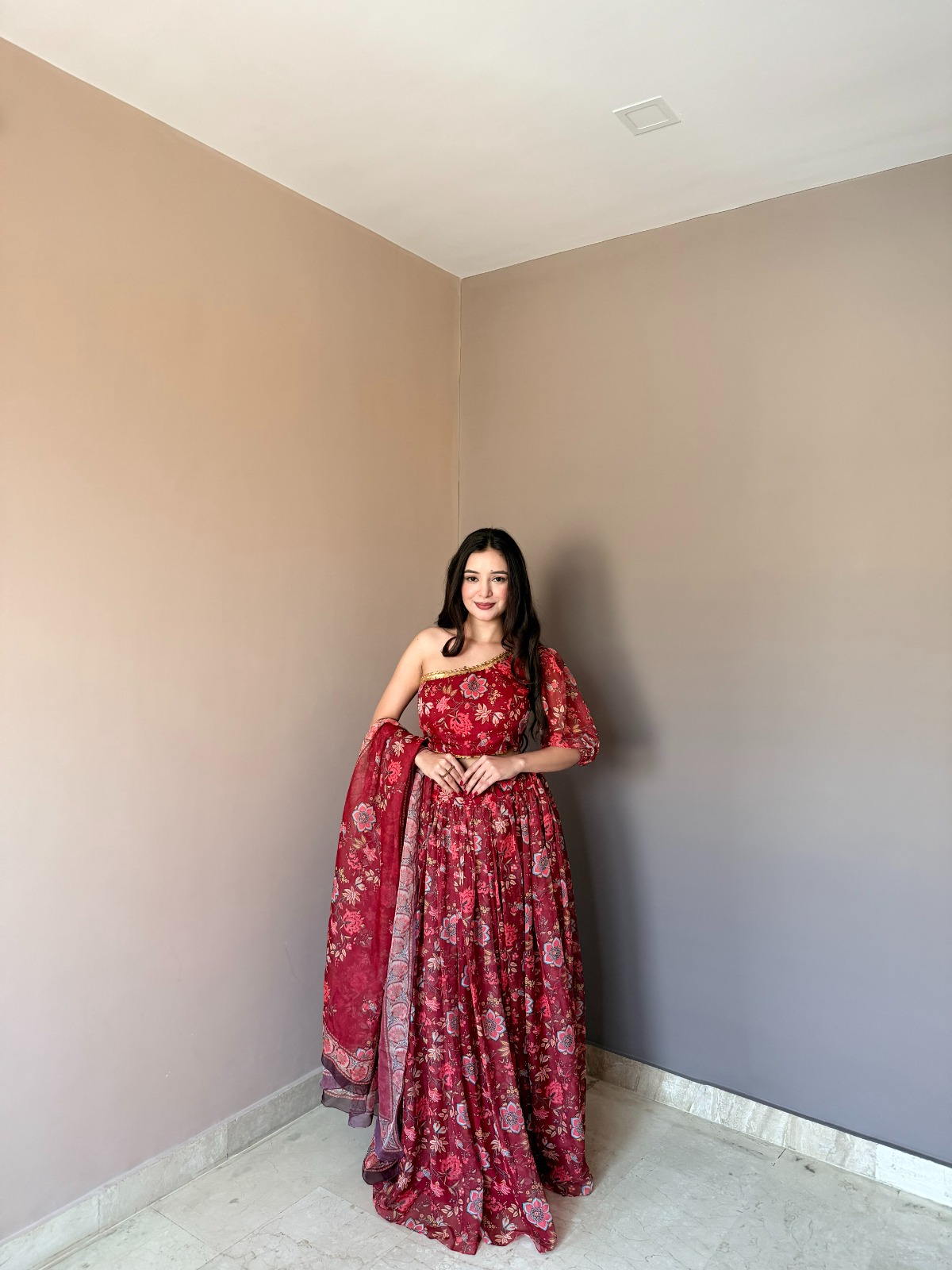
Ask whether the skirt has extra seam allowance at the waist and whether the hem can be lengthened. A skirt can't always be made longer after cutting if the embroidery or border sits close to the bottom edge. Ask whether the blouse has margin at the side seams, shoulder and lower edge; embroidery may limit the areas that a tailor can safely alter.
Fully stitched choli shopping requires particular care because a ready-made blouse often has less alteration flexibility than a semi-stitched choli. Confirm finished blouse length, shoulder width, bust circumference, armhole, sleeve length and closure type. Reducing a blouse is usually easier than adding substantial length or width without disturbing the lining and embellishment.
The Ready Made Lehenga collection can suit shoppers who need a faster decision for a festive or wedding event, provided the size chart includes finished garment measurements. Compare those measurements with a well-fitting blouse and skirt you already own instead of relying only on small, medium or large labels.
The Semi Stitched Lehengas Collection can be more useful when a tall woman needs a specific waist-to-floor length or wants to change sleeve coverage. Semi-stitched construction gives a tailor more control over the final waist position, blouse length and fastening method.
What to Check in the Waist, Skirt Volume and Blouse for Lehengas for Tall Women: Fabric and Dupatta
Fabric weight and dupatta placement change how a lehenga feels after several hours. Dense threadwork, sequins and silk can pull on the waistband, while a lightweight net dupatta may need secure pins to prevent repeated slipping.
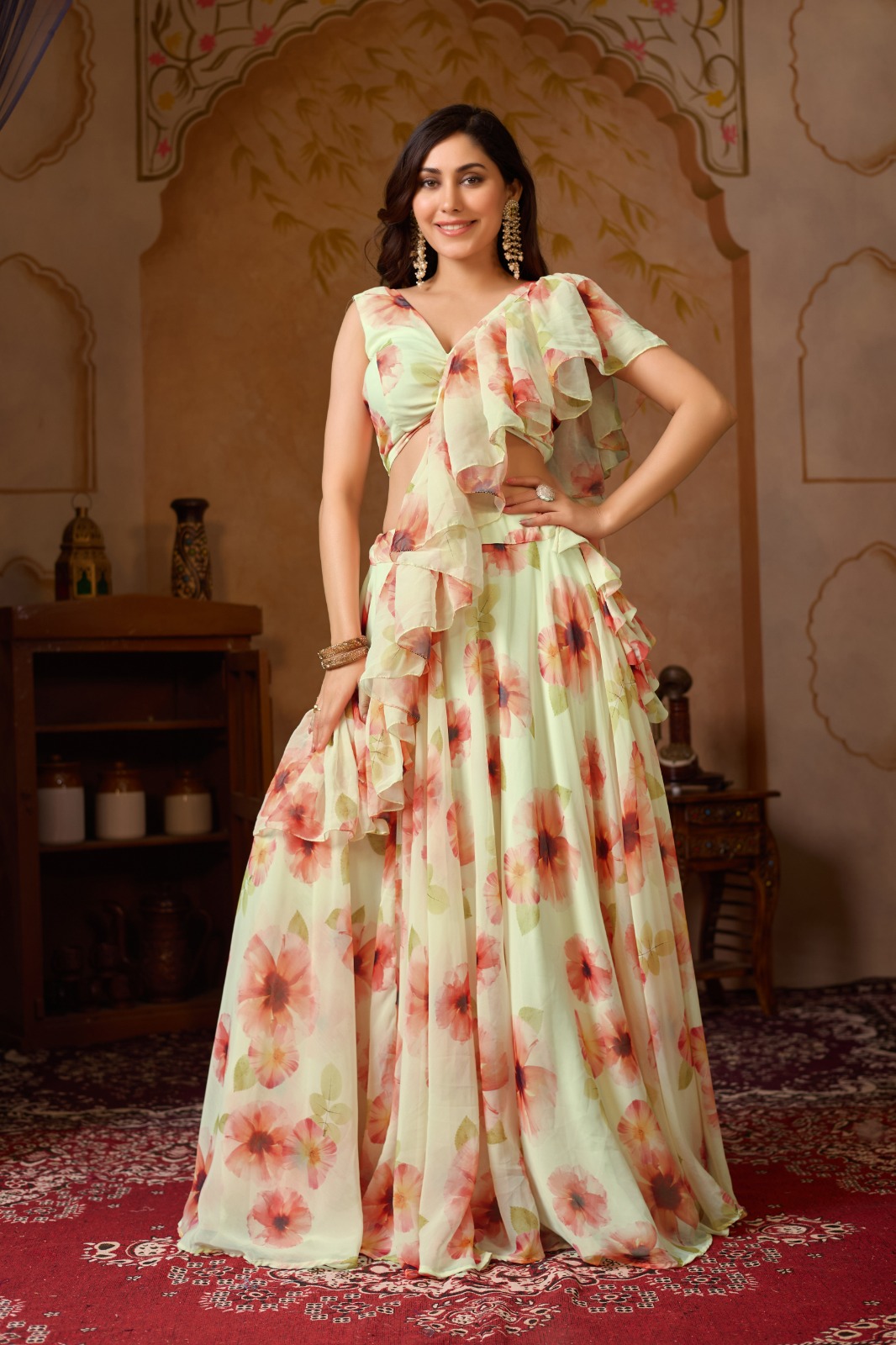
The Mustard Floral Threadwork Chinon Lehenga Choli for Women and Green Chinon Silk Sequins Embroidered Lehenga Set are useful examples of why Chinon, silk and embellishment should be assessed together. A tall woman should check whether the skirt lining supports the decoration and whether the waistband remains comfortable when the dupatta is pinned at the shoulder.
The Blooming Georgette Sequins and Thread Embroidered Lehenga Set with Georgette Dupatta has coordinated drape and skirt movement to consider. A georgette dupatta can be arranged over one shoulder, across the torso or around the arms; each arrangement changes the apparent blouse length and the amount of upper-body coverage.
The Yellow Organza Floral Embroidered Lehenga Choli with Sequins and Thread Work shows how organza, embroidery and sequins can create a structured, light-catching silhouette. Check the skirt's lining and hem stability before choosing it for an event where frequent walking is expected.
Colour collections can help narrow a shopping search, but colour should follow fit rather than replace it. Yellow Lehengas and Green Lehengas can work for festive dressing and a Haldi ceremony, while Mehendi Lehengas often include shades and embellishment suited to daytime functions. A flattering colour can't compensate for an unstable waistband or a blouse that restricts arm movement.
How should a tall woman plan the dupatta?
A tall woman should choose a dupatta length and drape that provide enough coverage without hiding the blouse's intended proportions. Pin the dupatta at the shoulder and waist when necessary, especially if the skirt or blouse is heavily embellished.
A long dupatta can create a graceful vertical line, but excessive length can drag or collect near the feet. A broad border may add visual width across the shoulders, while a narrow border creates a lighter finish. Test the planned drape with the actual blouse and jewellery before the event.
What to Check in the Waist, Skirt Volume and Blouse for Lehengas for Tall Women: Final Fitting
The final fitting should happen with the intended footwear, innerwear, blouse lining, jewellery and dupatta arrangement. A first fitting four weeks before a wedding leaves time for waist, hem and sleeve adjustments, while a final fitting 7 to 10 days before the event confirms the finished proportions.
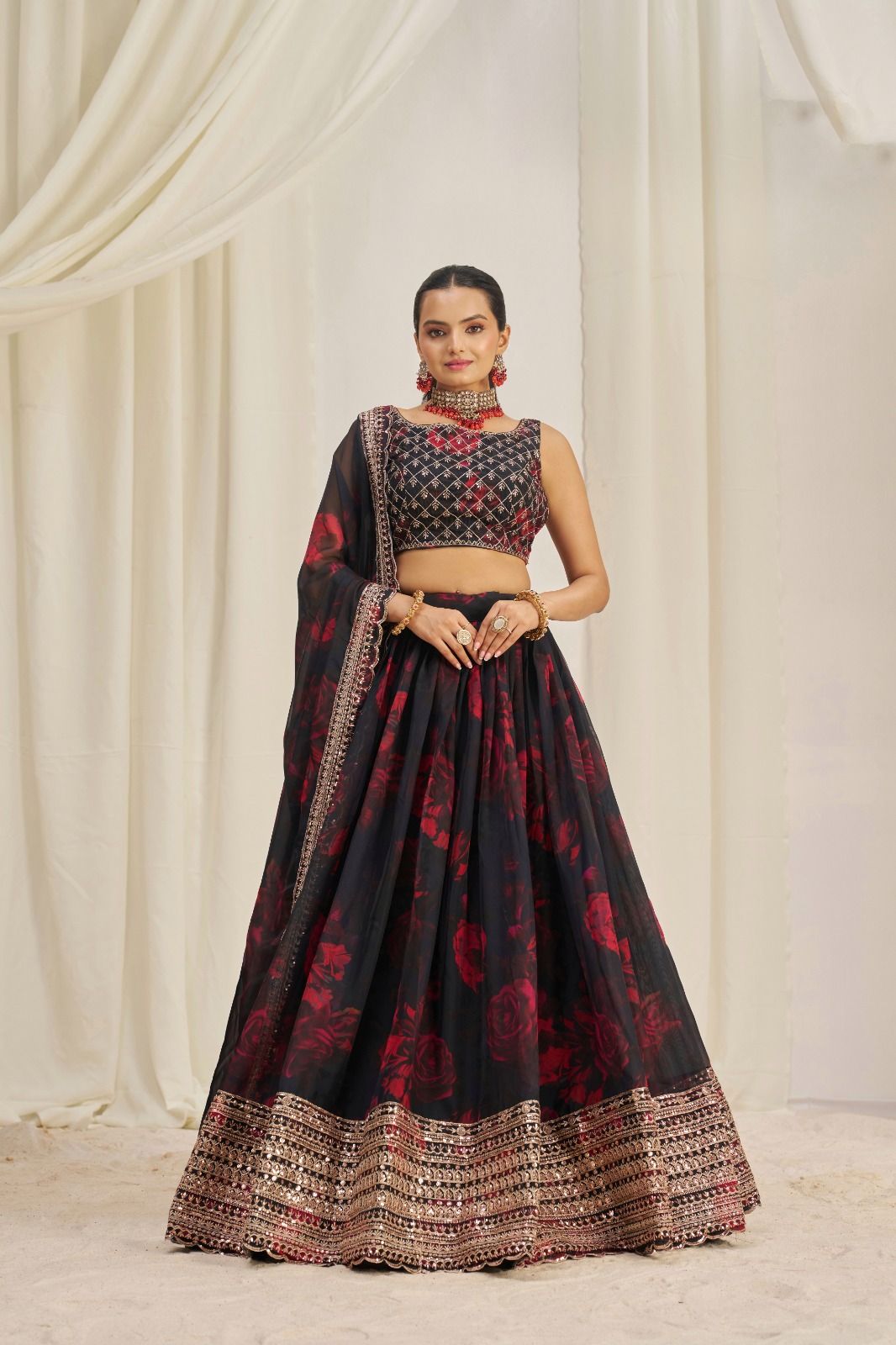
Check that the waistband stays level while walking and sitting. Confirm that the skirt hem clears the floor evenly around the shoes. Raise both arms to test the armholes, sit down to test waist comfort and turn in a full circle to see whether the flare moves without catching.
For an online purchase, save the product measurement chart and compare every key measurement before ordering. Ask specific questions about finished length, waistband position, alteration margin, lining and the exact blouse size. Generic questions such as whether a lehenga is "long enough" rarely produce useful answers.
A practical decision rule is simple: choose the skirt by waist position and waist-to-floor length, choose the flare by movement and body balance, and choose the blouse by torso and bust measurements. The result will look more considered than a lehenga selected by height, trend or model photography alone.
Common Lehenga Fit Questions Tall Women Ask Before Shopping
What lehenga length is suitable for a tall woman?
A suitable lehenga length is the wearer's waist-to-floor measurement minus the preferred floor clearance, measured while wearing event footwear. Leave about 1 to 2 inches of clearance for easier walking, and confirm whether the seller includes the waistband and hem in the stated length.
Should tall women choose a high-waisted or low-waisted lehenga?
Tall women can wear either waist position, but the correct choice depends on torso length and desired midriff coverage. A high waistband can suit a long-legged frame, while a lower waistband can balance a long torso when paired with a longer blouse.
How much flare should a tall woman's lehenga have?
A flare of approximately 3 to 4 metres is versatile for many festive lehengas, while bridal designs may use 4.5 metres or more. Fabric weight, shoulder width, hip proportion and the need to walk comfortably should determine the final volume.
Is a readymade lehenga suitable for tall women?
A readymade lehenga is suitable when the finished skirt length, waist, hip and blouse measurements match the wearer and the garment has enough alteration margin. Confirm these measurements before buying because embroidery and close-set borders can make lengthening difficult.
What blouse length works best with a lehenga for a tall woman?
The best blouse length is based on shoulder-to-waist, shoulder-to-high-hip and bust measurements rather than height alone. A waist-length choli creates a clear separation, while a high-hip blouse gives additional coverage and can balance a low-waisted skirt.
Can a semi-stitched lehenga be altered for a tall frame?
A semi-stitched lehenga is often easier to adapt because a tailor can set the final waist position, skirt length and blouse proportions during stitching. Confirm the available fabric, seam allowance and embroidery placement before requesting major changes.


