

What to Check in the Waist, Skirt Volume and Blouse for Lehengas for Curvy Women matters because waistband comfort, controlled flare and blouse support determine whether a set looks polished and feels wearable for several hours. A beautiful lehenga can still pull, gape or twist when these three areas are not assessed before purchase.
Curvy figures vary widely in bust, waist, hip and height proportions, so a single size label can't predict the final fit. Measurements, construction details and the intended event provide better guidance than relying on a model photograph. The following checks apply to readymade, fully stitched, semi-stitched and designer lehenga choli sets.
What to Check in the Waist, Skirt Volume and Blouse for Lehengas for Curvy Women: starting with the waist
The waistband should sit securely at the natural waist or at the position stated in the size chart without digging into the body when you sit. The natural waist is usually the narrowest part of the torso, but contemporary lehengas may sit slightly higher or lower, so confirm the garment's actual rise before ordering.
Measure around the place where the lehenga waistband will rest, keeping the tape level and comfortably close to the body. Take a second measurement while seated. A difference of even 2 to 4 centimetres can reveal whether a rigid waistband will become uncomfortable during a long wedding ceremony, dinner or dance performance.
Which waistband details improve comfort?
A wide waistband, side zip with a hook, back elastic panel or adjustable dori can make a lehenga easier to fit. A waistband measuring approximately 5 to 8 centimetres in finished height generally distributes pressure more evenly than a narrow strip. Soft lining and covered seams also reduce rubbing against the skin.
A drawstring can provide useful adjustment, but a dori should not be treated as a substitute for correct measurements. A tightly pulled cord can create bunching and make the waist look uneven. Side-seam allowances of at least 2 to 3 centimetres are valuable when a tailor needs to release the waist after delivery.
Check where the zip ends and whether the zip lies under the blouse. A zip that stops too close to the hip can strain when the wearer sits. A zip placed at the side or back is usually easier to conceal, while a front fastening may affect the drape of a dupatta or the appearance of a heavily embroidered blouse.
Readymade lehengas need especially careful waist checking because the skirt may have limited alteration room. Semi Stitched Lehengas Collection styles can offer more flexibility, but the final waist and hip measurements still depend on the tailor's cutting. Ask whether the quoted measurements describe the body or the finished garment.
What to Check in the Waist, Skirt Volume and Blouse for Lehengas for Curvy Women: judging skirt volume
The most wearable skirt volume for a curvier figure is enough to create movement without adding uncontrolled bulk at the waist and hip. Flare should come from the cut and panel arrangement, not merely from many stiff layers concentrated around the waistband.
Look for the number and direction of panels, the stiffness of the lining and the placement of gathers. A six- to sixteen-panel skirt can distribute fullness smoothly, while tightly gathered fabric may create extra thickness at the waist. An A-line and panelled silhouette often provide a clean fall, whereas a circular skirt produces more dramatic movement and needs adequate length for walking, sitting and dancing.
How can a shopper judge volume from product details?
Terms such as "heavy flare" describe a visibly full skirt, but they don't explain how the fullness is built. Blue Floral Georgette Lehenga Set with Heavy Flare and Pink Bridal Sequins Lehenga Set with Heavy Flare show why lining, hem weight and petticoat structure should be considered alongside the flare label.
Measure the skirt at the hem when the information is available, and compare the measurement with the width of a skirt you already find comfortable. A finished hem circumference of roughly 3 to 4 metres can offer graceful movement without becoming difficult to manage, while a much wider hem may need more space for walking, sitting and dancing. These figures are guidelines because fabric weight and height change the result.
Heavy zari, sequins and multiple net layers can pull a skirt downward. That weight may improve drape, but it can also strain a narrow waistband. A sturdy inner lining, reinforced seams and a properly finished hem are important when choosing a bridal or heavily embellished lehenga.
Soft georgette, organza and Chinon silk behave differently. Georgette usually falls close to the body and moves easily. Organza creates a crisper outline and can hold volume away from the legs. Chinon silk may provide a fluid, dressy fall, while butter silk can feel smoother and lighter.
Colorful Patch Print Butter Silk Lehenga Choli Set is an example of how a printed, lighter-looking skirt can be easier to wear for a daytime celebration than a heavily layered bridal design. More flare doesn't automatically make a body look larger; balanced flare, a defined waistband and an uninterrupted vertical line can create proportion.
What to Check in the Waist, Skirt Volume and Blouse for Lehengas for Curvy Women: fitting the blouse
The blouse should support the bust, remain stable at the shoulders and close without pulling across the chest. Blouse fit is often more important than skirt size because a tight or unsupported choli can restrict breathing, cause gaping and make the entire lehenga feel uncomfortable.
Measure the full bust, underbust, shoulder width, upper arm and blouse length. Take the full bust measurement around the fullest point without compressing the body. Underbust measurement helps assess the lower edge of a structured blouse, while upper-arm measurement matters when sleeves are fitted or embellished.
Which blouse construction details help?
A shaped neckline, broad shoulder straps, supportive lining and a firm but comfortable closure usually improve stability. Princess seams can distribute shaping across the bust, and a longer blouse ending near the high hip can provide more coverage than a very short choli. A blouse with cups or built-in padding should still be checked for cup placement because padding that sits too high or low can't support every bust shape.
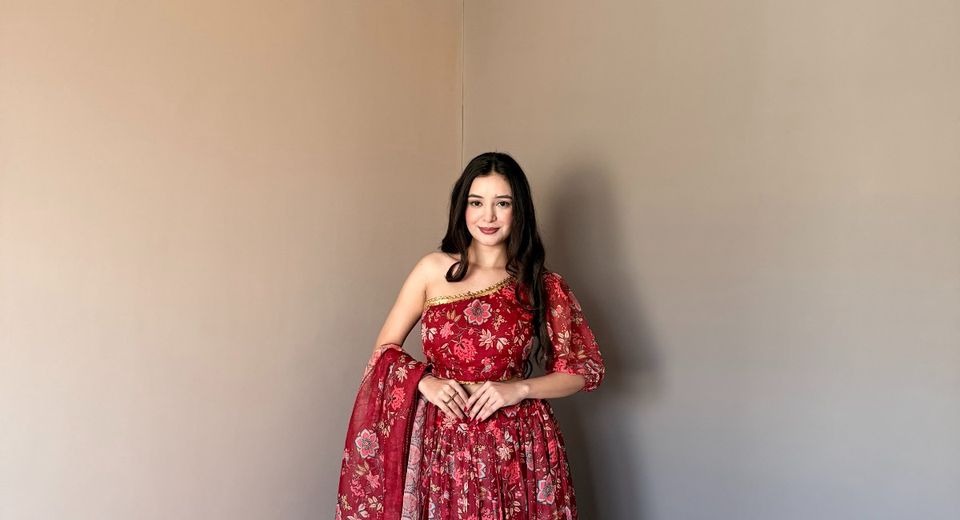
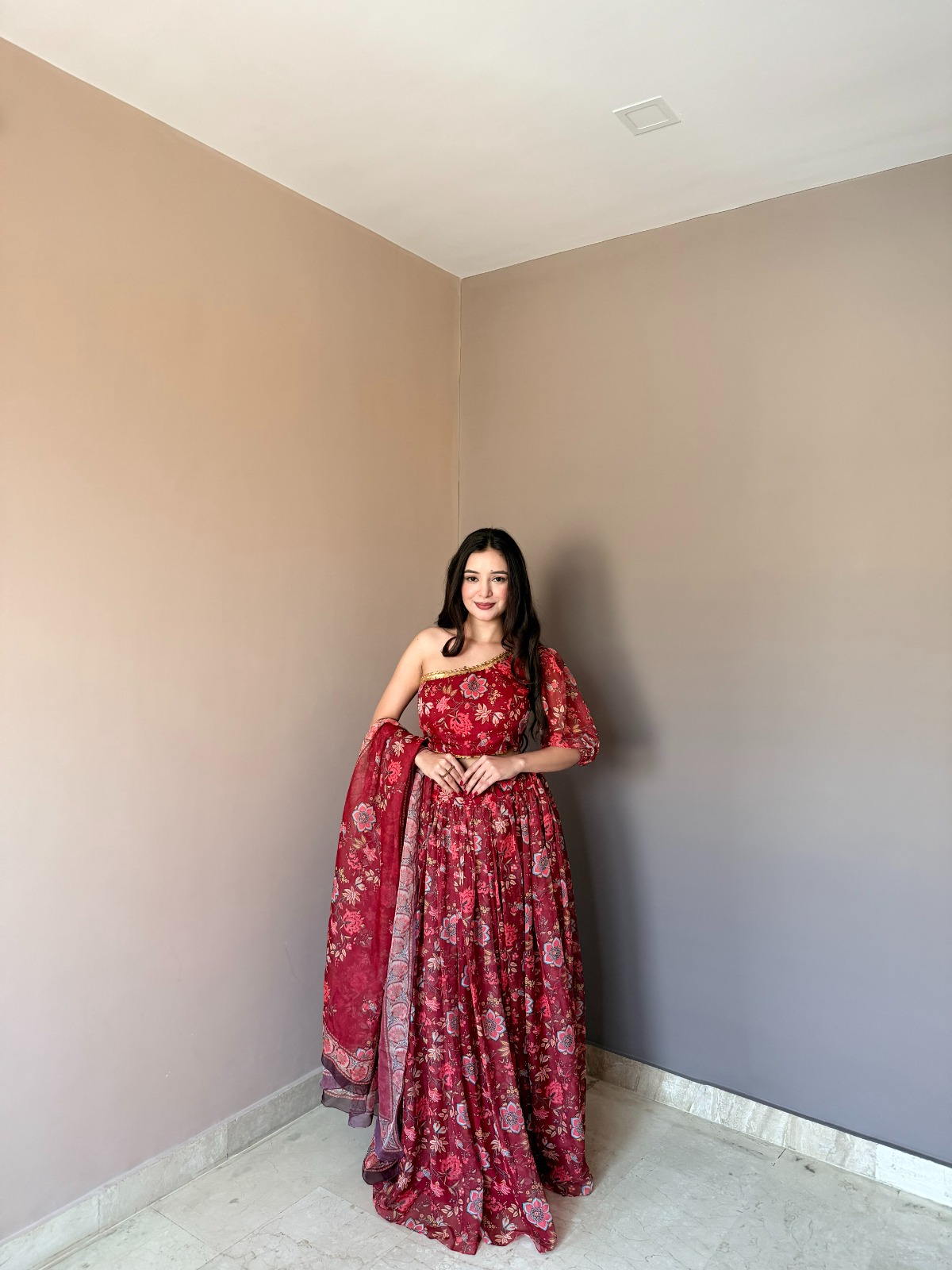
One-shoulder designs require particular attention to internal support. Red Floral Organza Lehenga Set with One Shoulder Blouse should be assessed for a secure shoulder band, a stable neckline and enough bust coverage before being chosen for extended wear. Adhesive tape may help with a brief event, but reliable internal construction is more comfortable and safer for active movement.
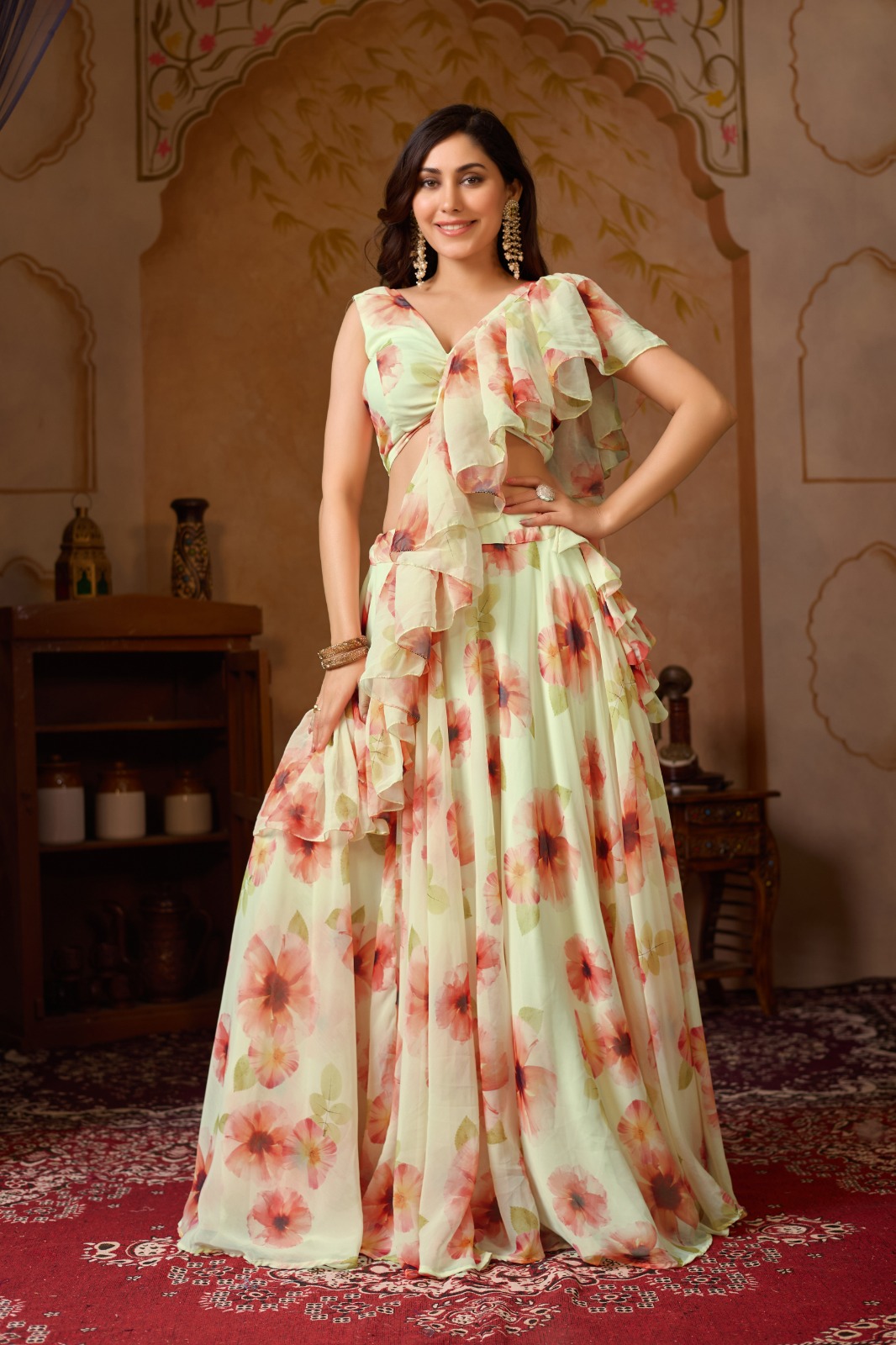
Ruffle sleeves, cap sleeves and fitted sleeves change the required upper-arm ease. Pastel Floral Georgette Lehenga Set with Ruffle Blouse can work well for a softer silhouette when the sleeve opening doesn't grip the arm. Ask for the finished sleeve circumference rather than assuming that flexible fabric will solve a small measurement.
Closures deserve a practical test. Hooks and eyes allow small adjustments, while a concealed zip gives a smooth finish but may be harder to alter. A lace-up back can accommodate minor changes in the waist and bust, although the lining should cover the lacing so the garment remains comfortable against the skin.
What to Check in the Waist, Skirt Volume and Blouse for Lehengas for Curvy Women: assessing fabric and embellishment
Fabric weight, surface decoration and lining determine how a lehenga behaves after several hours of wear. A skirt that feels manageable for five minutes in a trial room may feel heavy after standing, climbing stairs or dancing.
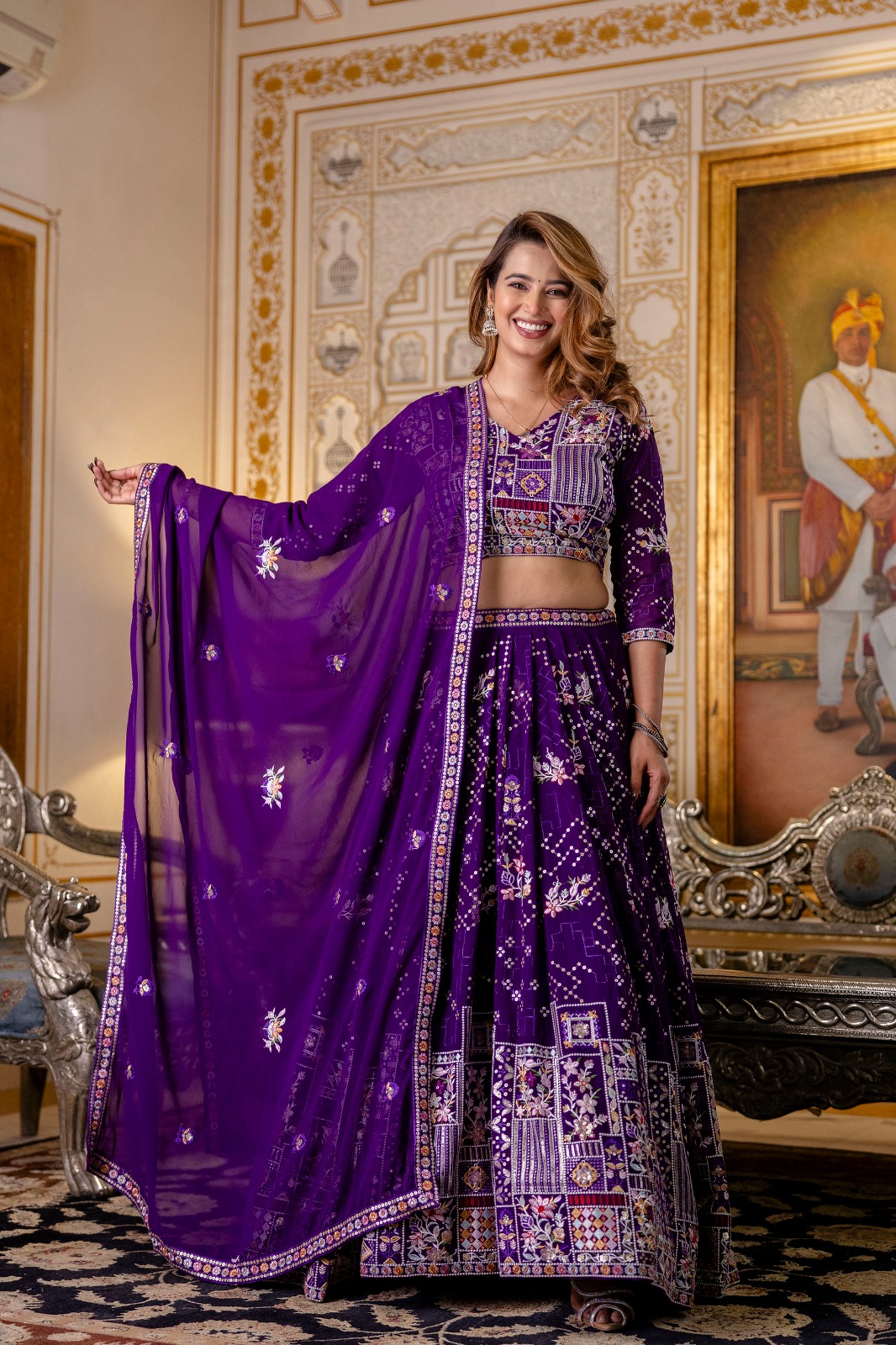
Banarasi silk, brocade and heavily embroidered silk generally hold structure and look formal, but they can weigh more than georgette or organza. Designer Threadwork Silk Lehenga Choli Set with Dupatta may suit a reception or evening wedding when the wearer wants a structured finish, provided that the waistband and shoulder area can carry the garment comfortably.
Net dupattas can be light but may catch on sequins and jewellery. Mint Embroidered Lehenga Set with Net Dupatta for Women demonstrates why dupatta edging and blouse embellishment should be checked together. A rough sequin edge near the neck or armhole can cause irritation even when the skirt fits correctly.
Ask whether the lehenga has a separate lining, can-can, attached underskirt or stiff tulle layer. Can-can creates volume, but excessive stiffness may make sitting difficult. A smooth lining helps the skirt glide over the legs and reduces static. Cotton-rich lining may feel more breathable for daytime functions, while slippery synthetic lining can improve movement but needs secure waist construction.
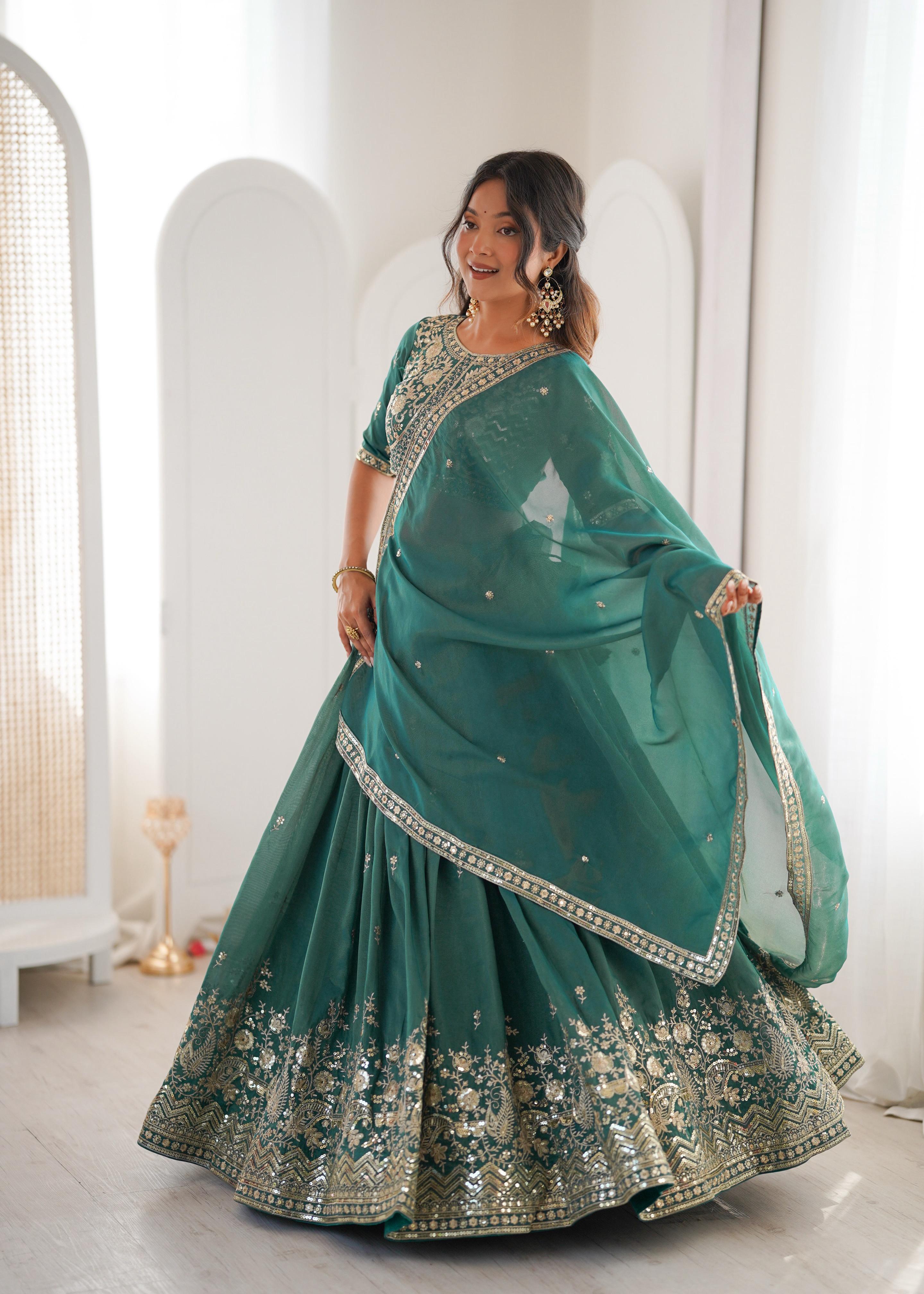
Green Chinon Silk Sequins Embroidered Lehenga Set may be appropriate for an evening celebration, but sequins should be checked at the waistband, armholes and neckline. Run a clean cotton cloth lightly over the inside seams; snagging indicates that the lining or finishing may need attention before prolonged wear.
What to Check in the Waist, Skirt Volume and Blouse for Lehengas for Curvy Women: matching the wedding function
The right lehenga depends on the event's duration, movement requirements, venue and dress code. A mehendi or Haldi ceremony usually rewards lighter fabrics, secure shoulder construction and a hem that won't drag across grass or uneven flooring.
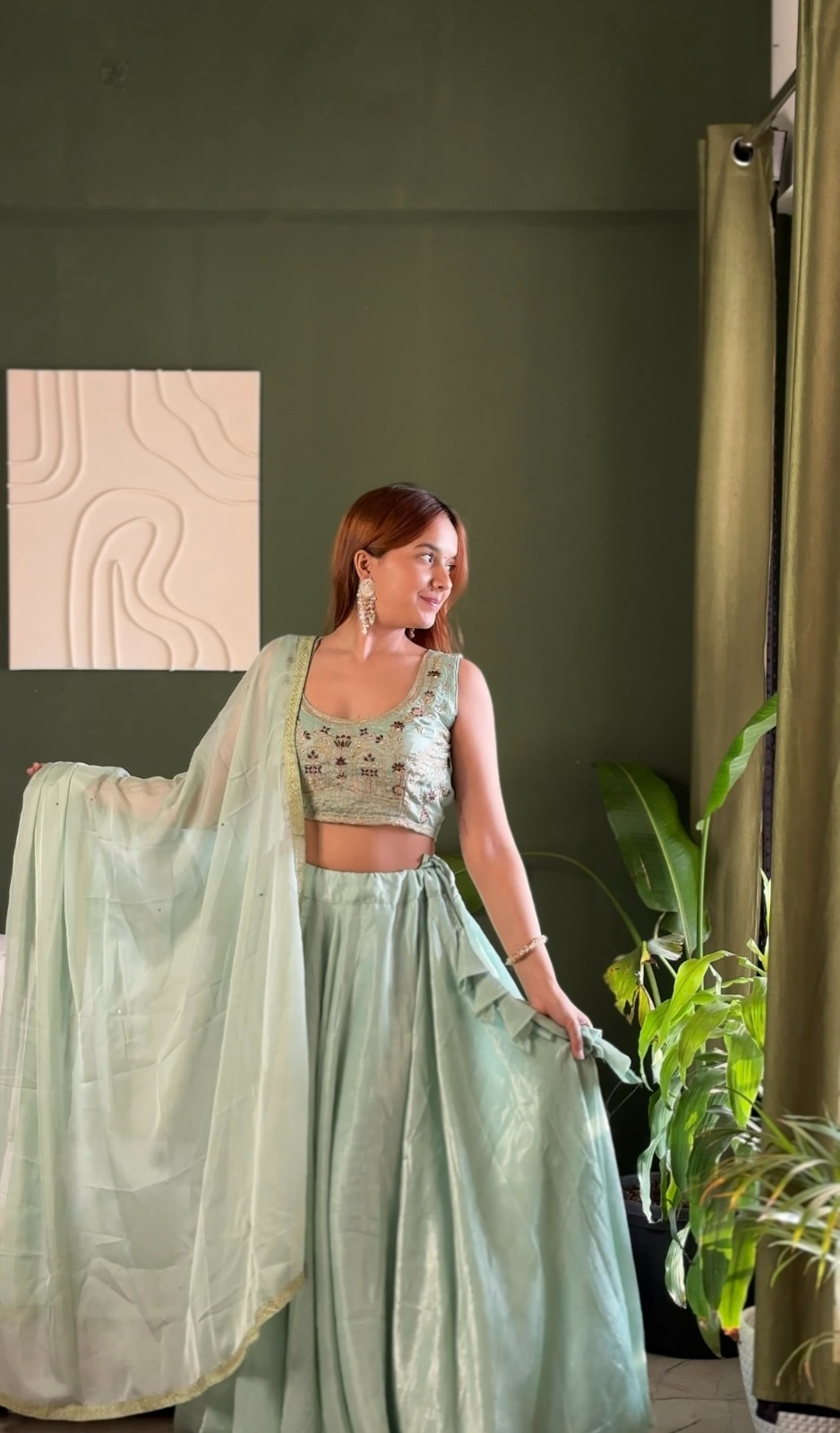
Mehendi Lehengas and Yellow Lehengas often include cheerful colours and lighter silhouettes suited to daytime celebrations. A printed or lightly embroidered skirt can be more practical when guests will sit on low seating or move between indoor and outdoor spaces. Green Lehengas can work for mehendi functions, engagement events and festive dinners, but check the lining and embellishment before choosing a heavily decorated design for a hot afternoon.
For a sangeet, prioritise walking ease and skirt recovery after sitting. A hem that catches under the shoe can cause falls, especially when the lehenga has a wide flare. For a wedding ceremony, a heavier bridal style can work if the waistband is reinforced and the wearer has planned enough time for dressing and minor alterations.
Ready Made Lehenga options are useful when the event is soon and a fully stitched choli is preferred. Fully stitched choli shopping is safest when the seller provides finished garment measurements, not only standard body sizes. A semi-stitched set can be a better choice when bust, waist and hip measurements fall into different size categories.
What to Check in the Waist, Skirt Volume and Blouse for Lehengas for Curvy Women: ordering and alteration checklist
A reliable online purchase requires finished measurements, fabric information and a realistic alteration plan. Before paying, record the waist, high hip, full hip, full bust, underbust, shoulder, upper arm, blouse length and preferred skirt length in centimetres.
Compare body measurements with the seller's size chart, then allow movement ease rather than ordering a garment that matches the tape measurement exactly. A skirt generally needs enough room to sit and walk, while a blouse needs enough ease to breathe and lift the arms. A tailor can reduce excess fabric more easily than create missing seam allowance.
- Check the waist: Confirm finished waistband measurement, rise, fastening type, elastic placement and available seam allowance.
- Check the skirt: Ask about hem circumference, panel construction, lining, can-can, skirt length and total garment weight.
- Check the blouse: Confirm bust, underbust, shoulder, sleeve and upper-arm measurements, along with padding and closure details.
- Check the dupatta: Review its length, width, border weight and whether the fabric will catch on embroidery.
- Check the alteration deadline: Plan a first fitting at least 7 to 10 days before a major event and a final trial 2 to 3 days before wearing it.
Try the complete outfit with the intended footwear, shapewear if you use it, and the jewellery planned for the event. Sit on a chair, walk up a few steps, raise both arms and turn once. A lehenga that passes these movements is more likely to remain comfortable during a real celebration.
Colour and occasion can then guide the final choice. Bridal shoppers may prefer structured silk and heavier embroidery, while wedding guests can consider organza, georgette or lighter printed sets. The best-fitting choice is the one that supports movement, respects personal comfort and leaves enough room for precise tailoring.
Common Questions About Lehenga Fit for Curvy Women
How should a lehenga waistband fit on a curvy woman?
A lehenga waistband should sit securely without digging in, rolling or creating a gap when you sit. Measure the body at the garment's intended waist position and compare that figure with the finished waistband measurement, allowing enough ease for breathing and movement.
Does a heavy-flare lehenga suit a curvy body shape?
A heavy-flare lehenga can suit a curvy body shape when the flare is distributed through panels and the waistband remains smooth. Check the hem circumference, lining and total weight because excessive gathers or stiff can-can may add unwanted bulk and make sitting difficult.
What blouse measurements matter most when buying a lehenga online?
Full bust, underbust, shoulder width, upper-arm circumference and blouse length matter most for an online lehenga purchase. Finished garment measurements are more useful than a general size label, particularly when the blouse has fitted sleeves, padding or a structured neckline.
Is a readymade or semi-stitched lehenga better for a curvy woman?
A semi-stitched lehenga usually offers more flexibility when bust, waist and hip measurements fall into different size categories. A readymade lehenga can work well when the seller provides accurate finished measurements and the skirt and blouse have enough seam allowance for alterations.
Which lehenga fabric is comfortable for a long wedding function?
Georgette and lighter organza designs are often easier to wear for long daytime functions because they generally weigh less than heavily layered silk or sequin styles. Fabric alone does not determine comfort; lining, embellishment, waistband construction and skirt volume also need checking.
How early should a lehenga be altered before a wedding?
Plan the first fitting at least 7 to 10 days before the wedding and complete a final trial 2 to 3 days before the event. Earlier tailoring is advisable for bridal lehengas, complex blouse changes or outfits ordered from another city.


