

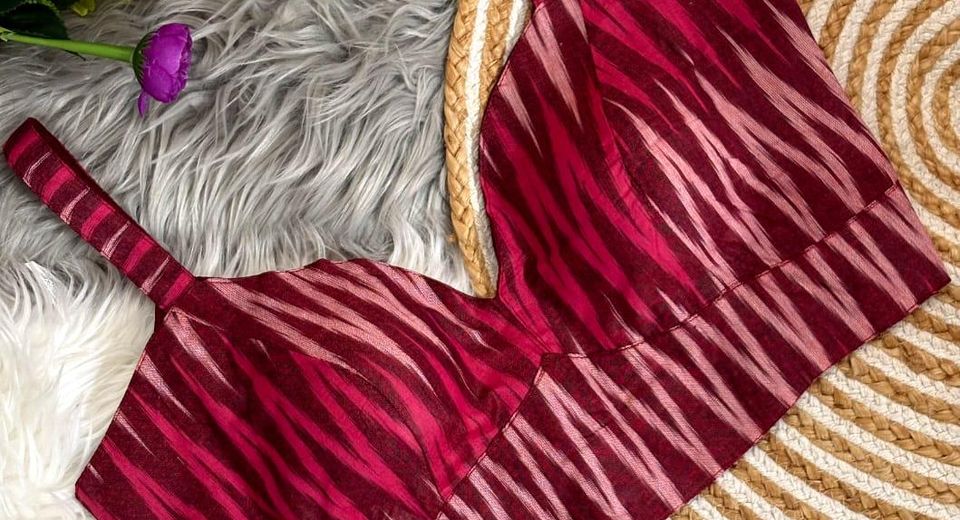
What to check before buying blouse lining quality online matters because a beautiful outer fabric can't compensate for rough seams, weak lining or badly placed padding. Product photographs usually show the front of a blouse, while comfort depends on hidden details: the inner fabric, seam finishing, armhole binding, closure, pad construction and size accuracy. A five-minute inspection of the product page can prevent itching, gaping, uneven support and expensive alteration later.
Readymade blouses also vary widely in construction. A cotton blouse may have a breathable cotton lining, while a silk blouse may use a smooth synthetic lining to help the garment slide over the body. Neither choice is automatically superior. The right lining depends on climate, neckline, sleeve style, bust support, saree fabric and how many hours the blouse will be worn.
Why blouse lining deserves attention before an online purchase
Blouse lining affects comfort, shape retention and the way the garment sits against the saree. Lining creates a barrier between skin and the decorative outer fabric, supports the neckline and helps prevent embroidery, zari or coarse yarns from rubbing against the body.
A well-constructed lining also stabilises a blouse during movement. The outer fabric may be soft Banarasi silk, crisp cotton or fluid linen cotton, but the inner layer controls how the neckline lies and how the armhole behaves when the wearer raises an arm. Poor lining can cause the outer fabric to twist, bunch near the bust or pull at the shoulder.
Padding requires even closer inspection. Padded blouses can provide shape and reduce the need for a separate inner layer, but padding should be evenly distributed, securely enclosed and placed to suit the wearer's bust position. A pad that shifts inside its pocket can create an uneven silhouette and become uncomfortable after several hours.
What to check before buying blouse lining quality online
Check the lining material, lining coverage, seam finishing, padding construction, closure and measurement chart before buying a blouse online. These six details reveal more about quality than a front-facing product photograph.

1. Identify the lining material
The product description should name the lining or inner construction whenever lining affects wearability. Cotton lining is generally breathable and useful for warm weather, long functions and people who dislike slippery inner fabrics. A smooth lining can make a fitted blouse easier to put on, but a very low-quality synthetic lining may feel hot or cling to the skin.
don't assume that a cotton outer fabric guarantees a cotton lining. An Ikat cotton blouse may have a contrasting inner layer, and a designer readymade blouse may combine a decorative shell with a different lining for structure. When the listing doesn't identify the lining, check the care instructions and contact customer support before ordering.
2. Check whether the lining covers the complete body
A full lining should normally cover the front and back body panels, with clean finishing near the neckline and armholes. Partial lining isn't always defective, particularly in lightweight sleeveless designs, but the product description should make the construction clear.
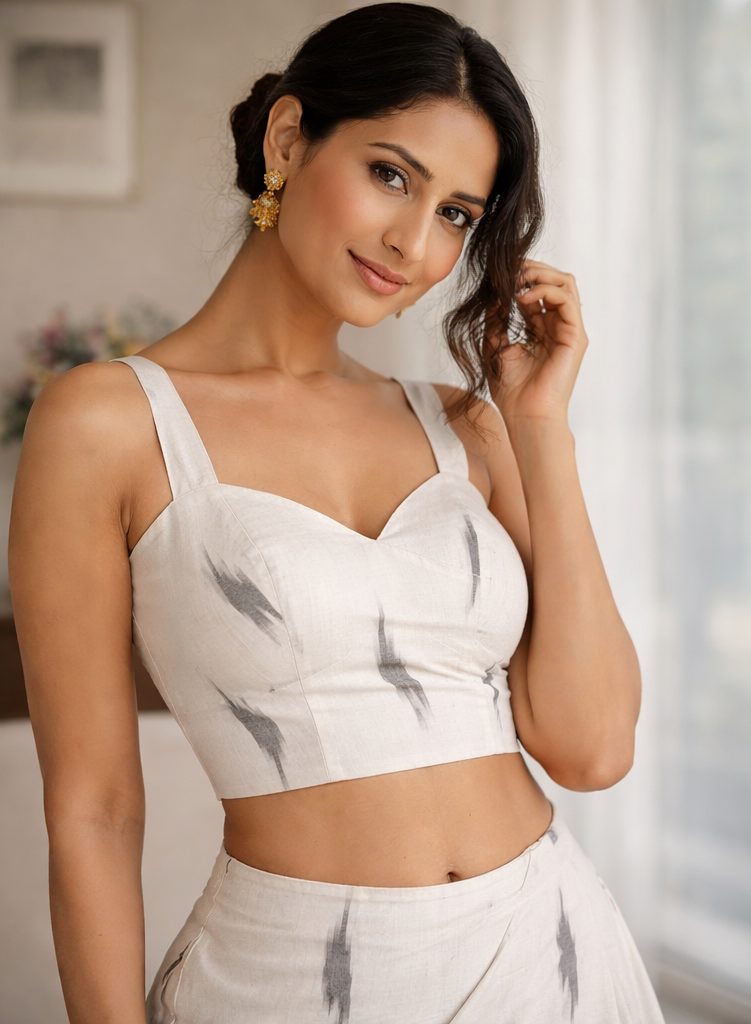
Look closely at close-up images for a second layer behind the bust and side seams. A blouse with an unlined lower edge may still be comfortable, while an unlined bust area can become transparent or lose shape. The Cream Ikat Cotton Padded Blouse Sleeveless Trendy illustrates why shoppers should inspect the relationship between a patterned outer fabric, padding and the inner layer rather than judging colour alone.
3. Inspect seams and edge finishing in photographs
Clean seam finishing means that raw edges are enclosed, overlocked, bound or otherwise secured instead of left to unravel. Zoom into the neckline, armhole, side seam and hem if the website permits enlarged images.
Neckline binding should lie flat without visible puckering. Armhole seams should not show loose threads or a thick ridge that could rub against the underarm. A narrow, even hem is usually easier to wear under a saree than a bulky folded edge. The Ikkat Cotton Padded Blouse for Women Sleeveless provides a useful example of why sleeveless blouses need special attention around armholes, where poor finishing is felt quickly.
How to judge padding and support from a product page
Judge padded blouse quality by checking pad shape, pad placement, pocket construction and whether the description explains the support level. "Padded" alone doesn't reveal whether the blouse has thin foam, moulded cups, removable pads or stitched-in padding.
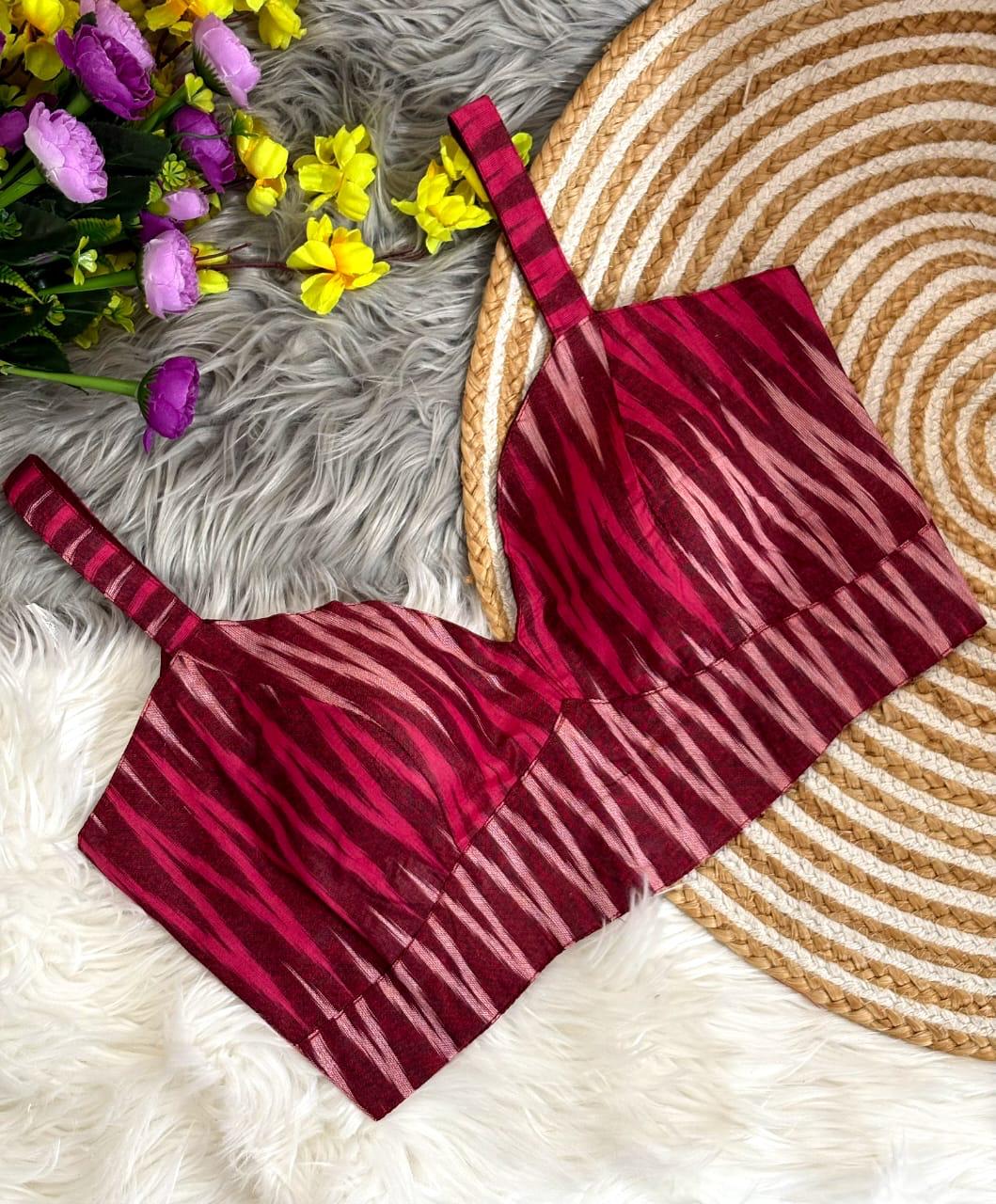
Fixed padding versus removable padding
Fixed pads are stitched into the blouse and are less likely to move during wear or washing. Removable pads can be useful when the wearer wants to change the level of shaping, but pad pockets need a secure opening and enough overlap to prevent the pad from folding.
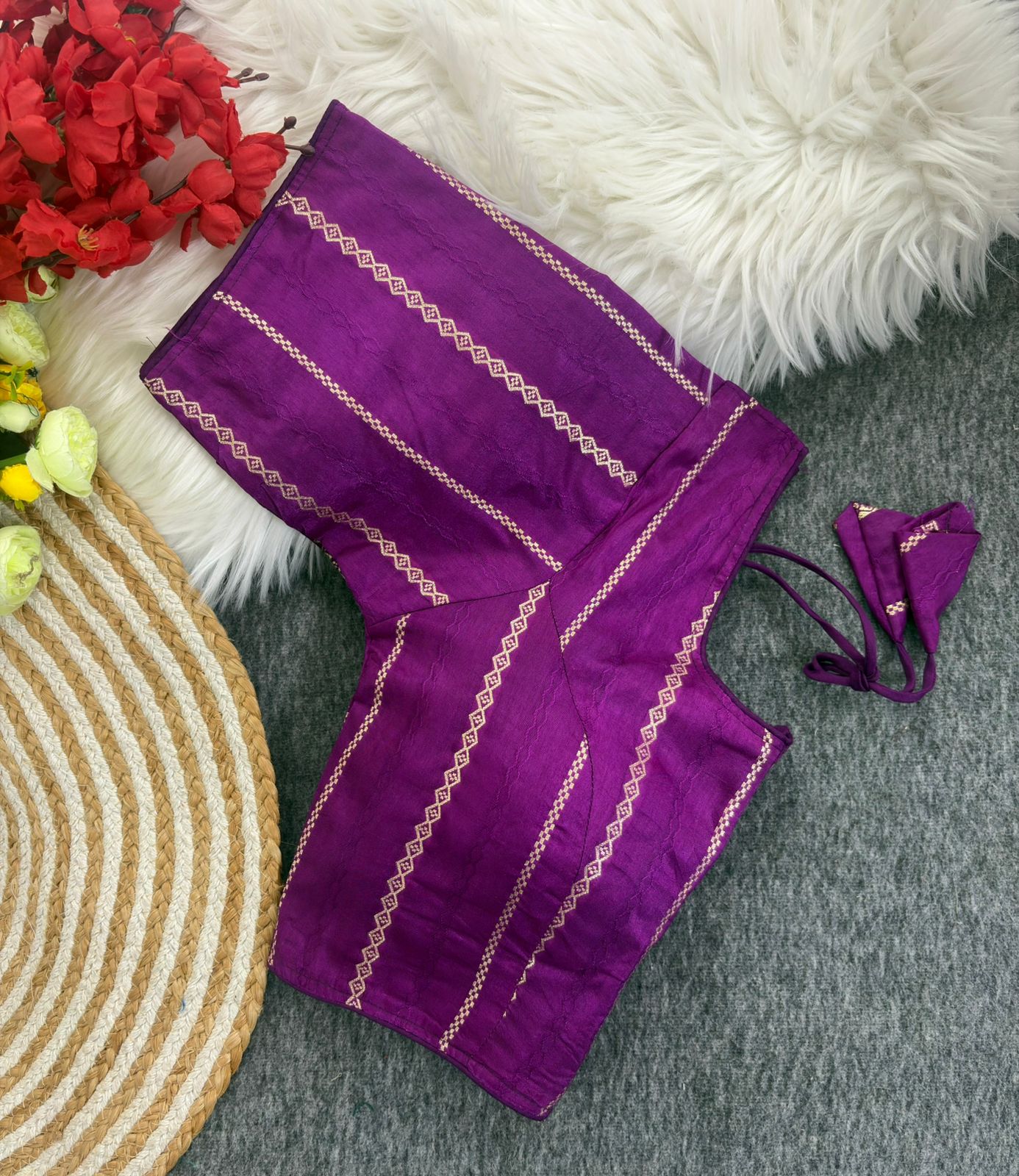
Ask whether the pads are moulded, lightly padded or heavily structured if the product page doesn't say. A lightly padded blouse may offer modest smoothing, while a moulded cup may create a more defined shape. The Banarasi Silk Golden Jari Padded Blouse for Women shows why padding and outer-fabric weight should be considered together: a richly woven fabric may need stable support to keep the front panel smooth.
Look for symmetry and pad placement
Both pads should sit at the same height and follow the natural bust curve. In a product photograph, check whether the neckline and bust area appear symmetrical from left to right. A visibly higher pad, diagonal seam or uneven cup outline can signal a construction problem or simply an unsuitable size.
Padding can't correct an incorrect band or bust measurement. If the blouse feels tight around the armhole, the pad may appear to push the bust upward even when the cup itself is well made. Use the seller's bust, underbust, shoulder and blouse-length measurements instead of choosing only by a familiar S, M or L label.
Which fabric and lining combinations work for different needs?
Cotton lining generally suits hot weather and extended wear, while smooth lining can suit fitted silk and festive blouses that need easier movement. The best combination depends on airflow, texture, structure and the duration of wear.
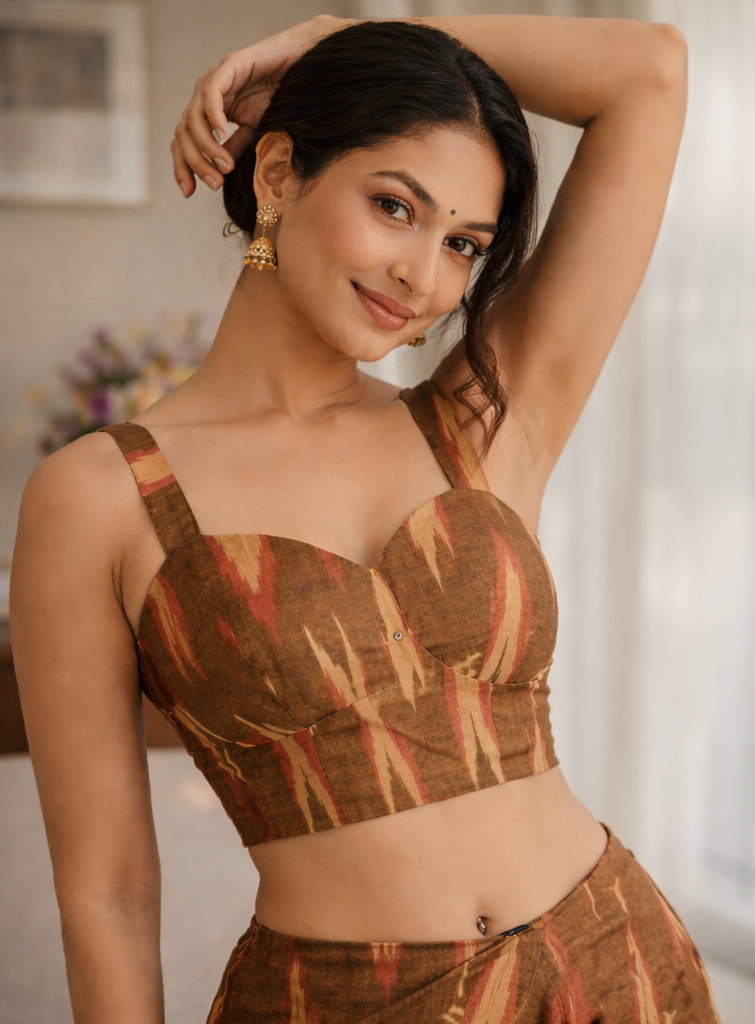
Cotton and Ikat blouses
Cotton outer fabric with a breathable inner layer works well for daytime sarees, workwear and summer gatherings. Ikat cotton has a distinct woven pattern, so check whether the lining adds enough structure without making the blouse stiff. The Brown Ikat Cotton Padded Blouse Sleeveless Stylish is an example of a design where colour, pattern placement and sleeveless armhole finishing all deserve equal attention.
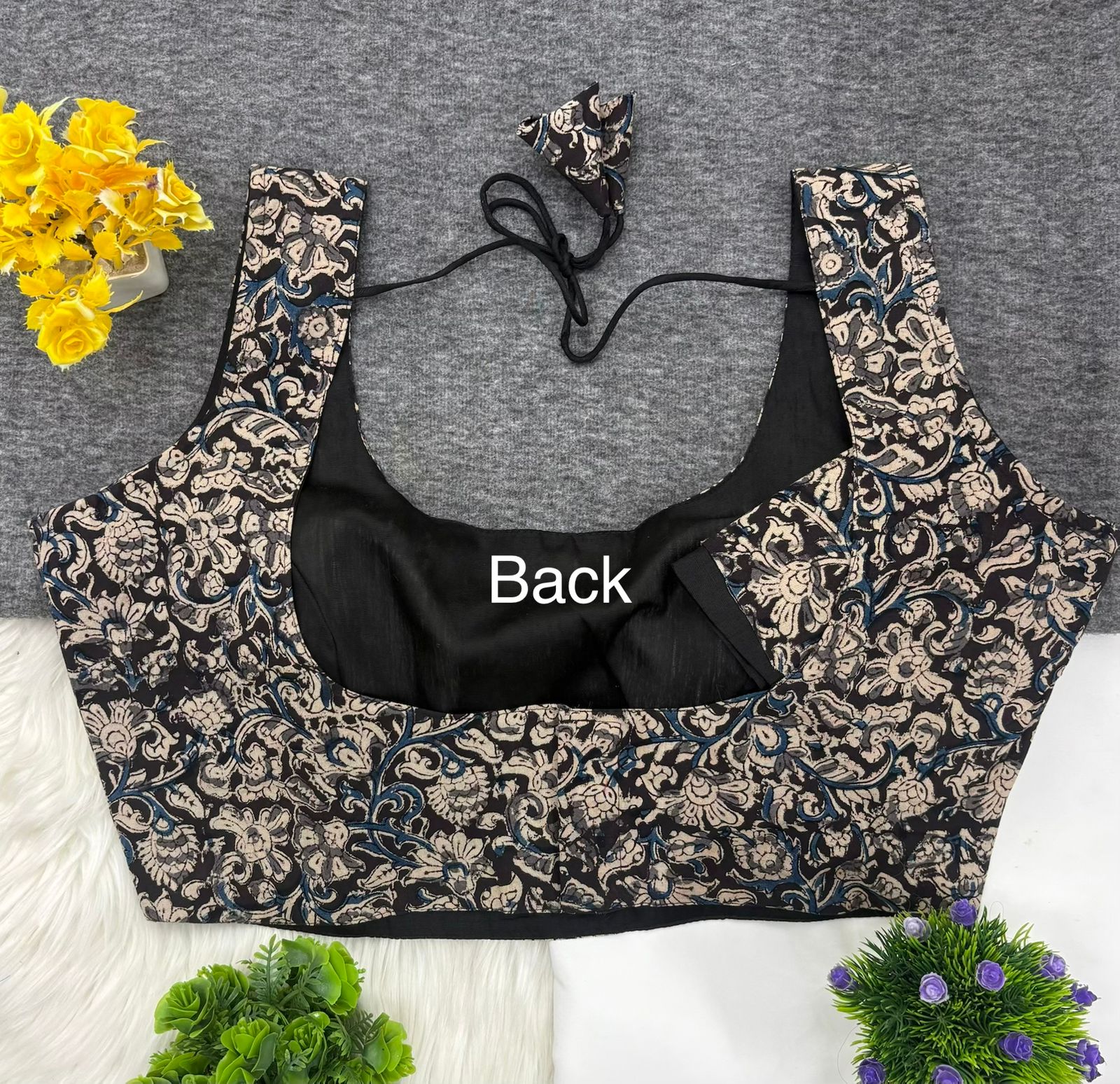
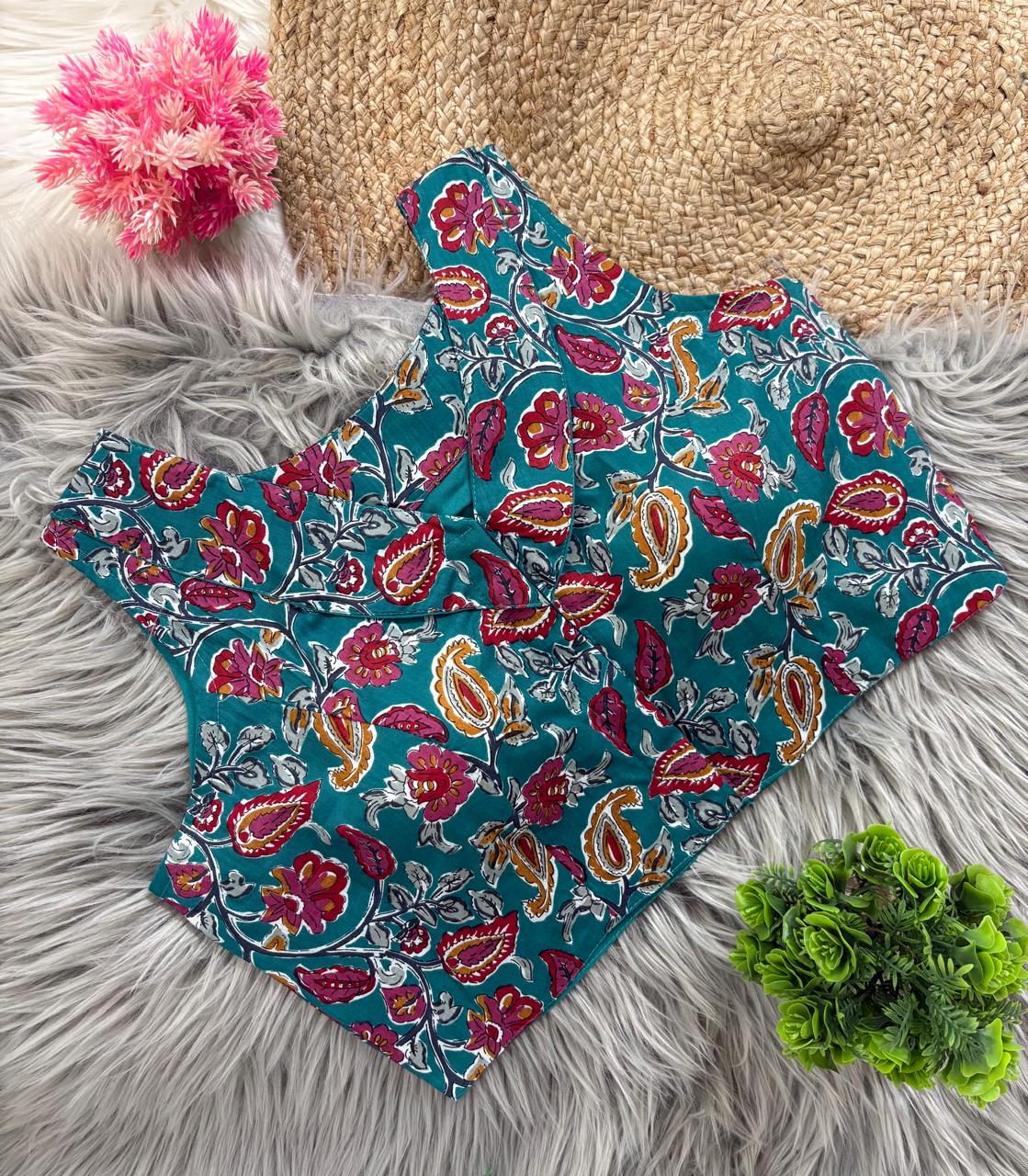
Pure Kalamkari Cotton Padded Blouse for Women may suit a cotton saree or a plain saree that allows the print to become the focal point. Printed cotton should be checked for colour-care instructions, because repeated high-temperature washing can affect both the printed surface and the lining.
Silk and zari blouses
Silk blouses benefit from a lining that supports the fabric without catching on the skin. Banarasi silk and zari can feel textured on the reverse, so a smooth, well-secured lining is especially important. Ask whether the metallic yarn or decorative surface may snag delicate sarees during draping.
Heavy silk or zari blouses may feel warmer than cotton, even with a breathable lining. For a wedding reception lasting four to six hours, check the armhole, underbust and back closure carefully because pressure in those areas becomes more noticeable over time.
Linen cotton and lightweight sarees
Linen cotton usually benefits from a light lining that preserves airflow and prevents excessive creasing around the bust. The Blue Linen Cotton Floral Print Saree with Plain Dark Border can be paired with a blouse that repeats the border colour, but the blouse lining should remain light enough for the outfit's relaxed texture.
How do measurements reveal lining and construction problems?
Measurements reveal potential lining problems when the bust, underbust, shoulder, armhole and blouse length are compared rather than considered separately. A blouse can match the bust measurement and still feel restrictive because the armhole or shoulder is too narrow.
Measure over the type of innerwear you expect to wear with the blouse. Record the fullest bust, underbust, shoulder width and preferred blouse length in centimetres. Compare those numbers with the garment chart, not with measurements from a different seller.
Pay attention to ease. A close-fitting padded blouse may need only a small amount of ease at the bust, while a non-padded cotton blouse may be more comfortable with additional room. Too much ease can cause the lining to wrinkle independently of the outer layer, while too little ease can pull the lining across the bust and distort the neckline.
Check the closure type as well. Hooks and eyes should be evenly spaced and firmly attached to a reinforced strip. A back-open blouse can offer more adjustability, while a side-zip blouse needs a smooth zip tape that doesn't rub the skin. A V-neck design such as the Kalamkari Cotton V Neck Collar Blouse for Women should be checked for neckline depth and whether the lining follows the V cleanly without peeking out.
What product-page details are worth trusting?
Trust specific construction information, garment measurements, fabric composition, care instructions and clear return terms more than broad claims such as "premium quality" or "perfect fit." A useful product page tells shoppers what the blouse is made from and how it's assembled.
Photographs should include front, back, side and close-up views. A lining can't always be photographed directly, but a side image may show whether the fabric has body, and an inside-out image can reveal seam finishing. Customer reviews are most useful when they mention actual measurements, transparency, pad movement, heat, stitching or alteration requirements.
Read the difference between "fabric" and "blouse material." Some listings describe only the textile used for the outer shell, while the finished garment includes lining, padding, hooks and interlining. A Classic Festive Wear Blouse for Stylish Saree Look may be suitable for occasional use, but the product page should still state enough information to judge its construction and care needs.
Price can offer context but can't prove quality. A more expensive silk blouse may reflect zari, finishing or handwork rather than superior lining. Conversely, a reasonably priced cotton blouse can be comfortable when the seams, lining and measurements are accurate.
How should a lined blouse be checked after delivery?
Check a delivered blouse before removing tags or wearing it for an event. Inspect the lining, pads, seams, closures and measurements in daylight, then try it over the intended innerwear with gentle movement.
- Inspect the inside: Look for loose threads, open seams, sharp hooks, exposed pad edges and lining that twists away from the outer shell.
- Test the neckline: Raise both arms and sit down to see whether the neckline gaps, cuts into the throat or reveals the lining.
- Check the armholes: Move the arms forward and upward. The armhole should not dig into the underarm or pull the bust panel sideways.
- Assess the padding: Confirm that both pads are even, secure and free from folds or hard edges.
- Test the closure: Fasten every hook or zip without forcing it. Reinforced closures should remain flat rather than pulling the fabric into ripples.
- Compare measurements: Measure the garment flat and compare it with the published chart before laundering or altering it.
don't wash, perfume or alter a blouse before deciding whether it fits. Photograph any construction issue immediately and retain packaging and tags until the return or exchange window has been checked.
Care practices that protect blouse lining
Care instructions should match the outer fabric, lining and padding, and gentle hand washing is usually safer than routine machine washing for a structured blouse. Use cool water, mild detergent and minimal soaking unless the label gives different instructions.
don't wring a padded blouse because twisting can deform the cups and stress the lining. Press out excess water with a towel, reshape the neckline and dry the blouse inside out away from direct, harsh sunlight. Iron the outer fabric at the temperature recommended for cotton, silk or linen cotton, and place a thin cloth between the iron and zari.
Store a fully dry blouse with the cups supported and the lining free from sharp folds. Heavy Banarasi silk or embellished blouses should not be crushed beneath dense stacks of clothing. Periodically check hooks, pad pockets and underarm seams, especially when the blouse is worn for weddings or humid-weather functions.
Care becomes part of purchase value. A blouse with an excellent outer fabric but a fragile lining may require more maintenance than a simpler cotton design. Matching the garment to its actual wearing conditions is the most reliable way to preserve fit and comfort.
Questions Shoppers Ask About Blouse Lining Quality Online
How can I check blouse lining quality online?
Check the product description for lining material, lining coverage, padding details, seam finishing, closure type and garment measurements. Use close-up photographs and customer reviews to look for loose threads, rough armholes, uneven pads and inaccurate sizing.
Is cotton lining better for a saree blouse?
Cotton lining is often better for hot weather, long wear and sensitive skin because it is generally breathable. Smooth lining can be more practical for fitted silk or zari blouses, so comfort depends on the fabric combination rather than the lining name alone.
Are padded readymade blouses comfortable for long functions?
Padded readymade blouses can be comfortable for long functions when the pads are symmetrical, securely enclosed and matched to the correct bust and underbust measurements. Tight armholes, shifting pads and rough seams usually cause discomfort faster than the padding itself.
What measurements should I check before buying a readymade blouse?
Check bust, underbust, shoulder width, armhole, sleeve length and blouse length in centimetres. Compare those measurements with the seller's garment chart while wearing the type of innerwear intended for the blouse.
How do I tell whether a silk blouse has a good lining?
A good silk blouse lining lies flat, covers the main body area, has enclosed seams and does not pull the neckline or bust panel out of shape. Check whether the lining is securely attached and whether zari or rough reverse-side yarns can rub against the skin or catch on a saree.
Can a poor-fitting lined blouse be altered?
A tailor can often adjust side seams, hooks, straps or blouse length when sufficient seam allowance is available. Major changes to bust placement, armhole depth, pad position or a very narrow shoulder may be difficult, so accurate measurements before ordering remain safer than relying on alterations.


