

A fabric label can reveal whether an ethnic-wear garment will feel breathable at a summer ceremony, hold a crisp pleat, require dry cleaning or soften after repeated washes. What the label tells you for fabric composition on ethnic wear goes beyond a single fibre name: the label may also identify percentages, lining, embellishment materials and care instructions. Reading those details before buying helps you compare Banarasi silk with a silk blend, or linen-cotton with pure linen, without relying only on appearance.
Why Fabric Composition Matters in Indian Ethnic Wear
Fabric composition matters because fibre content affects comfort, drape, shine, durability, drying time and maintenance. A saree, kurta, salwar suit or lehenga can look similar on a product page while behaving very differently after six hours of wearing, sitting and moving.
Natural fibres such as cotton, linen, silk and wool absorb moisture or regulate warmth in ways that many synthetic fibres don't. Synthetic fibres such as polyester, nylon and acrylic often add strength, colour stability, wrinkle resistance or lower cost. A blend combines selected properties, but a blend isn't automatically superior to a pure fibre.
Cotton generally feels breathable and absorbs perspiration, but cotton garments can crease and may take longer to dry. Linen offers airflow and a distinctive texture, but linen wrinkles quickly. Silk supplies lustre, fluid drape and warmth, while silk requires more careful handling than most cotton fabrics. Polyester resists wrinkles and dries quickly, but polyester may feel less breathable in humid weather.
The label also explains why two garments described as handloom may have different care needs. Handloom describes a production method, not a fibre. A handloom saree may use cotton, silk, linen, wool or a blend, so the fibre-composition line remains essential.
What the Label Tells You for Fabric Composition on Ethnic Wear
What the label tells you for fabric composition on ethnic wear is usually organised into fibre content, percentage, garment components and care instructions. These details should be read together rather than judged from the fabric name alone.
Fibre names and percentages
Fibre percentages show the relative amount of each material in the listed garment or textile component. A label reading "60% cotton, 40% linen" indicates a cotton-linen blend, while "100% cotton" identifies the stated main fabric as cotton.
Percentages don't measure quality by themselves. A 70% silk and 30% cotton fabric may offer easier handling and a lower price than pure silk, but it won't have exactly the same sheen, fall or crease behaviour. A 50% linen and 50% cotton fabric may feel smoother and crease less than pure linen while retaining some linen airflow.
Garment parts and lining
A complete label may list the outer fabric, lining, contrast fabric, embroidery thread and trims separately. A lehenga can have a polyester lining under a silk outer layer; a kurta can use cotton fabric with a polyester lining; and a blouse can include fusible interlining that changes its structure.
Check whether the stated composition applies to the outer fabric only or to the full garment. A "silk kurta" may have a silk outer layer, cotton lining and synthetic embroidery thread. The distinction matters for comfort against the skin, ironing temperature and cleaning method.
Decorative materials
Zari, sequins, beads, mirror work and metallic thread are decorative elements rather than proof that the base cloth is silk. Zari may contain metallic-coated synthetic material, silver-coloured metal or traditional metal-wrapped thread, depending on the textile and price point.
Pastel Floral Tissue Handloom Cotton Saree with Zari Weaves illustrates why the fibre and embellishment should be considered separately. Cotton describes the principal textile, while zari describes a woven decorative feature. The saree therefore needs cotton-appropriate handling with extra care around the metallic weave.
How Common Ethnic-Wear Fibres Behave
Common fibres in Indian ethnic wear have predictable strengths and limitations, although weave density, finishing and construction can change the final result. Fibre content provides the starting point for judging a garment.
Cotton and cotton blends
Cotton is a practical choice for daily sarees, office kurtas, summer salwar suits and long ceremonies in warm weather. Cotton absorbs moisture, feels familiar against the skin and can tolerate regular washing when the care label permits it.
Cotton may shrink if washed in hot water or dried at high heat, especially when the fabric has not been pre-shrunk. Cotton also creases more readily than polyester. A cotton-linen blend can improve airflow and texture, while a cotton-polyester blend can dry faster and hold shape more easily.
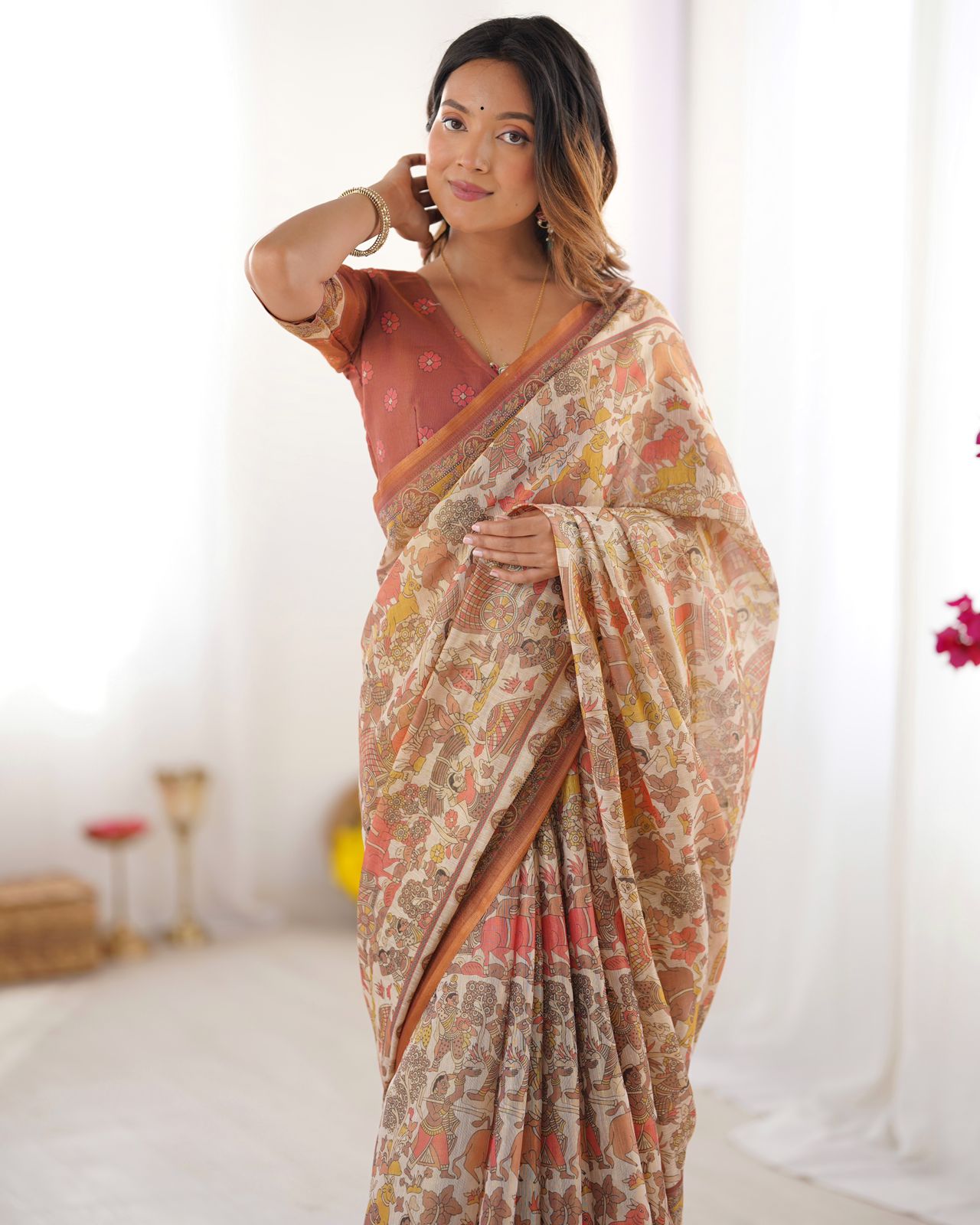
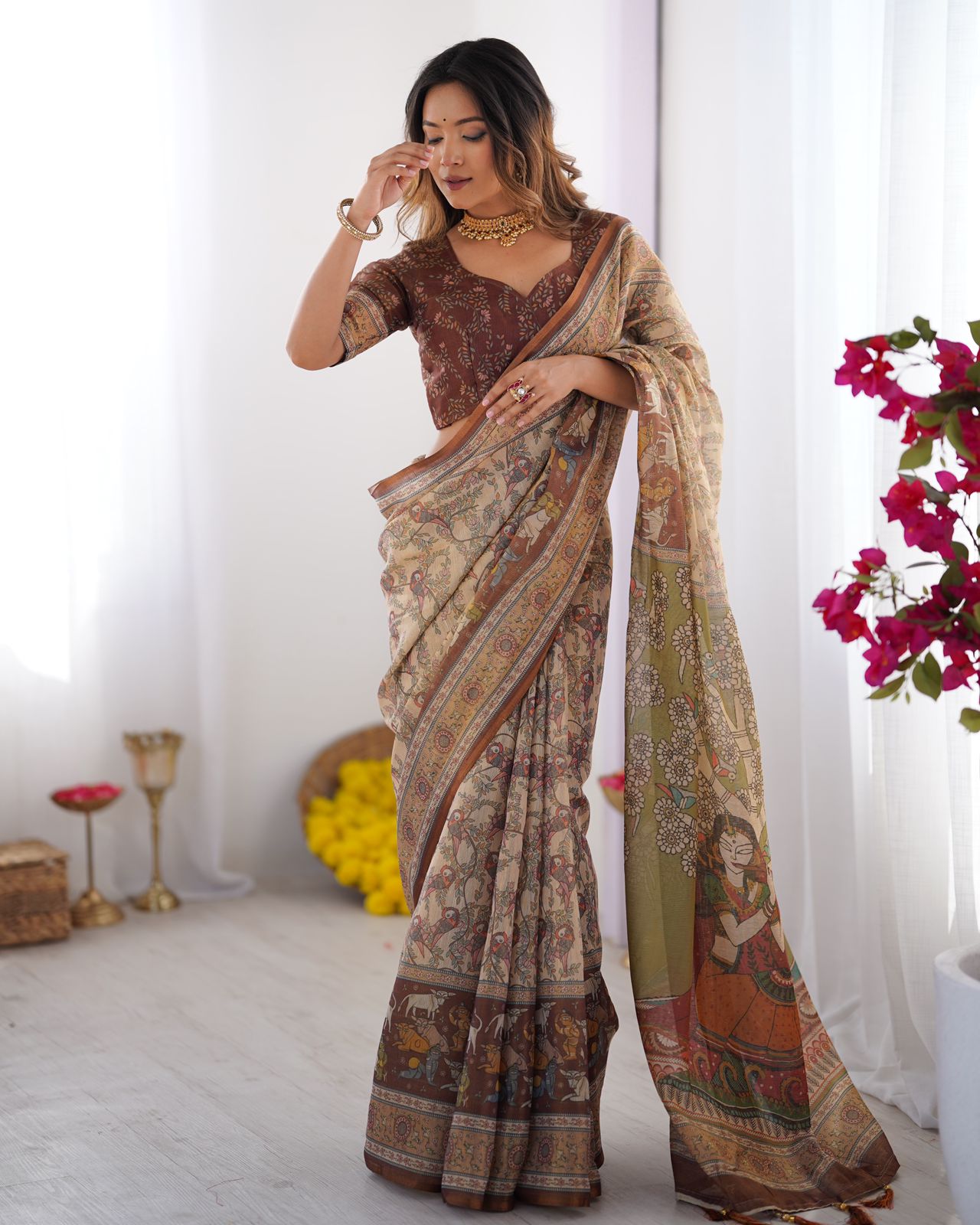
Ethnic Beige Cotton Linen Saree with Village Art Design demonstrates how a label can clarify a visual impression. The words "cotton linen" signal a blend or a textile described through both fibres; the composition percentage tells you whether the saree will lean toward cotton softness or linen texture.
Linen and linen blends
Linen is valued for breathability, moisture management and a dry, textured hand. Linen sarees and linen-cotton suits often suit daytime wear, outdoor gatherings and warm climates.
Linen wrinkles because its fibres have lower elasticity than many alternatives. Creasing isn't evidence of poor quality, but heavy creasing may make linen unsuitable when you need a perfectly smooth appearance for several hours. Steam ironing on the recommended setting can relax creases without pressing the textile aggressively.
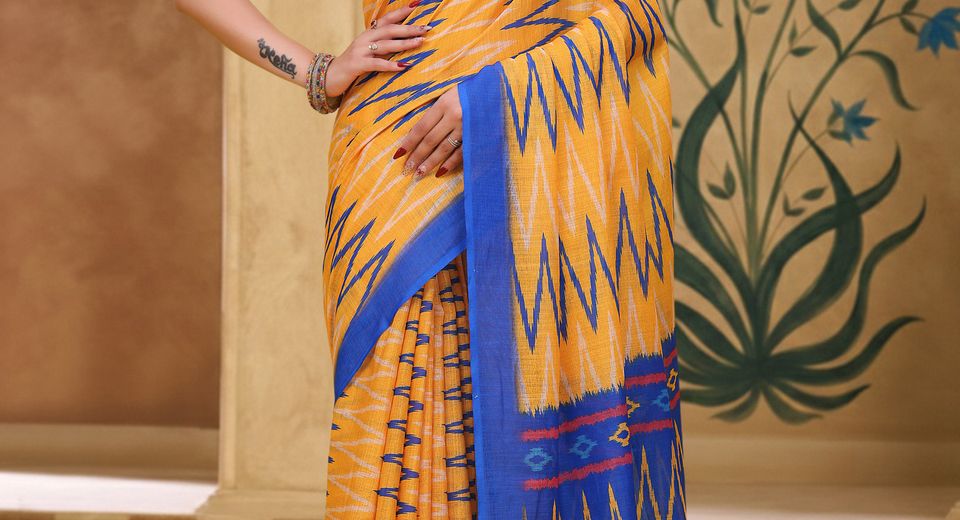
Buy Mustard Blue Ikat Print Linen Cotton Saree with Borders shows why weave, print and fibre should be read as separate pieces of information. Ikat identifies a resist-dyeing and weaving effect, borders identify the design placement, and linen-cotton identifies the likely fibre family.
Silk and silk blends
Silk gives a smooth surface, natural lustre and elegant movement, but silk garments usually need more careful storage and cleaning. Direct perfume, prolonged sunlight, rough jewellery and high heat can damage silk fibres or affect dyes.
Silk blends may be easier to wear and less expensive than pure silk. A blend can also reduce stiffness or make a garment more durable, but the label should reveal the actual percentage. A garment described as "silk touch" or "silk finish" isn't necessarily made from silk; those phrases may describe texture or finishing rather than fibre identity.
Cream Embroidered Silk Kurta Pant Ethnic Co-ord Set should be assessed through both its fabric composition and its embroidery. Silk content may explain its sheen, while embroidery density may affect weight, snag risk and cleaning requirements.
Polyester, viscose and other manufactured fibres
Polyester is strong, quick-drying and resistant to many wrinkles, making it common in occasion wear, linings and blends. Polyester can retain heat and odour more than cotton in humid conditions, so it may be less comfortable for long daytime wear.
Viscose, also called rayon in some labels, is a regenerated cellulose fibre with a soft hand and fluid drape. Viscose can weaken when wet, shrink if exposed to unsuitable washing and develop surface abrasion with rough use. Modal and lyocell are also regenerated cellulose fibres, but their manufacturing processes and performance differ.
A fabric label that names polyester or viscose doesn't make a garment inferior. The right choice depends on the event, climate, desired drape, budget and willingness to follow care instructions.
How Fibre Content Changes Drape, Comfort and Fit
Fibre content changes how ethnic wear falls on the body, how much ease you need and how the garment behaves after sitting, walking and washing. The same size can feel different across two fabrics because fibre and weave affect stretch, thickness and recovery.

Light cotton and linen usually create a more structured or gently relaxed drape. Fluid viscose, satin and silk blends tend to fall closer to the body. Crisp tissue fabrics can hold volume, while heavier silk or brocade can create a pronounced fall in a saree pallu or lehenga skirt.
Fabric weight should be considered alongside fibre composition. A heavy cotton saree may feel warmer than a lightweight silk saree, even though cotton is generally associated with summer comfort. A dense polyester brocade may also feel warmer than a loosely woven cotton fabric.
Blouse and kurta fit can change after laundering. Cotton may contract slightly, viscose may change shape if washed incorrectly and embellished garments may become heavier when wet. Leave enough ease in fitted garments when the care label permits washing, and confirm measurements after any alteration.
Premium Beige Cotton Handloom Saree with Maroon Ethnic Border and Heritage Printed Pallu shows how border and pallu construction can affect handling. A heavier border may pull the saree differently from the body, so the saree should be folded with the border aligned and stored without excessive compression.
How to Read Care Symbols Before Buying
Care symbols tell you whether a garment can be washed, bleached, tumble-dried, ironed or dry-cleaned, and the symbols should guide your purchase decision. A fabric that requires specialist cleaning may not suit frequent daily wear.

- Washtub symbol: The number or dots indicate washing temperature, while a hand inside the tub indicates hand washing. A crossed-out tub means don't wash in water.
- Triangle symbol: An empty triangle permits bleaching in some systems, while a crossed-out triangle means don't bleach. Many coloured ethnic garments should avoid chlorine bleach even when stains appear stubborn.
- Square symbol: The square relates to drying. A crossed-out square means don't tumble-dry, while dots indicate the permitted heat level.
- Iron symbol: One, two or three dots indicate low, medium or high heat. Metallic embroidery, zari and synthetic fibres generally require lower heat and a pressing cloth.
- Circle symbol: The circle identifies professional dry cleaning. Letters inside the circle can provide solvent guidance to the cleaner.
Care symbols apply to the garment as a whole, and the most delicate component often determines the safest method. A cotton kurta with heavy embroidery should not automatically be treated like a plain cotton kurta. A silk saree with zari should not be soaked simply because silk can sometimes be gently hand-washed.
How to Compare Value Without Trusting Fibre Names Alone
Value depends on fibre content, construction, craftsmanship, finish, care burden and expected frequency of wear rather than on the word "premium" alone. A higher price may reflect handloom labour, dense weaving, detailed embroidery, natural silk content or specialised finishing, but the label should support the description.
Compare like with like by checking fibre percentage, fabric weight, lining, embellishment and care instructions. A pure cotton saree designed for frequent use may deliver more practical value than a delicate silk garment that requires professional cleaning after every wear. Conversely, a silk saree intended for milestone celebrations may justify a higher cost because its purpose is occasional ceremonial use.
SunsetCharm Ethnic Suit and Castilian Pink with Embroidery and Jacquard salwar suits can be evaluated through the same checklist: identify the main fibre, check whether the jacquard or embroidery adds weight, inspect the lining and note whether washing or dry cleaning is recommended. A name can communicate mood or design, but composition gives more reliable information about performance.
Maroon Mal Cotton Ethnic Saree With Blouse from VARNAVI also shows why the accompanying blouse should be considered separately. The saree body and blouse may not have identical composition, lining or colour-fastness behaviour, so both pieces deserve attention before washing or alteration.
A Five-Minute Label Check Before Purchase
A five-minute label check can prevent many avoidable disappointments after an ethnic-wear purchase. The check works for sarees, lehengas, kurtas, salwar suits, shararas and palazzo sets.

- Identify the main fibre: Write down every named fibre rather than relying on a broad term such as "silk feel" or "linen look."
- Record the percentages: Note whether the garment is pure or blended and decide whether the blend suits the climate and occasion.
- Check the components: Look for lining, blouse fabric, dupatta fabric, padding, interlining, zari and trims.
- Read the care symbols: Confirm whether the garment can be washed at home and whether ironing or dry cleaning has restrictions.
- Match fabric to use: Choose breathable cotton or linen for hot daytime events, fluid blends for movement and carefully maintained silk or embellished fabrics for special wear.
- Plan storage: Keep delicate silk, zari and embroidered garments folded with clean layers, away from dampness, direct sunlight and rough fasteners.
This process doesn't replace touching the fabric or asking a seller a specific question. It gives the question an useful shape: "Is the outer fabric 100% silk, or is the garment a silk blend with a polyester lining?" is more informative than asking whether a garment simply feels expensive.
Final Takeaway for Smarter Ethnic-Wear Buying
Fabric labels turn appearance into practical information. Fibre percentages help predict comfort and drape, garment-component details reveal what touches the skin, and care symbols show the real maintenance cost.
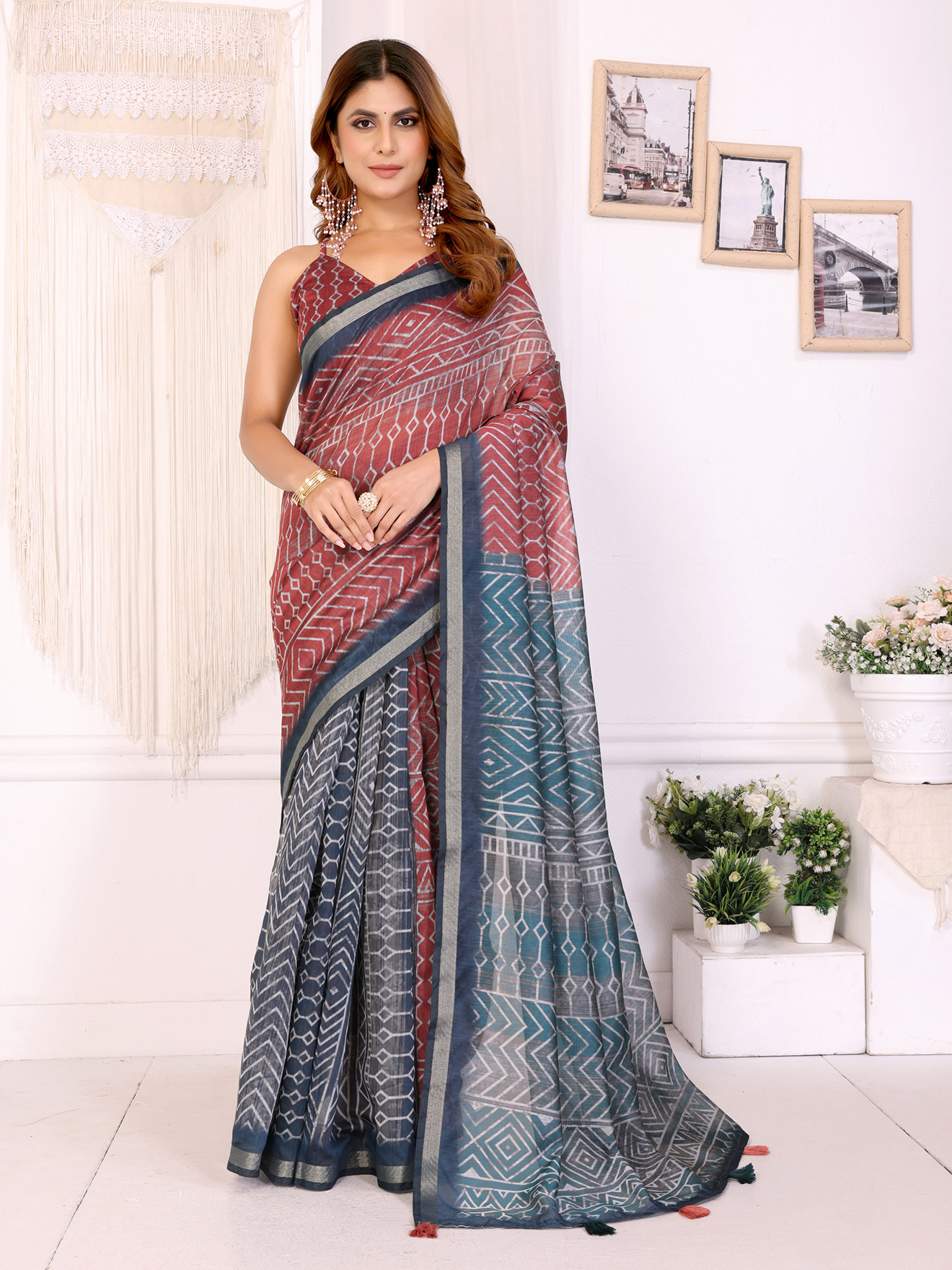
When you compare cotton, linen, silk, viscose and polyester, judge each fabric against the weather, occasion, duration of wear and care routine you can realistically provide. A clear composition label can't tell you everything about weaving quality, but it can help you avoid unsuitable purchases and choose ethnic wear with more confidence.
Common Questions About Reading Ethnic-Wear Fabric Labels
How do I read a fabric composition label on a saree?
Start with the fibre names and percentages, then check whether the information applies to the saree body, blouse, lining or trims. Read the care symbols separately because fibre content alone does not determine whether home washing is safe.
Is a cotton-linen saree better than a pure cotton saree for summer?
A cotton-linen saree can offer more airflow and a textured finish, while pure cotton may feel softer and be easier to maintain. The better choice depends on how much wrinkling, structure and ironing you are comfortable with.
Does the word silk on a kurta mean the garment is made from pure silk?
No, the word silk does not always mean 100% silk. Check the percentage line because terms such as silk blend, silk touch and silk finish can describe a mixed fibre or a surface treatment.
What does zari indicate on an ethnic-wear label?
Zari indicates a decorative metallic thread or metallic-effect weave, not necessarily a silk base fabric. Check the base-fibre composition separately and use lower ironing heat or a pressing cloth around zari.
Which ethnic-wear fabrics need dry cleaning?
Silk, heavily embroidered garments, structured embellished lehengas and some viscose fabrics often require dry cleaning, but the care label is the deciding source. A plain cotton garment may be washable, while cotton with delicate trims may need gentler treatment.
Can fabric composition predict how a saree will drape?
Fabric composition gives a useful indication but cannot predict drape by itself. Weave density, fabric weight, finishing, borders and embellishment also affect whether a saree falls fluidly, holds pleats or creates volume.


