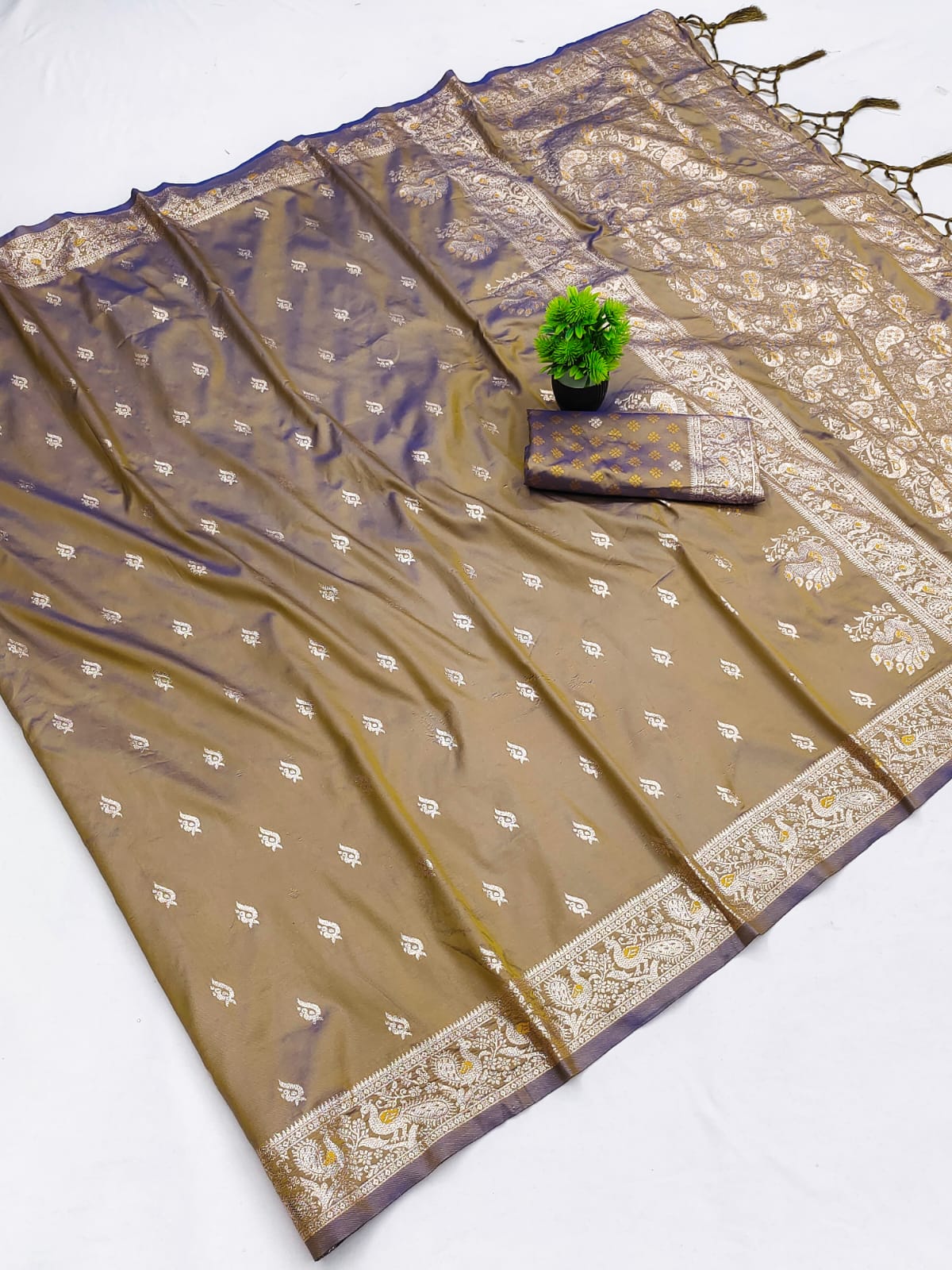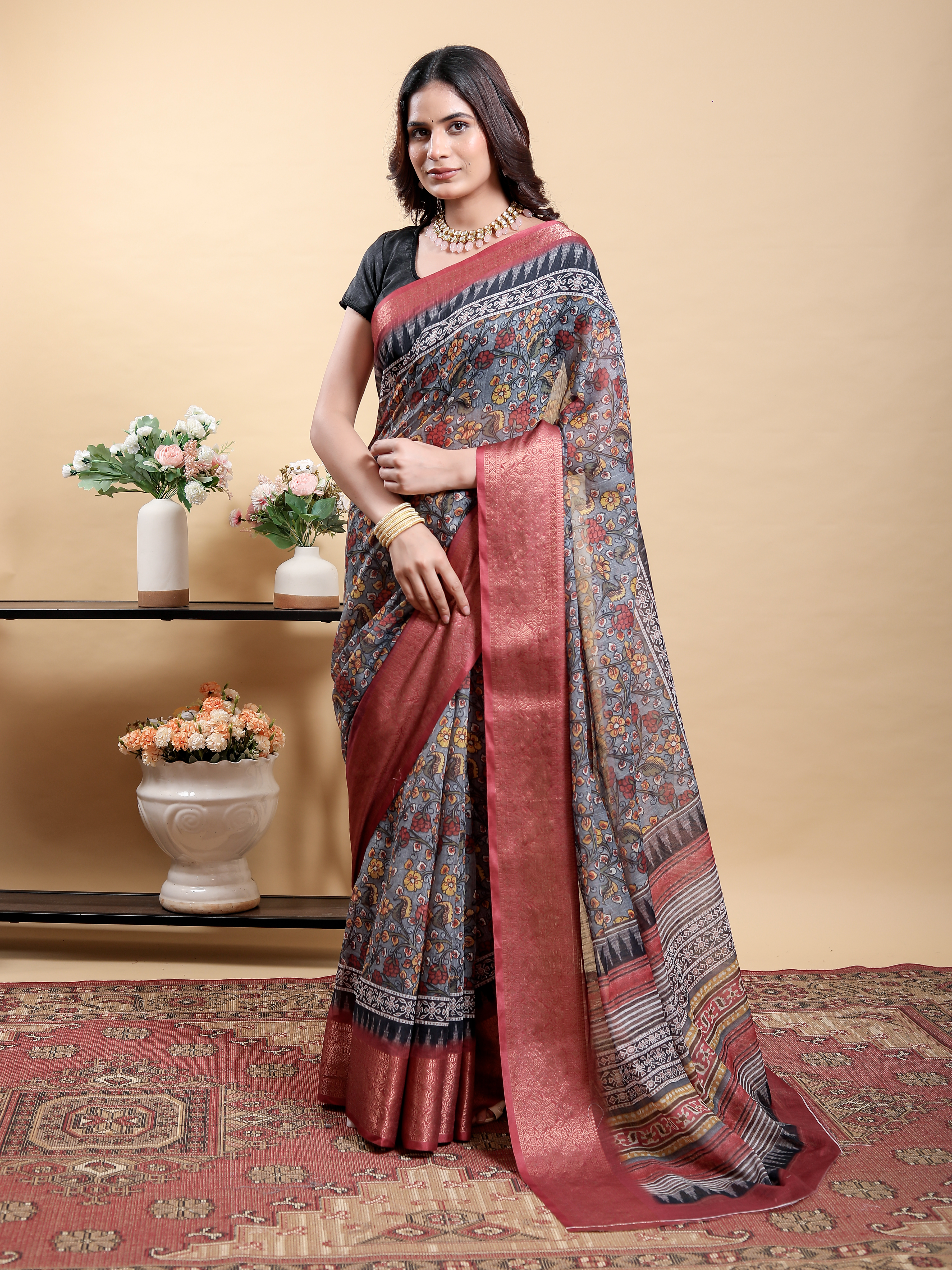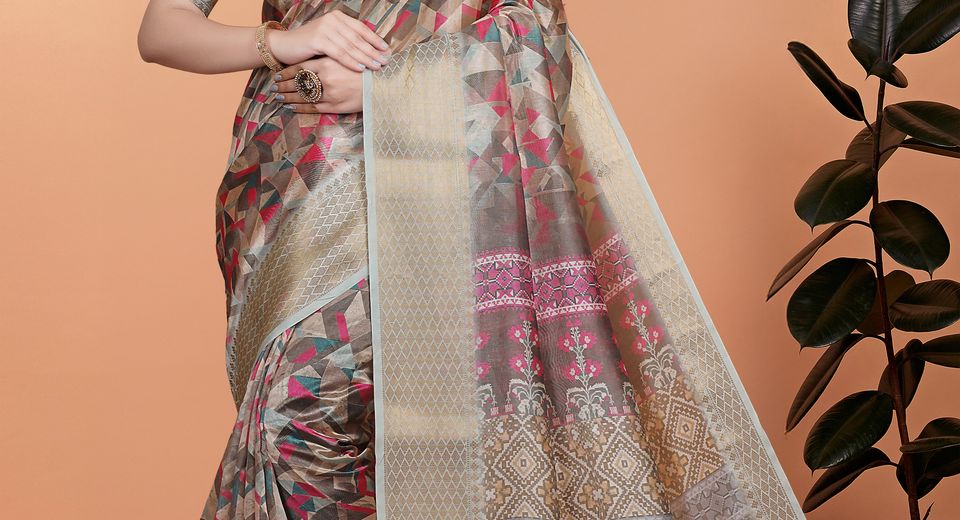
What Surat textile markets teach shoppers about saree fabric names is simple but surprisingly useful: one saree name may describe its fibre, weave, surface finish, print, border and embellishment all at once. Words such as cotton, tissue, satin, linen cotton, shimmer and zari don't answer the same question. Reading each term separately helps you judge comfort, drape, shine, care and occasion before you buy.
Surat is a major textile centre associated with processing, wholesale trade, synthetic fabrics, printing and finishing. Market language therefore tends to be practical and layered. A shopper who separates fibre names from appearance names can compare a handloom cotton saree with a satin saree fairly, without assuming that every glossy or festive fabric contains silk.
What Surat Textile Markets Teach Shoppers About Saree Fabric Names
Surat textile markets teach shoppers to treat a saree title as a compact specification rather than as a complete fabric certificate. The first step is to identify which words describe the material, which describe construction, and which describe decoration.
- Fibre means the material used to make the yarn, such as cotton, silk, linen or a synthetic fibre.
- Weave means the way yarns cross one another to form fabric.
- Handloom identifies a method of production, not a particular fibre.
- Finish describes a treatment or surface effect that changes shine, smoothness, stiffness or texture.
- Design identifies a print, floral motif, stripe, geometric pattern or other visual element.
- Decoration includes zari, embroidery, borders, tassels or other applied and woven details.
Pastel Floral Tissue Handloom Cotton Saree with Zari Weaves demonstrates how several categories can appear in one name. Cotton identifies the named fibre, handloom refers to production, tissue suggests a luminous or lightweight appearance, floral identifies the motif, and zari weaves describe metallic-looking yarn incorporated into the design.
The same reading method works for a saree sold in a physical market. Ask which word describes what the yarn is made from, which word describes how the cloth was produced, and which word describes what you can see on the surface. Those questions turn an attractive name into useful buying information.
How can shoppers separate fibre names from finish names?
Fibre names identify the base material more directly, while finish names describe the surface appearance or handle. Confusing these two categories is one of the most common reasons shoppers misread saree descriptions.
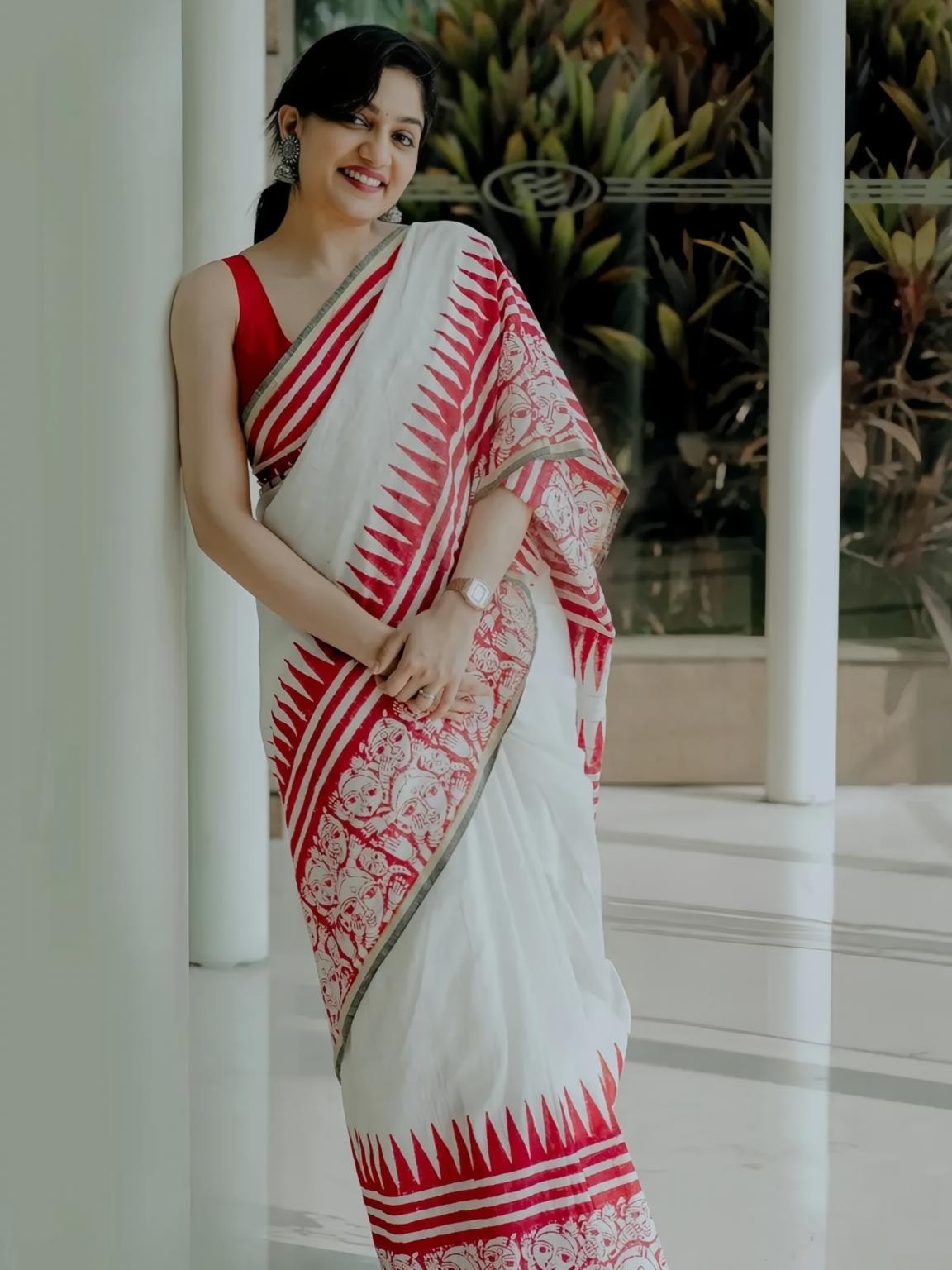
What does cotton mean in a saree name?
Cotton means that the saree is described as using cotton fibre, although the exact blend and proportion should still be checked in the detailed specifications. Cotton generally offers a breathable feel and practical comfort in warm weather. A cotton saree can still look festive when it includes zari, a lustrous finish, a contrast border or a detailed print.
Artistic Geometric Cotton Saree with Rich Woven Zari Border illustrates this distinction. Cotton refers to the base fibre, geometric identifies the visual design, and rich woven zari border describes metallic-looking yarn worked into the edge. The saree isn't necessarily made entirely from zari; the zari detail is concentrated in the named border.
What do tissue, shimmer and satin mean?
Tissue, shimmer and satin usually describe appearance, handle or construction language rather than proving that a saree is made from one specific fibre. Tissue is associated with a light, luminous or slightly translucent look. Shimmer signals a reflective surface. Satin usually suggests smoothness and gloss, but the product specification should identify the actual fibre.
Red Satin Floral Print Saree with Unstitched Blouse Textile shows why the complete name matters. Satin gives a clue about the surface character, floral print identifies the design method, and unstitched blouse textile tells you that blouse material is supplied instead of a finished blouse. The word satin alone doesn't establish that the saree is silk.
Linen cotton is another example of a blended or combined description. Buy Blue Floral Printed Shimmer Linen Cotton Saree includes shimmer as a surface clue, linen cotton as a material clue, and blue floral printed as a colour and design clue. A shopper should still verify whether the listed construction is a true blend, a trade description or a specific finishing treatment.
Why do handloom and woven matter when reading a saree name?
Handloom identifies a weaving method, while woven indicates that a motif or border is formed through interlaced yarns instead of being applied only as a surface print. Neither term is a synonym for pure silk, heavy weight or high price.
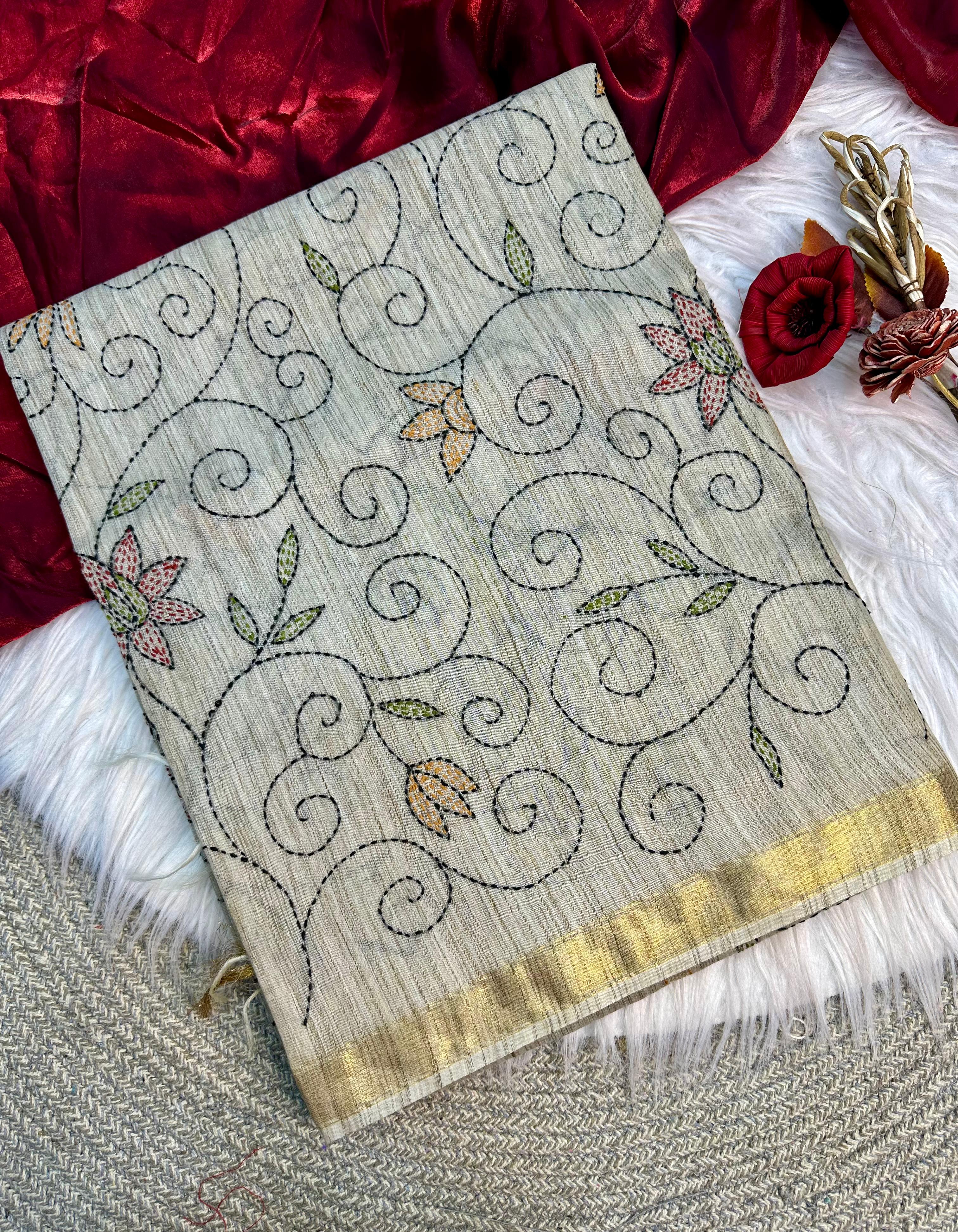
Handloom production can use cotton, silk, linen or blends, depending on the yarn, region and design. Handloom fabric may show small variations in texture, selvedge, motif placement or tension. Such variations are different from serious problems such as holes, broken yarns, missing sections or severe weaving faults.
Sea Green Tissue Handloom Cotton Saree With Floral Patterns combines several separate clues. Handloom cotton gives information about method and fibre, tissue signals a luminous appearance, and floral patterns describe the design. Tissue Handloom Cotton Saree with Zari Weave & Floral Print adds a useful contrast: zari weave is a structural decorative element, while floral print is applied imagery. A single saree can contain both woven and printed details.
How can a shopper distinguish a print from a weave?
A print sits on the surface of the fabric, while a woven motif is created as warp and weft yarns interlace. A printed design may appear strongest on the face of the saree, whereas a woven motif is often connected to the fabric structure and may be visible from the reverse side.
A gentle fingertip check can provide a clue. A printed border generally feels similar to the surrounding fabric, while a dense woven border may feel firmer or slightly raised. This check isn't conclusive because modern printing and jacquard weaving can produce sophisticated surfaces. Written specifications remain more reliable than a photograph or a quick touch test.
What do zari, borders and motifs reveal?
Zari refers to metallic-looking yarn used for ornamentation, and the word zari doesn't automatically mean genuine gold or silver thread. Contemporary zari may use metallic film, coated yarn or other materials, so shoppers should not infer precious-metal content from the name alone.
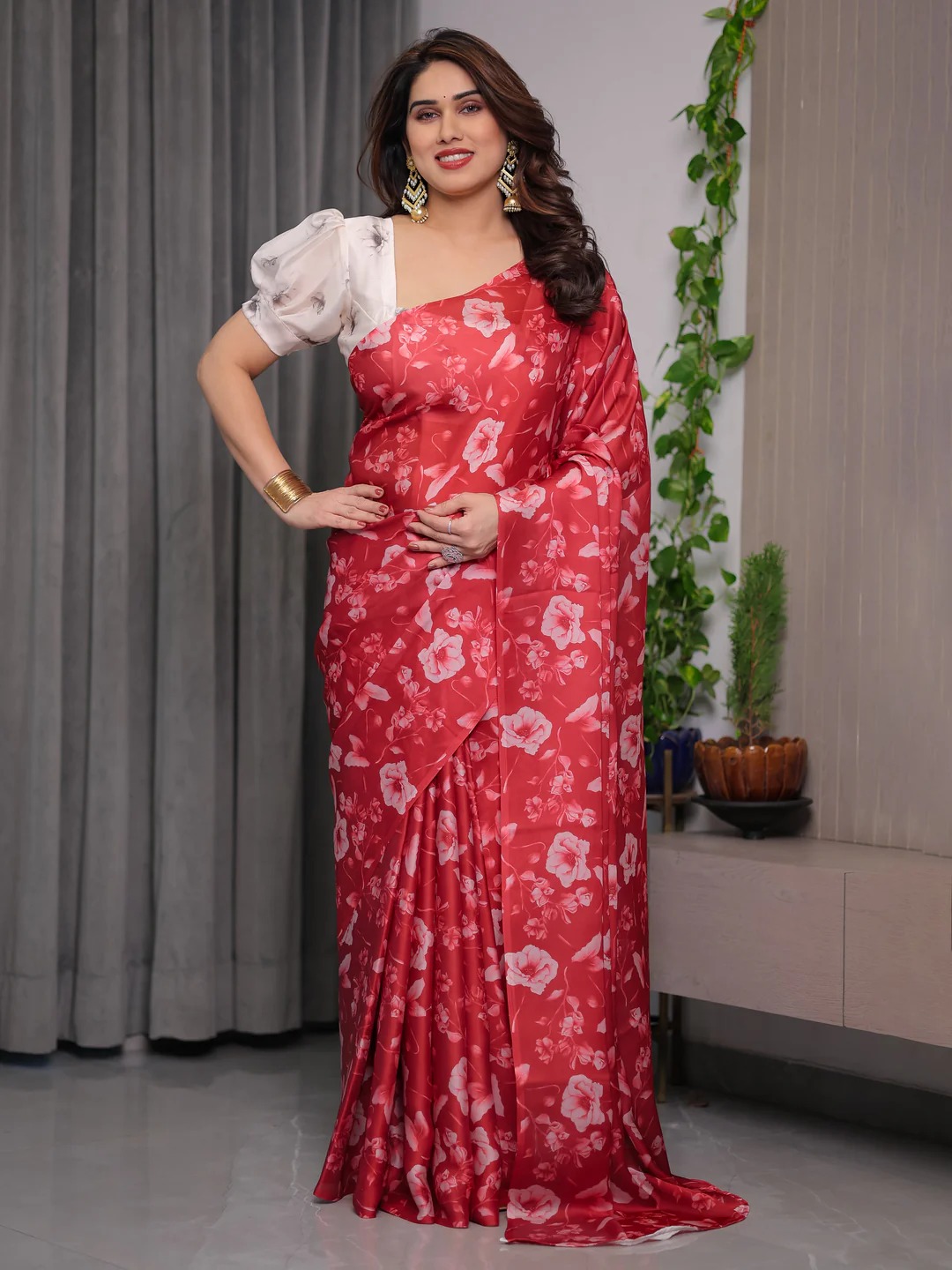
A zari border means the metallic detail is located at the edge. Zari weave may indicate metallic yarn incorporated into the body, border or specified motif. Rich woven zari border describes the visual prominence of the edge, but it doesn't state the fibre composition of the main saree. These distinctions affect weight, care, price and occasion suitability.
Erode Cotton Abstract Multicolor Saree with Contrast Border shows how colour and placement become part of a practical product name. Erode cotton points towards a cotton textile association, abstract multicolor describes the body design, and contrast border explains that the edge differs deliberately from the main field.
Teal Erode Cotton Abstract Saree with Geometric Stripe Arts uses another group of clues. Teal is the dominant colour, Erode cotton identifies the named textile association, abstract describes the visual treatment, and geometric stripe arts indicates repeated linear forms. None of those design words alone tells you whether the stripes are printed or woven, so that detail needs separate confirmation.
Motif terms are also specific. Floral patterns suggest flowers, geometric stripes suggest repeated lines or shapes, and abstract designs may not depict a recognisable object. Motif vocabulary helps you judge styling and visual preference, but it doesn't prove the production technique.
How does fabric vocabulary affect price and value?
Price reflects several inputs at once: fibre cost, yarn quality, weaving time, processing, printing, finishing, zari quantity, labour, sourcing and retail margins. A longer saree name doesn't necessarily indicate better quality or a more expensive fabric.
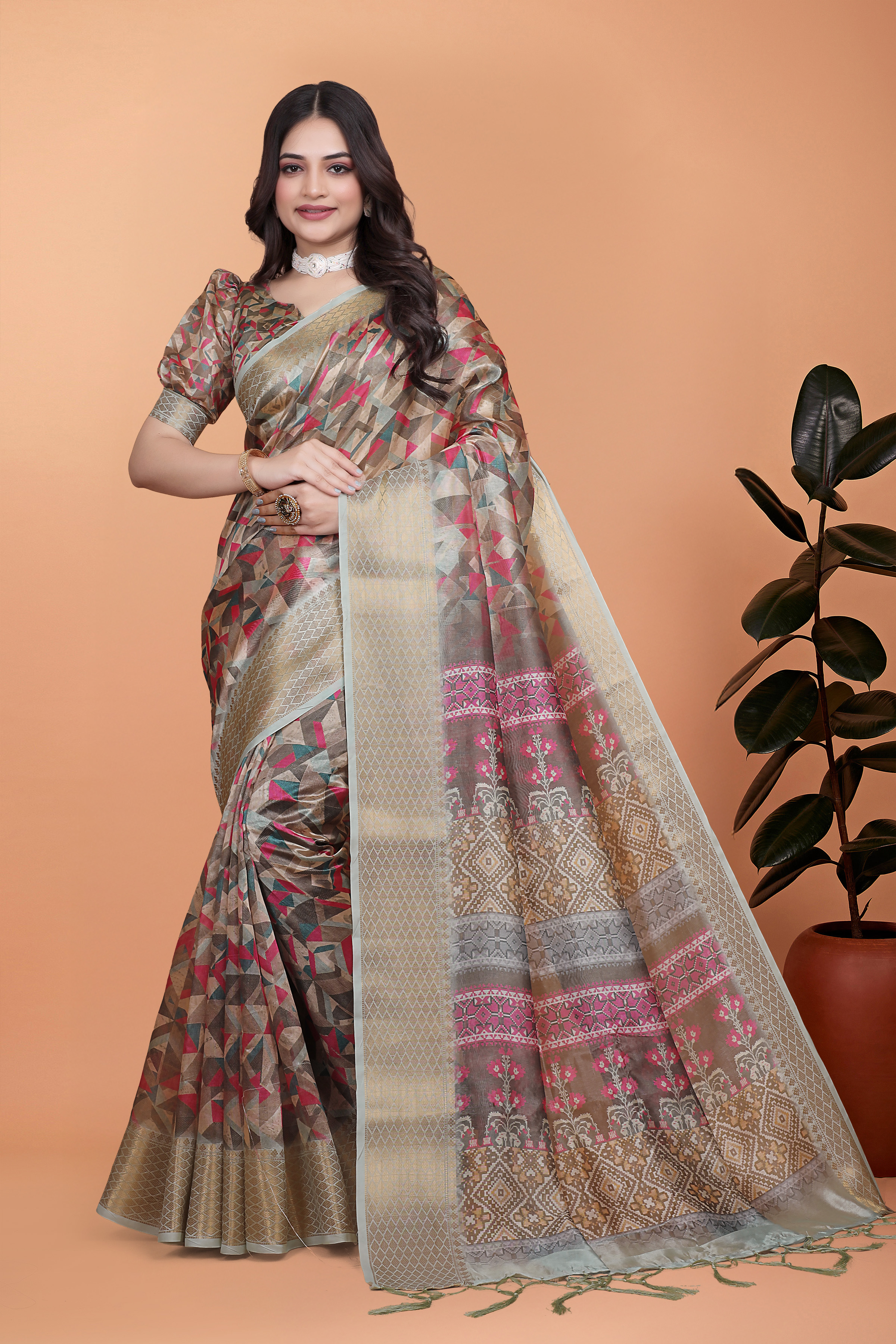
Surat's textile trade makes printing, finishing and surface experimentation available across many price points. A cotton saree with a complex print can cost more than a plain cotton saree. A shiny finish can create a festive appearance without involving silk. A modestly priced saree can also have useful construction and attractive detailing when its fibre and care needs are clearly stated.
Sarees from Rs 1000 to Rs 1500 can help establish a practical budget, but a price band should never replace fabric reading. Sarees Under 20% Off and Sarees Under 10% Off may make comparison easier, while Sarees Flat 60% Off and Sarees Flat 50% Off require close attention to the original description, measurements, blouse material and care instructions. A discount percentage doesn't reveal fibre content or construction quality.
Which questions should a shopper ask before buying?
A shopper should ask for fibre composition, saree length, saree width, blouse-piece length, wash-care method and the difference between printed and woven decoration. These six details usually provide more useful information than broad adjectives such as premium, rich or designer.
- Is the saree cotton, silk, linen, synthetic or a blend?
- Does tissue, satin or shimmer describe the fibre or only the finish?
- Is zari present throughout the body, only in the border or only in the pallu?
- Is the floral, geometric or abstract design printed, woven or embroidered?
- Is the blouse piece attached, separate or unavailable?
- What care method protects the print, metallic yarn and surface finish?
How should fabric names guide climate and occasion choices?
Cotton sarees are generally practical for hot, humid conditions because cotton can absorb moisture and allow air movement, although weave density, lining and finish also affect comfort. A lightweight cotton saree may suit commuting and daytime events, while a denser cotton saree with zari can work for a festival or family gathering.

Tissue and shimmer finishes are useful when you want visual light and reflection, but shine doesn't automatically indicate warmth, softness or breathability. Satin-like surfaces may glide differently while draping and can require more careful pinning. A saree with metallic yarn may feel heavier at the border or pallu than a plain saree made from the same base fibre.
Floral printed sarees are versatile for daytime functions, casual celebrations and office-friendly styling when the colours are restrained. Geometric and abstract designs can look contemporary with a plain blouse. A zari border raises the visual formality without requiring a heavily embellished body.
For a Haldi ceremony, a breathable cotton saree with a secure drape can be more practical than a delicate, slippery finish. For an evening reception, shimmer, satin or zari may provide the desired light-catching effect. The correct choice depends on climate, movement, seating and care tolerance rather than on the most glamorous word in the title.
How should shoppers verify a saree description online?
Online shoppers should compare the product title with the specification, photographs, measurements and care instructions before paying. A title is designed to identify the item quickly, while the specification should provide the evidence needed for a purchase decision.
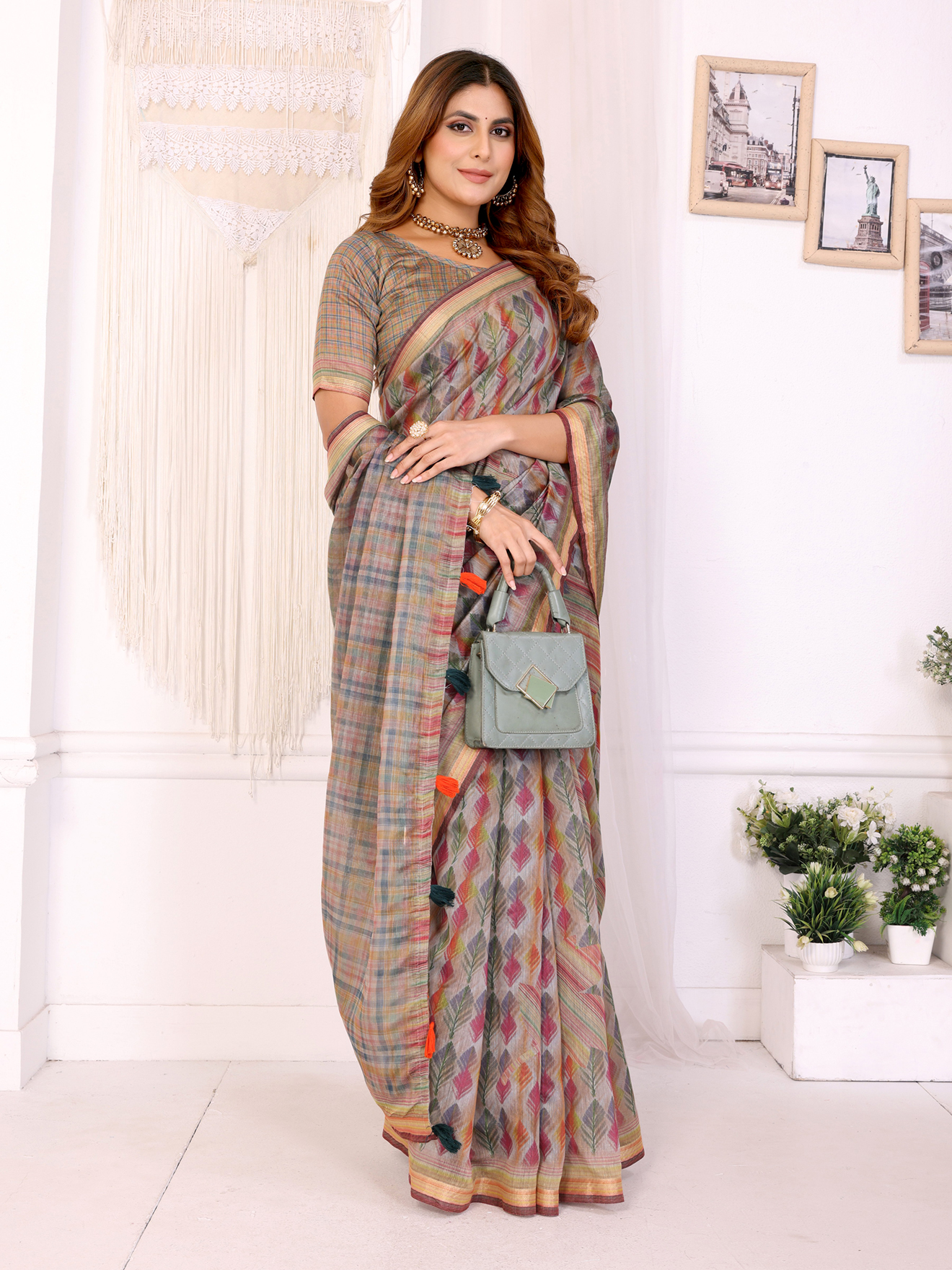
Check whether the listed fibre appears consistently in every section. Look for the saree length and width, blouse-piece details, transparency notes, closure or fall information, and washing instructions. A close photograph can help reveal print placement and border density, but screen colour may vary with lighting and device settings.
Care instructions should match the materials described. Printed cotton may require gentle washing and shade drying. Metallic zari may benefit from limited friction and careful storage. Glossy or delicate finishes should not be placed in direct heat or exposed unnecessarily to rough surfaces. When the care information is missing, ask before purchase rather than assuming that every saree is machine washable.
The practical lesson from Surat textile markets is to read saree names as a series of clues. Fibre tells you about the material, weave tells you about construction, finish tells you about surface character, and design terms tell you what creates the visual effect. Once those clues are separated, shoppers can compare sarees by comfort, maintenance, price and purpose instead of relying on appearance alone.
Common Questions About Reading Saree Fabric Names
Does the word tissue mean that a saree is made of silk?
No. Tissue usually describes a light, luminous or slightly translucent appearance and does not by itself identify the fibre. Check the specification to see whether the saree is cotton, silk, synthetic or a blend.
Is a saree with zari always expensive or made from silk?
No. Zari describes metallic-looking decorative yarn and can appear on cotton, silk, blends and synthetic fabrics. Price depends on the base fibre, zari quantity, weaving or finishing work, labour and retail pricing.
What is the difference between a printed and a woven saree design?
A printed design is applied to the surface after or during fabric processing, while a woven design is formed by interlacing yarns in the fabric structure. Product specifications should state the technique because photographs alone may not provide a reliable answer.
Does handloom mean that a saree is pure cotton?
No. Handloom describes the method of weaving, not the fibre. Handloom sarees may use cotton, silk, linen or blends, so the fibre composition must be checked separately.
What does satin mean in a saree description?
Satin generally signals a smooth, glossy or lustrous surface, but it does not prove that the saree is made of silk. Confirm the fibre content and care instructions before buying a satin saree.
Which saree fabric is suitable for hot and humid weather?
Cotton is often a practical choice for hot and humid weather because it is generally breathable and absorbent. Weave density, lining, finish and border weight also affect comfort, so the complete specification matters.