

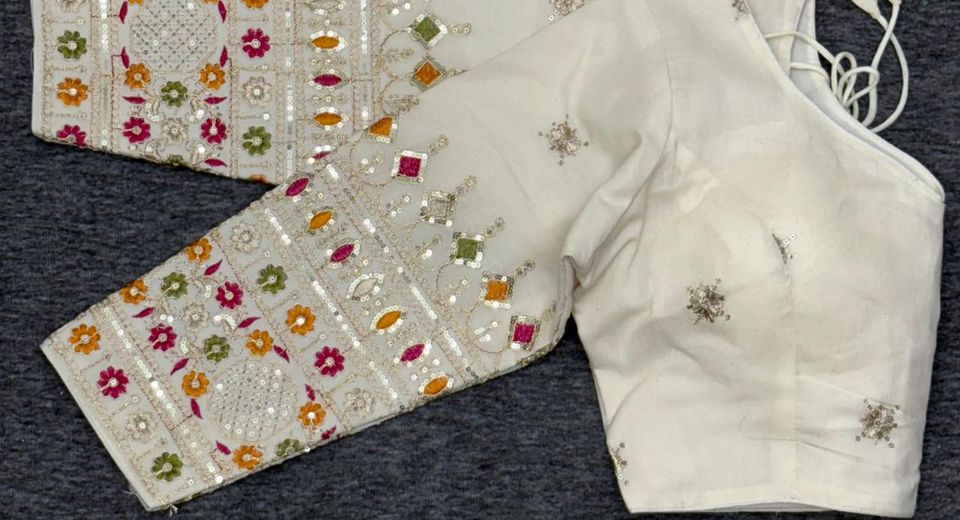
What Still Looks Balanced With Jewellery With a Heavily Embroidered Lehenga Blouse depends on proportion, not on wearing fewer beautiful pieces. A blouse covered in zari, sequins, crystals, threadwork or three-dimensional floral embroidery already occupies visual space around the face and upper body. The most polished jewellery combination gives that embroidery room to register while adding one clear point of focus, such as earrings, a necklace, a maang tikka or stacked bangles.
The practical rule is simple: choose one dominant jewellery area, one supporting area and keep the remaining accessories quiet. A heavily worked lehenga blouse with a high neckline normally needs statement earrings rather than a large necklace. A deep sweetheart or plunging neckline can accommodate a necklace, but the earrings should become minor. This approach works for bridal lehengas, festive silk outfits, designer sarees and readymade blouse combinations.
What Still Looks Balanced With Jewellery With a Heavily Embroidered Lehenga Blouse?
What Still Looks Balanced With Jewellery With a Heavily Embroidered Lehenga Blouse is a controlled combination built around one focal piece and two restrained supporting pieces. For example, oversized jhumkas can be paired with a slim maang tikka and two or three plain bangles, while a broad kundan necklace can be paired with small studs and a single ring.
Balance can be assessed using three details: the blouse neckline, the density of the embroidery and the distance between the jewellery and the embroidery. Jewellery that sits directly over a highly embellished neckline competes more intensely than jewellery placed near the ears or wrists. The same gold necklace may look elegant over a plain silk blouse but crowded over a blouse with a dense zardozi collar.
Look at the outfit in a photograph taken from at least two metres away. Fine embroidery merges into texture at distance, while large jewellery remains visually strong. If the necklace, blouse border and dupatta trim all appear equally prominent, remove one competing element before adding anything else.
Start With the Lehenga Blouse Neckline and Sleeve Shape
The neckline determines where jewellery can sit without interrupting the embroidered design. A high neck, boat neck or heavily embellished closed neckline generally pairs best with earrings and a visible hair accessory. A sweetheart, square or moderate V-neck leaves enough skin between the collarbone and blouse to support a necklace.
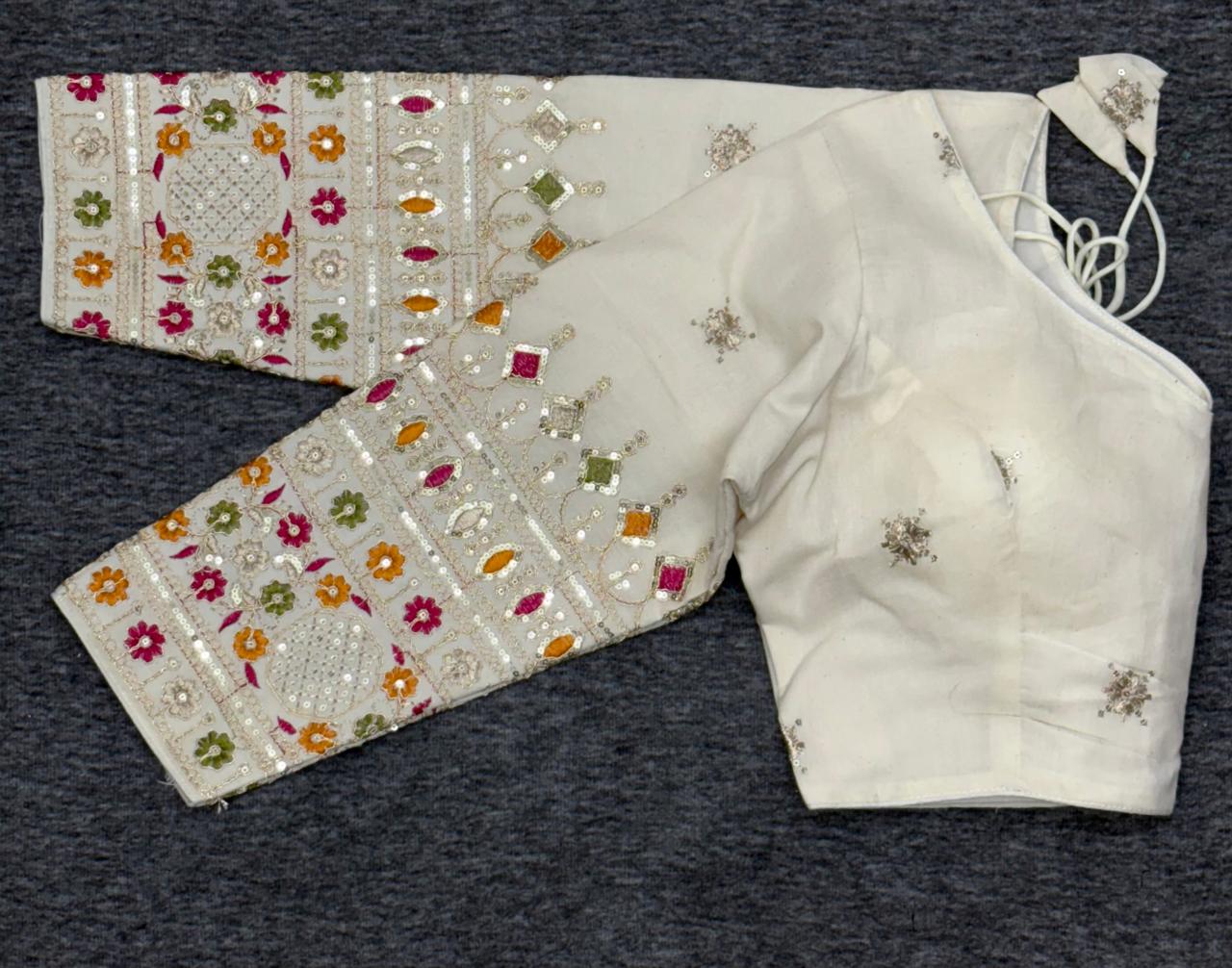
High and boat necklines
High and boat neck lehenga blouses look balanced with chandelier earrings, jhumkas, slim hoops or a single long ear chain. A necklace is usually unnecessary when embroidery extends from the bust to the collarbone. If a necklace is important for a bridal look, choose a short, delicate chain that sits above the blouse edge rather than a broad collar covering the embroidery.
A blouse such as the Classic Festive Wear Blouse for Stylish Saree Look can be used as an useful reference for festive styling: the simpler the visible neckline and surface, the more freedom the wearer has to introduce an ornate earring or necklace. The same principle applies when a relatively plain blouse is worn under an elaborate lehenga dupatta.
Sweetheart, square and V-necklines
Sweetheart, square and V-neck lehenga blouses can support a necklace when the necklace follows the open skin area instead of cutting across the embroidered border. A choker suits a broad square neckline, while a medium-length pendant or rani haar suits a deeper V-neck. Keep earrings to studs or small drops when the necklace is the main feature.
Deep necklines don't automatically require heavy jewellery. A narrow gold chain with a single pendant can look more considered than a layered necklace that touches the blouse embroidery, the dupatta and the waist belt at the same time.
Match Jewellery Scale to Embroidery Density
Jewellery scale should match the size and spacing of the blouse embroidery rather than the price or formality of the event. Large motifs, raised zari, mirror work and dense crystal clusters can carry one substantial jewellery piece. Small but closely packed sequins usually need a lighter accessory because their combined shine already creates intensity.
Use a three-level scale test before dressing fully. Place the blouse, jewellery and dupatta together on a bed or hanger. If the jewellery is the only element visible from across the room, the accessory may be too big for the outfit. If the embroidery disappears behind the jewellery, reduce the necklace or earring size. If the blouse remains visible and one accessory catches attention first, the proportions are likely working.
Embroidery height also matters. Flat threadwork creates less visual bulk than raised appliqué, cutdana, beads or layered floral elements. A heavily beaded blouse therefore needs more breathing space than a blouse with flat tonal thread embroidery, even when both garments appear equally ornate in a close-up image.
Choose One Metal Family Before Mixing Details
One dominant metal family creates the clearest result with an embroidered lehenga blouse. Yellow gold and antique gold complement warm zari, maroon, rust, mustard, emerald and deep pink. Silver, white gold and rhodium suit cooler embroidery, delicate palettes, icy pink, lavender, blue and grey. Rose gold can connect blush, peach and muted wine tones.
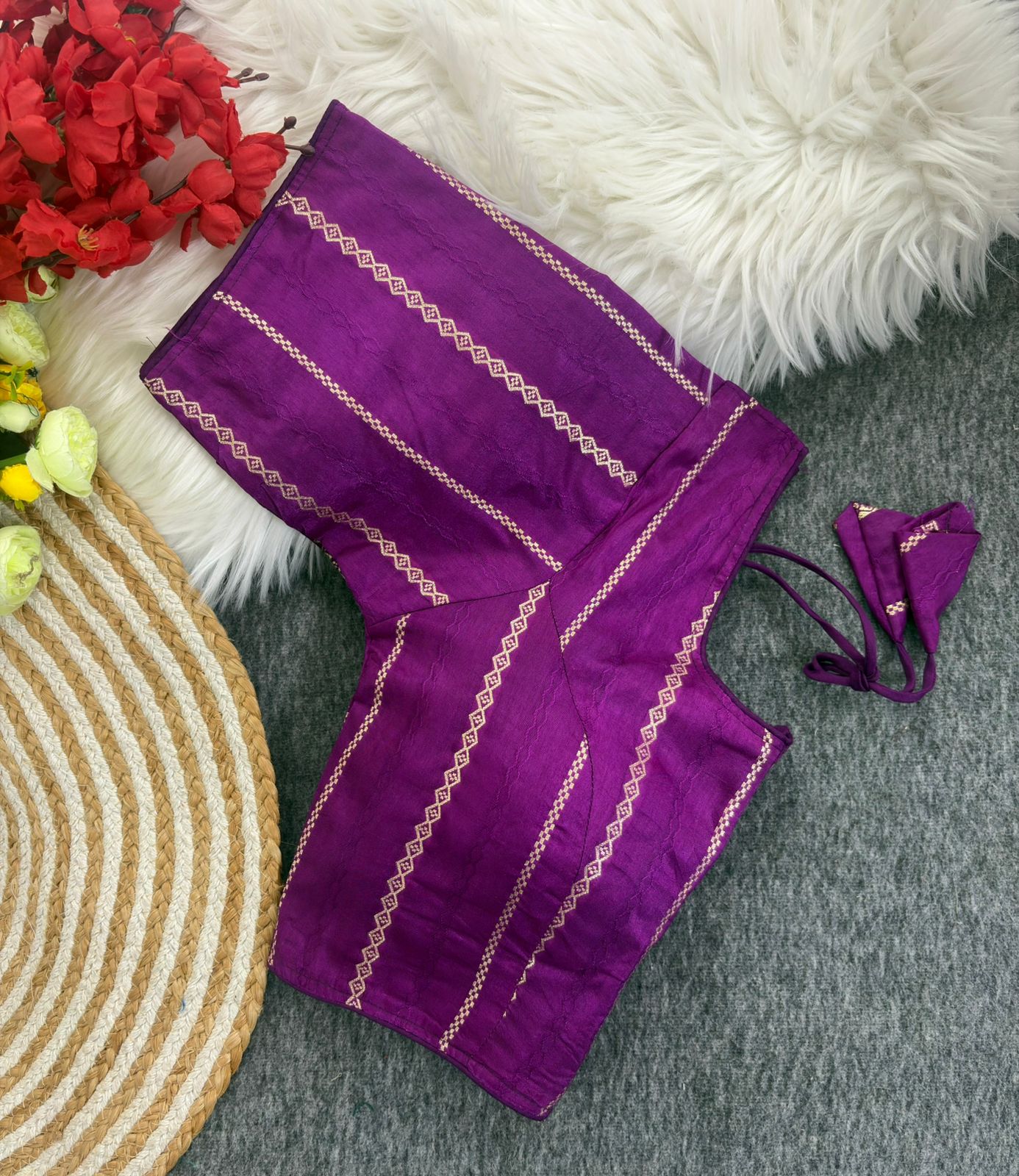
Gold zari doesn't force you to wear heavy yellow-gold jewellery, but the metal should relate to the blouse rather than fight it. Antique gold can soften a densely traditional blouse, whereas bright polished gold adds sharper contrast. Kundan, polki and uncut stones often work well with bridal embroidery because their irregular surfaces echo handworked texture, but they still need controlled scale.
Mixed metals can look intentional when one metal clearly leads. For example, antique-gold earrings, a slim silver-toned ring and a neutral pearl detail can work together if the blouse contains both metal tones. Randomly mixing bright gold bangles, oxidised silver earrings and rose-gold hair jewellery without a connecting colour usually makes the upper body look fragmented.
Build Jewellery Around the Face First
Earrings deserve first priority because they frame the face and remain visible when a dupatta covers part of the blouse. Choose jhumkas for heritage silk or zari-heavy outfits, elongated drops for a high-neck blouse, and compact studs when a necklace or maang tikka already carries the look.
Face shape can refine the choice without turning styling into a rigid rule. Long drops can visually lengthen a rounder face, while medium-width jhumkas can add balance to a longer face. People with short necks may prefer earrings over a tight choker, especially when the blouse has a high neckline. Hair tied back exposes more earring length; open hair can hide delicate studs and short drops.
A maang tikka should relate to the earring scale. A large central tikka with very large chandelier earrings can overwhelm the face, particularly when the blouse embroidery rises close to the shoulders. A small tikka, passa or delicate mathapatti can support statement earrings without creating a second competing focal point.
Use Necklaces, Bangles and Rings as Supporting Elements
A necklace should fill an open neckline or strengthen the outfit's colour story, not cover the most detailed part of the blouse. A collar necklace works with an open square neckline, a medium rani haar works with a deeper neckline, and a single pendant works with a simpler designer readymade blouse. Avoid necklace layers that rest on the blouse's heaviest border.
Bangles are useful because they move attention away from a crowded bodice. Two or three bangles in the dominant metal, paired with one enamel or stone bangle, are usually enough when the blouse and earrings are elaborate. Bridal chooda, kada and bangles can be more extensive, but the arm stack should relate to the lehenga's colour palette rather than repeat every embroidery colour.
Rings should be selected after the earrings and necklace. One cocktail ring or a pair of slim rings gives the hands a finished appearance without adding another dense cluster near the face. A large ring, broad cuff and layered necklace together may feel excessive when the blouse already contains prominent stones.
Waist belts, kamarbandhs and ornate dupatta pins also count as jewellery. A large kamarbandh is most successful when the blouse jewellery is restrained, because both accessories draw attention to the centre of the body. A heavily embroidered blouse, statement necklace and wide waist belt can divide the outfit into too many focal zones.
Fabric and Colour Change the Jewellery Decision
Fabric changes how jewellery reflects light. Banarasi silk has a naturally luminous surface, so bright gold jewellery can become intense when paired with dense metallic embroidery. A matte antique finish, pearls or uncut stones can introduce texture without adding another layer of sharp shine.
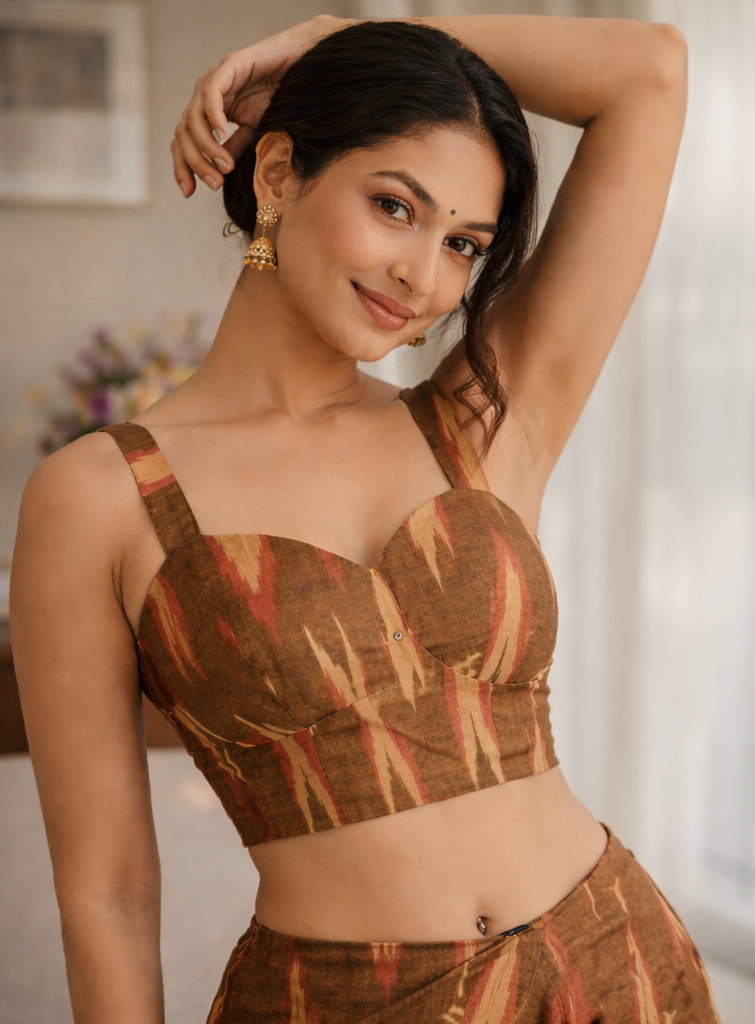
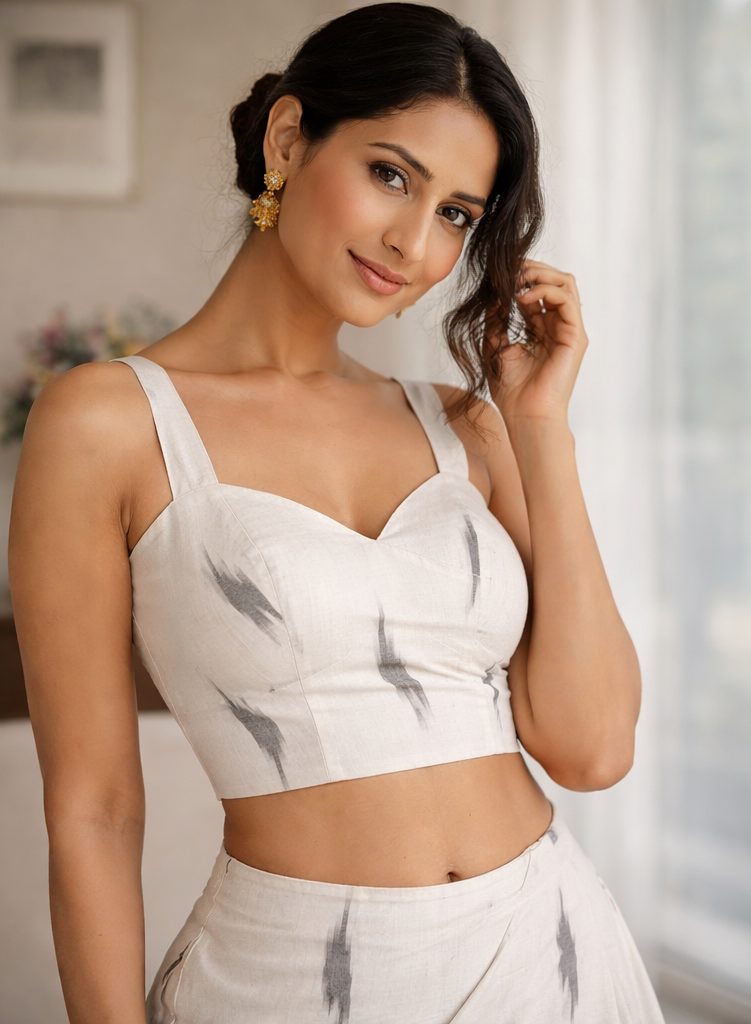
Cotton blouses, including printed or woven styles, generally accept more contrast because their surfaces are less reflective. The Brown Ikat Cotton Padded Blouse Sleeveless Stylish and the Cream Ikat Cotton Padded Blouse Sleeveless Trendy illustrate how a patterned cotton blouse can carry oxidised silver, terracotta jewellery, wooden beads or small gold hoops without looking under-accessorised. Those combinations are especially useful for daytime festive dressing.
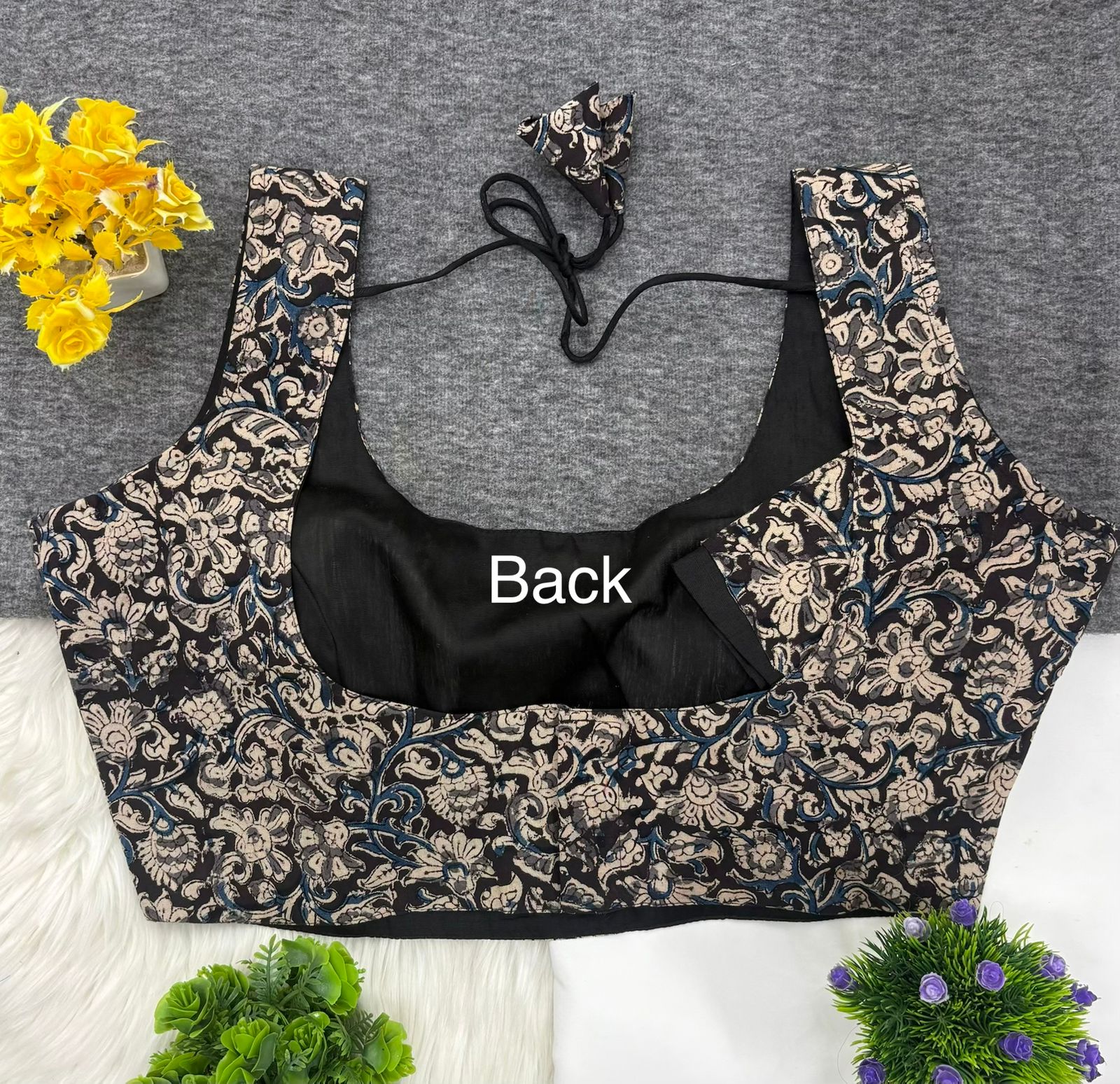
The Banarasi Silk Golden Jari Padded Blouse for Women naturally supports gold-toned styling, but a plain necklace and sculptural earrings may look more balanced than multiple high-shine layers. The Pure Kalamkari Cotton Padded Blouse for Women can take temple-inspired earrings, handcrafted silver or coloured glass bangles because Kalamkari prints already provide visual detail through pattern rather than metallic surface.
Colour repetition should be selective. If the blouse has emerald embroidery, repeat emerald once in the earrings or ring rather than in the necklace, bangles, tikka and footwear. Repeating one accent colour creates connection; repeating every colour makes the ensemble look assembled rather than styled.
Readymade Blouse Fit Matters More Than Extra Jewellery
A well-fitted readymade blouse often looks more polished with moderate jewellery than an ill-fitting blouse looks with elaborate accessories. Shoulder seams should sit at the shoulder edge, the armhole should not cut into the underarm, and the blouse closure should lie flat without pulling across the bust.
Fit affects balance because wrinkles and gaping create visual noise around embroidery. A padded blouse can provide a smoother foundation under a lehenga, but padding should not force the neckline or armhole into an uncomfortable position. Check the blouse while sitting, raising both arms and wearing the dupatta before finalising jewellery.
The Brown Ikat Cotton Padded Blouse Sleeveless Stylish, the Cream Ikat Cotton Padded Blouse Sleeveless Trendy and the Banarasi Silk Golden Jari Padded Blouse for Women show why fabric and construction should guide accessorising. A structured sleeveless blouse leaves the arms available for bangles, while a detailed short sleeve may make a bracelet more practical than a large bangle stack.
A Practical Formula for Weddings and Festive Events
For a wedding ceremony, begin with statement earrings, then add a modest maang tikka and a controlled bangle stack. For a reception, a broad necklace with small earrings can look more contemporary. For a Haldi ceremony, choose lightweight earrings and colourful glass or enamel bangles that can be removed easily if turmeric, water or movement becomes an issue.
For an evening event, reflective jewellery can work because artificial lighting amplifies sparkle, but keep the blouse embroidery and jewellery from competing at the same brightness level. For a daytime event, matte gold, pearls, enamel, silver and semi-precious stones often photograph more naturally than an all-crystal arrangement.
Before leaving home, take one full-length photograph, one shoulder-up photograph and one seated photograph. The full-length image checks whether jewellery scale suits the lehenga. The shoulder-up image checks the relationship between earrings, neckline and face. The seated image reveals whether necklaces, dupatta pins or bangles become upper or tangled.
The answer to What Still Looks Balanced With Jewellery With a Heavily Embroidered Lehenga Blouse isn't a fixed set of ornaments. The reliable method is to identify the blouse's strongest visual feature, place one jewellery focal point away from that feature, repeat one metal or colour, and leave enough plain space for both the embroidery and the wearer's face to remain visible.
Common Jewellery Questions for Heavily Embroidered Lehenga Blouses
What jewellery should I wear with a heavily embroidered lehenga blouse?
Statement earrings, a restrained maang tikka and a small bangle stack are the safest combination. Choose a necklace only when the neckline leaves clear skin and the necklace does not cover the blouse's most detailed embroidery.
Can I wear a necklace with a high-neck embroidered lehenga blouse?
A high-neck embroidered lehenga blouse usually looks better with earrings than with a large necklace. If you want a necklace, select a fine short chain that sits above the neckline or use a very simple pendant rather than a heavy collar.
Should jewellery match the zari on my lehenga blouse?
Jewellery should relate to the zari, but it does not need to match it exactly. Antique gold can soften bright gold zari, while pearls or uncut stones can reduce the intensity of a highly reflective Banarasi silk or metallic blouse.
Are jhumkas suitable for a heavily embellished blouse?
Jhumkas are suitable when the blouse has a high or closed neckline and the earrings are the main focal point. Choose medium-sized jhumkas if the blouse also has a large maang tikka, ornate dupatta border or statement necklace.
How can I style a readymade blouse with bridal jewellery?
Check the readymade blouse fit first, especially at the shoulders, bust and armholes, then select jewellery according to the neckline. A fitted blouse with dense embroidery usually needs one statement piece, while a simpler silk or cotton readymade blouse can support layered jewellery.
What jewellery works for a Haldi ceremony with an embroidered blouse?
Lightweight earrings, enamel or glass bangles and one small ring work well for a Haldi ceremony. Avoid fragile pieces, long necklaces that can tangle with the dupatta and heavy jewellery that becomes uncomfortable during movement or contact with turmeric and water.


