
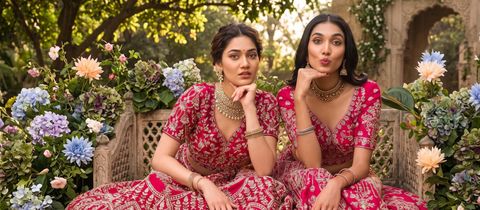
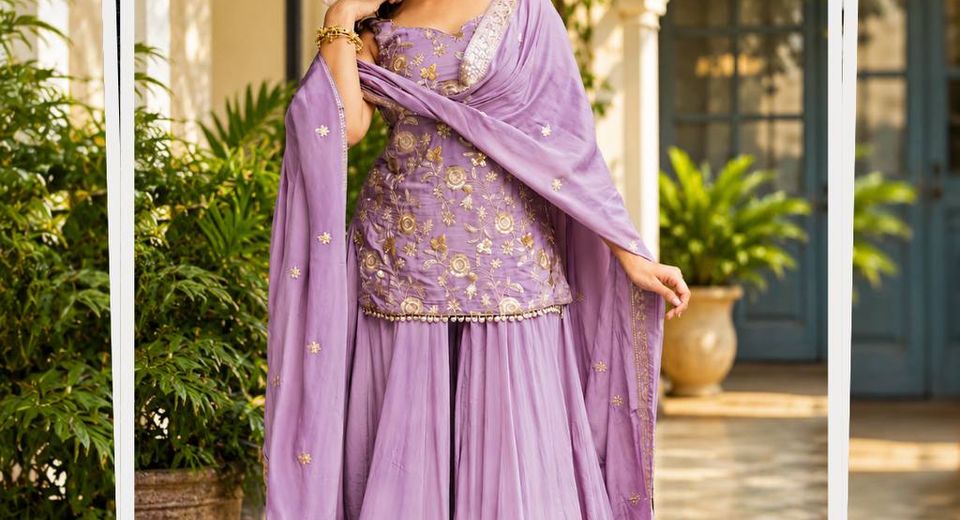
What Sharara Salwar Suits Look Like and Who They Suit becomes easier to answer when the outfit is separated into three parts: a kurta, wide flared sharara trousers and usually a dupatta. Sharara trousers generally sit close to the upper leg before opening into dramatic panels, creating movement that resembles a divided skirt. The silhouette may be subtle in cotton or Chanderi silk, or highly festive in zari, sequins, mirror work and layered georgette.
A sharara suit suits anyone who enjoys a defined waist, visible flare and an outfit with movement, but the right cut matters more than a simple body-shape label. Rise, flare placement, kurta length, fabric weight and hem width all change the final appearance. A thoughtfully proportioned sharara can work for petite, tall, curvy and straight body frames.
What Sharara Salwar Suits Look Like and Who They Suit: identifying the silhouette
A sharara salwar suit has a kurta worn with dramatically flared trousers and usually a matching dupatta. The trousers may be cut from one wide panel or several gathered panels, and the lower portion often creates soft folds or structured waves while walking.
The upper part resembles a salwar-kurta set, but the trousers distinguish the sharara from a conventional straight salwar or palazzo. A straight salwar narrows towards the ankle, while a palazzo maintains a relatively consistent wide leg from hip to hem. A sharara normally has a more noticeable change in width, with the flare becoming prominent below the knee or from mid-thigh.
Sharara silhouettes vary considerably. A lightly flared style gives a clean, contemporary appearance for a daytime mehendi or family lunch. A tiered sharara with gota, zari or sequin borders creates a more traditional festive look. A heavily embroidered version may be paired with a shorter kurta so the trousers remain visible rather than disappearing beneath a long top.
Common construction details include elastic or drawstring waists, concealed side zips, gathered panels, contrast hems, scalloped borders and coordinated dupattas. A well-finished sharara should allow comfortable sitting and walking without pulling at the waistband or twisting at the knees.
What Sharara Salwar Suits Look Like and Who They Suit: sharara versus gharara
A sharara usually flares from the upper leg or knee, a gharara traditionally has a fitted section ending at the knee with a separate gathered flare, and a palazzo remains broadly wide from the hip downwards. The three silhouettes can look similar in photographs, especially when the fabric is fluid.
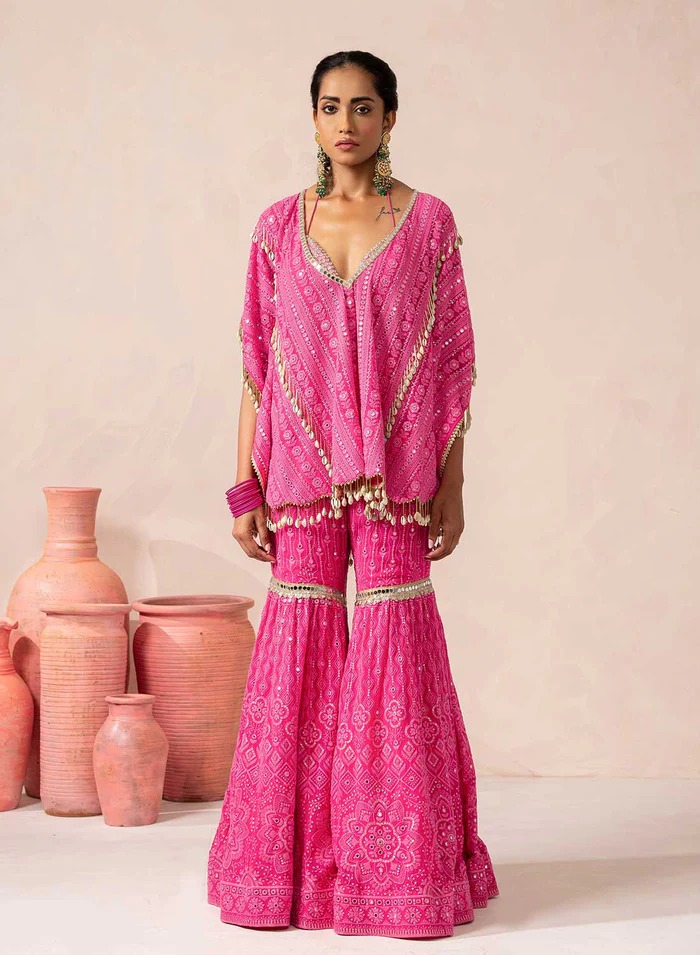
Ghararas often reveal a horizontal seam around the knee, which may be highlighted with lace, gota patti or embroidery. Sharara trousers can have a smoother, uninterrupted fall, although modern designs also use multiple tiers and seams. Palazzo suits have less theatrical volume and usually create a long, column-like line.
Understanding the difference helps when choosing an outfit for a specific visual effect. A gharara offers a vintage, structured appearance. A sharara provides movement and celebration-ready volume. A palazzo suit gives a more understated silhouette that can often be worn with longer kurtas and reused for office-friendly festive dressing.
The word "sarara" is also used in retail descriptions and regional usage for a sharara-style trouser. Product naming isn't always consistent, so examine the photograph, seam placement and flare rather than relying on the spelling alone.
What Sharara Salwar Suits Look Like and Who They Suit: matching the cut to your proportions
A sharara suit becomes flattering when the waist, kurta hem and flare are balanced with the wearer's height and proportions. No single body shape has exclusive access to the silhouette, but small construction choices can control where the eye notices volume.
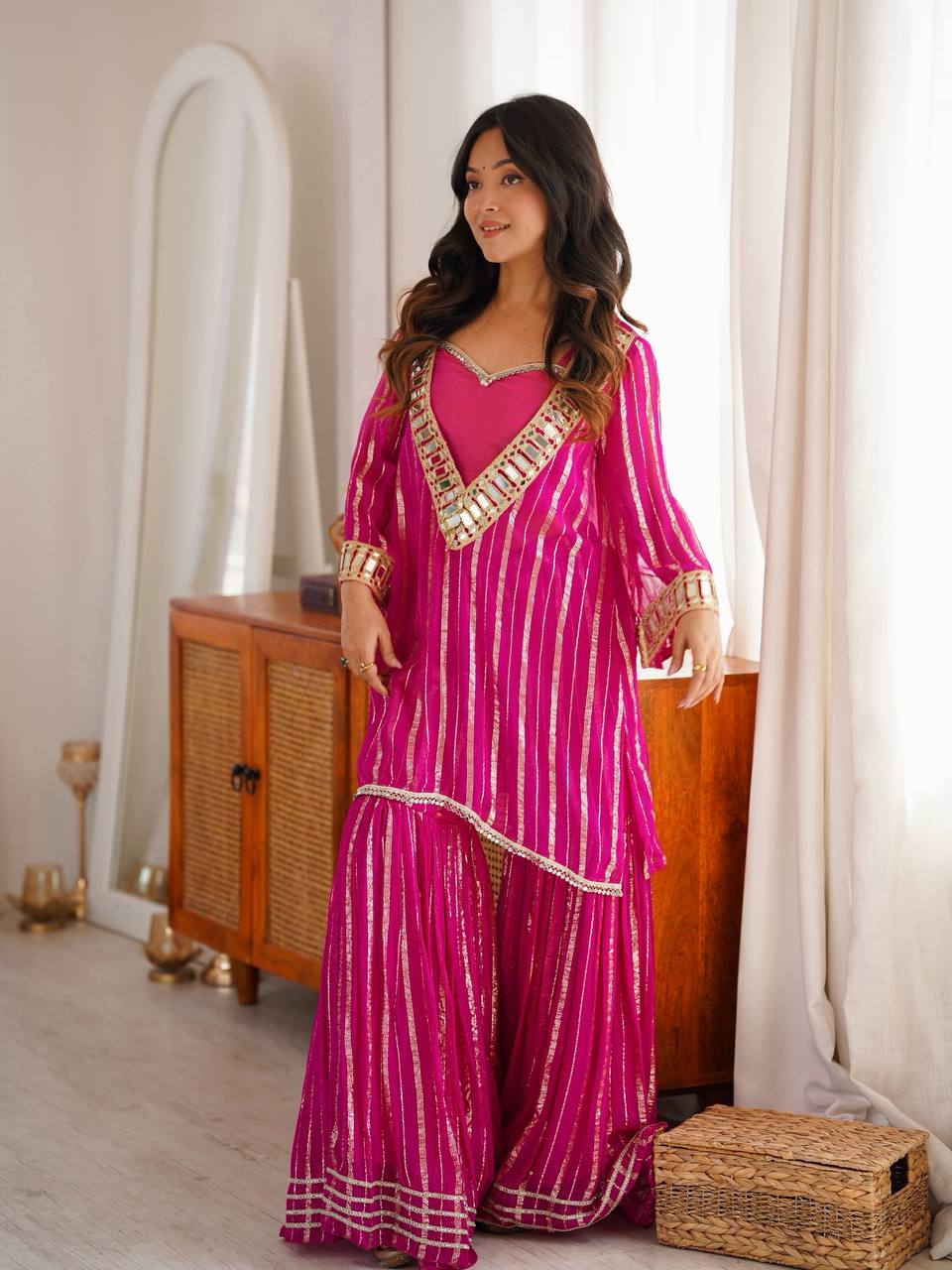
Petite proportions
Petite wearers often benefit from a higher waist, a kurta ending around the upper thigh or just above the knee, and a moderate rather than extremely wide flare. A monochromatic kurta and sharara visually lengthen the body, while a dupatta worn in a narrow vertical drape avoids adding width across the torso.
Small-scale embroidery, narrow borders and a pointed or moderately rounded neckline can also preserve a sense of height. Very long kurtas combined with low-rise shararas may shorten the visible leg line, particularly when the kurta and trousers are strongly contrasting.
Tall proportions
Tall wearers can comfortably carry longer kurtas, broad borders and generous sharara volume. A mid-calf kurta paired with a dramatic flare creates a balanced silhouette, while a contrasting dupatta can divide a long frame in a deliberate way.
Wide zari borders and layered hems are especially effective on taller frames because the details have enough vertical space to remain visible. A very narrow flare may look under-scaled if the kurta and dupatta are also long and elaborate.
Curvier proportions
Curvier wearers often find a defined high or natural waist, a smooth waistband and a kurta with controlled structure comfortable and proportionate. A kurta that skims rather than clings, combined with a flare beginning below the fullest part of the hip, creates a continuous line.
Fluid fabrics such as georgette can reduce stiffness, but lining remains important when embroidery or sequins add weight. A dupatta draped from one shoulder with a soft vertical fall can frame the body without creating a bulky horizontal layer.
Straight or athletic proportions
Straighter body frames can use gathers, peplum-style kurtas, layered hems and embellished waist details to introduce shape. A shorter kurta with a fuller sharara emphasises the waist-to-flare contrast and creates a distinctly festive outline.
Structured fabrics such as Chanderi silk or crunchy silk hold pleats and borders more clearly than very fluid materials. The result can look polished without relying on heavy padding or excessive tailoring.
What Sharara Salwar Suits Look Like and Who They Suit: choosing fabric and embellishment
Georgette, Chanderi silk, crepe, satin blends and structured silk are common sharara fabrics, and each one changes the amount of volume and movement. Lightweight georgette creates a fluid flare, while Chanderi silk gives the trousers a more defined shape and a gently crisp finish.
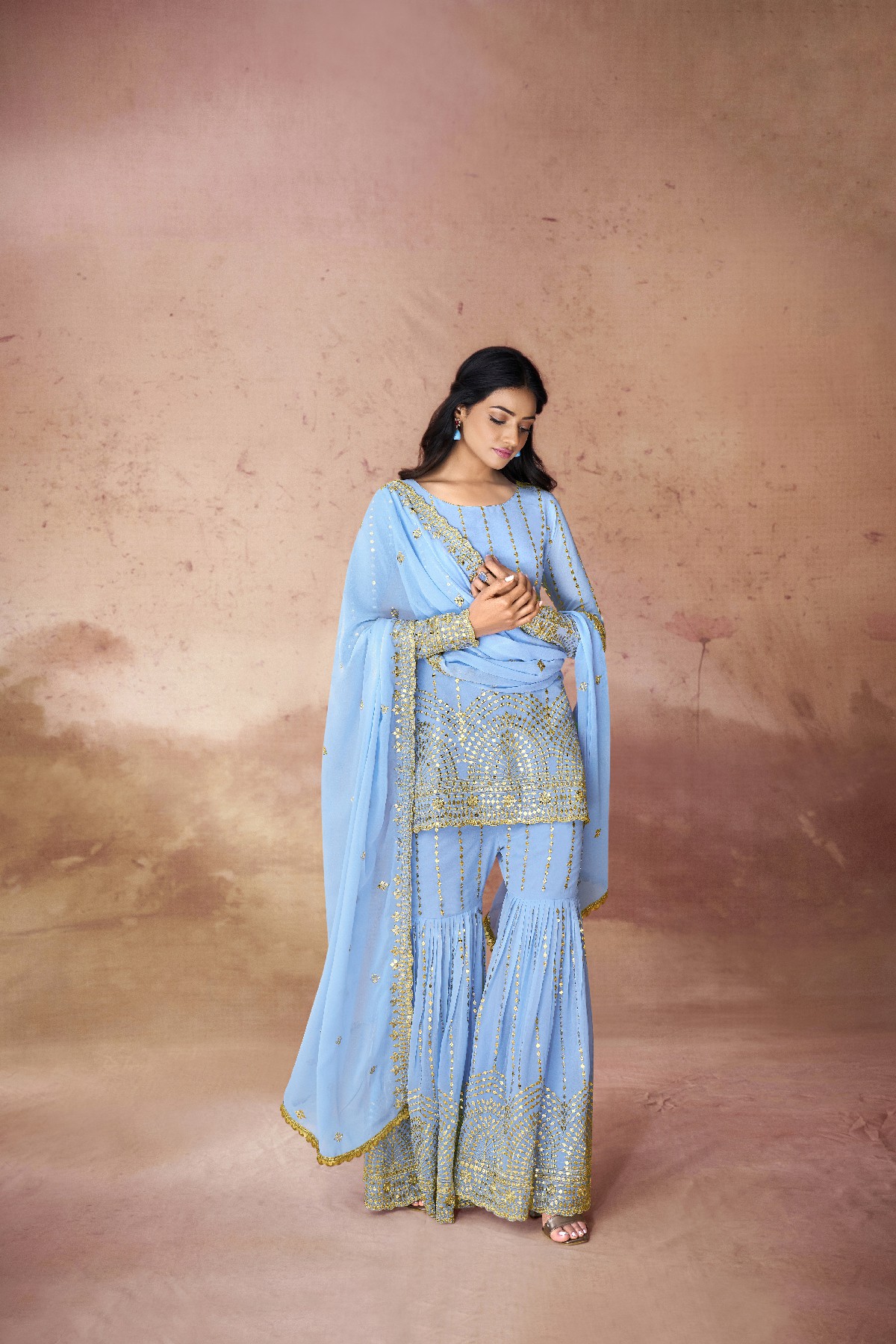
Georgette suits are useful for evening events because the fabric falls softly and accommodates gathered panels without looking too rigid. Georgette Embroidered Sharara Set with Sequin Work Top and Dupatta demonstrates how a fluid base can carry sparkle while retaining movement. Georgette Sharara Set with Heavy Thread, Sequin and Mirror Embroidery creates a more visibly festive surface through layered embellishment.
Chanderi silk has a subtle sheen and enough body to support embroidery, making it suitable for daytime weddings, pujas and receptions. Pastel Blue Chanderi Silk Embroidered Sarara Set for Women shows how a lighter colour and structured weave can keep ornate detailing from appearing excessively heavy.
Crunchy silk and fandy silk hold sharper folds and can make the flare appear more sculptural. Purple Crunchy Silk Sarara Set with Cording Embroidery Work is an example of how cording can define motifs on a fabric with natural body. Grey Fandy Silk Sarara Set with Embroidery and Dupatta uses a quieter colour direction while retaining the visual presence expected from festive wear.
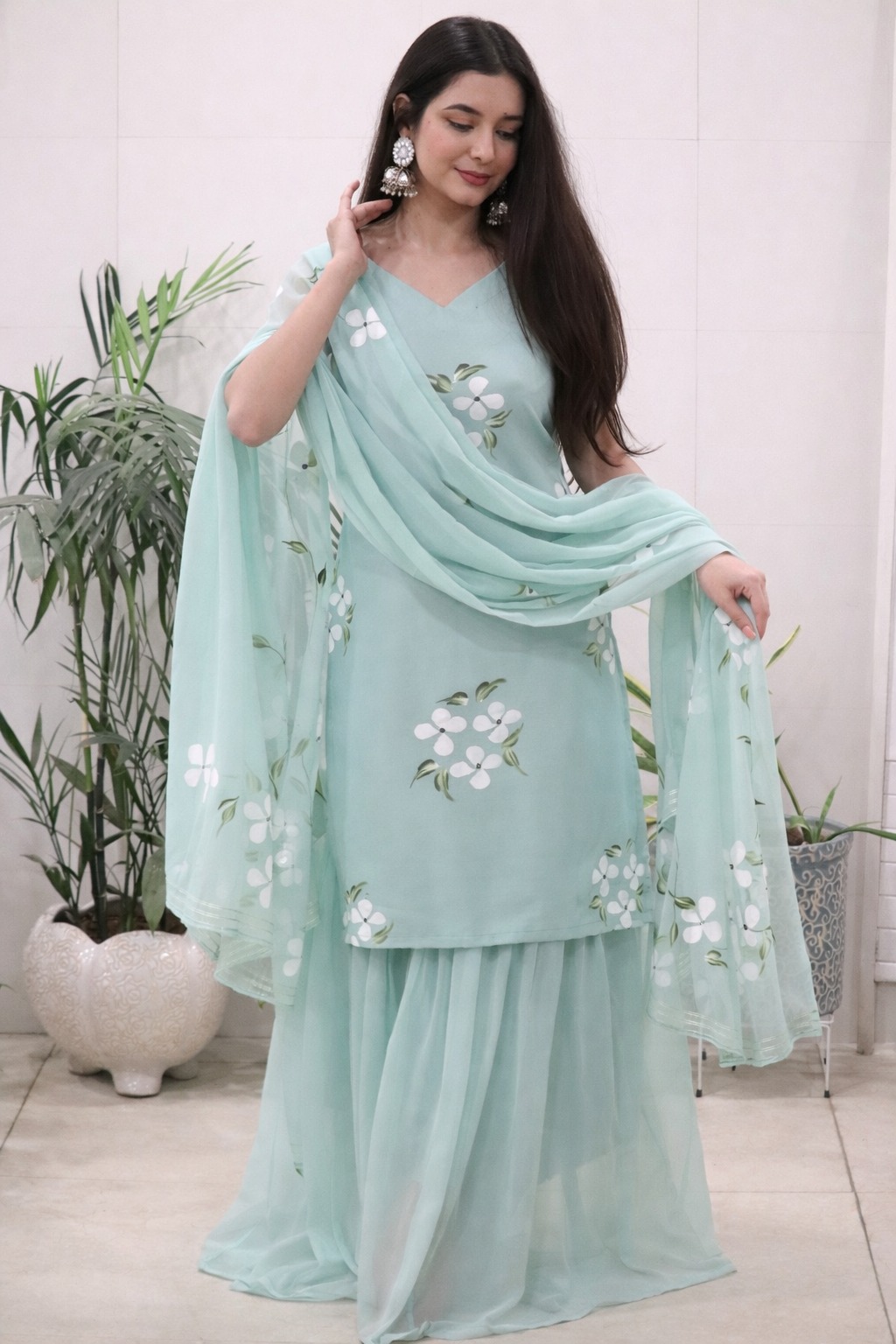
Elegant Mint Green Handpainted Sharara Set with Dupatta illustrates a softer decorative approach, in which handpainted detail becomes part of the outfit's identity without depending entirely on metallic shine. Handpainted surfaces should be stored away from moisture and strong friction because repeated rubbing can dull or disturb delicate pigment.
Zari reflects metallic light and is traditionally associated with celebratory textiles. Sequins create concentrated sparkle, mirror work produces bright points of reflection, and thread embroidery gives a softer surface texture. Heavy embellishment adds weight, so check whether the shoulder seams, waistband and dupatta border feel comfortable before wearing the outfit for several hours.
What Sharara Salwar Suits Look Like and Who They Suit: checking length, flare and comfort
Choose sharara volume according to the event, fabric weight and your comfort while walking and sitting. A moderate flare works for daytime ceremonies and smaller venues, while a broad, layered flare suits sangeet evenings, wedding receptions and grand festive gatherings.
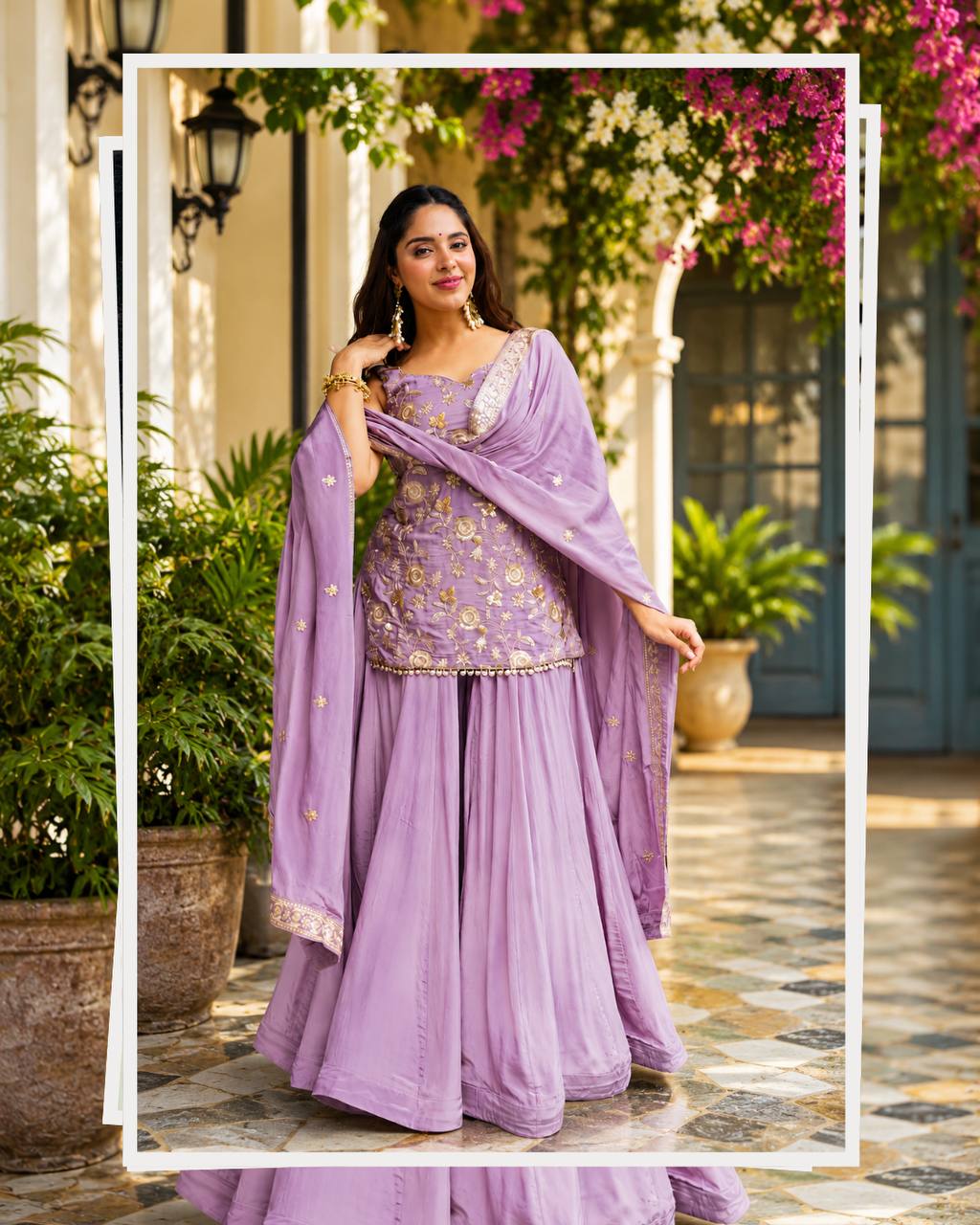
Measure the natural waist, fullest hip, inseam and finished trouser length before ordering or tailoring. The waistband should sit securely without digging in, and the hem should remain clear of the floor by approximately 1 to 2 centimetres when worn with the intended footwear. Excess length can cause the flare to catch under sandals, especially when the fabric has a heavy border.
Kurta length changes the apparent proportion of the outfit. A shorter kurta allows the flare and waistband to become the focal point. A knee-length kurta feels more balanced and brings additional coverage. A longer kurta creates a modest, streamlined effect but can conceal the most distinctive part of the sharara.
Waist placement also affects comfort. A high-waisted sharara visually lengthens the legs and pairs well with a shorter kurta. A natural-waist design usually gives easier movement and works with both short and knee-length kurtas. Low waistlines can be comfortable for some wearers, but they may reduce the elongating effect of the silhouette.
Try sitting on a chair, walking up a few steps and raising one arm before finalising the fit. These simple checks reveal whether the waistband rolls, whether the inner thigh feels restrictive and whether the dupatta slips from the shoulder. A concealed lining can improve comfort when sequins, mirror work or metallic thread touch the skin.
What Sharara Salwar Suits Look Like and Who They Suit: styling by occasion
A sharara salwar suit works best for festive events where movement, colour and visible detailing are welcome. Suitable occasions include mehendi ceremonies, Haldi ceremony gatherings, sangeet nights, Eid celebrations, Diwali parties, engagement functions and family wedding receptions.
For a Haldi ceremony, cotton, rayon or lightweight georgette in yellow, green, coral or pink can provide comfort in warm weather. Avoid highly delicate embellishment if turmeric paste, outdoor seating or frequent movement is expected. A washable or easily spot-cleaned dupatta is practical for a daytime function.
For an evening sangeet or reception, zari, sequins, mirror work and richer colours can make the outfit feel appropriately celebratory. A lavender or pastel sharara can be styled with silver-toned jewellery, while purple, emerald, wine and deep blue work well with antique gold accessories.
Keep the accessories proportional to the surface detail. A heavily embellished sharara generally needs one strong jewellery element, such as chandbali earrings, a choker or stacked bangles, rather than all three together. A lightly decorated suit can support a more prominent necklace, embroidered potli or embellished footwear.
Dupatta placement changes the overall line. An one-shoulder drape creates a long vertical fall, a front-pinned drape keeps both hands free, and a two-shoulder arrangement gives more coverage for religious or family settings. Secure the dupatta with small safety pins placed beneath embroidery so the fabric doesn't slip during dancing.
What Sharara Salwar Suits Look Like and Who They Suit: care and buying checks
A sharara suit lasts longer when embellishment, fabric and lining are cared for according to their specific construction. Read the care label first, and use professional dry cleaning for zari, mirror work, extensive sequins, handpainting or fabrics that are not marked washable.
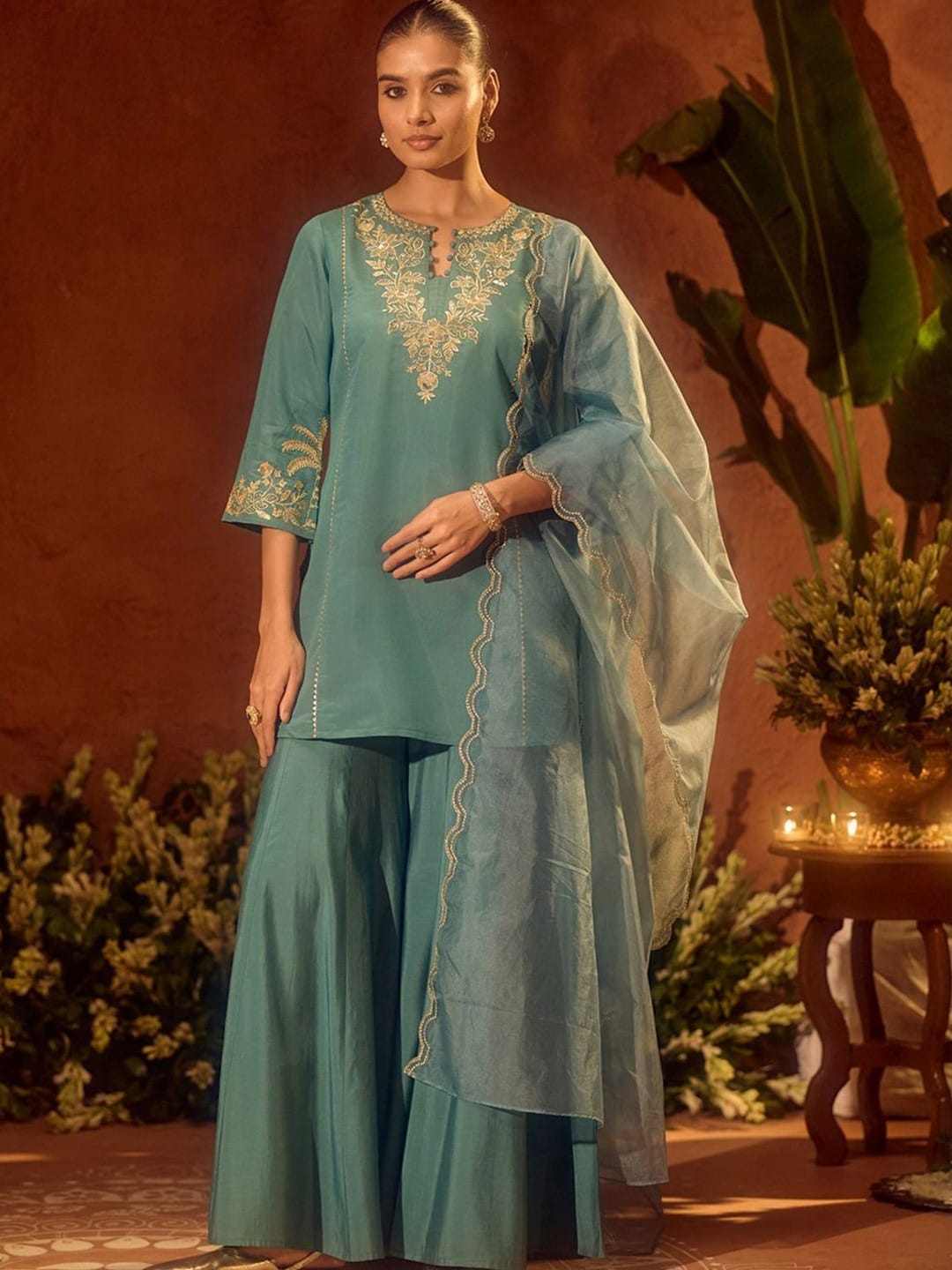
Store a heavy sharara flat or on a broad padded hanger rather than compressing it beneath dense garments. Fold embellished sections with acid-free tissue or soft cotton between layers to reduce snagging. Keep the outfit away from direct sunlight, damp cupboards and strong perfume, which can discolour some dyes and weaken metallic surfaces over time.
Check five practical points before buying: the actual waist measurement, the finished trouser length, the flare position, the lining and the fastening method. Product photographs can make a sharara look longer or wider than it's, so measurements provide more reliable information than visual scale.
Also consider the weight of the complete outfit rather than the kurta alone. A sequined dupatta and bordered sharara can add substantial weight to the shoulders and waist after several hours. Choosing breathable lining, stable shoulder seams and comfortable footwear makes a greater difference to enjoyment than selecting the most elaborate surface decoration.
Ultimately, the most suitable sharara is the one whose flare begins at a comfortable point, whose hem works with your shoes and whose dense weight matches the event. Body-shape advice can guide proportions, but personal movement, coverage preference and fabric comfort should make the ultimate decision.
Common Questions About What Sharara Salwar Suits Look Like and Who They Suit
Who can wear a sharara salwar suit?
Anyone can wear a sharara salwar suit when the waist, kurta length and flare are proportioned for comfort. Petite wearers may prefer a higher waist and moderate flare, while taller wearers can carry longer kurtas and broader borders.
What is the difference between a sharara and a gharara?
A sharara usually flares from the upper leg or knee, while a gharara traditionally has a fitted section to the knee followed by a separate gathered flare. A visible horizontal seam often helps identify a gharara.
Are sharara suits suitable for petite women?
Yes, sharara suits can suit petite women when the trousers sit at a natural or slightly high waist and the kurta does not extend too far below the knee. A moderate flare, narrow border and similar colours across the outfit can create a longer visual line.
Which fabric is best for a sharara suit?
Georgette is useful when a soft, fluid flare is preferred, while Chanderi silk and structured silk create more defined folds. The best fabric depends on the event, climate, desired volume and the amount of embroidery or sequin work.
What should you wear with a sharara suit for a wedding?
For a wedding, pair a richly embellished sharara with one or two coordinated jewellery pieces, comfortable heeled sandals and a secure dupatta drape. Zari, mirror work, sequins and deep jewel colours are suitable for evening celebrations, while pastels and lighter embroidery work well for daytime functions.
How long should sharara trousers be?
Sharara trousers should finish approximately 1 to 2 centimetres above the floor when worn with the footwear selected for the outfit. A hem that touches the ground can collect dirt and catch under the feet, particularly when the trousers have multiple gathered panels.


