

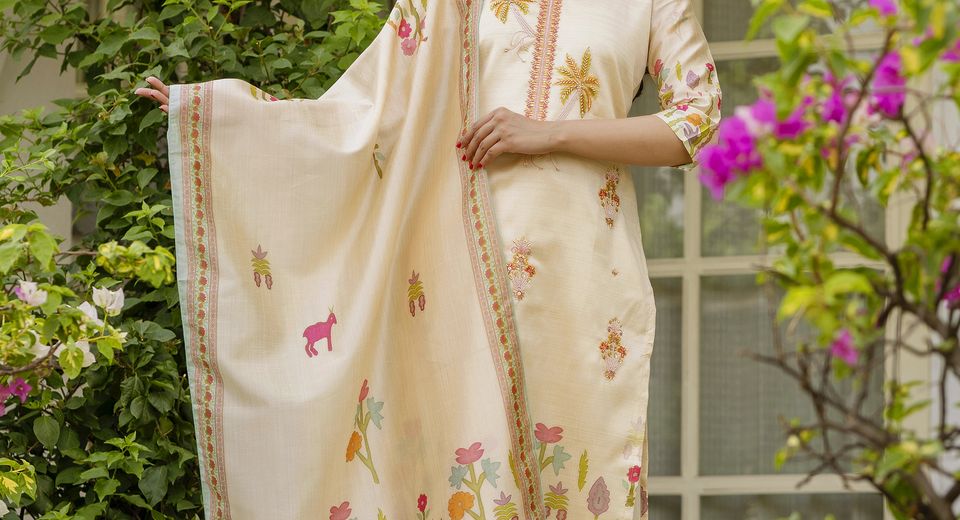
What Product Photos Reveal About Salwar Suit Embroidery Quality can save you from judging an embroidered salwar suit by colour alone. A close photograph can show whether threadwork has even tension, whether zari sits neatly on the fabric, and whether beads are placed securely. The same image can also reveal warning signs such as loose threads, jagged motif edges or embroidery that disappears into folds. Product photos can't replace touching a garment, but they can provide a surprisingly useful inspection before you order online.
What Product Photos Reveal About Salwar Suit Embroidery Quality
Product photos reveal embroidery quality through stitch density, motif definition, thread direction, surface texture and finishing around the garment edges. A useful product page usually includes a full front view, a close-up of the embroidered area, a back or side view, and a photograph showing the fabric in natural folds.
Begin with the sharpest image rather than the most attractive one. A full-length photograph helps you understand placement, but a zoomed image tells you more about craftsmanship. Look at the neckline, sleeve border, dupatta edge and lower hem because these areas often contain the highest concentration of work. If the garment has bead embroidery, inspect whether each bead has a visible anchor point instead of assuming that shine means quality.
Photography also affects judgement. Strong studio lighting can make zari appear brighter and can hide small irregularities, while a softly lit image may show the actual texture more honestly. Compare colour and surface details across several images. A motif that appears crisp in one photograph but blurred in every close-up may be printed or digitally enhanced rather than richly embroidered.
How can you judge threadwork from a close-up photo?
You can judge threadwork by checking stitch spacing, consistent tension, clean motif outlines and the amount of fabric visible inside each design. Good threadwork doesn't need to look machine-perfect, but it should appear deliberate and stable.
Check the direction and tension of stitches
Threads should follow the shape of the motif instead of crossing randomly. Curved flowers, paisleys and leaves usually look more refined when the stitches change direction to fill the form. Long stitches that span a large empty area may snag more easily than shorter, closely controlled stitches.
Even tension matters because loose thread creates raised loops, while excessive tension can pucker the fabric. In a close-up of the Navy Blue Threadwork Readymade Salwar Suit, for example, inspect whether the contrast between navy fabric and lighter thread makes the stitch pattern readable without exposing uneven gaps. Dark fabrics can make flaws less visible in a distant photograph, so zooming in is especially important.
Examine edges and repeated motifs
Motif edges should be reasonably clean, with no unexplained thread trails extending beyond flowers, vines or geometric borders. Repeated motifs should have broadly consistent size and spacing. Small handmade variations are normal, but an abrupt change in scale can suggest rushed finishing or inaccurate machine placement.
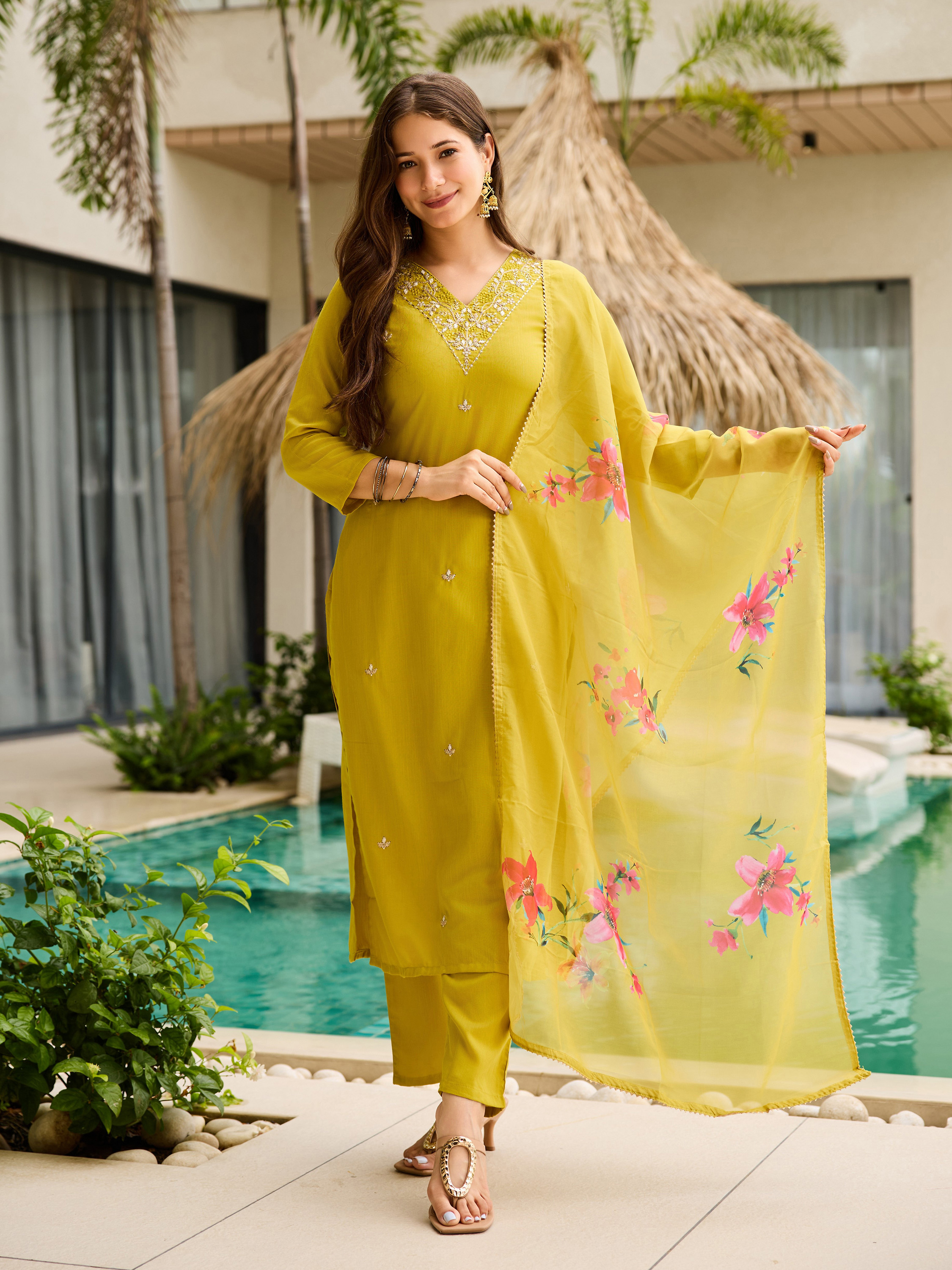
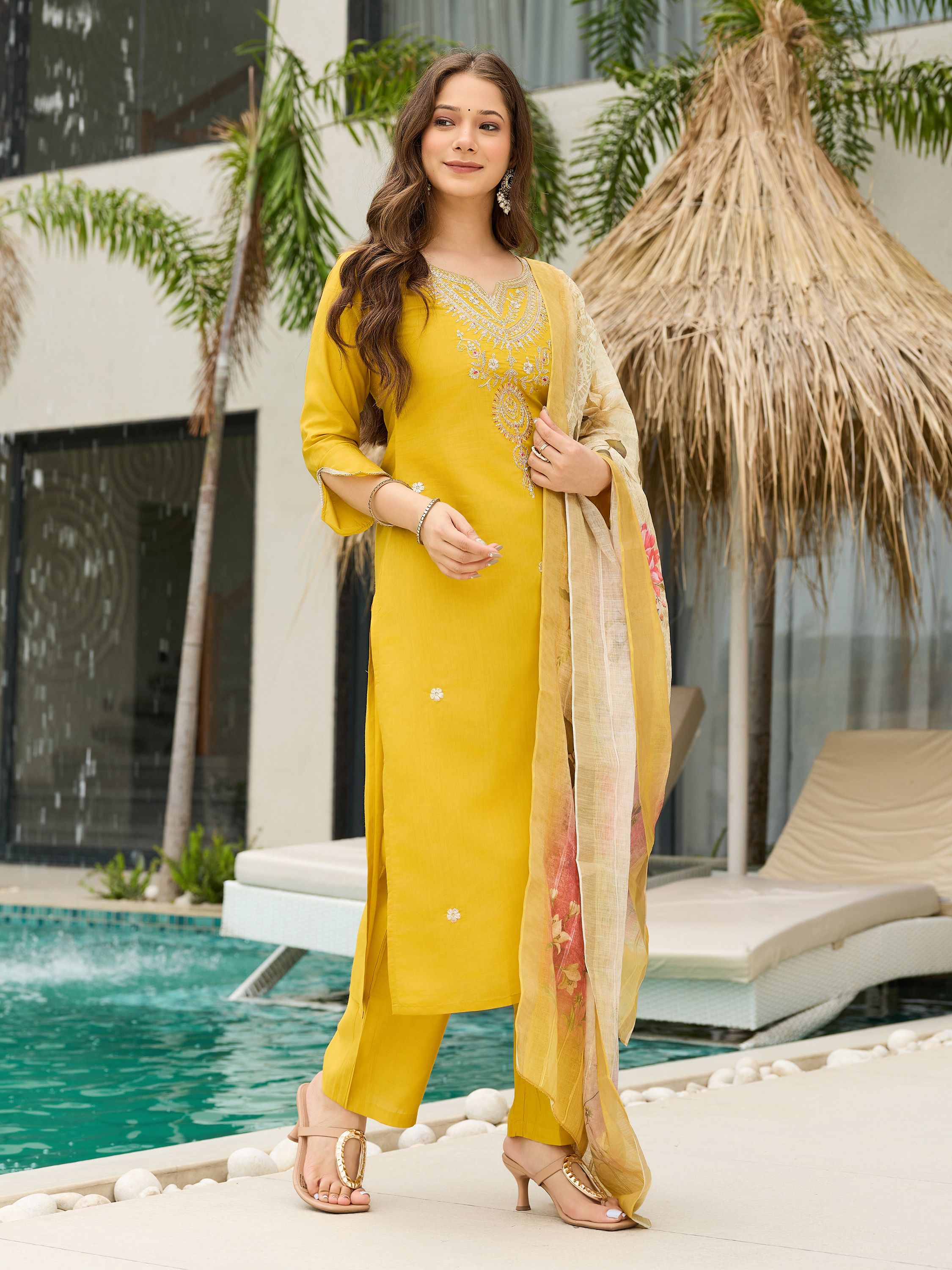
The Yellow Threadwork Readymade Salwar Suit provides a useful example of why contrast matters during inspection. Yellow thread on a lighter or similarly warm base may be difficult to see in a full image, so assess the raised texture and outline in the close-up rather than relying only on colour contrast. A strong photograph should make the construction visible even when the palette is subtle.
Which signs show that bead and zari embroidery is well finished?
Well-finished bead and zari embroidery has secure attachments, consistent spacing, controlled shine and smooth transitions at borders. Beads should not appear to float, and metallic thread should follow the design without sudden tangles or exposed knots.
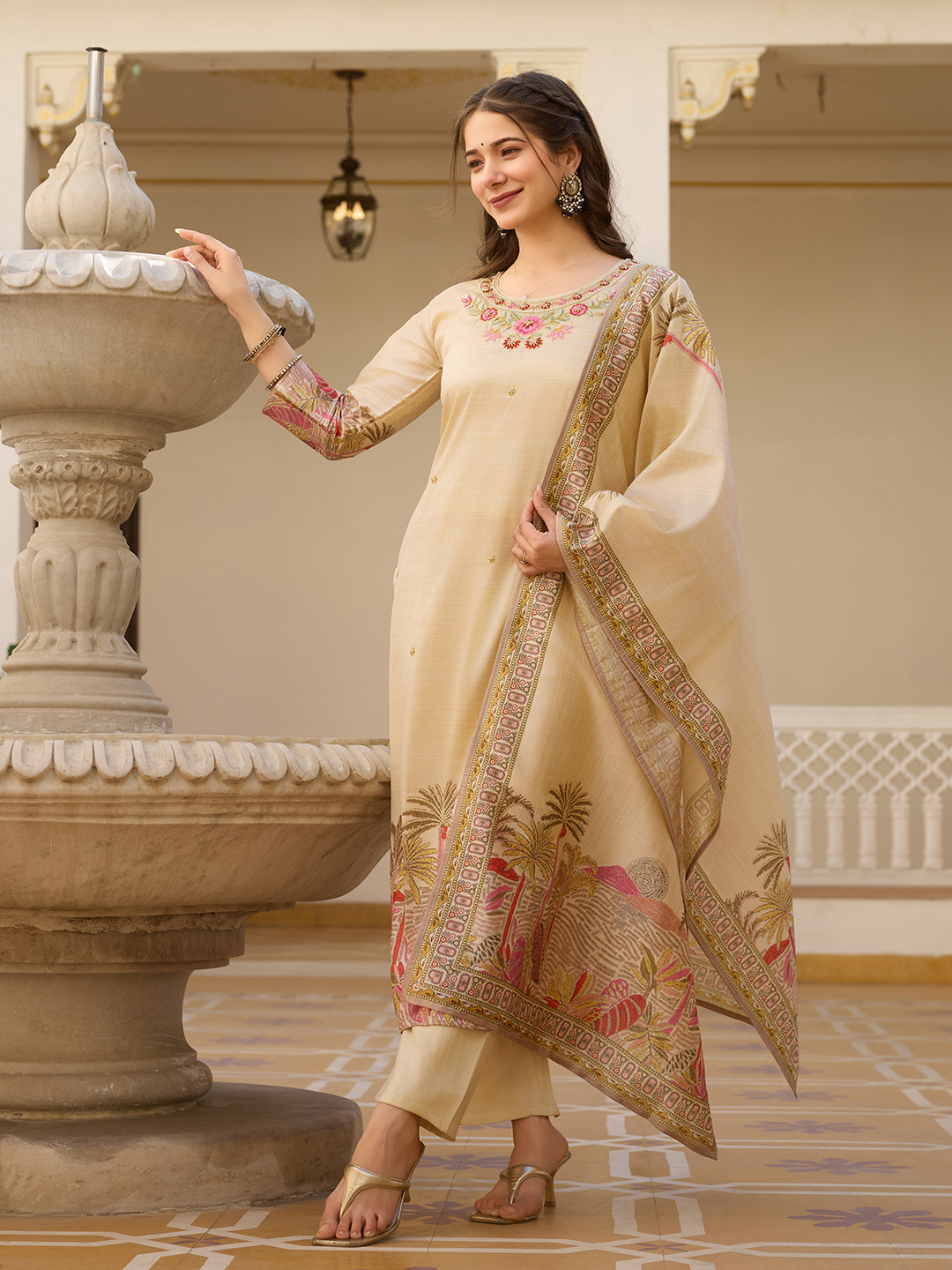
For beadwork, look for a small thread connection at the base of each bead. Product photos may not show every fastening, but they can reveal whether beads sit upright and evenly or lean in different directions. Dense beadwork should create a coherent surface rather than a scatter of unrelated shiny points. The Cream Assam Silk Salwar Suit With Bead Embroidery is the kind of garment where a close-up is essential because silk texture, bead size and thread attachment all influence the final appearance.
Zari deserves a separate check because metallic thread reflects light differently from cotton, viscose or silk thread. Good zariwork usually follows a clear outline and maintains a similar width around a border. Watch for broken-looking lines, dull patches and places where the metallic thread has been pulled away from the fabric. In the Orange Zariwork Brocade Readymade Salwar Suit, inspect whether the zari pattern works with the brocade ground or becomes lost among competing motifs.
A very bright photograph can make zari look more substantial than it's. Compare the close-up with the full garment view to see how much of the design is actually covered. A border that appears broad in a cropped image may be narrow when placed beside the full sleeve or hem.
How does fabric change the way embroidery should look?
Fabric changes embroidery quality because silk, Chanderi, viscose and brocade support thread and surface weight differently. A good design balances embroidery density with the fabric's drape, opacity and ability to hold stitches.
Banarasi silk and brocade can support lustrous zari, but heavy work may alter the fall of a soft garment. Assam silk has a textured, slightly crisp character that can make thread and beadwork appear especially distinct. Chanderi is comparatively light and often benefits from controlled borders or spaced motifs rather than excessive weight across the entire front.
The Cream Threadwork Assam Silk Readymade Salwar Suit can be assessed by looking at whether the threadwork sits flat against the silk texture. The Cream Threadwork Viscose Chanderi Readymade Salwar Suit calls for a different question: does the embroidery preserve the fabric's light appearance, or does the work look heavy enough to affect movement? These comparisons help you judge design suitability, not merely stitch neatness.
Transparency is another useful clue. A close-up may show the base fabric between motifs, especially in lighter Chanderi or cream garments. Visible fabric isn't automatically a flaw; deliberate spacing can make embroidery look more elegant and breathable. Unevenly exposed fabric inside one motif, however, may indicate inconsistent filling.
What can the back of a salwar suit reveal?
The back of a salwar suit can reveal thread tails, knots, backing material, puckering and whether the embroidery has been stabilised properly. A back view is one of the most valuable photographs on an embroidered garment listing.
Neat embroidery doesn't require an entirely invisible reverse, especially when a garment contains dense machine work, but the reverse should not show long unsecured threads or clusters of bulky knots. Excess thread can catch on jewellery, while loose knots may unravel during washing. A lightweight lining or backing can protect the reverse of beadwork and prevent discomfort against the skin.
Check whether the fabric around the embroidery lies flat. Ripples radiating from a neckline or sleeve border may indicate that the stitching has been pulled too tightly. A small amount of natural movement is expected in a soft fabric, but repeated puckering across a large panel is a reason to ask for measurements or additional photographs.
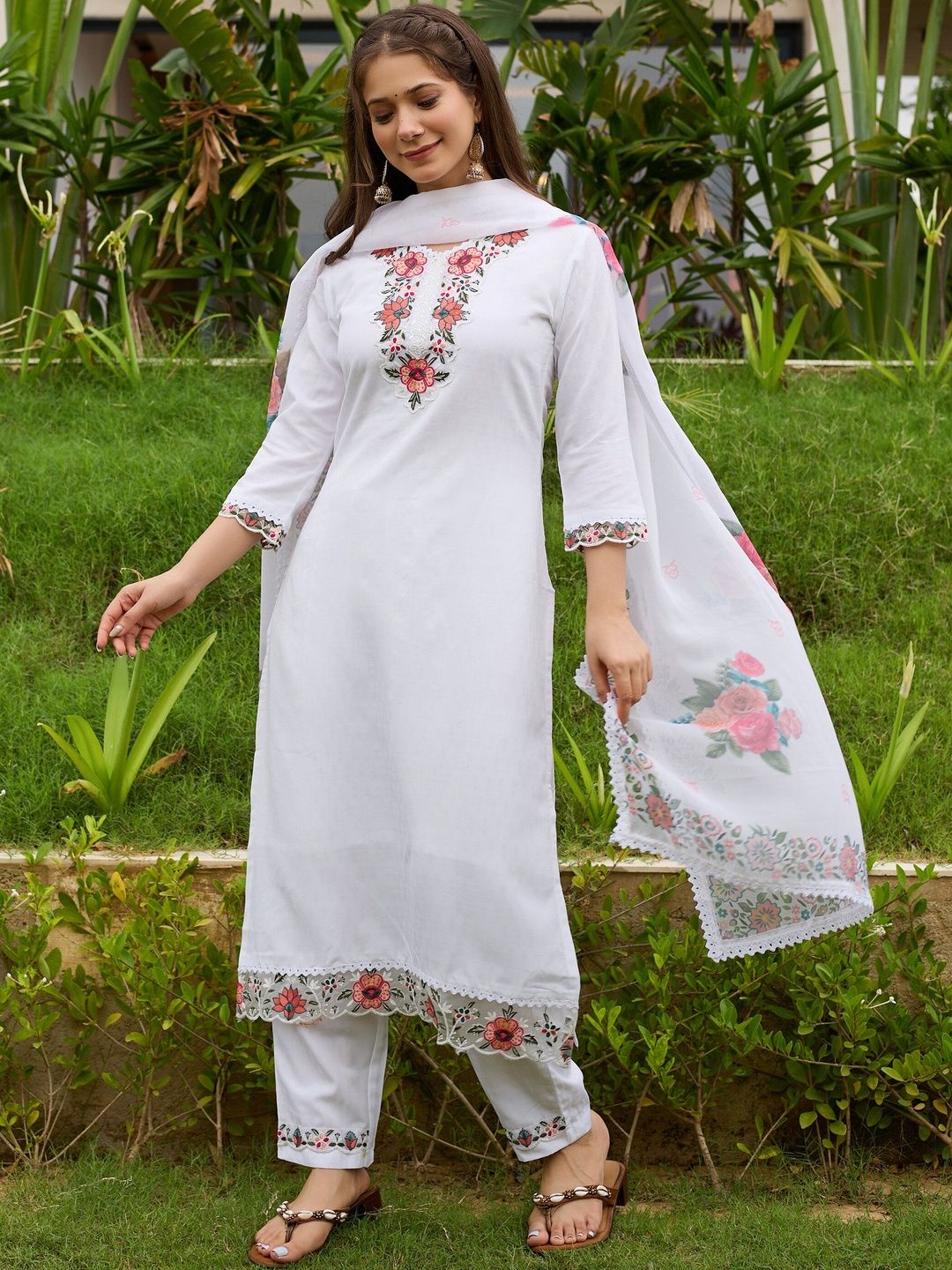
The Elegant White Cording Threadwork Salwar Suit illustrates another detail worth checking: raised cording should look intentional and continuous, with clean turns at corners and secure ends at motif boundaries. Cording that stops abruptly or appears flattened in random areas may not retain its definition after wear.
How can motif placement help you assess construction?
Motif placement helps assess construction because balanced embroidery should align with seams, borders, the neckline and the garment's intended silhouette. A beautiful isolated motif can still look poorly planned if it's cut off awkwardly at a seam.
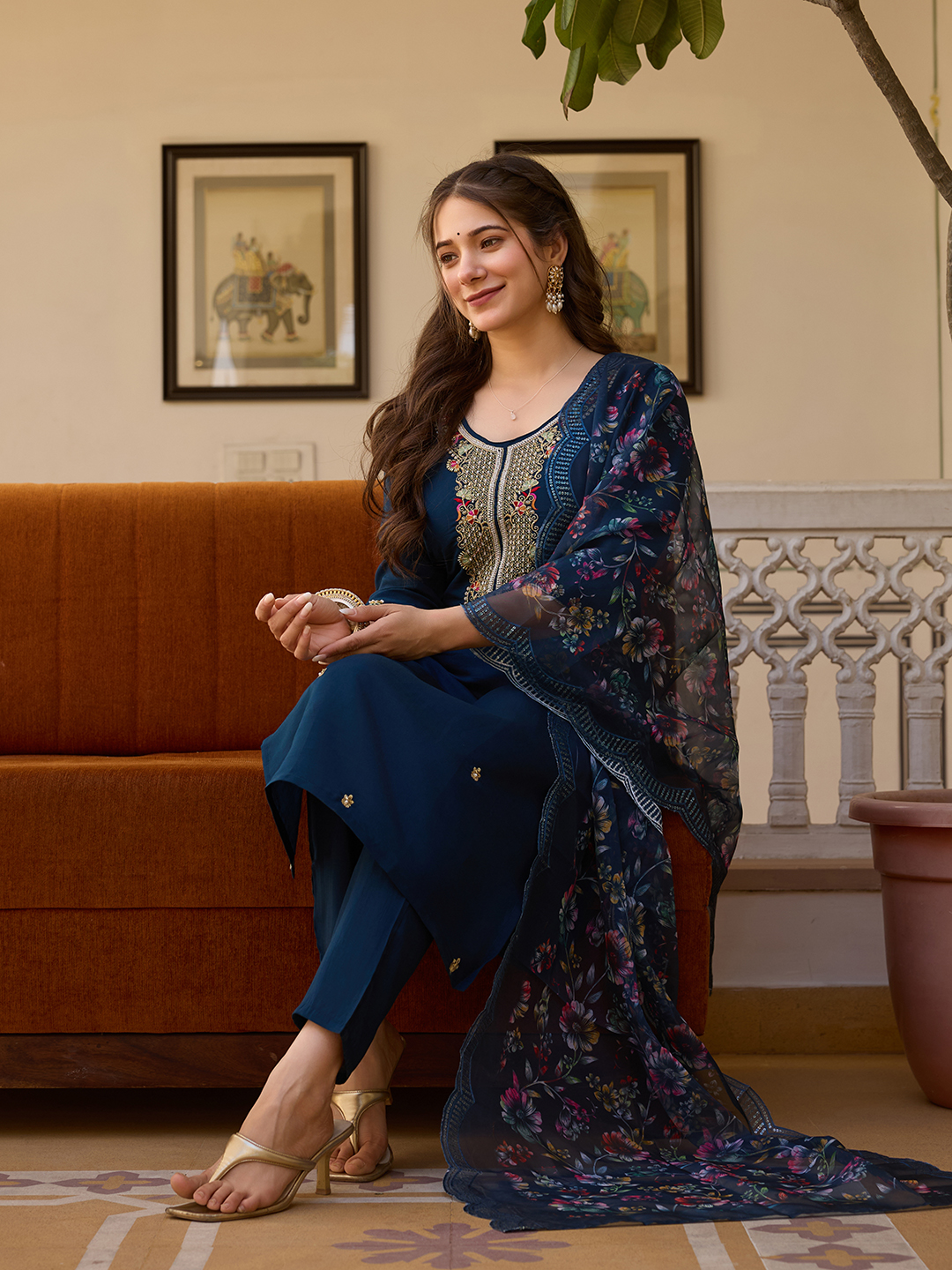
Study the full front photograph for symmetry. The neckline border should generally sit at a consistent distance from the opening, and mirrored motifs should look intentionally balanced on the left and right sides. Sleeve embroidery should not disappear under the arm or end at an uneven point unless the design clearly calls for asymmetry.
Also check the dupatta. A narrow embroidered edge may be appropriate for a lightweight suit, while a heavily worked salwar suit may require a border with enough visual weight to relate to the kameez. The Embroidered Salwar Suit Set for Women is best evaluated as a complete set: compare the scale of the kameez motifs with the dupatta border and bottom details rather than judging each component in isolation.
Regional design references can help explain placement choices. Kalamkari Print Salwar Suits may rely more heavily on printed storytelling and contrast, while Maharashtra Paithani Inspired Salwar Suits can use peacock, floral or border-led visual language. Gujarat Bandhej Salwar Suits and Odisha Sambalpuri Salwar Suits may also combine surface pattern with restrained embroidery, so a product photograph should be read according to the design's balance rather than a demand for dense work everywhere.
Which photo details matter when comparing everyday and festive suits?
Everyday suits usually benefit from lighter, flatter embroidery, while festive suits can support denser zari, beadwork or raised thread without looking overworked. The right quality test depends on how the garment will be worn and maintained.
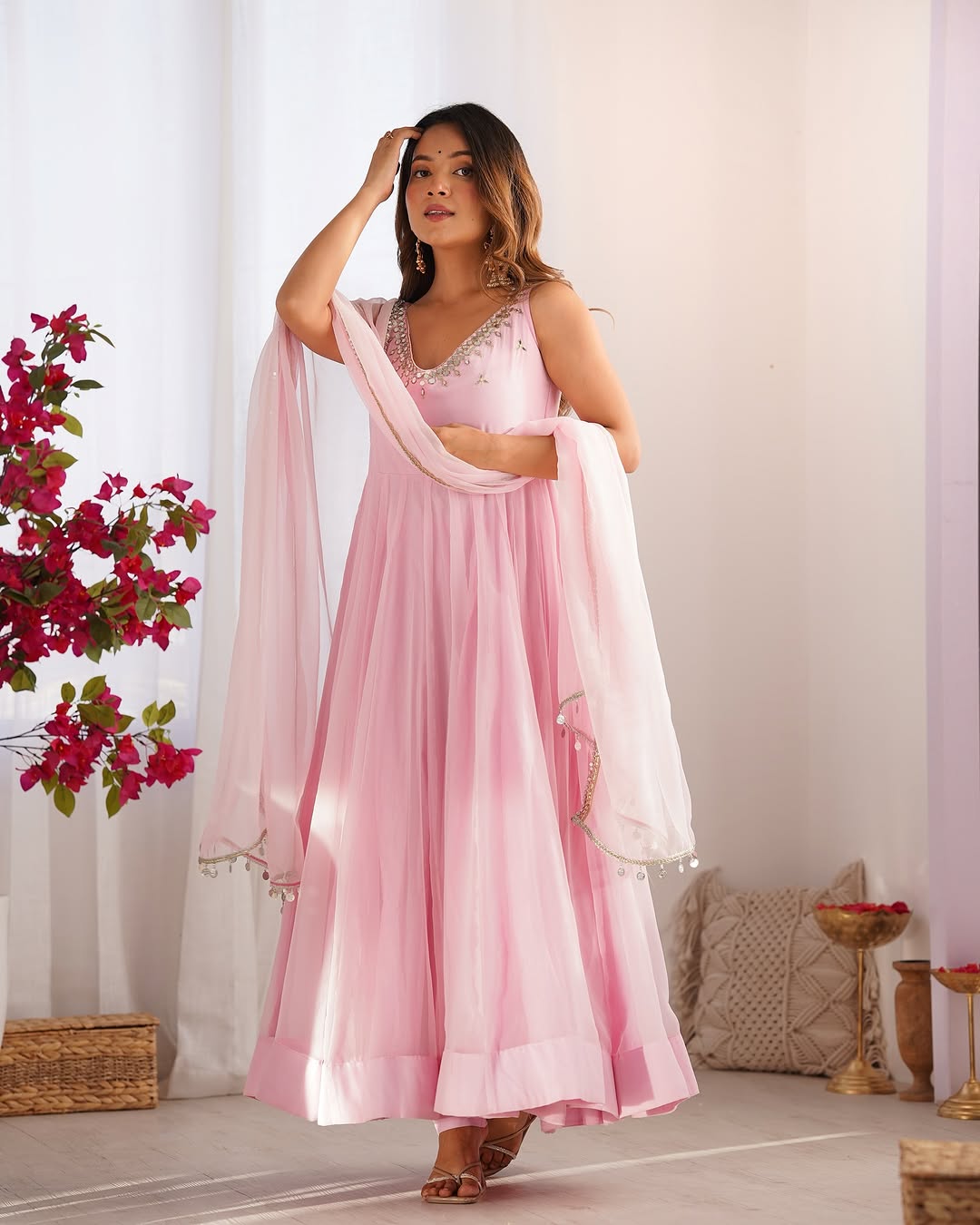
For frequent use, prioritise secure thread ends, washable-looking surfaces, moderate motif density and embroidery that doesn't obstruct movement. A simple threadwork pattern can be more practical than fragile beads across the entire front. Examine the sleeve cuff and side seam because repeated friction often affects those areas first.
Festive garments deserve closer inspection of shine, layering and weight. Zari should complement rather than overpower the fabric, and beadwork should be distributed so that the neckline doesn't become uncomfortable. A garment intended for a wedding reception may tolerate more surface embellishment than a suit selected for a Haldi ceremony, where movement, seating and contact with colour are more likely.
Punjab Patiala Salwar Suits often suggest a more relaxed, movement-friendly silhouette, whereas an embellished straight suit or anarkali may place greater emphasis on front-panel symmetry. The photograph should help you connect embroidery density with the cut, occasion and expected comfort.
How should you use product photographs before ordering?
You should use product photographs as a four-step inspection: confirm the full design, zoom into the work, check construction details and compare the garment with its written description. A systematic review is more reliable than an impression formed from the first image.
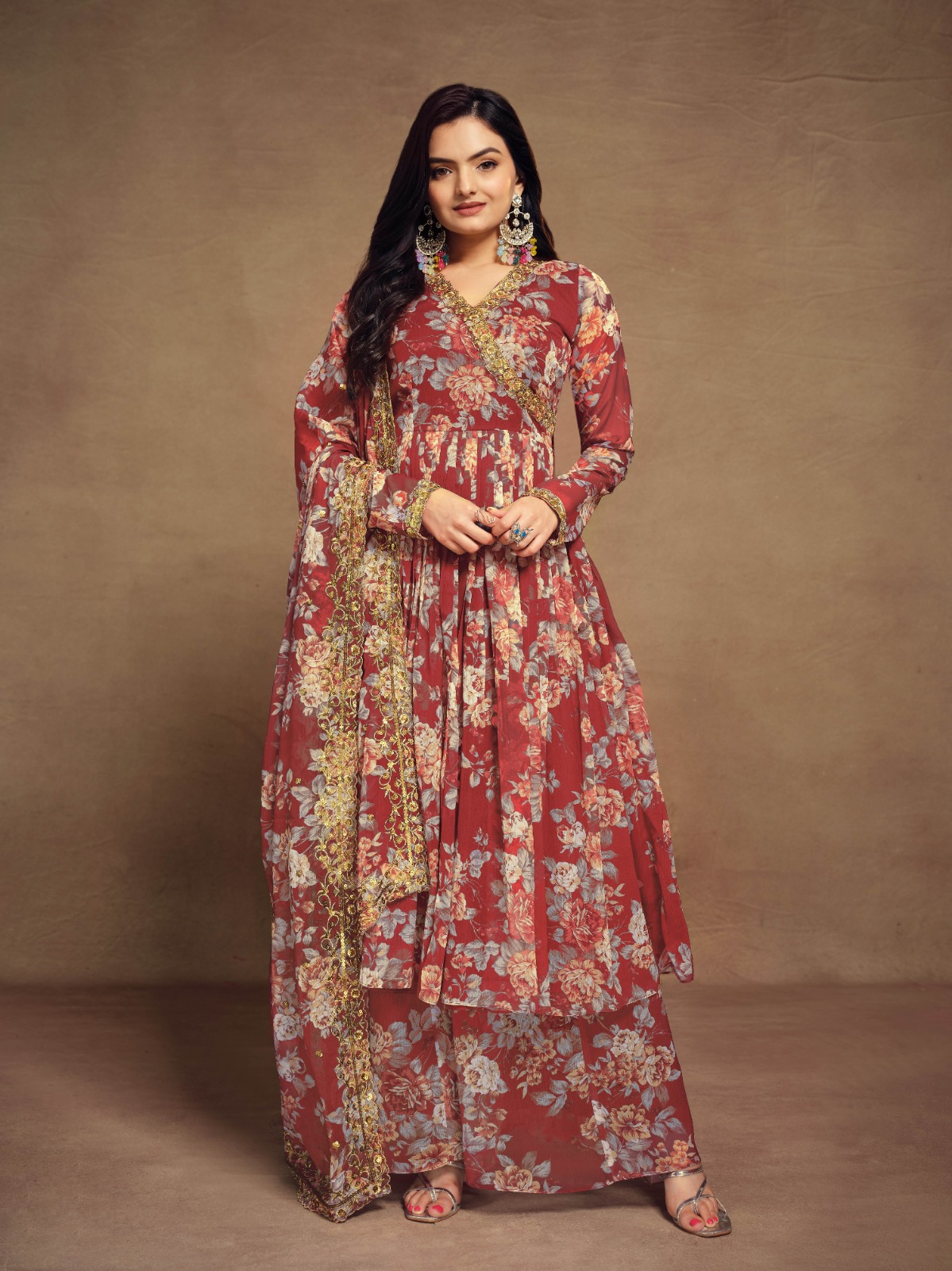
- Confirm the complete set. Identify the kameez, bottom and dupatta, then check which pieces carry embroidery. A photograph may show a styled accessory that's not part of the salwar suit.
- Inspect three high-risk areas. Zoom into the neckline, a sleeve border and the lowest hem or dupatta edge. These areas show edge control and whether the embroidery remains consistent across the garment.
- Compare texture with the fabric description. If the listing names Assam silk, viscose Chanderi or brocade, verify that the photographed surface appears compatible with that description. A glossy image alone doesn't prove silk.
- Read the measurements beside the image. Embroidery placement can affect how a neckline or border sits on different body sizes. Check garment length, sleeve length and bottom measurements before assuming the photographed proportions will be identical on you.
- Ask a precise question when evidence is missing. Request a close-up of the reverse, a daylight photograph or confirmation about whether beads and zari are hand-finished or machine-applied. Specific questions are more useful than asking whether the quality is good.
Photographs also help you compare styles across collections. Maharashtra Paithani Inspired Salwar Suits may suit a buyer looking for border-focused colour and motif language, while Kalamkari Print Salwar Suits may be preferable when printed detail should carry more of the visual interest. Comparing construction, not only colour, leads to a more informed purchase.
What are the clearest red flags in embroidery photographs?
The clearest red flags are loose threads, inconsistent motif scale, severe puckering, unexplained gaps, blurred close-ups and photographs that never show borders or the reverse. One minor irregularity doesn't automatically indicate poor quality, but several signs together deserve caution.
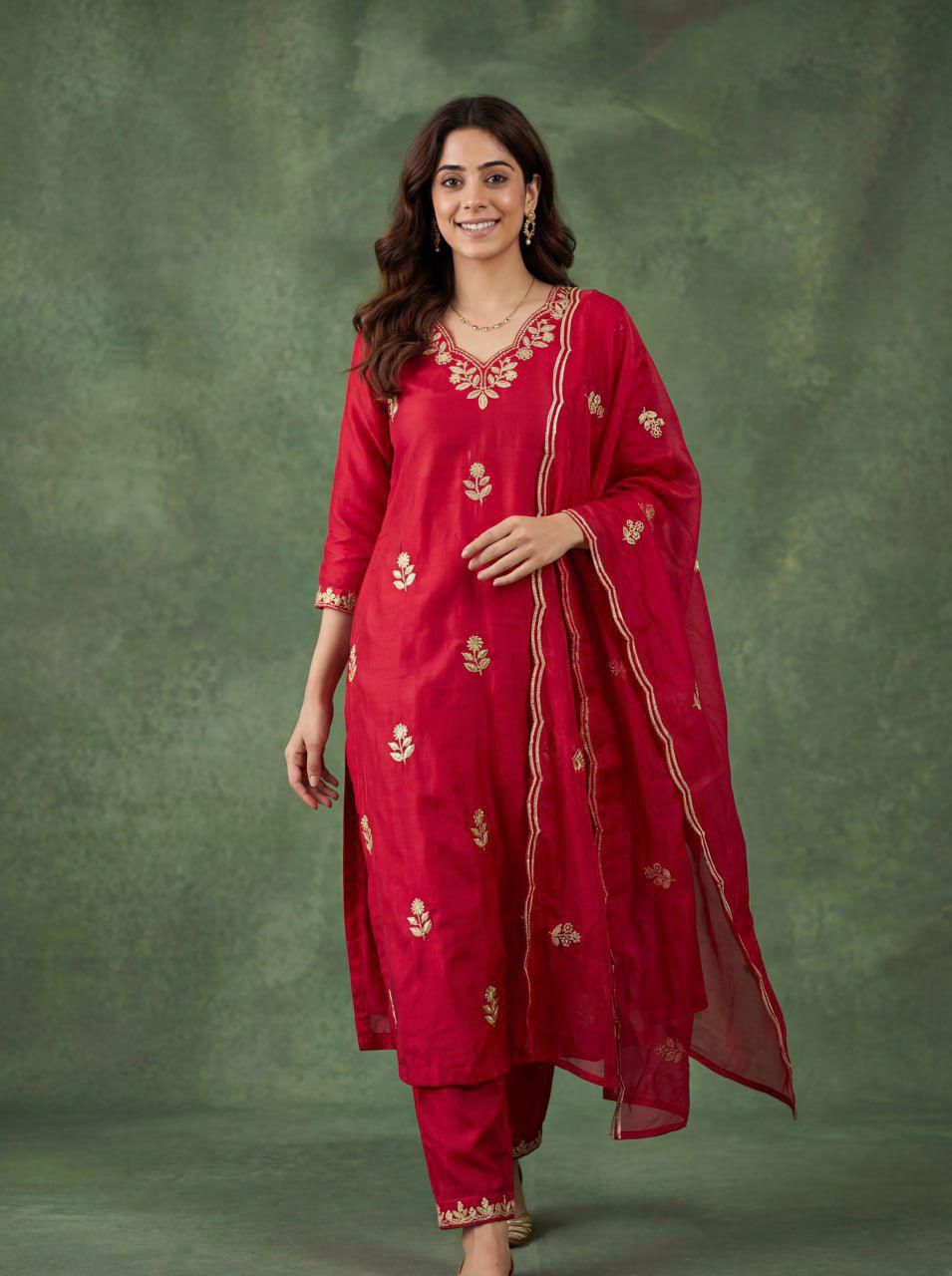
- Loose tails: Threads extending beyond a motif can snag and may indicate incomplete trimming.
- Uneven borders: A border that changes width or wanders away from the seam may look untidy when worn.
- Excessive shine: Overexposed images can disguise the actual density of zari or beadwork.
- Strategic cropping: If every image avoids the sleeve edge, hem or dupatta reverse, an important construction detail remains unverified.
- Heavy digital editing: Smoothed fabric texture and unnaturally sharp sparkle can make embroidery appear more substantial than it's.
A reliable listing doesn't need to hide every natural variation. Handmade-looking work may contain tiny differences in stitch direction, and these differences can add character. The practical distinction is whether the variation appears controlled and durable or careless and likely to worsen with ordinary wear.
How should embroidery quality influence your final choice?
Embroidery quality should influence your final choice according to wear frequency, occasion, fabric, comfort and care requirements rather than decoration alone. A well-made light threadwork suit may provide better long-term value than a heavily embellished garment that's difficult to maintain.
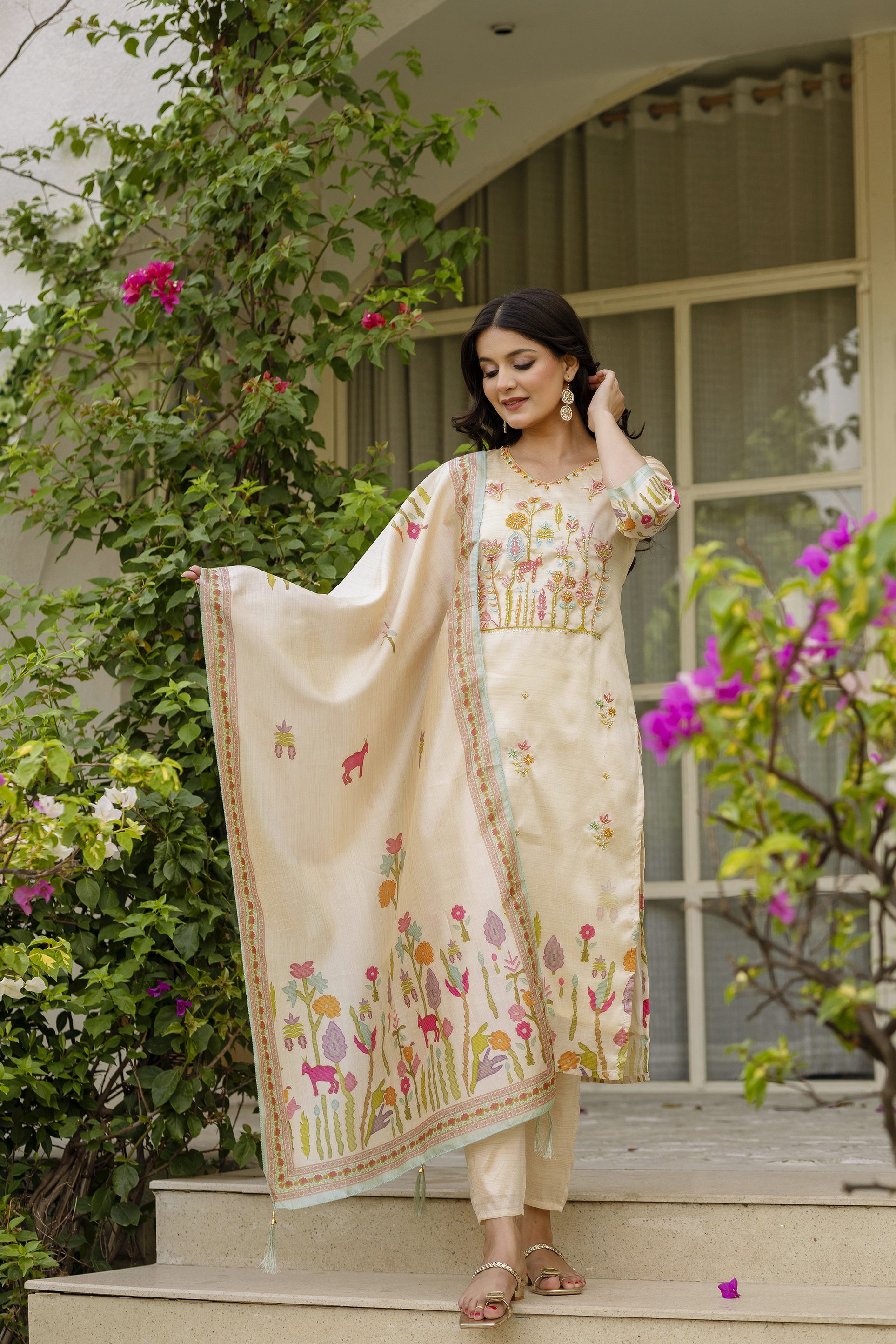
Use product photographs to create a short evidence checklist: the motif is clear, the stitches or attachments look secure, the fabric lies flat, the borders align and the embroidery suits the garment's purpose. Then compare that checklist with the care instructions. Beadwork and zari often require gentler handling than simple threadwork, and a delicate fabric may need dry cleaning or careful hand washing.
For instance, Cream Assam Silk Salwar Suit With Bead Embroidery may be considered for a dressier setting where surface sparkle is useful, while a threadwork Assam silk or Chanderi option may offer a quieter finish for repeated festive wear. The best purchase is the one whose visible construction, fabric behaviour and maintenance demands agree with your wardrobe needs.
Product photos can't answer every question, but they can reveal enough to make online buying more deliberate. Look beyond the colour thumbnail, name the material you're examining, and inspect the places where embroidery has to work hardest. That habit turns a vague promise of "designer" or "embroidered" detail into a practical assessment of craftsmanship.
Common Questions About Reading Salwar Suit Embroidery Photos
How can I check salwar suit embroidery quality online?
Check close-up photographs for even stitch tension, clean motif edges, secure bead attachments and consistent border spacing. Review the full front, sleeve, hem and reverse views instead of judging the garment from one styled image.
Does heavy embroidery mean a salwar suit is better quality?
Heavy embroidery does not automatically mean better quality. Secure finishing, balanced placement, suitable fabric weight and durable attachments matter more than the amount of decoration.
How can I tell whether zari work is genuine from a product photo?
A product photo can show whether zari follows a clear, consistent design and whether metallic thread has gaps or tangles, but a photograph cannot verify fibre composition with certainty. Read the material description and ask the seller for clarification if the zari content is important to you.
What should the back of embroidered salwar suit work look like?
The reverse should not have long unsecured threads, bulky knot clusters or severe puckering. Some visible thread and backing can be normal, especially in dense machine embroidery, but the reverse should appear controlled and stable.
Is threadwork better than beadwork for regular wear?
Threadwork is usually easier to wear and maintain regularly because it adds less weight and is less likely to catch than raised beads. Beadwork can be suitable for festive use when the attachments are secure and the care instructions are practical.
Why do embroidered salwar suits look different in product photos and person?
Lighting, camera processing, fabric drape and model styling can change how embroidery appears in photographs. Compare several images, look for a daylight or close-up view, and use the written fabric and measurement details before ordering.


