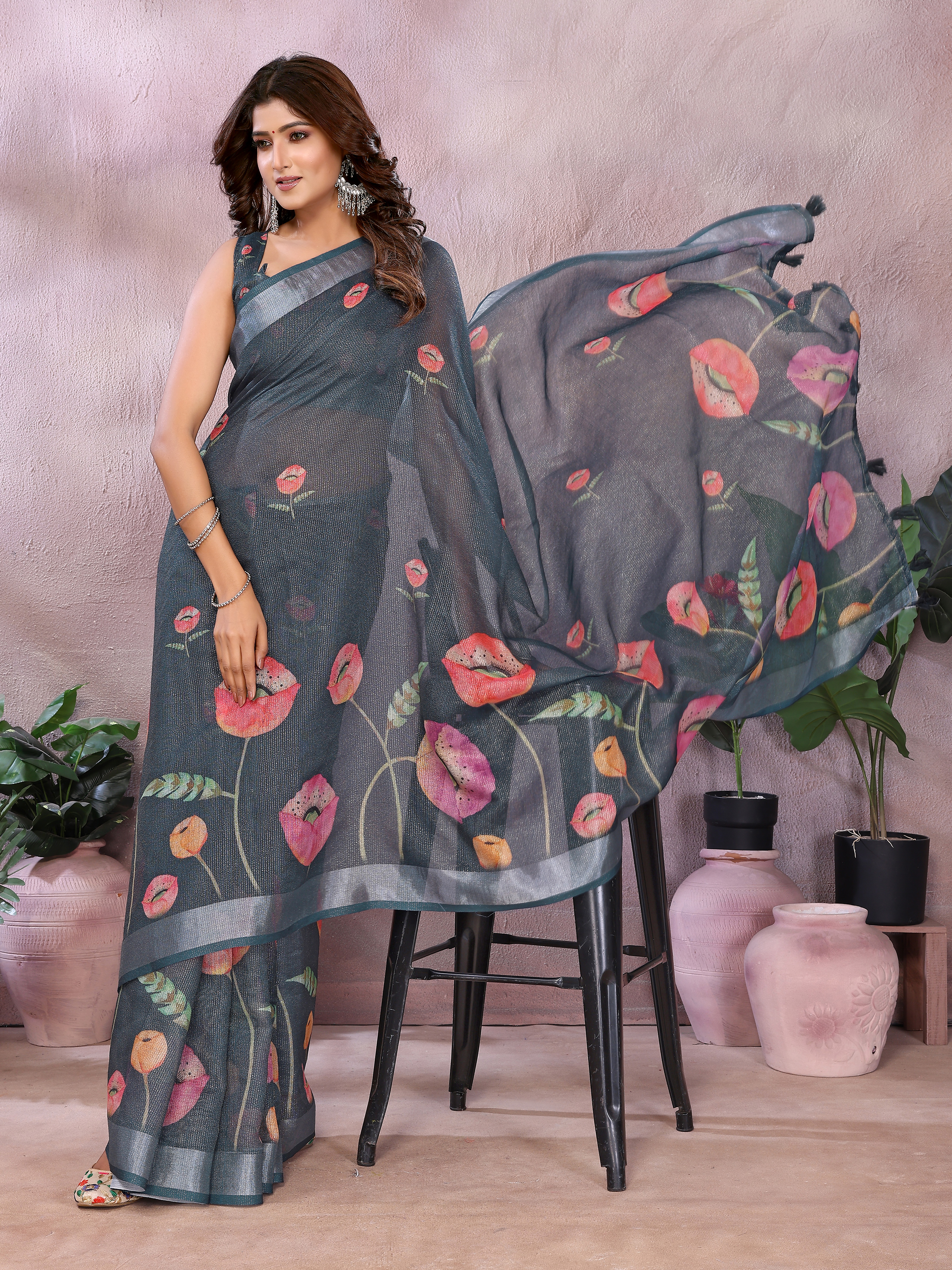
A saree kept in a cupboard for years can develop dull brown, grey or nearly black zari even when the fabric itself looks perfectly healthy. What Makes Zari Turn Dark on Sarees Stored for Years has a practical answer: metallic zari reacts gradually with moisture, oxygen, pollutants, skin residue and storage materials. The change is usually tarnish or surface discolouration, although severe abrasion or chemical damage can also remove the original finish.
Understanding the cause matters because rubbing, lemon juice, toothpaste and liquid metal polish can permanently damage silk, cotton or the zari thread. A careful owner can often slow further darkening and improve the appearance without treating the saree like household metalware.
What Makes Zari Turn Dark on Sarees Stored for Years?
Zari turns dark mainly because its metallic surface oxidises or reacts with sulphur and other pollutants in a humid, enclosed environment. Traditional zari may contain silver or gold over a base metal, while contemporary zari often uses metallic-coated polyester, copper-coloured threads or other imitation constructions. Each material darkens differently.
Silver-containing zari can form a dark sulphide layer when exposed to sulphur compounds in air, paper, rubber, wool, foam or polluted surroundings. Copper and copper-alloy base metals can oxidise into brown, greenish or black surface compounds. Gold plating itself is relatively stable, but a thin gold-coloured coating may reveal a darker base metal when friction, age or chemical exposure wears it away.
Moisture accelerates nearly every form of tarnishing. A saree stored after a humid monsoon, folded while slightly damp or placed in a cupboard against an outside wall may retain enough moisture to encourage chemical reactions. Heat doesn't need to be extreme; repeated warm-and-damp cycles inside a closed wardrobe are sufficient to age metallic thread over time.
Body oils, perfume, hair products, perspiration and food residue add another source of contamination. A saree worn at a wedding may look clean after an evening, but salt from sweat and acidic residue from cosmetics can remain along the border, pallu or blouse-fold area. Stored zari can therefore darken faster in places that had more contact with skin or products.
Which Storage Conditions Speed Up Zari Tarnishing?
High humidity, trapped air, direct sunlight, unsuitable wrapping and tight compression speed up zari tarnishing most noticeably.

Humidity and trapped moisture
Relative humidity above approximately 60 percent creates a more active environment for tarnish, mould and fabric deterioration. Indian monsoon conditions can make cupboards particularly risky when ventilation is poor. A saree should be completely dry before folding, but drying doesn't mean placing silk or zari in harsh midday sun.
Acidic paper and plastic contact
Newspaper is unsuitable for saree storage because printing ink, acids and dirt can transfer to fabric and metallic thread. Ordinary cardboard may also contain acidic compounds. Airtight plastic bags trap moisture and may cause condensation when temperatures fluctuate, even though plastic can appear to protect the saree from dust.
Use clean, unprinted, acid-free tissue or a breathable cotton muslin cover instead. A breathable cover reduces dust while allowing small amounts of moisture to escape. A storage box should be clean, dry and free from strong odours, adhesive residue and wood dust.
Friction and folding pressure
Repeated folding along the same zari border can crack or abrade a surface coating. Heavy stacks press metallic threads against one another, while rough wooden shelves and exposed metal edges can scrape the weave. Darkening caused by actual coating loss can't be reversed by cleaning because the bright layer is no longer present.
Refolding a valuable saree every few months changes the pressure points. Rolling a heavily embellished pallu around a smooth, padded core can also reduce hard creases, although the fold or roll should be loose enough to avoid stressing the fabric.
How Can You Tell Tarnish from Dirt or Permanent Damage?
Tarnish usually appears as a fairly even dulling of exposed metallic thread, while dirt often looks patchy and sits in folds, along handling areas or near stains. Permanent coating loss appears as broken, rubbed or uneven zari where a pale, coppery, grey or fabric-coloured base shows through.
Inspect the saree in indirect daylight before attempting any cleaning. Compare the zari on a frequently exposed border with zari protected inside a fold. If the protected section remains bright while the exposed section is dark, atmospheric tarnish is plausible. If the threads are fuzzy, snapped or missing, mechanical wear is more likely.
Smell is also useful but not conclusive. A musty odour suggests moisture exposure and possible mildew risk, whereas a sharp chemical smell can indicate contact with cleaning products, perfume or plastic packaging. Visible green deposits, powdery residue or spreading marks justify professional assessment, particularly on an heirloom Kanjeevaram or Banarasi silk saree.
Always test a hidden two-centimetre area before using even a mild dry method. A discreet section inside the hem or under the pallu can reveal whether the metallic thread sheds colour, catches on fabric or reacts to a cleaning material.
Can Dark Zari Be Cleaned Safely at Home?
Light surface dust can be removed at home, but chemical tarnish and fragile metallic work are safest with a textile conservator or experienced saree-care professional.
Begin by laying the saree flat on a clean bed or table and supporting the fabric fully. Use a very soft, dry makeup brush or a low-suction hand vacuum held above a fine mesh barrier to lift loose dust. Never press a vacuum nozzle directly onto zari. Do not brush back and forth across raised embroidery, loose threads or antique zari.
Avoid water on metallic areas unless a professional has confirmed that the specific construction can tolerate it. Water may stain silk, spread a dye, loosen adhesive, or leave the metallic thread duller after drying. Avoid lemon, vinegar, baking soda, toothpaste, alcohol, bleach, silver dip, metal polish and laundry detergent. Household metal cleaners are formulated for solid objects, not flexible textile surfaces.
don't scrub a dark border to make it shine. Scrubbing can remove lacquer, gold-coloured plating or loose metallic wrapping and can create a visibly uneven strip. Pressing with an iron is equally risky because heat can flatten texture, transfer colour and set oily marks into silk.
Professional treatment is advisable for an heirloom, a saree with real silver zari, extensive spotting, mould, a bleeding dye or a high-value Banarasi silk. Ask the specialist to identify the fibre and zari construction before treatment. A conservator may recommend surface cleaning, controlled humidification or stabilisation rather than attempting to restore every darkened thread.
How Should Sarees with Zari Be Stored for Several Years?
Sarees with zari should be stored clean, fully dry, loosely folded in acid-free tissue and kept in a cool, dark, ventilated cupboard.

- Clean before long storage. Remove visible food, makeup and perspiration promptly through appropriate professional dry cleaning or textile care. Stains become harder to remove and may attract insects during prolonged storage.
- Dry completely. Allow the saree to air in shade for several hours after wear or cleaning. Do not pack a saree that feels cool, clammy or damp at the folds.
- Wrap the zari. Place acid-free tissue between repeated folds, especially along a heavy border and embellished pallu. Tissue prevents metallic work from rubbing against itself.
- Choose breathable protection. Use a clean cotton muslin cover or an archival textile box. Avoid newspaper, unwashed fabric, PVC covers and airtight plastic for long-term storage.
- Control the cupboard. Keep sarees away from bathroom walls, kitchen steam, direct sunlight and damp floors. A small hygrometer can show whether a cupboard regularly exceeds about 60 percent relative humidity.
- Inspect periodically. Open the bundle every three to six months in dry weather, check for odour or spots, and refold along a different line. Rewrap the saree only after it has aired fully.
Silica-gel sachets can help in a storage box when they're fresh, contained and kept away from direct contact with fabric. Desiccants are not a substitute for ventilation, and saturated sachets should be replaced according to the manufacturer's instructions. Naphthalene balls should not touch sarees because their vapour and residue can create an unpleasant odour and chemical exposure.
Do Different Saree Fabrics Need Different Zari Care?
Different saree fabrics need different handling because silk, cotton, tissue and blends vary in strength, dye stability and response to moisture.
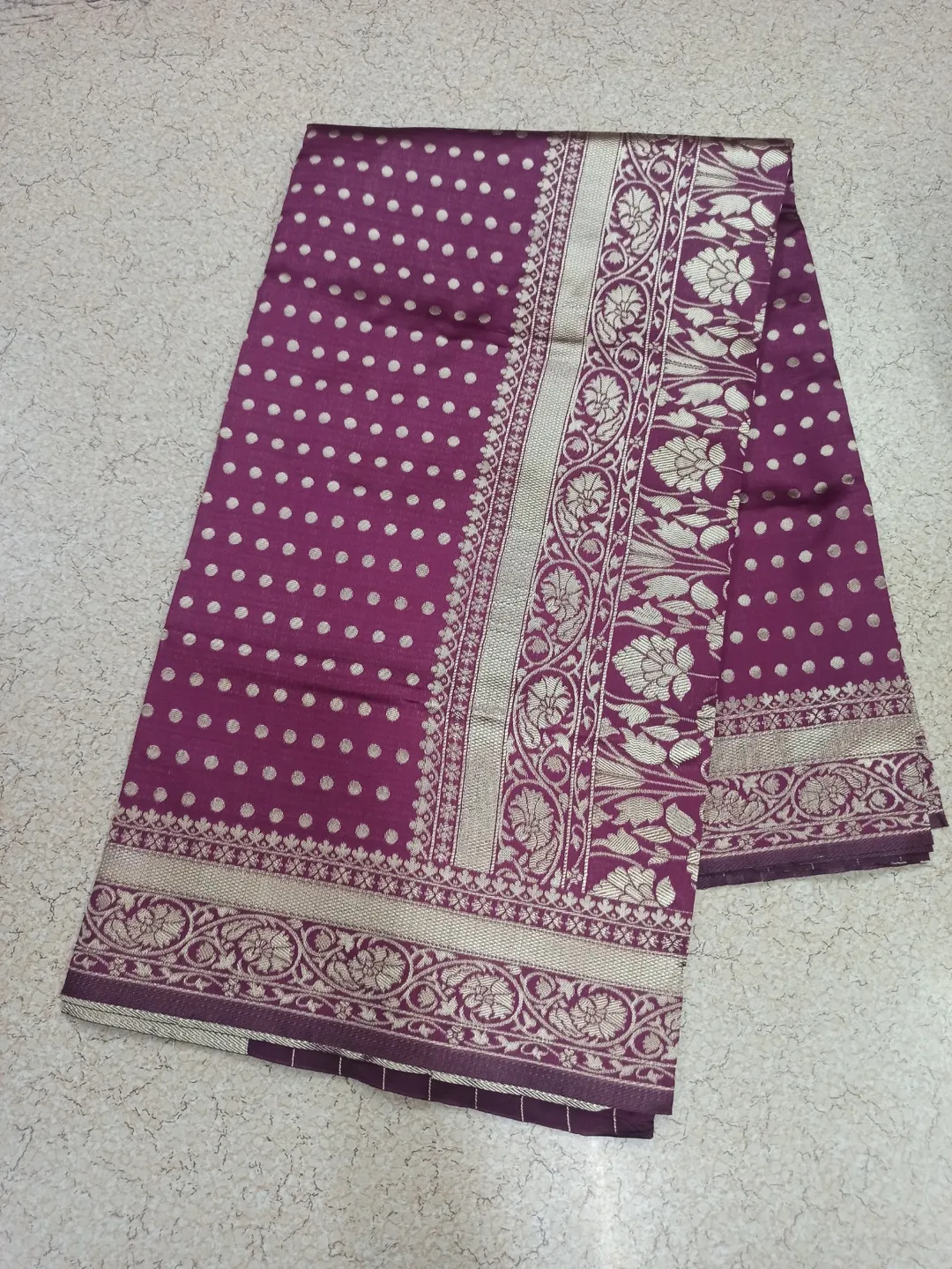
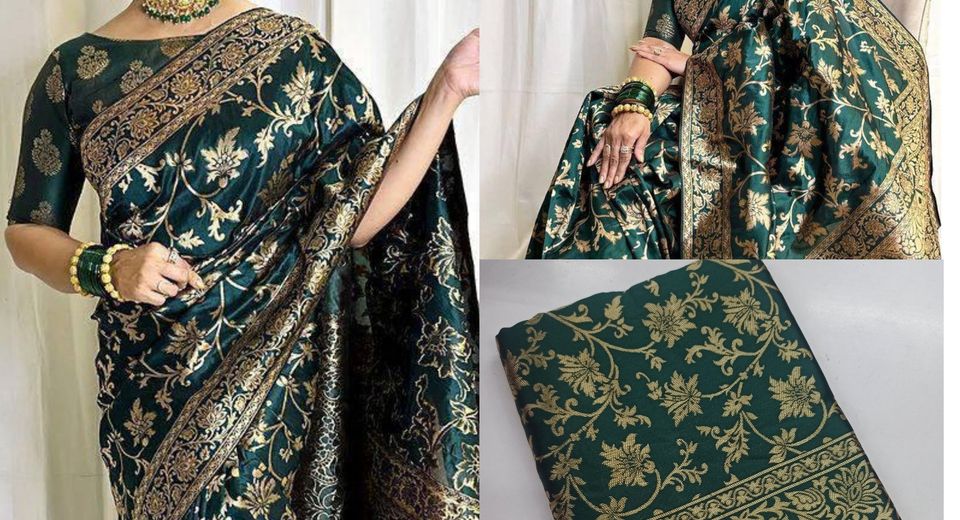
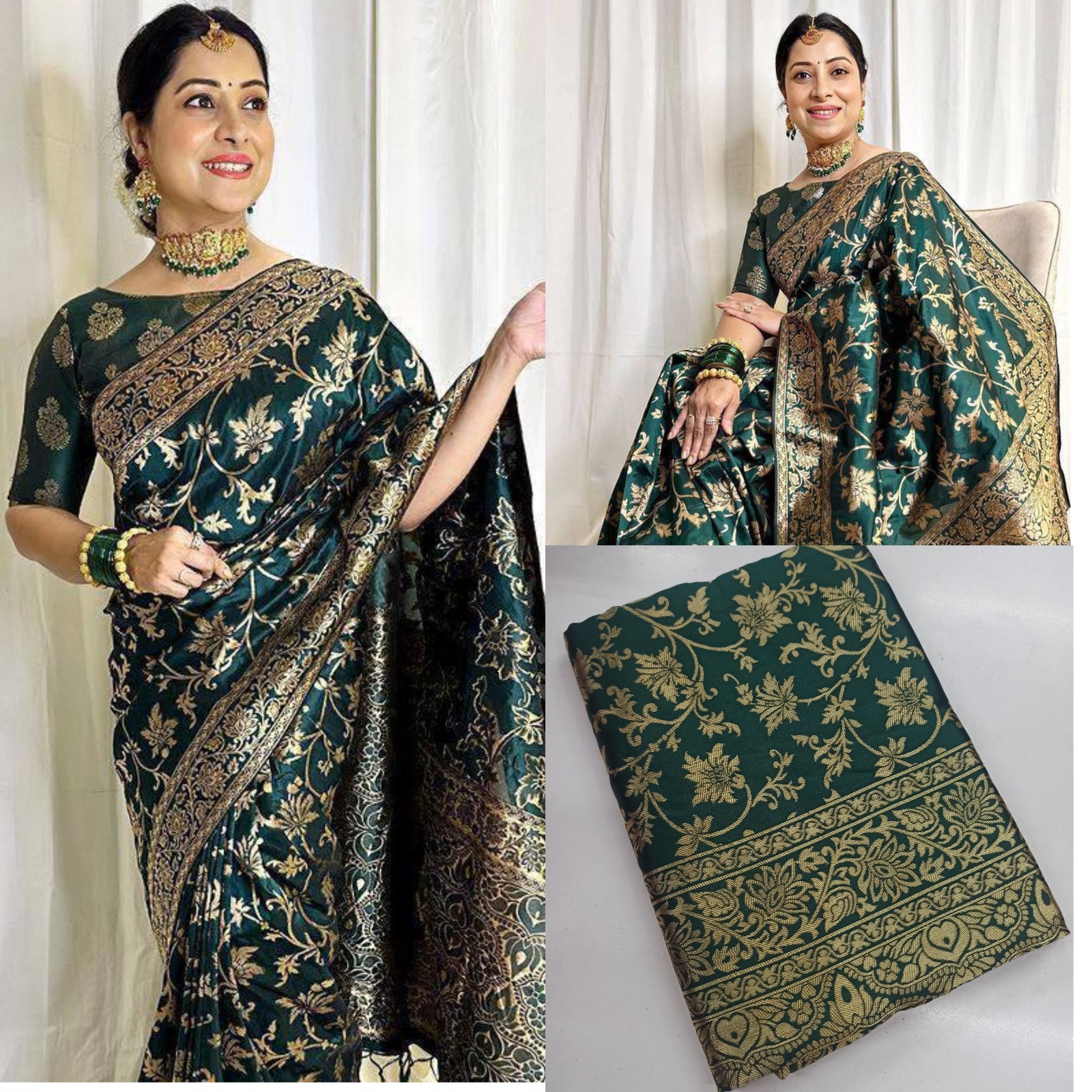
Banarasi silk has a smooth, dense structure but can develop permanent creases if folded tightly for years. A saree such as Dark Green Banarasi Lichi Silk Saree with Zari Work benefits from tissue between the border folds and storage away from compressed stacks. Royal Dark Green Banarasi Soft Silk Saree with Zari and Designer Wine Banarasi Saree with Heritage Zari Work should receive the same cautious, dry-storage approach rather than metal-polish treatment.
Silk zari should be protected from perfume and perspiration because silk fibres and metallic thread can both show marks. Royal Blue Silk Saree with Exquisite Zari Work illustrates why colour and metallic work should be assessed separately: a cleaning method that seems harmless for the zari may affect the blue dye.
Cotton sarees tolerate handling differently but are not immune to tarnish. Maroon Cotton Saree with Zari Work for Wedding should be stored completely dry because cotton can hold moisture in its folds longer than a smooth silk surface. Pastel Floral Tissue Handloom Cotton Saree with Zari Weaves requires extra care around its lighter ground, where transferred dust or residue can be more visible.
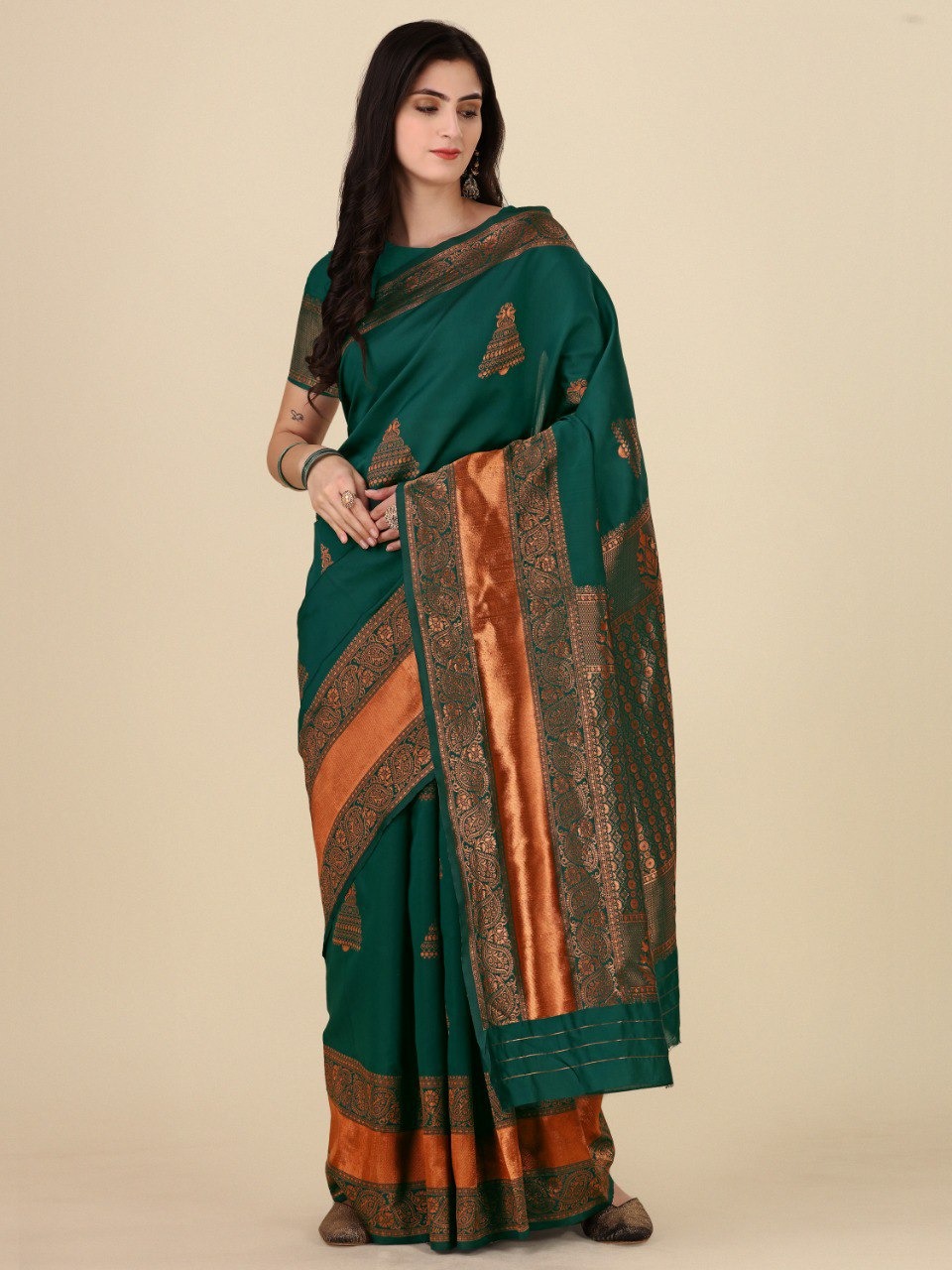
Maslin silk and soft silk can have delicate surfaces that snag against rough tissue or exposed zari. Dark Green Maslin Silk Zari Woven Saree with Rich Pallu should be folded with smooth acid-free tissue and kept under lighter sarees rather than beneath heavy embroidered garments. Maroon Banarasi Soft Silk Saree with Zari Design should not be packed so tightly that the zari border becomes a permanent pressure line.
Can Darkened Zari Be Prevented on a New Saree?
Darkened zari can often be delayed by removing residue after wear, airing the saree and maintaining stable dry storage from the first day.
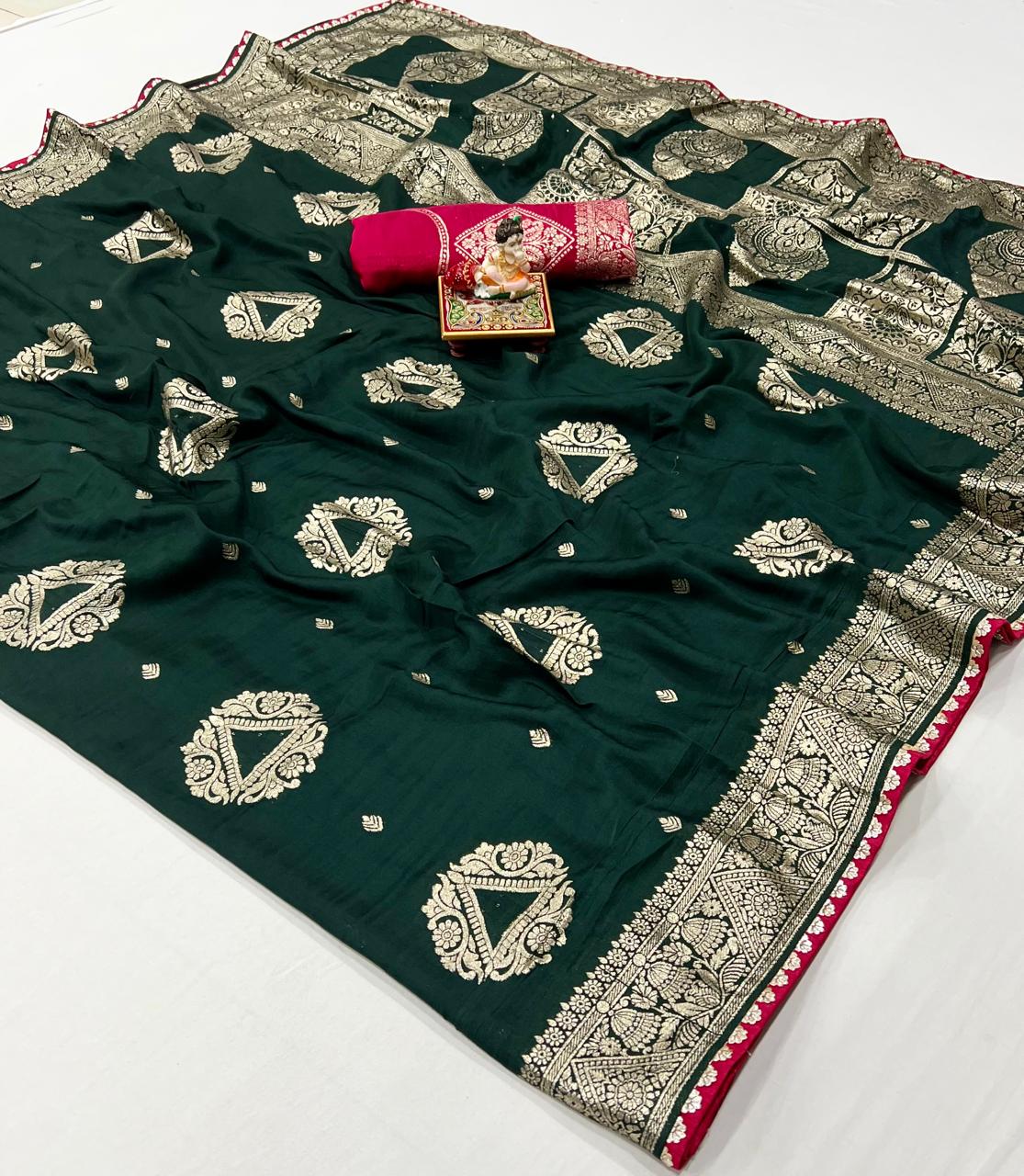
After wearing a saree, hang it in shade for a few hours before folding. Do not spray perfume directly on the pallu or border; apply fragrance to skin and allow it to dry before dressing. Keep food, oils and wet hands away from metallic work during draping and pinning.
Budget doesn't determine care requirements. A saree purchased through Sarees from Rs 1000 to Rs 1500 can still contain metallic work that reacts to humidity, while a discounted saree from Sarees Under 20% Off or Sarees Under 10% Off needs the same drying and wrapping routine as a more expensive heirloom. Sale pricing changes the purchase price, not the chemistry of zari.
Store sarees from Sarees Flat 60% Off or Sarees Flat 50% Off only after checking that packaging has not trapped moisture during transit. Remove courier plastic, inspect the folds, let the garment air in shade and replace temporary packaging with breathable storage material.
Good storage can't prevent every change. Older zari may naturally mellow, and some antique finishes were never intended to remain mirror-bright. The realistic goal is to prevent rapid, uneven darkening, preserve the surrounding fabric and avoid cleaning methods that cause more damage than tarnish itself.
When Should a Saree Be Sent to a Specialist?
A saree should be sent to a specialist when darkening is spreading, the metallic thread is shedding, mould is visible, the fabric smells musty or the saree has significant sentimental or financial value.

Professional advice is especially important when a saree has real silver zari, woven metallic motifs, old dyes or repairs. Ask for a written assessment of the fibre, likely cause, proposed treatment and risks. A reputable specialist should explain that complete brightness may not be possible and should avoid promising a perfect restoration.
Photograph the saree before handing it over, including the full border, pallu, blouse piece and close-ups of darkened areas. Record existing stains, loose threads and missing zari. Documentation helps distinguish an old condition from damage caused during later handling.
The safest zari-care rule is simple: remove moisture and residue early, but never attack a dark metallic thread with an abrasive or acidic household remedy.
Practical Questions About Dark Zari and Long-Term Saree Storage
Why does zari turn black on an old saree?
Zari can turn black when silver, copper or another base metal reacts with sulphur, oxygen, humidity and pollutants during storage. Sweat, perfume and residue left on the saree can accelerate the reaction in specific areas.
Can toothpaste remove dark zari from a saree?
Toothpaste should not be used on saree zari because its abrasives and additives can scratch or strip the metallic coating. A soft dry brush may remove loose dust, while established tarnish should be assessed by a textile-care professional.
How should I store a silk saree with zari?
Store a silk saree with zari completely dry, loosely folded with acid-free tissue between folds and covered in breathable cotton muslin. Keep it in a cool, dark cupboard away from newspaper, damp walls, direct sunlight and airtight plastic.
Does humidity make Banarasi saree zari darker?
Humidity can make Banarasi saree zari darker because moisture accelerates reactions between metallic thread, oxygen and pollutants. Keeping storage near or below roughly 60 percent relative humidity, with ventilation and periodic inspection, reduces the risk.
Can a professional restore the original shine of dark zari?
A professional may reduce surface tarnish, but complete restoration is not always possible. If plating or metallic wrapping has worn away, cleaning cannot recreate the missing bright layer, and aggressive polishing may damage the saree.
How often should stored sarees with zari be checked?
Stored sarees with zari should be checked every three to six months, particularly during and after monsoon weather. Air the saree in shade, look for dampness or mould, and refold it along a different line before returning it to storage.