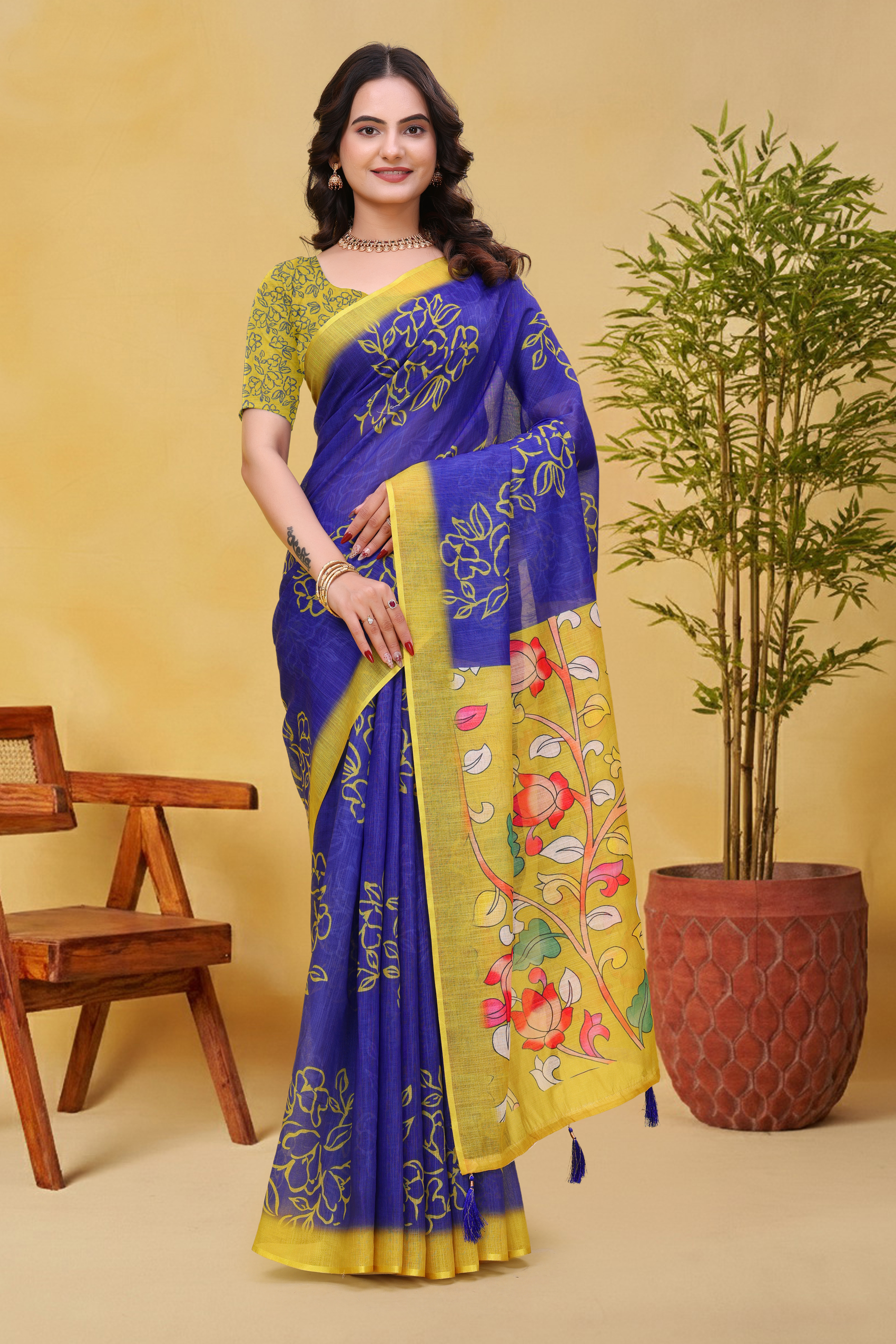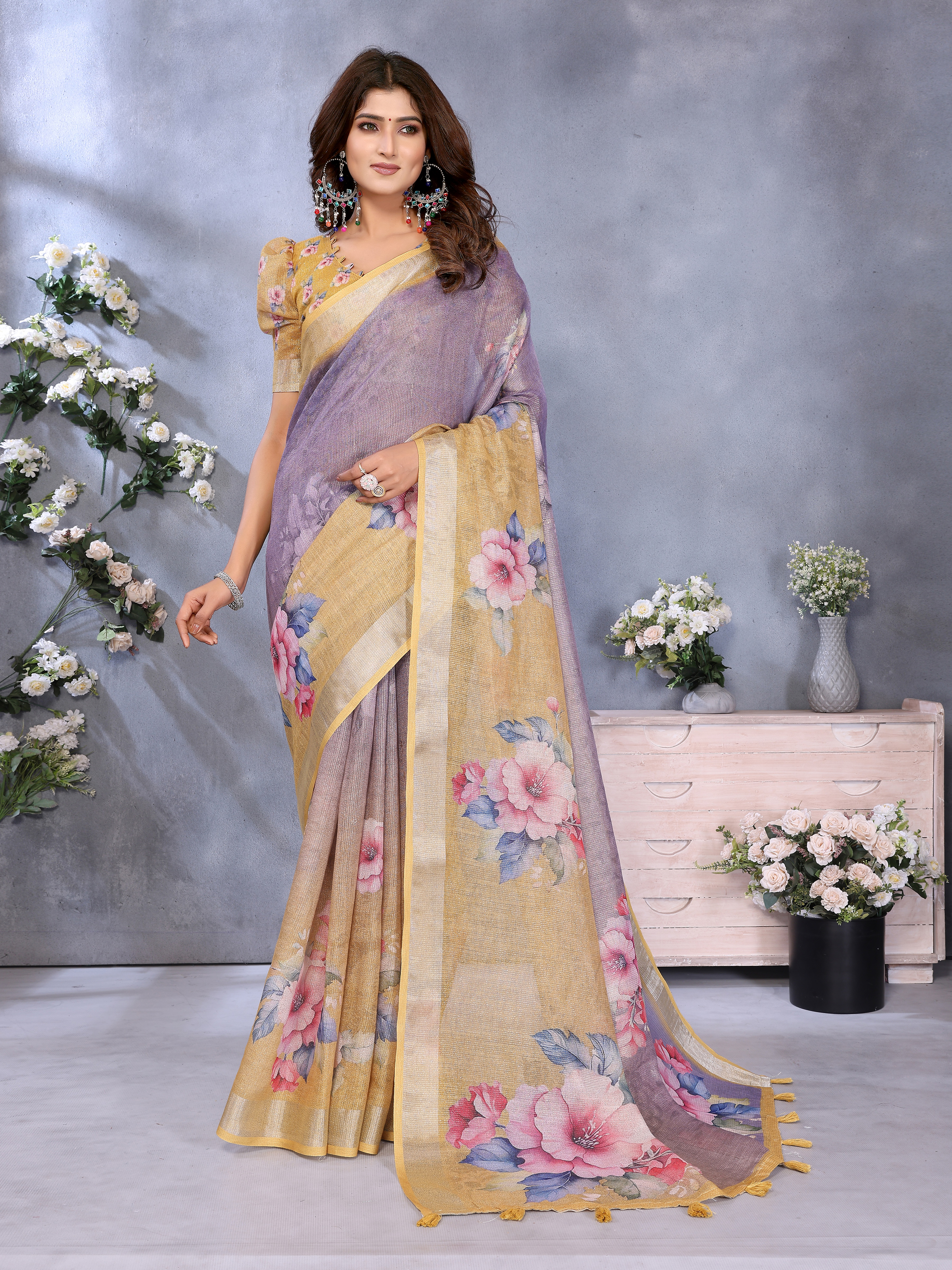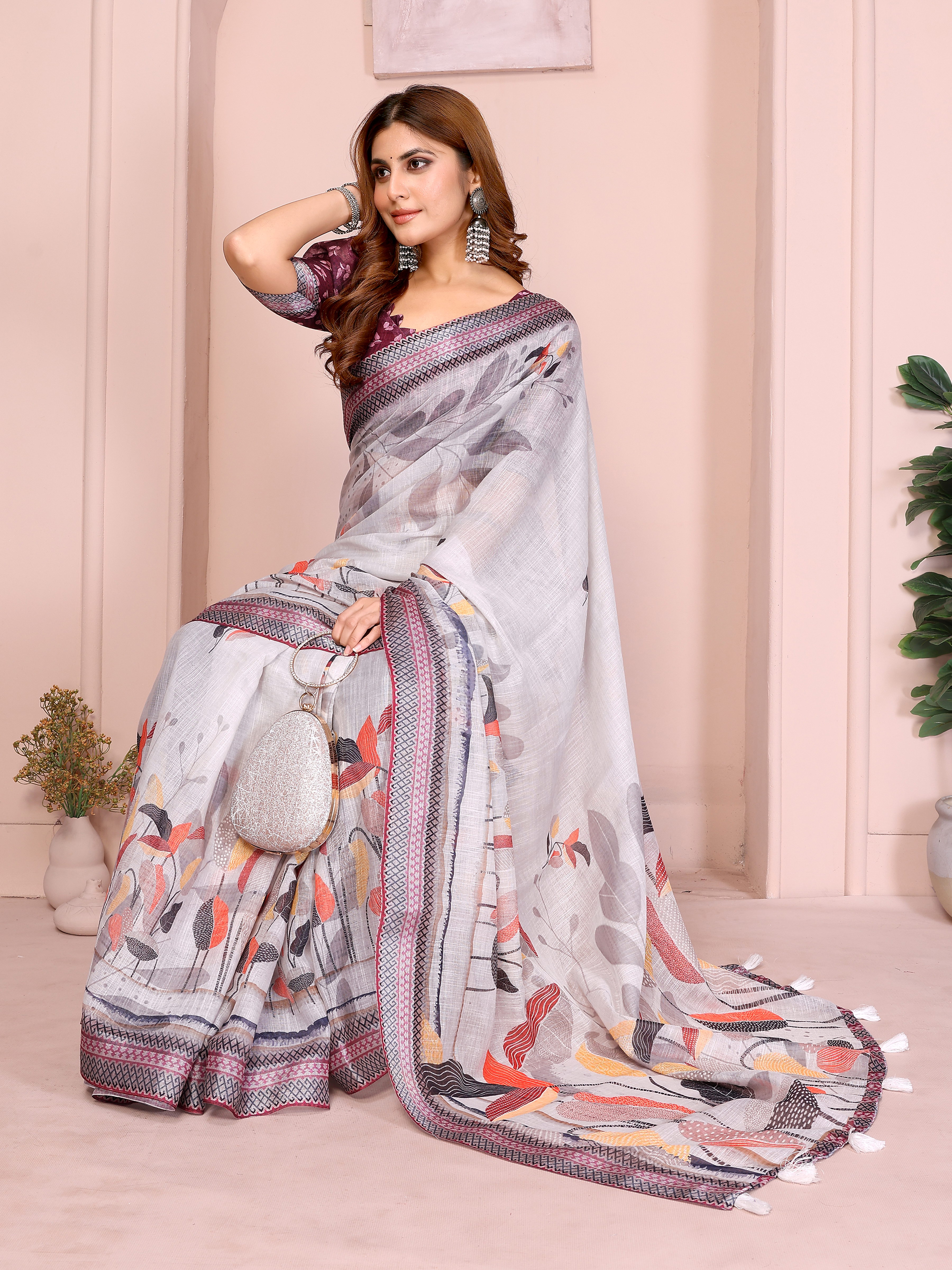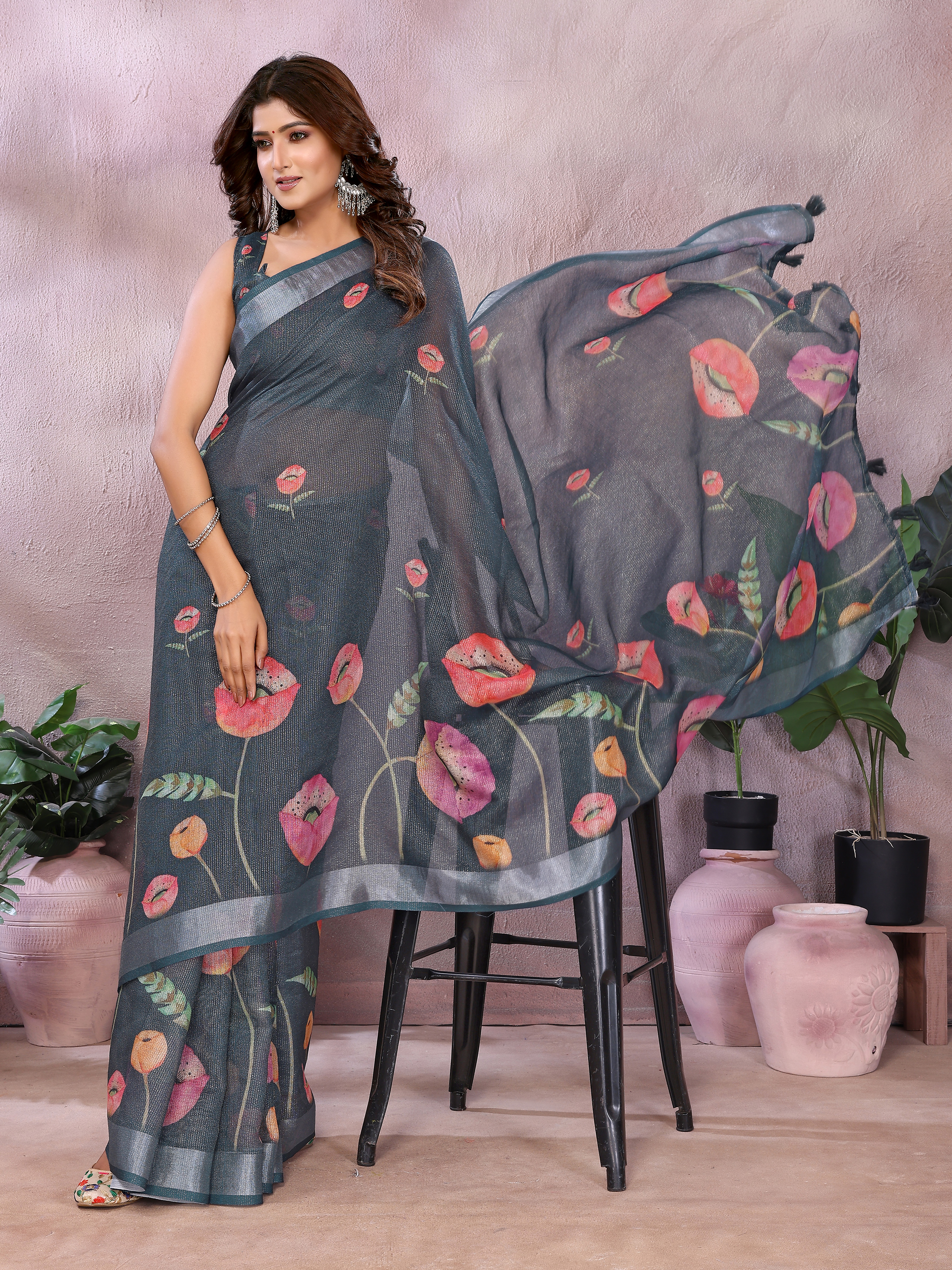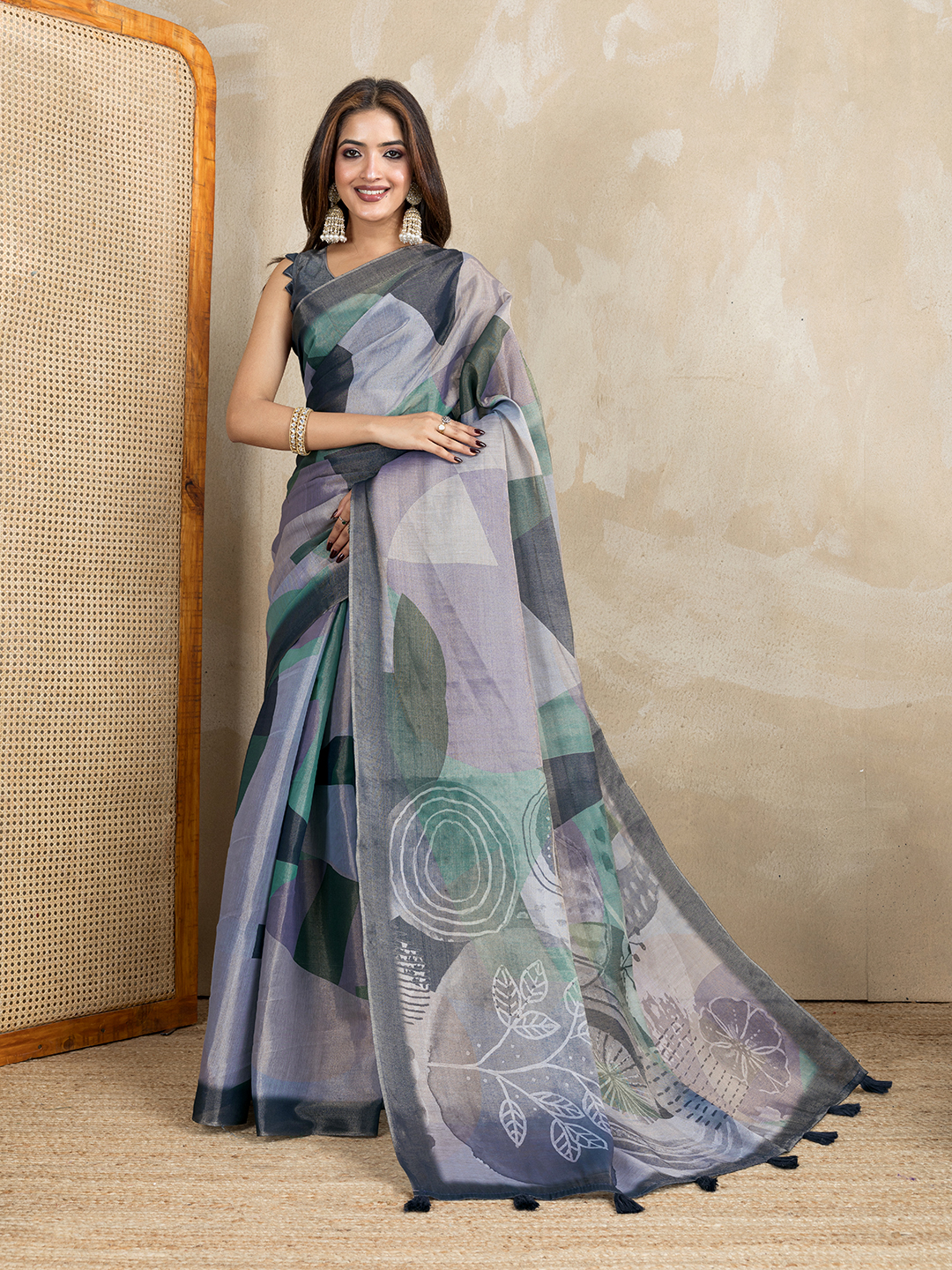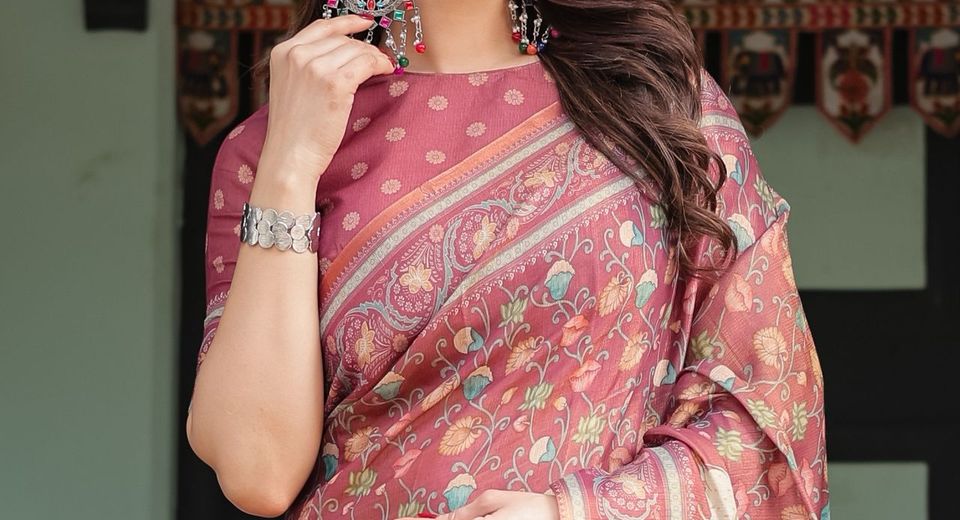
What makes a saree pallu feel heavier than the rest of the drape usually comes down to concentrated material rather than the total weight of the saree. A pallu may contain denser weaving, zari, a jacquard border, embroidery, mirrors, extra lining or several folded layers, while the body remains comparatively plain. Understanding that difference helps you choose a saree that falls well, stays secure on the shoulder and remains comfortable for several hours.
The pallu is the section that travels from the waist, across the torso and over the shoulder. Because the pallu is visible and decorative, saree makers often place the richest design, firmer borders and most complex motifs there. The result is visible balance, but not always equal weight across the six or nine yards. A light cotton body with a richly woven pallu can therefore feel more demanding to pin and take than a uniformly woven silk saree.
What Makes a Saree Pallu Feel Heavier Than the Rest of the Drape?
A saree pallu feels heavier when its threads, embellishments or folded layers create greater mass in one concentrated section. A dense weave, metallic zari, wide border, jacquard construction and attached decorative work can each increase the pallu's pull on the shoulder.
Weight isn't determined by fabric name alone. Two sarees described as silk, cotton or georgette can behave very differently because yarn thickness, weave density and finishing vary. A lightweight body paired with a structured pallu creates a noticeable transition when the saree is pleated and placed over the shoulder.
Length also changes perception. The pallu often hangs in multiple layers after pleating, while the body is spread across the waist in a single layer. A 90-centimetre pallu folded into five or six pleats concentrates its material into a narrow band. The narrow band presses on the shoulder more strongly than the same fabric spread across a wider area.
Does a decorative pallu always mean an uncomfortable saree?
A decorative pallu doesn't always create discomfort because support, fabric flexibility and draping method influence how the weight is distributed. A soft pallu can sit securely with one shoulder pin, while a stiff pallu may pull even when it's not exceptionally heavy.
Comfort depends on the relationship between the pallu and the saree body. A fluid body such as georgette may allow the pallu to move freely, but a very embellished edge can drag against the blouse. A handloom cotton saree may have more overall substance yet feel easier to manage because the weave distributes weight gradually.
How Weave Density Changes Pallu Weight
Weave density increases pallu weight by placing more yarn into the same area. A pallu with compact warp and weft threads contains more material per square centimetre than an airy, loosely woven pallu.
Jacquard weaving can make a pallu feel firmer because decorative motifs are formed during construction rather than printed on top. The additional pattern structure can create a thicker, less flexible section. The Red Yellow Soft Lichi Silk Saree with Rich Pallu & Jacquard Border illustrates why a rich pallu may behave differently from a softer plain body: jacquard patterning and a defined border give the edge more body.
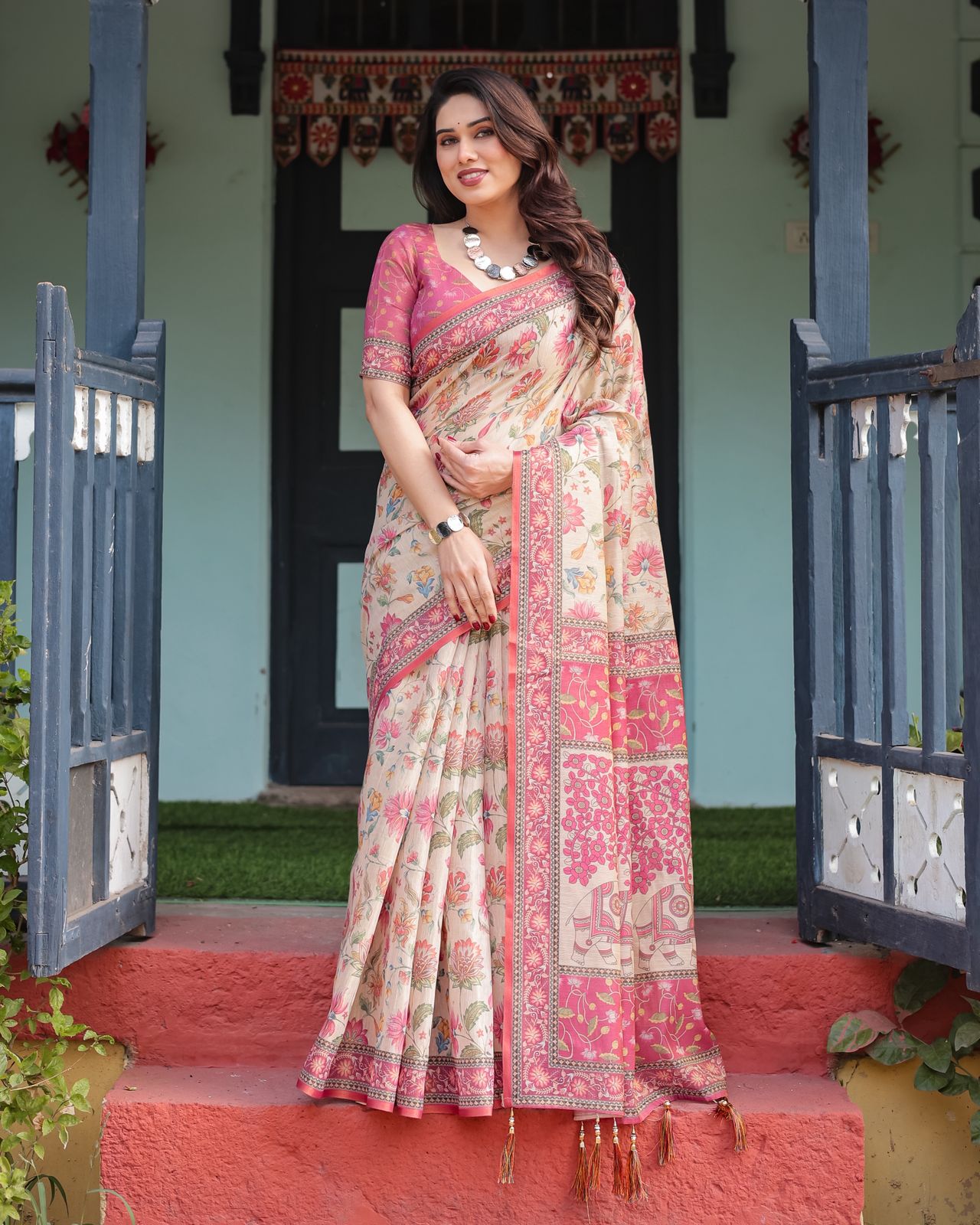
Handloom weaving can also produce a distinct pallu feel. Handloom sarees may have small variations in yarn tension, texture and density that affect how the pallu settles. The Ivory Cream Floral Handloom Saree with Heritage Pallu and Dusty Rose Floral Handloom Saree with Heritage Pallu both demonstrate the design logic of reserving a more prominent heritage panel for the visible end of the saree.
Banarasi silk is commonly associated with a structured, ornamented pallu because zari motifs are woven into the textile. Kanjeevaram sarees similarly often have substantial contrast borders and pallus. Chanderi can feel comparatively light, although a zari-rich Chanderi pallu may still feel firmer than its airy body. These examples show why fibre, weave and ornament must be considered together.
How Zari, Borders and Embellishment Add Concentrated Weight
Zari, wide borders and surface embellishment add concentrated weight because decorative material is placed on a smaller section instead of being distributed across the full saree. Metallic threads, mirror pieces, sequins, beads and embroidery can also reduce flexibility.
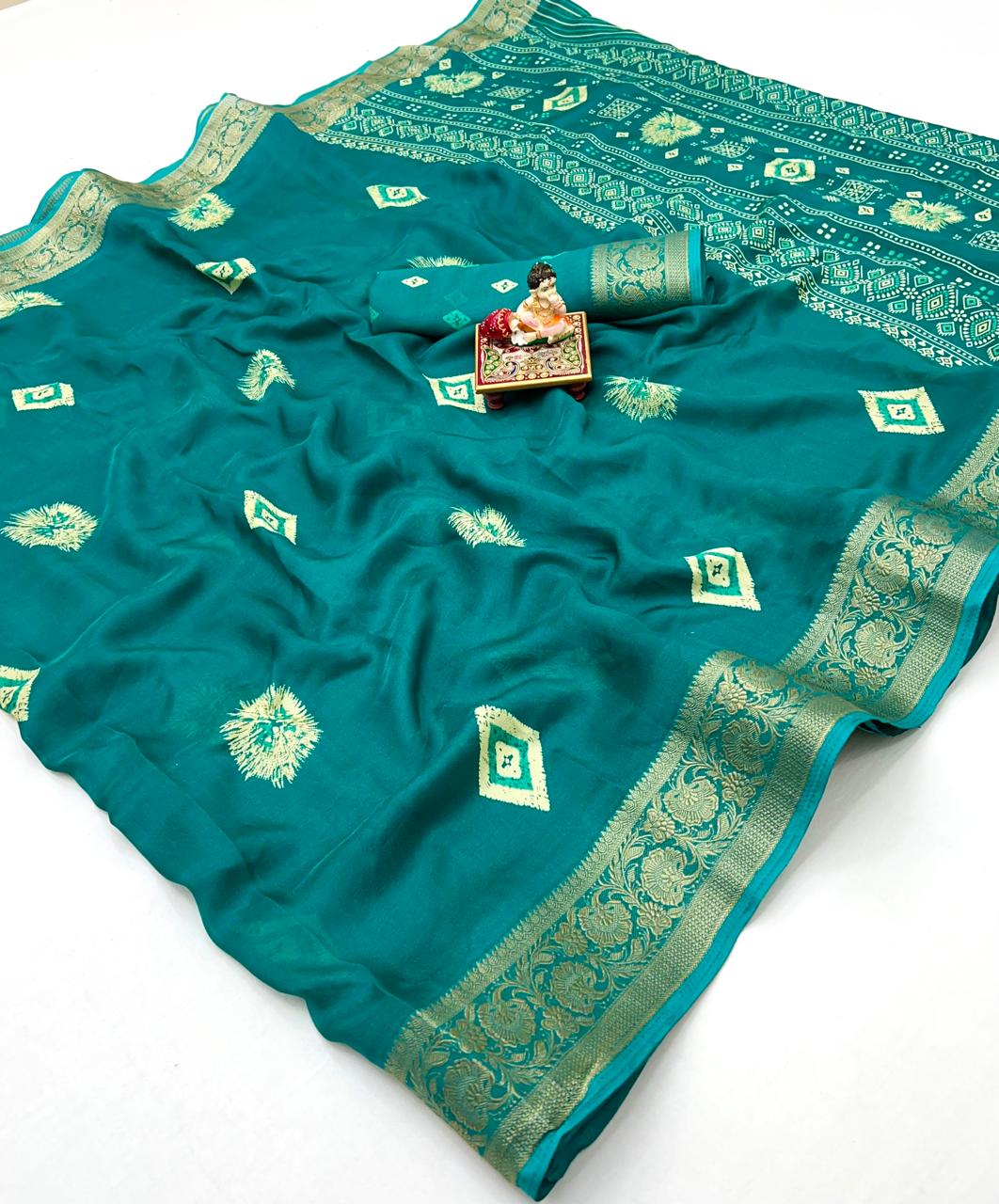
Zari may be woven through the pallu or added as a visible pattern. Woven zari becomes part of the textile structure, while surface zari work can make the face of the fabric feel stiffer. Gold-toned or silver-toned metallic threads don't need to cover the entire pallu to alter its drape; a narrow, dense strip near the lower edge can make the pallu tip forward.
A wide border creates leverage. When the lower edge is firmer than the upper pallu, gravity causes the border to pull downward. The pull becomes more noticeable when the saree is worn with the pallu left open rather than arranged in narrow pleats.
Mirror work creates a similar effect through small pieces attached at regular intervals. The Designer Heavy Chinon Saree with Mirror Border and Designer Heavy Chinnon Saree with Kutchi Mirror Lace have decorative edges that require different handling from a plain printed pallu. Mirror work can make a pallu visually festive, but the wearer should check whether the pieces catch on the blouse, jewellery or handbag.
Embroidery adds both thread and backing. Dense threadwork may be supported by an interfacing layer, especially when the motif needs a crisp outline. A pallu with embroidered florals, beads or sequins can therefore feel heavier than a printed pallu carrying a similar visual pattern.
Why Fabric Finish and Lining Affect the Fall
Fabric finish affects pallu weight by changing stiffness, friction and the way the textile folds. A starched, coated or heavily finished pallu may feel more substantial even when its measured weight is modest.

Linen cotton often has a dry, textured hand and may hold pleats clearly. The Peach Floral Linen Cotton Saree with Soft Printed Pallu is a useful example of a pallu that can remain visually detailed without relying on heavy metallic work. A soft printed pallu usually bends more easily than a jacquard or mirror-edged pallu, although the linen content can give it more structure than a very fluid fabric.
Chinon and georgette usually have a fluid movement, but design treatments can change that behaviour. The Designer Wine Moss Georgette Saree with Blouse Piece may feel light in its body while still requiring careful shoulder placement if the pallu includes a denser woven or finished section. Fabric names indicate the base material, not the complete construction of every panel.
Some sarees contain a backing, lining or reinforced area behind the pallu. Reinforcement helps preserve a border's shape and prevents delicate work from sagging, but it also adds firmness. A reinforced pallu can be more stable on the shoulder and more difficult to fold into very narrow pleats.
How Pleats and Pins Change the Perceived Weight
Pleats change perceived pallu weight by concentrating fabric and moving the centre of gravity closer to one shoulder. The same pallu feels lighter when spread over a broad area and heavier when compressed into tight, stacked folds.
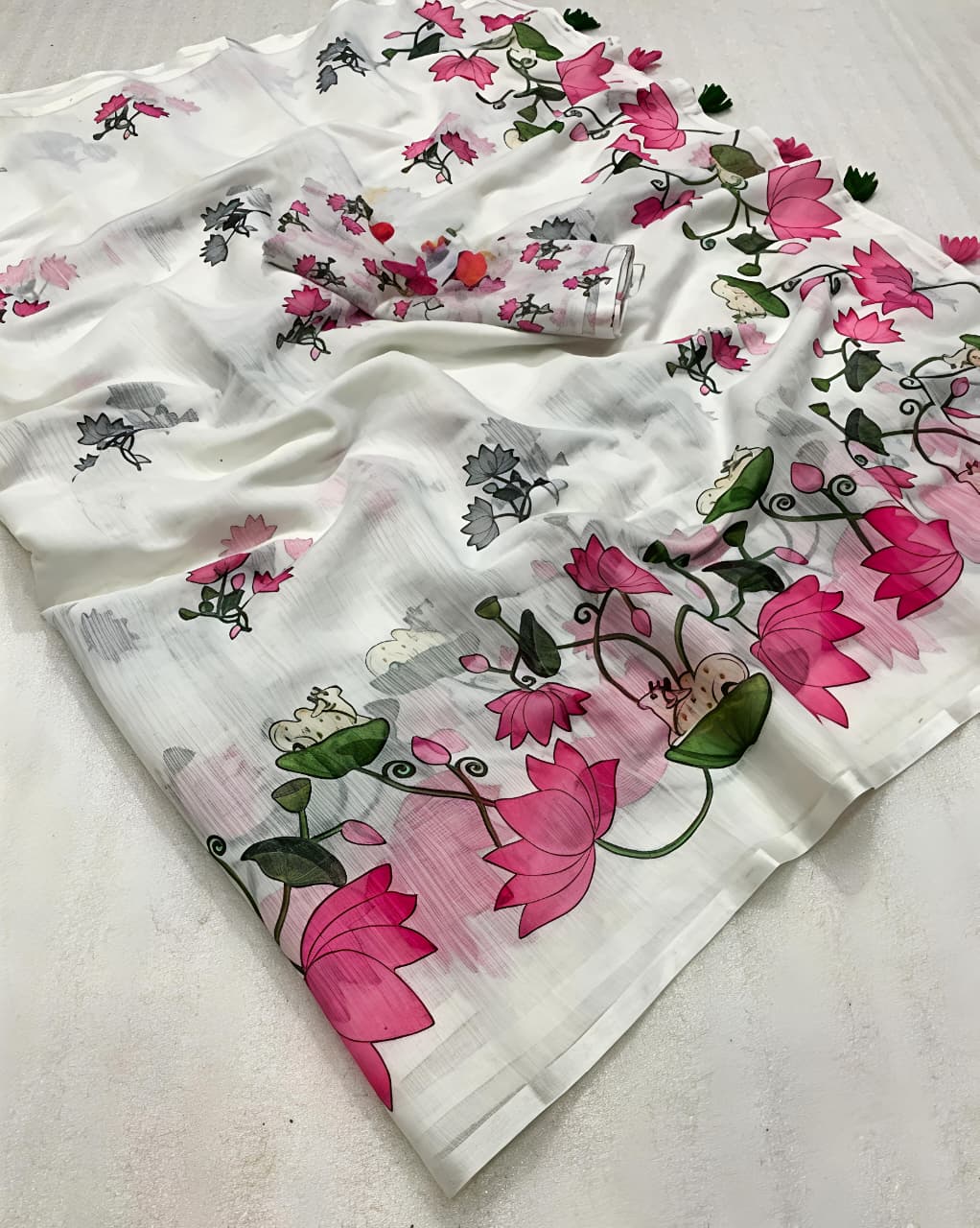
Five or six narrow pallu pleats create a clean formal finish, but the stacked layers can form a thick band at the shoulder. Wider pleats distribute the material over more surface area and may reduce pressure at one point. Very loose pleats can look relaxed but may slip, especially with satin-like or highly fluid fabrics.
Pin placement matters as much as pleat width. One pin at the shoulder holds the upper edge but allows the lower border to pull downward. A second concealed pin near the blouse armhole can distribute tension, provided the pin doesn't pierce delicate zari, mirror work or a fragile weave.
The pallu should be positioned so that the folded edge rests near the shoulder rather than hanging entirely from the neckline. A blouse with a stable shoulder seam gives the pallu a stronger anchor. A narrow strapless or slippery blouse may make even a moderate pallu feel unusually heavy because the fabric has less surface support.
Should the pallu be pleated or left open?
A pleated pallu is usually easier to secure, while an open pallu may distribute light fabric more comfortably across the body. Pleating suits crisp handloom cotton, silk and jacquard sections, whereas an open fall can show the movement of georgette, chiffon-like fabrics and soft printed textiles.
The right choice depends on the pallu's stiffness and border. A broad, firm border often looks controlled in pleats. A soft pallu with a delicate printed design may drape naturally when left open, reducing the tight concentration of layers at the shoulder.
How to Check Pallu Weight Before Buying a Saree
You can assess pallu weight before buying by checking the border width, embellishment density, fabric transition and product measurements. A photograph alone may not reveal whether a rich pallu is woven, printed, embroidered or backed.
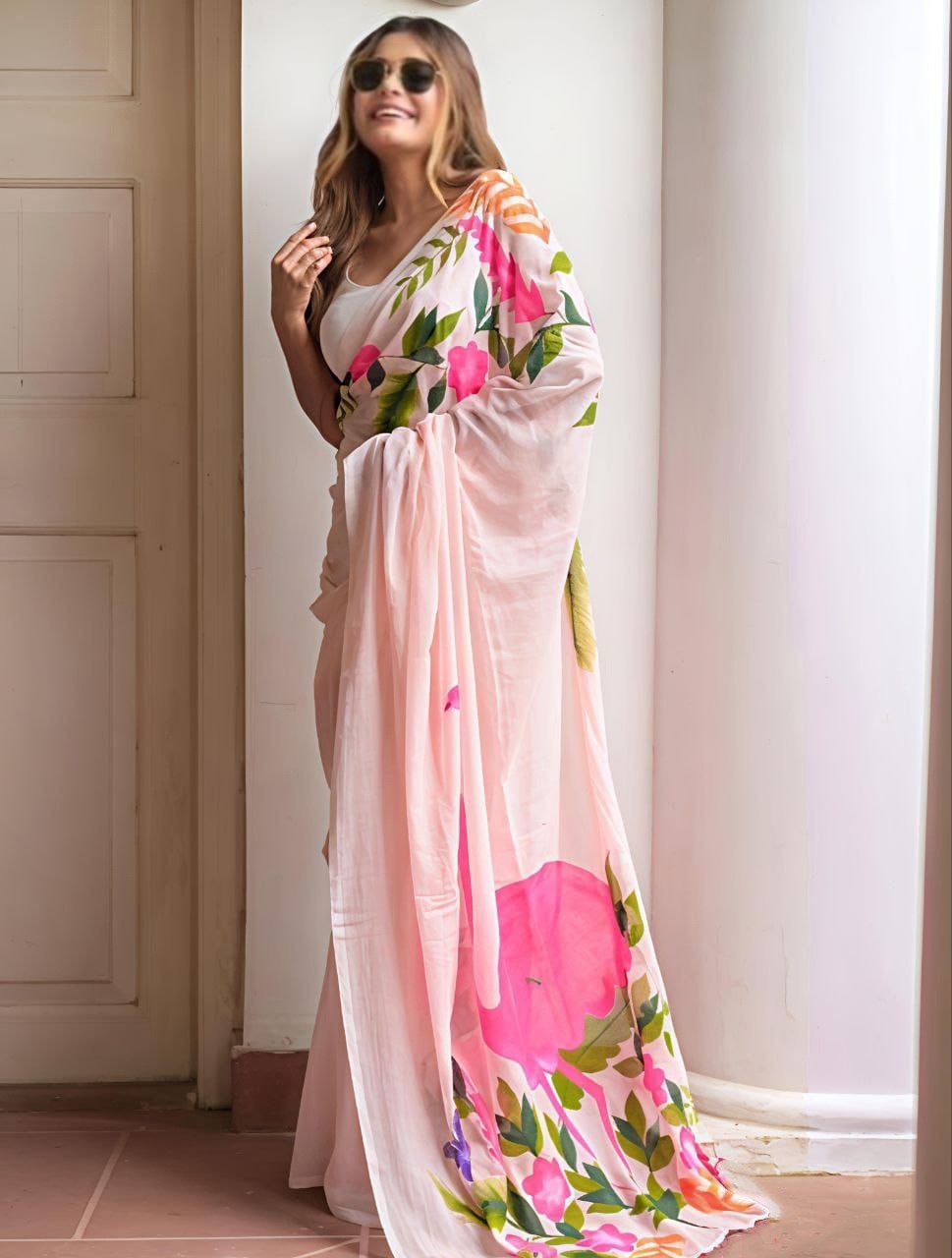
- Compare the body and pallu construction. Look for terms such as jacquard, zari, embroidered, mirror work, woven border, lined or reinforced. A plain body with several of these features in the pallu is likely to have a stronger weight difference.
- Inspect the border width. A border measuring 10 to 15 centimetres can pull more noticeably than a narrow 2 to 4-centimetre edging, especially when the border is metallic or heavily textured.
- Check the fabric hand in the description or photographs. Words such as soft, fluid, crisp, structured and heavy suggest different behaviour, although they should be read alongside the embellishment details.
- Consider the wearing duration. A richly decorated pallu may be suitable for a two-hour reception, while a lighter construction may be more practical for a full-day ceremony, travel or repeated movement.
- Match the blouse to the pallu. A blouse with a firm shoulder seam and modest texture gives better support than a slippery, heavily satin-finished blouse.
Price can offer a clue but can't prove pallu weight. A saree from Sarees from Rs 1000 to Rs 1500 may use printed or lightly woven detail, while a higher-priced saree may include denser zari, lining or handwork. Discount labels such as Sarees Under 20% Off and Sarees Under 10% Off describe pricing, not the physical comfort of the pallu.
How to Balance a Heavy Pallu While Draping
A heavy pallu becomes easier to wear when the shoulder, waist and pleats share the load. The most reliable approach is to secure the waist pleats first, position the pallu with moderate overlap and add discreet support near the shoulder.
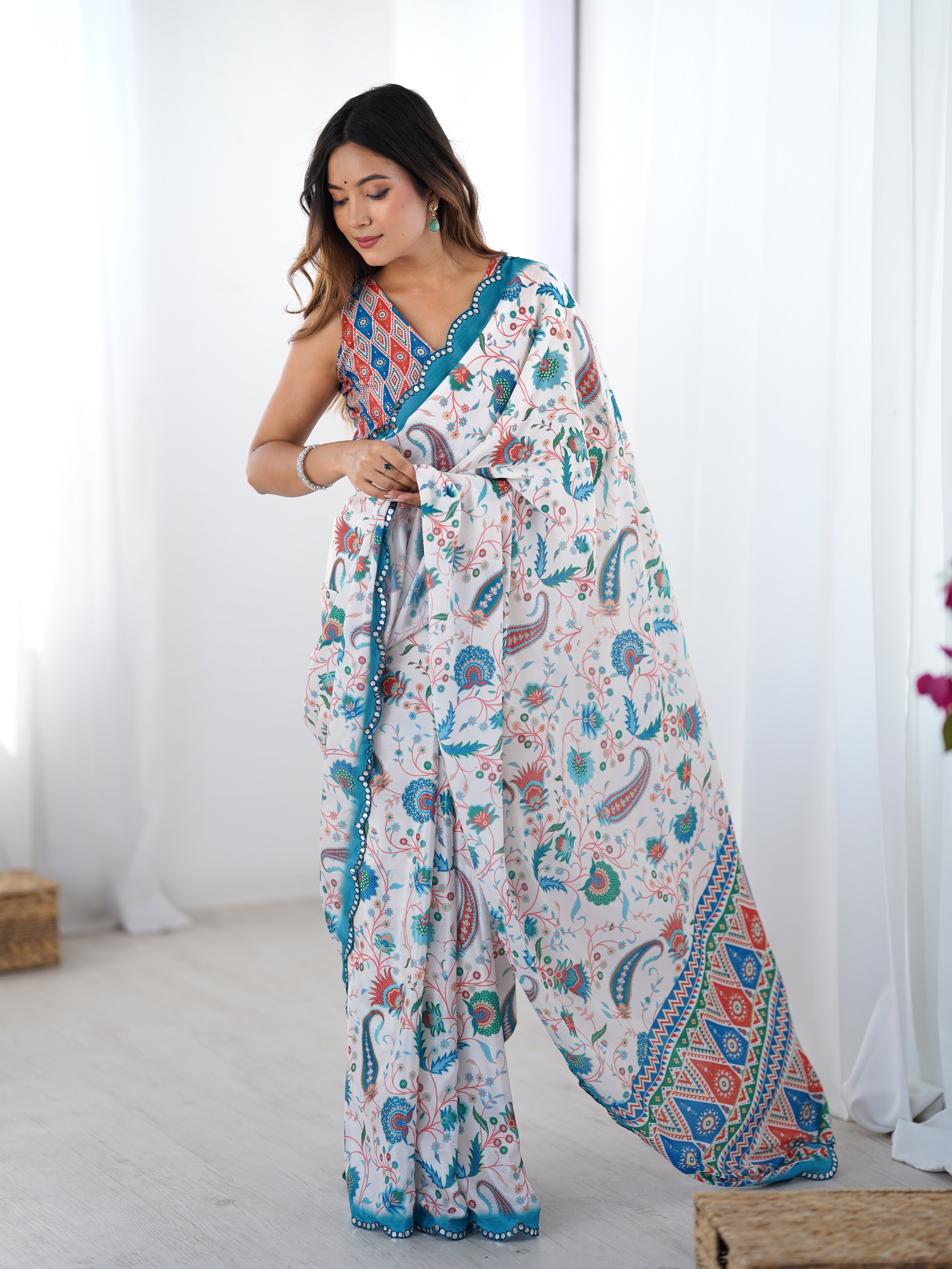
Start with a well-fitted petticoat or underskirt that doesn't slide at the waist. Secure the main pleats at the navel or slightly to the side, depending on the chosen drape. A stable waist prevents the pallu from using the shoulder as its only anchor.
Place the pallu over the shoulder with enough length to reach the intended position without excessive dragging. A common practical length is approximately 90 to 110 centimetres from shoulder to lower edge, but the correct measurement depends on height, blouse length and whether the pallu is pleated.
Use two lightweight safety pins instead of one large pin. One pin can secure the upper fold to the blouse shoulder, and a second can hold the inner layer near the armhole. Pins should pass through a seam allowance or sturdy fold whenever possible, avoiding zari, mirrors and visible embroidery.
Accessories can increase the sensation of pull. A long necklace, large brooch or handbag strap may catch the pallu and repeatedly tug at the shoulder. Keeping the pallu edge clear of these objects preserves both comfort and fabric condition.
For a formal wardrobe, a heavier pallu isn't automatically a disadvantage. A saree with a structured border photographs clearly, maintains a defined silhouette and can provide visual richness without heavy jewellery. The useful distinction is whether the construction suits the wearer's height, blouse support, movement and duration of wear.
Care Practices That Prevent a Pallu from Becoming Heavier
Correct care prevents a pallu from becoming stiff, distorted or weighed down by residue. Washing, drying and storing methods should follow the fibre and embellishment rather than treating the pallu as a separate washable accessory.
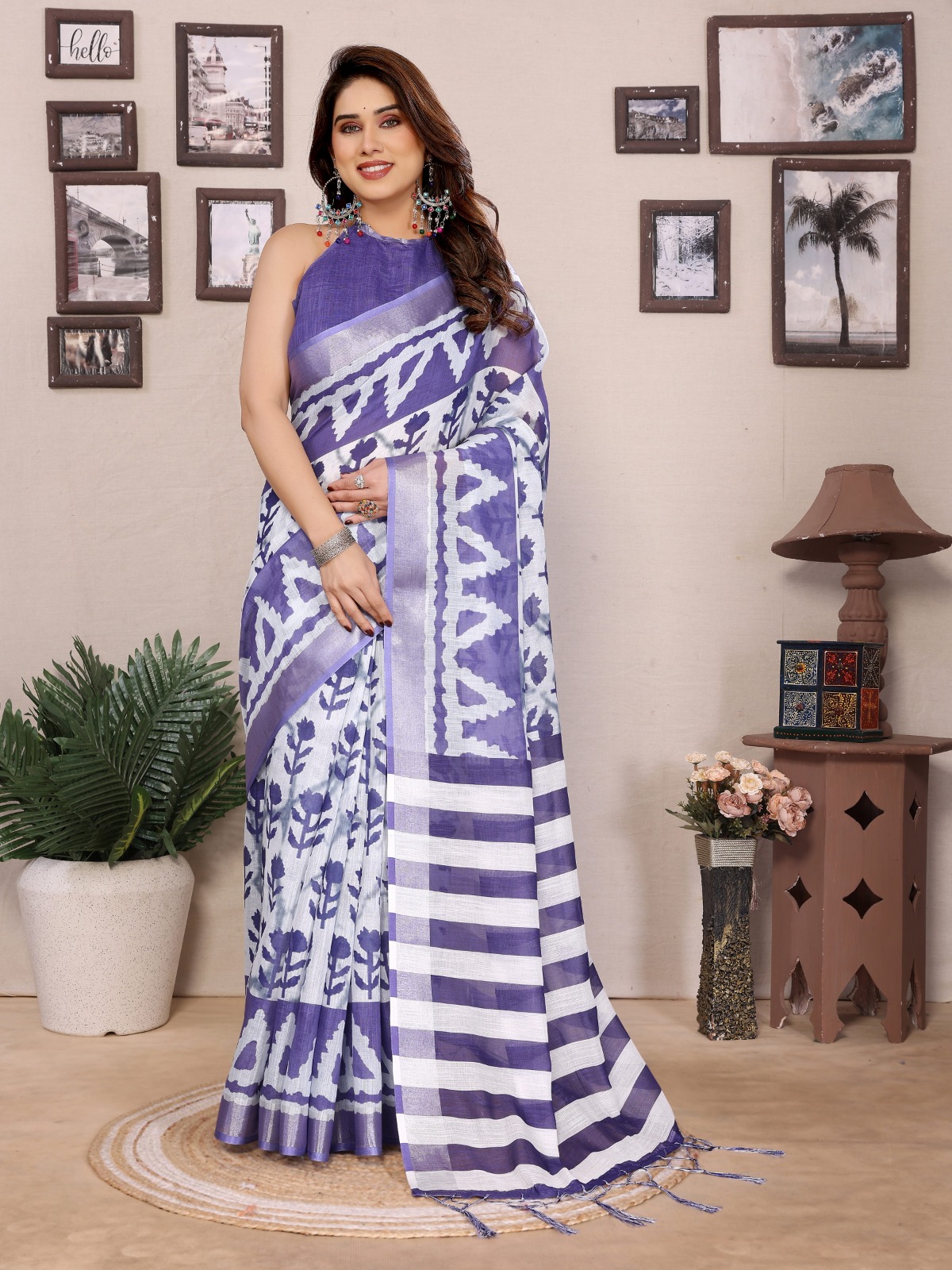
Fold zari, jacquard and mirror-work pallus with the decorative face inward or place soft cotton between prominent folds. Acid-free tissue or clean muslin can reduce friction during storage. Refolding a stored saree every few months prevents permanent creases from forming across a dense border.
Moisture can stiffen some finishes and encourage tarnishing or discolouration around metallic details. Sarees should be aired in shade after wearing, particularly after a humid event or long journey. Direct sunlight can fade floral prints and alter delicate dyed colours.
Dry cleaning is generally safer for sarees with zari, mirrors, beads, heavy embroidery or complex finishes, but the cleaner should be told about the embellishment. Home ironing directly over metallic work can flatten texture, snag threads or leave a shine. Low heat with a pressing cloth is safer when the care instructions permit ironing.
A heavy-feeling pallu often reflects thoughtful design concentration: a heritage panel, rich zari edge, jacquard texture or mirror border creates the visual focus of the saree. Choosing the right construction means accepting that focal section while ensuring that the shoulder, blouse and pleating method can support it comfortably.
Common Questions About Saree Pallu Weight and Comfort
Why is my saree pallu heavier than the body?
The pallu is often woven more densely or decorated with zari, jacquard, embroidery, mirrors or a wide border. Multiple pleats also concentrate the fabric over one shoulder, making the pallu feel heavier than the spread-out body.
Does zari make a saree pallu heavy?
Zari can make a pallu heavier or firmer because metallic threads add material and reduce flexibility. A narrow zari border may have little effect, while dense woven zari across a broad pallu can create a noticeable shoulder pull.
How can I wear a saree with a heavy pallu comfortably?
Use a well-fitted underskirt, secure the waist pleats and anchor the pallu with two discreet pins placed through sturdy folds or the blouse seam. A blouse with a stable shoulder gives better support than a slippery or loosely fitted blouse.
Is a jacquard pallu heavier than a printed pallu?
A jacquard pallu is often firmer and potentially heavier because its pattern is formed during weaving. A printed pallu adds colour without necessarily adding much material, although fabric thickness and finishing still determine the final feel.
Are mirror-work saree pallus difficult to drape?
Mirror-work pallus require more care because the mirrors add weight, stiffness and possible snagging. Wider pleats, secure shoulder support and protection from jewellery or handbag straps can make the drape easier to manage.
How should a heavy pallu saree be stored?
Store a heavy pallu saree folded in clean muslin, with delicate decorative areas protected from direct friction. Air the saree after wearing, keep it away from moisture and refold it periodically to prevent permanent creases.