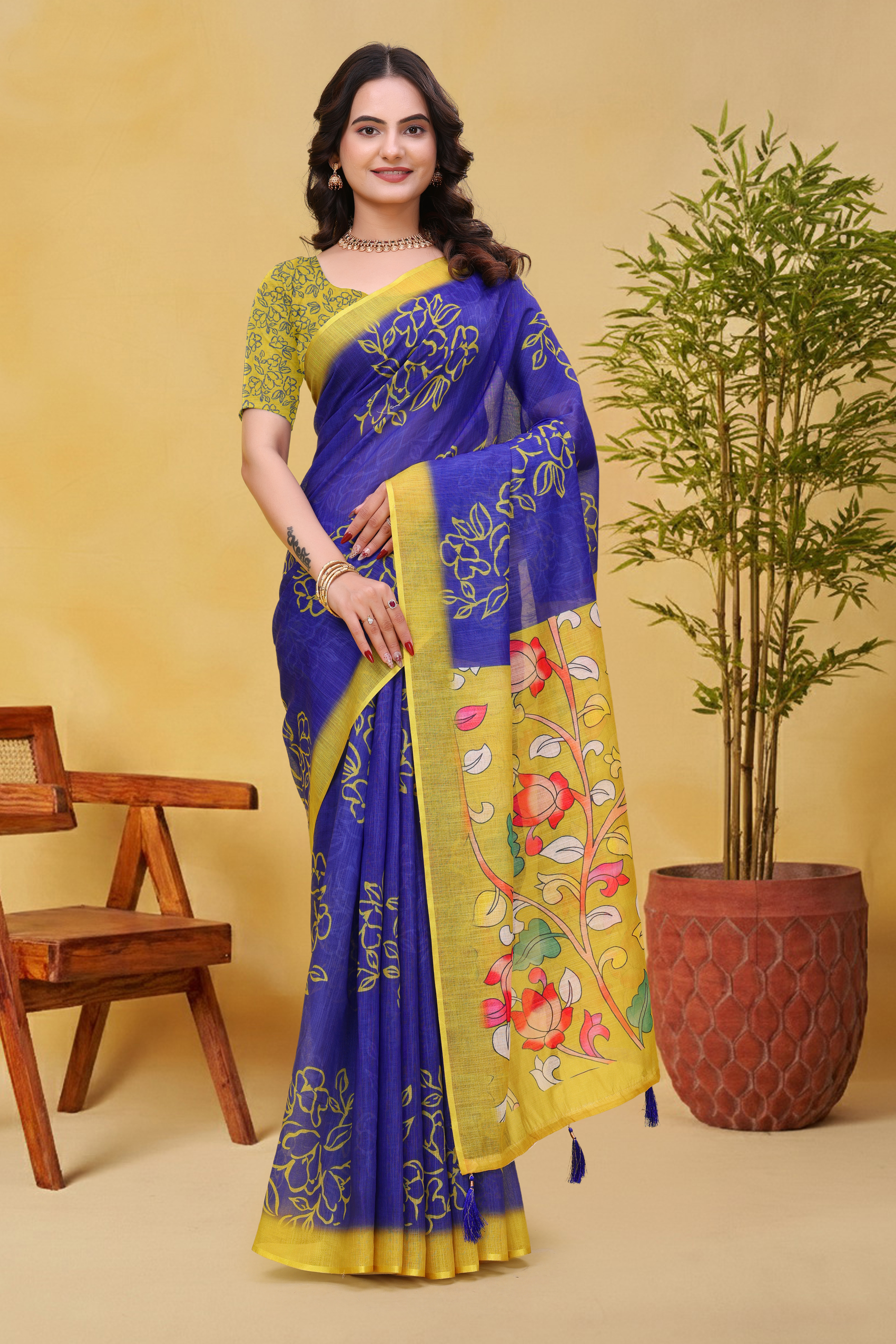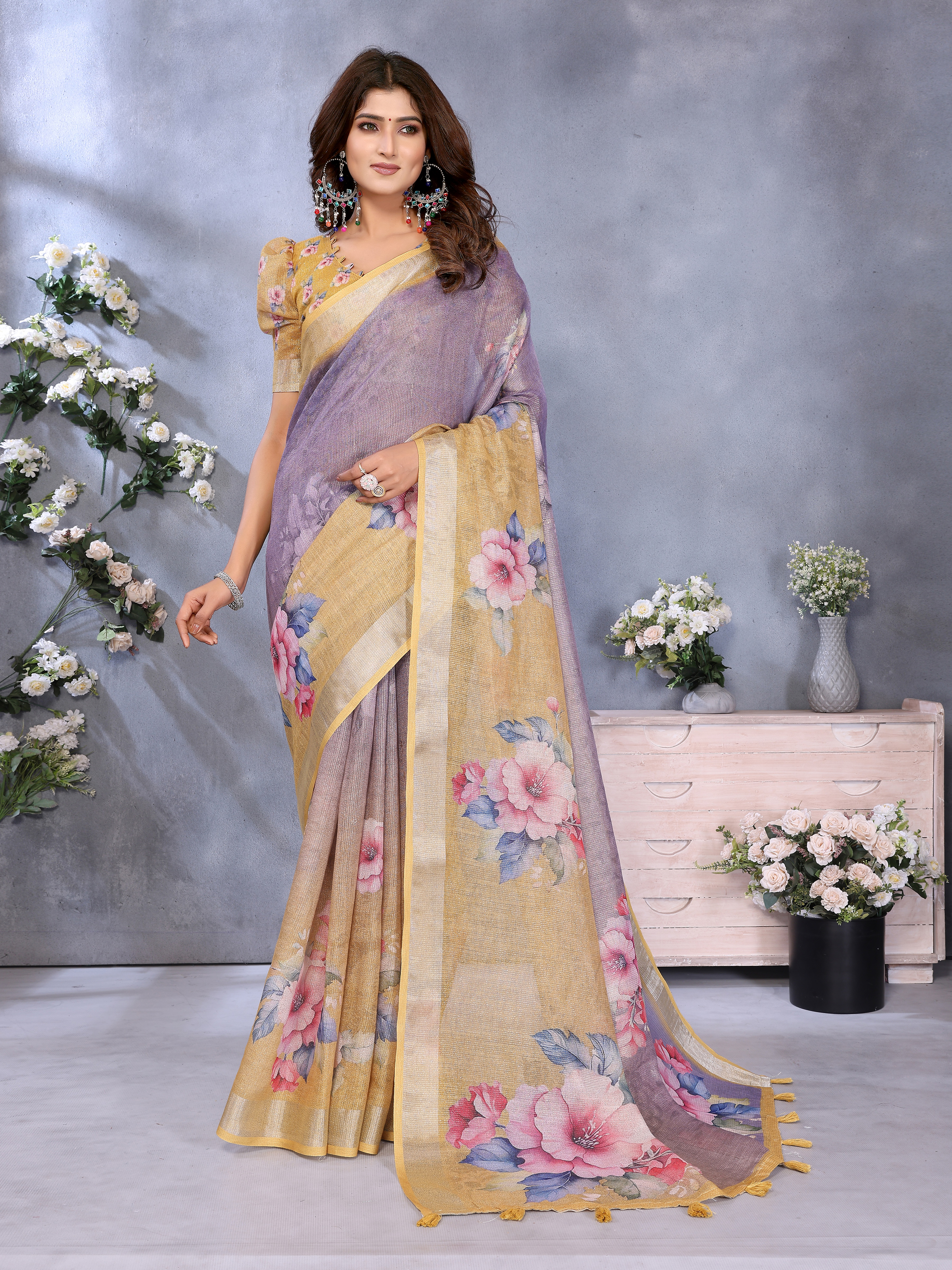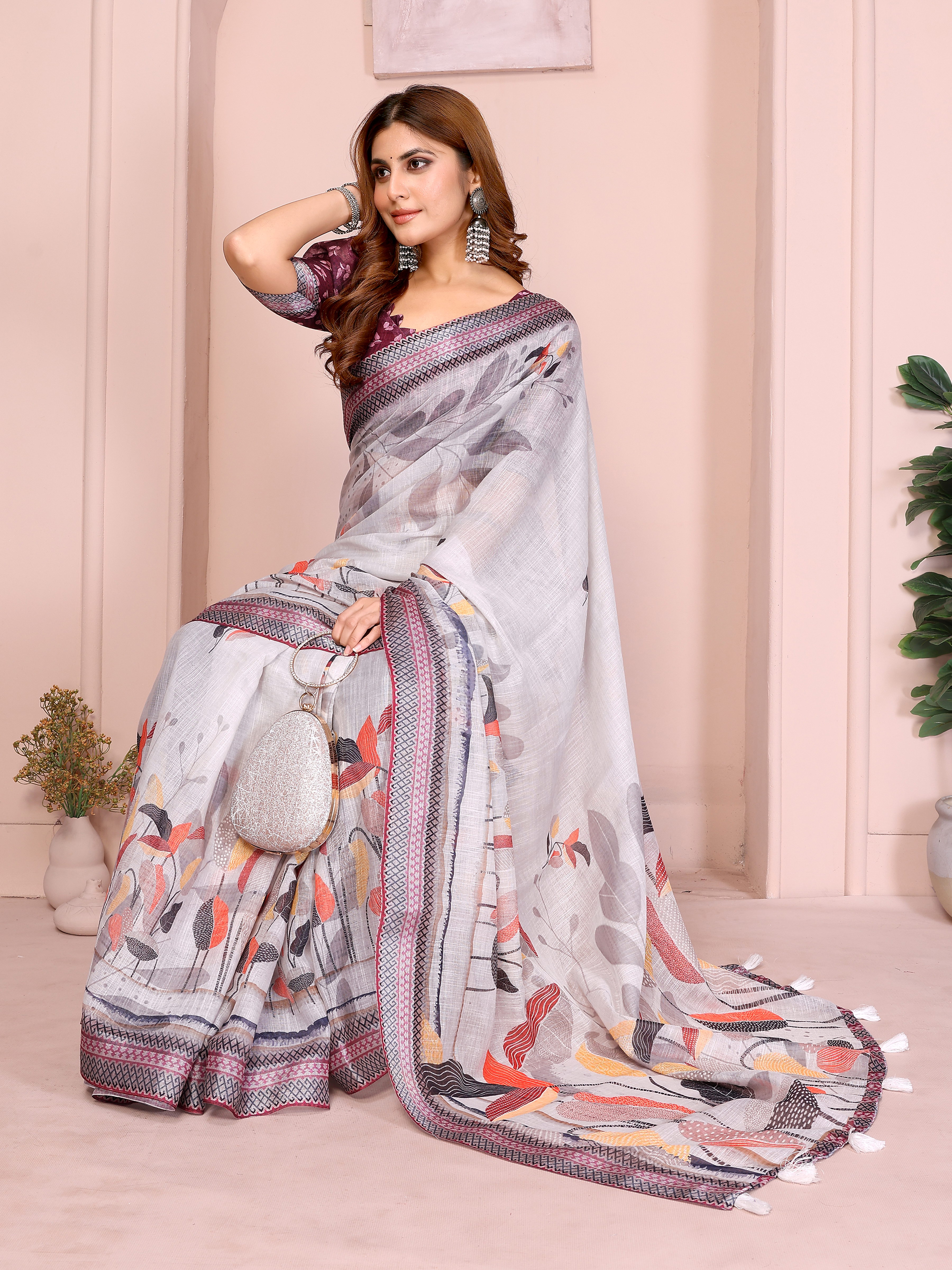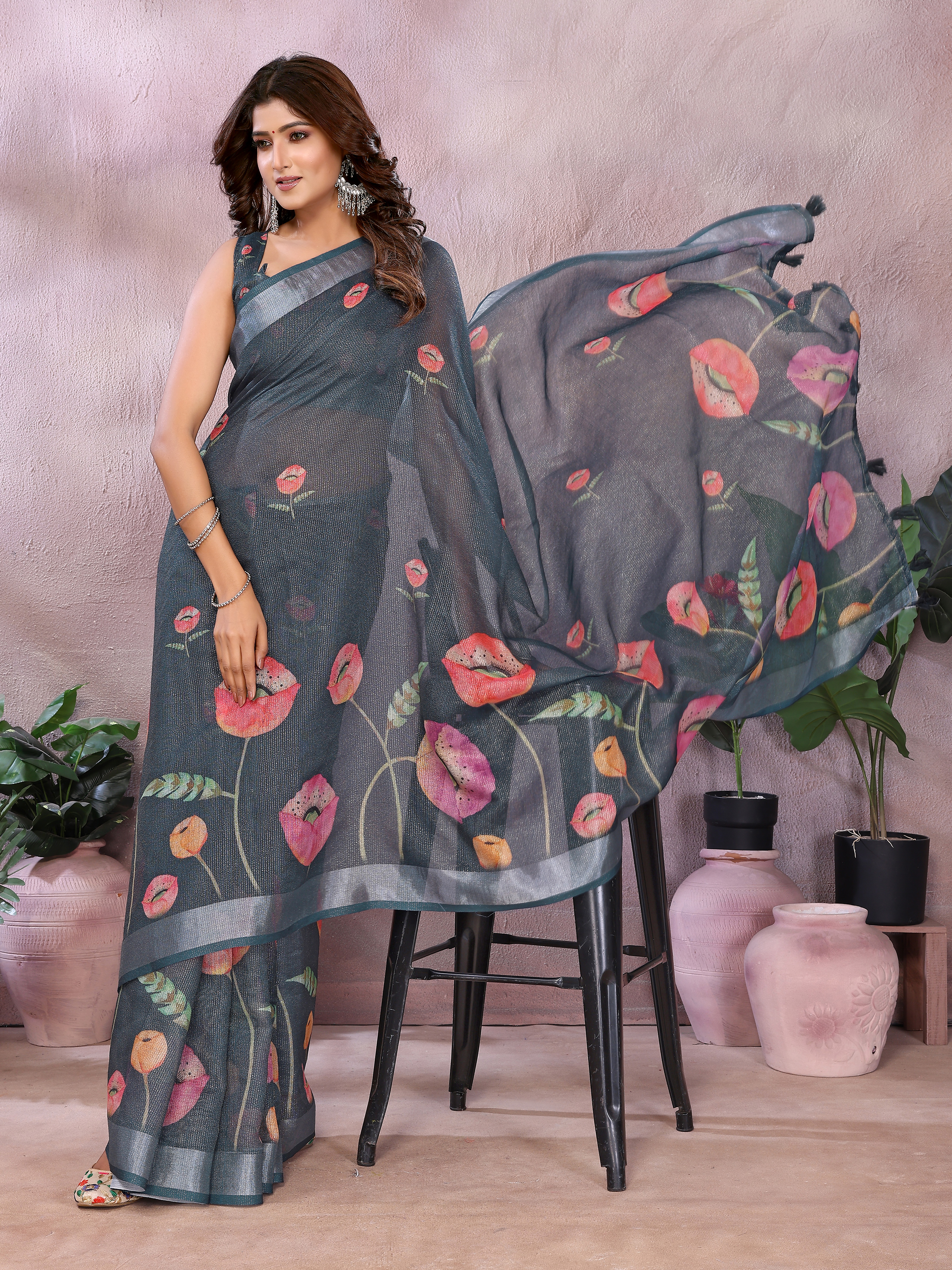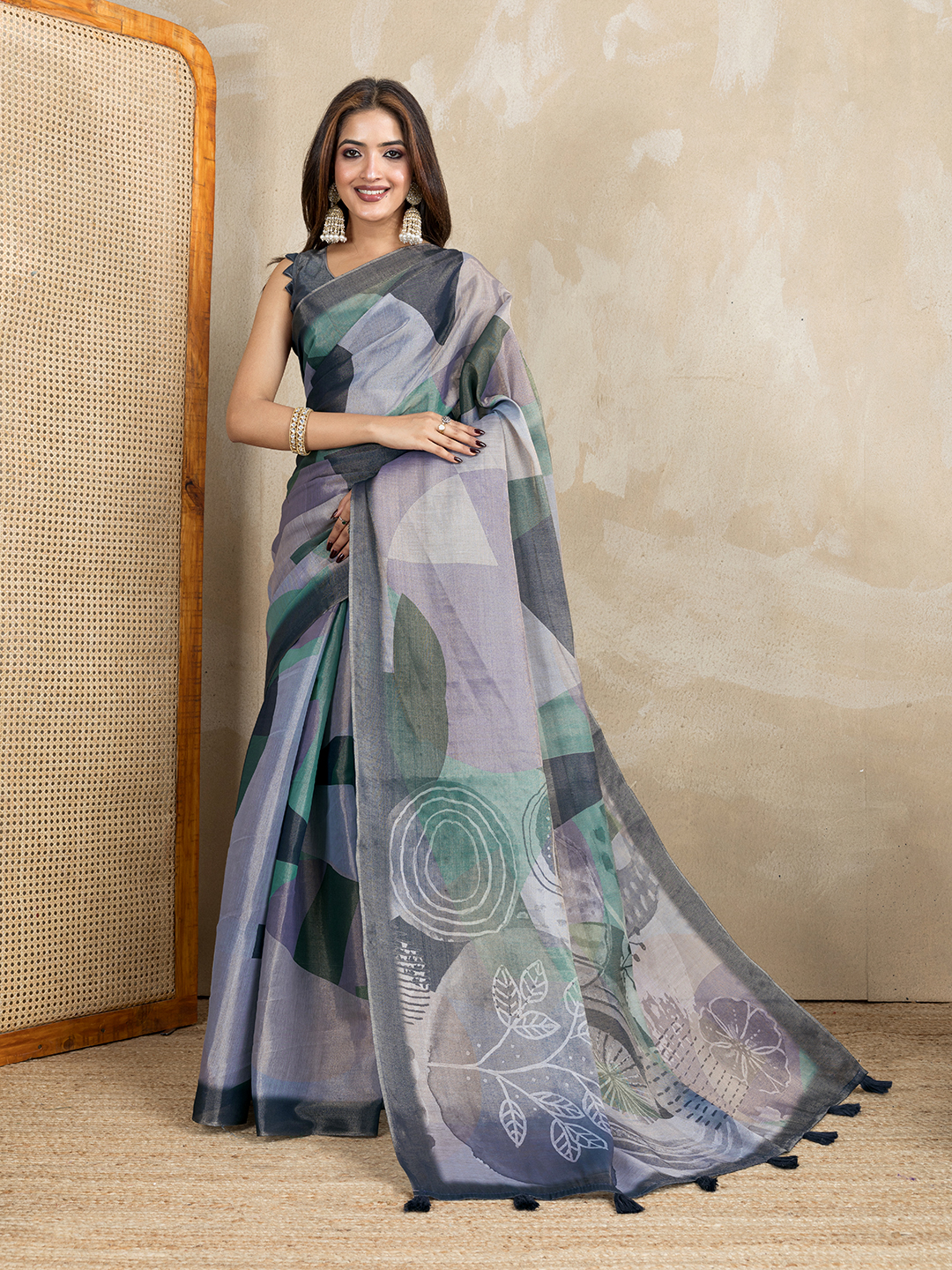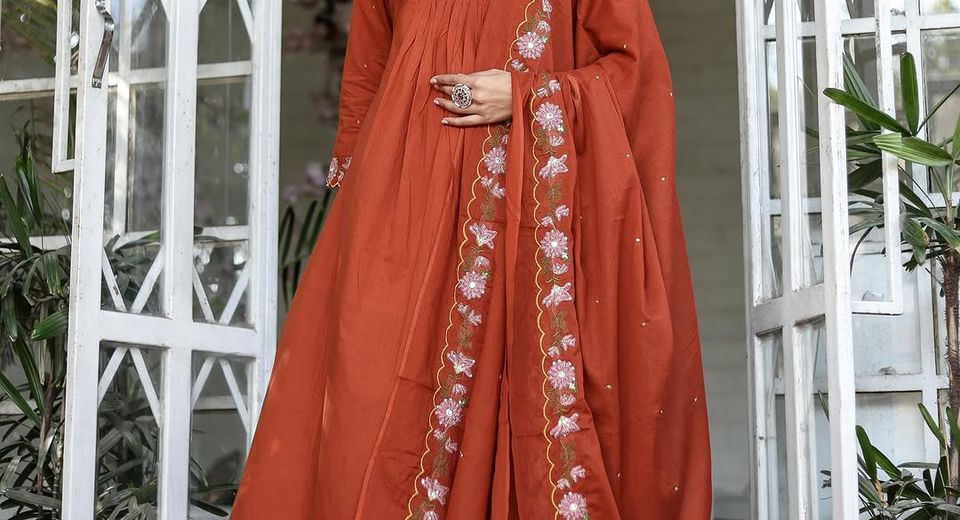
What Makes a Readymade Salwar Suit Look Well Tailored From the Back is a useful question because the rear view exposes fit problems that a front photograph can hide. A well-fitted readymade salwar suit has a level shoulder line, smooth fabric across the upper back, armholes that don't pull, side seams that fall vertically, and enough ease for sitting and lifting the arms. The back should look clean without forming horizontal drag lines, a sagging neckline, or a hem that rises noticeably when you move.
The back view also tells you whether the garment was cut with your body proportions in mind. A beautiful print or detailed neckline can't compensate for a kurta that twists around the torso. A five-minute inspection in a mirror, or a clear back photograph when shopping online, can prevent many disappointing purchases.
What Makes a Readymade Salwar Suit Look Well Tailored From the Back?
A readymade salwar suit looks well tailored from the back when its seams follow the body without pulling, collapsing, twisting, or creating excess fabric. The shoulder seams should sit close to the natural shoulder edge, the centre back should hang straight, and the kurta should retain a balanced shape while you stand, sit, and move your arms.
Good tailoring doesn't mean that the garment must cling to the body. Salwar suits need practical ease, especially around the bust, waist, hips, upper arms, and seat. The correct fit leaves room for a thin inner layer and normal movement while avoiding a tent-like appearance. For many straight-cut kurtas, approximately 5 to 10 centimetres of total ease around the bust can provide comfort, although the ideal amount depends on the fabric, silhouette, and personal preference.
Look at the garment in three positions: standing naturally, raising both arms halfway, and sitting on a chair. A back that looks smooth only when you stand still may have insufficient ease or poorly placed armholes. A garment that remains balanced in all three positions is more likely to feel comfortable throughout a workday or family gathering.
How Should the Shoulder and Upper Back Fit?
The shoulder seam should finish close to the point where the shoulder slopes into the upper arm, and the upper back should lie flat without diagonal tension lines. A shoulder seam that falls far down the arm usually indicates an oversized garment, while a seam that sits above the shoulder point can restrict movement and make the back neckline pull upward.
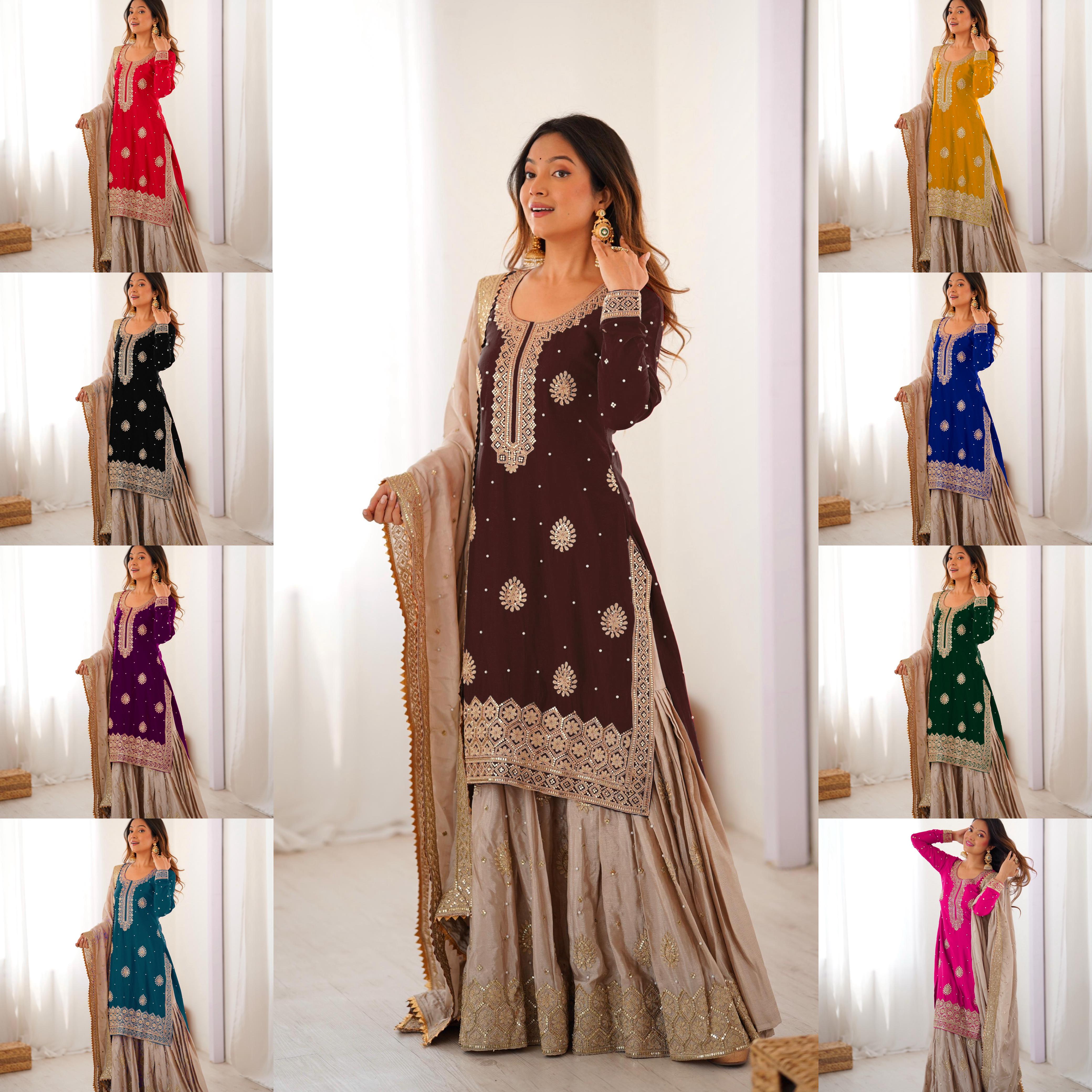
Check the seam from the neck towards the sleeve. The seam should remain fairly straight rather than dipping sharply or forming a ridge. A slight natural slope is normal, particularly in a relaxed kurta, but a visible fold along the shoulder often means that the shoulder width is incorrect.
The back neckline should sit in its intended position rather than climbing towards the hairline. A neckline that pulls upward can result from a tight bust, narrow shoulders, a shallow armhole, or insufficient back width. A neckline that droops may indicate excess width, a loose facing, or a fabric with too much weight for the construction.
Upper-back wrinkles provide useful clues. Horizontal wrinkles stretching from one armhole towards the centre back commonly signal a narrow back or tight armholes. Vertical folds beside the centre back may indicate excess width. Diagonal folds pointing towards the shoulder usually show that the shoulder angle or sleeve attachment needs attention.
Why does the armhole matter to the back fit?
The armhole controls how freely a salwar suit moves without disturbing the neckline and back panel. A correctly shaped armhole stays close to the body but doesn't cut into the underarm or pull the entire kurta upward when the arm rises.
A very deep armhole can create loose fabric under the arm and expose the inner garment during movement. A very high or narrow armhole can cause tightness around the upper back and make the sleeves feel restrictive. The sleeve seam should sit near the shoulder edge, and the underarm area should remain smooth when you reach forward.
Heavier embellishment can make a poor armhole more noticeable because embroidery, zari, or dense threadwork doesn't recover easily from tension. A structured option such as Orange Zariwork Brocade Readymade Salwar Suit deserves a careful arm-movement check before purchase because brocade generally has less forgiving stretch than rayon or soft cotton.
Which Back Wrinkles Reveal a Poor Fit?
Back wrinkles reveal a poor fit when they form consistently in one direction and remain after the wearer stands naturally. Not every crease is a defect: folded packaging, a dupatta resting on the garment, and temporary sitting wrinkles can disappear after hanging. Persistent drag lines usually point to a specific measurement problem.
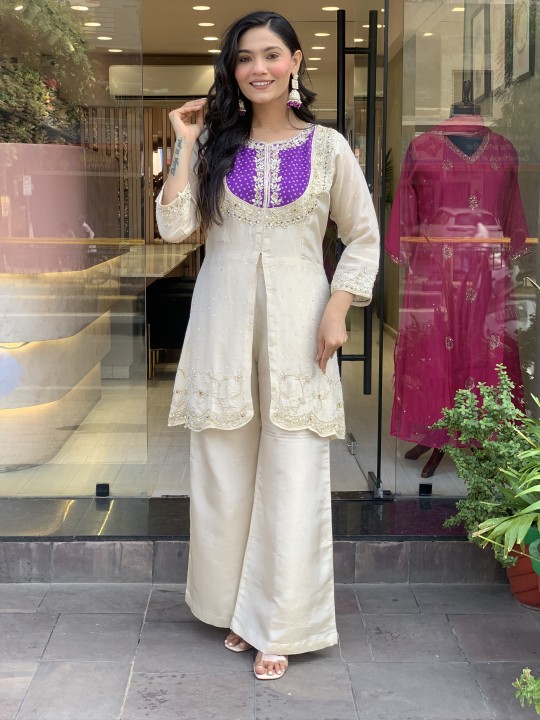
- Horizontal pulls across the shoulder blades: These often indicate inadequate back width or insufficient bust and upper-torso ease.
- Diagonal lines from the armhole to the centre back: These can signal a tight armhole, narrow shoulder, or sleeve that's pulling the bodice.
- Vertical folds at the centre back: These generally suggest excess width or a centre-back seam that has not been positioned correctly.
- Blousing above the waist: This may occur when the kurta is too short for the wearer's torso or when the hips are restricting the lower section.
- Flaring at the lower back: This can be intentional in an Anarkali or flared silhouette, but it's usually unwanted in a straight suit if the side seams swing outward.
- Riding up at the back hem: This commonly means that the garment lacks room over the hips or seat, even when the bust measurement appears correct.
Fabric changes how these signs appear. Rayon can form soft folds that relax after hanging, while Chanderi cotton and brocade show sharper creases because their structure holds a line. A printed rayon option such as Cream Pink Printed Rayon Readymade Salwar Suit may look slightly relaxed at the back by design, but it should not develop strong diagonal pulls during normal movement.
How Much Ease Should a Readymade Kurta Have?
A readymade kurta should have enough ease for comfortable movement without allowing large folds to pool across the back. Measure your fullest bust, waist, and hip points, then compare those measurements with the seller's garment measurements rather than relying only on the size label.
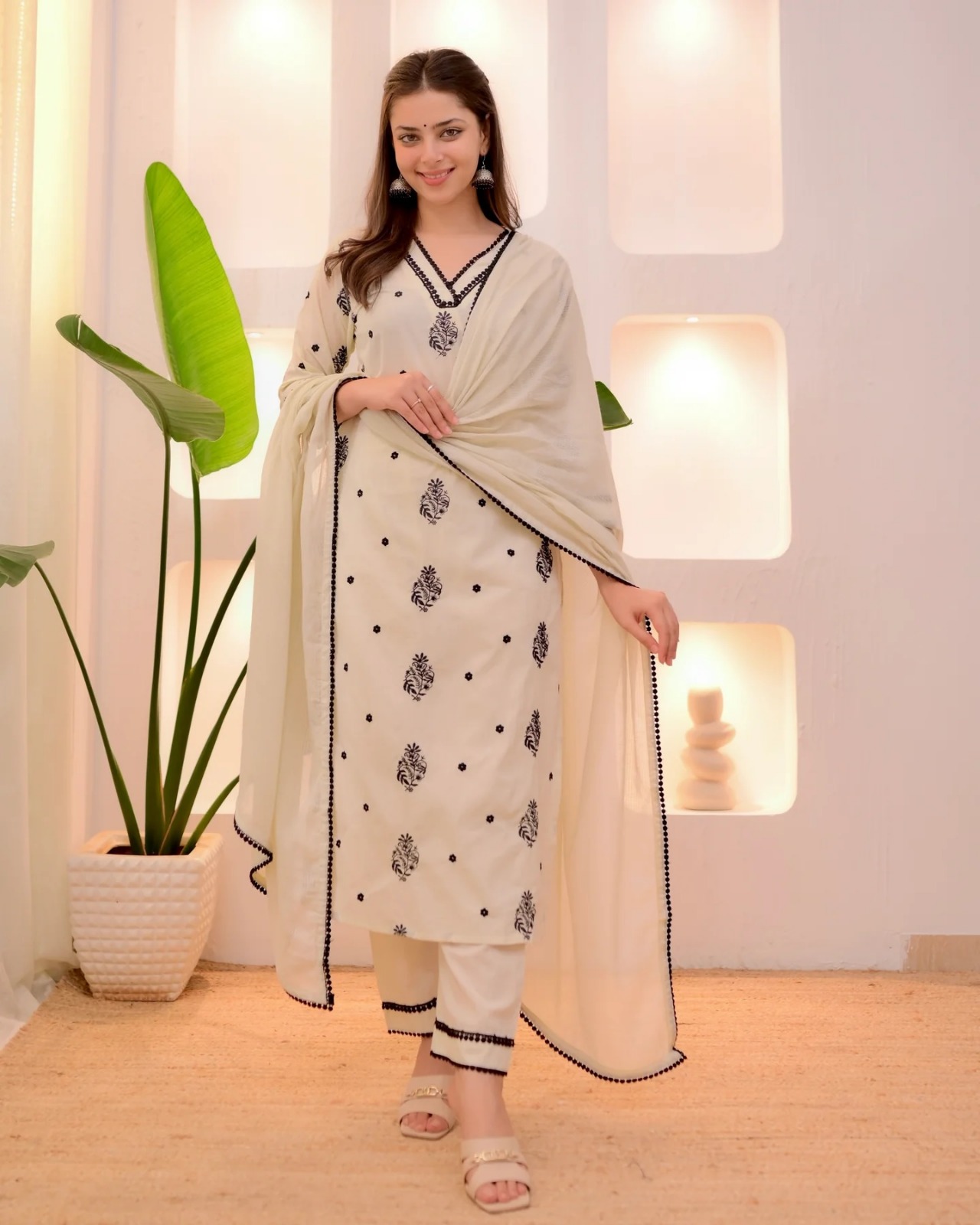
For a straight-cut salwar suit, bust and hip ease deserve equal attention. The larger measurement isn't always the bust: a wearer with a fuller hip may find that the back hem rises even though the upper torso fits well. A kurta that's 8 centimetres wider than the body at the hip may feel comfortable, while a heavily structured fabric may need more practical room than a fluid rayon garment.
Use the following quick calculation when a size chart provides garment measurements: subtract your body measurement from the garment measurement at the same point. The result is the total ease. For example, a 96-centimetre bust and a 104-centimetre garment bust provide 8 centimetres of total ease. Check whether the garment measurement was taken with the garment flat and whether the measurement includes pleats, gathers, or flare.
Relaxed silhouettes need not look careless. Woven Chanderi Cotton Readymade Salwar Suit can retain a neat rear outline when its shoulder and side seams are correctly placed, even if the body has a little extra room. The key distinction is between deliberate ease and uncontrolled volume: ease supports movement, while uncontrolled volume creates folds that obscure the body line.
How Do Fabric and Construction Change the Back Appearance?
Fabric weight, surface texture, stretch, and drape determine how a salwar suit behaves across the back. Cotton and Chanderi usually hold a clearer shape, rayon follows the body more fluidly, silk blends can skim the torso, and brocade or dense zari may resist movement and reveal tension sooner.
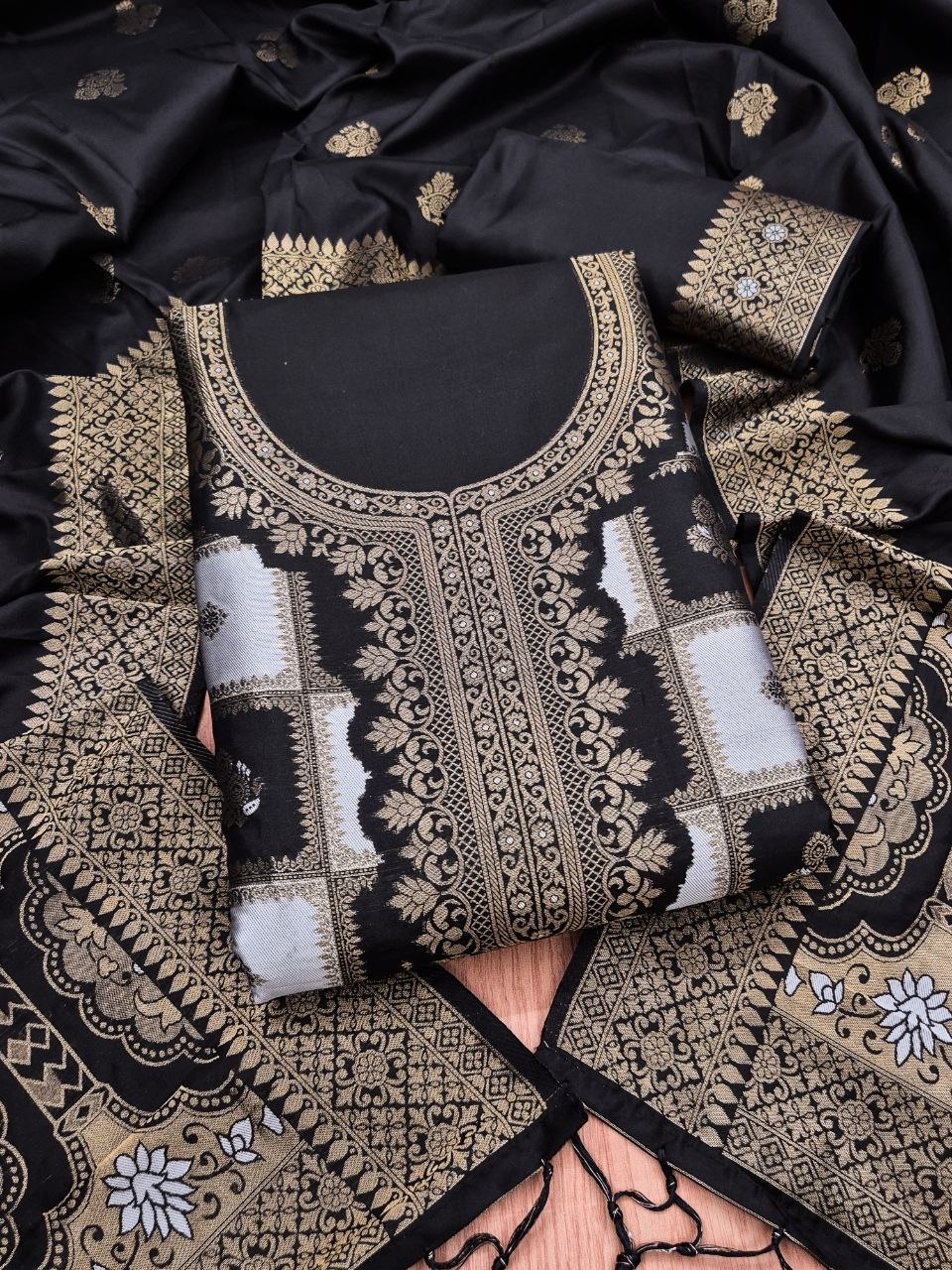
Chanderi requires particular attention to seam finish because its light, crisp hand can make puckered stitching visible. Cream Threadwork Viscose Chanderi Readymade Salwar Suit illustrates why decorative threadwork should lie flat rather than gather the back panel. If embroidery pulls the fabric into small waves, the issue isn't merely visual; the garment may feel tight at that point.
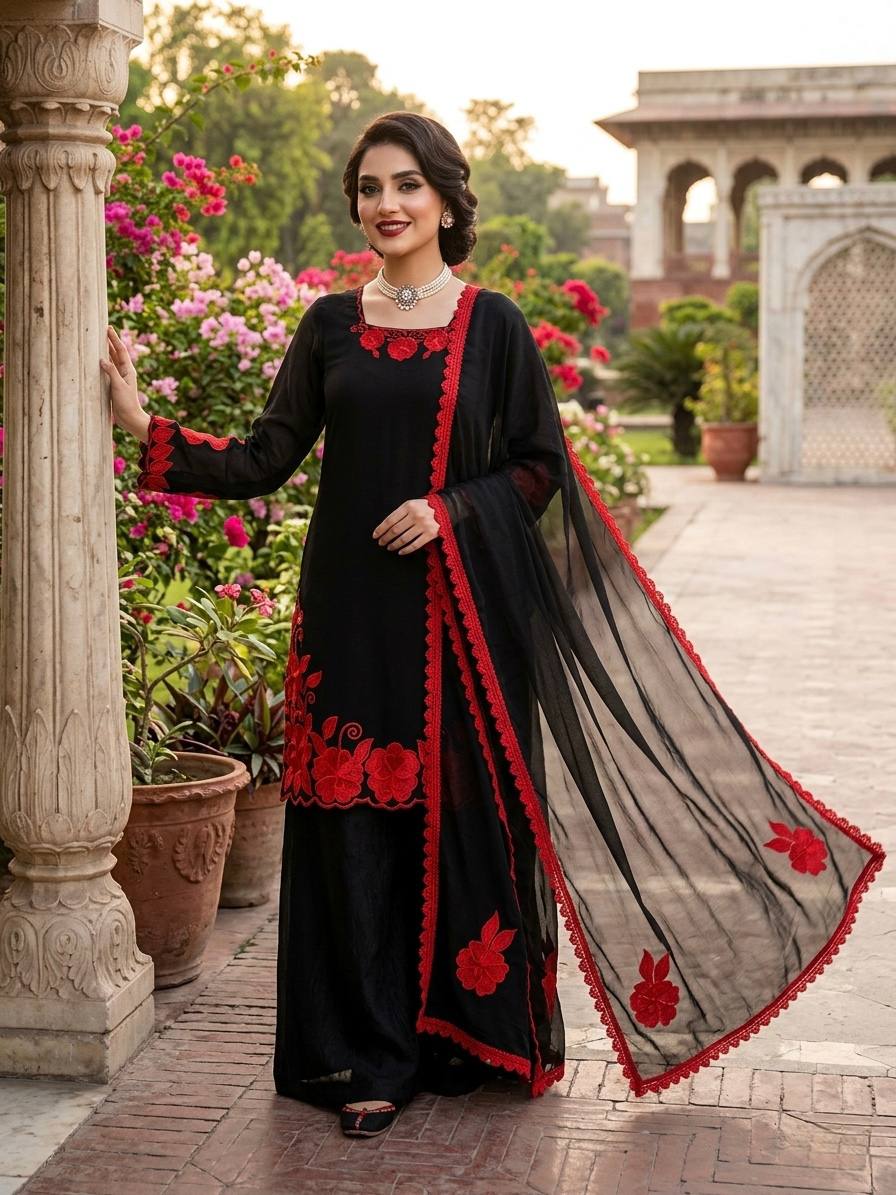
Fendy silk and similar smooth fabrics reflect light across every fold. Black Red Fendy Silk 3 Piece Readymade Salwar Suit Set should therefore be inspected under direct and side lighting when possible. A shallow fold may disappear in soft light but become obvious when the fabric catches a highlight.
Threadwork and zari add weight to selected areas. Navy Blue Threadwork Readymade Salwar Suit and Yellow Threadwork Readymade Salwar Suit may have a visually even front while the decorated back or hem carries additional weight. Hang embellished suits on a broad-shouldered hanger for 12 to 24 hours before judging whether minor packaging creases have disappeared.
Print direction also affects the impression of fit. A vertical motif can make the back look longer and straighter, while a large horizontal border may emphasise a rising hem or a widening side seam. Kalamkari Print Salwar Suits (Copy), Gujarat Bandhej Salwar Suits, and Odisha Sambalpuri Salwar Suits can each create different visual effects depending on motif scale, border placement, and the wearer's proportions.
What Should You Check When Buying a Readymade Suit Online?
When buying a readymade salwar suit online, compare garment measurements, construction photographs, fabric information, and the stated silhouette before judging appearance. A front-only product image can't reliably show back width, armhole depth, or whether the side seams remain vertical.
- Record your body measurements: Measure bust, waist, hip, shoulder width, upper arm, and preferred kurta length over light clothing. Repeat the measurements once to reduce tape-placement errors.
- Read the measurement chart carefully: Identify whether values describe body size or finished garment size. Check whether the chart lists hip and shoulder measurements, not only bust size.
- Study the fabric: Look for terms such as rayon, viscose Chanderi, Chanderi cotton, silk, or brocade. Stretch, weight, and drape affect how much ease you need.
- Inspect the back image if available: Look for a straight centre back, balanced hem, clean sleeve attachment, and absence of obvious pulling around the armholes.
- Check the kurta length against your height: A hem that ends at the wrong point can make the back appear uneven, particularly with Patiala or palazzo bottoms.
- Allow for layering: A lined suit or a winter camisole needs slightly more room than a single lightweight inner layer.
Collections built around regional visual languages may use distinctive cuts. Maharashtra Paithani Inspired Salwar Suits can include strong borders or woven-look motifs, while Punjab Patiala Salwar Suits often pair a shorter kurta with fuller bottoms. Compare the entire outfit rather than assessing the kurta in isolation, because trouser volume and dupatta placement influence the visible back line.
Which Fit Problems Can an Alteration Fix?
A tailor can usually correct small length, width, and sleeve adjustments, but major shoulder or armhole errors are difficult and expensive to repair. Alteration works best when the garment already fits well through the shoulders and upper back.
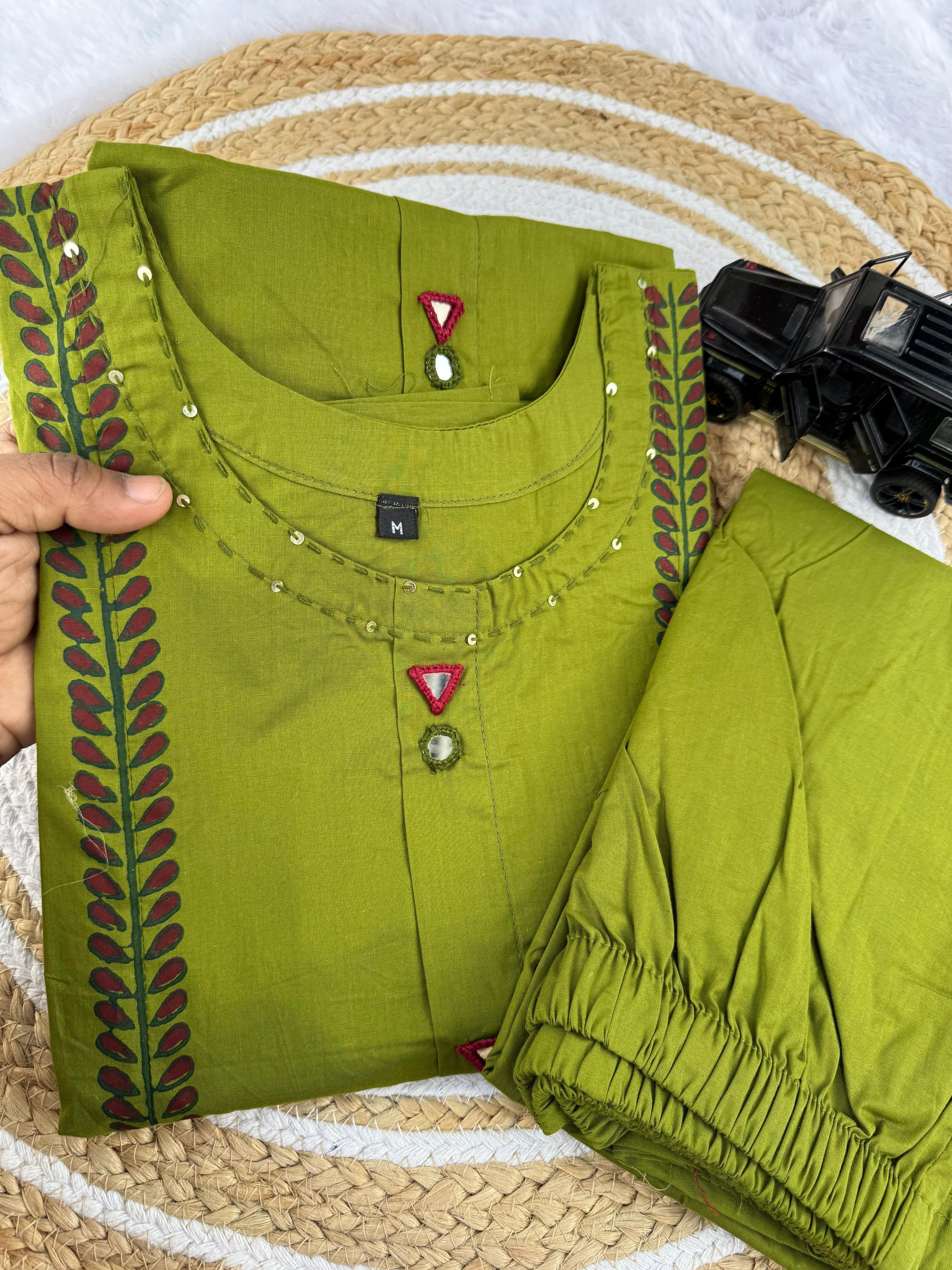
Commonly manageable changes include shortening the kurta, narrowing side seams when sufficient seam allowance exists, adjusting sleeve length, and making a modest hem correction. A tailor may also add a small centre-back adjustment if the construction includes a usable seam. The tailor should inspect seam allowance before promising a change; decorative borders and lining can limit the alteration.
Major shoulder-width changes are less predictable because they affect the neckline, sleeve head, armhole, and embroidery alignment at the same time. A garment that's tight across the upper back may not become comfortable simply by opening the side seams. Side-seam alteration can't create missing fabric in the back panel.
Take the suit to a tailor while wearing the inner layer and bra intended for the outfit. Ask the tailor to pin the garment while you raise your arms, sit down, and reach forward. A pinned standing adjustment alone may produce a neat mirror image but restrict movement during real use.
How Can You Perform a Two-Minute Back-Fit Test?
A two-minute back-fit test can identify most visible problems before you keep a readymade salwar suit. Wear the intended inner layer, stand naturally, and inspect the garment from the side and back rather than judging only the front.
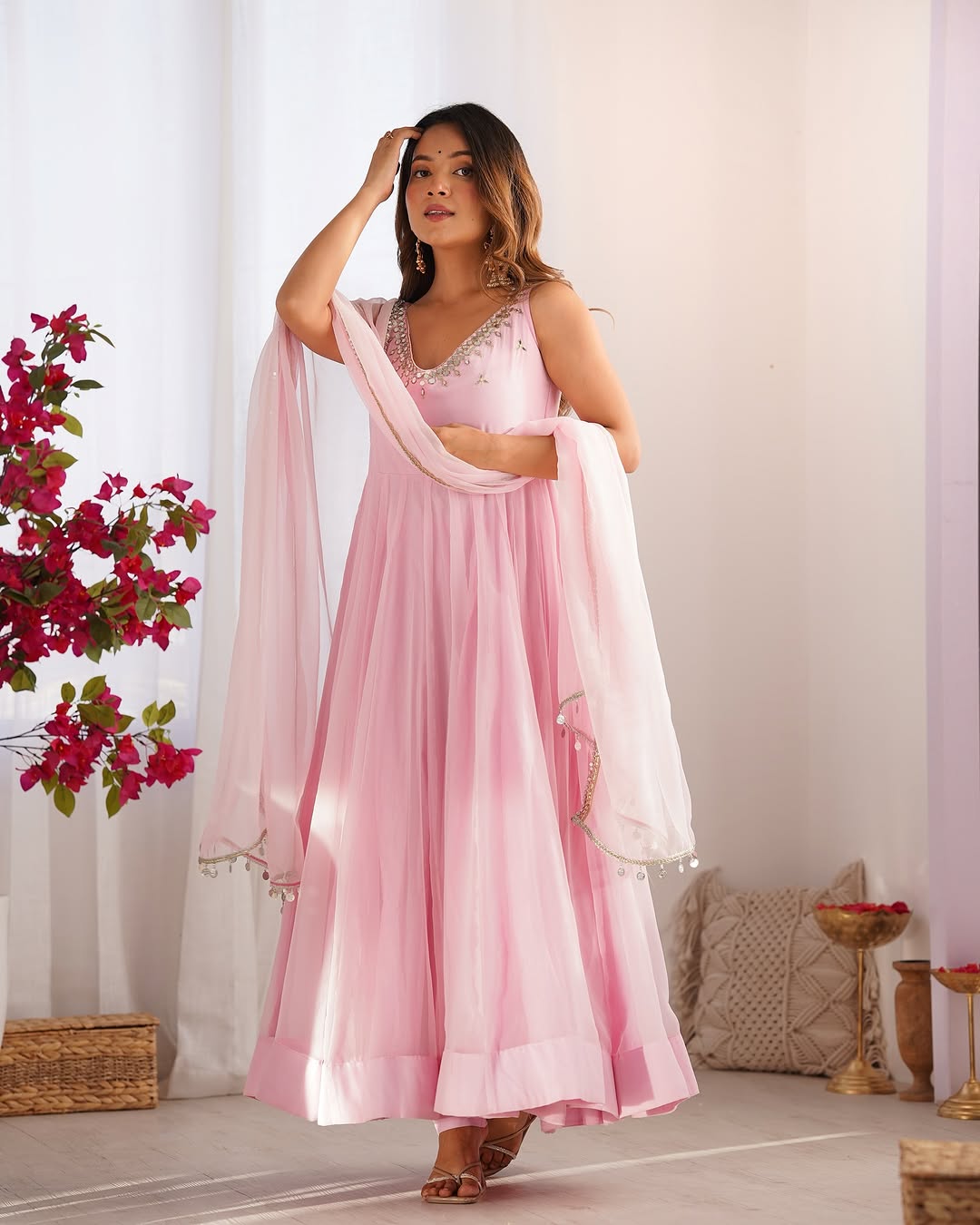
- Stand with your arms relaxed and check whether both shoulder seams sit at the same height.
- Look for diagonal drag lines from the armholes, horizontal pulls across the shoulder blades, and excess fabric at the centre back.
- Raise both arms to shoulder height. The neckline should not climb dramatically, and the hem should not lift several centimetres.
- Sit on a firm chair. The back should remain covered, and the lower hem should not pull sharply over the hips.
- Turn slowly from side to side. Side seams should remain close to vertical rather than rotating towards the front or back.
- Run a flat palm down the back panel. Puckered embroidery, twisted lining, or a ridge along the seam indicates a construction problem.
Minor creases may settle after steaming or hanging, but structural pulling will remain during movement. A suit that passes the test will usually photograph better from the back, feel less restrictive, and require fewer alterations. A suit that fails at the shoulders or armholes should be exchanged for a better size or cut rather than purchased only because the front design is attractive.
How Should You Choose Between a Close Fit and a Relaxed Fit?
Choose a close fit for smooth fabrics and polished workwear, and choose a relaxed fit for breathable fabrics, layering, and long periods of sitting. Both options can look tailored when the shoulder line, neckline, side seams, and hem remain controlled.
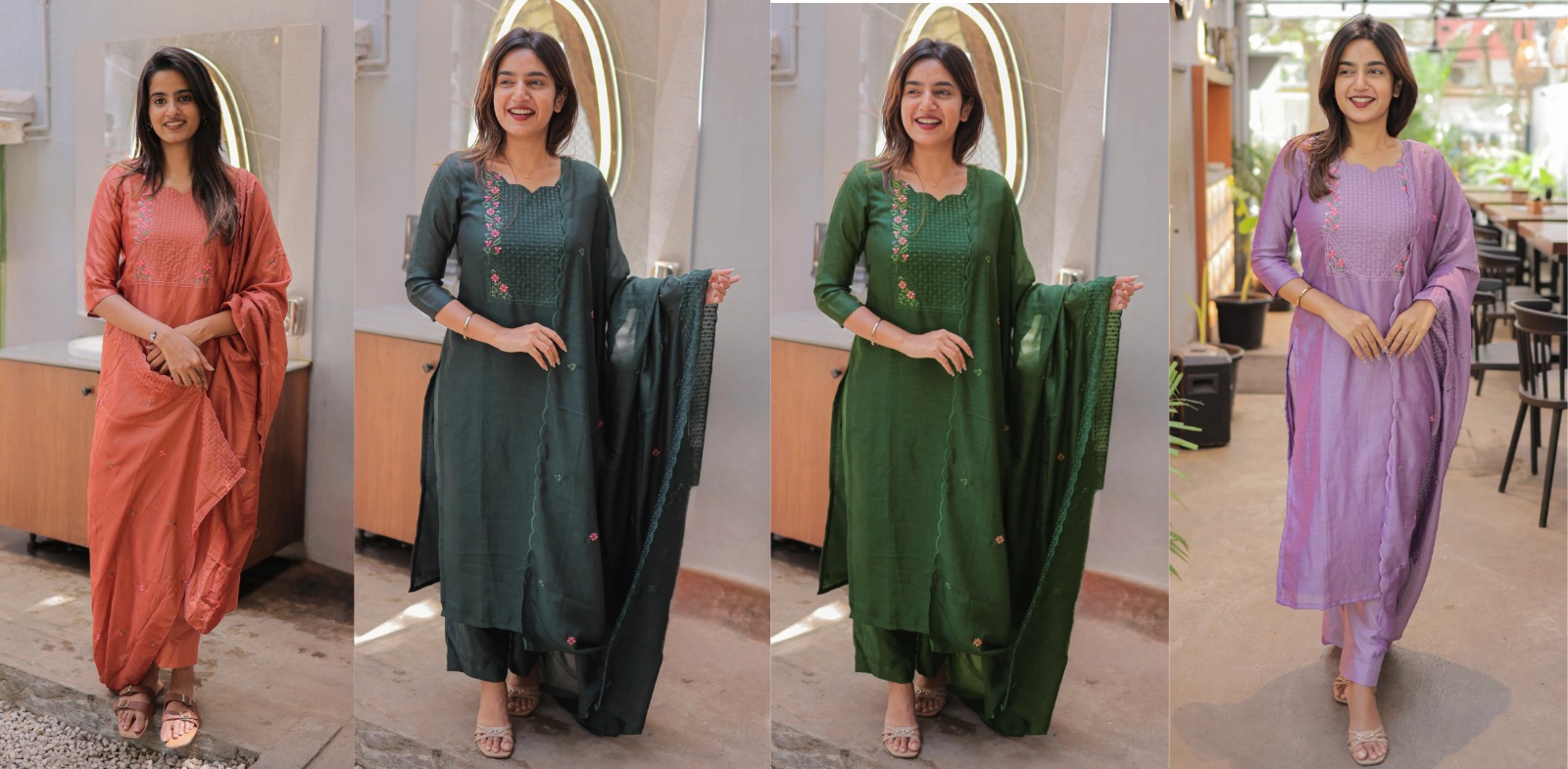
A close fit works particularly well with a straight kurta in viscose, silk, or fine Chanderi, but the garment still needs movement ease at the bust and upper back. A relaxed cotton suit can have more room without looking oversized if the shoulder width is correct and the extra fabric is distributed evenly.
Personal comfort should guide the final decision. A wearer who cycles, carries a child, travels by train, or sits at a desk for many hours needs more functional ease than someone wearing the suit briefly for photographs. The most convincing back fit is one that stays smooth during the activities the outfit must support.
Back-Fit Questions to Ask Before Buying a Readymade Salwar Suit
How can I tell if a readymade salwar suit is too tight from the back?
A readymade salwar suit is usually too tight from the back when it creates persistent horizontal or diagonal pulls across the shoulder blades, armholes, or hips. The neckline may rise when you lift your arms, and the hem may ride up when you sit.
Should the shoulder seam of a salwar suit sit on the shoulder or below it?
The shoulder seam should sit close to the natural shoulder edge, where the shoulder slopes into the upper arm. A seam well below that point usually indicates an oversized fit, while a seam above it can restrict arm movement.
Why does my kurta fit in front but pull at the back?
A kurta can fit in front but pull at the back when the garment has insufficient upper-back width, a tight armhole, or inadequate hip ease. Compare the back wrinkles during standing, arm-raising, and sitting to identify which area is causing the tension.
How much ease should a straight salwar suit have?
A straight salwar suit commonly needs about 5 to 10 centimetres of total bust ease, but the correct amount depends on fabric, body shape, layering, and personal comfort. Hip ease must also be checked because insufficient room at the hips can make the back hem rise.
Can a tailor fix a readymade salwar suit that is tight across the back?
A tailor can sometimes release a small amount from the side or centre-back seams if enough seam allowance exists. A tailor cannot reliably fix a major shoulder, armhole, or back-width shortage when the garment lacks extra fabric.
Does fabric affect how well a salwar suit looks from the back?
Fabric strongly affects the back appearance because rayon drapes softly, Chanderi holds a crisper shape, and brocade or zari can reveal tension more clearly. Structured or embellished fabrics need especially careful shoulder, armhole, and movement checks.