

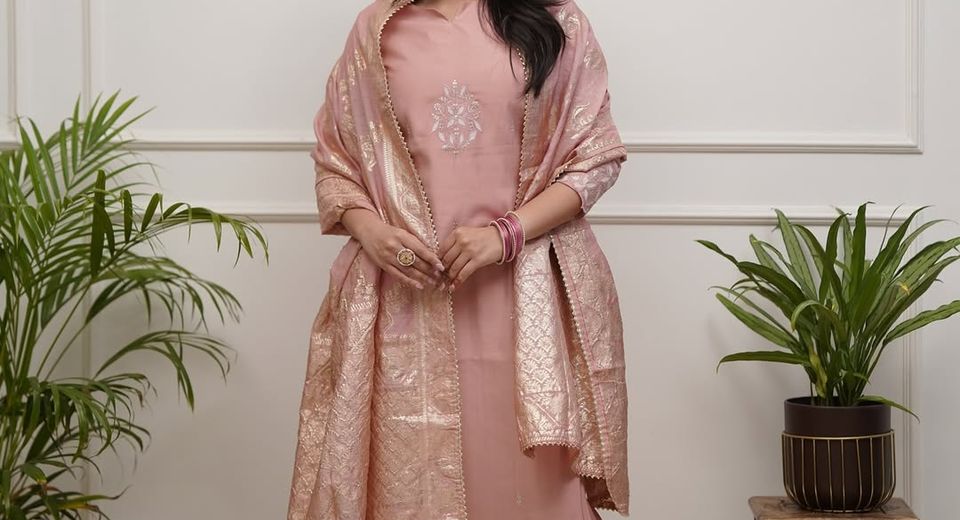
What keeps it put for dupatta on one shoulder without constant pinning is a combination of fabric friction, a stable shoulder surface, balanced length and one or two discreet anchor points. A dupatta slips when smooth fabric meets smooth fabric, when too much weight hangs behind the body, or when the shoulder edge gives the fabric nothing to grip. A secure one-shoulder drape doesn't usually require a visible line of safety pins. The right fold, a pressed edge and a small hidden support point can keep the look comfortable through photographs, meals and several hours of movement.
The best method depends on the outfit. A crisp organza dupatta behaves differently from a soft crepe dupatta, while a cotton dupatta may stay in position through texture alone. A heavily embroidered lehenga dupatta also needs different weight management from a lightweight salwar-suit dupatta. Understanding those differences helps you choose a practical solution instead of repeatedly tightening the fabric at the shoulder.
What Keeps It Put for Dupatta on One Shoulder Without Constant Pinning?
A dupatta stays on one shoulder when the shoulder contact point has enough friction and the hanging fabric is distributed evenly across the front and back. The most reliable combination is a moderately textured or structured fabric, a firm blouse or kurta shoulder, a broad folded edge and one concealed anchor near the collarbone.
Begin with a shoulder fold between approximately 12 and 18 centimetres wide after folding. A narrow fold may look delicate, but a narrow fold gives the fabric less surface area to rest on. A wider, flatter fold spreads the weight and makes sudden slipping less likely. The fold should lie flat rather than forming a thick rope of pleats, because a rounded stack is easier for smooth fabric to slide over.
Press the upper fold before draping whenever the fabric allows it. A defined crease gives the dupatta a stable edge and makes the final arrangement look intentional. Use a low or medium heat setting according to the care label, and place a cotton pressing cloth between the iron and delicate zari, organza or synthetic fibres.
Why does a dupatta slide off the shoulder?
A dupatta usually slides because of low surface friction, excessive weight, a sloping shoulder or an unbalanced drape. Satin, glossy polyester, very smooth silk and slippery lining materials move more easily than cotton, raw silk, crepe, Chanderi or lightly textured jacquard.
Shoulder shape also affects stability. A narrow or sharply sloping shoulder gives the dupatta little horizontal space, while a puff sleeve or raised sleeve seam can push the fabric outward. A firm, close-fitting blouse shoulder generally offers more support than a loose, soft or glossy garment with no defined edge.
Movement reveals problems that are invisible while standing still. Raising an arm, turning quickly, carrying a handbag or sitting on a chair can pull the dupatta forward. A stable arrangement therefore leaves enough fabric in the front for movement while preventing a long, heavy back fall from acting like a lever against the shoulder.
Choose Fabric According to Grip, Weight and Fall
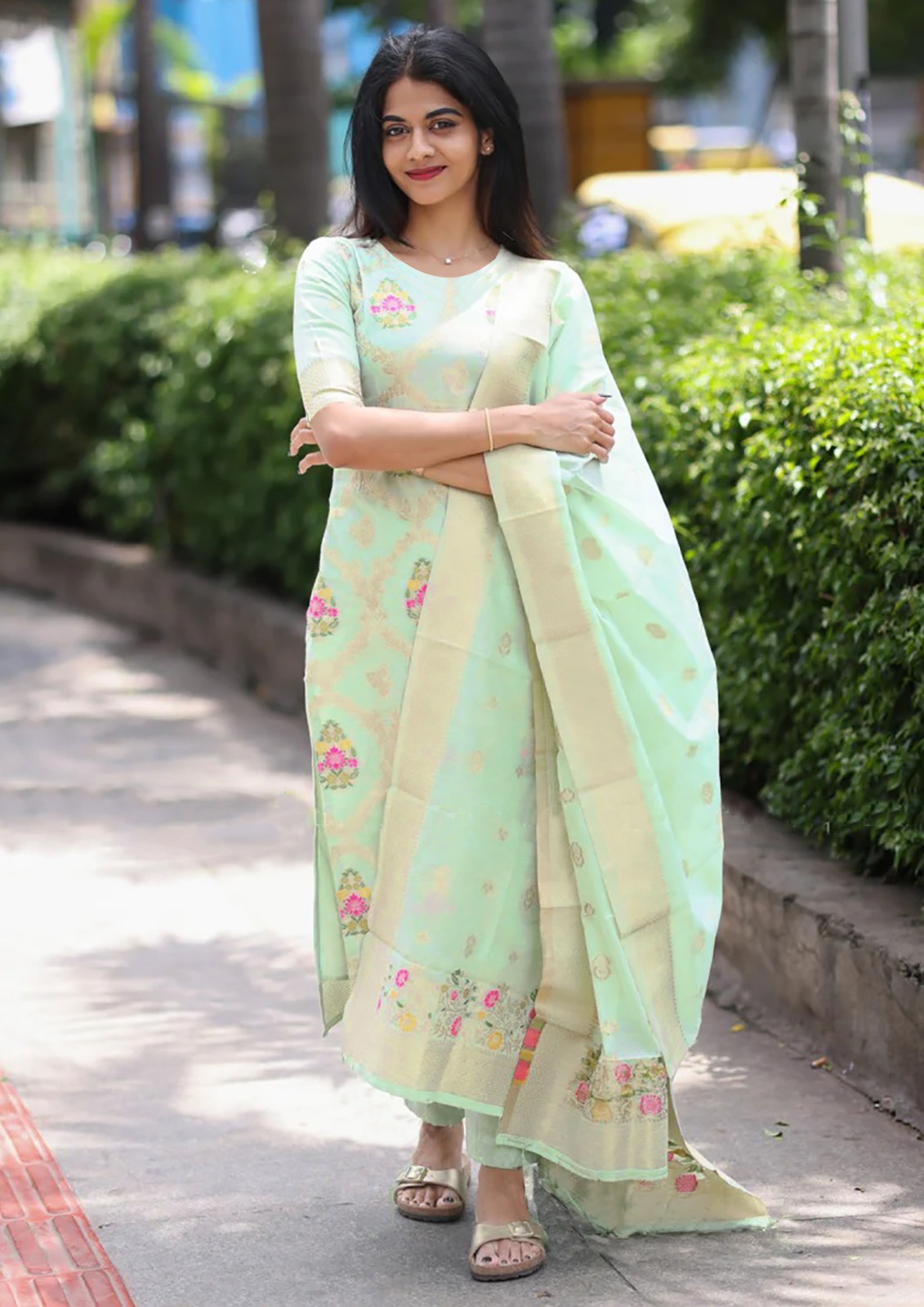
The most manageable fabric for an one-shoulder dupatta has moderate body and some natural surface friction. Cotton, Chanderi, crepe, matka silk, raw silk, Banarasi silk and lightly woven jacquard generally hold more predictably than very smooth satin or untreated glossy polyester.
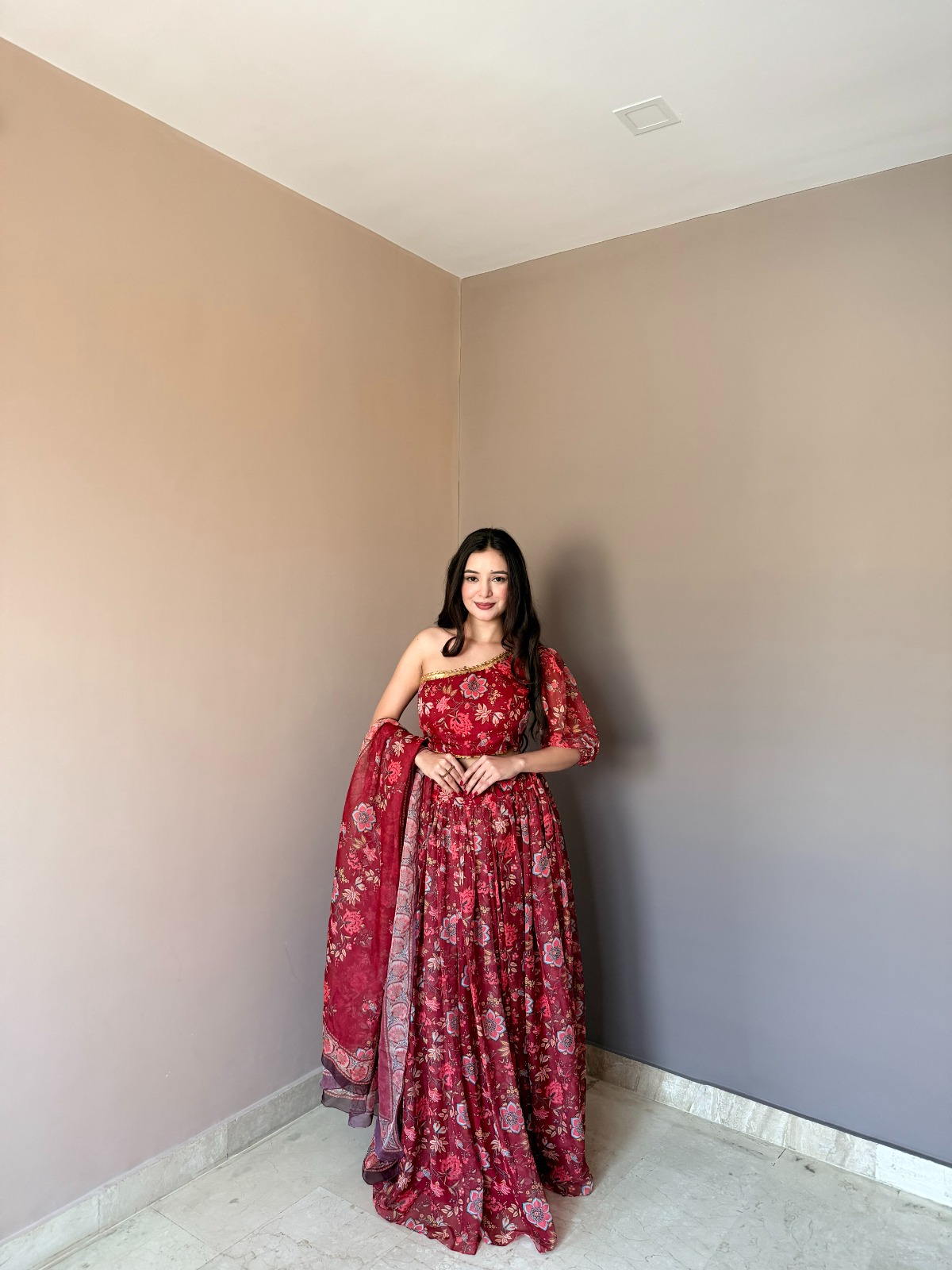
Organza creates a crisp, sculptural fall, but organza can shift suddenly when its edge catches air. A broad pressed fold works better than a thin twist. The Red Floral Organza Lehenga Set with One Shoulder Blouse shows why blouse construction matters with a crisp dupatta: a defined one-shoulder blouse creates a clear resting line, while a broad fold prevents the organza from balancing on a narrow edge.
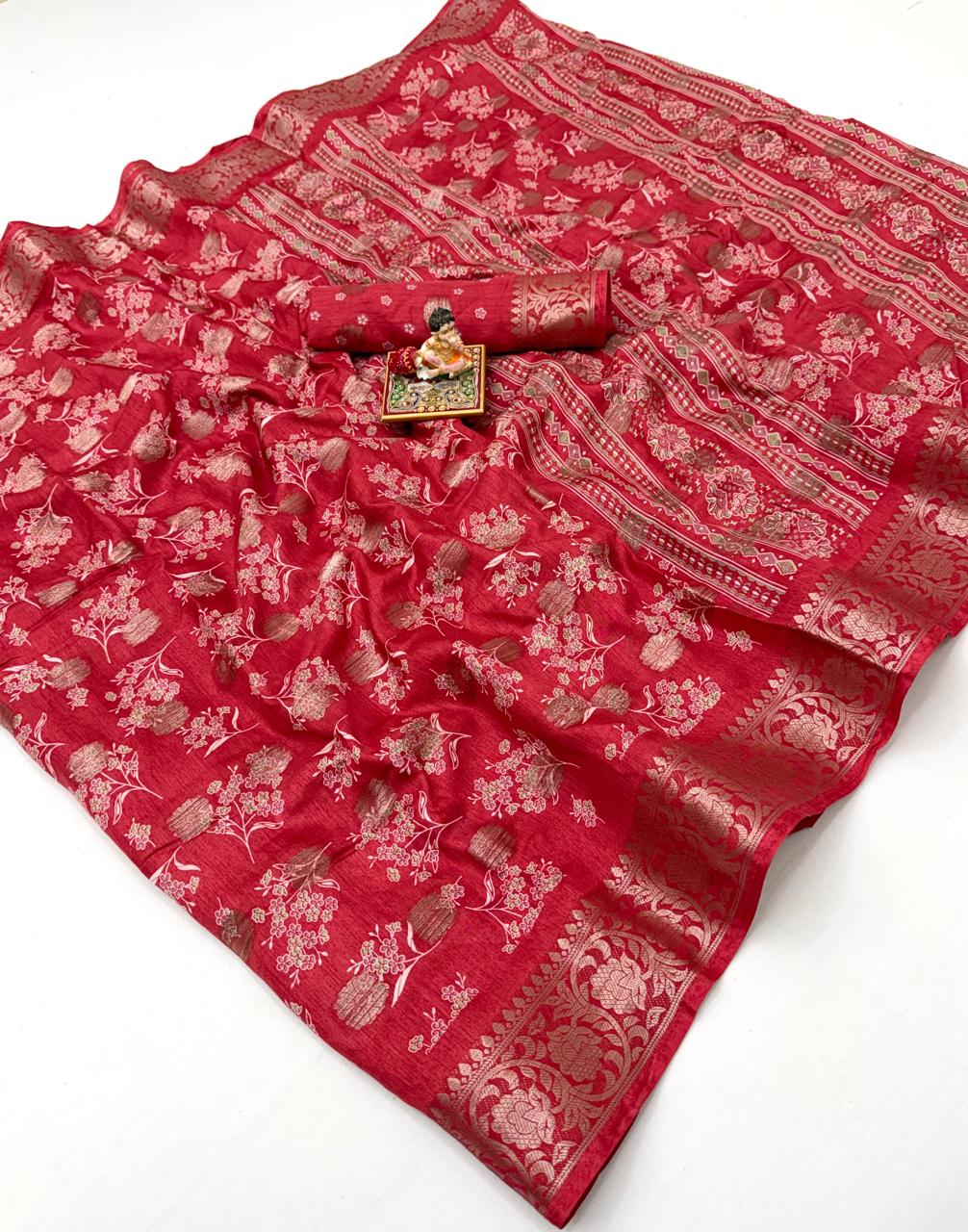
Banarasi silk and zari borders add weight, which can help the lower part of the dupatta stay down after placement. Excess border weight can also drag the shoulder section forward. Keep the heaviest border toward the front of the body or along the lower fall instead of allowing the full border to hang directly from the shoulder point.
Chanderi is a lighter option for daytime ceremonies and warm-weather wear. Chanderi with a zari border has more edge definition than plain, unbordered Chanderi, particularly when paired with a matte cotton blouse. Very light Chanderi may still need a transparent thread loop or a small concealed snap.
Crepe has a soft, fluid fall and mild grip, making it useful for kurta sets. The Rani Pink Crepe Embroidered Kurta Pant Dupatta Set is better suited to a relaxed front fall than to stiff fan-shaped pleats. Let the crepe follow the shoulder naturally, then secure its inner edge near the collarbone so it can move without falling away from the garment.
Cotton is often the easiest choice for long gatherings, commuting and daytime functions because cotton fibres create more friction against matte cotton or blended fabrics. The Vertical Cotton Straight Kurta Set with Dupatta demonstrates the practical advantage of a textured pairing: the dupatta can remain comfortable and relatively stable without requiring a rigid, formal drape.
Which fabrics need extra support?
Glossy satin, lightweight silk, fine net, very soft georgette and slippery polyester usually need extra support on one shoulder. These fabrics can still create an elegant look, but they need a wider fold, a structured blouse shoulder or a discreet grip point.
A smooth dupatta should not be pulled tightly across the chest to compensate for slipping. Excess tension can distort the neckline and make the fabric spring back toward the shoulder. A short hidden thread loop, a low-profile fashion-tape strip or a small clasp attached to a garment seam is a safer solution.
Give the Dupatta a Stable Garment to Rest On
The blouse or kurta underneath provides the foundation for a secure one-shoulder drape. A firm shoulder seam, a close-fitting upper edge and a matte surface create more stability than a loose or glossy garment.
A tailor can add a narrow thread loop at the shoulder seam for regular one-shoulder styling. The loop can match the garment or the dupatta and should sit approximately 2 to 4 centimetres inward from the shoulder edge. A small hook, snap or discreet brooch can pass through the dupatta while remaining hidden beneath the upper fold.
A silicone shoulder strip increases friction without adding visible bulk. A tailor can stitch a 1 to 2 centimetre strip to the inside shoulder seam where the strip touches the dupatta. Test the strip against a spare fabric piece first, because delicate silk, fine net and zari may mark or snag against some grip materials.
Light shoulder padding can also help when the natural shoulder slopes sharply. A thin 3 to 5 millimetre pad creates a flatter surface and stops the dupatta from immediately travelling toward the neck. Padding is particularly useful with sleeveless blouses, deep armholes and soft, unstructured necklines.
The Ikkat Cotton Padded Blouse for Women Sleeveless illustrates an useful styling principle: a textured, supported blouse gives a dupatta more to hold than a slippery camisole-style blouse. A sleeveless blouse doesn't automatically cause slipping, but a firm shoulder edge and close fit make a significant difference.
Replace Visible Pins with Concealed Grip Points
Concealed grip points keep the outside of the dupatta smooth while limiting movement at the shoulder. The most useful options are a sewn thread loop, a hidden snap, fashion tape, a tiny brooch under the fold or an internal shoulder-grip strip.
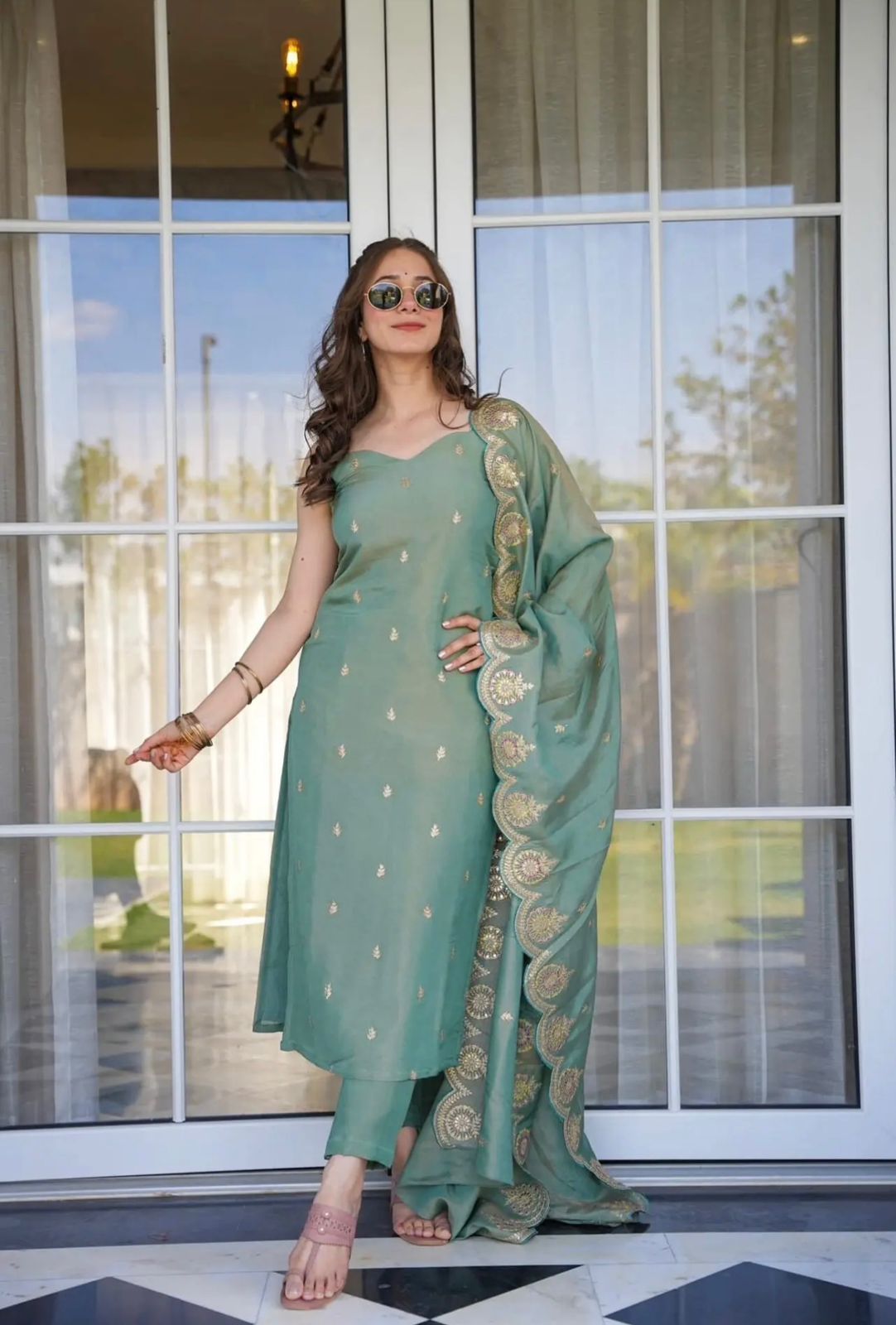
Place the first anchor close to the collarbone rather than at the far outer shoulder. The collarbone area moves less outward, so an anchor placed there controls rotation without making the shoulder fabric look tight. Add a second anchor near the side seam or underarm only if the dupatta repeatedly swings toward the back.
Fashion tape works best on clean, dry fabric and should be tested before an event. Use a short strip of approximately 3 to 5 centimetres, press the tape onto the garment first and then lay the dupatta over it without stretching. Fashion tape is suitable for temporary support, but sewn loops are safer for heavy embroidered or zari-bordered dupattas.
A small brooch can act as a functional anchor when its clasp is hidden under a fold. Choose a smooth-backed brooch and avoid piercing delicate organza, fine net or fragile zari. Attach the brooch through a reinforced seam, border or inner fold whenever possible.
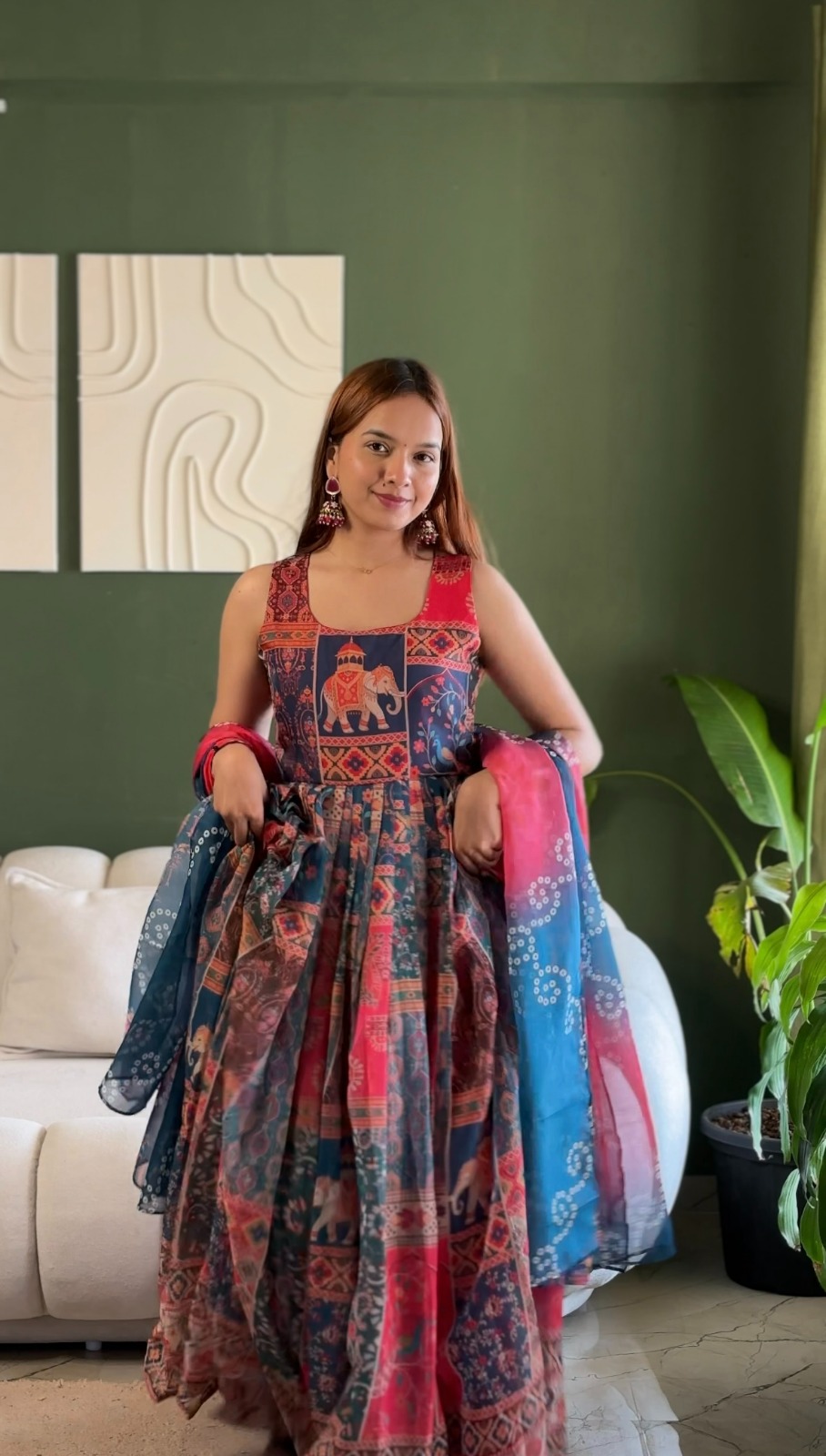
The Royal Patola Printed Designer Gown with Elegant Dupatta and the vichitra Jacquard Woven Gown Dupatta Set can both benefit from an under-fold anchor because gown necklines may have fewer natural shoulder seams than traditional kurtas. Place the anchor where the dupatta crosses the upper chest rather than at the gown's outermost shoulder point.
Balance the Front and Back Lengths
A balanced front and back fall prevents the hanging portion from pulling the shoulder fold out of place. Adjust the lengths before adding an anchor so that the heavier side doesn't act like a lever against the shoulder.
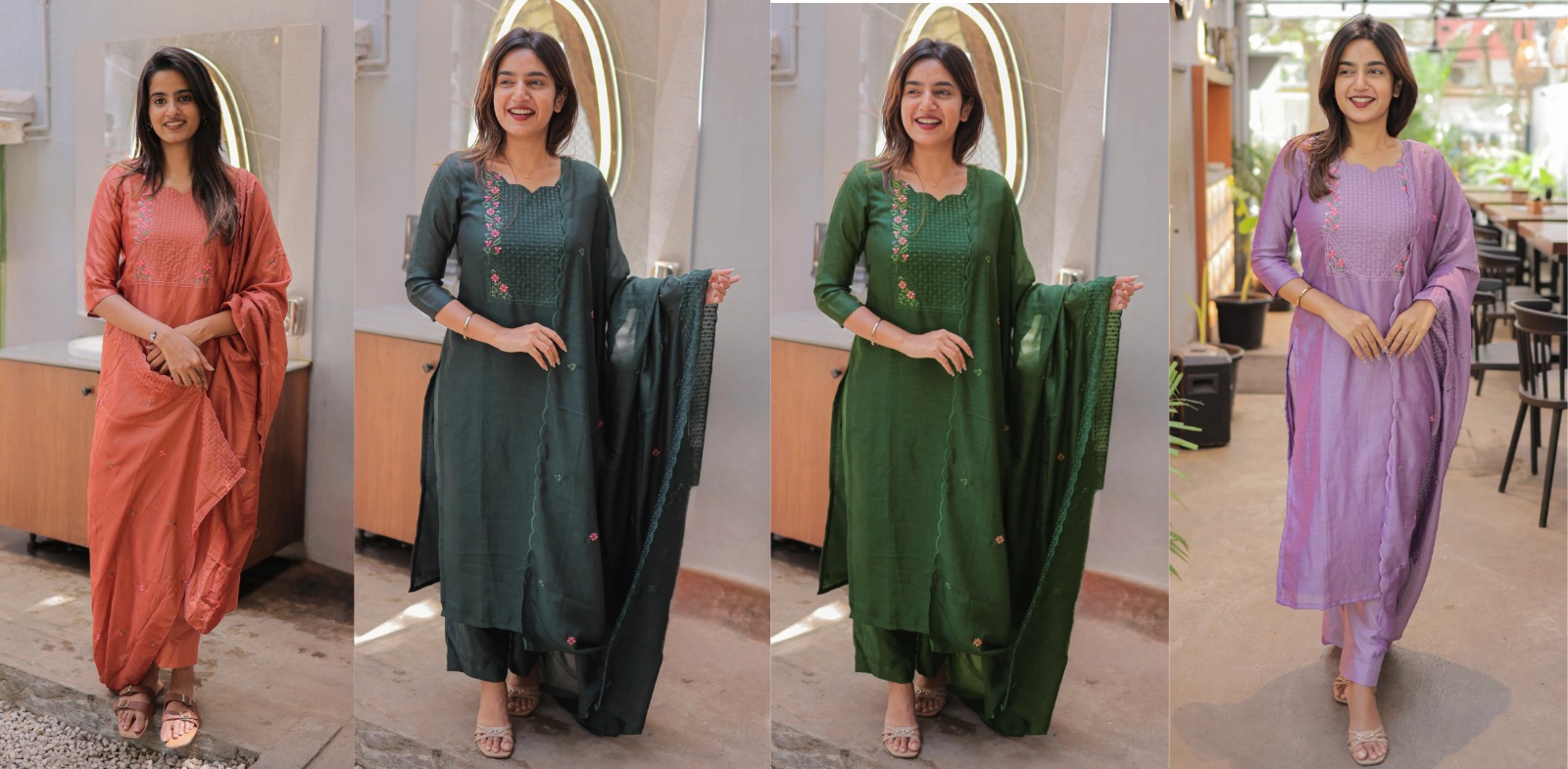
For a lehenga, a free-flowing front fall reaching around mid-thigh or knee level is usually easier to manage than a floor-length front fall. A long front edge can catch on footwear, chair legs or another person's clothing. A longer back fall can work with lightweight fabric, but a heavily embroidered border should not trail where it can snag.
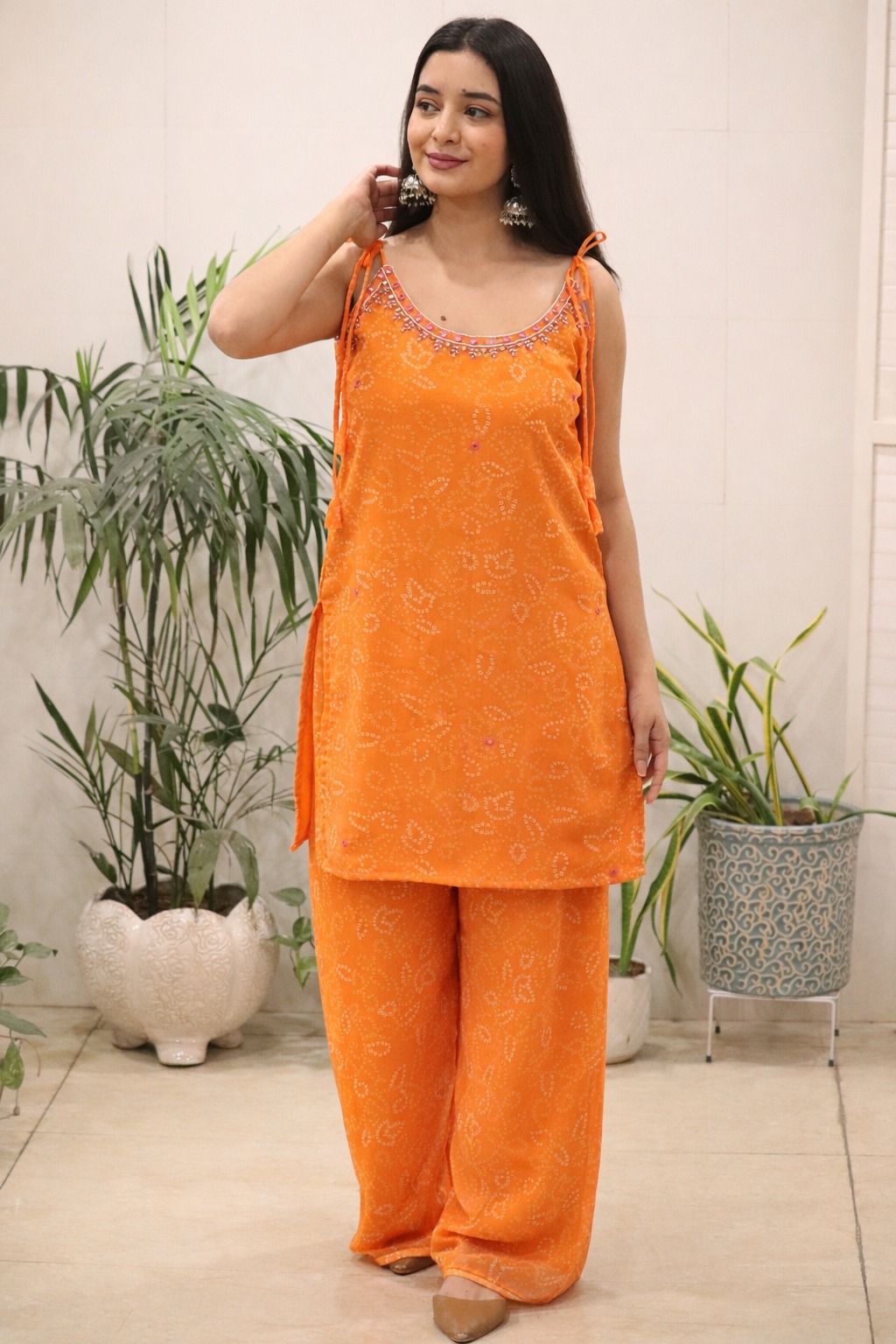
For a salwar suit or kurta set, a front fall between the hip and lower calf often gives an useful balance between elegance and movement. The Women's Mustard Silk Blend Kurta Set with Dupatta can be arranged with one broad shoulder fold and a measured front fall, preventing the silk blend from dragging excessively while preserving a graceful line.
The Designer Lehenga Choli with Dupatta is suited to a two-point approach when the dupatta is ornate: one concealed hold near the collarbone and a second light hold at the waist or side seam. The second point prevents the border from swinging while allowing the shoulder section to remain relaxed.
When the dupatta has unequal embroidery, keep the heavier embroidered panel closer to the centre of the body. Weight placed far behind the shoulder creates more pull than the same weight hanging vertically down the front. A quick mirror test while walking, sitting and lifting one arm will reveal whether the length needs adjustment.
Match the Technique to the Outfit and Occasion
The most secure drape is the one that matches the outfit's construction and the amount of movement expected during the event. A formal reception, a Haldi ceremony and a daytime family gathering place different demands on the dupatta.
A lehenga for a reception can support a broad, decorative shoulder fold with a concealed collarbone anchor. Heavy zari, sequins and embroidery should be distributed across the body instead of hanging entirely from one shoulder. The dupatta should be checked under indoor and outdoor lighting because some very smooth synthetic surfaces become more slippery when warm.
A Haldi ceremony requires a more practical arrangement because dancing, sitting on the floor and frequent arm movement can disturb a delicate drape. Choose cotton, crepe or a textured blend when possible, keep the front fall above the ankle and add a hidden side-seam anchor. A shorter, controlled fall is safer around turmeric paste, food and crowded seating.
A kurta set for office-adjacent festivities or daytime visits benefits from a single broad fold and a front fall that ends between the hip and calf. The Rani Pink Crepe Embroidered Kurta Pant Dupatta Set and the Women's Mustard Silk Blend Kurta Set with Dupatta can both be worn this way, with the anchor concealed near the neckline rather than placed at the outer edge.
A gown-style outfit needs careful attention to the neckline. The vichitra Jacquard Woven Gown Dupatta Set has a woven texture that can provide useful friction, while a smoother gown-and-dupatta combination may require tape or a sewn loop. Keep the anchor beneath an upper fold so the neckline remains visually clean.
A Five-Minute Test Prevents Last-Minute Readjustment
A short movement test shows whether an one-shoulder dupatta will remain stable during real activity. Test the drape before leaving home instead of judging it only while standing in front of a mirror.
Place the dupatta in the intended fold and check that at least 12 centimetres of fabric rests across the shoulder.
Walk for five minutes, turn in both directions and sit on a chair without touching the dupatta.
Raise the arm on the opposite side, then lift the arm beneath the dupatta to test whether the fabric shifts toward the neck.
Carry the intended handbag and check whether the strap catches the front or back fall.
Add a concealed anchor only after identifying the direction of movement, because unnecessary anchors can make the drape stiff and uncomfortable.
Check the garment and dupatta together under movement rather than testing the dupatta separately. A drape that holds on a cotton kurta may slide on a satin blouse, and a shoulder fold that works with an unbordered dupatta may fail when a heavy zari edge is added.
Care also affects grip over time. Fabric softener can make cotton and blends smoother, while oil, lotion or perspiration on the shoulder can reduce friction. Wear the blouse on clean, dry skin, avoid applying body oil directly beneath the shoulder fold and store the dupatta flat or loosely folded so the working edge retains its shape.
Common Mistakes That Make an One-Shoulder Drape Slip
The most common mistake is relying on one tiny pin at the outer shoulder. A single outer pin carries the full pull of the hanging fabric and may create a visible bump or damage delicate material.
Another mistake is choosing the most slippery dupatta for the most active event. Smooth satin and fine net can look beautiful in still photographs, but they need a structured blouse and planned support if the wearer will dance, travel or sit for long periods.
Over-pleating also reduces stability. Several narrow pleats create a high, rounded stack with limited contact against the garment. One broad, flat fold usually gives better grip and a cleaner line.
Finally, don't place a heavy border entirely behind the body. A weighted back fall pulls the shoulder section backward and encourages rotation. Move part of the border to the front, shorten the back length or add a discreet second anchor near the waist.
A secure one-shoulder dupatta comes from design decisions made before the final pinning stage. Select a fabric with suitable friction, create a broad pressed fold, give the fold a stable garment surface, balance the hanging lengths and use hidden support only where movement proves it necessary. Those small adjustments answer what keeps it put for dupatta on one shoulder without constant pinning while preserving the relaxed, elegant quality of the drape.
Common Questions About Keeping a One-Shoulder Dupatta Secure
How do I keep my dupatta from slipping off one shoulder?
Use a broad, flat shoulder fold, a textured or moderately structured fabric and a firm blouse or kurta shoulder. A concealed thread loop, snap or short strip of fashion tape near the collarbone can provide extra support without showing.
Can I wear a one-shoulder dupatta without safety pins?
Yes, a one-shoulder dupatta can stay in place without safety pins when the fabric has enough friction and the drape is balanced. A sewn shoulder loop, silicone-grip strip or hidden brooch can replace visible pins for more demanding fabrics.
Which dupatta fabric is least likely to slip?
Cotton, Chanderi, crepe, raw silk and lightly textured jacquard are generally less slippery than satin, glossy polyester or fine net. A zari border may improve edge definition, but excessive border weight can pull the dupatta forward.
Where should I secure a one-shoulder dupatta?
The first concealed anchor should sit near the collarbone, approximately 2 to 4 centimetres inward from the shoulder edge. A second anchor near the waist or side seam is useful only when the dupatta rotates or swings during movement.
How wide should the dupatta fold be on one shoulder?
A folded shoulder band between 12 and 18 centimetres wide usually offers better stability than a narrow rolled edge. The ideal width depends on the fabric, shoulder shape and embroidery weight, but the fold should remain flat rather than bulky.
How can I keep a heavy embroidered dupatta from pulling backward?
Move the heaviest embroidered or zari border toward the front of the body and reduce the back fall length. A second concealed hold at the waist or side seam can control the border while leaving the shoulder fold comfortable.


