

What bottoms work with short kurtis for balanced proportions depends on three measurable details: the kurti hemline, the volume of the bottom and the visual position of the waist. A kurti ending around the upper thigh creates a different silhouette from one ending at the hip, so the same palazzo or salwar won't produce the same result on every outfit. The most reliable approach is to match volume deliberately rather than choosing bottoms by colour alone.
Short kurtis are usually between hip length and mid-thigh length. That shorter hem leaves more of the lower body visible, which makes the rise, width and fall of the bottom especially important. Straight pants create a long vertical line, palazzos add movement, and salwars introduce rounded volume around the hips and knees. Each option can look balanced when its proportions relate to the kurti's cut.
What Bottoms Work With Short Kurtis for Balanced Proportions?
Straight pants, cigarette pants, moderate palazzos and carefully fitted salwars are the most dependable bottoms for a short kurti. The best choice depends on whether the kurti is fitted, A-line, flared, heavily embellished or visually plain.
A simple proportion rule is useful: pair a voluminous kurti with a narrower bottom, and pair a slim or straight kurti with a bottom that has controlled width. A short A-line kurti can therefore work with straight pants or slim cigarette trousers, while a fitted short kurti can support a wider palazzo. The aim is to give the outfit one dominant area of volume instead of making the top and bottom compete.
Hemline placement also matters. A kurti ending at the widest part of the hip can benefit from a bottom with a clean, uninterrupted fall. A kurti ending above the hip gives more freedom to use pleats, gathers or a broader leg. These principles apply to cotton, Chanderi, jacquard and silk kurta sets alike.
When Should You Choose Straight Pants or Cigarette Pants?
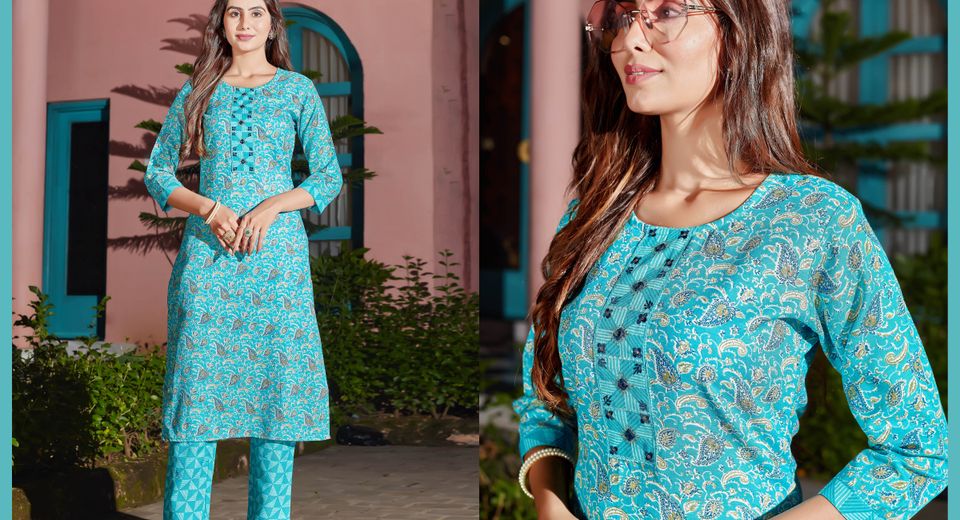
Straight pants are the strongest choice when a short kurti needs a longer, cleaner line from waist to ankle. Straight pants work particularly well with A-line kurtis, straight kurtis and kurtis carrying mirror work or dense embroidery.
Straight pants should skim the leg without clinging tightly. A mid-rise or high-rise waistband usually gives the most stable proportion because the kurti doesn't appear to float too low on the body. An ankle length of approximately 2 to 5 centimetres above the ankle bone keeps the look neat with flats, juttis or low block heels.
Cigarette pants are narrower than standard straight pants and suit a short kurti with a structured shape. The narrow ankle creates a refined outline, but very tight trousers can make a heavily embellished or broad-shouldered kurti look top-heavy. When the kurti has a round neck, small side slits and limited surface decoration, cigarette pants offer a particularly polished office or daytime combination.
The Designer Cotton A-Line Kurti Pant Set with Mirror Work demonstrates why coordinated pants are useful with a short A-line silhouette. Mirror work already supplies visual interest near the upper body, so a clean pant shape prevents the outfit from becoming crowded. The Brown Cotton A-Line Kurti Pant Set with Mirror Work offers the same proportion lesson in a deeper neutral palette: the fitted lower line lets the kurti remain the focal point.
How Do Palazzos Balance a Short Kurti?
Palazzos balance a short kurti when the kurti is relatively fitted or straight and the palazzo begins at the natural waist. A wide leg adds volume below the short hem, creating a deliberate top-and-bottom contrast rather than an unfinished look.
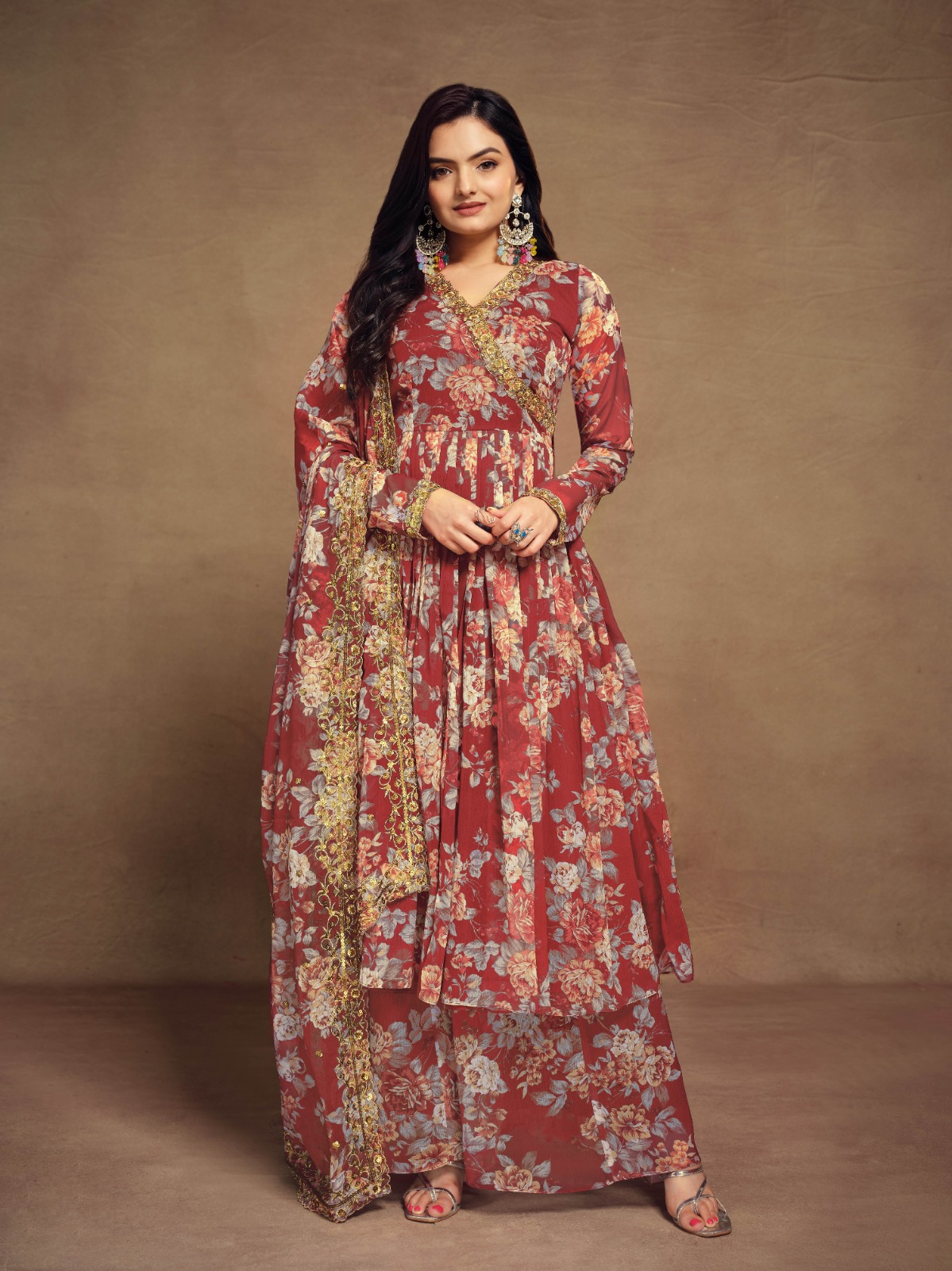
Choose a palazzo with a fluid fall when the kurti is made from a light fabric such as Chanderi or cotton. Very stiff, heavily pleated palazzos can add width at the waist and may obscure the kurti's shape. A leg width of approximately 28 to 36 centimetres, measured flat from seam to seam, is generally easier to style than an extremely wide, skirt-like cut with a short kurti.
A short kurti with a palazzo looks most balanced when the kurti has side slits or a slightly curved hem. Side slits reveal the waistband and establish where the lower half begins. If the kurti is completely straight and ends at the upper thigh, a moderate palazzo with a flat front will usually look more controlled than a heavily gathered version.
Printed or embroidered kurtis can be paired with solid palazzos to keep the pattern readable. The Peach Printed Cotton Kurti Pant Set for Women Casual is an useful example of a short, easy silhouette where the pant remains visually quiet. A similar strategy works with Kalamkari Print Salwar Suits: let the print lead, then select a bottom whose colour appears in the motif rather than introducing a second competing pattern.
For petite frames, a high-rise palazzo and a kurti ending above mid-thigh can preserve leg length. For taller frames, a slightly longer short kurti and a full-length palazzo can create a more relaxed proportion. Pointed juttis or sandals with a modest heel extend the vertical line without making the outfit formal.
Are Salwars and Patiala Bottoms Suitable for Short Kurtis?
Salwars and Patiala bottoms suit short kurtis when the outfit is intended to look relaxed, traditional or deliberately voluminous. These bottoms need a kurti with enough structure or simplicity to prevent excess gathers from overwhelming the full silhouette.
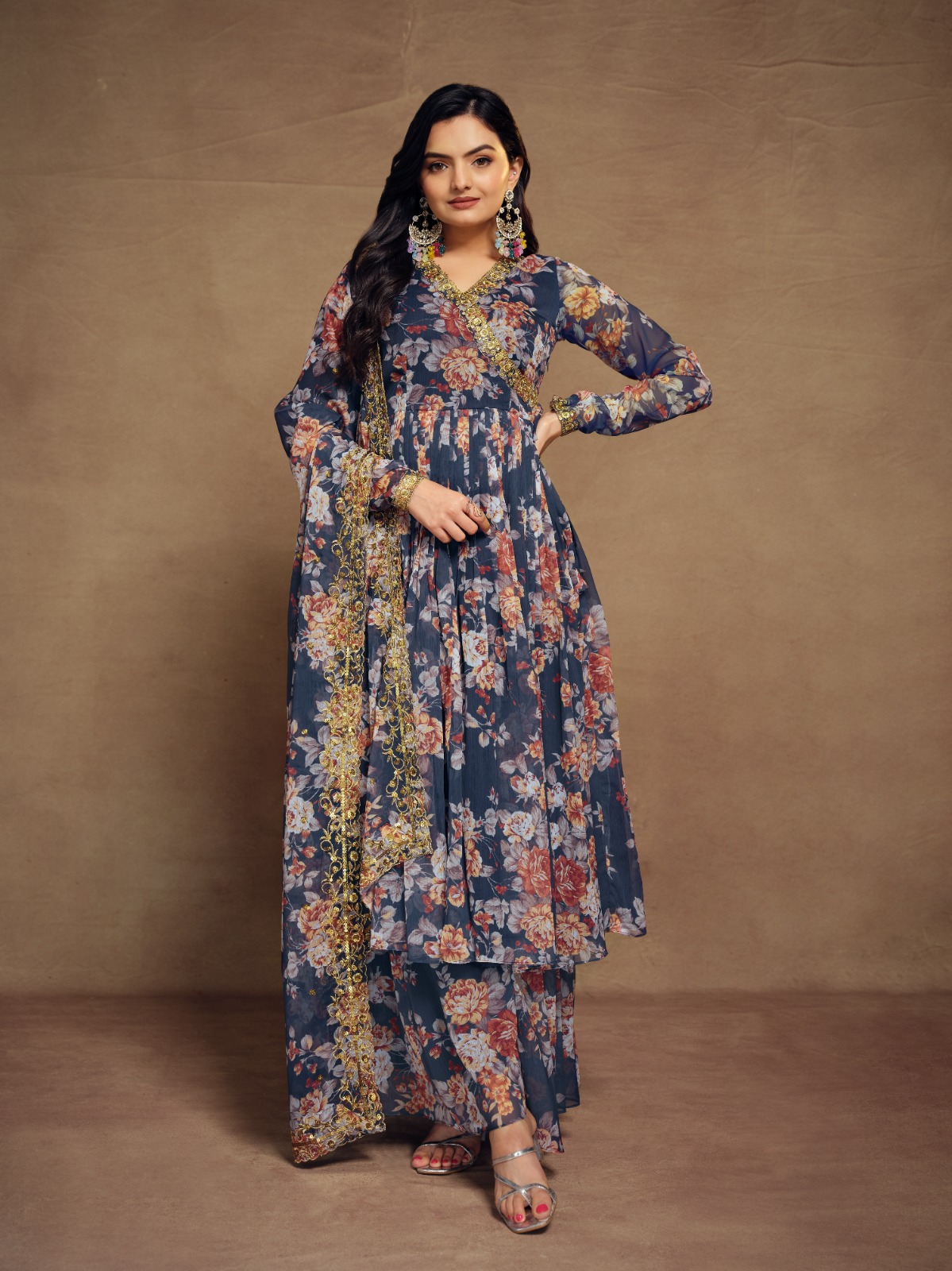
A classic salwar gathers at the waist and narrows toward the ankle. It works well with a short straight kurti, especially when the kurti has a clean neckline and limited flare. Keep the salwar's gathers controlled if the kurti ends around the hip, because dense pleats at both the waist and hip can broaden the middle visually.
Patiala pants have deeper pleats and a fuller drop-crotch shape than an ordinary salwar. A short kurti is essential with Patiala pants because a long kurti hides the characteristic folds. Choose a kurti that ends between the high hip and upper thigh, then balance the volume with a fitted sleeve, a defined shoulder or a relatively simple front.
Punjab Patiala Salwar Suits show how the short-kurti-and-full-bottom relationship belongs to a recognised regional styling language. The effect is strongest when the Patiala gathers remain visible and the dupatta is worn over one shoulder instead of wrapped heavily around the torso. Flat juttis, a small potli and restrained jewellery complete the proportion without adding more volume at the waist.
For a more regional print direction, Gujarat Bandhej Salwar Suits can be styled with a solid short kurti or a bottom that picks up one Bandhej colour. Maharashtra Paithani Inspired Salwar Suits can take a slimmer salwar or straight pant when the weave-inspired border already creates strong horizontal detail. A heavy border on both kurti and bottom can shorten the visual line, so keep one border quieter when possible.
Which Bottoms Suit Different Short-Kurti Shapes?
The kurti's cut should determine the bottom's width, rise and degree of decoration. Matching these three features creates balance more reliably than following a fixed body-shape rule.

Fitted and straight short kurtis
Fitted and straight short kurtis work with palazzos, straight pants, cigarette pants and lightly gathered salwars. A wider bottom adds movement to a narrow top, while a straight pant creates a streamlined outfit for work or travel.
The Vertical Cotton Straight Kurta Set with Dupatta illustrates the value of a continuous vertical line. A straight bottom preserves the kurta's lengthening effect, while a contrasting wide pant can make the ensemble more contemporary. Keep the dupatta long and open when using a straight bottom, or fold it narrowly over one shoulder to avoid adding width across the chest.
A-line and flared short kurtis
A-line and flared short kurtis usually need a narrower bottom, such as a straight pant, cigarette pant or slim salwar. The flare already supplies width from the waist downward, so a highly wide palazzo can make the outline look boxy.
The Beige Kurta Set with Blue Chanderi Dupatta for Women shows how colour contrast can be concentrated in the dupatta while the lower half remains orderly. With an A-line kurta, use a beige, ivory or muted blue straight pant to maintain the clean transition from the kurta to the floor.
Embellished and printed short kurtis
Embellished and printed short kurtis look most balanced with solid bottoms in a related or deliberately contrasting colour. Mirror work, zari, floral motifs and contrast borders already create visual activity, so repeating a large pattern below the hem can fragment the outfit.
The Designer Roman Silk Kurti Set with Jacquard Dupatta can take a slim straight pant when the jacquard dupatta supplies texture and sheen. A fluid palazzo is possible for evening wear, but the palazzo should be plain and its waistband should sit securely at the natural waist. With a cotton printed kurti, a matching solid pant generally looks more versatile than a second print.
How Should Fabric, Colour and Dupattas Affect the Choice?
Fabric weight, colour contrast and dupatta placement affect perceived proportion as much as the cut of the bottom. Lightweight fabrics move away from the body, while dense fabrics hold a stronger outline and may require simpler lower layers.
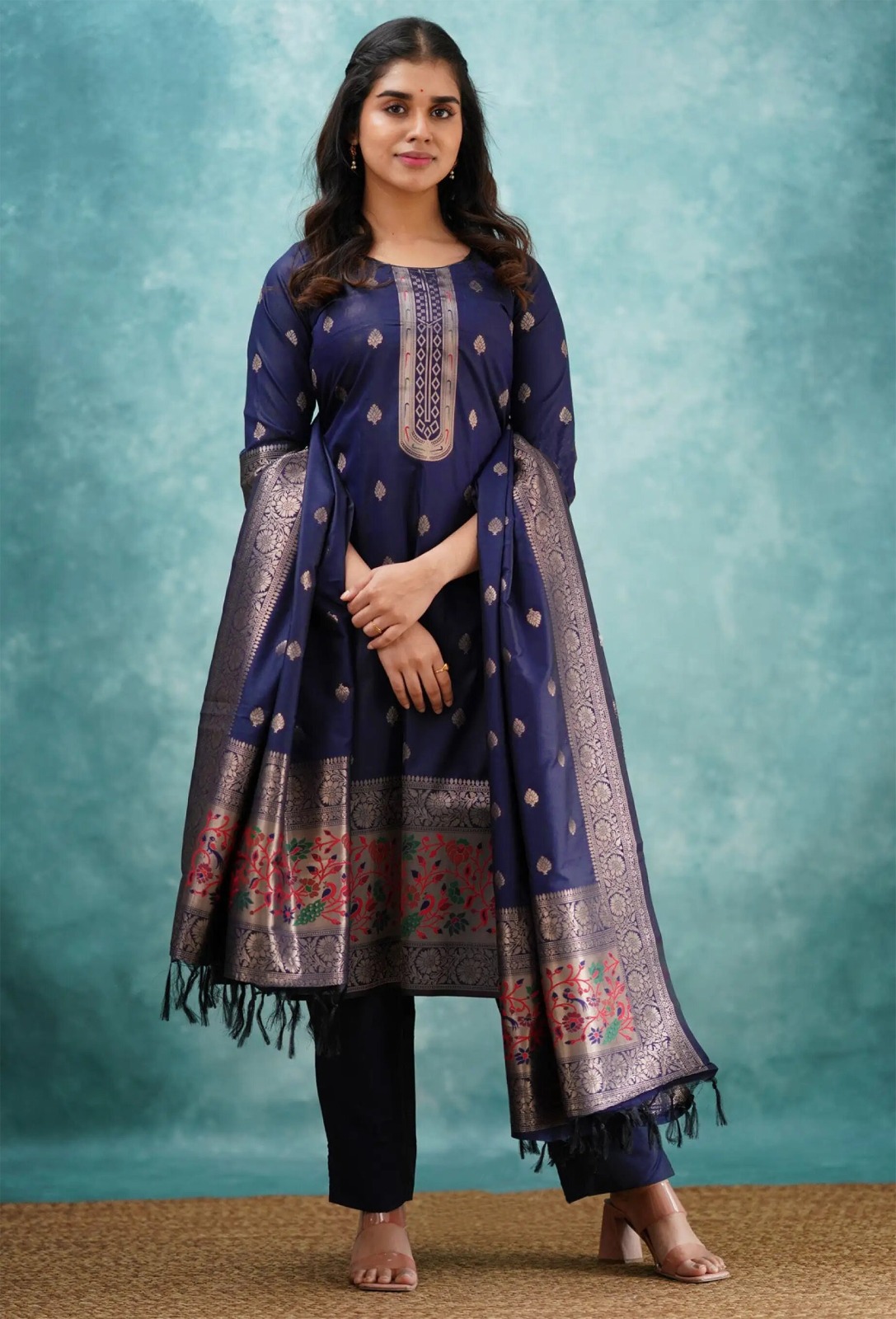
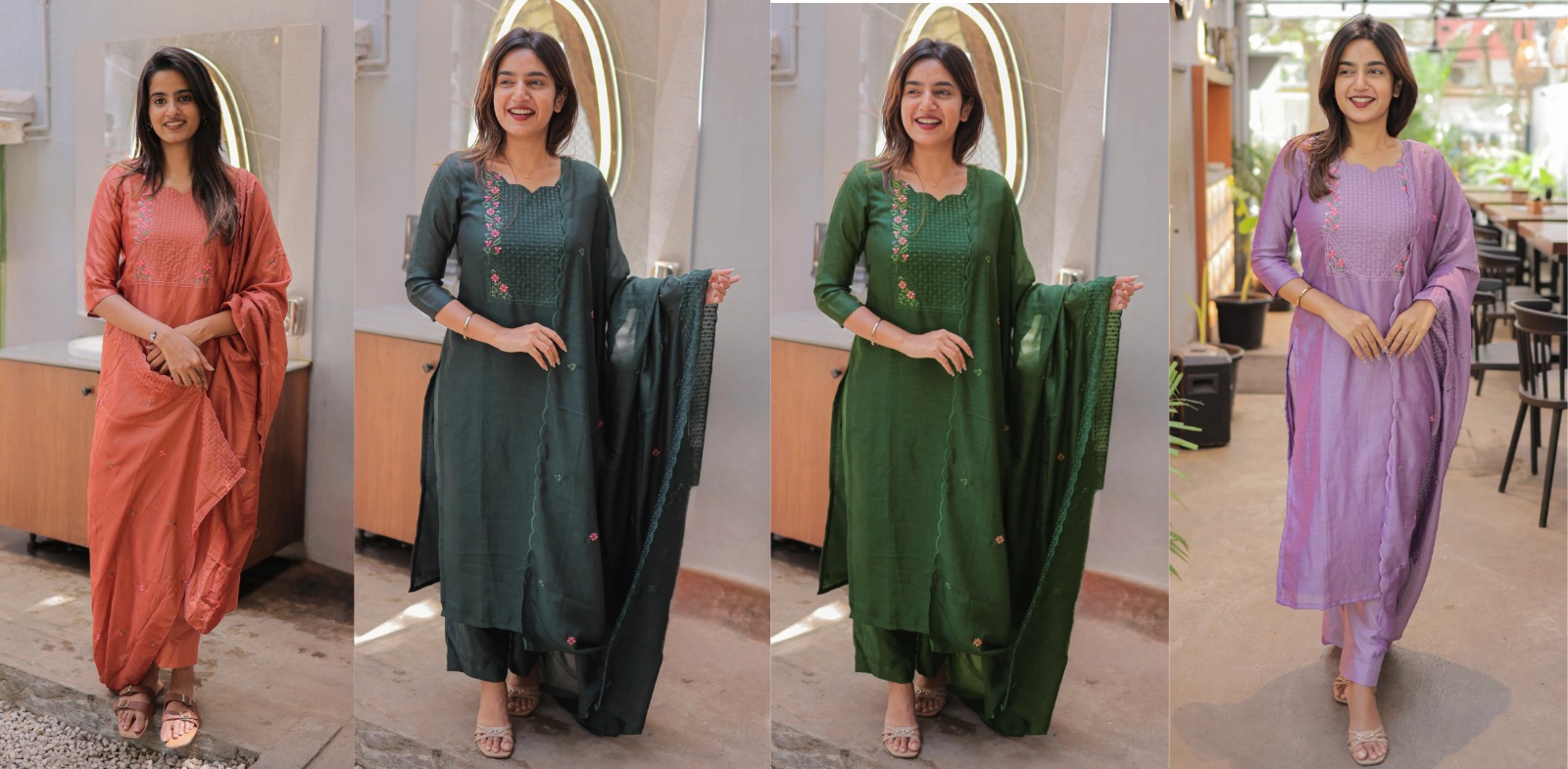
Chanderi has a light, crisp character that pairs naturally with straight pants, narrow salwars and softly flowing palazzos. The Pastel Blue Embroidered Chanderi Kurta Set with Dupatta can be kept airy with a pale straight pant, or given more definition with a slightly darker blue cigarette pant. The Mustard Embroidered Chanderi Kurta Set for Women - Varnavi. Benefits from a restrained lower half because mustard embroidery already draws the eye.
Cotton is practical for short kurtis because cotton straight pants, cotton palazzos and cotton salwars hold their shape without excessive shine. The Vertical Cotton Straight Kurta Set with Dupatta is suitable for a long vertical styling line, while a cotton A-line kurti can accommodate a more fitted pant for everyday movement.
Colour blocking changes where the eye stops. A bottom close in colour to the kurti creates a longer column, while a strongly contrasting bottom creates a clear horizontal break at the hem. Use a tonal bottom when the goal is a taller, quieter appearance; use contrast when the kurti is simple and the outfit needs stronger definition.
Dupatta placement should complement the bottom rather than conceal it. A dupatta worn open over both shoulders adds width and pairs well with narrow pants. A dupatta worn on one shoulder keeps a palazzo or Patiala visible. Odisha Sambalpuri Salwar Suits can carry a strong patterned dupatta, but a plain or tonal bottom helps preserve the clarity of the woven-inspired visual language.
How Can You Build Short-Kurti Outfits for Work, Casual Days and Festive Events?
Workwear calls for straight pants or cigarette pants, casual dressing suits cotton palazzos or relaxed salwars, and festive styling can support richer fabrics with controlled bottom volume.
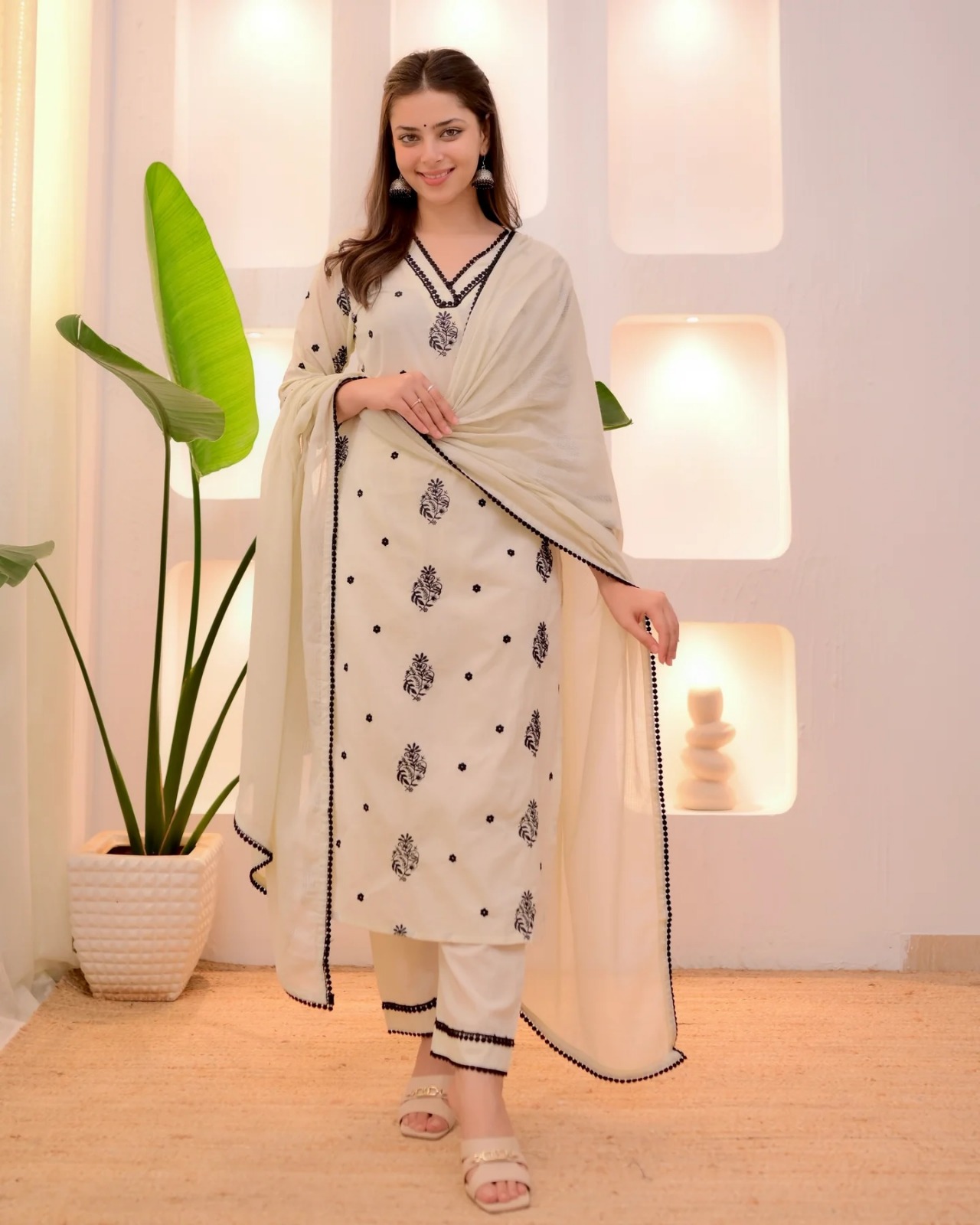
For work, pair a short straight or A-line kurti with ankle-length straight pants, closed-toe flats and a dupatta folded into a narrow vertical panel. Keep the bottom free from heavy embellishment and choose a waistband that stays flat while sitting. Beige, navy, charcoal, ivory and muted brown are practical grounding colours for embroidered or printed kurtis.
For casual days, a cotton short kurti with a moderate palazzo or tapered pant gives movement without looking untidy. The Peach Printed Cotton Kurti Pant Set for Women Casual is suited to this formula because the cotton print can remain the focus while the pant keeps the outfit easy to wear. Flat sandals, a shoulder bag and small earrings are enough for errands, classes or informal lunches.
For a Haldi ceremony, choose a short kurti with a solid palazzo or a lightly gathered salwar in yellow, green, pink or orange. Cotton and Chanderi can both work, but secure the dupatta so it doesn't drag through turmeric or become difficult to manage. For a wedding guest look, jacquard, silk blends, zari details or an embroidered Chanderi kurta can be paired with a straight pant for refinement or a fluid palazzo for a more dramatic finish.
For regional styling, Kalamkari Print Salwar Suits can be grounded with a solid straight bottom, while Gujarat Bandhej Salwar Suits can take a narrow salwar that allows the dupatta and tie-dye detail to remain visible. Regional references become more convincing when the outfit has one clear focal point instead of several unrelated motifs.
What Fitting Details Prevent an Unbalanced Short-Kurti Outfit?
A secure waistband, correct trouser length and enough ease at the hip prevent most proportion problems with short kurtis. Small fitting adjustments can change the complete appearance of the outfit.
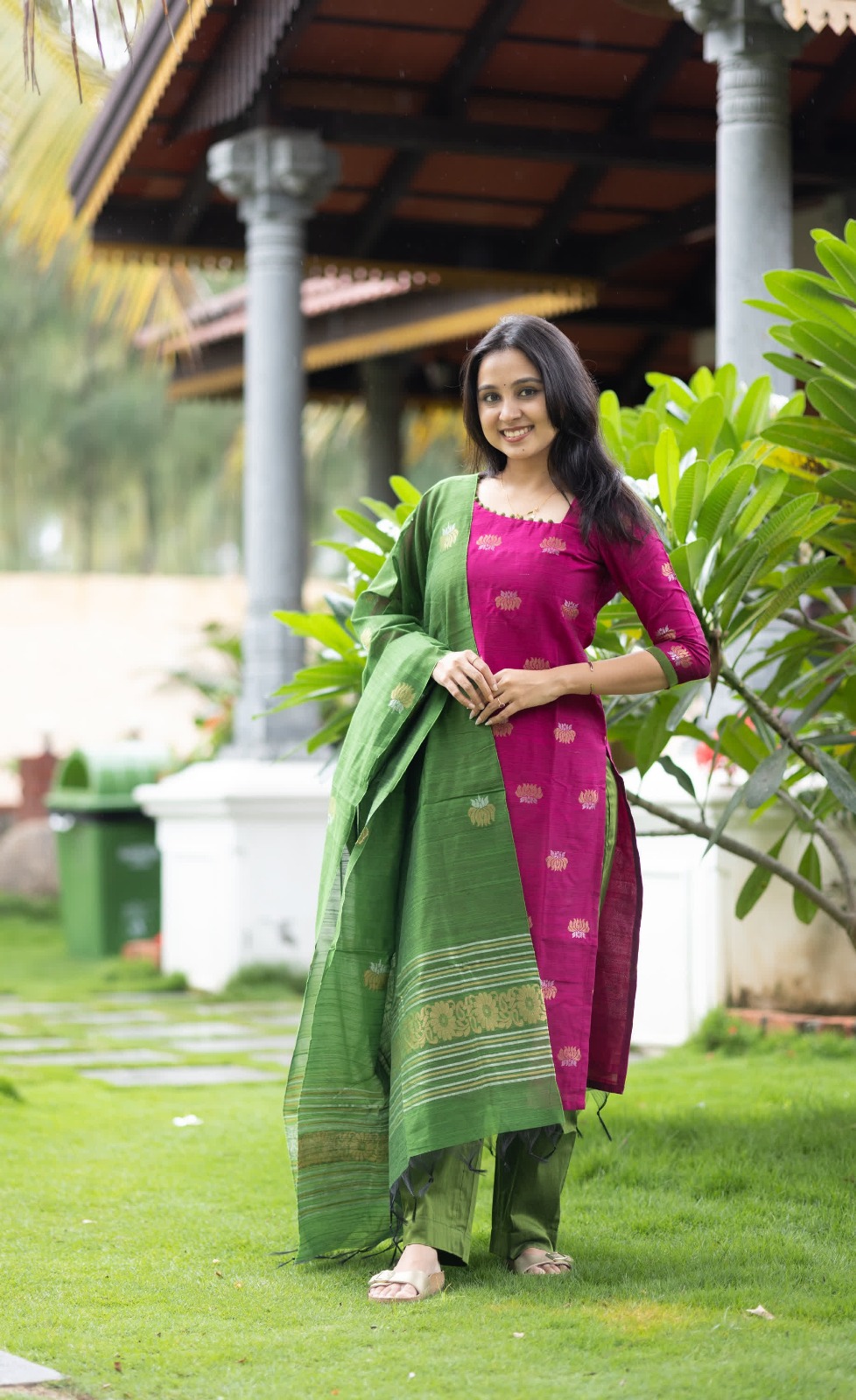
- Check the rise: A waistband that sits too low can lengthen the torso and make the short kurti appear disproportionately short. A mid-rise or high-rise fit usually gives a cleaner starting point.
- Check the hem: Straight pants should generally finish at the ankle or just above it, while palazzos should nearly meet the top of the foot without pooling heavily.
- Check the hip ease: Allow enough room to sit and walk, but avoid excess fabric that forms unplanned horizontal folds under the kurti hem.
- Check the side seam: A twisted or slanting seam makes the leg look uneven and distracts from the kurti's line.
- Check the contrast: A sharp colour break at a wide part of the calf can visually shorten the legs. A tonal shoe or longer hem can soften that break.
- Check the dupatta: Keep one edge visible when the bottom is a key styling feature, especially with Patiala pants, palazzos or embroidered borders.
Before wearing the complete outfit, stand at least two metres from a mirror and assess the silhouette from shoulder to shoe. A photograph taken in natural light is also useful because camera distance reveals whether the top and bottom are competing. The most balanced outfit usually has a clear hierarchy: one main source of volume, one main source of ornament and a continuous line through the lower half.
Short Kurti Bottom-Wear Questions Answered
Can I wear a palazzo with a short kurti?
Yes, a palazzo works well with a short fitted or straight kurti because the wide leg balances the narrow upper silhouette. Choose a high-rise waistband, a fluid fabric and a moderate width so the outfit does not become bulky around the hips.
Which pants make a short kurti look taller?
Straight pants or cigarette pants in a colour close to the kurti usually create the longest visual line. An ankle-length hem, high-rise fit and pointed footwear can reinforce the effect.
Can a short kurti be worn with Patiala pants?
A short kurti is appropriate with Patiala pants because the shorter hem leaves the characteristic pleats visible. Keep the kurti relatively simple or fitted so the gathered Patiala shape remains intentional rather than overwhelming.
Should short kurtis be worn with matching or contrasting bottoms?
Matching or tonal bottoms create a continuous column and usually make the outfit look longer. Contrasting bottoms add definition and work especially well when the short kurti is plain, but a strong contrast can create a horizontal break at the hem.
What bottoms work with a short A-line kurti?
Straight pants, cigarette pants and slim salwars are the most balanced choices for a short A-line kurti. The A-line flare already adds lower-body volume, so an extremely wide palazzo may make the overall silhouette look broad.
How should I style a short kurti for a Haldi ceremony?
Pair a short kurti with a solid palazzo, straight pant or lightly gathered salwar in a bright yellow, pink, green or orange shade. Secure the dupatta on one shoulder and choose washable cotton or easy-care fabric if turmeric stains are a concern.


