

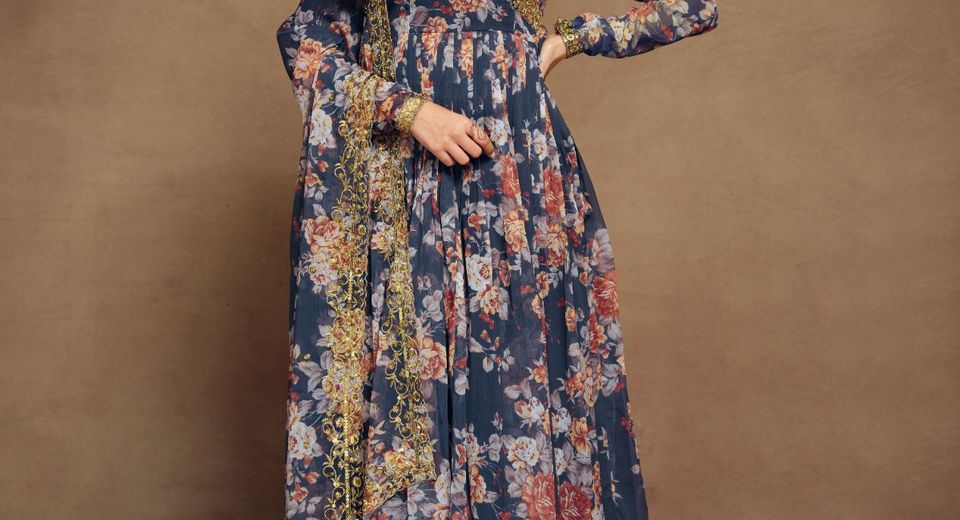
What Bottoms Work With Kaftan Kurtis for Balanced Proportions depends on three visible factors: the kurti's hemline, the amount of fabric around the torso and the width of the bottom. A flowing kaftan kurti already creates volume above the hip, so a narrow or gently flowing bottom usually produces the clearest silhouette. The right pairing can make a petite frame look longer, give a tall frame more structure and keep a printed outfit from appearing visually crowded.
Kaftan kurtis differ from straight kurtas because their side seams often fall away from the body, creating a relaxed trapeze, A-line or batwing shape. That generous cut is comfortable, but it changes the proportion rules used for a conventional salwar suit. Instead of selecting bottomwear by colour alone, assess the kurti's widest point, finished length, fabric weight and degree of embellishment.
What Bottoms Work With Kaftan Kurtis for Balanced Proportions?
Straight pants, cigarette pants, narrow churidars and lightly flared palazzos are the most reliable bottoms for a kaftan kurti. These silhouettes balance upper-body volume without competing with the kaftan's drape. A wide palazzo can also work, but the kaftan should usually be shorter, lighter or more structured so that both pieces don't expand the silhouette at the same level.
An useful styling formula is volume on top with restraint below. That formula suits everyday dressing, workwear and most body proportions. A second formula uses volume on top and below, but it requires a clear waistline, fluid fabrics and a coordinated colour story. Festive co-ord sets often succeed with the second approach because the matching fabric visually joins the two pieces.
Measure the kurti's finished length before choosing the bottom. A mid-thigh kaftan can accommodate a fuller palazzo, while a calf-length kaftan generally looks cleaner with a narrow ankle-length pant. A bottom ending at the widest part of the calf can shorten the leg line, particularly when the hem and footwear create a strong contrast.
How does the kaftan hemline change the bottom choice?
A mid-thigh kaftan kurti works with straight pants, cigarette trousers or a controlled palazzo, while a knee-length kaftan suits most bottoms except an extremely voluminous sharara. A calf-length kaftan usually needs a slim ankle-length pant or narrow churidar to prevent the lower half from appearing heavy.
Side slits also affect the balance. A slit beginning above the knee reveals more of the leg and makes a wide-leg bottom easier to wear. A closed, flowing hem hides the upper leg, so a tapered bottom creates useful definition. A high-low kaftan can reveal a cigarette pant at the front and still permit a slightly wider leg at the back.
Which Bottom Silhouettes Pair Best With a Kaftan Kurti?
Straight pants and cigarette pants
Straight pants are the safest bottom for a voluminous kaftan kurti because the vertical line offsets the loose upper half. Choose cotton, rayon or silk-blend pants with enough room at the thigh and a hem finishing around the ankle bone. Cigarette pants can sit closer to the leg, but the fabric should not pull across the seat or knee.
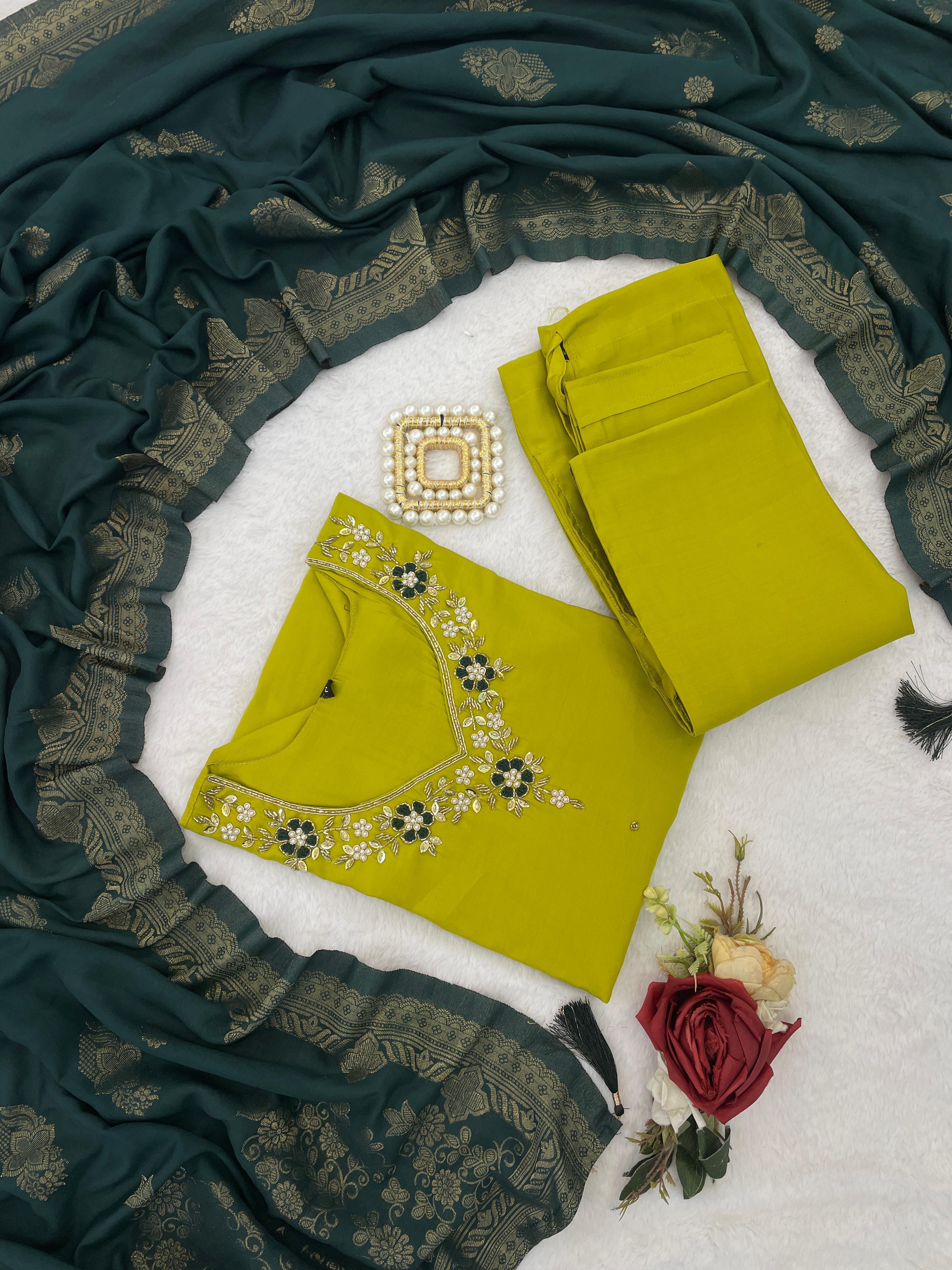
Neutral straight pants make a printed kaftan easier to wear. Ivory, black, navy, beige and muted taupe are dependable choices, while a colour taken from a small motif creates a more intentional combination. Beige straight pants with a blue or teal kaftan echo the quiet contrast seen in Beige Kurta Set with Blue Chanderi Dupatta for Women, where a neutral base allows the accent colour to lead.
Straight pants are particularly useful when a kaftan has mirror work, zari or a dense border. Embellishment already adds visual weight, so a clean bottom prevents competing horizontal lines. Designer Cotton A-Line Kurti Pant Set with Mirror Work and Brown Cotton A-Line Kurti Pant Set with Mirror Work show why an uncomplicated pant can support surface detail without making the lower half look busy.
Leggings and narrow churidars
Leggings and narrow churidars work best with a kaftan falling above the knee or featuring visible side slits. Stretch-cotton leggings are practical for casual wear, but a thicker knit looks more polished than thin, shiny jersey. A churidar creates small folds at the ankle and adds a traditional finish to a short or medium-length kaftan.
Match the legging to the deepest colour in the print when the kurti is multicoloured. Matching the background colour can create a longer colour column, while a high-contrast legging makes a deliberate colour-blocked outfit. Avoid pairing a glossy legging with a matte cotton kaftan because the difference in surface can make the lower half look disconnected.
Leggings are less successful with a very long kaftan that has no slit. The combined effect can resemble one large column without visible structure. In that situation, a straight pant with a defined ankle or a narrow palazzo with movement usually gives the outfit more shape.
Palazzos and wide-leg pants
Palazzos work with kaftan kurtis when the top is relatively short, the fabric is fluid and the waist is clearly placed. Rayon, crepe, soft cotton and lightweight silk blends generally fall better than rigid denim or thick brocade. A wide leg should skim the body rather than stand away from it.
Use a shorter kaftan, a front-tucked edge or a matching set to control combined volume. Shop Floral Digital Printed Chiffon Kurti Palazzo Set with zari embroidery is an useful example of coordinated proportion: chiffon keeps the drape light, the palazzo repeats the fluid movement and zari supplies definition. Modern Taupe Vichitra Silk Embroidered Co-Ord Set for Women follows a similar principle, using a shared colour story to keep separate pieces visually connected.
Petite wearers can choose a high-waisted palazzo with an ankle-grazing hem and footwear in a similar colour. Taller wearers can carry a longer wide-leg bottom, especially when the kaftan has a high side slit. A very wide palazzo with a long, closed kaftan should be approached carefully because both pieces expand the silhouette at the same time.
How Should Fabric and Embellishment Influence the Bottom?
Fabric weight determines whether a bottom supports or overwhelms a kaftan kurti. Chiffon, georgette and soft rayon create movement, while cotton, raw silk and heavier jacquard hold a more defined shape. A heavy kaftan usually needs a lighter, narrower bottom, whereas a fluid kaftan can accommodate slightly more width.
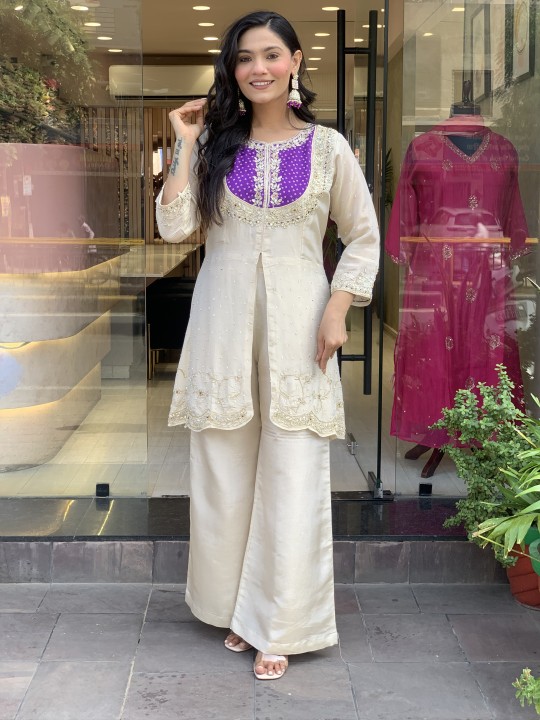
Match the visual formality of both pieces rather than matching the quantity of embellishment. A printed cotton kaftan can pair with a plain cotton pant, while a silk kaftan may need a silk-blend or polished crepe bottom. Designer Roman Silk Kurti Set with Jacquard Dupatta already combines Roman silk and jacquard texture, so a heavily embroidered bottom could make the outfit look congested.
Zari, mirror work, sequins and dense embroidery create bright points that draw the eye outward. Keep the bottom mostly plain when the kaftan carries strong surface detail. A plain kaftan can support a softly textured palazzo or a narrow woven border without losing balance.
Chanderi needs particular attention because its light transparency and crisp hand can look elegant but delicate. A Chanderi dupatta or overlay is best balanced with a matte, opaque pant. Beige Kurta Set with Blue Chanderi Dupatta for Women demonstrates the value of allowing a translucent accent to remain the focal point instead of repeating shine throughout the outfit.
Viscose Chanderi silk can support a more polished festive bottom because the fabric has a soft sheen and formal drape. Maroon Viscose Chanderi Silk Embroidered Kurta Set for Women can be styled with a narrow trouser for a refined elongated look or a fluid palazzo for a softer festive finish. The narrower option keeps embroidery in focus; the palazzo creates more movement.
Which Kaftan Bottoms Suit Different Heights and Body Proportions?
Petite frames generally benefit from a kaftan ending above the knee, a high-rise bottom and an uninterrupted colour column. Ankle-length cigarette pants or narrow palazzos show enough footwear to extend the leg line. Avoid a contrasting bottom ending mid-calf unless the outfit intentionally uses colour blocking.
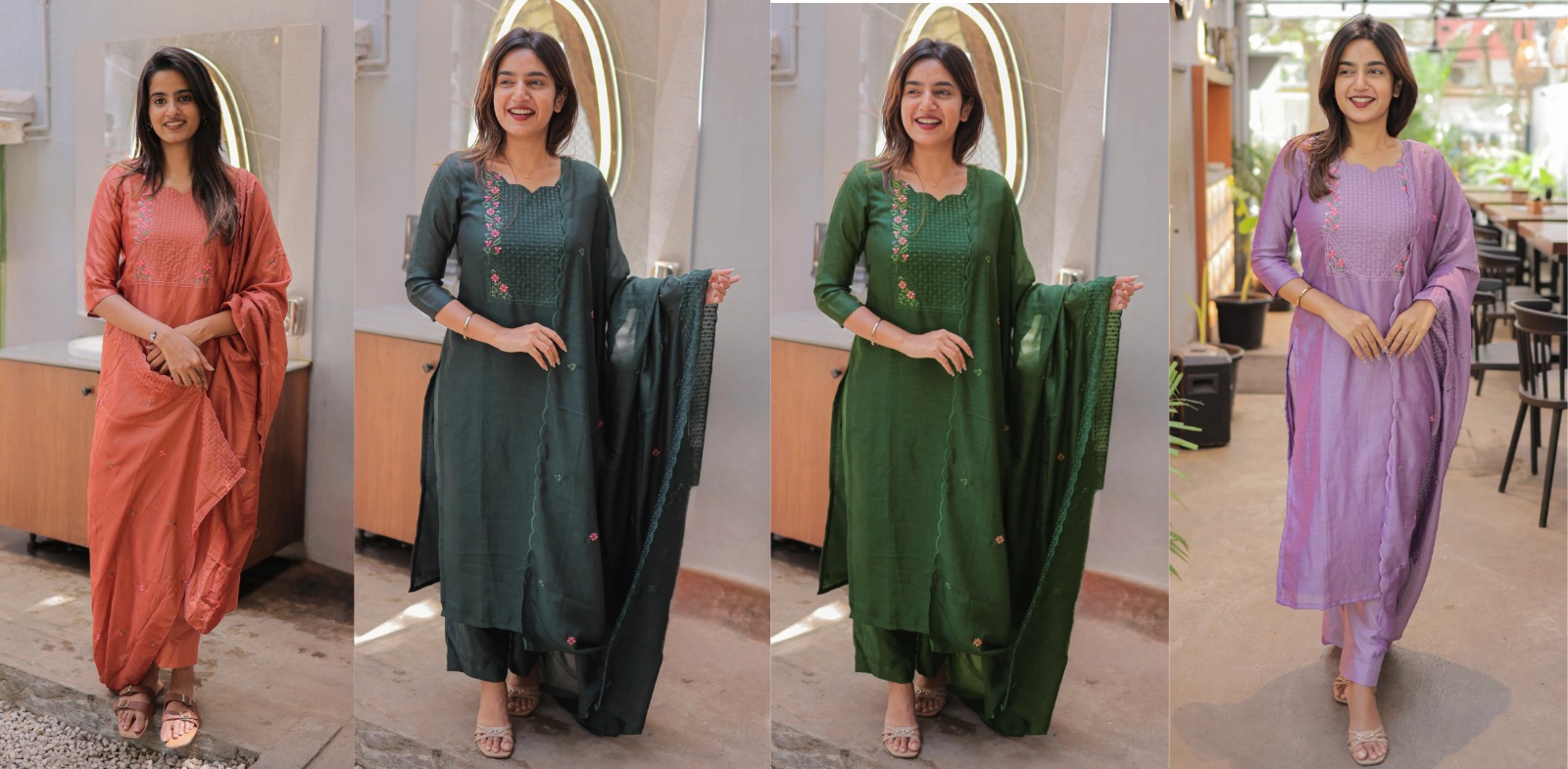
Average-height frames can use most kaftan lengths, but the relationship between hem and ankle remains important. A knee-length kaftan with straight pants is an easy everyday proportion, while a calf-length kaftan with a narrow churidar looks more time-honoured. A slim belt or neatly placed waist seam can add shape without defeating the relaxed nature of a kaftan.
Tall frames can carry longer kaftans, fuller palazzos and stronger horizontal borders. A broad hem, layered dupatta or contrasting bottom can prevent a long body from appearing visually underdressed. Tall wearers can also use a slightly cropped kaftan with a high-waisted wide-leg pant to create a clear waist-to-ankle line.
For fuller hips, a straight or gently flared bottom falling from the widest point often looks smoother than a tight legging. For a fuller bust, a narrow bottom balances a kaftan's upper volume without requiring a clinging fit. For a straighter frame, a lightly gathered palazzo, an ankle border or a textured fabric can add movement below the waist.
How Do Colour, Prints and Dupattas Affect the Lower Half?
A solid bottom is usually the most effective partner for a printed kaftan kurti. Select a colour from the background or a minor motif instead of automatically matching the brightest accent. This approach gives the eye a quiet route from the kurti to the shoes.
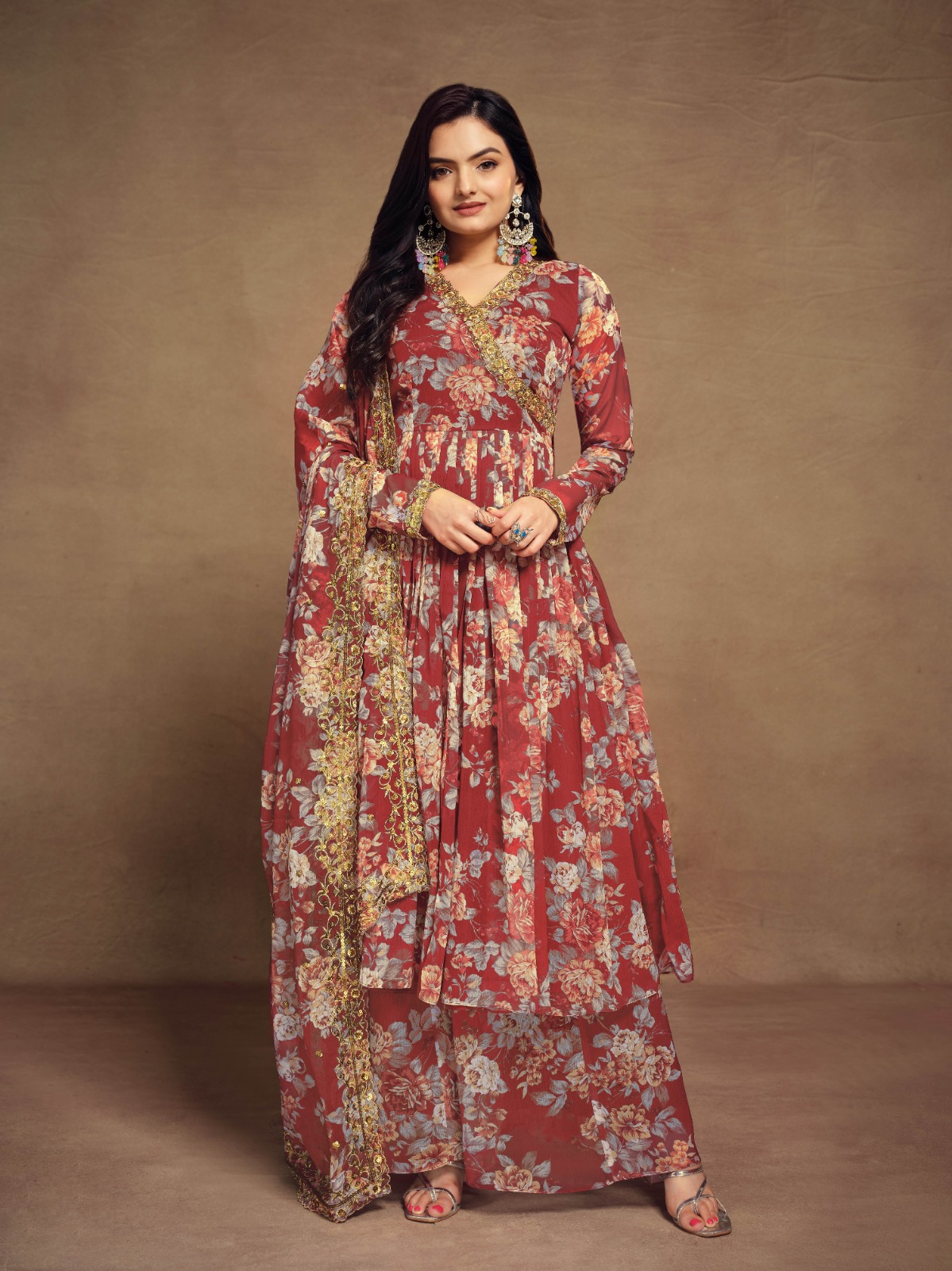
Print scale should guide bottom simplicity. Large Kalamkari motifs, bold florals and broad geometric prints need a plain bottom, while a small buti print can tolerate woven texture or a narrow border. Kalamkari Print Salwar Suits (Copy) demonstrates why a print can carry the identity of an outfit without requiring a second statement pattern below.
Regional textile themes also offer useful styling clues. Maharashtra Paithani Inspired Salwar Suits can be balanced with solid silk-blend or straight pants so that the characteristic border remains prominent. Gujarat Bandhej Salwar Suits generally benefit from an understated bottom when the tie-dye pattern is vivid. Odisha Sambalpuri Salwar Suits can take a coordinated plain pant that allows the woven-inspired pattern to remain visually legible.
Punjab Patiala Salwar Suits follow a different proportion because the Patiala bottom is intentionally gathered and full. A kaftan kurti paired with a Patiala-style salwar should be shorter, preferably above the knee, and should have a controlled rather than oversized flare. The combination works best when the waist and dupatta placement provide a visible point of structure.
A dupatta adds another layer of volume, so its placement matters. Drape a heavy dupatta over one shoulder when the bottom is wide, keeping the opposite side relatively clear. With a narrow pant, a front-draped or double-shoulder arrangement can add balance without making the outfit appear top-heavy.
What Should You Wear With a Kaftan Kurti for Different Occasions?
Straight pants are the most practical choice for everyday errands, office-friendly ethnic wear and travel. Cotton or rayon pants provide comfort, while a knee-length kaftan and low-profile flats keep the outfit easy to move in. Teal Embroidered Rayon Kurti Set is an useful reference for this relaxed formula because rayon offers fluidity without requiring a heavily structured bottom.
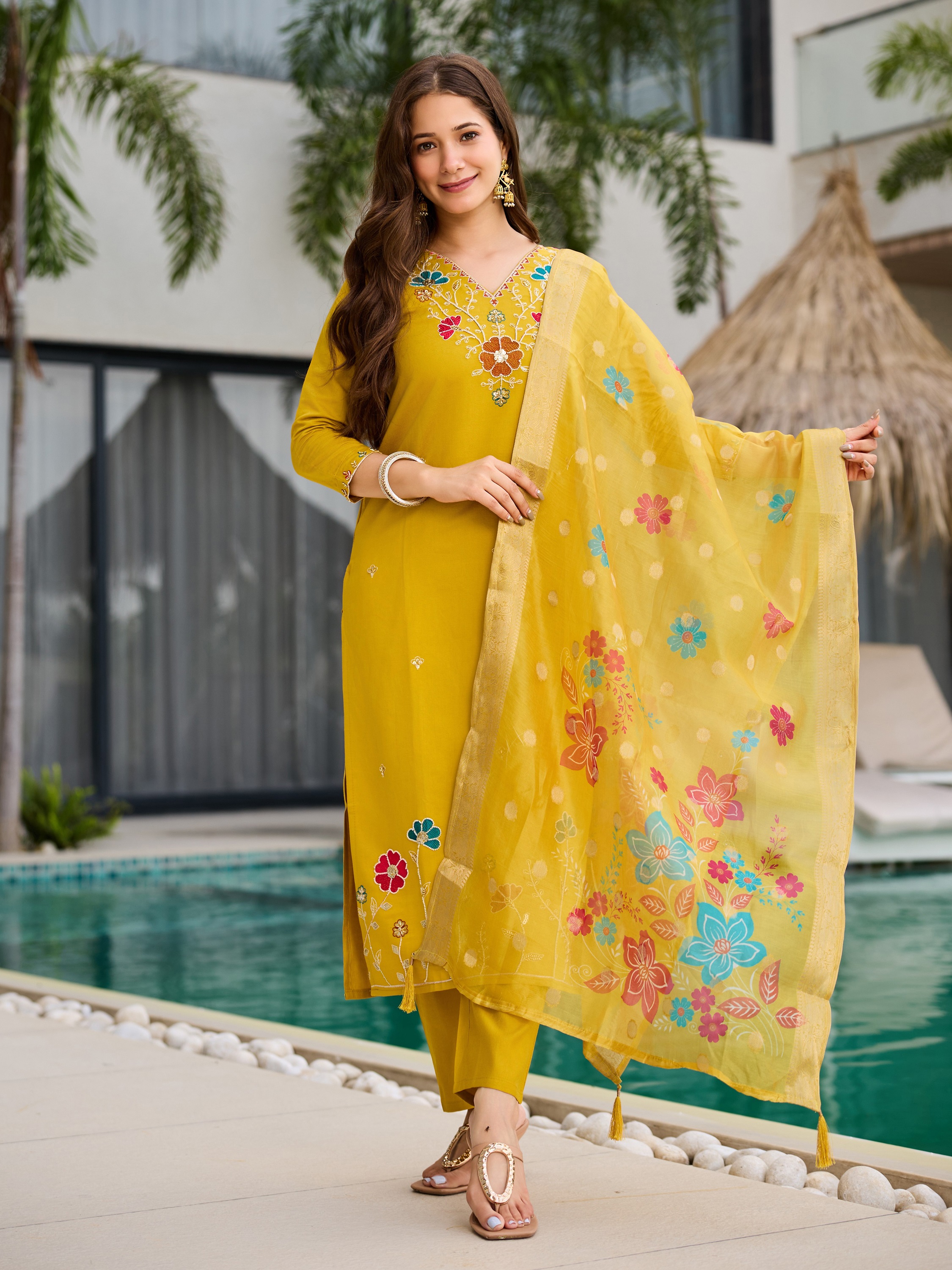
A cigarette pant works well for a daytime gathering, family lunch or semi-formal event. Choose a plain pant in ivory, beige, black or a shade drawn from the embroidery, then add small earrings and a compact handbag. The clean lower line allows mirror work, zari or printed detail on the kaftan to remain the centre of attention.
Palazzos are suitable for festive evenings when the kaftan is shorter, lightweight and coordinated in colour. Pair chiffon, crepe or soft silk with low heels or pointed flats so the hem doesn't drag. Shop Floral Digital Printed Chiffon Kurti Palazzo Set with zari embroidery illustrates how a coordinated wide-leg set can feel festive without relying on multiple competing prints.
A narrow churidar or tapered pant is appropriate for a formal family function when the kaftan has embroidery, silk or a structured border. Add a dupatta with a restrained drape and choose footwear that echoes the bottom colour. Maroon Viscose Chanderi Silk Embroidered Kurta Set for Women can guide this richer festive approach without requiring excessive accessories.
A Practical Fitting Checklist Before You Finalise the Outfit
Check the shoulder, armhole and side seam before judging the bottom. A kaftan should allow comfortable movement without the sleeve or underarm pulling, but excessive fabric at the side can make a wide palazzo look heavier than expected. Stand naturally and assess the complete outline from shoulder to shoe.
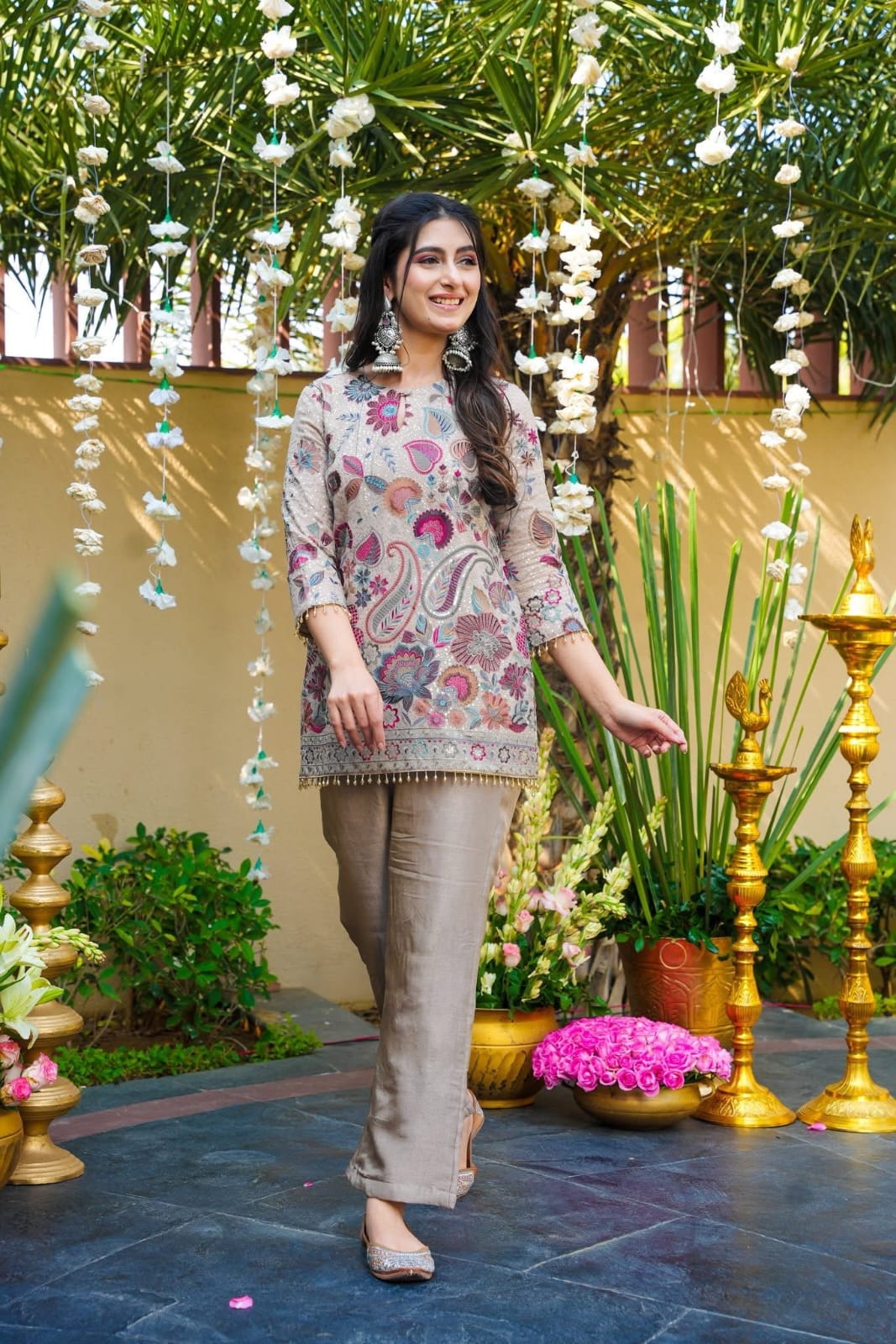
Check whether the bottom hem ends at a flattering point. Ankle-length pants usually create a cleaner line than a hem stopping at mid-calf. If the bottom is wide, confirm that the fabric doesn't pool around the instep or catch under the footwear.
Check opacity and lining in daylight. Lightweight palazzos and chiffon layers can reveal outlines that are not visible under indoor lighting. A full-length lining, an opaque inner layer or a matte fabric can make the complete salwar suit appear more polished.
Check the waist comfort after sitting for ten minutes. A visually attractive high-rise pant isn't a practical choice if the waistband digs into the stomach or shifts when walking. Elastic-backed, side-zip and drawstring styles each offer different comfort levels, so the construction should match the intended use.
Check the outfit with the footwear you'll actually wear. A kaftan and palazzo may need a small heel to clear the floor, while a narrow pant can work with flats. Footwear in a similar colour to the bottom creates continuity; a contrasting shoe creates a deliberate break and can make the legs look shorter.
Common Questions About Styling Kaftan Kurtis With Bottoms
Can I wear a kaftan kurti with palazzo pants?
Yes, a kaftan kurti can be worn with palazzo pants when the top is shorter or has side slits and both fabrics drape softly. A fluid palazzo prevents the outfit from looking stiff, while a coordinated colour keeps the combined volume controlled.

Are leggings suitable under a long kaftan kurti?
Leggings are suitable under a long kaftan when the kurti has side slits, a high-low hem or a lightweight fabric. A very long, closed kaftan with shiny leggings can look visually flat, so a narrow matte trouser may offer better definition.
Which bottom is best for a short kaftan kurti?
A short kaftan kurti works with straight pants, cigarette pants, churidars and palazzos. Choose a wide-leg bottom when the fabric is fluid and the waist is defined; choose a narrow bottom when the kaftan has heavy embroidery or a broad print.
Can petite women wear wide-leg pants with kaftan kurtis?
Petite women can wear wide-leg pants with kaftan kurtis by selecting a high-rise waist, an ankle-length hem and a shorter kaftan. Matching the footwear to the bottom colour also helps create a continuous vertical line.
What colour bottoms go with a printed kaftan kurti?
Solid bottoms in ivory, black, navy, beige or a colour taken from a minor print usually work best with a printed kaftan kurti. Matching the brightest motif isn't necessary because a quieter colour prevents the lower half from competing with the print.
Can I wear a Patiala salwar with a kaftan kurti?
A Patiala salwar can be worn with a kaftan kurti when the kurti is short enough to show the gathered shape and the upper silhouette isn't excessively oversized. A visible waistline, controlled dupatta and balanced colour combination help the heritage volume look intentional.
Common Questions About Styling Kaftan Kurtis With Bottoms
Can I wear a kaftan kurti with palazzo pants?
Yes, a kaftan kurti can be worn with palazzo pants when the top is shorter or has side slits and both fabrics drape softly. A fluid palazzo prevents the outfit from looking stiff, while a coordinated colour keeps the combined volume controlled.
Are leggings suitable under a long kaftan kurti?
Leggings are suitable under a long kaftan when the kurti has side slits, a high-low hem or a lightweight fabric. A very long, closed kaftan with shiny leggings can look visually flat, so a narrow matte trouser may offer better definition.
Which bottom is best for a short kaftan kurti?
A short kaftan kurti works with straight pants, cigarette pants, churidars and palazzos. Choose a wide-leg bottom when the fabric is fluid and the waist is defined; choose a narrow bottom when the kaftan has heavy embroidery or a broad print.
Can petite women wear wide-leg pants with kaftan kurtis?
Petite women can wear wide-leg pants with kaftan kurtis by selecting a high-rise waist, an ankle-length hem and a shorter kaftan. Matching the footwear to the bottom colour also helps create a continuous vertical line.
What colour bottoms go with a printed kaftan kurti?
Solid bottoms in ivory, black, navy, beige or a colour taken from a minor print usually work best with a printed kaftan kurti. Matching the brightest motif is not necessary because a quieter colour prevents the lower half from competing with the print.
Can I wear a Patiala salwar with a kaftan kurti?
A Patiala salwar can be worn with a kaftan kurti when the kurti is short enough to show the gathered shape and the upper silhouette is not excessively oversized. A visible waistline, controlled dupatta and balanced colour combination help the traditional volume look intentional.


