

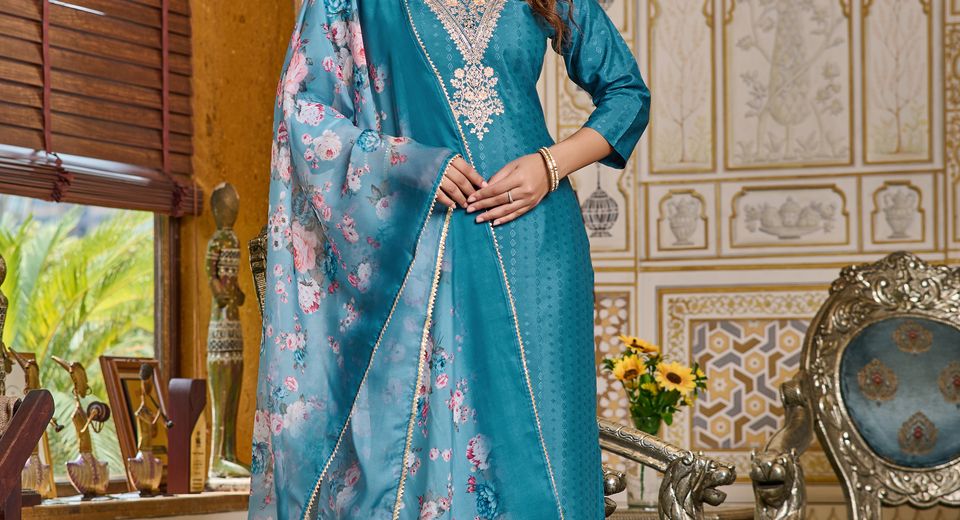
An asymmetrical kurti creates a diagonal line because the hem falls at various lengths across the body. What Bottoms Work With Asymmetrical Kurtis for Balanced Proportions depends on the kurti's longest point, fabric weight, side slits and amount of flare. Straight pants usually create the cleanest base, while palazzos, cigarette trousers and Patiala bottoms produce very different visible effects. The right choice keeps the hemline visible without making the outfit look crowded.
Proportion matters more than simply matching the kurti and bottom in colour. A short asymmetrical kurti can carry wider trousers, whereas a long, heavily flared kurti generally needs a narrower bottom. The same principle applies to salwar suits, co-ord sets and kurta sets with dupattas.
Why asymmetrical kurtis need deliberate bottom selection
An asymmetrical kurti already adds movement through its uneven hem, so the bottom should support that movement rather than compete with it. A bottom with a controlled outline lets the diagonal cut remain the first visual feature.
The eye reads clothing in sections: shoulder line, kurti body, hem and footwear. An uneven hem lengthens one side of the outfit, and a wide or heavily pleated bottom adds volume below it. When both features are dramatic, the outfit can lose its centre and appear visually busy. When both are too narrow, the lower half may look disconnected from the kurti.
Three measurements help make the decision more accurately. First, check whether the shortest hem ends above the knee, at the knee or below the knee. Second, note whether the kurti is fitted, straight or A-line. Third, compare the bottom's widest point with the kurti's widest point. Balanced dressing usually places one dominant volume at a time.
What Bottoms Work With Asymmetrical Kurtis for Balanced Proportions?
Straight pants, cigarette trousers and softly tapered pants work best with most asymmetrical kurtis because their narrow vertical line offsets an uneven or flared hem. Palazzos suit shorter asymmetrical kurtis, while Patiala bottoms work most successfully with shorter, relatively simple kurtis.
Straight pants for the most reliable silhouette
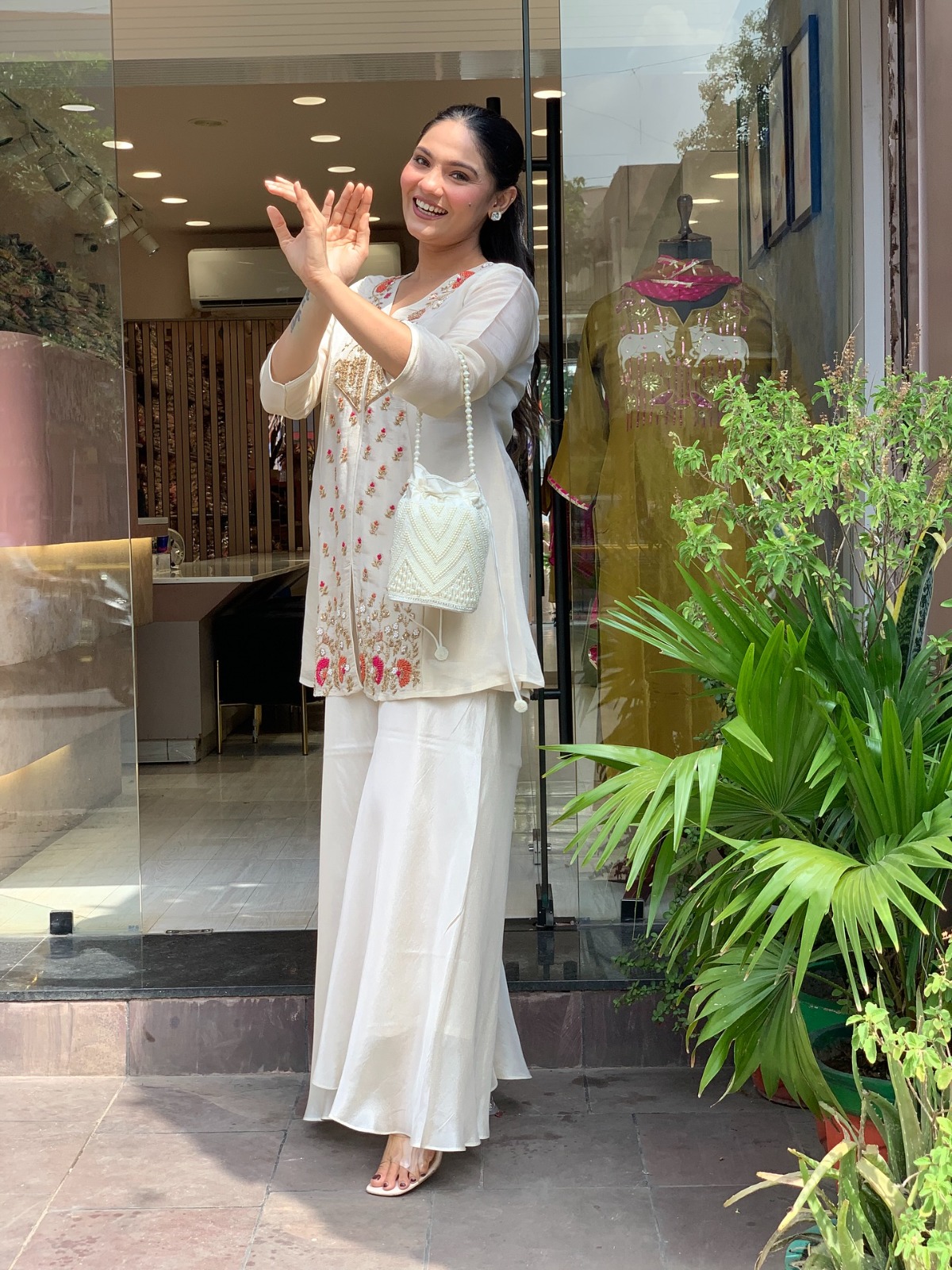
Straight pants create a long, uninterrupted line from the kurti hem to the ankle. The shape works particularly well when the longest side of the kurti reaches the calf or lower calf. Straight pants also suit office dressing because the outfit retains structure without looking overly formal.
Choose a medium-weight fabric such as cotton, rayon or a smooth silk blend when the kurti has embroidery or a jacquard panel. A very thin bottom can look insubstantial beneath a substantial kurti. A straight pant with a 2 to 4 centimetre ankle opening generally looks neat with flats, juttis and low block heels.
The Designer Cream Straight Kurti Set with Dupatta demonstrates why a controlled lower line works with detailed upper layers. For a separate asymmetrical kurti, cream, beige, black or a colour repeated in the dupatta can visually connect the two pieces.
Cigarette trousers for a sharper finish
Cigarette trousers are narrower than straight pants and finish close to the ankle, making them effective under short or medium-length asymmetrical kurtis. The shape is useful when the kurti has side gathers, a high-low hem or a noticeable front panel.
Cigarette trousers need enough ease at the thigh and knee to avoid pulling. A 2 to 5 centimetre gap around the lower leg is usually more comfortable and more polished than a skin-tight fit. Ankle-grazing trousers also reveal footwear, so pointed juttis or a low heel can extend the visual line.
The Modern Taupe Vichitra Silk Embroidered Co-Ord Set for Women offers a useful reference for tonal styling. A muted trouser close to the kurti colour allows embroidery and the asymmetrical cut to remain visible without creating a strong horizontal break.
Palazzos for shorter asymmetrical kurtis
Palazzo pants work best when the asymmetrical kurti is short enough to reveal the waist-to-hip area and when the kurti itself isn't excessively flared. Wide-leg palazzos balance a hem that ends around mid-thigh or just above the knee, especially when the upper garment is relatively fitted.
Fabric weight determines whether palazzos look fluid or bulky. Chanderi, crepe and lightweight rayon create movement, while stiff brocade or thick cotton can add too much volume under a long kurti. A palazzo leg opening of approximately 45 to 60 centimetres gives a wide silhouette without overwhelming a petite frame.
The Beige Kurta Set with Blue Chanderi Dupatta for Women shows how a light, flowing layer can keep a wide-bottom styling idea airy. With an asymmetrical kurti, pair a blue, beige or soft neutral palazzo with a defined waistband and minimal pleats near the stomach.
How to match bottom volume with kurti length
Kurti length should determine bottom volume: the shorter the asymmetrical kurti, the more width the bottom can carry, and the longer the kurti, the narrower the bottom should usually be.

- Short hem above the knee: Wide-leg palazzos, flared pants and moderate Patiala bottoms can work because the lower garment remains clearly visible.
- Hem around the knee: Straight pants, cigarette trousers and slim palazzos create the most dependable balance.
- Longest hem at mid-calf: Narrow straight pants or churidar-style trousers prevent the lower half from becoming overly wide.
- Longest hem near the ankle: A slim trouser with a visible ankle opening is generally safer than a full palazzo or heavily pleated salwar.
Body height changes how these rules appear, but the measurement remains useful. A petite wearer can choose a monochromatic bottom and kurti to reduce visual breaks. A taller wearer can handle stronger colour contrast or a wider trouser without losing the kurti's line.
When Patiala bottoms make sense
Patiala bottoms work with an asymmetrical kurti when the kurti is short, lightly structured and visually simple. Deep pleats and gathered fabric add horizontal volume around the hips, so a long embellished kurti can make the combination look dense.
The Punjab Patiala Salwar Suits collection illustrates the traditional relationship between a shorter kurta and a generous, pleated bottom. For a contemporary version, select an asymmetrical kurti with a clean neckline, limited embroidery and a hem that leaves several inches of the Patiala folds visible.
How fabric and embellishment change the right pairing
Fabric weight should be matched across the outfit so that the kurti and bottom fall at a similar visual scale. A heavy upper layer needs a bottom with enough body, while a fluid kurti usually benefits from a fluid or lightly structured bottom.
Banarasi silk, jacquard and dense zari embroidery naturally create visual weight. Straight pants in silk blends, cotton silk or firm rayon can support such kurtis. Pairing a heavily embellished silk kurti with a flimsy, clingy trouser often creates an uneven finish because the upper half appears ceremonial and the lower half appears casual.
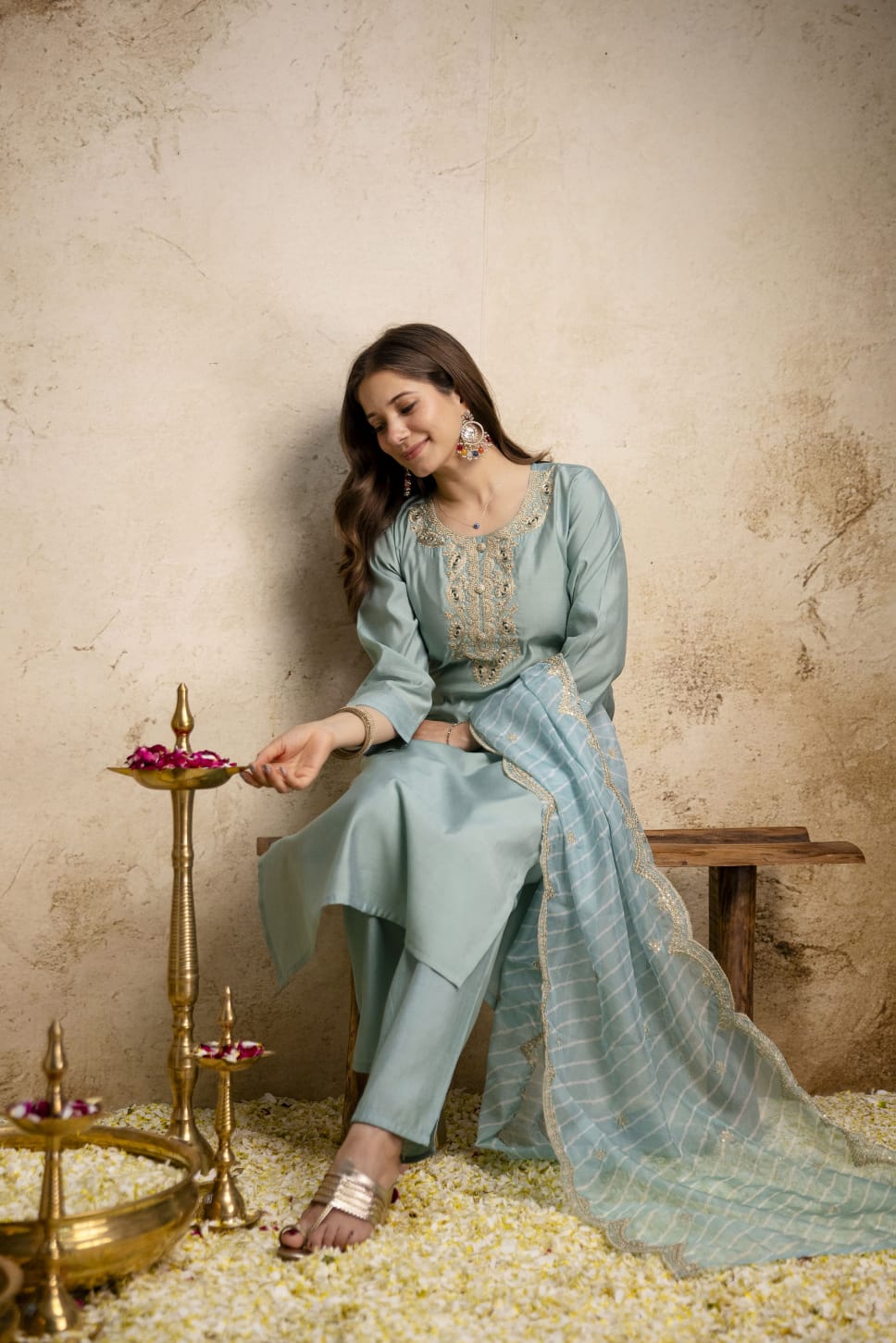
Chanderi is lighter and more translucent in appearance, so it pairs well with straight trousers, narrow palazzos and softly tailored pants. The Pastel Blue Embroidered Chanderi Kurta Set with Dupatta is a useful example of keeping colour and texture delicate. A narrow bottom allows Chanderi embroidery and the dupatta to remain the focus.
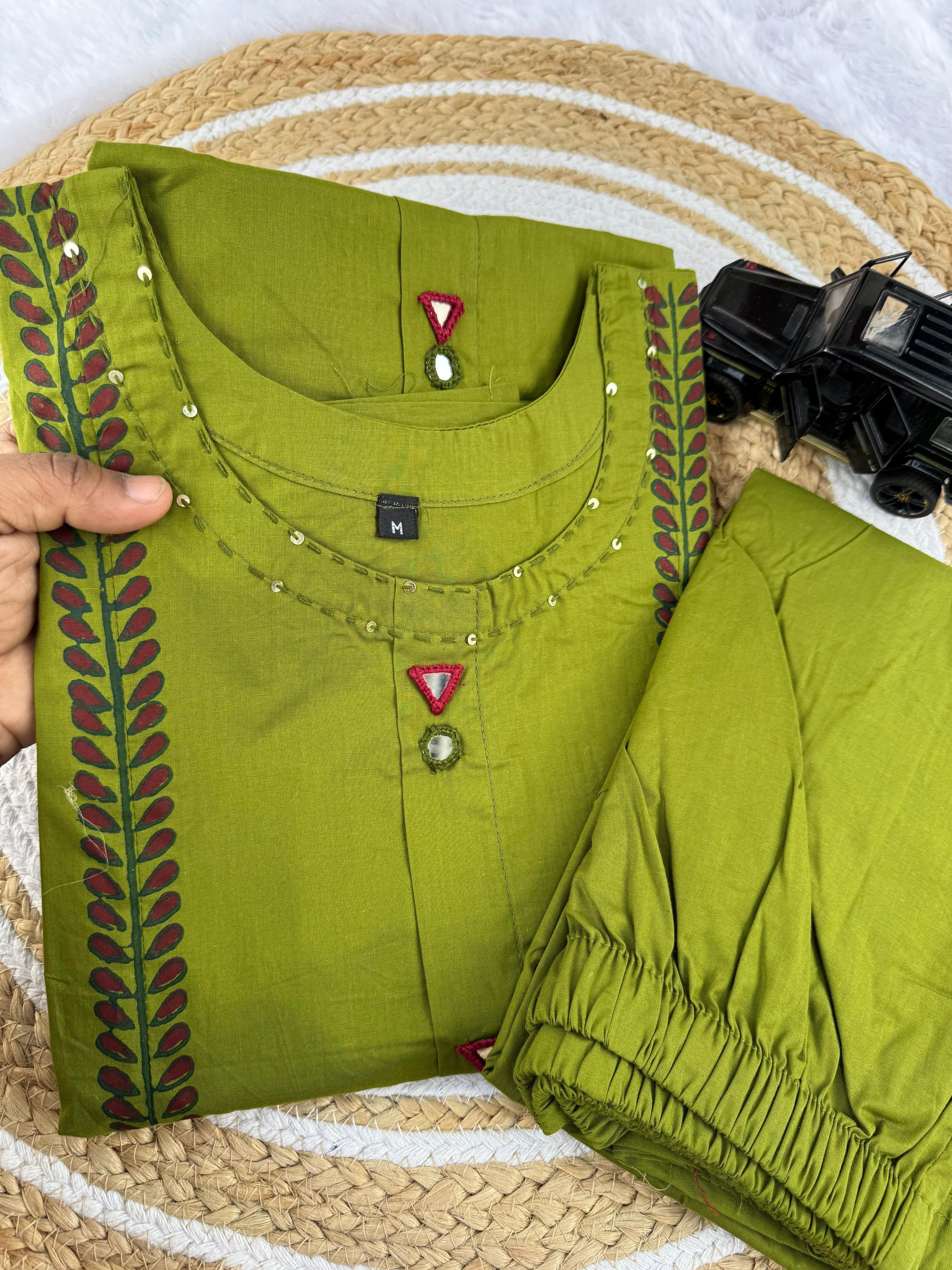
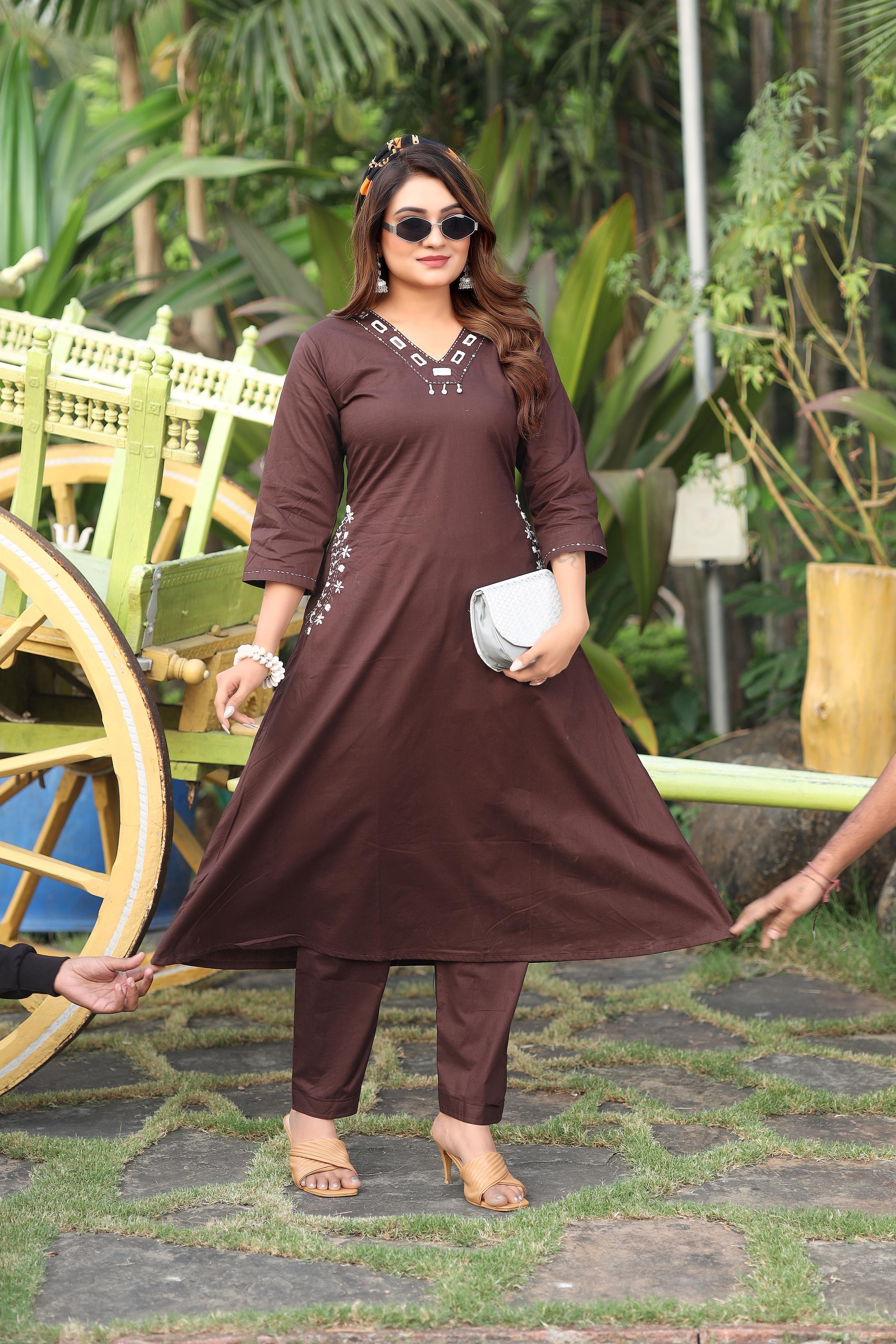
Cotton supports everyday structure and is forgiving for movement. The Designer Cotton A-Line Kurti Pant Set with Mirror Work and the Brown Cotton A-Line Kurti Pant Set with Mirror Work show how mirror work can add brightness without requiring a wide bottom. With an asymmetrical cotton kurti, matching cotton pants or a matte rayon trouser usually looks more coherent than a shiny synthetic fabric.
Colour, print and dupatta choices that preserve balance
A bottom in a close colour to the kurti creates the longest visual column, while a contrasting bottom makes the hemline more prominent. The appropriate choice depends on whether the asymmetrical cut is meant to be subtle or the main statement.
Monochromatic dressing is especially effective for long asymmetrical kurtis. Beige with sand, taupe with stone and navy with indigo reduce horizontal breaks and can make the wearer appear taller. A contrast bottom is more suitable when the kurti is short, plain or made from a single colour.
Print scale also affects proportion. A small all-over print can be repeated in the bottom without overwhelming the outfit. A large Kalamkari print or a strong Bandhej pattern generally needs a solid bottom so that the diagonal hem remains readable. Kalamkari Print Salwar Suits and Gujarat Bandhej Salwar Suits offer useful references for managing printed upper layers with quieter lower pieces.
A dupatta adds another line, so draping style matters. A long dupatta worn over both shoulders can conceal the asymmetrical hem and add width at the sides. A single-shoulder drape, narrow front fall or neatly pinned dupatta usually preserves the kurti's shape. A contrasting dupatta can work when the bottom is neutral and the kurti has a restrained surface design.
Practical pairings for work, daytime and festive dressing
The best bottom depends on the setting because comfort, movement and visual formality change from one use to another.
For work and everyday wear
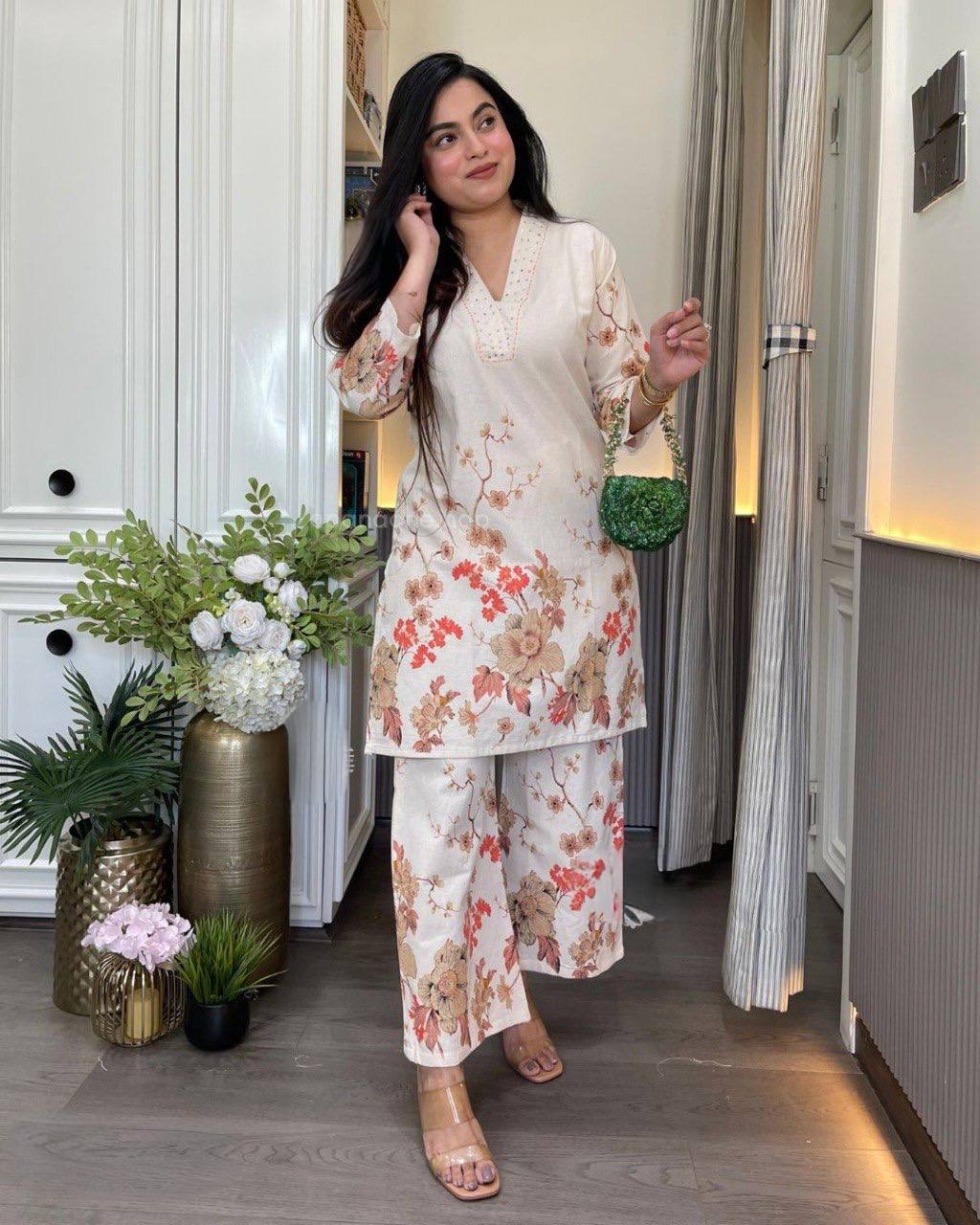
Straight cotton pants or ankle-length cigarette trousers are the most practical choices for work and daily use. These bottoms sit neatly under a desk, don't catch easily on chairs and allow the asymmetrical hem to remain visible.
Pair a cotton kurti with matte pants in beige, navy, brown or ivory. Keep embroidery moderate and choose a dupatta that doesn't need constant adjustment. Flat sandals, closed juttis or low block heels complete the practical proportion.
For daytime gatherings
Soft palazzos or lightly flared pants suit daytime gatherings when the kurti is short or mid-length. Chanderi, cotton silk and breathable rayon provide movement without the stiffness of heavy festive textiles.
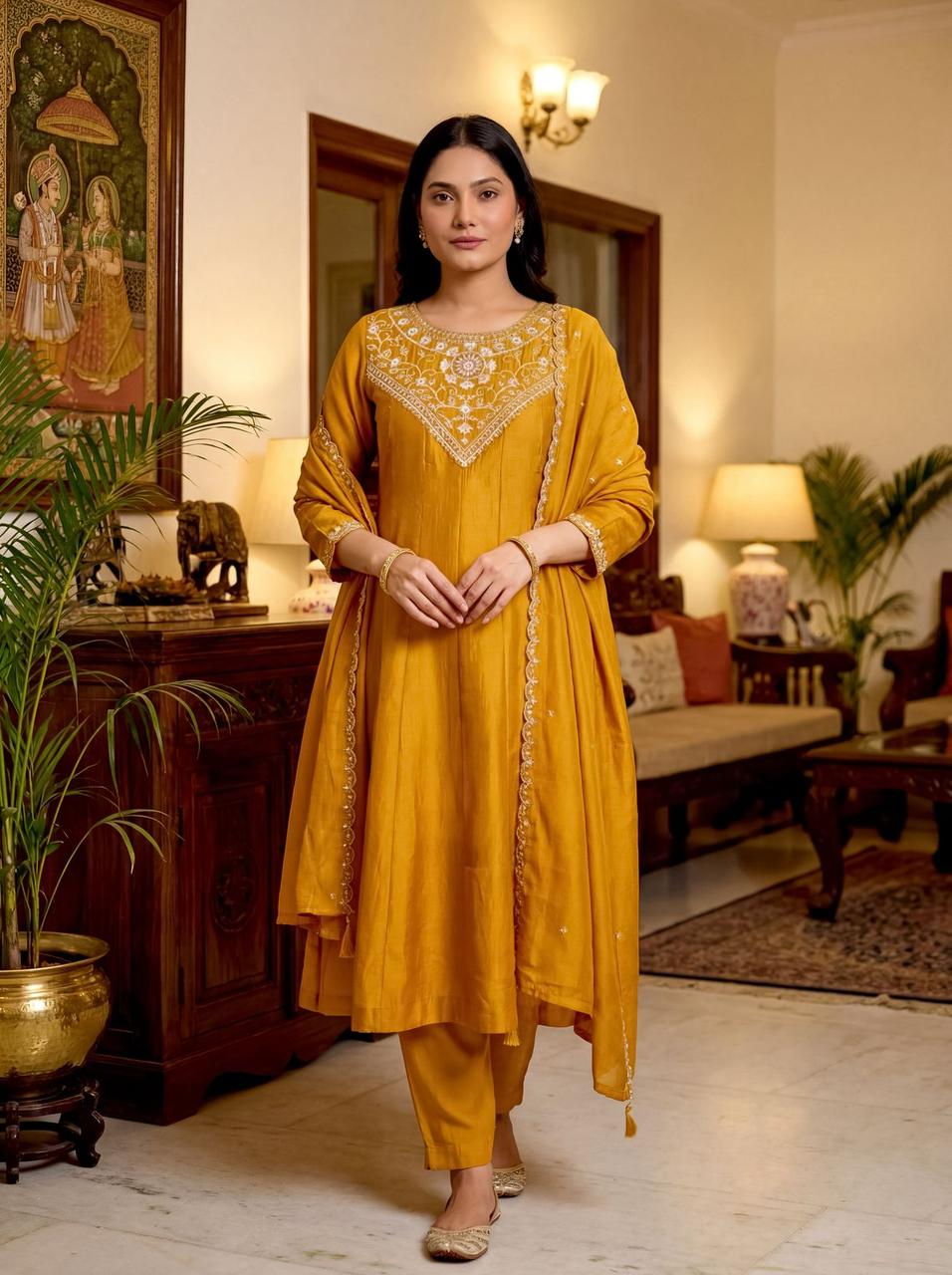
The Mustard Embroidered Chanderi Kurta Set for Women - Varnavi demonstrates how a warm colour and delicate embroidery can carry a daytime festive mood. If the asymmetrical kurti has a similar level of surface detail, use a plain palazzo and let the dupatta provide the secondary colour.
For festive events
Silk-blend straight pants, tailored trousers or narrow palazzos work best for festive asymmetrical kurtis with zari, jacquard or concentrated embroidery. The lower garment should look intentional rather than hidden beneath the kurti.
The Maharashtra Paithani Inspired Salwar Suits and Odisha Sambalpuri Salwar Suits collections show how regional textile influences can provide strong colour and pattern direction. When styling an asymmetrical kurti inspired by these traditions, repeat one border or accent shade in the bottom instead of combining several competing motifs.
Common proportion mistakes and simple corrections
The most common mistake is pairing a long, flared asymmetrical kurti with a very wide, heavily pleated bottom. Replace the wide bottom with a straight pant or narrow cigarette trouser to restore a clean lower line.
A second mistake is choosing a bottom that ends exactly where the kurti's shortest hem ends. Matching these two horizontal points can make the outfit look abruptly cut. Move the trouser hem lower, choose a shorter bottom with a longer kurti, or use a tonal colour transition.
A third mistake is ignoring fabric weight. A stiff cotton bottom under a fluid silk kurti can create a bulky base, while a thin legging under a heavily embroidered kurti can look underfinished. Match the bottom's structure to the kurti's drape before deciding on colour.
A fourth mistake is allowing the dupatta to erase the cut. Pin the dupatta at one shoulder or carry it over one forearm when the asymmetrical hem is the main design detail. The full outfit should show the diagonal line from at least one viewing angle.
A quick fitting checklist before wearing the outfit
A balanced asymmetrical-kurti outfit should pass five checks before you leave home. First, confirm that the shortest hem doesn't bunch against the waistband. Second, walk and sit to make sure the bottom doesn't pull across the thigh. Third, check whether the widest point of the bottom competes with the widest point of the kurti.
Fourth, photograph the outfit from the front and side because asymmetry can look balanced in a mirror but crowded in a picture. Fifth, inspect the footwear line. A visible ankle, pointed toe or low heel often helps a long kurti look lighter, while a bulky shoe can shorten the silhouette.
What Bottoms Work With Asymmetrical Kurtis for Balanced Proportions ultimately comes down to controlled contrast. Use narrow bottoms with long or ornate kurtis, wider bottoms with shorter and simpler kurtis, and tonal colour when you want the outfit to look taller. Fabric weight, hem placement and dupatta drape then refine the result.
Common Questions About Styling Asymmetrical Kurtis
Which bottom is best with a long asymmetrical kurti?
Straight pants or narrow cigarette trousers are usually best with a long asymmetrical kurti because they balance the uneven hem without adding width. Choose a fabric with enough structure to support an embellished or heavier kurti.
Can I wear palazzo pants with an asymmetrical kurti?
Yes, palazzo pants work well with a short or medium-length asymmetrical kurti that has limited flare. Lightweight rayon, Chanderi or crepe creates a smoother result than stiff, bulky fabric.
Do Patiala pants suit asymmetrical kurtis?
Patiala pants suit short, relatively simple asymmetrical kurtis because their pleats add substantial volume around the hips. A long, heavily embroidered or strongly flared kurti can look crowded with deep Patiala folds.
What bottoms make an asymmetrical kurti look taller?
A tonal straight pant or cigarette trouser usually creates the longest visual line. An ankle-length bottom, pointed footwear and a dupatta draped to one side can further reduce visual breaks.
Should the bottom match the colour of an asymmetrical kurti?
A matching or closely related colour creates a streamlined silhouette, while a contrasting bottom highlights the hemline. Use contrast with short, simple kurtis and choose tonal shades for long or heavily detailed designs.
Which bottoms work with an asymmetrical kurti for office wear?
Straight cotton pants and tailored cigarette trousers are the most suitable office options because they are comfortable, structured and visually quiet. Neutral colours such as beige, navy, ivory and brown keep the uneven hem polished rather than dramatic.


