

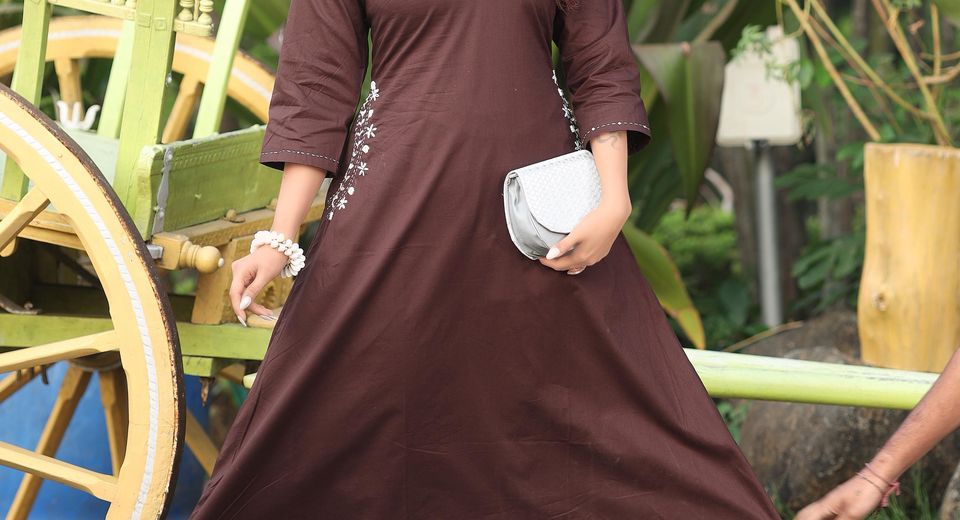
An A-line kurti widens gradually from the bust or waist towards the hem, so the lower half of an outfit needs deliberate proportion rather than extra volume by default. What Bottoms Work With A-line Kurtis for Balanced Proportions depends on three practical details: the kurti's flare, its length, and the weight of its fabric. Straight ankle pants usually create the cleanest line, while narrow palazzos, cigarette pants and lightly gathered salwars offer different levels of movement without making the silhouette look heavy.
The most useful rule is simple: pair a wide or heavily flared A-line kurti with a relatively controlled bottom, and reserve fuller bottoms for shorter, lighter or less dramatic kurtis. A 42-inch cotton A-line kurti and a 28-inch flared kurti can't be styled in exactly the same way. The following guide explains how to make each combination work for office dressing, festive gatherings, everyday wear and relaxed summer styling.
Why Bottom Proportion Matters With an A-line Kurti
Bottom proportion matters because an A-line kurti already adds visual width below the waist. When a voluminous kurti is combined with a heavily pleated or wide bottom, the outfit can lose a visible waistline and appear shorter or broader than intended.
An A-line silhouette doesn't automatically require slim trousers. The better approach is to compare the width created by the kurti with the width created by the bottom. A gently flared cotton kurti can support a palazzo with a narrow fall, whereas a long, panelled A-line kurti generally looks more composed with straight pants or cigarette trousers.
Length changes the calculation. A kurti ending just below the knee leaves enough room to show the shape of the bottom, so a slim pant can look intentional and elongated. A calf-length kurti covers most of the bottom, making the visible hem and footwear more important. A short A-line kurti can carry more movement below, including a palazzo or a lightly gathered salwar.
Fabric also controls perceived volume. Crisp cotton, jacquard and textured handwork hold their shape, while rayon, soft cotton and Chanderi create more fluid movement. A rigid A-line kurti with mirror work usually benefits from a neat bottom. A fluid kurti can accommodate a wider leg without looking crowded.
What Bottoms Work With A-line Kurtis for Balanced Proportions?
The most reliable bottoms for balanced A-line kurti outfits are straight ankle pants, cigarette pants, slim palazzos and lightly gathered salwars. These options preserve movement while keeping the lower half visually organised.
Straight ankle pants
Straight ankle pants are the safest choice for a long or visibly flared A-line kurti. A leg opening of approximately 12 to 15 inches, depending on the wearer's measurements, creates a clean vertical line without clinging tightly to the calf. An ankle-length hem also shows the narrowest part of the leg and works well with juttis, kolhapuris, block heels or pointed flats.
Matching the pant colour to the kurti creates a continuous column, while a tonal contrast makes the lower edge more visible. A white or ivory straight pant works with many printed cotton kurtis, but an exact or near-exact colour match is particularly effective under a dark navy, brown or olive A-line silhouette.
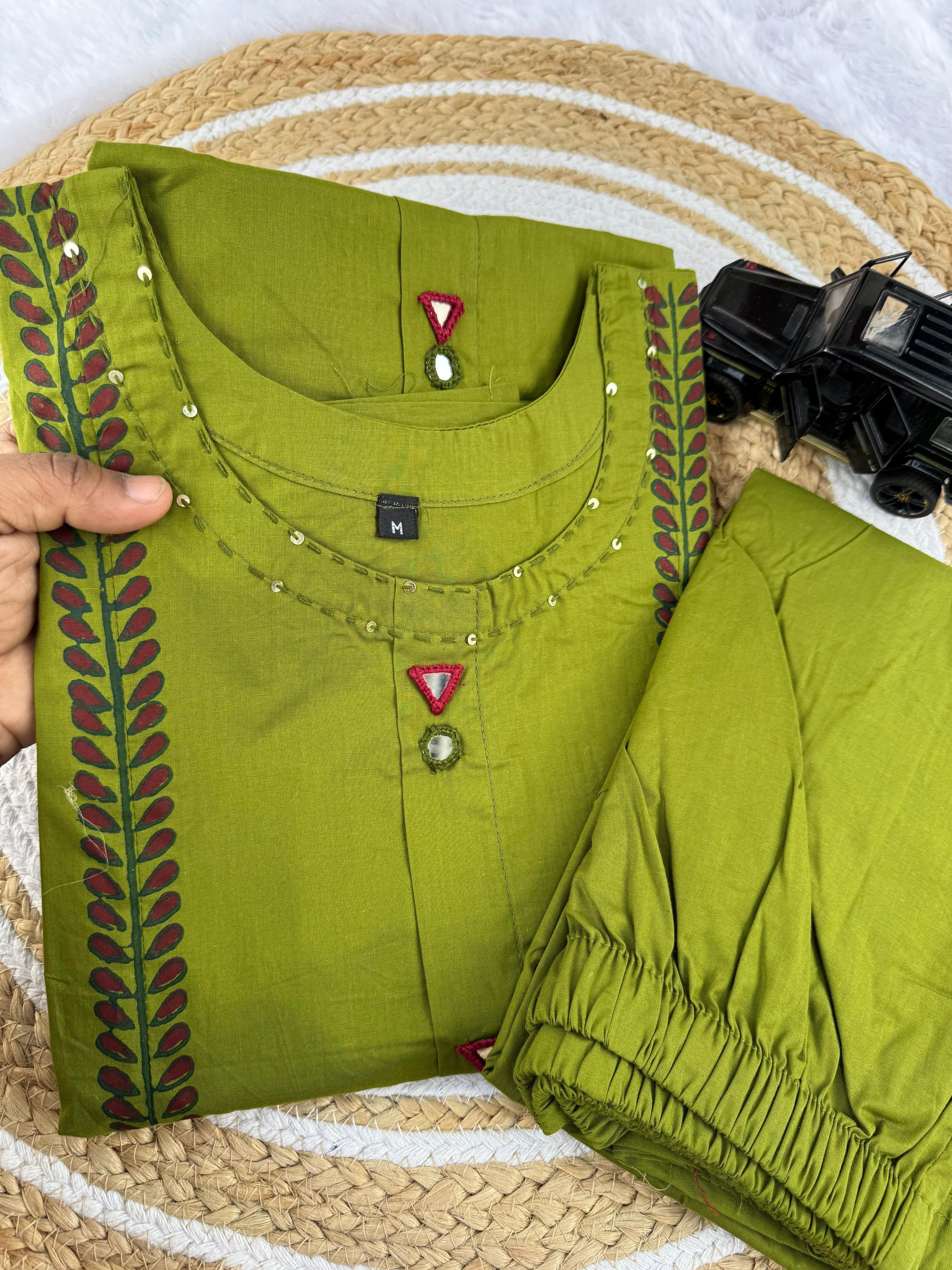
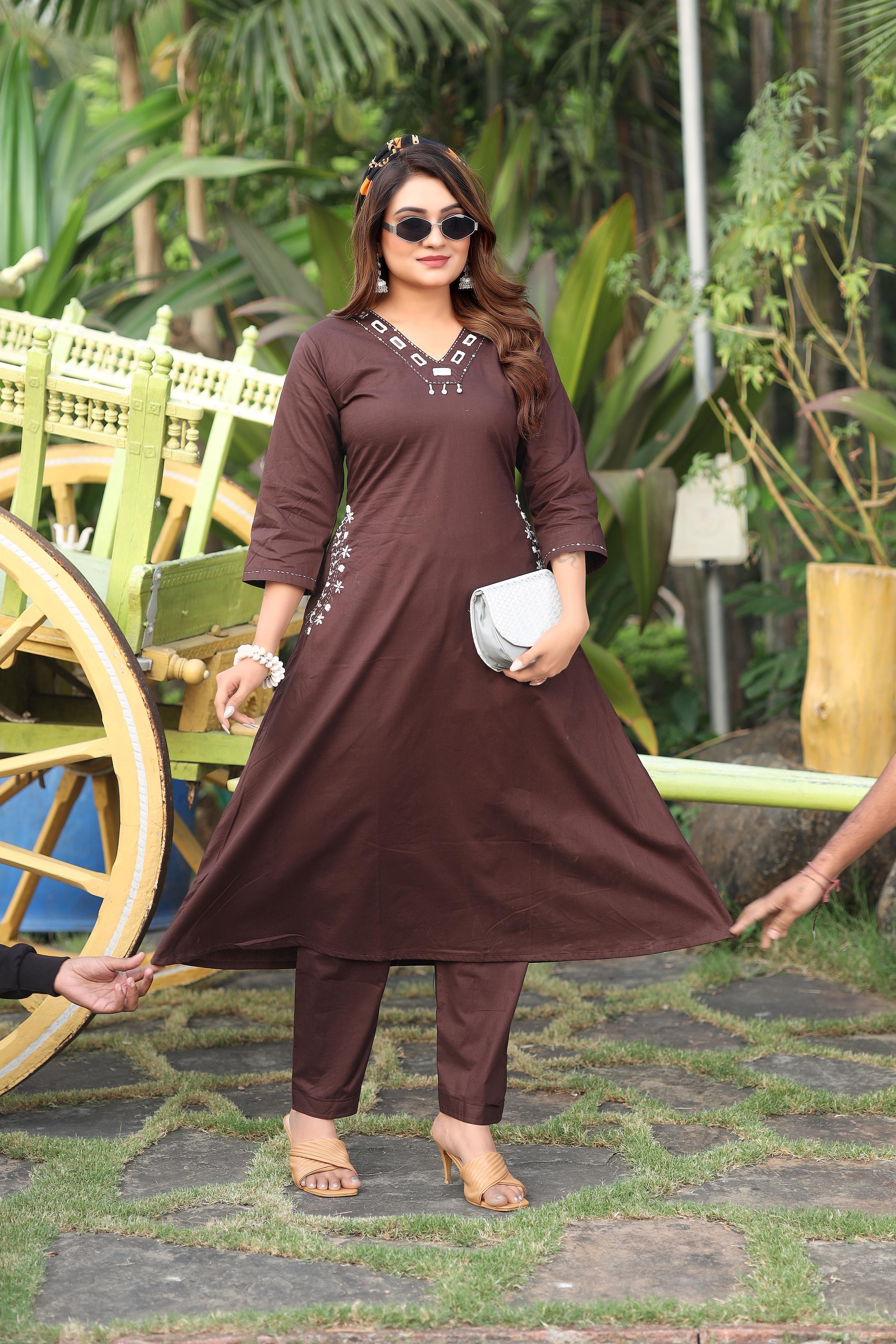
The Designer Cotton A-Line Kurti Pant Set with Mirror Work demonstrates why coordinated pants are useful. A structured cotton A-line shape and a defined pant keep mirror work as the focal point instead of allowing multiple flared elements to compete.
Cigarette pants
Cigarette pants suit A-line kurtis that fall from mid-thigh to just below the knee. Cigarette pants are narrower than standard straight pants and usually end at the ankle, giving a sharper outline for semi-formal dressing, festive lunches and workwear.
A cigarette pant should not be so tight that it creates horizontal pull lines at the hips or knees. A small amount of ease is more flattering and more comfortable during sitting. Cotton blends, rayon and lightweight silk-blend trousers can all work, provided the fabric doesn't become transparent under bright light.
Slim palazzos
Slim palazzos work when the A-line kurti is short, lightweight or only moderately flared. A palazzo with a controlled fall creates motion without adding the strong triangular shape of a very wide leg. Look for vertical pleats, fluid fabric and a hem that doesn't pool over the foot.
Very wide palazzos are more difficult with a long A-line kurti because both pieces widen towards the bottom. The combination can still work for a tall wearer or a deliberately relaxed look, but the kurti should preferably be above the knee, the fabric should be fluid, and the footwear should add some height. A short A-line kurti with a slim palazzo is generally easier to balance than a calf-length kurti with a dramatic palazzo.
The Brown Cotton A-Line Kurti Pant Set with Mirror Work offers an useful everyday direction: cotton provides structure, while a coordinated pant prevents the lower half from becoming visually fragmented. Similar logic applies to the Olive Green A-Line Cotton Kurti Pant Set for Women, particularly when the outfit is worn with simple sandals and minimal jewellery.
Lightly gathered salwars
Lightly gathered salwars suit shorter A-line kurtis when the outfit needs a traditional salwar-kameez character. Moderate gathers at the ankle add softness, but excessive fabric at both the hip and ankle can overwhelm a flared kurti.
Choose a salwar with controlled gathers, a firm waistband and an ankle opening that sits comfortably above the footwear. A shorter kurti, a simple neckline and a quieter dupatta help keep the outfit balanced. This pairing is particularly effective with cotton, handblock-inspired prints and daytime colours.
How to Match Bottoms to Kurti Length and Flare
Kurti length and flare should determine the bottom's width: long and wide kurtis need narrower bottoms, while short and lightly flared kurtis can support more volume.
Short A-line kurtis
A short A-line kurti ending at the upper thigh or above the knee pairs well with cigarette pants, narrow palazzos and tapered trousers. The shorter hem reveals more of the bottom, so a vertical stripe, pressed crease or fluid drape can lengthen the appearance of the legs.
A short kurti can also work with a fuller palazzo if the kurti is visually simple. A plain neckline, limited surface decoration and a solid bottom prevent the look from becoming busy. A statement dupatta can then introduce print or texture without competing with the flare.
Knee-length A-line kurtis
A knee-length A-line kurti gives the widest range of bottom choices. Straight pants are the most dependable option, while slim palazzos and lightly gathered salwars work when the kurti fabric isn't too stiff.
The Teal Cotton A-Line Kurti Set with Handwork suits this middle proportion well because a neat bottom allows the handwork to remain visible. Pairing a similar silhouette with a same-colour or slightly deeper pant gives a longer visual line, while contrasting footwear can keep the outfit from looking overly uniform.
Calf-length and long A-line kurtis
A calf-length or ankle-length A-line kurti usually looks best with straight pants, cigarette pants or a narrow churidar-style bottom. Only a small section of fabric may show below the hem, so a heavily flared palazzo often adds width without contributing useful contrast.
Long kurtis are also more sensitive to footwear. A pointed flat, low wedge or sandal with a slim front profile can create a cleaner continuation than a very bulky shoe. If the kurti has a high-low hem, choose a bottom with a polished finish because more of the ankle and trouser line will be visible.
Which Bottoms Suit Cotton, Chanderi and Silk-Blend A-line Kurtis?
Bottom fabric should echo the weight and formality of the kurti while remaining slightly calmer in texture. Cotton pairs with cotton or breathable rayon, Chanderi benefits from a smooth narrow pant, and silk-blend kurtis need bottoms with enough structure to hold a polished line.
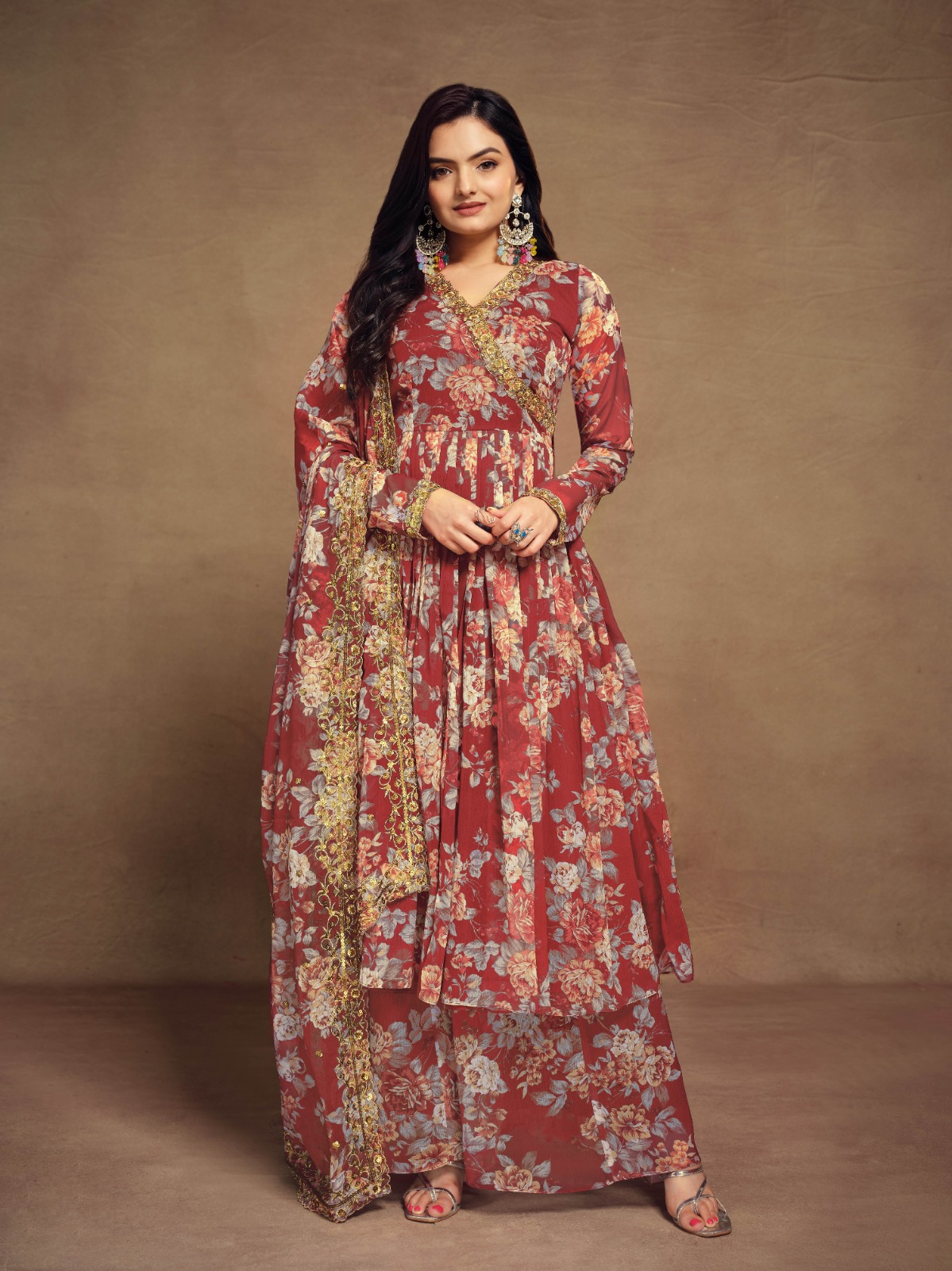
Cotton A-line kurtis are forgiving and practical. Straight cotton pants, ankle trousers and lightly gathered salwars work for daily wear because the fabrics breathe and don't fight the kurti's natural stiffness. The Red Cotton A-Line Kurti Set with Mirror Work Design can be styled with a clean ankle pant when the mirror work is the main festive detail.
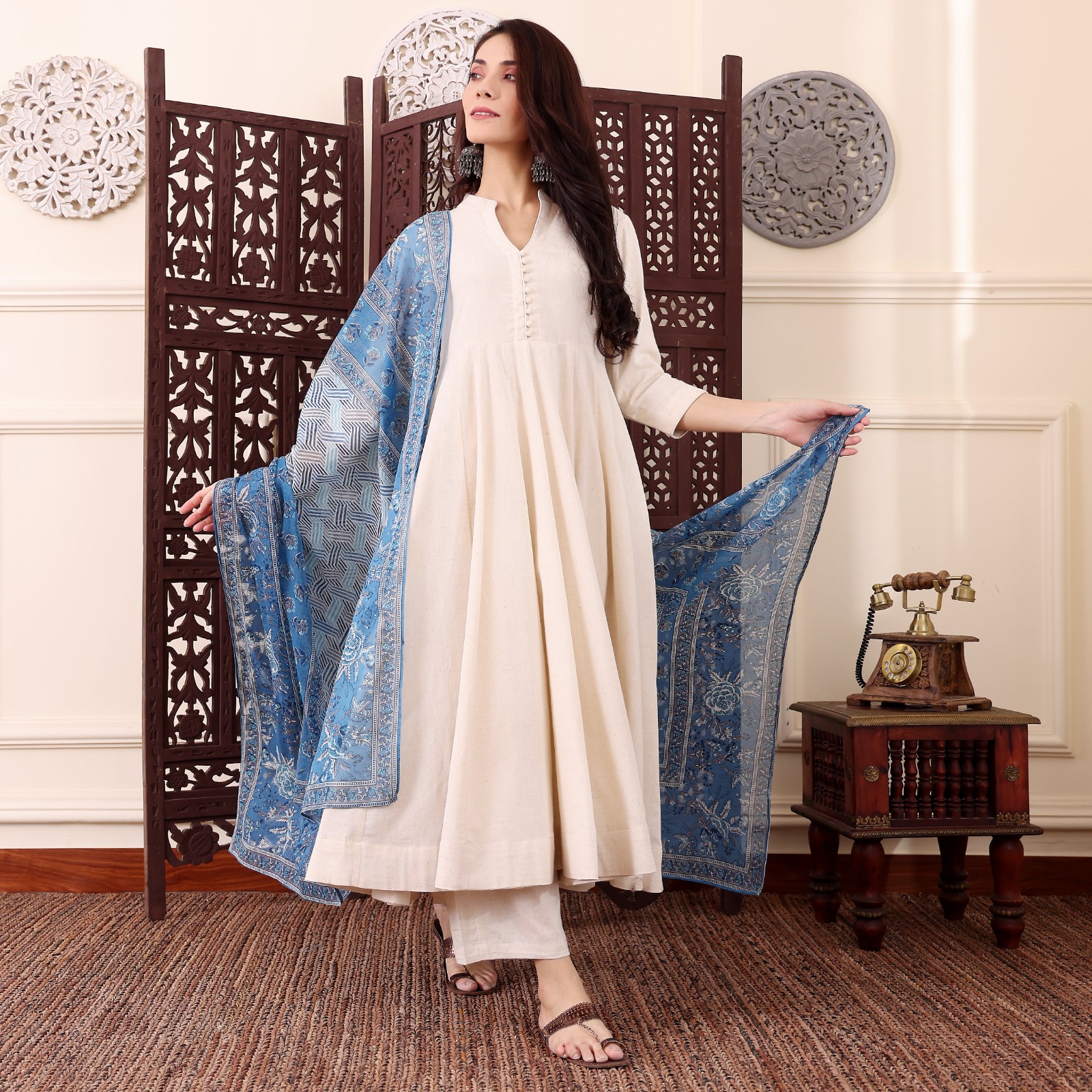
Chanderi has a fine, lightweight surface and often looks best with bottoms that don't look visibly heavier. A narrow pant in cotton-satin, smooth rayon or a matching lightweight weave allows the kurti and dupatta to retain their delicacy. The Beige Kurta Set with Blue Chanderi Dupatta for Women shows how a restrained lower half can let a contrasting Chanderi dupatta define the outfit.
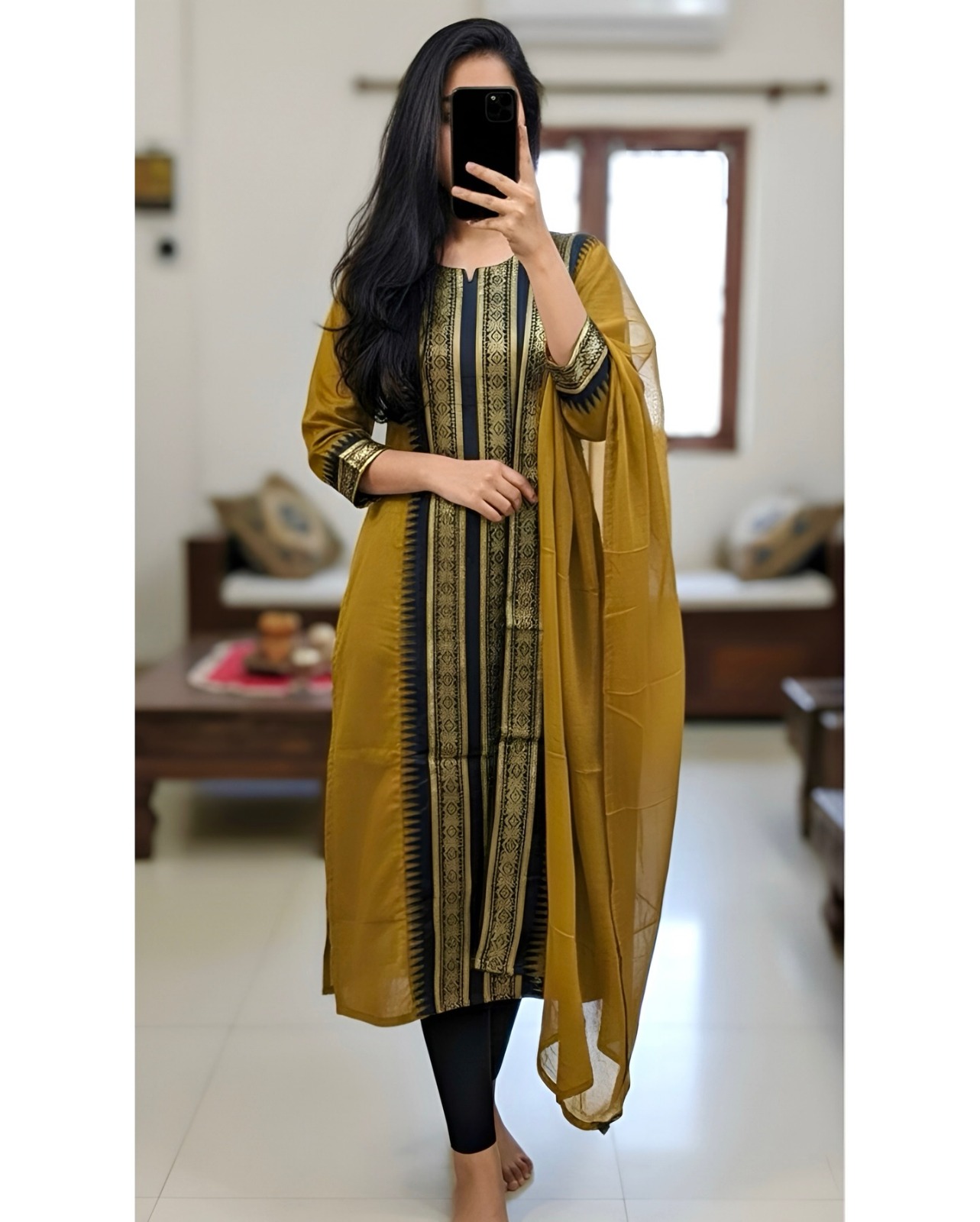
Silk-blend or jacquard pieces benefit from a straight or gently tapered bottom. The Designer Roman Silk Kurti Set with Jacquard Dupatta can be balanced with a slim trouser because jacquard already supplies surface interest and visual weight through its weave. Adding a wide, shiny palazzo may make the outfit look more suited to evening drama than to versatile festive dressing.
The Pastel Blue Embroidered Chanderi Kurta Set with Dupatta is another example where a controlled bottom protects the lightness of the palette. Soft blue, ivory, dove grey and muted silver bottoms generally look more integrated than a hard black contrast when the goal is a gentle daytime or summer-festive appearance.
How to Build Balanced Outfits for Different Occasions
The best bottom changes with the setting because comfort, formality and movement have different priorities. A work outfit needs a stable hem and easy sitting, while a family celebration can accommodate a wider leg or more decorative finish.
Work and everyday wear
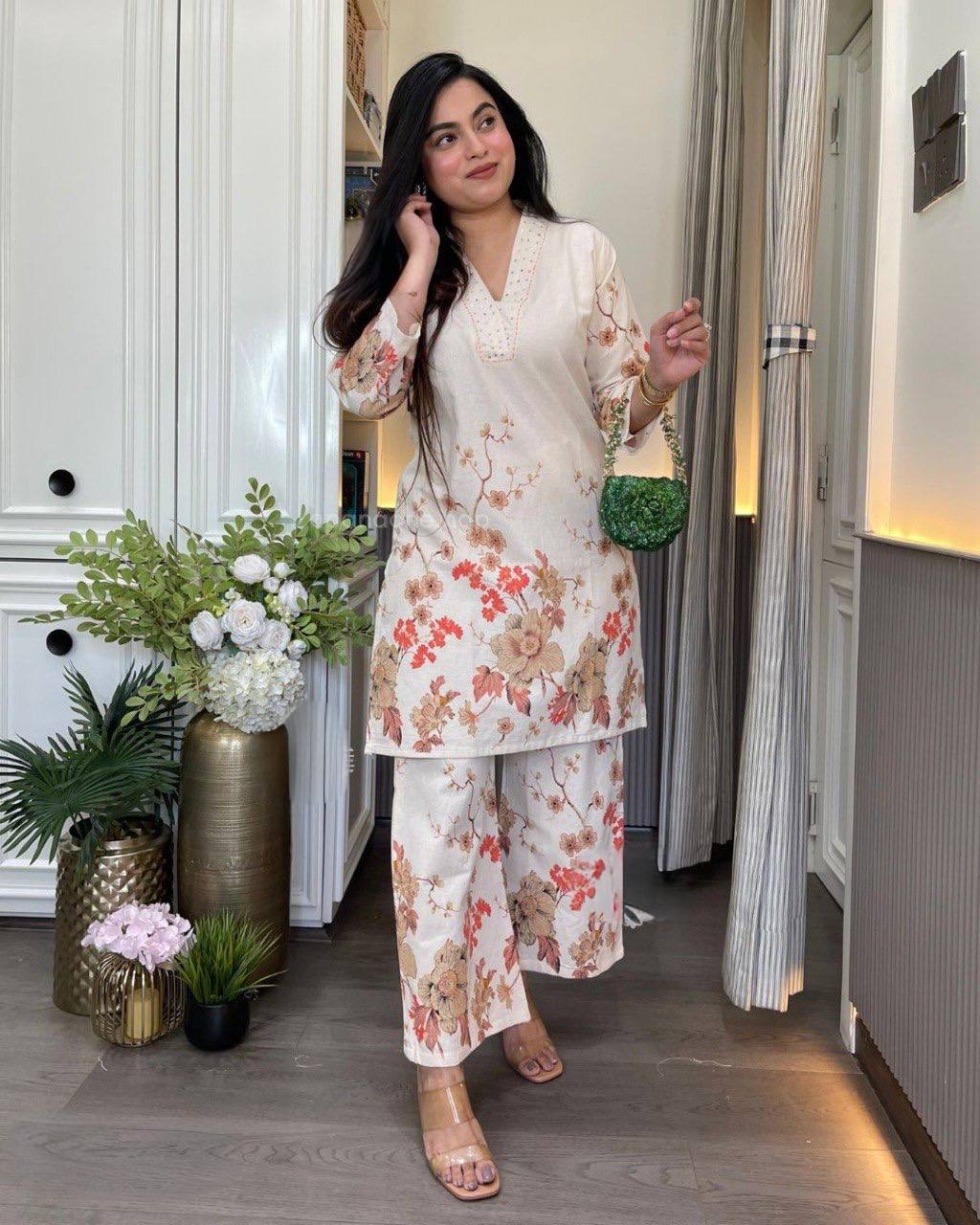
Straight ankle pants are the most practical choice for office and daily wear with an A-line kurti. Choose cotton or rayon, keep the trouser hem clean, and use a moderate heel or flat sandal. Prints from Kalamkari Print Salwar Suits (Copy) can be made more wearable with a solid, narrow bottom that picks up one colour from the pattern.
For errands and warm weather, breathable cotton pants are more useful than heavily layered bottoms. A three-quarter or ankle hem can help with movement, but the hem should not sit so high that the kurti looks visually disconnected from the footwear.
Festive family gatherings
A lightly flared palazzo or controlled salwar adds festive movement when paired with a shorter or knee-length A-line kurti. Collections such as Maharashtra Paithani Inspired Salwar Suits and Gujarat Bandhej Salwar Suits suggest rich regional colour and pattern, so a solid bottom is usually the calmer choice.
A dupatta can alter the balance as much as the trouser does. A broad, heavily bordered dupatta adds weight around the upper body, making a straight bottom especially helpful. A lightweight dupatta permits a little more volume below, provided the kurti itself isn't heavily flared.
Time-honoured and cultural dressing
Moderately gathered salwars and straight pants both work for heritage dressing, depending on how much movement and structure the outfit needs. Odisha Sambalpuri Salwar Suits can be styled with a narrow bottom when the textile pattern is prominent, while Punjab Patiala Salwar Suits naturally call for more pronounced pleats and a shorter kurti silhouette.
A Patiala-inspired bottom should not be hidden under a long, wide A-line kurti because the distinctive volume becomes difficult to see. A shorter kurti, a defined waistband and a dupatta worn over one shoulder reveal the intended construction more clearly.
Common Styling Mistakes and Simple Corrections
The most common mistake is combining maximum volume at every level: a long flared kurti, a very wide palazzo, a broad dupatta and bulky footwear. The correction is to reduce volume in at least two areas, usually by choosing straight pants and a lighter dupatta.
A second mistake is choosing a bottom solely by colour. Colour matching can't fix an unsuitable cut. A perfectly matched wide palazzo may still overwhelm a calf-length A-line kurti, while a contrasting straight pant may create a much more flattering vertical line.
A third mistake is ignoring the waistband. A bulky elastic waistband can show through a soft kurti and interrupt the fall from the waist. Flat-front trousers or a smooth, well-finished waistband are preferable under lightweight cotton, Chanderi and rayon.
A fourth mistake is allowing trousers to bunch at the ankle. Excess fabric can make the foot look wider and reduce the neatness of the entire outfit. Try the complete outfit with the intended footwear and alter the hem if the trouser break forms more than one prominent fold.
A Practical Fitting Checklist Before You Buy
Check the kurti and bottom together before deciding that a pairing works. A balanced outfit should allow comfortable sitting, show a deliberate amount of ankle or hem, and keep the widest point of the silhouette where you want the eye to rest.
- Measure the kurti length: record the shoulder-to-hem measurement and compare it with the visible length of the bottom.
- Assess flare: place the kurti flat and note whether the hem is gently flared, panelled or dramatically circular.
- Check ease: allow approximately 2 to 4 inches of wearing ease through the hip in woven trousers, depending on the fabric and personal comfort.
- Inspect the hem: ankle pants should end cleanly above the shoe, while palazzos should skim rather than drag on the floor.
- Consider the dupatta: a wide border or heavy embroidery may call for a simpler, narrower bottom.
- Test movement: sit, walk and climb a step before finalising the outfit, especially when the kurti is long and the bottom is narrow.
For most wardrobes, one straight ankle pant in ivory or black, one matching cotton pant and one fluid slim palazzo cover more styling needs than several extreme silhouettes. The final decision should reflect the kurti's length, flare, fabric weight and embellishment rather than a rule that every A-line shape requires a particular bottom.
Common Questions About Pairing Bottoms With A-line Kurtis
Can I wear palazzo pants with an A-line kurti?
Yes, palazzo pants work best with a short or moderately flared A-line kurti made from a fluid or lightweight fabric. Choose a slim palazzo rather than an extremely wide style when the kurti is knee-length or longer.
Which bottom is best with a long A-line kurti?
Straight ankle pants or cigarette pants are usually the best bottoms for a long A-line kurti. A narrow lower line prevents the combined silhouette from becoming too wide and works well with flats or low wedges.
Can an A-line kurti be worn with a salwar?
An A-line kurti can be worn with a lightly gathered salwar, especially when the kurti ends above the knee or around the knee. Avoid excessive gathers when the kurti is long, stiff or heavily flared.
Should the bottom match the colour of an A-line kurti?
A matching or tonal bottom creates a longer, more continuous line, but an intentional contrast can also work. Keep the contrast bottom relatively simple when the kurti has mirror work, embroidery, a bold print or a statement dupatta.
What bottoms work with A-line kurtis for balanced proportions on a petite frame?
Ankle-length straight pants, cigarette pants and narrow palazzos usually help petite wearers maintain a clean vertical line. A shorter A-line kurti, a low-volume dupatta and footwear that exposes the top of the foot can further reduce visual heaviness.
Can I wear wide-leg pants with a calf-length A-line kurti?
Wide-leg pants can work, but the combination needs careful control of volume. Select a fluid, non-pooling fabric, keep the kurti relatively simple, and use a defined waist or a shorter hem if the outfit begins to look shapeless.


