Arm jewellery can change the character of an Indian outfit before a necklace or pair of earrings is noticed. What Are Vanki and Bajubandh in Traditional Jewellery is a question about two related but distinct forms of upper-arm adornment, each carrying regional history, visual symbolism and practical styling rules. Both are worn above the elbow, yet their shapes, construction and associations are not identical.
Vanki usually refers to an angular, V-shaped or inverted-V armlet associated especially with South Indian bridal jewellery. Bajubandh is a broader Indian term for an upper-arm ornament, often designed as a band, plaque or flexible chain. The difference matters because the two pieces create different silhouettes: Vanki follows the arm with a pointed geometry, while Bajubandh can look sculptural, floral, kundan-set or textile-like depending on its region and material.
What Are Vanki and Bajubandh in Traditional Jewellery?
Vanki and Bajubandh are traditional upper-arm ornaments worn between the shoulder and elbow, but Vanki generally identifies a specific V-shaped design while Bajubandh describes a wider family of armlets.
The word Vanki is commonly connected with the Sanskrit-derived idea of a bent or angled form, reflected in the ornament's distinctive chevron-like outline. In many South Indian designs, two arms rise diagonally from a central point, creating a V that sits against the bicep. The Vanki may include a central motif such as a peacock, lotus, Lakshmi figure or small gemstone cluster.
Bajubandh, also written as baajuband or बाजूबंद in Hindi, comes from the idea of a band worn around the upper arm. Bajubandh designs appear across North, West, Central and parts of South India. A Bajubandh may be a solid gold cuff, a gem-set plaque attached to chains, a silver ornament, a pearl strand or an embroidered textile band.
Neither term describes only one metal or one price category. A temple-jewellery Vanki may be made in gold, antique-finish silver or gold-plated alloy, while a Bajubandh may use Kundan stones, Meenakari enamel, pearls, zari, beads or fabric. The name identifies the form and wearing position more reliably than the material.
How Did These Armlets Develop Across Indian Regions?
Vanki developed most visibly within South Indian ceremonial jewellery traditions, while Bajubandh evolved as a pan-Indian upper-arm ornament with strongly regional variations.
South Indian Vanki traditions
Vanki is closely associated with bridal jewellery from Tamil Nadu, Karnataka, Andhra Pradesh and Telangana. In Tamil wedding styling, a Vanki may be paired with a traditional gold necklace, oddiyanam waist belt, jhumkas and long hair ornaments. In Andhra and Telangana, Vanki designs often appear with temple-inspired motifs, rubies, emeralds and uncut-style stones.
The shape can also carry a symbolic reading. A V-shaped armlet is sometimes interpreted as a protective form or as a stylised representation of strength and auspiciousness. Motifs vary by family and jeweller, so the exact meaning should not be treated as universal across every South Indian community.
Regional Bajubandh forms
Bajubandh appears in Rajasthani, Gujarati, Mughal-influenced, Maharashtrian and North Indian jewellery traditions. Rajasthani Bajubandh may feature Kundan settings, enamel work and polki-style stones. Gujarati examples can use colourful glass, beads or silver. Maharashtrian armlets may coordinate with the green glass bangles and gold ornaments commonly worn with a Paithani saree.
Historical paintings and sculptures show that upper-arm ornaments were worn by royalty, deities, dancers and married women, although social practice changed across centuries and communities. Armlets were not exclusively bridal accessories. Their use could communicate status, ceremonial participation, marital identity, devotion or simply formal dressing.
Classical dance costumes preserve this visual language. Bharatanatyam and Kuchipudi jewellery frequently include upper-arm ornaments that echo the structure of a Vanki or Bajubandh. Dancers use these pieces to define the arm's line during movement, which explains why proportion and secure fastening are especially important in performance jewellery.
What Is the Difference Between a Vanki and a Bajubandh?
The clearest difference is shape: a Vanki normally has a pointed V or chevron structure, whereas a Bajubandh can be circular, rectangular, floral, chain-based or cuff-like.
- Form: Vanki has a recognisable angled outline; Bajubandh includes many upper-arm forms.
- Regional association: Vanki is strongly identified with South Indian bridal traditions; Bajubandh is used across several Indian regions.
- Construction: Vanki often has a central pointed motif with two supporting arms; Bajubandh may use a broad plaque, adjustable chains, cords or a flexible band.
- Visual effect: Vanki creates a directional, architectural line; Bajubandh can appear softer, fuller or more ornamental.
- Styling context: Vanki naturally complements Kanjeevaram sarees and temple jewellery; Bajubandh can work with sarees, lehengas, salwar suits and regional costumes.
Jewellery vocabulary isn't perfectly fixed. A jeweller, family or region may call a similar piece a Vanki, Bajubandh or armlet. A practical way to identify the design is to examine the silhouette first, then consider its cultural setting and materials.
Which Materials and Motifs Are Common in Vanki and Bajubandh?
Gold, gold-plated metal, silver, Kundan stones, pearls, enamel and textile elements are common materials in Vanki and Bajubandh jewellery.
Traditional gold Vanki designs often use granulation, repoussé work or cast motifs inspired by temple architecture. Lakshmi, peacock, yali, mango and lotus forms are especially common. Ruby-red and emerald-green stones are frequently used to create contrast against yellow gold, although contemporary versions may use American diamonds, cubic zirconia or coloured crystals.
Bajubandh construction is more varied because the form is broader. A Rajasthani-style piece may combine a Kundan centre with pearl drops. A Mughal-inspired armlet may use floral stonework and delicate chains. A folk-style silver Bajubandh may have repoussé patterns, ghungroo details or oxidised surfaces. Textile Bajubandh pieces may use velvet, brocade, zari, gota patti or embroidered fabric.
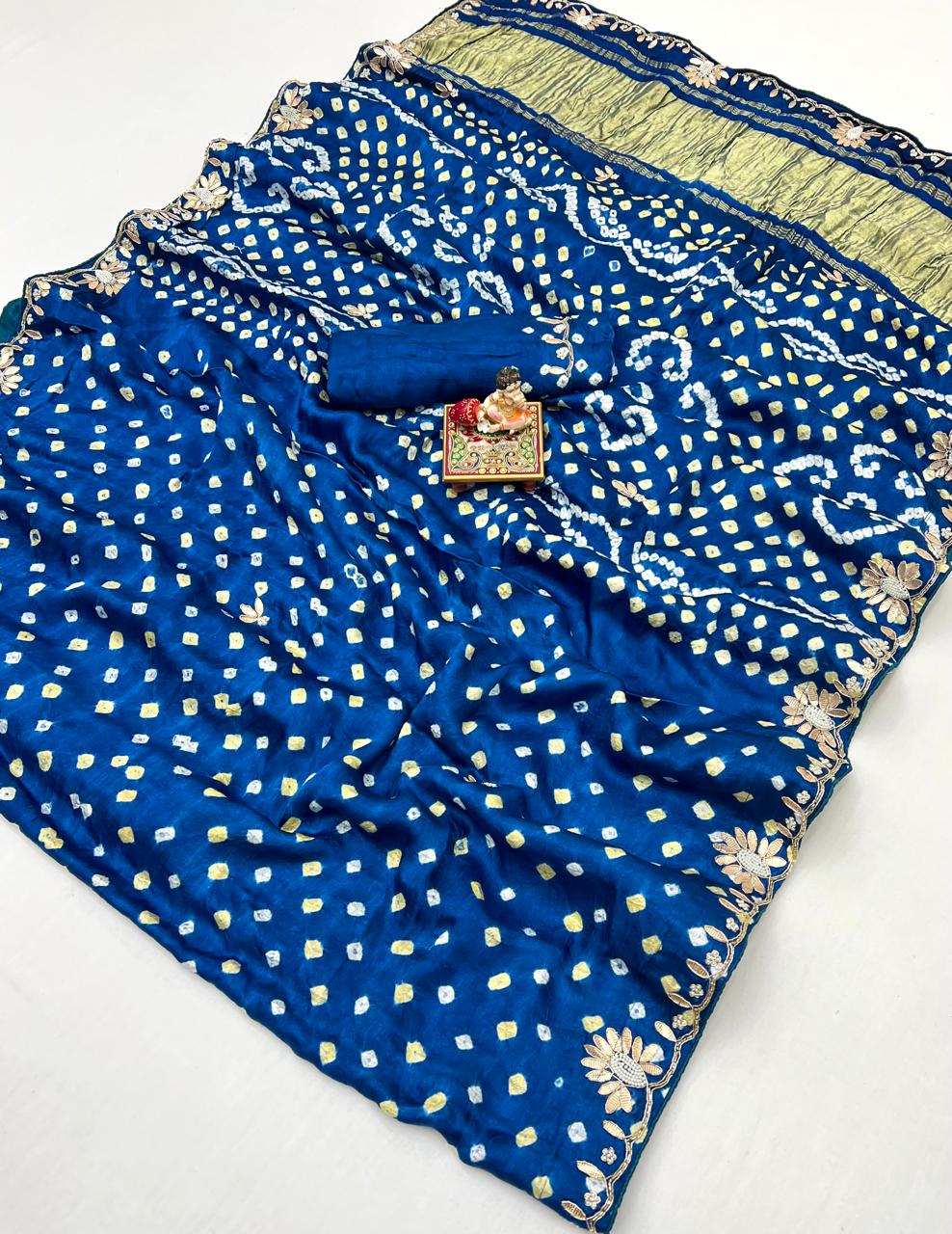
Motif choice can support the rest of an outfit without matching every detail. Peacock designs echo the peacock imagery found in Banarasi silk borders and pallus. Lotus motifs suit temple jewellery and ceremonial dressing. Meenakari colours can pick up a dupatta border without requiring identical stones in the earrings.
For example, the Emerald Green Banarasi Silk Saree with Peacock Deer Pallu already offers a strong narrative through woven animal and botanical imagery. A restrained Vanki with a small peacock detail can complement that saree, while an oversized multi-coloured Bajubandh may compete with the pallu.
How Should You Style a Vanki or Bajubandh?
A Vanki or Bajubandh should be chosen according to the sleeve length, fabric weight, neckline and movement required by the outfit.
With sarees
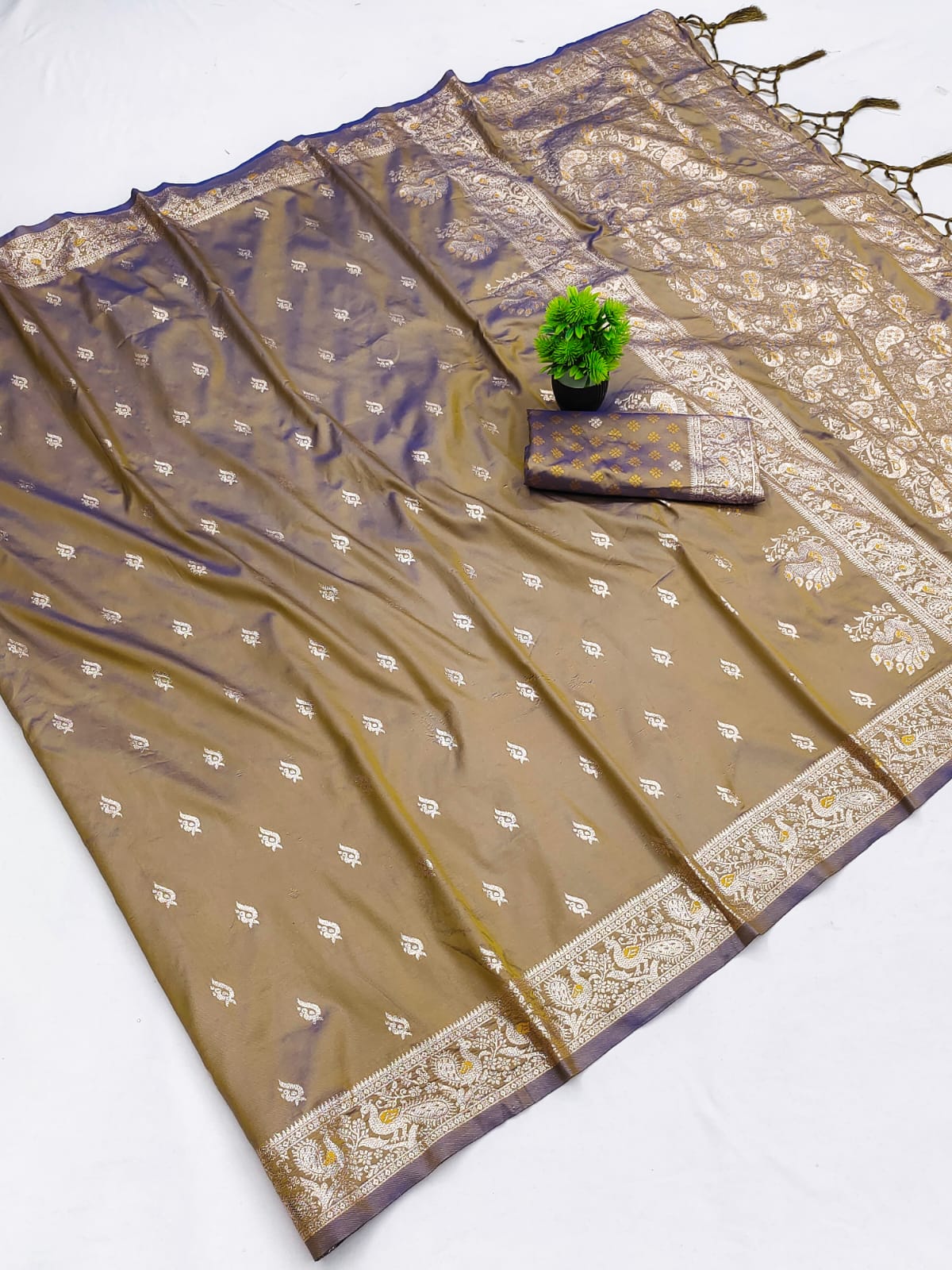
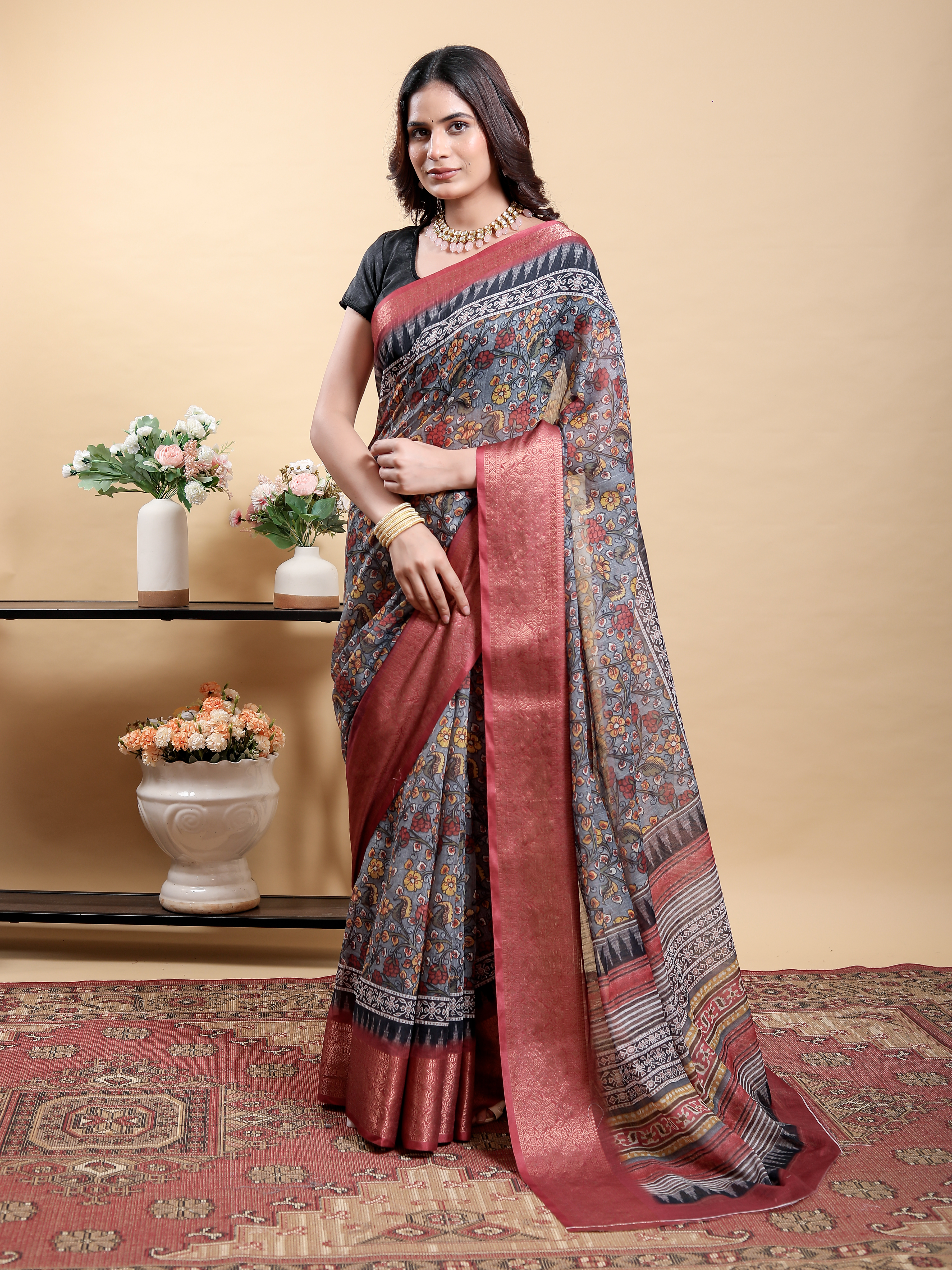
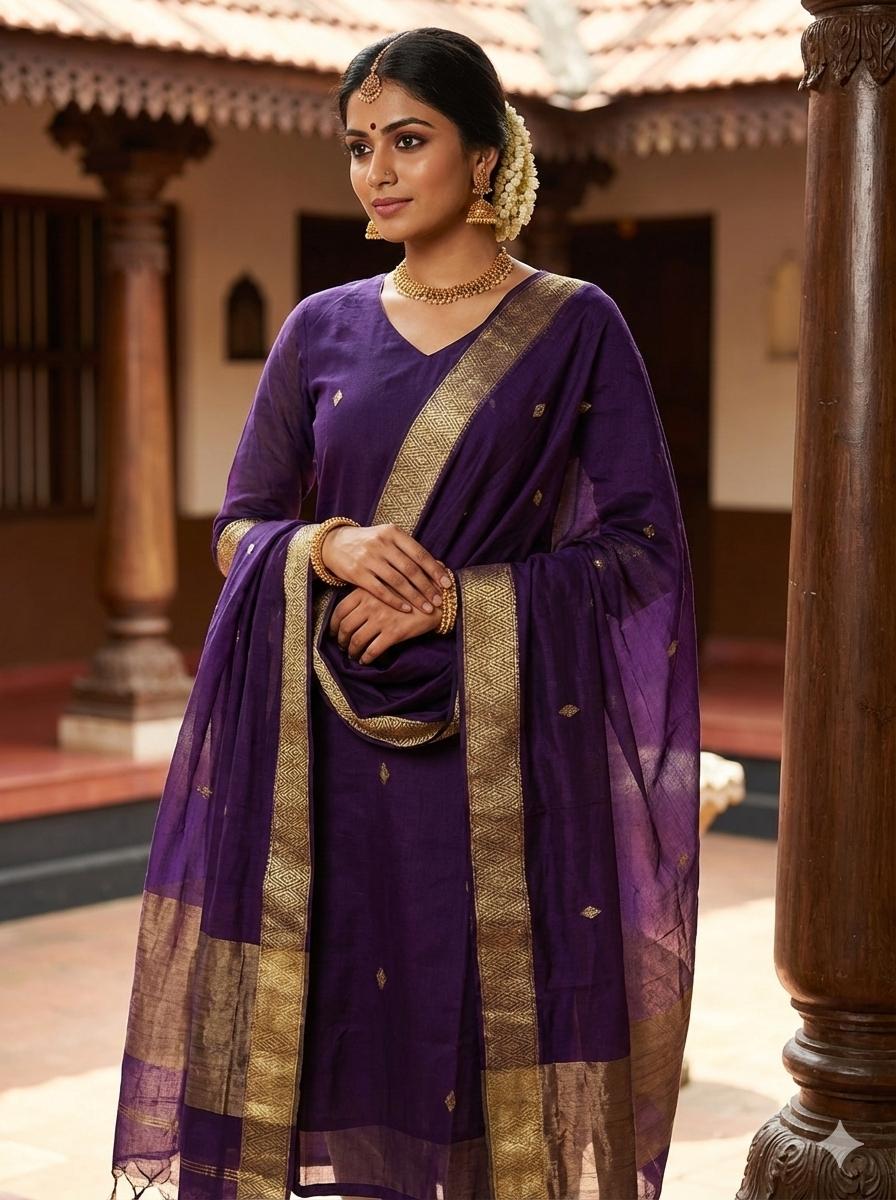
Short-sleeved or sleeveless blouses make the upper arm visible and provide the clearest setting for an armlet. A Vanki pairs naturally with a Kanjeevaram saree, silk saree or temple-border drape because its geometric form balances structured gold jewellery. A Bajubandh suits Banarasi silk, Chanderi and brocade sarees when its scale is adjusted to the border and blouse embroidery.
Blouse fit affects comfort more than many wearers expect. A very tight sleeve can press the armlet into the skin, while a loose sleeve can hide the ornament or allow it to catch on embroidery. Leave enough exposed upper arm for the piece to sit securely without covering the sleeve edge.
With lehengas and salwar suits
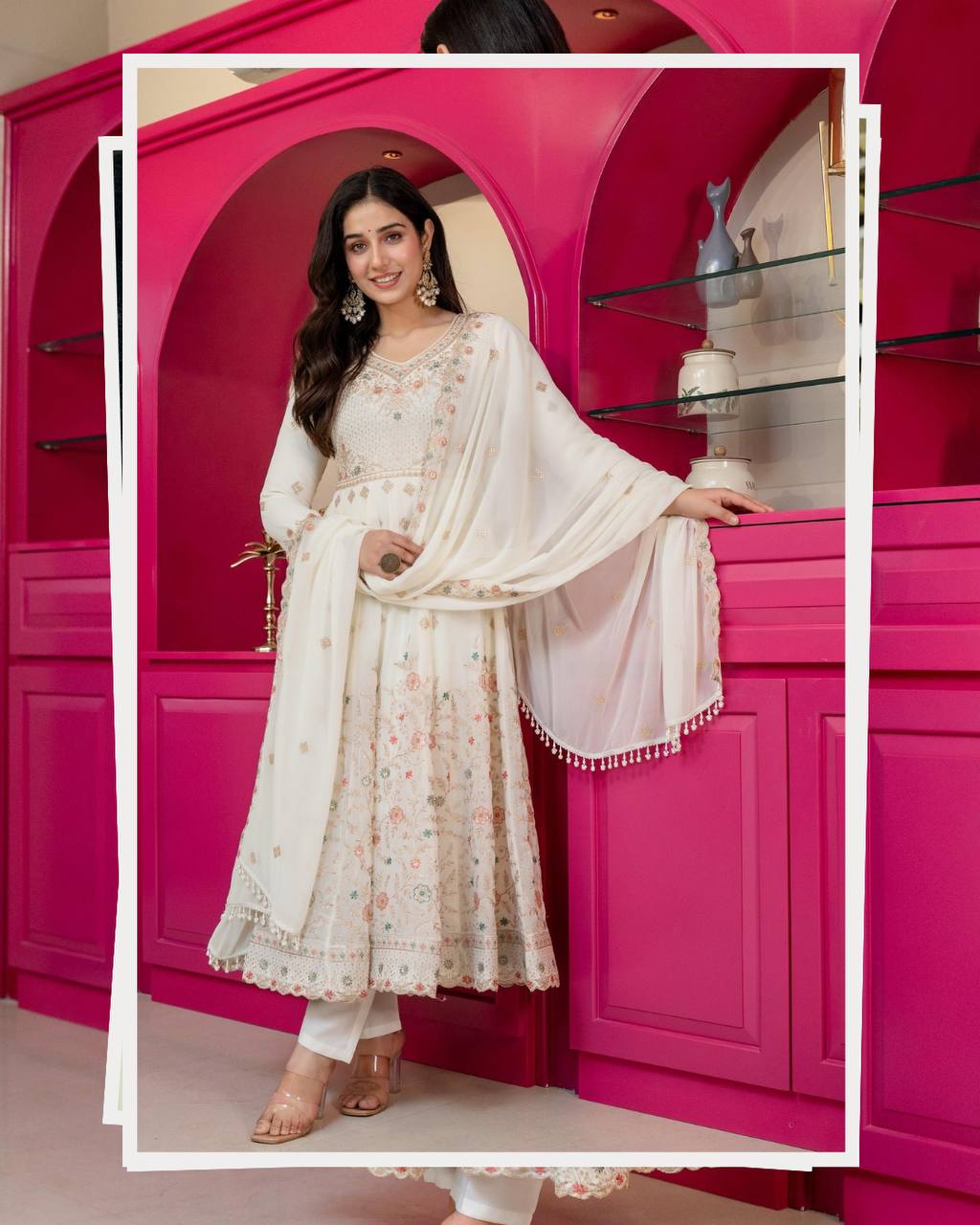
Lehengas with sleeveless cholis, cap sleeves or narrow straps offer a clean space for a statement Bajubandh. A slim Vanki can add traditional detail without making a heavily embellished choli look crowded. With a sharara or palazzo suit, a lighter chain-style Bajubandh can connect the outfit's festive character to the jewellery without appearing bridal.
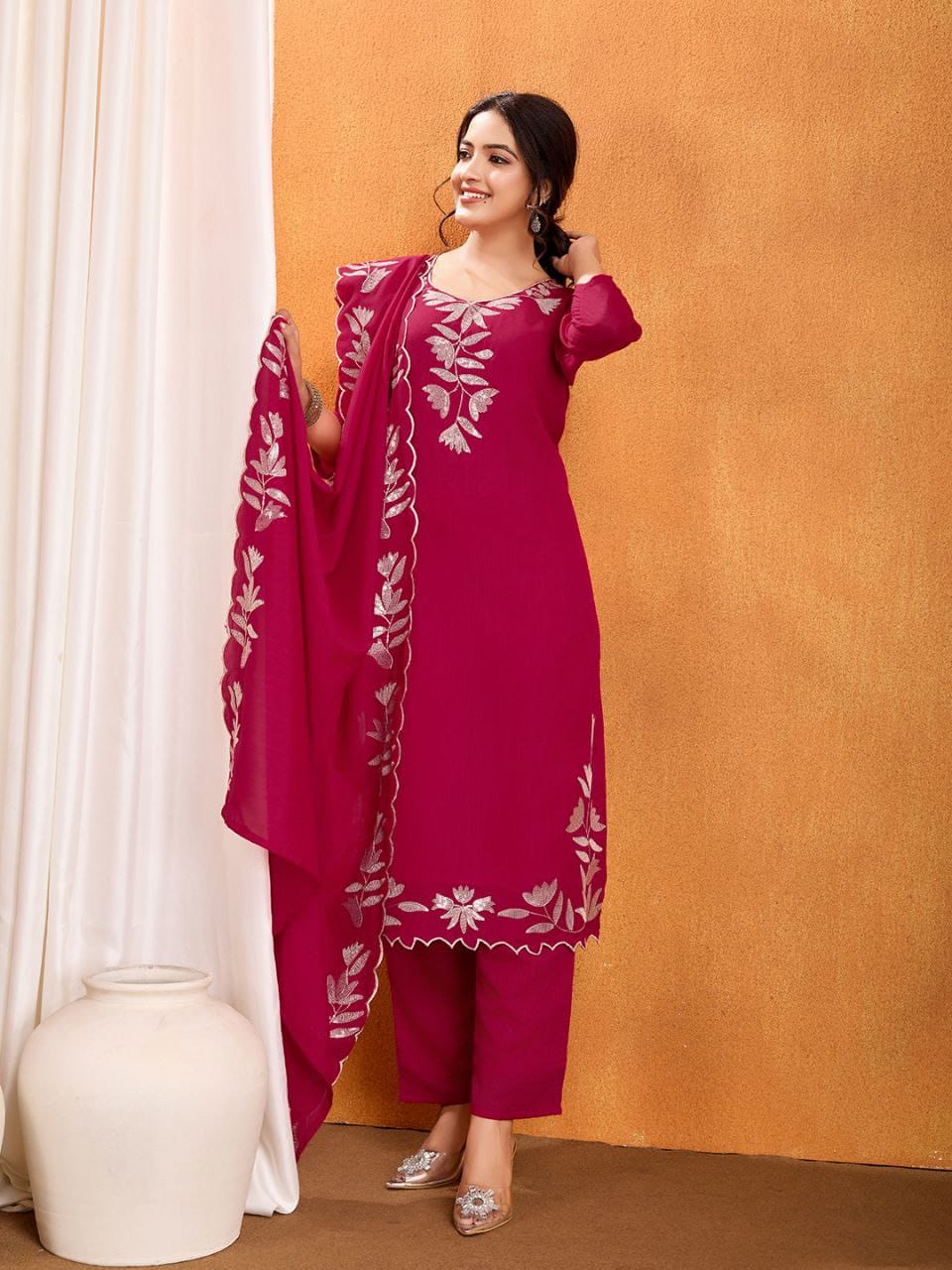
A kurta set doesn't require a large armlet to look dressed up. A delicate piece works particularly well with the clean lines of the Rani Pink Vichitra Silk Embroidered Kurta Set with Dupatta. An elaborate gold armlet is more suitable for a wedding ceremony, while a small antique-finish design can work for a festive dinner or family celebration.
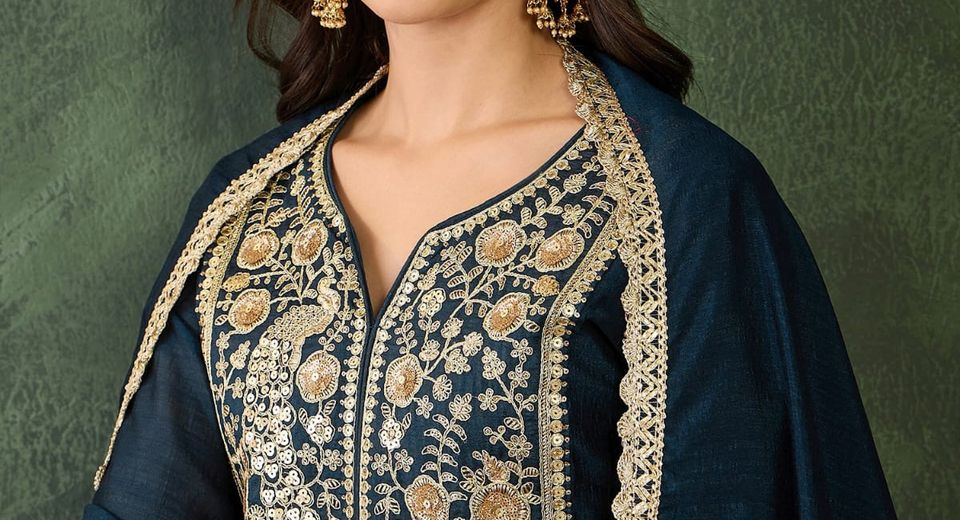
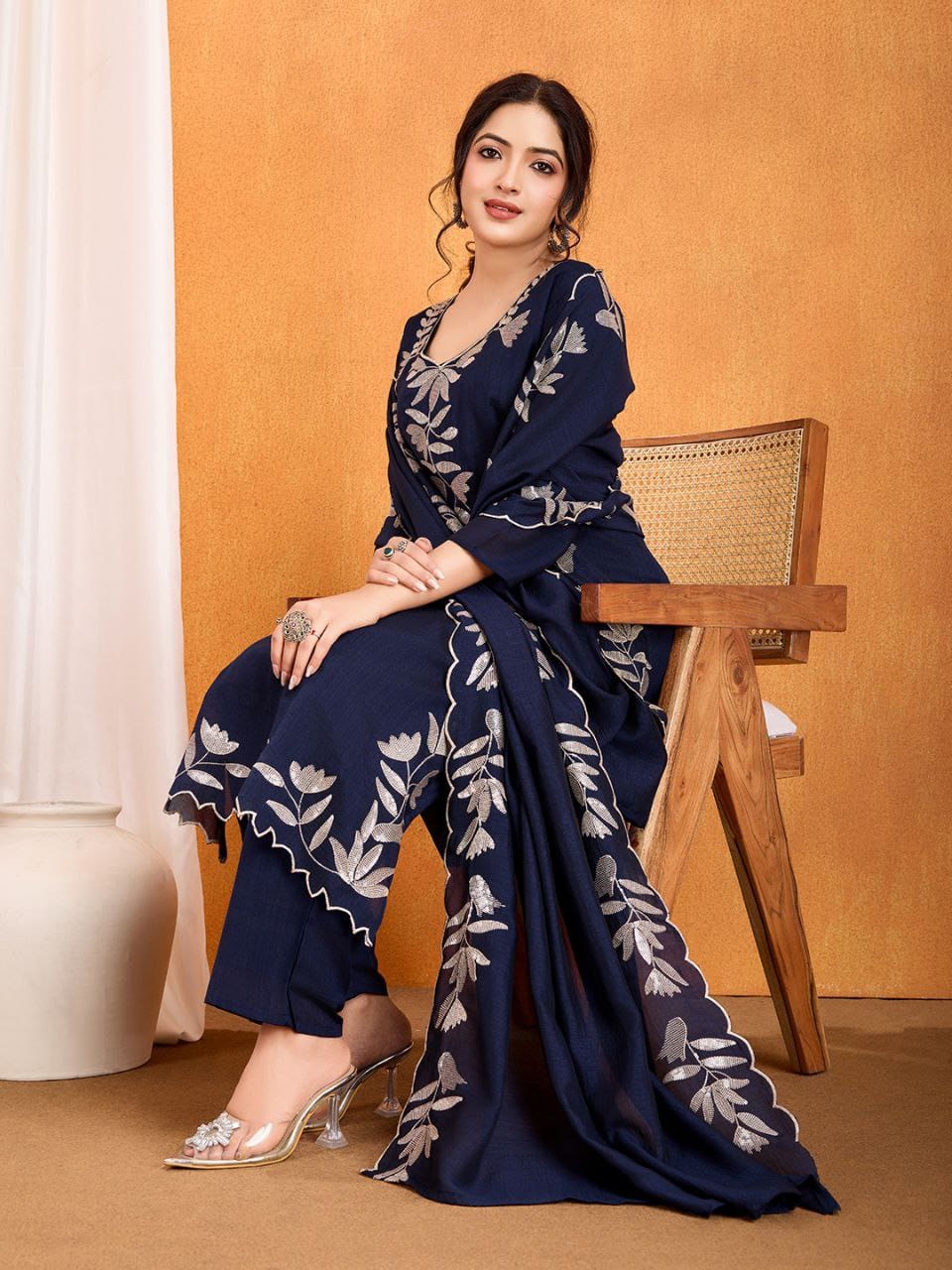
The Navy Blue Vichitra Silk Embroidered Kurta Pant Set and Navy Blue Vichitra Silk Embroidered Kurta Set with Dupatta can both take silver-toned, pearl or uncut-style arm jewellery. Navy creates contrast with antique gold, but the jewellery should repeat at least one detail from the neckline, border or earrings.
With colour and fabric
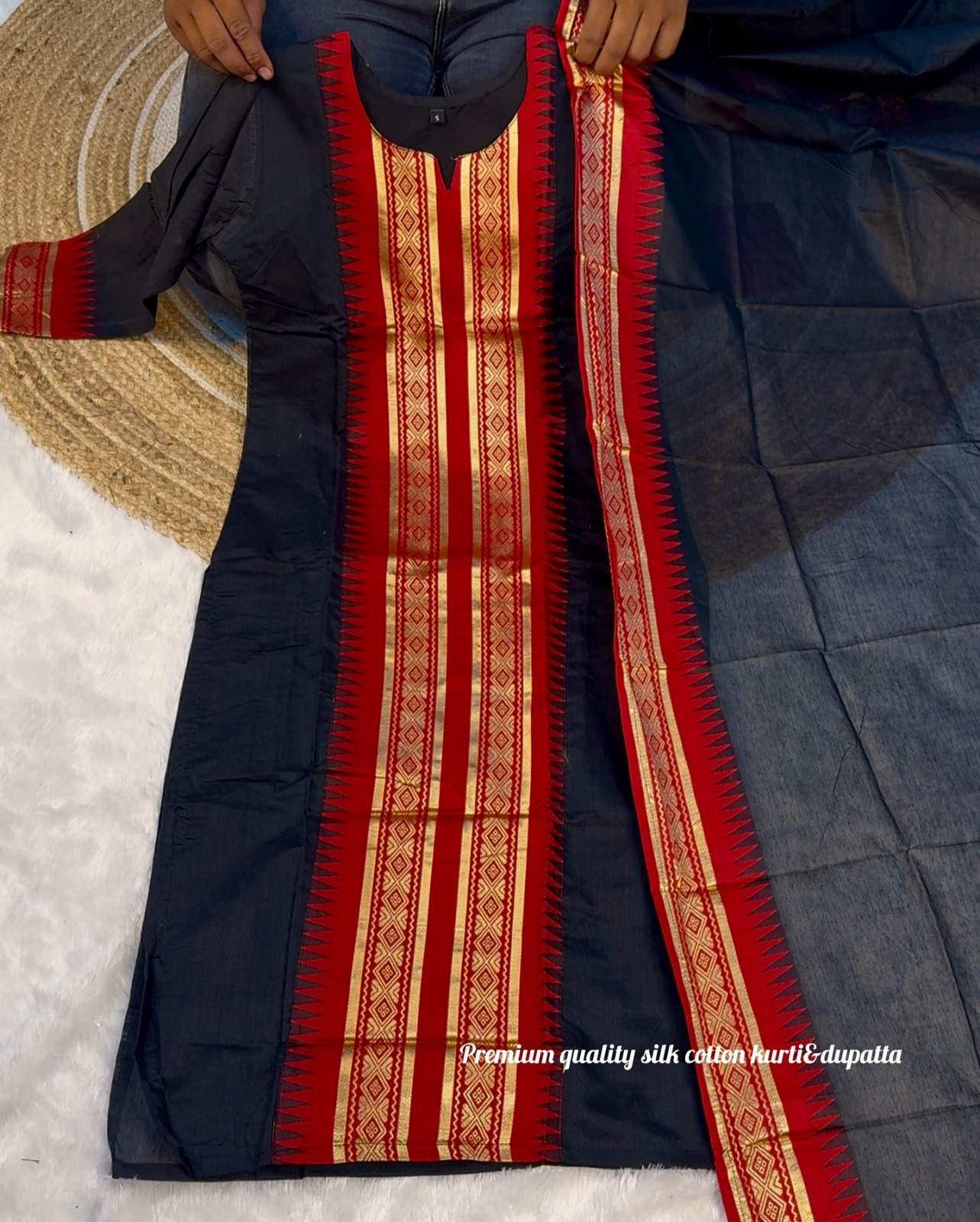
Rich silk fabrics can support traditional gold, while lighter fabrics usually benefit from a less weighty armlet. Chanderi and organza may be marked by rough metal edges or heavy chains, so smooth, lightweight designs are safer. Vichitra silk has enough surface richness for a modest statement piece rather than several competing ornaments.
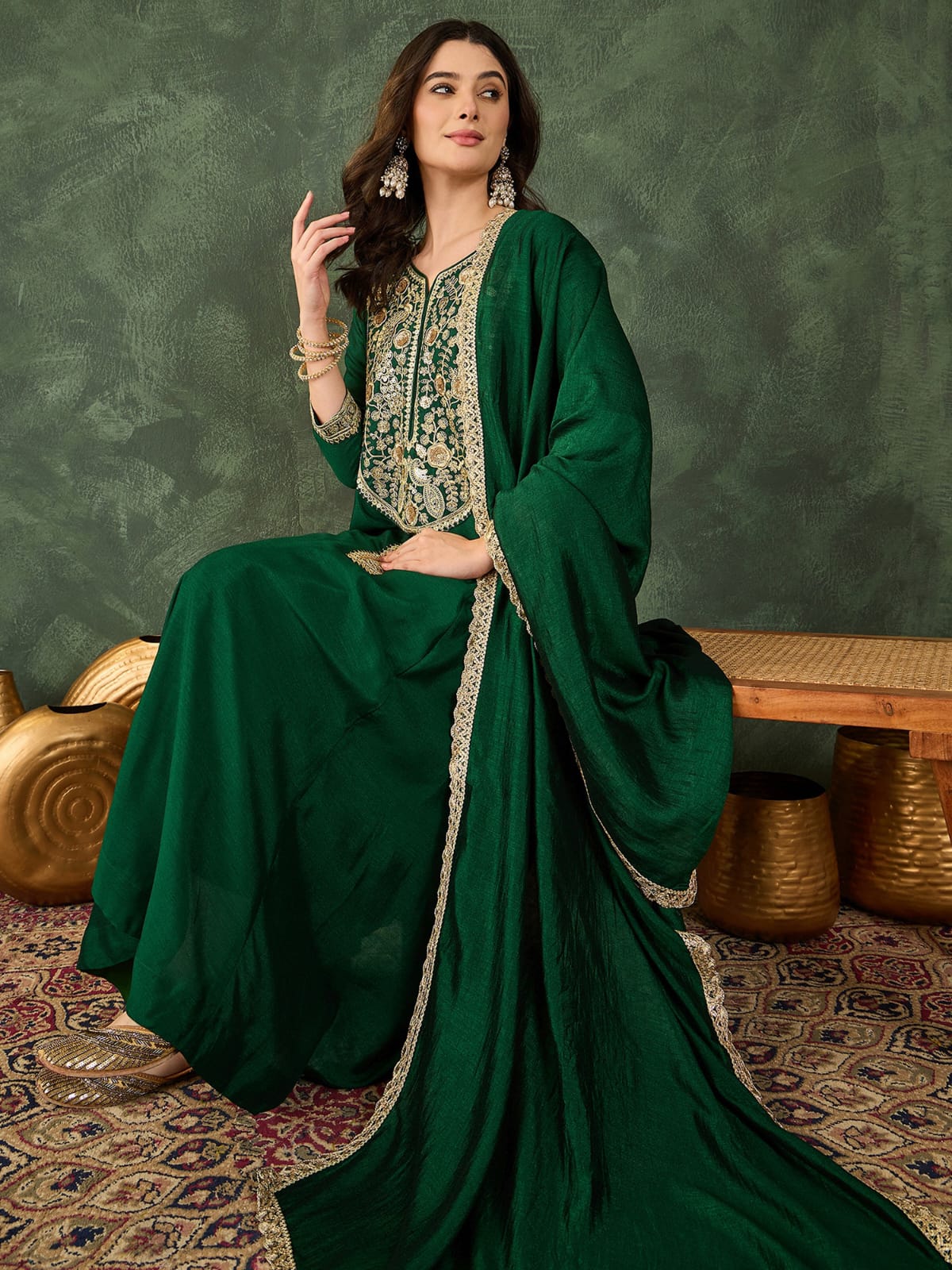
Emerald Green Vichitra Silk Embroidered Kurta Set with Dupatta and Ruksha Blue Vichitra Silk Embroidered Kurta Set with Dupatta can be styled with gold-toned Vanki designs for a classic festive palette. Teal Green Vichitra Silk Kurta Set Online and Taupe Beige Embroidered Vichitra Silk Kurta Set Online lend themselves to versatile antique gold, champagne-toned or muted silver armlets, depending on the other accessories.
How Do You Wear and Secure an Armlet Correctly?
An armlet should sit on the fullest stable part of the upper arm, remain comfortable during movement and stay in place without leaving deep marks.
Measure the upper arm with a soft tape at the intended wearing point rather than measuring the bicep at random. Take the measurement after relaxing the arm, and compare it with the jewellery's inner circumference. Adjustable chains are useful because arm size can change slightly with posture, temperature and natural swelling.
- Place the armlet above the elbow, usually several centimetres below the shoulder.
- Fasten the clasp or tie while keeping two fingers of comfortable movement beneath the band.
- Raise and lower the arm to check whether the ornament slides, pinches or catches on the blouse.
- Check the back fastening in a mirror because loose hooks can snag hair, zari or dupatta borders.
- Remove the piece if the skin becomes numb, unusually red or painful.
Traditional corded Bajubandh designs can be adjusted more easily than rigid cuffs. A jeweller can alter a gold or metal armlet by adding a chain extension, changing the clasp or reshaping the inner curve. Do not force a rigid piece over the widest part of the arm because repeated pressure can damage soldered joints or stone settings.
What Should You Consider Before Buying One?
The most important buying checks are measurement, weight, fastening quality, metal finish and compatibility with the outfit's sleeve and embroidery.
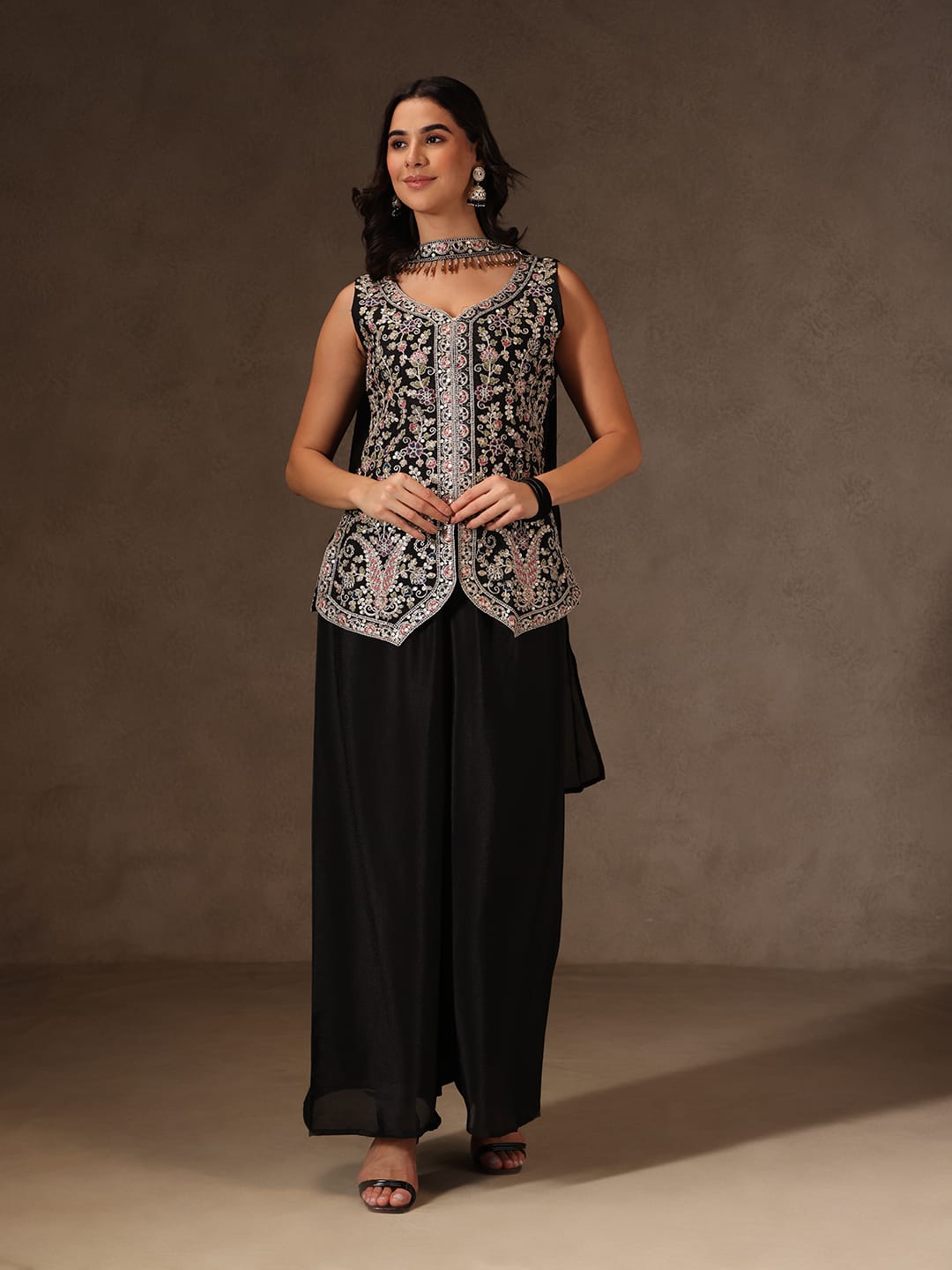
Ask for the inner circumference and the entire weight, not just the outside length. A large-looking hollow design may be more wearable than a compact good piece. Inspect the underside for sharp prongs, exposed wire and rough casting. Smooth edges weigh when the armlet will be worn beside silk, zari or delicate net fabric.
For real gold jewellery, verify hallmarking and the purity stated by the seller. For gold-plated or costume jewellery, ask whether the finish is suitable for perspiration and whether the stones are glued or prong-set. Glue-set stones need greater care around heat, moisture and perfume.
Think about frequency of use. A temple-style Vanki may be an excellent heirloom or wedding purchase, while a lightweight Bajubandh in a neutral finish can be used with sarees, lehengas and festive kurta sets throughout the year. An adaptable design should coordinate with at least two jewellery families, such as gold and pearl or antique gold and coloured stones.
How Should Vanki and Bajubandh Jewellery Be Stored?
Store armlets separately in soft, dry compartments so that metal edges, chains and stones don't scratch one another.
Wipe gold-plated and costume pieces with a soft, dry cloth after wearing. Keep perfume, hair spray, body oil and sunscreen away from the jewellery because chemicals can dull plating and loosen some stone settings. Do not immerse plated jewellery in water or commercial silver polish unless the maker specifically recommends it.
Solid gold can tolerate regular wear better, but stones and enamel still require care. Place each piece in a fabric pouch or lined box, and avoid storing heavy ornaments on top of delicate Vanki arms. Keep jewellery away from bathrooms, where humidity can accelerate tarnish on silver and base-metal components.
A Bajubandh with fabric, zari or pearls should be aired completely before storage. If the ornament becomes damp during a long ceremony, let it dry naturally at room temperature. Heat from a hair dryer can affect adhesive, enamel and textile fibres.
Why Do These Armlets Still Matter in Contemporary Dressing?
Vanki and Bajubandh remain relevant because they connect modern occasion wear with regional craft, movement and inherited visual language.
Contemporary styling doesn't require a full traditional jewellery set. One carefully selected armlet can add cultural definition to a simple silk saree, a monochrome lehenga or an embroidered kurta set. The ornament also changes how the arms are framed in photographs, making sleeve design and hand gestures part of the overall look.
Understanding what are Vanki and Bajubandh in traditional jewellery also prevents a common styling mistake: treating every armlet as interchangeable. A Vanki's pointed architecture suits South Indian ceremonial dressing and structured silk. A Bajubandh gives more freedom, from a delicate pearl chain with a salwar suit to a broad Kundan piece with a bridal lehenga.
The best choice respects both aesthetics and context. Wear a regional form with appreciation for its history, select a scale that allows comfortable movement, and let the armlet complement rather than conceal the workmanship of the saree, blouse, lehenga or kurta set.
Common Questions About Vanki and Bajubandh Jewellery
What are Vanki and Bajubandh in traditional jewellery?
Vanki and Bajubandh are upper-arm ornaments worn between the shoulder and elbow. Vanki usually has a distinctive V-shaped design associated with South Indian jewellery, while Bajubandh is a broader term covering many regional armlet styles.
Is a Vanki the same as a Bajubandh?
A Vanki is a type of upper-arm ornament, but the terms are not exact synonyms. Vanki generally refers to a pointed or chevron-shaped design, whereas Bajubandh may be a cuff, plaque, chain, cord or flexible band.
Which sarees pair well with a Vanki?
Vanki pairs especially well with Kanjeevaram sarees, temple-border silk sarees and traditional bridal drapes. A simple Vanki can also complement Banarasi silk when its motifs and scale do not compete with the pallu.
Can a Bajubandh be worn with a salwar suit or kurta set?
Yes, a lightweight Bajubandh can be worn with a sleeveless or short-sleeved salwar suit, sharara or kurta set. Smaller designs are usually more comfortable and balanced for daytime or semi-formal events.
Where should an armlet sit on the upper arm?
An armlet should sit on the fullest stable section of the upper arm, above the elbow and below the shoulder. It should stay in place during movement without causing numbness, pain or deep pressure marks.
How do you keep a gold-plated Bajubandh from tarnishing?
Keep a gold-plated Bajubandh away from perfume, sweat, water and hair products, and wipe it with a dry soft cloth after use. Store it in an individual fabric pouch in a cool, dry place rather than in a humid bathroom.