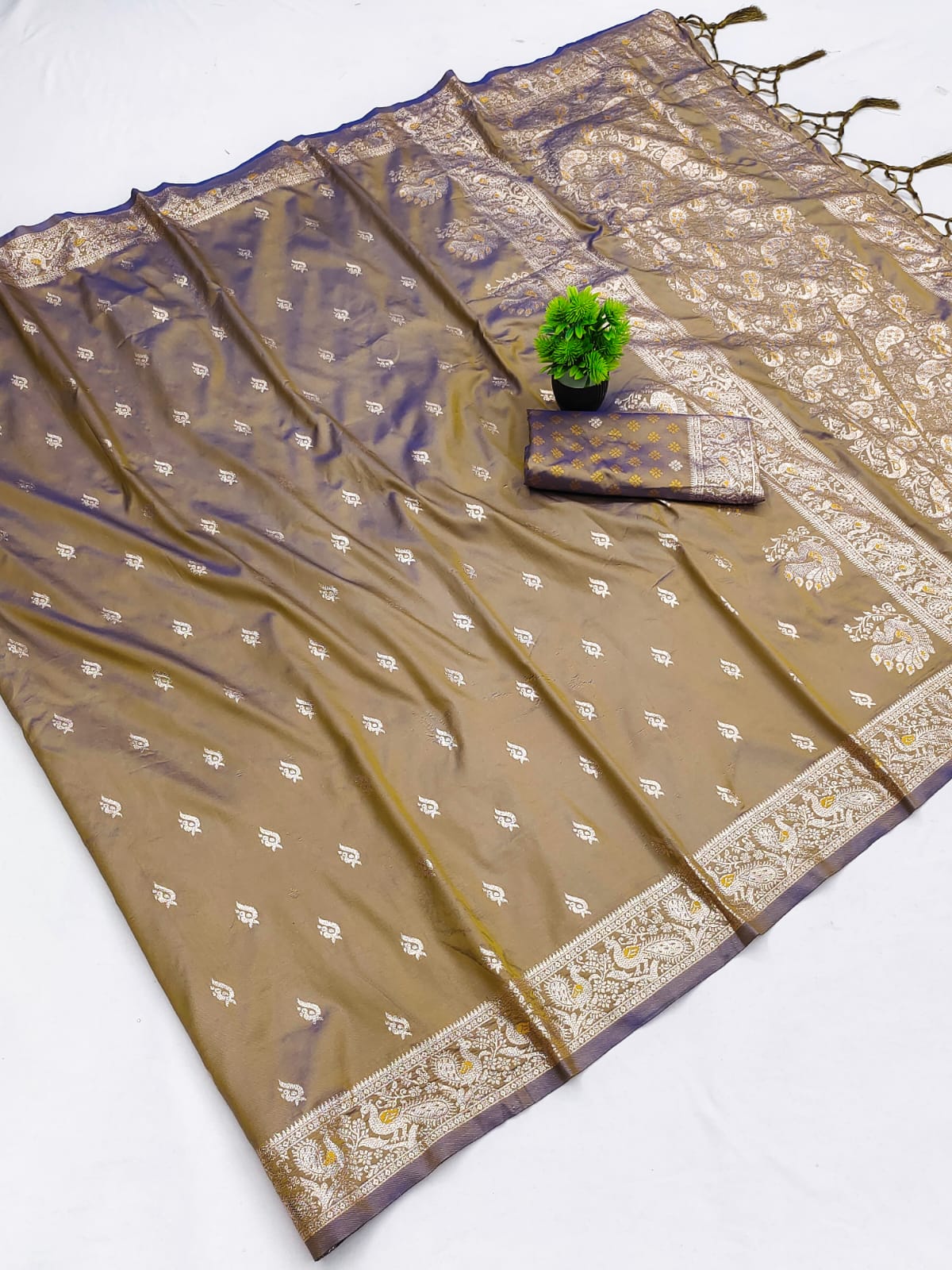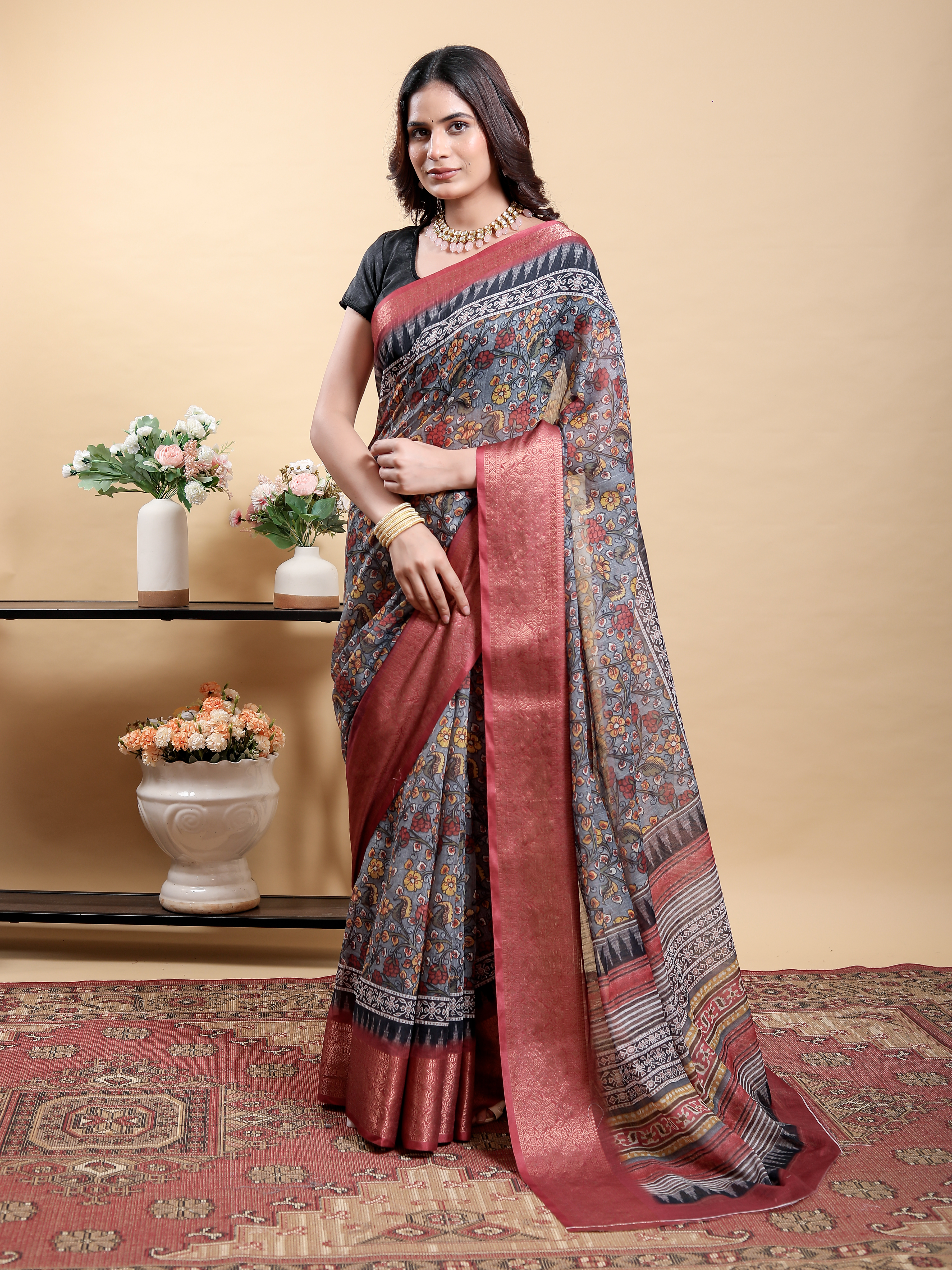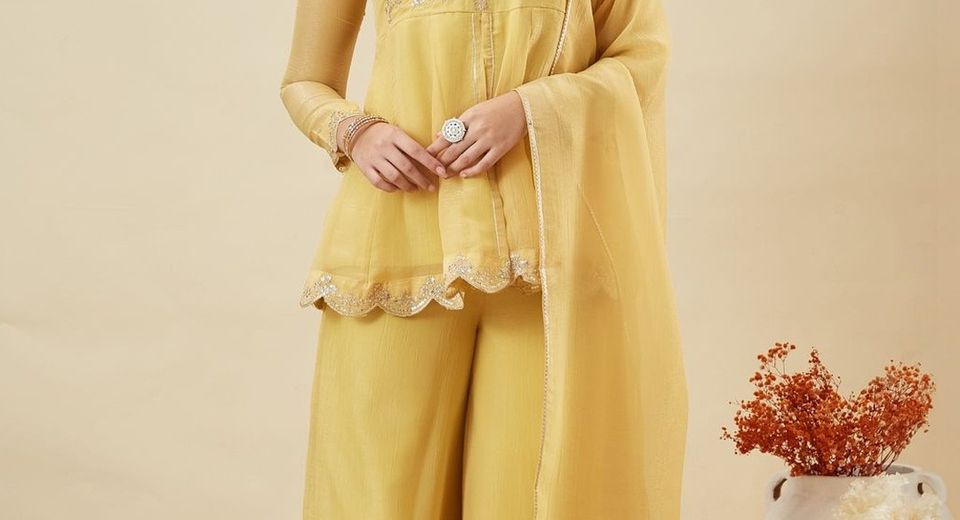
What Are the Signs of a Well Finished Kurta at Delivery becomes an important question when a salwar suit arrives folded in a parcel rather than tried on in a shop. A good first inspection takes about ten minutes and can reveal loose seams, inaccurate measurements, uneven hems, insecure embroidery or fabric damage before the garment is worn. The inspection should cover construction, fit, surface finish and packaging, not just colour and appearance.
What Are the Signs of a Well Finished Kurta at Delivery?
A well finished kurta arrives with secure seams, accurate measurements, an even hem, neat embroidery, a clean neckline, a smooth lining and fabric free from avoidable damage. The garment should also match its listed colour, components and size. These checks matter equally for a simple cotton straight kurta and an embellished silk kurta worn for a wedding or festive gathering.
Remove the kurta from its outer packaging carefully, preferably without using scissors near the fabric. Keep the invoice, tags and packaging until the inspection is complete. Place the garment on a clean, dry, light-coloured surface and photograph any visible issue immediately. A photograph of a loose thread or stain taken before wearing the garment provides a clearer record than a complaint made after several uses.
How Should You Check Kurta Stitching and Seams?
Kurta stitching should look continuous, secure and appropriate to the garment's stress points. Turn the kurta inside out and examine the shoulder seams, armholes, side seams, neckline, sleeve hems and bottom hem. Straight stitching with a consistent stitch length is a positive sign; skipped stitches, open seam allowances, tangled thread or fabric caught unevenly in the seam require closer attention.
Inspect the areas that carry the most strain
Shoulder seams and armholes deserve special attention because they experience repeated pulling during movement. Side slits should end with reinforced stitching rather than a loose thread at the opening. A kurta with a front placket, buttons or a concealed zip should have those attachments firmly anchored. Gently press the fabric on either side of a seam; the seam should not gape dramatically under light tension.
Loose thread tails don't always indicate a serious defect. A short thread at an interior seam may be trimmed with small scissors, while a thread connected to an unraveling seam should not be cut before it's documented. Serged or overlocked seam edges should cover the raw fabric edge consistently. A lining, where present, should be attached without pulling the outer fabric into puckers.
How Can You Confirm Kurta Measurements at Home?
You can confirm kurta measurements by laying the garment flat, measuring it without stretching, and comparing the results with the size chart or order details. A flexible measuring tape is sufficient. Measure bust or chest width from armpit to armpit and double it, then measure shoulder width, sleeve length, kurta length and hip width where the silhouette requires room.
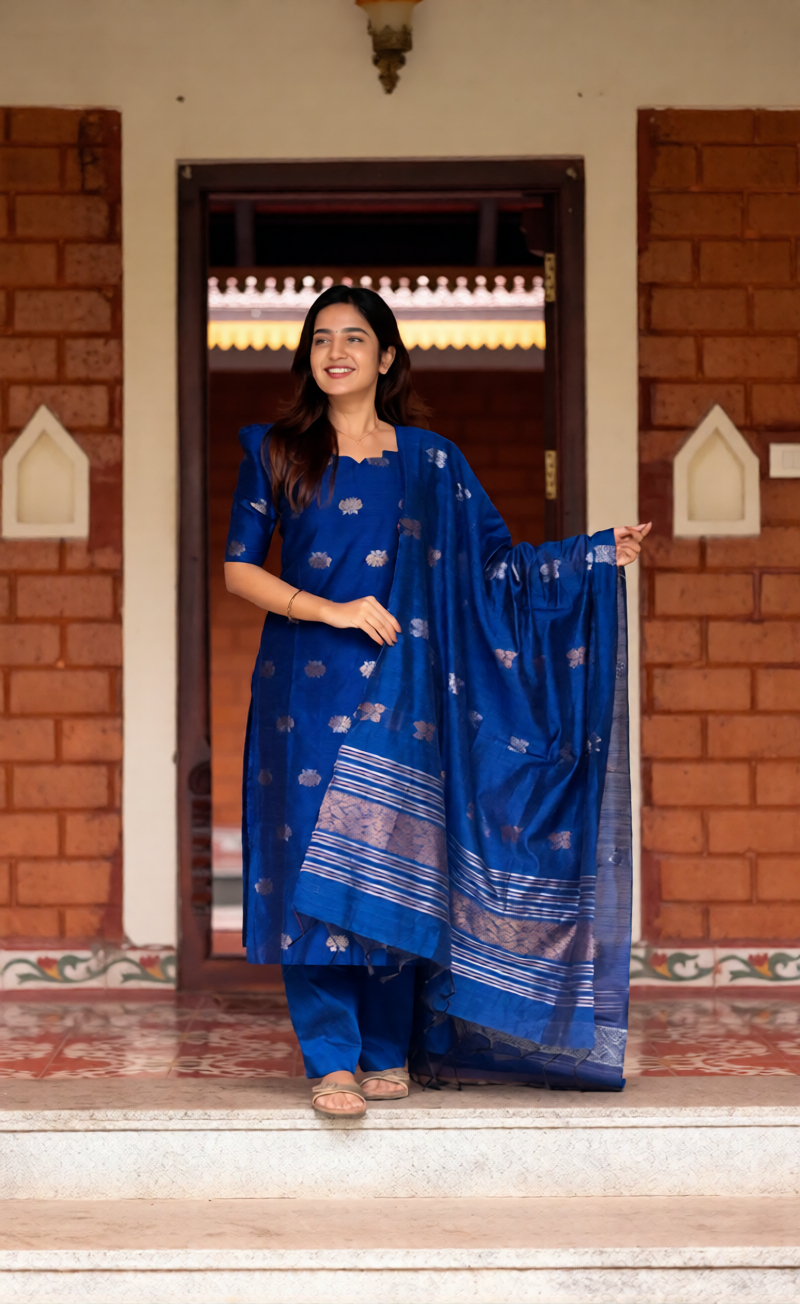
Measurement methods must remain consistent. Measure the kurta flat rather than measuring around the body, and don't include the extra length of a curved hem in the straight length measurement. A small difference may result from measuring technique, but a substantial difference can change comfort and proportion. For example, a kurta intended to finish at mid-thigh may look noticeably different if the delivered length is several centimetres shorter.
Try the garment over a thin top only after the initial visual inspection. Raise both arms, sit down, bend your elbows and walk a few steps. The armhole should not cut into the underarm, the shoulder seam should sit close to the shoulder edge, and the side seams should not twist towards the front. A straight kurta should fall vertically rather than pulling across the bust or abdomen.
Readymade kurta sets often combine a fixed garment length with a more forgiving pant, palazzo or salwar. That flexibility doesn't excuse an inaccurate kurta measurement. Check whether the neckline sits flat, whether the sleeves finish at the same level and whether the side slits are equal in height. A mismatch of a few millimetres may be invisible, but a visibly uneven sleeve or hem indicates poor finishing.
What Should You Check on Embroidery, Prints and Trims?
Embroidery should be securely anchored, evenly distributed and free from loose embellishments that can catch on jewellery. Run your eyes across the embroidered area without pulling the threads. Check whether motifs are complete, sequins or beads are attached, zari isn't excessively snagged, and the design remains aligned across the front panel. Dense embroidery may have small thread ends inside, but the outer surface should not show accidental knots or bare gaps.
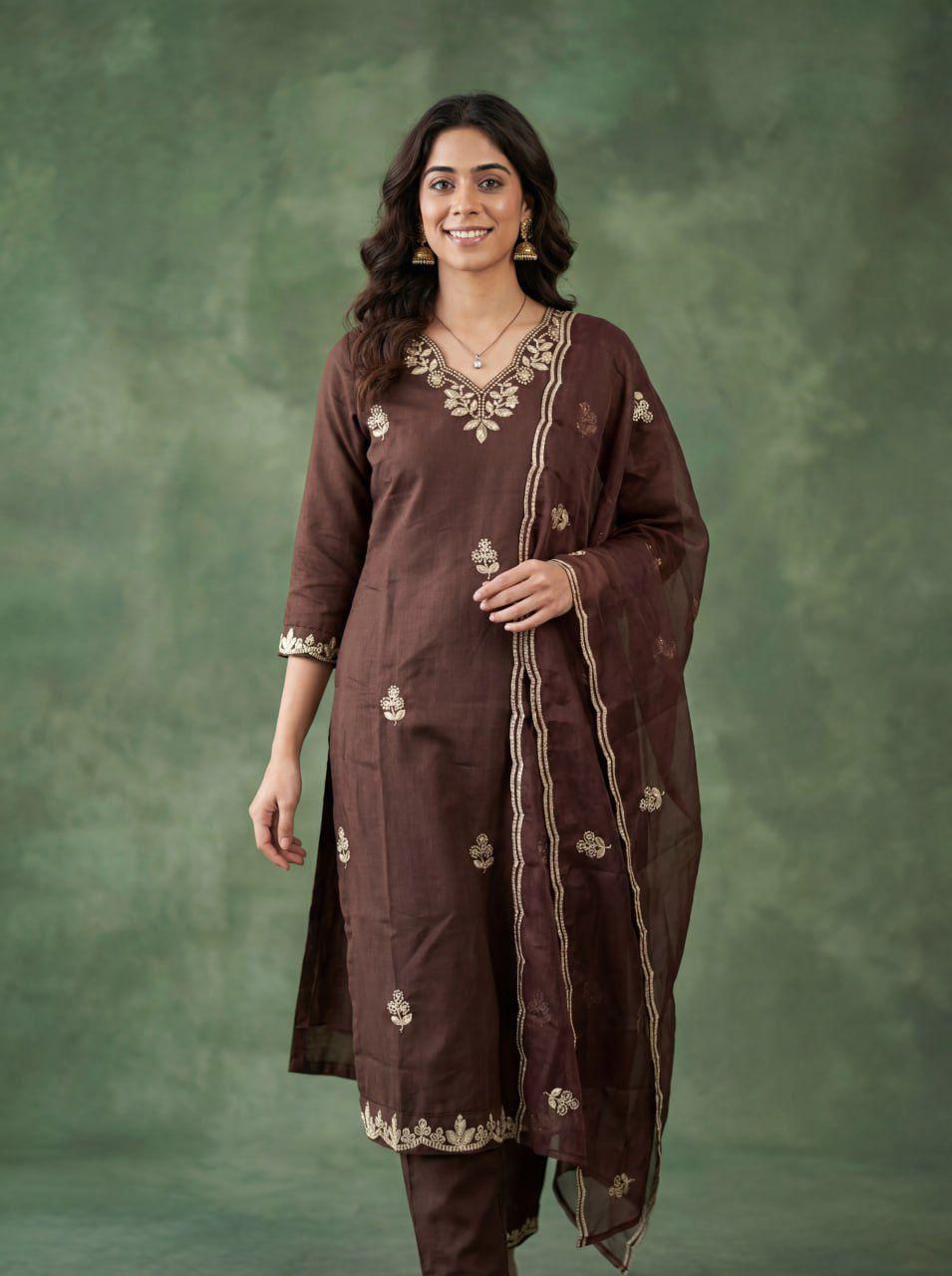
Inspect embroidered necklines and sleeve borders especially carefully because those areas receive frequent handling. Buttons should be aligned with their loops, and button loops should hold the buttons without excessive strain. A zip should open and close smoothly without catching the outer cloth. Decorative piping should follow the neckline or seam without sudden waves.
Printed fabric needs a different inspection. Look for smudged motifs, white gaps caused by uneven printing, colour transfer and obvious misalignment at a centre panel or border. Block-printed designs can have small handmade variations, while a large stain, an unexplained blank patch or a sharply broken repeat is a quality concern. Kalamkari Print Salwar Suits may show the character of a printed design, but the fabric should still be clean and the print should not be damaged.
Inspect zari separately from printed and embroidered surfaces. Zari should not have long exposed metallic threads on the outside of the garment. A tiny thread at the reverse may be normal in a woven or embroidered design, but a snag that runs across the visible front can worsen with wear. Maharashtra Paithani Inspired Salwar Suits and Odisha Sambalpuri Salwar Suits can use visually prominent borders or motifs, making alignment and edge finishing particularly important during inspection.
How Do You Examine Fabric, Lining and Colour?
A well finished kurta has a fabric surface that's clean, intact and consistent with the product description. Hold the kurta near a window or under bright, neutral light and look for stains, pulled threads, holes, oil marks, uneven dyeing and excessive pilling. Natural fabrics such as cotton, Chanderi and silk can have minor variations, but visible damage or a strong unexplained patch should be recorded before use.
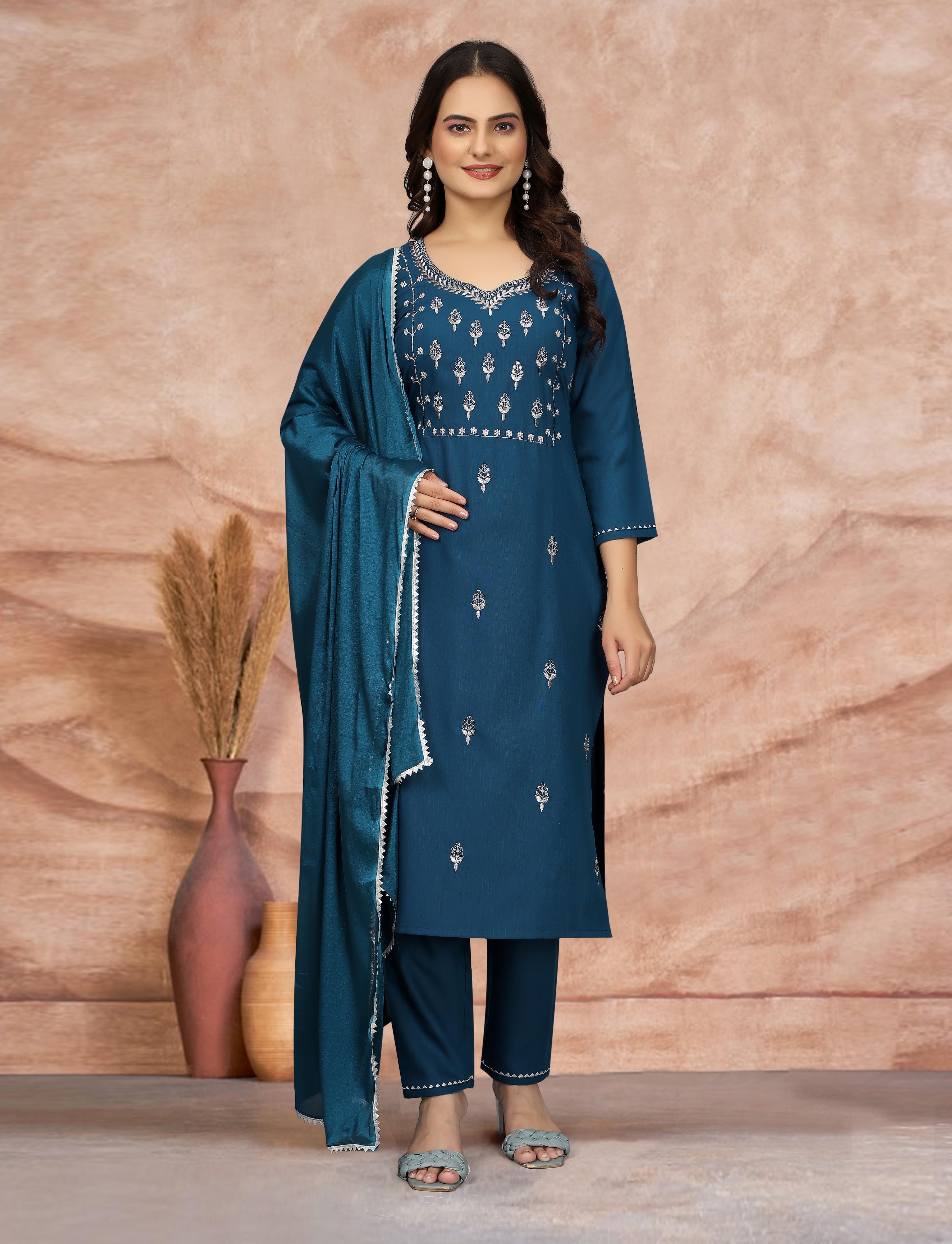
Check the fabric's weight and transparency against the stated construction and intended use. Chanderi can be light and slightly sheer, while a lined garment should not expose an untidy lining through the outer fabric. The Elegant Mustard Chanderi Cotton Kurta Set with Embroidery and White Chanderi Embroidered Kurta Set with Organza Dupatta are useful examples of why surface and transparency checks matter: lightweight Chanderi details should be assessed in daylight rather than judged under dim indoor lighting.
Examine the lining at the neckline, armholes and side seams. A lining should lie flat, remain shorter than the outer hem where appropriate, and not protrude from the sleeves or neckline. If the garment is unlined, inspect the inside for clean seam finishing and check whether the fabric remains comfortable against the skin. Vichitra silk, rayon and cotton can behave differently, so a lining that works well for one fabric may feel too tight or unnecessary for another.
Colour should be checked beside the order photograph only after allowing for screen differences and lighting. A Cream Embroidered Silk Kurta Pant Ethnic Co-ord Set may appear warmer under yellow indoor bulbs, while a mustard or teal garment can shift noticeably between daylight and artificial light. Compare the garment in daylight, inspect the dupatta and bottom separately, and look for an obvious mismatch between components.
What Makes Kurta Finishing Look Neat After Pressing?
Neat pressing should remove delivery creases without creating shiny patches, scorched marks or permanent fold lines. Lay the kurta flat and allow packed fabric to relax for several hours before judging the drape. A lightly wrinkled cotton or rayon garment may need careful steaming, but a sharp burn mark, melted synthetic fibre or flattened embroidery isn't a normal packing crease.
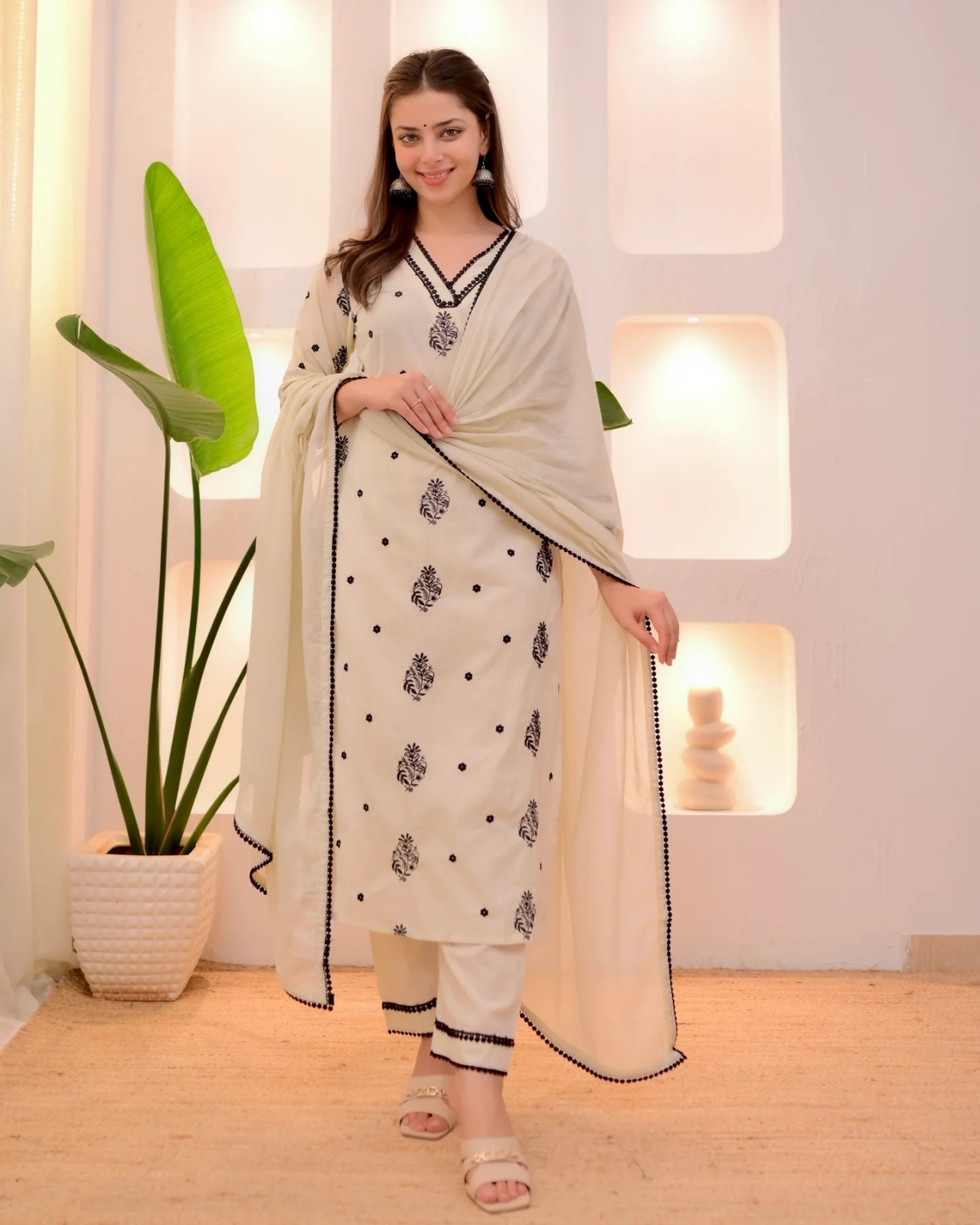
don't place a hot iron directly on zari, sequins, beads, metallic thread or delicate silk. Use a pressing cloth and the temperature recommended for the fibre, or use a steamer at a safe distance. The Elegant Beige Vichitra Silk Embroidered Kurta Set for Women should be handled more cautiously than a plain cotton kurta because heat and pressure can affect silk texture and embroidered surfaces.
Check that the front and back panels hang evenly after gentle steaming. A kurta that twists permanently may have uneven cutting or seam tension rather than ordinary packaging wrinkles. The hem should remain level when the garment is placed on a flat surface, and the neckline should recover its intended shape after the kurta is allowed to rest.
How Do You Inspect the Complete Salwar Suit Set?
Inspect every component of a salwar suit separately and then assess whether the pieces work together. Check the kurta, bottom and dupatta for stains, loose threads, shade differences, missing embellishment and correct size or length. A complete set should contain the components named in the product description, with trims and motifs placed as shown or described.
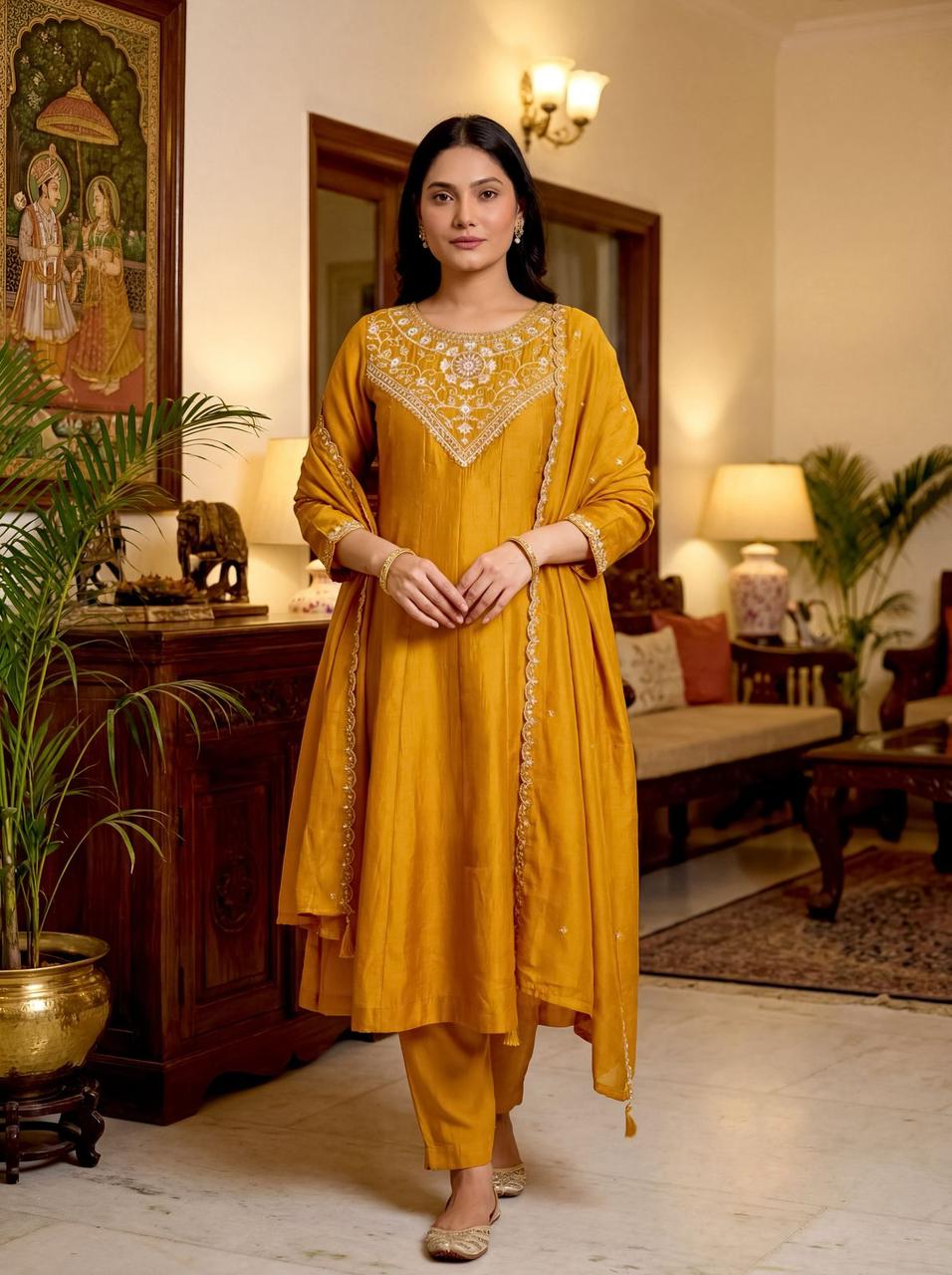
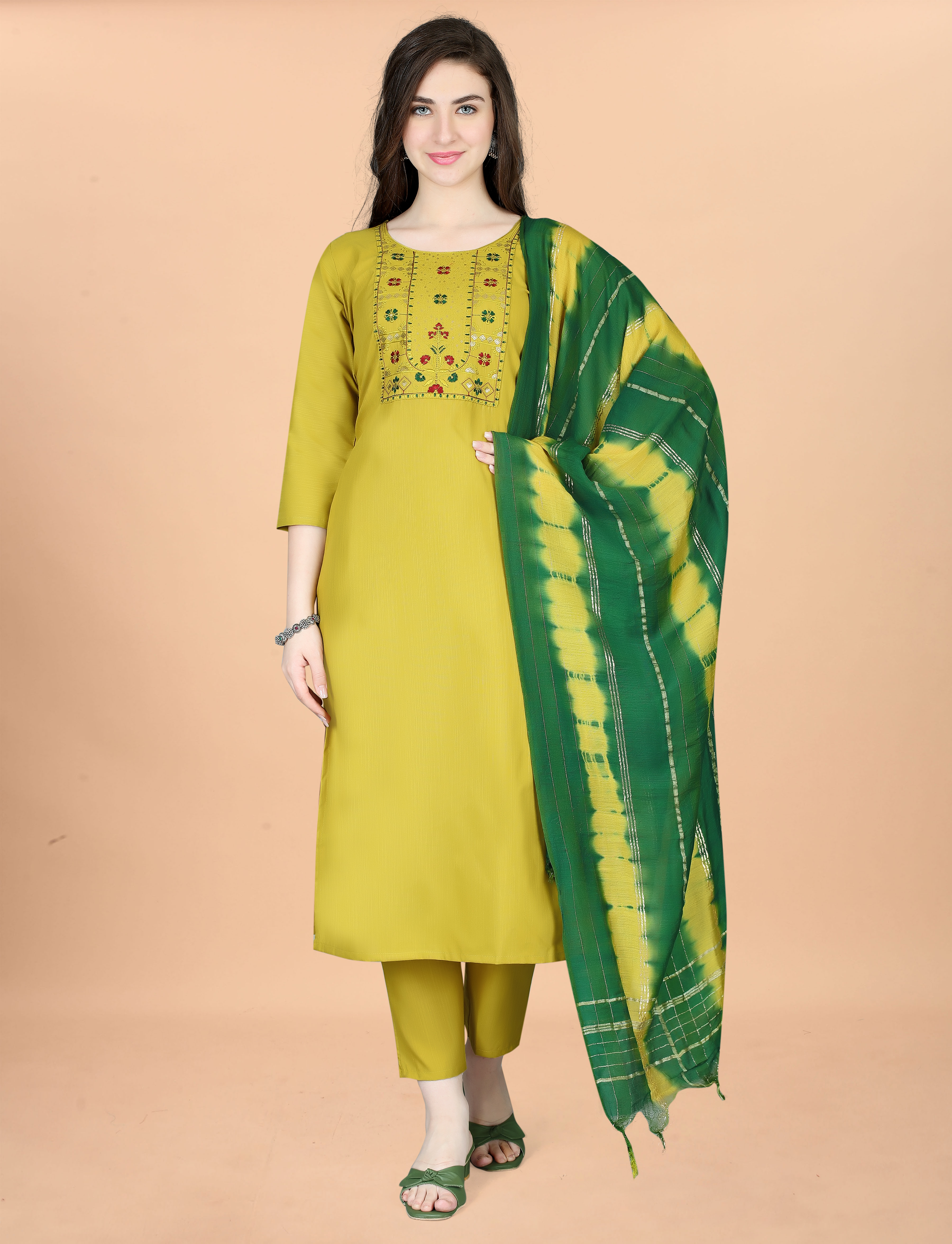
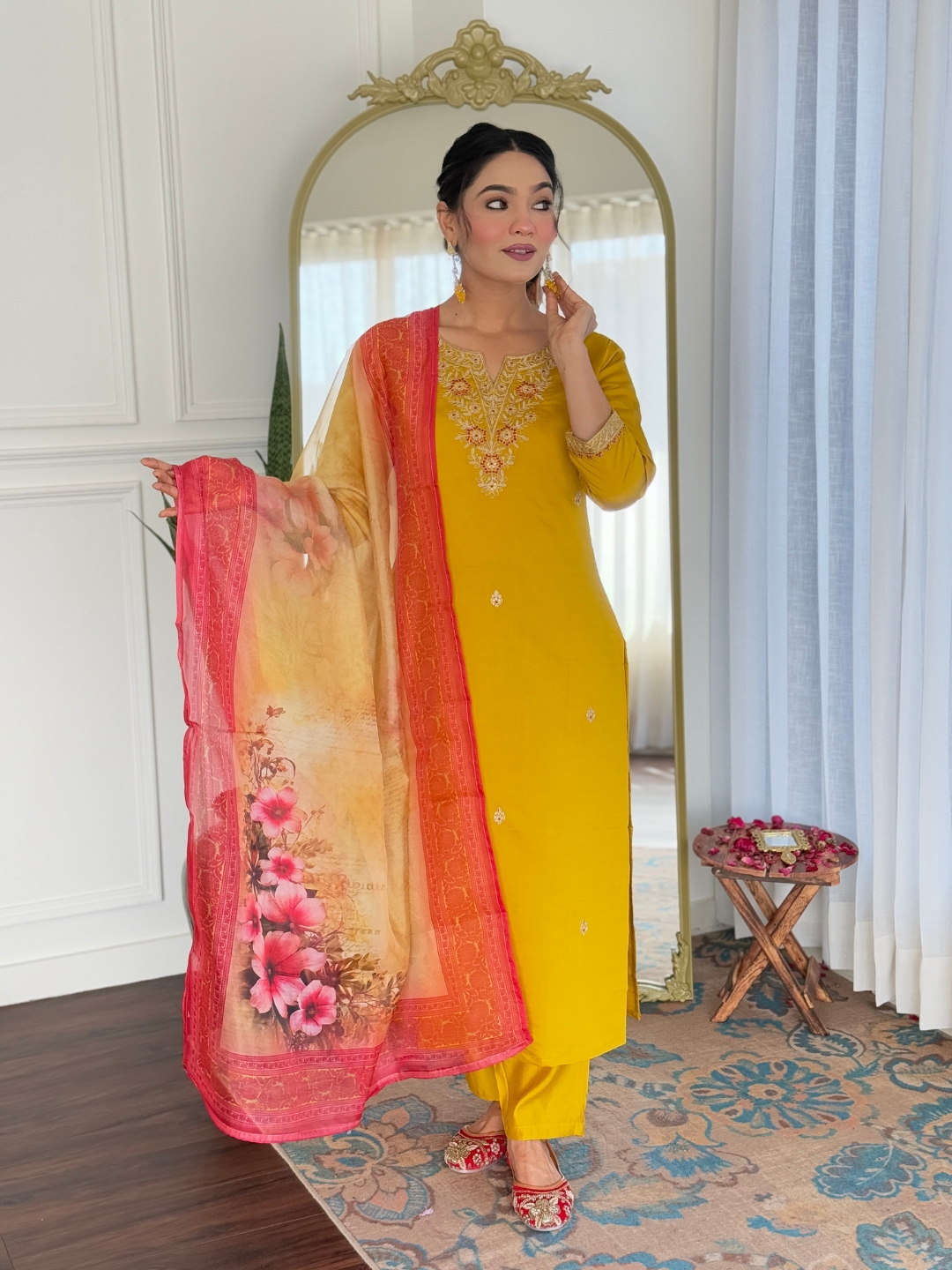
Lay the dupatta flat and examine both long edges, short ends and corner finishing. A hem should be secure, even and free from long thread tails. If the dupatta has an embroidered or printed border, check that the border doesn't abruptly stop in an unintended place. A Mustard Embroidered Rayon Kurta Set with Printed Dupatta combines two surface treatments, so inspect the embroidered kurta and printed dupatta independently rather than assuming that a good-looking set is uniformly finished.
Check the bottom for waistband construction, elastic recovery and seam comfort. Elastic should lie flat and return to its shape after gentle stretching. Drawstrings should be secured at their entry points and should not disappear inside the waistband. The Cream Floral Cotton Kurta Set with Pant and Dupatta should be assessed as a coordinated three-piece set, including whether the pant length and dupatta finish suit the kurta proportion.
Colour variation between components can be subtle in natural fibres, but an obvious mismatch deserves a photograph. Collections such as Gujarat Bandhej Salwar Suits and Punjab Patiala Salwar Suits may rely on distinctive colour and drape relationships, so check whether the dupatta, bottom and kurta look intentionally coordinated rather than accidentally paired.
What Should You Do If the Delivered Kurta Has a Defect?
If a delivered kurta has a possible defect, stop wearing, washing, altering or repairing it until the issue is documented and the seller's exchange instructions are checked. Photograph the full garment, the product label, the packaging and close-ups of the problem in good light. Record measurements with the tape visible when the concern involves size or length.
Keep tags attached and retain the original packaging when an exchange or return may be needed. Do not remove stains with home remedies, trim a loose seam or press over embroidery before contacting customer support. Alterations can make it difficult to establish whether an issue existed at delivery.
Separate a genuine construction concern from a normal characteristic of the material. Small slubs in some natural fabrics, mild fold creases and slight handmade print variation may be expected, while holes, stains, broken closures, missing components, severe shade differences and inaccurate listed measurements are more serious. Reading the product description and care notes helps make that distinction fairly.
A useful delivery checklist is simple: photograph the package, confirm every component, inspect the outside and inside seams, measure the kurta, test the closures, examine embroidery or prints, check lining and colour, and try the garment only after those steps. What Are the Signs of a Well Finished Kurta at Delivery can be answered confidently when construction and fit receive as much attention as the first visual impression. A careful ten-minute inspection protects the garment, supports a clear exchange request and makes it easier to enjoy the salwar suit without discovering a preventable issue later.
Delivery-Day Questions About Kurta Finishing and Salwar Suit Quality
What are the signs of a well finished kurta at delivery?
A well finished kurta has secure seams, an even hem, accurate measurements, a flat neckline, neat embroidery or printing, and fabric without stains or damage. The lining, buttons, zips and side slits should also be cleanly and firmly finished.
How can I check whether a kurta size is accurate at home?
Lay the kurta flat without stretching and compare bust, shoulder, sleeve and length measurements with the size chart. After the visual check, try it on and raise your arms, sit and walk to identify pulling, twisting or restrictive armholes.
Are loose threads on a new kurta a defect?
A short thread tail on an interior seam may be trimmed carefully, but a thread attached to an open or unraveling seam is a construction concern. Photograph the thread before cutting it and contact the seller if the seam is coming apart.
How should embroidered kurta sets be checked after delivery?
Check that embroidery, sequins, beads and zari are securely attached and that motifs are complete and aligned. Inspect necklines, sleeve borders and front panels especially closely because these areas receive frequent handling and are easy to snag.
How do I inspect a kurta dupatta set for colour mismatch?
Compare the kurta, bottom and dupatta in natural daylight after removing packing folds. Minor differences can occur with natural fibres and screen images, but an obvious mismatch, stain or unexplained dye patch should be photographed before the set is worn or washed.
Should I iron a kurta immediately after it arrives?
Allow the kurta to rest flat for several hours before deciding whether it needs pressing. Use the fibre-appropriate temperature and a pressing cloth, and never apply direct heat to zari, sequins, beads or delicate embroidery.