

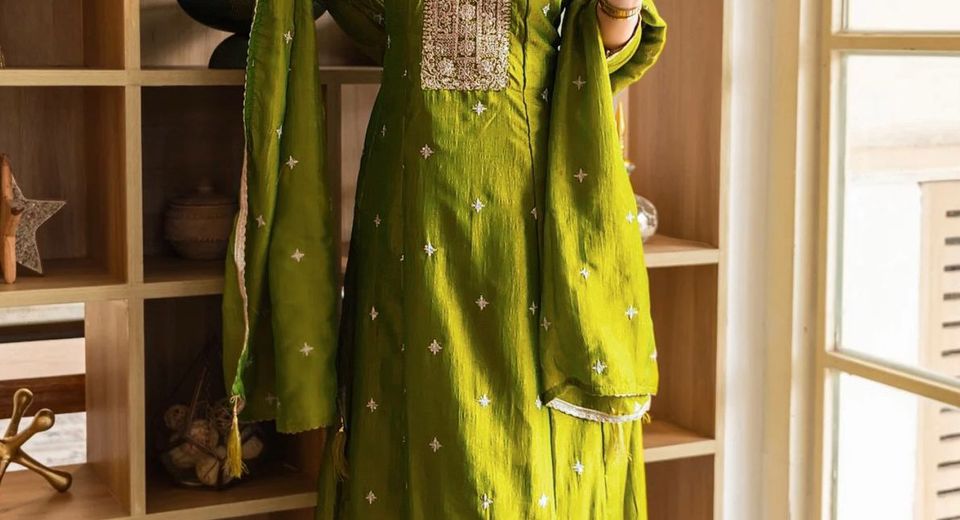
What Angrakha Salwar Suits Look Like and Who They Suit becomes easier to answer once you notice the diagonal front construction. An Angrakha kurta wraps across the torso instead of meeting in a straight centre line, usually with one panel crossing over the other and fastening near the side seam. The result is a gently curved neckline, an overlapping bodice and a silhouette that may finish in a straight hem, an Anarkali flare or a layered skirt-like shape.
The design comes from wrap-style garments associated with South Asian dress traditions, but contemporary Angrakha salwar suits vary considerably. Some have visible dori ties and tassels, while others use concealed hooks, buttons or stitched panels. The most flattering choice depends less on a universal body-type rule and more on the position of the overlap, the amount of flare, the fabric weight and the fit across the shoulders.
What Angrakha Salwar Suits Look Like and Who They Suit: the defining features
Angrakha salwar suits have an overlapping front panel that creates a diagonal line from the shoulder or neckline towards the opposite waist or hip. The diagonal line is the defining visual feature, even when embroidery, prints or a dupatta partly cover it.
A traditional-looking version may include a V-shaped or rounded neckline, a broad inner panel, an outer flap and two fabric ties at the side. A dressier version can resemble an Anarkali suit, with the wrap bodice opening into pleats below the waist. Shorter Angrakha kurtas may be paired with straight pants, salwars or palazzos, while longer versions often come with churidar-style bottoms.
Layering changes the appearance substantially. A narrow overlap produces a neat, tailored line; a broad overlap creates more surface for embroidery and gives the garment a stronger draped effect. Gathers below the bust make the kurta look fuller, whereas panelled seams and a controlled flare create a more streamlined shape.
How is an Angrakha different from an Anarkali?
An Angrakha is defined by its wrap or overlap, while an Anarkali is defined mainly by its fitted upper body and flared lower portion. An Angrakha may be straight, flared or layered, and an Anarkali may have a conventional centre-front opening without any wrap detail.
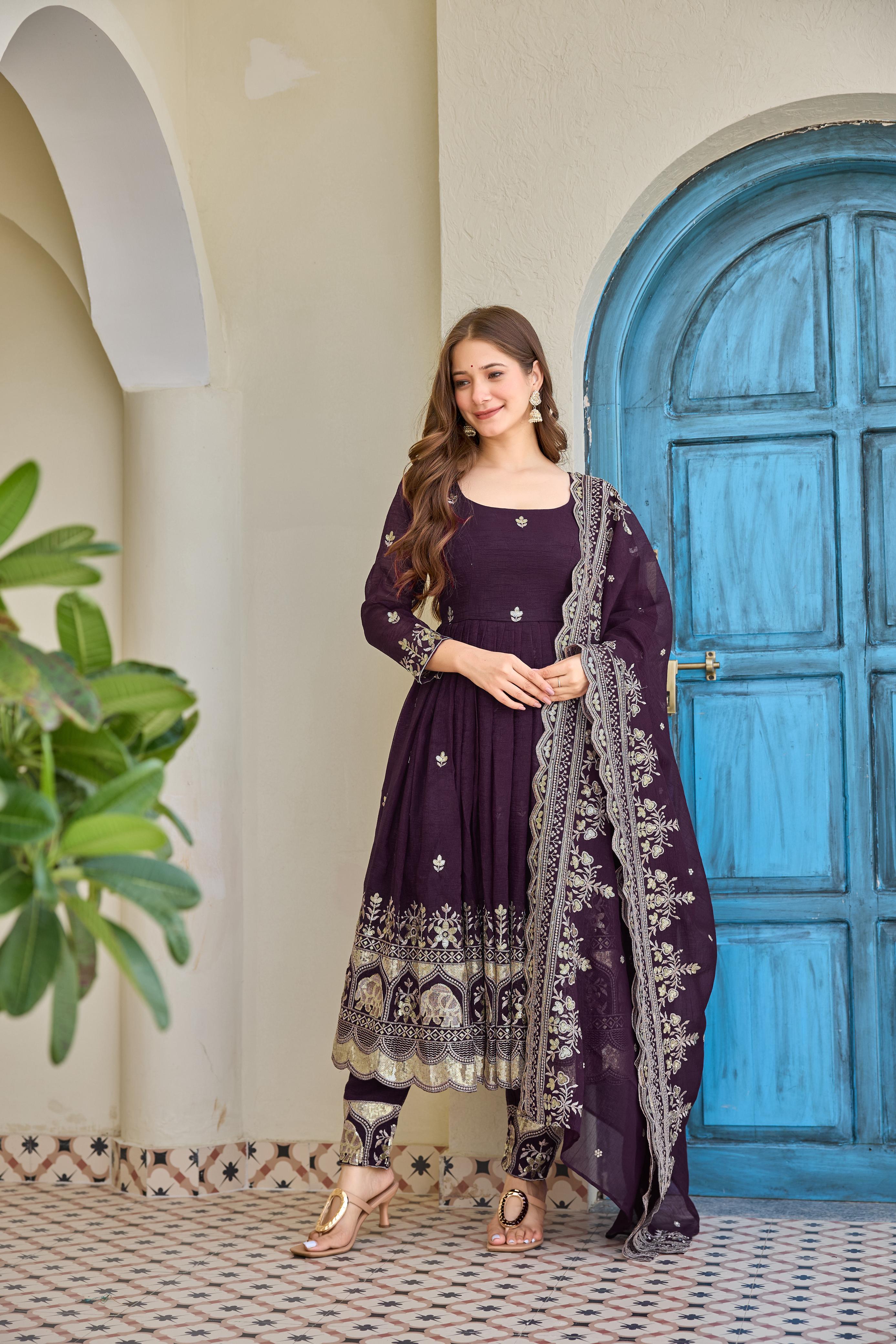
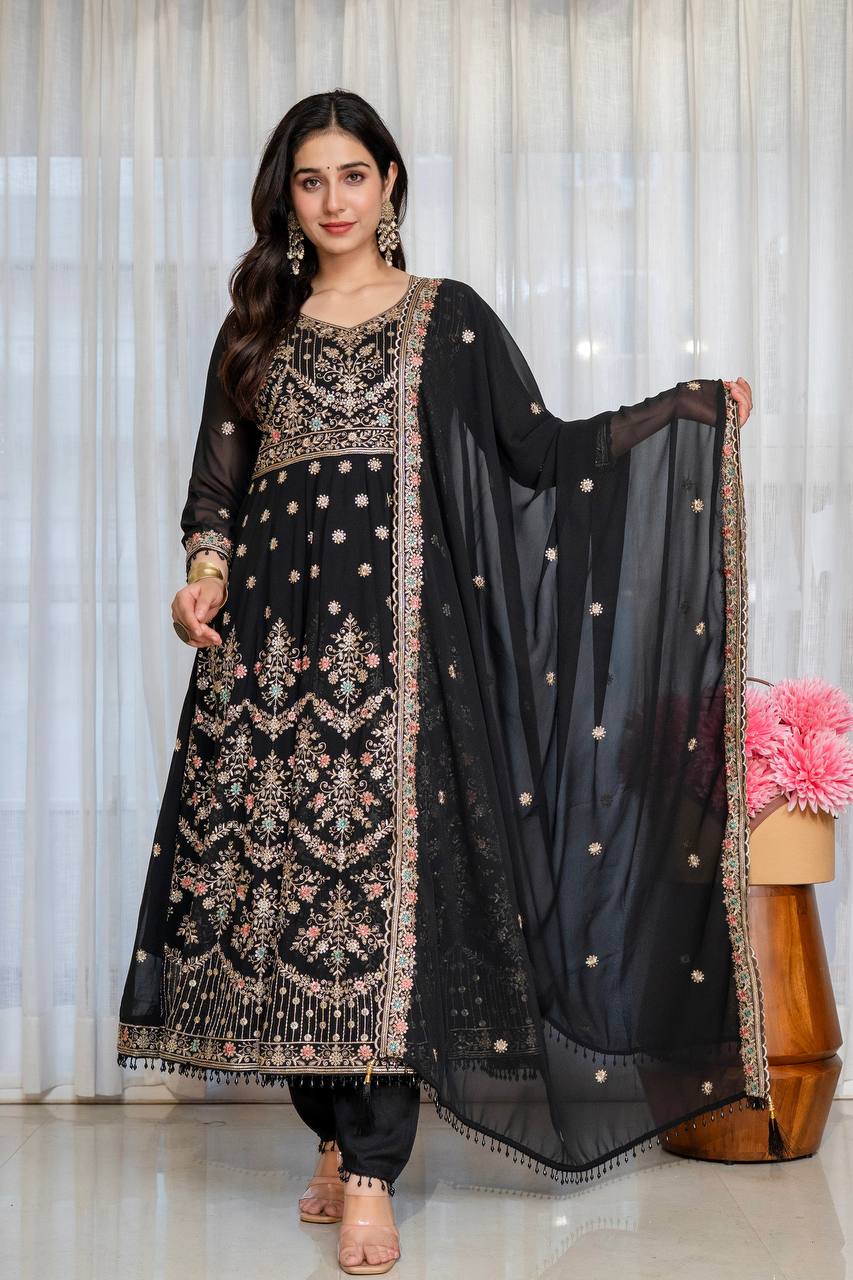
These carries can appear together. A wrap-front Anarkali combines the diagonal Angrakha bodice with an Anarkali flare, which explains why many festive designs look like both silhouettes at once. The Black Anarkali Suit with Zari, Sequins & Moti Lace Work and the Premium Wine Embroidered Anarkali Suit Set for Women illustrate the broader Anarkali category; a shopper seeking a true Angrakha version should check whether the front actually overlaps rather than relying on the word "Anarkali" alone.
What Angrakha Salwar Suits Look Like and Who They Suit by body shape
The wrap construction suits a wide range of body shapes when the overlap, waist position and flare are proportionate to the wearer. A diagonal seam leads the eye from top to bottom and breaks up the visual width of the torso, while the side fastening can provide modest adjustment at the waist.
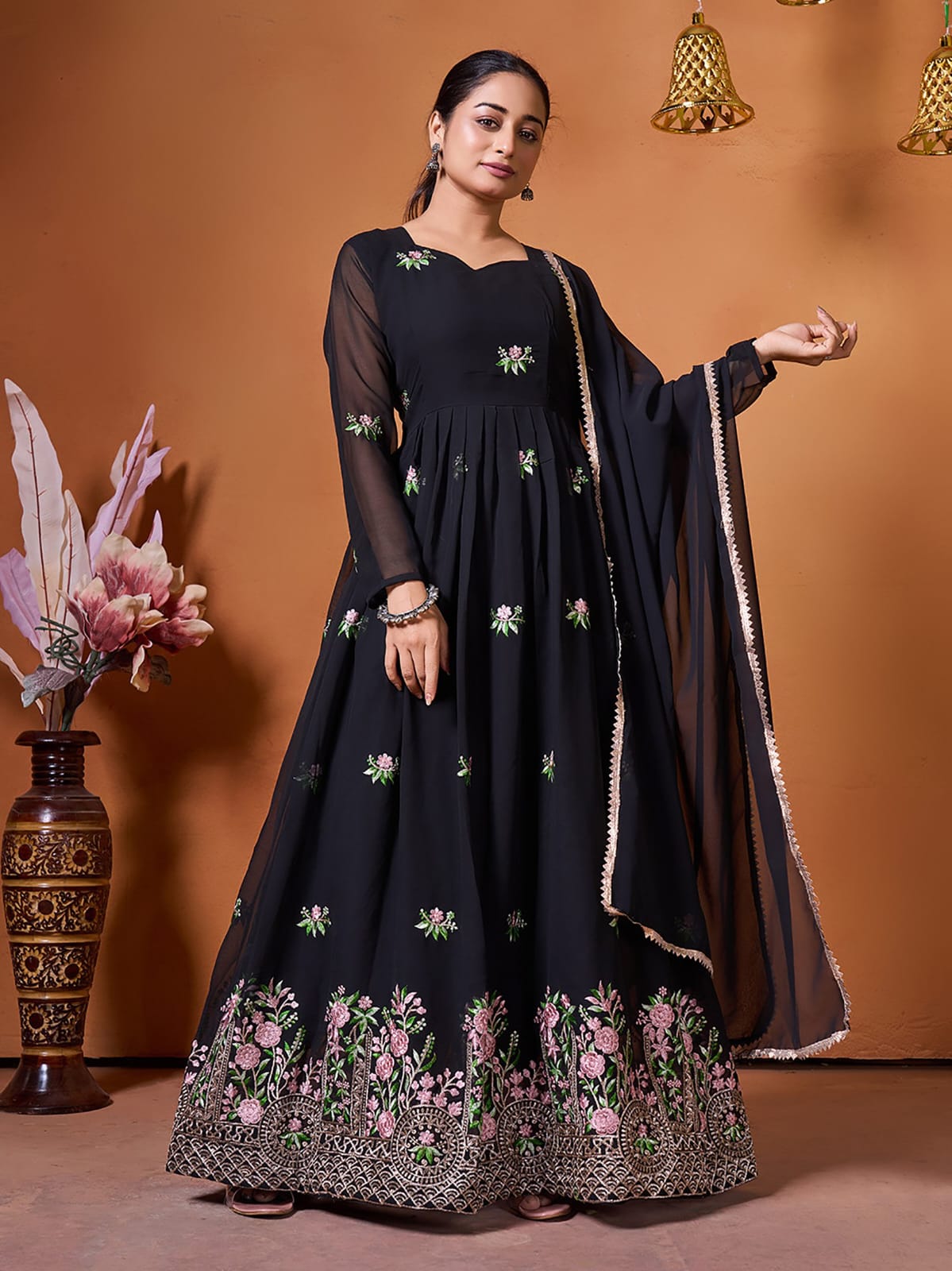
Pear-shaped figures can use a more detailed neckline, sleeve or upper border to balance the hips. Apple-shaped figures often benefit from fluid fabric and a wrap that sits below the bust without clinging to the abdomen. Hourglass figures can show the waist with a defined overlap and moderate flare. Rectangle-shaped figures may prefer gathers, layered panels or a sash that introduces shape.
Petite wearers generally look taller in a shorter overlap, a controlled flare and a consistent colour column. Very broad borders and excessive horizontal tiers can visually shorten the frame. Taller wearers can carry a dramatic floor-length flare, while curvier wearers can wear structured silk if the garment has enough ease.
These are styling observations, not restrictions. Measurements, construction and personal comfort are more reliable than labels such as "slimming" or "for one body type". The shoulder seam should sit on the shoulder point, the inner panel should lie flat without gaping, and the outer panel should not pull away when you sit or raise your arms.
Who should avoid a wrap-style suit?
No body type needs to avoid an Angrakha suit, but some constructions may be less comfortable for particular fit concerns. A very narrow overlap can gape at a fuller bust, while a thick tie placed over the widest part of the waist can add unwanted bulk.
Shoppers who prefer a completely fixed front may find a concealed-hook or stitched-panel Angrakha easier than a loose dori style. Anyone who dislikes frequent adjustment should check whether the waist ties are long enough to knot securely and whether the garment has an inner fastening. A trial with sitting, walking and raising both arms reveals more than a front-facing photograph.
What Angrakha Salwar Suits Look Like in different fabrics
Medium-weight fabrics with enough drape and recovery usually work best for Angrakha salwar suits. Rayon, viscose, crepe, georgette, cotton blends, Chanderi and soft silk can follow the diagonal overlap without forming stiff ridges, although each fabric creates a different level of structure.
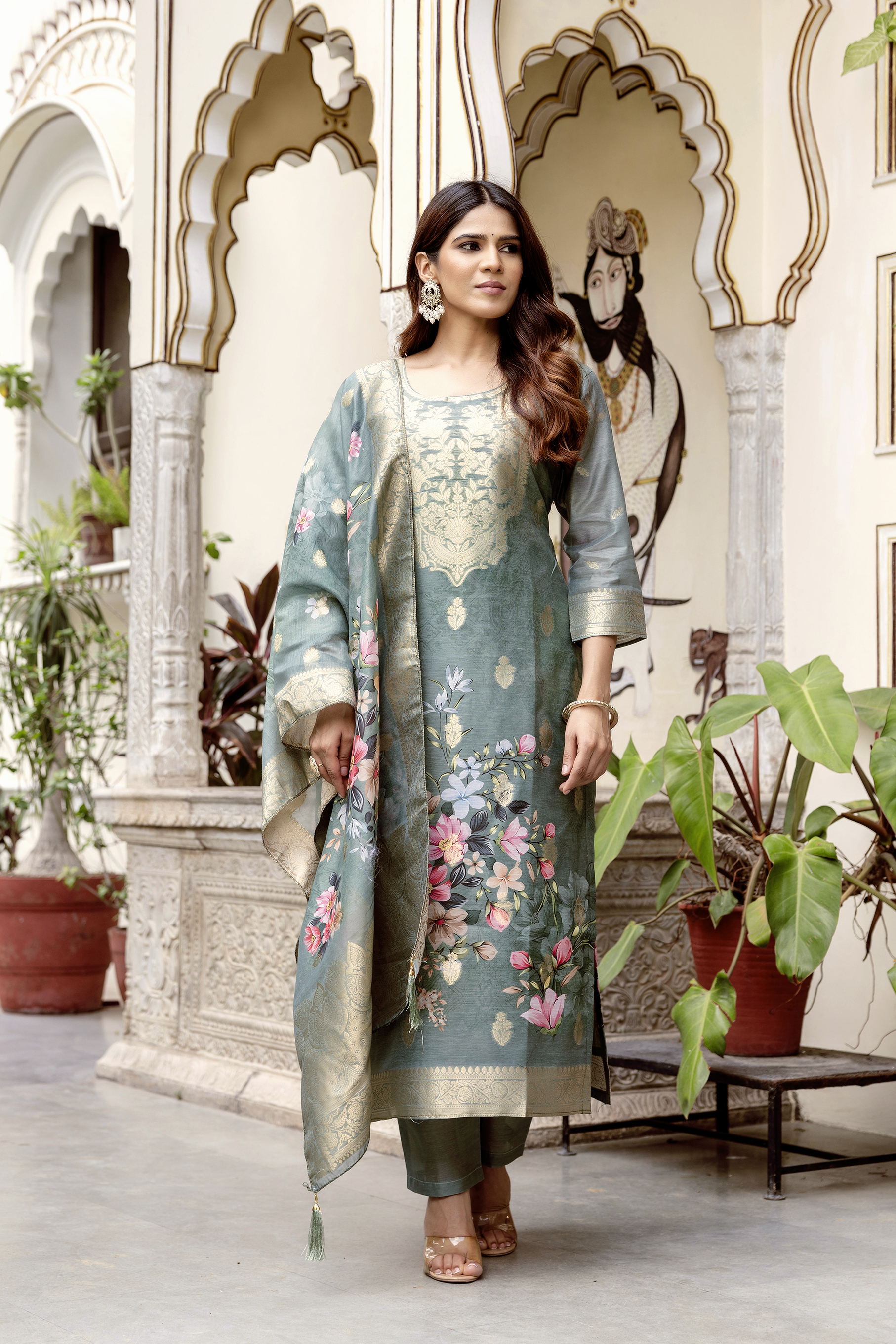
Chanderi gives the wrap a light, slightly crisp finish and suits daytime festive dressing. Banarasi silk or heavier silk creates a more formal shape, but the overlap needs careful pressing because bulky folds can gather at the side. Georgette and crepe fall close to the body and can make a long Angrakha look fluid. Cotton and cotton-silk blends are practical for warm weather, especially when the lining and sleeve design allow movement.
Embroidery should support the construction rather than hide it. Zari along the diagonal edge makes the wrap immediately visible, while small sequins or thread motifs can define the neckline without making the chest look crowded. Moti lace, tassels and contrast piping emphasise the side fastening. A heavily embellished outer panel may need a strong lining so that the garment doesn't twist during wear.
Regional surface traditions can influence the look without changing the basic cut. Kalamkari Print Salwar Suits (Copy) can inspire a more graphic, print-led interpretation, while Maharashtra Paithani Inspired Salwar Suits suggest jewel-toned borders and woven-style motifs. Gujarat Bandhej Salwar Suits and Odisha Sambalpuri Salwar Suits offer contrasting directions for colour and pattern, although a printed or regional-inspired collection isn't automatically an Angrakha collection. The cut must still contain the characteristic overlap.
What Angrakha Salwar Suits Look Like and Who They Suit for occasions
Choose an Angrakha suit according to the formality, movement and photography demands of the event. A lightly embellished cotton or Chanderi style works for daytime gatherings, while silk, zari, sequins or a full Anarkali flare suits weddings and evening celebrations.
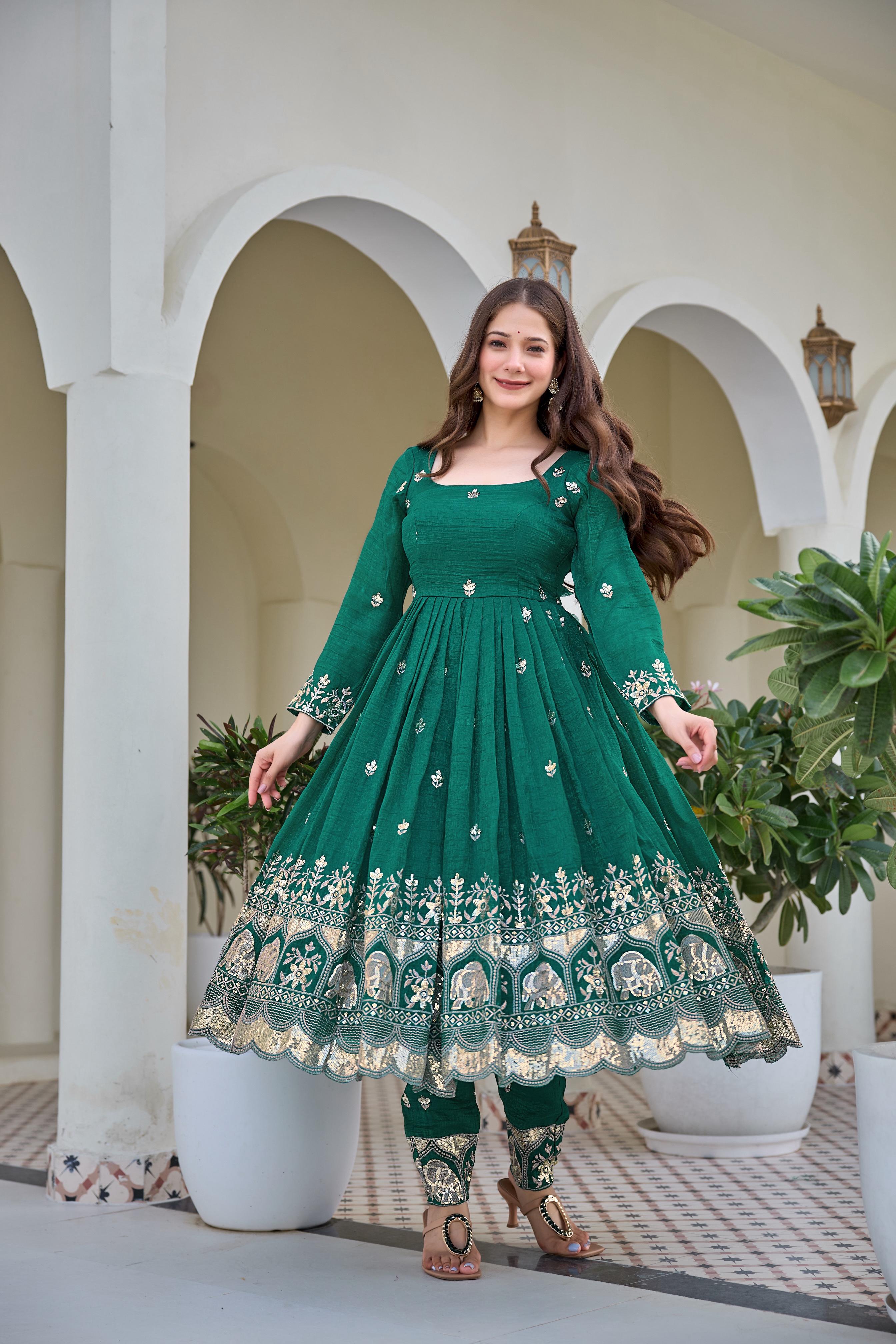
For a Haldi ceremony, yellow, green, coral and pink with breathable fabric and manageable flare are practical choices because the outfit may encounter turmeric, outdoor heat and frequent movement. A shorter hem with straight pants or palazzos is easier to walk in than a sweeping floor-length flare. For a wedding reception, a deeper wine, black, emerald or navy design with controlled zari can look formal without requiring very heavy jewellery.
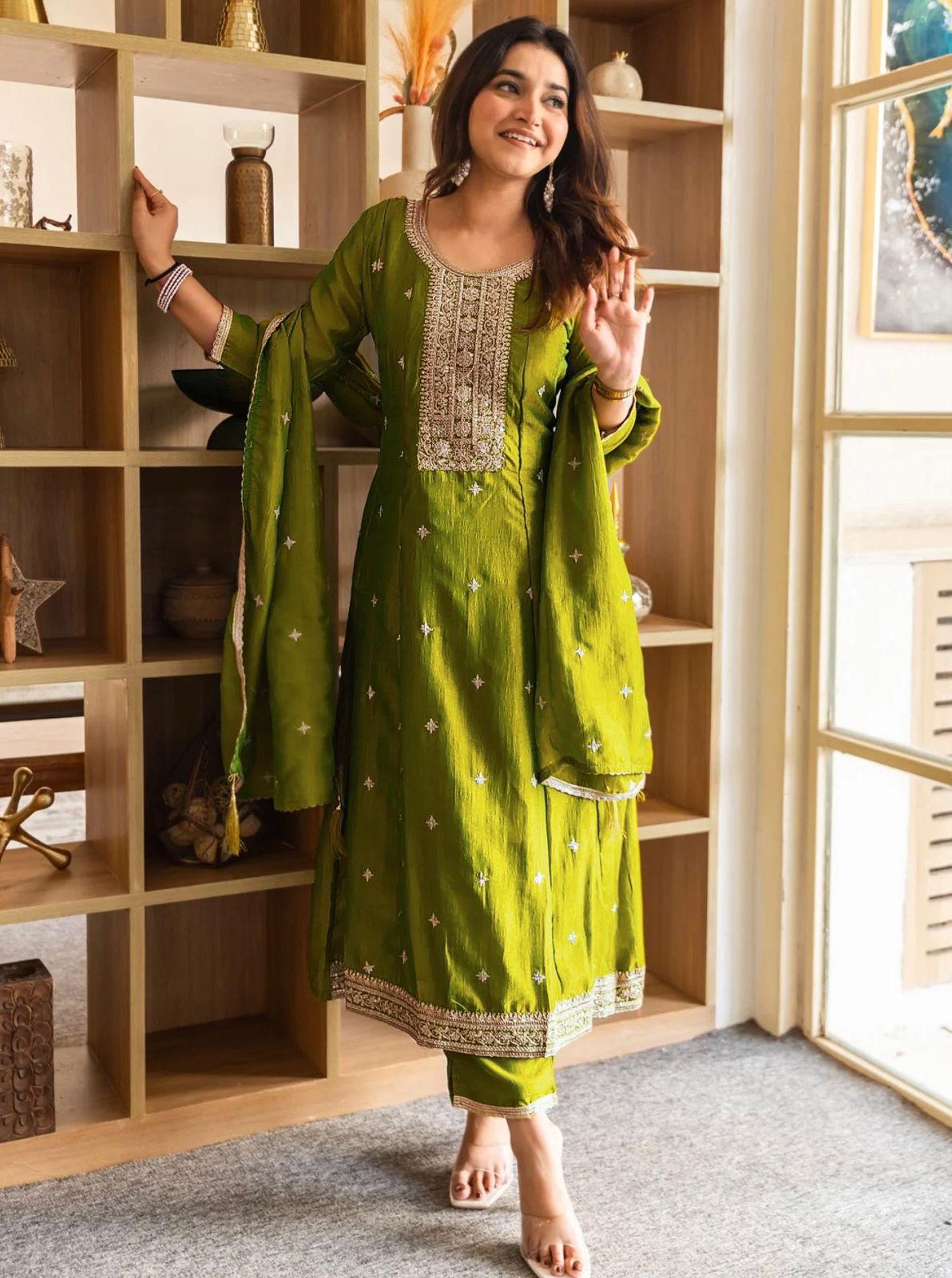
The Green Embroidered Anarkali Suit Set for Women and the Black Embroidered Anarkali Suit Set with Zari Work show how colour and embellishment can shift an Anarkali suit towards festive wear. The Wine Embroidered Anarkali Suit with Dupatta Online offers another useful comparison for shoppers deciding whether they prefer a rich monochrome look.
If the Angrakha cut is the priority, inspect the front construction and not only the colour, embroidery or product category. A product title may say "Anarkali", "embroidered suit" or "salwar suit set" even when the garment has no wrap. Look for a diagonal seam, overlapping panel, side tie or clear description of a cross-over front.
Can Angrakha suits be worn for work or everyday use?
Angrakha suits can work for office and everyday wear when the wrap is secure, the print is restrained and the hem allows easy movement. A cotton, rayon or lightweight viscose kurta with straight trousers and a small dupatta is generally more practical than a long, heavily layered version.
Choose opaque fabric, moderate neck depth and ties that don't hang into food, machinery or a desk drawer. Subtle prints, solid colours and narrow borders make the diagonal cut visible without making the outfit overly ceremonial. The Embroidered Salwar Suit Set for Women can illustrate the balance between surface detail and daily wear, although the precise Angrakha feature must be confirmed in the garment description.
What Angrakha Salwar Suits Look Like when styled
Style an Angrakha suit by keeping the diagonal overlap visible and balancing the flare with simple accessories. A dupatta worn over one shoulder or lightly draped behind the arms usually reveals more of the front than a tightly wrapped cross-body drape.
For a formal look, pair a wine, black or jewel-toned suit with drop earrings, a low bun and metallic sandals. Zari details coordinate naturally with gold-toned jewellery, while silver thread or cool-toned embroidery works with silver, pearl or unpolished metal accessories. Avoid adding a very wide waist belt over a heavily embellished tie because the belt can flatten the wrap and create a second competing horizontal line.
For a lighter look, wear jhumkas, a small potli bag and flat juttis with a printed or cotton Angrakha. Palazzos create movement and make a shorter kurta feel contemporary; straight pants sharpen a fuller Anarkali; churidar bottoms echo the fitted lower line of traditional salwar kameez.
A dupatta with a narrow border is easier to manage when the kurta already has a prominent diagonal edge. If the kurta has heavy zari or sequins, a plain dupatta can prevent the outfit from appearing visually crowded. If the kurta is printed, a dupatta that repeats one colour from the print creates coordination without requiring an identical pattern.
The Black Anarkali Suit Set with Sequin Zari and Moti Lace Work demonstrates how sparkle, lace and a dark base can create a high-contrast festive effect. The Trendy Olive Green Anarkali Suit Set with Dupatta brings a softer colour direction for shoppers who want an earthy palette. Neither product should be assumed to have an Angrakha front without checking its construction, but both show why the same styling principles apply across embellished suit silhouettes.
What Angrakha Salwar Suits Look Like and Who They Suit when buying online
Check the garment measurements, fastening method, fabric description and front photographs before buying an Angrakha salwar suit online. Product photographs can make a standard Anarkali appear wrap-like when the dupatta is arranged diagonally, so construction details matter more than the pose.
Measure the fullest bust, natural waist, shoulder width and preferred kurta length, then compare those numbers with the size chart. Allow enough ease for the inner and outer panels to overlap when sitting. A bust measurement alone isn't enough because the shoulder and armhole determine whether the wrap stays in position.
Read the lining information carefully. An unlined georgette or chiffon outer layer may require a slip, while a lined silk or Chanderi suit can feel warmer and more structured. Check whether the set includes a dupatta, what bottom style is supplied, and whether the trousers have an elastic, drawstring or fixed waistband.
Inspect the placement of embroidery near the overlap. Motifs that stop abruptly at the diagonal edge may be intentional, but uneven alignment can indicate that the outer panel isn't designed to meet the inner panel. If care instructions recommend dry cleaning, account for that recurring cost before choosing a heavily embellished suit.
For colour selection, black and wine create a formal evening impression, green works across festive daytime and wedding settings, and olive can look more understated with antique-gold accessories. Colour doesn't determine whether a design is Angrakha; only the wrap construction does.
What Angrakha Salwar Suits Look Like and Who They Suit: a quick checklist
An Angrakha salwar suit is a strong choice when you want a diagonal wrap, adjustable side detail and a silhouette that can range from practical to highly festive. The best version will feel secure at the bust, sit smoothly at the shoulder and allow comfortable movement.
- Front: Look for a genuine overlapping panel or diagonal seam, not merely a dupatta draped across a straight kurta.
- Fastening: Check for inner hooks, side ties, buttons or another method that keeps the wrap closed.
- Fit: Confirm shoulder, bust, waist, armhole and kurta-length measurements.
- Fabric: Choose breathable cotton or rayon for frequent wear and Chanderi, crepe, georgette, Banarasi silk or soft silk according to the desired structure.
- Flare: Select a controlled flare for commuting and a fuller Anarkali flare for formal celebrations.
- Styling: Keep the dupatta placement and jewellery from hiding the diagonal construction.
- Care: Follow the stated washing or dry-cleaning instructions, particularly when zari, sequins or moti lace are present.
Understanding the construction makes shopping more accurate and styling more personal. Angrakha salwar suits don't belong to one age group, one body shape or one level of formality; the right combination of wrap position, fabric, flare and fastening determines how successfully the garment works for you.
Common Questions About What Angrakha Salwar Suits Look Like and Who They Suit
What does an Angrakha salwar suit look like?
An Angrakha salwar suit has an overlapping front panel that creates a diagonal line across the torso, usually with a side tie, hook or concealed fastening. The lower half may be straight, flared like an Anarkali or paired with palazzos, salwars or churidar bottoms.
Are Angrakha suits suitable for every body type?
Angrakha suits can suit most body types when the overlap, waist position and flare fit the wearer properly. A fuller bust needs enough overlap and secure inner fastening, while petite wearers may prefer a controlled flare and a shorter diagonal panel.
What is the difference between an Angrakha and an Anarkali suit?
An Angrakha is identified by its wrap-front construction, while an Anarkali is identified by its fitted upper section and flared lower section. A single outfit can combine both features as a wrap-front Anarkali.
Which fabric is best for an Angrakha salwar suit?
Medium-weight fabrics with some drape, such as rayon, crepe, georgette, cotton blends, Chanderi and soft silk, usually work well. Banarasi silk and heavier silk create a more formal structure, while cotton and viscose are practical for warm-weather or everyday wear.
Can an Angrakha suit be worn to a Haldi ceremony?
An Angrakha suit is suitable for a Haldi ceremony when it uses breathable fabric, secure fastenings and a manageable hem. Yellow, green, coral and pink are practical festive colours, while shorter lengths and straight pants make movement easier.
How can I tell whether an online suit is genuinely Angrakha?
Check for a diagonal seam, overlapping front panel and side fastening in the product photographs or description. Do not rely only on the word "Anarkali", because an Anarkali can have a conventional straight centre front without any Angrakha construction.


