

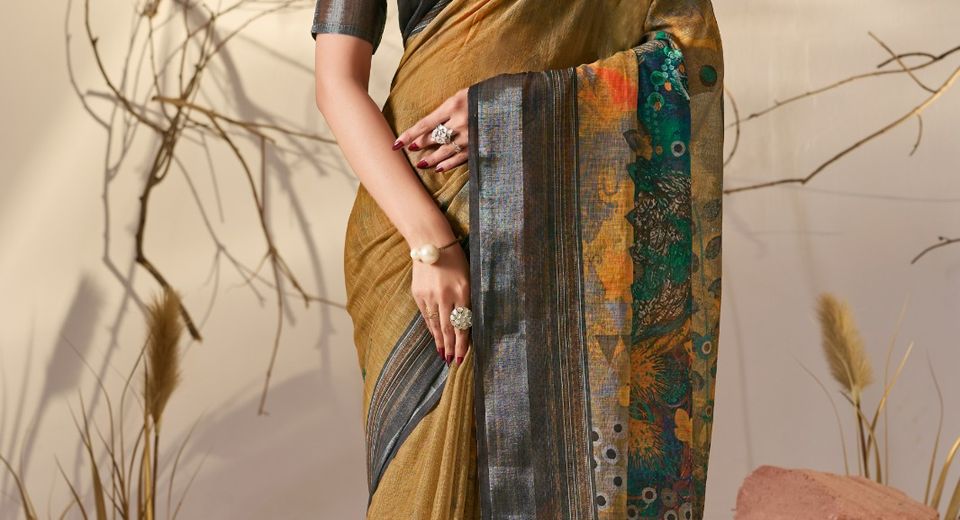
What Actually Helps With Saree Pleats That Stay Neat for Hours comes down to four practical factors: fabric friction, a correctly fitted petticoat, firm pressing and strategic pinning. More safety pins alone rarely solve collapsing pleats. A smooth silk saree behaves differently from linen cotton, and a daytime drape needs a different preparation method from a formal silk drape.
Neat pleats are created before you leave home. The width of each fold, the height of the waistband, the direction in which the pleats face and the amount of fabric tucked into the petticoat all affect whether the front remains orderly after sitting, walking or climbing stairs. The following method helps you make a saree look composed for several hours without making the drape stiff or uncomfortable.
What Actually Helps With Saree Pleats That Stay Neat for Hours?
The most reliable solution is to match the preparation method to the saree fabric and secure the pleats at two separate points. Linen cotton and handloom cotton usually need careful pressing and a petticoat with enough grip, while soft silk benefits from wider, gently pressed folds and concealed pins.
Start by checking the saree on a flat, clean surface. Remove visible creases from the lower half, identify the pallu direction and decide whether the front pleats will contain five, six or seven folds. Five broad pleats create a relaxed appearance; six or seven narrower pleats usually produce a flatter front but require more careful alignment.
Keep the front pleats between approximately 12 and 15 centimetres wide as a useful starting point. The exact width depends on the saree length, your height and the amount of fabric needed for the pallu. Pleats that are too narrow open more easily when walking, while pleats that are too wide may create a bulky bundle at the waist.
Why do saree pleats lose their shape?
Saree pleats lose their shape when slippery fabric, loose waist support, moisture, uneven folds or movement allow the layers to slide against one another. Satin-like surfaces and very soft silk have less natural friction than cotton, so the same folding method can't work equally well for every saree.
Sweat and humidity also soften temporary creases. A saree worn for a wedding, commute or long reception may experience repeated pressure from sitting and standing. Pleats can then spread at the knee or twist at the waistband even when the original drape looked precise. Solving the underlying movement is more effective than repeatedly refolding the front.
Fabric Choice Determines How Long Pleats Hold
Fabric texture is the first practical clue to how long saree pleats will remain aligned. Linen cotton, cotton and many handloom weaves offer useful surface friction, whereas soft silk, tissue cotton and highly polished fabrics may need additional support.
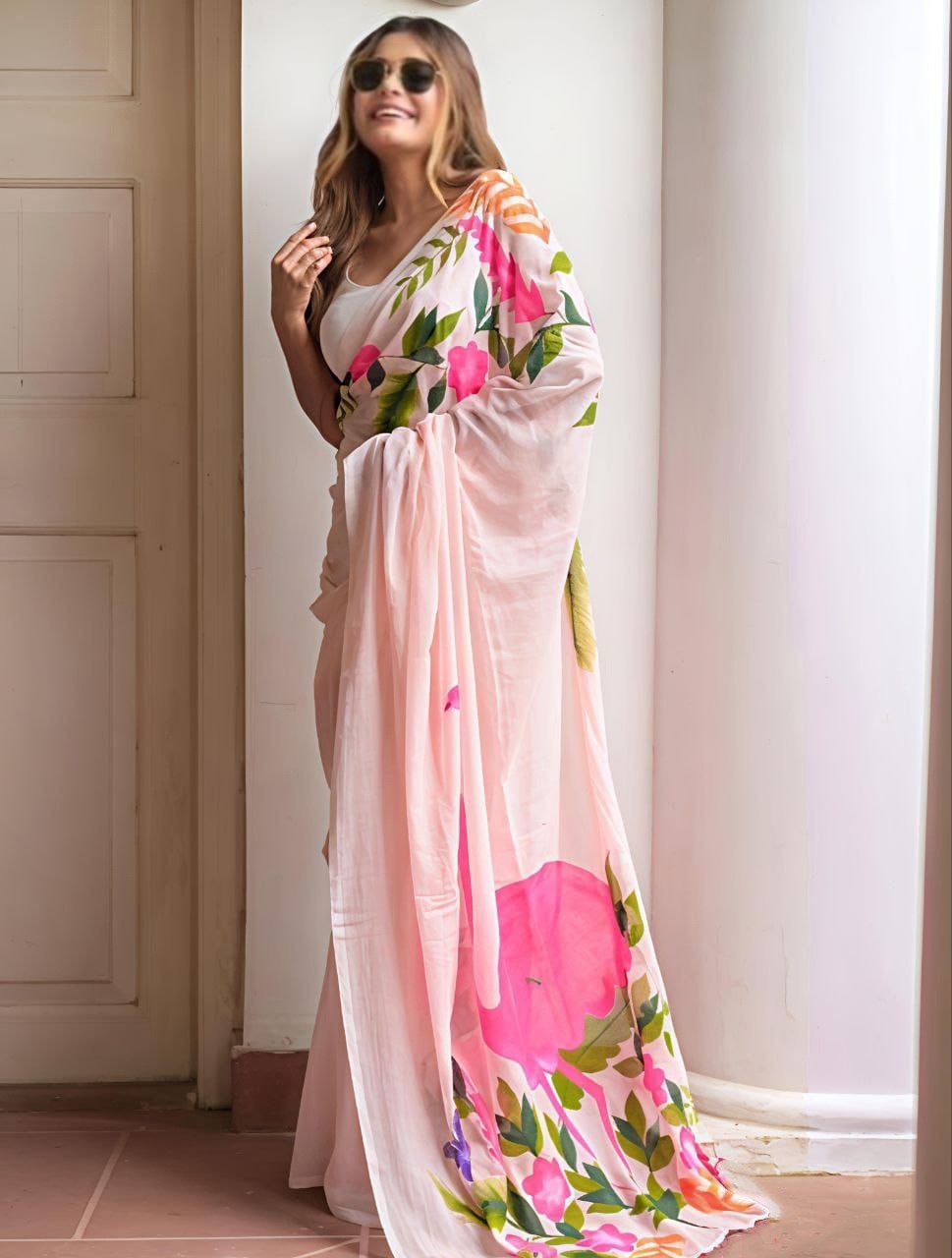
An Elegant Mustard Linen Cotton Saree Set illustrates why linen cotton can be comfortable for a long daytime drape: the weave generally gives folded layers more resistance against sliding. Press the pleats firmly, but avoid flattening the fabric until it looks shiny. A Peach Linen Cotton Printed Saree for Women Online and an Elegant Rust Linen Cotton Printed Saree Set can be prepared with the same broad-fold approach, provided the printed surface is protected during ironing.
Silk needs a gentler technique. A Designer Black Soft Silk Saree with Intricate Patterns can look sharp with five or six broad pleats, but excessive heat or repeated hard pressing may affect the surface and the appearance of intricate patterns. Use a thin cotton pressing cloth, low to medium heat suitable for silk and short downward presses rather than dragging the iron across the fabric.
Tissue cotton often has a lighter, more airy structure. Peach Green Tissue Cotton Saree With Print Blouse Piece may benefit from a narrow strip of concealed pinning near the waist because the pleats can spring apart when the fabric is lifted. Pin through several layers close to the waistband, not through the visible lower section where the pin may distort the fall.
A saree's price or decorative finish doesn't predict pleat stability. Banarasi silk, Chanderi, linen cotton and soft silk each respond to different combinations of friction, heat and support. Kanjeevaram with a substantial body may hold sculpted folds naturally, while a lightweight drape may need a carefully fitted petticoat even when the fabric looks expensive.
How the Petticoat Affects Saree Pleats
A fitted petticoat with a secure waist and a slight flare provides the foundation that keeps saree pleats upright. A loose drawstring allows the entire pleated section to descend, while an overly tight waist creates discomfort and can force the pleats to buckle above the waistband.
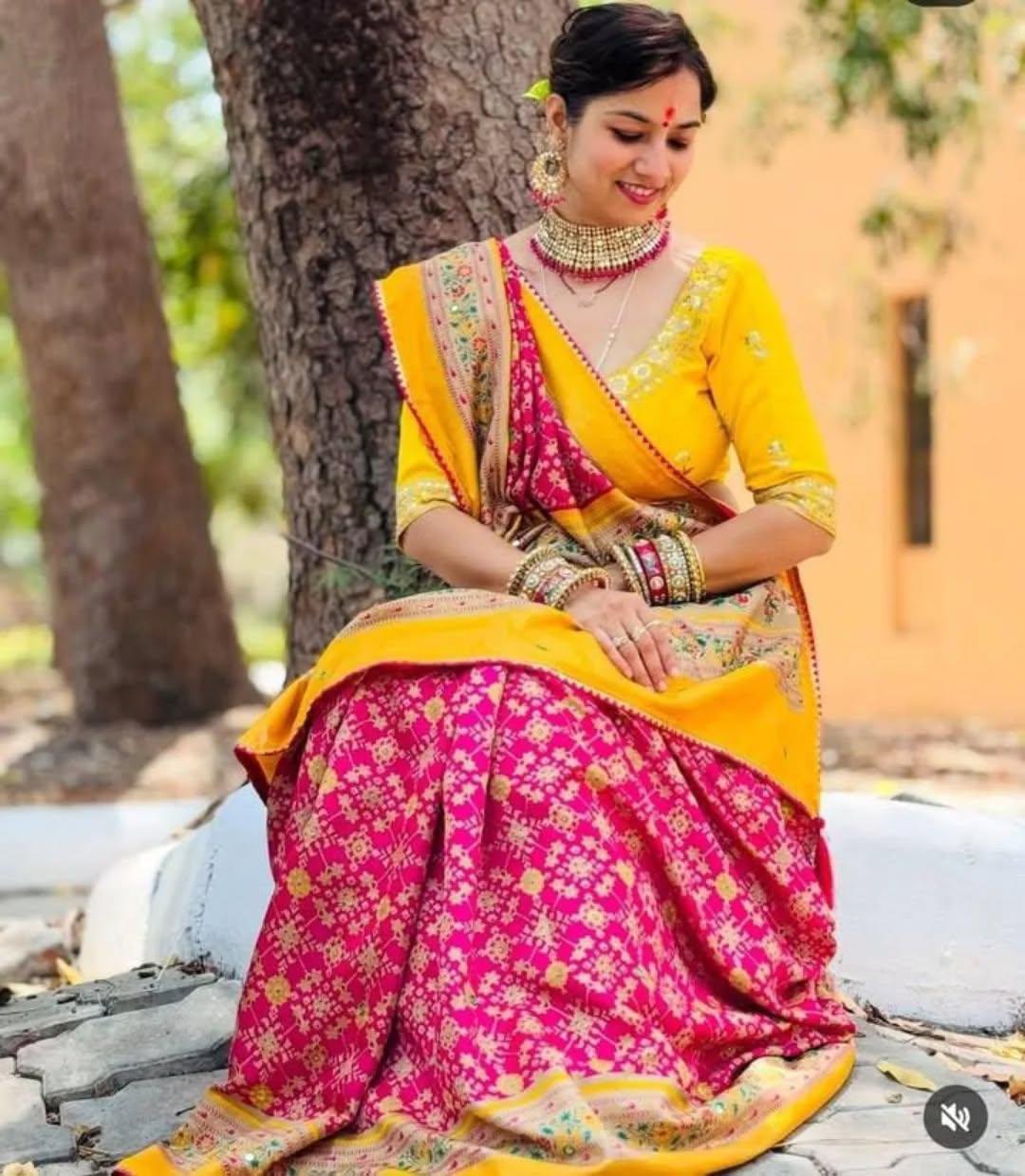
Choose a petticoat that reaches close to the floor without showing beneath the saree. The hem should not drag, because extra length can catch against footwear and pull the front folds downward. A petticoat with a smooth but not slippery surface helps the saree move without causing the lower pleats to rotate.
Wear the petticoat at the position where you want the saree waistband to sit, usually around the natural waist or slightly above it. Tie the waist firmly enough that two fingers can fit beneath the cord or waistband. This small test balances security with the ability to breathe, sit and bend.
Should the petticoat be tight for sharper pleats?
The petticoat should be secure, not tight enough to restrict movement. A stable waistband keeps the pleated fabric in place, but excessive tightness causes the saree to gather unevenly and makes the wearer adjust the drape throughout the day.
Walk several steps before finalising the knot. Sit on a chair and stand again to check whether the petticoat rolls or shifts. If the waistband moves during these tests, the saree will probably loosen during a longer event regardless of how neatly the pleats were folded.
Pressing and Folding Techniques That Make a Difference
Pressing the pleats before wearing creates a temporary memory in the fabric and gives pins a cleaner stack to hold. Pressing works best when the saree is dry, the iron temperature matches the fibre and the folds are aligned from top to bottom.

- Lay the saree flat: Place the saree on a clean bed or large table, with the wrong side facing upward where practical. Keep the border straight before forming the folds.
- Form the first fold: Bring the fabric across the width you've chosen and smooth the fold with your fingers. Match the lower border at every layer.
- Build the stack: Continue folding in the same direction, checking the top edge after every two folds. Misalignment at the top becomes visible bulk at the waist.
- Press through cloth: Cover delicate silk, zari or printed surfaces with a thin cotton cloth. Use brief presses from the waistband toward the hem rather than sweeping sideways.
- Hold the set: Place two or three loose clips above the waistband for a few minutes while the fabric cools. Remove the clips before draping so they don't leave dents.
Cooling matters because warm fibres can relax and lose the shape that was just created. Allow pressed pleats to rest for five to ten minutes when time permits. Never leave a hot iron standing on zari, metallic thread or printed fabric, because heat can dull the surface or transfer colour.
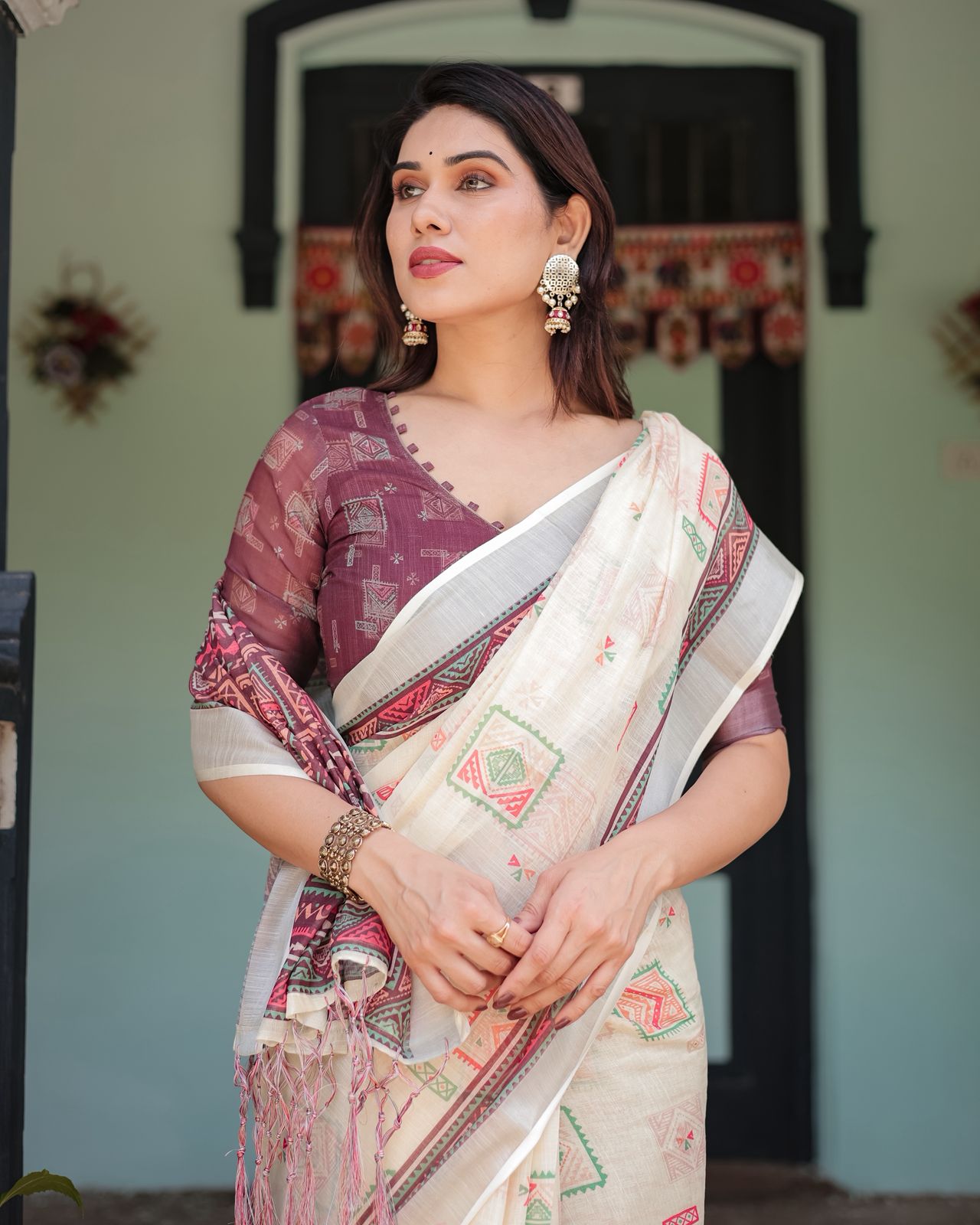
For a structured handloom look, Ivory Cream Floral Handloom Saree with Heritage Pallu can be folded with six evenly spaced pleats and a clearly aligned border. For a lighter, more graphic appearance, Ivory Geometric Print Pure Linen Saree with Tassel Pallu can be folded slightly wider so the geometric print remains visible instead of disappearing into very narrow layers.
Where to Place Pins Without Making the Drape Bulky
Two well-placed pins usually support saree pleats better than many visible pins. One pin should secure the top of the pleated stack to the petticoat, and a second pin can anchor the pleats to the waistband or blouse area if the fabric is especially mobile.
Use small, sharp safety pins that close completely. Insert the first pin horizontally through the top layers of the pleats and the petticoat, catching enough material to hold but not so much that the pin pulls the waistline down. A pin placed vertically often creates a visible ridge and can make the pleats fan outward.
Place the second pin behind the pallu or near the side seam when additional stability is needed. Keep pins away from delicate zari, tassels and the visible border. A pin should pass through the inner fold allowance whenever possible, because repeated punctures can weaken fine silk or leave marks in lightweight tissue fabric.
How many pins should a saree pleat use?
Most front pleats need one or two concealed safety pins, while the pallu commonly needs two or three pins depending on fabric weight and shoulder movement. More pins are justified for a long event only when each pin has a specific job.
Pinning every fold individually often creates stiffness, uneven tension and difficult removal. Individual pins can also snag zari and make the lower edge fall in separate sections. A single pin through the aligned top edge usually keeps the stack together while allowing the pleats to open naturally toward the hem.
Daily Drape and Event Drape Need Different Preparation
A daily saree drape should prioritise comfort and quick recovery, while an event drape should prioritise a pressed front, stable shoulder placement and resistance to repeated movement. The best method changes according to how long you'll wear the saree and how actively you'll move.

For office wear or errands, use five or six medium-width pleats, a secure petticoat and one concealed pin. Avoid making the waist bundle too flat because a little flexibility helps when sitting. Linen cotton sarees are often practical here, and the collections Sarees from Rs 1000 to Rs 1500 and Sarees Under 20% Off can be useful starting points when comparing everyday options by fabric and construction rather than decoration alone.
For a wedding or reception, prepare the saree at least 30 minutes before dressing. Press the front pleats, let them cool, secure the top edge and test the drape while walking in the footwear you plan to wear. A formal saree with zari or a smooth silk finish may need one additional side pin, but the front should still be able to fall naturally.
Budget collections such as Sarees Under 10% Off, Sarees Flat 60% Off and Sarees Flat 50% Off can contain different fabric behaviours within the same price category. Read the fabric description carefully and plan pleating according to the fibre and surface texture, not the discount label.
Movement Tests Reveal Whether Pleats Will Last
A five-minute movement test is the simplest way to identify weak pleats before leaving home. Walk, sit, climb two steps, raise one arm and turn around while checking the waistband, lower border and pallu.

- Walking test: The pleats should remain centred without twisting toward one leg.
- Sitting test: The waistband should not roll, and the lower folds should not rise dramatically.
- Stair test: The hem should clear the floor and the front stack should not pull downward.
- Arm test: The pallu should stay secure without tugging the pleats at the waist.
- Mirror test: The borders should appear parallel and the top edge should not show gaps between folds.
If the pleats spread only when sitting, reduce the width slightly or loosen the top pin by a fraction. If the pleats shift while walking, inspect the petticoat first. If the waistband stays still but the lower folds fan out, the issue is usually uneven pressing or insufficient alignment at the border.
Care Habits That Preserve Neat Pleats Beyond One Wear
Care after wearing affects how easily the saree can be pleated next time. Remove every pin immediately after changing, hang the saree in shade for several hours if it has absorbed moisture and fold it only after the fabric is fully dry.

don't store a damp linen cotton saree or silk saree in a sealed plastic cover. Moisture can encourage odour, colour transfer and fabric weakening. Wrap delicate sarees in clean cotton or muslin, refold them along different lines every few months and keep zari away from rough wooden or metal edges.
Steam can relax minor creases, but direct high heat isn't suitable for every fibre. Check the care label before ironing. A professional cleaner is safer for heavily embellished fabric, stubborn stains, antique zari or colour combinations that may bleed when exposed to moisture.
The lasting answer to what actually helps with saree pleats that stay neat for hours is consistent preparation: a stable base, suitable fold width, correct heat, cooled pleats and minimal purposeful pinning. Once those elements are right, the saree remains comfortable and polished without constant adjustment.
Common Questions About Saree Pleats That Hold Their Shape
How do I keep saree pleats neat while sitting?
Keep the petticoat secure and sit by gathering the pleats slightly to one side rather than crushing them directly under your thighs. A five- or six-pleat front with one concealed top pin usually gives enough structure while allowing the fabric to move.
Should I iron saree pleats before wearing the saree?
Yes, pressing the pleats before wearing helps create a temporary fold memory and gives pins a cleaner stack to hold. Use a pressing cloth and fibre-appropriate heat, especially for soft silk, zari, tissue cotton and printed sarees.
Why do my saree pleats open while walking?
Pleats commonly open because the petticoat shifts, the folds are too narrow or the fabric has a slippery surface. Test the waist fit first, then use slightly wider pleats and one concealed horizontal pin through the top of the stack.
How many pleats should a saree have in front?
Most sarees work well with five to seven front pleats. Five broad pleats suit a relaxed drape, while six or seven narrower pleats create a flatter front when the saree fabric has enough body.
Can I use starch to keep saree pleats crisp?
Light starch can help some cotton sarees, but starch is not suitable for every fabric and may alter softness, colour or surface finish. Avoid starch on silk, tissue cotton, zari-heavy sarees and delicate prints unless the care instructions specifically permit it.
How can I keep silk saree pleats from slipping?
Use a well-fitted petticoat, five or six broad pleats and a thin cotton pressing cloth at low or medium heat suitable for silk. Add one concealed pin through the top edge and avoid pinning directly through visible zari or the lower border.


