What a Saree Selvedge Can Tell You About Fabric Quality becomes clear when you examine the narrow finished edge before judging colour, print or price. The selvedge, also spelled selvage, is the lengthwise boundary formed while fabric is woven. A clean, stable edge can indicate controlled weaving and careful finishing, while a wavy edge, broken threads or inconsistent width deserves closer inspection. The selvedge can't prove that a saree is pure silk or handwoven, but it provides useful physical evidence about construction.
A saree has two lengthwise selvedges, usually running along the sides from the top end to the lower end. The pallu and blouse piece may show different finishing because they're designed sections, not the continuous woven boundary. Checking the side edge therefore tells you more about warp alignment and fabric stability than looking only at the decorative border.
What a Saree Selvedge Can Tell You About Fabric Quality
A saree selvedge can reveal whether the fabric has a stable edge, consistent tension and reasonably controlled finishing. The edge also helps distinguish a woven border from a printed border, although the selvedge can't independently authenticate fibre content or handloom origin.
During weaving, lengthwise warp threads travel continuously through the loom. The weft thread turns at the side, creating a compact boundary. Because the selvedge receives repeated tension, defects often become visible there first. A straight edge that lies flat usually suggests that the fabric was woven and finished without severe distortion.
A good selvedge should generally have even width from one end to the other. Minor variations are possible in handloom textiles, particularly in cotton or silk-cotton sarees, but sudden changes, large loops and missing sections indicate that the edge deserves further examination. A selvedge may be narrow, broad, contrast-coloured or hidden inside a border; appearance alone doesn't determine quality.
Which selvedge details deserve attention?
Five details deserve attention: straightness, thread density, loose ends, colour continuity and the relationship between the edge and the main body. A firm edge that doesn't curl excessively is usually more dependable for repeated draping. A sparse or hairy edge can result from a casual finish, a delicate fibre or post-weaving trimming, so the edge should be judged alongside the rest of the fabric.
- Straightness: Place the saree on a flat surface and see whether the side edge forms a reasonably consistent line.
- Density: Look for a compact boundary rather than visibly open gaps or clusters of thick and thin threads.
- Thread security: A few short fibres are normal, but long loops and repeated broken threads can lead to fraying.
- Colour continuity: A woven border should meet the body cleanly, while a printed design may stop or blur at the edge.
- Width: Compare several points visually; a border or selvedge that changes dramatically may reflect uneven tension.
How does a selvedge reveal weave stability?
A selvedge reveals weave stability when the edge remains flat, firm and aligned after the saree is unfolded, handled and lightly pulled across its width. Stability matters because a distorted fabric may twist during draping, develop ripples near the border or lose its original shape after washing.
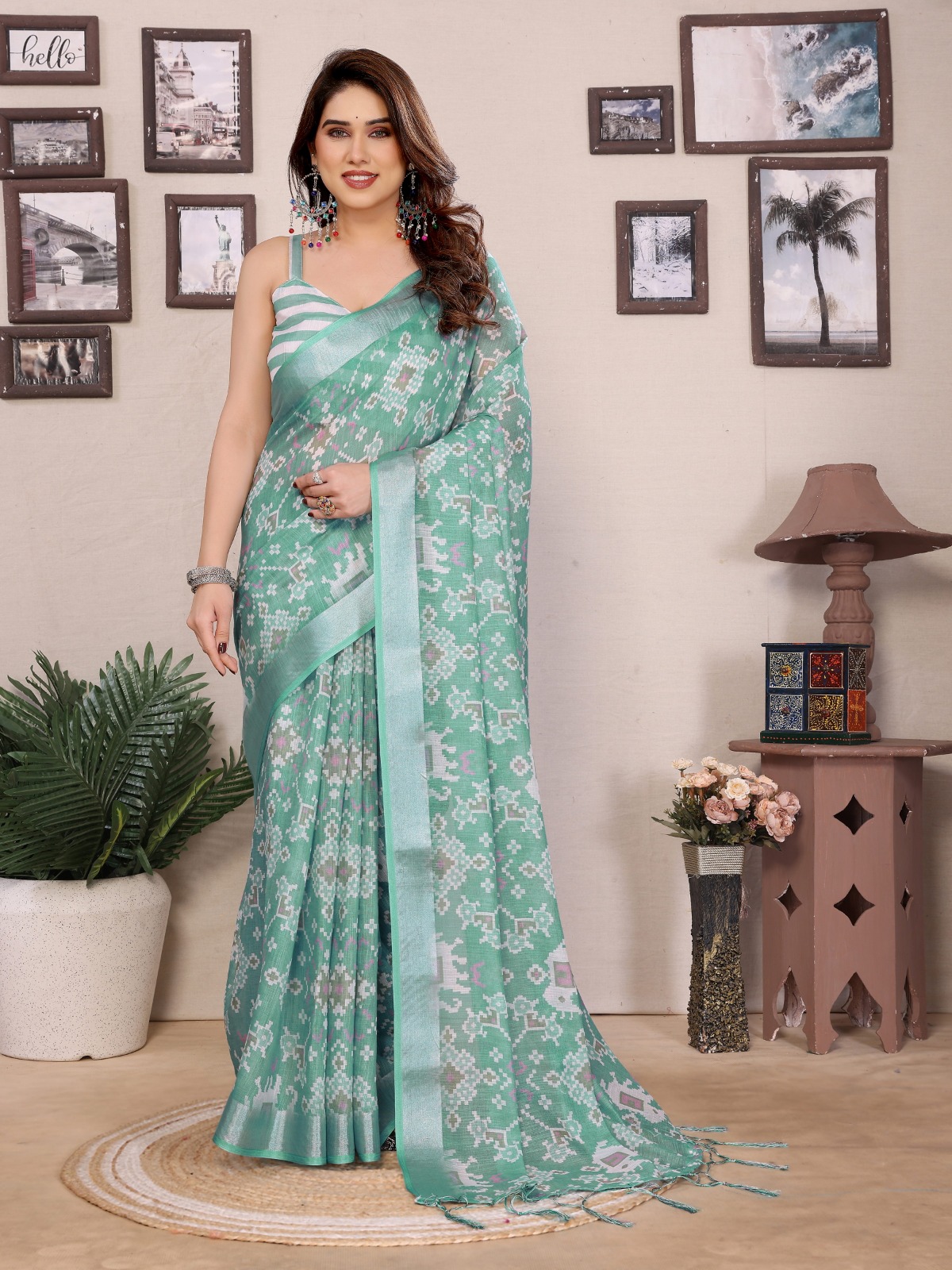
To perform a simple check, hold a section of the saree by both side edges and allow the fabric to hang. The two edges should fall in broadly the same direction. Next, smooth the saree on a table and compare the border with the body. A persistent diagonal pull, puckering or fan-shaped distortion can point to uneven warp tension, finishing shrinkage or a border constructed with different tension from the central field.
Softness should not be confused with weakness. Chanderi, fine cotton and silk blends can feel light and pliable while still having a secure selvedge. Conversely, a stiff finish can temporarily make a weak fabric feel substantial. The Black Chanderi Cotton Saree with Contemporary Checked Weave is a useful example of why weight alone is insufficient: a lightweight woven textile should be examined for edge alignment, surface consistency and recovery after handling.
What is a reasonable amount of variation?
Handwoven sarees can show small irregularities in spacing, slub thickness and edge width without being defective. Machine-made fabric often appears more uniform, but uniformity doesn't automatically mean superior quality. The practical question is whether variation adds character without weakening the fabric or disrupting the drape.
Large holes, repeated skipped threads, abrupt bands of loose warp and a selvedge that separates under gentle handling are functional concerns rather than charming irregularities. Ask for a close-up photograph or clarification when shopping online, especially if the product page doesn't show the side edge.
What can the selvedge show about woven and printed borders?
The selvedge can help identify whether a border is integrated into the weave or applied as a print, but a close inspection of the reverse side is necessary for confidence. A woven border usually has structural continuity through the fabric, whereas a printed border deposits colour on the surface.
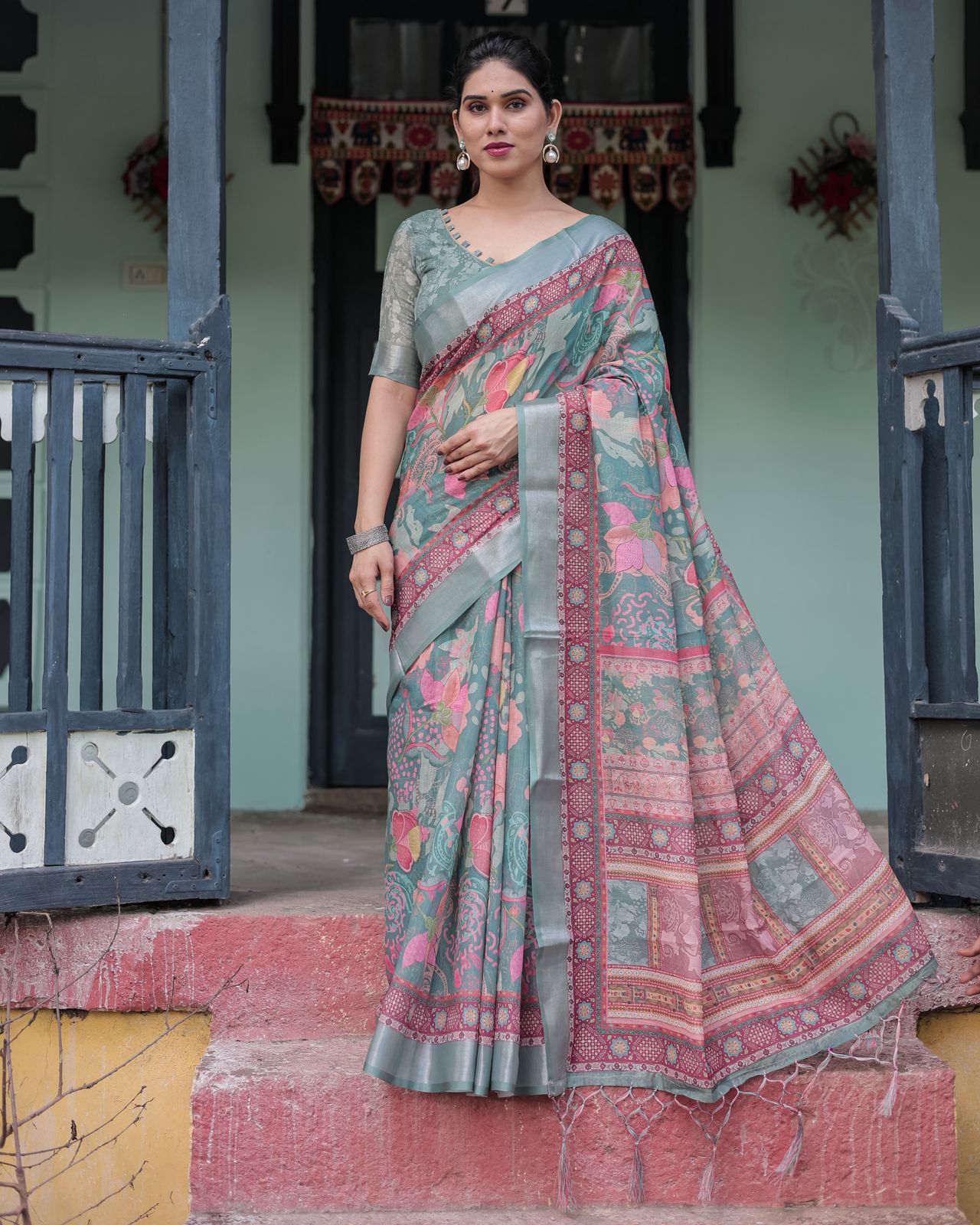
Turn the saree over and inspect the border from the reverse. Woven colour generally remains visible through the yarn structure, although the reverse may not mirror the front perfectly. Printed colour may appear lighter, less defined or uneven at the reverse. Neither result alone determines durability: modern textile printing can be excellent, and some woven effects intentionally use different yarns on the two faces.
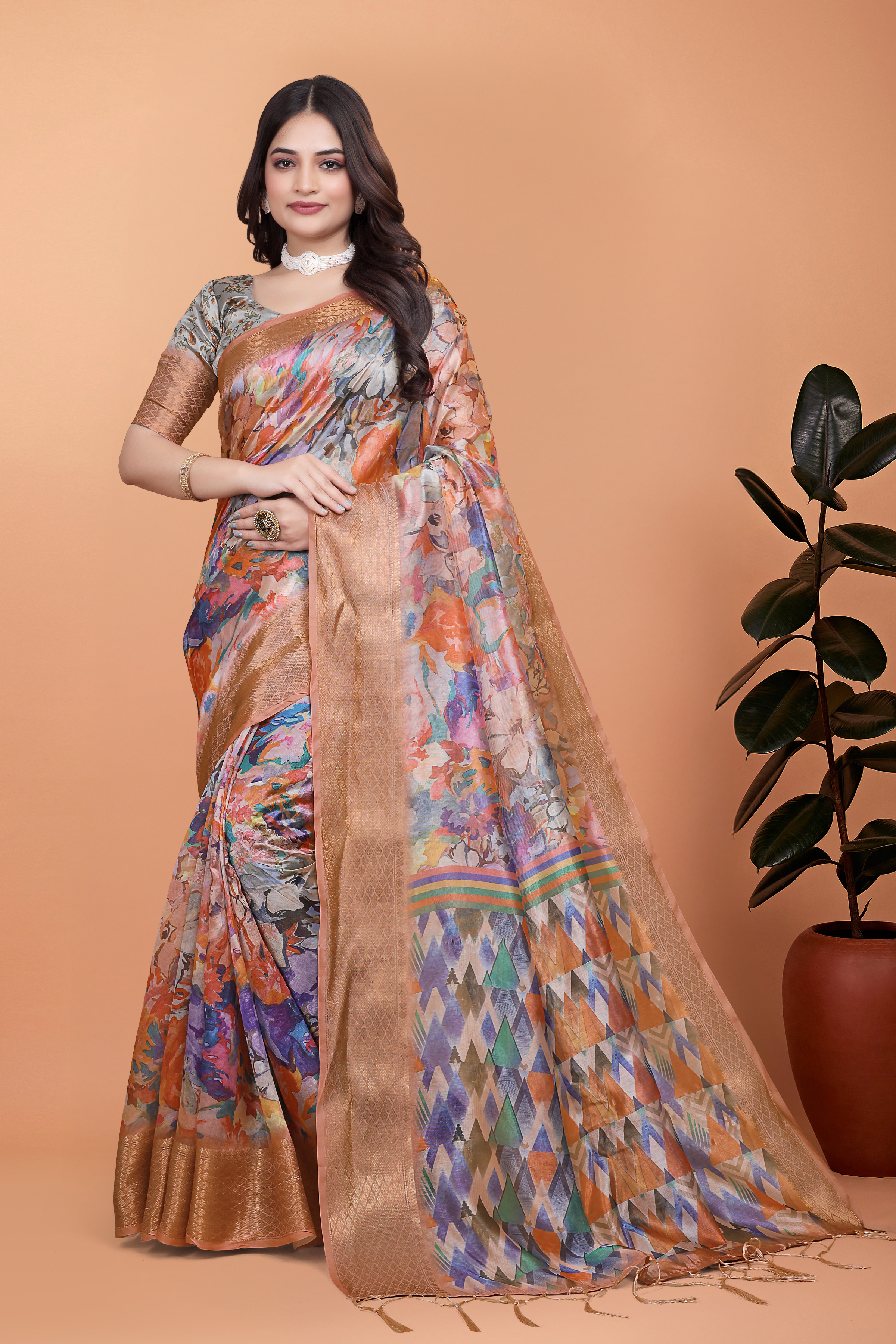
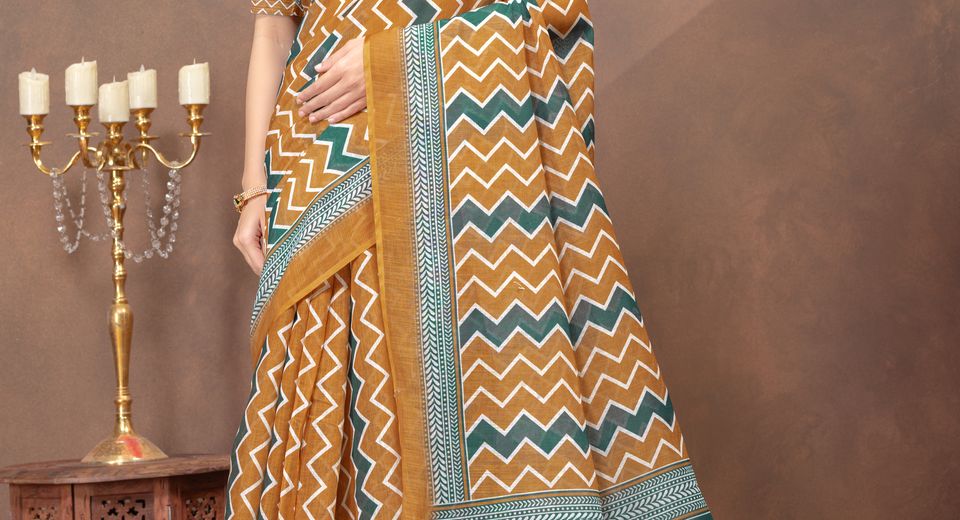
The Mustard Green Chevron Print Saree with Designer Borders demonstrates why the words print and border should not be treated as interchangeable. A printed chevron body may have a separately designed border, and the key checks are clean registration, a stable side edge and an absence of colour bleeding. The Mustard Floral Linen Cotton Saree with Jacquard Pink Border brings a different construction clue because jacquard texture is formed through woven structure rather than ordinary surface printing.
How should zari and contrast edges be checked?
Zari and contrast edges should be checked for secure insertion, even spacing and a smooth transition into the saree body. Metallic yarn can catch on jewellery or rough surfaces, so the edge should not have exposed loops that lift with a light touch.
Examine the point where zari meets cotton, silk or a blended ground. A neat transition suggests controlled border construction, while abrupt gaps, long floats and loose metallic ends may become snag points. A slightly uneven metallic surface can occur in handwoven work and doesn't automatically indicate poor quality. The important distinction is between intentional texture and threads that are already pulling free.
How do fibre and fabric types change the meaning of a selvedge?
Fibre type changes how a selvedge should feel and behave, so the same edge standard can't be applied identically to linen cotton, satin, Chanderi cotton and silk. A quality check must combine edge construction with expected fibre characteristics.

- Linen cotton: Linen fibres can produce small slubs and a dry hand, while cotton adds softness and easier handling. Judge whether slubs are distributed naturally rather than concentrated beside a weak edge.
- Chanderi cotton: Chanderi cotton is lightweight and often slightly sheer. A fine edge can be appropriate, but broken threads and severe curling remain warning signs.
- Satin: Satin has a smooth, reflective surface and can show pulled yarns prominently. Inspect for snags, edge puckering and inconsistent shine caused by surface damage.
- Silk and silk blends: Silk can have a supple, compact selvedge with a soft lustre. A selvedge can't confirm pure silk; fibre claims require reliable labelling or testing.
- Printed fabric: Printed sarees should be checked for sharp motif registration, colourfastness instructions and a border that lies flat after folding.
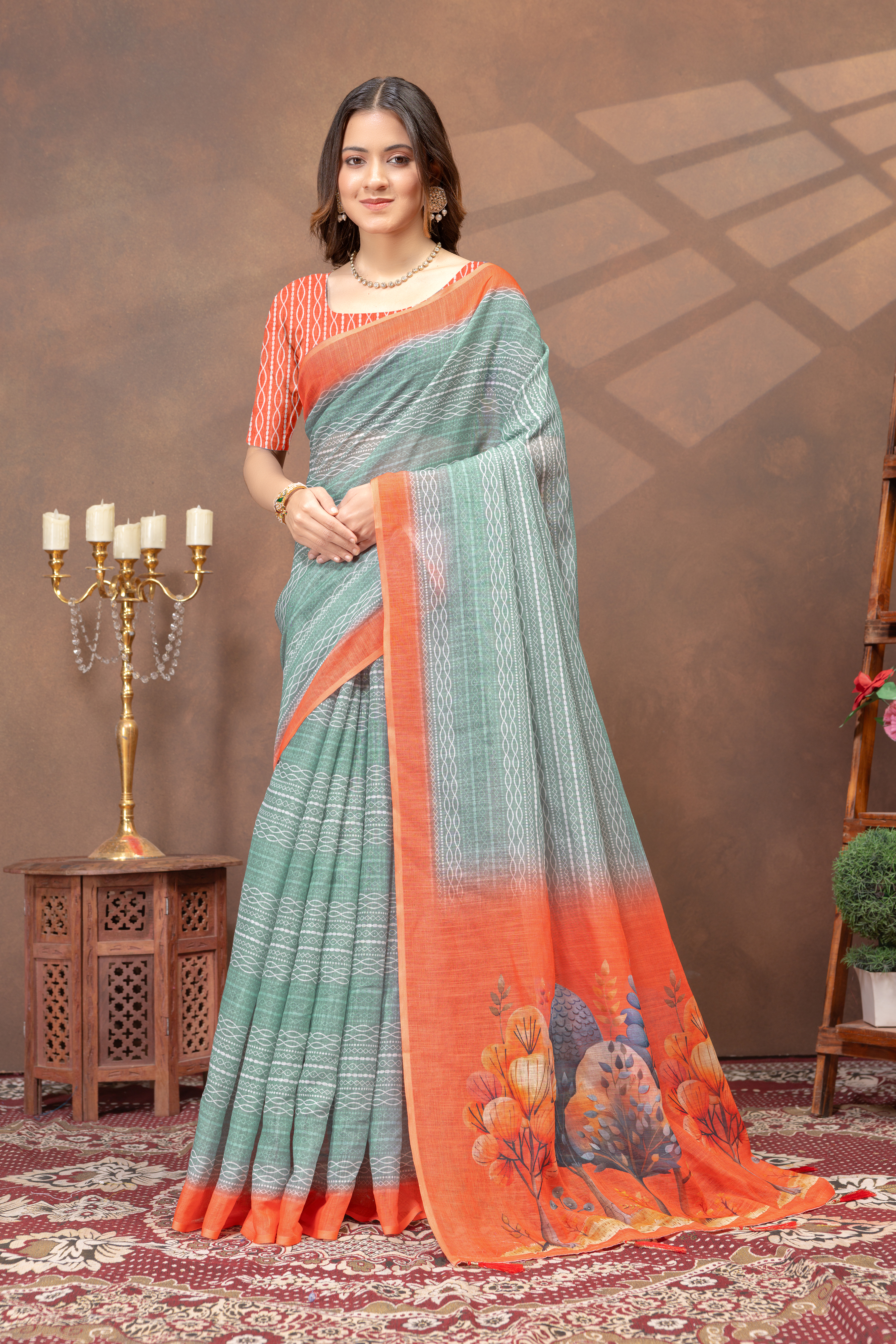
The Elegant Mustard Linen Cotton Saree Set and the Mustard Yellow Linen Cotton Saree with Green Stripe Borders can be assessed for linen-cotton slubs, edge alignment and the way stripe borders meet the side edge. The Pastel Blue Satin Floral Print Saree with Unstitched Blouse calls for closer attention to surface pulls because satin reflects small defects more visibly than a textured cotton weave.
What does a selvedge not prove about a saree?
A selvedge can't prove fibre purity, handloom certification, dye fastness, geographic origin or the monetary value of a saree. The edge is a useful construction clue, not a substitute for a fibre label, a handloom mark or a seller's documented description.

A neat selvedge can appear on a machine-woven polyester saree, while a handwoven cotton saree can show minor irregularities. A woven border doesn't automatically mean that the entire saree is handloom-made. A narrow edge doesn't automatically mean that the fabric is delicate, and a broad edge doesn't automatically mean that the saree is expensive.
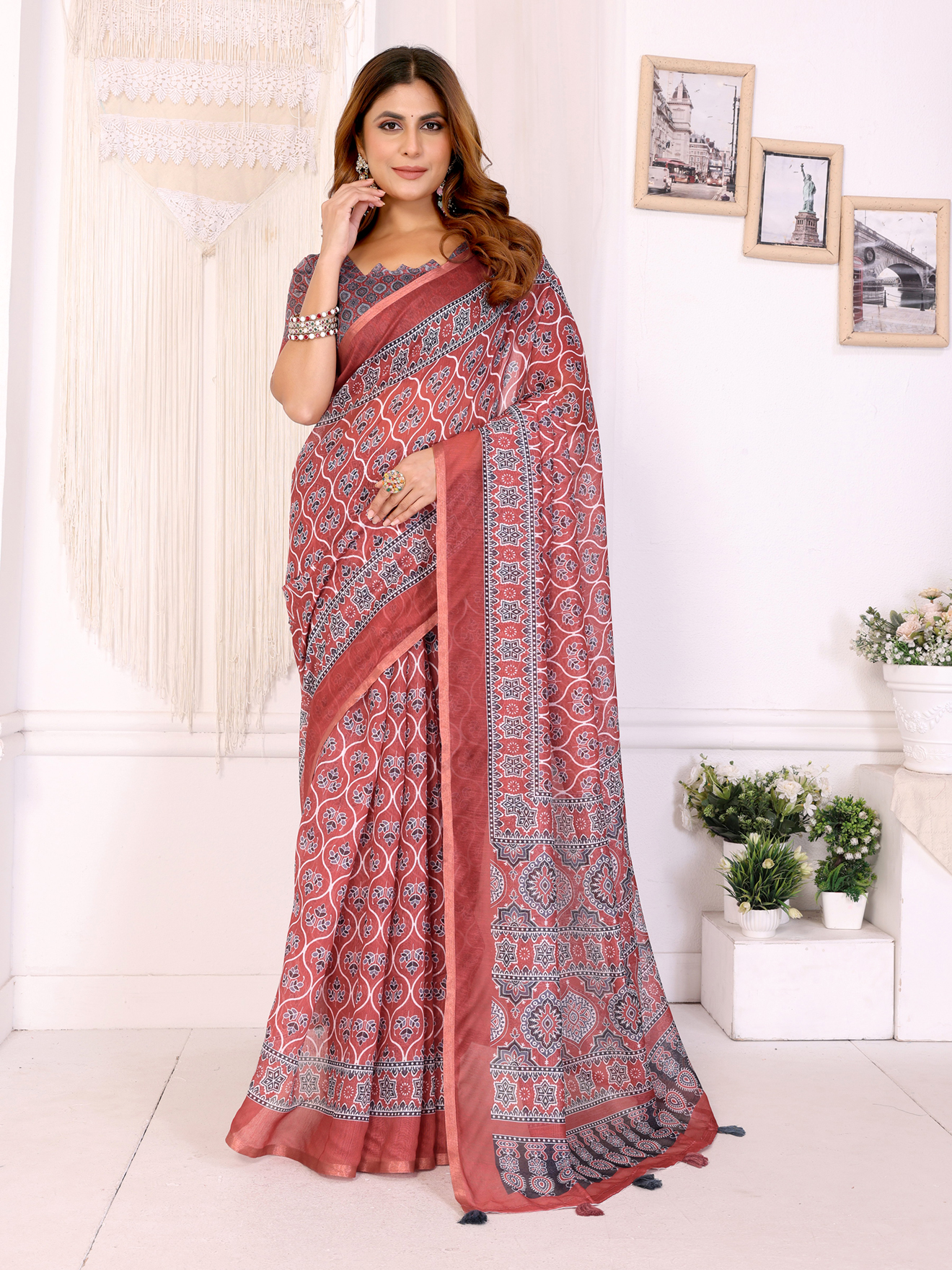
Use the selvedge as one part of a four-part assessment: fibre information, weave and surface, colour and finishing, and care requirements. The Traditional Beige Multicolor Printed Saree should be considered through print clarity, fabric composition and wash guidance as well as edge quality. The Indigo Peach Satin Saree with Striped Pallu and Border Work should be checked for pulled satin threads, pallu alignment and loose metallic or decorative elements.
How can you inspect a saree selvedge when shopping online?
Online shoppers should request or locate close-up images of the side edge, reverse border, pallu and fabric surface before purchasing an unfamiliar saree. Product descriptions and front-facing photographs rarely show enough detail to judge the selvedge alone.

- Read the fibre description: Confirm whether the saree is described as cotton, linen cotton, satin, silk, a blend or another named material.
- Zoom into the side edge: Look for a flat boundary, consistent width and the absence of repeated loops or holes.
- Compare body and border: Check whether stripes, checks or motifs run straight into the edge without obvious skewing.
- Inspect the reverse: Look for evidence of woven colour, printed pigment, loose zari or unfinished threads.
- Check care instructions: Dry-clean-only, gentle hand-wash and machine-wash guidance imply different maintenance requirements.
- Ask a specific question: Request the fabric composition and a close-up of the selvedge rather than asking only whether the saree is good quality.
Collection filters can help establish price context but can't replace construction checks. Sarees from Rs 1000 to Rs 1500 may include practical everyday fabrics with different finishing standards. Sarees Under 20% Off and Sarees Under 10% Off can be compared by composition, weave and care instructions rather than discount percentage alone.
Higher discounts also don't automatically signal poor quality. Sarees Flat 60% Off and Sarees Flat 50% Off may contain different fabric categories, so compare the product specifications and photographs individually. A lower price can reflect a print, a synthetic blend, a seasonal colour or stock movement rather than a defective selvedge.
How should a saree be cared for after checking its selvedge?
A saree should be cared for according to its fibre, dye and embellishment rather than according to the selvedge alone. Correct washing, drying and storage prevent edge fraying and preserve the alignment you inspected at purchase.
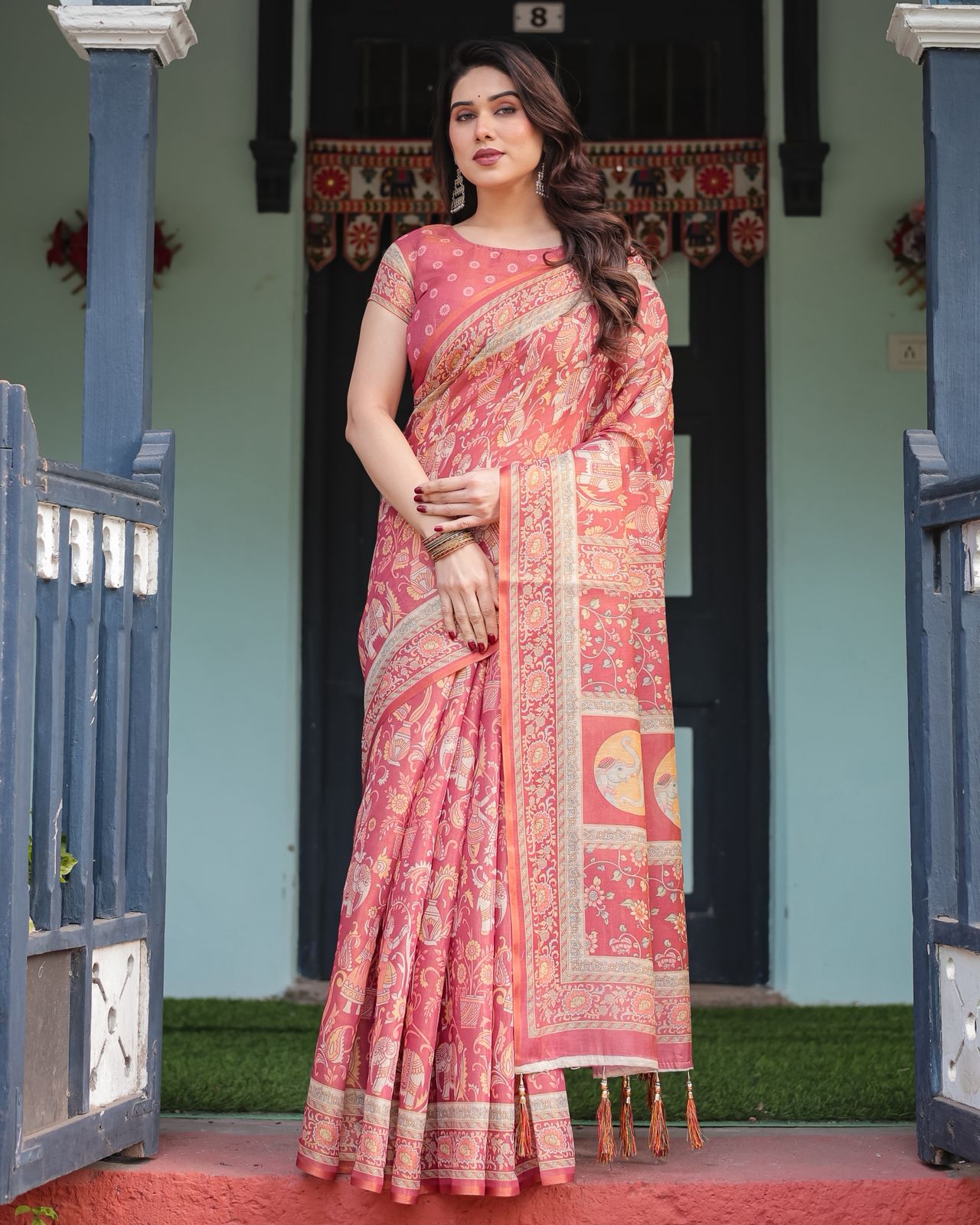
Fold cotton and linen cotton sarees along broad sections instead of compressing the side edge into a narrow, hard fold. Use mild detergent and cool water only when the care label permits washing. Keep printed sarees away from prolonged direct sunlight, because ultraviolet exposure can fade surface colour. Store satin and zari sarees in breathable cotton fabric, not sealed plastic for long periods.
Inspect the selvedge after the first wash. A small amount of movement can be normal, but sudden curling, dye transfer, severe puckering or new gaps should be documented immediately. Avoid cutting loose threads at the edge with ordinary scissors; secure advice from the seller or a skilled tailor first, because a single thread may be connected to the woven structure.
A reliable saree-quality check combines the selvedge with fibre information, surface inspection, border alignment, finishing and care instructions. No single visual clue can authenticate every claim.
Common Questions About Reading a Saree Selvedge
What is a saree selvedge?
A saree selvedge is the finished lengthwise edge created while the fabric is woven. The selvedge controls the side boundary and can reveal clues about thread tension, edge stability and finishing quality.
Can a saree selvedge prove that a saree is handloom?
No, a saree selvedge cannot prove handloom origin by itself. Machine-woven and handwoven sarees can both have neat edges, so check verified labels, product descriptions and recognised certification separately.
What does a bad saree selvedge look like?
A concerning selvedge may show repeated broken threads, large loops, holes, sudden width changes, severe curling or an edge that separates during gentle handling. Minor slubs or small variations can be normal in handwoven cotton and linen textiles.
How can I check saree quality online?
Check the stated fibre composition, request close-up images of the side edge and reverse border, and compare the border alignment with the saree body. Confirm care instructions and ask specifically about loose threads, colourfastness and construction when photographs are limited.
Does a woven border mean that a saree is high quality?
A woven border indicates that the design is structurally integrated into the fabric, but it does not automatically prove high quality. Inspect border tension, thread security, fibre content, surface condition and finishing as well.
Can a saree selvedge identify pure silk?
No, a selvedge cannot identify pure silk with certainty. Fibre content should be confirmed through reliable labelling or professional testing, because synthetic and blended fabrics can also have smooth, compact selvedges.