

Weight, Movement and the Occasions They Suit for Organza Lehengas determine whether a beautiful skirt remains comfortable after four hours of standing, photographs and dancing. Organza is a crisp, sheer fabric that holds a defined shape, catches light sharply and creates a gentle rustle as it moves. Those qualities make an organza lehenga especially effective for festive photographs, daytime celebrations and dressier evening entrances, but the final experience depends on lining, embroidery, flare, waistband construction and dupatta weight.
A sensible choice begins with three practical questions: how heavy is the complete outfit, how freely does the skirt move, and what will the venue require from your clothing? A lightly embroidered organza skirt may feel easy for a daytime ceremony, while dense zari, sequins and several underskirt layers can become tiring much sooner. Fabric name alone can't predict comfort because the blouse, lining, waistband, dupatta and embellishment all contribute to the finished garment.
Weight, Movement and the Occasions They Suit for Organza Lehengas: What Determines Comfort
The complete construction determines an organza lehenga's comfort more than the outer fabric alone. Organza feels relatively light when it uses fewer layers, restrained embroidery and a smooth lining. A garment feels heavier when zari, sequins, broad borders, stiff net, can-can and a heavily embellished dupatta are added across a large surface area.
Organza has a firm finish, so it doesn't collapse against the body like georgette or soft satin. The crisp hand gives a skirt visual volume without requiring the fabric to cling to the legs. However, visual lightness and actual weight are different measurements. A plain organza skirt can be genuinely easy to wear, while a floral organza design with dense sequin embroidery may feel substantial after the lining and waistband are added.
The lining has a particularly important effect. Cotton lining absorbs some moisture and feels stable in warm weather, but a full cotton underskirt can add weight. Polyester lining is often lighter and slides easily, although polyester may feel warmer and can create static. A can-can layer supports a fuller silhouette, but the extra net adds stiffness and takes up space when the wearer sits or walks through a crowded venue.
Embellishment placement changes perceived weight as well. Zari concentrated around the hem creates a weighted fall and helps the skirt swing in a controlled arc. Scattered sequins across every panel can make the whole lehenga feel more substantial and may catch against jewellery or another layer. Dori embroidery and mukaish work add texture without always adding as much mass as dense metal zari, although thread thickness and coverage still matter.
A fitting appointment should include wearing the complete outfit for at least ten minutes. Sit on a chair, walk several steps, lift the dupatta and make a slow turn. These movements reveal whether the waistband digs in, whether the hem catches under the footwear and whether the embellished dupatta places too much pull on one shoulder.
Weight, Movement and the Occasions They Suit for Organza Lehengas: How the Skirt Moves
Organza produces structured movement: the skirt holds its flare, swings with a light rustle and returns to shape more quickly than fluid fabrics such as crepe, satin or georgette.
The crispness of organza allows the panels to separate slightly during walking and settle back into their original line. During a turn, the skirt creates a clean circular spread instead of collapsing immediately around the ankles. Controlled volume photographs well because the hem remains visible and the silhouette looks polished in still images.
Organza doesn't drape closely around the legs, so it can feel less natural for fast walking or a crowded dance floor. A narrow skirt with minimal flare permits easier movement but loses some of the classic organza shape. A wide, heavily layered skirt creates a dramatic entrance but needs additional space around chairs, tables and other guests.
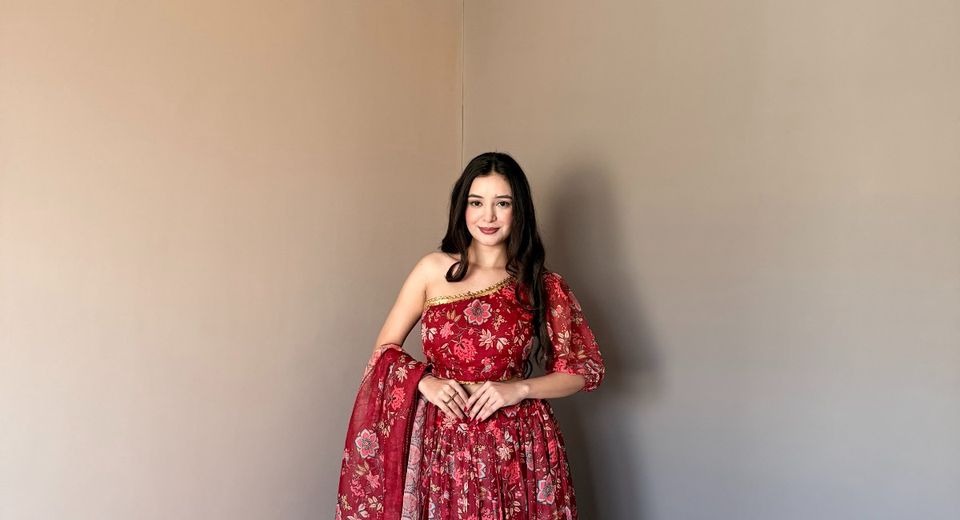
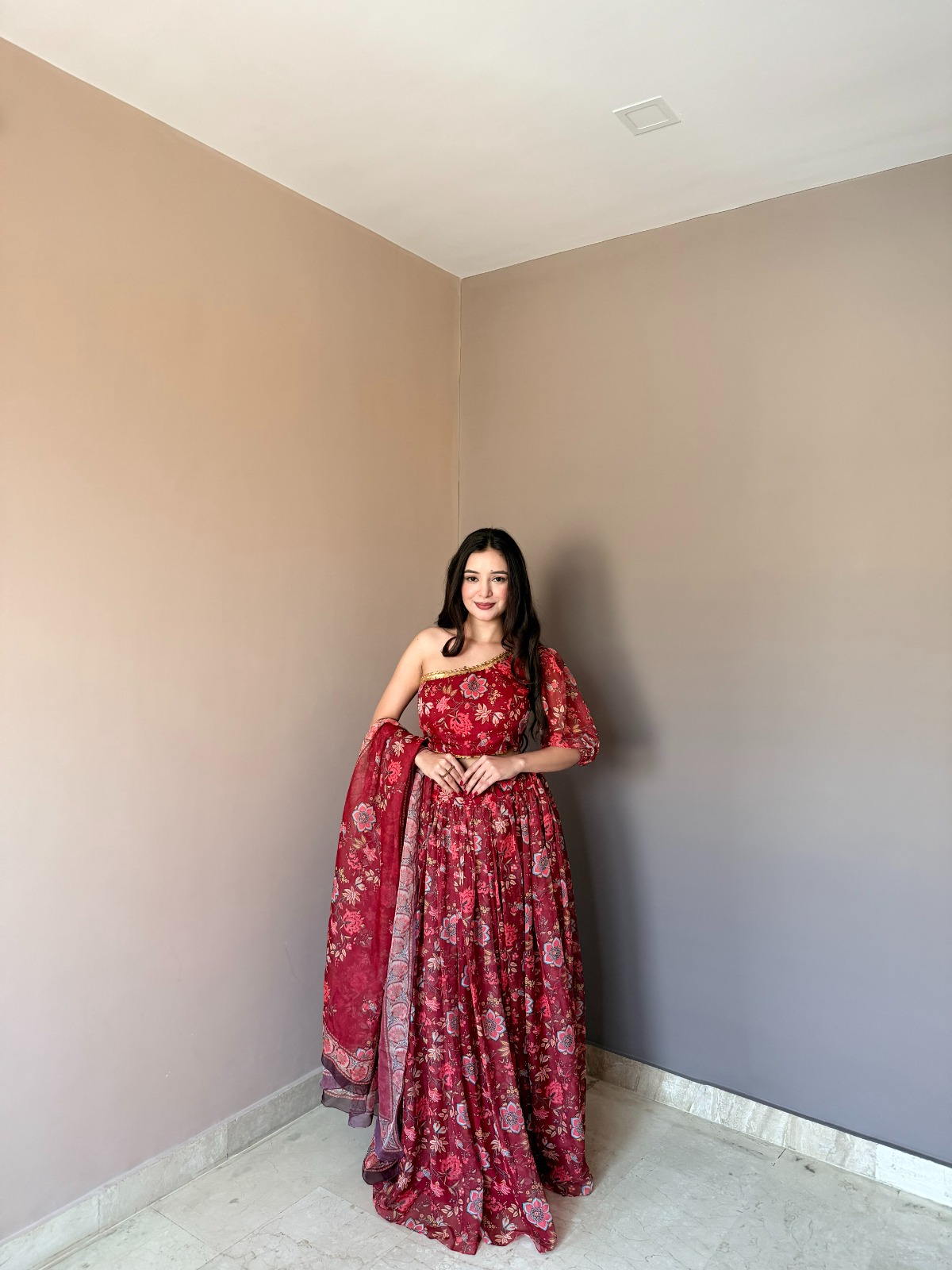
The hem is another movement factor. A broad embroidered border gives the skirt a clear edge and improves visual definition, but border weight may pull the skirt down. A lighter digital print keeps the garment buoyant and can be easier for daytime use. Red Floral Organza Lehenga Set with One Shoulder Blouse shows how floral placement and a statement blouse can create visual interest without requiring dense decoration on every panel.
Dupatta construction changes movement above the waist. A printed dupatta usually behaves more softly than a heavily sequined one. A stiff organza dupatta can hold a sculptural shoulder drape, while a lightweight chiffon or georgette dupatta is easier to pin and less likely to slide during greetings. Peach Floral Organza Lehenga Set with Printed Dupatta illustrates the relaxed direction created by a printed layer rather than an entirely embellished one.
Weight, Movement and the Occasions They Suit for Organza Lehengas at Daytime Celebrations
A lightweight or moderately embellished organza lehenga is most practical for daytime celebrations, especially when the venue is warm, the event includes outdoor movement or the wearer will participate in rituals.
Haldi ceremonies
Organza suits a Haldi ceremony when the lehenga has manageable flare, secure draping and modest embellishment away from areas likely to receive turmeric paste.
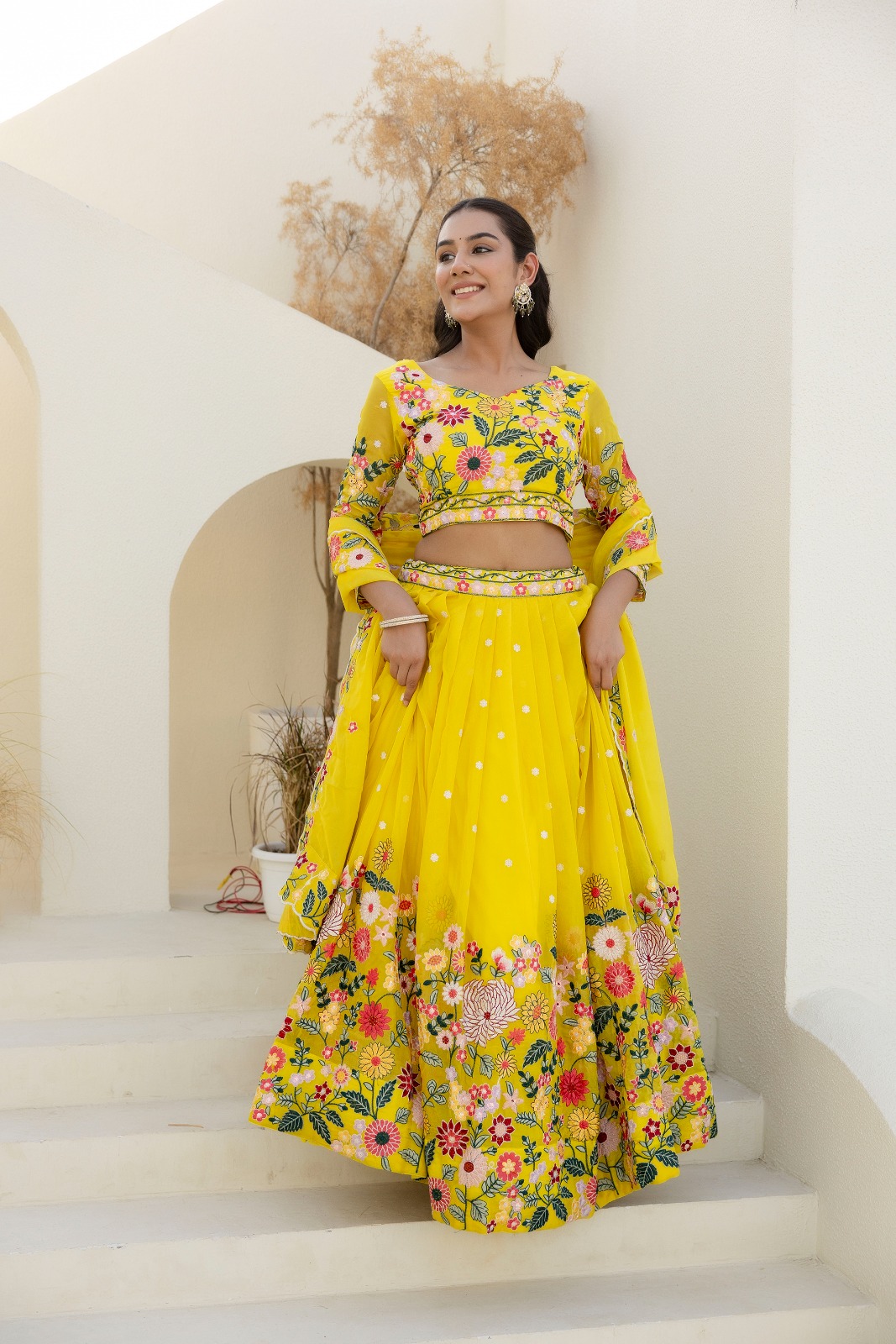
Yellow, peach, pink and multicoloured organza work naturally with the bright setting of a Haldi ceremony. A shorter dupatta drape or a securely pinned shoulder arrangement reduces the chance of dipping the fabric into turmeric bowls. Delicate embellishment should not rest directly on damp ground because moisture and pigment can mark a pale lining even when the outer organza appears clean.
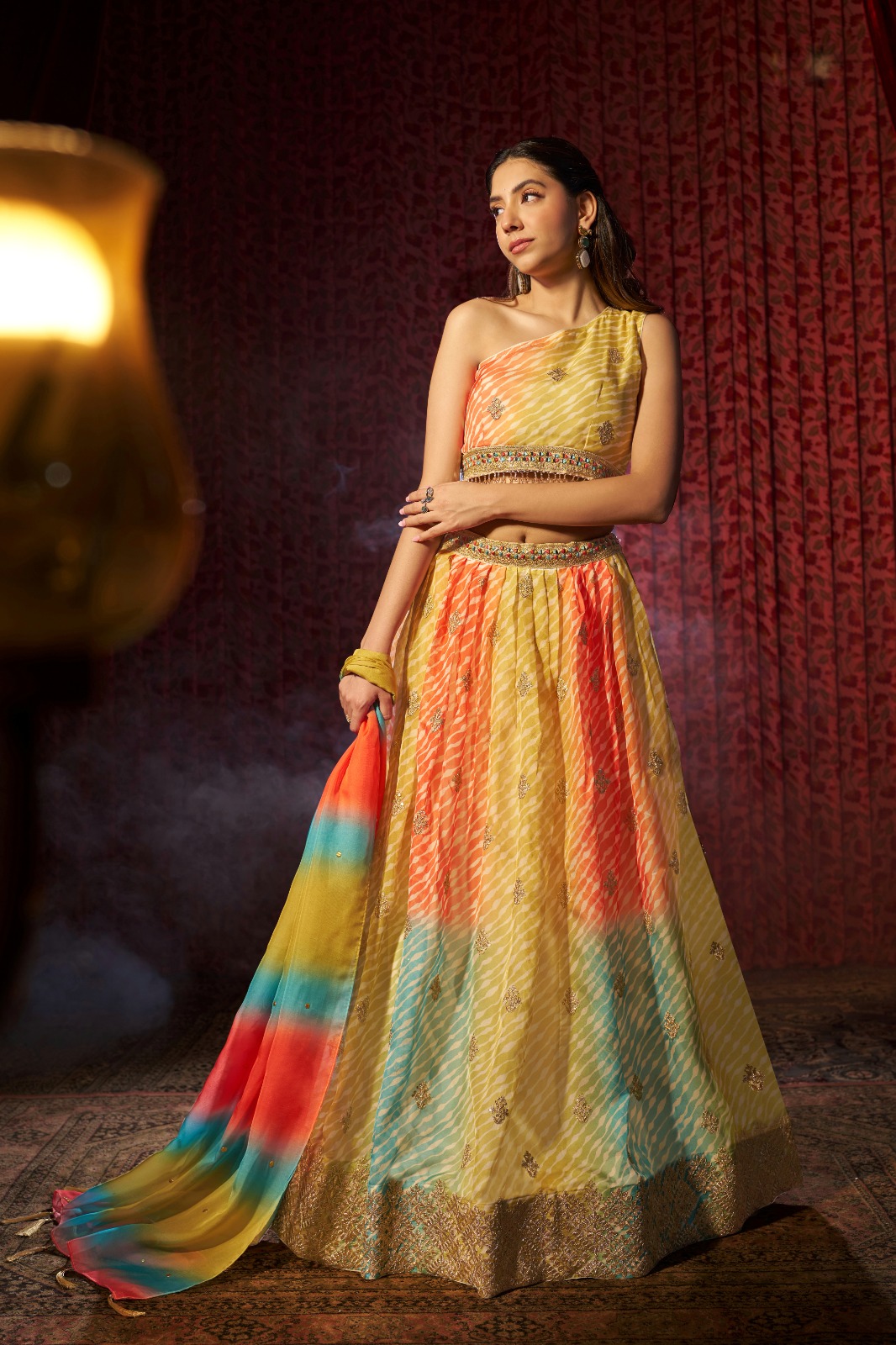
Yellow Organza Floral Embroidered Lehenga Choli with Sequins and Thread Work suits a festive Haldi palette, but sequins and threadwork call for a deliberate seating and movement plan. A simpler surface or a washable overskirt may be more practical if the wearer expects to participate actively in rituals instead of remaining near the stage.
The Haldi Lehengas Under 5500 collection can help compare bright colours and event-ready constructions. Price should not be treated as a direct measure of weight; lining, embellishment coverage and the included dupatta provide more useful information.
Day weddings and garden celebrations
A printed or lightly embroidered organza lehenga works well for a daytime wedding when the design balances sun-friendly colour with moderate volume.
Direct sunlight makes sequins, zari and foil details appear brighter, so a digital print can provide visual richness without requiring dense metallic work. A medium flare is easier to manage on grass, gravel and uneven paths than a very wide skirt. Flat or block heels also reduce the chance of the hem catching while walking outdoors.
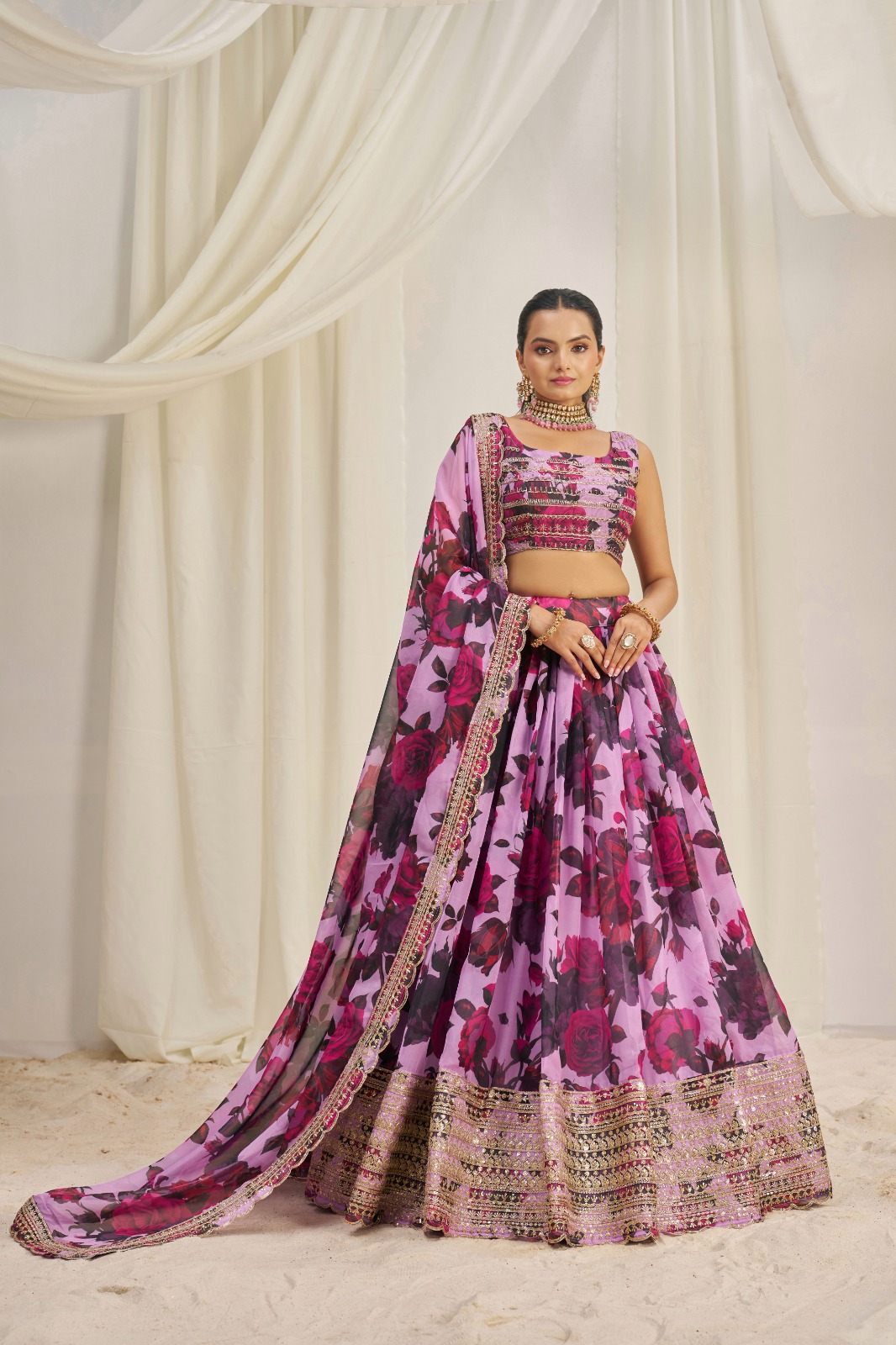
Multi Colour Organza Lehenga Choli with Digital Print, Cording Embroidery and Mukaish Work Dupatta demonstrates how a lively print can provide visual energy while cording and mukaish work add texture. The combination is festive without depending entirely on an all-over sequin surface.
Pink Lehengas Under 4000 with 50% Discount may be useful for comparing softer daytime palettes and lower-cost silhouettes. A discounted price doesn't automatically mean a lighter garment, so the number of lining layers and the embroidery coverage should still be checked.
Weight, Movement and the Occasions They Suit for Organza Lehengas at Sangeets
An organza lehenga can suit a sangeet when the skirt allows a full step, the waistband stays secure and the embellishment doesn't snag during repeated movement.
Dance practice should try the garment rather than relying on a mirror turn. Raise both arms, take side steps, bend slightly and practise any planned spin. A deep can-can skirt may appear impressive but restrict movement in a group formation. A medium flare with a smooth lining often provides a better balance between shape and mobility.
Dance-friendly construction also includes a properly fitted blouse. A one-shoulder blouse needs firm support and secure internal finishing because repeated arm movement can shift the neckline. A tie-up or back-hook blouse should not press into the spine when the wearer leans or sits. The blouse should allow both arms to rise without pulling the shoulder seam forward.
For an indoor sangeet, metallic details respond beautifully to stage lighting. For an outdoor sangeet, consider whether the crisp skirt will catch wind and whether the dupatta has enough weight at its edge to remain controlled. Secure pins at the shoulder and waist are more useful than adding extra accessories.
Silk Lehengas Under 3000 can provide a useful comparison when deciding between a crisp, structured appearance and the softer fall of silk blends. Silk and organza don't move identically: silk generally follows the legs more closely, while organza maintains greater volume away from the body.
Weight, Movement and the Occasions They Suit for Organza Lehengas at Receptions
A refined, well-supported organza lehenga is suitable for a wedding reception when the waistband remains comfortable, the embellishment suits evening lighting and the skirt maintains its shape through several hours of standing and photographs.
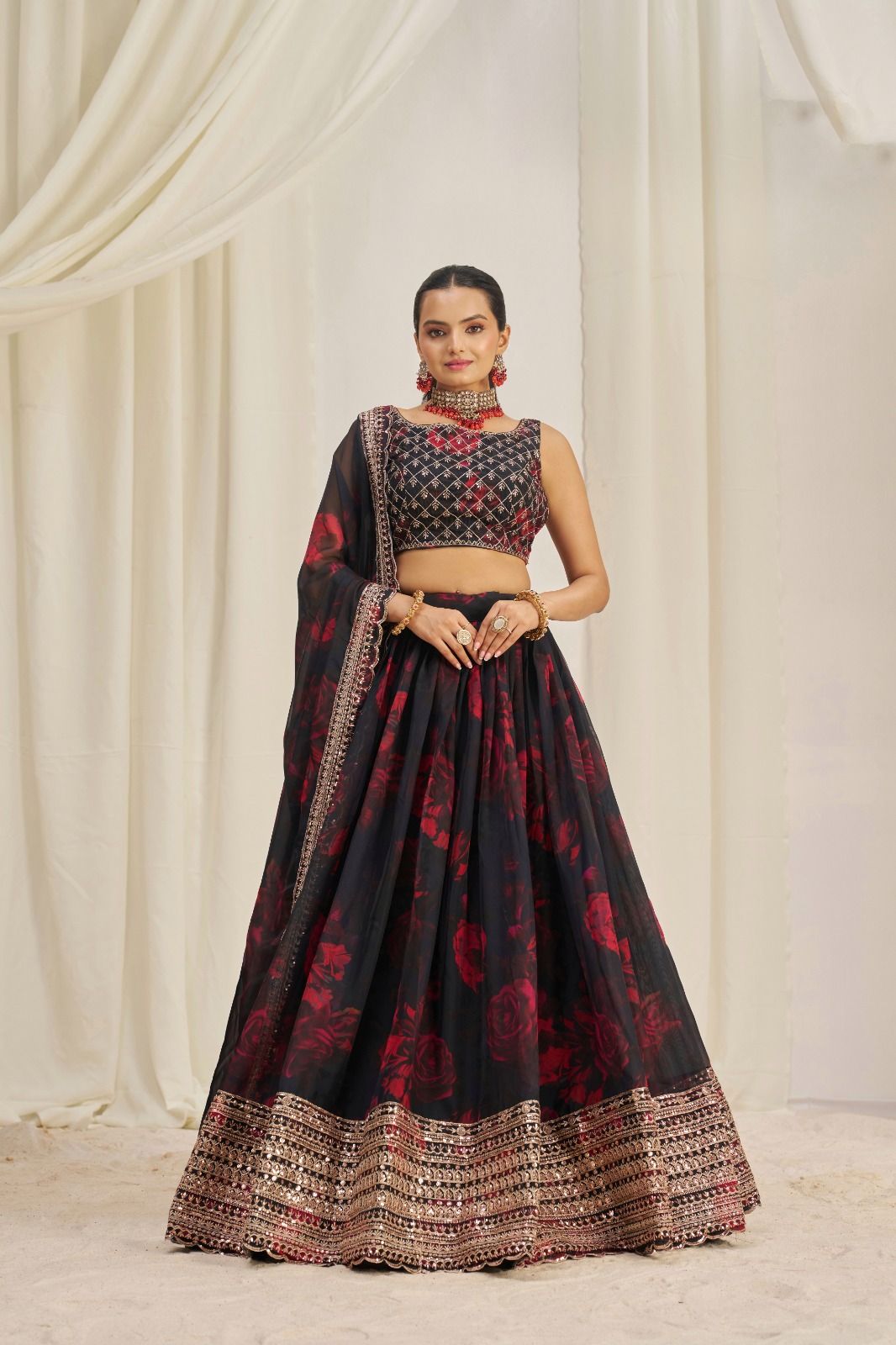
Evening receptions suit organza because point lighting highlights the folds and raised surface work. Zari, sequins and foil details create flashes as the wearer walks, while the firm silhouette remains visible against darker backgrounds. A long embellished dupatta can provide a formal finish, but the complete outfit should be tried with jewellery because shoulder fatigue often comes from the combined weight of the blouse, dupatta and accessories.
Moonlight Charm Foil Sequin Organza Lehenga represents an evening-oriented approach in which reflective surface work becomes the focal point. A design with substantial shine usually needs simpler jewellery and a controlled drape so the outfit doesn't become visually crowded.
For a reception where the wearer will sit for long periods, test the waistband while seated and confirm that the back closure doesn't press into the chair. A structured skirt can remain elegant without being uncomfortable when the waistband rests correctly at the natural waist and the lining is smooth.
Bridesmaid Lehengas Under 5500 may help compare coordinated colours and moderately formal silhouettes for a wedding party. Bridesmaids often spend more time walking, helping with photographs and moving between guests than seated guests do, so a manageable hem and secure dupatta deserve priority over maximum surface embellishment.
Weight, Movement and the Occasions They Suit for Organza Lehengas: Fit, Care and Buying Checks
The best organza lehenga is one that passes movement, fit, fabric and care checks before purchase rather than one chosen only for its photographs.
Fit checks
Check the waist, hem and blouse together with the intended footwear. The waist should not rotate while walking, the hem should clear the floor without exposing too much ankle and the blouse should stay stable when both arms are lifted.
A semi-stitched design gives alteration flexibility, but the finished fit depends on the tailor. Semi Stitched Lehenga Set can be adjusted more easily than a fully fixed garment, yet the tailor still needs accurate waist, hip, length and flare measurements. Take the footwear to the fitting appointment because even a small heel-height change affects the hem.
Check the inside of the waistband and blouse for rough backing, exposed thread ends and sharp sequin edges. Skin irritation often comes from internal finishing rather than from the visible organza. A soft lining panel at the underarm and waist can make a decorated outfit significantly easier to wear.
Care checks
Professional dry cleaning is the safest routine for most embellished organza lehengas because water can affect dye, adhesive work, metallic details and the fabric's crisp finish. Read the care label before cleaning, and ask the cleaner to inspect sequins, zari and foil work.
Air the garment after wearing it, then store it completely dry in a breathable cotton garment bag. Avoid compressing the skirt under heavy clothing because crushed organza may lose its shape. Fold along broad panel lines or hang the lehenga from a padded hanger if the waistband and stitching can support the weight.
Never iron organza directly at high heat. Use a pressing cloth and low heat only when the care instructions permit it, or use gentle steam from a safe distance. Keep steam away from glued embellishment and test an unseen section first.
Blue Petal Dream Organza Lehenga with Kodi Work is an example of why surface detail should influence storage decisions. Raised kodi work needs room so the embellishment doesn't flatten or snag against another garment. Net Lehengas Under 4500 with 51% Discount offers another comparison point for shoppers weighing organza's crisp structure against net's often softer or more flexible construction.
Weight, Movement and the Occasions They Suit for Organza Lehengas: A Practical Decision Rule
Choose a lightweight, lightly layered organza lehenga for outdoor daytime events and active rituals; choose medium structure for sangeets; choose heavier zari, sequin or foil work for formal evening receptions when the outfit will receive careful handling.
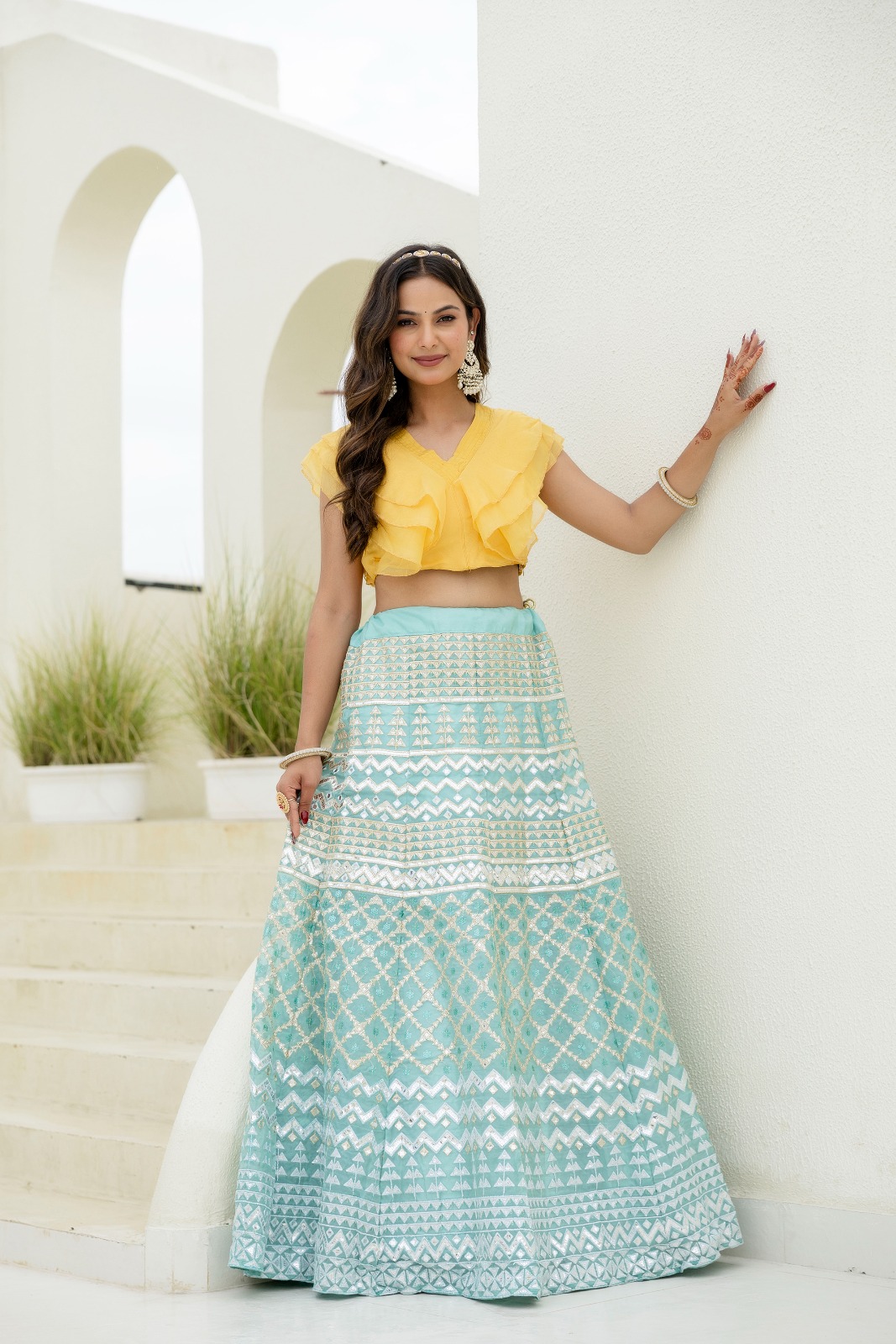
For a Haldi ceremony, prioritise bright colour, secure draping and easy movement over fragile surface work. For a sangeet, prioritise a tested waistband, a medium flare and a blouse that permits arm movement. For a reception, prioritise controlled volume, reflective embellishment and a lining that remains comfortable while seated.
When comparing two similar designs, ask which garment has fewer lining layers, where the embellishment is concentrated and how the dupatta is finished. These details predict real-world comfort more accurately than the words "lightweight" or "premium" in a product description.
Organza rewards deliberate styling because its structure already creates volume and presence. A secure drape, suitable footwear, restrained jewellery and a correctly altered hem allow the fabric to move as intended. The result is a lehenga that looks considered in photographs and remains wearable throughout the celebration.
Common Questions About Organza Lehenga Weight, Movement and Event Suitability
Are organza lehengas comfortable for long wedding functions?
Organza lehengas can be comfortable for long wedding functions when the lining is smooth, the waistband fits correctly and the skirt does not carry excessive can-can, zari or sequin work. Try the complete outfit while sitting, walking and turning before the event.
Is an organza lehenga suitable for a Haldi ceremony?
An organza lehenga is suitable for a Haldi ceremony when it has manageable flare, secure draping and embellishment that can be kept away from turmeric paste. Bright yellow, peach and pink designs work well, but pale fabric should not be placed on damp or dirty ground.
Can I dance comfortably in an organza lehenga?
You can dance comfortably in an organza lehenga with a medium flare, a secure waistband and a blouse that allows unrestricted arm movement. Practise side steps, bends and spins in the complete outfit because a heavily layered skirt may limit movement.
Does organza weigh more than net?
Organza is not automatically heavier than net because total weight depends on lining, layers, embroidery and embellishment. Organza usually feels crisper and more structured, while net may feel softer or more flexible, but either fabric can become heavy with dense decoration.
How should an embellished organza lehenga be stored?
Store an embellished organza lehenga completely dry in a breathable cotton garment bag, with enough room to prevent sequins, zari or raised work from being crushed. Use a padded hanger when the waistband can support the garment, and avoid high-heat ironing.
What footwear works best with an organza lehenga?
Footwear should provide stable height and enough clearance for the hem without making walking difficult. Measure and alter the lehenga while wearing the intended footwear, especially for outdoor weddings or events that involve stairs and uneven ground.


