Wedding wear for a December hill station with indoor heating must solve two opposite problems: outdoor temperatures can fall sharply after sunset, while a heated banquet hall may feel warm within minutes. The most reliable outfit combines a warm natural fabric, removable layers, secure footwear and jewellery that remains comfortable indoors. Planning for the transition between a mountain road, a ceremony lawn, a photography area and a heated reception makes the outfit look intentional rather than merely bundled up.
Wedding Wear for a December Hill Station With Indoor Heating Needs a Three-Zone Plan
A three-zone dressing plan is the most practical starting point for a December wedding in a heated hill-station venue. The base layer sits close to the skin, the festive outfit forms the visible middle layer, and the outer wrap or coat provides removable protection.
A December hill station may feel pleasant in direct afternoon sun but become cold in shade, wind and evening conditions. Temperatures often fall below 10°C after sunset in popular mountain destinations, although the exact experience depends on altitude, wind and the venue's exposure.
Wedding schedules create several temperature changes in one day. A baraat or arrival may happen outdoors, family photographs may take place on a terrace, pheras may be held in a partially open area, and dinner may be served inside a heated hall. An outfit chosen only for the warmest room can leave you uncomfortable during photographs, while an outfit built entirely for the cold can feel heavy during dancing.
- Base layer: Choose a thin thermal camisole, full-sleeved inner or seamless vest in a neutral shade. Avoid bulky cotton T-shirts under fitted blouses because fabric lines can show through.
- Festive layer: Select a saree, Anarkali, sharara or suit in a fabric with enough body to drape cleanly over the base layer.
- Outer layer: Carry a pashmina shawl, wool stole, velvet cape or tailored long coat that can be removed indoors.
Indoor heating doesn't eliminate the need for winter clothing because guests usually spend time moving between heated and unheated spaces. Removable warmth is more useful than one extremely heavy garment.
Wedding Wear for a December Hill Station With Indoor Heating Works Best in Warm Fabrics
Pashmina, wool-silk blends, velvet accents, heavier Banarasi silk and lined georgette provide useful warmth without making Indian wedding clothing look casual. Fabric weight, weave density and lining matter more than a label such as "winter wear," so inspect the garment's underside and construction before buying.
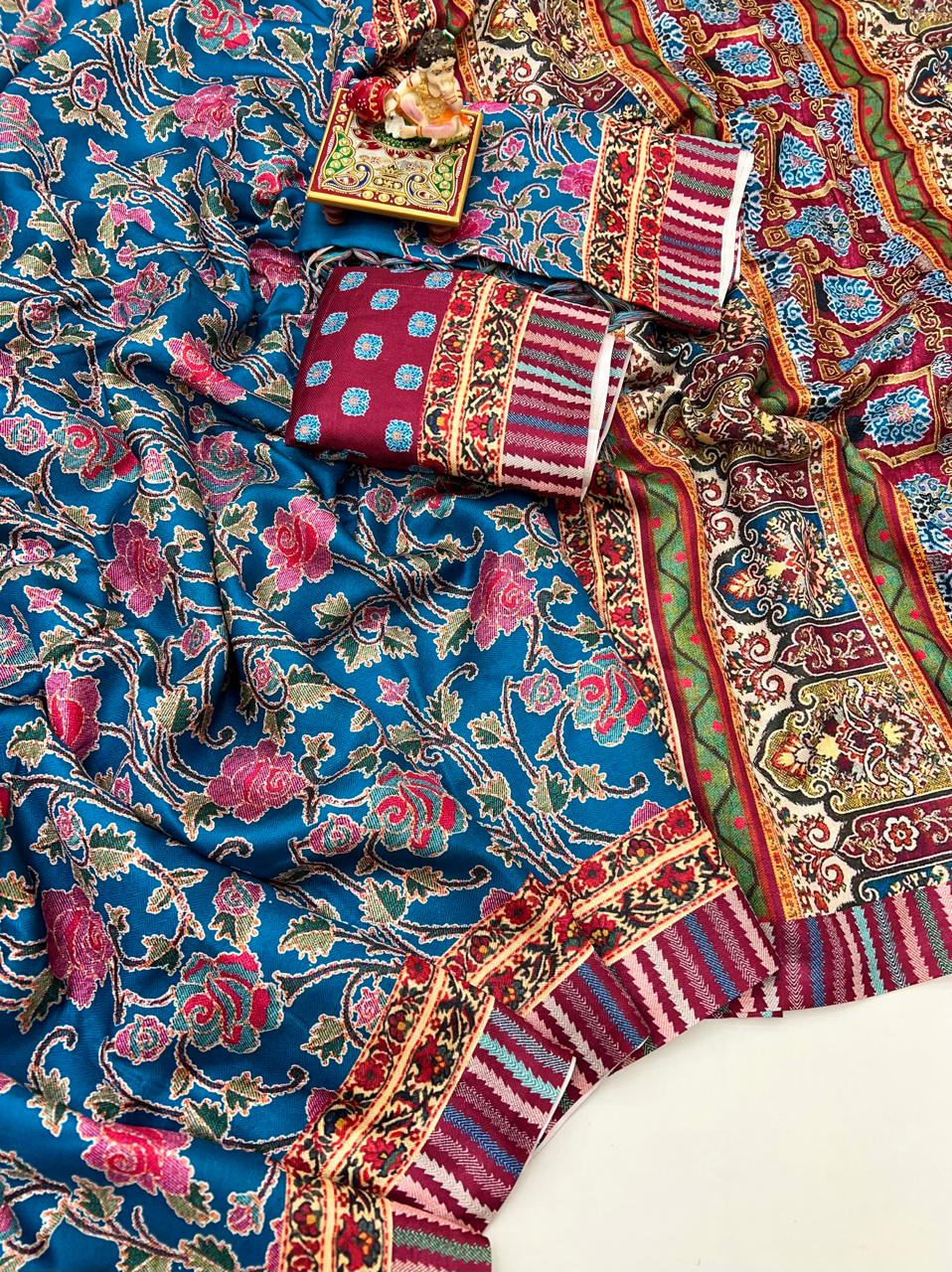
Pashmina works particularly well for winter sarees because the shawl can cover the shoulders outdoors and rest lightly over one arm indoors. A pashmina saree with a matching shawl also reduces the need to coordinate a separate wrap. Traditional Blue Pashmina Saree With Shawl For Weddings shows how a deep, saturated colour can provide a formal look while keeping the styling practical.
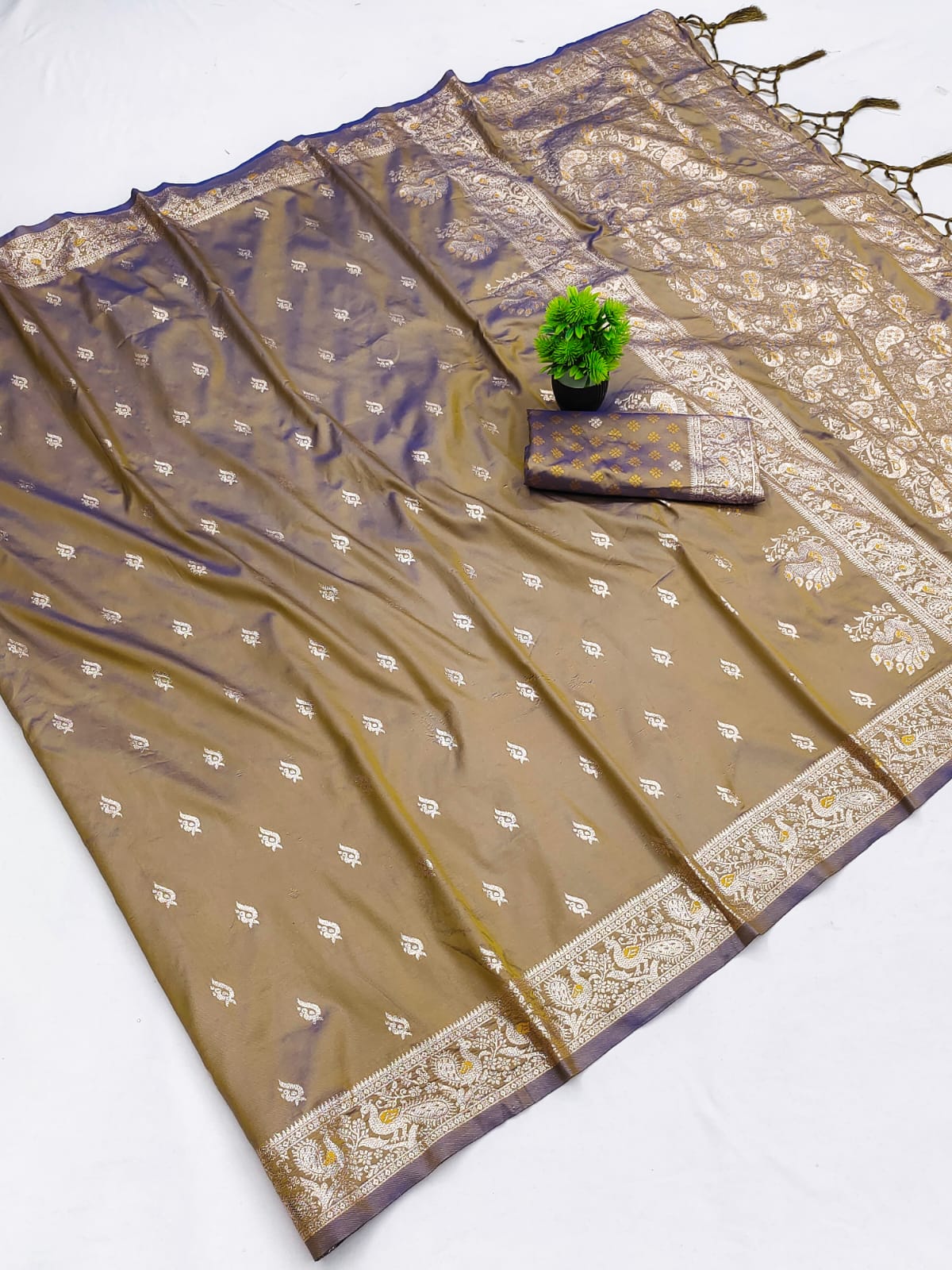
Banarasi silk offers structure and visual richness, although pure silk doesn't provide the same insulation as wool or pashmina. A thin thermal base layer under a Banarasi silk blouse can improve comfort without changing the visible outfit. Zari reflects indoor lighting beautifully, but dense zari can add weight, so test the saree for at least 10 minutes before a long event.
Velvet is useful for blouses, shawl borders, capes and jackets because its dense pile blocks some wind. A velvet blouse paired with a lighter saree can be warmer than a heavily embellished blouse made from thin net. Wool-silk blends are another strong option for draped outfits because they retain a polished surface while adding moderate insulation.
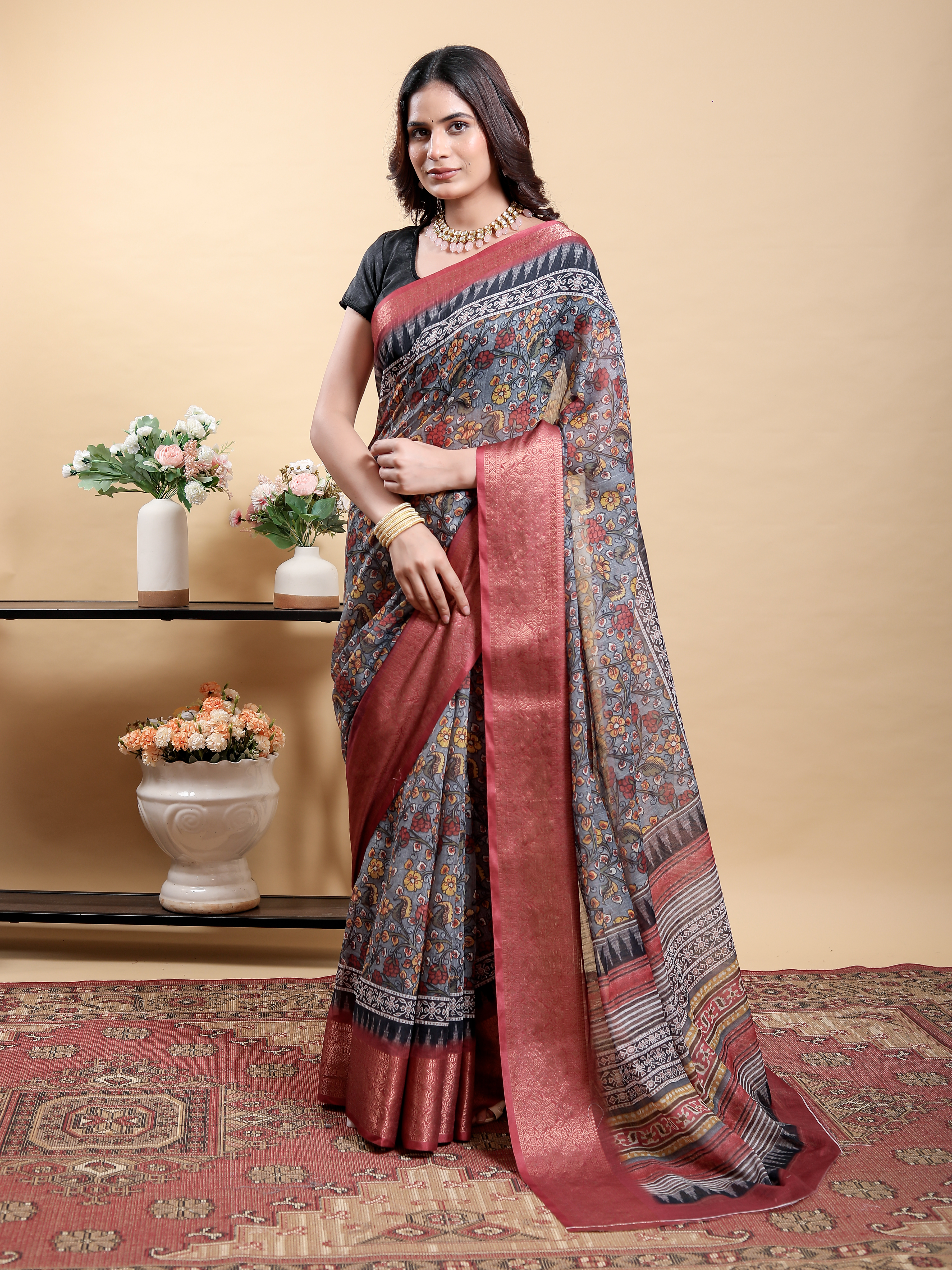
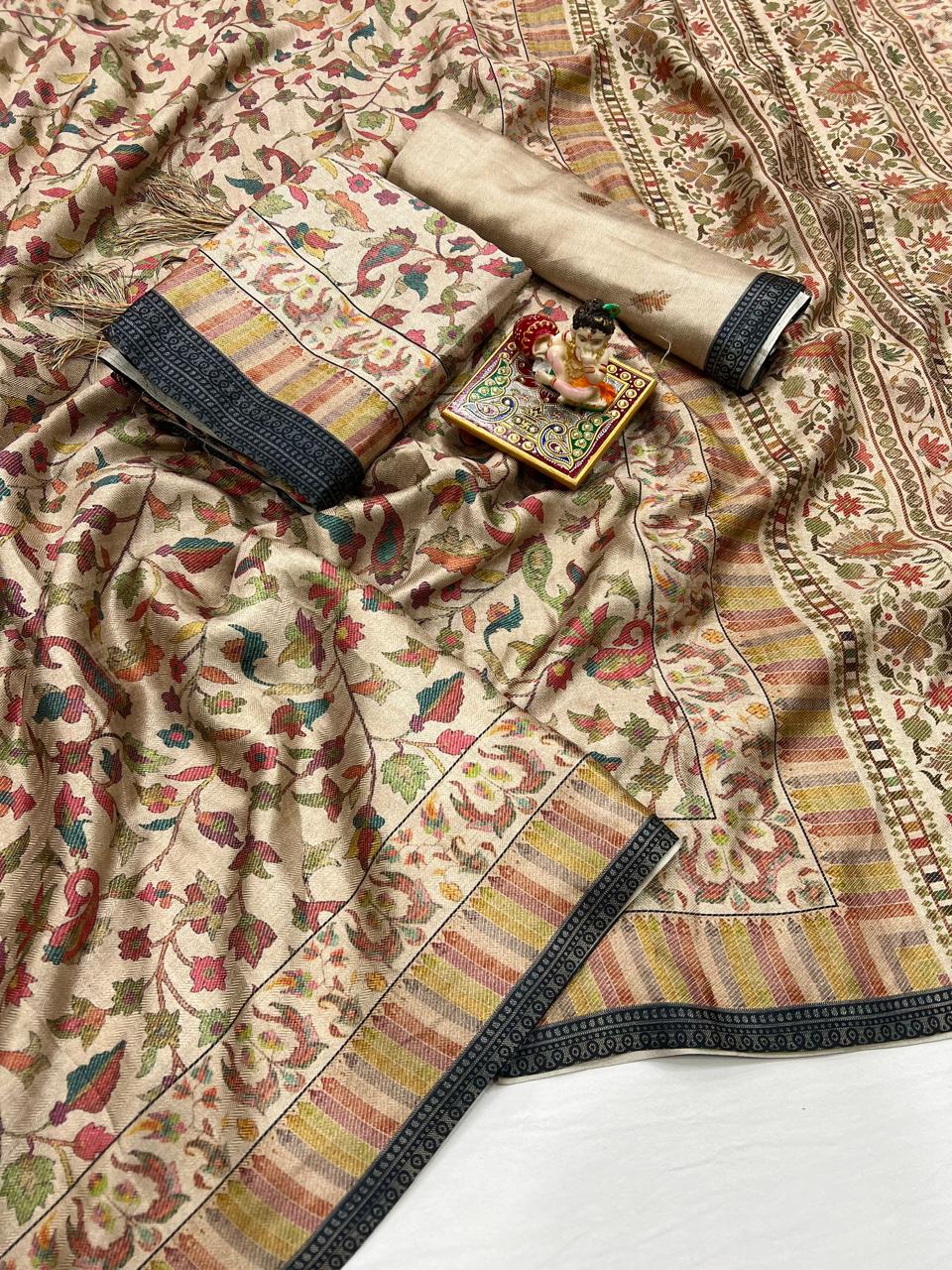
Chanderi and lightweight cotton sarees can work for a sunny daytime ceremony when paired with a warm shawl, but they're less forgiving after sunset. Olive Green Linen Cotton Printed Saree with Dark Border suits a daytime hill wedding better than a late-night outdoor function. Add a lined blouse and a structured wool wrap if the schedule includes cold travel or evening photographs.
How much warmth does wedding wear for a December hill station with indoor heating require?
The outfit needs enough warmth for the coldest outdoor segment, not just the heated reception. For a daytime event with brief outdoor movement, a long-sleeved blouse, opaque petticoat or inner skirt and medium-weight shawl may be sufficient. For an evening wedding below 10°C, add a thermal base, closed footwear and a coat or thick pashmina that covers the upper back.
Embellishment doesn't equal warmth. Sequins, zari and mirror work decorate a surface but don't insulate the body. Black Anarkali Suit Set with Sequin Zari and Moti Lace Work can look highly festive indoors, but its warmth will depend on the lining, sleeve length and layer worn underneath.
Wedding Wear for a December Hill Station With Indoor Heating Should Allow Easy Movement
Floor-length Anarkalis, full-length shararas and sarees with secure pleats are practical silhouettes for a winter wedding because they cover more of the body and accommodate a discreet base layer. The hem should remain 1 to 2 centimetres above the ground when worn with the actual wedding footwear, since damp grass, stone paths and staircases are common at hill venues.
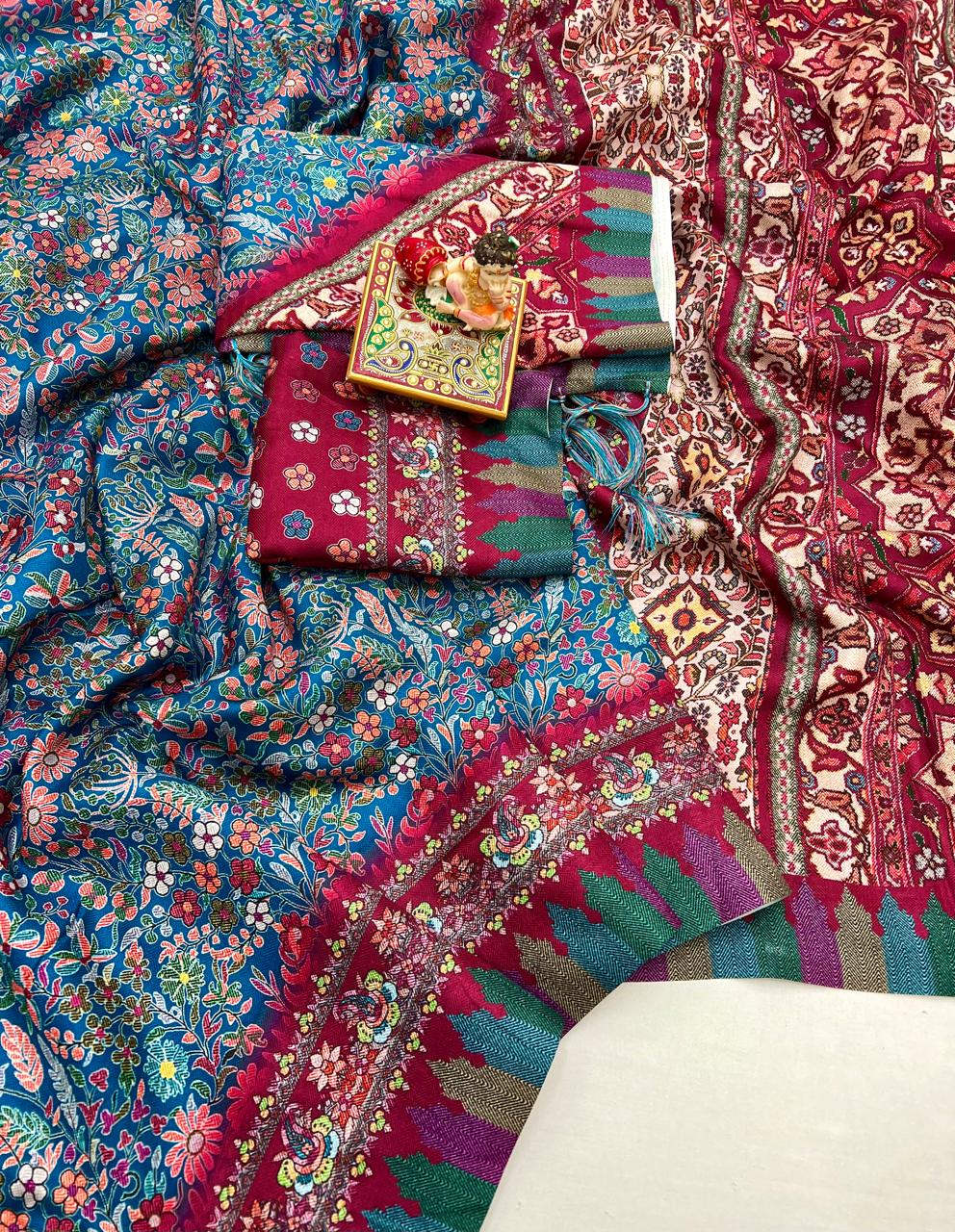
Sarees are especially adaptable when the blouse is designed for winter. A high-neck blouse, three-quarter sleeve blouse or lined full-sleeve blouse creates warmth around the upper body without hiding the drape. A pre-stitched saree can be easier than a loosely draped saree when the event includes walking across uneven ground, but the waistband must remain comfortable while sitting.
Shararas offer movement and warmth around the legs, but very wide flares can catch on steps and outdoor furniture. A medium-width sharara with a longer kurta or jacket gives a festive proportion while making it easier to walk. Pink Mirror Work Zari Sharara Suit Set Online - Varnavi is an example of a highly decorative silhouette that benefits from a simple, warm outer layer rather than more surface embellishment.
Anarkalis create a long vertical line and work well with closed footwear. Check whether the skirt has a slippery lining, because static and layered thermals can cause the lower panels to cling. A cotton or viscose inner lining usually moves more comfortably than an entirely synthetic lining during a long ceremony.
How should the outer layer coordinate with wedding wear for a December hill station with indoor heating?
The outer layer should repeat one colour already present in the outfit or provide a deliberate contrast. A charcoal, camel, ivory or deep wine shawl can coordinate with multiple jewel tones, while a black velvet cape gives a formal finish to bright sarees and lehengas.
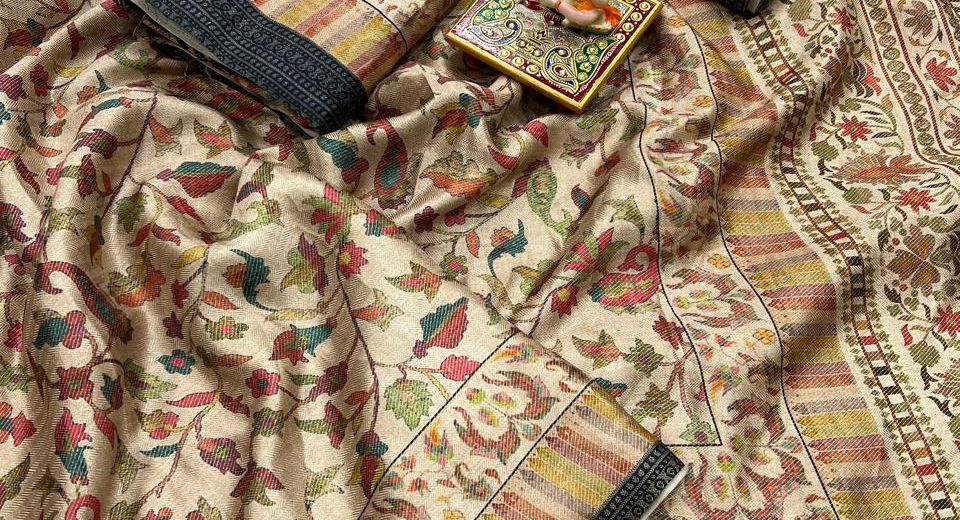
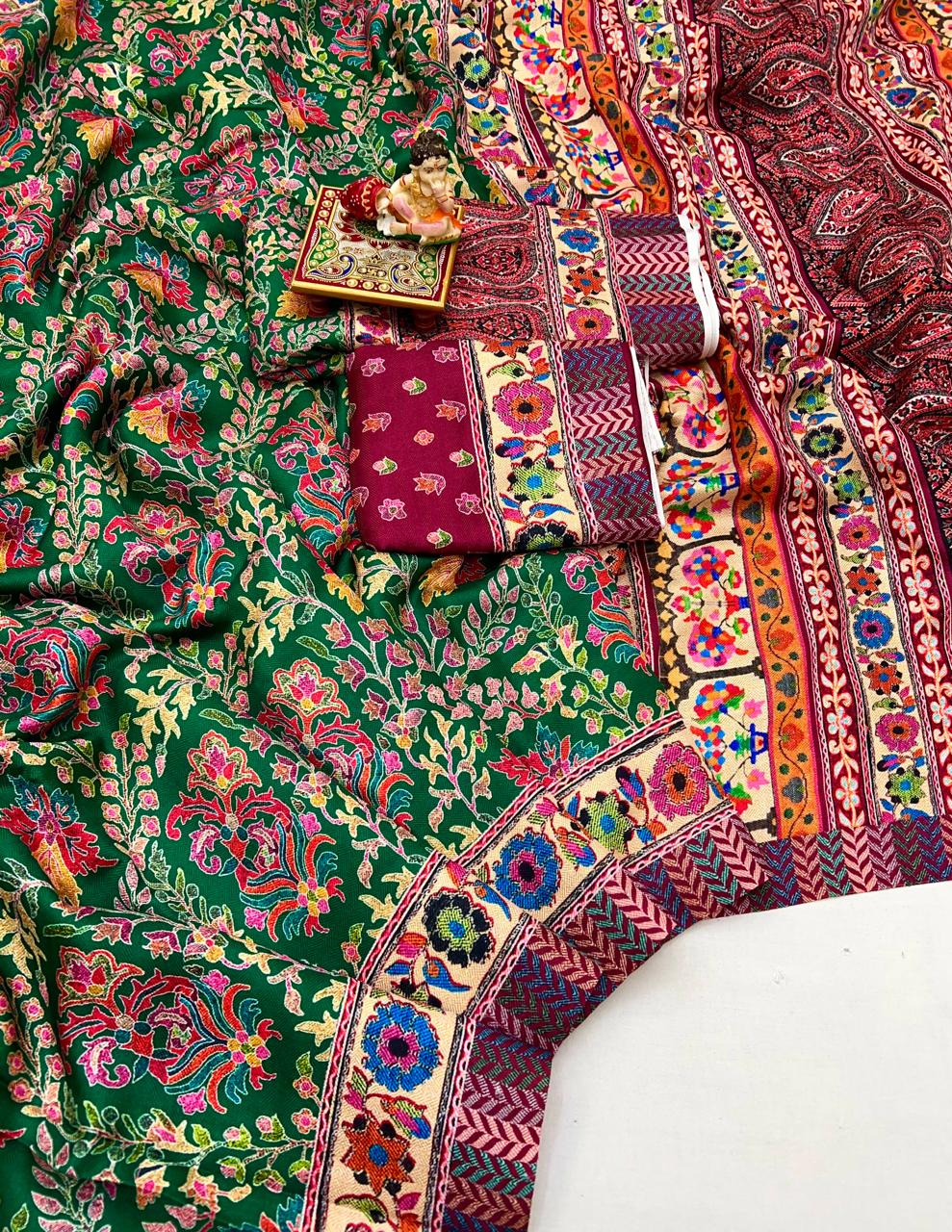
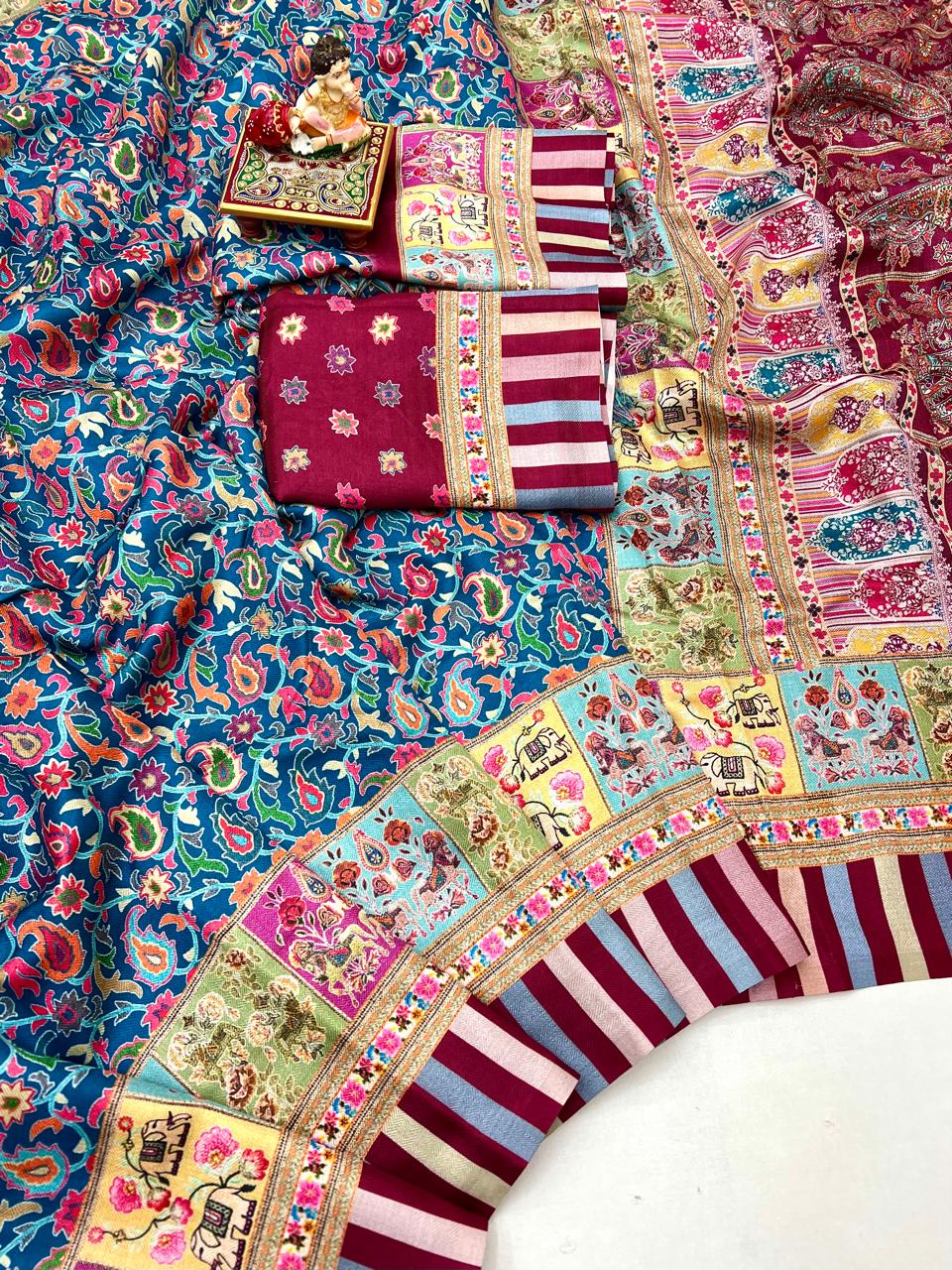
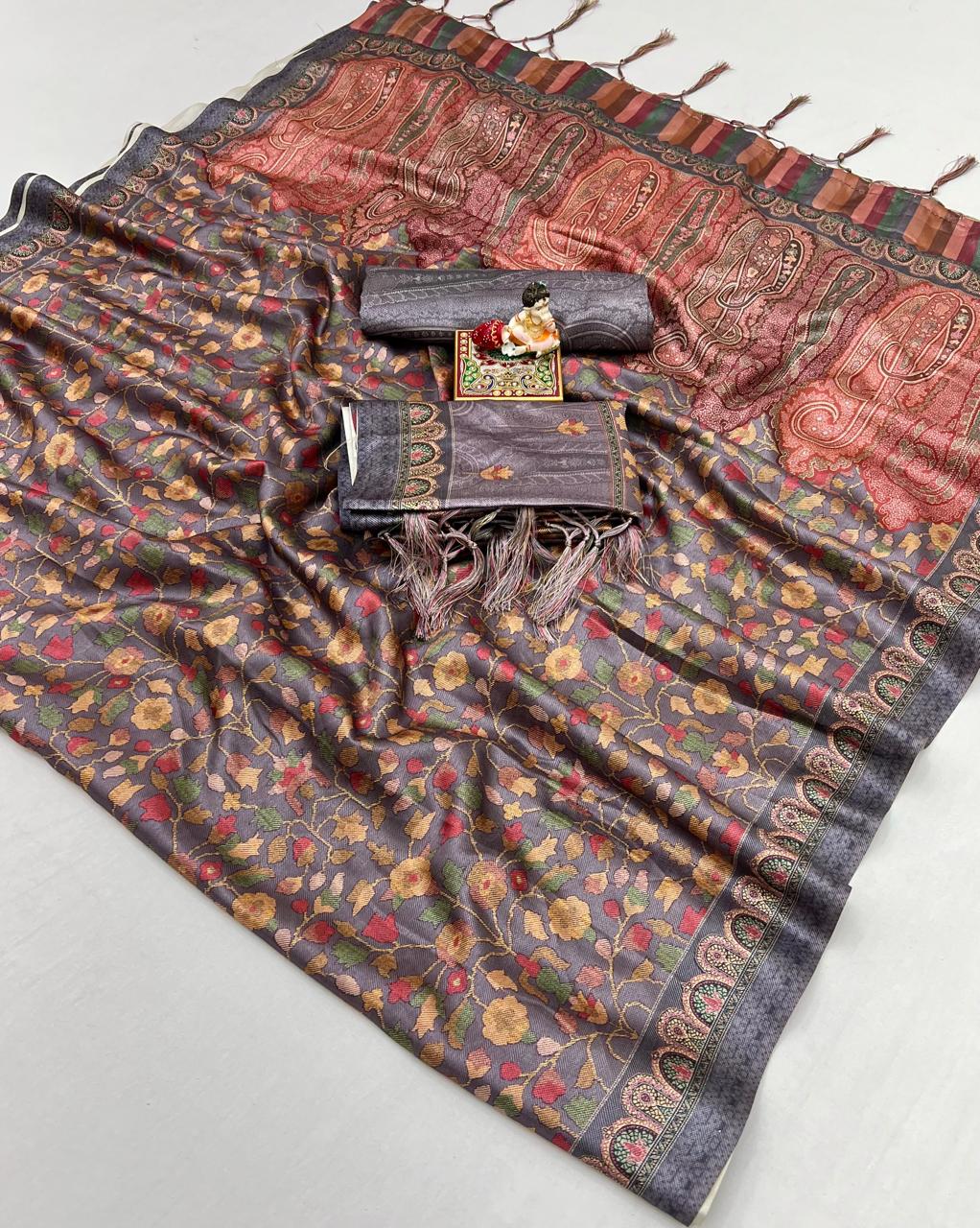
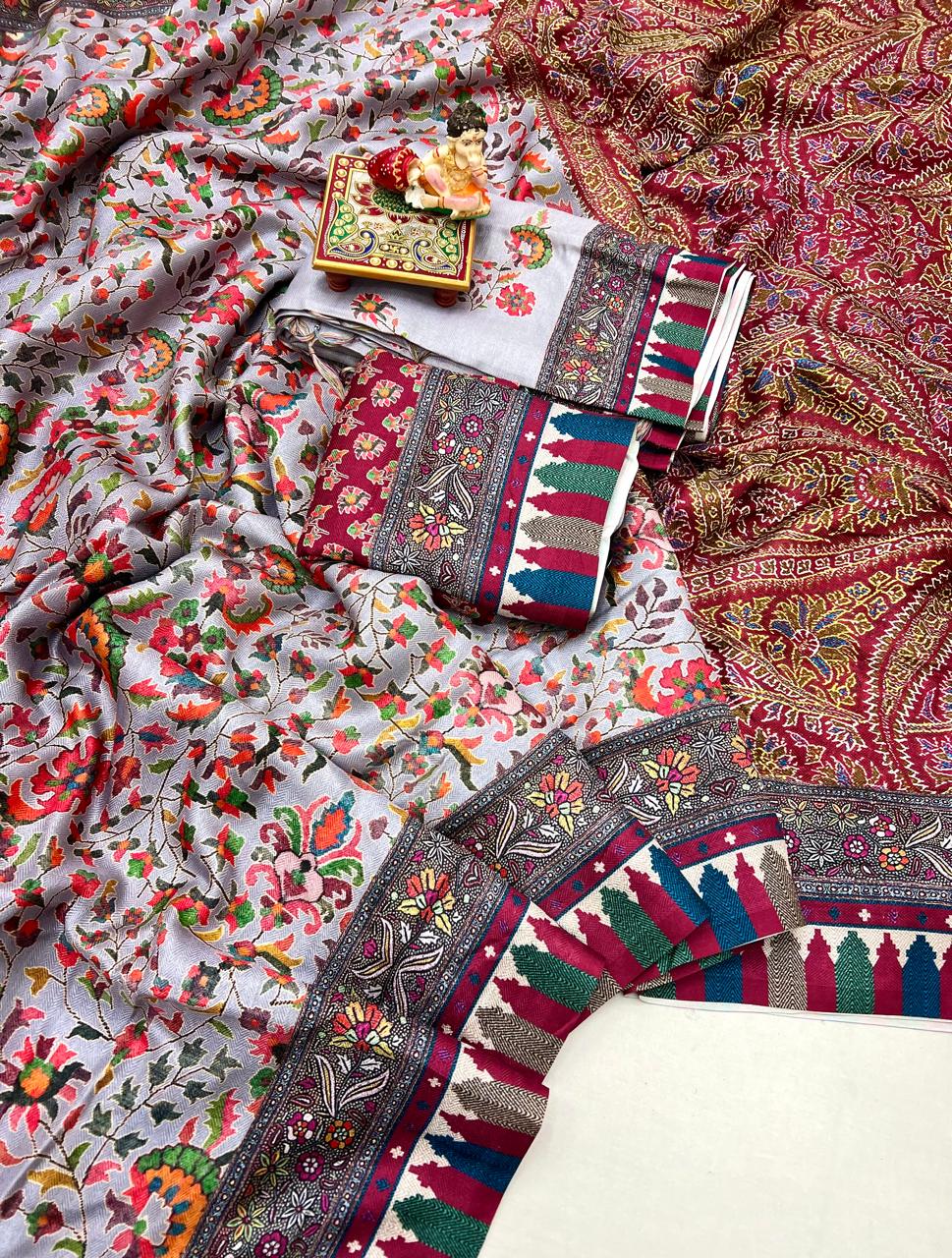
Time-honoured Blue Pashmina Saree With Shawl For Weddings can be styled with silver-toned jewellery, pearl details or a charcoal wrap. Floral Pashmina Saree With Shawl & Blouse Piece already supplies pattern and colour, so a plain shawl or solid velvet jacket will keep the final look balanced. Grey Kashmiri Style Pashmina Saree With Shawl & Blouse is naturally suited to a winter palette and can be warmed visually with burgundy, plum or antique-gold accessories.
Wedding Wear for a December Hill Station With Indoor Heating Needs a Secure Saree Drape
A saree can be layered warmly when the base layer is thin, the blouse fits over it comfortably and the outer wrap is secured at the shoulders. Bulky sweaters under a saree often create uneven pleats, so use a close-fitting thermal instead of a thick knitted top.
- Wear the thermal or seamless inner before the blouse and petticoat.
- Choose a petticoat with a firm but flexible waistband; drawstring styles can shift while walking.
- Pin the pleats at the waist and secure the pallu near the shoulder with a hidden safety pin.
- Keep the shawl separate until leaving the heated room, then place it over both shoulders for outdoor movement.
- Carry two small safety pins and one brooch so the wrap can be secured during wind or photography.
Festive Blue Pashmina Saree With Shawl & Blouse works with a warm neutral blouse layer if the blue shade is already strong. A shawl should not be pinned through delicate zari repeatedly because pinholes can enlarge during movement. Pin through a reinforced border, blouse seam or concealed fabric fold instead.
For a printed winter saree, let the print remain the focal point. Floral Pashmina Saree With Shawl & Blouse can be paired with understated earrings and a plain closed-toe shoe. Matching every colour in a floral print with separate jewellery, footwear and outerwear can make a layered winter outfit look visually crowded.
Wedding Wear for a December Hill Station With Indoor Heating Requires Practical Footwear
Closed-toe footwear with a low, stable heel is the safest choice for a hill-station wedding because polished indoor floors, gravel paths, slopes and cold ground all challenge delicate footwear. Block heels between 2 and 5 centimetres provide height with more stability than narrow stilettos.
Choose shoes with a textured rubber sole or add a grip pad before travelling. Velvet juttis, embellished loafers, ankle boots with a slim shaft and closed embroidered heels can all work, provided the toe box doesn't compress thick socks or thermal liners. Test the footwear with the full outfit and walk upstairs before the wedding day.
Keep an emergency pair of foldable flats in a small bag if the event includes extended outdoor photographs. The spare shoes should have a non-slip sole and enough room for socks. A fashionable shoe that causes pain after 30 minutes can undermine the comfort of the entire outfit.
Check the length of the saree or Anarkali after putting on the final shoes. Changing from a 5-centimetre block heel to a flat can create excess fabric at the hem, increasing the risk of stepping on the garment or collecting moisture from the ground.
Wedding Wear for a December Hill Station With Indoor Heating Benefits From Light Accessories
Jewellery should provide festive presence without adding heat, weight or tangling under a shawl. A choker can feel restrictive under a high-neck blouse, while long earrings and a single cuff often provide enough occasion presence.
Pearls, antique gold, kundan and silver-toned pieces work with winter fabrics. Use a slim maang tikka or hair accessory if the outer wrap will sit over the head. Large earrings should be tested with the shawl because a pashmina edge can catch on elaborate drops during movement.
Choose a structured clutch with a secure closure rather than a soft fabric potli if you'll be walking outdoors. The clutch should hold a phone, tissues, lip colour, safety pins, a compact hand warmer and any required medication without becoming heavy. Keep the bag small enough to carry comfortably while holding the shawl.
A compact hand warmer is useful for outdoor photographs, but it should not be placed directly against bare skin for long periods. Gloves can protect hands during an evening ceremony, although very bulky gloves make it difficult to manage a phone, clutch or jewellery. Thin wool or touch-screen compatible gloves are more practical.
Wedding Wear for a December Hill Station With Indoor Heating Should Match the Event Timing
The ceremony timing determines whether the outfit needs moderate daytime layering or full evening protection. A morning Haldi ceremony usually allows lighter clothing with a warm shawl, while a late-night reception needs more coverage around the shoulders, legs and feet.
For a daytime wedding, choose a pashmina saree, lined Anarkali or structured suit with a medium-weight wrap. Wear sunglasses only for travel or photographs in strong mountain sunlight, and keep them away from heavily embellished hair or jewellery.
For an evening pheras ceremony, select a full-sleeve blouse, lined skirt or Anarkali, closed shoes and a coat or dense shawl. Carry the outer layer from the beginning instead of assuming the venue will provide blankets. Outdoor heat lamps may warm one side of the body while leaving the shoulders and back exposed.
For a reception in a heated hall, choose layers that can be removed without disturbing makeup or hair. A shawl is easier to remove than a fitted jacket with complicated sleeves. If a coat is necessary, wear it during travel and photographs, then hang it on a padded hanger rather than folding it over a chair.
Wedding Wear for a December Hill Station With Indoor Heating Must Be Packed Carefully
The outfit should be packed in breathable garment covers, with delicate embellishments protected from friction and pashmina kept away from jewellery that can snag. Pack the complete look together so the base layer, blouse, shoes, wrap and accessories are tested as one outfit before departure.
- Steam or air the saree, suit or Anarkali before packing rather than ironing delicate zari at high heat.
- Place tissue paper between heavily embellished folds to reduce abrasion.
- Roll a pashmina shawl loosely instead of compressing it under heavy luggage.
- Carry a stain-removal pen for fresh food marks, but test it on an inner seam first.
- Pack spare hooks, safety pins, fashion tape and a small sewing kit.
- Keep footwear in separate bags so grit doesn't rub against silk, velvet or pashmina.
After the wedding, air the outfit away from direct sunlight before storing it. Pashmina and silk should remain completely dry before folding. Do not spray perfume directly onto zari, pashmina or velvet because alcohol and oils can leave marks.
The most dependable winter wedding outfit isn't necessarily the thickest one. A well-fitted base, a warm festive fabric, a removable shawl, stable shoes and a realistic plan for outdoor photographs will keep the clothing elegant across both cold mountain air and heated indoor rooms.
Common Questions About Wedding Wear for a December Hill Station With Indoor Heating
What should I wear to a December wedding in a hill station with indoor heating?
Wear a warm saree, lined Anarkali, sharara or suit with a thin thermal base layer and a removable pashmina shawl, wool wrap or tailored coat. Closed-toe shoes with a stable sole will protect you during cold outdoor photographs and uneven walks.
Is a pashmina saree warm enough for a winter wedding?
A pashmina saree with a matching shawl can be warm enough for a daytime or moderately cold wedding when paired with a lined blouse and thin thermal layer. For temperatures below 10°C or extended outdoor ceremonies, add a coat and closed footwear.
Can I wear a Banarasi silk saree to a December hill-station wedding?
Yes, Banarasi silk works well for a formal winter wedding when paired with a thermal base layer, lined blouse and warm shawl. Banarasi silk itself is not as insulating as pashmina, so the blouse and outer layer provide most of the added warmth.
What footwear is safest for a hill-station wedding?
Closed-toe shoes with a textured rubber sole and a 2-to-5-centimetre block heel are safest for slopes, gravel, cold floors and indoor movement. Test the shoes with thick socks or thermal liners and the complete outfit before travelling.
How can I layer a saree without making it look bulky?
Use a thin seamless thermal instead of a thick sweater, choose a well-fitted blouse and secure the pleats and pallu with discreet pins. Keep the pashmina shawl or coat as the removable outer layer rather than adding bulky clothing under the saree.
What should I wear for a late-night outdoor wedding ceremony in December?
Choose a full-sleeve lined blouse or Anarkali, warm inner layers, closed shoes and a dense pashmina or wool wrap that covers the shoulders and upper back. Carry the wrap from the start because outdoor heaters may not warm every part of the seating area.