

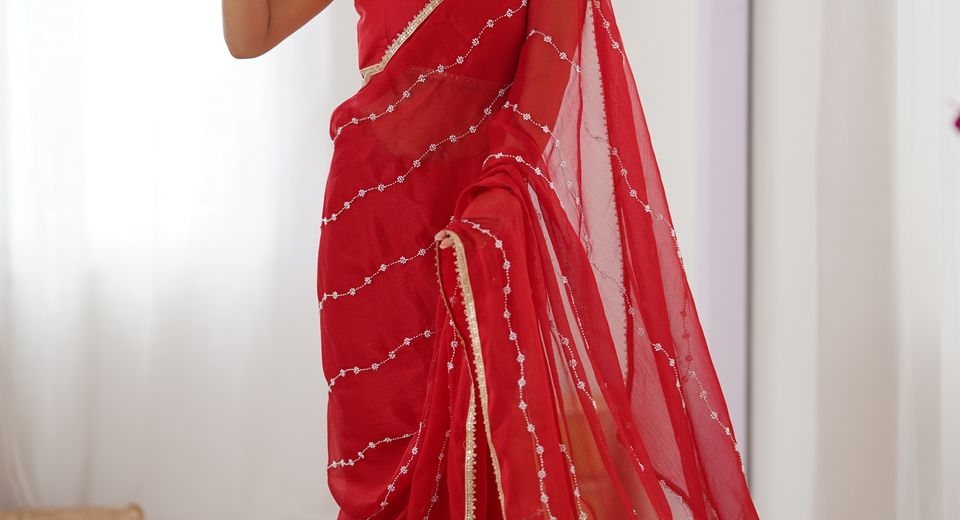
A richly embellished saree can look spectacular at a wedding, yet hours of standing, sitting, walking and dancing can make its weight noticeable. These Ways to Make Heavy Saree for a Long Function Easier to Wear focus on practical adjustments: a supportive underskirt, balanced pleats, secure pinning, sensible footwear and planned breaks. The same methods work for Banarasi silk, Lichi silk, heavy Chinnon, Chinon, tissue cotton and sarees covered with zari, sequins, mirrors or dense embroidery.
Ways to Make Heavy Saree for a Long Function Easier to Wear Start with Weight Distribution
A heavy saree becomes more comfortable when its weight is distributed across the waist, front pleats and shoulder instead of hanging from one tight knot or a single shoulder pin.
A saree worn for a two-hour dinner creates different demands from a saree worn for a six-hour wedding. During a long function, the wearer repeatedly sits on chairs, rises from low seats, climbs stairs, uses the washroom and moves through crowded spaces. Each movement can loosen pleats or shift fabric towards one hip.
Fabric structure also changes the experience. Banarasi silk and Lichi silk usually hold their shape well but can feel weighty around the waist. Heavy Chinnon and Chinon often fall softly, so a poorly fitted underskirt may allow the saree to slide. Tissue cotton can feel lighter, although a broad zari border may still pull downwards.
Embellishment adds concentrated weight. Sequins, mirror work, dense zari and a richly woven pallu may make one end of the saree much heavier than the other. The Wine Lichi Silk Saree with Zari Jacquard & Rich Pallu and the Black Gold Jacquard Lichi Silk Saree with Rich Pallu both benefit from support at the shoulder and near the waist because a substantial pallu should not hang from one pin.
Before leaving home, walk, sit and turn in the completed drape for at least 15 minutes. A short test reveals whether the underskirt slips, the hem catches under the shoe or the pallu pulls across the neck. Correcting these problems at home is easier than adjusting them in a crowded wedding venue.
Ways to Make Heavy Saree for a Long Function Easier to Wear with the Right Underskirt
A firm, correctly sized underskirt with a flat waistband supports a heavy saree without forcing the drawstring to carry the entire load.
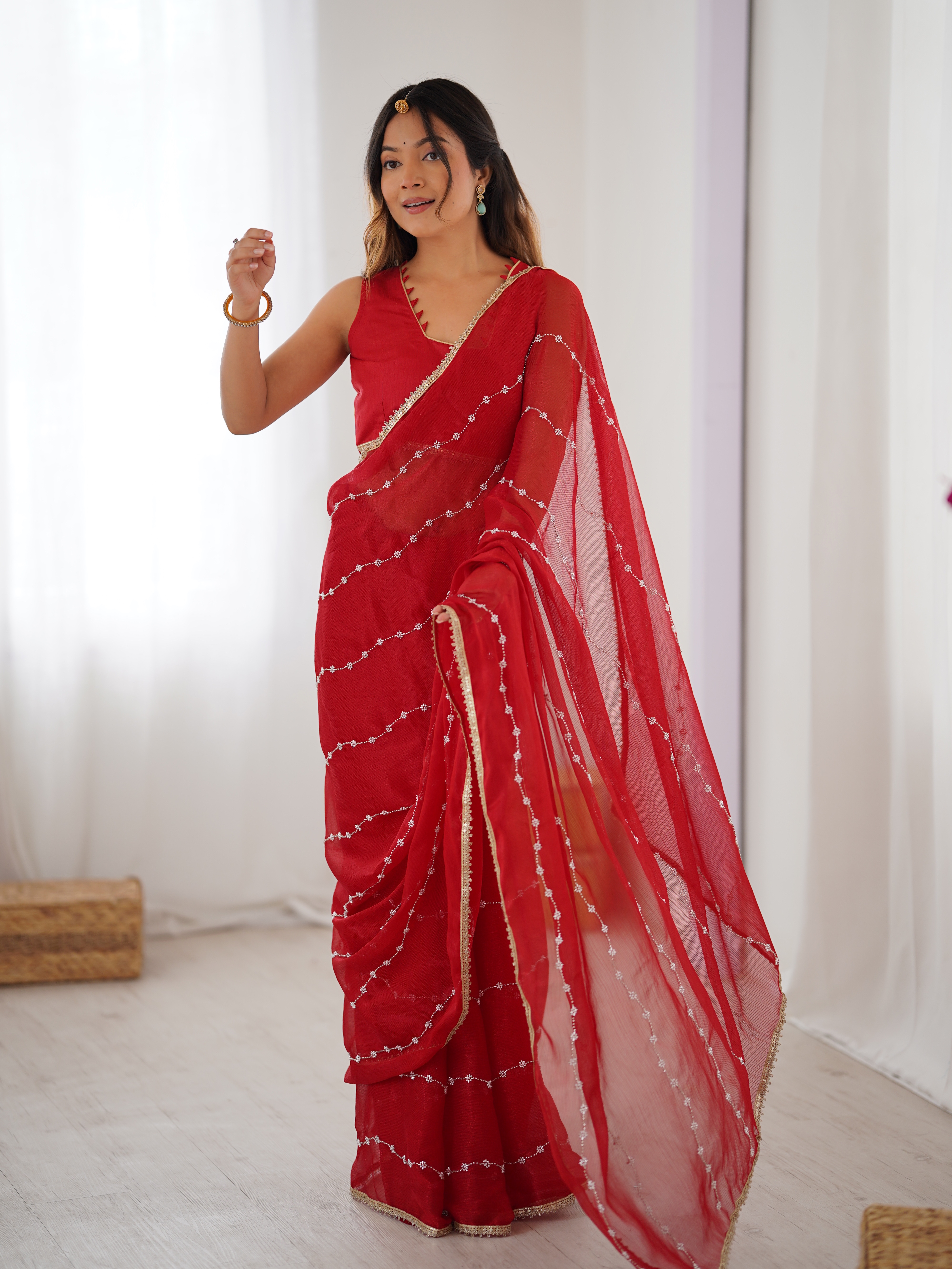
For Banarasi silk, Lichi silk and other structured sarees, a cotton or blended underskirt with a broad waistband usually offers dependable support. For soft Chinnon, Chinon or georgette, a satin or smooth lining can reduce friction and help the saree fall evenly. Mermaid or fish-cut underskirts create a close silhouette, but a straight-cut option is generally more practical for walking, climbing stairs and sitting during a long function.
The waistband should sit securely at the natural waist or slightly above the hip, depending on the drape. A waistband that slips down encourages the saree to slide, while an overly tight waistband can cause pressure after several hours. You should be able to place two fingers between the waistband and your body without the underskirt moving down when you walk.
Use a sturdy drawstring with a flat knot placed slightly to the side rather than directly beneath the front pleats. A bulky knot creates a visible lump and can press into the body while sitting. Avoid relying on a very thin elastic waistband for a heavily embellished saree because elastic may roll or lose tension during prolonged wear.
Wear seamless or low-bulk inner layers beneath the underskirt. Excess fabric from slips, shapewear or petticoats can create folds that become painful after prolonged sitting. Test the complete base layer at home for at least 30 minutes before the event.
A properly fitted underskirt also improves the fall of a lighter-looking design with a substantial border. Pastel Floral Tissue Handloom Cotton Saree with Zari Weaves may feel easier than a dense silk saree, but the zari border still needs a stable base to prevent uneven pulling at the waist.
Ways to Make Heavy Saree for a Long Function Easier to Wear Through Better Pleats
Neat, moderately sized pleats reduce bulk at the waist and make the front of a heavy saree easier to control while walking and sitting.
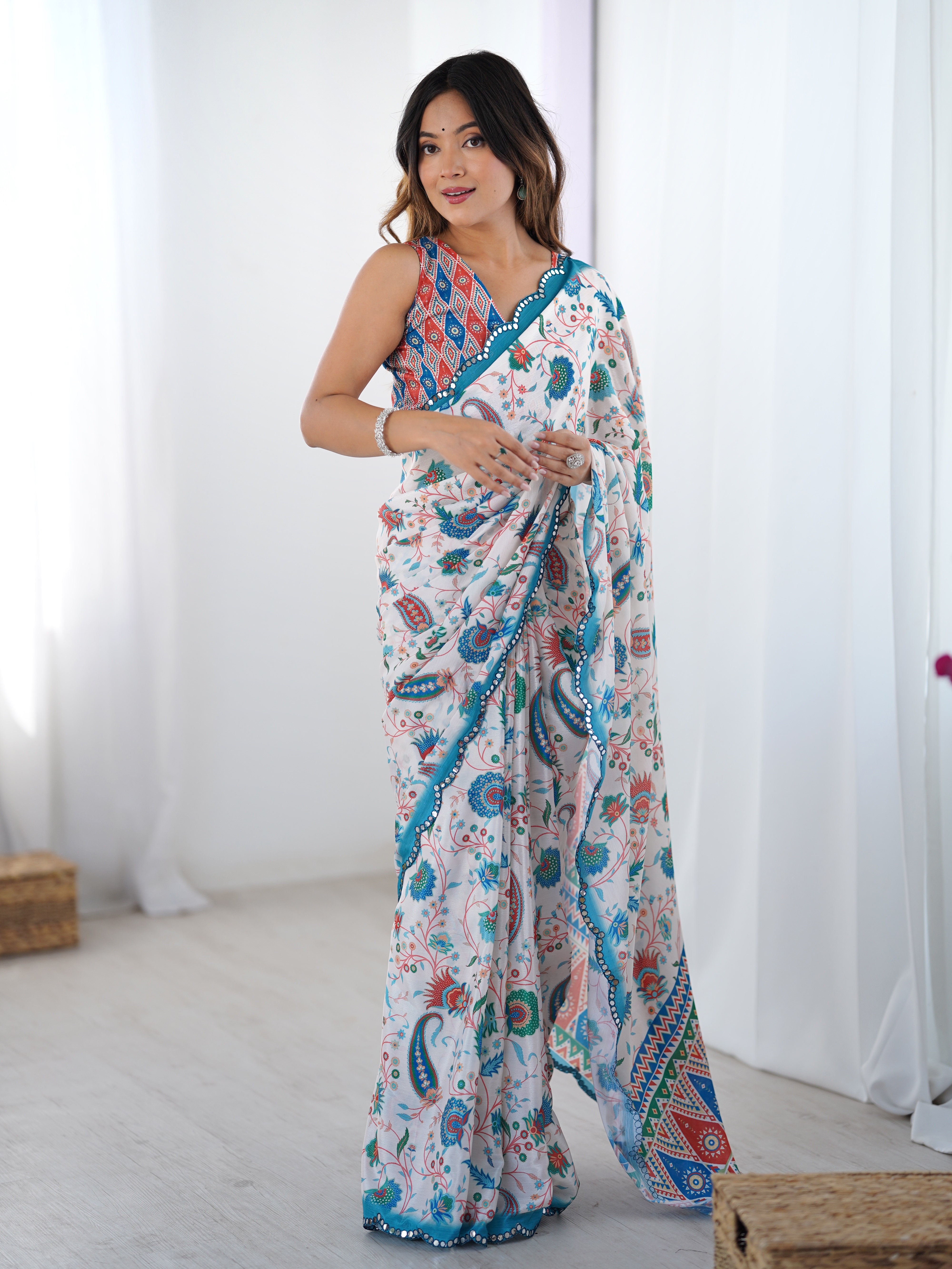
Keep the front pleats approximately 10 to 12 centimetres wide, depending on the saree width and border. Six to eight even pleats are often easier to manage than a large stack of shallow folds. Extremely wide pleats create bulk at the waist, while very narrow pleats can loosen when you walk.
Place the pleats slightly to the left or right according to the position of your dominant hand and the blouse design. Secure the upper section with a safety pin hidden inside the waistband, then use a second pin lower down if the border is heavy. Two small safety pins are more stable than one oversized pin that can pull a delicate weave.
Pre-pleating can make a heavy saree easier to control, especially when the saree has a stiff zari border or dense embellishment. Mark seven to nine pleats with temporary clips or broad fabric clips, then remove the clips after the pleats have been secured with pins. Never leave metal clips attached during travel because they may snag the fabric.
Check the final length with the exact footwear intended for the event. A three-centimetre difference in heel height can alter the visible length and cause the border to brush the floor. Keep the hem approximately one to two centimetres above the floor when standing in your usual posture. A hem that drags gathers dirt and may catch beneath the shoe.
Press the saree safely before pleating. Do not iron sequins, mirrors or metallic zari directly at high heat. Place a thin cotton cloth over the saree and use low heat, or ask a professional draper to press the fabric safely. Steam can relax creases in silk and Chinnon, but excessive moisture may affect zari, adhesive mirror work or colour transfer.
Ways to Make Heavy Saree for a Long Function Easier to Wear by Securing the Pallu
A heavy pallu should be supported at the shoulder and near the blouse underarm so its full weight doesn't hang from one point.
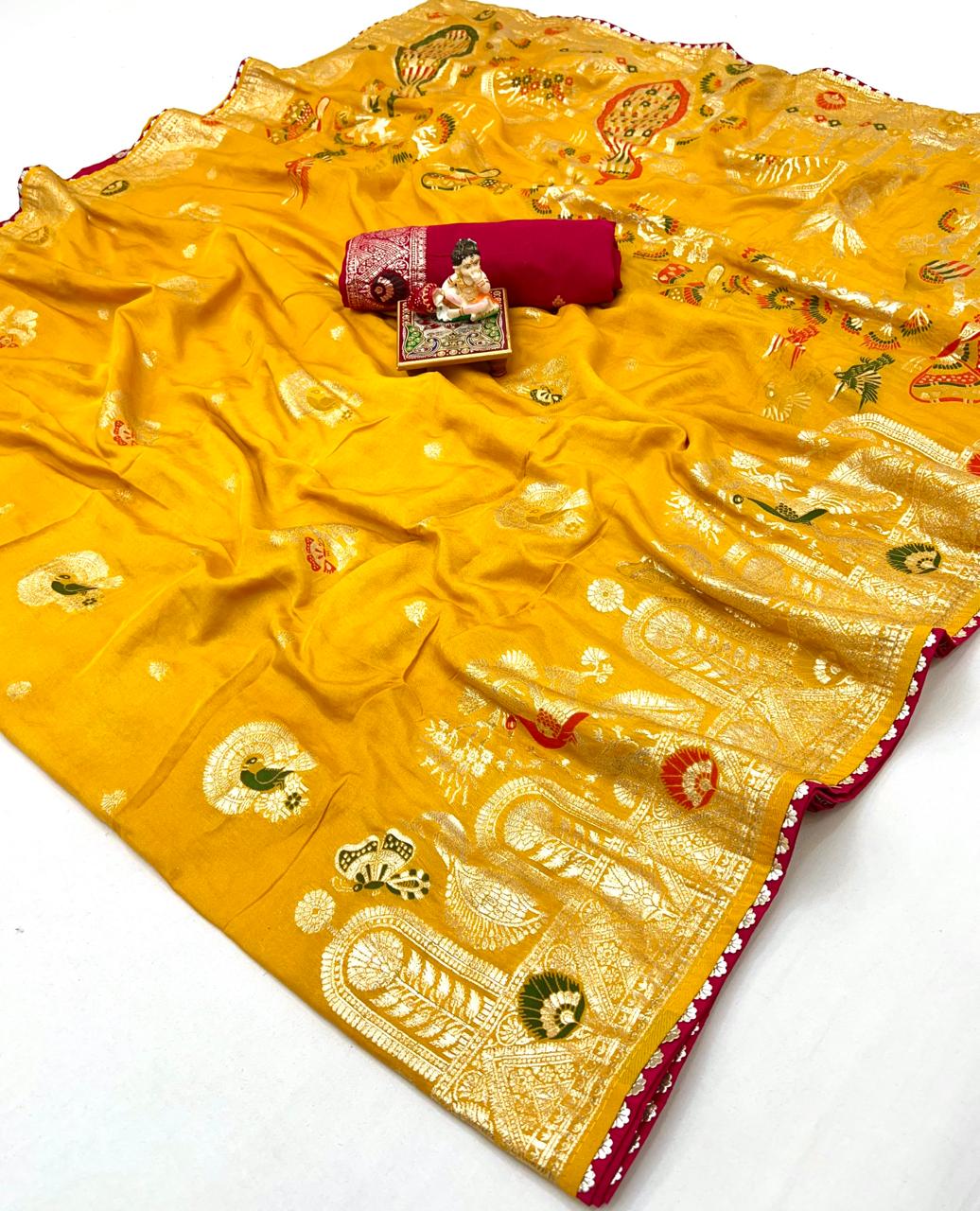
Pin the pallu at the shoulder and near the blouse underarm, leaving enough ease for arm movement. A pallu pulled too tightly across the chest can make breathing and sitting uncomfortable. Place the shoulder pin horizontally through the saree and blouse seam rather than vertically through a fragile embellished section.
An open pallu looks graceful for photographs but moves more during dinner or dancing. A neatly pleated pallu gives better control and reduces the need to hold the saree with one hand throughout the evening. A small hidden pin near the waist can stop the pallu from repeatedly swinging forward.
A rich border needs careful pin placement. Keep pins away from dense zari, mirror work and delicate woven motifs whenever possible. Pin through a stronger seam or the blouse edge, and use safety pins with smooth closures so the metal doesn't catch the reverse side of the saree.
The Heavy Sitara Fancy Saree for Wedding & Party Wear and the Elegant White Heavy Chinon Party Wear Saree illustrate why pallu control matters. Sitara embellishment and Chinon drape beautifully, but both can move differently from a plain cotton saree when the wearer walks, turns or sits.
Use a brooch only when it's lightweight and securely attached. A large metal brooch may add strain to the shoulder, especially when the saree already has a dense pallu. A hidden safety pin usually provides better long-duration support than decorative hardware alone.
Ways to Make Heavy Saree for a Long Function Easier to Wear with Blouse and Footwear Choices
A supportive blouse and stable footwear reduce fatigue more effectively than adding extra pins to the saree.
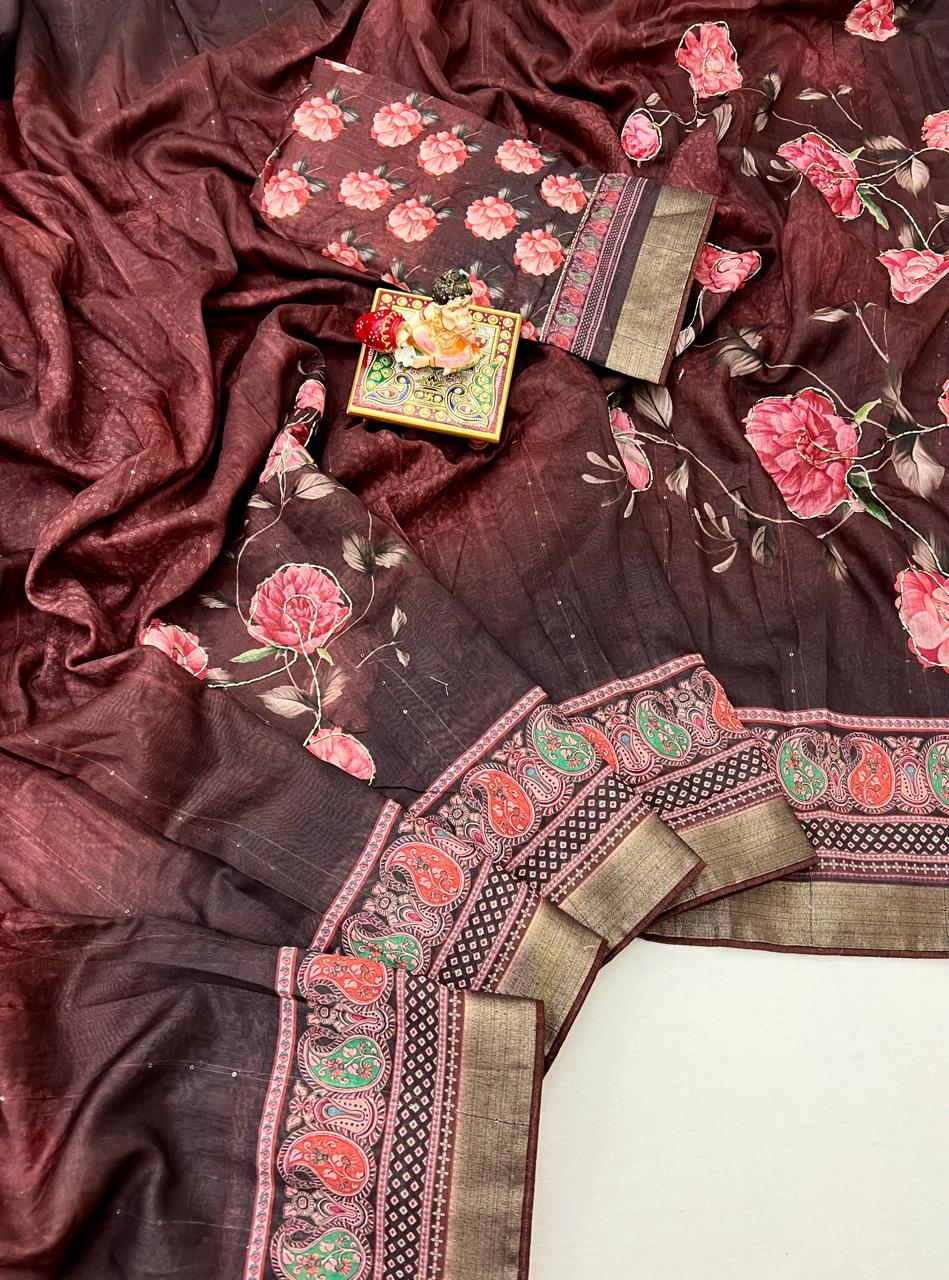
Choose a blouse that permits movement
A blouse with a secure shoulder seam and correctly placed armhole keeps the pallu from slipping. The blouse should allow you to raise both arms, sit with your back supported and take a full breath. Very tight sleeves can become uncomfortable under a pinned pallu after several hours.
Back hooks, a concealed zip or well-fitted tie closures are preferable to a closure that digs into the skin. If the saree has heavy mirror work, avoid placing a rough embellished edge directly against the underarm. A thin cotton lining can prevent irritation without noticeably changing the blouse shape.
Select footwear for movement
Block heels, wedges and embellished flats are usually safer for a long function than narrow stilettos. A two- to five-centimetre block heel can provide height while distributing pressure across more of the foot. Break in new footwear with several short walks before the event, and carry cushioned flats for the journey home.
Check the saree length while walking up stairs and turning quickly. A shoe with a smooth but not slippery sole lowers the risk of catching the border. Gel pads, heel grips and blister plasters are useful additions when standing for a Haldi ceremony, wedding ritual or reception.
Keep accessories proportionate
Heavy earrings and a broad necklace can add neck and shoulder fatigue when the saree already has a substantial pallu. If the saree includes dense zari or mirror work, one strong jewellery feature often looks more balanced than several equally heavy pieces.
Peach Garden Floral Saree in Heavy Chinnon with Mirror Work and Designer Heavy Chinnon Saree with Kutchi Mirror Lace already bring reflective detail near the body. Small studs or medium jhumkas may therefore provide enough definition without competing with the saree or pulling on the ears.
Ways to Make Heavy Saree for a Long Function Easier to Wear During the Event
Planned movement, careful sitting and a small repair kit prevent minor draping problems from becoming painful during a long function.
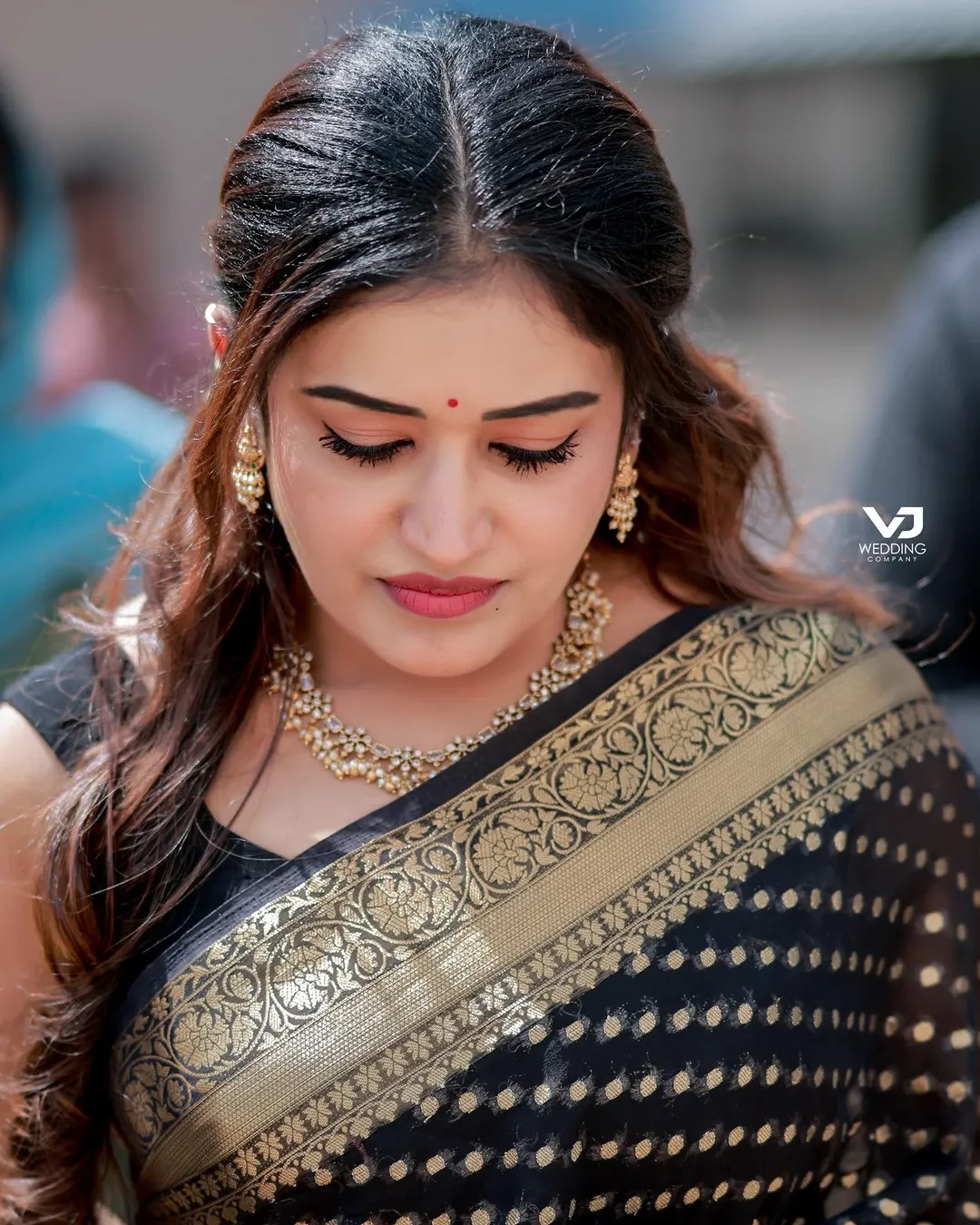
- Practise sitting: Gather the pleats gently with one hand, lower yourself slowly and place the pallu beside you rather than underneath your body. This prevents crushing zari and reduces sudden pulling at the waist.
- Walk with a free hand: Hold the lower pleats lightly when climbing stairs, entering a car or crossing uneven ground. Lift only the front section, not the entire border, so the saree doesn't shift around the waist.
- Schedule a reset: After two or three hours, use a private room to check the waistband, pallu pin and hem. A 60-second adjustment can prevent a loose pleat from becoming a larger draping problem.
- Pack a repair kit: Carry two safety pins, a few small hair elastics, blister plasters, a stain-removal wipe and a spare hook or brooch. Keep the kit in a small pouch rather than loose inside a handbag.
- Protect the lower edge: Avoid dragging the border through wet areas, food spills or rough flooring. Lift the front slightly when moving through crowded dining spaces.
Choose the saree according to the movement expected at the function. Maroon Banarasi Lichi Silk Saree With Zari Work may suit a formal wedding ritual where the drape remains relatively still. A softer saree can be more practical for a reception involving dancing or frequent movement.
Collections such as Party Wear Sarees and Pink Georgette Sarees can help compare lighter drapes with heavily embellished options. Red Banarasi Silk Sarees for Weddings Under 1100 may be useful when a formal Banarasi look is desired with a more controlled budget, while Gray Color Sarees Under 1000 brings understated choices for events where elaborate embellishment is unnecessary. Silk Sarees Under 3000 With Discount can also provide a way to compare fabric weight, zari density and price before purchasing.
Ways to Make Heavy Saree for a Long Function Easier to Wear After the Event
Careful removal, airing and storage protect the saree and make its next wear more comfortable.
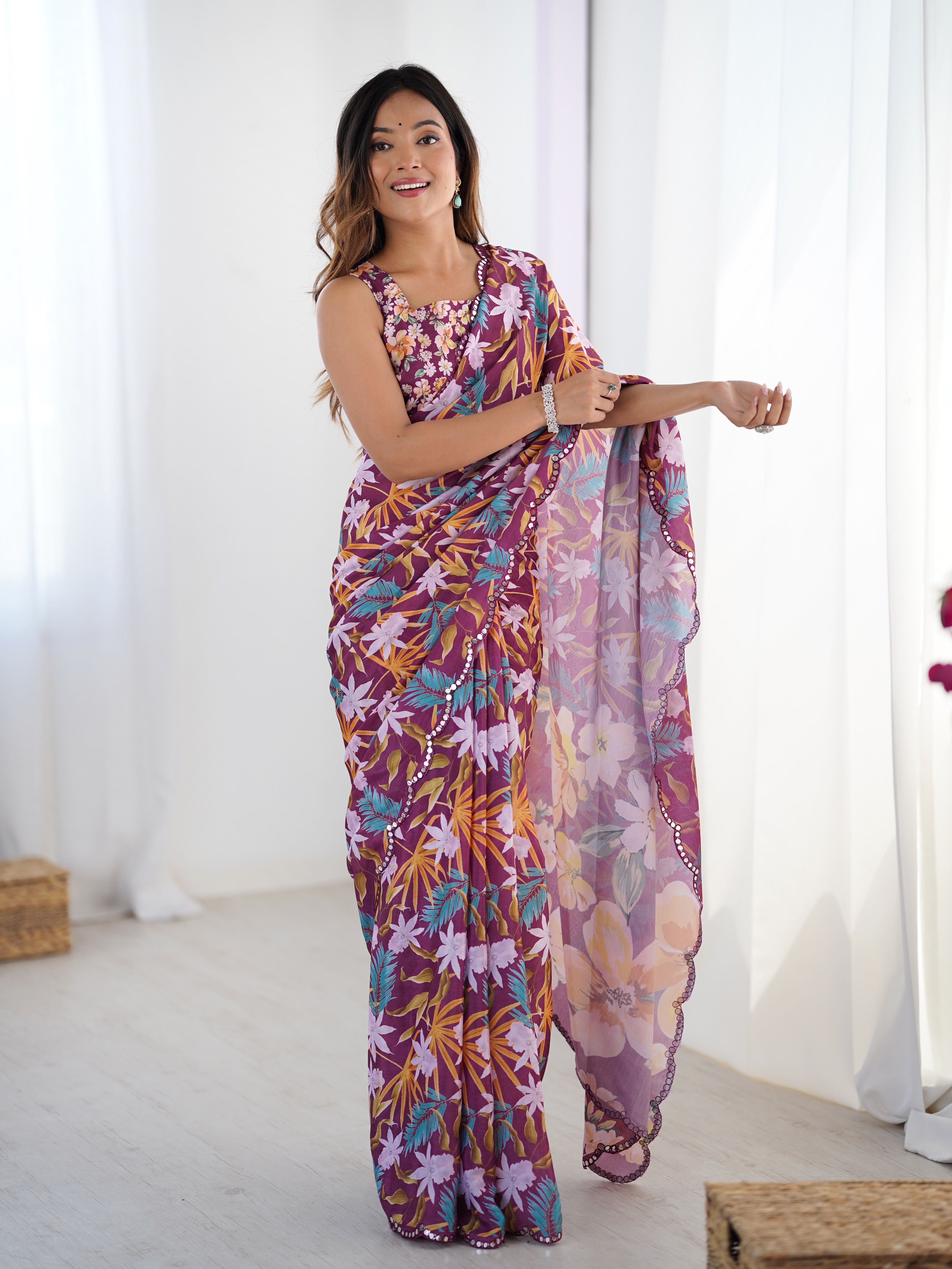
Remove pins by opening them fully rather than pulling them through the fabric. Check the saree for loose sequins, detached mirrors, makeup marks and food stains before folding it. Do not rub an embellished area aggressively because rubbing can loosen zari or mirror attachments.
Air the saree in shade for 30 to 60 minutes if it has absorbed perspiration or fragrance. Avoid direct, strong sunlight, which can fade dyes and weaken some embellishments. If a stain is oily, wet or strongly coloured, use a professional dry cleaner familiar with silk, zari and embellished Chinnon instead of applying bleach or household detergent.
Fold the saree with soft cotton or acid-free tissue between heavily embellished layers. Refold a densely decorated saree every few months so a sharp crease doesn't remain permanently in one place. Store Banarasi silk, Lichi silk and zari sarees in a breathable cotton garment bag rather than airtight plastic.
Comfort begins before the saree is draped. Selecting a supportive underskirt, checking the length with the correct shoes, distributing pallu weight and planning a short adjustment break can turn a beautiful heavy saree into a practical choice for a wedding, reception or other special occasion.
Common Questions About Wearing a Heavy Saree for Long Functions
How can I wear a heavy saree comfortably for six to eight hours?
Wear a correctly fitted underskirt, distribute the saree weight across the waist and shoulder, and secure the pleats and pallu with small, well-placed pins. Stable footwear, low-bulk inner layers and a short drape check after two or three hours also reduce fatigue.
Which petticoat is best for a heavy saree?
A firm cotton or blended underskirt with a broad, flat waistband is suitable for Banarasi silk and Lichi silk. Smooth satin or lined underskirts can work well with Chinnon, Chinon and georgette, provided the waistband stays secure without feeling restrictive.
How many pleats should a heavy saree have?
Six to eight moderately sized pleats, usually about 10 to 12 centimetres wide, are practical for many heavy sarees. The exact number depends on saree width, border thickness and the volume you prefer at the waist.
How do I stop a heavy saree pallu from slipping?
Pin the pallu at the shoulder and near the blouse underarm, leaving enough ease for arm movement. Use smooth safety pins through stronger seams or the blouse edge, and avoid placing pins directly through fragile zari, mirror work or sequins.
Are high heels suitable for wearing a heavy saree at a wedding?
Block heels or wedges between two and five centimetres are generally more comfortable and stable than narrow stilettos during a long wedding. Break in the footwear beforehand and carry cushioned flats for travel or the final part of the evening.
How should I store a heavy saree after a function?
Air the saree in shade for 30 to 60 minutes, remove pins carefully and inspect it for stains or loose embellishments. Store the saree in a breathable cotton bag with soft tissue between decorated folds, and use a specialist cleaner for silk, zari or embellished Chinnon.


