

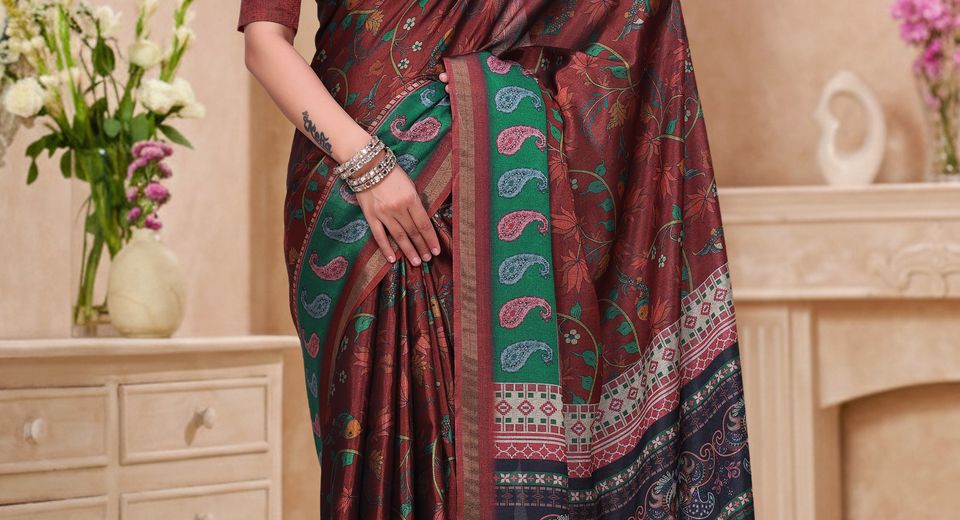
Waist Placement, Flare and Blouse Proportion for Lehengas for Petite Women determine whether a richly embellished outfit looks balanced or visually crowded. Petite women can wear broad borders, sequins, net and bridal volume successfully when the waistband, skirt length and blouse hem are placed with intention. Three practical starting points help: position the waistband at the natural waist or slightly above it, keep the finished hem just clear of the floor, and end the blouse close to the narrowest part of the torso.
Lehenga shopping often starts with colour, embroidery and the event. Fit should come first because a beautiful skirt can look shortened by a low waistband, excessive volume or a choli that ends across the widest part of the hip. A few centimetres of alteration can make more difference than changing from one colour family to another.
Waist Placement, Flare and Blouse Proportion for Lehengas for Petite Women: where should the waistband sit?
The waistband should usually sit at the natural waist or 2 to 4 centimetres above it for a longer-looking petite silhouette. A waistband placed low on the hips creates a strong horizontal division and reduces the visible length of the skirt, particularly when the blouse also extends below the waist.
The natural waist is the narrower area between the lower ribs and the upper hip bones. A well-constructed lehenga should sit securely around that point rather than rely only on a tight drawstring. Measure the waist while standing and sitting, because a comfortable seated fit generally needs around 2 to 3 centimetres of ease beyond the close standing measurement.
A high waistband should not be pulled over the fullest part of the bust or tightened until breathing becomes difficult. A band measuring approximately 4 to 6 centimetres can define the waist neatly. A very wide, contrasting belt may shorten the torso visually, so a tonal waistband or a narrower embellished strip is often easier to balance.
How can you check waistband height before buying?
Wear the shoes planned for the event, tie a thin ribbon at the natural waist and measure from that line to the floor. Compare the measurement with the garment's finished length, including the waistband and hem border. A semi-stitched lehenga should be altered from the top whenever possible, so the tailor can preserve the embroidery at the hem.
Waist placement also affects dupatta styling. A dupatta tucked at the natural waist reinforces the high-waisted line, whereas a wide fold across the stomach creates another horizontal division. A slim tuck, a shoulder drape or a narrow front fall usually keeps the centre of the outfit visually open.
Waist Placement, Flare and Blouse Proportion for Lehengas for Petite Women: how much flare is practical?
A moderate flare generally gives a petite woman movement without allowing the skirt to overpower her frame. A circumference of about 2.5 to 3.5 metres is often easier to balance than a very wide 4.5-metre or 5-metre bridal flare, although the wearer's proportions, fabric and desired drama remain important.
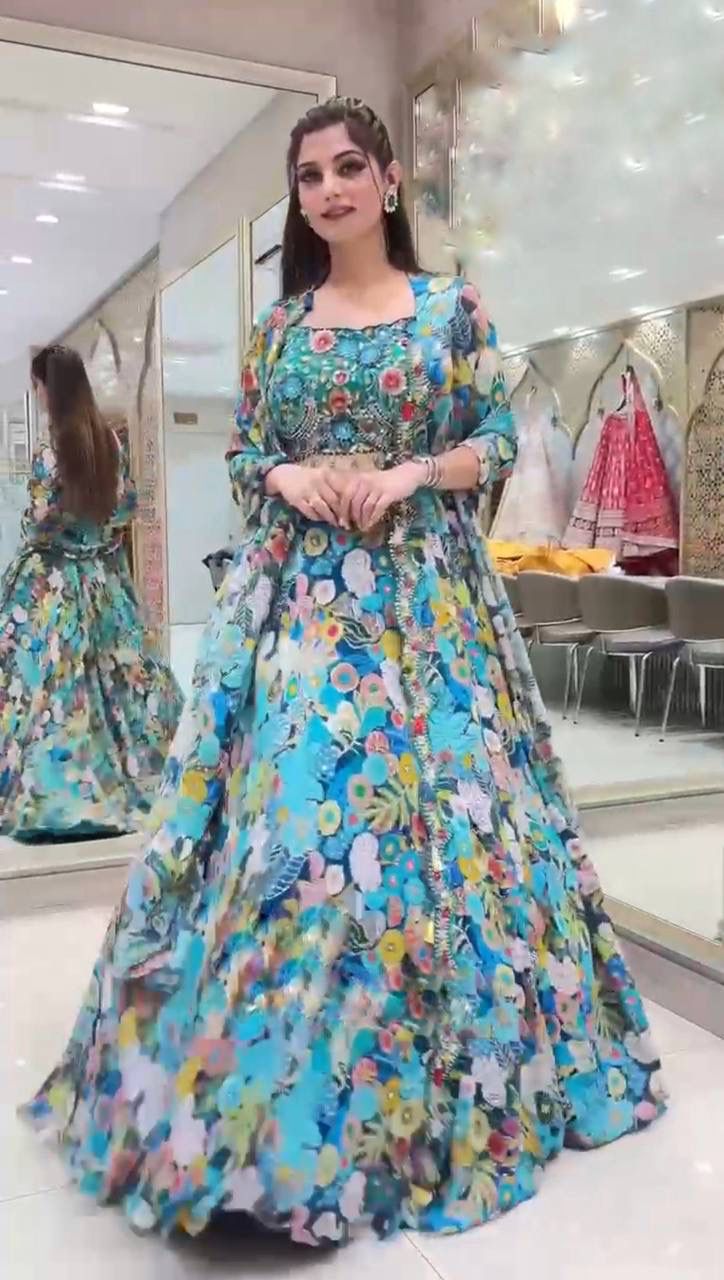
Heavy flare isn't automatically unsuitable for petite women. The starting point of the flare matters more than the headline measurement. A skirt that stays relatively close from the waistband to mid-thigh and opens below the knee creates a gradual A-line. A skirt that expands immediately below the waistband adds width around the hips and can make the torso look shorter.
Blue Floral Georgette Lehenga Set with Heavy Flare shows why fabric must be considered alongside circumference. Georgette falls softly, allowing a wide skirt to move rather than stand rigidly away from the body. Pink Bridal Sequins Lehenga Set with Heavy Flare creates a more formal bridal effect; a clean blouse, restrained dupatta arrangement and limited shoulder volume can keep its fullness controlled.
Which fabrics help control a full lehenga?
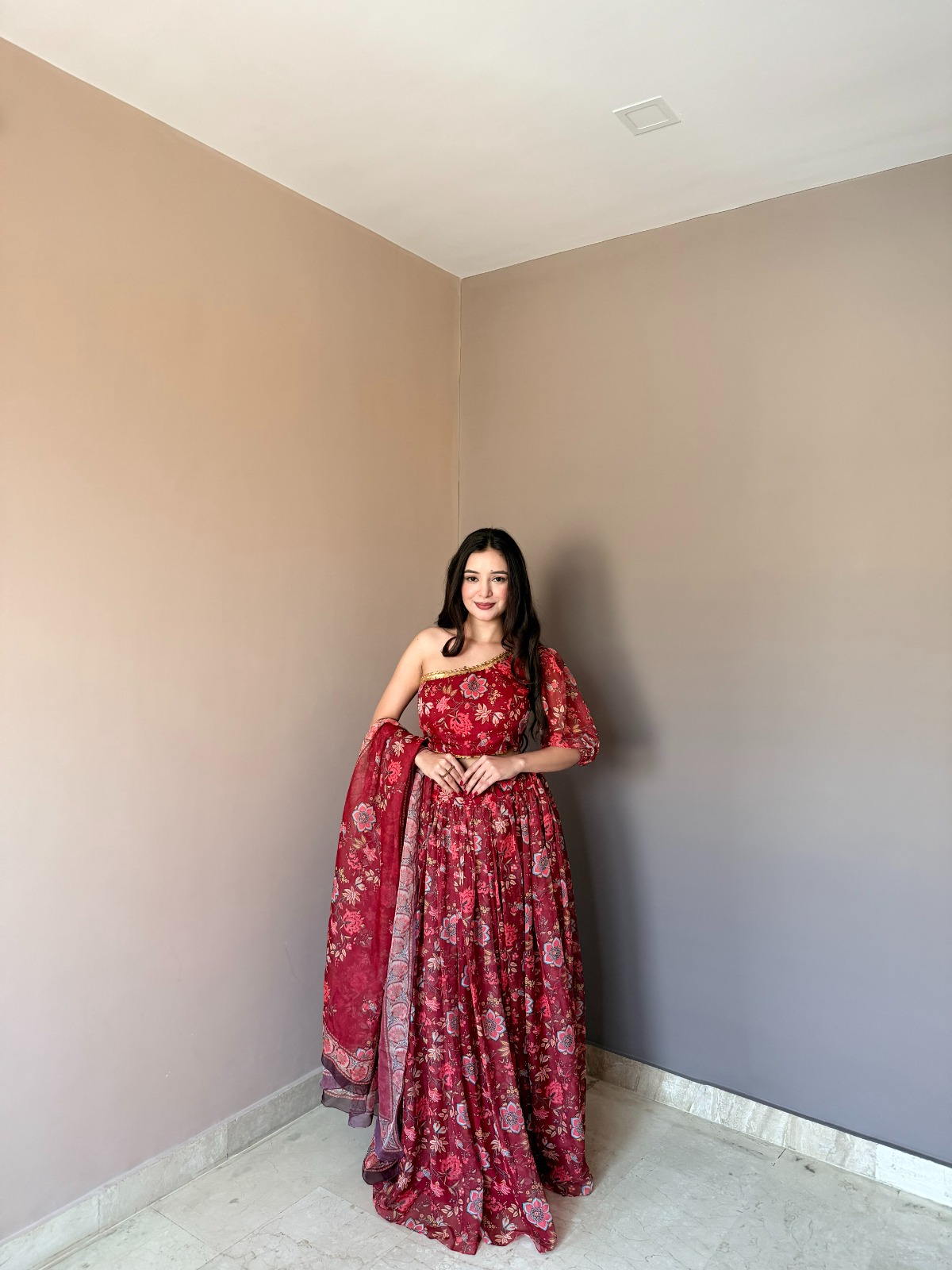
Georgette and lightweight silk usually create a fluid line, while organza and layered net produce more structured volume. Red Floral Organza Lehenga Set with One Shoulder Blouse has an architectural quality that can look elegant on a petite frame when the blouse remains fitted and the skirt isn't left excessively long. Butterfly net creates a soft, airy effect, but multiple layers can add width, so check the lining and hem construction before purchasing.
Can-can should be treated as a construction choice rather than a minor styling detail. Can-can lifts the hem and increases the skirt's circumference, which may require a slightly shorter finished length. One moderate support layer is often easier for a petite wearer to manage than several stiff layers that push the skirt away from the body.
Waist Placement, Flare and Blouse Proportion for Lehengas for Petite Women: what blouse length works?
A blouse that ends at the natural waist or 1 to 2 centimetres above the waistband usually preserves a longer-looking lower-body line. A choli that extends over the high hip can make the skirt appear truncated, while an extremely short blouse can expose a broad midriff gap and create another strong horizontal break.
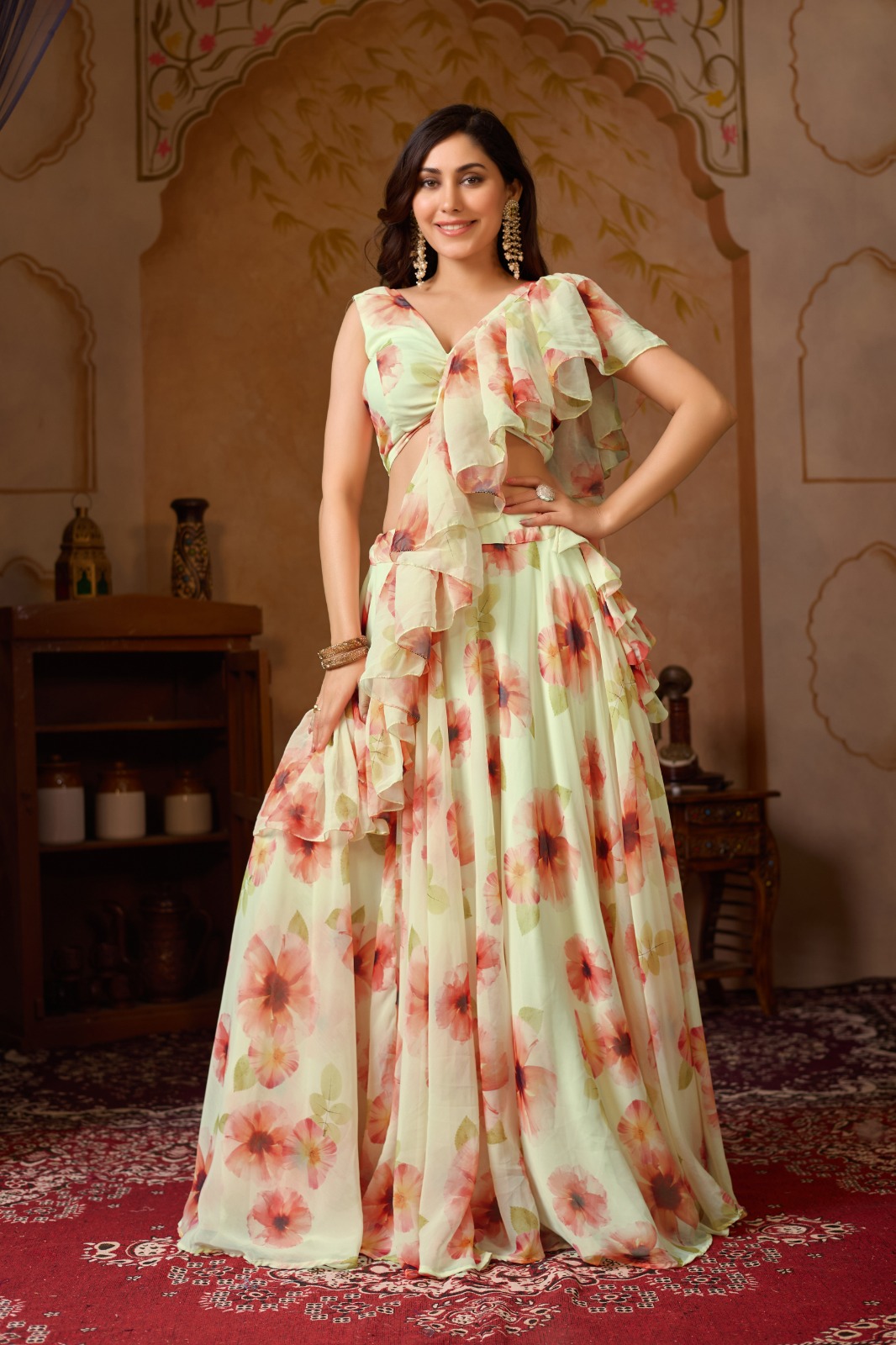
Measure the blouse from the shoulder point to the finished hem while wearing the bra or innerwear intended for the event. The correct length depends on torso length, bust proportion and waistband width, so a fixed rule such as "all petite women need a crop blouse" is unreliable. The blouse should finish at a clean, narrow area rather than across the widest part of the abdomen or hip.
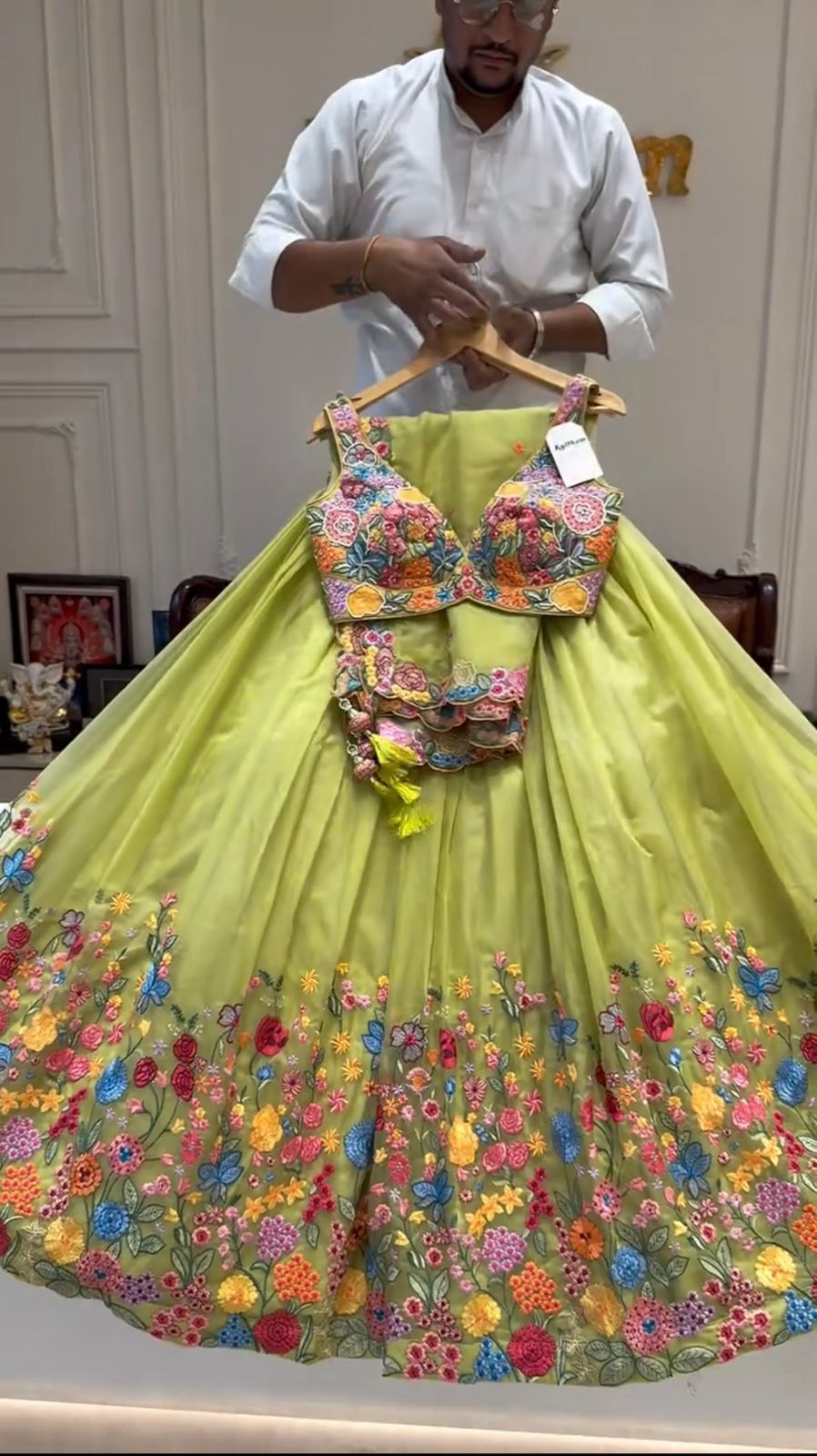
Pastel Floral Georgette Lehenga Set with Ruffle Blouse demonstrates how upper-body decoration affects proportion. Ruffles draw attention outward, so a defined waist and a relatively simple skirt can prevent the outfit from looking broad. Lime Floral Embroidered Butterfly Net Lehenga Set creates a lighter visual effect; a fitted sleeveless, narrow-strap or close short-sleeved blouse can keep the centre line visible.
Can a longer choli work on a petite woman?
A longer choli works when it ends cleanly above the hip and doesn't merge visually with the skirt. A long blouse can be useful for fuller bust coverage, comfort or a contemporary silhouette, but its hem should not sit at the widest hip point. Vertical seams, a V neckline and narrow piping can help a longer choli retain definition.
One-shoulder designs can also work well because an asymmetric neckline avoids a broad straight line across the chest. Red Floral Organza Lehenga Set with One Shoulder Blouse illustrates that approach. Keep the sleeve, shoulder embellishment and dupatta arrangement relatively disciplined if the skirt already has substantial flare.
Waist Placement, Flare and Blouse Proportion for Lehengas for Petite Women: how should embroidery and colour be used?
Embroidery that travels vertically or follows the body's shape generally supports a longer visual line better than a very wide horizontal band. Narrow floral trails, spaced motifs and tone-on-tone sequins allow the eye to move from the blouse towards the hem.
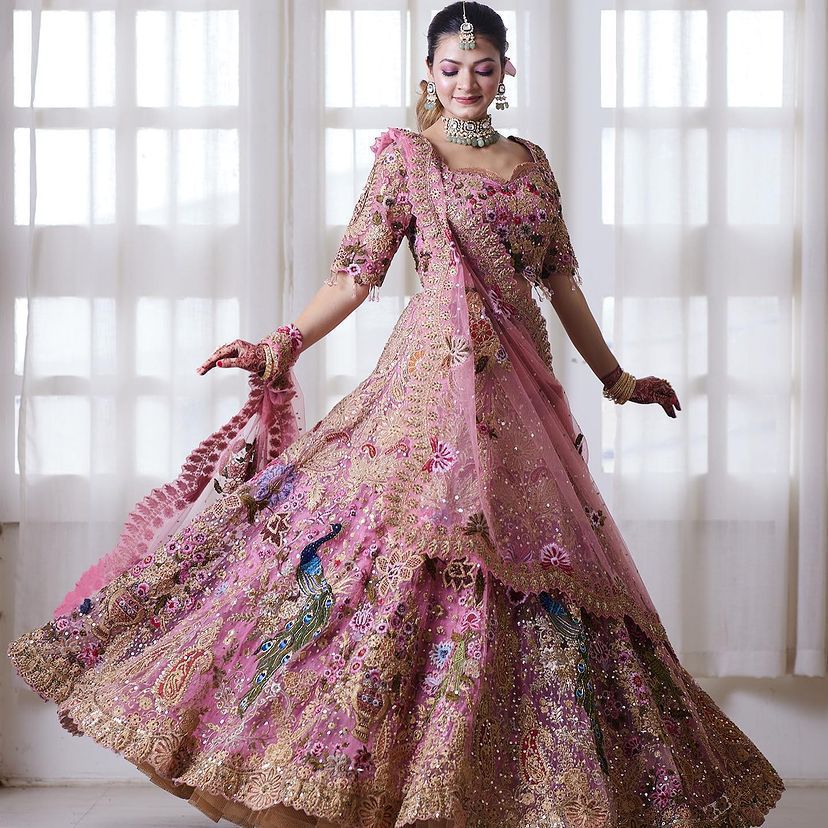
A strong hem border is still possible, but its depth matters. A border measuring 10 to 15 centimetres can shorten a skirt that's already close to the minimum wearable length. A narrower border, a similar-colour border or a border broken by vertical motifs usually blends more smoothly with a petite frame.
Cream Peacock Embroidered Net Lehenga Set for Women has a pale base with ornate surface detail. A petite wearer can balance the decoration by avoiding a very contrasting waist belt and choosing jewellery that doesn't create a second large band around the neck. Repeating one embroidery colour in the blouse and dupatta can make the outfit feel connected.
Colour blocking changes proportion because a sharp blouse-skirt contrast separates the body into two sections. A blouse and skirt in related shades create a more continuous column. For a Haldi ceremony, Yellow Lehengas can be paired with marigold, lemon or muted mustard tones when a taller-looking line is the priority. Green Lehengas and Mehendi Lehengas offer similar options through tonal emerald, leaf, olive and sage combinations.
Waist Placement, Flare and Blouse Proportion for Lehengas for Petite Women: which construction suits the occasion?
The best lehenga construction depends on how long the outfit must be worn, how much movement is required and whether the wearer needs substantial alterations. A bridal lehenga can carry more zari, sequins and net, but the combined weight of skirt, lining, can-can and dupatta should be checked before purchase.
A readymade set is convenient when the waist, blouse and length are already close to the wearer's measurements. During fully stitched choli shopping, check bust coverage, hook placement, seam allowance, cup positioning and whether the side seams can be opened. A blouse that fits the bust but has no alteration allowance can be more difficult to correct than a slightly generous blouse with usable side seams.
Pink Sequins Embroidered Butterfly Net Lehenga Set can suit a festive or reception wardrobe when sparkle is desired without a very broad, heavy hem. Wine Pink Embroidered Silk Lehenga Set Online offers a richer silk-led direction; silk can hold shape beautifully, but the buyer should check the skirt weight and make sure the waistband is reinforced.
Ready Made Lehenga options are most useful when the size chart provides garment measurements rather than only body-size labels. Compare the waist, skirt length, blouse length, bust and hip measurements with a well-fitting outfit at home. A difference of 2 centimetres may be alterable, while a skirt that's 10 centimetres too short can't always be lengthened without changing the border.
A semi-stitched lehenga is often the most adaptable choice for a petite woman because a tailor can adjust waist placement, skirt length and side fit together. Semi Stitched Lehengas Collection can work particularly well for wedding shopping when the wearer wants a designer finish but needs control over the finished proportions.
Waist Placement, Flare and Blouse Proportion for Lehengas for Petite Women: what should you check before the event?
Before the event, check the complete outfit with the final blouse, footwear, innerwear, dupatta and jewellery. A lehenga that looks balanced on a hanger may sit differently once the waistband is fastened and the blouse is worn with its intended support.
Stand naturally and confirm that the waistband stays at the selected height without rolling or slipping.
Walk up stairs, sit on a chair and take several steps to test whether the hem catches under the shoes.
Raise both arms to check that the blouse doesn't pull across the bust or lift the waistband.
Inspect the side seams, hooks, zip and lining at least one week before the function so alterations are not rushed.
Use a garment bag for travel and avoid compressing a net or can-can skirt under heavy luggage.
Footwear should be finalised before the last hem alteration. A petite wearer may gain height from a 5 to 7 centimetre heel, but comfort is more valuable than an extreme heel that changes posture and causes the skirt to drag at the back. The finished hem should clear the floor by about 1 to 2 centimetres with the planned shoes on.
Proportion also includes the dupatta and jewellery. A narrow front drape, a defined waist and earrings that follow the neckline can keep attention moving vertically. If the skirt is heavily embellished, avoid adding a very wide waist belt, a broad contrasting dupatta fold and a large necklace together, because three strong horizontal or clustered details can overwhelm a shorter frame.
The most reliable approach to Waist Placement, Flare and Blouse Proportion for Lehengas for Petite Women is to make one proportion the focus and keep the others controlled. A high waist can support a fuller skirt; a dramatic skirt can work with a simpler blouse; and a heavily worked blouse usually benefits from a clean, uninterrupted skirt line. These choices create balance without limiting a petite woman to plain or understated lehengas.
Common Petite Lehenga Fit Questions About Waist, Flare and Blouse Length
Where should a lehenga waistband sit on a petite woman?
A lehenga waistband should usually sit at the natural waist or 2 to 4 centimetres above it. The waistband should feel secure without pressing into the ribs, and the finished skirt length should be measured with the event footwear.
Is a heavy-flare lehenga suitable for a petite woman?
A heavy-flare lehenga can suit a petite woman when the flare begins below the upper hip and the blouse remains clean and fitted. Softer georgette is generally easier to balance than several stiff net or can-can layers.
What blouse length makes a petite lehenga look balanced?
A blouse ending at the natural waist or slightly above the waistband often creates the longest-looking line. A longer choli can also work when it ends above the widest part of the hip and has clear vertical shaping.
Are readymade lehengas practical for petite women?
Readymade lehengas are practical when the waist, blouse, skirt length and seam allowance are close to the wearer's measurements. Always compare garment measurements with a well-fitting outfit and confirm whether the waistband and blouse can be altered.
How long should a lehenga skirt be with heels?
The finished hem should generally clear the floor by about 1 to 2 centimetres when the planned footwear is worn. Finalise the shoes before hemming so the skirt does not drag or expose too much of the ankle.
Which lehenga style works for a petite bridal outfit?
A petite bridal outfit usually benefits from a defined waist, gradual flare, controlled blouse length and embroidery that does not form several broad horizontal bands. A semi-stitched design can provide more control over these proportions than a fixed-size set.


