

Waist Placement, Flare and Blouse Proportion for Lehengas for Hourglass Figures determine whether a lehenga follows the body gracefully or creates pulling, bunching and unnecessary volume. A defined waist, balanced shoulders and hips, and a fuller bust need deliberate garment proportions rather than simply choosing a larger size. The most reliable approach is to measure the natural waist, compare the skirt rise with the blouse hem, and select flare according to the fabric and event.
A good lehenga should feel secure when standing, walking, sitting and dancing. The waistband should support the skirt without digging into the stomach, the blouse should remain level across the bust, and the skirt should release below the hips instead of gripping them. Those details matter more than a size label or a heavily decorated photograph.
Waist Placement, Flare and Blouse Proportion for Lehengas for Hourglass Figures: why the three elements work together
The three elements work together because a lehenga has three visible zones: the blouse, the waistband and the skirt. An hourglass figure usually looks balanced when the waistband sits at the narrowest comfortable part of the torso, the blouse ends near the upper waist, and the skirt opens smoothly below the hips.
A waistband that sits too high can compress the bust and make the blouse appear unusually short. A waistband that drops too low can lengthen the torso visually and place fullness across the lower abdomen. A very cropped choli paired with a high, embellished waistband can also create a crowded middle section when both pieces contain dense zari, sequins or embroidery.
Lehenga styling for an hourglass figure doesn't require hiding curves. The practical objective is control: the garment should follow the waist without digging in, skim the hips without horizontal drag lines, and release enough fabric for comfortable movement.
Before shopping, record four measurements separately: full bust, natural waist, fullest hip and shoulder-to-waist length. A fifth measurement, the shoulder-to-floor length with footwear, helps determine skirt length. Separate measurements are more useful than assuming that a person with a medium bust also needs a medium waist and medium hip.
Waist Placement, Flare and Blouse Proportion for Lehengas for Hourglass Figures: selecting the waistband height
Where should the lehenga waistband sit?
The lehenga waistband should generally sit at the natural waist or one to two centimetres below it, depending on blouse length and personal comfort. The natural waist is the narrowest area between the lower ribs and the top of the hip bones, not necessarily the point where a favourite pair of jeans sits.
Measure the natural waist while standing normally, keeping the tape level and comfortably close to the body. Do not pull the tape tight because a fitted lehenga needs breathing room for sitting and eating. For a waistband with a firm lining, approximately one to two centimetres of wearing ease is often more comfortable than an exact body measurement.
Does a high-waisted lehenga suit an hourglass frame?
A high-waisted lehenga suits an hourglass frame when the waistband rests close to the natural waist and the blouse provides enough coverage over the bust. A high waist can lengthen the legs, but an excessively high waistband can make a fuller bust appear compressed.
A slightly lower waist can suit a long torso or a wearer who prefers more midriff coverage. The lower placement should remain above the widest point of the hips; a waistband sitting directly across the hip can create pressure and make the skirt fall unevenly.
Check waist placement while standing and sitting. A waistband that looks elegant in a standing photograph may roll, dig in or expose more midriff when the wearer sits on the floor during a Haldi ceremony or travels between wedding venues.
Waist Placement, Flare and Blouse Proportion for Lehengas for Hourglass Figures: choosing skirt volume
How much flare suits a balanced, curvy silhouette?
Moderate to heavy flare suits an hourglass figure when the waistband and hip area are fitted smoothly and the skirt opens below the fullest part of the hips. Flare should create movement from the waist down rather than add stiff bulk at the waistband.
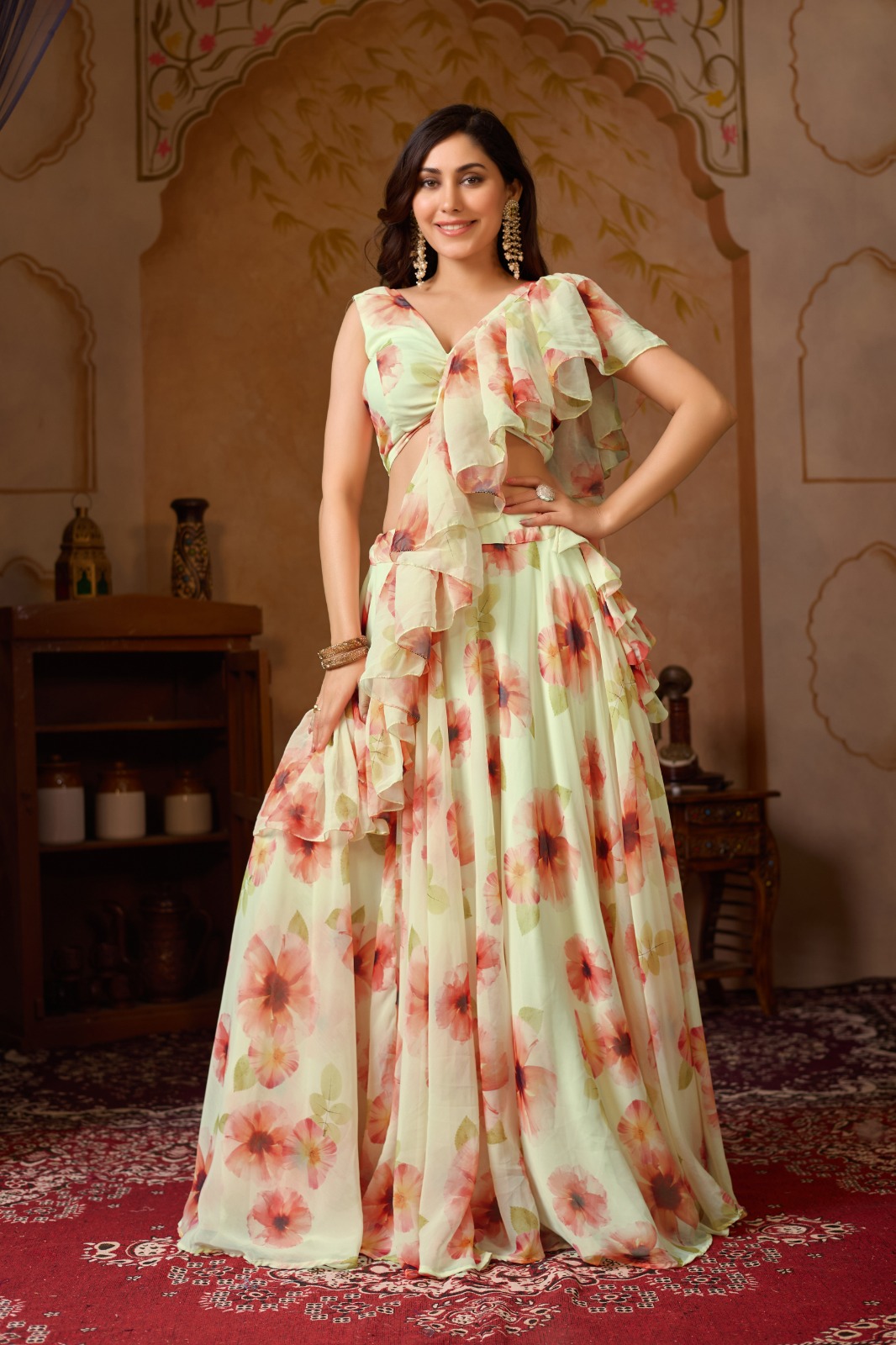
For a day function, a lighter georgette or net skirt with approximately three to five metres of gathered fabric can provide movement without becoming difficult to manage. A dramatic bridal skirt may use considerably more fabric, but the quality of the can-can, lining and waistband construction matters as much as the total flare.
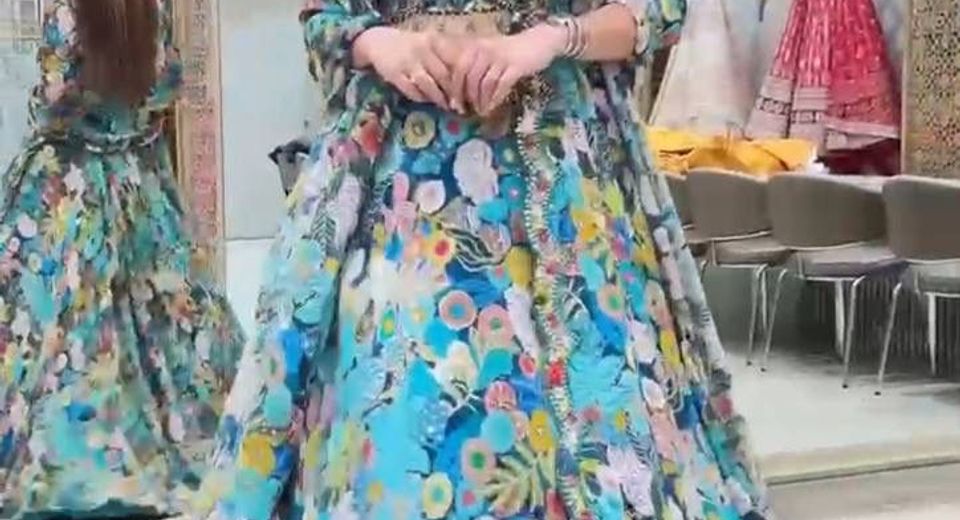
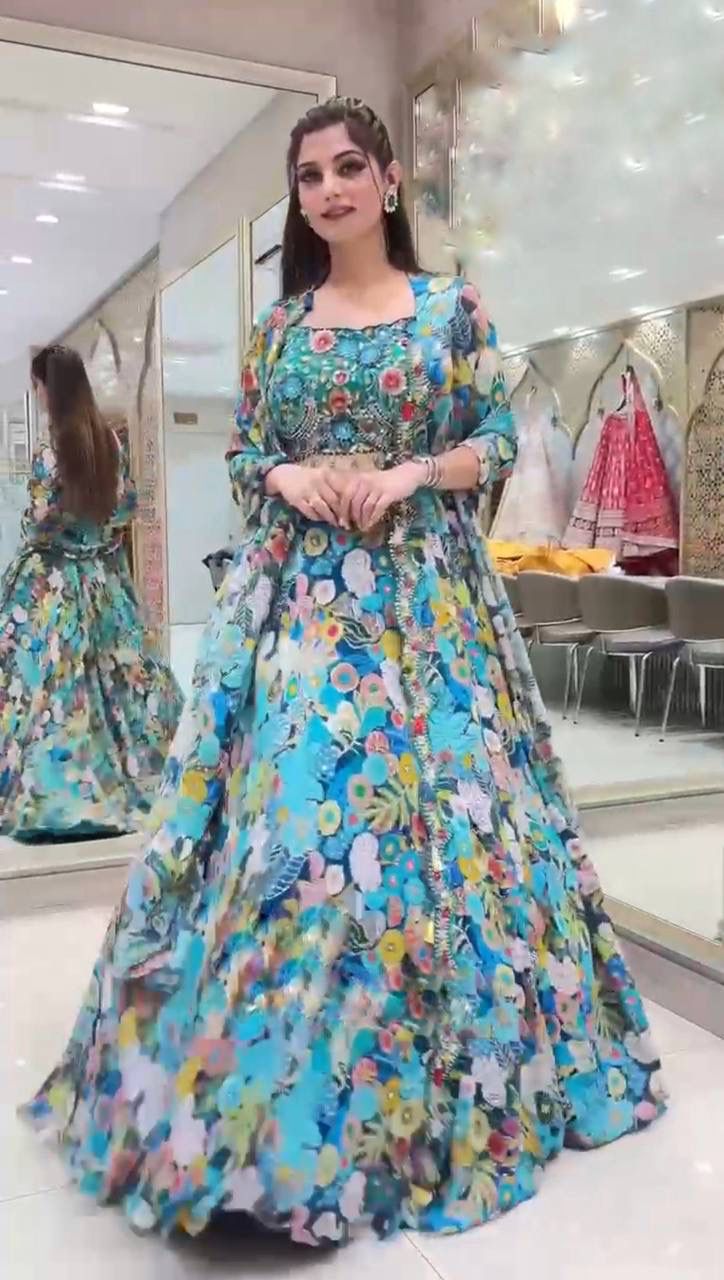
Heavy flare is visible in Blue Floral Georgette Lehenga Set with Heavy Flare and Pink Bridal Sequins Lehenga Set with Heavy Flare. Both examples suggest skirts that need stable waist construction and enough petticoat or lining support so the flare opens below the hips rather than standing stiffly around the torso.
How does fabric change the appearance of flare?
Georgette creates a softer, fluid flare, while butterfly net and organza hold a more structured outline. Sequins, dense embroidery and layered linings add weight, so a heavily embellished skirt may need a slightly firmer waistband and careful adjustment at the side seams.
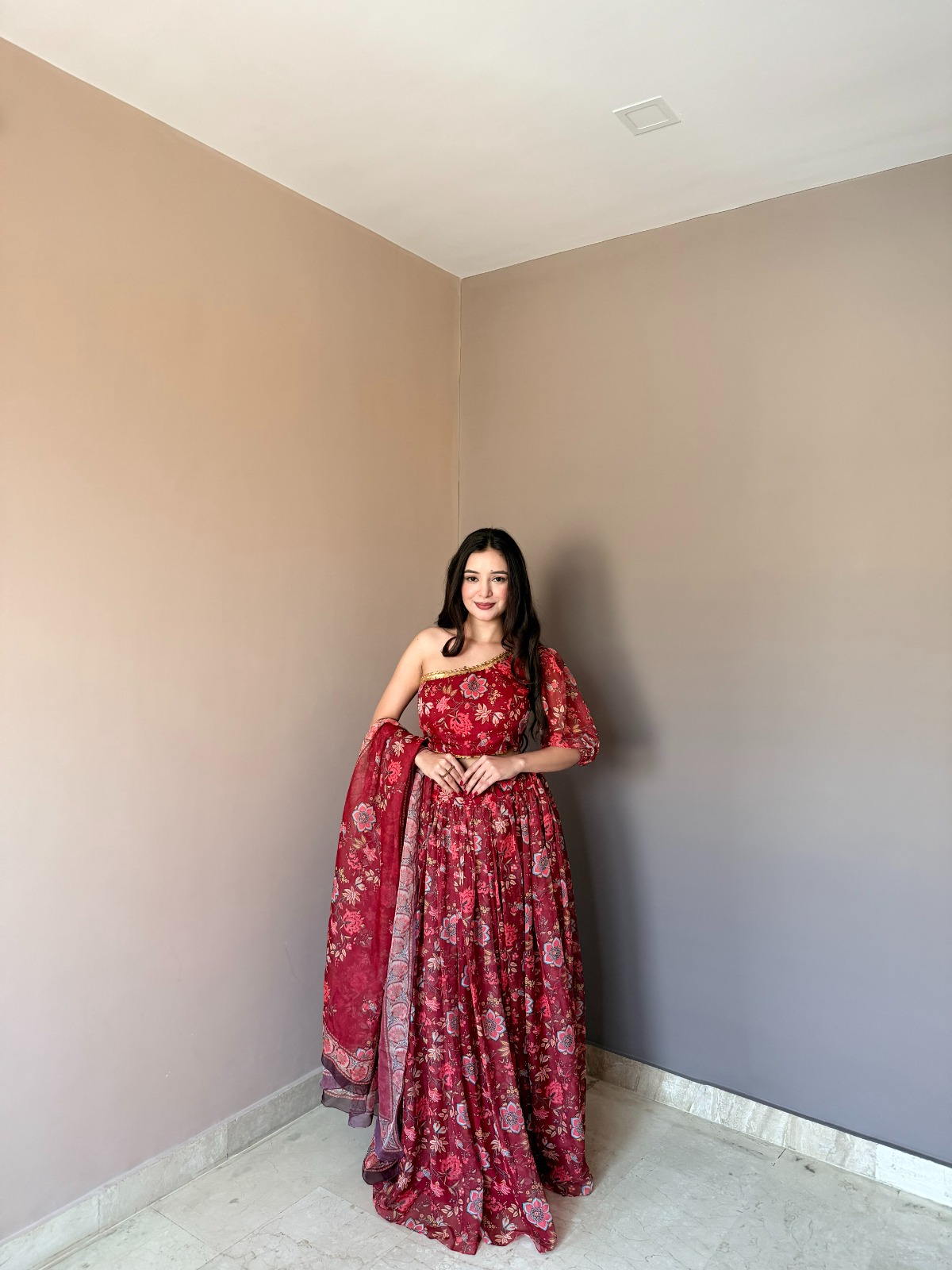
Red Floral Organza Lehenga Set with One Shoulder Blouse illustrates why fabric and neckline should be considered together. Organza can project away from the body, while a one-shoulder blouse already creates emphasis near the upper torso. A controlled skirt flare and a clean waistline keep the complete outfit balanced.
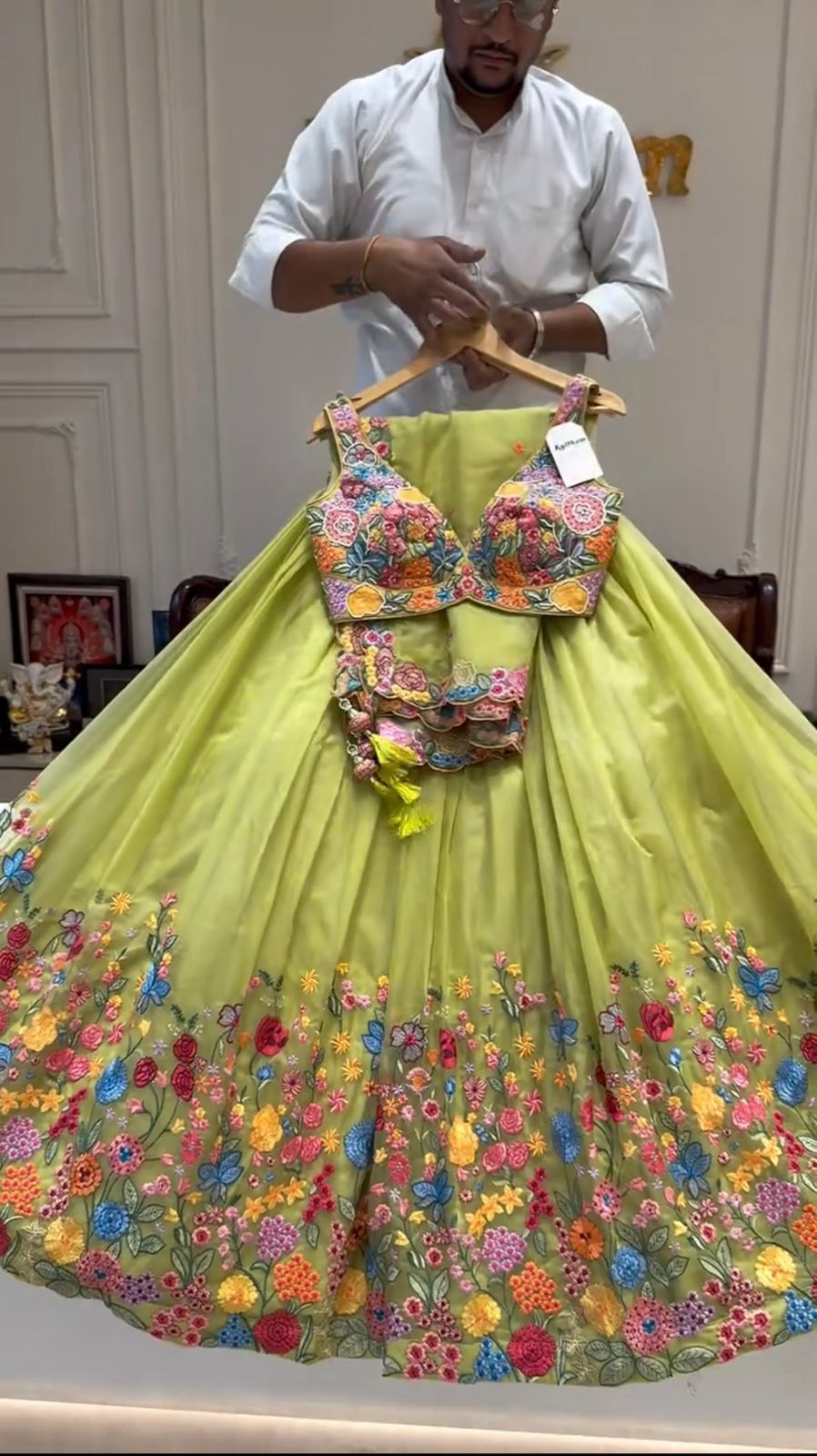
Lime Floral Embroidered Butterfly Net Lehenga Set can suit a festive look where structured flare is desirable. Check whether the net layers sit comfortably over the hips and whether the lining has enough room for walking without pulling across the thighs.
Very large flare isn't automatically more flattering. A stiff skirt that begins widening at the high hip can make the lower body look wider than intended, while a softer skirt that begins its expansion a few centimetres lower can create a longer, smoother line.
Waist Placement, Flare and Blouse Proportion for Lehengas for Hourglass Figures: getting blouse length right
What blouse length is most flattering for an hourglass figure?
A blouse that ends at the natural waist or just below the narrowest waist point usually creates the clearest hourglass proportion. The ideal length depends on bust depth, torso length, waistband height and the amount of midriff coverage the wearer wants.
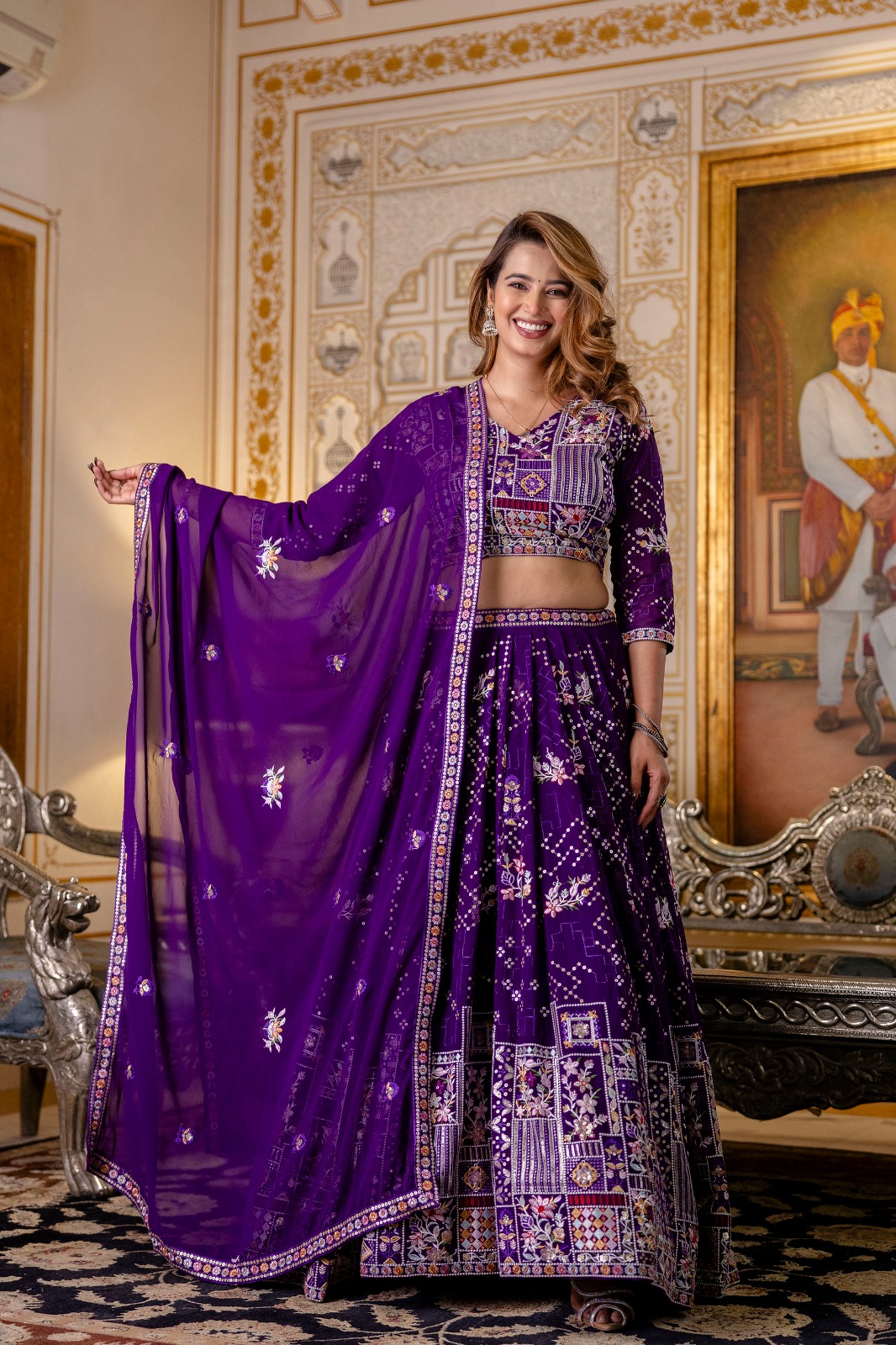
Measure blouse length from the highest point of the shoulder, over the fullest part of the bust, to the intended hem. Measuring only down the front of the body can produce a blouse that's too short at the bust or too long at the back. A fuller bust often needs extra front length even when the side seam remains relatively short.
A blouse hem that finishes at the waistband creates a continuous line between choli and skirt. A hem ending several centimetres above the waistband reveals more midriff and can look contemporary, but the gap should remain consistent around the body. A hem that rises at the front because of bust projection usually indicates that the blouse needs additional length or a better bust adjustment.
Which neckline and sleeve proportions work well?
V-necks, square necks and gently curved sweetheart necklines can complement an hourglass frame by opening the upper body without adding excessive width. A high neckline can also work, particularly with a long-sleeved blouse, but heavy embroidery around the neck may make the bust area look denser.
Shoulder width should follow the wearer's actual shoulder rather than being increased to match the skirt's drama. The one-shoulder blouse paired with Red Floral Organza Lehenga Set with One Shoulder Blouse creates asymmetry, so keeping the skirt border and dupatta placement calm can prevent visual imbalance.
Elbow-length or three-quarter sleeves can provide structure without cutting across the fullest part of the upper arm. Very tight sleeves may pull the blouse upward, while very loose sleeves can make a fitted waist look less defined. Sleeve comfort matters during dancing, greeting guests and lifting the arms for photographs.
Waist Placement, Flare and Blouse Proportion for Lehengas for Hourglass Figures: buying ready-made and semi-stitched styles
Ready-made lehenga shopping is safest when the product measurements include the waistband, blouse bust, blouse waist, skirt length and garment rise. A label such as medium or large can't replace those measurements because Indian size charts vary widely between sellers.
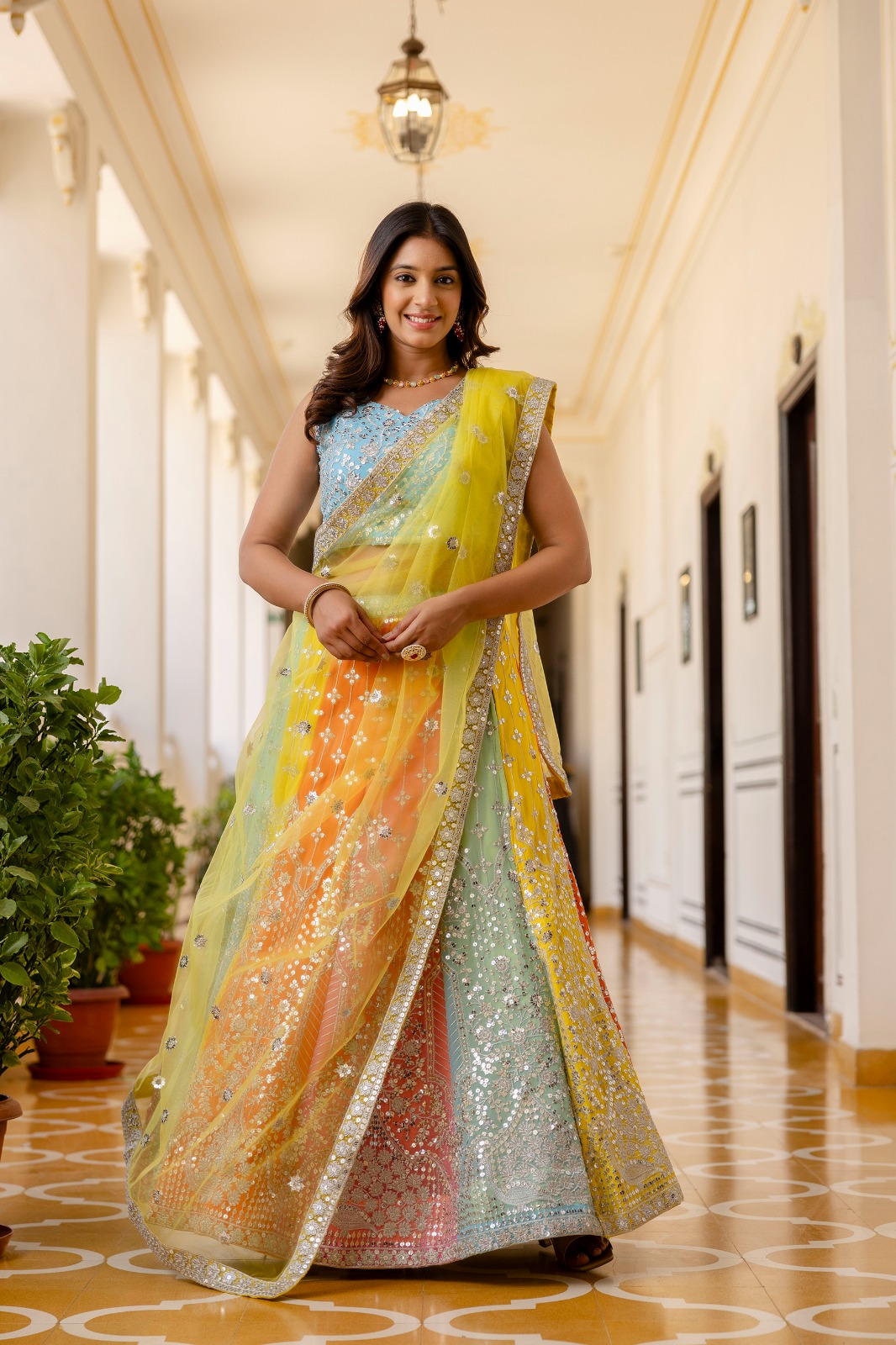
A fully stitched choli is convenient when the bust and shoulder measurements closely match the garment chart. Check whether the side seams contain extra margin before ordering; a small alteration allowance can make the difference between a secure fit and uncomfortable strain across the bust.
Ready Made Lehenga styles can be useful for time-sensitive wedding shopping because the construction is already assembled. Confirm whether the blouse has adjustable hooks, whether the skirt has a drawstring or fixed waistband, and whether the hem can be shortened without disturbing the border.
Semi Stitched Lehengas Collection offers more flexibility for an hourglass figure because the blouse and skirt can often be tailored around separate bust, waist and hip measurements. Semi-stitched garments are not automatically a perfect fit, however. A skilled tailor must still establish the bust point, dart position, waistband height and skirt flare.
Ask the tailor to fit the blouse while wearing the bra and shapewear intended for the event. Different undergarments can alter bust projection by several centimetres, changing the required blouse length and neckline position.
For online shopping, compare the garment's actual measurements with a well-fitting blouse and skirt already in the wardrobe. Photographing the tape measure beside the existing garment can prevent mistakes caused by confusing body measurements with finished-garment measurements.
Waist Placement, Flare and Blouse Proportion for Lehengas for Hourglass Figures: matching proportion to the event
Colour doesn't change physical fit, but colour placement changes where the eye notices width and length. A darker or quieter waistband can make a heavily embellished skirt feel more grounded, while a bright border at the hem draws attention to the flare and footwear.
For a Mehendi ceremony, green and yellow palettes connect naturally with the setting and photographs. Mehendi Lehengas and Green Lehengas can support a lively outfit, but a dense floral waistband should be balanced with a simpler blouse hem if the wearer wants a longer, cleaner torso line.
Yellow Lehengas work well for Haldi ceremony dressing when the fabric remains comfortable in warm weather. A lighter blouse lining, secure shoulder construction and a skirt that doesn't drag through turmeric or outdoor surfaces are more practical than choosing maximum volume.
Bridal dressing can handle more flare and embellishment because the event supports a grander silhouette. Red Butterfly Net Sequins Lehenga Set Wedding Wear and Pink Sequins Embroidered Butterfly Net Lehenga Set show why a structured skirt needs a stable waistband, smooth lining and enough room for movement.
For a reception or evening wedding, Cream Peacock Embroidered Net Lehenga Set for Women and Pastel Grey Embroidered Butterfly Net Lehenga Set offer softer visual directions. With pale or reflective surfaces, seam pulling can be more visible in photographs, so the bust and waist fit should be checked under direct light before final alterations.
Waist Placement, Flare and Blouse Proportion for Lehengas for Hourglass Figures: a fitting checklist before the event
A final fitting should confirm comfort in motion, not just appearance while standing. Wear the intended footwear and undergarments, then test sitting, climbing stairs, raising both arms and taking at least ten normal walking steps.
- Waistband: Confirm that the waistband stays level and allows comfortable breathing when seated.
- Blouse bust: Check for diagonal drag lines, gaping at the armhole and strain at the hook or zip.
- Blouse hem: Make sure the hem remains parallel to the floor and doesn't rise sharply over the bust.
- Hip fit: Check that the lining doesn't pull across the fullest hip or restrict walking.
- Flare: Walk in a full circle to see whether the skirt opens evenly and whether the can-can catches on the feet.
- Length: Keep the skirt approximately one to two centimetres above the floor when wearing the event footwear, unless the design specifically requires another finish.
- Dupatta: Secure the dupatta at the shoulder and waist so its weight doesn't pull the blouse out of position.
Small alterations usually produce better results than dramatic last-minute changes. A tailor can often adjust a waistband, add hooks, reposition a strap or release a side seam, but reducing a heavily embellished skirt or changing a neckline shortly before a wedding may damage the design.
The most dependable choice combines a natural-waist placement, a blouse hem that follows the bust without rising, and flare that begins smoothly below the hips. Those three decisions make a ready-made, fully stitched or designer lehenga look considered while preserving the comfort required for a long celebration.
Common Questions About Lehenga Proportions for Hourglass Figures
Where should a lehenga waistband sit on an hourglass figure?
A lehenga waistband should usually sit at the natural waist or one to two centimetres below it. The correct position should feel secure without digging in, and it should remain level while standing and sitting.
Is a heavy-flare lehenga suitable for a curvy or hourglass body shape?
A heavy-flare lehenga can suit an hourglass body shape when the waistband and hip area fit smoothly and the skirt opens below the fullest part of the hips. A stable waistband, supportive lining and comfortable can-can are important for movement.
What blouse length works best with a high-waisted lehenga?
A blouse ending at the natural waist or just below the narrowest waist point usually works best with a high-waisted lehenga. The front length may need extra allowance over a fuller bust so the hem stays level.
What should I check when buying a fully stitched choli online?
Check the finished bust, waist, shoulder, armhole and blouse-length measurements rather than relying only on the size label. Also confirm whether the side seams have alteration margin and whether the hooks or zip provide a secure, comfortable fit.
Are semi-stitched lehengas better for hourglass figures?
Semi-stitched lehengas can offer better adjustment for separate bust, waist and hip measurements, but they still require skilled tailoring. The tailor should check the bust point, dart position, waistband height, blouse hem and skirt flare.
How should I choose lehenga length for wedding footwear?
Choose the lehenga length while wearing the footwear planned for the event. In most cases, the skirt should finish approximately one to two centimetres above the floor so the hem does not catch under the feet.


