

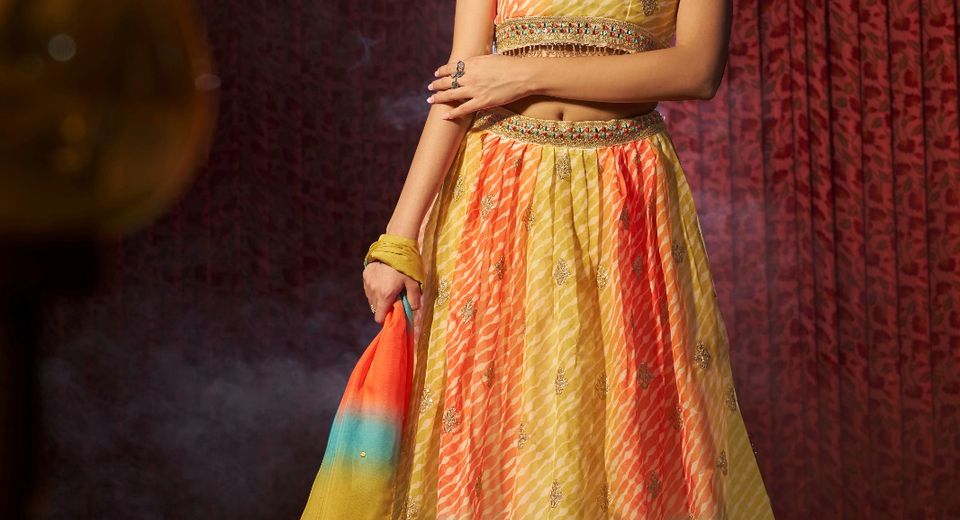
Waist Length and Hip Room Measurements for Lehenga Measurements for Online Shopping determine whether a beautiful lehenga sits comfortably or needs extensive alteration. A catalogue size is only a starting point: your natural waist, fullest hip, preferred waistband position, skirt length, blouse measurements and the garment's construction all affect the final fit. The most reliable approach is to take fresh body measurements, compare them with the seller's measurement chart and identify which parts can actually be altered.
Online lehenga shopping becomes easier when you separate three measurements that are often confused: waist circumference, hip circumference and skirt length. A readymade lehenga normally offers fixed construction with limited adjustment, while a semi-stitched lehenga provides more scope for fitting. A fully stitched choli may still require tailoring because bust, shoulder, armhole and back measurements vary independently.
Waist Length and Hip Room Measurements for Lehenga Measurements for Online Shopping: what does a size chart mean?
A lehenga size chart normally describes either the body measurement a garment is designed to fit or the finished garment measurement, so you must identify which system the seller uses before selecting a size. The waist, hip, length and blouse figures are not interchangeable.
The natural waist is usually the narrowest part of the torso, located above the navel. But a lehenga may sit at the natural waist, slightly below it or at a higher bridal waistband. Measure the actual wearing position rather than automatically using the narrowest point. A waistband that sits two inches below the natural waist requires a different circumference.
Hip circumference is measured around the fullest area of the hips and seat, with the tape kept parallel to the floor. "Hip room" may refer to the finished garment measurement rather than the body measurement. If a chart lists a 40-inch hip, check whether the number describes the body it fits or the lehenga after stitching.
Lehenga length is measured from the top edge of the waistband to the hem. Some sellers measure from the waist seam, while others measure from the waistband's upper edge. A two-inch difference can affect whether the skirt clears the floor, covers the footwear or exposes the underskirt. Ask for the measurement method when the listing doesn't explain it.
How much ease should a lehenga have at the waist and hips?
A lehenga commonly needs about 1 to 3 inches of total ease at the hips, depending on the fabric, silhouette and desired comfort. A structured satin skirt may need more room for sitting, while a flowing georgette skirt can feel comfortable with less added ease. A heavily gathered skirt often has generous hip volume, but the waistband can still be tight if the waist measurement is wrong.
don't add ease to the body measurement without checking the seller's chart. If your body waist is 30 inches and the chart says the garment fits a 30-inch waist, the listed figure may already include the intended ease. Adding another two inches by choosing a larger size could create a loose waistband and alter the proportion of the blouse and skirt.
Waist Length and Hip Room Measurements for Lehenga Measurements for Online Shopping: how should you measure at home?
You should measure over light clothing, stand naturally and keep a soft measuring tape level without pulling it tight. Take each measurement twice and record the larger consistent result to reduce errors caused by posture or tape placement.
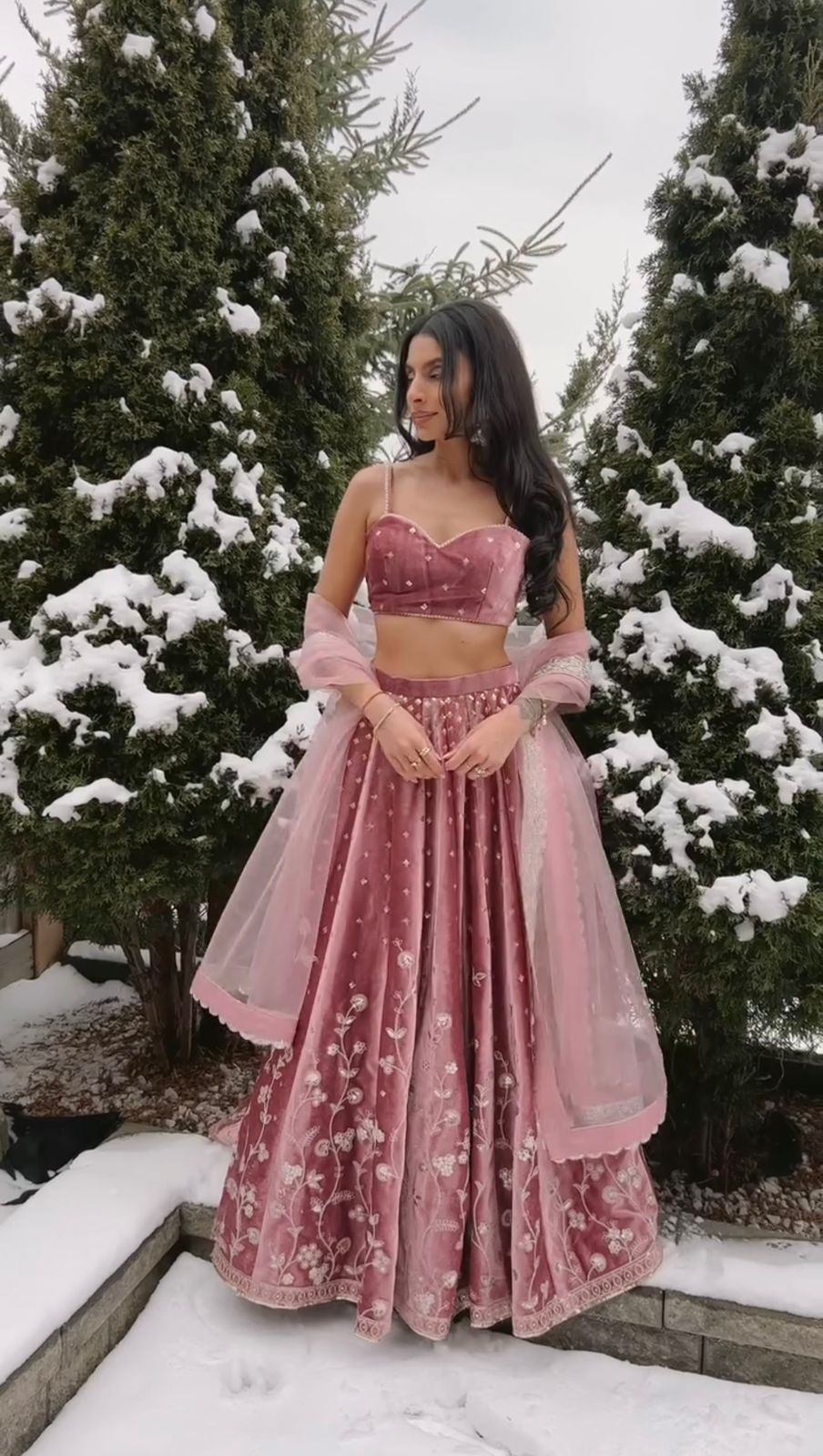
- Wear a thin blouse or fitted top that resembles the clothing you'll wear under the lehenga.
- Stand with your feet together and breathe normally; don't hold your stomach in or push your hips backward.
- Wrap the tape around the intended waistband position and record the waist circumference in inches and centimetres.
- Wrap the tape around the fullest part of the hips and seat, usually 7 to 9 inches below the waist, and keep the tape horizontal.
- Measure from the waistband position to the floor while barefoot, then repeat while wearing the footwear planned for the event.
- Write the date beside the measurements because body measurements and tailoring preferences can change before a wedding.
A second person should take the measurements for bridal or wedding shopping because twisting to read the tape can change the result. A mirror helps confirm that the tape is level, but a mirror can't replace an assistant who can keep the tape in place.
Can you measure an existing lehenga instead of your body?
You can measure an existing well-fitting lehenga, but garment measurements must be compared with garment measurements rather than directly substituted for body measurements. Lay the skirt flat, measure straight across the waistband and double the number; repeat at the fullest hip area if the skirt has a defined hip seam.
Measure the old skirt's length from the same waistband edge used in the new listing. Also note whether the old garment has elastic, dori ties, hooks, side seams or extra margin inside the seams. A familiar garment can reveal your preferred fit. But a stretchy or heavily flared skirt may not provide a reliable hip comparison.
Waist Length and Hip Room Measurements for Lehenga Measurements for Online Shopping: what changes between readymade and semi-stitched styles?
Readymade lehengas require the closest match to the seller's finished measurements, while semi-stitched lehengas allow a tailor to adjust the waist, side seams and sometimes the length before final stitching. The difference matters more than the label size.
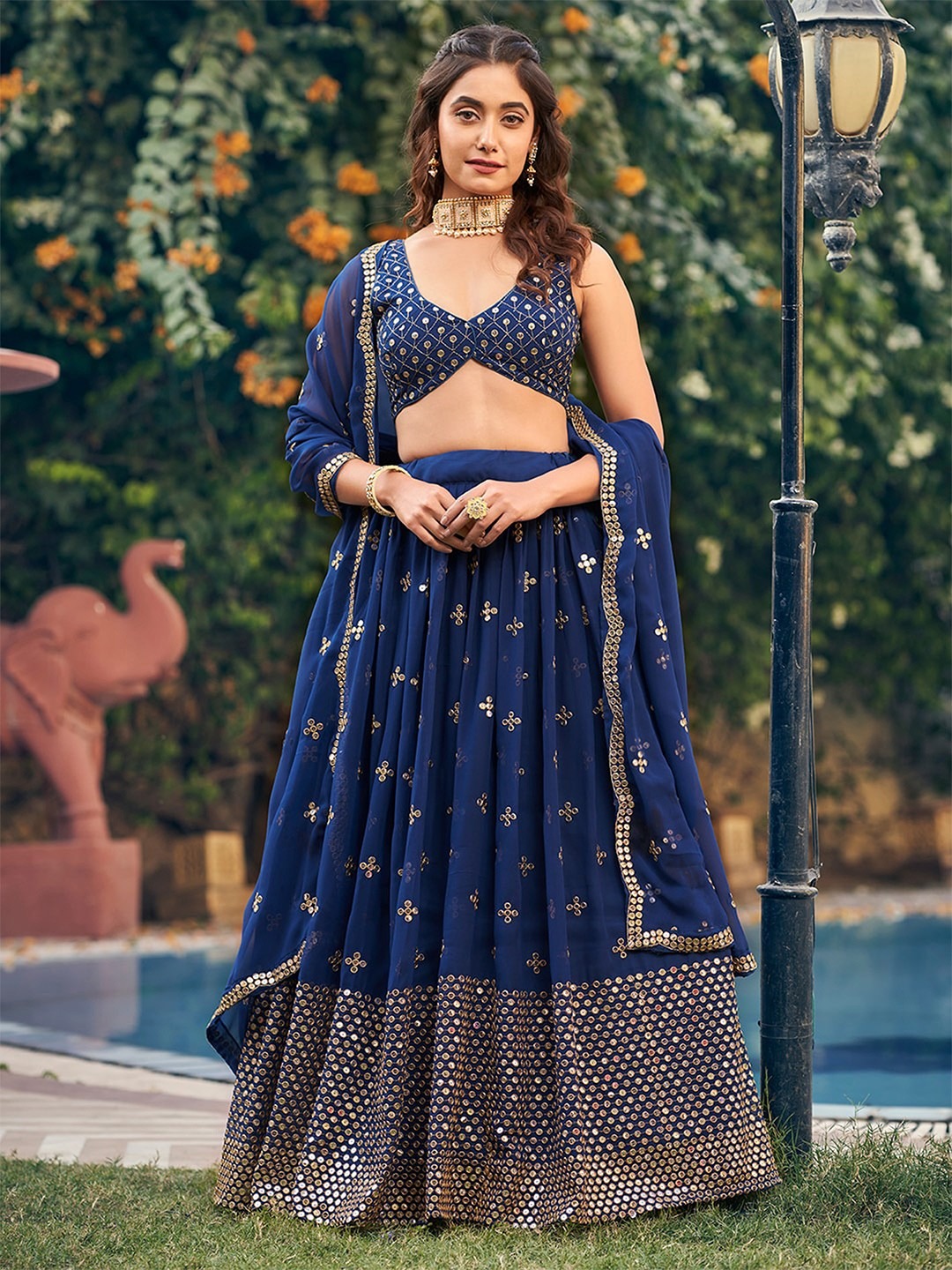
A Ready Made Lehenga is useful when the chart matches your waist and the skirt has practical adjustment features such as a drawstring, hooks or seam allowance. Ask whether the stated waist is the minimum, maximum or fixed measurement. A drawstring may provide adjustment, but it can't always compensate for a major hip mismatch or a skirt that's too short.
Semi Stitched Lehengas Collection pieces are often more forgiving because the skirt panels can be joined to suit the wearer. "Semi-stitched" doesn't mean every part is unfinished in the same way, however. Some skirts have a pre-attached waistband or fixed flare, and some cholis still need precise stitching. Confirm the unstitched margin, maximum waist size, visible length and whether lining is included.
A semi-stitched design such as Multi Colour Organza Lehenga Choli with Digital Print, Cording Embroidery and Mukaish Work Dupatta may need decisions about final waistband placement and hem length before a tailor cuts the fabric. Organza can hold volume, so the waistband must be tested with the intended lining and underskirt rather than measured from the outer layer alone.
The Pink Embroidered Roman Silk Lehenga Set Online and Dusty Pink Satin Embroidered Lehenga Set Online illustrate why fabric behaviour matters during fitting. Roman silk and satin generally create a smoother, more structured fall than a soft drape, so a tight waistband or insufficient hip ease can feel more restrictive when sitting.
Waist Length and Hip Room Measurements for Lehenga Measurements for Online Shopping: how do you choose skirt length?
Choose the final lehenga length by measuring from the intended waistband to the floor while wearing the shoes planned for the event. A bridal lehenga worn with a 3-inch heel should not be measured barefoot because the hem may drag, collect dirt or catch under the foot.
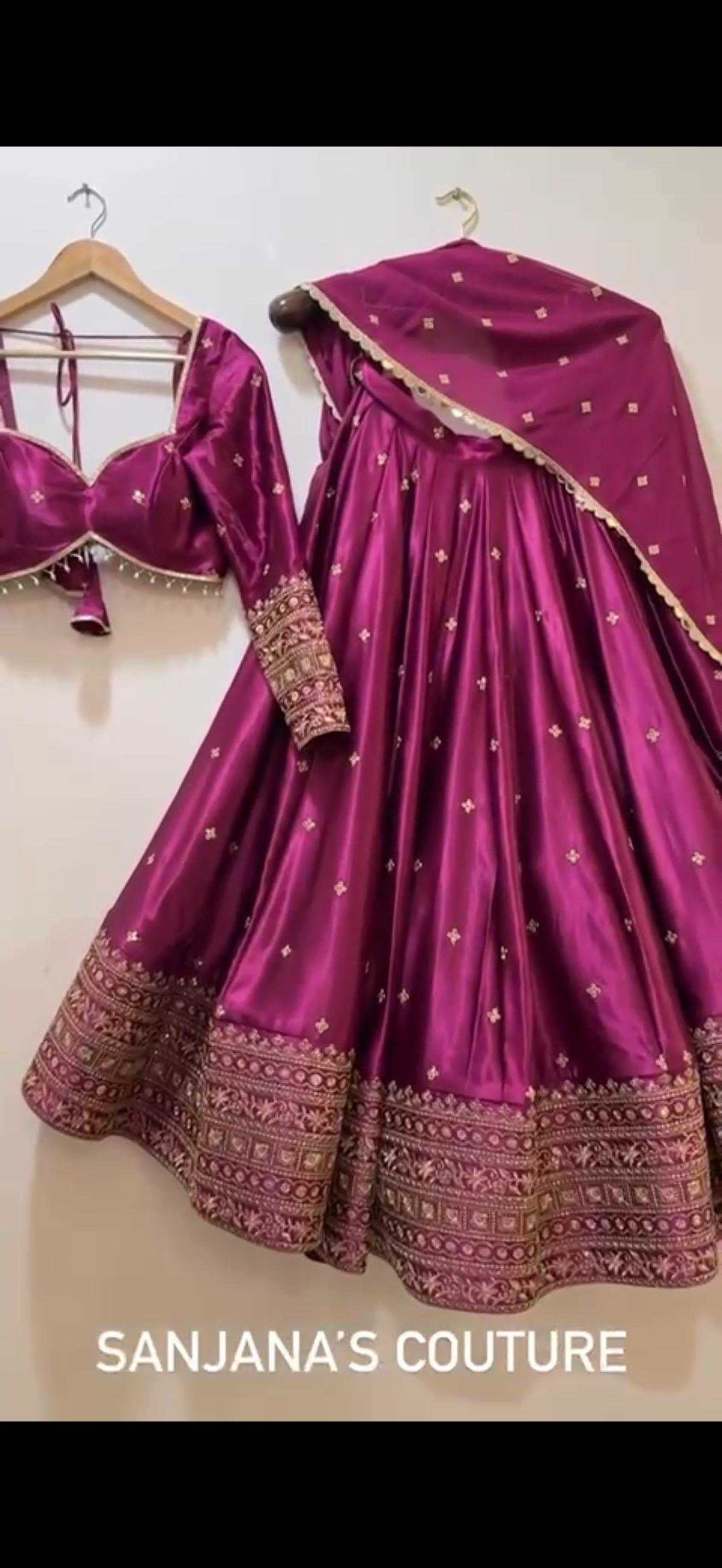
For a floor-length skirt, leave a small practical clearance rather than allowing the hem to sweep the ground. The exact clearance depends on footwear, personal preference and whether the garment has a can-can or stiff lining. A tailor should pin the hem while you walk, sit and turn, not while you stand motionless.
Heavily embellished borders need special attention because shortening from the bottom may cut through embroidery, scallops or zari work. When a lehenga has a decorative hem, alteration from the waistband may preserve the border but can affect the placement of motifs. Ask an experienced tailor to inspect the construction before ordering a length that's substantially longer than required.
Starfall Luxe Sequin Georgette Lehenga may require a careful hem test because sequin work, lining and net or stiff layers can behave differently from the outer georgette. A skirt that feels the correct length in a product photograph may need a slightly higher hem for comfortable movement at a crowded wedding venue.
Shorter customers should check whether a lehenga has a broad embellished border before planning alterations. A tailor can sometimes remove length from the waistband, but that method may change the position of the flare, pleats or embroidery. Taller customers should ask whether extra fabric is available at the waist seam or whether the listed length is the maximum possible length.
Waist Length and Hip Room Measurements for Lehenga Measurements for Online Shopping: how should the choli be measured?
Blouse fitting requires bust, underbust, shoulder, armhole, sleeve and blouse-length measurements; waist and hip figures alone can't produce a reliable choli fit. A lehenga can fit perfectly at the skirt and still feel uncomfortable if the choli has insufficient bust ease or a shallow armhole.
Measure the fullest bust area without compressing the chest, then measure the underbust directly below the bust. Measure shoulder from one shoulder point to the other across the upper back, and measure the armhole around the shoulder joint without tightening the tape. For a fitted choli, provide the tailor with the bra style and padding plan because padded cups and a strapless design can change the required volume.
Fully stitched choli shopping needs extra caution because a finished blouse may have limited seam allowance. Check whether the choli has side seams, back hooks, a dori, detachable sleeves or extra fabric inside. A one-inch alteration may be practical, but changing a narrow armhole or increasing the bust substantially may require reconstructing the garment.
Vibrant Mirror Work Muslin Lehenga Choli Set Online and Blooming Georgette Sequins and Thread Embroidered Lehenga Set with Georgette Dupatta show why surface embellishment can affect tailoring. Mirror work and sequins may limit where a tailor can open a seam, while a soft georgette dupatta may need a separate length and drape check.
When buying for girls, measure the child shortly before ordering because growth can change the fit within a few months. A little extra blouse length or an adjustable back tie may be useful. But an oversized waist can become uncomfortable during active movement. For a wedding or Haldi ceremony, prioritise secure closures and walking comfort over an extremely fitted silhouette.
Waist Length and Hip Room Measurements for Lehenga Measurements for Online Shopping: how do fabric and occasion affect fit?
Fabric, embellishment and occasion determine how much movement, lining space and waistband comfort a lehenga needs. A bridal skirt for a long wedding ceremony should be fitted differently from a lightweight festive skirt worn for two hours.
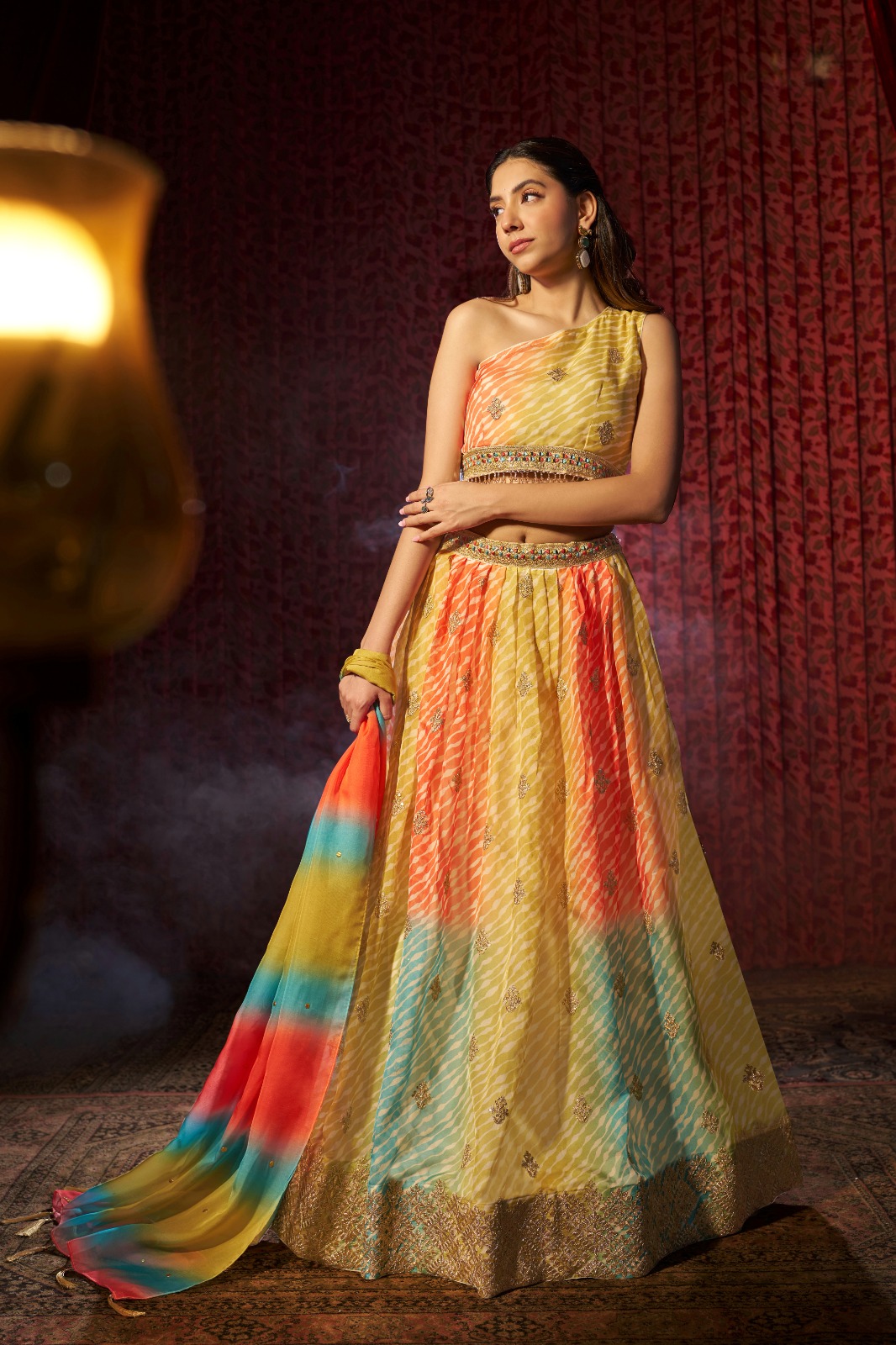
Vibrant Mirror Work Muslin Lehenga Choli Set Online may need a comfort check around the waist because mirror embellishment and lining add weight. A heavy skirt should sit securely without depending entirely on a tightly pulled drawstring. Test the waistband while walking, climbing stairs and sitting on a chair.
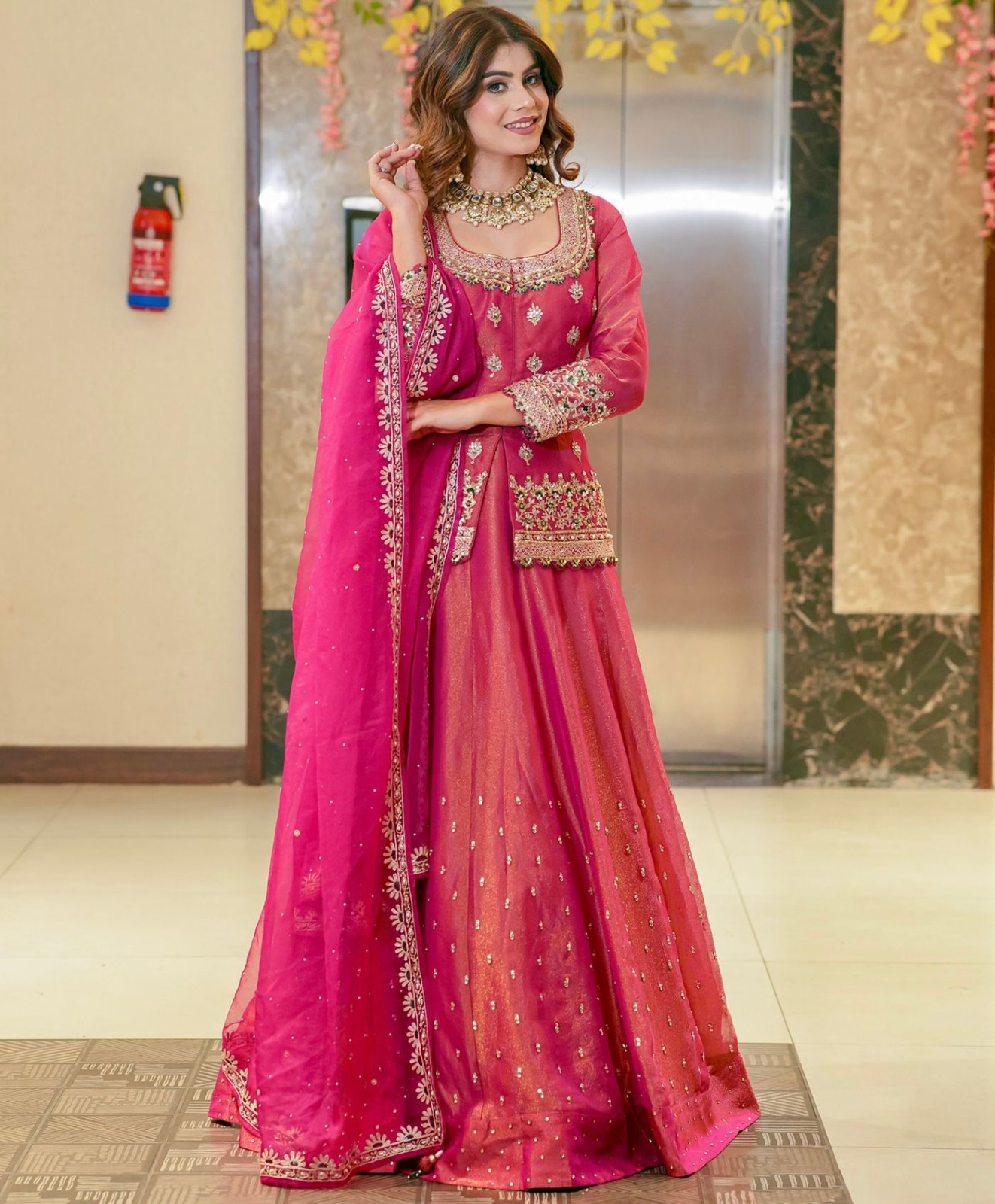
Magenta Satin Embroidered Lehenga Set Online has a structured surface that can reveal pulling at the hips more quickly than a fluid fabric. The skirt should skim the body without horizontal drag lines, and the waistband should remain level after sitting. Satin can also show folds caused by an overly loose waist. A tailor may need to balance both sides rather than simply tightening one seam.
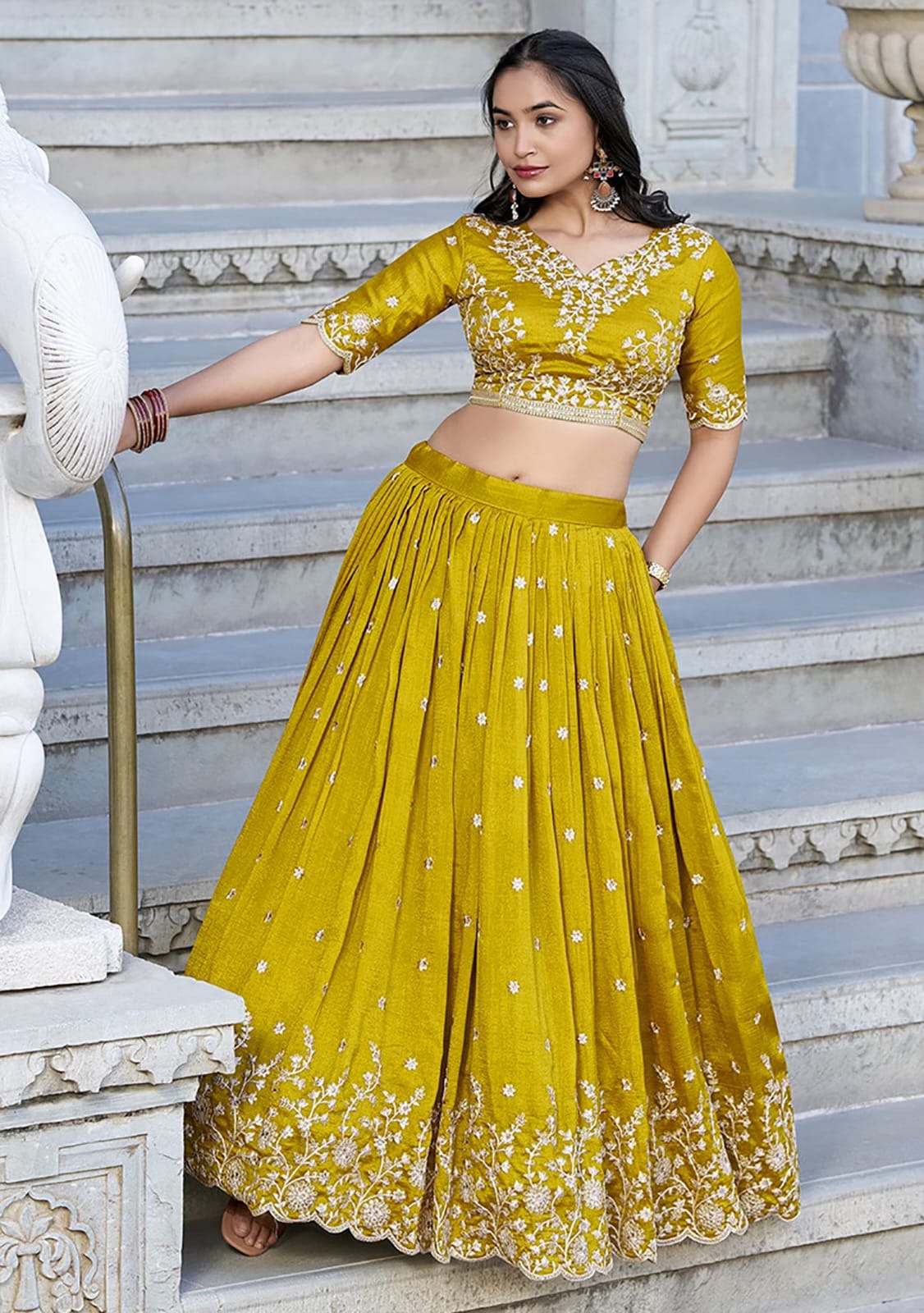
Occasion-based colour collections can also guide practical choices. Yellow Lehengas and Mehendi Lehengas often suit daytime pre-wedding functions where walking, dancing and sitting on the floor are common. Green Lehengas may be chosen for festive gatherings or Mehendi ceremonies, but colour doesn't determine fit. The same measurement process applies to every shade and silhouette.
For a reception or formal wedding, embroidery and layered volume may justify a little more hip ease than a lightweight party skirt. For a daytime function, breathable lining and a waistband that doesn't pinch can matter more than a very close fit. Designer and bridal styling often uses a high waistband, so measure that position separately rather than copying the waist from casual clothing.
Before placing an order, compare your measurements with the chart, identify the least adjustable part and allow time for one fitting session. Order timing matters because a tailor may need 7 to 14 days for ordinary alterations, while embellished bridal work can take longer. A size decision made from one number alone is much less dependable than a complete measurement record.
Waist Length and Hip Room Measurements for Lehenga Measurements for Online Shopping: what should you check before ordering?
You should confirm the measurement basis, adjustment range, length, lining, blouse construction and alteration deadline before paying for an online lehenga. These details prevent the most common mismatch between a product photograph and the finished garment.
- Check whether the waist and hip figures describe body measurements or finished garment measurements.
- Ask for the minimum and maximum waist when the skirt has elastic, hooks or a drawstring.
- Confirm whether the listed lehenga length includes the waistband and whether the length is measured from the upper or lower edge.
- Check the maximum possible blouse size and the amount of extra seam allowance.
- Compare hip room even when the skirt appears heavily flared, because the upper skirt and waistband may still be fitted.
- Leave enough time for a tailor to check the garment before the wedding, sangeet or festive event.
A measurement chart can't account for every preference, including a higher waistband, a longer blouse, a fuller underskirt or a low-heel shoe. Record those preferences beside your body measurements and communicate them before stitching. Accurate information gives a tailor a workable starting point and gives an online buyer a much better chance of receiving a comfortable lehenga.
Common Questions About Waist, Hip Room and Online Lehenga Fit
How do I measure my waist for buying a lehenga online?
Measure around the exact position where the lehenga waistband will sit, keeping the tape level and comfortably close to the body. Record the result in inches and centimetres, then compare it with the seller's stated body or garment measurement.
How much hip room should a readymade lehenga have?
A readymade lehenga commonly needs about 1 to 3 inches of total hip ease, depending on the fabric, lining and silhouette. Check whether the seller's hip figure already includes that ease before selecting a larger size.
Is a semi-stitched lehenga easier to fit than a readymade lehenga?
A semi-stitched lehenga usually allows more adjustment at the waist, side seams and length, but the amount varies by design. Confirm the unstitched margin, fixed waistband, maximum waist and choli construction before ordering.
How do I choose lehenga length online?
Measure from the intended waistband position to the floor while wearing the footwear planned for the event. Compare that measurement with the seller's method of measuring length and check whether the embellished border can be altered.
What measurements are needed for a fully stitched lehenga choli?
A fully stitched lehenga choli needs waist, hip and skirt length measurements, while the choli also needs bust, underbust, shoulder, armhole, sleeve and blouse-length measurements. Finished blouses may have limited seam allowance, so a close chart match is important.
Can I use my usual clothing size when shopping for a lehenga online?
Your usual clothing size is only a reference because Indian size charts differ between sellers and garment types. Use fresh body measurements and compare the waist, hip, length and blouse figures with the specific product chart.


