

Using the Colour Wheel for Dupattas, Blouses and Bottoms can turn a wardrobe of attractive individual pieces into outfits that look intentional. The method works for a Banarasi silk saree, a cotton salwar suit, a designer saree or a simple kurta-and-palazzo combination. Instead of matching every item to the same shade, you can decide whether the outfit needs harmony, contrast or a quiet neutral break.
The colour wheel becomes especially useful when a blouse, dupatta or bottom contains several visible colours. A Kalamkari blouse may combine rust, mustard, green and black, while a woven saree may place zari against a saturated base. Choosing one supporting shade from the print or border usually creates a more polished result than introducing an unrelated colour.
How does Using the Colour Wheel for Dupattas, Blouses and Bottoms work?
Using the Colour Wheel for Dupattas, Blouses and Bottoms works by comparing the dominant colour of one garment with the supporting colour of another. The basic wheel places primary colours, secondary colours and intermediate shades in a circle, making relationships easier to identify than isolated fabric swatches.
Analogous colours sit next to one another on the wheel, such as blue, teal and green, and produce a calm, coordinated outfit. Complementary colours sit opposite one another, such as blue and orange or purple and yellow, and create visible contrast. Split-complementary combinations use one colour with the two shades beside its opposite, giving contrast with less intensity.
Neutral colours provide another useful option. Ivory, beige, black, white, charcoal, brown and muted gold can separate two strong colours without making an outfit look dull. A bright dupatta with a neutral bottom often looks more balanced than a third saturated colour competing for attention.
What should you identify before using the colour wheel?
Identify the dominant colour, secondary colour, surface finish and visual weight of each garment before choosing a pairing. A red silk saree with gold zari doesn't behave like a red cotton saree with a matte black border, even though both garments are technically red.
Look at the fabric in natural daylight, because indoor yellow lighting can make ivory appear cream and blue appear greener. Check the largest visible area first, then note the border, print, zari, embroidery and jewellery colours. This quick inventory prevents a small accent from becoming the accidental main colour of the outfit.
How can Using the Colour Wheel for Dupattas, Blouses and Bottoms guide a saree blouse?
Using the Colour Wheel for Dupattas, Blouses and Bottoms guides a saree blouse by connecting the blouse to the saree's body, border or strongest accent. The blouse doesn't need to repeat the saree exactly; the blouse needs to relate to at least one important visual element.
Use the saree border as a colour clue
A blue saree with gold zari can take a blouse in antique gold, mustard, rust or deeper navy. A saree with a silver border may work better with cool grey, lavender, icy blue or deep plum. Blue Zari Work Cotton Saree for Wedding demonstrates why the border matters: blue establishes the main colour family, while zari creates a warm accent that can guide the blouse choice.
For a restrained look, select a blouse one or two steps darker than the saree. A powder-blue saree with a deep teal blouse has more depth than a powder-blue blouse against the same saree. For a high-contrast look, choose an approximate complementary colour, but reduce the saturation when the saree already has heavy weaving or a dramatic print.
Match colour intensity as well as hue
Colour intensity determines whether two shades feel balanced. A vivid fuchsia blouse can overpower a pale Chanderi saree, whereas a dusty rose or muted berry blouse preserves the fabric's lightness. A saturated blouse works more comfortably with a saturated saree, particularly for evening weddings and stage-lit celebrations.
A readymade blouse becomes more versatile when its colour connects with several sarees. Deep green, wine, navy and antique gold can support multiple drapes, while a neon shade may suit only one specific saree. Classic Festive Wear Blouse for Stylish Saree Look represents a useful direction for building a repeatable festive wardrobe because a classic colour treatment can outlast a single trend.
How does Using the Colour Wheel for Dupattas, Blouses and Bottoms improve suit styling?
Using the Colour Wheel for Dupattas, Blouses and Bottoms improves suit styling by giving the kurta, dupatta and bottom different visual jobs. The strongest piece should attract attention, the second piece should support it and the third piece should provide proportion or rest.
Three reliable colour formulas
- Monochromatic: Pair a dusty-rose kurta with a berry dupatta and a soft pink or beige bottom. Varying lightness prevents the outfit from looking like one flat block of fabric.
- Analogous: Combine a teal kurta, a peacock-blue dupatta and a muted green bottom. Neighbouring colours suit daytime dressing because the contrast remains moderate.
- Complementary accent: Wear a navy kurta with a rust or burnt-orange dupatta and an ivory bottom. The neutral bottom prevents the complementary colours from becoming visually aggressive.
Bottoms usually occupy less visual space than a dupatta, so a printed or strongly coloured dupatta can be paired with a quieter palazzo, churidar or salwar. If the bottom has a broad border, keep the dupatta lighter in pattern or choose one repeated shade from the border.
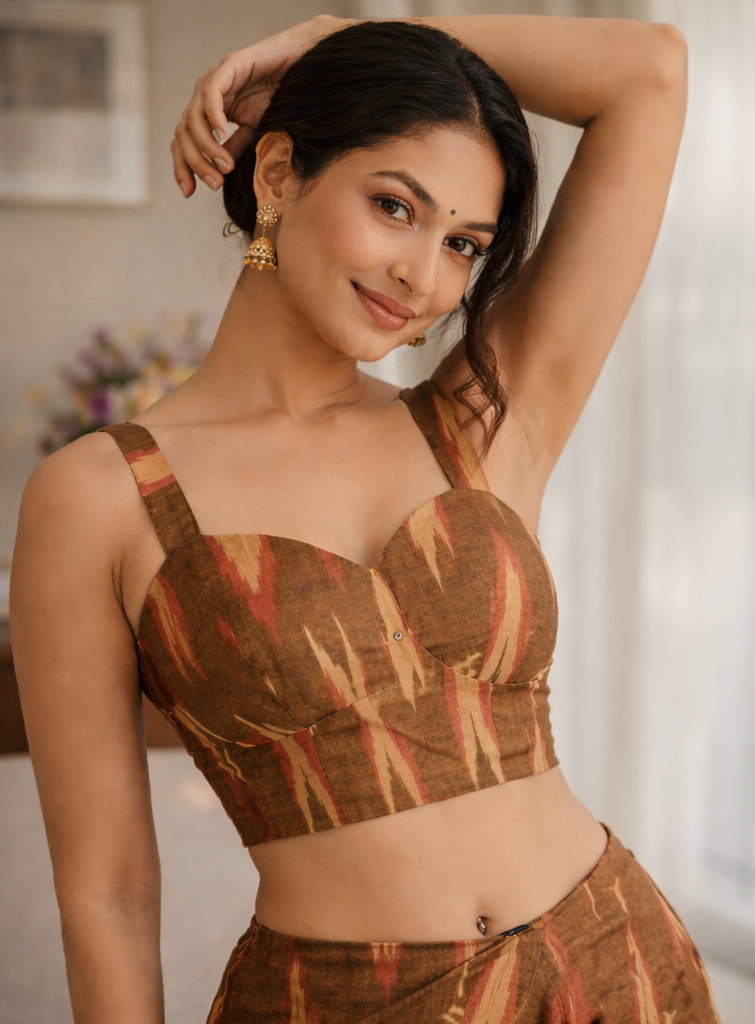
Cotton absorbs light and often makes shades appear softer and more matte than silk. Brown Ikat Cotton Padded Blouse Sleeveless can be paired with indigo, cream, rust or olive because its earthy base works as both a colour and a near-neutral. That flexibility makes cotton especially useful for everyday ethnic wardrobes.
How should a printed dupatta relate to a plain bottom?
A printed dupatta should share one clear colour with a plain bottom while the remaining colours stay quiet. For example, a mustard-and-indigo dupatta can sit comfortably over an ivory kurta with an indigo or beige palazzo.
When the dupatta has a dense print, avoid matching the bottom to its smallest accent. A tiny pink detail doesn't necessarily need a pink palazzo; the main indigo, cream or mustard field will usually provide a stronger and more natural connection.
Which fabrics suit Using the Colour Wheel for Dupattas, Blouses and Bottoms?
Using the Colour Wheel for Dupattas, Blouses and Bottoms works best when colour decisions account for how each fabric reflects, absorbs and disperses light. The same hue can look formal in silk, relaxed in cotton and delicate in a lightweight woven fabric.
Kalamkari and Ikat
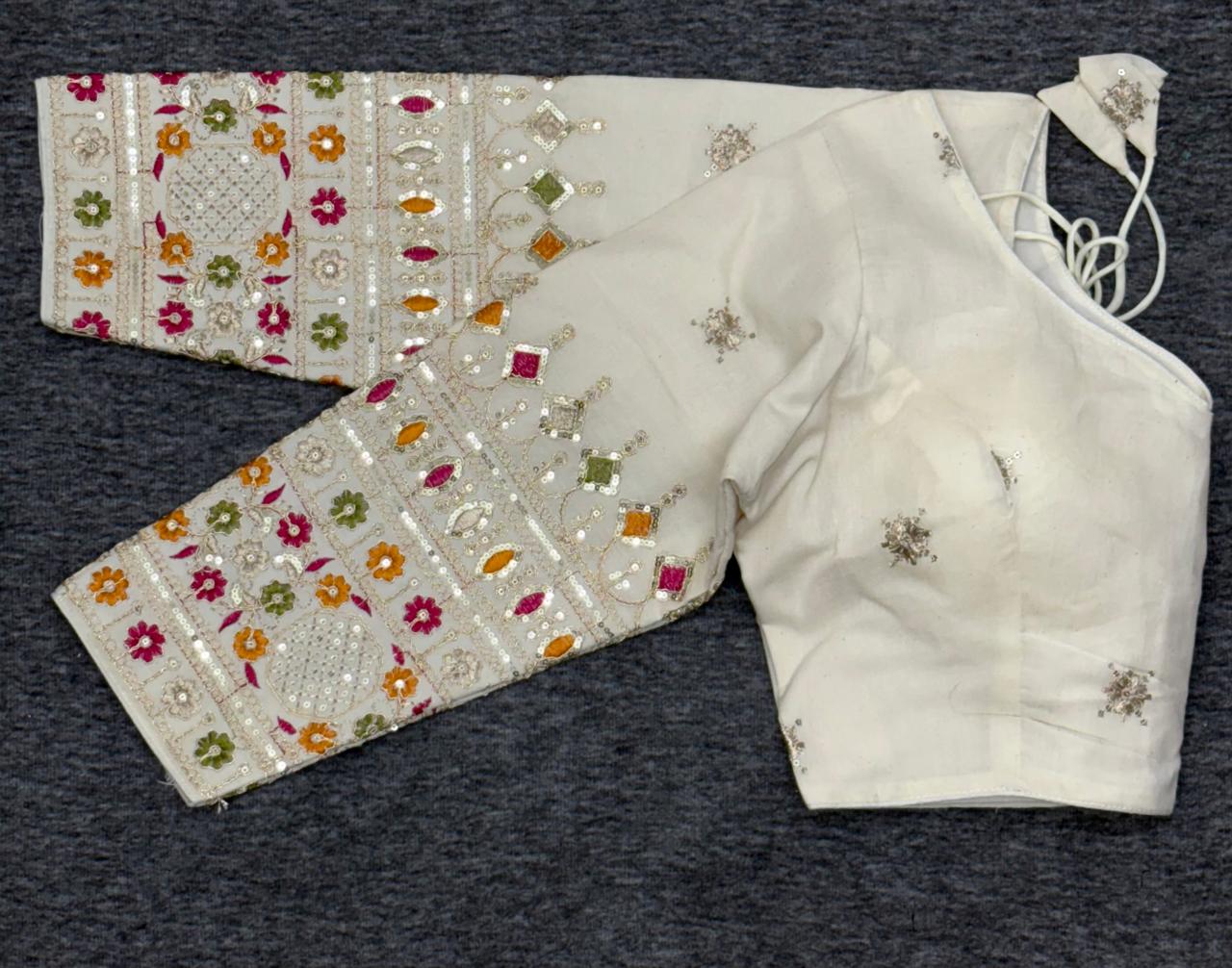
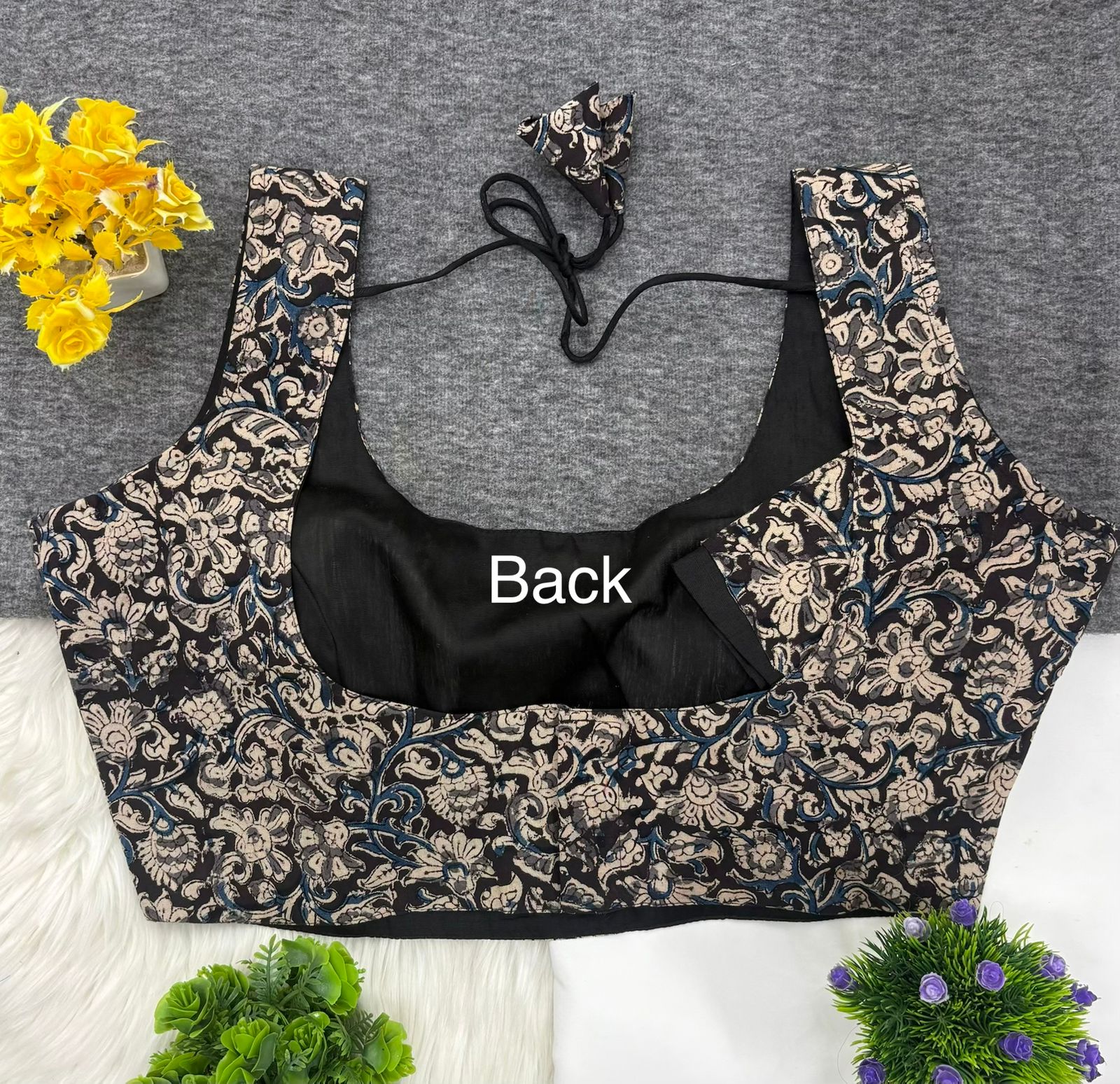
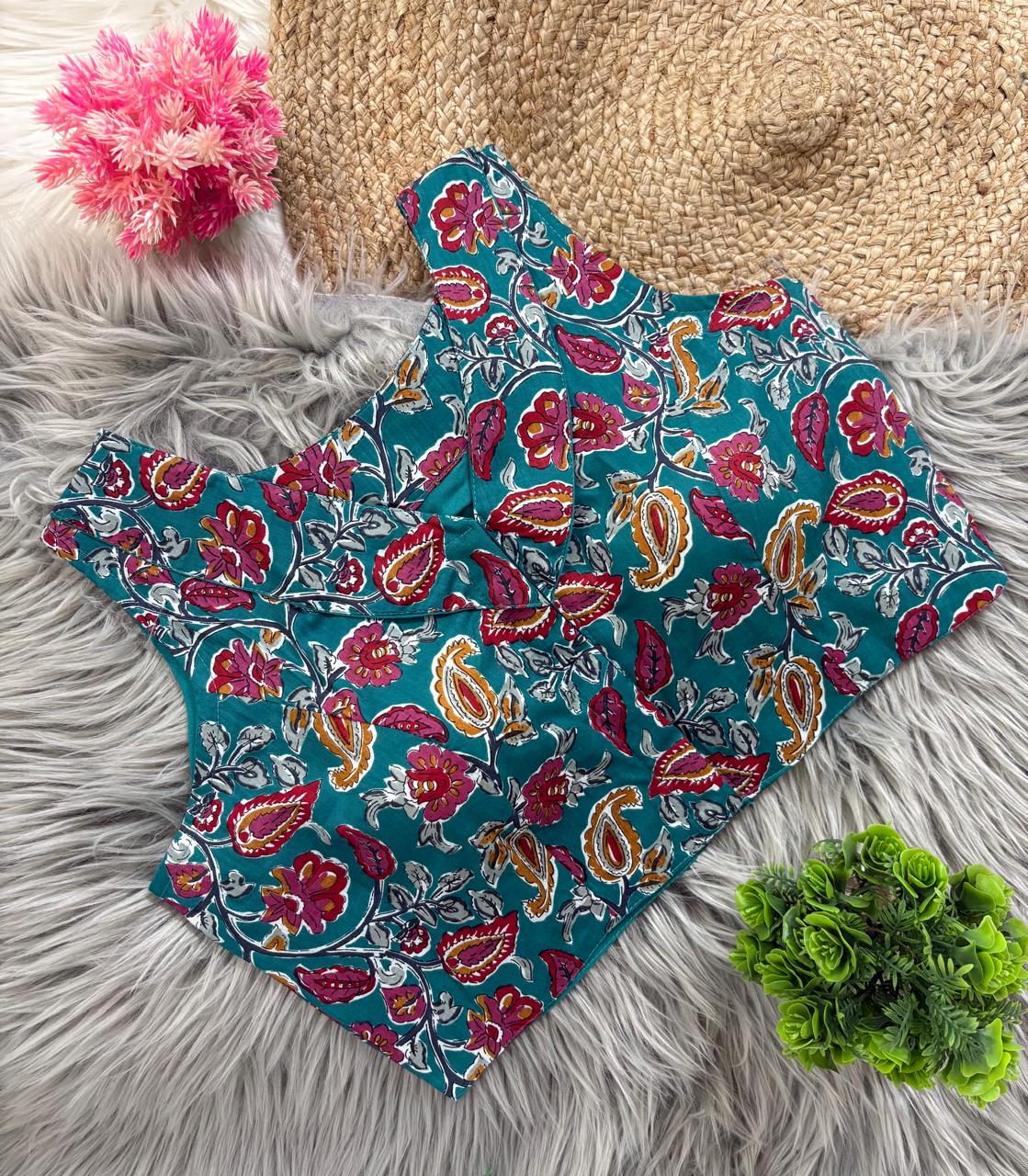
Kalamkari commonly brings together earthy red, mustard, black, cream, green and indigo. A plain dupatta in one of those shades will connect with a Kalamkari blouse without making the outfit appear overly coordinated. Pure Kalamkari Cotton Padded Blouse for Women can support an ivory saree, a black skirt, a rust drape or an indigo bottom depending on the most visible colour in the specific print.
Kalamkari Cotton V Neck Collar Blouse for Women offers another useful styling lesson: neckline and colour should be considered separately. A collar neckline already adds structure, so a quieter solid dupatta or restrained border may produce a cleaner result than another busy print.
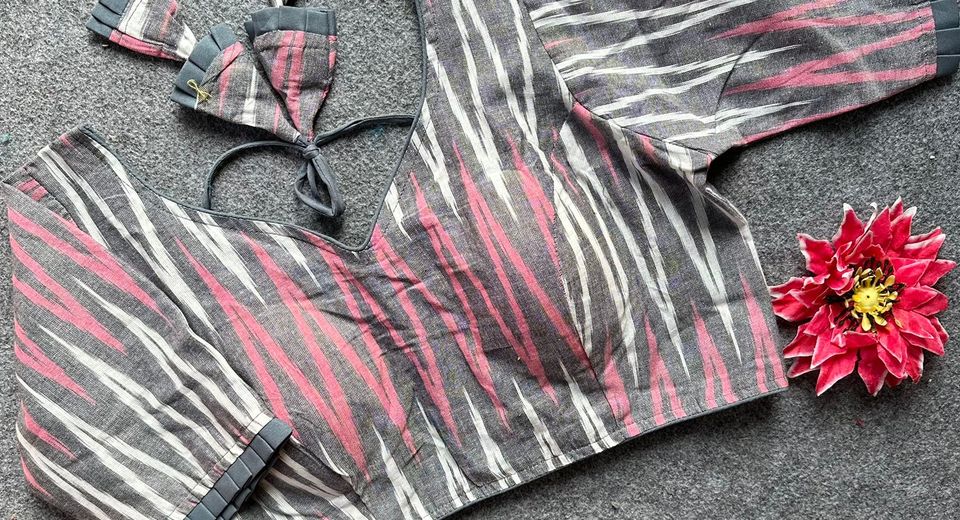
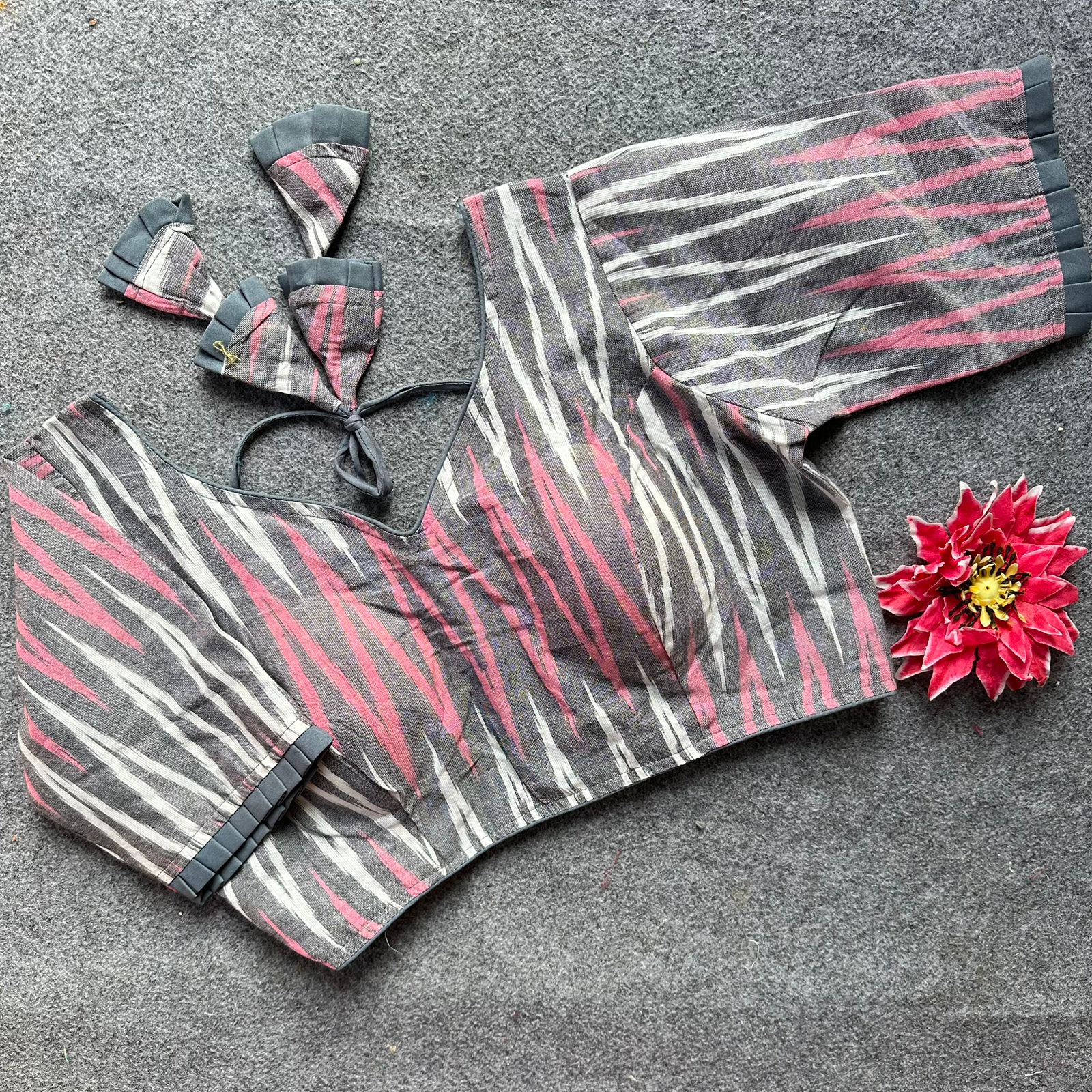
Ikat creates movement through blurred geometric colour rather than sharp printed outlines. Ikkat Cotton Padded Blouse for Women Sleeveless can be balanced with a solid saree or plain bottom in cream, navy, maroon or muted mustard. When pairing two Ikat pieces, choose different pattern scales and keep one item neutral-dominant.
Silk, zari and festive surfaces
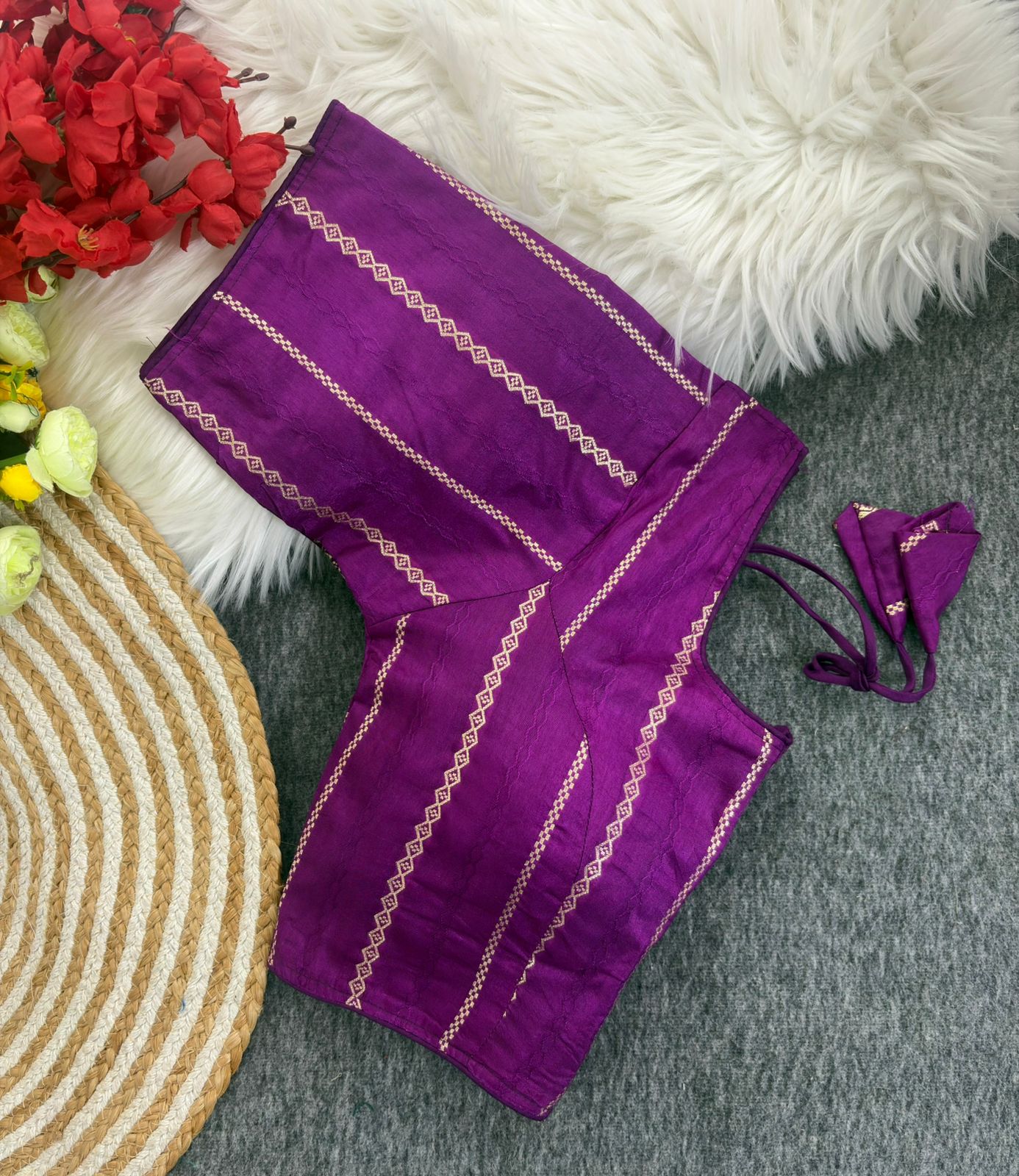
Silk and zari reflect light, so their colours often appear richer and more prominent than cotton shades. A Banarasi silk garment in red, magenta or emerald can carry a blouse in a related deep shade, but a highly contrasting blouse should usually have a simpler surface.
Banarasi Silk Golden Jari Padded Blouse for Women shows how metallic gold behaves like a warm neutral. Gold can connect with maroon, bottle green, royal blue, purple and ivory, but gold-on-gold styling works best when the saree and blouse have visibly different textures or levels of shine.
Pure silk, silk blends and viscose silk woven surfaces can also differ in drape and reflectivity. A matte bottom may calm a glossy dupatta, while a lustrous blouse can repeat the shine of zari without requiring the entire outfit to be metallic.
When should Using the Colour Wheel for Dupattas, Blouses and Bottoms favour contrast?
Using the Colour Wheel for Dupattas, Blouses and Bottoms should favour contrast when an outfit needs definition, when a saree has a plain body or when one accessory colour deserves emphasis. Matching or near-matching shades are better when the fabric is heavily embellished, the print is dense or the event calls for understated elegance.
For a wedding, a complementary blouse can make a simple saree feel more occasion-ready. Blue with rust, green with magenta and purple with mustard are strong starting points, but the exact shades matter. Deep navy with muted copper is easier to wear than electric blue with bright orange.
For a Haldi ceremony, yellow can be paired with pink, green, orange or ivory. Lime yellow needs a cooler or softer partner such as ivory, leaf green or blush pink, while mustard yellow can support maroon, bottle green and indigo. Daylight, venue colours and jewellery should determine the final intensity.
For office celebrations or daytime gatherings, analogous combinations and warm neutrals are usually practical. Terracotta with olive, lavender with powder blue or beige with teal brings colour without the visual weight of three jewel tones.
How can jewellery change a colour combination?
Jewellery changes the balance of a colour combination by adding another visible accent near the face. Gold jewellery strengthens warm colours such as rust, maroon, mustard and emerald, while silver jewellery reinforces plum, blue, grey and cool pink.
When a blouse already contains gold zari, avoid adding several unrelated metallic finishes. Antique gold jewellery can connect a Banarasi silk blouse to a plain saree, whereas bright silver accessories may make the combination appear accidental.
How can Using the Colour Wheel for Dupattas, Blouses and Bottoms help with readymade buying?
Using the Colour Wheel for Dupattas, Blouses and Bottoms helps with readymade buying by shifting attention from a single attractive blouse to the number of complete outfits it can create. A useful purchase should work with at least three garments already in the wardrobe.
Photograph your most-used sarees, dupattas and bottoms in natural daylight before shopping. Identify repeated colours such as navy, maroon, cream, green or gold. Select a blouse that either fills a missing neutral slot or creates deliberate contrast with two or more existing pieces.
Brown Ikat Cotton Padded Blouse Sleeveless can act as a relaxed statement with an ivory saree or as an earthy bridge between rust and indigo. Banarasi Silk Golden Jari Padded Blouse for Women is more occasion-specific because metallic detailing makes it a stronger visual feature. Different garments therefore require different expectations for repeat wear.
Neckline and sleeve shape also affect colour impact. A sleeveless blouse exposes more skin and can make a dark colour feel lighter visually. A high-neck or collared blouse creates a stronger block of colour. Padding, lining and shoulder fit affect comfort and structure, so colour should never be the only buying criterion.
Check the blouse measurements against the sarees or skirts you plan to wear, especially when buying a designer readymade blouse online. Readymade sizing varies between cuts, and a visually perfect colour pairing won't compensate for restricted arm movement or an unstable fit.
How can you practise Using the Colour Wheel for Dupattas, Blouses and Bottoms at home?
You can practise Using the Colour Wheel for Dupattas, Blouses and Bottoms at home with three garments, a phone camera and a simple colour test. Lay out one dominant piece, one possible contrast and one neutral, then view the arrangement in daylight from a distance.
- Choose the anchor: Start with the saree, kurta or dupatta that occupies the largest visible area.
- Find a related shade: Select an adjacent wheel colour for a calm look or a repeated accent from a print or border.
- Test contrast: Place a complementary colour beside the anchor and reduce its saturation if the combination feels too loud.
- Add a neutral: Use ivory, beige, black, brown or muted gold to separate strong colours and control visual weight.
- Check the surface: Compare the result in daylight and under indoor light because silk, zari and cotton change appearance differently.
Take a photograph before making a final choice because a combination that feels balanced on a bed may look crowded when worn. Examine the outfit from the waist up and at full length, since blouse colour affects the face while bottom colour affects the overall proportion.
Colour theory is a decision-making tool, not a set of strict rules. Personal undertone, comfort, cultural preference, jewellery and the setting all matter. The most reliable combination is one in which the colours have a clear relationship and the wearer doesn't spend the event adjusting the outfit.
Common Questions About Using the Colour Wheel for Dupattas, Blouses and Bottoms
How do I choose a blouse colour for a saree?
Choose a blouse colour from the saree's border, zari, print or a complementary position on the colour wheel. A darker version of the saree colour gives a subtle result, while a muted complementary shade creates contrast without overwhelming the fabric.
What colour dupatta goes with a plain suit?
A plain suit can take a dupatta in a complementary, analogous or print-derived colour. Navy suits work with rust, mustard, pink or ivory, while teal suits can take peacock blue, muted green or a warm beige bottom.
Can a blouse and saree be different colours?
A blouse and saree can be different colours when they share a clear relationship through the border, print, zari or colour wheel. Blue with muted rust, green with magenta and purple with mustard are workable combinations when the intensity of both shades is balanced.
Which blouse colours are most versatile for readymade styling?
Deep navy, maroon, bottle green, brown, ivory and antique gold are generally versatile readymade blouse colours. The best choice depends on the sarees already in your wardrobe, because a versatile blouse should create several complete outfits rather than match only one garment.
How do I style a Kalamkari blouse without making the outfit too busy?
Pair a Kalamkari blouse with a plain saree, dupatta or bottom in one of the print's main colours. Ivory, indigo, rust, mustard and black usually provide cleaner support than another dense print.
Do silk and cotton need different colour combinations?
Silk and cotton can use the same colour-wheel relationships, but their surfaces change the visual intensity of those colours. Silk and zari appear richer and more reflective, while cotton looks softer and more matte, so strong silk colours often need simpler supporting pieces.


