A sunset ceremony beside Lake Pichola can shift from warm sunshine to a cool, moving breeze within an hour. An Udaipur Lakeside Ceremony Outfit That Handles Evening Wind therefore needs more than colour and embroidery: fabric, hem, drape, sleeves and fastening all matter. The right outfit remains comfortable when the temperature drops, photographs well against the water and doesn't require constant adjustment between rituals.
Wind affects Indian occasion wear in predictable ways. Lightweight dupattas lift first, wide palazzo legs catch air next, and loose saree pallus can pull against jewellery or hair. A successful look uses enough structure to stay in place without becoming heavy, hot or difficult to sit in. The guidance below helps you select a saree, suit, lehenga or gown for an outdoor ceremony in Udaipur.
What makes an Udaipur Lakeside Ceremony Outfit That Handles Evening Wind?
A reliable Udaipur Lakeside Ceremony Outfit That Handles Evening Wind combines a stable base layer, a controlled outer layer and fabrics with enough weight to resist sudden gusts. A firmly tucked saree, a short dupatta drape or a lehenga with a well-fitted blouse is generally more dependable than several floating layers.
Wind resistance doesn't mean choosing the heaviest garment available. A thick velvet outfit may feel uncomfortable during the daytime and become cumbersome when walking over stone paths. Medium-weight silk blends, linen cotton, lined georgette and structured jacquard fabrics offer a better balance for a ceremony that begins before sunset and continues after dark.
- Stable base: A fitted blouse, kurta, camisole or lining prevents fabric from shifting around the torso.
- Controlled movement: Narrower pallus, shorter dupattas and lined skirts reduce lift without removing elegance.
- Secure fastening: Safety pins, brooches, hooks and waist tucks should be planned before leaving the hotel.
- Warmth after sunset: A silk stole, cropped jacket or close-fitting shawl adds comfort without hiding the outfit.
Which fabrics work best beside Lake Pichola after sunset?
Medium-weight silk, lined georgette, linen cotton and jacquard-woven fabrics work particularly well for a breezy Udaipur ceremony. These textiles have enough body to fall back into place after a gust, while breathable constructions remain practical in Rajasthan's dry climate.
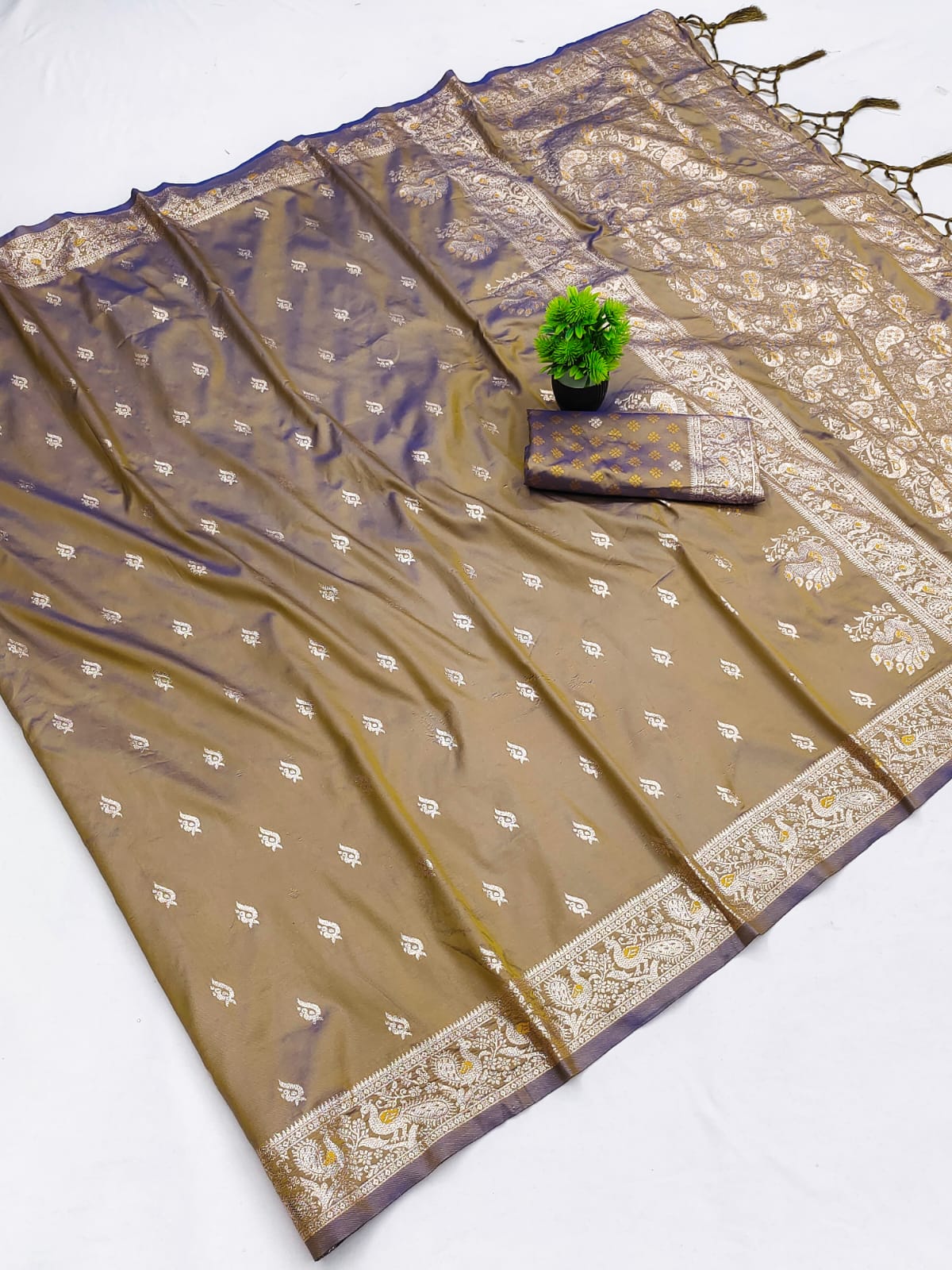
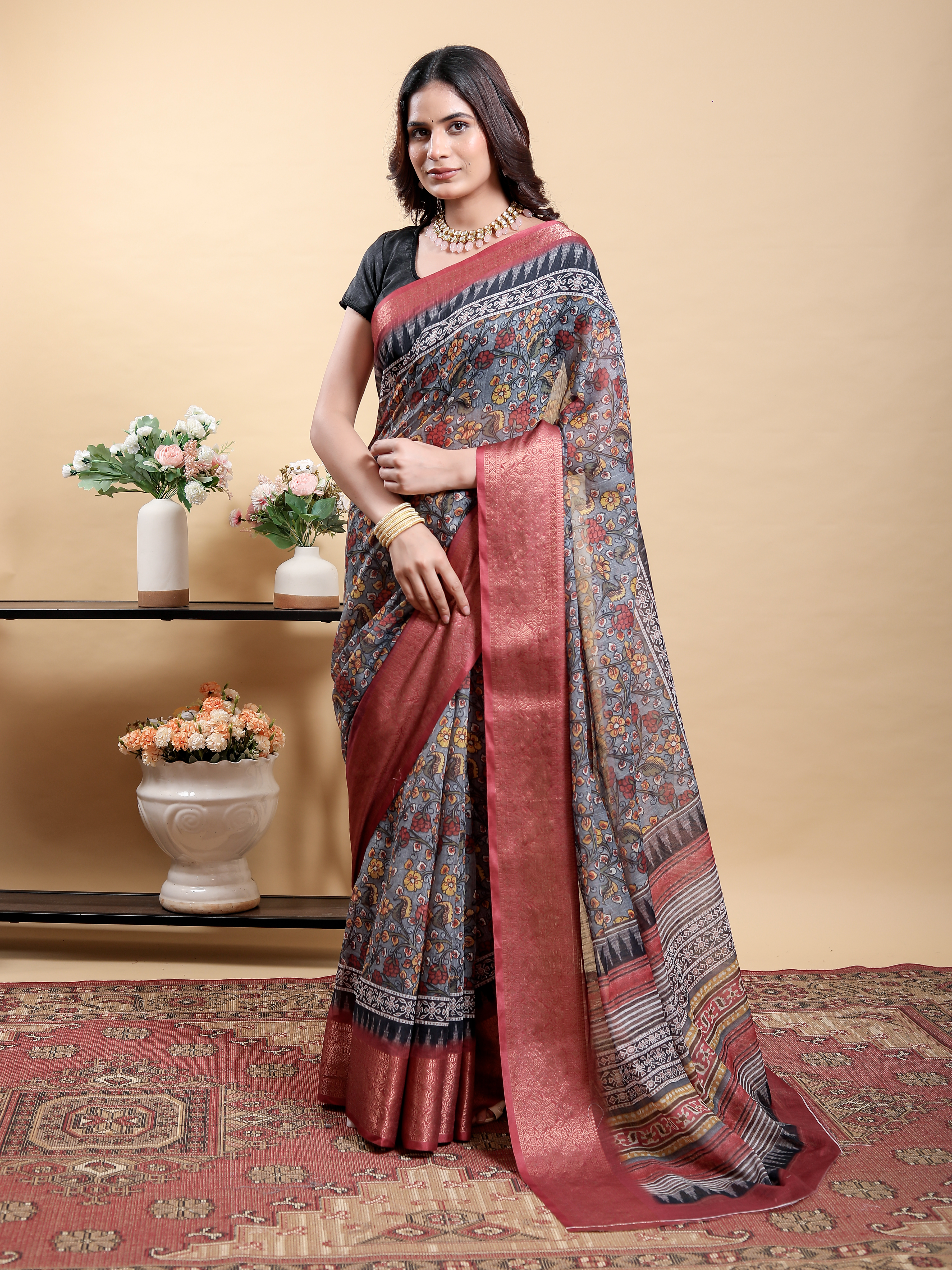
Banarasi silk and heavier silk blends naturally create a grounded drape, especially in a saree or a long kurta set. Chanderi can look beautiful in a dupatta, but an unlined Chanderi layer may float dramatically in strong wind, so Chanderi works better when folded over the shoulder and secured with a brooch. Georgette needs a lining or a substantial underskirt because unlined georgette can cling, lift and reveal the leg when air moves through the garment.
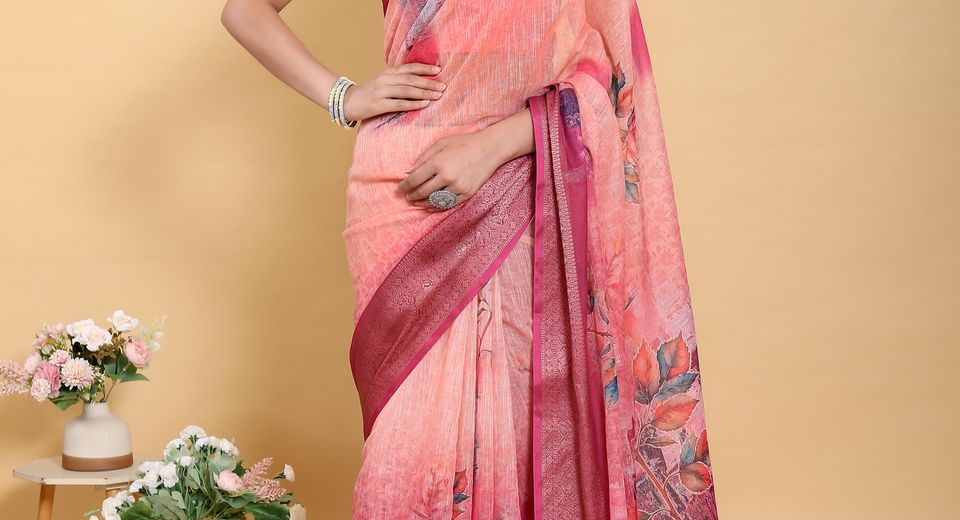
Linen cotton is useful when the ceremony begins in late afternoon. Linen cotton breathes better than many synthetic blends and has enough texture to prevent a saree pallu from sliding rapidly. Buy Dusty Rose Floral Linen Cotton Saree with Woven Border shows how a woven border can add visual weight to the edge of a saree while the floral surface keeps the look relaxed rather than overly formal.
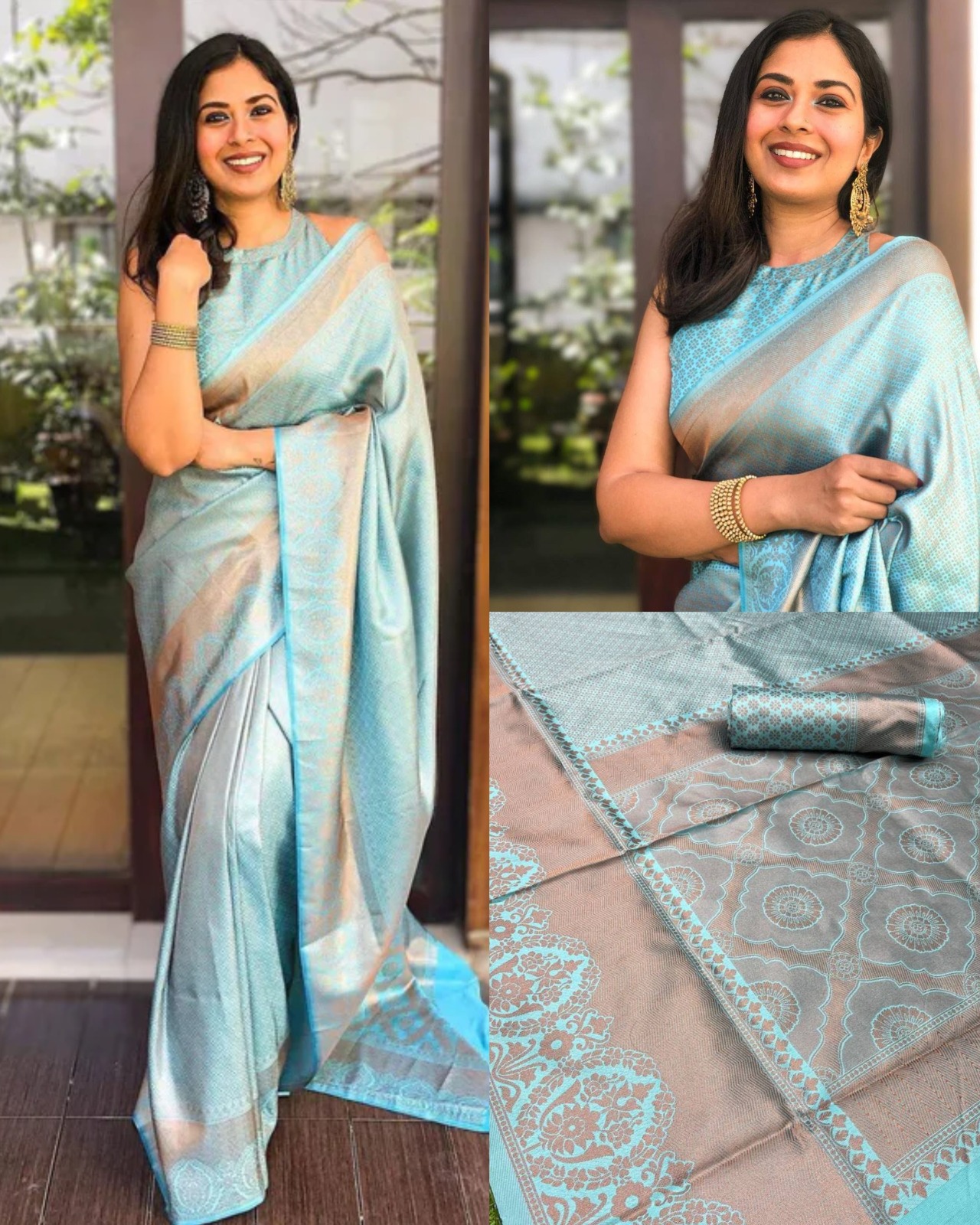
Silk creates a more formal impression for a wedding or engagement. Pastel Aqua Lichi Silk Saree with Rich Jacquard Border has a border that can be pinned securely at the shoulder and allowed to fall in a controlled line. Jacquard borders also photograph clearly against pale stone architecture, which is useful when the background contains the muted beige and ochre tones common around Udaipur.
Should you choose a saree or a suit for a windy ceremony?
A suit is usually easier to manage in strong wind, while a saree offers more control when its pleats and pallu are secured correctly. Guests who expect to walk across lawns, courtyards or uneven heritage surfaces may find a salwar suit or palazzo suit more comfortable than a floor-length saree.
Sea Green Embroidered Silk Kurta Set with Dupatta provides an useful middle ground because the kurta gives coverage and silk has natural structure. Keep the dupatta folded lengthwise, place it over one shoulder and secure it near the collarbone with a discreet pin. A broad, unsecured dupatta worn across both shoulders is more likely to catch air.
How should you secure a saree, lehenga or dupatta?
Secure the garment at three points: the waist, the shoulder and the area most exposed to wind. Three-point fastening keeps fabric stable without making the outfit look stiff or visibly pinned.
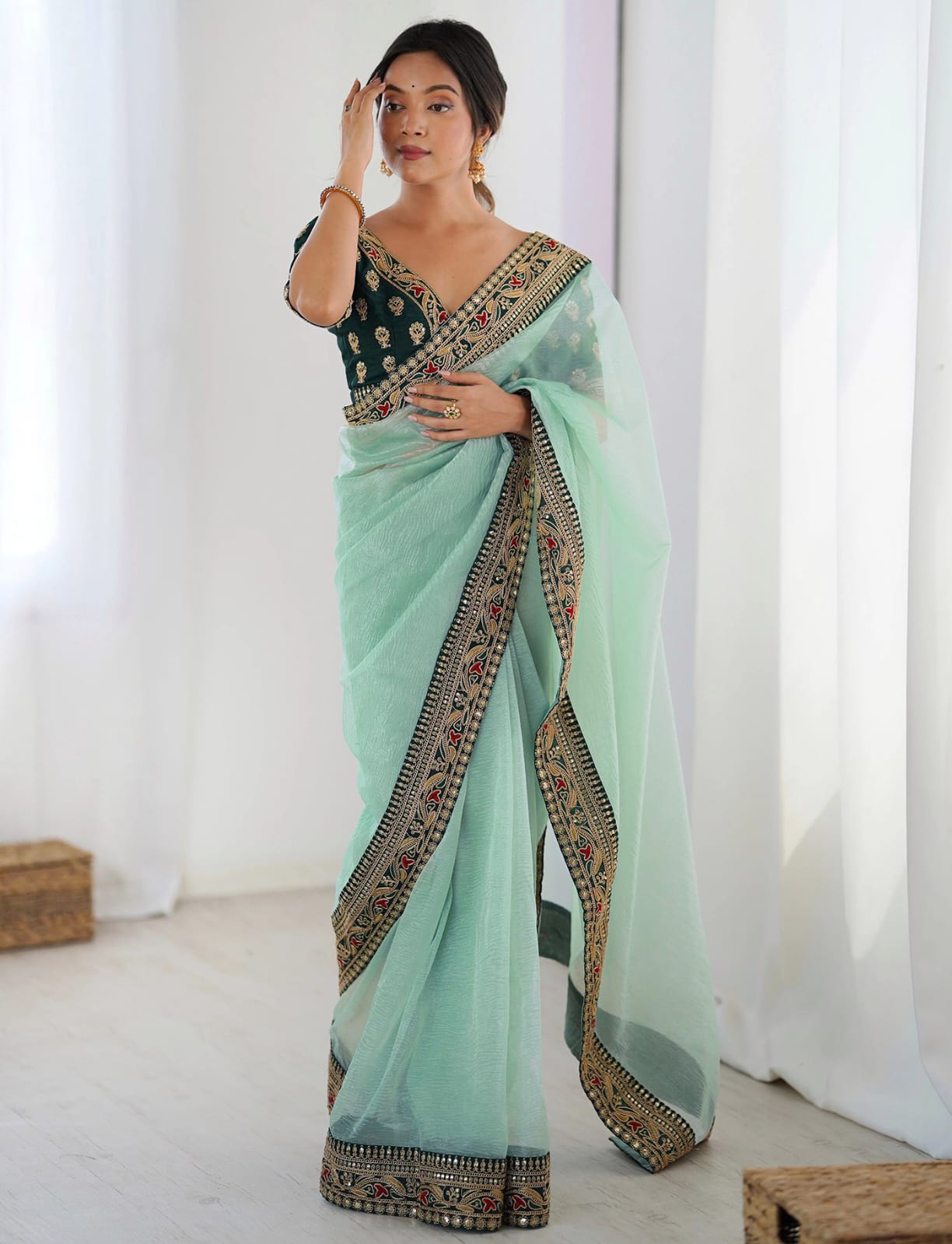
- Secure the waist: Tuck saree pleats firmly into a well-fitted petticoat or shapewear skirt, and check that the waistband doesn't loosen when you sit.
- Secure the shoulder: Use two small safety pins inside the saree pallu or dupatta fold, placing one near the shoulder seam and another lower down.
- Secure the exposed edge: Add a brooch, hidden hook or second pin near the chest if the pallu or dupatta opens repeatedly in the breeze.
- Check the hem: The hem should clear the ground by approximately 1 to 2 centimetres when worn with the intended footwear.
A brooch is more than decoration at an outdoor ceremony. A medium-weight brooch placed at the shoulder creates an anchor point and prevents repeated pinning from damaging delicate zari or embroidery. Avoid placing a heavy brooch on very fine chiffon or an unlined net dupatta because the weight can stretch the weave.
Lehenga styling benefits from a fitted blouse and a dupatta that travels diagonally across the torso rather than floating from both shoulders. Pastel Floral Georgette Lehenga Set with Ruffle Blouse can be made more wind-friendly by securing the dupatta at the shoulder and waist. A small hidden pin near the waistband stops the lower edge from lifting while leaving the ruffle blouse visible.
Which silhouettes are practical for walking, sitting and photographs?
A lightly fitted kurta, straight pant, anchored palazzo or lined lehenga is practical for movement around a lakeside venue. The best silhouette allows a full step, keeps the hem away from wet grass and doesn't depend on a loose scarf for its visual impact.

Palazzo trousers are comfortable for sitting through a ceremony, but very wide legs can balloon in a crosswind. Choose palazzos with substantial fabric or a longer kurta that creates a continuous line. Maroon Wedding Wear Embroidered Palazzo Suit Set suits an evening function because a deeper colour hides minor dust from outdoor paths, while the embroidered surface gives enough occasion presence without requiring a large, floating dupatta.
A second option is a narrower kurta-pant combination. Designer Wine Kurta Pant Set with Floral Embroidery uses a more controlled lower silhouette, which can be useful when walking between the ceremony area, dining space and photo locations. Wine, maroon and deep rose tones also gain depth under warm lantern light after sunset.
Long gowns can work beside a lake when the skirt is lined and the hem isn't excessively wide. Elegant Black Ethnic Gown with Floral Embroidery brings a streamlined shape for guests who prefer one-piece dressing. Pair the gown with a close-fitting shawl or a short cape rather than a long open stole that can sweep across the ground.
How can you stay warm without hiding the outfit?
A silk stole, compact shawl or cropped layer gives warmth after sunset without overwhelming Indian occasion wear. The layer should sit close to the shoulders, coordinate with the main colour and remain easy to remove when the evening becomes warmer.
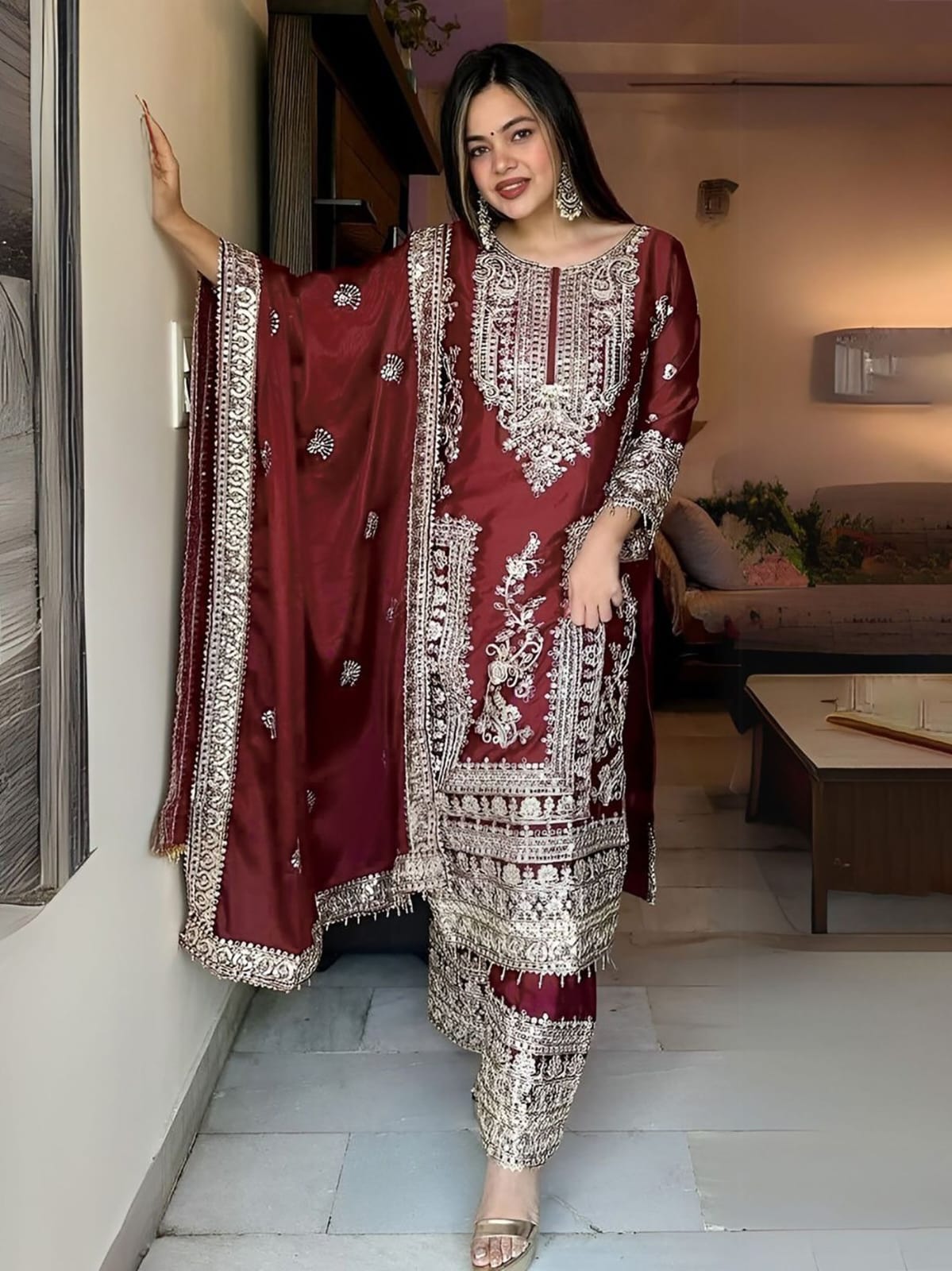
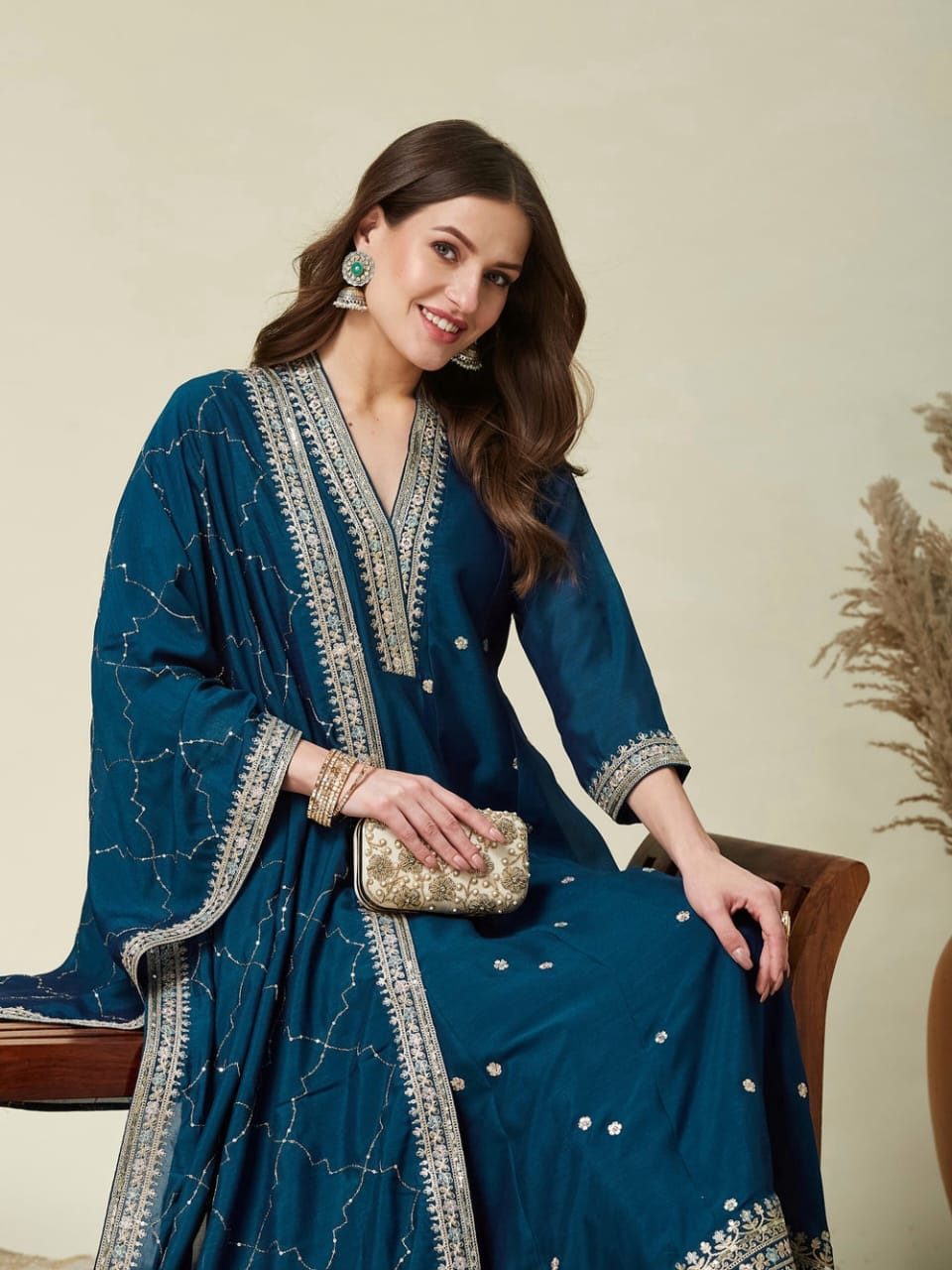
Rajasthan evenings can feel noticeably cooler near open water than they do inside a hotel. Pack a layer even when the afternoon forecast appears warm. A silk or modal stole is lighter than a thick sweater and can be folded into a small evening bag before the ceremony. A short embroidered jacket works particularly well over a kurta set because it covers the upper arms while leaving the lower silhouette clear.
Pink and rose tones can look soft in daylight but remain festive under amber lighting. Riddhi Pink Frendy Silk Embroidered Palazzo Suit Set can be paired with a muted rose or champagne stole for a coordinated layer. Keep the stole shorter than the kurta hem so the outfit retains a clean outline in group photographs.
don't rely on a sheer dupatta alone for warmth. A georgette or net layer may block very little wind. A lined silk stole, fitted full-sleeve blouse or lightweight inner camisole gives more dependable coverage and avoids repeatedly rearranging the outer layer.
Which colours and accessories suit an Udaipur lakeside setting?
Jewel tones, dusty florals, muted pastels and rich metallic borders all work well against Udaipur's water, stone and sunset colours. The most photogenic choice creates contrast with the background while avoiding a colour so pale that it disappears against marble or cream architecture.

Sea green, dusty rose and pastel aqua echo the lake and evening sky without becoming costume-like. Maroon, wine and black provide stronger contrast for candlelit ceremonies. A zari border, jacquard panel or metallic embroidery catches low light more effectively than a fully matte surface, but excessive sparkle can reflect harshly in flash photography.
Choose accessories according to the neckline and fastening of the outfit. A saree with a rich border usually needs one strong necklace or a pair of earrings rather than several competing pieces. A high-neck kurta can be balanced with earrings and bangles, while a simple blouse gives room for a necklace or a brooch at the pallu.
Footwear deserves practical attention. Block heels between 2 and 3 inches offer more stability than narrow stilettos on grass, gravel and old stone paving. Juttis, embellished flats and low wedges are useful alternatives when the venue involves substantial walking. Test the complete outfit with footwear at least once because a hem that seems safe indoors may catch on outdoor surfaces.
What should you check before leaving for the ceremony?
Test the complete outfit for ten minutes outdoors before the event. A short trial reveals whether the pallu slips, the dupatta lifts, the hem catches or the blouse becomes uncomfortable when you raise your arms.
- Sit and stand twice: Check that the waistband, pleats and skirt lining remain comfortable during the ceremony.
- Walk for 50 to 100 metres: Confirm that the hem clears uneven ground and that the footwear gives enough grip.
- Turn toward a fan or open window: A moderate breeze can reveal loose drapes before a lakeside gust does.
- Pack a small repair kit: Carry safety pins, fashion tape, a spare earring back, hairpins and one small brooch.
- Check the forecast: A temperature drop of 5 to 8 degrees Celsius after sunset may justify a warmer stole or jacket.
Hair should also be planned around the wind. A low bun, braided ponytail or half-up style usually stays controlled longer than completely open hair. Use light hairpins rather than excessive spray, especially when the ceremony is outdoors and the look needs to remain soft in photographs.
Makeup and fabric care are equally practical concerns. Humidity near the water may affect powder and hair, while dust can collect on a trailing hem. Keep the saree or lehenga off the ground while moving between locations, and allow embroidered garments to air for several hours after returning to the hotel before storing them in a garment bag.
How do you build the final look for a lakeside ceremony?
Build the final look around one dependable garment, one controlled drape and one removable warm layer. This formula keeps the outfit visually complete even if the wind makes a scarf or stole impractical.
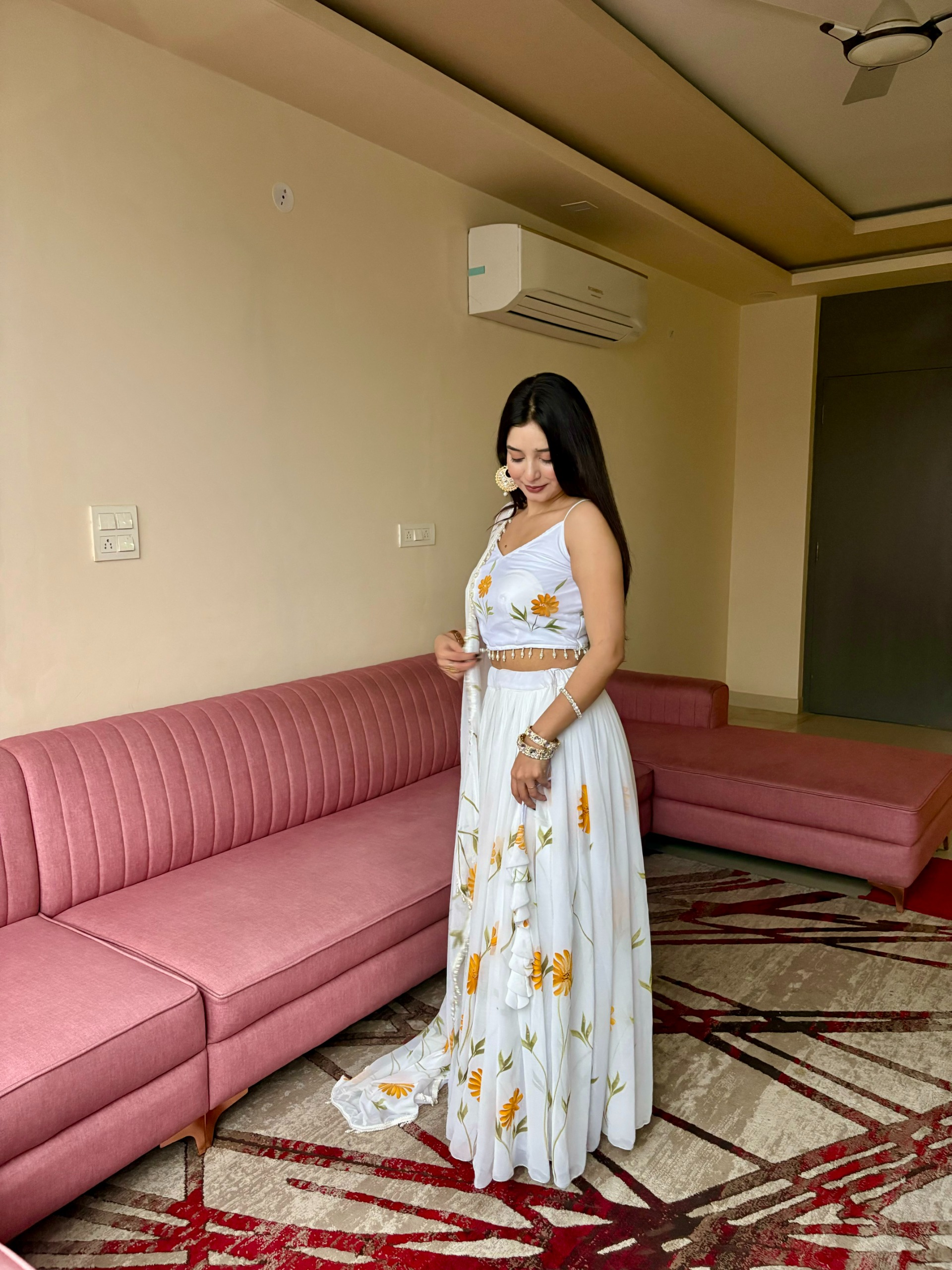
For a saree, select a medium-weight silk or linen cotton base, pin the pleats and pallu, and add a compact shawl for after sunset. For a suit, choose a structured kurta with straight pants or moderate-width palazzos, then fold the dupatta over one shoulder. For a lehenga, secure the dupatta diagonally across the torso and keep the hem just above the ground.
The result should feel appropriate for a special occasion without requiring constant supervision. A well-fitted base, a sensible hem and two discreet fastenings often matter more than adding another decorative layer. With those details handled, the lake, palace architecture and changing evening light can remain part of the occasion rather than becoming challenges to your clothing.
Common Questions About Dressing for a Windy Udaipur Lakeside Ceremony
What is the best fabric for a Udaipur lakeside wedding in the evening?
Medium-weight silk, linen cotton, lined georgette and jacquard fabrics are strong choices because they balance breathability with enough structure to resist wind. Unlined chiffon and very light net are more likely to lift or cling beside open water.
How do I stop a saree pallu from flying in the wind?
Pin the pallu at the shoulder and secure a second point near the chest or waist. A medium-weight brooch can anchor the fold, but avoid heavy brooches on delicate chiffon, net or unlined fabrics.
Is a lehenga practical for a windy outdoor ceremony?
A lehenga is practical when the blouse fits securely, the skirt is lined and the dupatta is pinned diagonally across the body. Secure the dupatta at both the shoulder and waistband, and choose a hem that clears grass and stone paths.
What should I wear to stay warm after sunset in Udaipur?
A silk stole, lightweight shawl, fitted full-sleeve blouse or cropped embroidered jacket provides useful warmth without hiding the outfit. A sheer georgette dupatta alone usually offers limited protection from evening wind.
Are palazzo suits suitable for a lakeside wedding?
Palazzo suits are comfortable for sitting and walking, but very wide trousers can catch a crosswind. Choose a substantial fabric, a longer kurta and a dupatta secured over one shoulder for better control.
Which footwear works best for a Udaipur outdoor ceremony?
Block heels of about 2 to 3 inches, embellished flats, juttis and low wedges are practical choices for grass, gravel and uneven stone. Test the footwear with the complete outfit so the hem remains safely above the ground.