

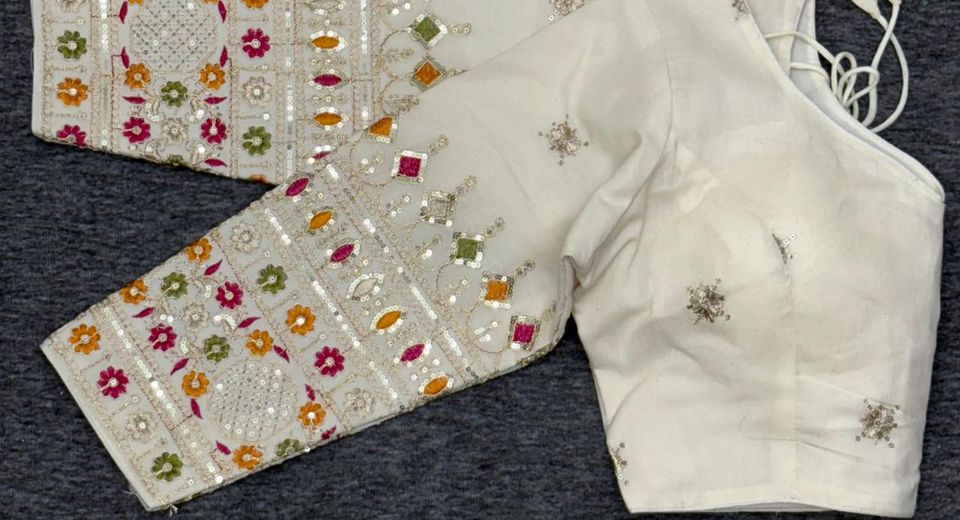
Three-Quarter Sleeve Blouses for Comfort Balance and Fabric Pairing solve a practical saree-dressing problem: they provide more coverage than short sleeves while leaving the wrist free for movement and jewellery. The sleeve length also creates a visually balanced line with many sarees, especially when the drape is neat and the blouse has a defined shoulder. Choosing the right fabric, fit and cuff placement matters more than following a passing blouse trend.
An effective blouse decision begins with three questions: how much arm coverage feels comfortable, how heavy the saree fabric is, and whether the blouse must work for sitting, commuting or extended celebration hours. A cotton blouse may suit a daytime Designer saree, while a structured silk or zari blouse can support a wedding drape. The same sleeve proportion can look relaxed or formal depending on those choices.
Three-Quarter Sleeve Blouses for Comfort Balance and Fabric Pairing: Why the proportion works
Three-quarter sleeves generally end between the elbow and wrist, creating coverage without enclosing the entire forearm. That position keeps the hands visually available for bangles, rings and practical movement while giving the upper arm a more finished appearance.
The proportion works particularly well with sarees because the sleeve doesn't compete with the vertical fall of the pallu. A short sleeve can leave a strong horizontal break near the shoulder, while a full sleeve may feel visually dense beside a heavily woven saree. A sleeve ending roughly 8 to 12 centimetres above the wrist often offers a middle ground, although the correct point depends on arm length and personal preference.
Three-quarter sleeves can also help balance a sleeveless or narrow-strap blouse preference without requiring a high neckline. A V-neck, square neck or modest round neck can keep the upper body open while the sleeve adds coverage below the shoulder. The result is especially useful when the saree already contains bold motifs, contrast borders or metallic zari.
How does sleeve placement affect comfort?
Sleeve placement affects comfort most when the sleeve ends below the fullest part of the forearm and doesn't cut into the arm during movement. A sleeve that finishes directly at the widest point can feel tight and may create a visible ridge under the saree pallu.
Movement is easiest when the sleeve opening allows approximately 2 to 3 centimetres of ease around the forearm, depending on fabric stretch and lining. Cotton and silk usually require more accurate measurements than stretch blends because they don't recover after pulling. Raise both arms, bend the elbows and sit down when testing a readymade blouse; these movements reveal tightness that standing measurements can miss.
Three-Quarter Sleeve Blouses for Comfort Balance and Fabric Pairing with cotton
Cotton is the most practical fabric choice for breathable three-quarter sleeve blouses in warm weather, daytime events and repeated saree use. Cotton absorbs moisture, feels lighter against the skin and generally holds a sleeve shape without becoming overly formal.
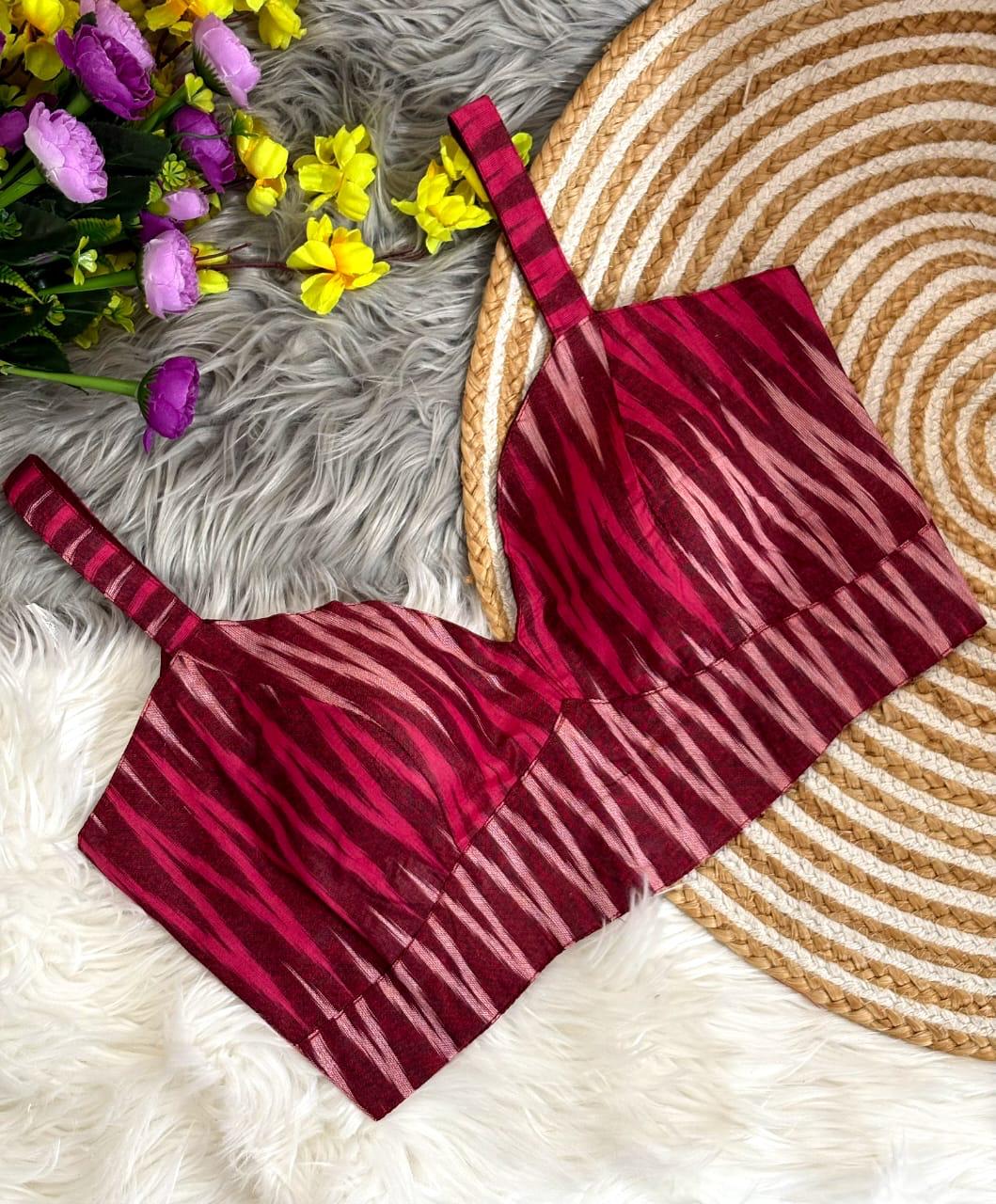
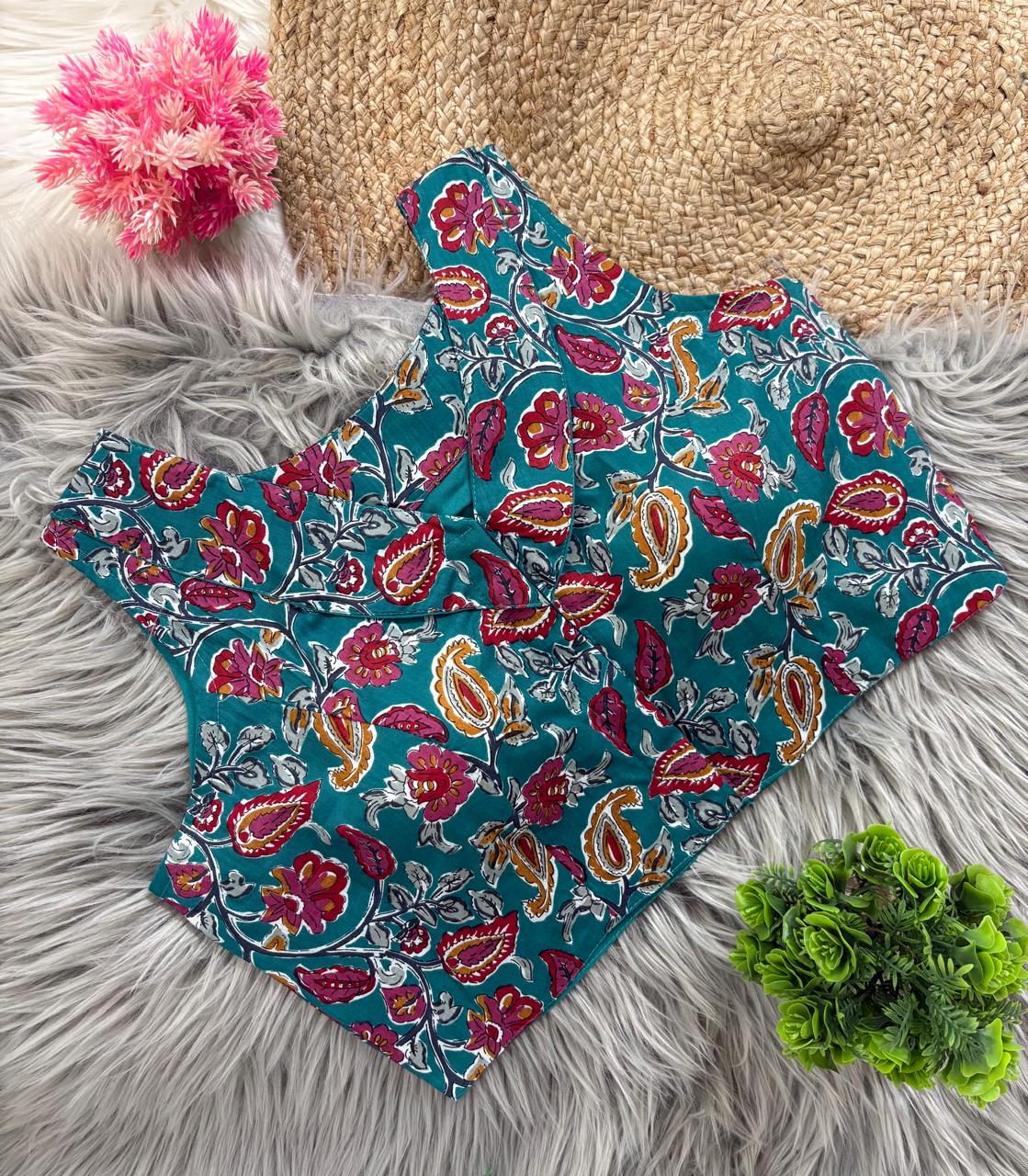
A Pure Kalamkari Cotton Padded Blouse for Women can support a casual or festive cotton-saree wardrobe because Kalamkari-inspired surface pattern brings visual interest without requiring heavy embellishment. A Kalamkari Cotton V Neck Collar Blouse for Women brings another useful direction when a collar or V-neck is needed to sharpen a relaxed saree look.
Ikat cotton provides a patterned alternative to plain blouses. The geometric weave can echo a saree border or create deliberate contrast against a solid drape. Although the Ikkat Cotton Padded Blouse for Women Sleeveless and Brown Ikat Cotton Padded Blouse Sleeveless are sleeveless examples, their fabric vocabulary demonstrates how Ikat cotton can bring structure and pattern to saree styling. A three-quarter sleeve version in a similar weight would suit someone seeking more arm coverage.
Padding is useful when the blouse needs a defined shape under a thin saree, but thick foam can feel warm and may alter the natural fall of cotton. The wearer should check whether the lining remains breathable during long use, particularly in humid weather or during crowded ceremonies.
When should cotton be chosen over silk?
Cotton should be chosen over silk when breathability, lower weight and repeated wear matter more than a glossy festive finish. Cotton works well for office gatherings, daytime pujas, summer celebrations and sarees that already contain strong prints.
A cotton three-quarter sleeve blouse can still look dressy when the neckline is clean, the shoulder fit is precise and the colour relates to the saree border. A related earthy shade creates harmony with Kalamkari or Ikat, while a saturated contrast colour can make a plain cotton saree look more deliberate.
Three-Quarter Sleeve Blouses for Comfort Balance and Fabric Pairing with silk
Silk creates a dressier finish because the surface reflects light and the fabric usually holds a sharper silhouette. Banarasi silk pairs naturally with festive sarees, but dense silk can feel warm if the lining, sleeve opening or shoulder fit is too close.
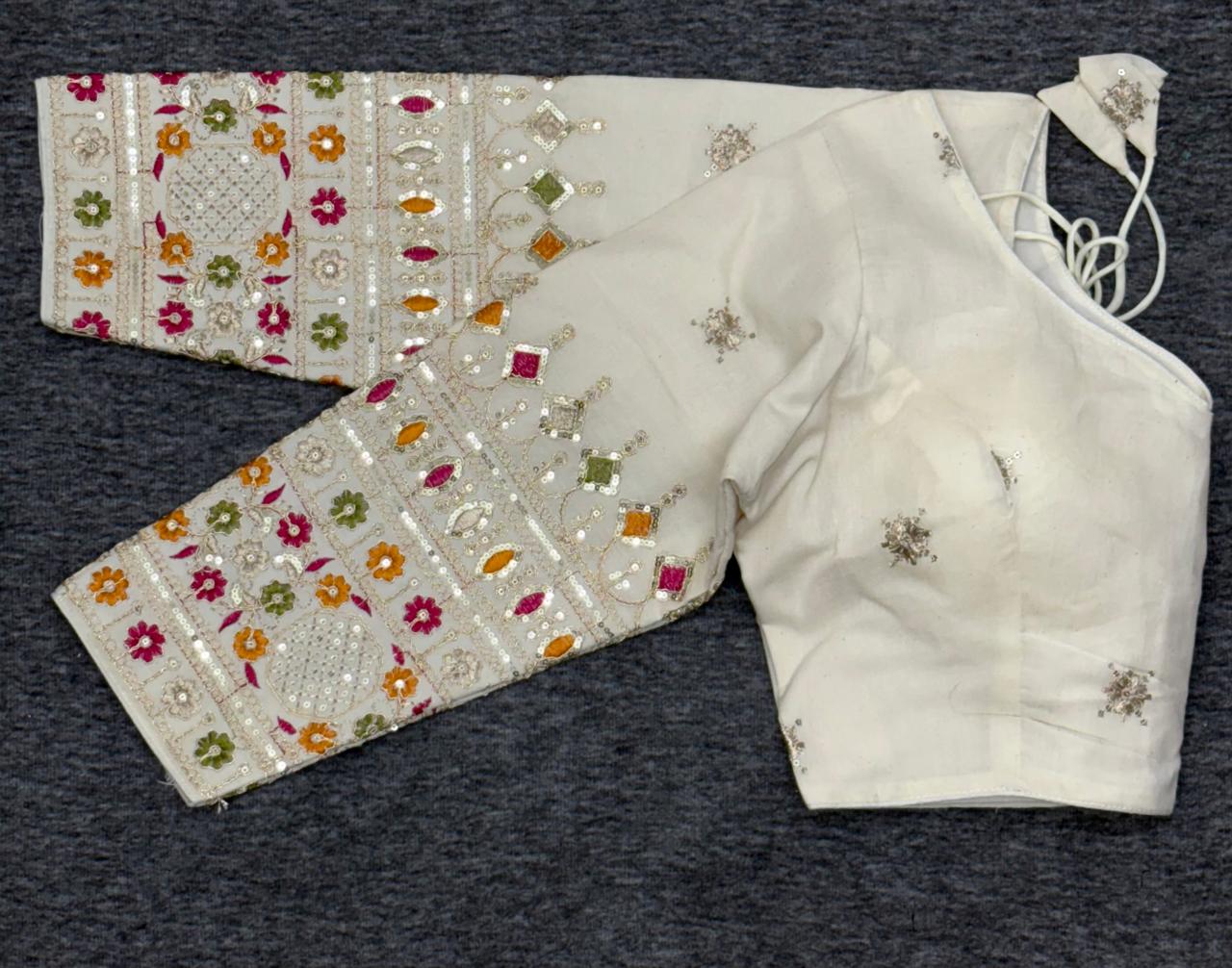
A Banarasi Silk Golden Jari Padded Blouse for Women works best when the saree has enough visual depth to support metallic detail rather than competing with a very busy print. Gold zari can echo a warm border, temple motif or jewellery, while a plain jewel-toned saree can provide the space needed for the blouse to stand out.
Woven fabrics need special attention at the sleeve seam. A dense weave such as Banarasi silk or a zari-rich textile has less forgiveness than soft cotton, so the armhole and sleeve circumference should be measured rather than guessed from the bust size alone. A blouse that fits the bust but pulls across the upper arm will remain uncomfortable throughout a wedding ceremony.
How should silk and zari be balanced?
Silk and zari should be balanced by keeping either the blouse or the saree more visually dominant. A heavily decorated Banarasi silk blouse generally pairs best with a saree that has a controlled print or a simple field.
Metallic detail should be repeated with restraint. A gold-zari blouse can echo a gold border, whereas a silver border may look more harmonious with cooler embroidery or neutral accessories. The Banarasi Silk Golden Jari Padded Blouse for Women is most effective with a saree that contains a gold element, but it can also anchor a plain jewel-toned drape.
Three-Quarter Sleeve Blouses for Comfort Balance and Fabric Pairing by saree weight
The blouse should usually match the saree's visual and physical weight rather than copy its exact fabric. Light sarees benefit from blouses that provide enough structure, while heavy sarees need sleeves that don't add unnecessary bulk around the shoulder and arm.
What works with cotton sarees?
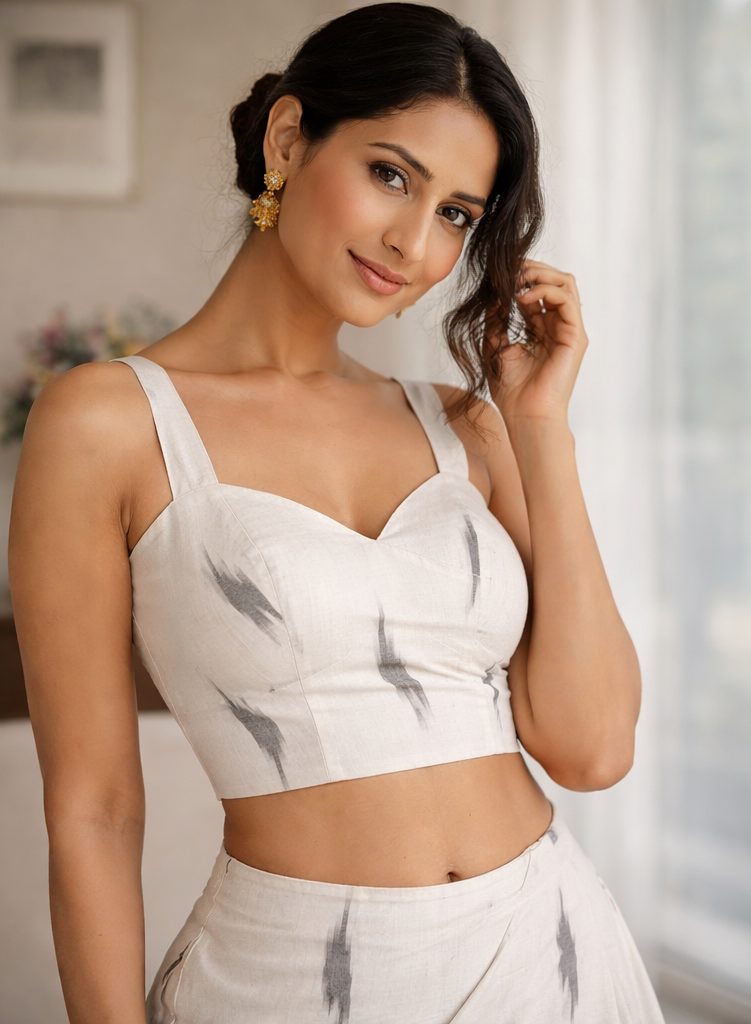
Light to medium-weight cotton sarees pair well with cotton, Kalamkari cotton or lightweight Ikat blouses. A three-quarter sleeve in breathable cotton keeps the outfit practical for office gatherings, daytime pujas and summer celebrations.
Choose a related colour from the saree border for a quiet combination, or use a contrasting earthy shade when the saree pattern is small. A padded cotton blouse can give a thin saree a cleaner fall, but excessive padding may feel warm and can make a soft cotton drape appear stiff.
What works with silk sarees?
Silk sarees need blouses with enough body to support the drape, but a matching silk blouse isn't mandatory. Banarasi silk, structured cotton and carefully lined woven fabrics can all work if the colour and surface finish relate to the saree.
A three-quarter sleeve keeps a silk blouse from becoming visually heavy when the saree has a broad border or dense pallu. Narrow sleeve piping, a clean cuff or a small zari detail can connect the blouse to the saree without repeating every motif.
What works with a Designer saree?
A Designer saree with sculptural pleats, a dramatic pallu or prominent embroidery usually benefits from a simpler sleeve line. A Classic Festive Wear Blouse for Stylish Saree Look illustrates this approach: the blouse supplies a polished festive base while allowing the saree to remain the main focal point.
Designer readymade blouses are useful when the wearer wants a finished neckline, padding and sleeve construction without commissioning a custom piece. Readymade sizing still requires care because brands vary in armhole depth, bust ease and sleeve circumference. Measurements taken over the intended innerwear are more reliable than selecting a size from bust measurement alone.
Three-Quarter Sleeve Blouses for Comfort Balance and Fabric Pairing by body proportion
Three-quarter sleeves look most intentional when the neckline, shoulder width and sleeve ending create one continuous proportion. The aim isn't to hide a body area but to distribute visual detail so that the blouse supports the saree's shape.
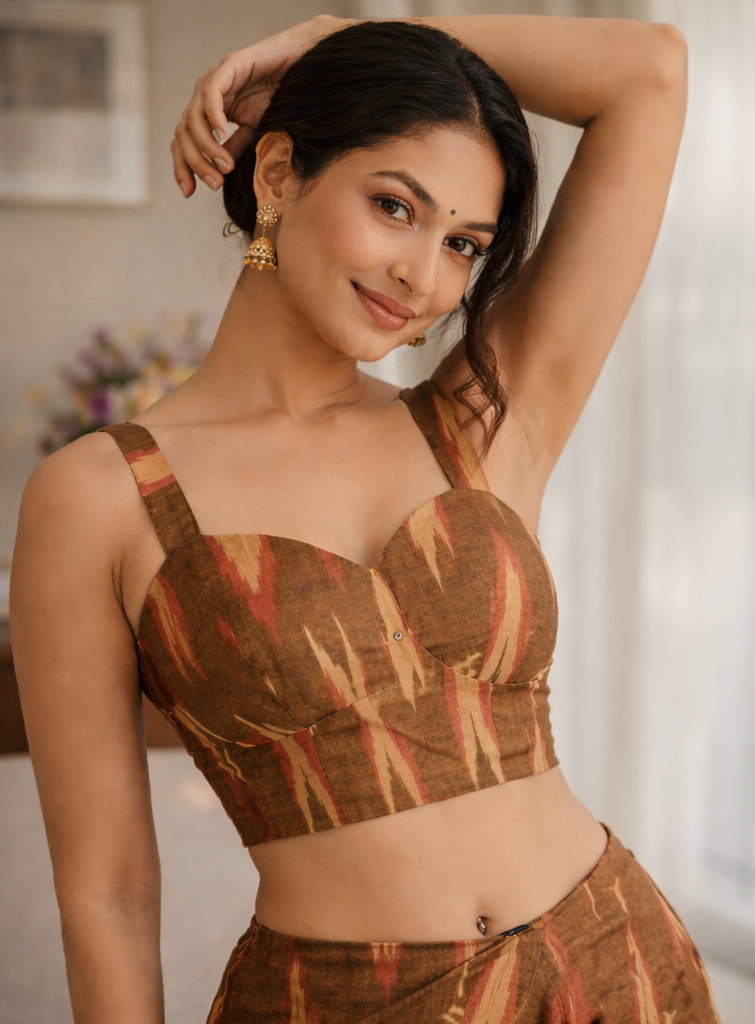
A V-neck can lengthen the appearance of the upper torso, while a collar adds a more tailored line. A round neck with a slightly longer sleeve can feel traditional and balanced, particularly with cotton sarees. Broad contrast borders on the sleeve should be used carefully because a horizontal band at the forearm draws attention to that exact point.
For a shorter torso, avoid placing heavy embroidery simultaneously at the neckline, waist and sleeve cuff. One defined detail is usually enough. For a longer torso, a slightly higher neckline or a decorative sleeve border can add visual structure without requiring a bulky blouse.
Colour placement also affects proportion. A blouse close to the saree colour creates a continuous line, while a contrasting blouse creates a clear upper-body block. A Blue Zari Work Cotton Saree for Wedding can be paired with a blouse that repeats blue for a streamlined effect, or with a gold-toned blouse when the zari needs deliberate emphasis.
Three-Quarter Sleeve Blouses for Comfort Balance and Fabric Pairing: Readymade fit checks
A readymade blouse should be checked at the bust, armhole, shoulder, sleeve and hem before its appearance is judged. A visually attractive blouse isn't a successful purchase if the wearer can't lift the arms or breathe comfortably while seated.
- Check the shoulder seam: the seam should sit close to the shoulder edge without falling down the arm or pulling toward the neck.
- Check the bust: the front should lie flat without gaping at the neckline or creating diagonal strain lines across the chest.
- Check the armhole: lift both arms and rotate the shoulders; pinching near the armpit indicates insufficient depth or ease.
- Check the sleeve: bend the elbow and confirm that the cuff doesn't become restrictive. The sleeve should stay in place without leaving a deep pressure mark.
- Check the back closure: hooks, zippers and padded panels should remain secure when the blouse is worn with the saree pallu.
- Check the seated position: sit for five minutes because a blouse that feels fine while standing may press against the ribs when the waist bends.
Padded blouses can reduce the need for additional inner layers, but padding thickness and placement differ between designs. The Cream Ikat Cotton Padded Blouse Sleeveless Trendy demonstrates how a patterned padded blouse can create shape; a three-quarter sleeve alternative should be assessed for both padding comfort and forearm ease.
Three-Quarter Sleeve Blouses for Comfort Balance and Fabric Pairing: Care and repeat wear
Care instructions should follow the most delicate component of the blouse, especially when cotton is combined with zari, padding, lining or surface embellishment. Cotton can usually be gently hand-washed when the care label permits, while silk and zari commonly require professional dry cleaning.
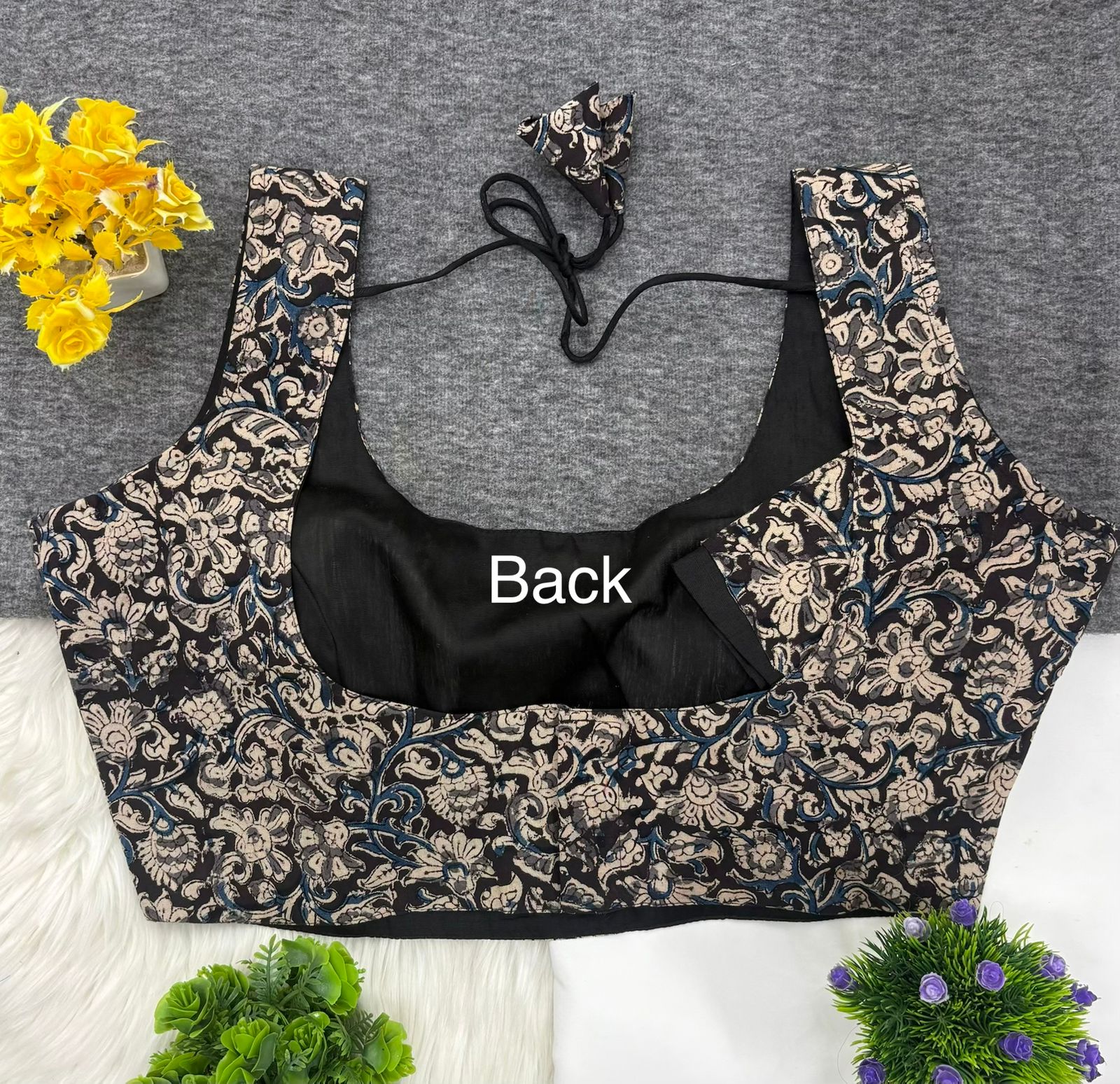
Air-dry blouses away from strong direct sunlight to reduce colour fading and fabric stress. Do not wring padded blouses because twisting can distort the cups and seams. Store structured blouses flat or on a broad hanger, and avoid folding metallic zari directly against rough hooks or sequins.
Allow a blouse to rest and dry completely before storing it in a closed wardrobe. Perspiration around the underarm and sleeve area can weaken fabric over time, particularly in silk and synthetic linings. A breathable cotton garment bag is preferable to airtight plastic for longer storage.
Three-quarter sleeves earn their place in a saree wardrobe when comfort, proportion and fabric are considered together. Cotton supports breathable everyday dressing, silk and zari bring ceremony-ready structure, and a measured readymade fit prevents the sleeve from becoming restrictive. The most versatile choice is the blouse that works with the wearer's movement as confidently as it works with the saree's colour and weight.
Common Questions About Three-Quarter Sleeve Blouses for Sarees
Are three-quarter sleeve blouses comfortable in summer?
Three-quarter sleeve blouses can be comfortable in summer when they use breathable cotton, a non-constricting armhole and a light lining. Cotton and Kalamkari cotton are generally more practical for heat than dense silk, heavy padding or zari-rich fabrics.
What saree fabrics pair well with three-quarter sleeve blouses?
Three-quarter sleeve blouses pair well with cotton, Ikat, silk, Banarasi silk and many medium-weight woven sarees. The blouse should have enough structure for a light saree and enough visual restraint for a heavily bordered or embellished saree.
How should a readymade three-quarter sleeve blouse fit?
A readymade three-quarter sleeve blouse should lie flat at the bust, keep the shoulder seam in place and allow the wearer to raise both arms without pinching at the armhole. The sleeve should end below the fullest part of the forearm and remain comfortable when the elbow bends.
Can a three-quarter sleeve blouse be worn with a Designer saree?
A three-quarter sleeve blouse can be worn with a Designer saree when the sleeve line supports rather than competes with the saree's drape. A simple neckline and controlled embellishment usually work best with sculptural pleats, dramatic pallus or prominent embroidery.
Is cotton or silk better for a three-quarter sleeve blouse?
Cotton is better for breathability, daytime use and repeated wear, while silk is better for a structured festive finish. The best choice depends on the saree weight, weather, duration of wear and the amount of zari or embellishment in the outfit.
How should padded three-quarter sleeve blouses be cared for?
Padded three-quarter sleeve blouses should be washed or dry-cleaned according to the care label and should not be wrung or twisted. Air-dry the blouse away from harsh sunlight and store it flat or on a broad hanger so the cups, seams and sleeves retain their shape.


