

Three Distinct Looks Using One Lehenga for Wedding, Sangeet and Reception is possible when each ceremony receives a different styling language. The skirt supplies continuity, while the blouse, dupatta drape, jewellery, footwear, hair and makeup create visible changes. A practical plan also prevents last-minute discomfort, especially when a sangeet requires dancing, a wedding involves long rituals and a reception calls for polished photographs.
The most versatile base is a lehenga with a clear but adaptable silhouette: a flared skirt, a blouse that can work with more than one drape, and enough surface detail to look festive without dictating one fixed mood. Before shopping, check the lining, waistband, hem weight, blouse closure and dupatta dimensions. Those details matter more than a catalogue label such as bridal, designer or wedding wear.
Three Distinct Looks Using One Lehenga for Wedding, Sangeet and Reception: The Planning Formula
Three Distinct Looks Using One Lehenga for Wedding, Sangeet and Reception works through controlled swaps rather than a complete outfit replacement. Assign the lightest and most mobile styling to the sangeet, the most traditional styling to the wedding and the sharpest styling to the reception.
An effective base formula is one skirt, one adaptable blouse, one dupatta worn in at least two ways and three jewellery combinations. A second blouse adds more variation, but it's not essential. If the lehenga has a strongly embellished blouse, use draping and accessories to change the emphasis. If the skirt is printed or lightly worked, let the blouse and jewellery provide the ceremony-specific character.
Make a simple event chart before buying. Write down the venue, expected temperature, time spent standing, amount of dancing, footwear requirements and whether the ceremony involves head covering. A heavily embellished skirt may suit an evening reception but become tiring at a daytime wedding. A lighter muslin cotton or organza option may be more comfortable for a summer sangeet.
Why does one lehenga need different styling for each ceremony?
Each ceremony places different demands on clothing, so styling should change with movement, ritual and photography. Sangeet dressing needs secure pleats and lighter accessories; wedding dressing benefits from a more traditional drape and formal jewellery; reception dressing can use cleaner lines, elevated hair and sharper accessories.
Colour also changes under venue lighting. Mirror work catches stage lights at a sangeet, while zari and warm metallic jewellery appear more balanced in a wedding mandap. Reception lighting often rewards a defined blouse neckline, sleek drape and controlled shine rather than several competing reflective surfaces.
Three Distinct Looks Using One Lehenga for Wedding, Sangeet and Reception: The Dance-Friendly Sangeet Version
The sangeet look should prioritise movement, secure fastening and lightweight decoration. Wear the lehenga with a fitted or structured blouse, keep the dupatta pinned diagonally across the torso, and choose footwear that remains stable during dancing.
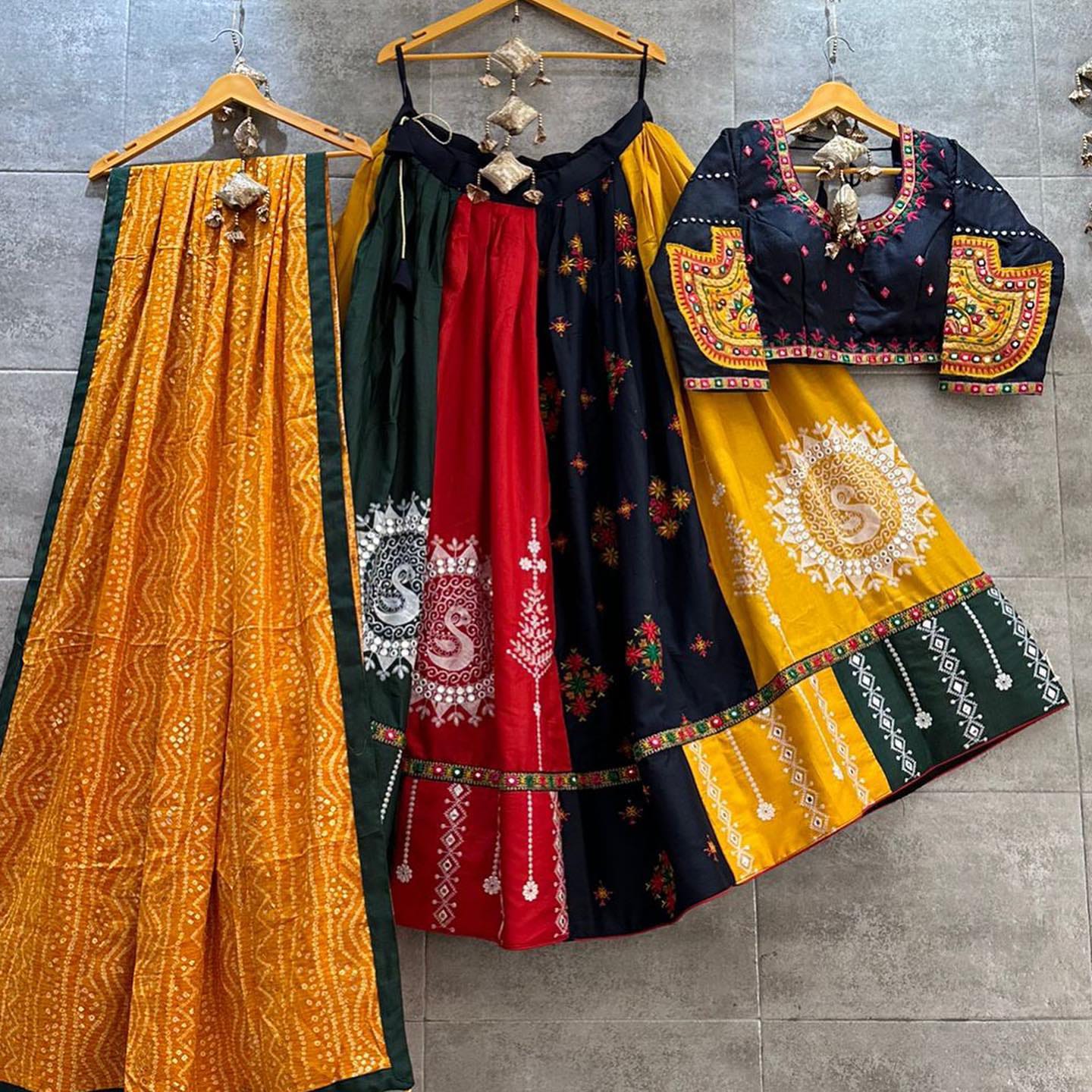
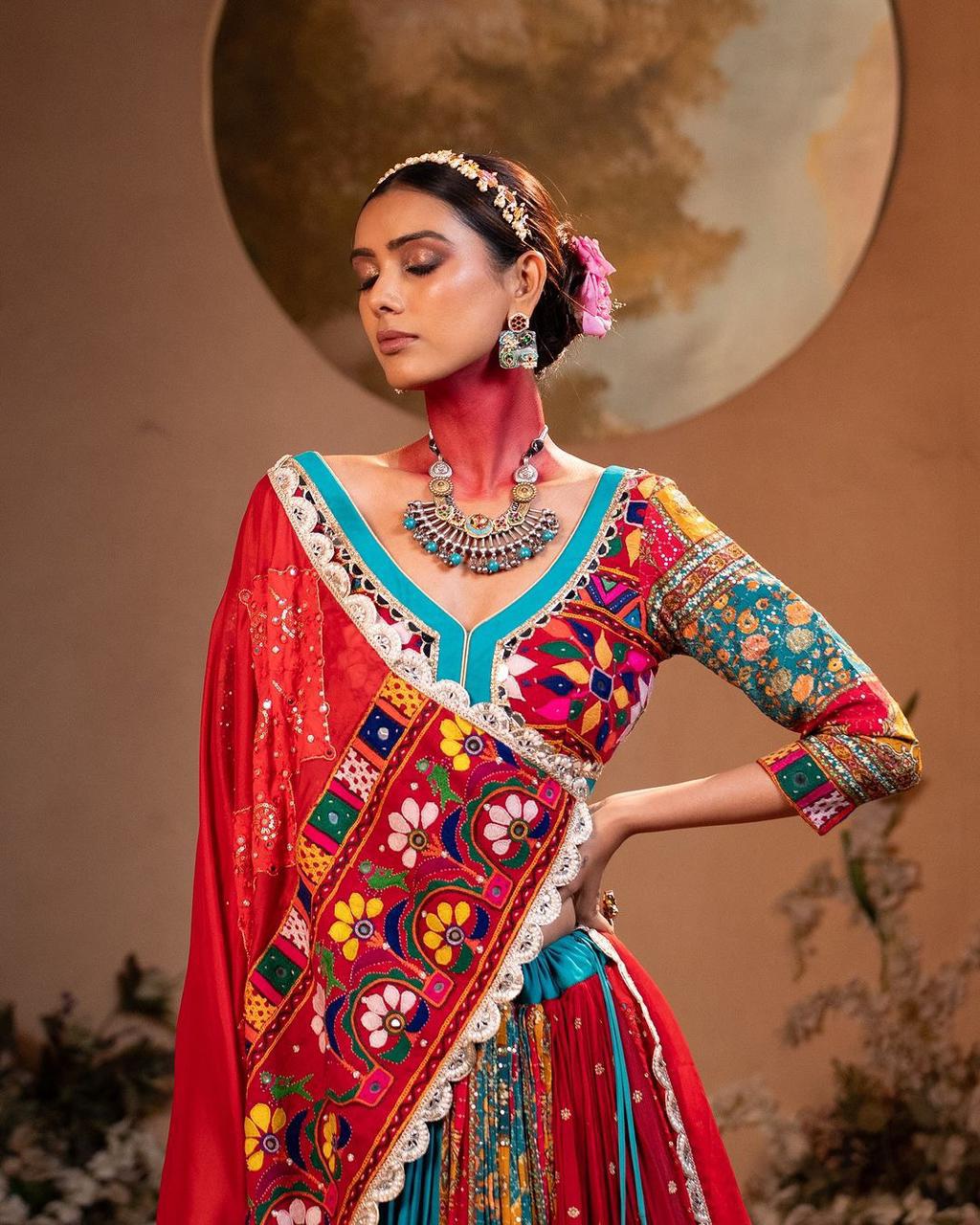
Stylish Multicolor Butter Silk Lehenga Choli Set can support a lively sangeet direction because multicolour dressing gives you several accent shades to repeat in bangles, earrings or footwear. Red Multicolor Butter Silk Mirror Work Lehenga Set creates a more dramatic stage presence, but mirror work should be balanced with smaller earrings if the venue has strong spotlights.
For fully stitched choli shopping, inspect the armhole depth and bust closure before ordering. A choli that looks fitted in a product image may restrict arm movement during choreography if the sleeve opening is narrow. Check whether the waist fastening uses hooks, a side zip or a tie-up, and arrange a trial at least seven days before the event.
How should a lehenga dupatta be draped for a sangeet?
A pinned shoulder-to-waist drape is usually the most practical sangeet style because it keeps the fabric away from the hands and reduces the chance of slipping while dancing. Make narrow front pleats, place the dupatta over the less active shoulder, and secure the shoulder and waist with discreet safety pins.
Choose a cropped or waist-length blouse only when the skirt waistband sits securely. A longer blouse can provide extra coverage and create a contemporary lehenga-choli silhouette without affecting movement. Avoid stacking heavy bangles on both arms if you'll perform, because bangles can catch on net, sequins and embroidered sleeves.
Try jhumka-style earrings, a compact potli or a small clutch, and block heels between 1.5 and 2.5 inches. A three-minute movement test at home, including walking quickly, raising both arms and sitting on a chair, will reveal more than a mirror check. Use two or three hidden pins rather than many visible pins that can distort the dupatta border.
Three Distinct Looks Using One Lehenga for Wedding, Sangeet and Reception: The Traditional Wedding Version
The wedding look should feel more ceremonial through the dupatta, jewellery and colour placement rather than through unnecessary layers. Drape the dupatta over the head or across both shoulders, add a longer necklace or layered haar, and choose footwear that supports several hours of standing.
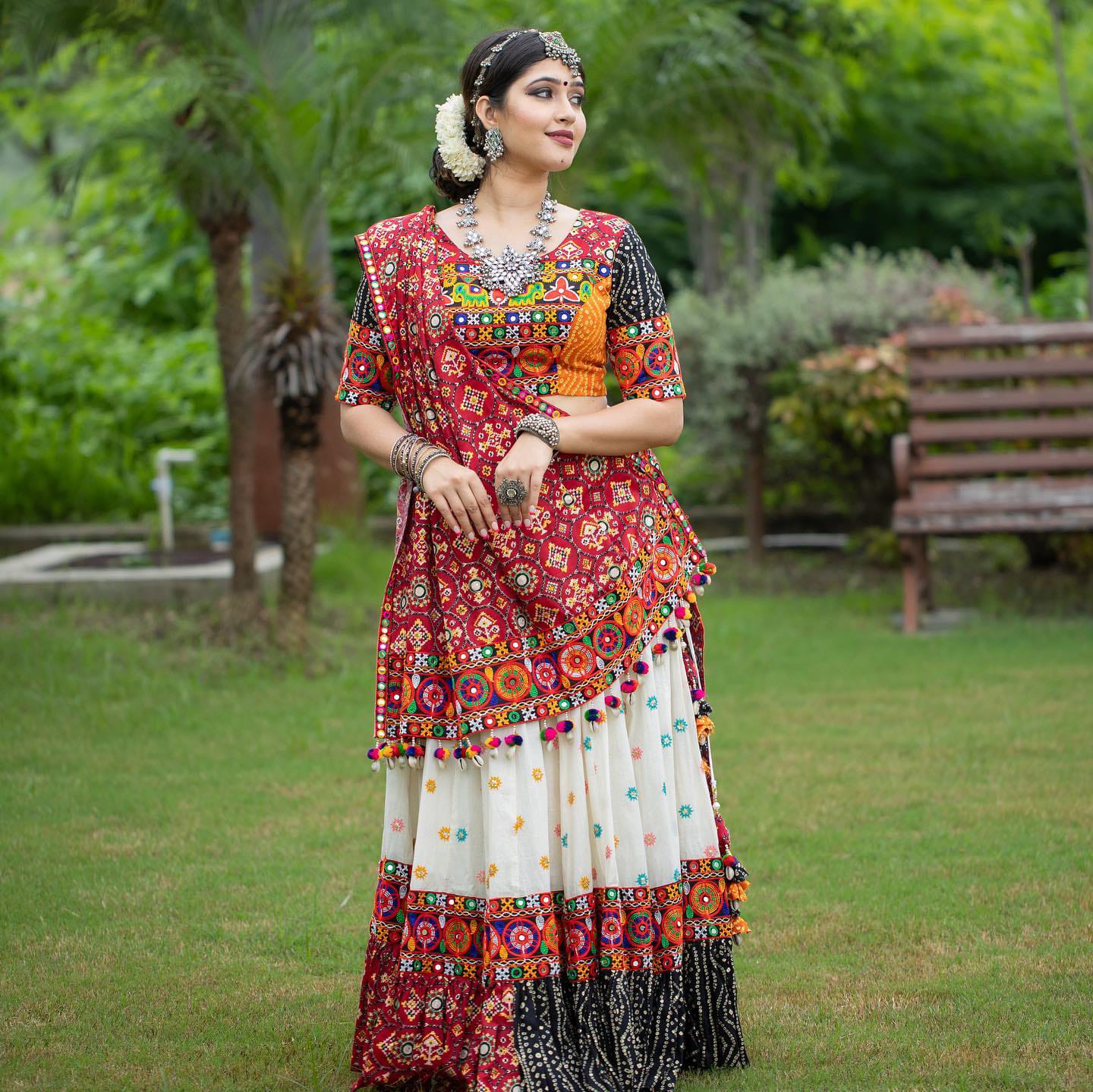
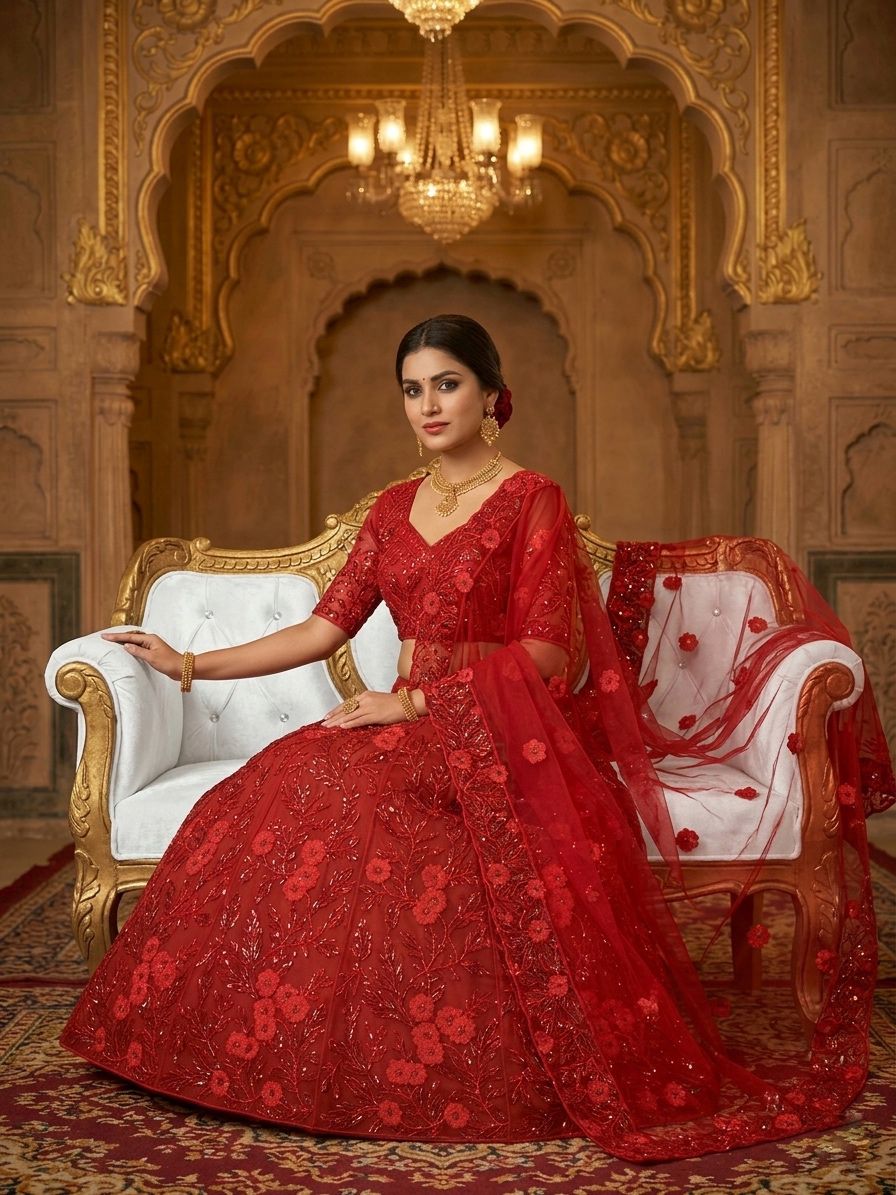
Mint Embroidered Lehenga Set with Net Dupatta for Women can move toward a softer wedding mood when paired with kundan, pearls or antique-gold accents instead of bright costume jewellery. Red Butterfly Net Sequins Lehenga Set Wedding Wear can look more heritage with a contrast dupatta draped over the head and gold-toned accessories.
When one skirt has a multicoloured surface, select one dominant colour for wedding accessories. Repeating every shade in the jewellery can make the outfit look busy. A single colour story, such as gold with red, pearls with mint or emerald accents with a neutral blouse, creates a clearer portrait around the face.
What makes the same lehenga look more bridal or ceremonial?
A head-covering drape, formal necklace, defined maang tikka, richer makeup and traditional footwear make the same lehenga read as more ceremonial. The visual change comes from framing the face and shoulders, not from adding the maximum possible amount of embellishment.
Keep the dupatta border visible in photographs by placing the front edge slightly away from the chin and securing the fabric at the crown with a small pin. A net dupatta may need a soft fabric grip or two hidden pins because smooth hair and lightweight net can cause gradual slipping. Test the drape while sitting, standing and turning before the wedding day.
For family photographs, coordinate the accessory metal with the embroidery. Zari, antique gold, kundan and polki-inspired pieces generally sit comfortably with warm embroidery, while silver-toned stones can sharpen a mint, green or cool pastel palette. Green Lehengas and Yellow Lehengas can provide useful colour references when planning accent shades for a wedding wardrobe.
Three Distinct Looks Using One Lehenga for Wedding, Sangeet and Reception: The Refined Reception Version
The reception look should use cleaner lines, concentrated sparkle and a more sculpted silhouette. Remove the head drape, wear the dupatta over one shoulder or pleat it narrowly at the elbow, and let the blouse neckline, earrings and hairstyle carry the formal finish.
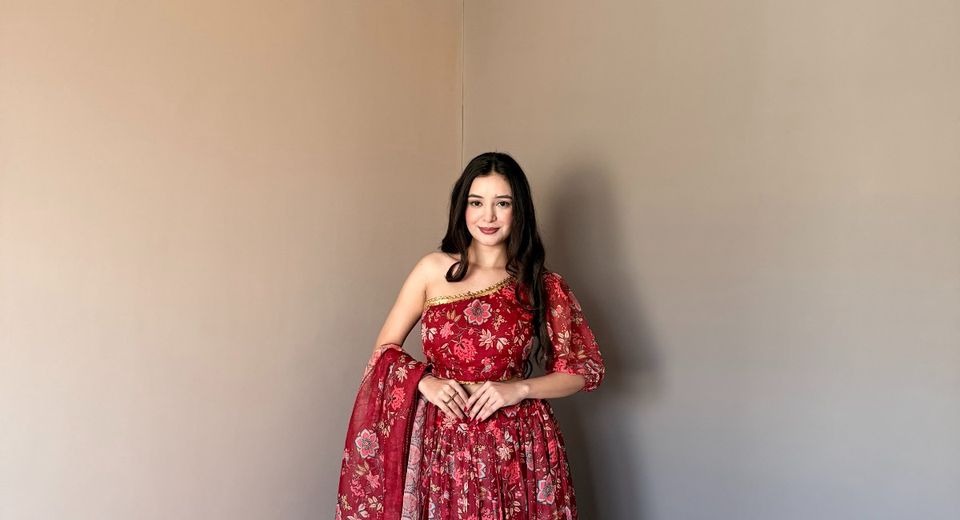
Red Floral Organza Lehenga Set with One Shoulder Blouse can illustrate a modern reception direction because an asymmetric blouse already creates a strong focal point. Keep the necklace short or skip it altogether, then use drop earrings and a sleek low bun to prevent the shoulder detail from competing with heavy jewellery.
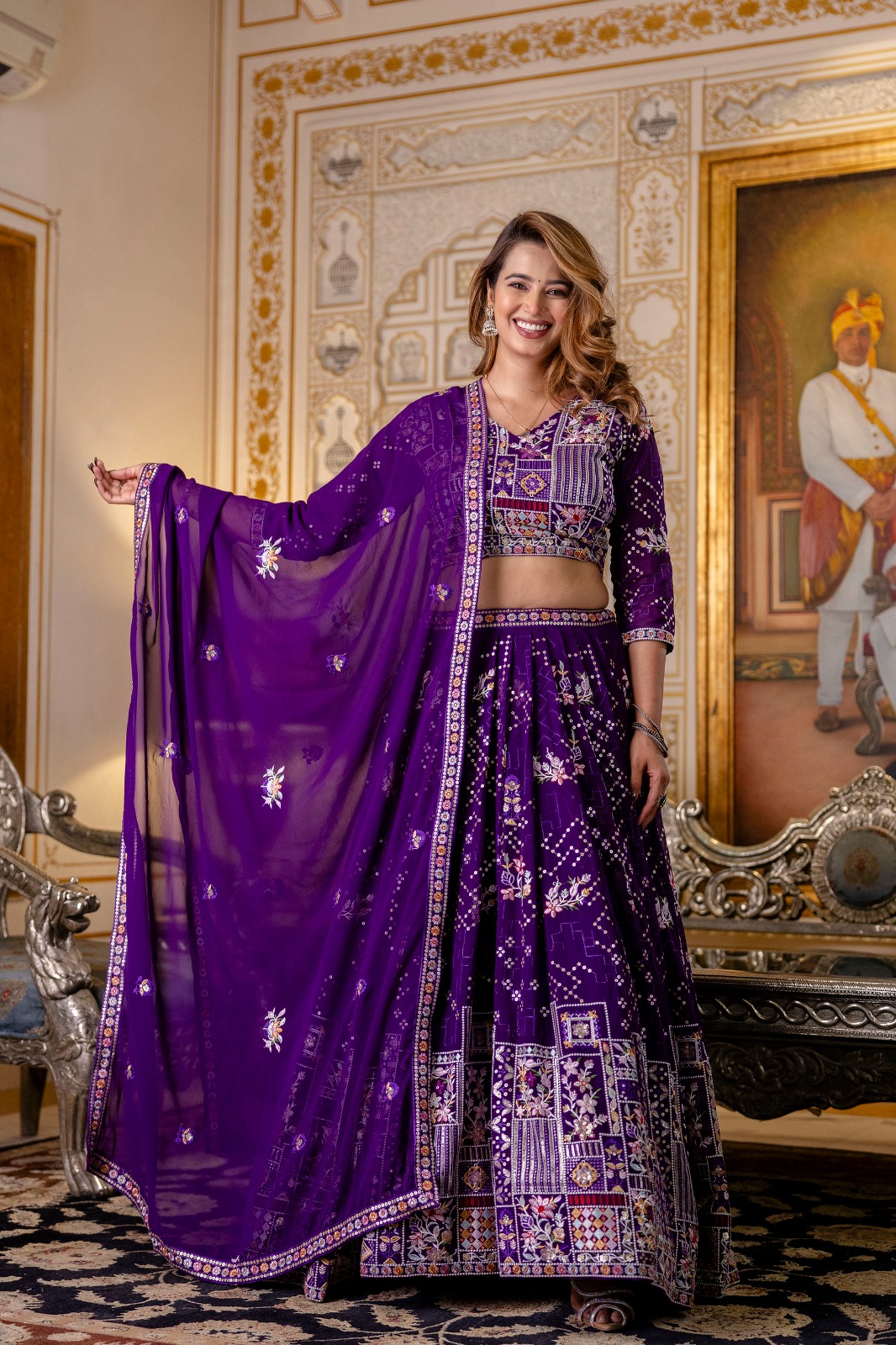
Designer Threadwork Silk Lehenga Choli Set with Dupatta can take a polished route with a narrow, sharply pressed dupatta drape and metallic heels. For Multicolor Printed Butter Silk Lehenga Choli Set, choose one print colour for the clutch and keep the remaining accessories neutral. A printed skirt doesn't need a second statement print in the blouse or handbag.
Which accessories create a reception-ready lehenga look?
Statement earrings, a structured clutch, a defined hairstyle and refined heels create a reception-ready lehenga look without changing the skirt. Select one dominant accessory rather than combining a large necklace, oversized earrings, heavy bangles and a prominent hair ornament.
Reception photographs often include close portraits, so pay attention to the blouse neckline, shoulder finish and hairline. A clean bun, low ponytail or controlled waves can expose embroidery that disappears under loose hair. Use a setting spray suited to your skin type, but avoid testing a new complexion product on the event day.
A 2-inch block heel is safer than a narrow stiletto if the reception includes a lawn, uneven flooring or extended standing. Carry foldable flats only if the skirt length allows them without dragging. A tailor can usually adjust a hem, but a last-minute shoe-height change can alter the entire fall of a lehenga.
Three Distinct Looks Using One Lehenga for Wedding, Sangeet and Reception: Choosing the Base
The best three-event base has a reusable skirt, a comfortable blouse and a dupatta that can be pinned securely in more than one position. Medium-weight butter silk, organza, net and silk blends can work, but the exact choice depends on embellishment, lining and climate.
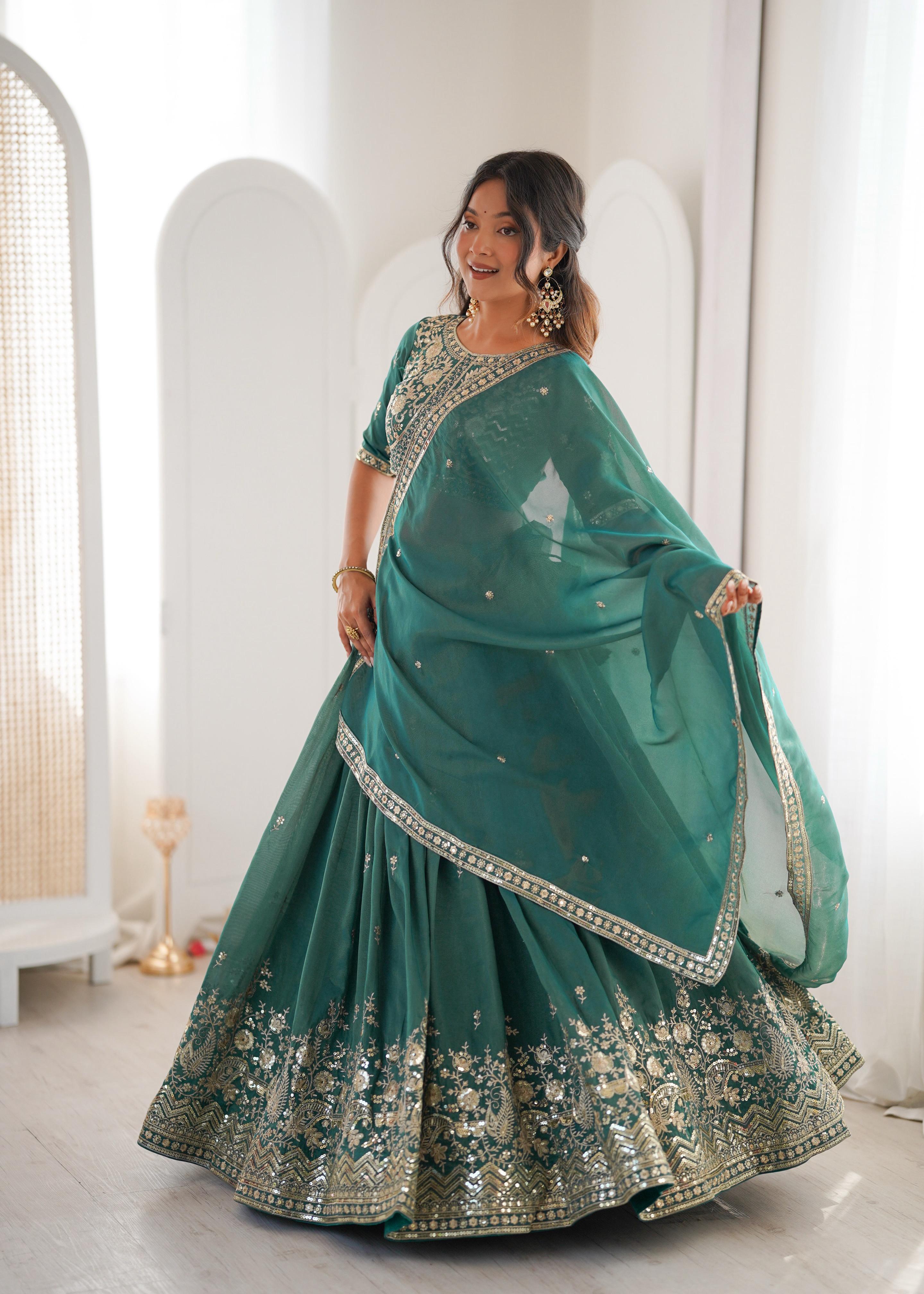
Multicolor Mirror Work Muslin Cotton Lehenga Choli Set offers a different styling opportunity from a dense bridal skirt because muslin cotton can support a lighter, more breathable event plan. Use a breathable base for a daytime or warm-weather celebration, then increase formality with a structured blouse, formal jewellery and a sharper drape.
Ready Made Lehenga options reduce construction time, but sizing must be checked carefully. Measure the natural waist, high hip, full hip and blouse bust while wearing the undergarments planned for the event. A readymade waistband that's 2 inches too loose may shift while walking, whereas a blouse that's 1 inch too tight across the bust can restrict arm movement.
Is a readymade lehenga better than a semi-stitched lehenga?
A readymade lehenga is better for predictable delivery and immediate wear, while a semi-stitched lehenga is better when precise tailoring is more important than speed. A semi-stitched garment can accommodate some waist and blouse adjustments, but it still requires a competent tailor and extra time.
The Semi Stitched Lehengas Collection may suit shoppers who already know a reliable tailor or need specific blouse coverage. A ready-made set is more practical for girls, guests and busy shoppers who need a finished outfit, provided the measurement chart matches the body measurements and not merely a usual clothing size.
Check the return or alteration terms before placing an order, especially when buying a designer or bridal style. Photograph the garment immediately after opening the package, inspect the hem and closures, and schedule alterations early. Do not wait until the week of the wedding to discover that a heavy skirt needs a stronger hook or waist stay.
Three Distinct Looks Using One Lehenga for Wedding, Sangeet and Reception: Dupatta, Blouse and Jewellery Swaps
The most visible transformation usually comes from changing the frame around the upper body. A cross-body sangeet drape, head-covering wedding drape and narrow reception drape can make one skirt appear substantially different in photographs.
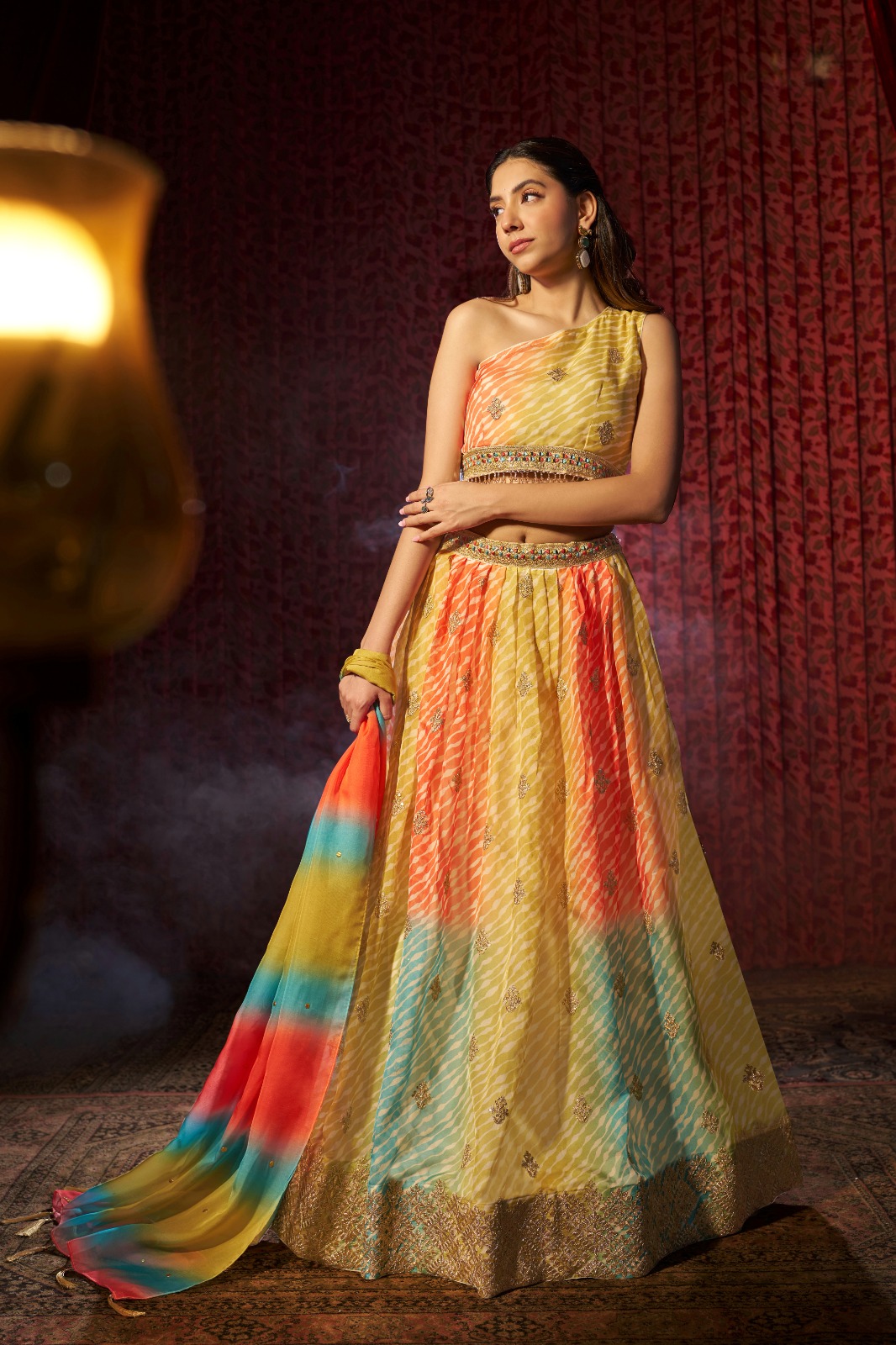
If you own a spare blouse, pair a high-neck or long-sleeved blouse with the wedding version and a sleeveless, one-shoulder or contemporary blouse with the reception version. Keep the blouse colours connected to the skirt through one repeated shade. A contrasting blouse works best when the contrast appears intentionally in the border, embroidery or jewellery.
Jewellery should follow the scale of the garment. Mirror work and sequins already reflect light, so smaller earrings may be enough for a stage-lit sangeet. A silk skirt with threadwork may support a longer necklace at the wedding. A reception outfit often benefits from a single pair of sculptural earrings and a clean bracelet rather than a complete bridal jewellery set.
Mehendi Lehengas can offer useful styling cues for a relaxed daytime palette, while Green Lehengas can be adapted with gold, pearl or antique-finish accessories. Yellow Lehengas work well with marigold-inspired accents, but the same colour logic can be applied to another skirt by repeating one warm accessory shade.
Three Distinct Looks Using One Lehenga for Wedding, Sangeet and Reception: Fitting, Packing and Care
Testing the complete outfit before each event is the simplest way to prevent a wardrobe failure. Wear the planned undergarments, blouse, skirt, dupatta, jewellery and shoes together for at least 20 minutes, then walk, sit, raise both arms and use the restroom.
Pack each look separately in a breathable garment bag rather than compressing embellished clothing into a suitcase. Place tissue paper between sequins, mirror work or metallic embroidery to reduce snagging. Keep safety pins, fashion tape, a needle, matching thread, stain-removal wipes and a small sewing kit in the emergency pouch.
Air the lehenga after wearing it and remove visible dust with a soft, dry brush. Do not machine wash silk, organza, net, mirror work or heavily embroidered garments unless the care label specifically permits it. Professional dry cleaning is generally safer for substantial embellishment, while folded storage in a clean cotton cover can protect the outfit between events.
When the same lehenga is worn on consecutive days, vary the contact points as much as possible. Change the blouse liner or inner layer, air the waistband, and allow perspiration to dry before packing. These small steps reduce odour, friction and stress on the lining without changing the garment's appearance.
Three Distinct Looks Using One Lehenga for Wedding, Sangeet and Reception: A Simple Decision Checklist
Choose the sangeet styling first if dancing or extended movement is involved. Choose the wedding styling second by deciding whether the dupatta will cover the head and which jewellery will frame the face. Choose the reception styling last by removing visual layers and sharpening the silhouette.
- Check the base: confirm that the waist, blouse bust, hem and lining are comfortable.
- Plan the sangeet: secure the dupatta, select stable shoes and limit jewellery that catches during movement.
- Plan the wedding: prepare the head drape, formal necklace, maang tikka and a comfortable underlayer.
- Plan the reception: expose the blouse detail, use statement earrings and choose a structured clutch.
- Test everything: complete a 20-minute trial at least one week before the first event.
- Pack intelligently: separate each accessory set and protect embellishment with tissue paper.
The result isn't three unrelated costumes but three coherent moods built from one well-chosen foundation. Thoughtful changes to proportion, shine, movement and face framing are enough to make a readymade lehenga feel new across a sangeet, wedding and reception.
Common Questions About Styling One Lehenga for Three Wedding Events
Can one lehenga really work for a sangeet, wedding and reception?
Yes, one lehenga can work for all three events when the blouse, dupatta drape, jewellery, hairstyle and footwear change. Use a secure, lightweight styling plan for the sangeet, a traditional drape for the wedding and a cleaner silhouette for the reception.
What type of lehenga is easiest to rewear across wedding functions?
A medium-weight lehenga with a comfortable waistband, adaptable blouse and usable dupatta is easiest to rewear. Solid or multicolour skirts with one strong accent shade usually offer more styling flexibility than a heavily themed bridal design.
How can I style one lehenga differently for a sangeet?
Pin the dupatta diagonally across the torso, wear stable block heels and choose lighter jewellery for a sangeet. Test arm movement, sitting and walking before the event because a tight blouse or loose waistband can become uncomfortable during dancing.
Is a fully stitched choli better for wedding shopping?
A fully stitched choli is better when you need a finished outfit quickly and the measurement chart matches your body. A semi-stitched choli is more adjustable but requires a dependable tailor and should be completed at least one week before the event.
How should I care for a lehenga after wearing it?
Air the lehenga before storing it, brush away surface dust gently and follow the care label for cleaning. Protect sequins, mirror work, net and zari with tissue paper, and use professional cleaning for heavily embellished silk or organza garments.
Which jewellery works with the same lehenga at different ceremonies?
Use compact earrings and limited bangles for the sangeet, a necklace and maang tikka for the wedding, and statement earrings with a structured clutch for the reception. Matching the jewellery metal to the embroidery keeps all three versions visually connected.


