A delicate saree can be ruined by one careless hook, rough bead or open bangle. The Jewellery Pieces Most Likely to Catch on Delicate Sarees usually have exposed prongs, textured edges, loose chains or wide gaps that grip the weave while you move. Tissue, linen cotton, crystal-blend and fine silk sarees need jewellery chosen for both appearance and surface safety. The right pairing keeps a pastel drape polished without sacrificing the saree's fall, border or pallu.
Why delicate sarees snag more easily
Delicate sarees snag because fine yarns and open surface textures can catch against rough or protruding jewellery components. A tissue weave may have a lightly structured, crisp surface, while linen cotton can have small slubs that invite friction. Floral prints don't necessarily make a saree fragile, but a fine printed base can still pull when a sharp ornament drags across it.
Zari requires particular care because metallic threads can flatten, shift or catch when they meet a rough metal edge. A soft Banarasi silk saree with a smooth zari border may tolerate more contact than a lightweight tissue saree, but neither fabric benefits from repeated rubbing. Kanjeevaram silk is generally more substantial, yet a pointed pendant or unpolished bangle can still damage zari and embroidery.
The highest-risk areas are the shoulder pleats, underarm line, pallu edge and waist where jewellery meets the saree during walking or sitting. Necklaces often catch at the pallu, bangles rub against the pleats, and long earrings can touch the upper border when the head turns. Identifying these contact points before dressing makes jewellery selection much easier.
The Jewellery Pieces Most Likely to Catch on Delicate Sarees
The Jewellery Pieces Most Likely to Catch on Delicate Sarees include unsealed kundan settings, long chain tassels, serrated bangles, hook-style earrings, brooches with open pins and rings with raised claws. These designs can look beautiful in a jewellery box but become risky when worn next to tissue, organza-like surfaces, fine cotton or loosely woven silk.
Open-backed earrings and sharp earring hooks
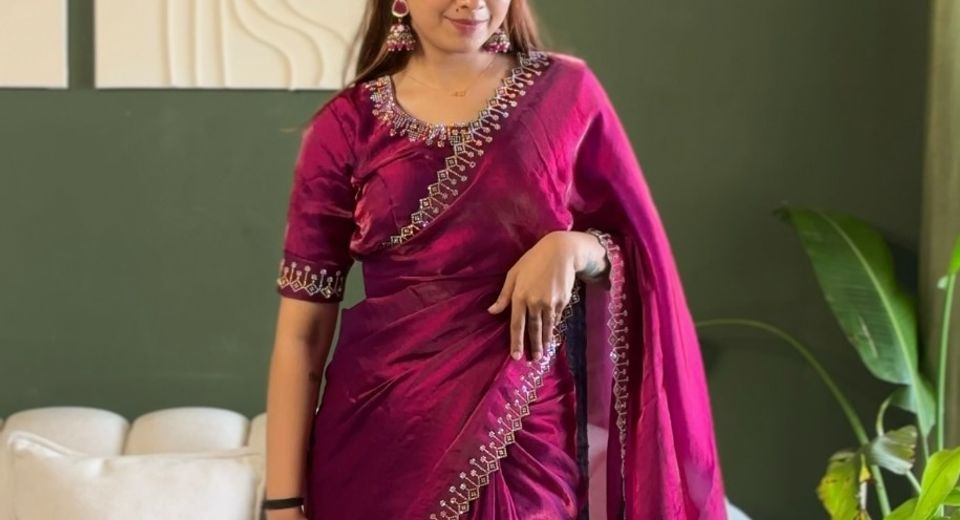
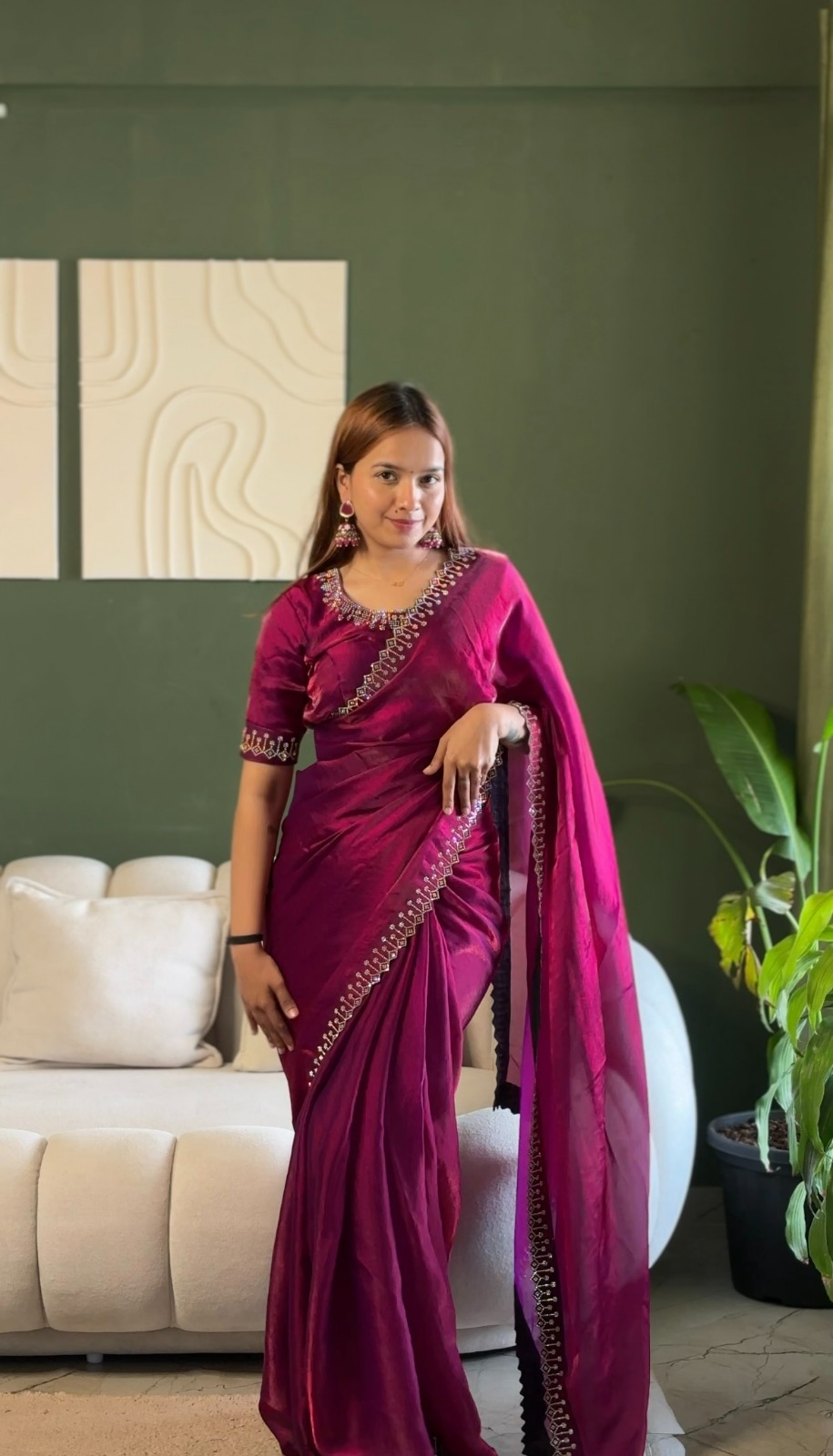
Open-backed earrings and unprotected hooks are among the most common causes of saree snags. A hook can catch the pallu when the wearer turns, while an earring with a pointed rear wire may touch the shoulder pleats. Earrings with a smooth post, secure push-back and rounded underside are safer for delicate drapes.
Jhumkas need a closer inspection because the lower bell may have tiny loops, beads or wire ends. Medium jhumkas with a closed, polished lower edge are safer than oversized designs with dangling chains. Studs, small domes and smooth pearl drops are reliable choices when the saree has a fragile zari weave or a raised floral surface.
Layered necklaces with loose chains
Layered necklaces catch when one chain falls between the pleats or when a pendant swings against the pallu. A single collar, short choker or smooth temple-style necklace normally creates less movement than three separate chains. A necklace should sit above the saree's pallu edge rather than repeatedly sliding across it.
Heavy necklaces can also change the position of a lightweight blouse neckline. A structured blouse with a high or square neckline supports a compact necklace, while a soft, low-cut blouse may allow the ornament to move unpredictably. For an understated saree, a polished pearl strand or a smooth gold-toned chain often provides enough definition without adding snag points.
Rough bangles, cuffs and open bracelets
Rough bangles and open bracelets catch delicate sarees when their edges are serrated, unfinished or decorated with protruding stones. The risk increases when several bangles slide together and create a rough moving surface. Smooth metal bangles, rounded glass bangles and closed cuffs with a finished inner edge are safer alternatives.
Wear fewer bangles on the arm that manages the pallu. The hand that adjusts pleats, carries a clutch or lifts the saree experiences more contact with the fabric. Two or four smooth bangles can create a finished look while leaving enough movement for practical tasks.
Brooches and raised rings
Brooches are high-risk accessories because their pins pierce or press against the saree. A brooch should only be used on a thick, stable border or blouse area after checking that the fastening closes completely. Never push a sharp pin through a lightweight tissue body merely to hold a pallu in place.
Rings with raised claws can catch pleats when fingers pass over the saree. Smooth signet rings, bezel-set stones and rounded bands reduce the risk. A large cocktail ring is better worn on the hand away from the pallu so that the stone doesn't repeatedly meet the fabric.
Safer jewellery choices by saree fabric and surface
Jewellery should match the saree's surface weight, texture and amount of ornament. A smooth accessory can protect a delicate drape, while a highly textured accessory may compete with the weave and create unnecessary friction.
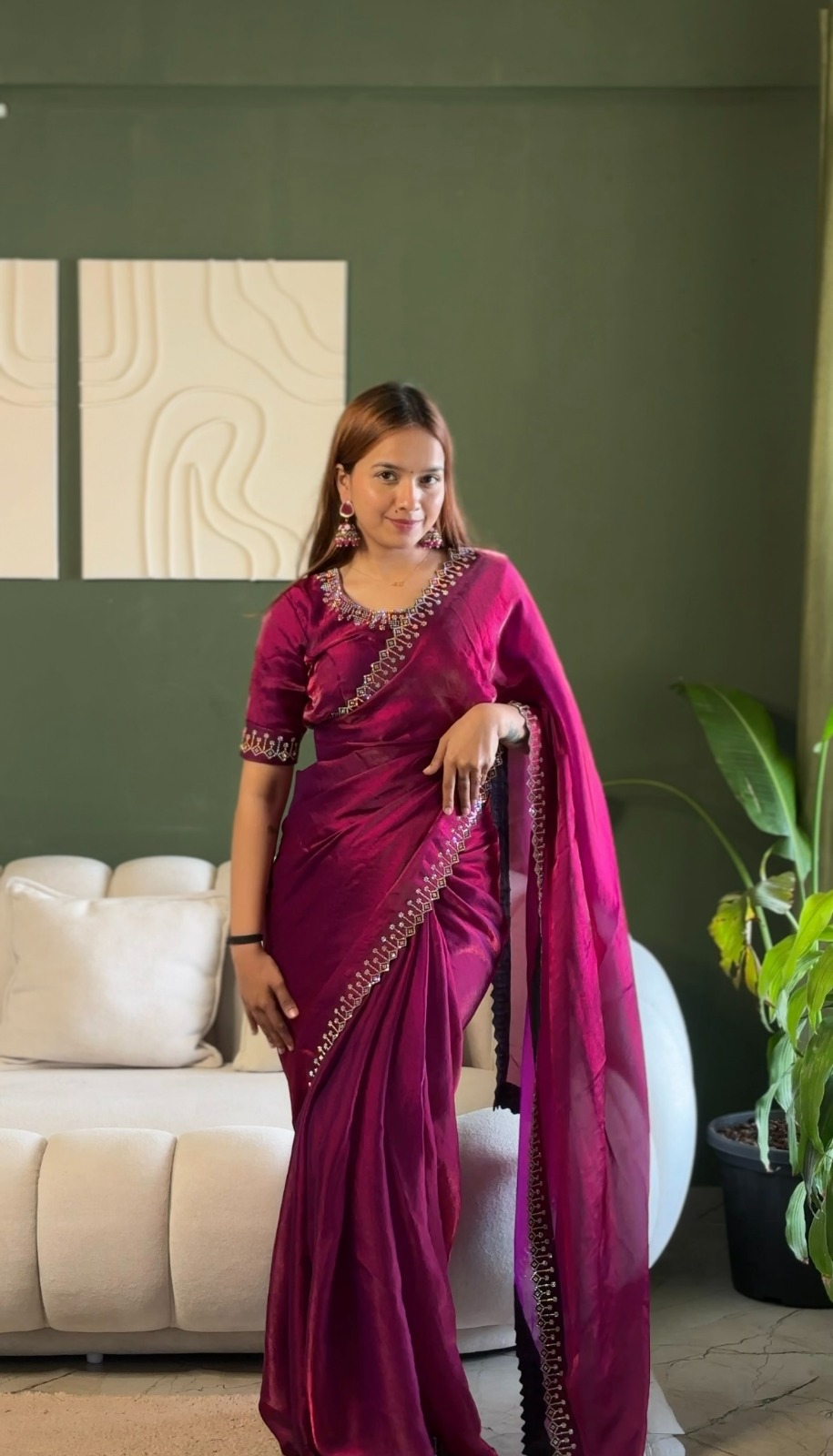
Tissue handloom cotton and zari weaves
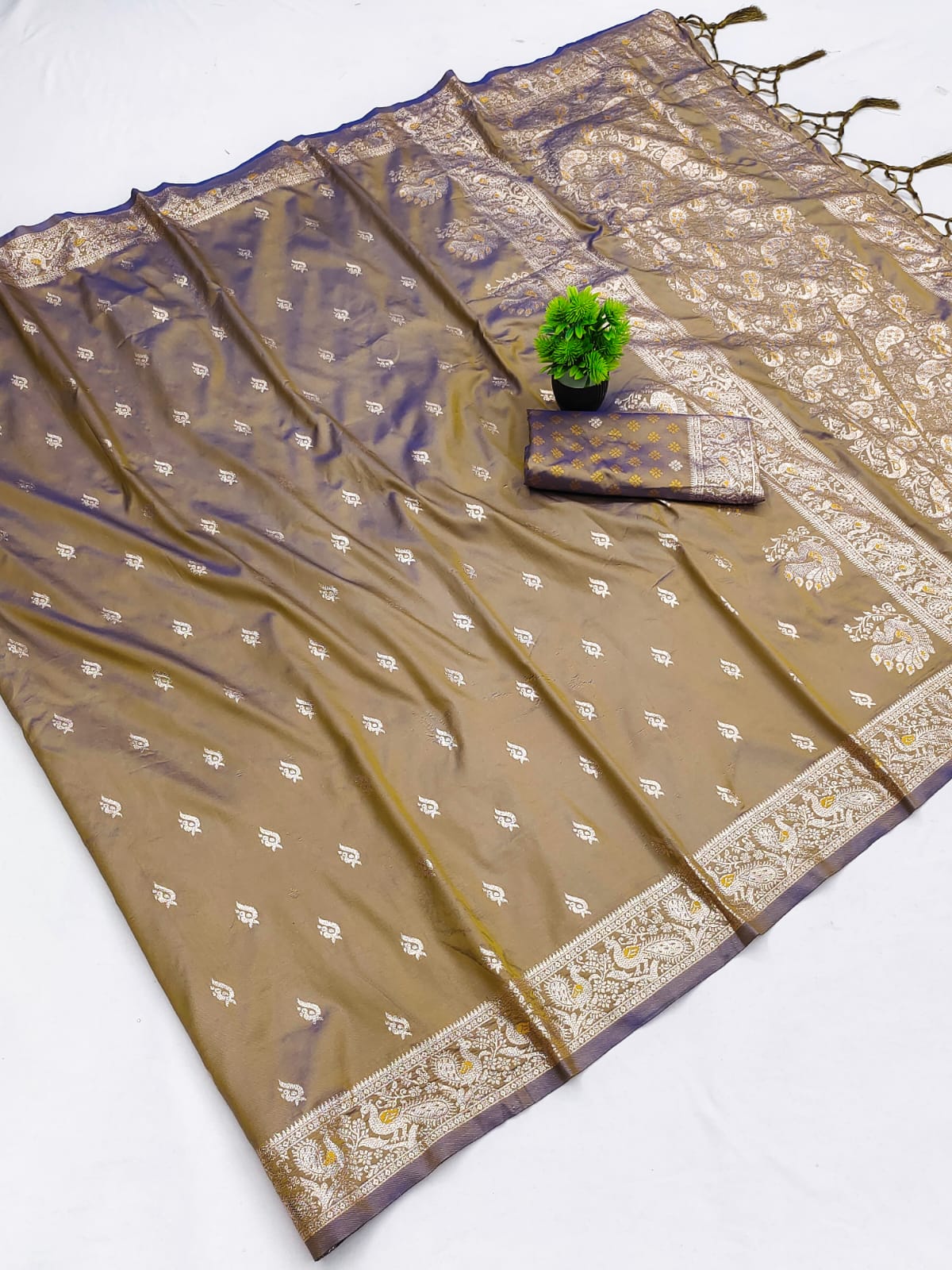
Tissue handloom cotton sarees pair well with compact earrings, smooth bangles and short necklaces with sealed settings. Pastel Floral Tissue Handloom Cotton Saree with Zari Weaves benefits from jewellery that echoes the floral palette without adding rough surface detail. Small pearl studs, rounded gold-toned hoops or a short polished chain keep the zari visible.
Teal Tissue Handloom Cotton Saree with Zari Weave | Varnavi can support warmer metal tones, but a heavy multi-layer necklace may cover the saree's tonal contrast. A pair of medium dome earrings and a single closed bangle provide proportion without dragging across the pallu. Check every earring hook and bangle edge under good light before dressing.
Linen cotton and floral handloom sarees
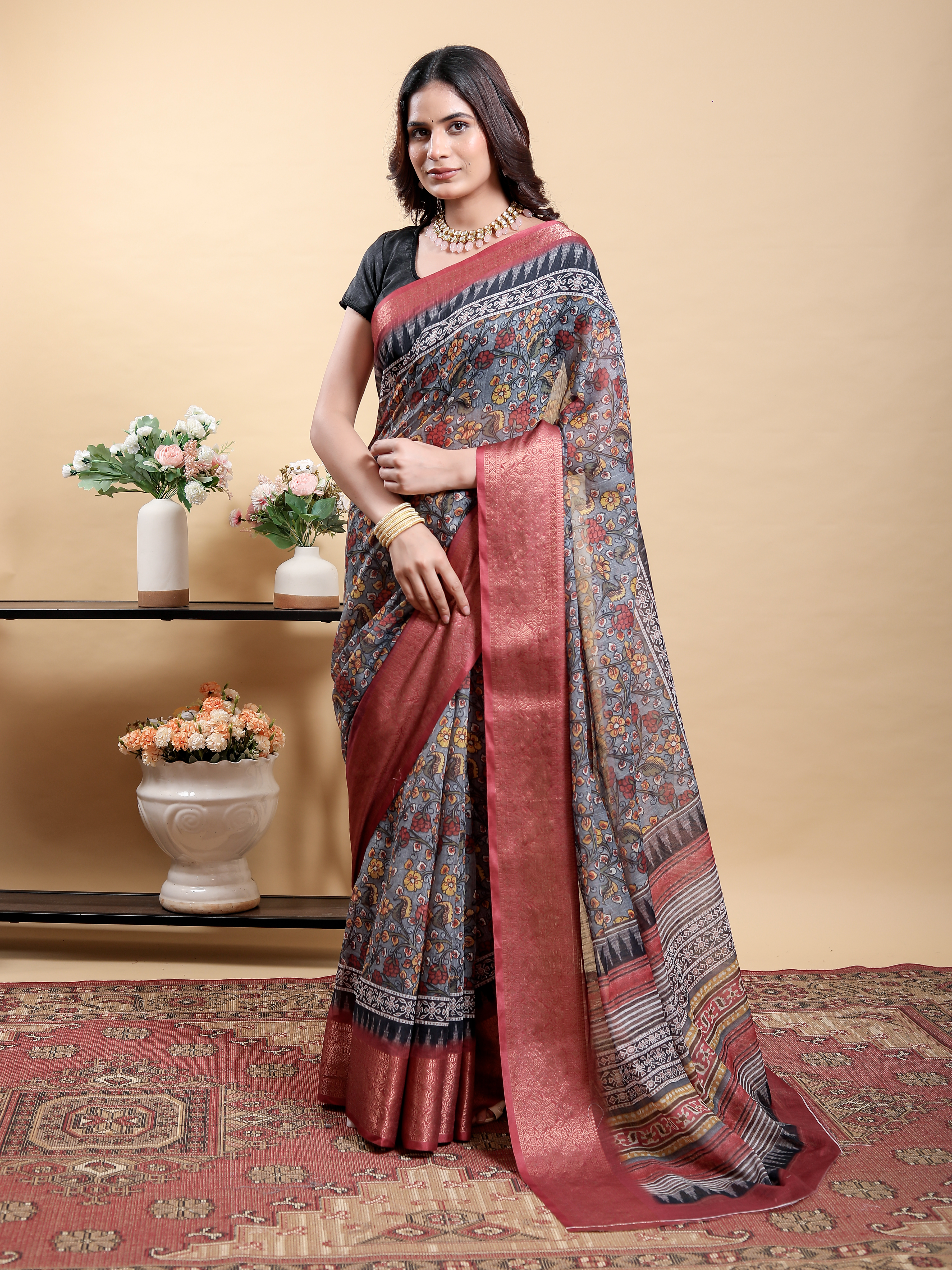
Linen cotton sarees work best with jewellery that acknowledges their matte texture but avoids abrasive edges. Pastel Linen Cotton Floral Print Saree with Designer Blouse can take a smooth pearl drop, a rounded silver-toned earring or a small enamel stud. Avoid heavily serrated oxidised pieces when the linen has visible slubs, because raised fibres can catch on textured metal.
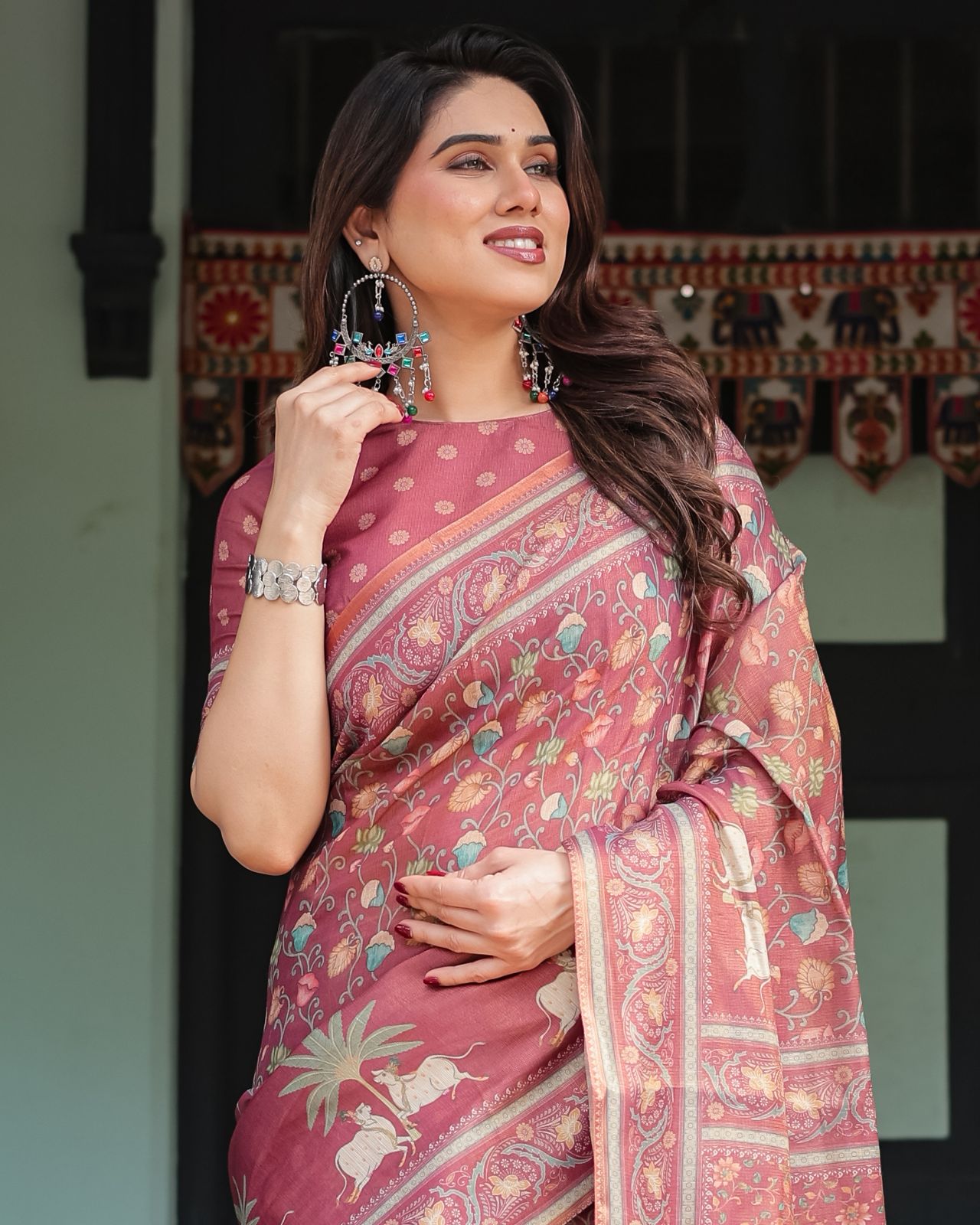
Dusty Rose Floral Handloom Saree with Heritage Pallu already carries visual detail through its print and pallu. A clean collar necklace or small floral studs will frame the face without creating a second busy zone. The heritage pallu should remain visible instead of being covered by a long pendant that swings over its motifs.
Crystal-blend and silk sarees
Crystal-blend sarees need smooth, lightweight jewellery because reflective surfaces can make every accessory appear more prominent. Ivory Floral Crystal Blend Saree with Rose Gold Border suits bezel-set rose-gold earrings, a fine bracelet or a short strand of smooth beads. Claw-set crystal jewellery should be kept away from the pallu edge and shoulder pleats.
Pastel Aqua Lichi Silk Saree with Rich Jacquard Border can carry a more defined necklace because lichi silk and a jacquard border provide visual structure. Choose a closed pendant or rounded choker rather than a long chain with loose links. Pink Gold Zari Banarasi Lichi Silk Saree With Blouse can support traditional gold-toned earrings, but a smooth finish still matters near the zari border.
How to match jewellery scale with a delicate saree
Jewellery scale should be determined by the saree's border, blouse neckline and surface detail rather than by the wearer's desire for a statement look alone. A narrow border usually suits compact jewellery, while a broad jacquard or zari border can balance a larger but controlled ornament.
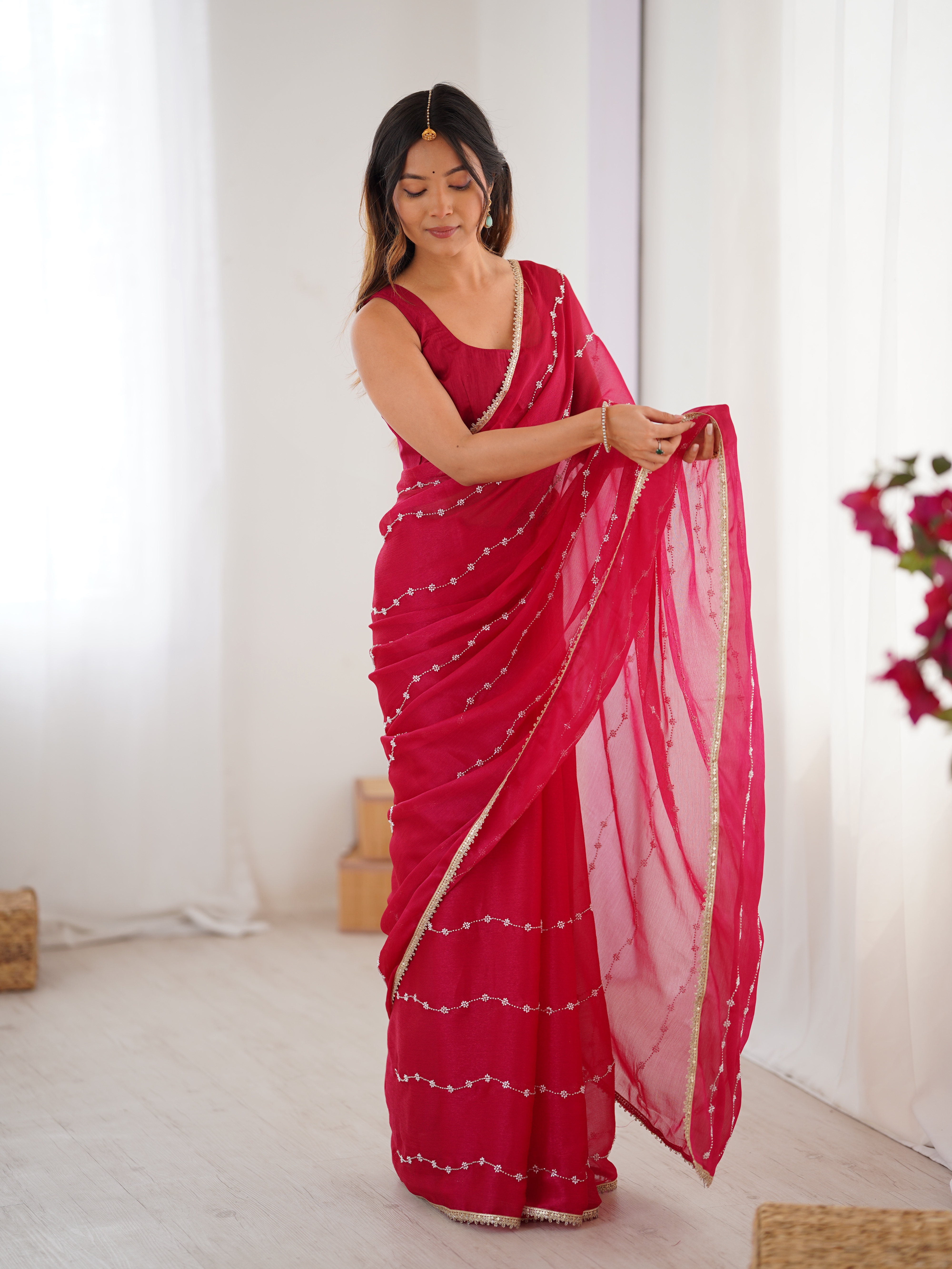
A useful proportion rule is to choose one dominant jewellery area. If the earrings are large, keep the necklace short and quiet. If the necklace is the focal point, use studs or small drops. If the saree has a richly worked blouse, reduce both necklace length and bangle texture so the outfit doesn't become visually crowded.
Pastel sarees often benefit from contrast, but contrast doesn't require heavy weight. Rose gold with ivory, muted silver with aqua, antique gold with teal and soft pearl with dusty rose create distinction through colour. A smooth finish lets the contrast show without introducing the sharp edges associated with many heavily embellished pieces.
A practical fitting test before wearing the saree
A five-minute fitting test can reveal most snag risks before a delicate saree is worn for an event. Put on the blouse and jewellery first, then drape the saree loosely and perform the movements required during the event.

- Run a fingertip test. Pass a clean cotton handkerchief over the front, back and underside of each jewellery piece. If the handkerchief catches, the ornament needs a cover, a different placement or replacement.
- Test the pallu movement. Lift the pallu onto the shoulder, turn the head and move both arms. Watch whether chains, earring hooks or bangles touch the shoulder pleats.
- Check the seated position. Sit on a chair and stand up slowly. A long pendant or bracelet may catch during this movement even when it appears safe while standing.
- Inspect the fastening. Confirm that earring backs, necklace clasps and bracelet closures are fully secured. Loose fastenings create both snagging and jewellery-loss risks.
- Carry a fabric-safe solution. Keep a small length of plain cotton ribbon or a smooth, removable saree pin for emergency pallu control. Do not use adhesive tape directly on zari, tissue or crystal-blend fabric.
Jewellery that fails the handkerchief test should not be worn against the saree body. A tailor or jeweller may be able to smooth a rough edge, cover a pin or replace an exposed hook, but home filing can create new burrs and should be avoided.
Building a balanced look without over-accessorising
A balanced delicate-saree look usually needs one face-framing piece, one hand accessory and an optional small accent. Earrings perform the strongest face-framing role, so they're often the most useful place to add colour or shine. A smooth bangle or slim bracelet then completes the look without competing with the drape.
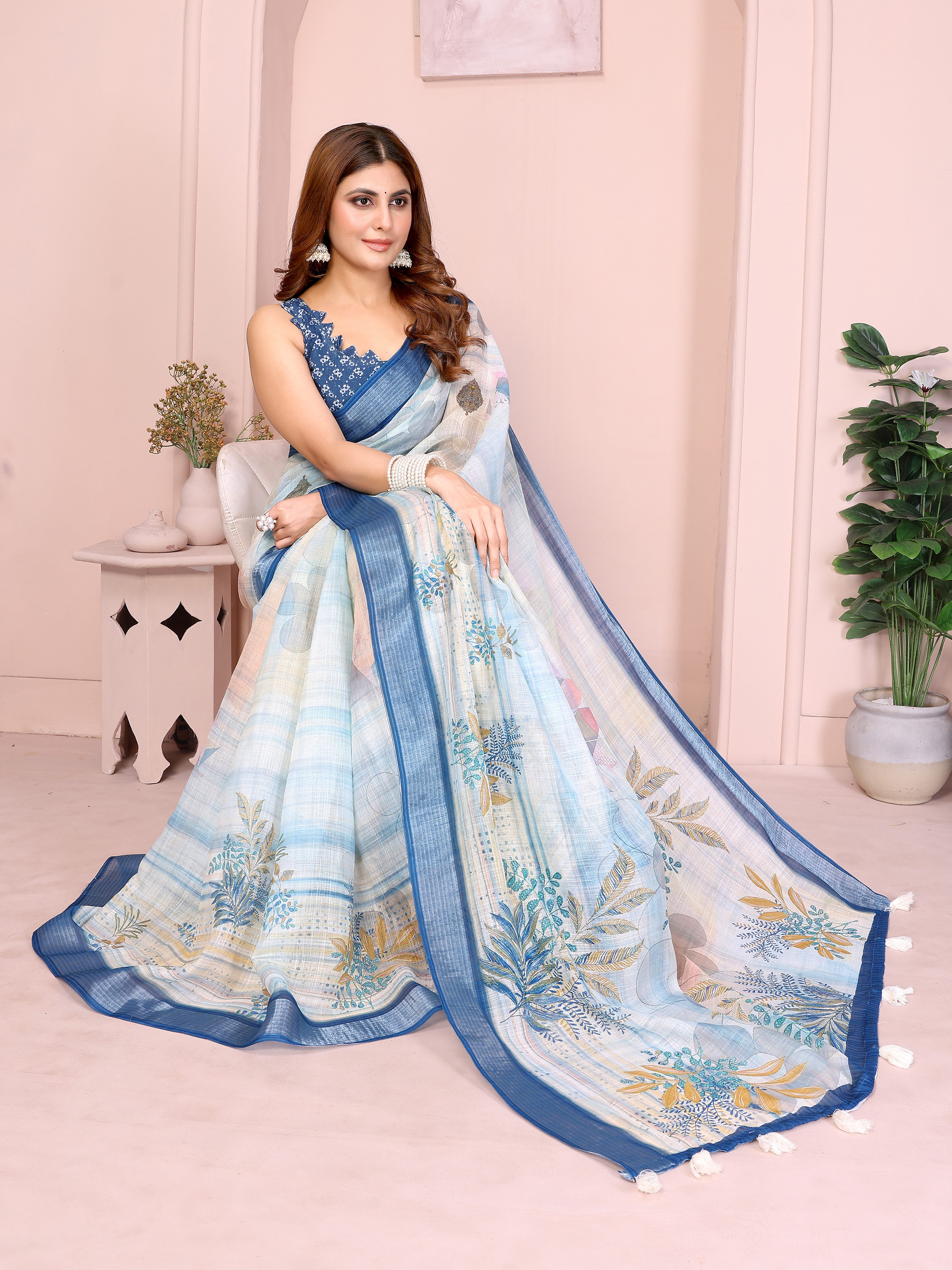
Necklaces should respond to the blouse neckline. A round neckline supports a short necklace, a high neckline may need only earrings, and a deep neckline can take a pendant that ends above the pallu. A long necklace should be reserved for a saree and blouse combination that can hold its movement securely.
Collections such as Sarees from Rs 1000 to Rs 1500 can be useful when building a practical wardrobe of lighter everyday drapes, while Sarees Under 20% Off and Sarees Under 10% Off offer ways to compare colours and surfaces before investing in occasion jewellery. Discount level should never replace a fabric and construction check; a snag-prone saree remains difficult to style at any price.
For a larger festive wardrobe, Sarees Flat 60% Off and Sarees Flat 50% Off may provide more options for testing proportion across tissue cotton, linen cotton and silk blends. Jewellery should be selected after the saree arrives, because online colour, border width and fabric texture can look different under indoor lighting.
Care after wearing delicate sarees with jewellery
Delicate sarees should be inspected immediately after an event and stored only after they're completely dry and free from loose jewellery contact. Look along the shoulder, pallu edge, waist and areas beneath the necklace for pulled threads, flattened zari or crystal contact marks.
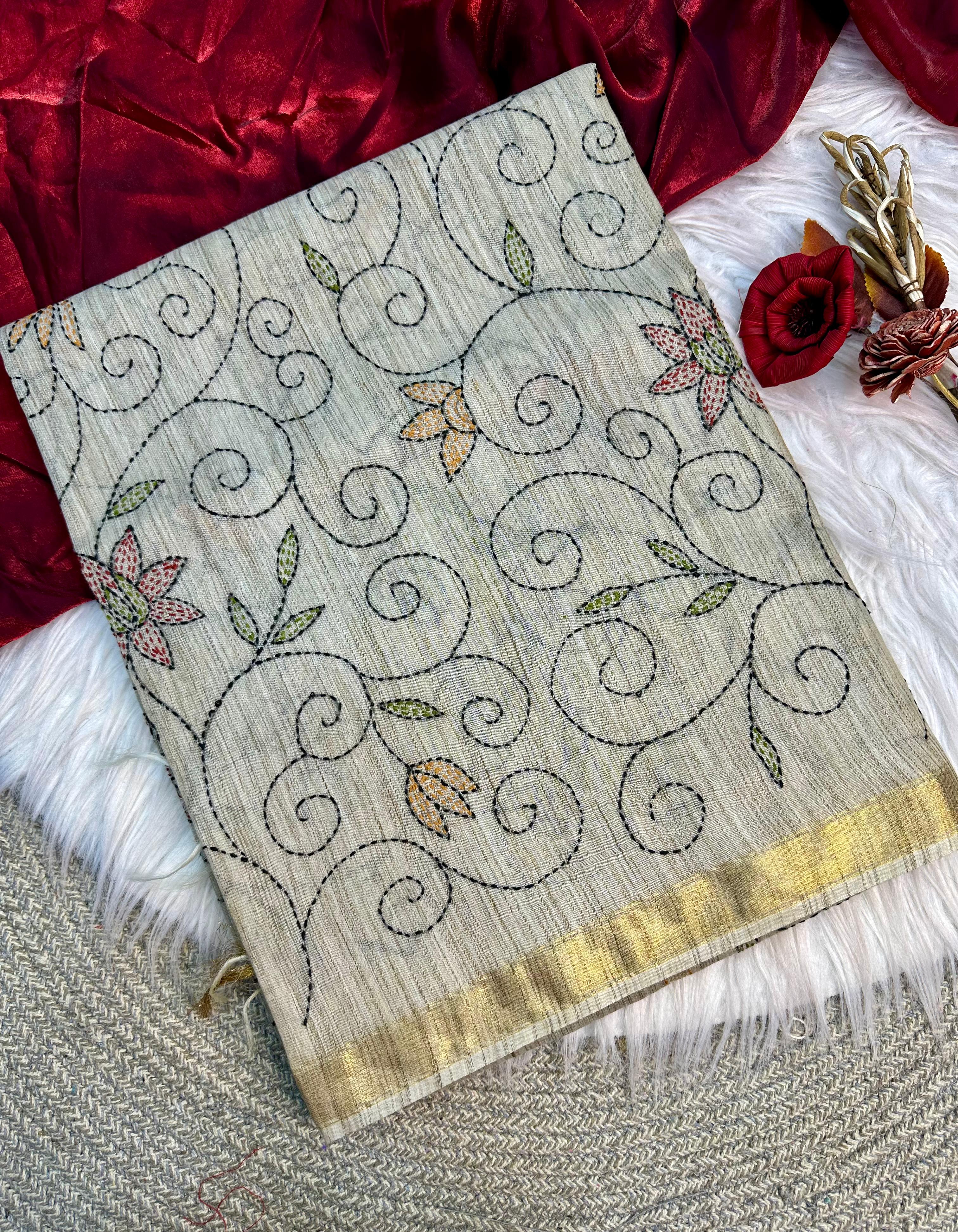
Never drag a necklace or bangle off the saree. Remove jewellery first, then loosen the pallu and pleats slowly. If a thread has lifted, don't cut it; place the saree flat and ask a qualified alteration professional to secure the yarn from the reverse side.
Store the saree folded in soft, clean cotton with heavy jewellery kept separately. Avoid placing a jewellery box on top of folded tissue or silk, because concentrated weight can create permanent creases. Air the saree in shade for a short period after wear and follow the garment's specific washing or dry-cleaning instructions.
Common questions about jewellery and delicate sarees
Choosing jewellery for a delicate saree becomes easier when the wearer considers movement, surface contact and proportion together. Smooth closures, rounded edges and controlled scale protect the drape while preserving an occasion-ready finish.
Questions About Jewellery That Snags Delicate Sarees
Which jewellery pieces are most likely to catch on delicate sarees?
Jewellery pieces most likely to catch on delicate sarees include open earring hooks, claw-set stones, loose chain tassels, serrated bangles, open brooch pins and raised rings. Rounded edges, sealed settings and secure closures are safer choices.
Can I wear jhumkas with a tissue or linen cotton saree?
You can wear jhumkas with a tissue or linen cotton saree if the earrings have a smooth lower edge and a secure, covered fastening. Medium closed jhumkas are safer than designs with loose chains, wire loops or pointed ends.
Is a necklace safe with a delicate saree?
A necklace is safe with a delicate saree when it has a smooth surface, a secure clasp and limited movement. Short chokers, polished collars and closed pendants are generally safer than long layered chains that slide across the pallu.
How can I test whether jewellery will snag my saree?
Run a clean cotton handkerchief over every edge and fastening before wearing the jewellery. Then test the full outfit by moving the arms, turning the head, lifting the pallu and sitting down; any catching indicates that the jewellery needs changing or repositioning.
What jewellery works with a pastel saree?
Pastel sarees pair well with pearl, rose gold, polished silver, soft gold and small enamel jewellery. Match the metal to the border where possible, then choose one stronger accessory rather than layering several textured pieces.
How should I remove jewellery after wearing a delicate saree?
Remove jewellery before loosening the saree and never pull a necklace, bangle or earring across the fabric. Inspect the pallu, shoulder pleats and waist for lifted threads, then store the dry saree in soft cotton away from heavy ornaments.