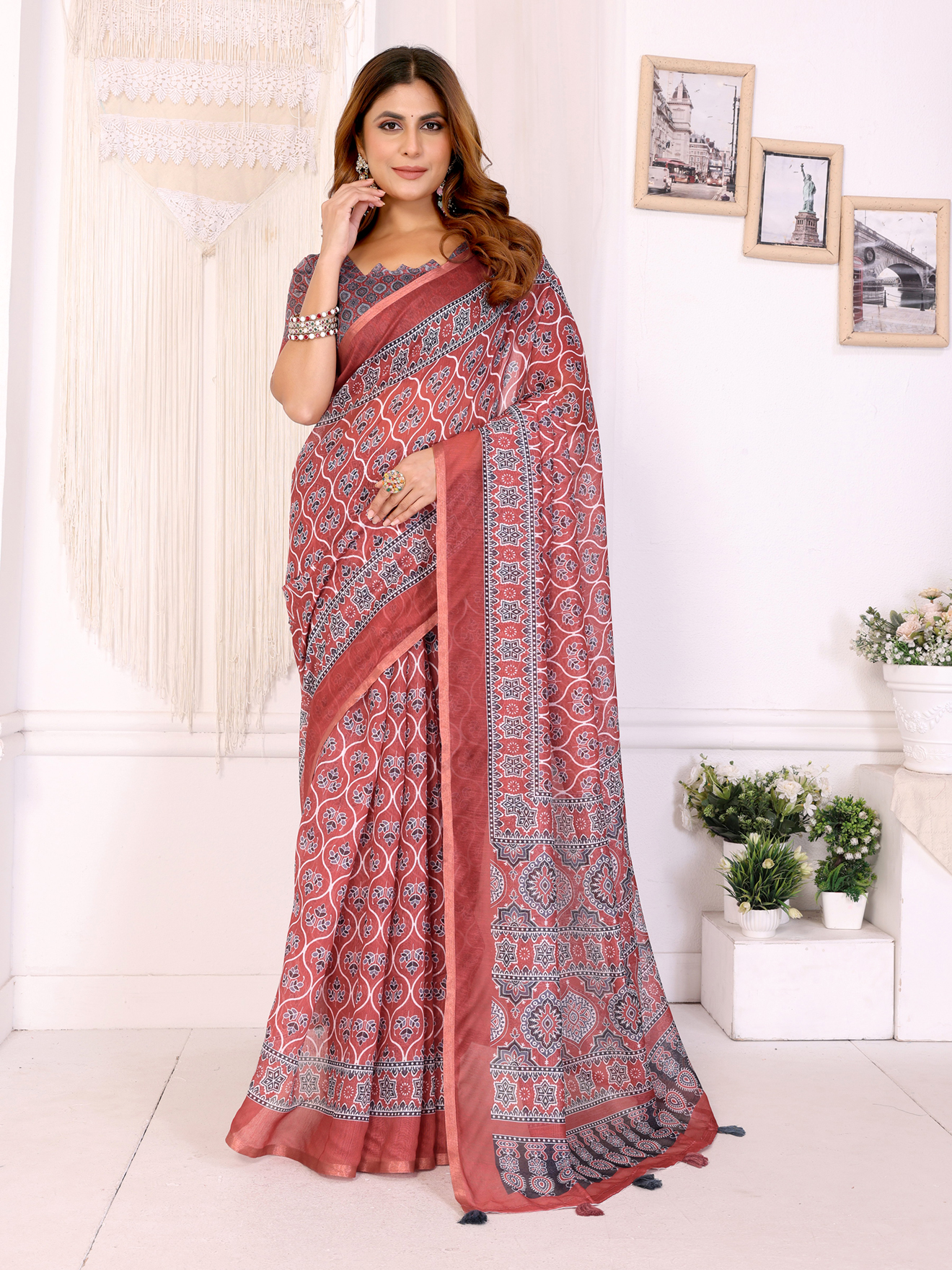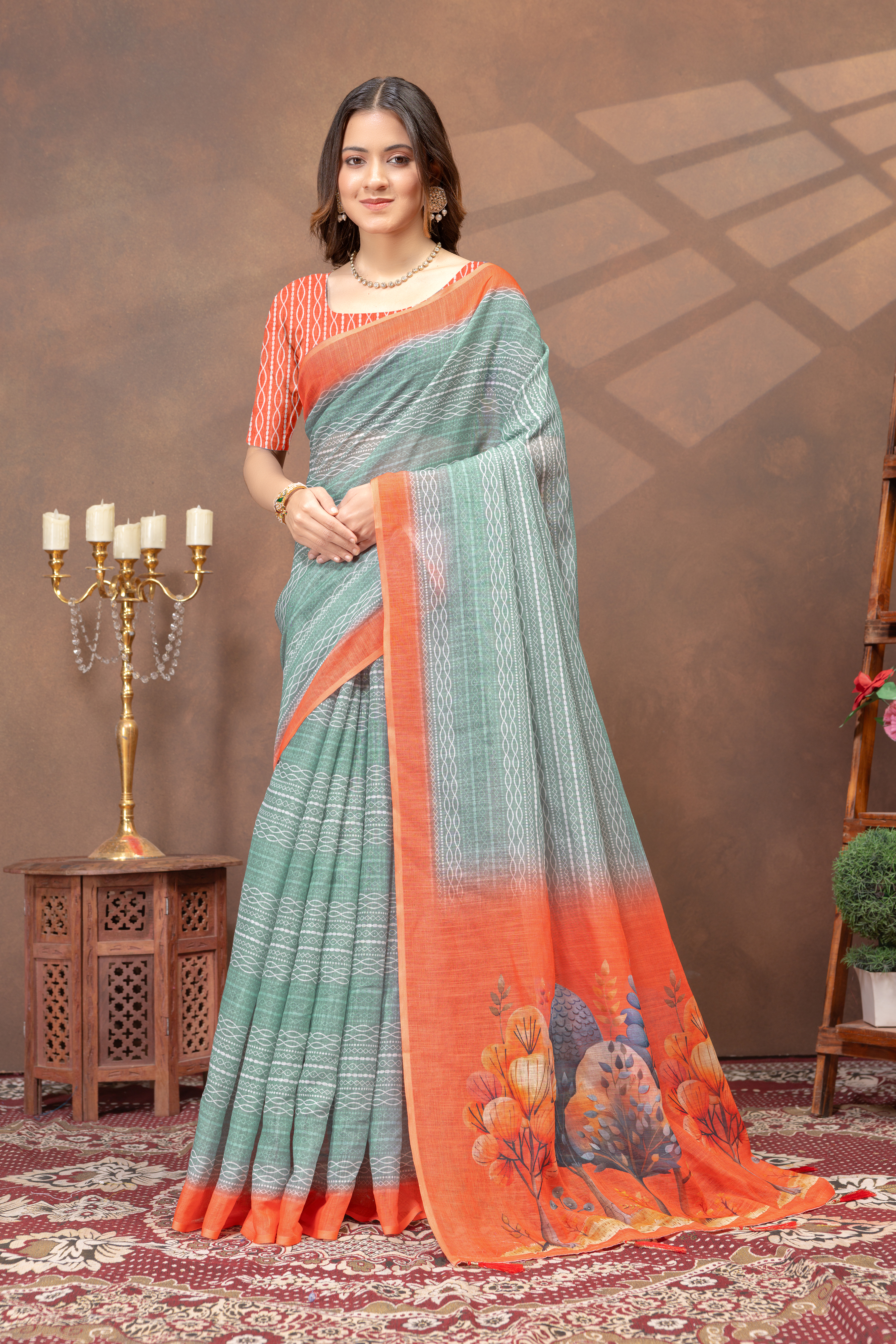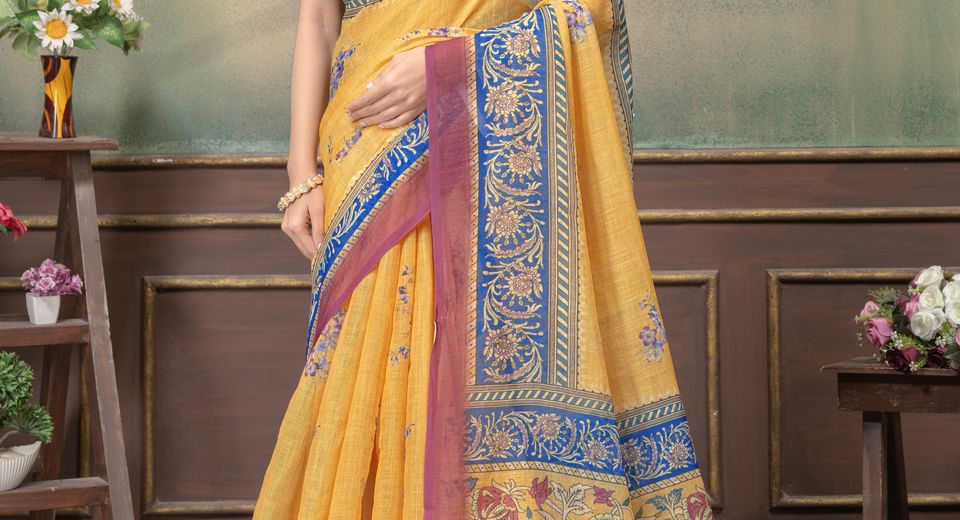
A saree that slowly loosens around the waist can turn a comfortable outfit into a series of discreet adjustments. The Hidden Reason Some Sarees Keep Sliding at the Waist is often not poor draping or a defective saree; the real problem may be the petticoat's fabric, waistband, fit or the way the first tuck has been anchored. Understanding the contact between these layers makes the fix much easier.
A secure drape depends on three surfaces working together: the saree fabric, the petticoat fabric and the waistband around your body. A slippery saree over a smooth petticoat has very little friction. A loose waistband can't hold the gathered fabric firmly. Excess fabric at the waist can also create a bulky roll that gradually works downward as you walk, sit or climb stairs.
The Hidden Reason Some Sarees Keep Sliding at the Waist
The most common hidden reason is a mismatch between the saree's weight and surface and the petticoat's grip. A lightweight linen cotton saree may need a different foundation from a smooth tissue saree, while a stiff or poorly adjusted drawstring can cause the entire tuck to descend. The waist problem begins underneath the visible drape.
Traditional petticoats often use a drawstring, but a drawstring that's tied too loosely leaves a gap between the waist and the gathered saree. A drawstring tied too tightly can create a hard ridge, discomfort and uneven pressure, encouraging the petticoat to shift when the wearer moves. A well-fitted petticoat should sit securely at the natural waist without cutting into the skin.
The direction of the saree tuck also matters. If the fabric is pushed shallowly into the petticoat, only a narrow strip bears the weight of the saree. A deeper, even tuck distributes the fabric across the waist and gives the pleats a stronger base. The first wrap should be smooth and level before the front pleats are formed.
How does petticoat fabric affect saree stability?
Petticoat fabric affects saree stability by changing the amount of friction between the foundation garment and the outer saree. Cotton and cotton-blend petticoats usually provide more grip than very smooth polyester satin, especially under lightweight linen cotton, cotton and handloom sarees.
A cotton petticoat is useful for everyday drapes because its surface resists movement and its structure supports tucked pleats. A satin petticoat can make a smooth silk, tissue or synthetic saree fall neatly, but the low-friction surface may allow the saree to descend unless the waistband and tuck are especially secure. Satin isn't automatically wrong; it simply demands more precise fitting.
Matching the petticoat to the saree's weight is equally important. A heavy Banarasi silk or zari-rich saree needs a firm, well-constructed petticoat with a stable waistband. A very thin petticoat may stretch or fold under the load. A lightweight Chanderi or linen cotton saree may not need heavy support, but it can still slide over a glossy lining.
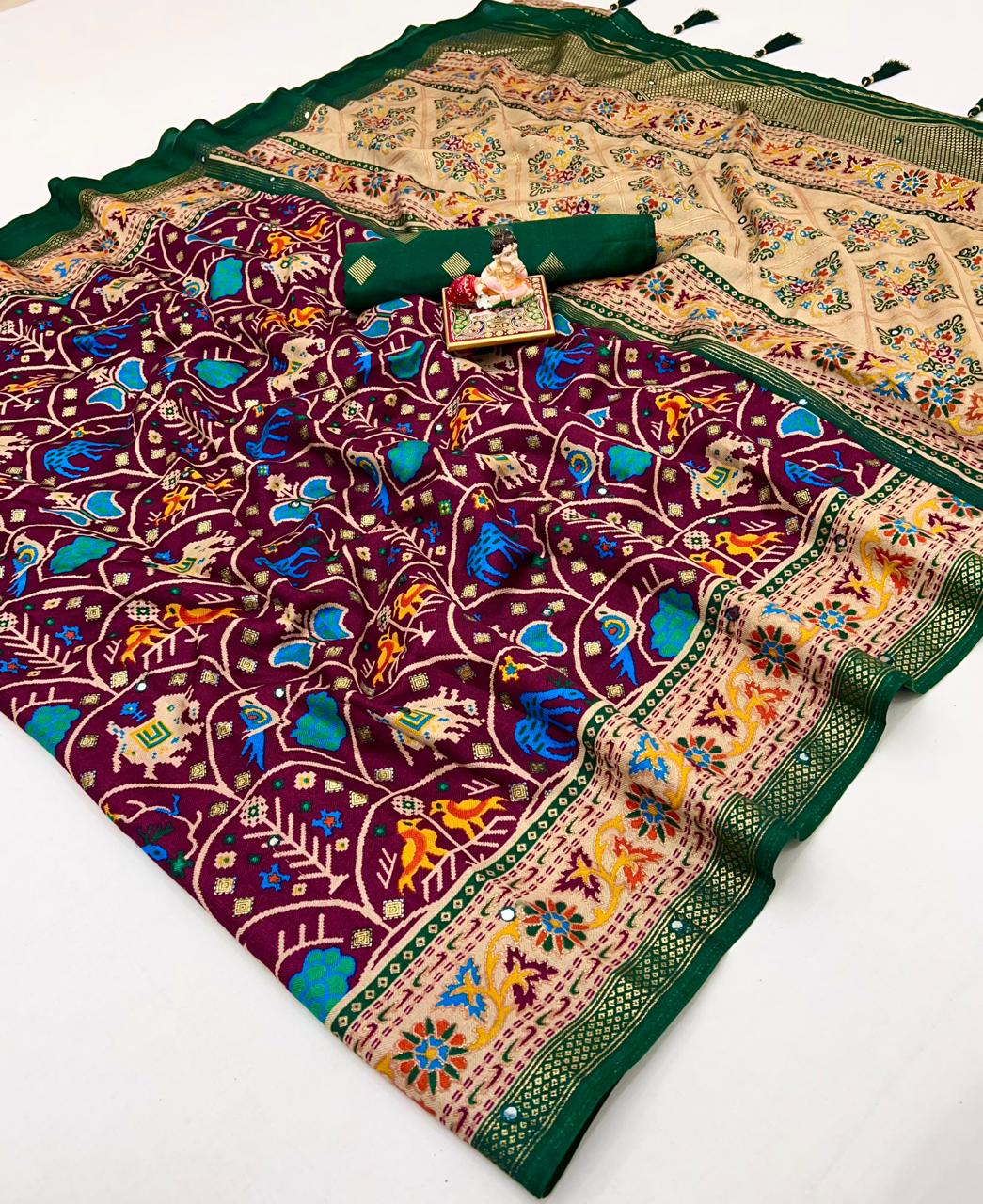
Consider the surface of the saree as well. Zari, tissue and polished silk often move differently from matte cotton. A saree with a crisp cotton texture may stay in place with moderate preparation, whereas a smooth Wine Tissue Handloom Cotton Saree with Zari & Floral Prints benefits from a snug foundation and a properly secured first tuck.
What petticoat fit prevents a saree from slipping?
A petticoat prevents slipping when the waistband sits at the same level as the intended saree waist and remains firm during movement. The petticoat should neither sag below the waist nor create a tight ridge that forces fabric upward.
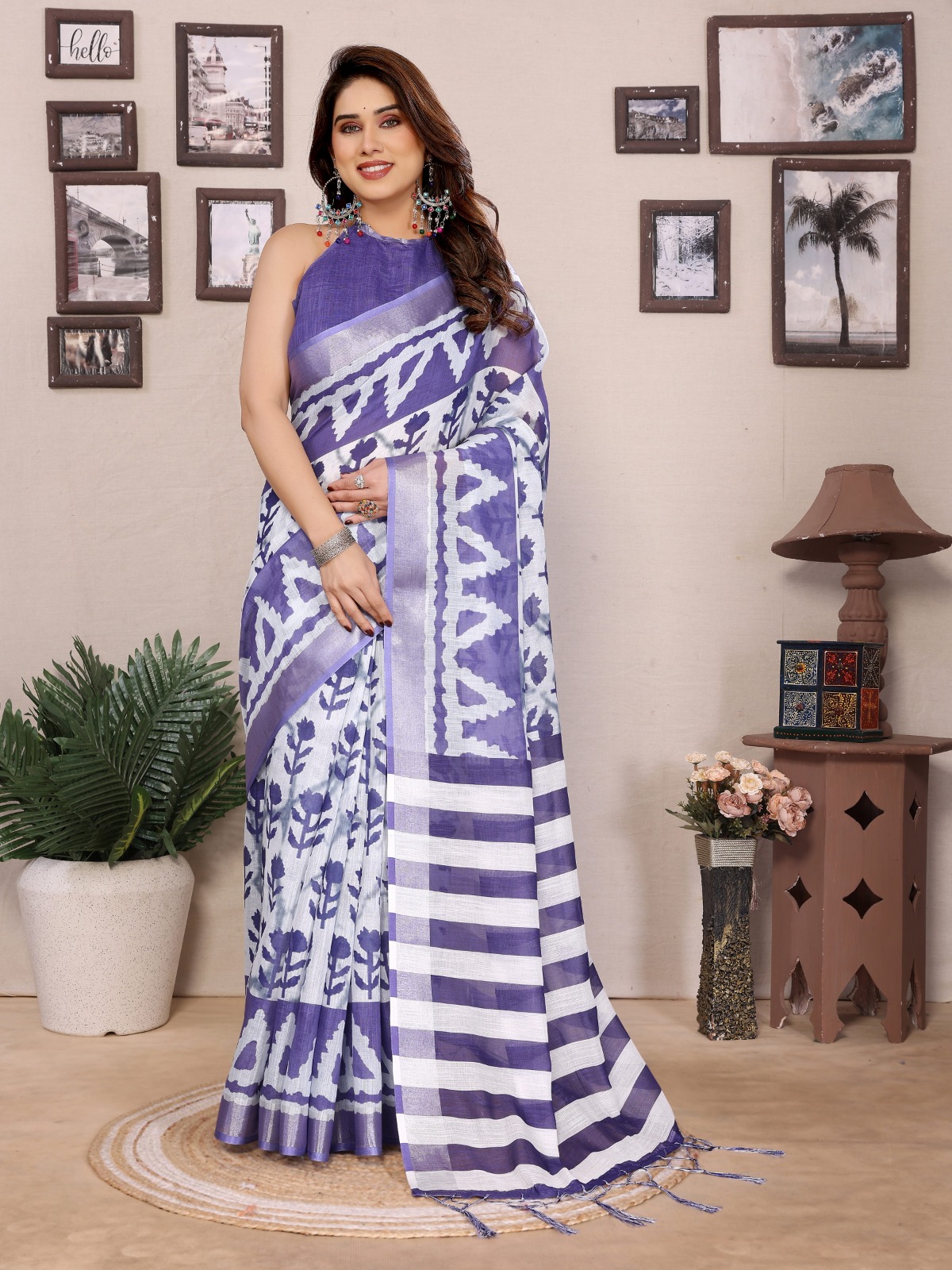
Measure the waist where the saree will actually be worn, rather than measuring the widest part of the hips. Use the measurement taken while standing naturally, without pulling the tape tightly. A petticoat that's 2 to 4 inches too large can gradually drop under the saree's weight; a petticoat that's too small may twist, ride up or become painful after sitting.
Flared petticoats can help when the saree has a broad fall or a heavier lower border because the flare leaves room for movement near the ankles. A narrow, straight petticoat may work under a lightweight daily saree but can pull against the pleats when walking. The flare should support the silhouette without adding unnecessary bulk at the waist.
The waistband should lie flat. Thick knots, uneven elastic or a twisted drawstring create pressure points that make the saree gather unevenly. A flat waistband or a carefully tied drawstring is more reliable than a bulky knot placed directly beneath the front pleats.
Should the petticoat sit on the waist or hips?
The petticoat should sit at the waist level required by the chosen drape, usually close to the natural waist rather than low on the hips. A low petticoat leaves more fabric unsupported above it and makes the saree appear to slide down even when the outer pleats are correctly made.
Try the full outfit while standing and sitting before finalising the tuck. If the waistband moves several centimetres during a short walk, adjust the fit before adding pins. The test should include bending, climbing a few steps and sitting on a chair because movement reveals instability that a mirror doesn't.
Why do saree pleats loosen after walking?
Saree pleats loosen after walking when the lower edges are uneven, the waist tuck is shallow or the pleats are pulled in different directions. Each step creates small shifts, and those shifts gradually reduce the tension holding the pleats upright.
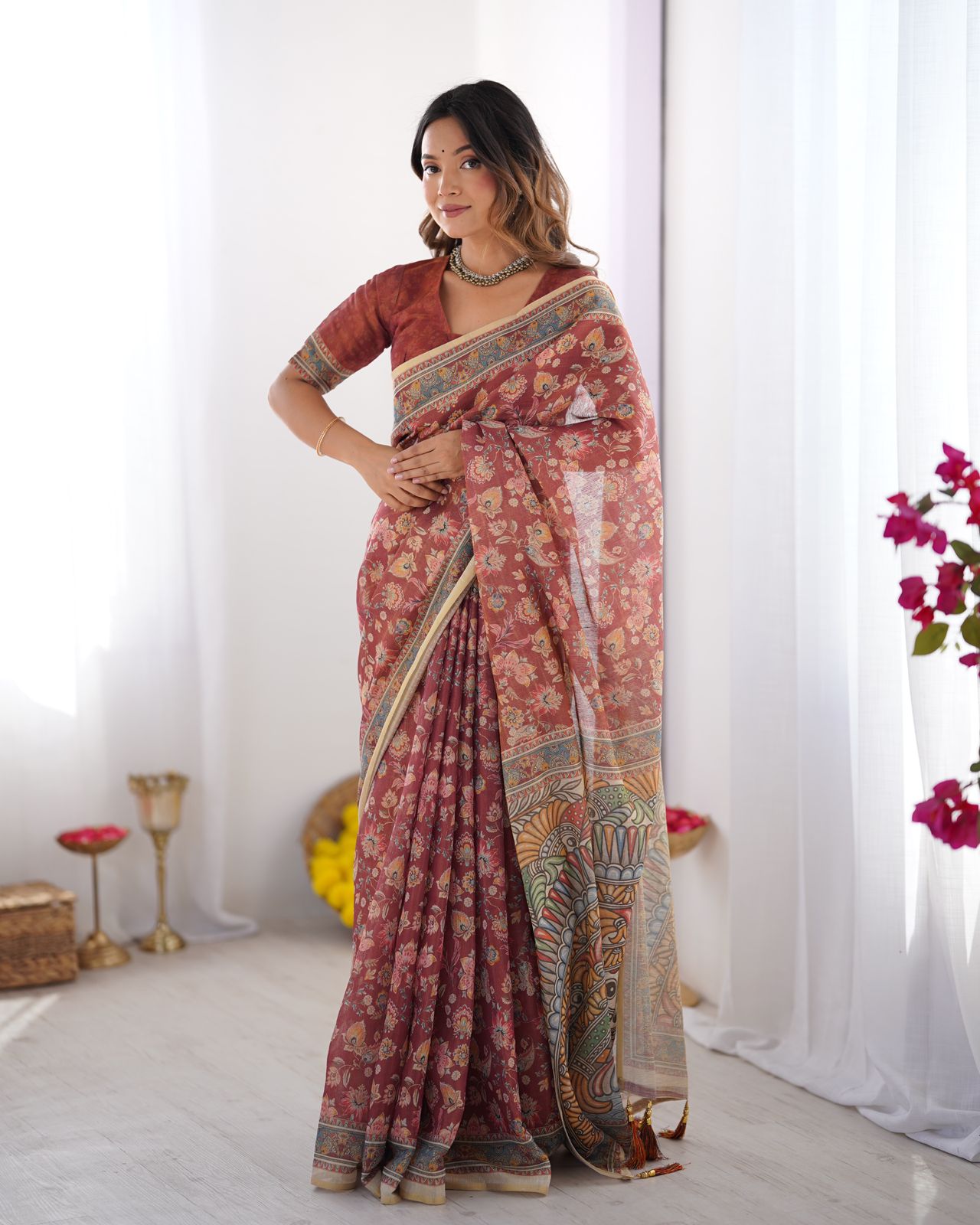
Make front pleats of similar width, usually around 4 to 5 inches depending on the saree and your desired fullness. Align the lower edges before tucking the pleats. Uneven pleats place more weight on one side, causing the gathered section to rotate or descend as you move.
Keep the pleats vertical from the waistband to the floor. Pleats that angle sharply toward one hip create sideways tension. The pallu should also be arranged after the front pleats have been anchored, not used to pull the entire saree into position.
A single safety pin through the pleats and blouse at the waist can help, but a pin should not replace a secure foundation. Use a rust-resistant safety pin, place it horizontally through several layers and check that the point doesn't touch the skin. For a formal drape, a second concealed pin near the shoulder can stop the pallu from tugging against the waist.
don't pin every pleat tightly together. Over-pinning can make the fabric stiff, create visible holes and transfer movement to the waistband. Two well-placed pins usually provide more natural movement than a row of pins spread across the entire saree.
Which saree fabrics need extra waist support?
Smooth, fluid and heavier saree fabrics generally need more waist support than matte, lightweight cotton fabrics. Tissue, polished silk, satin-like blends and zari-heavy weaves can shift because their surfaces glide or their weight pulls downward.
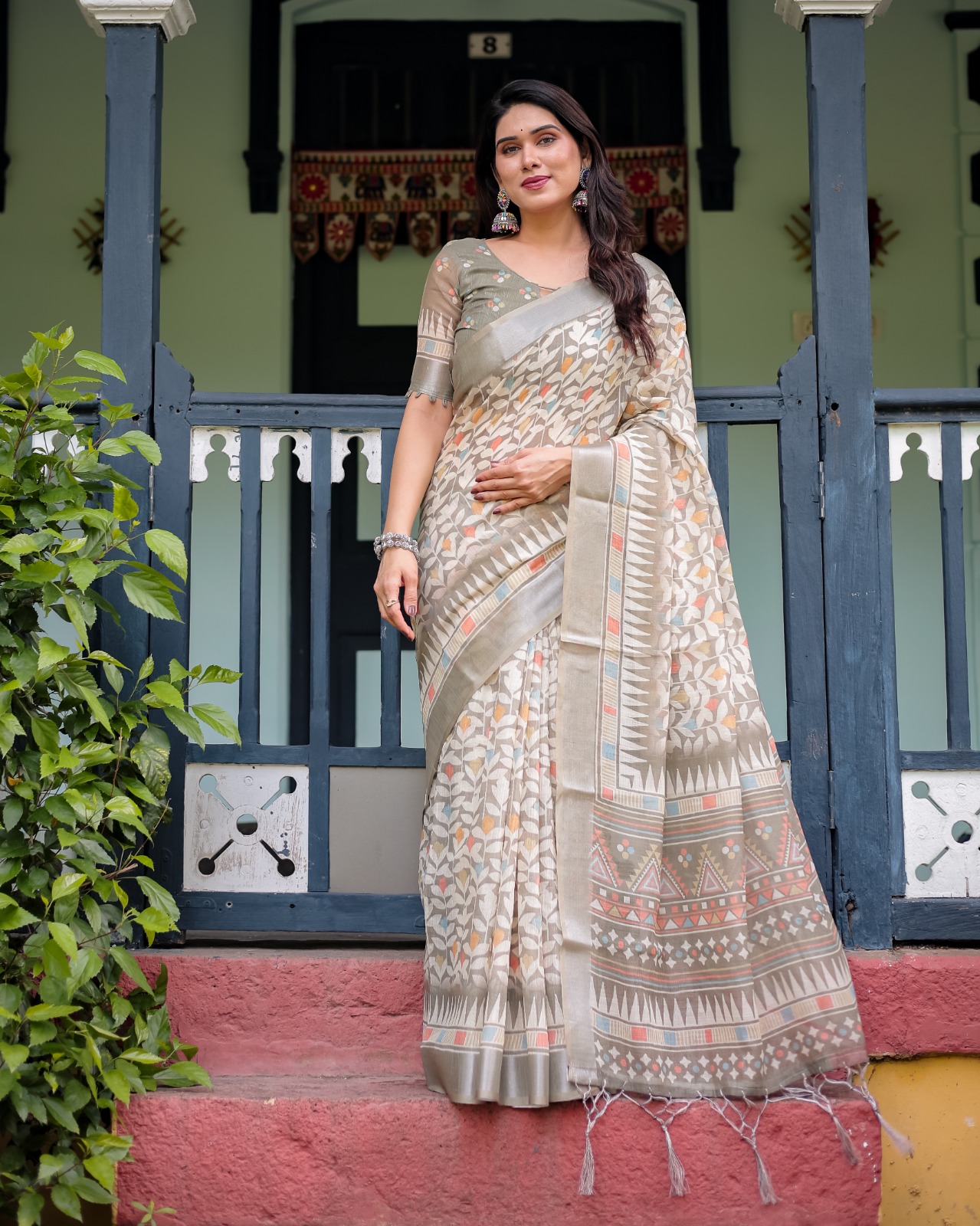
Banarasi silk often needs a firm petticoat because zari and dense weaving add weight. Kanjeevaram sarees also benefit from a stable base and deep, even tucks because the silk body and borders can be substantial. A crisp cotton saree may stay secure more easily, but a starched finish can still push against a loose waistband.
Linen cotton sits between these extremes. Linen fibres give the saree a textured hand, while cotton contributes everyday comfort, but the final stability depends on the weave, finish and border. Pastel Linen Cotton Floral Print Saree with Designer Blouse illustrates why a light printed saree still needs an even waist tuck: a small amount of looseness can be visible because the fabric doesn't hide irregular gathering.
Off White Striped Linen Cotton Saree Online India and White Floral Printed Linen Cotton Saree For Women Today are useful examples of lighter sarees where neat pleat alignment matters more than heavy pinning. The objective is to create a level foundation, not to make the saree rigid.
A border can change the balance of a saree. Mustard Yellow Linen Cotton Saree with Green Stripe Borders and Mustard Green Cotton Saree with Striped Contrast Border have strong horizontal border details, so a slipping waist can make the border line appear tilted. Checking the border against the floor is a practical way to spot uneven settling during a fitting.
How can you test a saree before leaving home?
A ten-minute movement test can reveal most waist-slipping problems before you leave home. Put on the blouse and petticoat, complete the drape, then walk, sit, bend slightly and raise one arm as you would during the event.

- Check the waistband: Place two fingers beneath the waistband. The fit should feel secure but should not cause numbness, pinching or deep marks.
- Check the first tuck: Look for a level line around the waist. A section that's much shallower than the rest is likely to loosen first.
- Check the pleat edges: Confirm that the lower edges meet evenly and that the pleats hang vertically.
- Check the pallu: Walk with the pallu over the shoulder. If it pulls the waist toward one side, reduce its tension or secure it separately.
- Check sitting comfort: Sit for two minutes and stand again. A waistband that rolls or the saree that rises sharply at the front needs adjustment.
Photographing the outfit from the front and side can reveal a waistline that looks level in a mirror but slopes in motion. The side view is particularly useful for identifying a petticoat that has dropped below the intended waist.
How should you secure different sarees without damaging them?
Secure a saree according to its fabric, weight and embellishment, using the fewest pins that provide reliable control. Delicate Chanderi, tissue and fine silk need smooth, concealed pins, while sturdier cotton can tolerate a deeper tuck and moderate pinning.
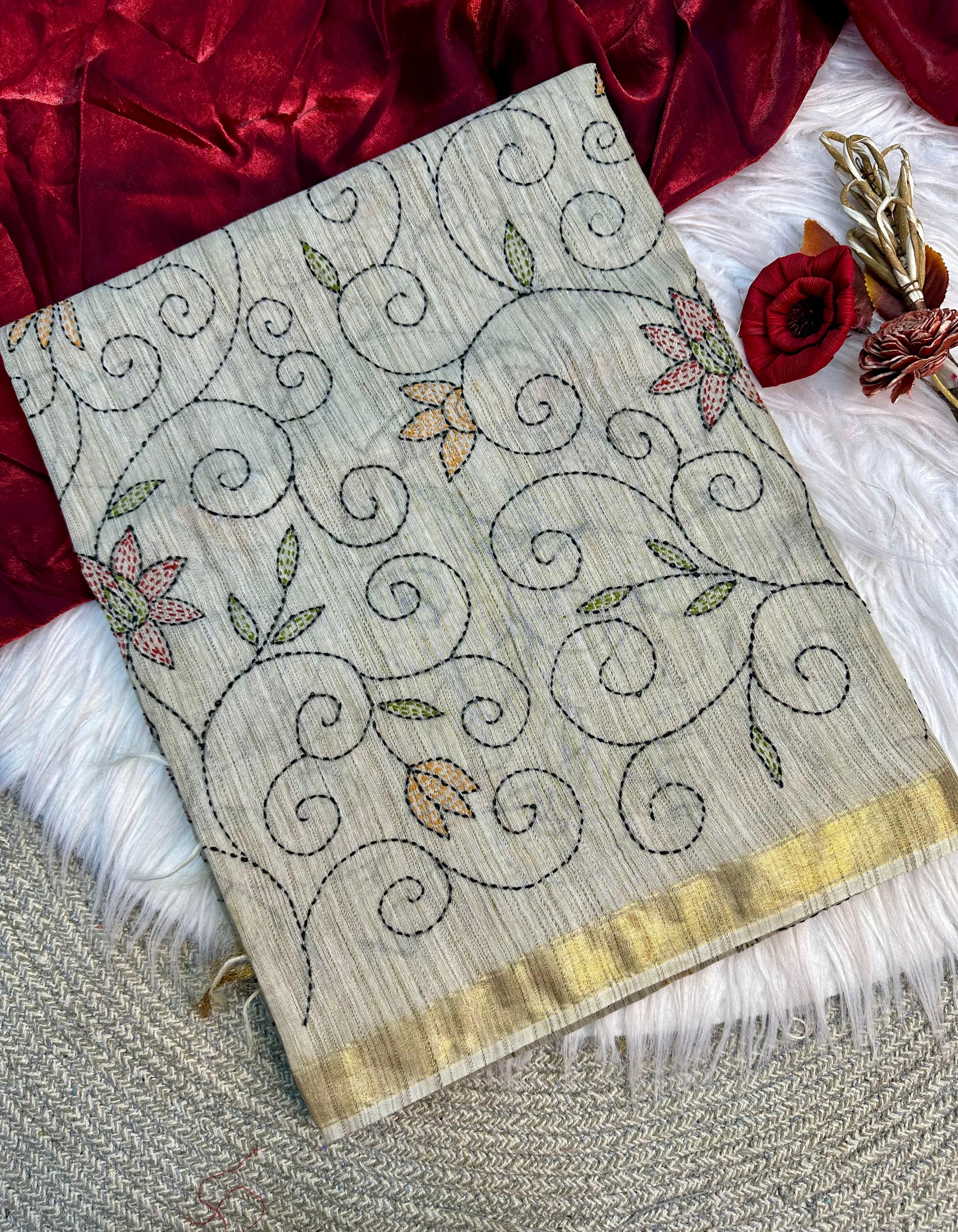
For a lightweight printed saree, tuck the first wrap evenly, form five to seven front pleats and pin the pleat bundle close to the waistband. For a heavier saree, make slightly narrower pleats if the fabric becomes too bulky, then use a firm but not overly tight tuck. The number of pleats depends on the saree width and body; forcing a fixed number can create excess fabric at the waist.
Wine Linen Cotton Floral Print Saree with Art Border shows why an art border should be kept straight rather than pulled tight to compensate for a loose waist. Mustard Brown Shimmer Linen Cotton Floral Saree with Border may need an additional concealed waist pin because shimmer finishes can reduce grip even when the fabric itself feels substantial.
Wash and dry the saree according to its fibre and finish before judging its long-term behaviour. A newly folded saree can retain compression lines, while a freshly laundered cotton saree may have more body than it will have after repeated wear. Store sarees dry and avoid leaving them pinned for long periods, since sharp folds and pinholes become more permanent over time.
When should you replace the petticoat instead of changing the drape?
Replace the petticoat when the waistband stretches, the fabric has become thin, the drawstring no longer holds or the garment repeatedly shifts despite correct draping. Re-draping can't compensate for a foundation garment that has lost its shape.

A practical wardrobe doesn't need a different petticoat for every saree, but it should include suitable options for lightweight cotton, heavier silk and very smooth fabrics. A firm cotton-blend petticoat can cover many everyday sarees. A structured, well-fitted option is useful for Banarasi silk, Kanjeevaram and zari-heavy handloom sarees.
Budget planning can help when building this foundation. Sarees from Rs 1000 to Rs 1500 may include light daily fabrics that work with a reliable cotton petticoat, while a more elaborate saree may justify a better-constructed foundation garment. Discount labels such as Sarees Under 20% Off and Sarees Under 10% Off can be useful for comparing fabrics and finishes, but a lower price doesn't remove the need to check fit.
The most dependable waist is created before the pallu is styled: choose the correct petticoat, set the waistband at the right level, tuck deeply and evenly, align the pleats and test the outfit in motion. When those steps are right, a saree can remain comfortable for hours without constant adjustment.
Practical Answers for a Saree That Keeps Slipping
Why does my saree keep slipping down at the waist?
A saree usually slips because the petticoat is too loose, too smooth or worn below the natural waist. A shallow tuck, uneven pleats or a heavy pallu can add to the movement. Check the foundation garment before adding more pins.
Is cotton or satin better for a saree petticoat?
Cotton usually gives more grip and works well with everyday cotton, linen cotton and many handloom sarees. Satin can create a smooth fall under silk or tissue, but it may allow more movement and requires a closer waistband fit.
How tight should a saree petticoat be?
A petticoat should feel secure at the intended waist without pinching or restricting breathing. You should be able to slide two fingers beneath the waistband. If the waistband drops during walking or becomes painful while sitting, the fit needs correction.
How many pleats should a saree have to stop slipping?
Most sarees look balanced with about five to seven front pleats, but the correct number depends on the saree width, fabric and border. Even pleat widths and a deep, level tuck matter more than reaching a fixed number.
Can safety pins stop a saree from falling?
Safety pins can stabilise pleats and the pallu, but they cannot fix a loose or slippery petticoat. Use one concealed horizontal pin through the pleat bundle and avoid tightly pinning every layer, especially on delicate silk, tissue or Chanderi.
Why does a saree look uneven after I sit down?
Sitting can expose a waistband that has shifted, a shallow tuck or pleats that were pulled diagonally. Stand, smooth the front pleats from the waistband downward and check whether the petticoat has moved below the intended waist. A short movement test before leaving home can prevent repeated adjustment.