The Difference Between Polki Kundan and Meenakari for Outfit Styling becomes much easier once you separate three details: the stone surface, the setting technique and the colour created by enamel. Polki usually highlights the natural, uncut face of a diamond; Kundan frames stones with refined gold foil; Meenakari adds coloured enamel to the back or front of jewellery. Those distinctions affect how each piece looks beside silk, Chanderi, zari and embroidery.
Jewellery choice also changes the visual weight of an outfit. A large Polki necklace can make a plain silk saree feel ceremonial, while bright Meenakari earrings can add contrast to a simple kurta set without requiring a heavy necklace. Kundan sits between those approaches, offering structure and shine for both formal daytime dressing and evening celebrations.
The Difference Between Polki Kundan and Meenakari for Outfit Styling: What Does Each Craft Mean?
Polki uses uncut or minimally polished diamonds, Kundan uses stones secured with thin gold foil, and Meenakari uses coloured enamel to decorate metal surfaces. The three terms can overlap because one ornament may combine Kundan settings, Polki diamonds and Meenakari enamel.
Polki jewellery has an organic, softly reflective appearance because uncut diamonds retain irregular shapes and facets. Traditional Polki often uses a gold foil setting that supports the stone from behind, although contemporary designs may use additional metal construction for durability. The result is usually less uniformly glossy than machine-cut diamond jewellery.
Kundan jewellery is identified primarily by its setting method rather than by one specific gemstone. A craftsperson places carefully shaped stones into a gold or gold-coloured framework and secures them with malleable foil. Kundan work can hold glass, semi-precious stones or diamonds, so the word Kundan alone does not guarantee a particular stone quality or precious-metal value.
Meenakari is an enamelling technique in which powdered glass is fused to metal at high heat. Red, green, blue, white and pink are common enamel colours, and artisans may apply colour to the reverse side of a pendant, the visible face of a bangle or both sides of a piece. Meenakari jewellery therefore communicates colour more strongly than plain Polki or uncoloured Kundan.
The Difference Between Polki Kundan and Meenakari for Outfit Styling: Can One Piece Use All Three?
Yes, one piece can use Polki, Kundan and Meenakari together when uncut stones are held in Kundan settings and enamel decorates the reverse or selected details. Many heritage necklaces and earrings use this combination so that the front coordinates with a bridal outfit while the back reveals vivid enamel workmanship.
Polki and Kundan are frequently combined, which explains why sellers sometimes use both terms in one description. A necklace may contain uncut Polki diamonds placed in Kundan settings. Ask whether the stones are natural diamonds, imitation stones, glass or synthetic material before judging the price or heirloom value.
The Difference Between Polki Kundan and Meenakari for Outfit Styling: Which Fabrics Work Best?
Polki works best with fabrics that can carry visual weight, Kundan adapts to ornate and restrained clothing, and Meenakari is especially effective when an outfit needs a deliberate colour accent. Fabric texture, embroidery density and border width should guide the final choice.
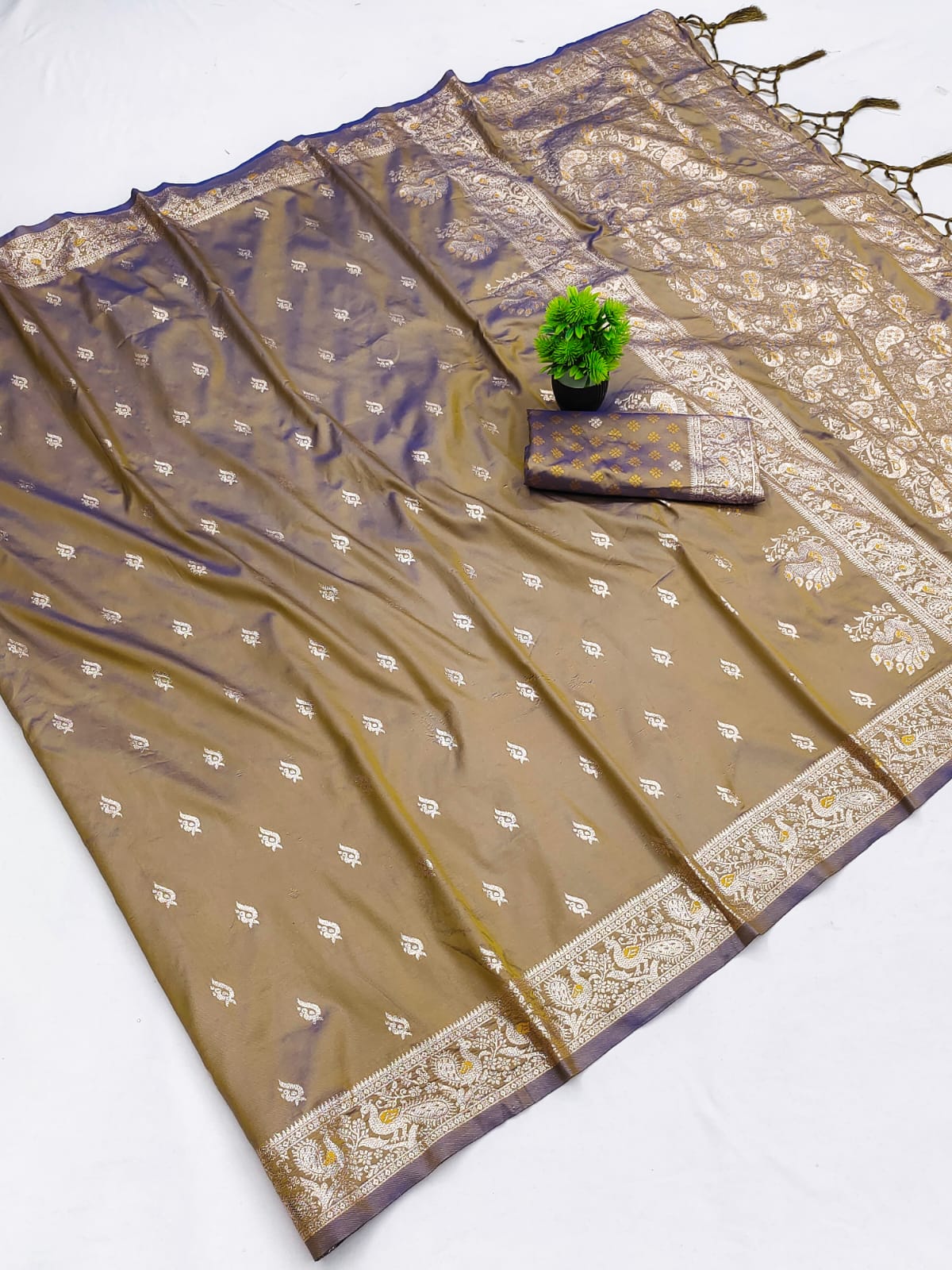
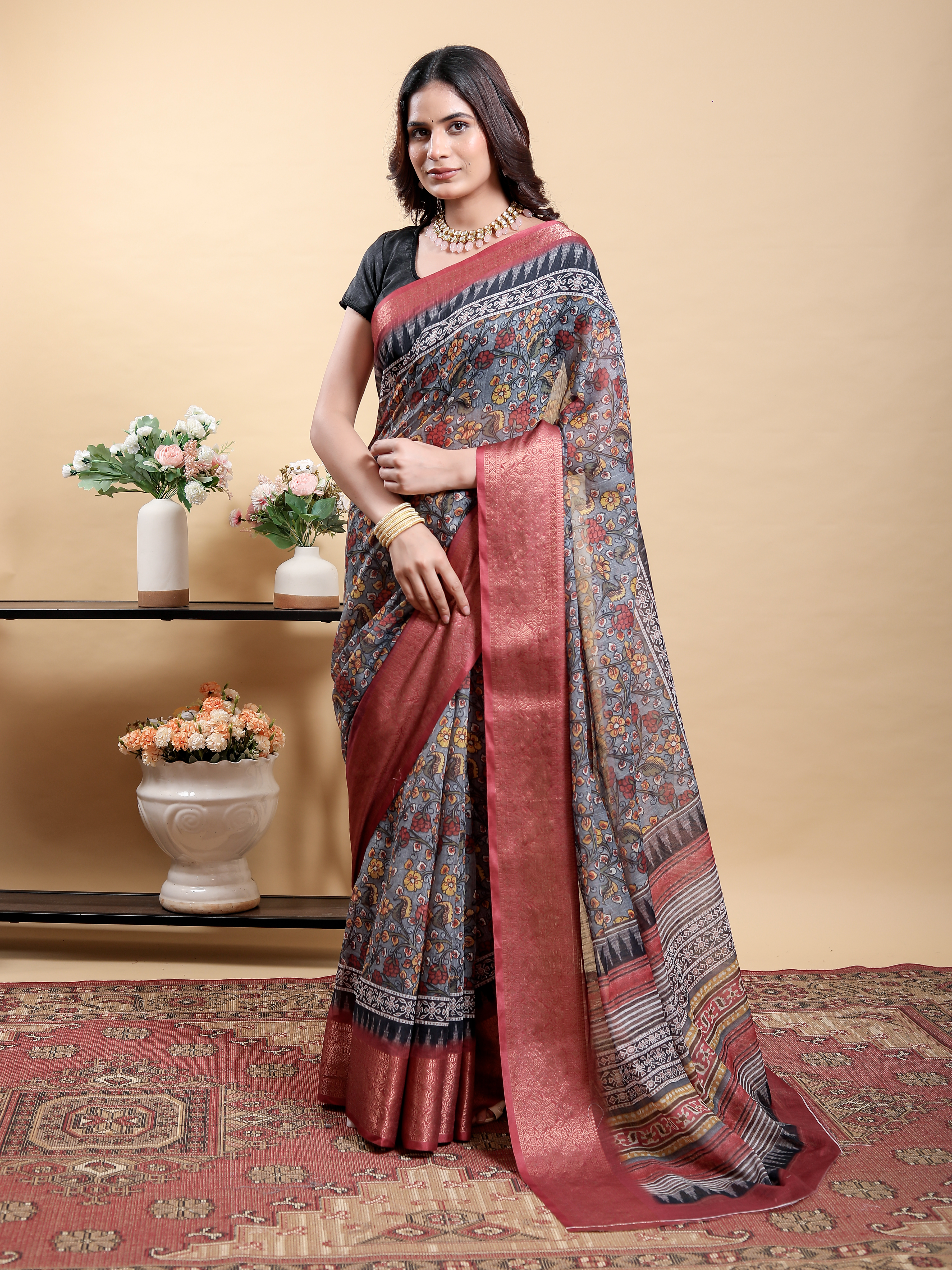
Banarasi silk and Kanjeevaram can support the rich, architectural presence of Polki because their woven zari already creates a formal surface. A Polki choker with a broad Kanjeevaram border looks balanced when the blouse has a relatively clean neckline. If the saree includes dense gold motifs, choose one dominant necklace rather than stacking several equally large pieces.
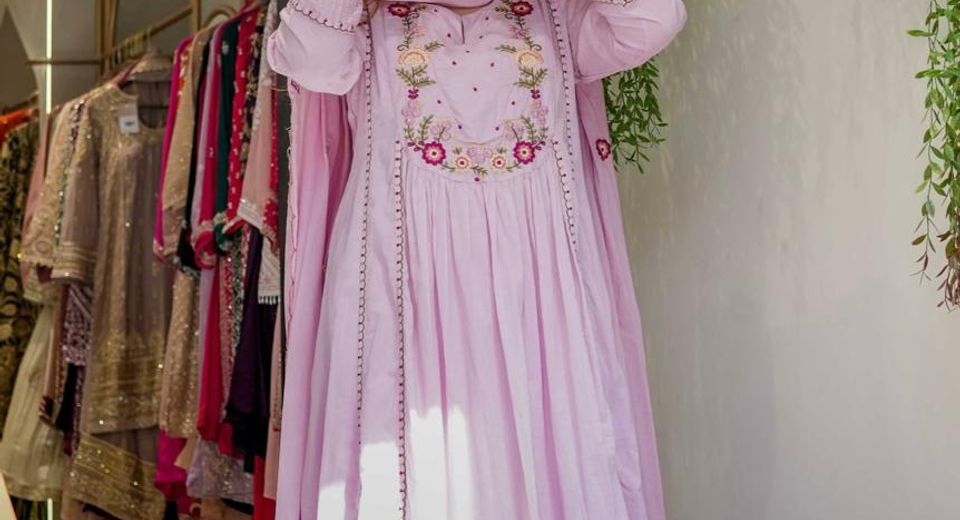
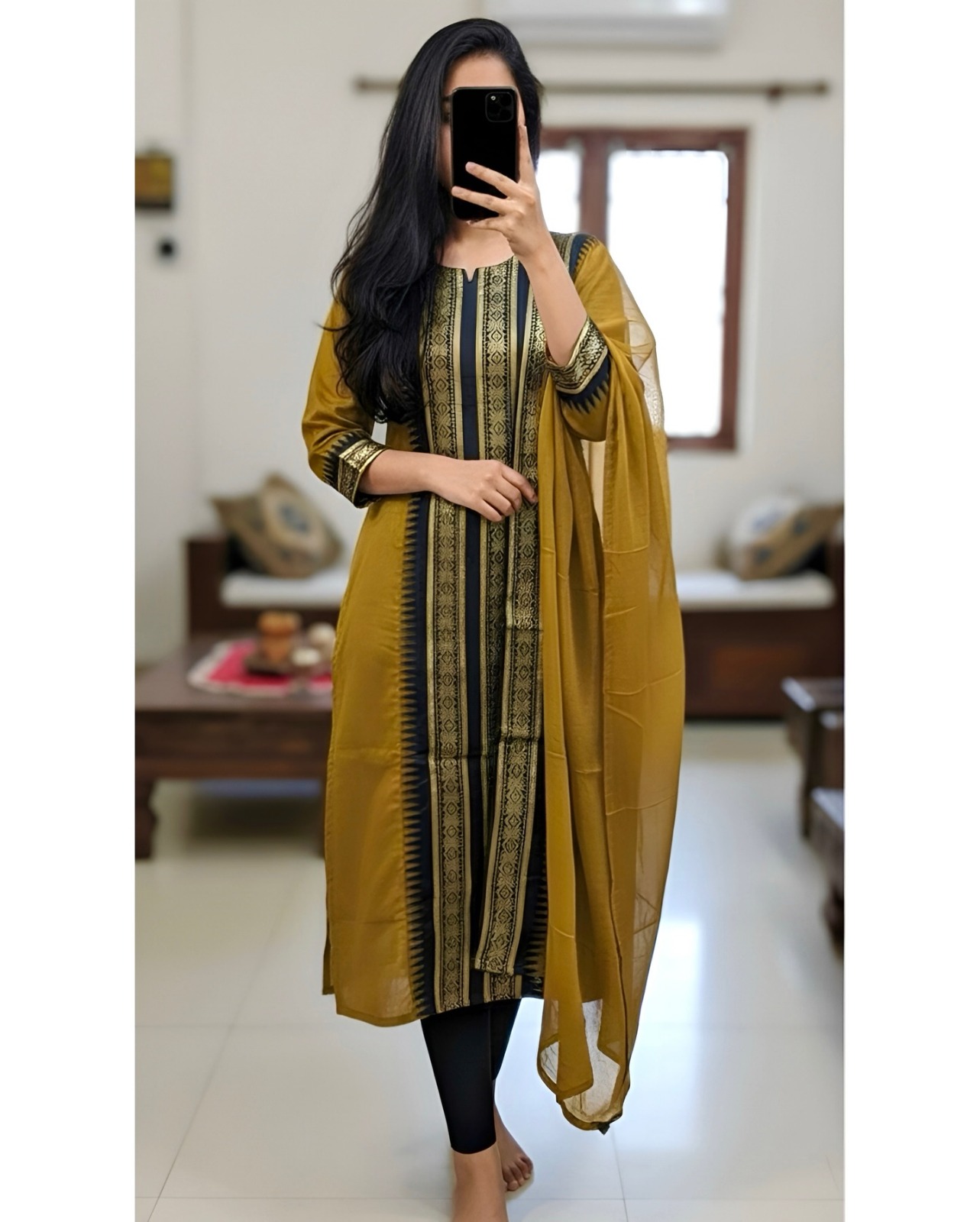
Chanderi needs a lighter approach because its translucent, airy weave can look overwhelmed by a very broad bridal set. A medium Kundan necklace, structured earrings or a Meenakari pendant can provide definition without hiding the fabric. Mustard Chanderi Embroidered Kurta Pant Dupatta Set can take antique gold Kundan with green or ruby accents while retaining the softness of Chanderi.
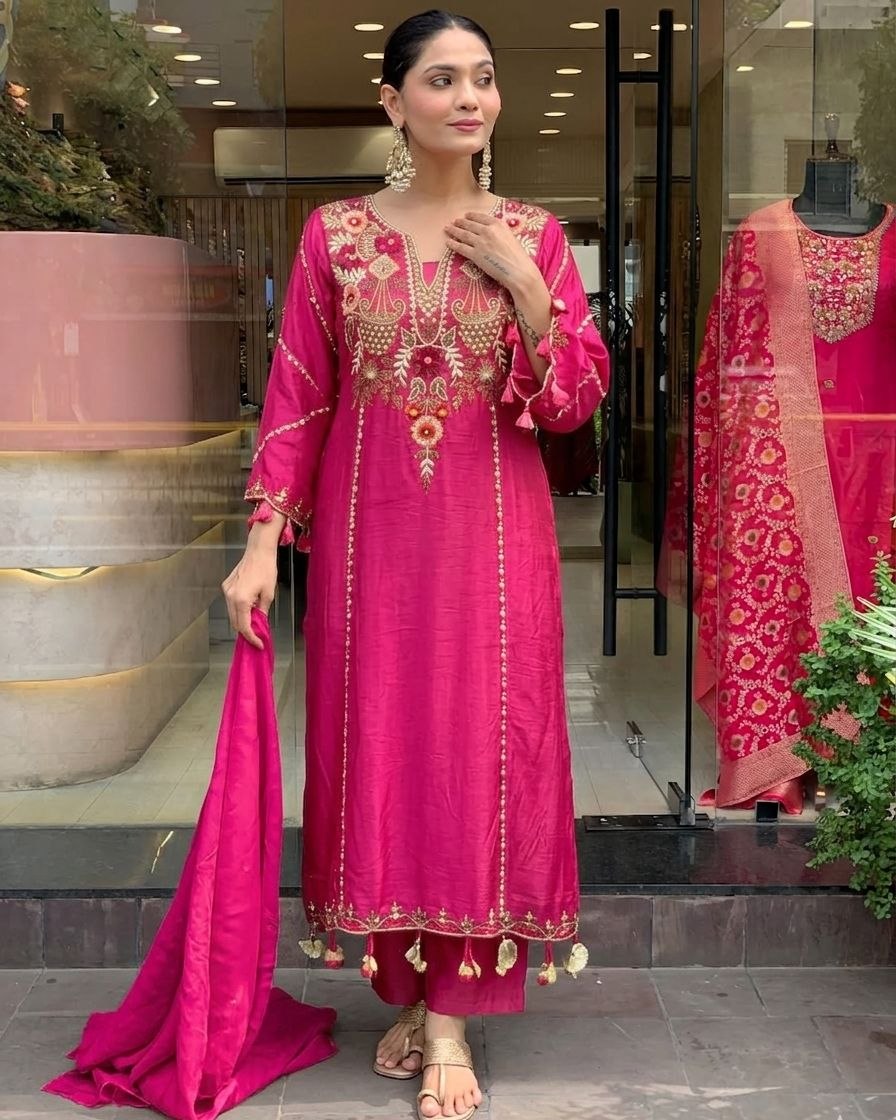
Chanderi silk offers more body than fine Chanderi and can carry moderate embroidery and larger earrings. Madhuri 2 Pink Chanderi Silk Kurta Set for Women | Varnavi illustrates why rose, pink and antique-gold combinations can appear cohesive without matching every shade exactly. A small Meenakari detail in green or turquoise can prevent a pink outfit from looking visually flat.
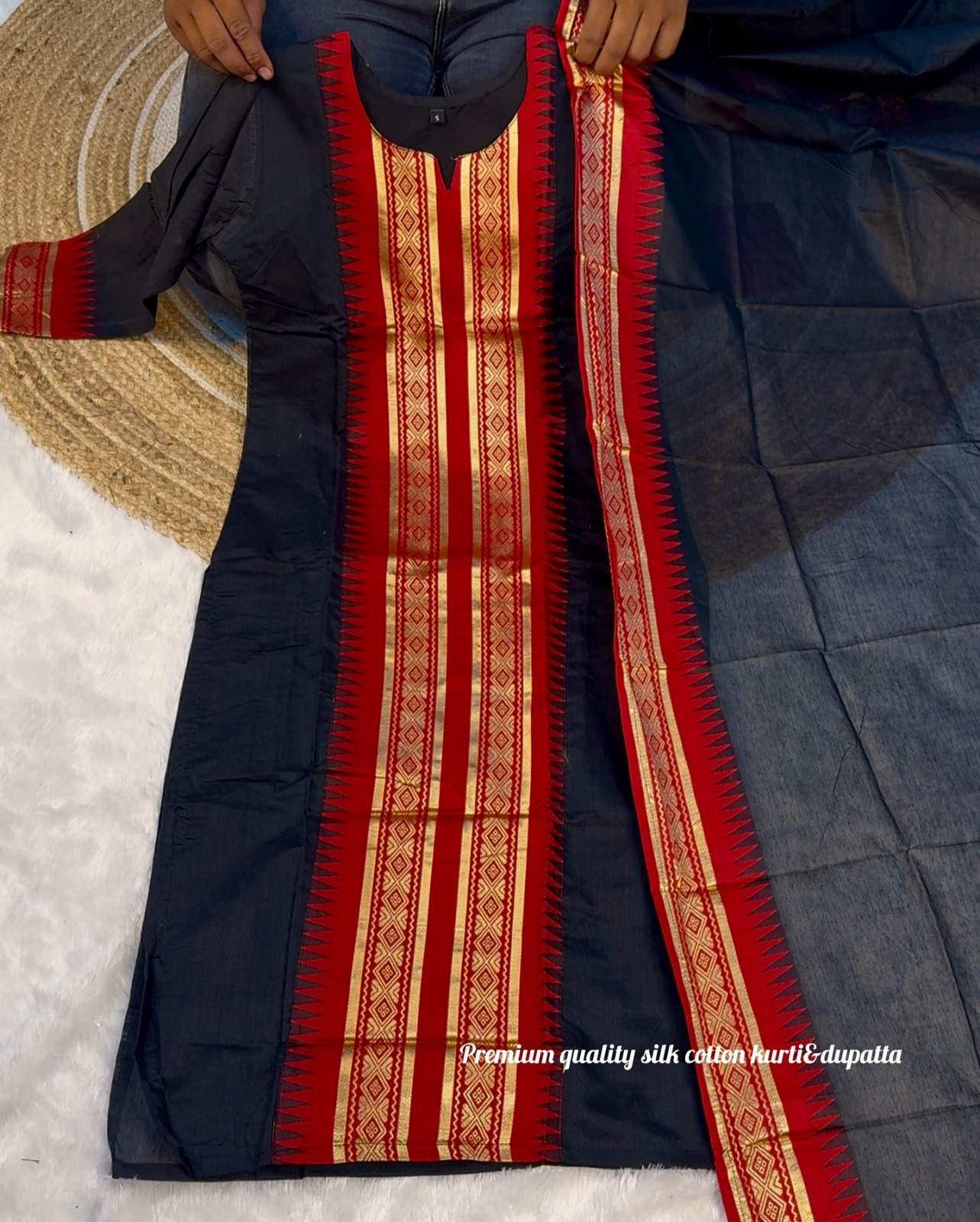
Cotton and cotton-silk outfits generally benefit from jewellery with a clear shape rather than excessive sparkle. A Kundan pendant, enamel jhumkas or a short Polki-inspired necklace can elevate a daytime look. Kanchi Cotton Zari Woven Kurti Set with Traditional Dupatta pairs naturally with antique-finish Kundan or restrained Meenakari because cotton texture and woven zari already provide visual interest.
The Difference Between Polki Kundan and Meenakari for Outfit Styling: When Should You Choose Polki?
Choose Polki jewellery when the outfit or event calls for heirloom-like grandeur, soft diamond sparkle and a classic bridal mood. Polki is particularly suitable for wedding ceremonies, engagement portraits, reception entrances and heavily woven silk garments.
Polki has an uneven, reflective surface that photographs differently from precision-cut stones. The gentle variation can make close-up portraits look rich, especially when the jewellery is set against deep maroon, emerald, navy, ivory or heritage red. Large Polki pieces should be balanced with a controlled blouse neckline and a dupatta that does not compete with the necklace.
For a daytime wedding, select one Polki focal point and keep the rest of the jewellery proportional. A broad necklace with small studs may look more polished than a necklace, oversized earrings, maang tikka and layered chains worn together. If the outfit already has dense sequins or metallic embroidery, Polki earrings alone can deliver the desired festive effect.
Polki is not always the right choice for a casual kurta or a minimal office outfit. The jewellery can look disconnected when the clothing has no corresponding structure, border or occasion-based formality. A smaller Polki pendant or a single ring is a better scale for understated clothing.
The Difference Between Polki Kundan and Meenakari for Outfit Styling: When Does Kundan Work Better?
Choose Kundan when you want classic gold structure with more flexibility than a full Polki set. Kundan works well for festive lunches, family ceremonies, sangeet events, wedding guests and formal kurta sets with embroidery or zari.
Kundan can be styled in warm antique gold, bright gold or mixed-stone palettes. Ruby-red and green stones create a classic combination with mustard, rust, fuchsia and red, while uncoloured or pale stones look fresher with ivory, blush, powder blue and lavender. A Kundan set also coordinates easily with outfits that contain metallic thread because its framed stones repeat the geometry of woven borders.
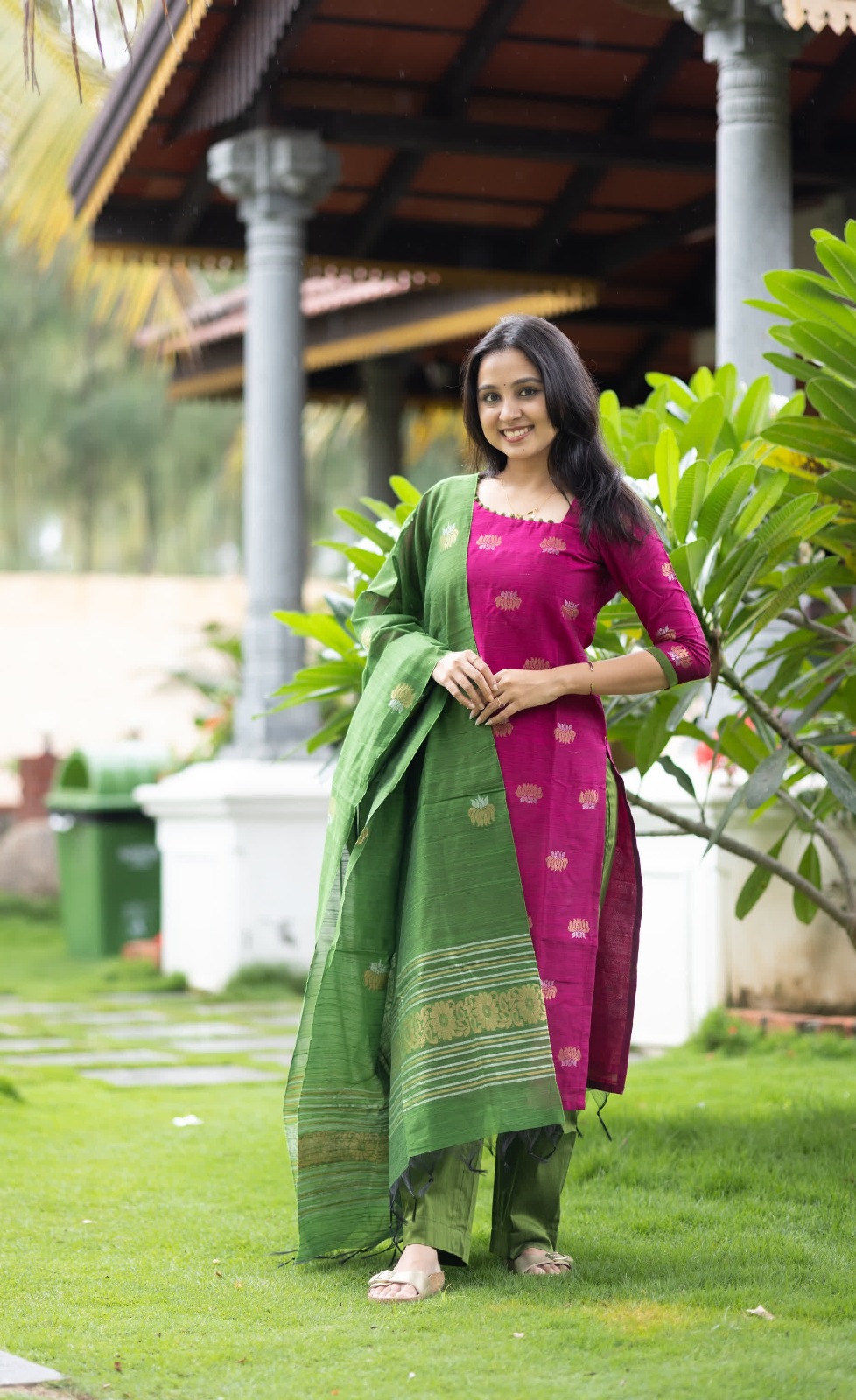
Pastel Blue Embroidered Chanderi Kurta Set with Dupatta benefits from Kundan in a softer gold finish, especially when the jewellery includes white, pale blue or rose accents. Bright yellow gold creates a sharper contrast, but antique gold usually preserves the delicate character of pastel Chanderi.
For purple clothing, green Kundan stones can provide complementary contrast, while white stones create a quieter, more contemporary result. Purple Chanderi Silk Embroidered Kurta Set with Dupatta can be paired with medium earrings and a slim bracelet when the embroidery already supplies a strong pattern across the bodice.
Mustard shades need careful balance because yellow clothing and bright yellow gold can merge into one large warm area. Antique Kundan, white stones or green accents separate the jewellery from the fabric. Elegant Mustard Chanderi Cotton Kurta Set with Embroidery is suited to medium drop earrings and a compact pendant rather than a very broad gold collar.
The Difference Between Polki Kundan and Meenakari for Outfit Styling: When Is Meenakari the Strongest Choice?
Choose Meenakari when colour should lead the jewellery story or when a simple outfit needs a lively focal point. Meenakari is especially useful for festive daytime events, Haldi ceremony dressing, regional celebrations and outfits in solid or lightly embroidered colours.
Yellow, orange and green Meenakari complement the joyful palette of a Haldi ceremony, but the jewellery should be protected from turmeric paste, water and heavy rubbing. Enamel can chip if a bangle strikes a hard surface, and textured areas can hold pigment. Wear statement earrings rather than pieces that sit directly in the path of ceremony activities.
Meenakari also gives a practical way to connect two colours that do not match exactly. A teal outfit with pink, green and gold enamel can appear intentional because the jewellery repeats several tones at once. Teal Blue Vichitra Silk Embroidered Gown Set Online Copy Title can therefore take multicoloured Meenakari earrings, provided the earrings do not compete with an already elaborate neckline.
Meenakari is not limited to playful or casual styling. Deep red and green enamel can look richly traditional with silk, while white and blue enamel can make gold jewellery feel lighter for daytime. Use enamel to echo one secondary colour in the outfit rather than attempting to reproduce every embroidered shade.
The Difference Between Polki Kundan and Meenakari for Outfit Styling: How Should Scale Match the Neckline?
Jewellery scale should follow the neckline, embroidery density and visual weight of the garment rather than the event alone. A high neckline usually benefits from earrings or a long chain, while an open neckline can accommodate a choker or structured necklace.
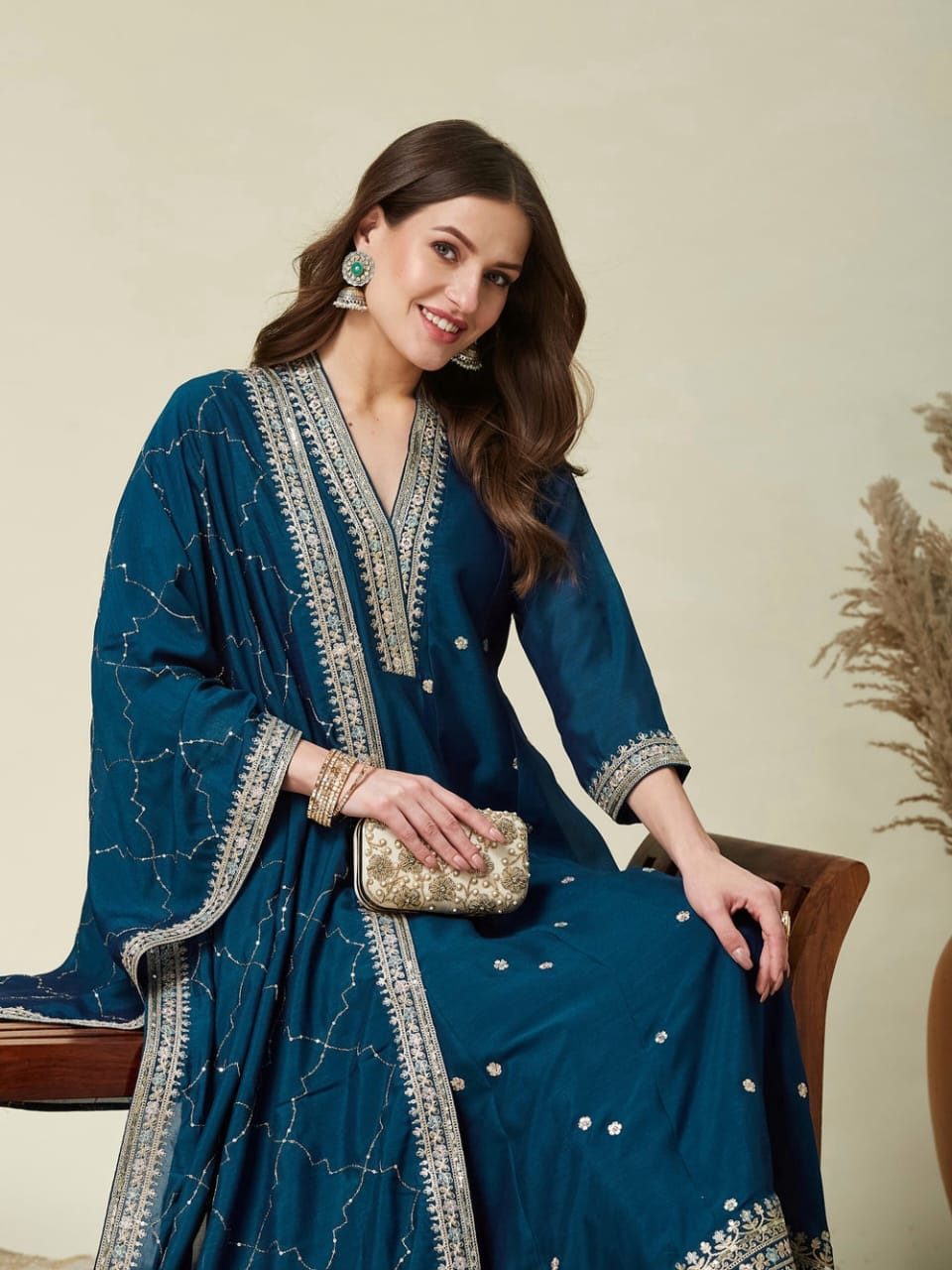
A round or sweetheart neckline leaves room for a Polki choker, Kundan collar or short Meenakari necklace. A boat neckline already creates a horizontal line, so long earrings or a pendant can prevent the upper body from appearing crowded. A high-neck kurta commonly looks cleaner with statement earrings, a ring and bangles instead of a close-fitting necklace.
Dupattas require a practical adjustment. A heavily bordered dupatta placed over one shoulder can cover part of a necklace and catch on protruding stones. In that situation, use earrings as the primary jewellery feature or pin the dupatta below the necklace line. A lighter dupatta can support a visible pendant without constant repositioning.
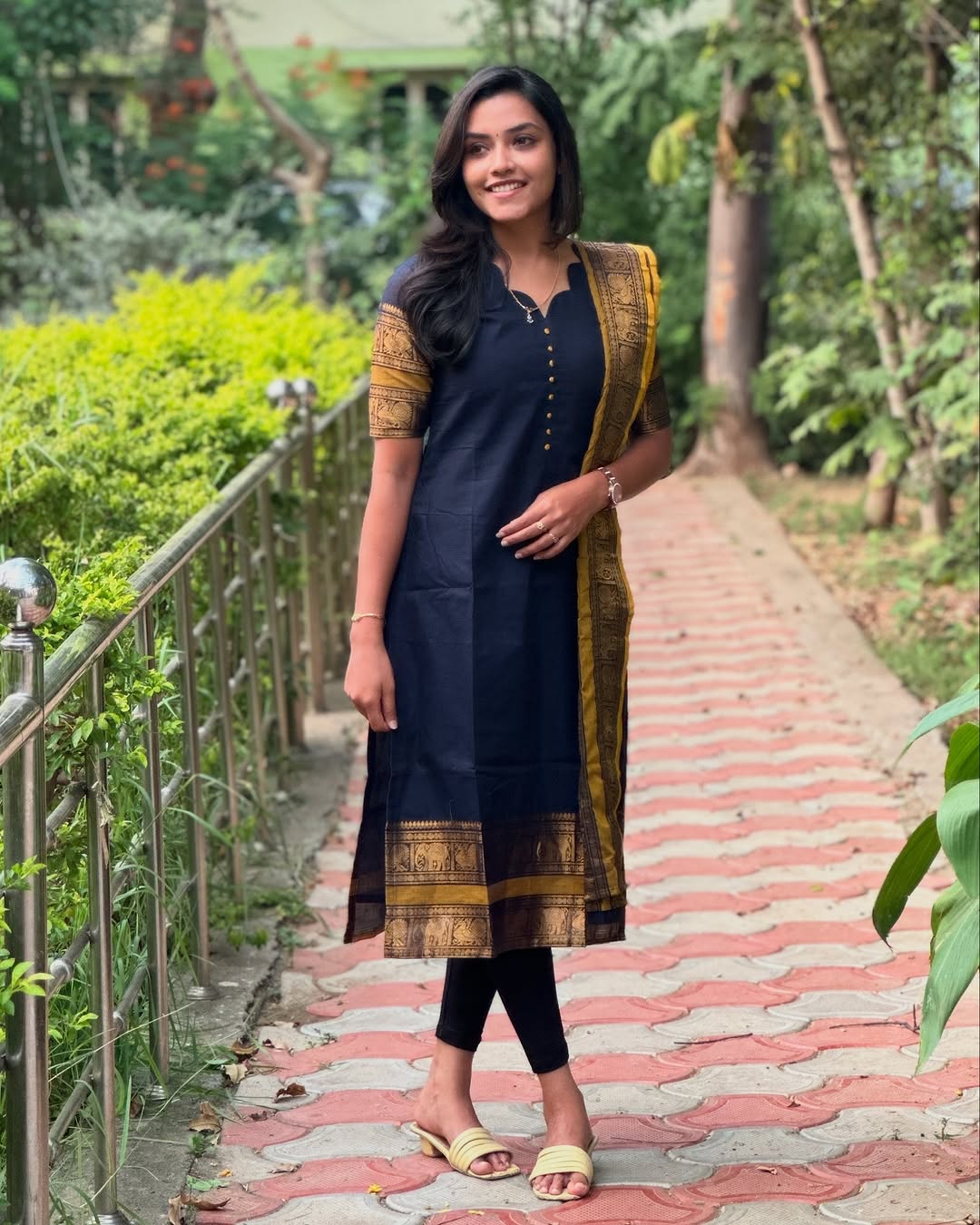
Mustard Designer Kurti Dupatta Set with Rich Weaving already has a strong surface, so a shorter necklace or carefully chosen earrings will preserve the textile detail. A heavily layered Polki set may hide the weave, whereas a small Kundan pendant can repeat the richness without covering it.
The Difference Between Polki Kundan and Meenakari for Outfit Styling: What Jewellery Works with Gowns?
Gowns usually pair best with one defined jewellery focal point because their fitted or flowing silhouette already creates a continuous visual line. Choose long earrings for a high or embellished neckline, a pendant for a simple neckline and a bracelet when the sleeves leave the wrists visible.
Teal, purple and jewel-toned gowns support Meenakari earrings with contrasting enamel, while neutral gowns can take Polki or Kundan more easily. Avoid combining a large necklace, oversized earrings and a heavily embellished gown unless the neckline and hair styling leave enough visual space.
The Difference Between Polki Kundan and Meenakari for Outfit Styling: How Can You Buy and Care for the Right Piece?
Buy jewellery by checking the stone material, metal purity, enamel finish, construction quality and intended frequency of wear. The label alone cannot establish whether a piece contains natural diamonds, imitation stones, sterling silver, gold plating or a solid precious-metal setting.
Ask whether Polki stones are natural, treated or imitation, and request clarity on the metal used in the setting. For Kundan, ask what sits beneath the stones and whether the foil work is traditional or decorative. For Meenakari, inspect the enamel for even colour, clean edges and small areas where the glass appears chipped or cloudy.
Weight and comfort matter as much as appearance. A necklace worn for six hours at a wedding should have secure clasps, smooth edges and a backing that does not scratch the neck. Earrings should be tested for balance, especially when a large pendant hangs below the ear.
Store Polki, Kundan and Meenakari pieces separately in soft pouches so stones do not rub against one another. Keep jewellery away from perfume, hairspray, sweat, turmeric, lotion and water. Wipe each piece with a dry, soft cloth after wearing it, and use professional cleaning for delicate foil-set or enamelled jewellery rather than soaking it at home.
Choose Polki for irregular diamond sparkle and maximum ceremony presence, Kundan for adaptable framed-stone elegance, and Meenakari for colour-led contrast. The best styling decision also considers fabric, neckline, embroidery, event duration and the practical care the jewellery requires.
Common Questions About Choosing Polki, Kundan and Meenakari Jewellery
What is the main difference between Polki and Kundan jewellery?
Polki generally features uncut or minimally polished diamonds, while Kundan describes a foil-based setting technique that can hold diamonds, glass or other stones. A single necklace can therefore be both Polki and Kundan when uncut diamonds are placed in Kundan settings.
Is Meenakari jewellery suitable for a wedding outfit?
Yes, Meenakari jewellery suits wedding outfits when its enamel colours complement the garment. Red, green and gold Meenakari works with silk and bridal colours, while blue, white and pink enamel creates a lighter look for daytime wedding events.
Which jewellery is best with a Chanderi kurta set?
Kundan earrings, a medium pendant or restrained Meenakari jewellery usually works best with a Chanderi kurta set. Chanderi has an airy surface, so very broad Polki bridal sets can hide the weave and make the outfit look visually heavy.
Can Polki, Kundan and Meenakari be worn together?
Yes, the three techniques can appear in one ornament when Polki stones are held in Kundan settings and Meenakari enamel decorates the reverse or selected details. Keep the outfit relatively controlled so the combined craftsmanship remains readable.
What jewellery should be worn for a Haldi ceremony?
Bright Meenakari earrings, lightweight bangles or a short necklace are practical choices for a Haldi ceremony. Avoid exposing delicate enamel or foil-set jewellery to turmeric paste, water and repeated impact.
How should Polki and Meenakari jewellery be stored?
Store Polki and Meenakari pieces separately in soft, dry pouches away from direct sunlight and humidity. Wipe jewellery with a dry cloth after wearing it, and avoid perfume, hairspray, lotion and water because chemicals and moisture can damage enamel, foil settings and surface finishes.