The Difference Between a Maang Tikka and a Matha Patti in Wedding Styling matters when bridal jewellery needs to look balanced rather than simply elaborate. Both ornaments sit around the hairline and centre parting, yet they achieve different levels of coverage, weight and visual drama. A maang tikka normally has one important pendant suspended from a chain, while a matha patti adds side chains or bands that frame the forehead. The right choice depends on the bride's hairstyle, face proportions, outfit neckline, veil and tolerance for weight.
A maang tikka suits a bride who wants a focused point of light at the centre of the forehead. A matha patti suits a bride who wants a broader, more architectural frame around the face. Neither piece is automatically more traditional or more bridal. The accessory should support the complete look, including the saree, lehenga, blouse, earrings, necklace and ceremony setting.
The Difference Between a Maang Tikka and a Matha Patti in Wedding Styling
A maang tikka is a single forehead ornament made from a central pendant and a chain that follows the hair parting, whereas a matha patti normally includes a central pendant plus two side strands extending towards the temples or ears. The side strands may be delicate chains, pearl strings, gold links or embellished bands. Some matha pattis also include a separate side ornament called a passa, although a passa is a distinct accessory rather than a compulsory part of every matha patti.
The pendant of a maang tikka is generally placed at or slightly above the centre of the forehead. The chain is secured along the middle parting with a hook, pin or little clip. A matha patti needs more anchoring because the side chains must sit equally near both temples. Brides often secure a matha patti at three important points: the centre parting and both sides of the head.
Design vocabulary can vary by region and jewellery tradition. Kundan, Polki, meenakari, temple jewellery, pearl work and uncut stones may appear in either accessory. The construction, not merely the amount of ornamentation, creates the practical difference. A slim matha patti may feel lighter than a large, solid maang tikka, while a wide matha patti can be uncomfortable if its side chains pull against the hair.
How Does the Difference Between a Maang Tikka and a Matha Patti in Wedding Styling Affect Face Balance?
A maang tikka concentrates attention along the vertical centre of the face, while a matha patti adds horizontal width around the forehead and temples. That difference can change how the face appears in photographs, although pendant size, hairstyle and placement remain equally important.

Which headpiece suits a round or long face?
A long maang tikka pendant can visually lengthen a round face, while a wider and shorter pendant can add horizontal emphasis to a longer face. A bride with a heart-shaped face may prefer a medium-sized pendant that sits centrally without adding excessive width near the temples. Face-shape guidance should remain flexible because hairstyle, veil placement and the actual proportions of the jewellery often matter more than a category label.
A broad matha patti can balance a narrow forehead by creating a stronger horizontal frame. A heavily embellished matha patti may make a naturally broad forehead appear wider, so a slim side-chain design can provide better proportion. A trial fitting in natural light and front-facing photographs gives more reliable information than judging the piece in a jewellery box or shop mirror.
How should pendant scale be chosen?
A small maang tikka is useful when the bridal necklace, earrings and nose ring already contain substantial detail. A larger maang tikka can hold its own with a simple choker, restrained earrings and a relatively plain blouse. The pendant should not rest directly on the eyebrows because that position can feel restrictive and may look crowded in photographs.
A matha patti should leave enough visible forehead between the lower edge of the side bands and the eyebrows. Excessively low placement can make the face appear compressed and may interfere with expressive movement during rituals. The centre pendant should align with the nose bridge or centre parting without hanging so low that it touches a nath chain.
When Does the Difference Between a Maang Tikka and a Matha Patti in Wedding Styling Matter Most?
The distinction matters most when a bride is choosing between an open, centre-focused look and a framed, formal look. A maang tikka leaves more of the forehead and side hair visible, while a matha patti creates a more complete jewellery border around the upper face.

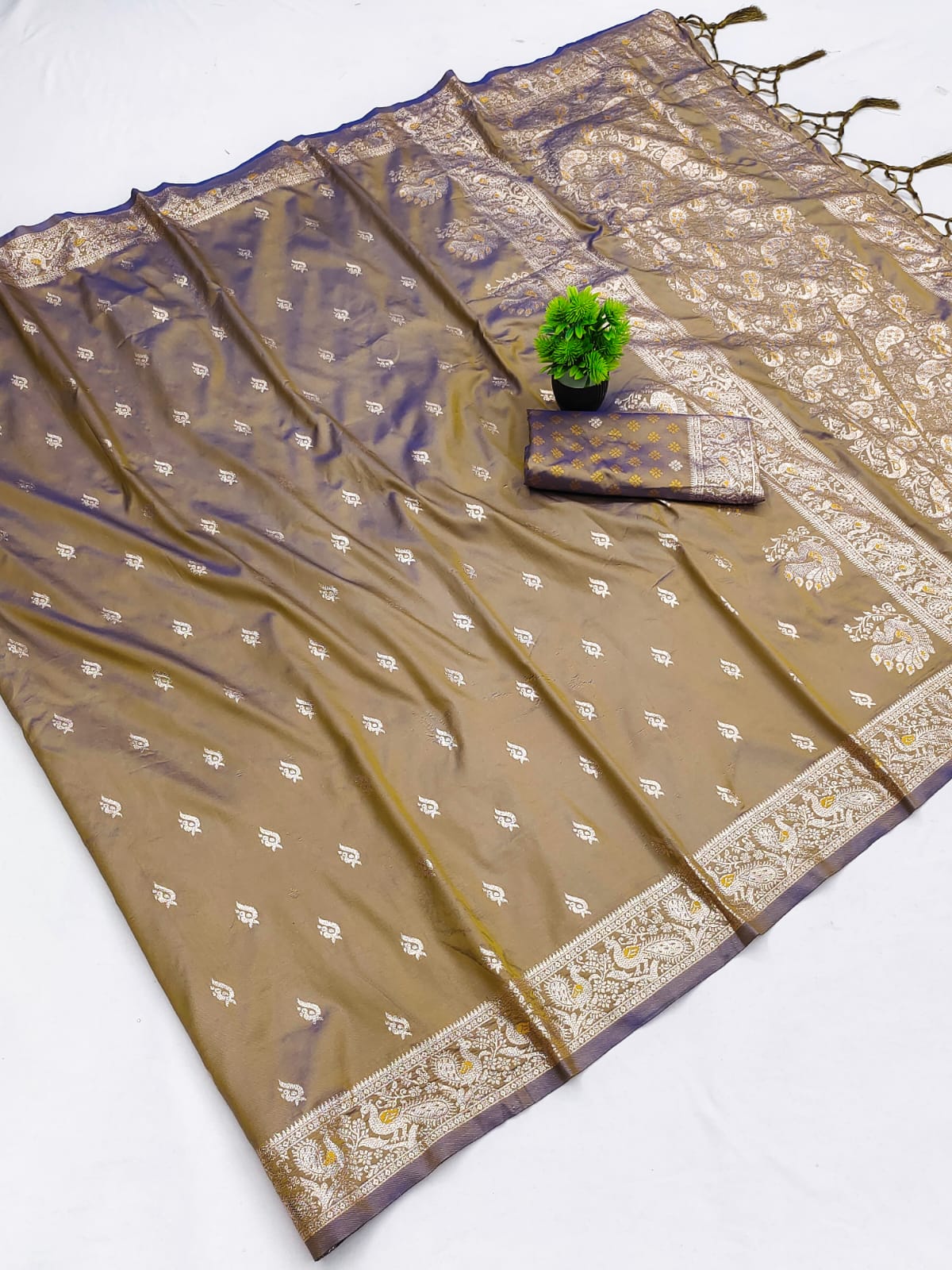
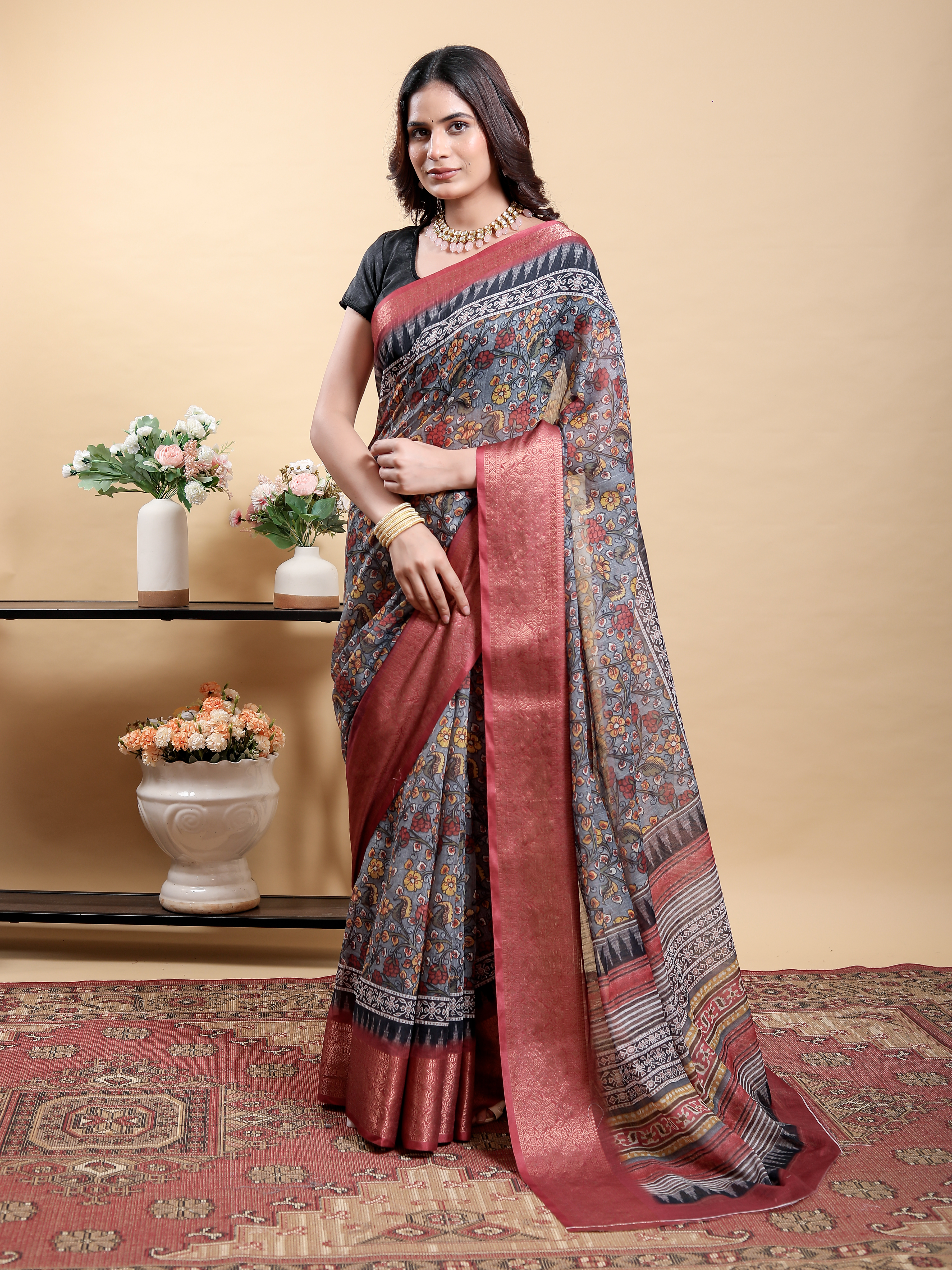
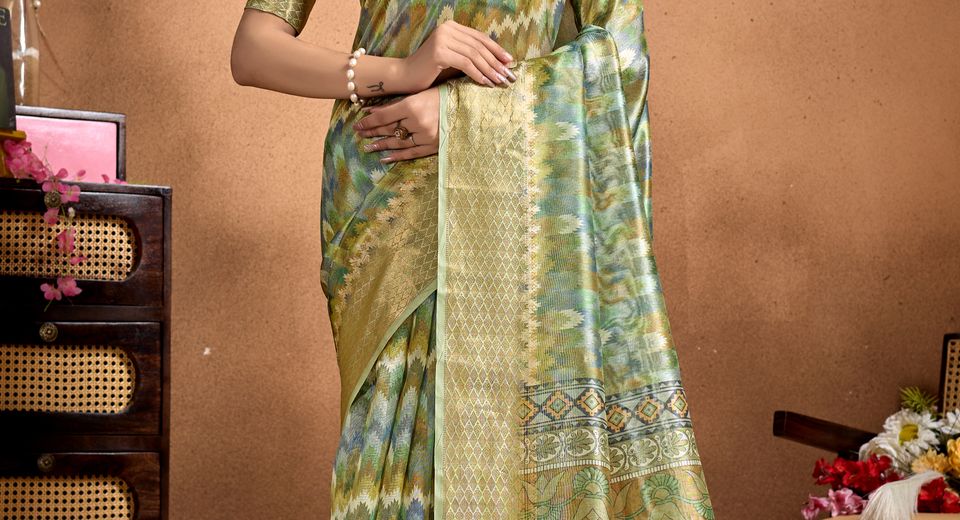
A maang tikka pairs naturally with sarees and lehengas because its narrow vertical line echoes a saree pleat or the centre panel of a lehenga blouse. Taupe Chanderi Cotton Saree with Botanical Border Detailing benefits from a refined central ornament that doesn't compete with the botanical border. Pista Green Linen Cotton Saree with Zigzag Pattern Border also suits a delicate maang tikka when the styling direction is festive but not heavily bridal.
A maang tikka can be especially practical for a mehendi or sangeet outfit because it leaves more room for statement earrings and layered necklaces. Green Bandhani Viscose Gajji Silk Saree with Gota Patti can support a heritage kundan or gold-toned maang tikka without requiring side chains across the forehead. The central ornament can pick up the metallic Gota Patti detail while keeping the face open.
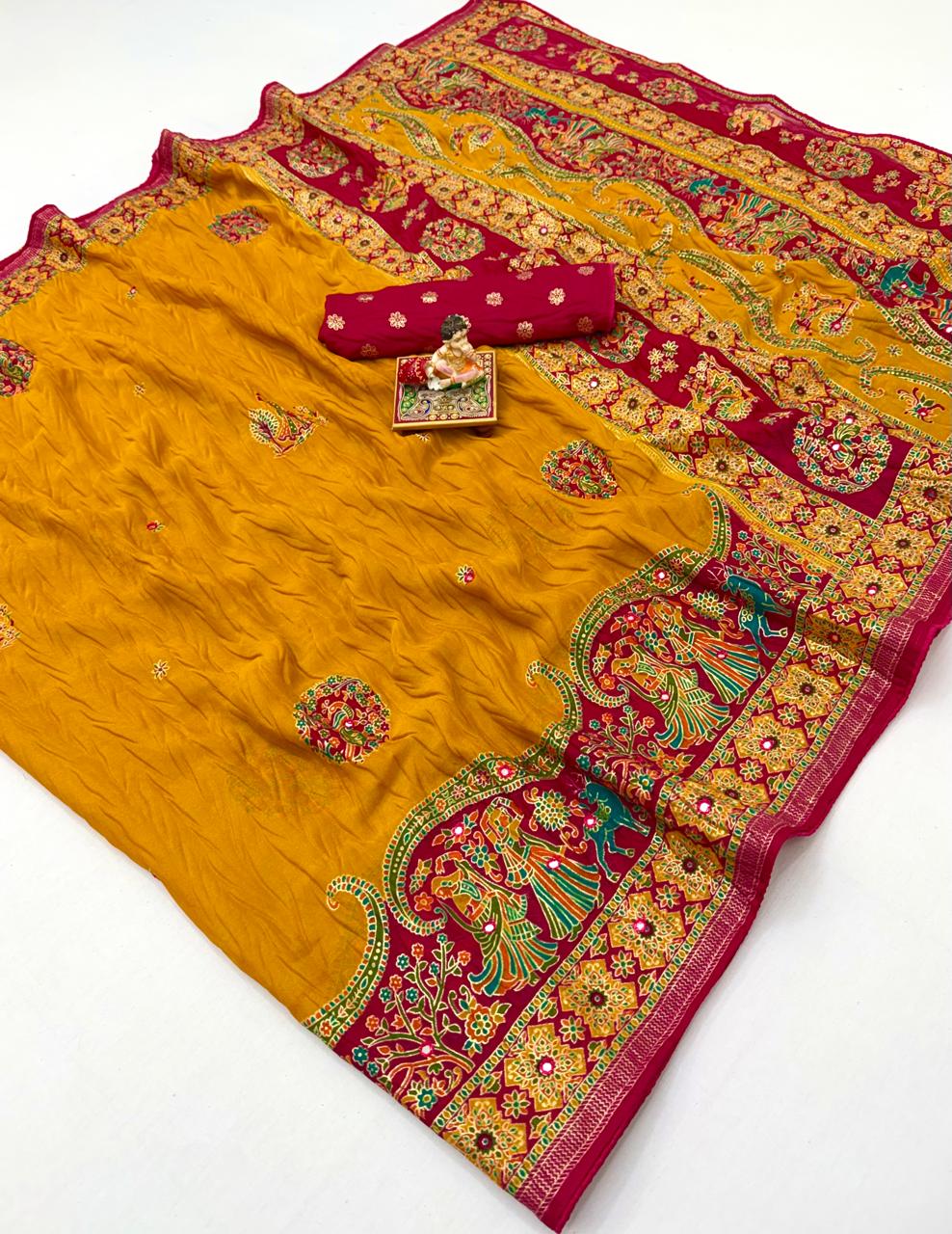
A matha patti works well when a bride wants a visibly ceremonial head-jewellery look. The side chains connect the centre pendant to the hairline and make the accessory more prominent in front-facing photographs. Mustard Bandhani Viscose Gajji Silk Saree with Handwork has enough surface interest to support a classic matha patti, provided the metal and stone finish complements the handwork rather than competing with it.
How Do Comfort and Fitting Show the Difference Between a Maang Tikka and a Matha Patti in Wedding Styling?
A maang tikka is generally easier to wear for long hours because it has one primary chain and fewer contact points, while a matha patti distributes weight across the forehead and temples but requires more precise fitting. Weight alone doesn't determine comfort; chain tension, sharp edges, pin placement and pressure from a dupatta often matter more.
Before the wedding, wear the chosen headpiece at home for 30 to 45 minutes with the intended hairstyle. Check for pulling at the hairline, pressure behind the ears, pendant movement and irritation from hooks. An useful fitting test is to take ten steps, sit down, turn the head from side to side, smile and gently lower the chin. Jewellery that shifts during this test needs adjustment rather than extra decoration.
A maang tikka can be secured with a small bobby pin, a hairpin or a thread loop hidden in the centre parting. A matha patti normally needs at least three secure points and sometimes additional side pins near the temples. Pins should not be placed directly over sensitive skin, and a tight chain should not be forced to sit lower than its natural shape.
Brides who wear glasses, a heavy veil or a large nath should check for contact points before finalising a matha patti. Side chains can catch on spectacle arms, while a low-hanging pendant can touch the nath chain. A maang tikka may be the more comfortable choice when the rest of the face already carries several accessories.
Hair preparation also affects stability. A clean centre parting, controlled flyaways and a firm bun or braid provide better anchors than very loose hair. A professional stylist should fit the headpiece after the hairstyle is complete and ask the bride to walk, turn and sit before applying the veil.
How Should the Difference Between a Maang Tikka and a Matha Patti in Wedding Styling Guide Outfit Pairing?
The headpiece should repeat one or two established design cues from the wedding outfit instead of matching every colour in the ensemble. Metal tone, stone shape, pearl finish and motif scale usually create a more coherent connection than an exact colour match.
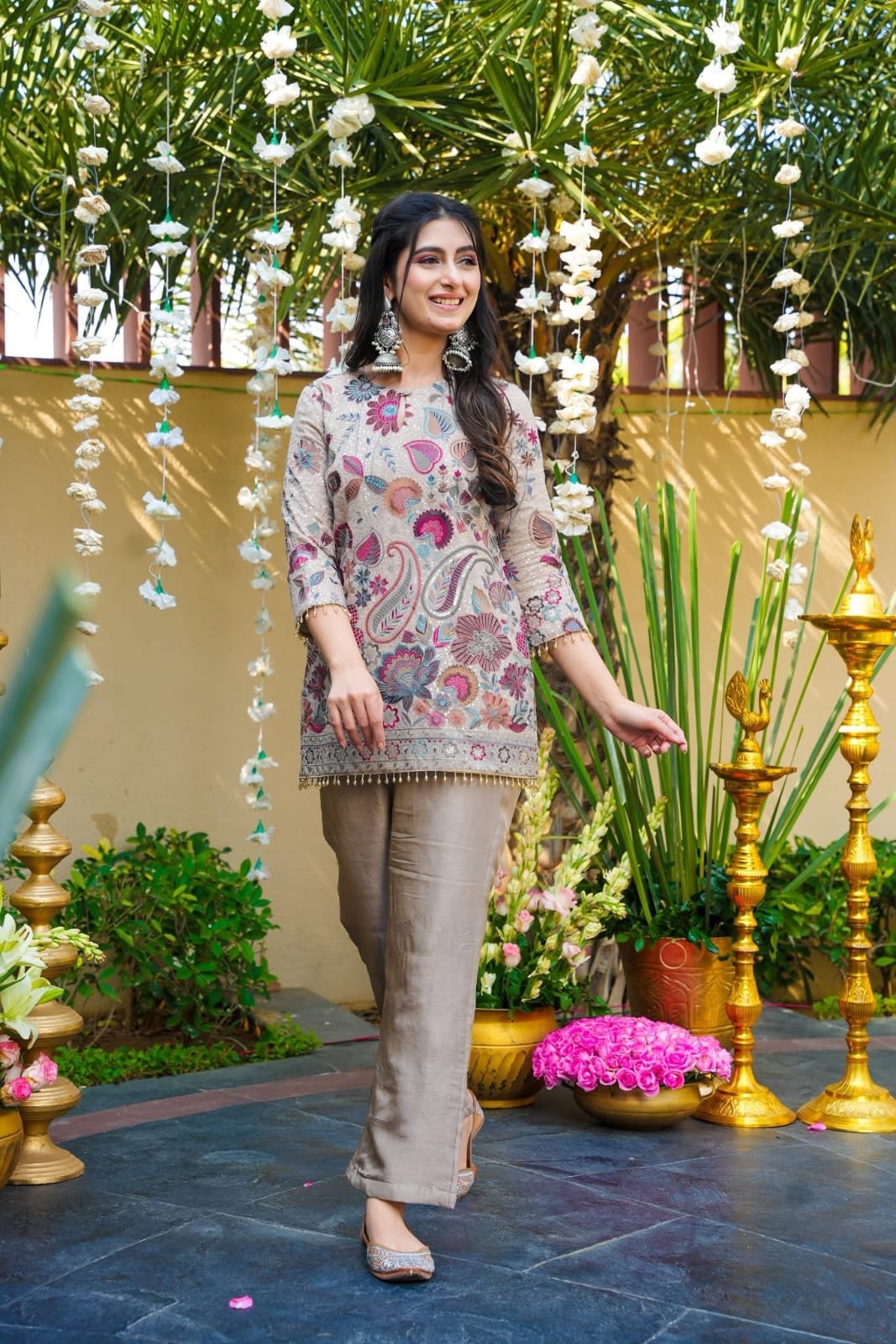
Mustard Satin Saree with Printed Pink Pallu & Blouse can be styled with a gold maang tikka featuring a restrained pink or ruby-toned accent. A full matha patti may be appropriate for a formal wedding ceremony, but a slimmer design keeps the printed pallu and blouse from competing with the forehead jewellery.
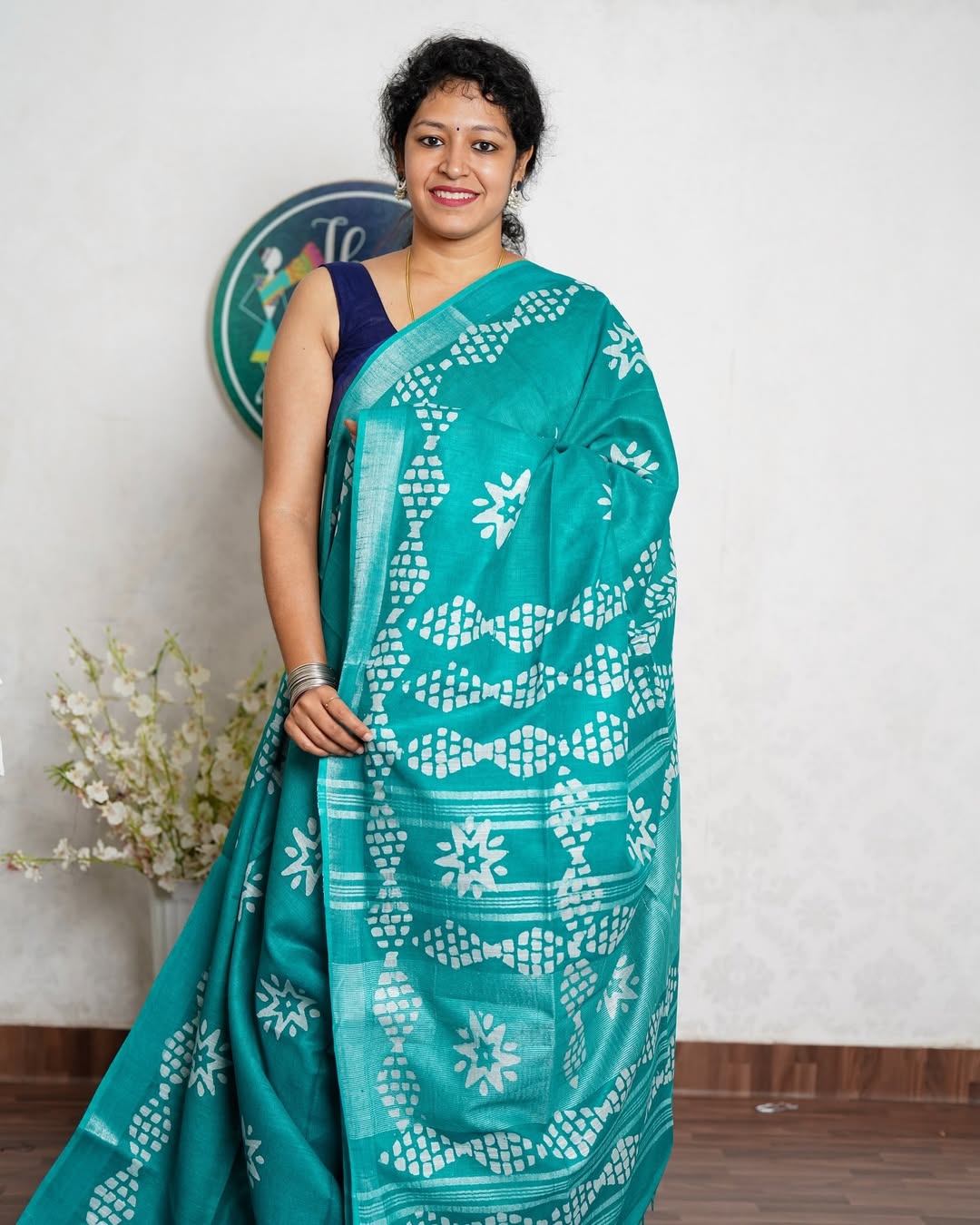
Turquoise Saree with White Floral Motifs and Geometric Border can take a pearl-edged maang tikka or a silver-toned matha patti. White pearls repeat the floral lightness without introducing another saturated colour. If the bride chooses a broad matha patti, simple drop earrings will usually create better balance than large chandelier earrings.
Teal Floral Mal Cotton Saree with Printed Pallu and Borders calls for proportionate styling. A compact maang tikka works for a daytime ceremony, while a delicate side-chain matha patti can elevate the same saree for an evening function. Cotton texture generally benefits from jewellery with visible craftsmanship but moderate scale.
Wedding Wear Maslin Silk Zari Woven Saree Online carries a formal zari presence that can support a structured matha patti when the blouse and earrings are not equally dense. A lighter headpiece may be preferable if the saree border, necklace and bangles already provide several reflective surfaces. Zari should be echoed through metal tone, not necessarily copied through identical motifs.
Green Bandhani Viscose Gajji Silk Saree with Gota Patti and Mustard Bandhani Viscose Gajji Silk Saree with Handwork both carry strong regional textile references. Heritage gold, kundan or meenakari details can sit comfortably with Bandhani, but the bride should choose either a dramatic headpiece or very heavy earrings as the primary focal point.
How Does the Difference Between a Maang Tikka and a Matha Patti in Wedding Styling Change by Ceremony?
The ceremony, venue and time of day should influence whether a maang tikka or matha patti carries the look. Daytime rituals usually benefit from lighter pieces that remain clear in natural light, while evening receptions can accommodate more reflective stones and wider silhouettes.
What works for a Haldi ceremony?
A lightweight maang tikka is usually more practical for a Haldi ceremony because turmeric paste, movement and outdoor heat make a multi-chain headpiece harder to protect. A simple gold-toned pendant or floral maang tikka can complement yellow, green or ivory clothing without obstructing the face.
Secure the chain away from areas likely to receive turmeric paste, and avoid pieces with porous fabric elements that may stain. If a bride wants the visual effect of a matha patti for photographs, a very fine design can be worn briefly and removed before the most active Haldi rituals.
What works for a mehendi or sangeet?
A maang tikka is usually the flexible choice for a mehendi or sangeet because it accommodates dancing, changing hairstyles and statement earrings. A slim matha patti can work for a more formal sangeet entrance when the side chains are light and firmly anchored.
Printed, woven and Bandhani sarees can carry a smaller headpiece particularly well at daytime functions. A bolder matha patti is more suitable for an evening stage setting where directional lighting can reveal the detail without requiring an oversized pendant.
What works for the wedding ceremony?
A matha patti is a strong choice for a heritage wedding ceremony when the bride wants a formal frame around the face and the hairstyle can support secure anchoring. A maang tikka remains appropriate when the bridal outfit, veil or necklace already has considerable volume.
For a long ceremony, comfort should overrule visual scale. A lighter matha patti with a padded or smooth side chain can be more wearable than a heavy piece with sharp settings. A medium maang tikka may create a more elegant result than an oversized headpiece that needs repeated adjustment.
Which Is Better: The Difference Between a Maang Tikka and a Matha Patti in Wedding Styling?
Neither accessory is universally better; a maang tikka is usually better for lightness, versatility and a centre-focused look, while a matha patti is usually better for a framed, time-honoured and more dramatic bridal effect. The best choice is the piece that remains secure, comfortable and proportionate throughout the planned event.
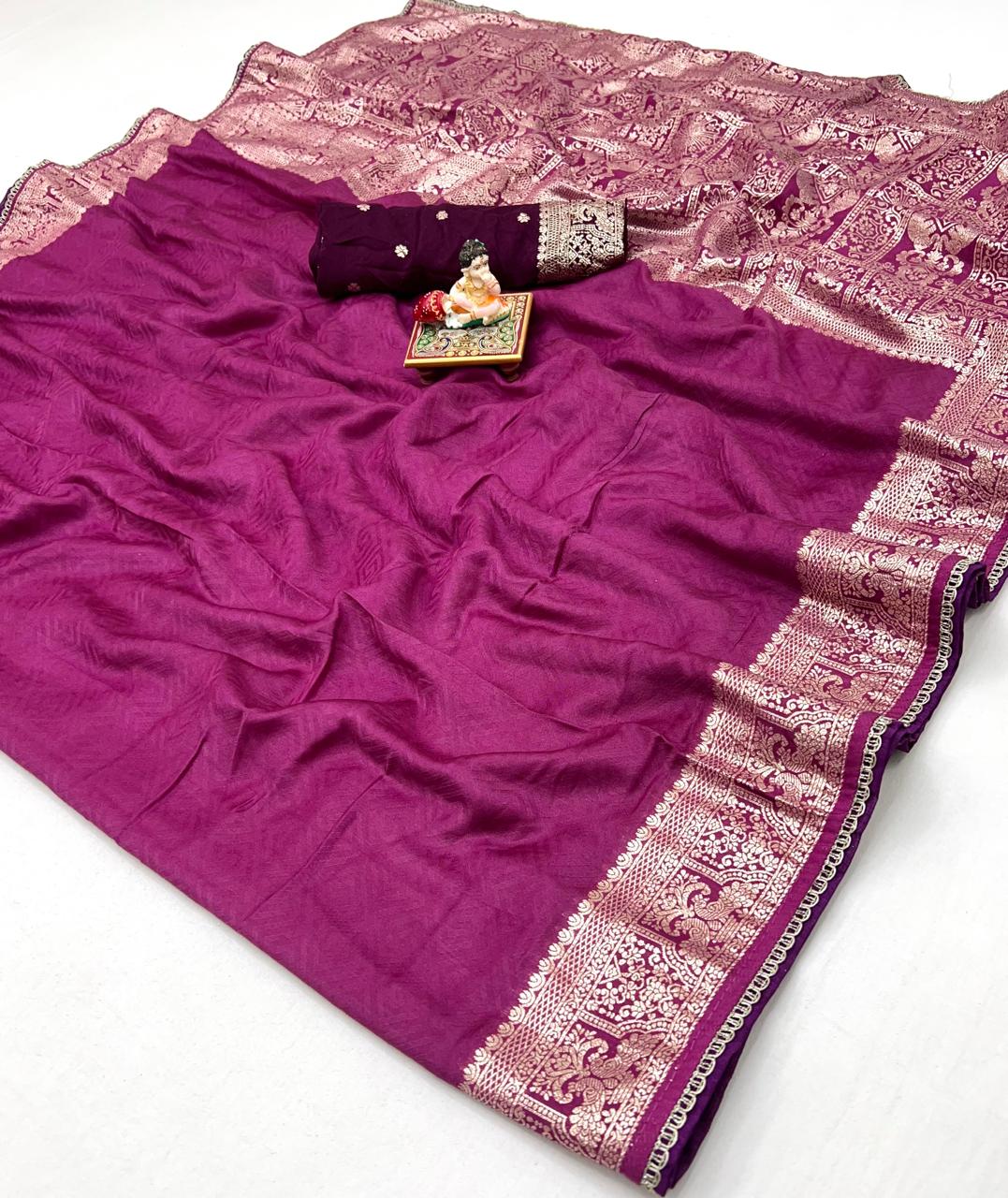
Choose a maang tikka when the bride has a busy necklace, large earrings, a detailed blouse or a veil that already occupies the hairline. Choose a matha patti when the bride wants the forehead to act as a major jewellery focal point, the hairstyle can support side anchors and the rest of the jewellery has been edited to match its scale.
A final styling check should include the full outfit, hairstyle, veil, blouse neckline and all major jewellery. Take photographs from the front, three-quarter angle and side at both indoor and outdoor distances. The images will reveal whether the pendant sits centrally, whether the side chains are level and whether the accessory supports rather than overwhelms the face.
Good bridal styling leaves room for movement, expression and ceremony. A carefully fitted maang tikka or matha patti should stay aligned while the bride smiles, bends, turns and participates in rituals. That practical test is more valuable than choosing the most ornate piece in the display.
Common Questions About Choosing a Maang Tikka or Matha Patti for a Wedding
What is the main difference between a maang tikka and a matha patti?
A maang tikka usually has one central pendant attached to a chain along the centre parting. A matha patti adds side chains or bands that extend towards the temples, creating a wider frame around the forehead.
Is a maang tikka or matha patti better for a round face?
A longer, vertically oriented maang tikka can visually lengthen a round face. A slim matha patti can also work, but a very broad side design may add more width than desired around the forehead.
Can a matha patti be worn with an open hairstyle?
A matha patti can be worn with open hair if the centre chain and both side chains are anchored securely. A bun or braid usually provides greater stability, especially during a long wedding ceremony.
Which is more comfortable for a long wedding ceremony?
A maang tikka is generally easier to wear for several hours because it has fewer contact points. A lightweight, well-fitted matha patti can also be comfortable when the side chains are smooth and the piece is secured at the centre and temples.
Can a maang tikka and matha patti be worn together?
A conventional matha patti already includes a central pendant, so wearing a separate maang tikka may look crowded. The two can be combined only when the designs are specifically made as a coordinated set and the central elements do not overlap.
How should a bridal headpiece match a saree?
Match the headpiece to one or two details such as metal tone, zari, pearl finish or motif scale rather than copying every colour. A lighter maang tikka suits a heavily patterned saree, while a structured matha patti can support a formal silk or zari-rich look when the remaining jewellery is balanced.