A saree conversation in Tamil can change meaning through a single word: pudavai may sound ceremonial, while seelai often feels more casual in everyday speech. Tamil Seelai and Pudavai Words in Everyday Saree Conversations also include names for the pallu, pleats, blouse, drape and occasion. Knowing these terms helps you speak more naturally, understand family advice while dressing, and describe a saree accurately when shopping.
Language varies across Tamil Nadu, Sri Lanka, families and generations, so no single pronunciation or vocabulary list covers every speaker. The spellings below use familiar English transliterations; Tamil script and pronunciation may differ slightly between communities.
What do seelai and pudavai mean in Tamil?
Seelai and pudavai are both commonly used Tamil words for a saree, although their frequency and emotional tone can vary by region and speaker.
Pudavai is widely associated with a saree as a garment and is often heard in family, festive and traditional contexts. A grandmother may ask someone to choose a particular pudavai for a wedding, temple visit or festival. Seelai, also written selaai or selai in informal English transliteration, is also used for saree and can sound more conversational in some households.
The distinction isn't a strict rule that every Tamil speaker follows. One person may say indha seelai nalla irukku-"this saree looks good"-while another person uses indha pudavai for the same garment. Both expressions can be understood, and the surrounding words usually provide the context.
An useful everyday shortcut is this: use pudavai when discussing a time-honoured or formal saree, and recognise seelai as an equally familiar conversational word rather than treating either term as the only correct option.
Tamil Seelai and Pudavai Words in Everyday Saree Conversations
Tamil saree vocabulary becomes easier when the garment is divided into recognisable parts: the body, border, pallu, pleats and blouse.
Common words for saree details
Pallu is the loose decorated end that falls over the shoulder. In Tamil conversations, you may also hear mundhanai or munthaanai for the pallu, especially when discussing a heritage drape or arranging the shoulder end.
Thalaippu can refer to the head or upper end and is used in some Tamil textile contexts for the pallu end. Usage isn't identical in every region, so pallu remains the clearest term when speaking with sellers or people from different parts of India.
Madippu means a fold. In saree dressing, madippu may describe the folded pleats or any carefully arranged fold in the fabric. Surukku refers to gathering or bunching, which can be useful when discussing excess fabric at the waist or shoulder.
Karai means border in several South Indian textile contexts. A karai may be a narrow contrast line, a broad woven band or an ornamental edge. Jari describes metallic-looking thread or metallic thread work, commonly seen in festive silk sarees, while butta refers to a small motif repeated across the body.
Ravikkai is a classic Tamil word for blouse, although blouse is now used very commonly in everyday Tamil-English speech. Choli is also understood, but it may suggest a different regional vocabulary or a lehenga-style blouse depending on the conversation.
How do you describe a saree naturally in Tamil-English?
The clearest description names the colour, fabric, print or weave, border, pallu and blouse rather than relying only on words such as "pretty" or "heritage."

For example, "This is a teal linen cotton saree with a contrast karai and floral mundhanai" gives useful information about colour, fabric, border and pallu. "The madippu is holding well" communicates that the front pleats are staying in place. "The pallu has tassels" is more precise than saying that the saree has a decorative end.
Everyday Tamil-English speech frequently combines English fabric names with Tamil garment terms. A speaker might say "cotton pudavai," "silk seelai," "fix the madippu," or "bring the mundhanai forward." Such combinations are normal and practical, especially when younger and older family members are dressing together.
A printed design can also be described through the word achchu, associated with a print or impression in textile and craft vocabulary. A woven motif is better described as nei or woven work when the speaker wants to distinguish it from a surface print. In retail conversations, however, the English words "printed," "woven," "border" and "pallu" are usually understood immediately.
Which Tamil words describe wearing and draping a saree?
Words for wearing a saree usually describe tucking, pleating, pinning and arranging rather than the saree alone.
- Kattu means to tie, fasten or wear in context, so a phrase built around pudavai kattu can refer to tying or draping a saree.
- Sorugu or sorugudhal can refer to tucking or inserting fabric, such as securing the pleats at the waist.
- Madippu podu means to make or place folds, an useful phrase when someone is helping create front pleats.
- Kuththu can be associated with pinning or fastening in informal dressing instructions, although families may use their own Tamil-English shorthand.
- Thol means shoulder, so arranging the pallu on the shoulder can be explained using a phrase about placing the mundhanai on the thol.
These words are best treated as conversational building blocks rather than a formal grammar lesson. Tamil verbs change according to tense, politeness and who is being addressed. A shop assistant, older relative or Tamil teacher may phrase the same instruction differently.
The drape itself also carries vocabulary. Madisar is a distinctive nine-yard saree drape associated particularly with Tamil Brahmin communities and specific marital, religious and ceremonial traditions. Madisar isn't simply a synonym for any Tamil saree. The style, garment length, pleating method and cultural setting make it a distinct drape that should be described accurately and worn with awareness.
How do fabric and design words change the conversation?
Fabric vocabulary helps listeners understand comfort, transparency, fall and occasion before they see the saree worn.
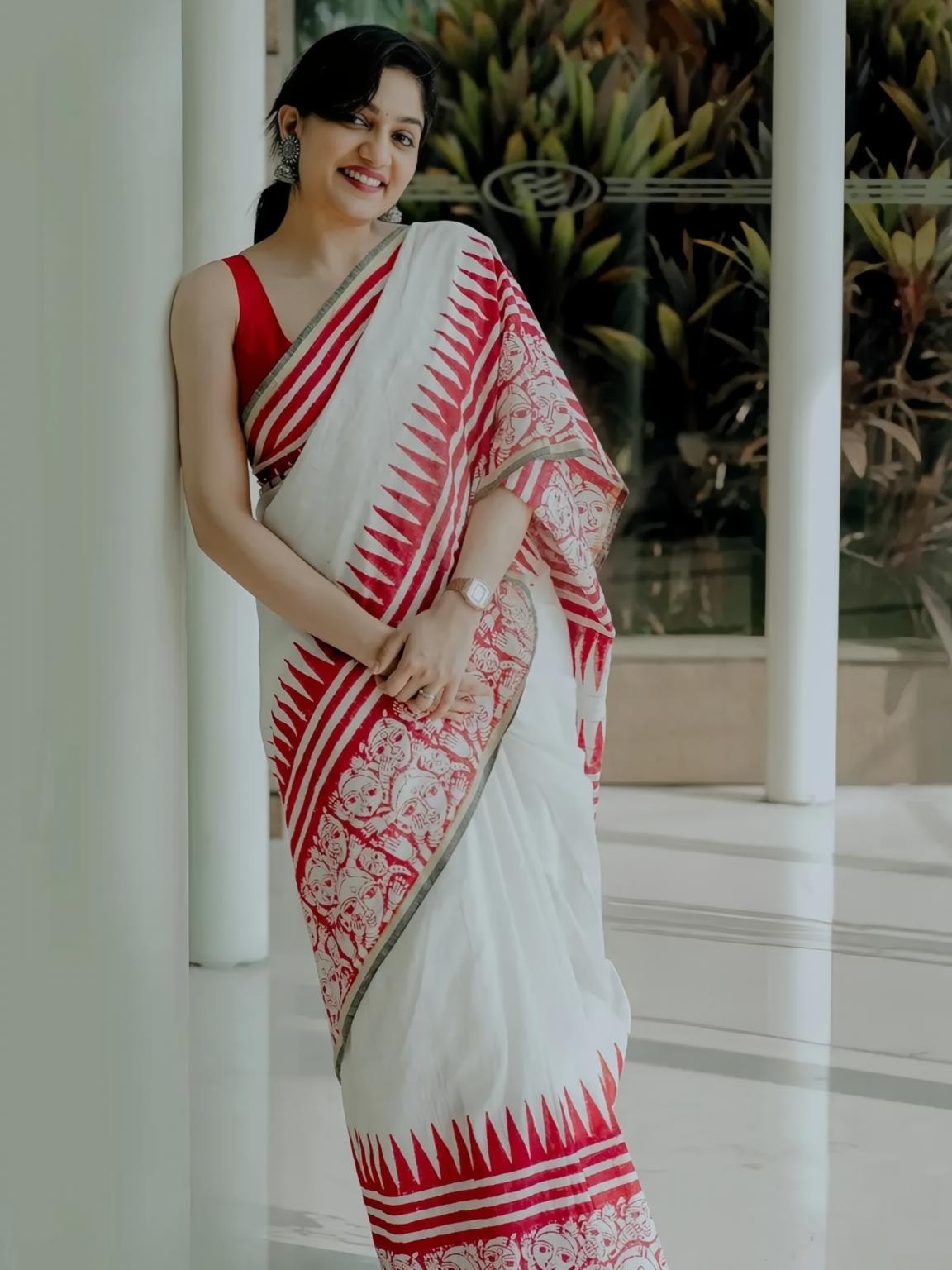
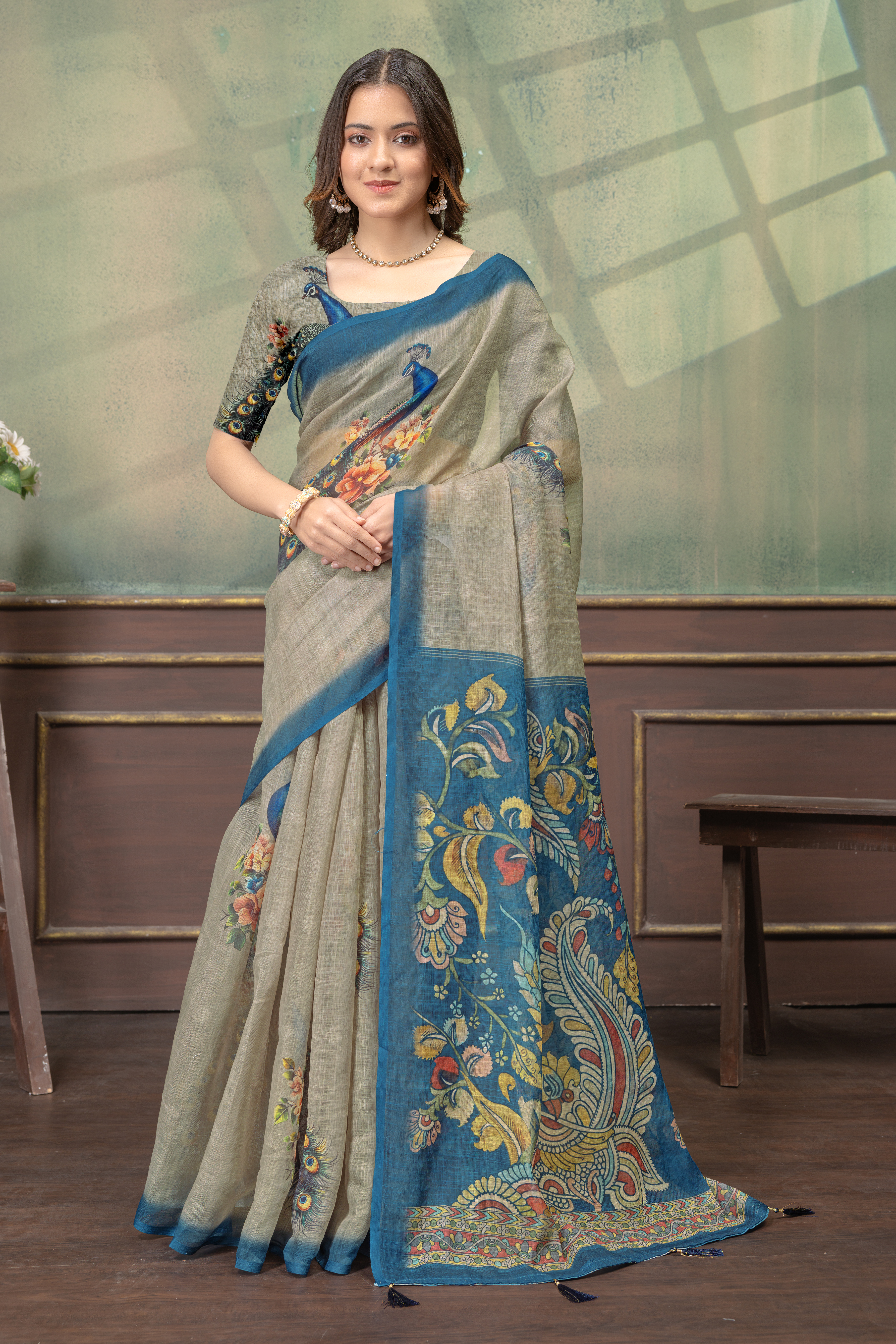
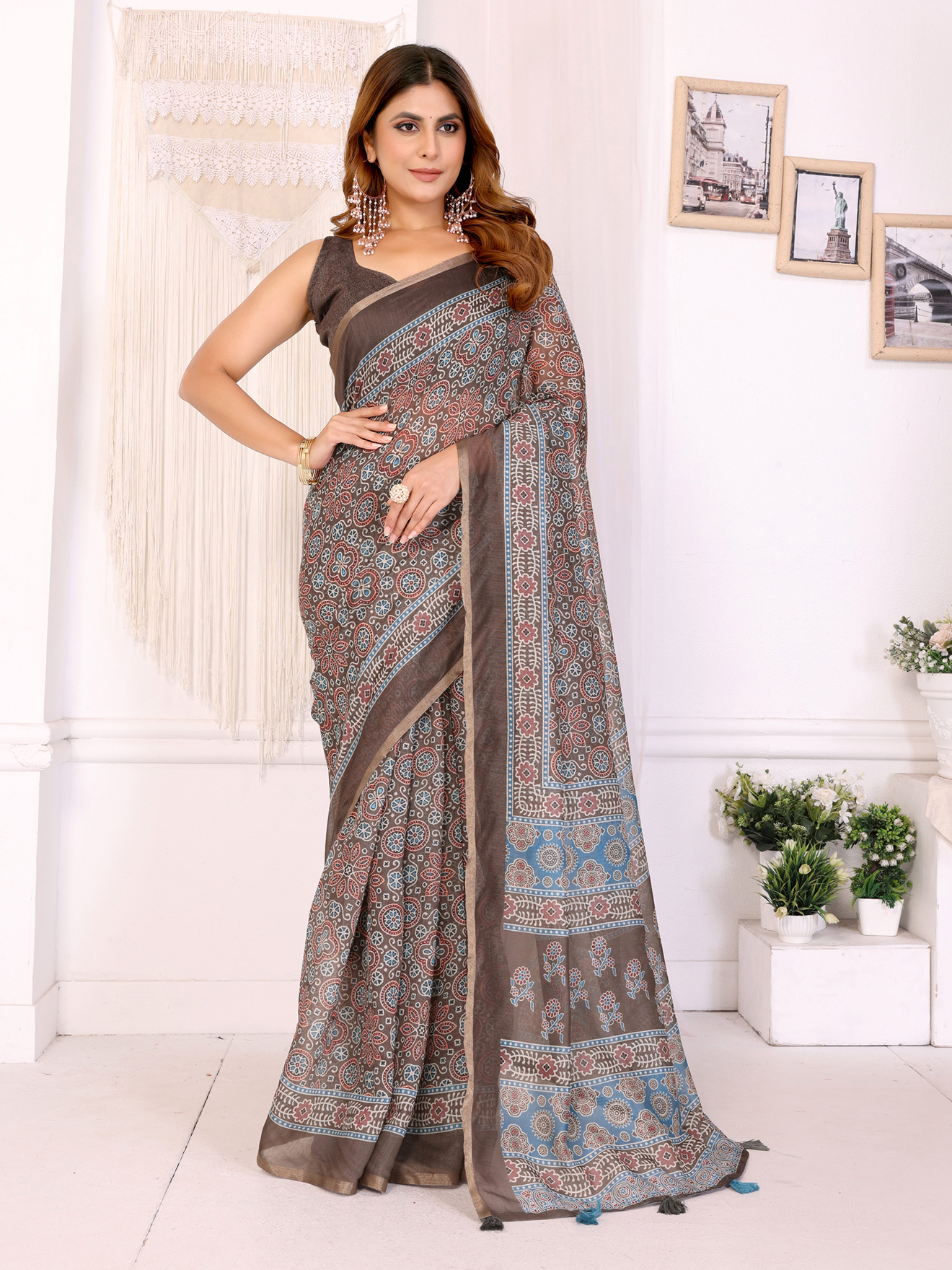
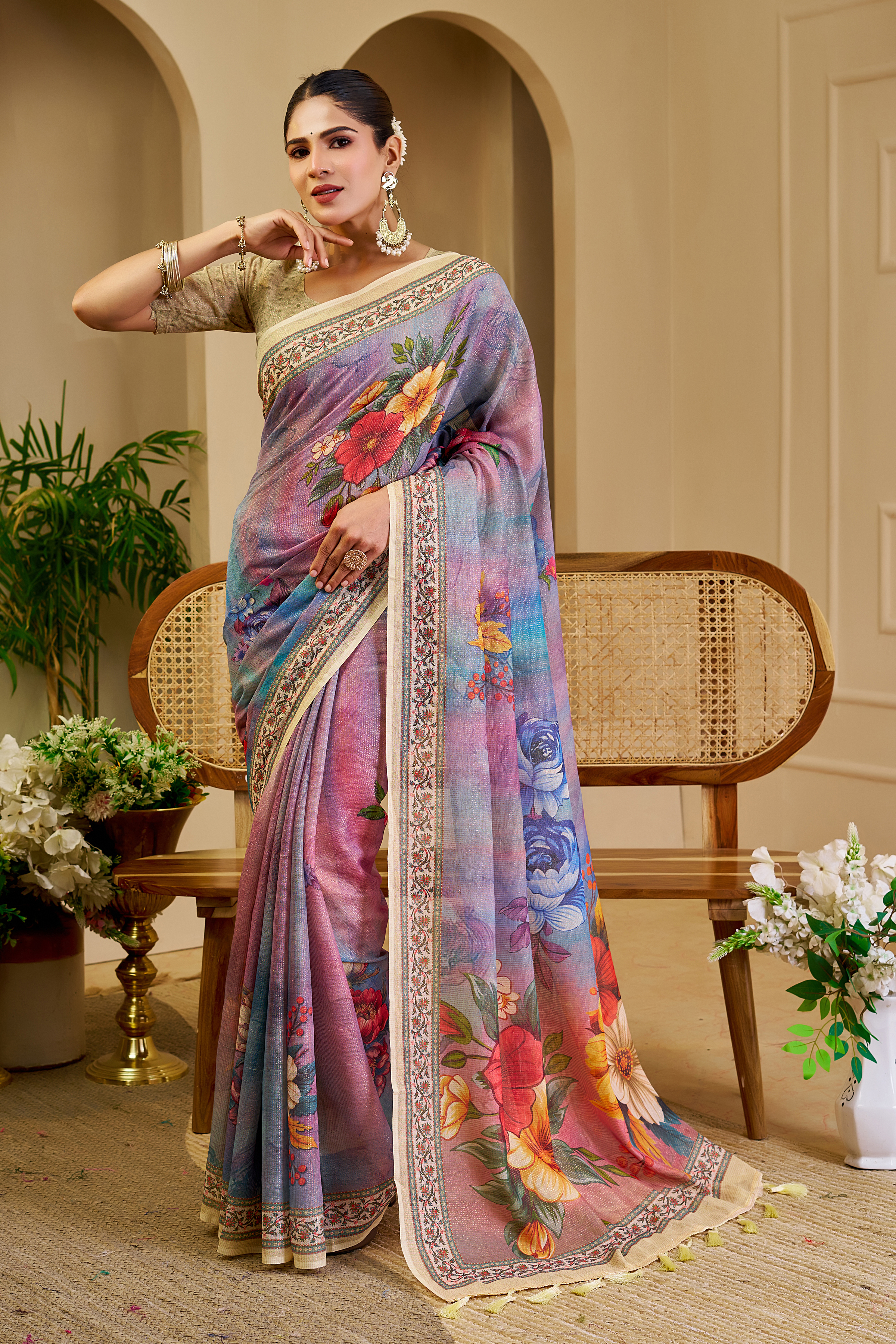
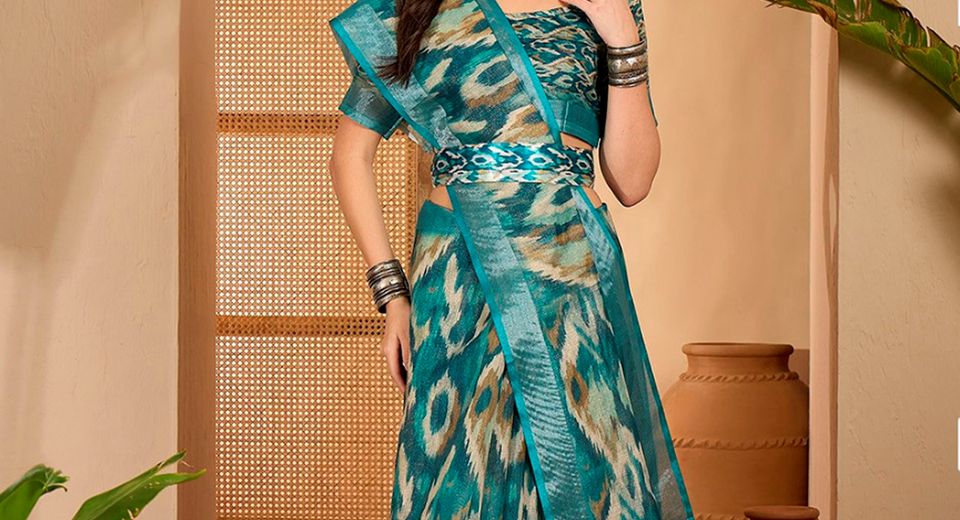
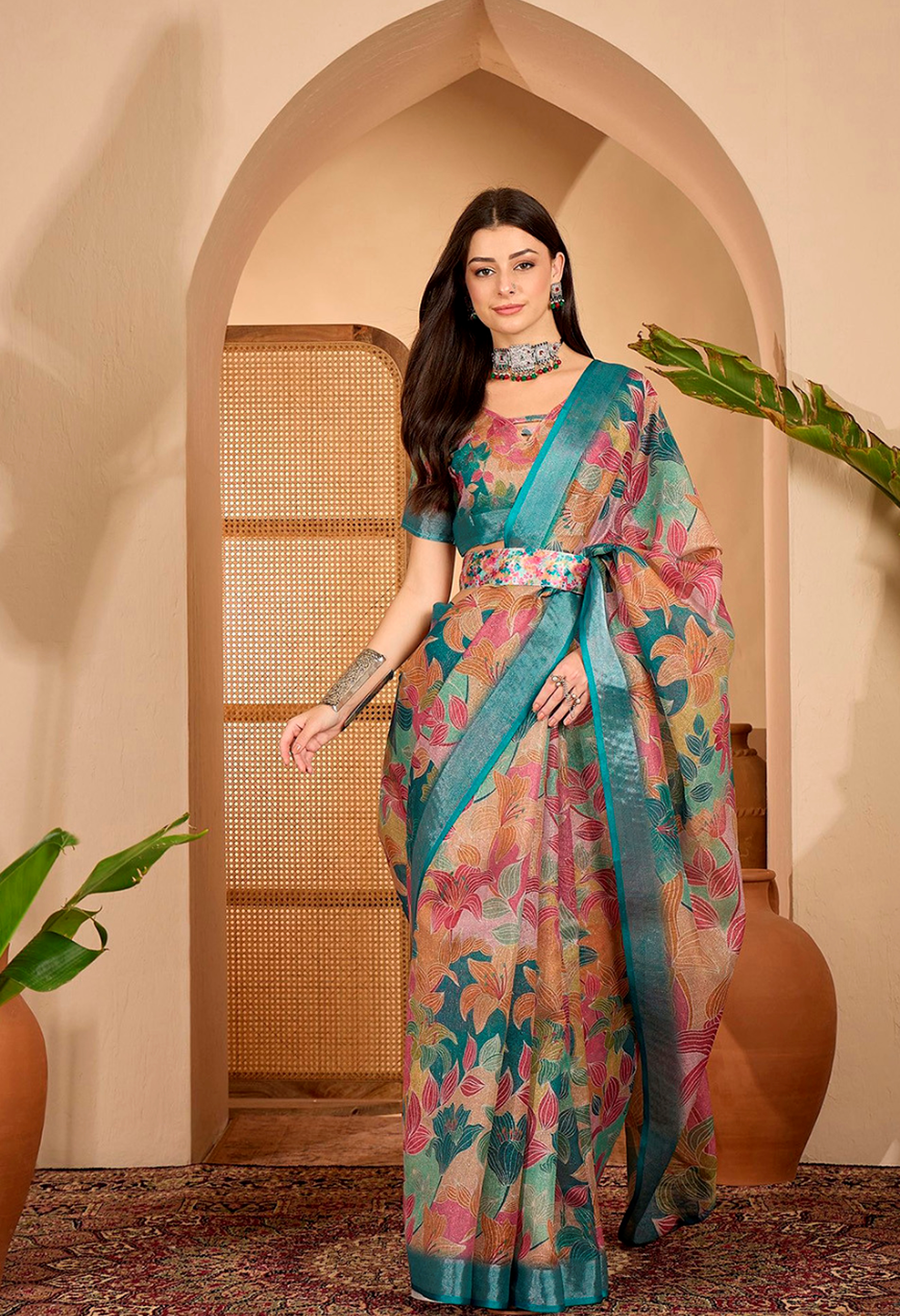
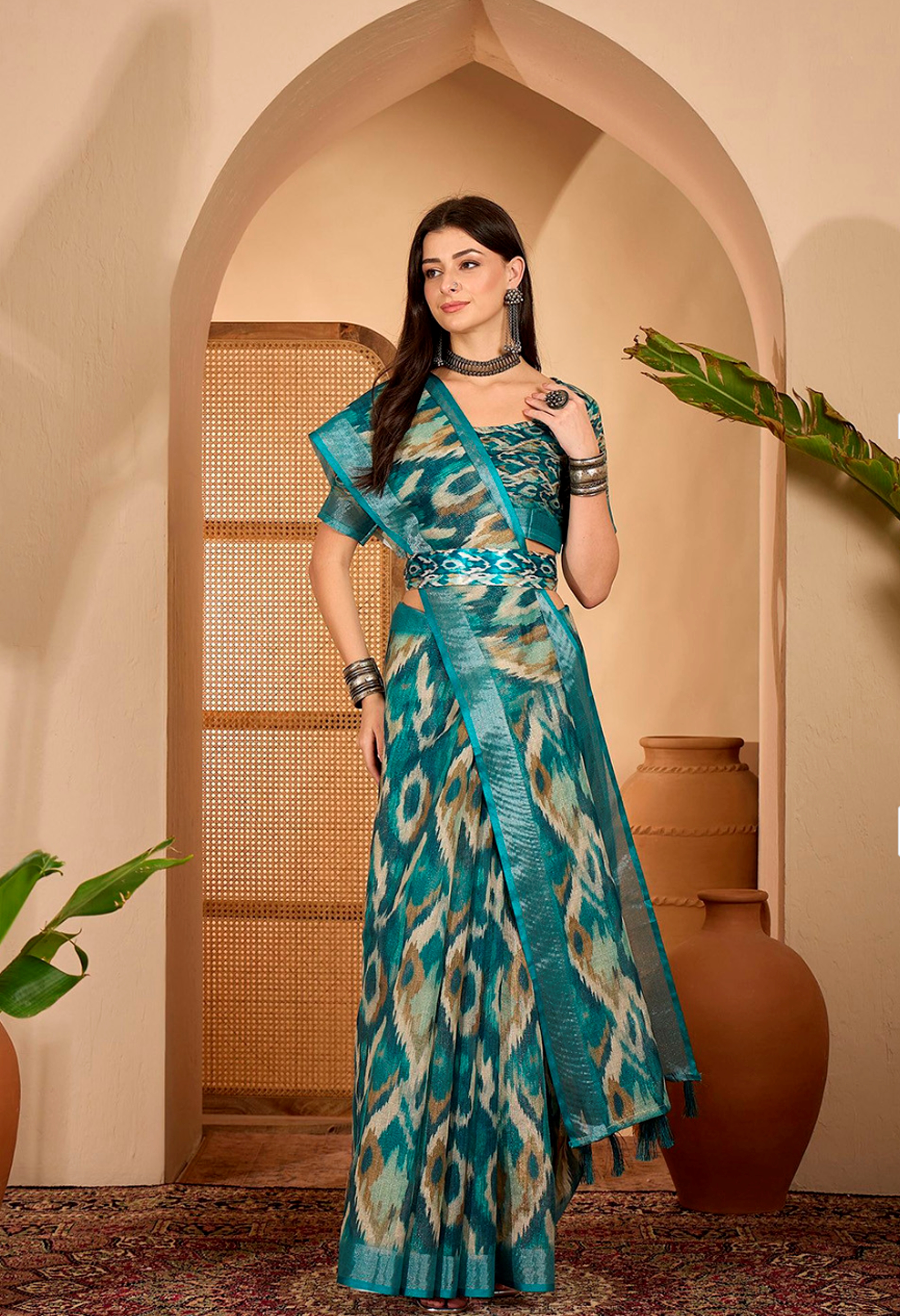
Paruthi means cotton, so a cotton pudavai may be discussed as a breathable choice for warm weather, work or daily wear. Linen cotton, such as the Teal Abstract Printed Linen Cotton Saree with Blouse, usually has a lighter, more structured appearance than soft, closely woven cotton. The Teal Floral Printed Linen Cotton Saree with Blouse demonstrates how a floral achchu can make a practical fabric feel more occasion-ready.
Pattu means silk and appears often in conversations about wedding sarees, temple festivals and heirloom garments. Panju refers to cotton in some time-honoured vocabulary contexts, while kora can appear in discussions of raw or textured silk and cotton-silk traditions. Because textile terminology varies, a seller should be asked whether a fabric is pure silk, silk cotton, linen cotton or a synthetic blend.
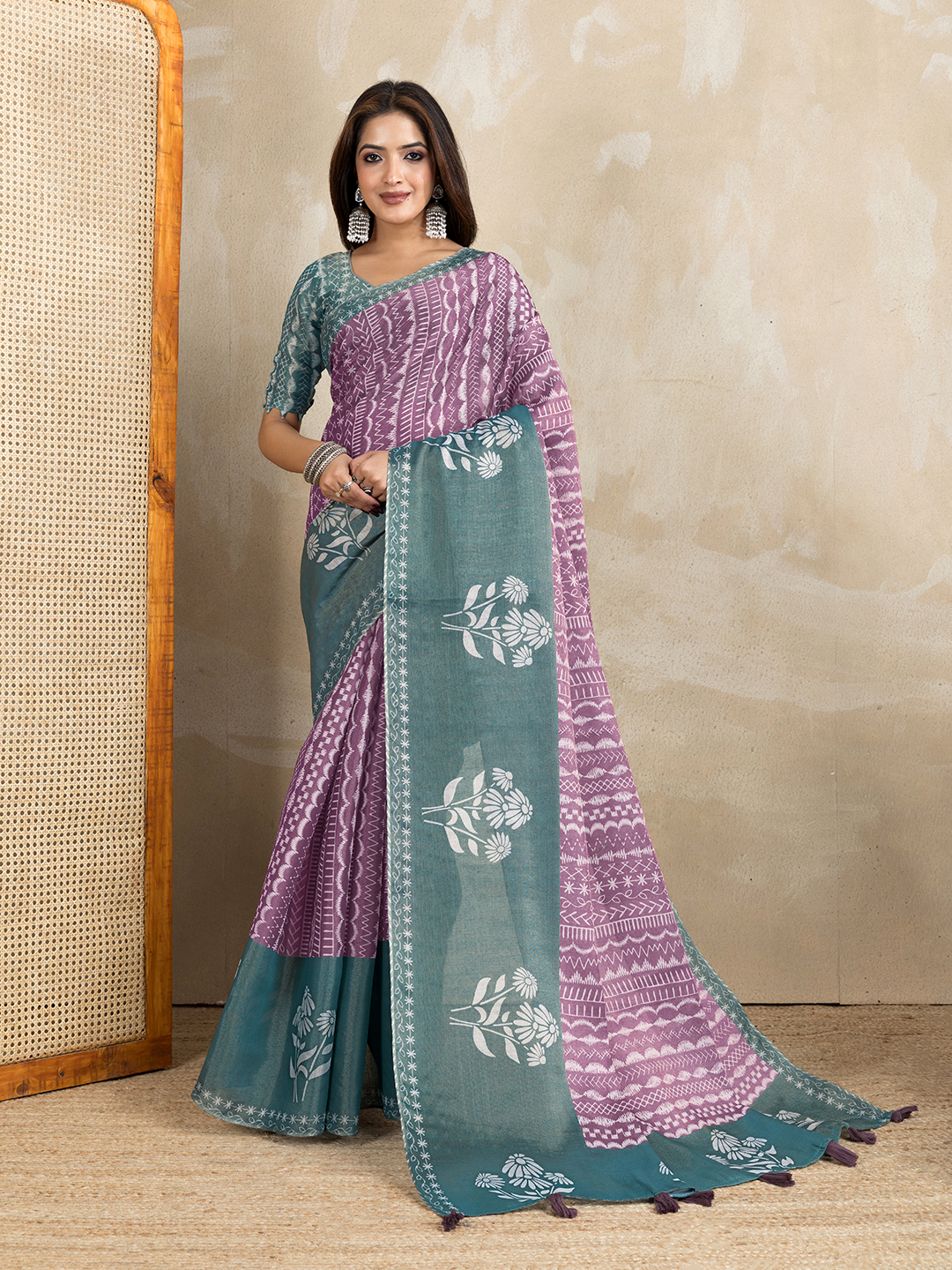
Mayil kazhuthu, meaning peacock neck, is a familiar colour description for a blue-green or teal shade. A saree such as the Teal Floral Linen Cotton Saree with Elegant Contrast Border can therefore be discussed by colour and structure: "The mayil kazhuthu shade and broad karai are the main features." Mauve Cotton Saree with Teal Floral Pallu and Ethnic Prints offers another useful example of describing the body and pallu separately when their colours or motifs contrast.
Kattam means checks, kodam can refer to a pot motif in design contexts, and malar means flower. These words can help explain a print without translating every design name into English. Teal Purple Floral Printed Linen Cotton Saree with Border, for instance, can be described as a floral malar design with a contrasting border.
Which saree words are useful for different occasions?
Occasion words help explain why one pudavai suits a wedding while another works better for office wear or a daytime gathering.
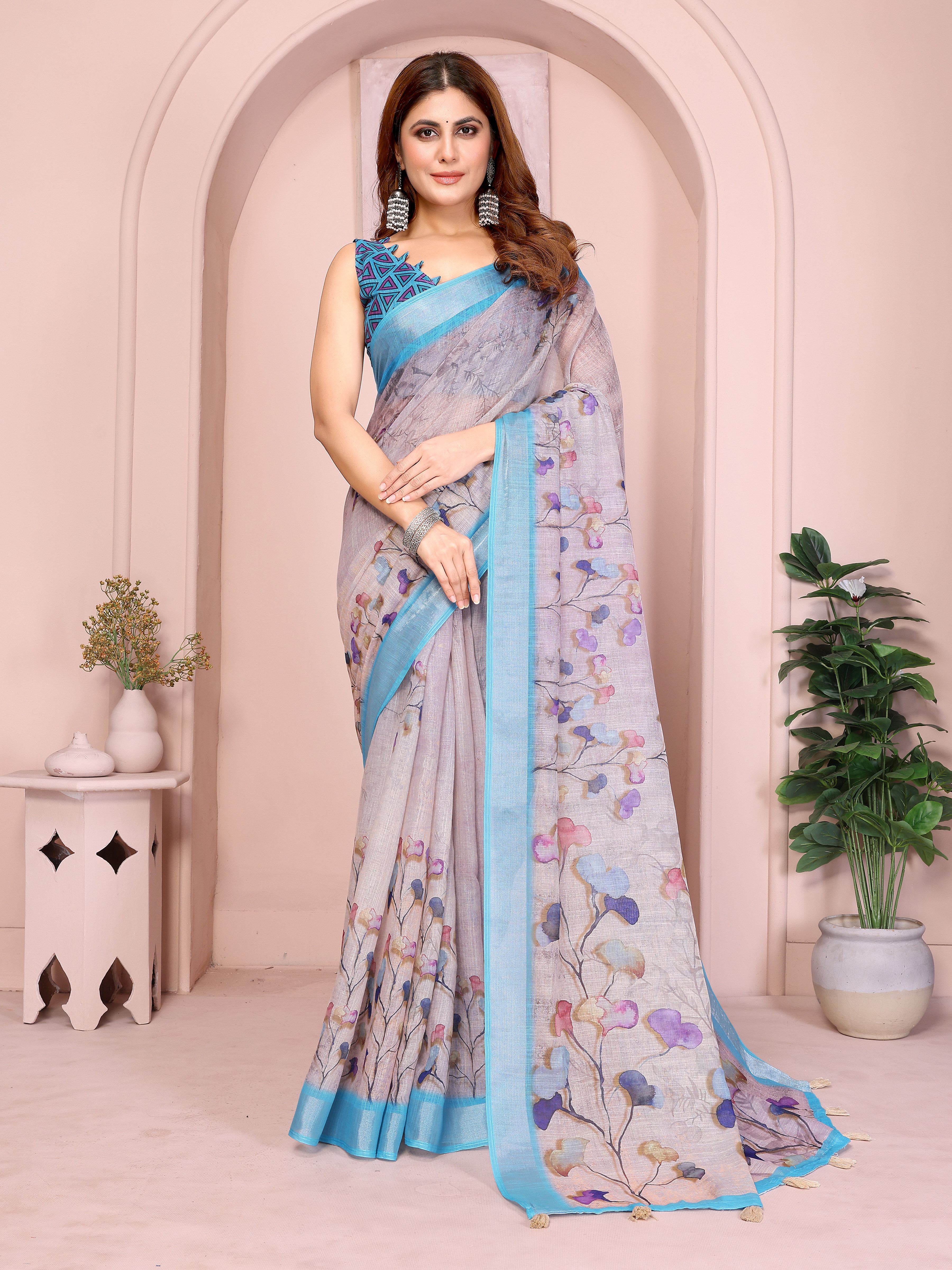
Daily wear and work
A daily-wear saree is often chosen for easy washing, manageable weight and a comfortable fall. Teal Mal Cotton Woven Print Saree With Blouse - VARNAVI illustrates how a woven print can provide visual interest without relying on heavy embellishment. A lightweight saree with a stable border is easier to pleat, pin and repeat during a regular work week.
Festivals and family functions
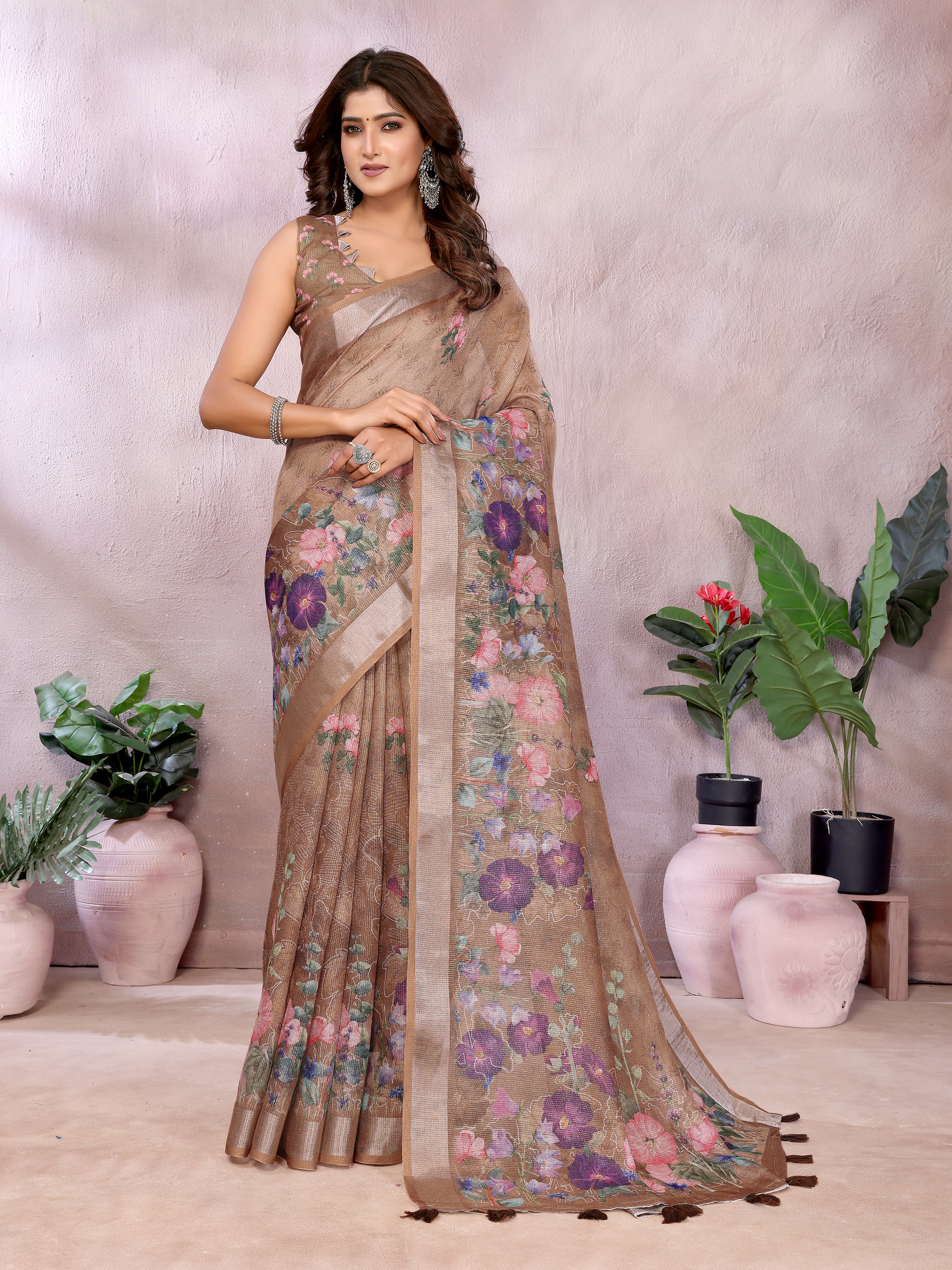
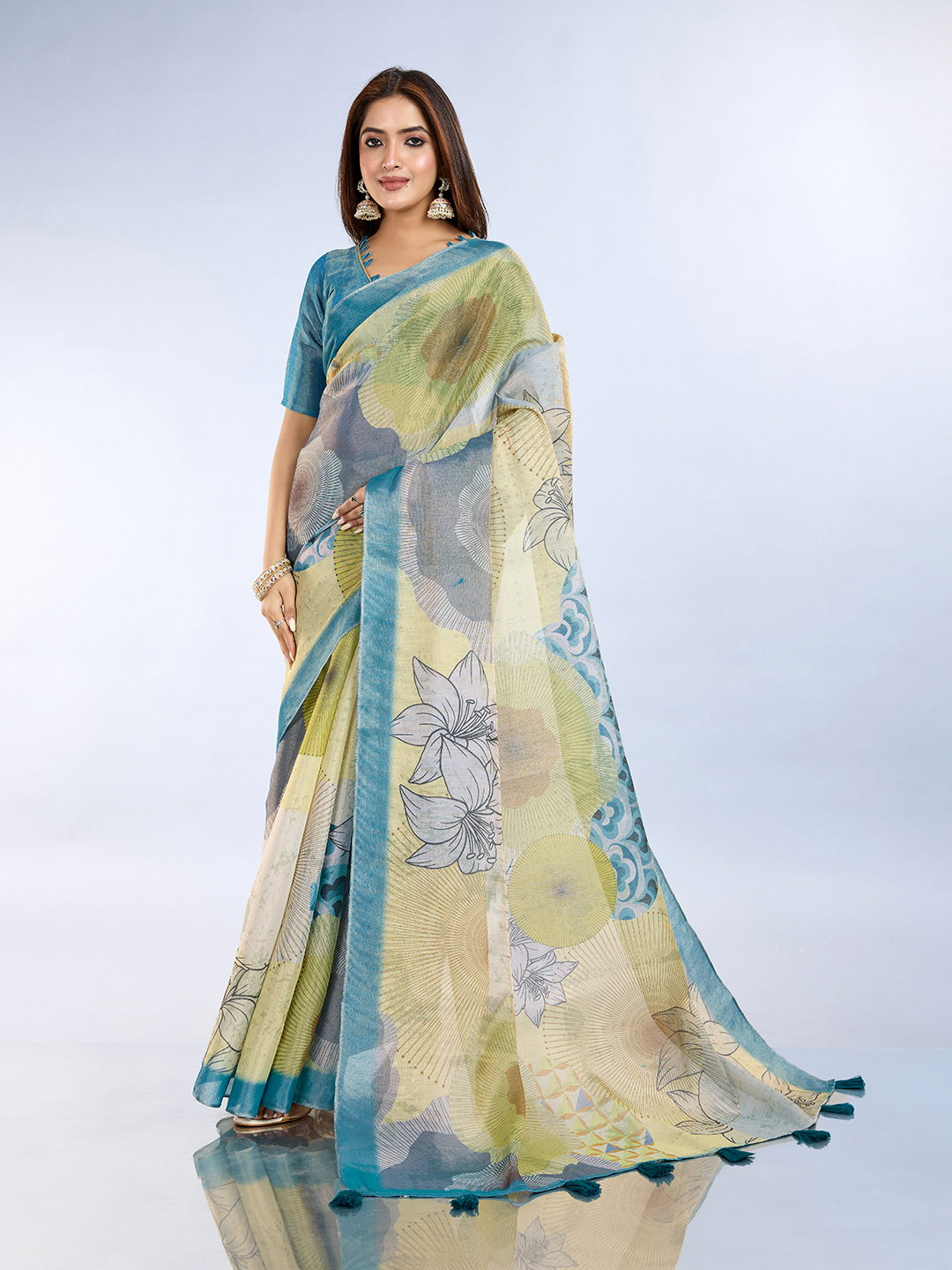
Festival conversations often focus on colour, pattu, jari, border width and whether the pallu photographs well. Teal Floral Linen Cotton Saree with Tassel Pallu shows how tassels can become a talking point without making the saree as formal as a heavily zari-worked silk saree.
Traditional dress expectations are specific to each family. A temple visit may call for a modest, neatly draped saree, while a wedding reception may allow more jewellery, a deeper blouse neckline or a more elaborate pallu arrangement. Asking "What kind of pudavai is suitable?" is more useful than assuming that every Tamil event requires a Kanjeevaram.
Buying by budget
Budget language is also part of a practical saree conversation. Collections titled Sarees from Rs 1000 to Rs 1500, Sarees Under 20% Off and Sarees Under 10% Off can help narrow a search before comparing fabric and construction. Discount labels don't explain quality, so check fibre composition, blouse-piece inclusion, measurements, return conditions and care instructions separately.
How can you use Tamil saree terms respectfully?
Respectful usage requires acknowledging regional variation and avoiding claims that one word represents every Tamil speaker.
Ask a speaker which word their family uses if the distinction matters. "Do you call this a seelai or pudavai?" invites a cultural explanation without turning pronunciation into a test. Listening to the answer is more valuable than correcting someone's transliteration.
Use madisar carefully because the word refers to a specific drape with community and ritual associations. Do not label every nine-yard saree or every South Indian saree as madisar. Similarly, don't call every silk saree Kanjeevaram: Kanjeevaram identifies a particular silk-saree tradition, while pattu is the broader Tamil word for silk.
Online descriptions should combine familiar English and Tamil terms so that the information remains accessible. A clear listing can say "linen cotton pudavai with floral print and contrast karai." The wording serves both a Tamil-speaking shopper and someone learning the vocabulary for the first time.
What should you check when buying a saree online?
Check the fibre composition, saree length, blouse-piece details, border placement, pallu design and care requirements before ordering online.
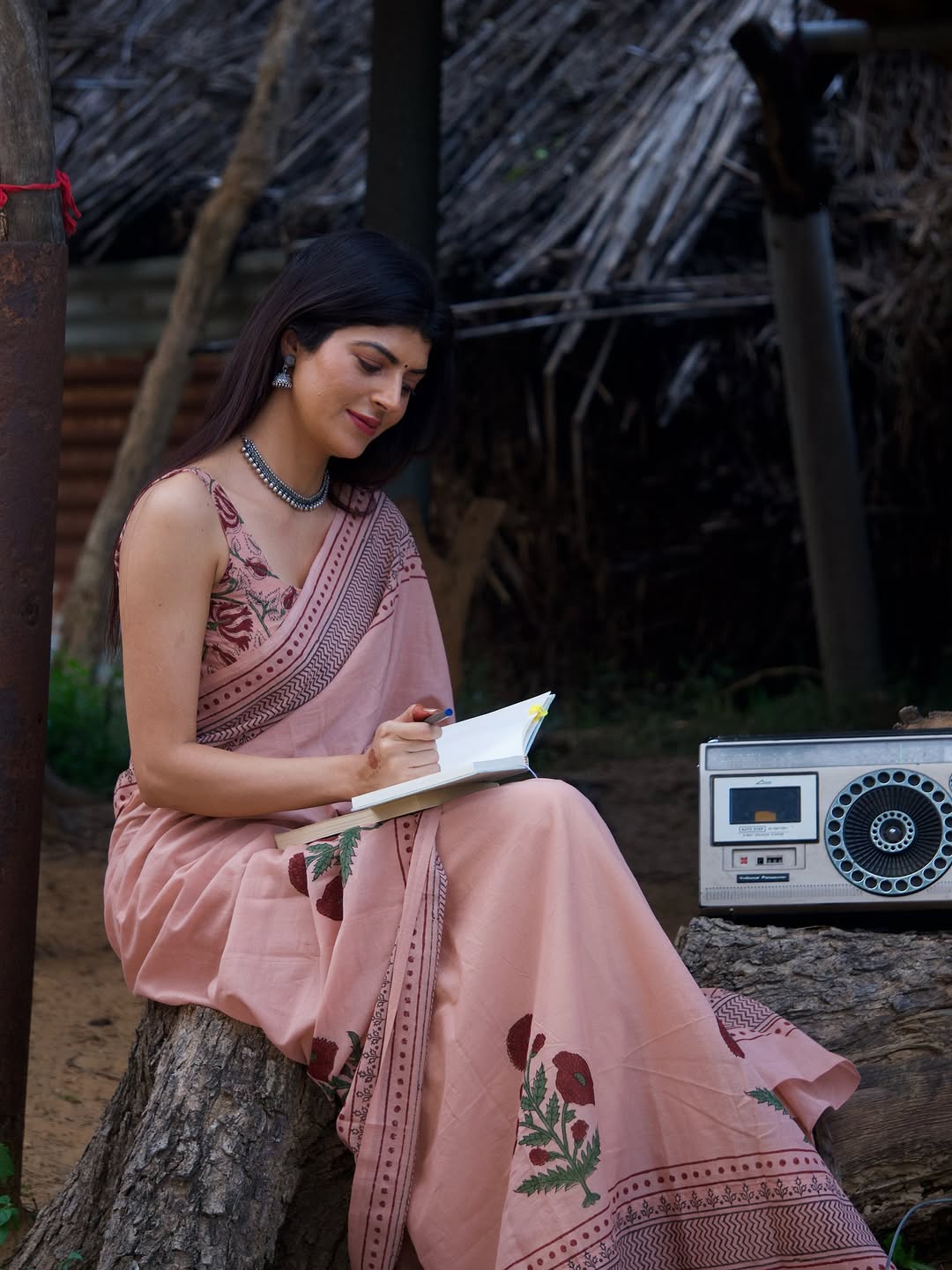
- Confirm the fibre: Read whether the saree is cotton, linen cotton, silk, silk cotton or a blended fabric. Fibre names affect breathability, weight, shine and washing method.
- Check the measurements: A standard saree is commonly around 5.5 metres, with a blouse piece often adding about 0.8 metres, but measurements vary. Verify the product specification rather than assuming.
- Study the pallu and border: Product photographs may show the mundhanai prominently while the body has a subtler print. Check close-up images to understand the karai, tassels and motif scale.
- Match the drape to the fabric: Linen cotton often creates crisp pleats, while soft cotton may need careful pinning. A broad border can make pleats appear more structured but may also add visual weight around the lower body.
- Read care instructions: Printed cotton and linen cotton may require a gentle wash, shade drying and low-temperature ironing. Zari, embroidery and delicate tassels may require specialised care.
For shoppers comparing promotions, collections such as Sarees Flat 60% Off and Sarees Flat 50% Off can provide price options, but the same construction checks still apply. A lower price doesn't remove the need to verify fabric, dimensions and care.
Why do these words matter beyond translation?
Tamil saree vocabulary records how a garment is worn, remembered and discussed within families.
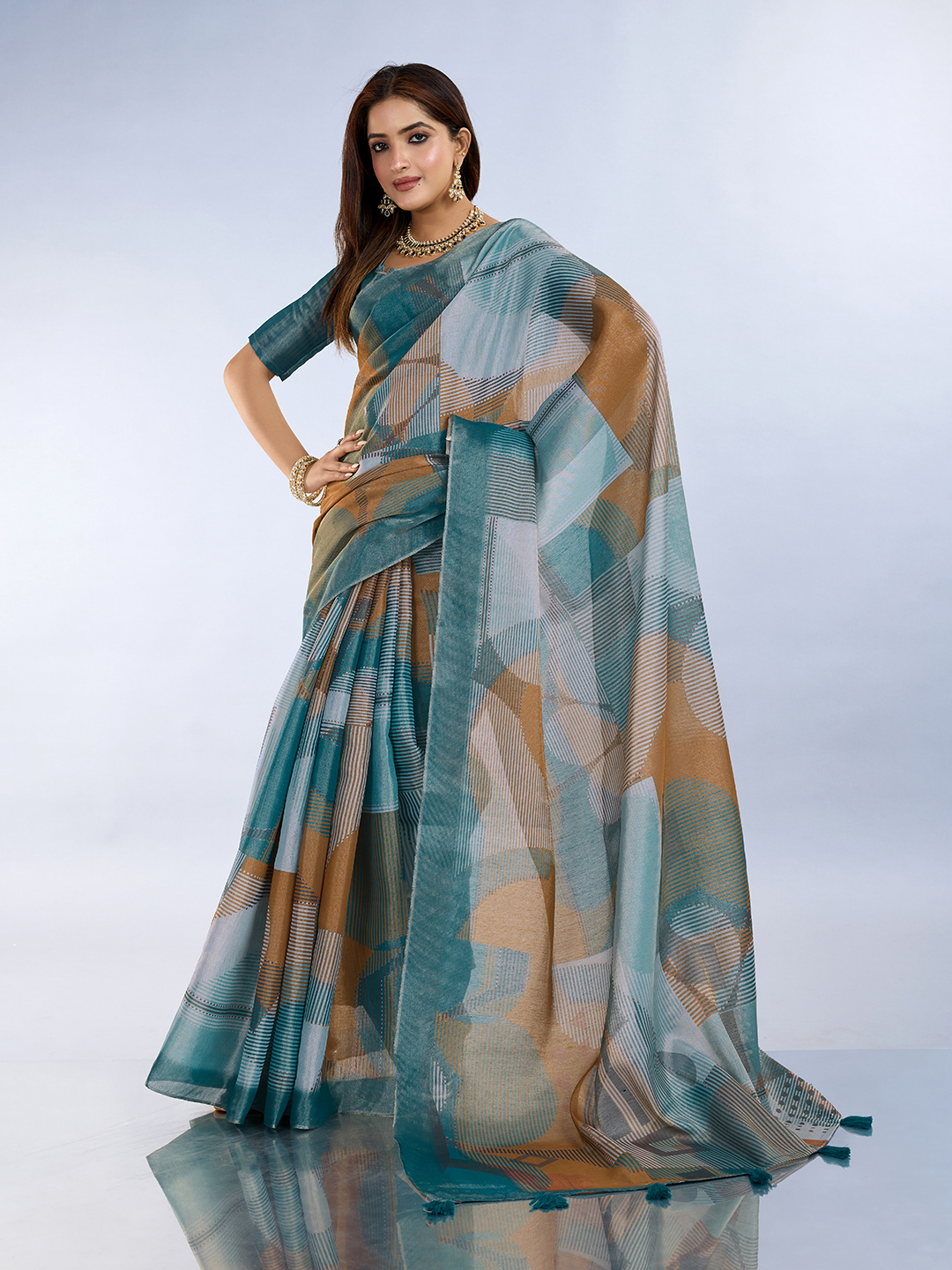
The words pudavai, seelai, mundhanai, madippu and karai connect a shopping decision to the physical experience of dressing. They help someone ask for a different border, explain that the pleats are uneven, compliment a pallu or identify why a fabric feels comfortable in humid weather.
Learning Tamil Seelai and Pudavai Words in Everyday Saree Conversations doesn't require perfect fluency. Start with the garment name, then add one or two accurate terms for the pallu, border, folds or fabric. Specific language makes saree conversations more welcoming because it gives people a way to share knowledge without assuming that every tradition looks or sounds the same.
Common Questions About Tamil Saree Words and Everyday Usage
Are seelai and pudavai the same thing?
Yes, both seelai and pudavai can mean saree in Tamil. Pudavai may sound more traditional or formal to some speakers, while seelai is often used conversationally, but regional and family usage varies.
What is the Tamil word for saree pallu?
Mundhanai or munthaanai is a commonly used Tamil term for the pallu, the loose end worn over the shoulder. Pallu is also widely understood in Tamil-English conversations and retail settings.
What does karai mean in a Tamil saree description?
Karai means the border or edge of a saree in several South Indian textile contexts. The karai may be narrow, broad, plain, woven, printed or embellished with zari.
Is madisar the Tamil word for every traditional saree?
No, madisar names a specific nine-yard draping style associated with particular Tamil Brahmin communities and traditions. A regular six-yard saree, Kanjeevaram saree or other Tamil saree should not automatically be called madisar.
What is the Tamil word for saree blouse?
Ravikkai is a traditional Tamil word for blouse, while blouse is now very common in everyday Tamil-English speech. Choli may also be understood, but it can suggest a different regional garment style.
How can I describe a saree clearly when shopping online?
Name the colour, fibre, print or weave, border, pallu and whether a blouse piece is included. For example, "a teal linen cotton pudavai with floral print, contrast karai and tasselled mundhanai" gives a much clearer description than "a pretty traditional saree."