Assamese Mekhela Chador or Sador and the Common English Spellings often create confusion for shoppers, writers and anyone encountering Assamese dress for the first time. Mekhela Sador, Mekhela Chador, Mekhela Sadar and Mekhela Chadar generally refer to the same Assamese two-piece ensemble: a lower garment called the mekhela and an upper cloth called the sador or chador. The variations mainly result from transliteration, pronunciation and marketplace naming.
Understanding the terminology also prevents a common mistake: calling every Assamese textile a Mekhela Sador. A Mekhela Sador has a specific two-piece construction, while a saree is normally made from one long unstitched length. The distinction affects the drape, the placement of pleats, the role of borders and the way a blouse is styled.
Assamese Mekhela Chador or Sador and the Common English Spellings: what do the words mean?
Assamese Mekhela Chador or Sador and the Common English Spellings describe the names used for an Assamese traditional outfit and its upper drape. The mekhela is the lower wrap, and the sador is the separate upper cloth worn over the torso and shoulder.
The word mekhela identifies the lower portion of the ensemble. The mekhela wraps around the waist and hips, then forms pleats at the front. The word sador identifies the upper cloth. Assamese references commonly use "sador," while many English-language listings use "chador" because the word resembles other eastern Indian terms for a covering cloth.
"Mekhela Sadar" and "Mekhela Chadar" are also found in online searches. These spellings normally indicate phonetic attempts to represent the same garment rather than separate styles. A product description that includes "Assamese Mekhela Sador" and "Mekhela Chador" can therefore help readers find the garment without implying that the terms describe different outfits.
- Mekhela: the lower, wraparound part of the outfit.
- Sador: the Assamese term commonly used for the upper cloth.
- Chador: a widespread English marketplace spelling for the upper cloth.
- Sadar or Chadar: additional Roman spellings influenced by pronunciation.
Assamese Mekhela Chador or Sador and the Common English Spellings: which form is preferred?
"Mekhela Sador" is generally the clearest preferred English form, while "Mekhela Chador," "Mekhela Sadar" and "Mekhela Chadar" remain common searchable alternatives.
Assamese is written in its own script, and Roman letters can't represent every regional sound with one universally fixed spelling. Different writers choose different consonants and vowels when transferring Assamese words into English. The initial sound represented by "s" in "sador" may appear as "ch" in "chador" when writers connect the term with familiar eastern Indian vocabulary.
Search behaviour adds another layer. Retailers may use "Mekhela Chador" because shoppers type that phrase more often, while cultural organisations and Assamese speakers may use "Mekhela Sador." Both terms can lead to the same kind of two-piece garment. Readers should inspect the product photographs and description rather than judge the garment from the spelling alone.
For formal editorial writing, "Mekhela Sador" is a useful primary term. For a search-friendly explanation, write "Mekhela Sador, also commonly spelled Mekhela Chador." That wording respects the preferred form while acknowledging how people actually search in English.
Assamese Mekhela Chador or Sador and the Common English Spellings: how is the garment constructed?
An Assamese Mekhela Sador is constructed from two separate unstitched pieces: the mekhela for the lower body and the sador for the upper body.
Assamese Mekhela Chador or Sador and the Common English Spellings: the mekhela
The mekhela is wrapped around the waist and hips in a broad, tubular shape. The front is arranged into pleats that create a controlled, slightly flared silhouette. The lower edge often carries a woven border, and the border remains visible as the wearer walks or sits.
Mekhela pleats are not identical to saree pleats. Saree pleats usually fall vertically from the waist toward the floor as part of one continuous drape. Mekhela pleats belong to a separate lower wrap, so the upper cloth doesn't continue from the same piece of fabric. The distinction is especially clear when the mekhela and sador use contrasting colours.
The lower garment should be secured firmly enough for walking, sitting and climbing stairs. A cotton mekhela may hold its folds naturally, while a smooth silk mekhela can require careful tucking or discreet pins. The hem should sit above the floor to prevent repeated friction and staining.
Assamese Mekhela Chador or Sador and the Common English Spellings: the sador
The sador is pleated and draped across the upper body before being placed over one shoulder. The decorated end may fall behind the shoulder or across the front, depending on the drape and the placement of the border.
A sador can be secured with a small concealed pin at the shoulder, especially when the fabric is slippery or the wearer expects to move frequently. A handwoven cotton sador may stay in place with fewer fastenings because its texture creates friction. A soft silk sador usually benefits from careful pleating and one or two hidden pins.
Assamese Mekhela Chador or Sador and the Common English Spellings: how is it different from a saree?
A Mekhela Sador differs from a saree because a Mekhela Sador uses two coordinated pieces, whereas a saree normally uses one long unstitched cloth.
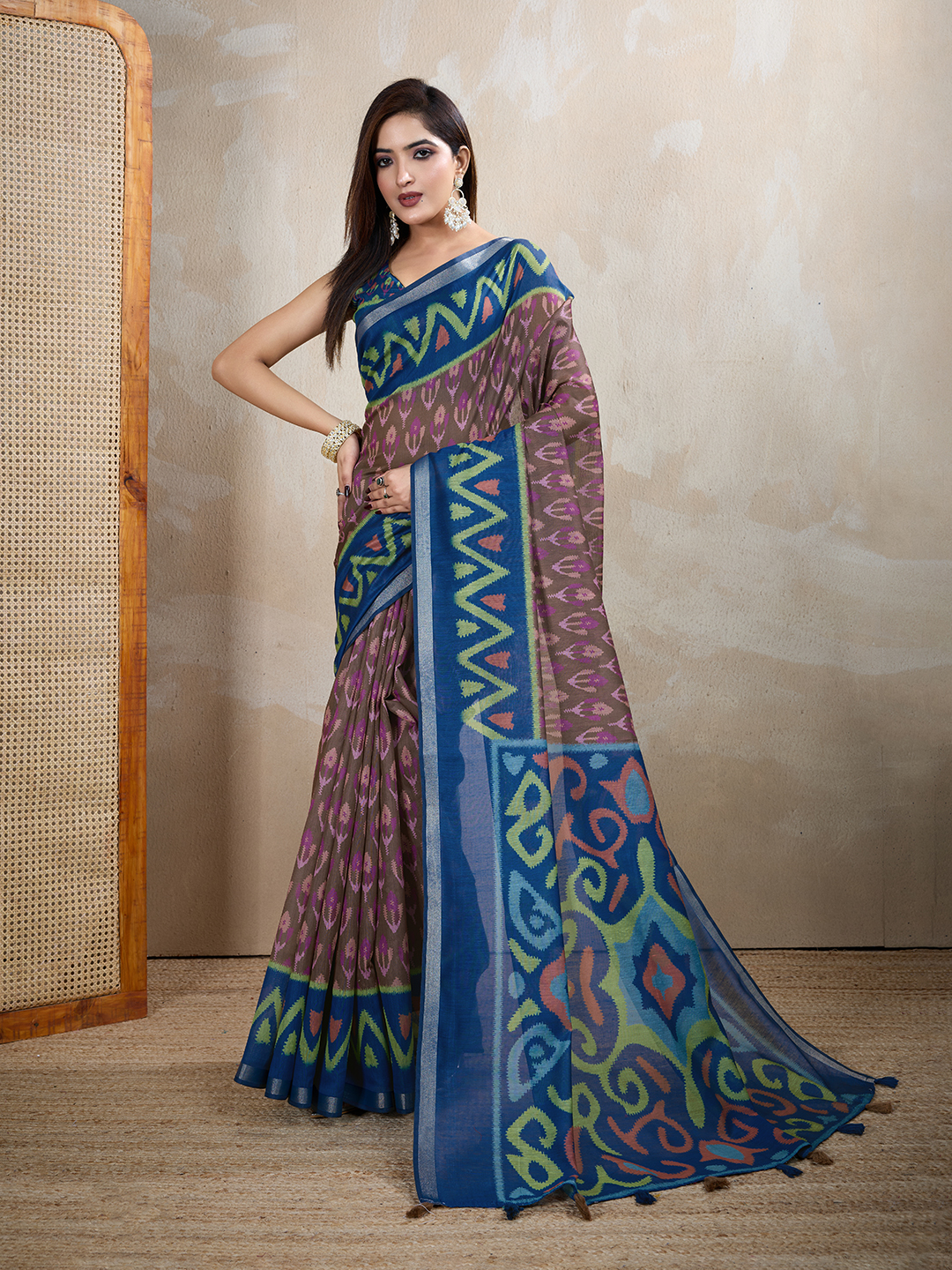
The difference is structural rather than merely regional. A saree includes the lower wrap, front pleats and shoulder drape within one continuous length. A Mekhela Sador separates the lower garment from the upper cloth. The separate pieces allow the wearer or weaver to combine different borders, colours and motif placements.
Assamese sarees can still feature regional fibres, weaving techniques and decorative language. A saree made from Assamese silk remains a saree if it uses one continuous length. A two-piece outfit becomes a Mekhela Sador because of its construction and drape, not simply because it uses a particular colour, motif or silk.
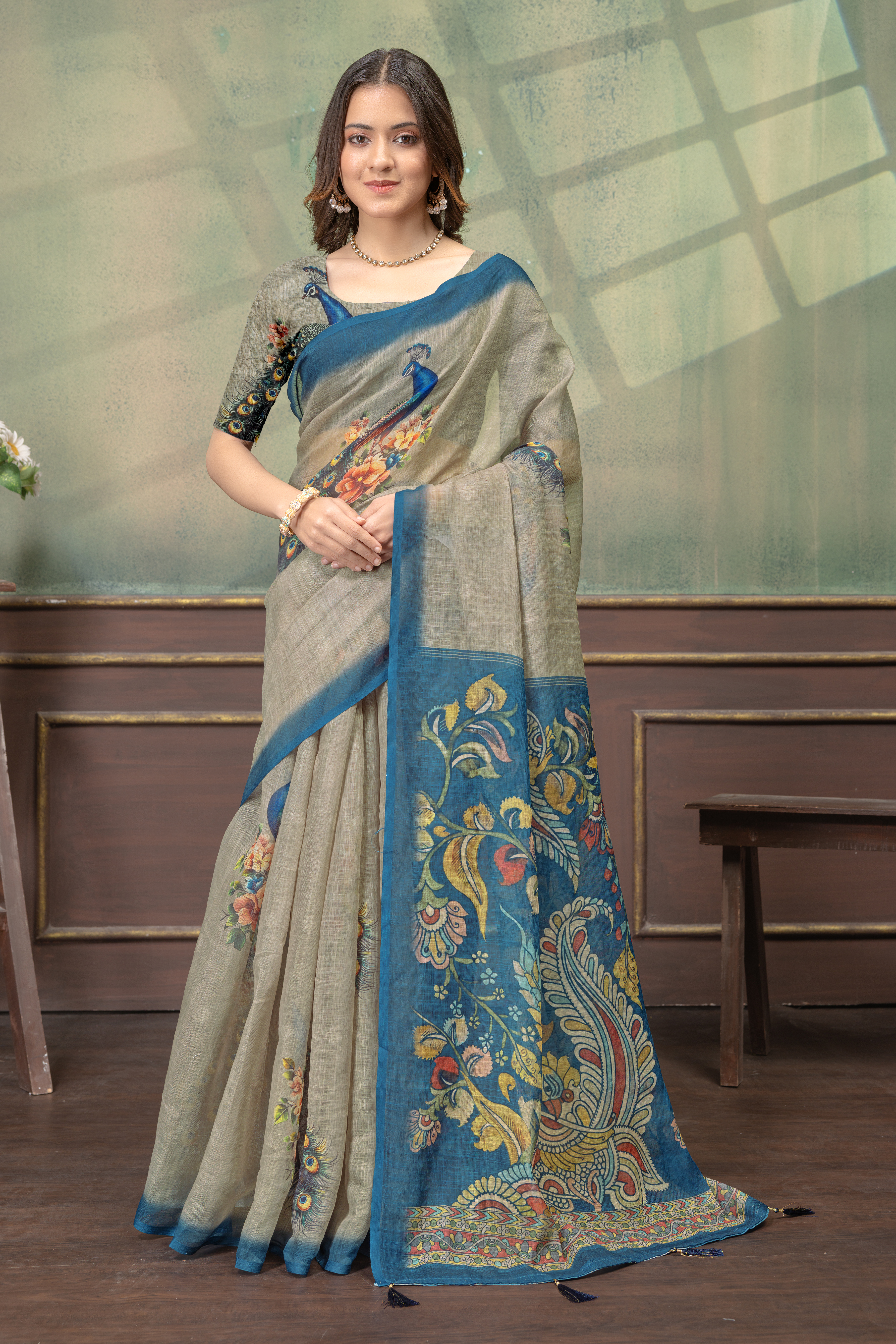
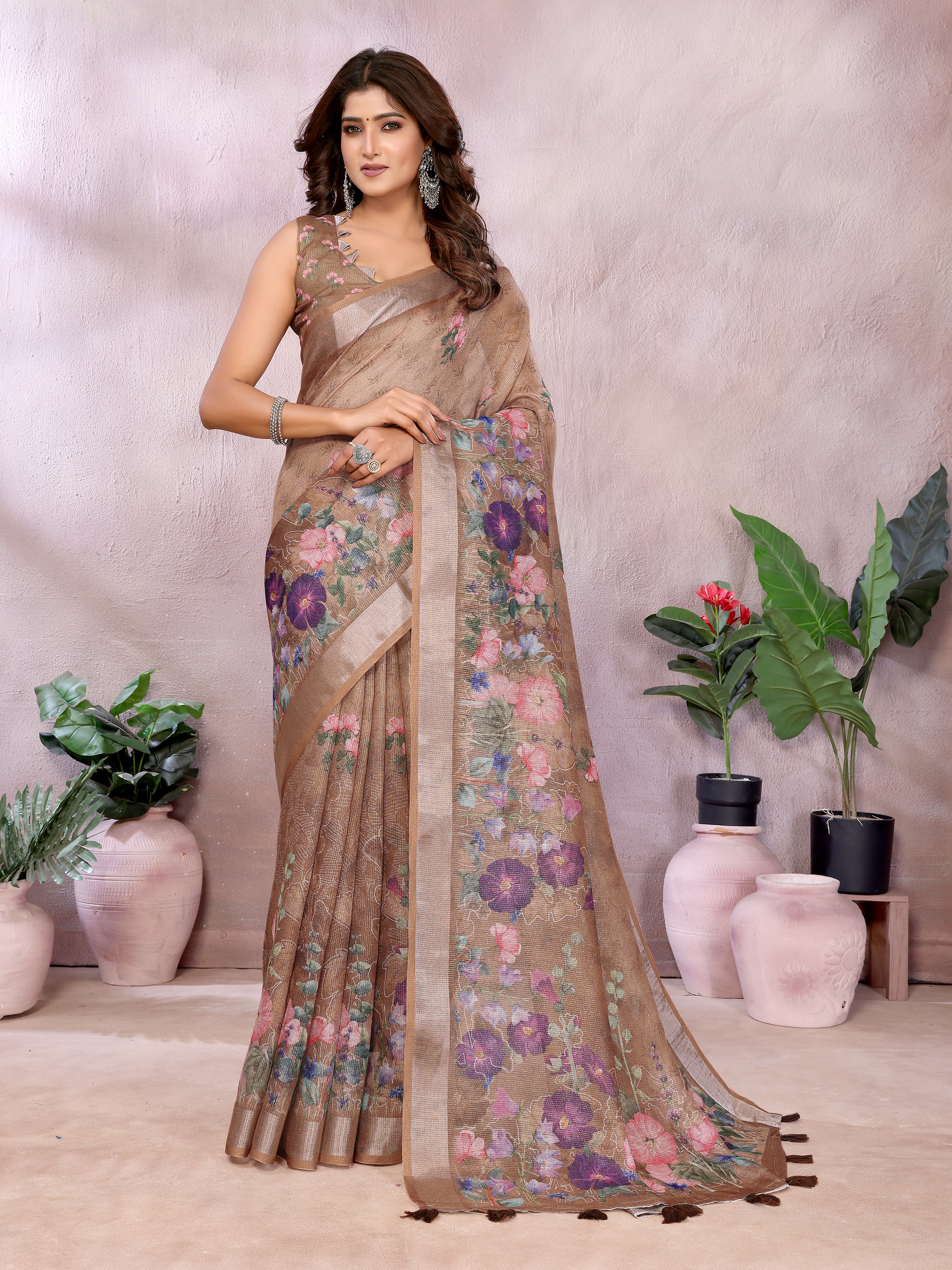
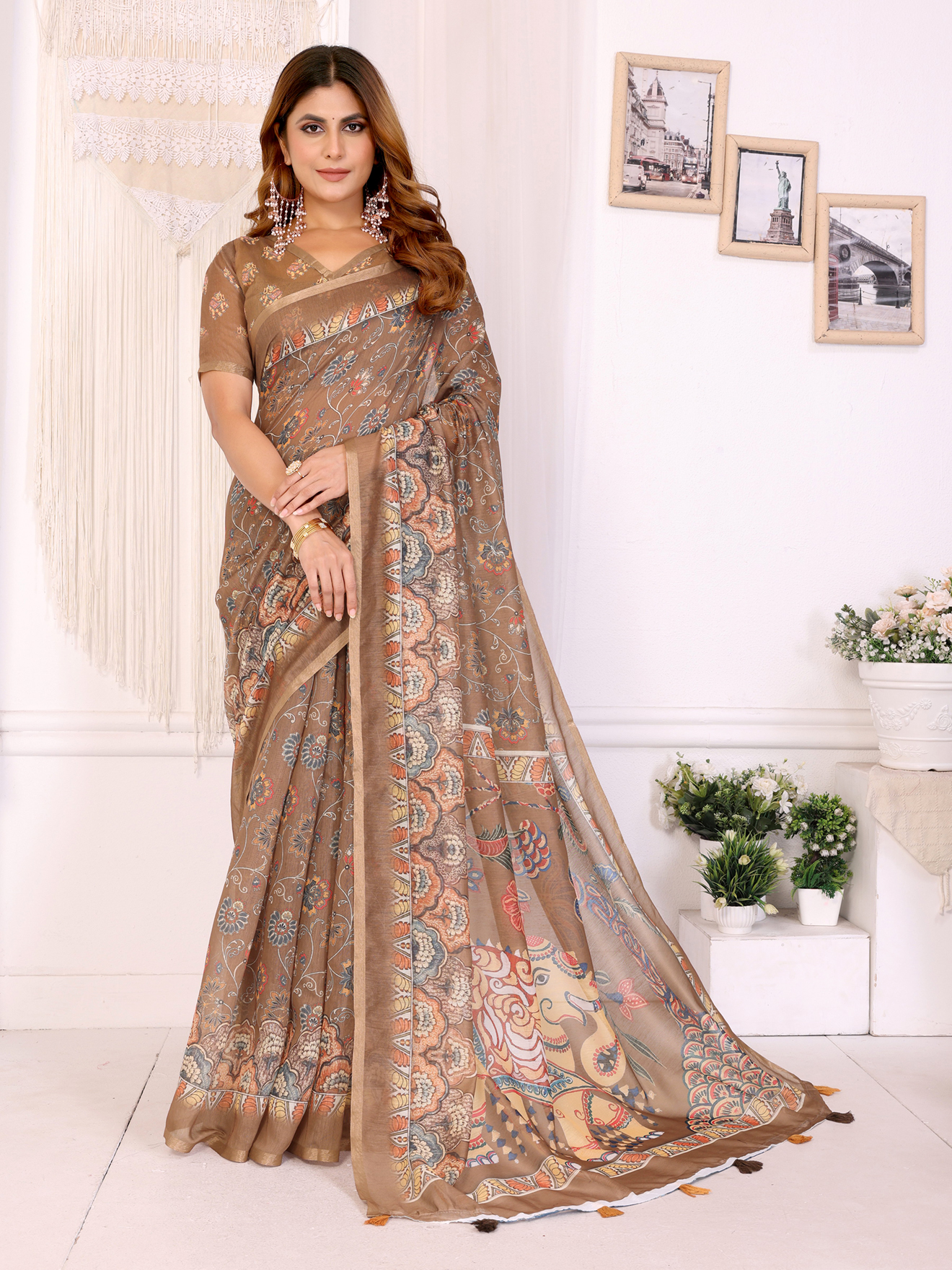
Chanderi cotton provides a helpful comparison. The Mocha Brown Chanderi Cotton Floral Print Saree with Borders and the Mocha Brown Chanderi Cotton Floral Print Saree for Women demonstrate how a single saree uses a continuous body and border. Neither name should be changed to Mekhela Sador unless the garment is actually sold as two separate pieces.
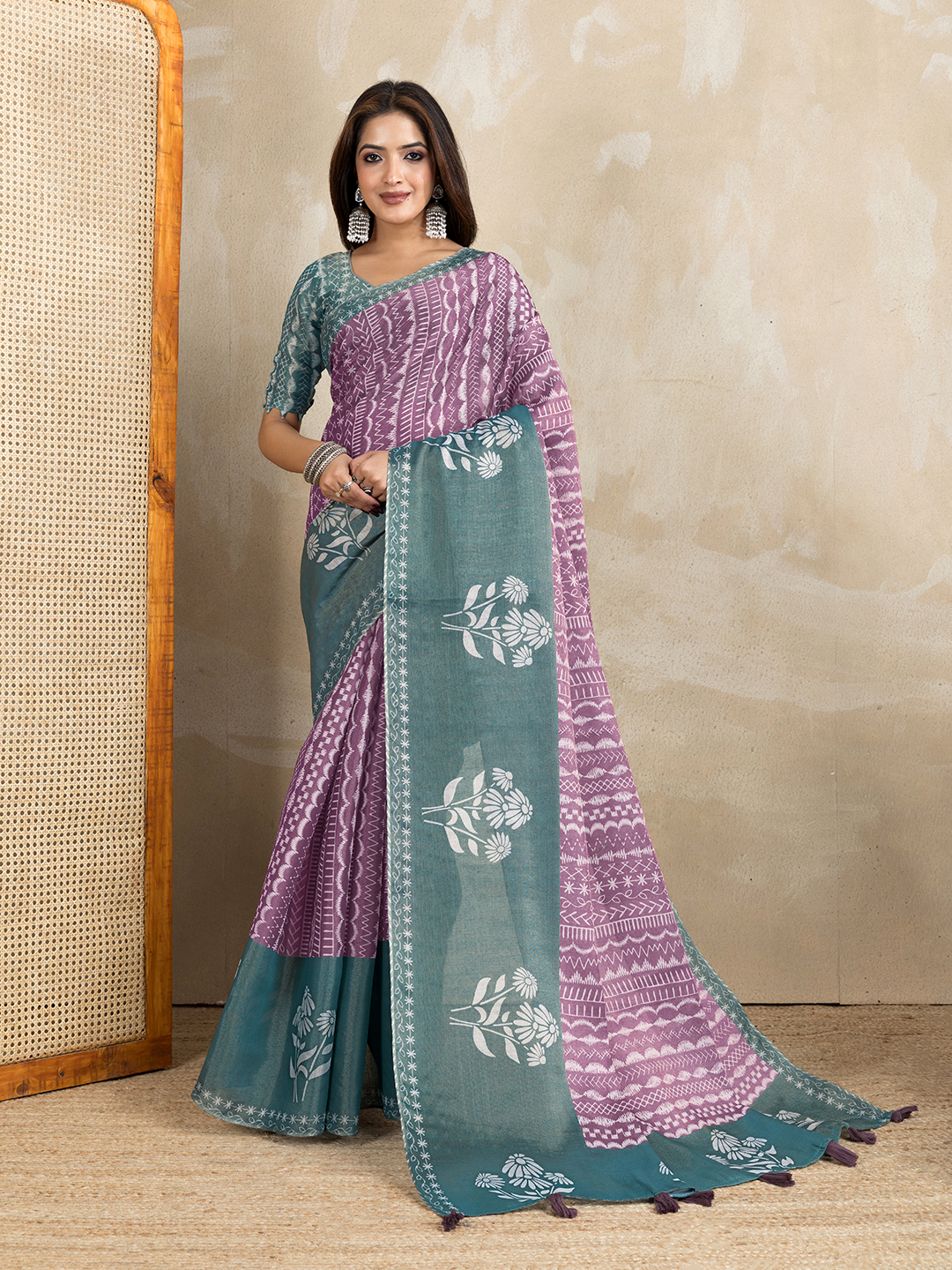
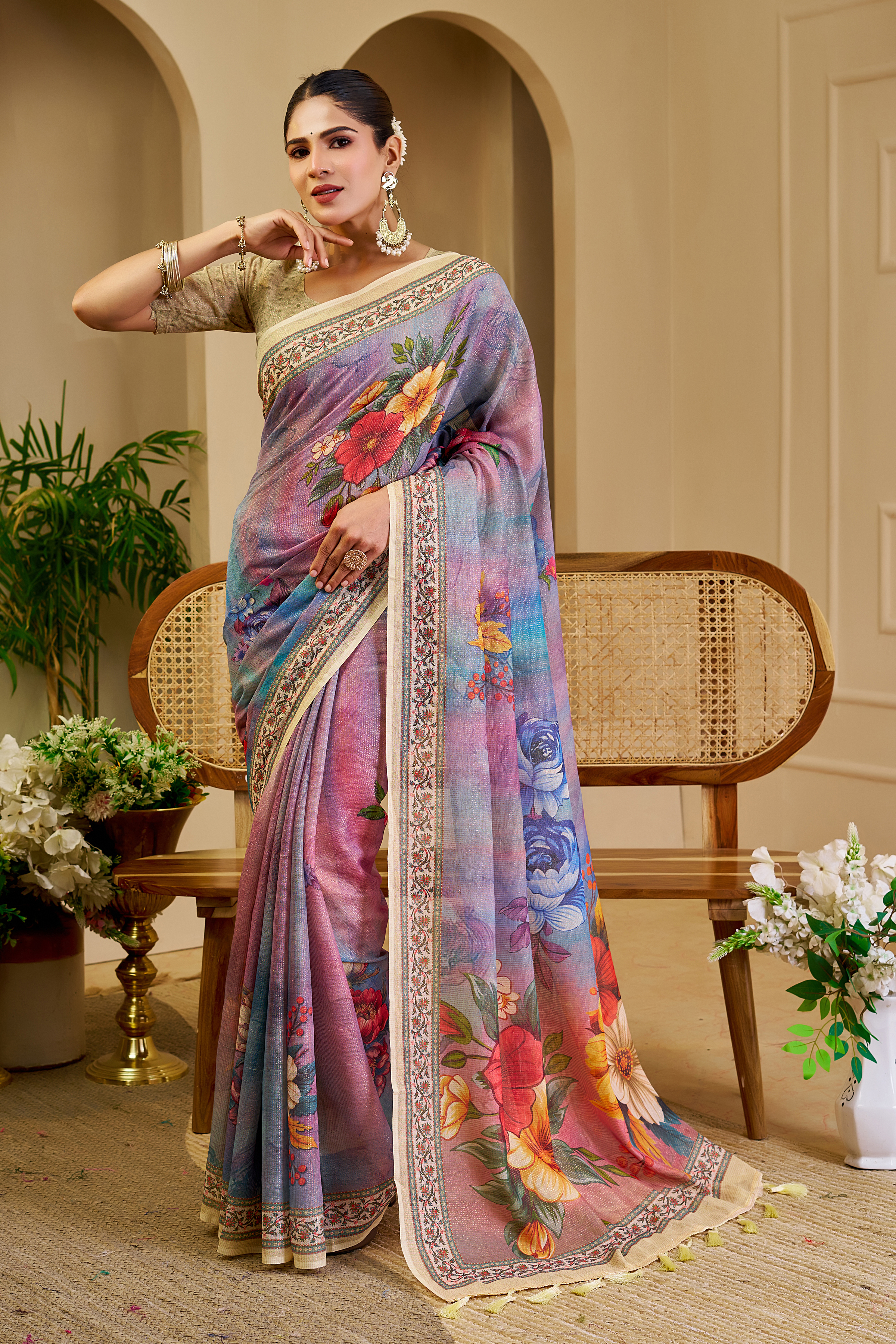
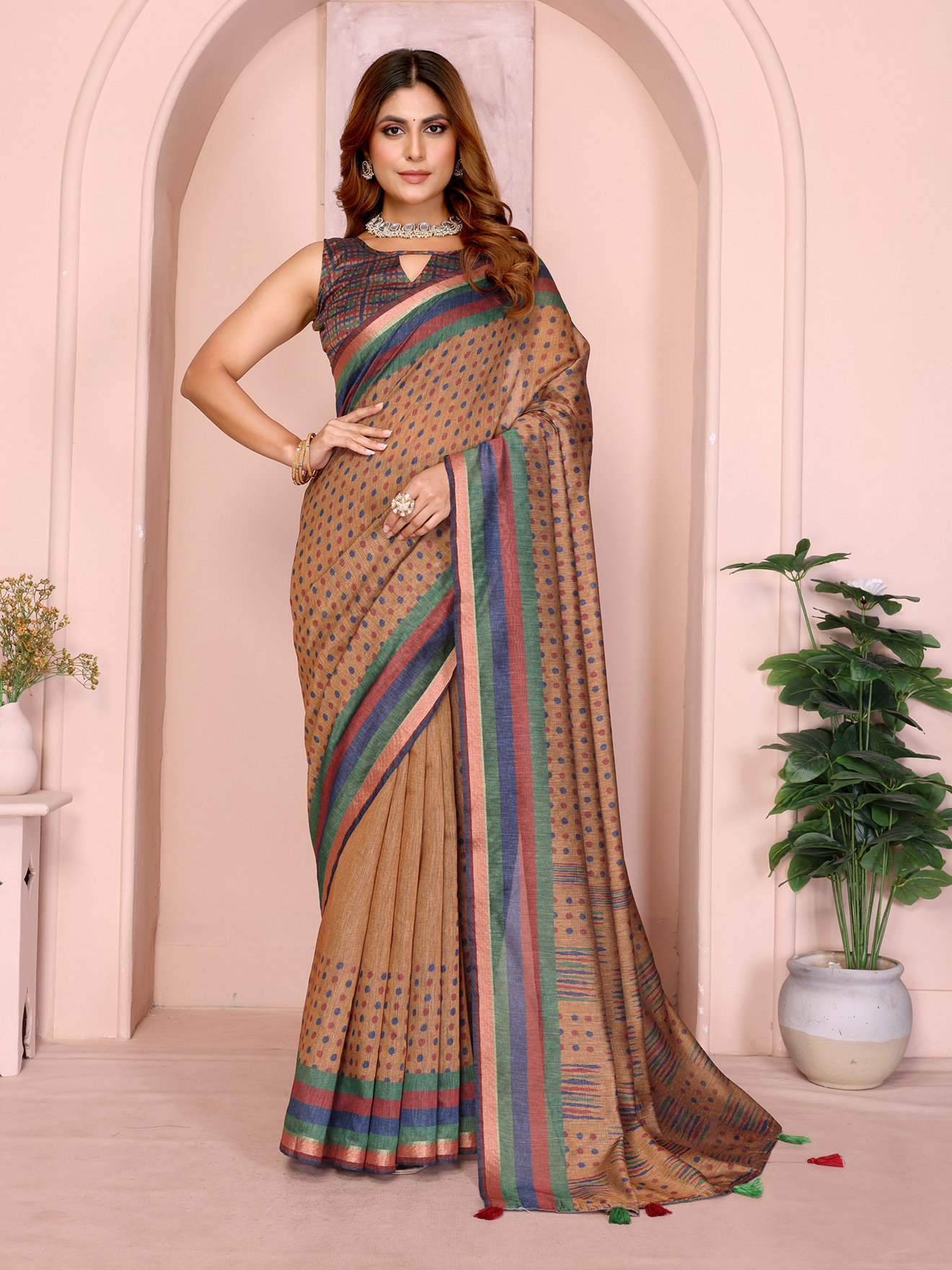
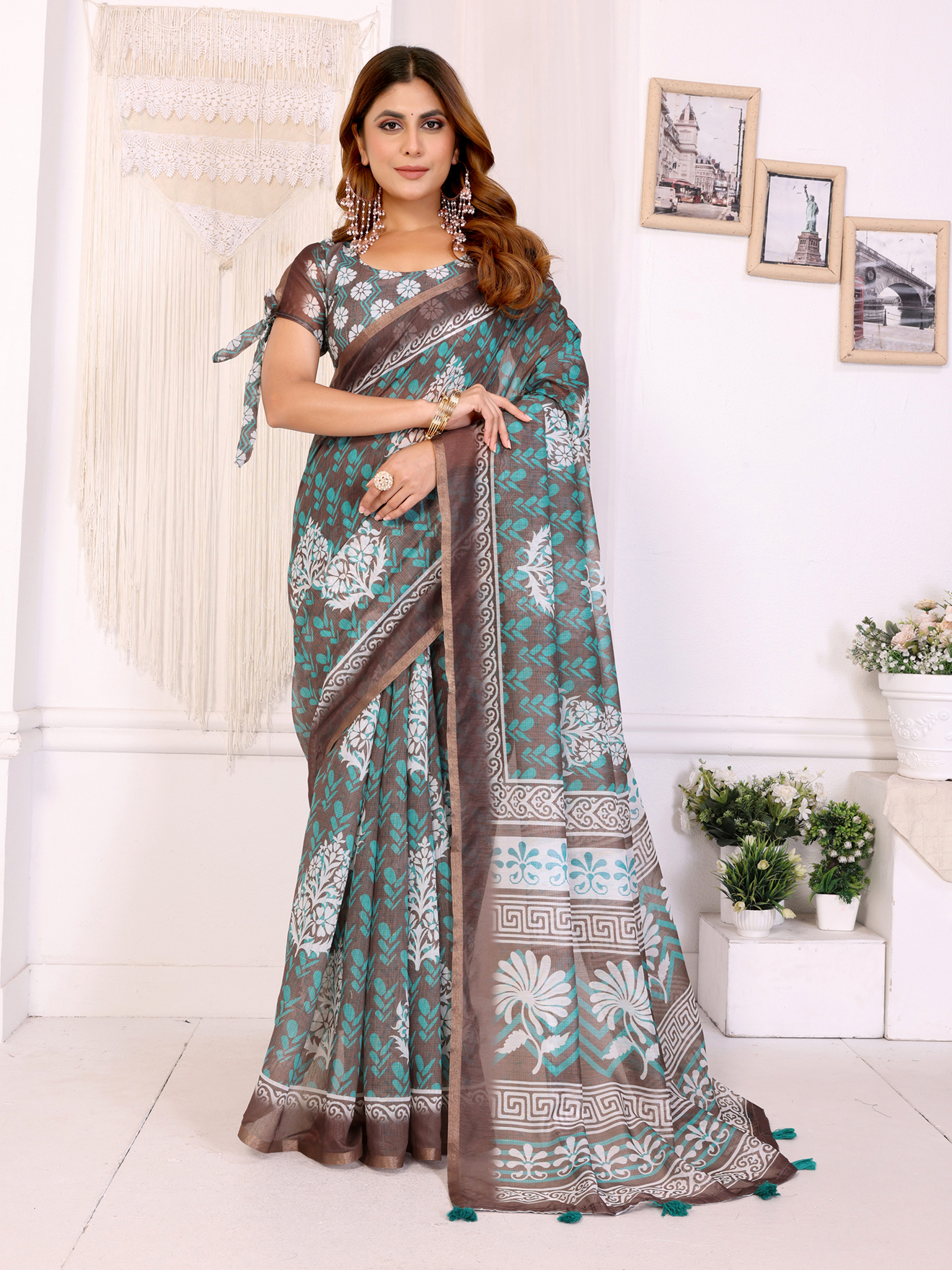
The Mustard Brown Chanderi Cotton Saree with Polka Print Border and Buy Mauve Chanderi Cotton Woven Motif Saree For Her Styles! Also show why fabric and surface design don't determine garment identity on their own. A polka print, woven motif or broad border can appear in many Indian garments, but the construction still needs to be identified accurately.
Assamese Mekhela Chador or Sador and the Common English Spellings: which textiles are traditional?
Traditional Assamese Mekhela Sador textiles include cotton, Muga silk, Eri silk and Pat silk, with each fibre offering a different texture, sheen, weight and level of formality.
Muga silk is known for its naturally warm golden colour and considerable durability. Muga Mekhela Sador sets are associated with important celebrations, weddings and formal cultural occasions. The fabric can become more lustrous with use, but harsh washing and prolonged direct sunlight may weaken or dull the fibres.
Eri silk has a softer, slightly textured surface and is valued for comfortable warmth. Eri silk is often suitable for cooler weather and relaxed festive dressing. Pat silk is smoother and brighter, making it a strong choice for formal garments that need a polished finish.
Assamese cotton is practical for humid weather and daytime wear. Cotton Mekhela Sador sets can be lighter than silk versions, easier to sit in and less demanding during long family gatherings. A handwoven cotton piece may have small irregularities in the yarn or border, and those variations are often evidence of the weaving process rather than defects.
Zari may appear on contemporary or ceremonial versions, although zari alone doesn't make a garment Assamese. The Mustard Teal Banarasi Soft Silk Zari Weave Saree illustrates this distinction: Banarasi silk and zari identify a weaving and ornamentation tradition, while Mekhela Sador identifies a two-piece Assamese garment form.
Assamese Mekhela Chador or Sador and the Common English Spellings: which motifs and colours are common?
Common Assamese textile motifs include flowers, creepers, birds, geometric forms and repeated border patterns, often arranged to remain visible on the mekhela hem and sador edge.
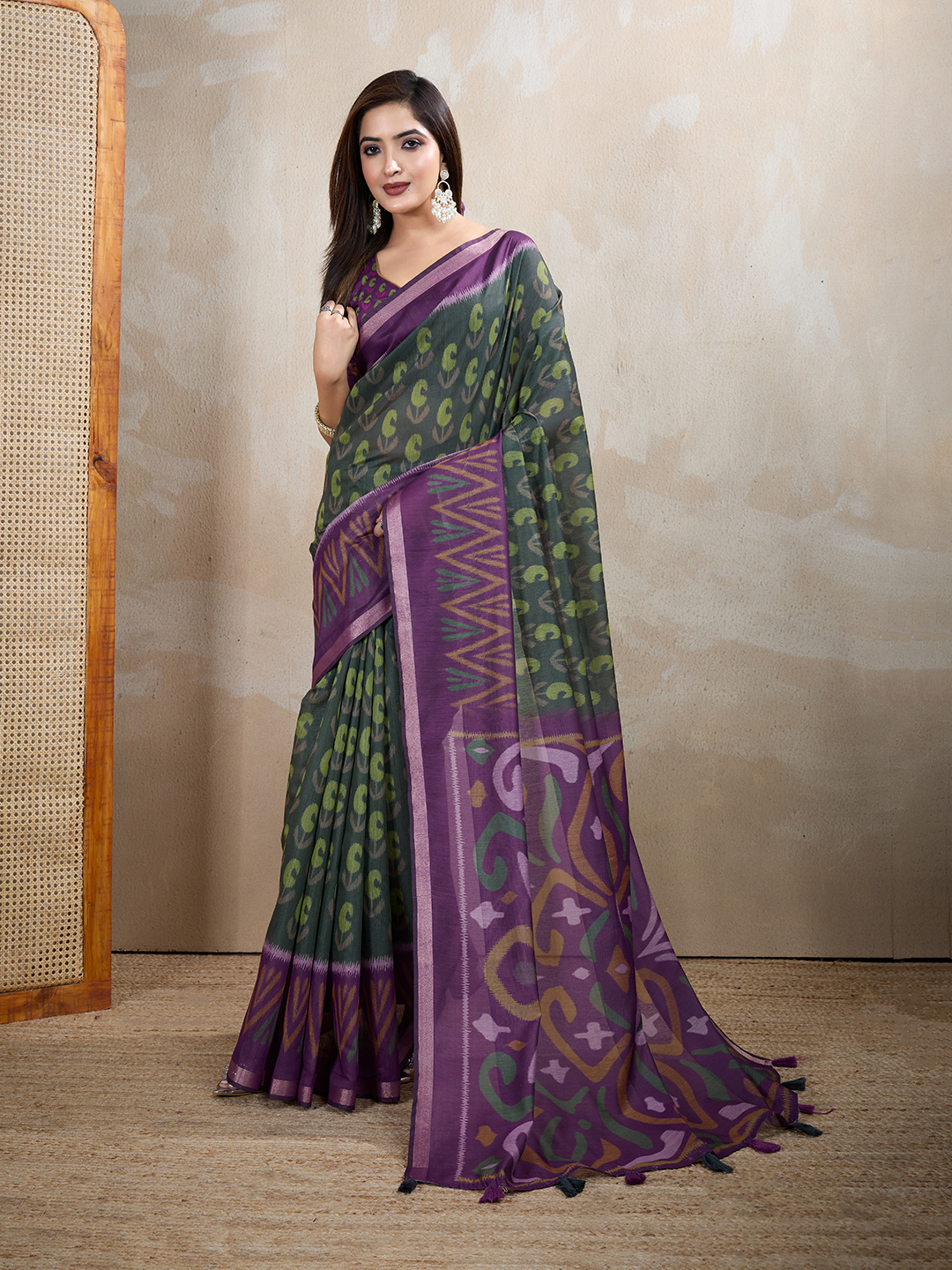
Motif placement matters because the two pieces move differently. A border on the mekhela frames the lower silhouette, while a border on the sador draws attention to the shoulder, back or front fall. Small all-over motifs can create a quieter appearance, whereas a large woven pattern gives the outfit a more ceremonial presence.
The gamosa, also written gamusa, is another important Assamese textile associated with respect, hospitality and cultural identity. A gamosa isn't the same garment as a Mekhela Sador, but its red-and-white colour language and woven border traditions may influence contemporary Assamese design.
Colour combinations range from ivory and red to mustard, green, black, maroon, indigo and golden yellow. A restrained palette can make a heavily woven border appear sharper. A brighter sador can provide contrast against a plain mekhela, while matching the border of both pieces creates a more formal appearance.
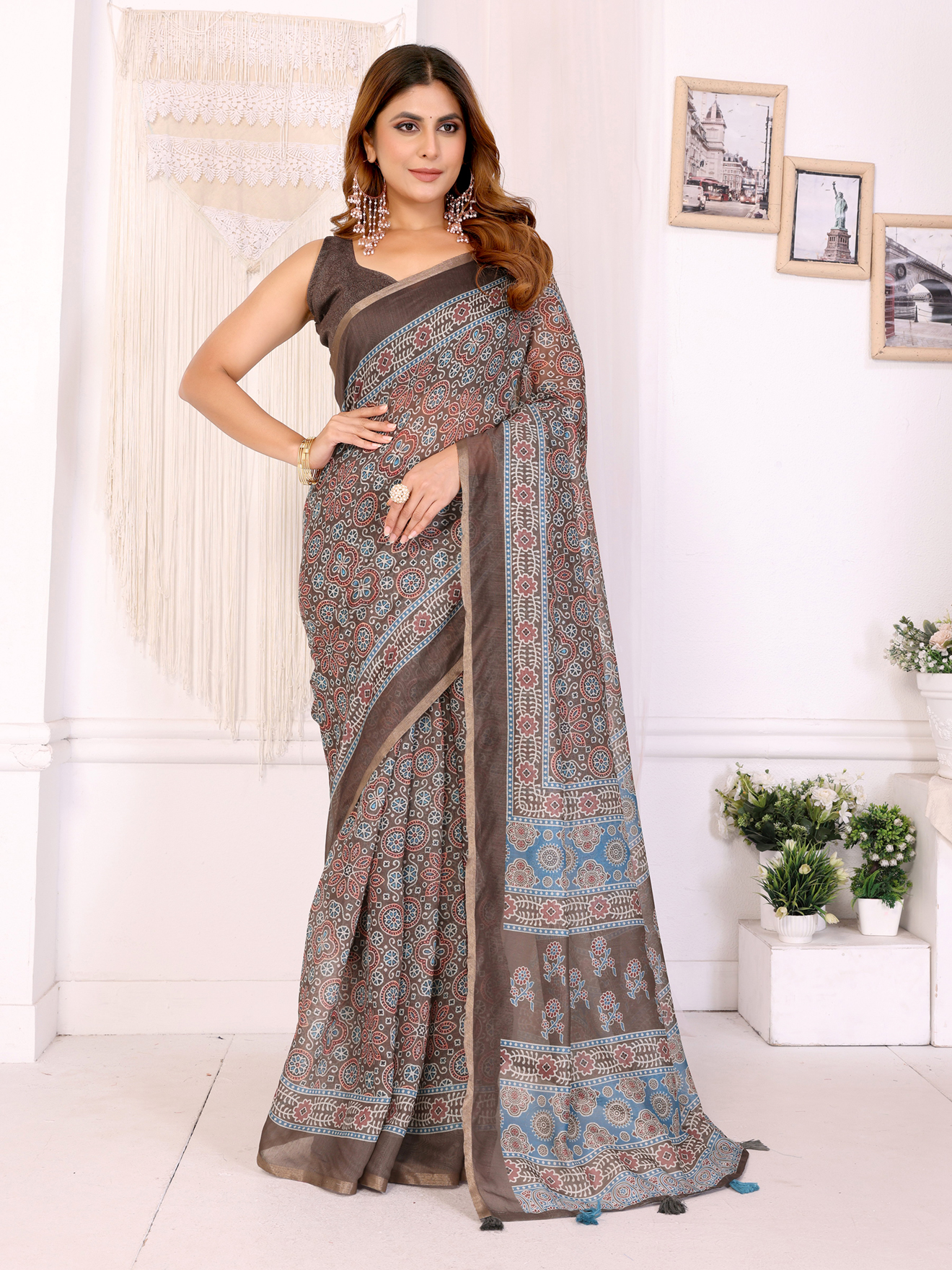
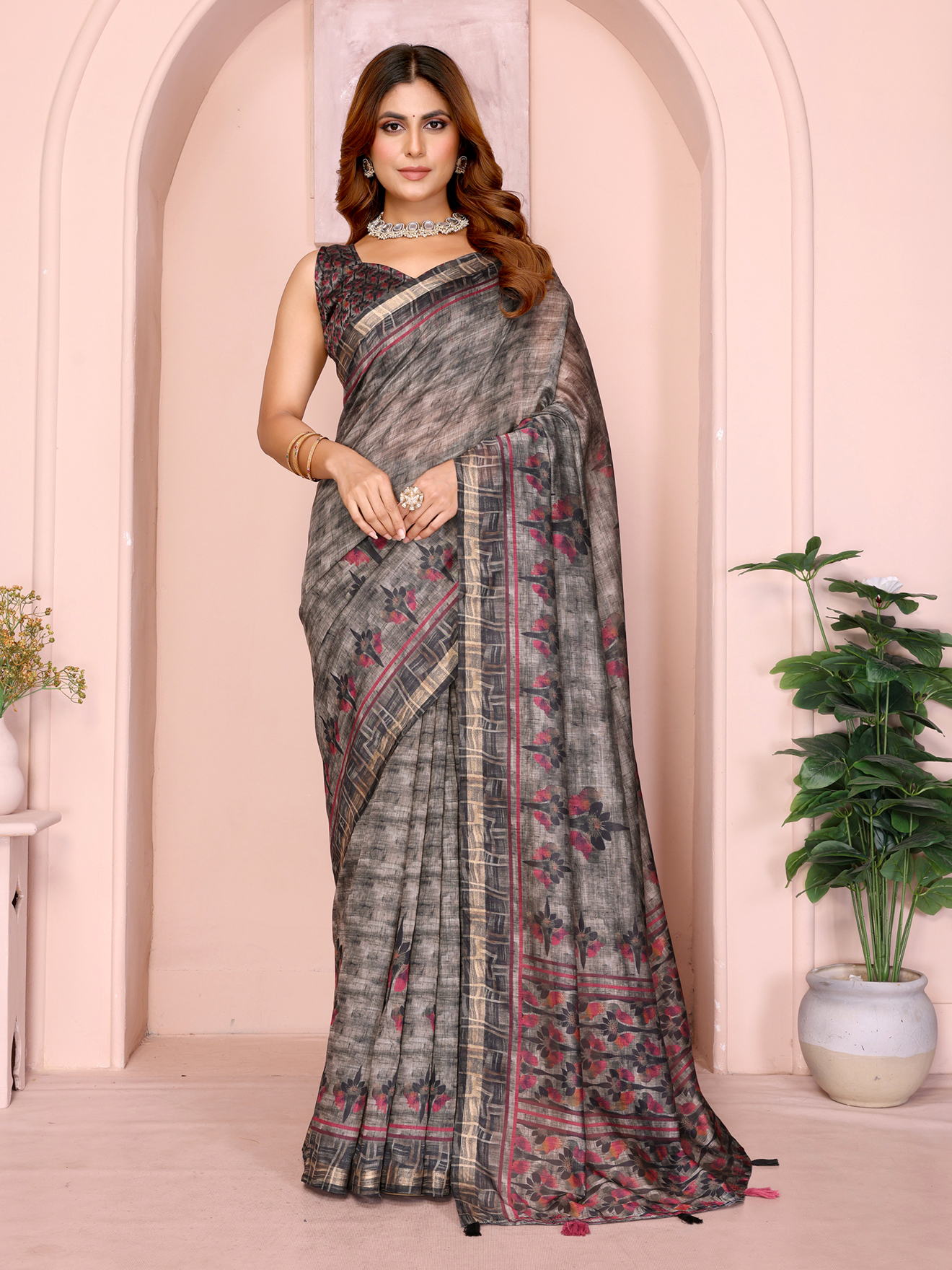
The Charcoal Chanderi Cotton Saree with Multicolor Woven Motifs and the Charcoal Chanderi Cotton Saree with Maroon Floral Detailing offer useful colour-planning references. Their charcoal bases show how multicolour motifs and maroon accents can stand out without requiring a very bright ground. These sarees are not Mekhela Sador garments, but their contrast principles can inform blouse and accessory choices.
Assamese Mekhela Chador or Sador and the Common English Spellings: how should it be styled?
A respectful Mekhela Sador styling approach uses accurate terminology, secure draping and accessories that support Assamese textile traditions rather than turning the outfit into a costume.
For a Haldi ceremony or daytime family gathering, cotton or lightweight silk can offer comfort in warm weather. Choose a blouse with enough ease for arm movement, arrange the front pleats evenly and check the sador while walking before leaving home. A braid, low bun or neatly pinned hair can reduce friction at the shoulder.
For a wedding reception, Muga silk, Pat silk, a rich woven border or restrained zari can make the outfit more formal. Assamese jewellery with gold-toned regional forms can complement the textile, but a modest necklace and earrings may be more practical than several heavy pieces during a long event.
A fitted blouse generally balances the volume of the mekhela and sador. A high or moderate neckline works well with a heavily patterned upper cloth, while a simpler sador can accommodate a more detailed blouse. Jewellery should not cover the most significant woven motif or border.
The Mustard Chanderi Embroidered Kurta Pant Dupatta Set can provide a useful reference for coordinating mustard, embroidery and light textile layers, even though a kurta set is constructed differently from a Mekhela Sador. A coordinated colour palette is more important than forcing two different garment forms to look identical.
When shopping, confirm whether the listing includes both pieces, the blouse or only the lower mekhela. Check the fabric composition, finished measurements, border width and washing instructions. A listing that says "Assamese-inspired" may use a modern cut or printed fabric rather than traditional handwoven construction, so the description should be read carefully.
Assamese Mekhela Chador or Sador and the Common English Spellings: how should the textiles be cared for?
Care for a Mekhela Sador according to its fibre, dye and surface decoration, with gentle cleaning and protected storage as the safest general approach.
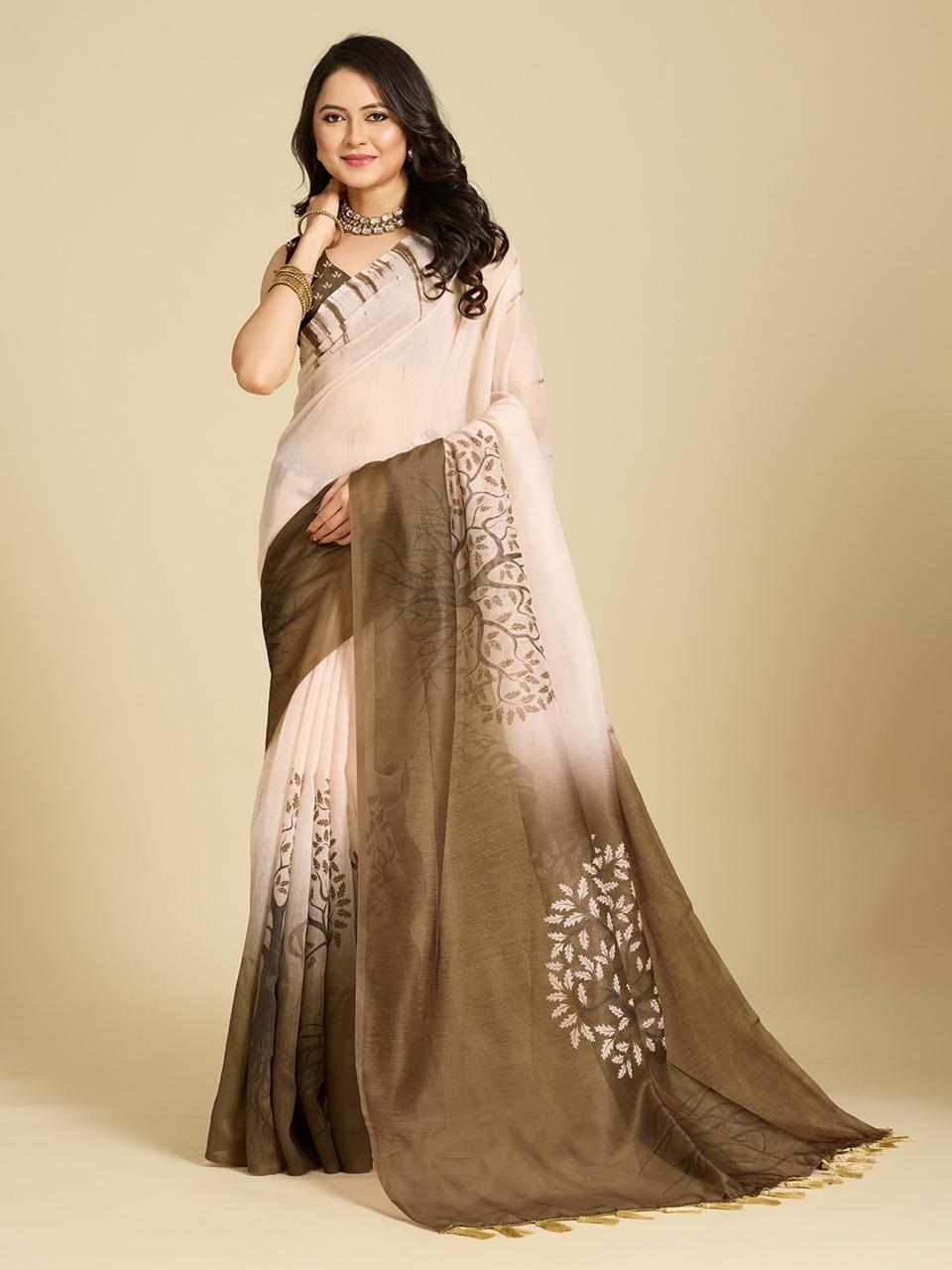
Air cotton pieces in shade after use and wash them only when necessary. Hand wash printed cotton in cool water with a mild detergent, and avoid soaking for long periods because dark colours may bleed. Do not wring a woven border; press out excess water between clean towels instead.
Silk, Muga silk, Eri silk and Pat silk should usually be dry-cleaned or washed only according to the weaver's instructions. Keep silk away from perfume, deodorant and hair oil because these substances can leave marks or weaken the fibre. If ironing is necessary, use low heat on the reverse side with a pressing cloth.
Fold a Mekhela Sador along different lines every few months to prevent permanent crease damage. Store the pieces in breathable cotton or muslin rather than sealed plastic. Avoid direct contact between zari and rough wooden shelves, metal hooks or untreated cardboard.
Before storing a worn garment, allow perspiration and moisture to dry completely. A clean, dry storage space reduces the risk of mildew, especially in humid climates. Muga and other silk garments should not be left in strong sunlight for repeated long periods because natural and dyed colours can fade.
Assamese Mekhela Chador or Sador and the Common English Spellings: what should a buyer check?
A buyer should check the two-piece construction, fabric, measurements, border placement, included components and care instructions before purchasing a Mekhela Sador.
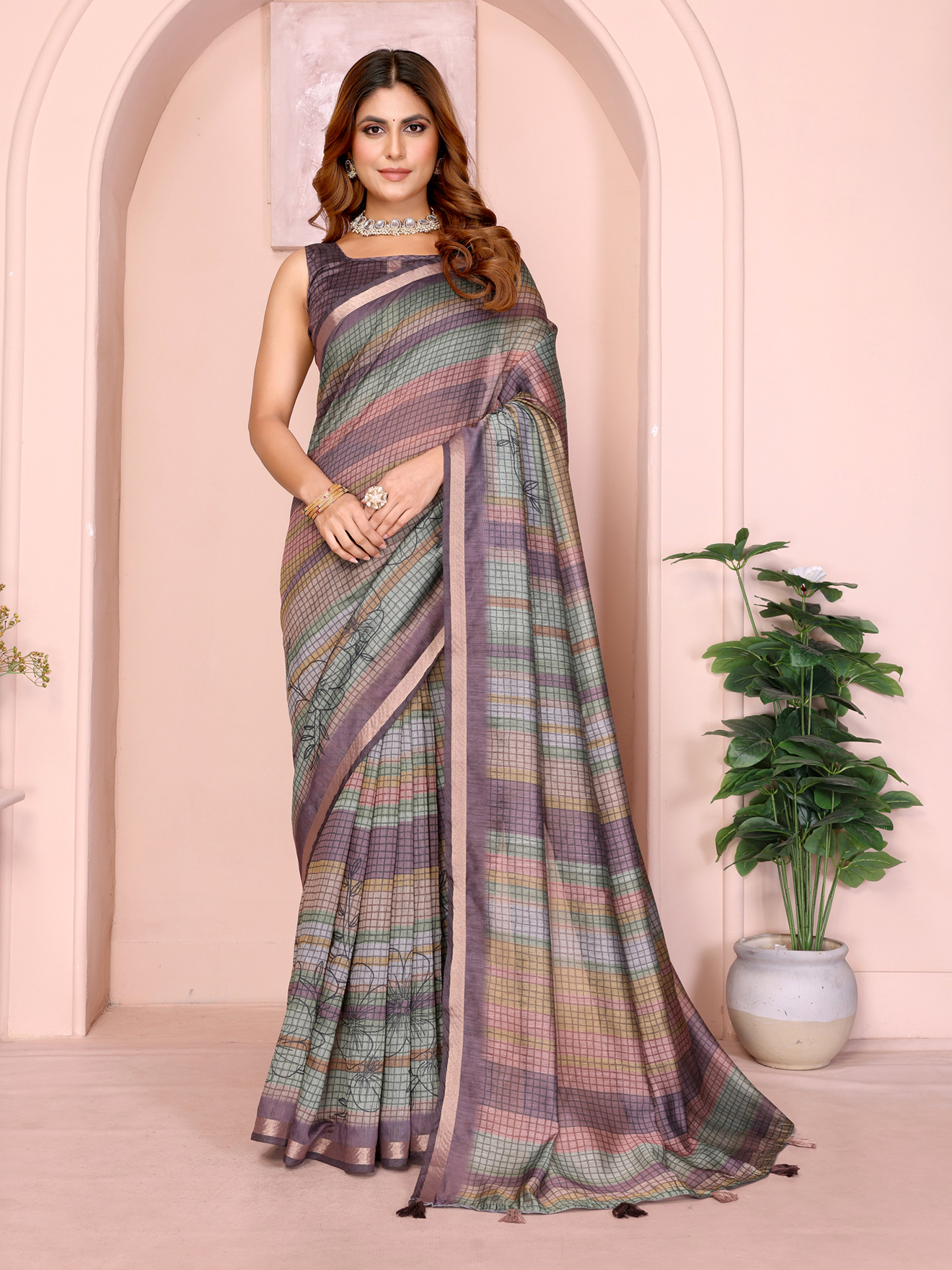
- Confirm the pieces: make sure the listing includes a mekhela and a sador, not only a saree or dupatta.
- Read the fibre details: distinguish cotton, Muga silk, Eri silk, Pat silk, blended fabric and synthetic fibre.
- Inspect the border: check whether the border is woven, embroidered, printed or finished with zari.
- Measure before ordering: compare the garment length and width with a similar outfit already owned.
- Ask about colour variation: handwoven textiles can show minor differences between photographs and the delivered piece.
- Check care instructions: silk, zari and unstable dyes may require specialist cleaning.
Product names can help with colour and textile comparisons, but they don't replace construction details. The Charcoal Chanderi Cotton Saree with Multicolor Woven Motifs, Mustard Brown Chanderi Cotton Saree with Polka Print Border and Mustard Teal Banarasi Soft Silk Zari Weave Saree are all useful examples of how fabric, colour and border language appear in Indian occasion wear. None should be labelled a Mekhela Sador unless the listing confirms the separate Assamese two-piece format.
The most reliable shortcut is simple: identify the mekhela, identify the sador, then verify the fabric and measurements. That method works regardless of whether a retailer uses Mekhela Sador, Mekhela Chador, Mekhela Sadar or Mekhela Chadar in its title.
Common Questions About Assamese Mekhela Chador or Sador and the Common English Spellings
Is Mekhela Sador or Mekhela Chador the correct spelling?
"Mekhela Sador" is generally the preferred English spelling, while "Mekhela Chador" is a common alternative used in marketplaces and searches. Mekhela Sadar and Mekhela Chadar are additional Roman spellings for the same Assamese two-piece garment.
What is the difference between a Mekhela Sador and a saree?
A Mekhela Sador has two separate unstitched pieces: the lower mekhela and the upper sador. A saree normally uses one continuous length of fabric for the lower wrap, pleats and shoulder drape.
What does sador mean in Assamese dress?
Sador means the separate upper cloth worn with the mekhela. The sador is pleated and arranged across the torso before being placed over one shoulder.
Which fabrics are used for an Assamese Mekhela Sador?
Cotton, Muga silk, Eri silk and Pat silk are important fabrics used for Assamese Mekhela Sador garments. Cotton suits breathable daytime wear, while Muga silk and Pat silk are often chosen for formal celebrations.
Can a saree be called a Mekhela Sador?
A saree should not be called a Mekhela Sador unless it has been made or sold as two separate pieces. Assamese motifs, silk and borders can appear on a saree, but the two-piece construction defines the Mekhela Sador.
How should a Mekhela Sador be washed?
Cotton versions can often be hand washed in cool water with mild detergent, while Muga silk, Eri silk, Pat silk and zari garments should follow the weaver's or seller's care instructions. Avoid wringing, prolonged soaking and direct sunlight during drying.