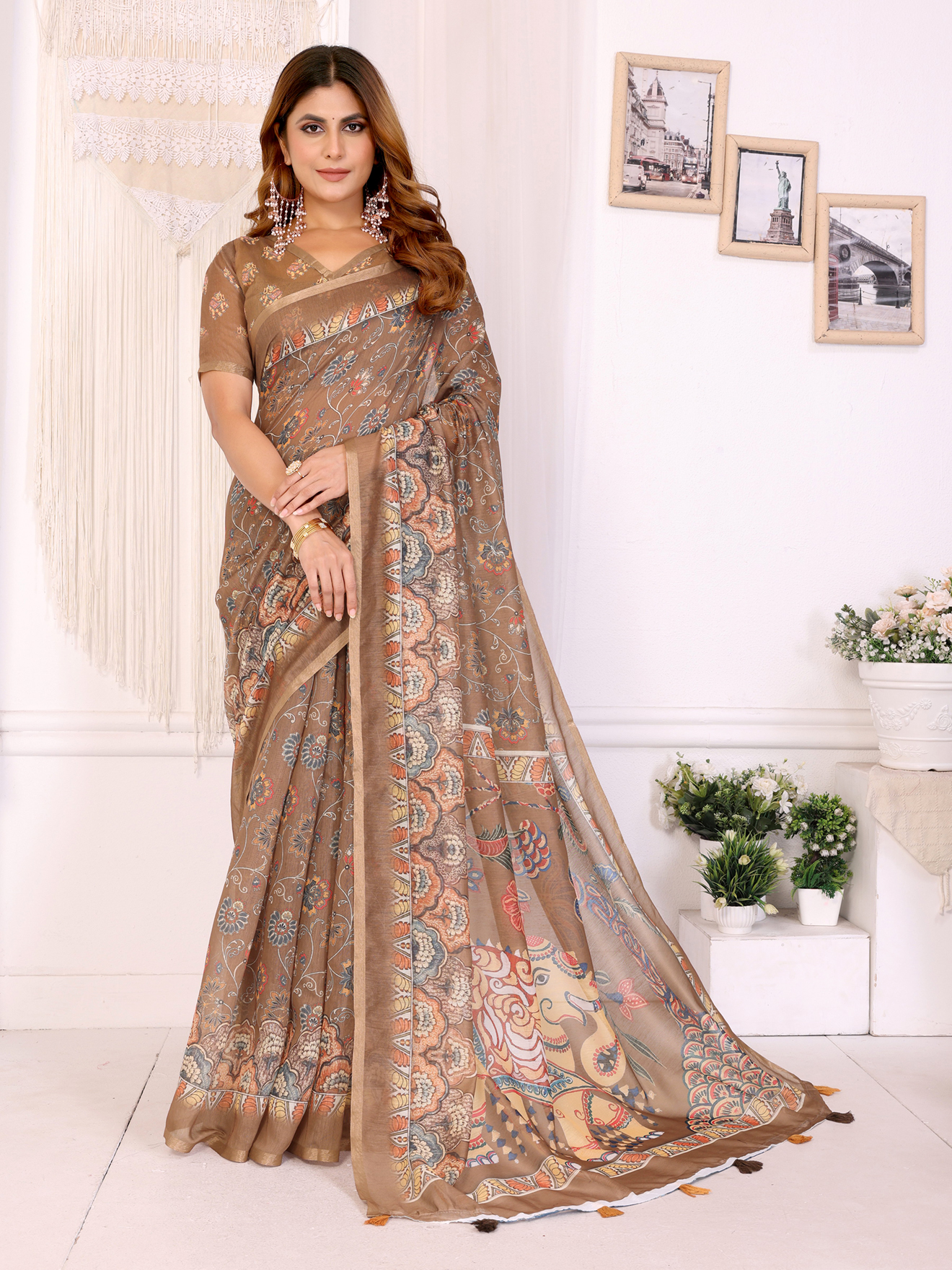
Online saree descriptions often become confusing at the exact point where a purchase is decided: the edges and the finishing panel. Bengali Shari Shopping Vocabulary for Border and Pallu gives you the words needed to compare a woven border with a printed one, understand where the pallu sits, and ask better questions before ordering. Bengali textile language uses terms such as paar, anchal, kinar and zari, while modern listings may use "border," "pallu," "woven," or "printed" instead.
A saree can have a quiet body and still make a strong visual impression because of its paar and anchal. Knowing how those parts work helps you judge photographs, estimate how the saree will look after draping, and select a suitable blouse, fabric weight and occasion. The same vocabulary also prevents a common mistake: assuming that every decorative end panel is woven, or that every contrast strip will appear equally prominently in a Bengali drape.
Why Bengali saree border and pallu words matter while shopping
Border and pallu terms matter because they describe the areas that remain most visible after a saree is draped. The lower edge frames the feet and pleats, while the pallu or anchal falls over the shoulder and often becomes the main decorative feature in photographs.
In Bengali usage, paar normally refers to the saree's border, especially the lengthwise decorative edge. The spelling "par" or "paar" may appear in English listings. Kinar also means an edge or border and is commonly used across Indian textile descriptions. A product page may therefore call the same feature a border, paar or kinar without indicating three different parts.
Anchal is the Bengali word commonly used for the pallu, the loose end of the saree draped over the shoulder. "Pallu" is more widely used in online shopping, while "anchal" carries a distinctly Bengali vocabulary. The anchal may repeat the border, enlarge its motif, introduce a new print, or use a heavier decorative treatment.
Zari means metallic thread used to create or highlight motifs, lines and borders. Traditional zari may be made with gold- or silver-coloured metal wrapping, while contemporary textiles can use imitation zari or metallic-look yarn. A listing that says "zari border" doesn't automatically mean pure silk, handloom weaving or real gold thread, so the fibre and construction details still need separate checking.
Bengali Shari Shopping Vocabulary for Border and Pallu
Bengali Shari Shopping Vocabulary for Border and Pallu becomes easier when each term is connected to a physical part of the saree. The following glossary translates familiar Bengali words into the shopping language used on current saree listings.
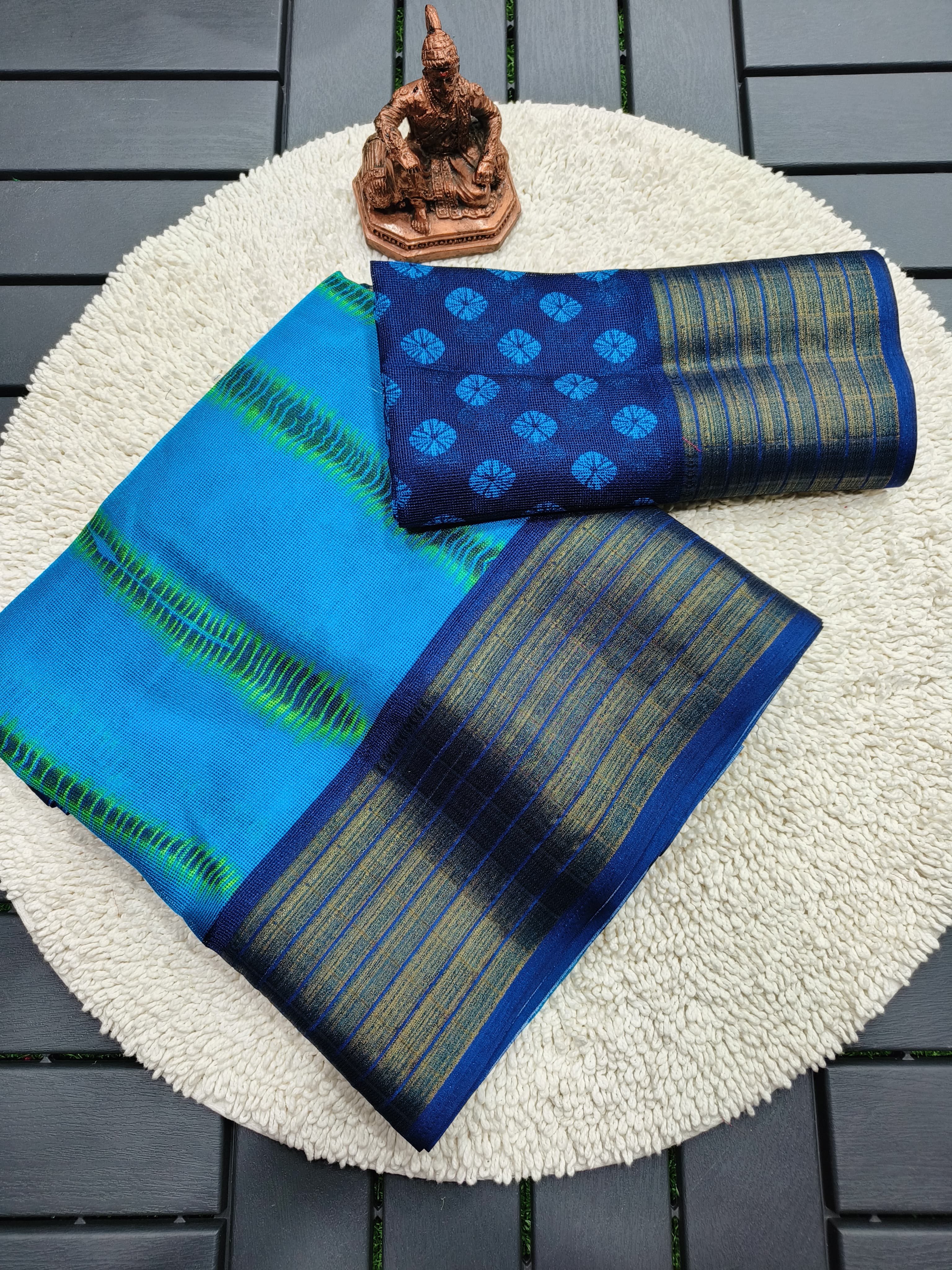
- Paar: the lengthwise border running along both sides of the saree. A broad paar can dominate the drape, while a narrow paar gives a lighter everyday appearance.
- Anchal: the decorative end that falls over the shoulder. Anchal is the Bengali equivalent most closely associated with pallu.
- Pallu: the loose end of the saree, usually the section shown prominently in product photographs. Pallu may be printed, woven, embroidered or finished with zari.
- Kinar: an edge or border. Kinar can describe a slim contrast line, a broad decorative band or a finished edge detail.
- Body: the main field of the saree between the two borders. Floral prints, checks, stripes and plain textures are all body treatments.
- Buti: a small isolated motif scattered across the body. Buti patterns are different from a continuous border or an all-over print.
- Boota: a larger motif, often positioned more prominently than a buti. The exact use of "boota" varies between sellers and textile regions.
- Jaal: a net-like or connected pattern covering a larger area. A jaal can appear on the body or pallu and may be woven or printed.
- Woven border: a border formed during textile construction rather than added only as a surface print. Product descriptions should still be checked for the exact weave and fibre.
- Printed border: a border created with colour or pigment on the fabric surface. Printed borders can be crisp and attractive, but they require careful washing to protect the design.
- Selvedge: the finished lengthwise edge that prevents fraying. A visible selvedge may sit beside the decorative paar, but it's not always the same as the ornamental border.
The word "pallu" can also describe a section that's visually different from the body but not necessarily heavier. A peach saree with a purple printed pallu may have a strong colour change without having zari, embroidery or a separate woven panel. Reading "print," "woven," "embellished" and "contrast" together gives a more accurate picture than reading "designer" alone.
How to read a saree border description accurately
The most reliable way to read a border description is to separate its width, construction, colour and motif instead of treating "border" as a complete specification.

Width changes the visual balance
A narrow border usually creates a restrained outline, whereas a broad border creates a stronger horizontal break at the hem and shoulder. A border measuring approximately 1 to 3 inches tends to look subtle, while a 4 to 8 inch border is more noticeable in pleats and in the pallu. Online sellers don't always provide measurements, so use the model photograph and compare the border with the saree width or blouse sleeve for scale.
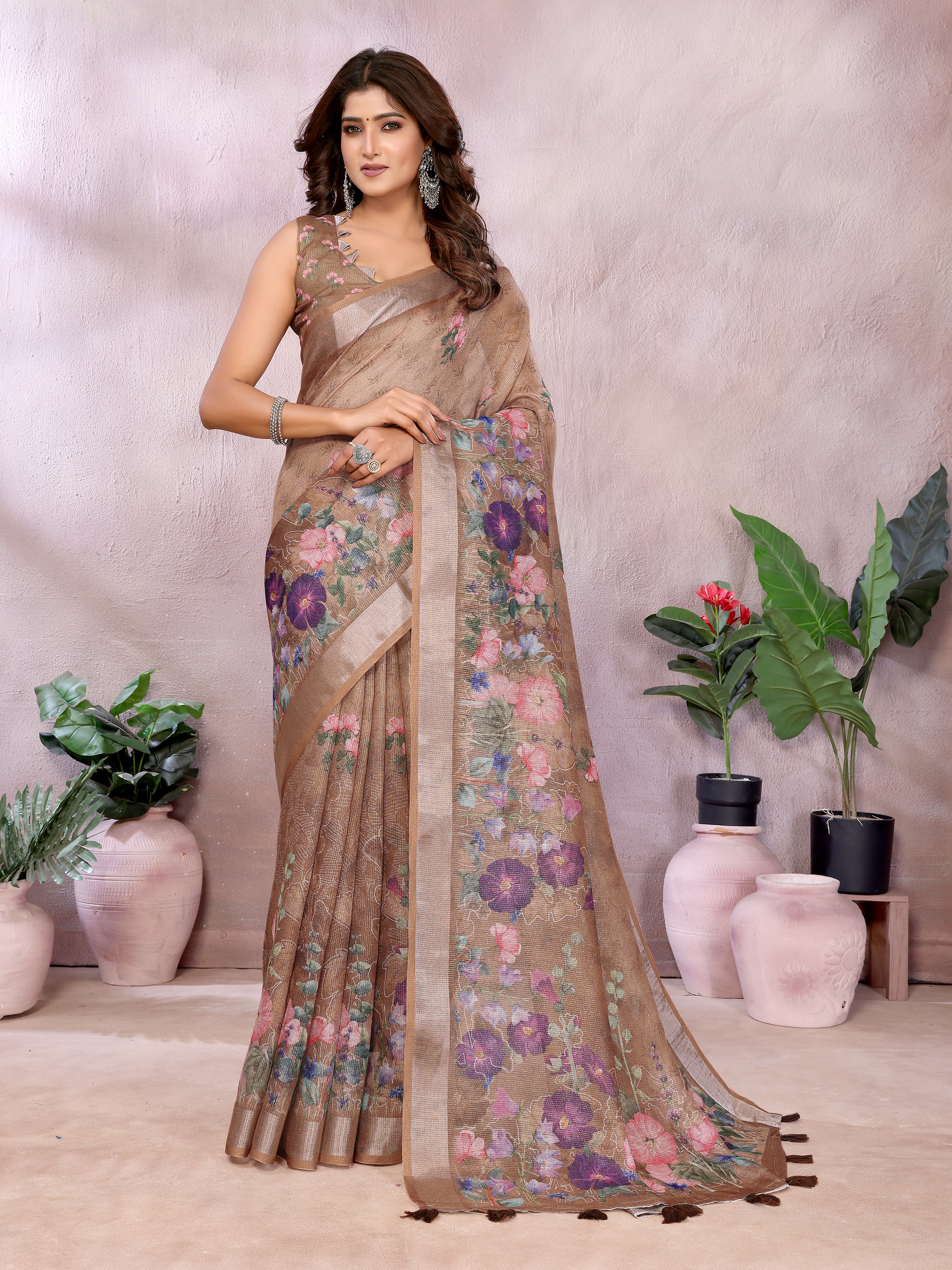
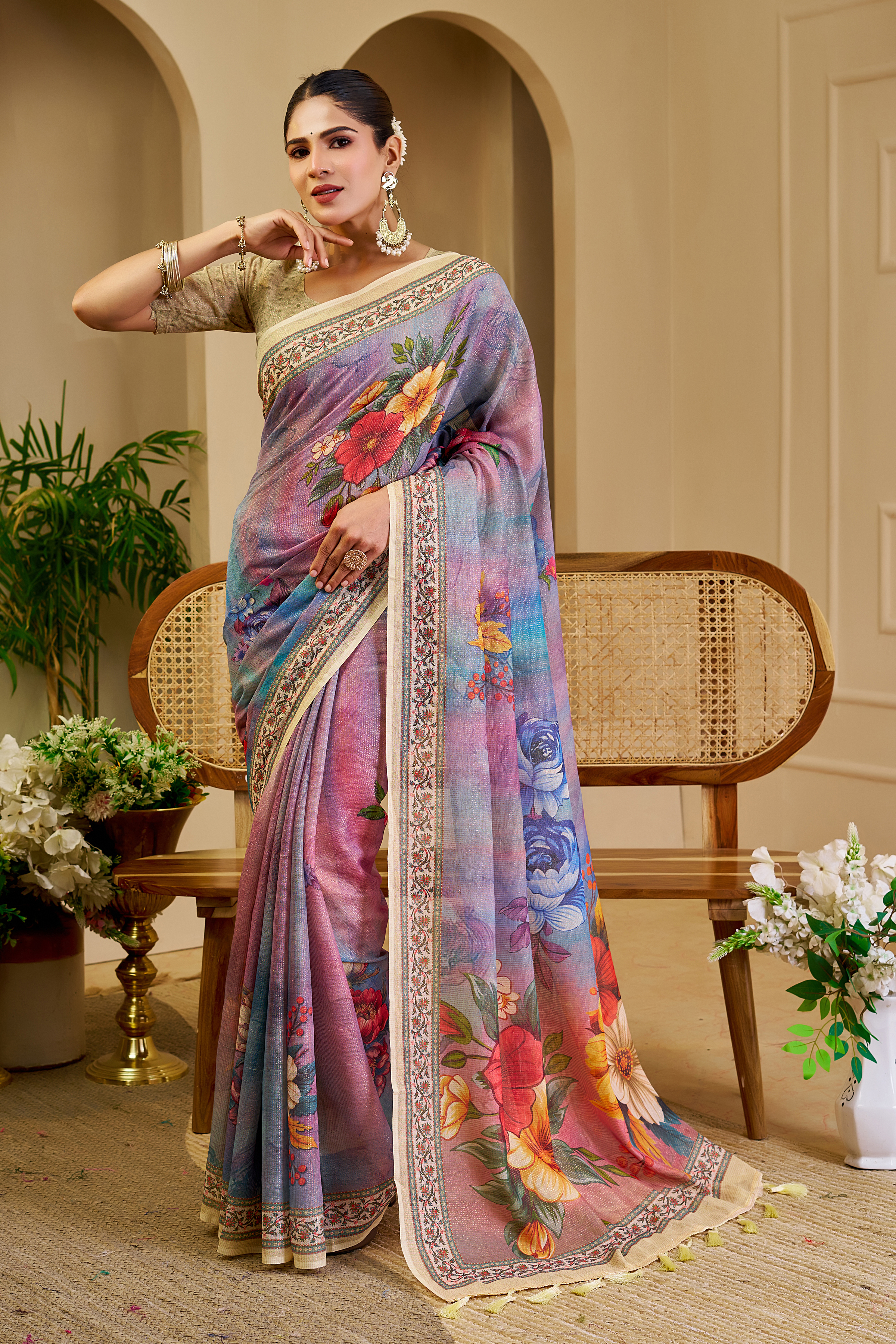
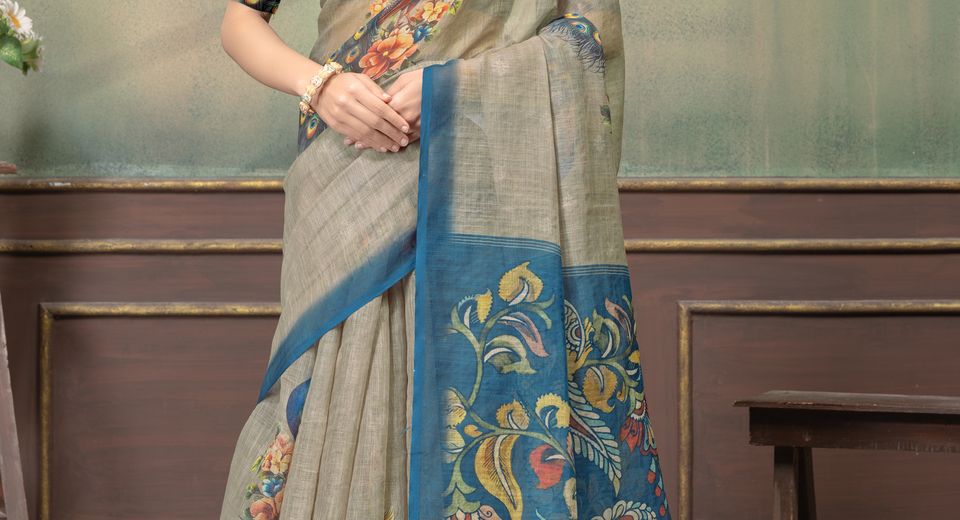
The Peacock Floral Printed Linen Cotton Saree with Blue Borders illustrates how colour contrast can give a border prominence even when the decoration isn't heavily embellished. Blue borders against a floral body can define the drape without making the saree look formal or metallic.
Construction tells you how the detail may age
A woven border is integrated into the textile structure, while a printed border sits on the surface and depends more directly on washing and friction. "Woven" doesn't always mean handwoven, and "printed" doesn't mean low quality; both descriptions simply identify different methods of creating the design.
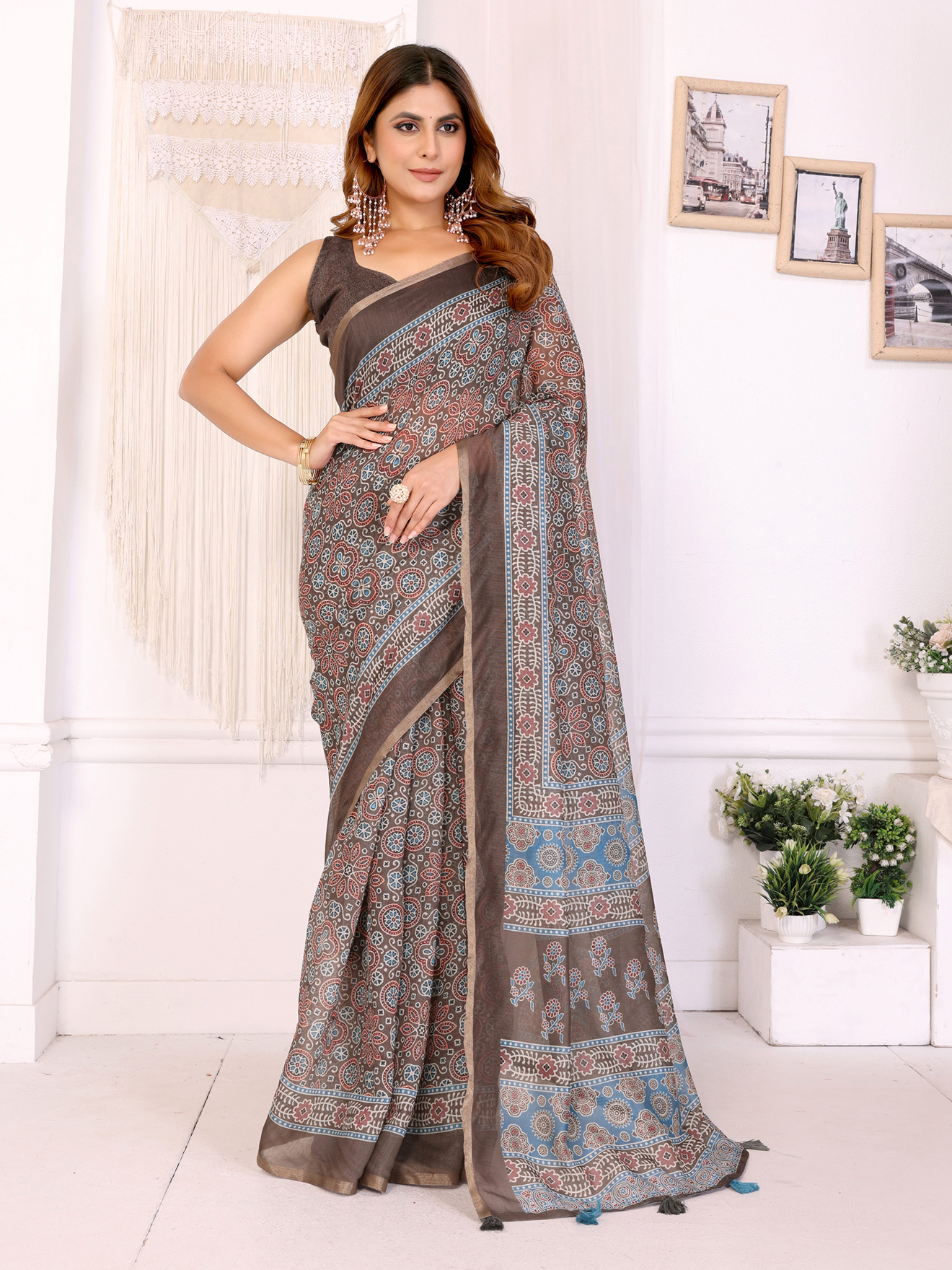
The Charcoal Floral Linen Cotton Saree with Maroon Woven Border is an useful example of a border that depends on a darker contrast and a woven finish. A maroon woven edge can remain visually defined through repeated wear, but the care label still determines whether the saree should be hand-washed, dry-cleaned or protected from soaking.
Colour names reveal coordination possibilities
Border colour is especially useful when choosing a blouse because it provides a clear matching or contrast point. A navy border can support a navy blouse, a neutral beige blouse or a peacock-toned contrast; a mustard border can be repeated in jewellery, footwear or a small accessory.
The Beige Linen Cotton Saree with Peacock Print and Navy Border demonstrates why the border should be considered alongside the body print. A navy blouse will echo the edge, while a peacock blue blouse will connect with the motif and create a less predictable pairing.
What the pallu or anchal tells you about the final drape
The pallu tells you how the saree will appear over the shoulder, so its motif scale, colour placement and fabric fall deserve as much attention as the body print.

A pallu can be a continuation of the body, a larger version of the border, or a contrasting end panel. A floral saree may place larger flowers on the anchal, while a printed saree may reserve a medallion arrangement for the shoulder section. If a listing names a "contrast pallu," expect a visible shift in colour or pattern rather than a small decorative line.
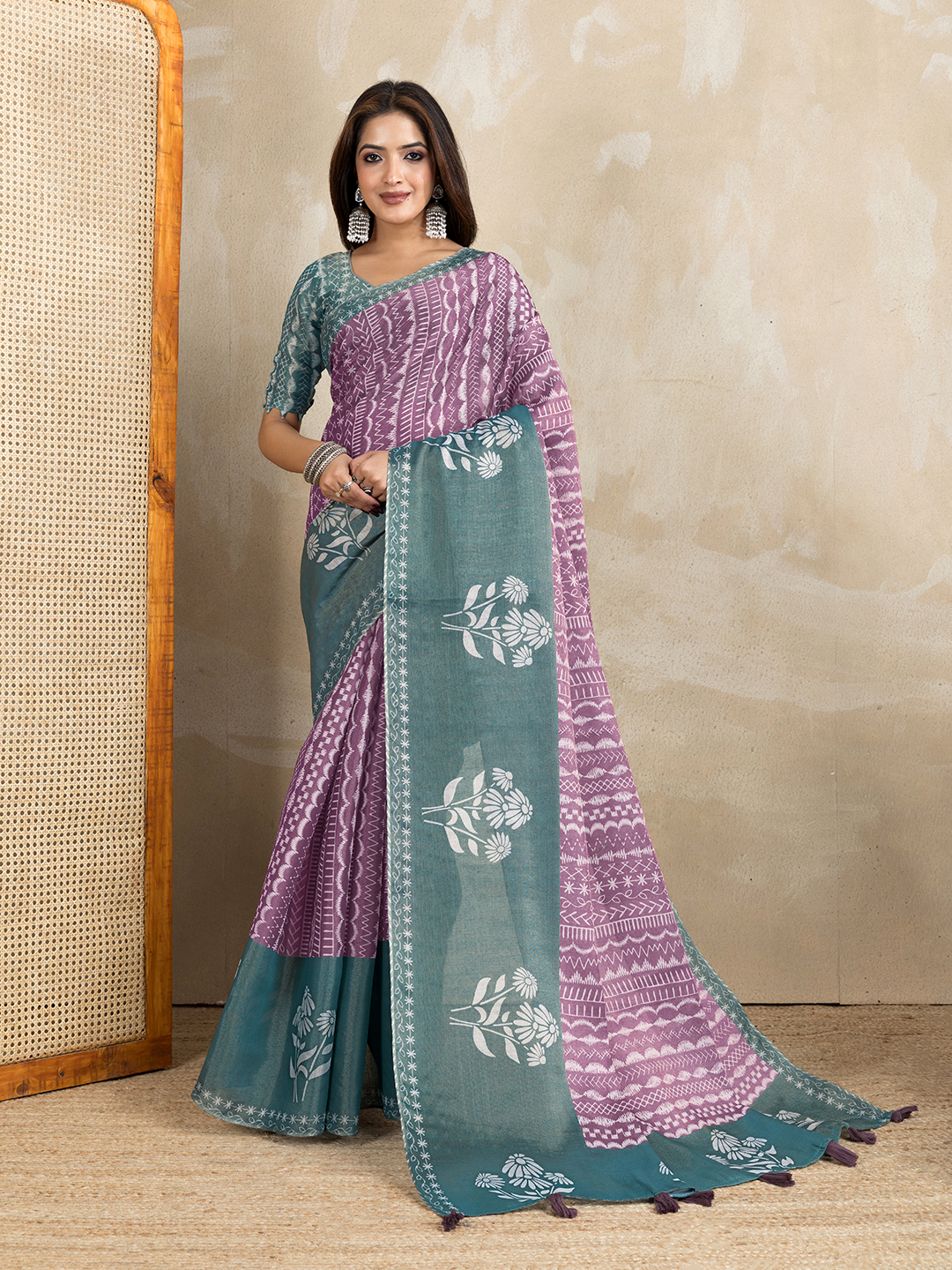
The Peach Floral Medallion Print Saree with Purple Pallu shows how a contrast pallu changes styling decisions. Purple can be repeated through the blouse for a coordinated appearance, or the blouse can remain peach or neutral so the pallu becomes the sole accent. A contrast anchal also photographs clearly because it creates a defined shoulder focal point.
A pallu with a dense pattern may add visual weight near the face and upper body. A quieter pallu can be easier to wear for office settings, travel or repeated styling. When comparing photographs, inspect whether the pallu is shown fully spread, folded over the shoulder or partly hidden behind the model; each pose reveals a different amount of the design.
The Premium Beige Cotton Handloom Saree with Maroon Ethnic Border and Heritage Printed Pallu combines three distinct shopping clues: a cotton handloom description, a maroon ethnic border and a heritage-inspired printed pallu. Those clues suggest a saree where the border supplies structure and the pallu supplies storytelling, but the product specifications should still be checked for length, blouse piece and washing instructions.
Choosing fabric and border together
Fabric and border should be assessed together because the same border width behaves differently on cotton, linen cotton, satin and silk.
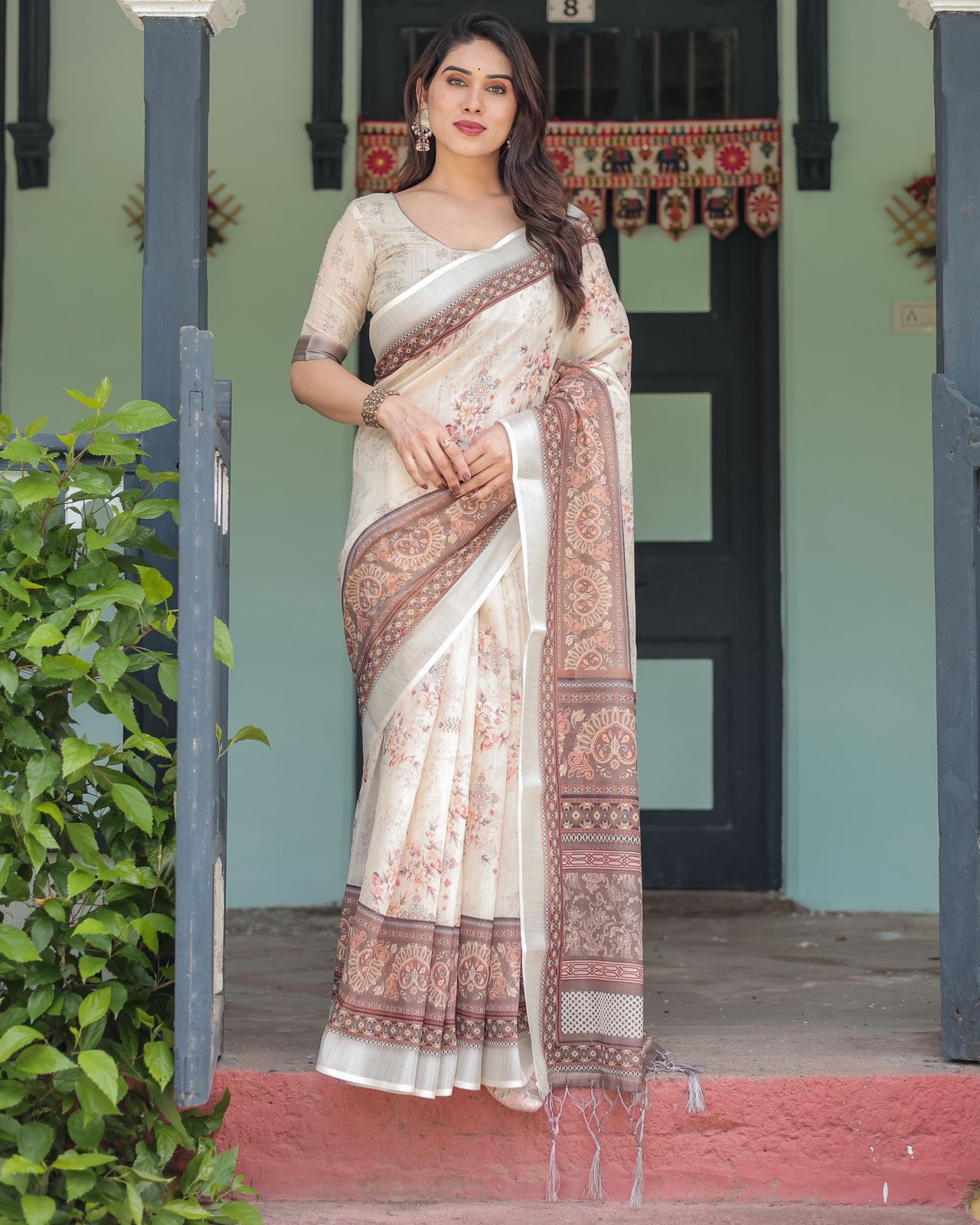
Cotton and linen cotton usually provide a breathable, textured fall that suits daytime wear and warm weather. A woven border can add definition without requiring heavy embellishment. Satin generally reflects more light and slides differently during draping, so a bold contrast border can look more dramatic even when the design is printed.
The Teal Blue Floral Printed Satin Saree with Mustard Border is a good example of colour and surface working together. Teal blue supplies a cool base, mustard creates a warm edge, and satin adds sheen. A plain mustard or teal blouse may be more balanced than a heavily printed blouse because the saree already contains colour contrast and surface reflection.
The Maroon Mal Cotton Ethnic Saree With Blouse from VARNAVI shows another practical shopping point: the phrase "with blouse" indicates that the listing may include a matching blouse piece. But the blouse length, attached or unstitched format and fabric composition should be confirmed on the product page. A saree with a coordinated blouse piece can simplify colour matching, but it may not provide enough fabric for every blouse style.
Fabric composition affects how sharply a border folds into pleats. Linen cotton can create a slightly structured line, soft cotton can produce a relaxed fall, and satin can form a smoother, more fluid outline. The border doesn't operate independently from the fabric underneath it.
How to compare Bengali sarees online without seeing them in person
Online comparison becomes more dependable when you record five details for every saree: border construction, border width, pallu treatment, fabric composition and care requirement.
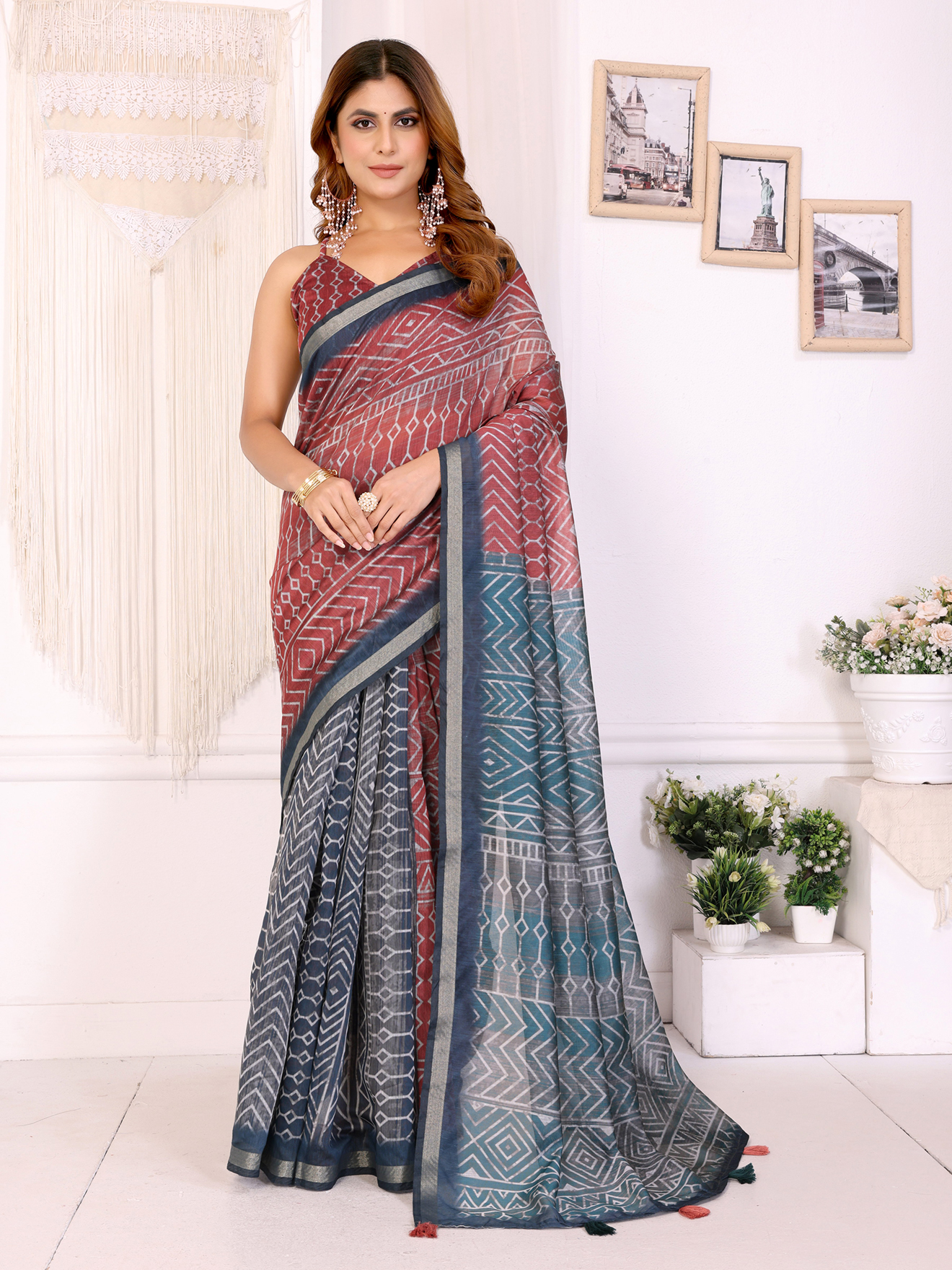
- Start with the full product photograph. Identify the body, the two lengthwise borders and the pallu. Do not judge the pallu from a close-up that hides the rest of the saree.
- Read the material line. "Linen cotton," "mal cotton," "satin" and "handloom cotton" describe different expected falls and care needs. Ask for fibre percentages if the listing doesn't provide them.
- Locate the construction word. Printed, woven, embroidered and zari describe different surface treatments. A "woven border" isn't interchangeable with a "printed border."
- Check the measurements. Look for saree length, saree width, blouse-piece length and border width. A standard saree may be around 5.3 to 5.6 metres before the blouse piece, but the listing's actual measurement should take priority.
- Examine the pallu separately. Check whether the anchal has a contrast colour, a larger motif, a solid panel or a continuation of the body design.
- Match the care instruction to your routine. Printed and satin sarees may need gentler handling, while cotton sarees may tolerate more regular use but can still shrink or bleed if washed incorrectly.
Budget sorting can also narrow the search without replacing quality checks. The Sarees from Rs 1000 to Rs 1500 collection may suit shoppers comparing accessible everyday options, while Sarees Under 20% Off and Sarees Under 10% Off are useful when a preferred border or pallu detail matters more than the discount percentage. Sale labels should never replace checking fabric, measurements and return conditions.
Building a blouse and drape around the paar and anchal
The most reliable blouse choice repeats one established colour from the border or pallu and keeps the neckline and sleeve treatment proportionate to the saree.

For a saree with a broad or strongly contrasting border, a plain blouse often prevents competition between the upper body and the hem. For a saree with a quiet border and a richly patterned anchal, a blouse can repeat one pallu colour without copying the complete print. A high-neck blouse can look composed with a small border, while a simpler round or square neckline may allow a broad paar to remain the main feature.
The classic Bengali drape can display the anchal prominently over the shoulder and may allow the pallu to fall in a broader, more visible panel than a tightly pleated drape. The choice depends on comfort, blouse construction and the length available. Crisp cotton and linen cotton can hold a structured arrangement, while satin may need careful pinning because the smoother surface can shift.
Jewellery should respond to the material rather than only the colour. Gold-toned accessories can echo zari or a warm maroon and mustard palette, while silver-toned pieces can sharpen blue, teal or purple accents. A patterned pallu already supplies detail, so one strong accessory often looks more intentional than several competing elements.
A practical vocabulary checklist before placing an order
Before buying a Bengali saree online, confirm what the listing means by border, pallu, fabric and blouse rather than relying on the product name alone.

- Is the border printed, woven, embroidered or finished with zari?
- What is the approximate border width in inches or centimetres?
- Does "pallu" refer to a contrast panel, a larger motif or only the end portion?
- Is the pallu called anchal, and is the design visible in the photographs?
- Does the saree include an unstitched blouse piece, and what is its length?
- What are the exact saree length and width?
- Does the fabric require dry cleaning, hand washing or colour protection?
- Are the displayed colours likely to vary because of lighting or screen settings?
Sale collections such as Sarees Flat 60% Off and Sarees Flat 50% Off can make experimentation more affordable, especially when trying a new border colour or pallu style. A lower price doesn't remove the need to read the construction and care information. Vocabulary is valuable because it lets you compare like with like, even when different sellers use different descriptive language.
Once paar, kinar, anchal, pallu, body, buti and zari become familiar, saree shopping becomes a more precise visual exercise. You can identify which detail will frame the pleats, which one will sit near the face, and which one will determine blouse coordination. That knowledge turns an attractive photograph into a better-informed purchase.
Common Questions About Bengali Saree Borders and Pallus
What is the Bengali word for the border of a saree?
The Bengali word commonly used for a saree border is "paar," also written as "par." "Kinar" is another term for an edge or border and may appear in wider Indian textile descriptions.
What is the difference between anchal and pallu?
Anchal and pallu generally refer to the same part: the loose end of the saree worn over the shoulder. "Anchal" is especially common in Bengali vocabulary, while "pallu" is more widely used in online shopping listings.
How can I tell whether a saree border is woven or printed?
Look for explicit wording such as "woven border" or "printed border" in the product details. A woven border is formed as part of the textile structure, while a printed border is applied to the fabric surface; photographs alone may not always prove the construction.
What does zari border mean in a Bengali saree listing?
A zari border uses metallic-looking thread to create lines or motifs along the edge. Zari does not automatically indicate pure silk, handloom production or real gold thread, so check the fabric composition and construction details separately.
Which blouse colour works with a contrast pallu?
A blouse can repeat the strongest colour in the pallu, match the border, or use a neutral shade from the saree body. Repeating one colour usually looks more balanced than matching every shade in a multicoloured pallu.
Is a broad saree border suitable for everyday wear?
A broad border can work for everyday wear when the fabric is comfortable and the colour contrast is moderate. Border width affects visual prominence, but fabric weight, breathability, care requirements and the occasion matter just as much.