Malayalam Kasavu Mundu Terms describe different garments, garment parts and decorative details, even though retailers and shoppers often use them as if they mean the same thing. A mundu is a wrapped lower-body garment, kasavu usually refers to a gold-toned border or metallic decoration, and a set mundu is a two-piece women's ensemble. Knowing the difference makes it easier to buy the correct item for Onam, Vishu, a wedding or a temple visit.
The simplest way to decode a product description is to check three details: the number of pieces, the shape of the cloth and the location of the gold border. One long cloth with a pallu is generally a saree. Two separate cloths usually indicate a set mundu or mundum neriyathum. A single lower wrap is a mundu, whether or not it carries kasavu.
Malayalam Kasavu Mundu Terms: Why the Words Get Confused
Malayalam Kasavu Mundu Terms overlap because Kerala's traditional clothing uses related colours, fabrics and borders across several garment formats. White or off-white cotton with a gold-coloured edge can appear on a men's mundu, a women's set mundu and a Kerala saree.
Retail language adds another layer of confusion. A seller may call a white-and-gold saree a kasavu saree, a Kerala saree, a set saree or simply a kasavu. Those names may describe a similar visual mood but not the same construction. The product's piece count and measurements are more dependable than a broad title.
Regional and family usage also varies. A handloom seller in Balaramapuram may use a precise textile term, while a fashion retailer may use "kasavu" as a search-friendly description for any white, cream and gold festive outfit. The distinction matters when you need to know whether a separate neriyathu is included or whether the upper drape is attached to one continuous saree.
Kasavu itself isn't a synonym for cotton, Kerala, saree or mundu. Kasavu identifies a decorative feature, traditionally associated with a metallic-looking thread or gold-toned border. Modern textiles may use zari, metallic polyester, tissue yarn, printed foil or other substitutes, so fibre and construction should always be checked separately.
Malayalam Kasavu Mundu Terms: What Is a Mundu?
A mundu is a rectangular lower-body cloth wrapped around the waist and legs, traditionally associated with Kerala and Malayalam-speaking communities. A classic mundu often has a white or cream body and a narrow or broad kasavu border along one edge.

A mundu isn't automatically a saree. A single mundu normally serves as the lower garment and doesn't include a separate upper cloth or a pallu intended to cover the shoulder. Men commonly wear a mundu with a shirt, kurta or time-honoured upper garment, although contemporary styling has adapted the garment in many ways.
The length, width and border placement affect how a mundu is worn. A formal mundu may have a wider zari edge, while an everyday version may use a restrained border. The cloth can be folded at the waist to adjust the length, especially during work, walking or informal gatherings.
In casual conversation, people sometimes describe a women's Kerala drape as a mundu because the lower section resembles a mundu. In a product listing, however, "mundu" alone should not be taken to mean a two-piece women's outfit. Look for terms such as neriyathu, upper cloth, two-piece set or mundum neriyathum.
Malayalam Kasavu Mundu Terms: Is a mundu the same as a dhoti?
A mundu is the Kerala-specific term for a wrapped lower garment, while dhoti is a wider South Asian category that includes several regional wrapping and tying methods. Both are unstitched lower garments, but the styling, terminology and cultural associations can differ.
A Kerala mundu usually has a simple wrap and is strongly associated with a white, cream or kasavu-edged textile. A dhoti from another region may use different folds, pleats, colours or methods of securing the cloth. The terms overlap historically, but mundu is the more precise word for the Kerala context.
Malayalam Kasavu Mundu Terms: What Does Kasavu Mean?
Kasavu describes a gold-toned border, metallic thread detail or classic decorative finish rather than the complete shape of a garment. Kasavu may be woven into a mundu, set mundu, Kerala saree, blouse, shawl or other festive textile.

Heritage handloom kasavu may show slight variations in the metallic line because the fabric is woven by hand. Machine-made garments often have a more uniform edge and may use zari or synthetic metallic yarn. A gold-coloured border therefore doesn't, by itself, prove that a garment contains pure gold thread or heritage handloom zari.
Border width changes the visual formality of a garment. A border of approximately one inch looks understated for daytime events, office celebrations or simple temple visits. A three- to five-inch border creates a stronger ceremonial effect and is often chosen for Onam celebrations, Vishu, weddings and cultural performances.
Kasavu also doesn't guarantee a particular base fibre. Kerala handlooms are closely associated with cotton, but contemporary garments may use cotton blends, viscose, silk blends or jacquard weaves. Read the fibre composition and care instructions instead of treating the word kasavu as a fibre label.
The Mustard Kanchi Cotton Kurta Dupatta Set demonstrates why colour and border should not be confused with garment identity. A kurta-and-dupatta set can have a festive palette or gold detailing without becoming a kasavu mundu or a set mundu.
Malayalam Kasavu Mundu Terms: Set Mundu and Neriyathu
A set mundu is a two-piece women's ensemble consisting of a lower cloth and an upper cloth called the neriyathu. The lower piece wraps around the waist, while the neriyathu crosses the upper body and is placed over the shoulder.
Mundum neriyathum is the more structurally descriptive Malayalam expression for the pairing of the mundu and neriyathu. The phrase tells you that the outfit contains two related cloths. A set mundu may have an off-white body with kasavu, a coloured border, embroidery, prints or a contemporary pallu-like arrangement.
Set saree is a less consistent retail term. Some sellers use set saree to mean a classic mundum neriyathum, while others use it for a pre-stitched or two-piece outfit that only resembles the classic form. Ask whether the listing includes two separate lengths and whether the upper cloth is intended to drape across the torso.
The neriyathu isn't simply an optional scarf. The neriyathu creates the recognisable upper-body structure of a two-piece Kerala ensemble. A listing containing only one long cloth with an attached pallu is more accurately called a Kerala saree, even when its colours and border look like a set mundu.
Malayalam Kasavu Mundu Terms: How does a set mundu differ from a Kerala saree?
A set mundu has two separate cloth pieces, whereas a Kerala saree is one continuous cloth with a pallu. Both garments can produce a white-and-gold Kerala-inspired appearance, but their construction and dressing process are different.
A set mundu allows the wearer to position the upper cloth independently from the lower cloth. A Kerala saree requires the wearer to pleat and arrange one long length around the waist and shoulder. Product photographs can hide this difference, so the "items included" section is more useful than the final styling image.
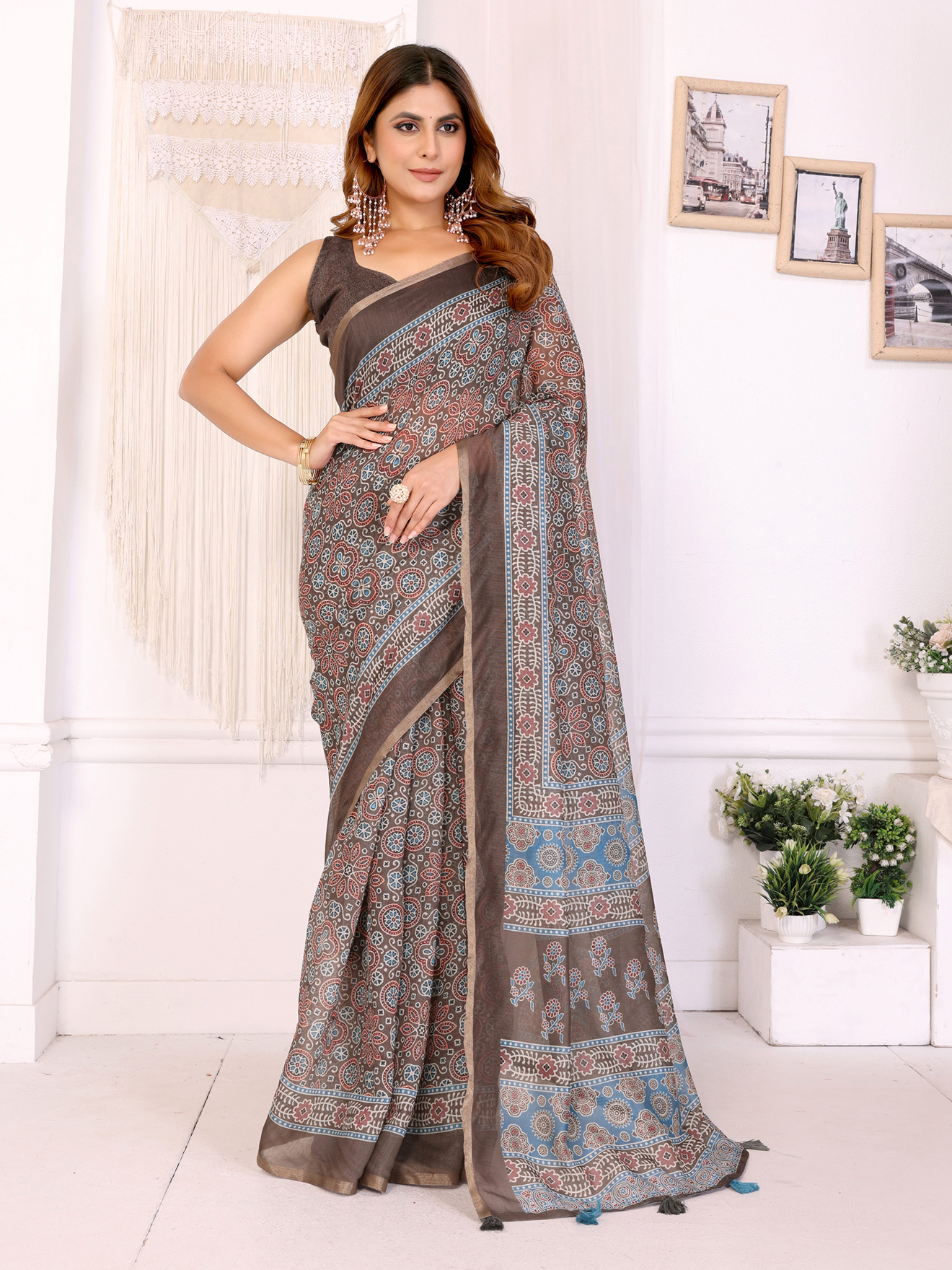
The Purple Mal Cotton Printed Saree & Blouse Set - VARNAVI is an example of why the word "set" needs context. A saree-and-blouse set contains a saree with a coordinated blouse component; it's not automatically a set mundu, because a blouse isn't the same as a separate neriyathu.
Malayalam Kasavu Mundu Terms: Kerala Saree, Kasavu Saree and Saree Set
A Kerala saree is an one-piece saree associated with Kerala's time-honoured colour and textile vocabulary. A kasavu saree is a saree identified by a gold-toned border or decorative finish. A saree set usually means a saree sold with a blouse piece or ready blouse, not a mundu and neriyathu.
A Kerala saree may be woven in off-white cotton with a kasavu border and a contrasting pallu. A set mundu may use nearly the same colours while arriving as two separate pieces. A mundu may share the border but function only as a lower garment.
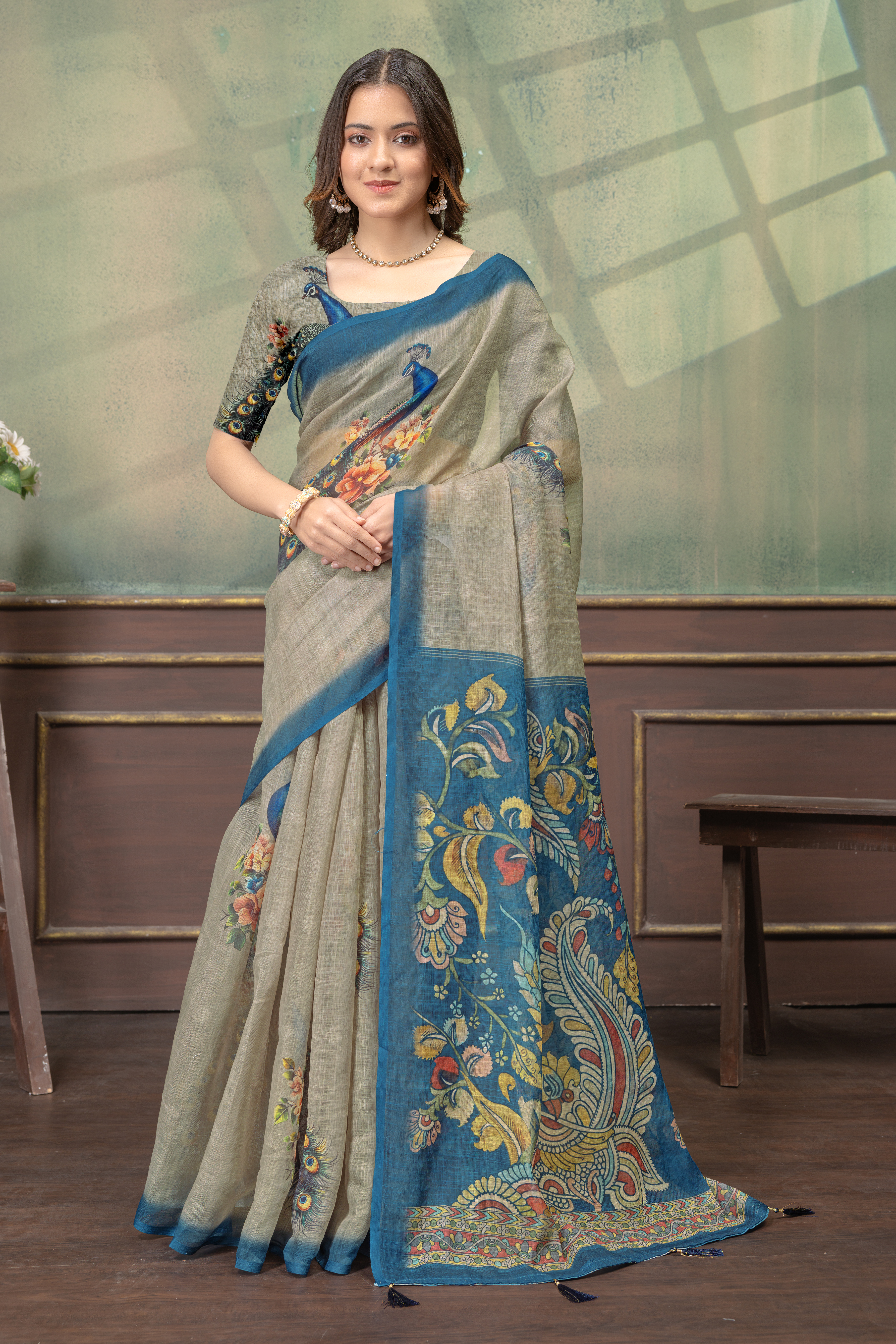
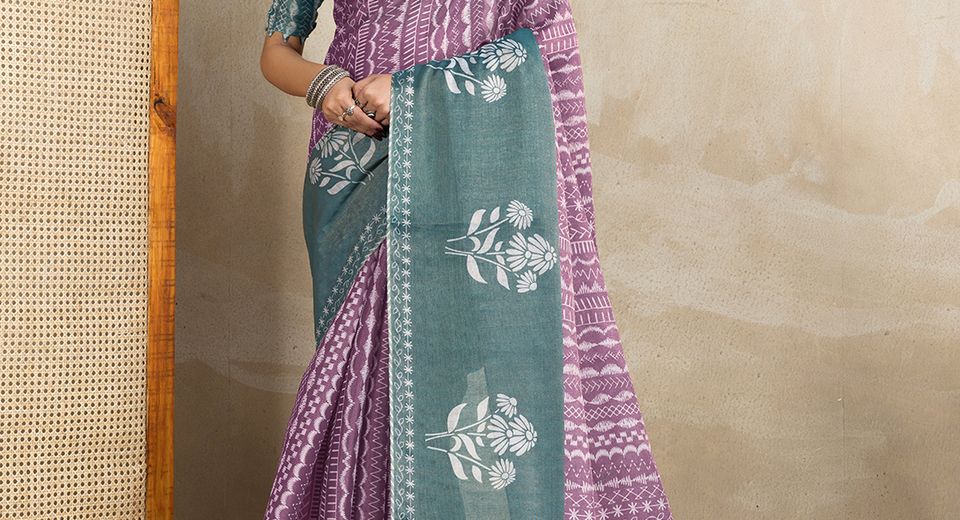
The Mauve Cotton Saree with Teal Floral Pallu and Ethnic Prints shows why the pallu is an useful identification clue. The saree remains an one-piece saree because the pallu is part of the continuous cloth, even though the teal floral design gives it a contemporary appearance.
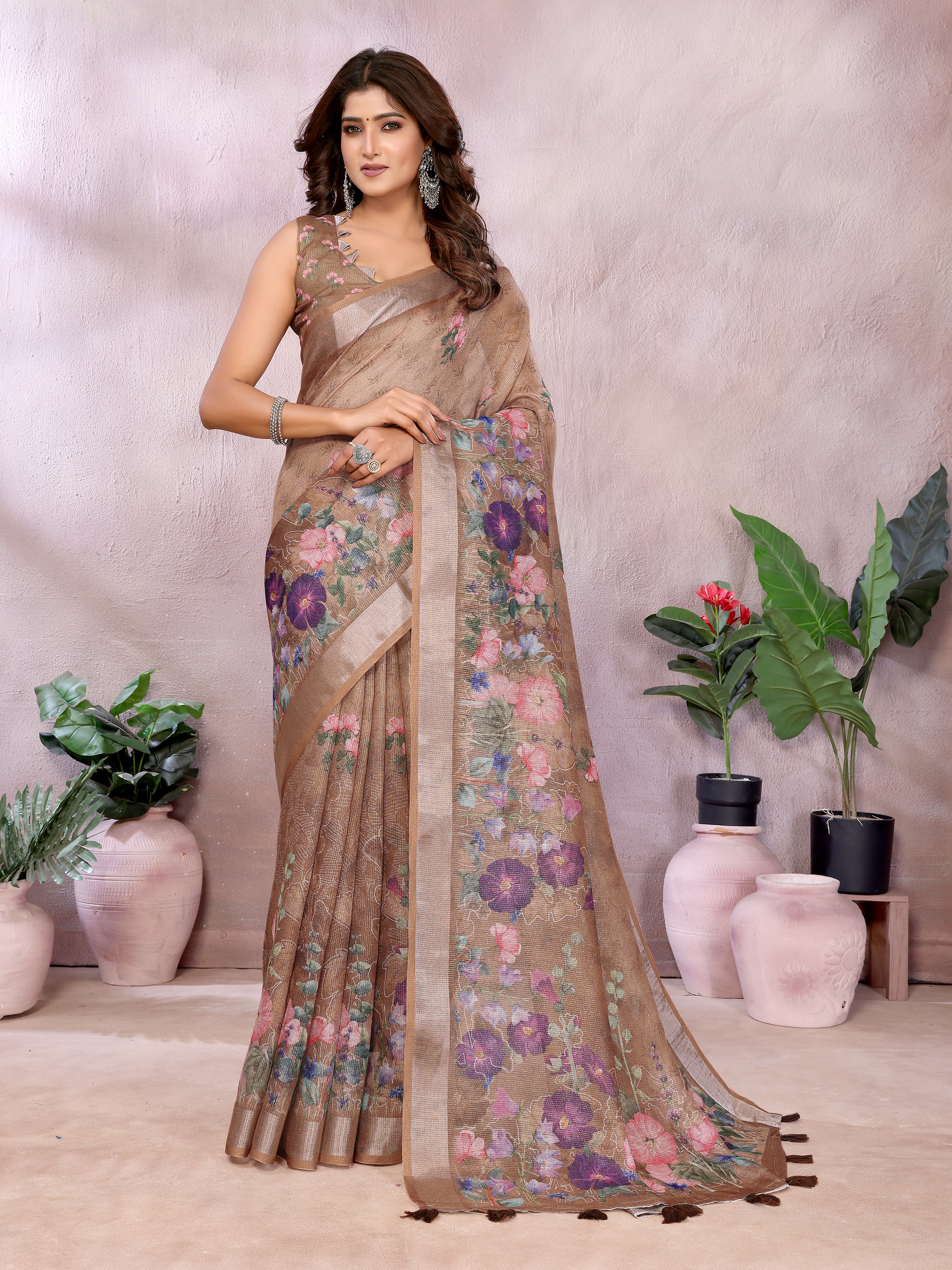
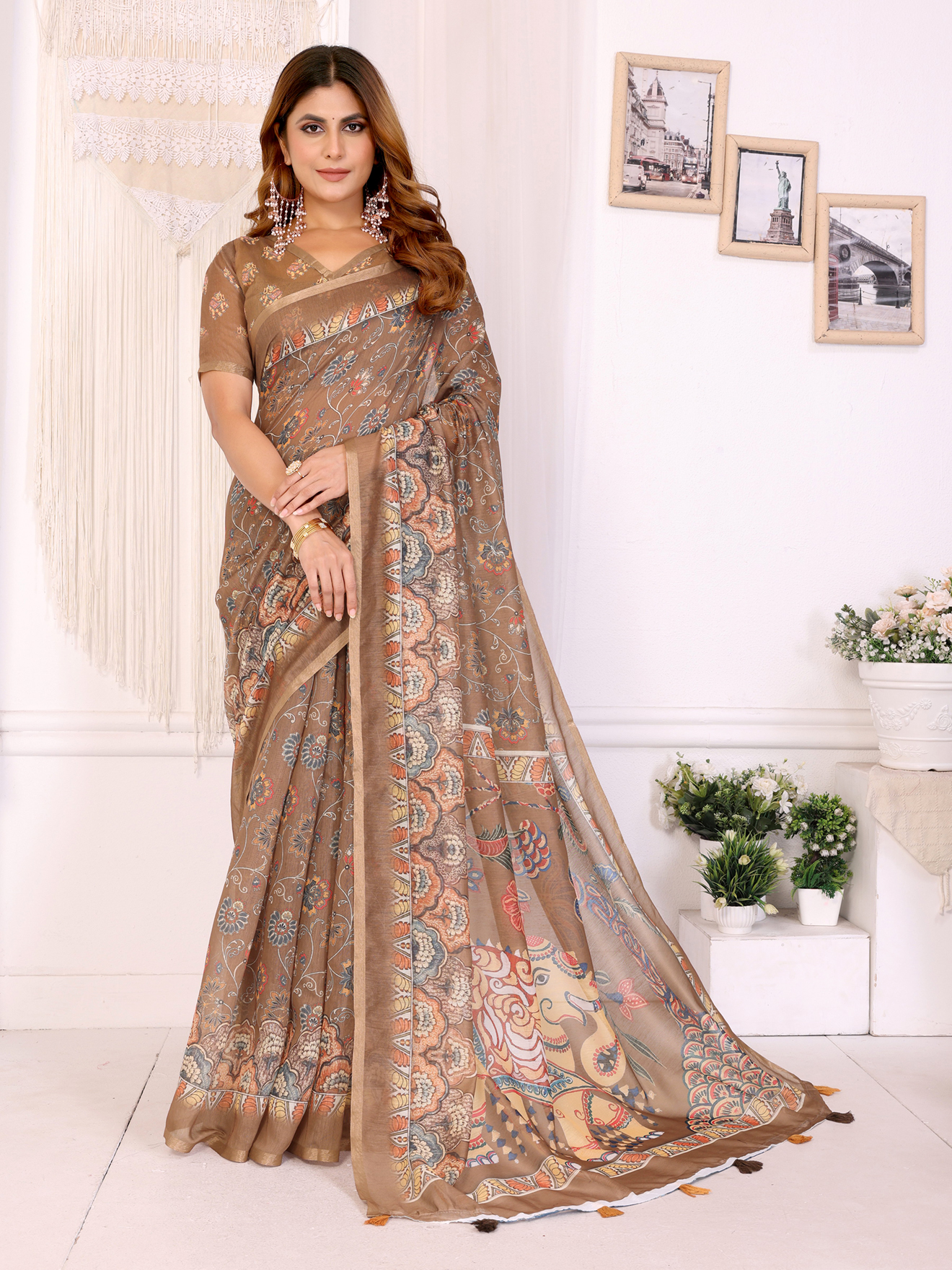
The Mustard Purple Mal Cotton Printed Saree with Designer Pallu also belongs to the one-piece saree category. A designed pallu and ethnic print can make a saree suitable for a festive event, but neither feature turns the garment into a mundum neriyathum.
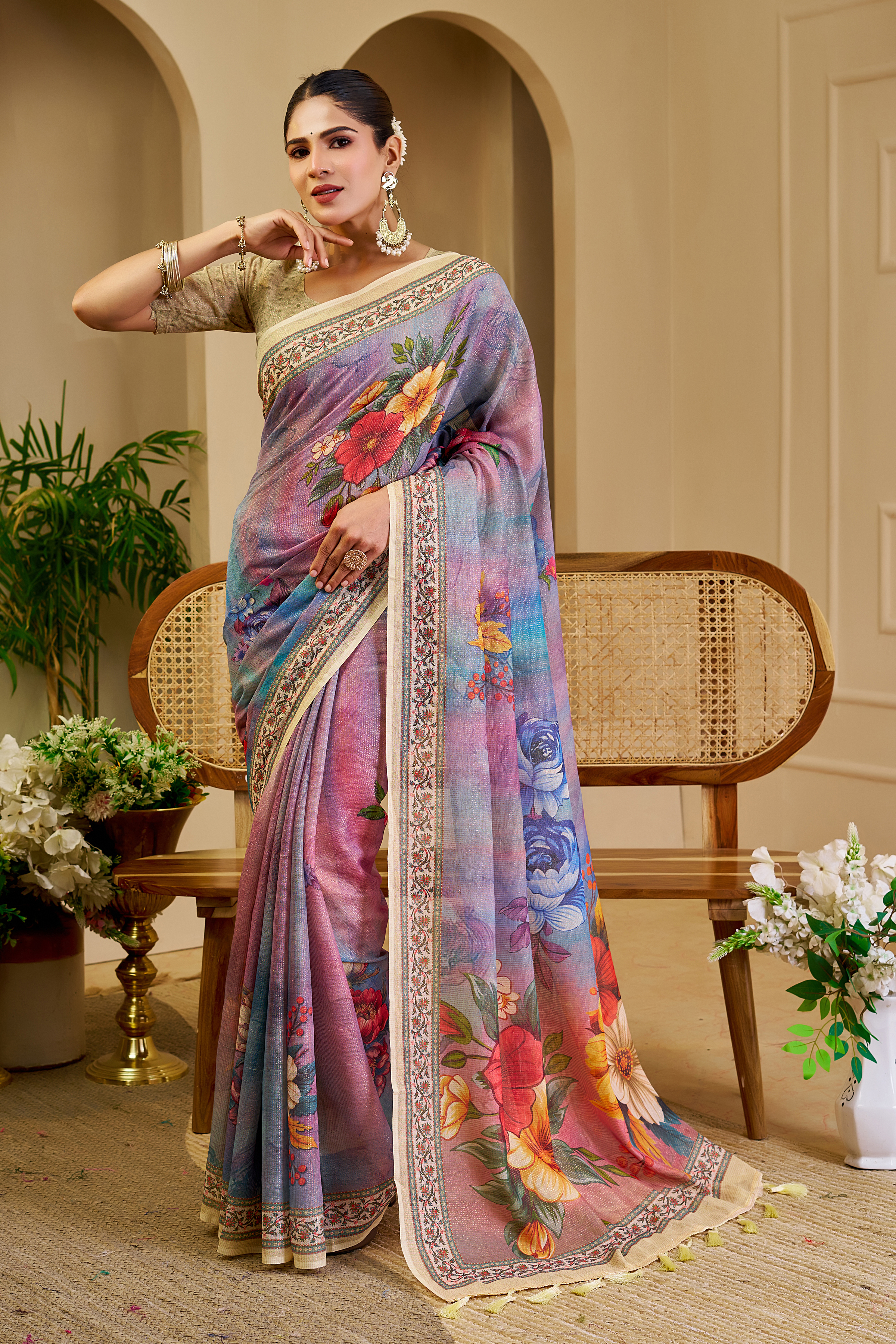
The Printed Mal Cotton Saree With Designer Pallu by VARNAVI further illustrates the same principle. A printed saree with a designer pallu should be evaluated by its continuous length and blouse provision, not by whether it's styled with gold jewellery or a Kerala-inspired blouse.
Malayalam Kasavu Mundu Terms: How to Read a Product Listing
The most reliable way to identify a Kerala garment online is to confirm its piece count, fibre, dimensions, border construction and drape format. A product title containing "kasavu" is only a starting clue.

- Check the piece count: one long cloth generally indicates a saree; two separate lengths indicate a set mundu or mundum neriyathum; one lower wrap indicates a mundu.
- Check the upper garment description: "neriyathu" or "upper cloth" points to a two-piece classic ensemble, while "blouse piece" points to a saree package.
- Check the pallu: a pallu that forms part of the same continuous fabric indicates a saree; a separate upper cloth indicates a set mundu.
- Check the border material: zari, metallic yarn, tissue and printed foil create different levels of durability and shine.
- Check the fibre: cotton, Mal cotton, viscose, silk blend and jacquard each behave differently in heat, drape and washing.
- Check measurements: a saree commonly needs a length suitable for pleats and shoulder draping, while a set mundu listing should provide measurements for both pieces.
The Maroon Mal Cotton Ethnic Saree With Blouse from VARNAVI should be read as a saree-and-blouse combination unless the listing specifically states that a separate neriyathu is included. The Purple Mal Cotton Patterned Saree with Blouse - VARNAVI follows the same logic: the presence of a blouse doesn't make a saree a set mundu.
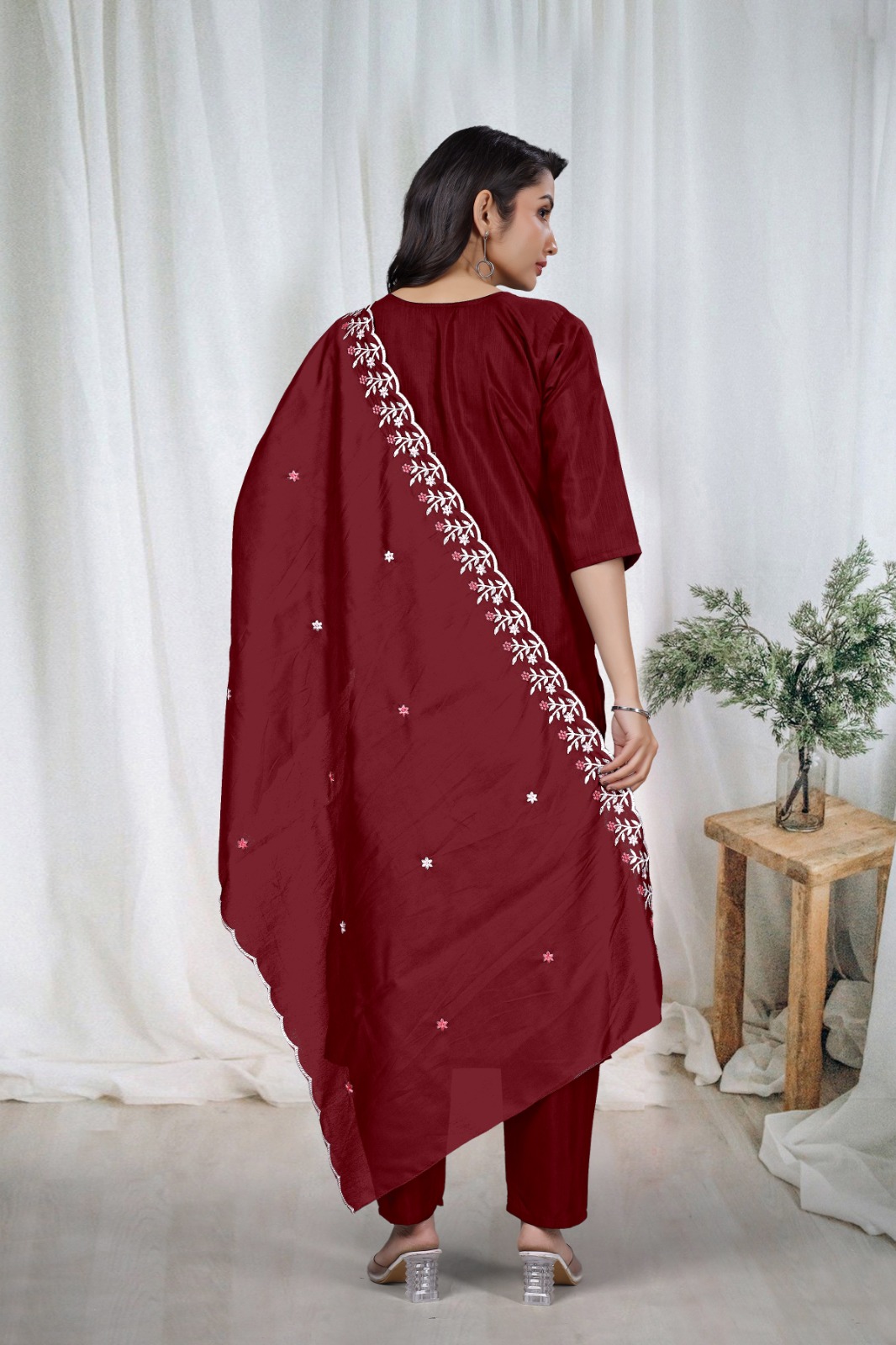
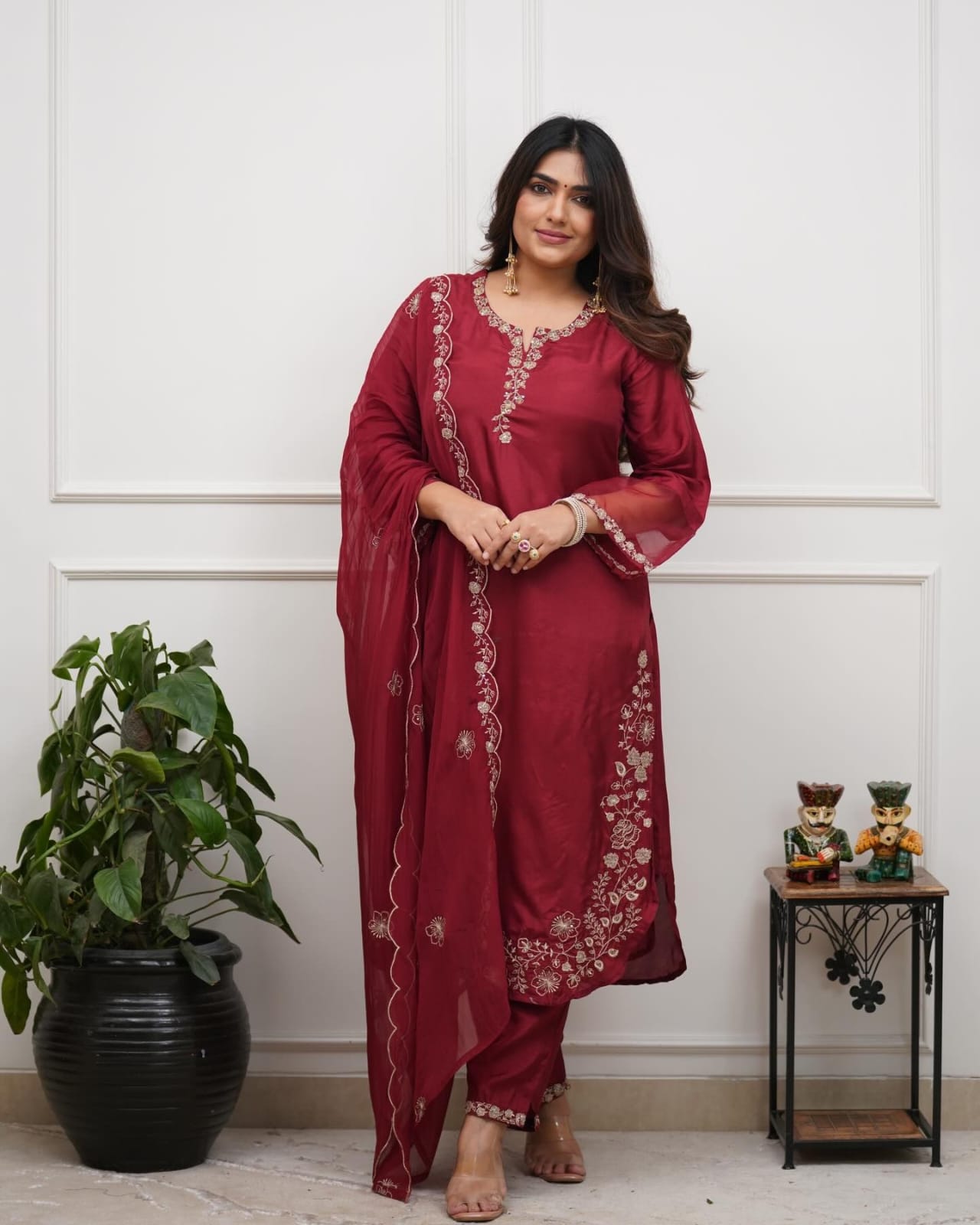
The White Embroidered Viscose Jacquard Kurta Set for Women belongs to a kurta-set category. Its coordinated top and bottom, plus any accompanying dupatta, should not be confused with the mundu-and-neriyathu construction. A dupatta is an upper layer for a salwar or kurta system, whereas a neriyathu is part of a time-honoured two-piece Kerala drape.
Malayalam Kasavu Mundu Terms: Choosing and Caring for the Right Garment
The right garment depends on the required silhouette, event and maintenance routine rather than on the word kasavu alone. Choose a mundu for a lower-body wrap, a set mundu for a two-piece Kerala ensemble, and a Kerala saree for a continuous one-piece drape.

For a hot daytime event, cotton or Mal cotton can offer more breathable wear than a dense synthetic jacquard. For a formal evening celebration, a wider zari border, silk blend or structured weave may hold a sharper drape. A printed cotton saree can be festive without reproducing the traditional white-and-gold palette.
Wash cotton kasavu garments gently in cool water when the care label permits, and avoid harsh detergents that can dull metallic borders. Do not scrub zari edges. Dry white and gold textiles in shade rather than strong direct sunlight, and store them folded with soft cotton or muslin between layers.
Keep zari borders away from rough jewellery, Velcro and sharp handbag hardware. Roll or refold stored garments every few months to reduce permanent fold lines, and avoid applying perfume directly to metallic trims. Professional dry cleaning is safer for garments with delicate zari, embroidery or mixed-fibre construction.
Terminology becomes practical when it answers a purchasing question. If a shopper wants a two-piece Kerala outfit, the key words are set mundu, mundum neriyathum and neriyathu. If the shopper wants an one-piece saree with a gold-toned edge, Kerala saree or kasavu saree is more appropriate. If the shopper wants only a lower wrap, mundu is the accurate term.
Common Questions About Malayalam Kasavu Mundu Terms
What is the difference between a mundu and a kasavu saree?
A mundu is a wrapped lower-body garment, while a kasavu saree is a one-piece saree with a gold-toned or metallic-looking border. A mundu may carry kasavu, but the word kasavu describes the decoration rather than the garment shape.
Is a set mundu the same as a Kerala saree?
No. A set mundu contains two separate pieces: a lower mundu and an upper neriyathu. A Kerala saree is one continuous cloth with a pallu.
What does neriyathu mean?
Neriyathu means the upper cloth worn with a mundu in a traditional two-piece women's ensemble. The neriyathu is different from a dupatta because it belongs specifically to the mundum neriyathum structure.
Does kasavu always mean real gold zari?
No. Kasavu commonly refers to a gold-toned border or metallic decorative effect, but modern garments may use zari, synthetic metallic yarn, tissue or printed finishes. The fibre and border material should be confirmed in the product details.
How can I tell whether an online listing is a saree or a set mundu?
Check the number of pieces and the description of the upper drape. One continuous cloth with a pallu is a saree, while two separate lengths described as a lower cloth and neriyathu indicate a set mundu.
Can a saree-and-blouse set be called a set mundu?
A saree-and-blouse set is not automatically a set mundu. A set mundu requires a separate upper cloth called a neriyathu, whereas a blouse is a fitted garment worn with a saree.