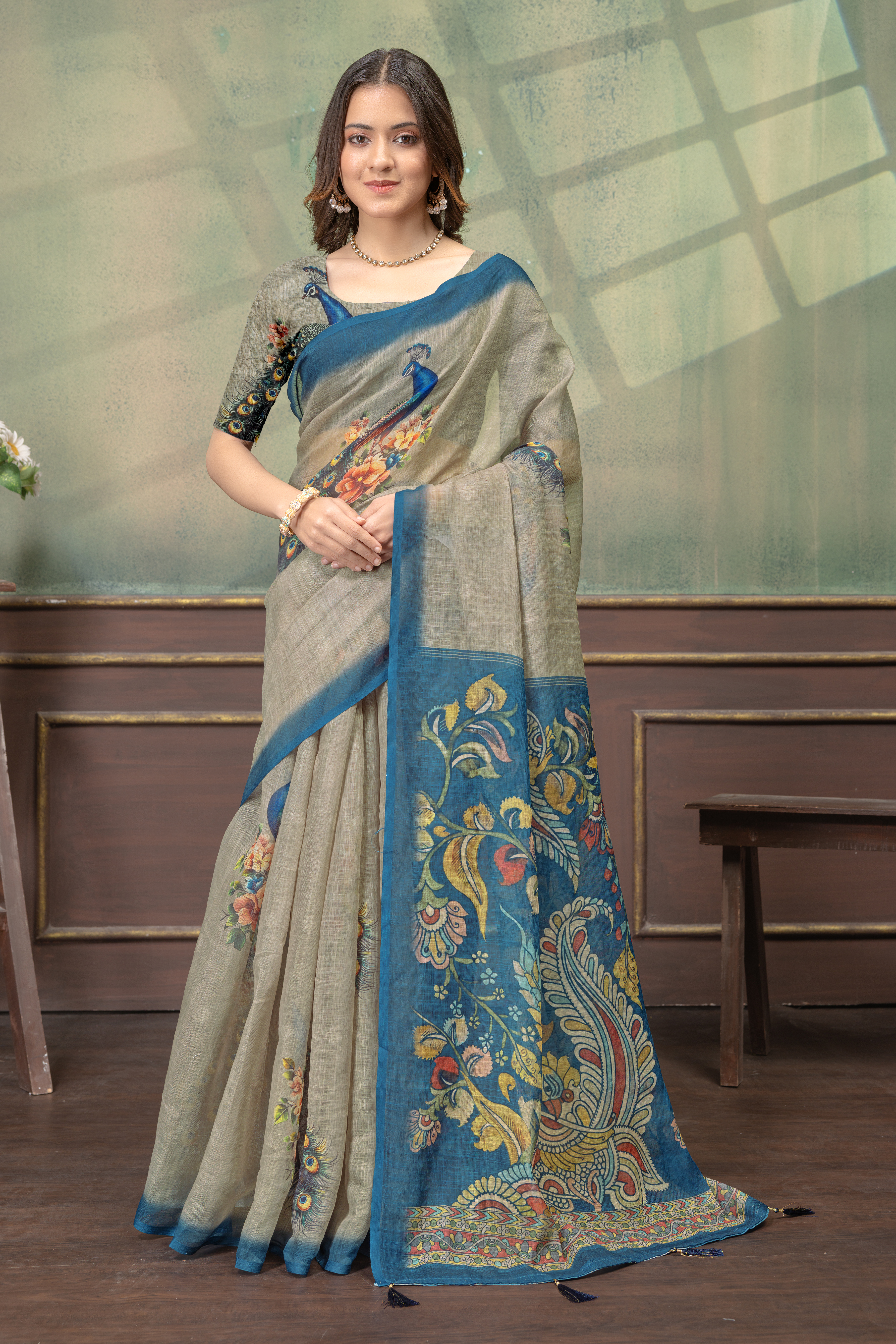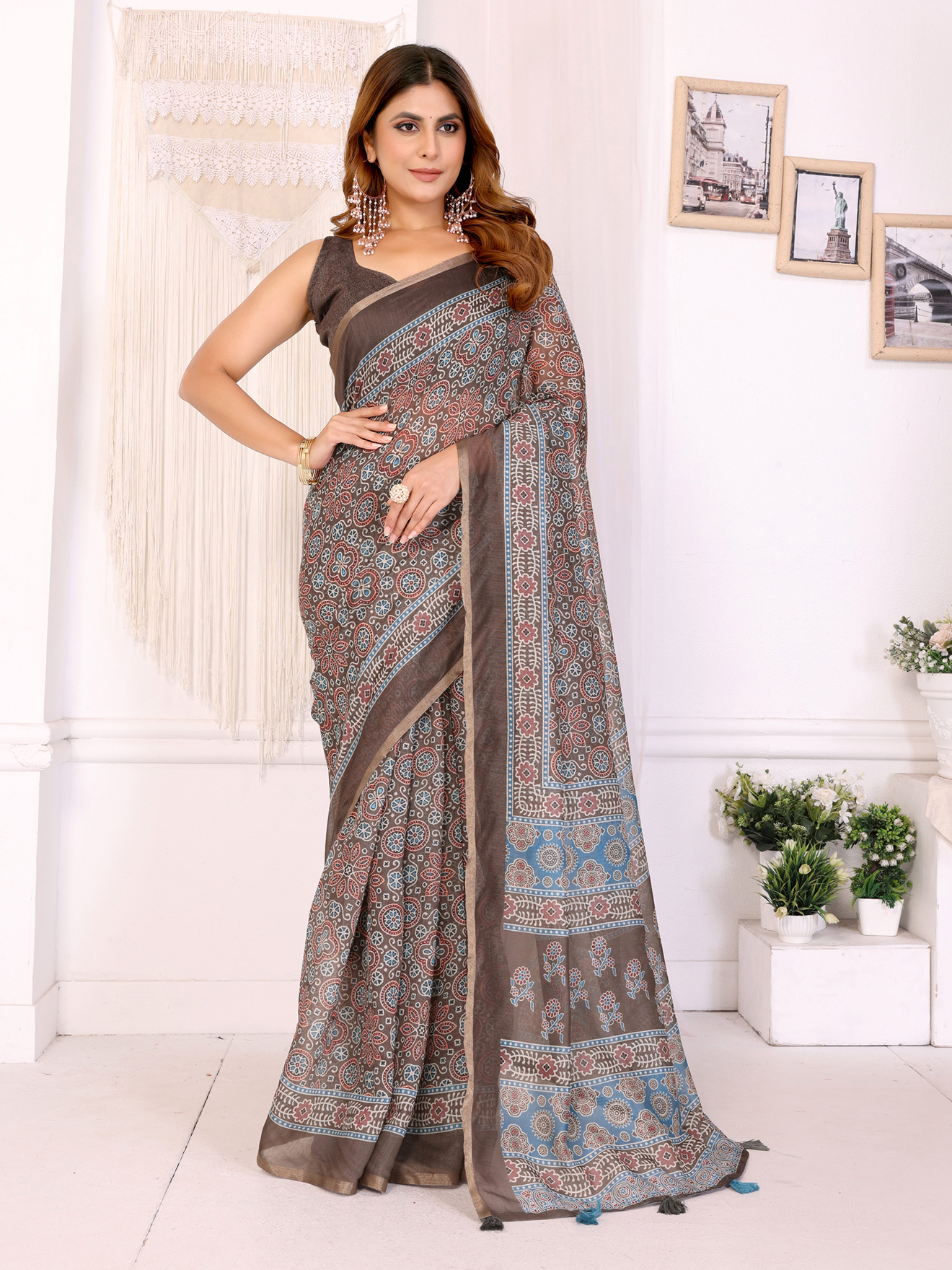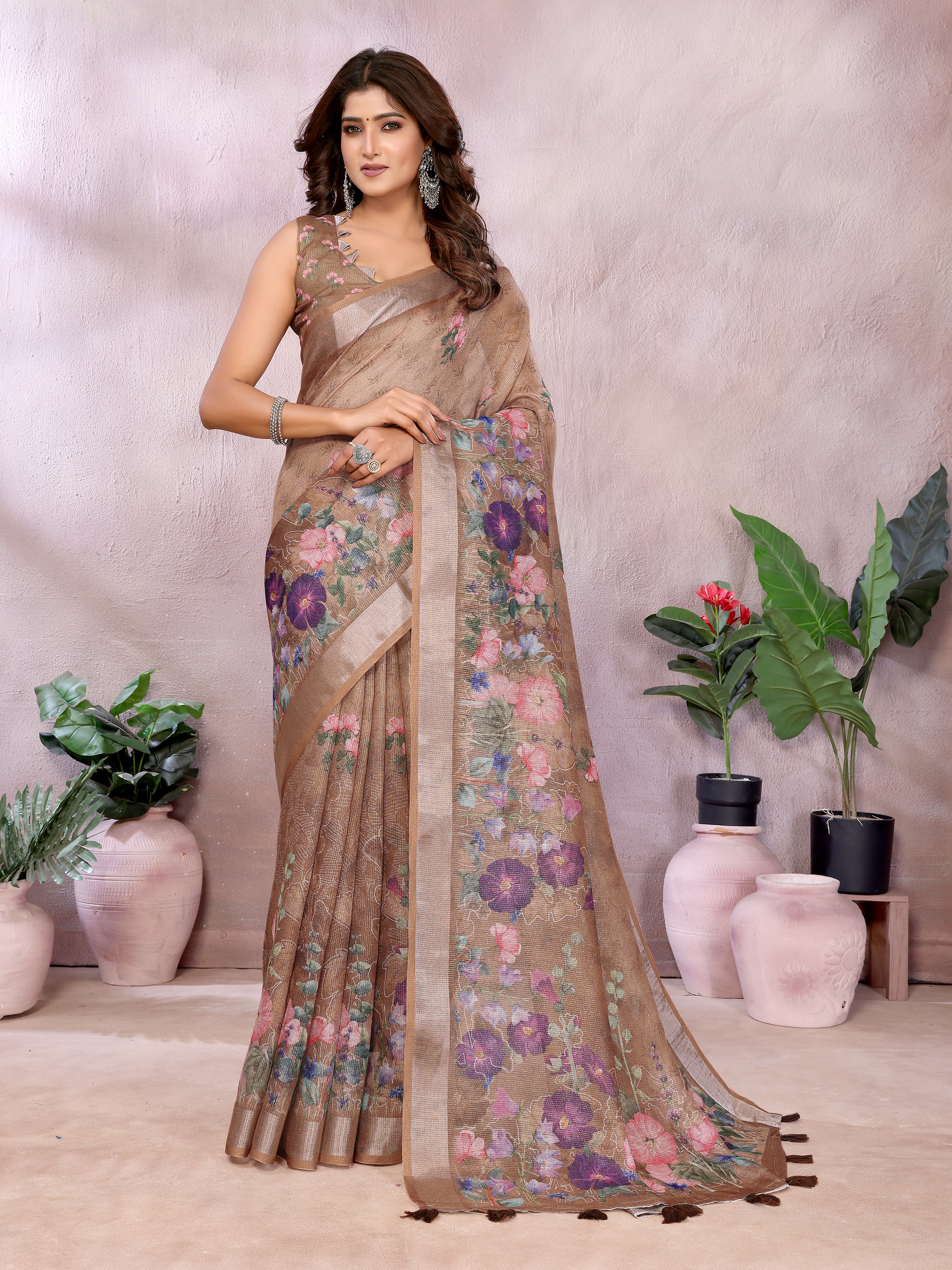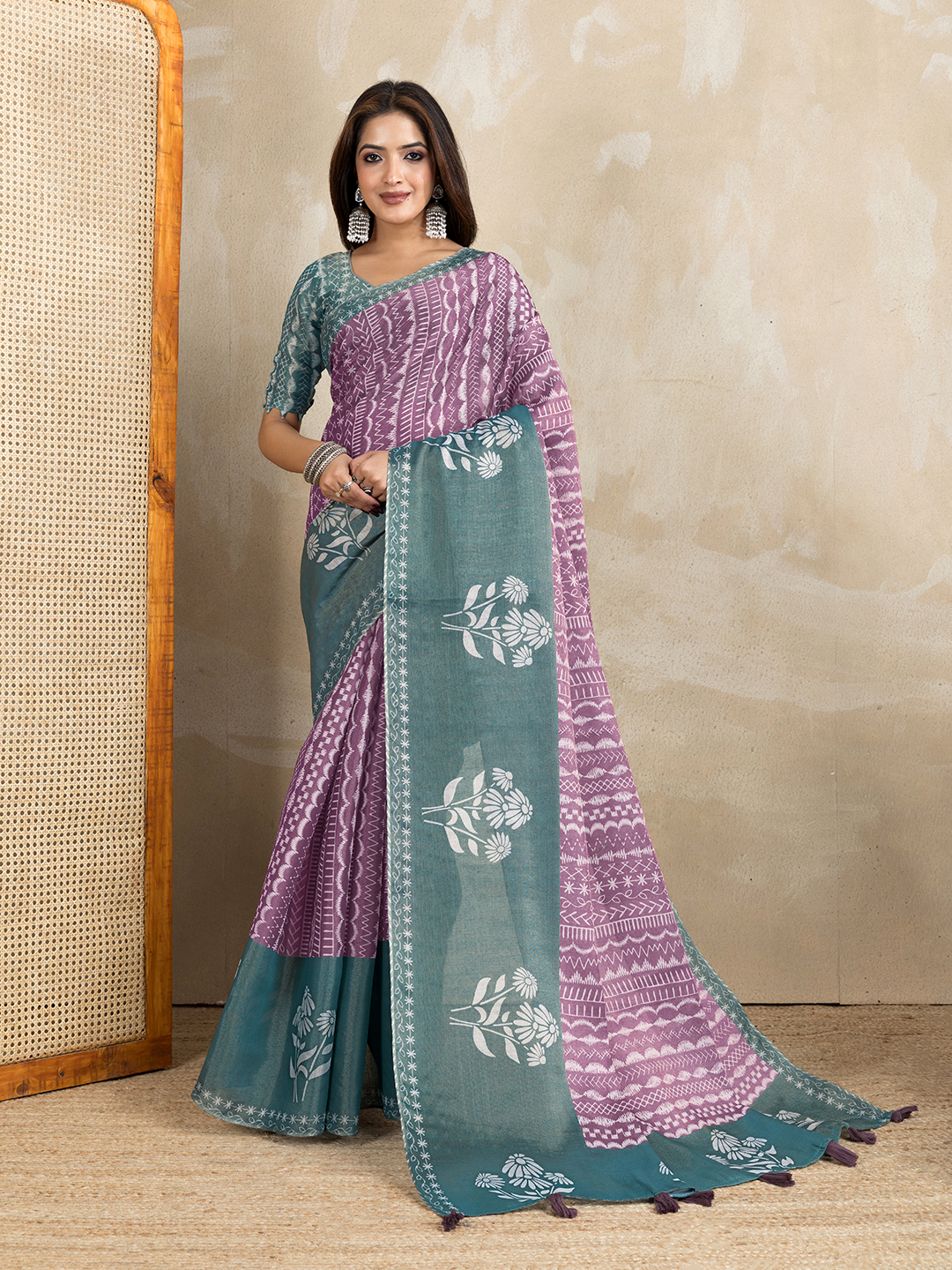
Assamese Riha and Its Place in Traditional Festival Dressing becomes clearest when the garment is viewed as part of a complete Assamese textile tradition, not as an interchangeable scarf. The Riha is a long, narrow upper cloth worn with the Mekhela, and the pair forms the familiar Riha-Mekhela ensemble associated with Assamese women's dress. During Rongali Bihu, weddings, naam-prasanga, and other festive gatherings, the Riha carries cultural memory through its fabric, colour, motifs, and method of draping.
The Riha also has a practical purpose. The cloth covers the upper body, adds a layer suitable for Assam's changing climate, and creates a visual frame for the Mekhela's pleats. Contemporary wearers may style a Riha with a blouse, saree, skirt, or lehenga-inspired lower garment, but the most culturally grounded version remains a handloom Riha worn as part of the Mekhela Chador tradition.
Assamese Riha and Its Place in Traditional Festival Dressing
Assamese Riha holds a central place in traditional festival dressing because it connects ceremonial clothing with Assamese weaving, family heritage, and regional identity. The garment is usually worn across the upper body, with one end arranged near the shoulder and the remaining length secured or draped according to the wearer's preference and the formality of the event.
The word Riha is often used alongside Mekhela and Chador, although the three terms draw related but different elements. The Mekhela is the normal wrap, generally made from a wide piece of cloth folded into pleats and tucked around the waist. The Chador, also called Sador in many descriptions, is the larger upper drape. A Riha may function as a narrower upper cloth or as an extra layer, depending on regional practice, family custom, and the style being worn.
Traditional Assamese dress doesn't follow one universal drape. A woman from Sivasagar, Guwahati, Barpeta, or another part of Assam may arrange the Riha differently, while brides, elders, performers, and younger festival-goers may choose different proportions. Treating one photograph as the only correct method overlooks the variety within Assamese clothing culture.
How Does a Riha Complement the Mekhela Chador?
The Riha complements the Mekhela Chador by balancing the lower garment's horizontal pleats with a controlled vertical or diagonal drape across the torso. The result is modest, comfortable, and visually structured without depending on heavy embellishment.
A traditional ensemble commonly uses coordinated fabric for the Mekhela and Riha, although contrast borders are also important. A deep red Riha with a cream Mekhela, an ivory textile with red woven accents, or a golden-yellow combination can immediately suggest festive Assamese dressing. The border often provides the strongest visual cue because woven edging remains visible after the cloth is folded, pleated, and draped.
The Riha differs from a generic stole. A stole is usually selected as a loose styling accessory, while a Riha is shaped by Assamese dress conventions and textile proportions. A Riha may be folded deliberately, tucked for security, or arranged so that the border and motif face outward. The distinction matters when putting together an outfit for Rongali Bihu or an Assamese wedding.
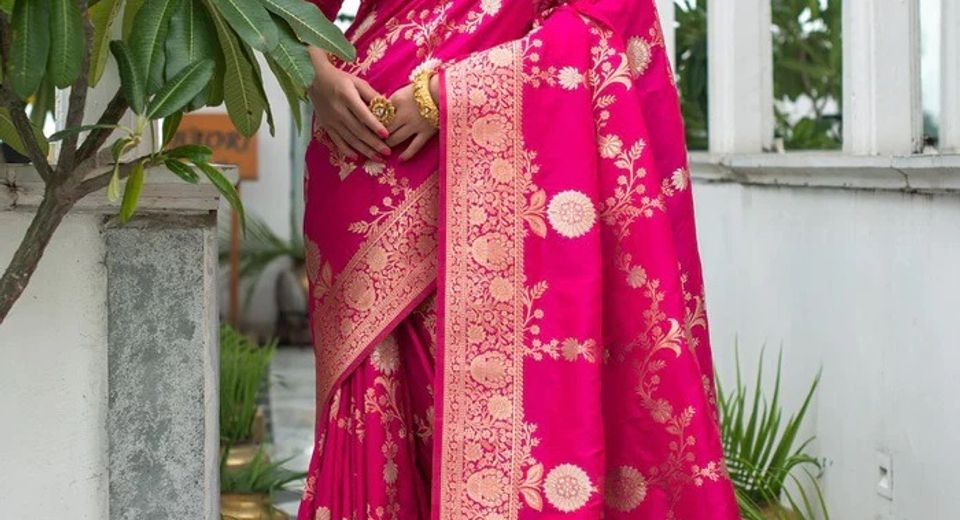
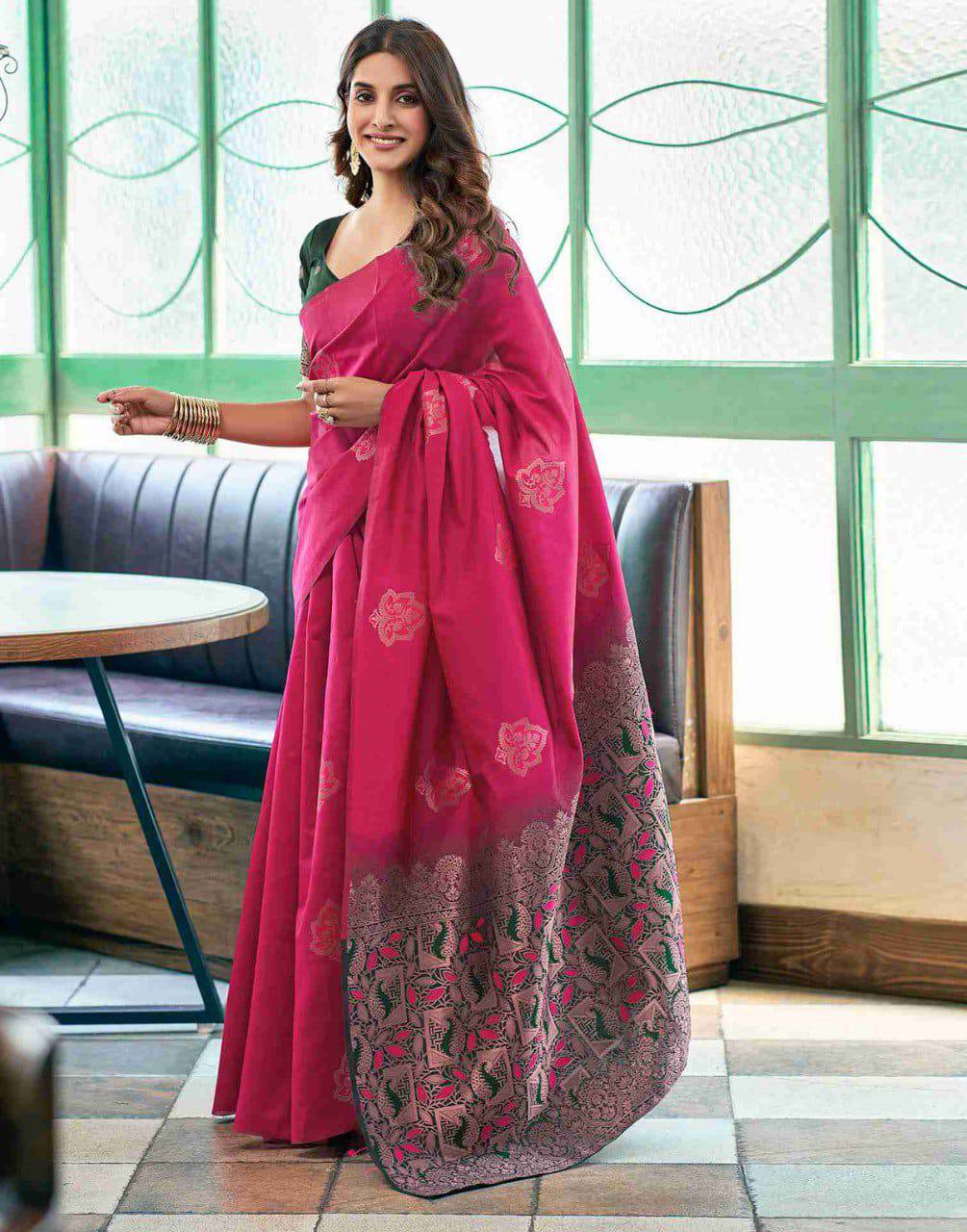
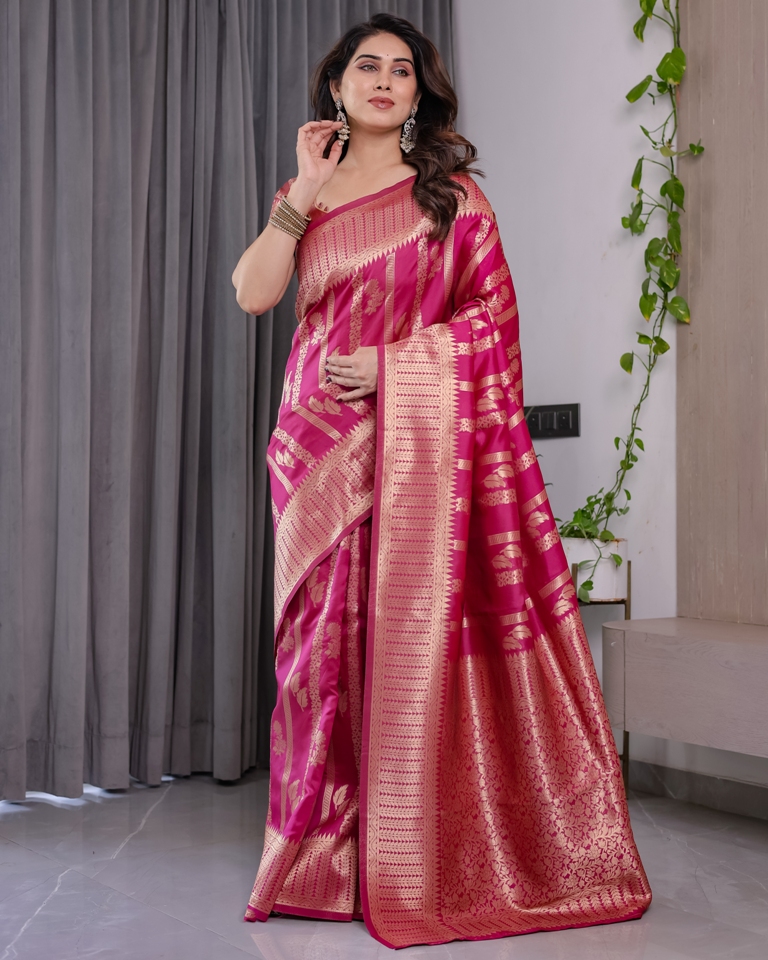
A saree offers an useful reference for understanding the Riha's visual effect. Rani Pink Lichi Silk Saree with Rich Golden Zari Work demonstrates how a strong border and luminous surface can frame the wearer without requiring excessive jewellery. The same principle applies to a Riha: a defined woven edge can provide ceremony even when the body of the cloth remains relatively plain.
Which Fabrics and Motifs Define an Assamese Riha?
Silk, cotton, and silk-cotton blends are the main fabric choices for Assamese festive textiles, with the right option depending on climate, ceremony, budget, and the expected duration of wear. Assam is internationally associated with Muga silk, Eri silk, and Pat silk, each of which contributes a different texture and visual language.
Muga, Eri, and Pat silk
Muga silk is known for its natural golden sheen and exceptional strength, making it especially prized for ceremonial garments. Eri silk has a softer, warmer hand and a matte appearance, while Pat silk is generally smooth, bright, and well suited to crisp festive drapes. A genuine Muga or Pat Riha can be a significant investment because yarn quality, weaving time, border complexity, and authenticity all affect the price.
Handloom cotton is a practical choice for daytime Bihu events, summer ceremonies, and celebrations that involve extended movement. Cotton can also display woven motifs with clarity and usually requires less cautious handling than delicate silk. Emerald Green Tissue Cotton Saree With Digital Floral Print shows how a lighter fabric can retain a festive presence through colour and surface detail, although a printed saree isn't a substitute for a traditional woven Riha.
Geometric and nature-inspired motifs
Assamese textiles frequently feature motifs drawn from plants, animals, geometry, and local visual culture. Floral forms, birds, diamonds, checks, and stylised creepers can appear along the border or pallu. The jaapi, a traditional conical hat associated with Assam, is another recognisable cultural symbol, although it should not be treated as a decorative pattern on every Riha.
Red, cream, ivory, black, yellow, and golden tones are strongly associated with many Assamese festive combinations. Colour meaning isn't fixed across every family or community, but red commonly signals celebration, vitality, and auspiciousness. Metallic zari may be used for a richer ceremonial effect, while coloured silk borders can create a more distinctly handloom appearance.
When Is the Riha Worn in Assamese Festive Life?
Assamese women wear the Riha for Bihu, weddings, religious observances, cultural performances, and important family gatherings. The formality of the fabric, border, jewellery, and drape changes according to the event rather than the garment's name alone.
Rongali Bihu, celebrated in spring, is perhaps the most visible setting for Assamese festive dress. Women often choose bright Mekhela Chador sets in red, cream, pink, green, or pink, with woven floral and geometric borders. The outfit must carry movement because Bihu celebrations include visits, music, dancing, and outdoor socialising. A very heavy silk or densely embellished garment may look formal but become uncomfortable during a long day.
Magh Bihu has a different seasonal context and may encourage warmer textiles, deeper colours, and practical layering. Weddings can involve more elaborate silk, broader borders, richer zari, and additional jewellery. Naam-prasanga and other religious gatherings generally call for a respectful, polished ensemble, but the appropriate level of ornament depends on the household and community.
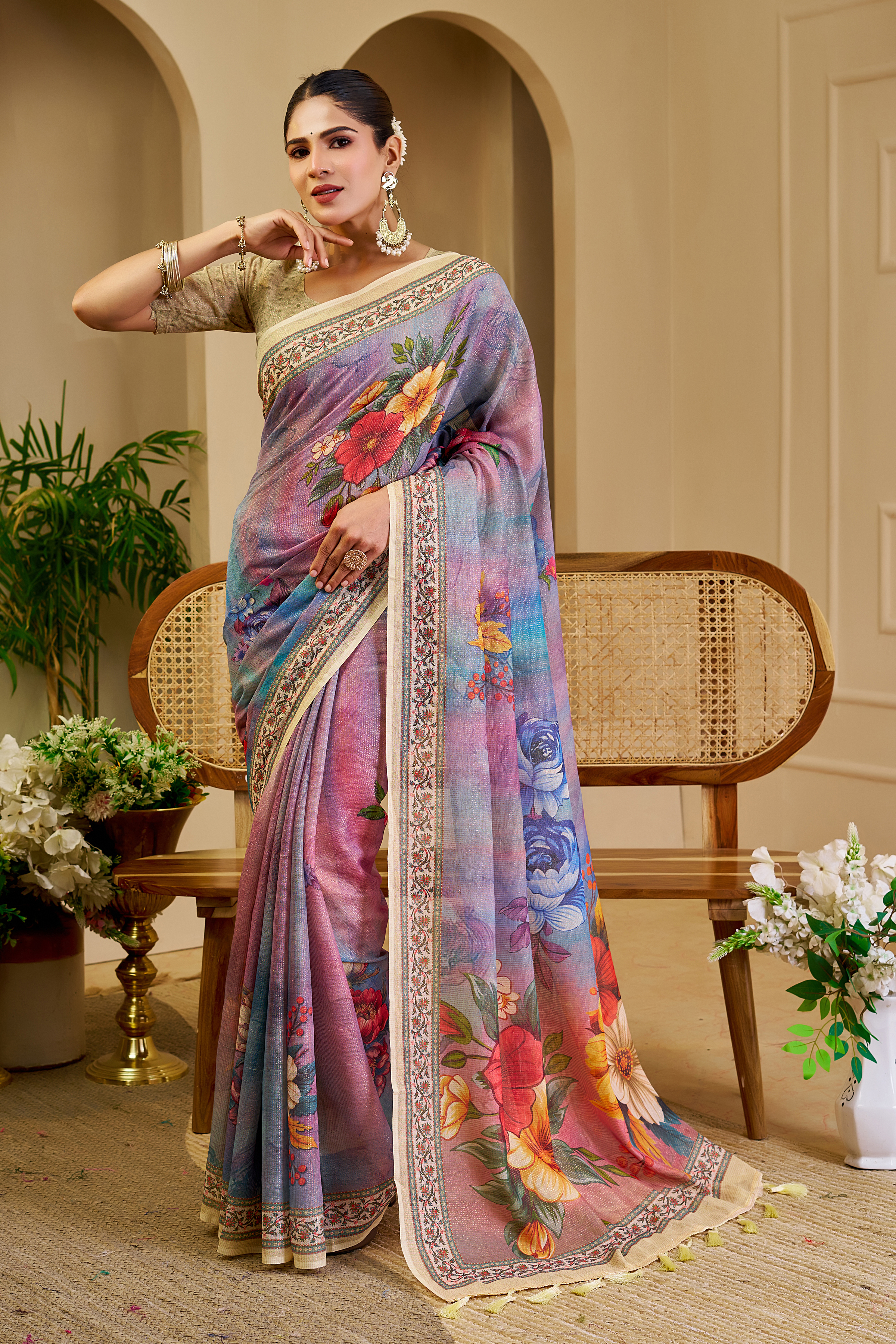
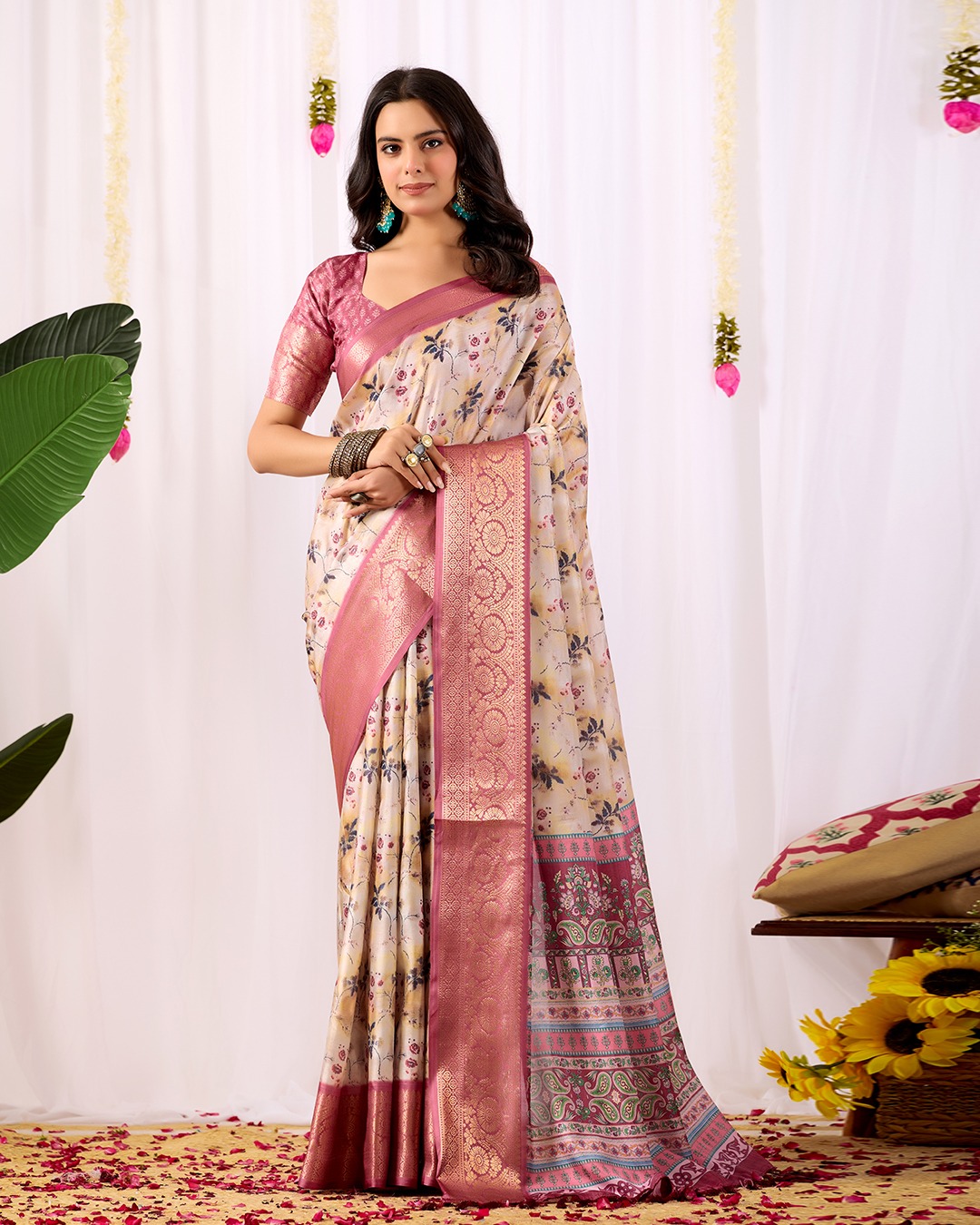
Modern festive wardrobes often borrow the Riha's colour and border vocabulary without reproducing the full Mekhela Chador. A saree can be worn with a blouse in an Assamese-inspired colour pairing, or a Riha can be draped over a simple blouse and skirt for a lighter interpretation. Festive Beige Saree with Floral Print and Rich Zari Work shows how a neutral base can carry floral detail and zari for a daytime-to-evening celebration, although styling should acknowledge the difference between a saree and a Riha-Mekhela ensemble.
How Can a Riha Be Styled Without Losing Its Identity?
A Riha retains its identity when the drape, border, and textile origin remain visible rather than being buried under excessive accessories. Styling should support the garment's structure instead of making the Riha look like an ordinary stole.
For Bihu daytime events
A breathable cotton or light silk Riha with a defined woven border works well for daytime Bihu gatherings. Pair the outfit with a fitted blouse, low-profile earrings, a traditional gamusa-inspired accent, and comfortable flat footwear. Keep the pleats secure with discreet pins placed from the inside so that the fabric hangs naturally.
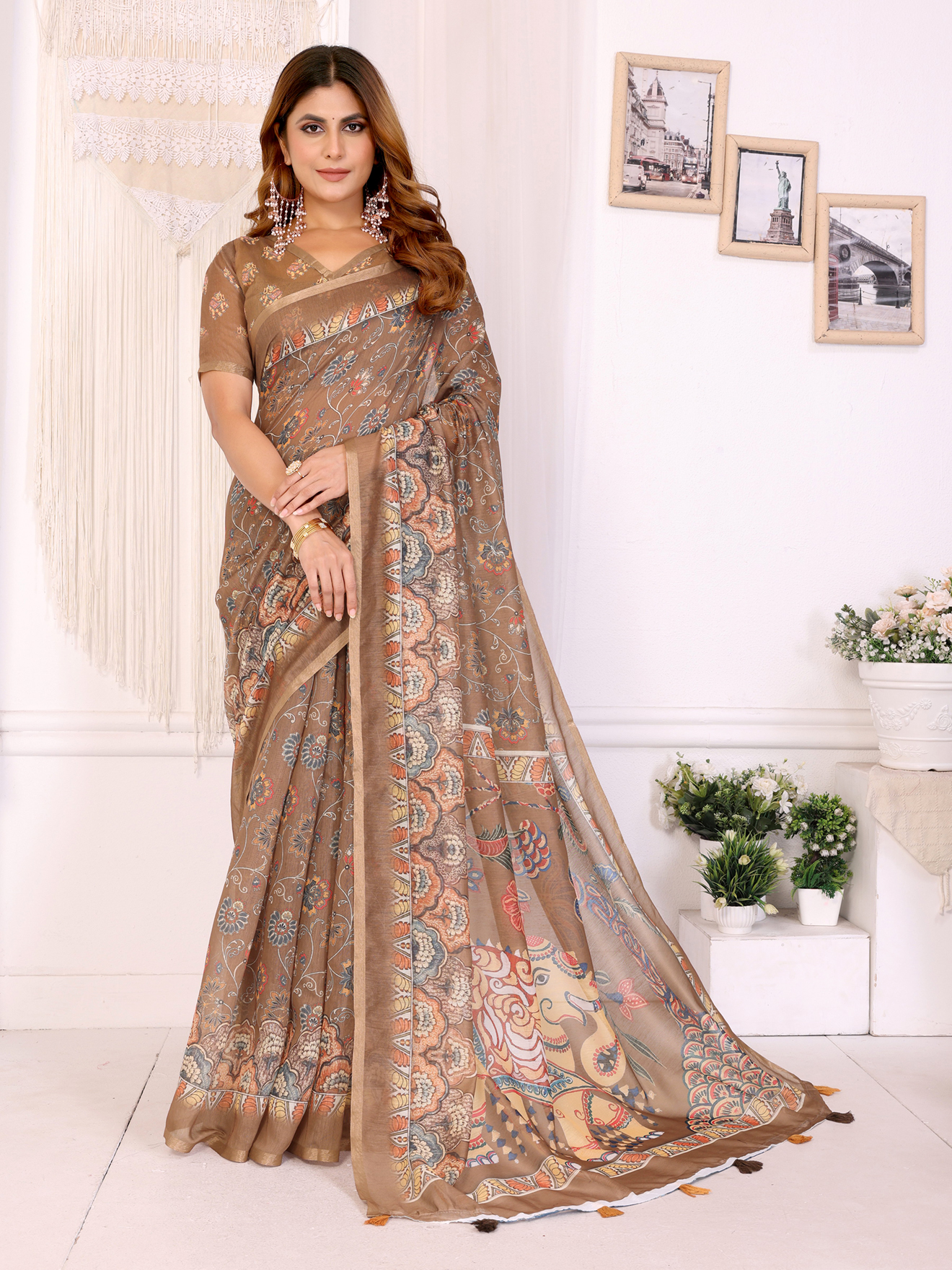
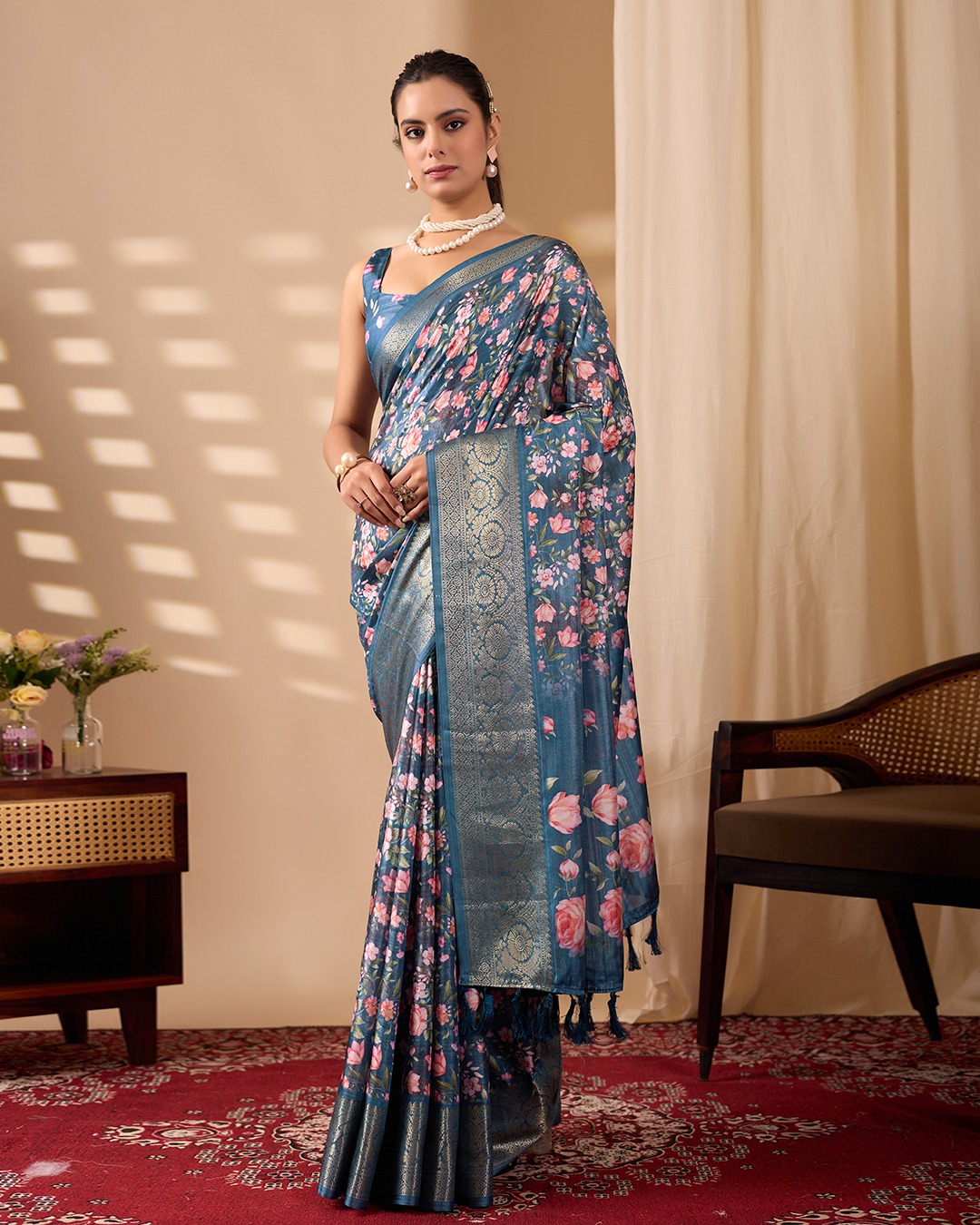
Green can provide a fresh spring association, while red and cream create a more recognisable festive combination. Teal Green Tissue Handloom Cotton Saree With Printed Pallu illustrates how a handloom-inspired texture and a saturated green tone can work for a lively daytime wardrobe, although a Riha should be draped according to Assamese conventions rather than simply copied from a saree pallu.
For weddings and evening ceremonies
Silk, a broader border, or restrained zari suits a wedding or evening ceremony. Jewellery should echo the textile's warmth: gold-toned pieces pair naturally with Muga silk, golden zari, and red borders, while silver or oxidised metal can suit cooler cotton and indigo combinations.
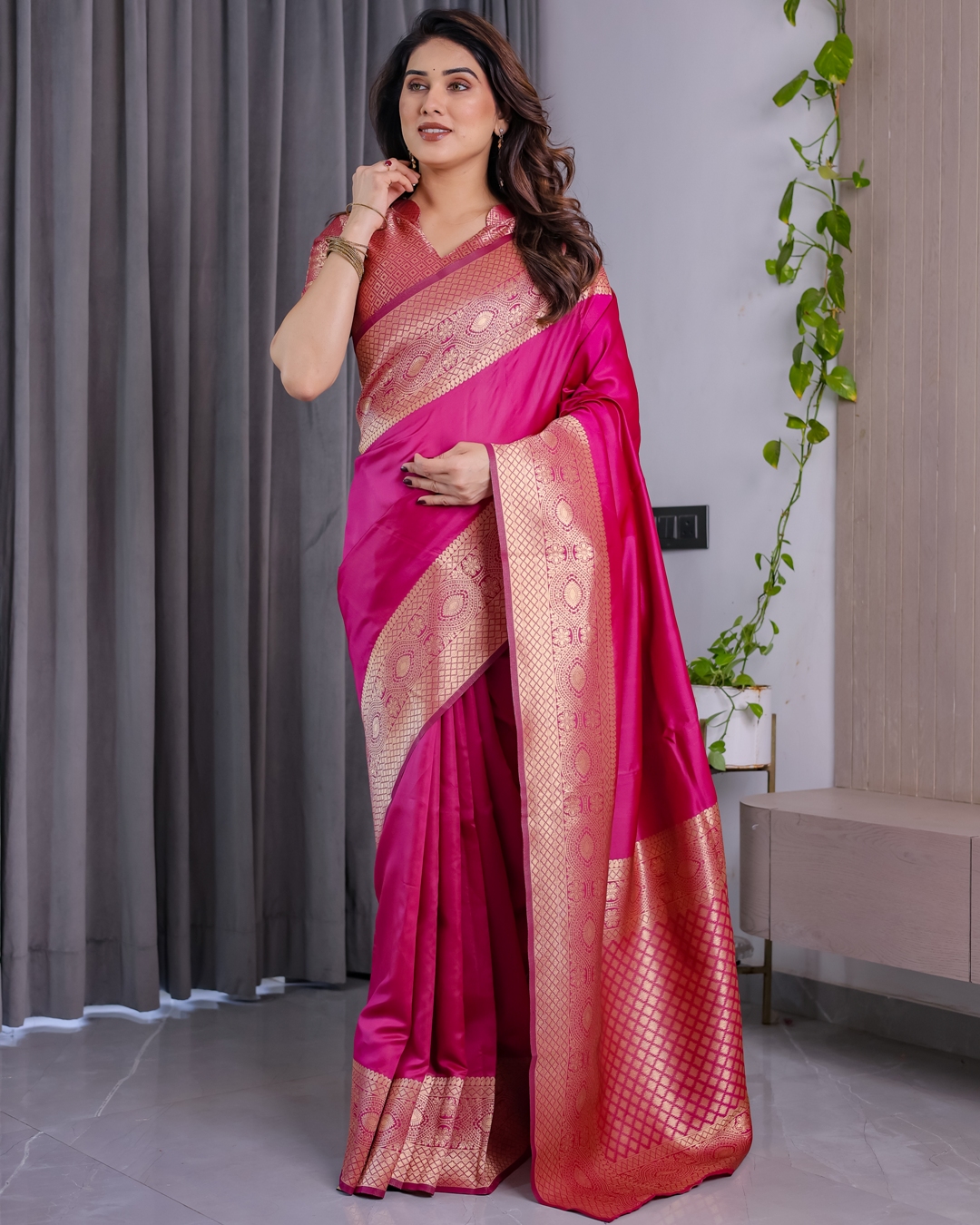
Rani Pink Lichi Silk Saree With Jacquard Border Pallu demonstrates the impact of a structured, patterned border on an evening outfit. Buy Rani Pink Banarasi Silk Saree with Jacquard Zari Border and Rani Pink Banarasi Soft Silk Saree With Golden Zari Borders offer further examples of how jacquard and zari create formality through woven surface rather than layers of added decoration. These sarees are not Rihas, but they help explain why a visible border is central to festive Indian draping.
For a contemporary interpretation
A contemporary Riha look can use a shorter, neatly folded upper cloth over a blouse and a coordinated long skirt, palazzo, or contemporary Mekhela. The safest way to modernise the outfit is to change one element at a time: retain the Assamese border while simplifying the blouse, or retain the traditional lower drape while using a lighter contemporary fabric.
A blouse with a modest boat neck, elbow-length sleeves, or a high round neck can work well for a contemporary festive interpretation. Avoid combining a heavily embroidered blouse, large statement jewellery, a sequinned skirt, and a highly ornate Riha because competing surfaces can obscure the garment's regional character.
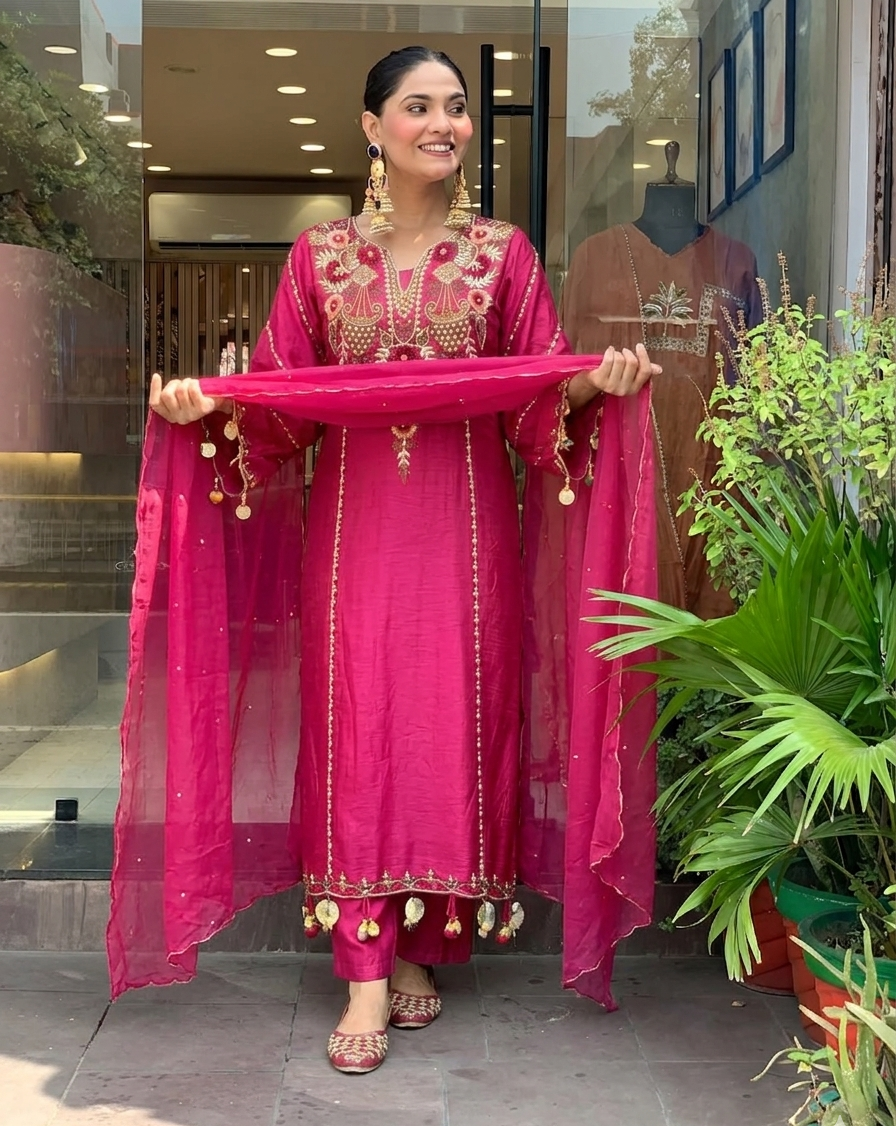
Peach Assam Silk Kurta Set with Printed Organza Dupatta gives another useful styling comparison. The peach colour, silk surface, and translucent dupatta create a polished festive effect, but the outfit belongs to the kurta tradition rather than the Riha-Mekhela tradition. Naming that distinction allows a wearer to borrow colour or layering ideas without presenting two different dress systems as identical.
What Should You Check Before Buying a Riha?
Before buying a Riha, check the fibre content, weave, dimensions, border construction, finishing, and care instructions rather than judging the textile only by its shine. These details determine comfort, durability, authenticity, and suitability for a particular celebration.
- Fibre: Confirm whether the cloth is Muga silk, Eri silk, Pat silk, cotton, silk-cotton, or a synthetic blend. Fibre affects breathability, weight, texture, and price.
- Weave: Ask whether the motif is woven into the fabric or printed on top. Woven borders usually have a more integrated appearance and may remain attractive for longer with careful use.
- Measurements: Check the full length and width before purchase. A Riha that's too narrow may not provide the desired coverage, while an excessively long cloth can create unnecessary bulk.
- Border: Inspect whether the border lies flat and whether the selvedge is finished cleanly. Loose threads around zari or jacquard sections can worsen with repeated wear.
- Colour: Compare the Riha with the Mekhela, blouse, and jewellery under natural light. Bright red, emerald, peach, cream, and gold can appear different under indoor lighting.
- Provenance: When buying a handloom or silk textile, ask for clear information about the weaving origin and silk type. A high price alone doesn't prove that a textile is handwoven or made from a particular silk.
Budget should reflect the intended use. A printed cotton or blended textile may be suitable for occasional daytime celebrations, while a handwoven Muga silk Riha can serve as an heirloom garment when stored and handled properly. A festive saree such as Rani Pink Lichi Silk Saree With Jacquard Border Pallu may offer a related border-led visual effect at a different price point, but it should not be described as an Assamese Riha.
How Should a Silk or Cotton Riha Be Cared For?
A silk Riha should generally be dry-cleaned sparingly and stored folded in breathable cotton, while a cotton Riha can often be gently hand-washed if its care label permits. The correct method always depends on the fibre, dye, zari, and finishing.
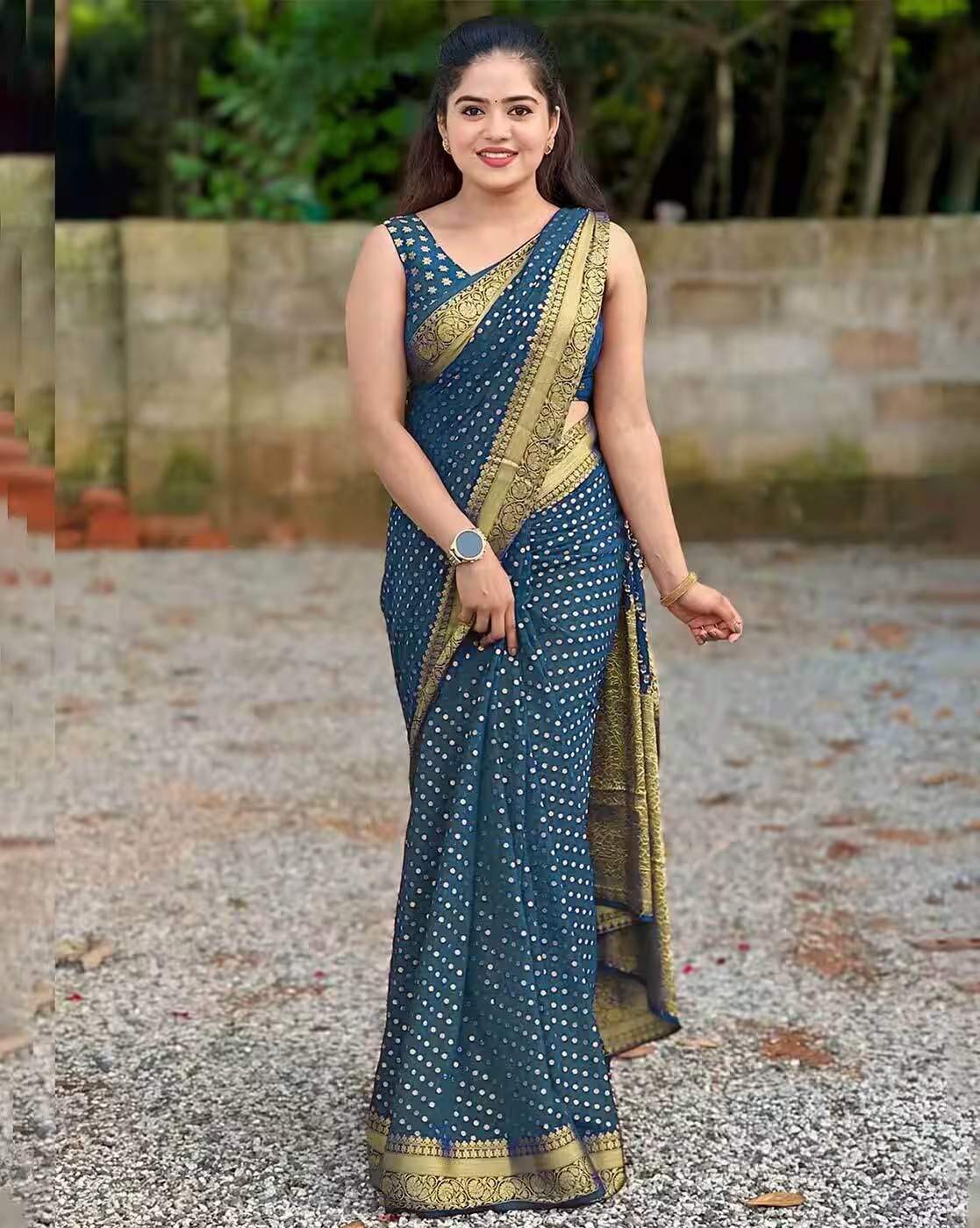
Air a worn Riha in shade before folding it away, especially after a humid festival or a long outdoor event. Do not leave Muga silk, Pat silk, or zari borders in direct sunlight for prolonged periods because heat and ultraviolet exposure can weaken fibres and fade dyes.
Wrap silk garments in unbleached muslin or another breathable cotton layer rather than sealing them in plastic. Refold stored textiles every few months so that permanent creases don't form along the same lines. Keep perfumes, oils, and hair products away from the cloth because alcohol and cosmetic residue can mark silk.
Use a cool iron on the reverse side when pressing is necessary, with a thin cotton cloth placed between the iron and the Riha. Never pull loose zari threads. A professional textile cleaner should handle stains, colour bleeding, antique silk, and heavily metallic borders.
Why Does the Riha Remain Relevant Today?
The Riha remains relevant because it brings a direct connection between Assamese identity, skilled weaving, and living festival practice. Its value doesn't depend only on historical age; the cloth continues to be worn, adapted, gifted, photographed, and passed between generations.
Up-to-date styling can keep the Riha meaningful when adaptation is accompanied by accurate naming. Wearing a Riha with a simplified blouse or a lighter lower garment can make sense for contemporary comfort, but calling every festive dupatta a Riha erases the textile's specific cultural context. Respectful dressing leaves room for experimentation while preserving the difference between Assamese dress and other Indian draping traditions.
For a festival wardrobe, the most considered choice is often the one that matches the event, climate, movement, and textile knowledge of the wearer. A carefully chosen cotton Riha may be more appropriate for a day of Bihu visits than an impractical heavy silk. A handwoven silk Riha may be worth preserving for a wedding, family ceremony, or heirloom collection. In both cases, the garment's border, fibre, and drape tell a story that extends beyond appearance.
Common Questions About Assamese Riha Festival Dressing
What is the difference between a Riha and a Mekhela Chador?
A Riha is an upper cloth, while the Mekhela is the lower wrap and the Chador or Sador is the larger upper drape used in Assamese dress. Regional and family practices vary, so the terms can overlap in casual conversation, but they do not describe exactly the same garment.
Can a Riha be worn for Rongali Bihu?
Yes, a Riha is traditionally suitable for Rongali Bihu when worn with a Mekhela or as part of a coordinated Assamese festive outfit. Lightweight silk or cotton works well because Bihu celebrations often involve travel, outdoor visits, music, and movement.
Which fabric is best for an Assamese Riha?
Muga silk, Eri silk, Pat silk, cotton, and silk-cotton blends can all be suitable, depending on the occasion and climate. Muga silk offers a distinctive golden sheen for formal wear, while handloom cotton is more breathable and practical for daytime festivals.
What colours are traditionally associated with Assamese festive dress?
Red, cream, ivory, yellow, green, black, and gold are common choices in Assamese festive clothing. Red and cream are especially recognisable, but colour combinations vary by region, family, textile tradition, and personal preference.
Is a Riha the same as a dupatta?
A Riha is not simply another name for a dupatta because it belongs to Assamese dress traditions and has characteristic proportions, borders, and draping practices. A dupatta may be styled similarly as an upper layer, but accurate cultural description requires keeping the two terms distinct.
How should a silk Riha be stored?
A silk Riha should be aired in shade, folded in breathable cotton, and kept away from direct sunlight, moisture, perfumes, and plastic packaging. Dry-cleaning should be limited to occasions that require it, while zari borders should be handled gently and never scrubbed.