

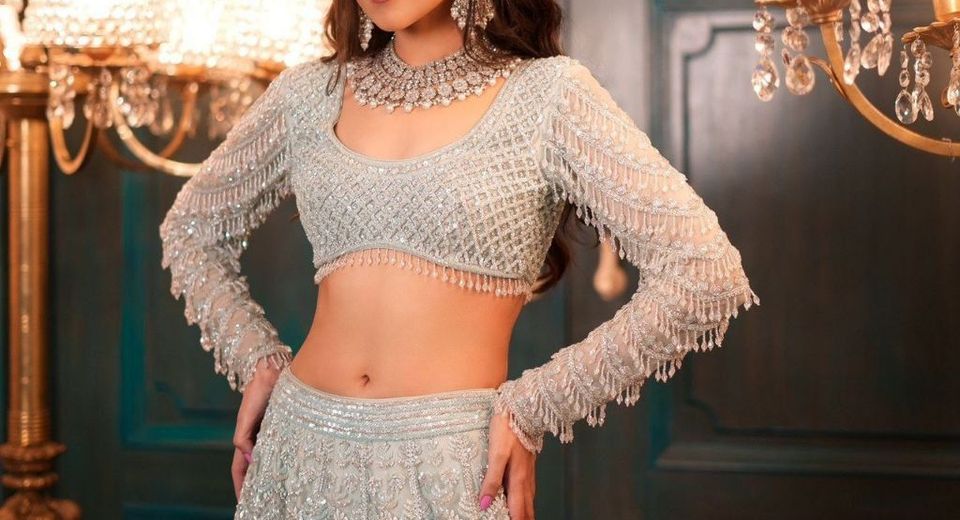
Styling Changes That Make Heavy Lehenga, Lighter Look Feel Lighter begin with controlling visual density rather than removing the embroidery you love. A heavily worked lehenga can feel easier to wear when the blouse, dupatta, jewellery, hairstyle and footwear are chosen to create breathing space. The same principle helps with bridal, designer, festive and readymade lehenga shopping, especially when an outfit will be worn for six or more hours.
Weight has two meanings in Indian occasion wear. Physical weight comes from layers of net, silk, lining, can-can, sequins, zari and dense threadwork. Visual weight comes from the concentration of colour, shine, motifs and accessories around the body. Styling can reduce visual heaviness immediately and can improve physical comfort through better fit, lighter layering and practical alterations.
Styling Changes That Make Heavy Lehenga, Lighter Look Feel Lighter by controlling visual density
A heavily embroidered lehenga looks lighter when one feature carries the attention and the remaining features provide visual rest. A dark skirt with dense sequins, a glittering blouse, a broad embellished dupatta and large jewellery can create a crowded silhouette even when each component is individually manageable.
Start by identifying the outfit's strongest line. A skirt with a wide embroidered border already has emphasis near the hem, so a heavily bordered dupatta may repeat the same weight. A blouse with all-over sequins draws attention to the torso, while a skirt with scattered motifs creates a calmer lower half. Choosing one dominant area and two quieter areas makes the complete look feel less crowded.
Fabric construction also changes movement. Butterfly net and organza can look expansive because they hold their shape, while georgette usually falls closer to the body. Silk can feel substantial but may drape smoothly when the lining isn't excessive. A garment with six layers of stiff lining or a large can-can may be more tiring than a garment with richer embroidery on a single flexible base.
How can you check practical weight before buying?
Ask about the lining, can-can and closure details before purchasing, because construction choices often affect comfort more than the embroidery count. For online shopping, request a back image, a fabric description, the approximate skirt flare and the measurements of the finished garment.
- Hold the skirt at the waistband and check whether the waistband pulls forward under the weight of the flare.
- Look for a soft inner lining that won't scratch the waist or thighs during extended wear.
- Check whether the blouse has a functional side or back opening and enough seam allowance for minor alterations.
- Confirm whether the dupatta has a dense border on all four sides, because a four-sided border adds stiffness and visual bulk.
Styling Changes That Make Heavy Lehenga, Lighter Look Feel Lighter through colour and fabric
Colour looks lighter when the outfit uses related tones, restrained contrast and a clear area of visual rest. Tonal dressing doesn't mean wearing one flat colour; it means allowing the blouse, skirt and dupatta to sit within a connected palette.
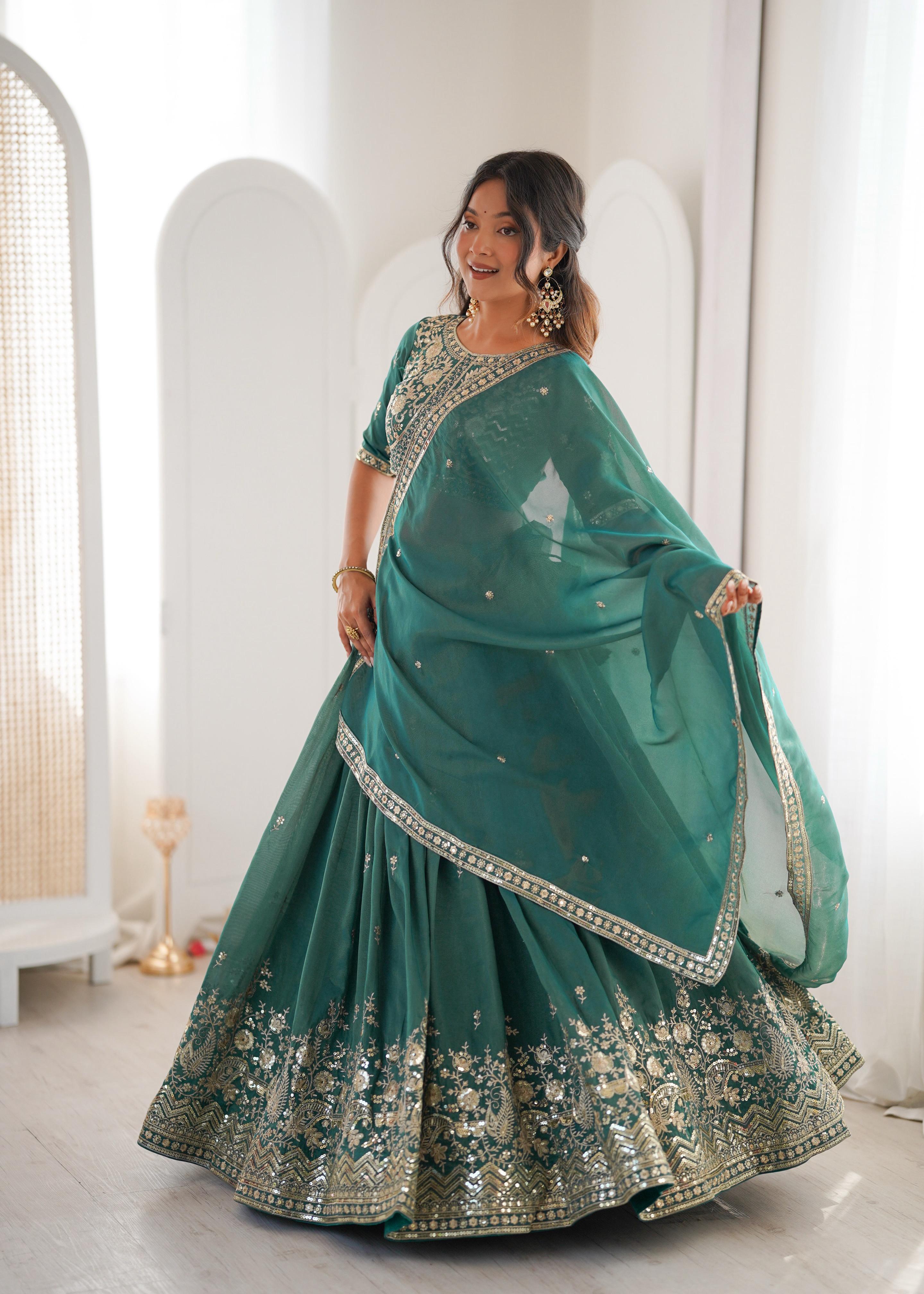
Pastels, muted jewel tones and soft neutrals can reduce visual intensity, but colour alone doesn't determine comfort. A pastel skirt covered in dense silver sequins may still appear more dramatic than a deep green georgette skirt with spaced floral embroidery. Surface pattern, reflective material and flare must be considered together.
Pastel Grey Embroidered Butterfly Net Lehenga Set shows how a pale base can create a quieter foundation for statement jewellery. Pastel Floral Georgette Lehenga Set with Ruffle Blouse offers another useful styling direction: georgette's softer fall and the blouse's ruffle detail can carry interest without adding a second heavily bordered layer.
Lime Floral Embroidered Butterfly Net Lehenga Set can be styled with neutral footwear and a plain or lightly edged dupatta so the lime shade remains the main point of attention instead of competing with multiple metallic surfaces. The same colour logic works when choosing Mehendi Lehengas or Green Lehengas: let the green family provide the focus, then keep the metallic accents consistent.
Shopping by occasion can make the colour decision easier. Yellow Lehengas can use ivory, champagne or muted gold accessories for a Haldi ceremony, while a bridal red or pink lehenga may need only one contrasting element. A palette with one bright shade, one base shade and one metal is usually easier to balance than four equally strong colours.
Which fabrics help a lehenga appear less cumbersome?
Georgette, lighter net and carefully lined organza often appear less cumbersome than multiple layers of stiff brocade or heavily structured fabric. The final effect still depends on embroidery density, skirt flare, lining and can-can, so a fabric label should never be the only buying criterion.
Use fabric contrast strategically. Pair a richly worked skirt with a blouse in matte crepe, silk with limited embellishment or a matching fabric without a second heavy border. Designer Threadwork Silk Lehenga Choli Set with Dupatta can retain its formal presence when the accessories are kept matte and the dupatta is draped in a narrow, controlled line instead of spread across both shoulders.
Styling Changes That Make Heavy Lehenga, Lighter Look Feel Lighter with the right blouse
A heavy lehenga usually feels lighter when the blouse has a clean neckline, controlled sleeve volume and less surface embellishment than the skirt. The blouse should frame the face and waist without creating another dense block of shine.
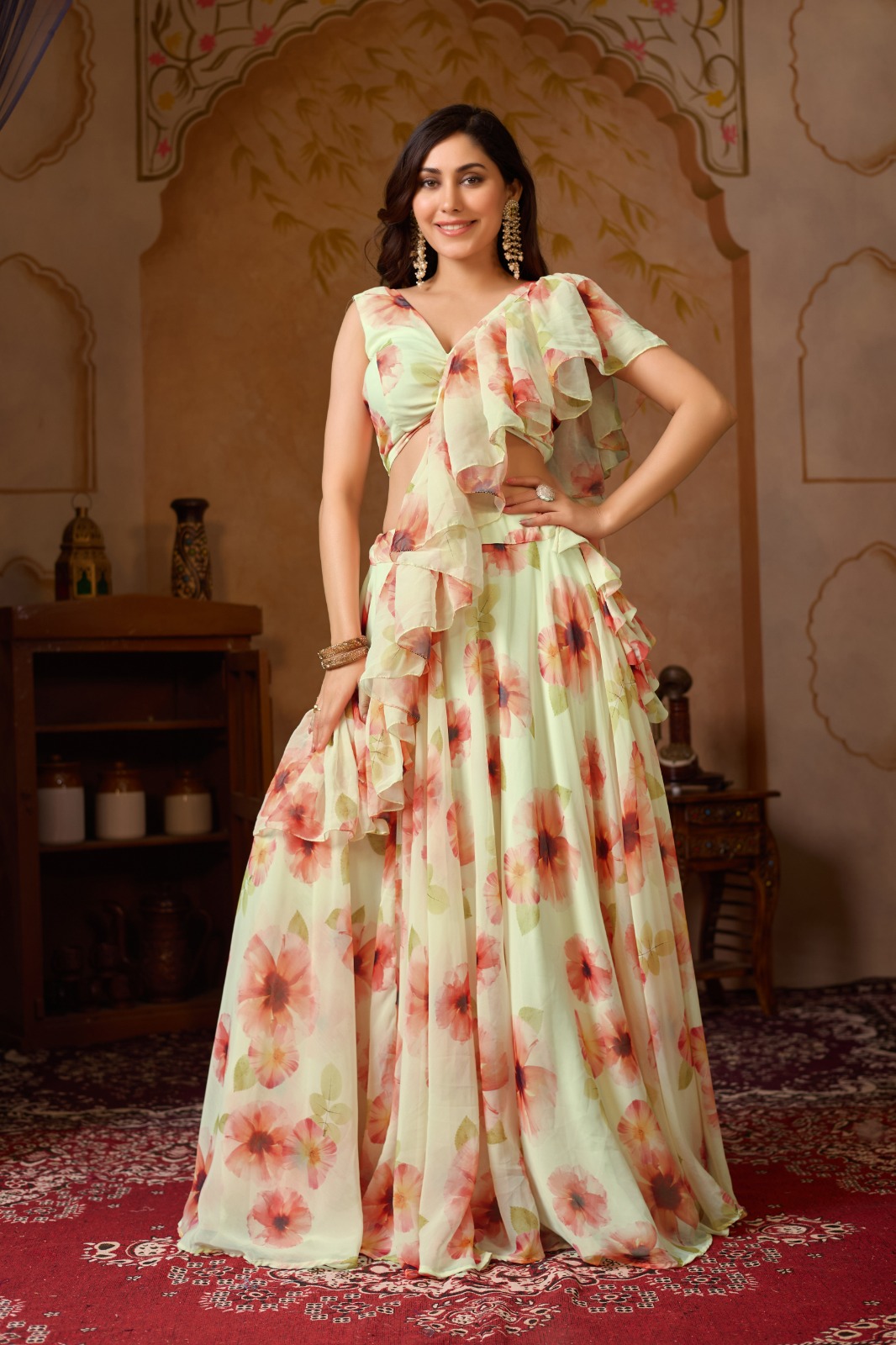
A sleeveless or short-sleeved blouse can visually open the shoulders, while elbow-length sleeves can provide balance when the skirt has a very wide flare. A high neck may look elegant but can make a heavily sequined outfit feel enclosed around the face. A square, sweetheart or modest V neckline creates negative space, provided the neckline suits the wearer and the event.
Blouse length affects proportion. A very short blouse can make the skirt appear larger, particularly when the waistband sits high. A slightly longer blouse that ends near the natural waist can create a smoother transition and reduce the apparent volume of a full skirt. The correct length should be decided with the actual lehenga worn at the intended waist position.
Fully stitched choli shopping is useful when convenience and predictable construction matter, but measurements still need checking. Compare bust, under-bust, shoulder, armhole and blouse length rather than choosing only by standard size. A readymade blouse that fits the bust but cuts into the armhole will make a light outfit feel uncomfortable within an hour.
Can a plain blouse work with an embellished skirt?
A plain or lightly detailed blouse works extremely well with an embellished skirt because the blouse gives the eye a resting point. Match one colour from the skirt embroidery, then use texture or a clean neckline instead of adding more sequins.
Pink Bridal Sequins Lehenga Set with Heavy Flare needs little additional shine on the blouse or jewellery. A sleek blouse cut and a restrained dupatta preserve the bridal impact while reducing visual competition. A very plain blouse is especially effective when the skirt has a heavy flare, because it prevents the upper body from appearing as wide as the lower silhouette.
Styling Changes That Make Heavy Lehenga, Lighter Look Feel Lighter through dupatta draping
A single-shoulder drape secured at the shoulder and waist usually makes a heavy lehenga easier to move in than multiple loose layers. A controlled drape reduces slipping, keeps the hands free and prevents the upper body from becoming overloaded.
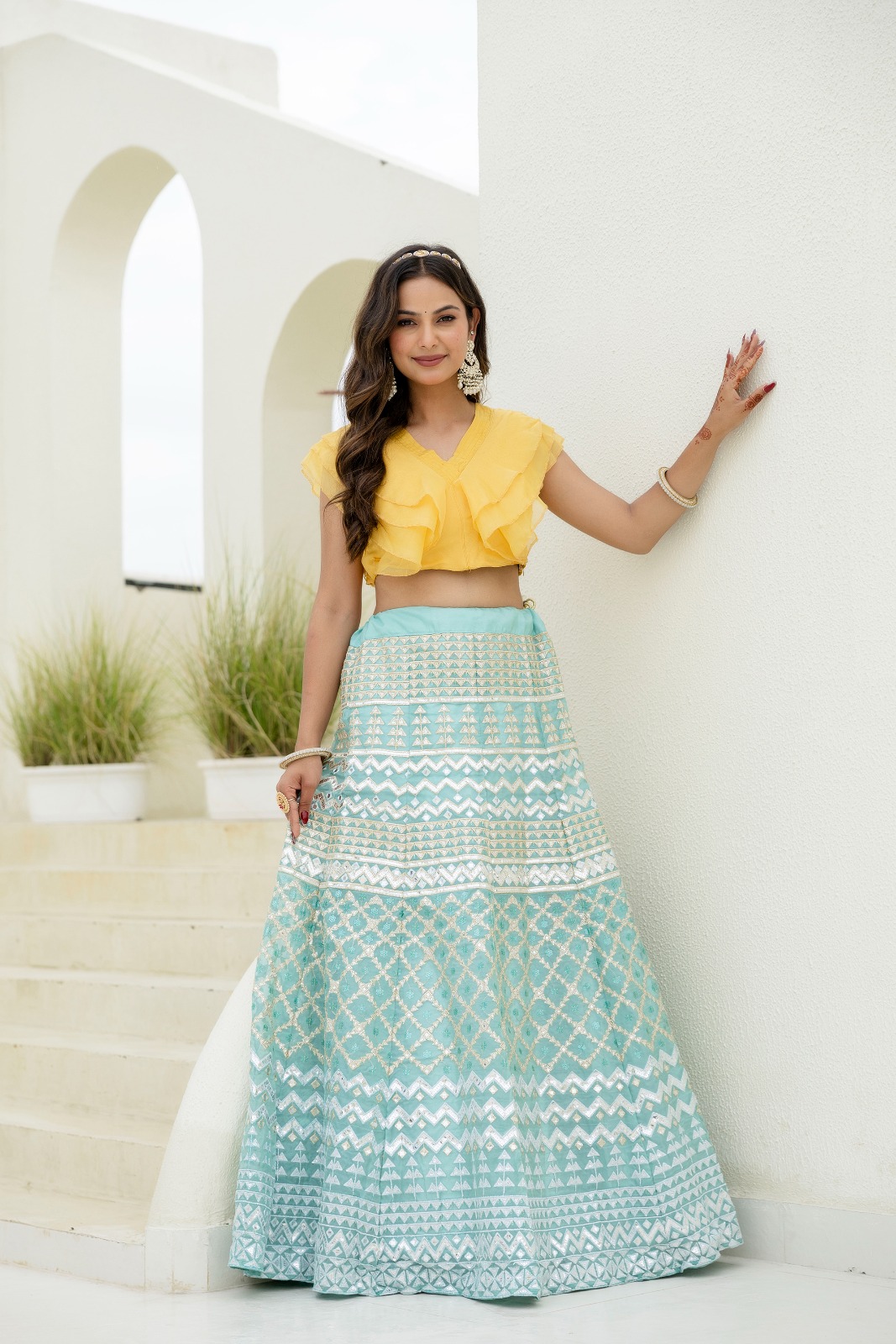
For a traditional silhouette, pin one end of the dupatta at the shoulder, bring the fabric across the chest and secure the opposite side near the waist. Keep the pleats narrow and let the length fall behind the arm. This arrangement displays the border without spreading the entire fabric across the front.
A front-open drape can work for photographs, but the fabric should be secured at two or three points if the wearer will walk, sit or dance. Use a concealed safety pin at the shoulder, a small pin near the waist and, where needed, a discreet loop or belt. Pins should be placed through the lining or reinforced edge rather than through delicate sequins.
Moonlight Charm Foil Sequin Organza Lehenga looks more balanced with one deliberate drape instead of a wide double wrap. Organza often holds a crisp shape, so keeping the border away from the face can create a softer frame. A plain section near the face is more comfortable visually than placing a glittering border directly beside the eyes.
Should the dupatta match the lehenga exactly?
The dupatta doesn't need to match the lehenga exactly, and a related but quieter dupatta can make a richly embroidered outfit feel lighter. Choose a shared colour, a small motif or a matching metallic detail while reducing border width or surface shine.
Cream Peacock Embroidered Net Lehenga Set for Women can work with a cream, soft gold or muted sage drape that maintains continuity without adding a new high-contrast colour. A contrasting dupatta is appropriate when it's the only contrast in the outfit; contrasting jewellery, footwear and blouse details added at the same time can make the look feel visually dense.
Ready Made Lehenga options are useful when the skirt, blouse and dupatta have already been coordinated, but the wearer can still change the final effect through the drape. Semi Stitched Lehengas Collection may offer more room for waist and blouse adjustments, which is valuable when comfort matters as much as appearance.
Styling Changes That Make Heavy Lehenga, Lighter Look Feel Lighter with accessories
Jewellery, hair and footwear reduce perceived heaviness when they leave one area of the face, neck or wrist visibly open. Accessories should complete the lehenga's strongest feature instead of competing with every embroidered surface.
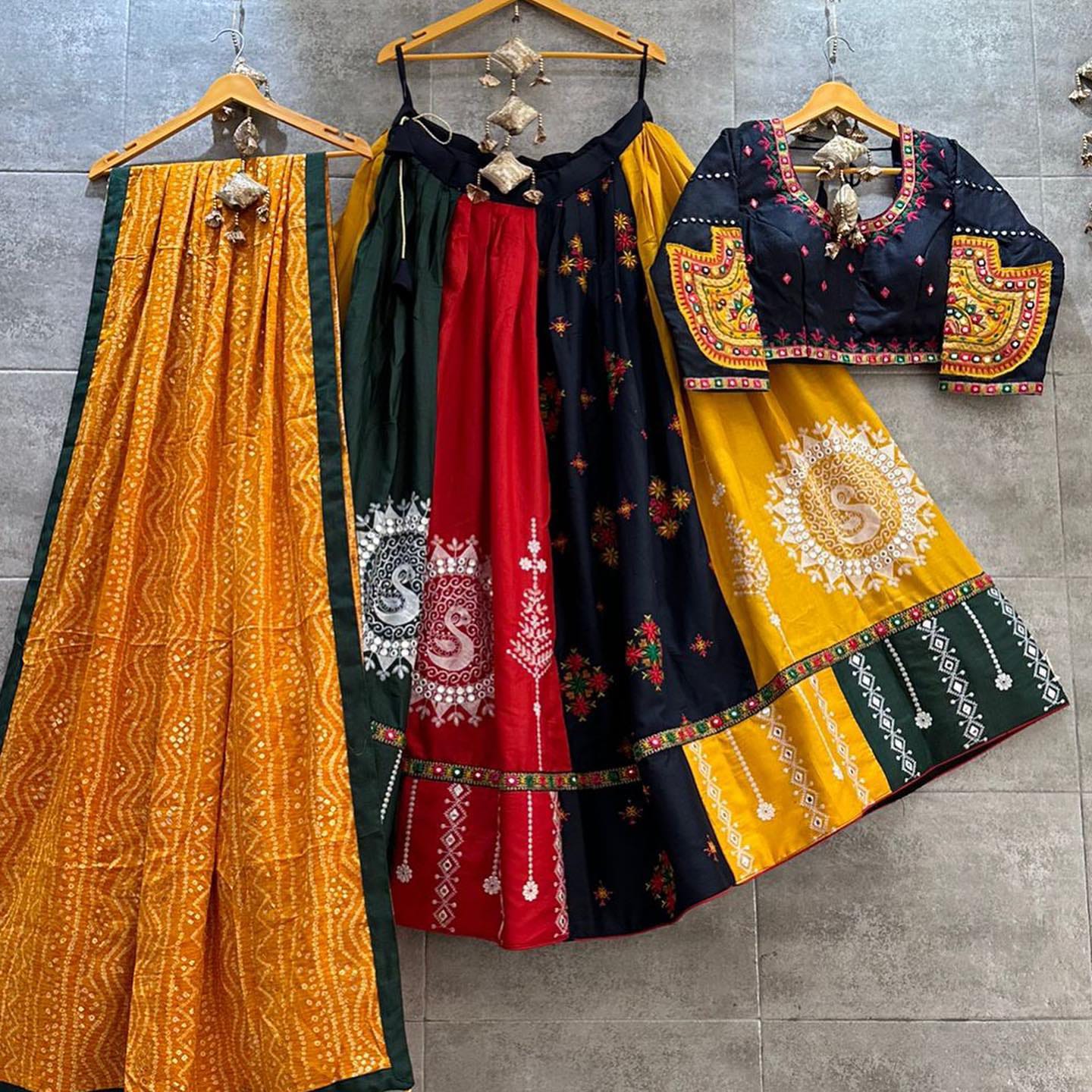
Choose one principal jewellery piece: a choker, long necklace, maang tikka, statement earrings or nath. A choker and long necklace can work for bridal dressing, but the combination needs a simpler blouse neckline and smaller earrings. For a heavily sequined skirt, polished metal without excessive stones can look more refined than layering several glittering pieces.
Hair pulled away from the face creates openness around the neckline and earrings. A low bun, sleek braid or half-up style can be more comfortable than a large, heavily decorated updo when the blouse and dupatta already have volume. Keep hair accessories in the same metal family as the jewellery rather than introducing another reflective colour.
Footwear should provide stable support for the actual venue. A three-to-five-centimetre block heel is often easier to manage on a wedding lawn than a narrow stiletto, while padded juttis or embellished flats suit a long ceremony where standing and walking are unavoidable. Match the footwear to the lehenga hem after wearing the intended undergarment and footwear together; a hem that's too long can cause more difficulty than a heavy skirt.
Blue Floral Georgette Lehenga Set with Heavy Flare illustrates why a generous skirt can benefit from simpler accessories. Let the blue floral surface provide the pattern, then use one metal tone, a compact clutch and footwear that doesn't add another competing print.
Styling Changes That Make Heavy Lehenga, Lighter Look Feel Lighter through fit and alterations
Correct fit makes a heavy lehenga feel lighter by stopping the waistband, blouse and hem from fighting the body's movement. A skirt that sits securely at the natural waist distributes its weight better than a loose skirt held up by repeated tightening.
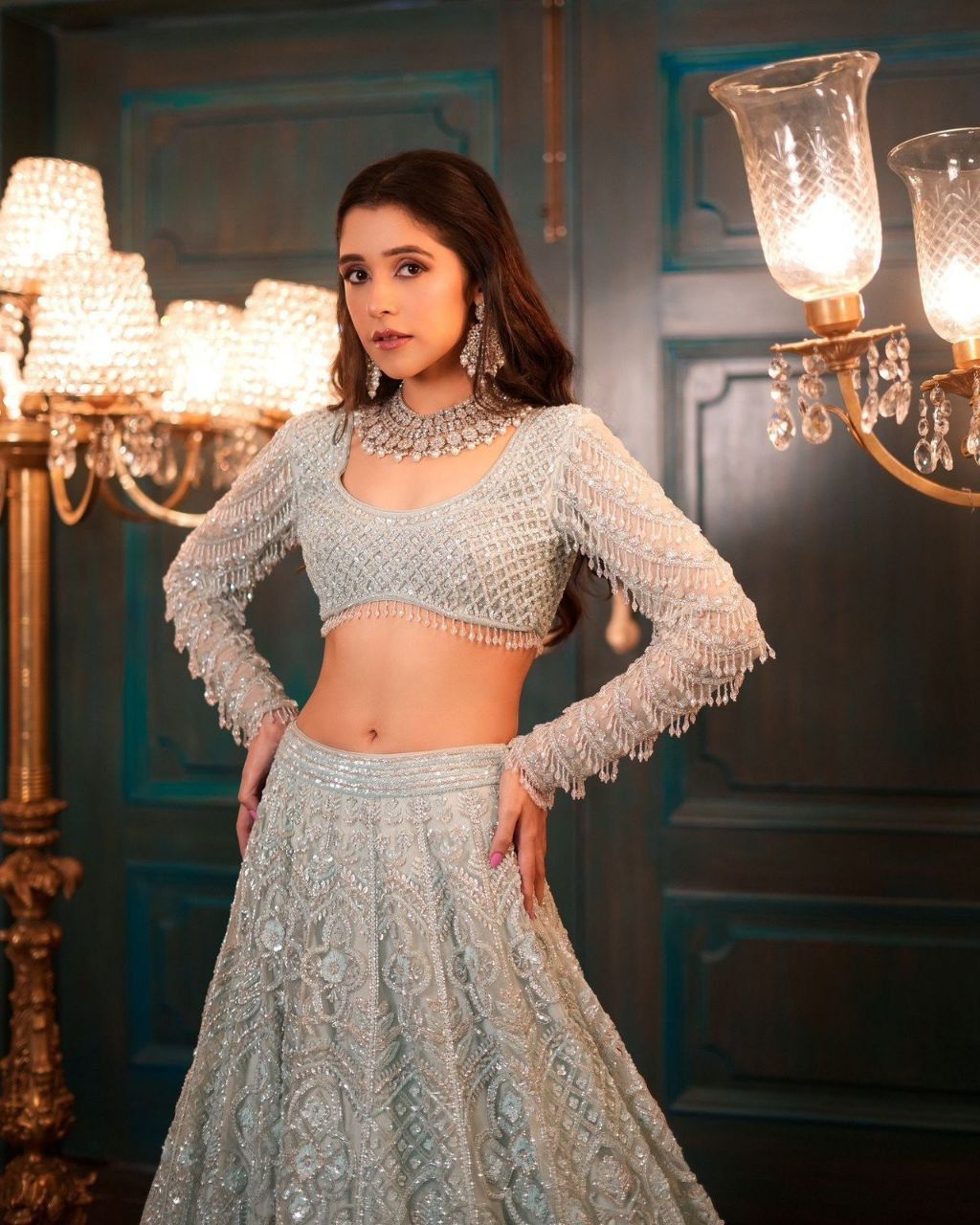
Check the waistband while sitting, walking and climbing one step. The waistband should not roll, dig into the stomach or slide below the intended position. The blouse should allow one full arm lift without pulling across the back. The skirt should clear the floor by roughly one to two centimetres when worn with the final footwear, depending on personal preference and venue.
Useful alterations include reducing excess can-can, shortening a dragging hem, adding a waist hook, replacing uncomfortable lining and adjusting blouse side seams. A tailor can also add a small loop to keep a dupatta in position or reinforce a weak waistband. Alterations should be completed at least seven to ten days before the event so that a fitting and one movement test remain possible.
For bridal lehengas, test the complete outfit for at least 20 minutes after alterations. Sit on a chair, walk at a normal pace, raise both arms, use the washroom and carry the planned bag. These ordinary actions reveal comfort problems that a brief mirror fitting can't show.
Heavy embroidery can remain the centrepiece of a wedding or festive outfit without making the wearer feel trapped inside it. Select one visual focus, balance dense surfaces with quiet ones, secure the dupatta, simplify competing accessories and confirm the fit through movement. Those small decisions preserve the richness of a designer or bridal lehenga while making a long celebration easier to enjoy.
Common Questions About Making a Heavy Lehenga Feel Lighter
How can I make a heavy lehenga look lighter without changing the outfit?
Use a quieter blouse or dupatta, reduce the number of jewellery pieces and choose one dominant feature. A controlled single-shoulder drape and neutral footwear can make the complete outfit look less crowded without altering the lehenga itself.
Which dupatta drape is most comfortable for a heavy lehenga?
A single-shoulder drape secured at the shoulder and waist is usually the most comfortable for walking and sitting. Two or three discreet pins can prevent slipping, while narrow pleats reduce bulk across the chest.
Can a plain blouse be worn with a heavily embroidered lehenga?
Yes, a plain or lightly detailed blouse creates visual rest and lets the skirt remain the focal point. Match the blouse to the skirt's base colour or one embroidery shade for a coordinated finish.
Are readymade lehengas comfortable for long wedding functions?
Readymade lehengas can be comfortable when the waistband, blouse armhole, lining and hem are correctly sized. Check the finished measurements and allow time for alterations before the event, especially when the skirt has a heavy flare or can-can.
How do I choose jewellery for a heavy bridal lehenga?
Choose one principal jewellery feature and keep the remaining pieces smaller. A statement choker, long necklace, maang tikka or earrings can lead the look, while using all four at maximum scale may make a heavily embellished lehenga appear crowded.
What footwear works best with a heavy lehenga?
Stable three-to-five-centimetre block heels, padded juttis or embellished flats are practical choices for long celebrations. Test the footwear with the final lehenga hem before the event so the skirt does not drag or catch underfoot.


