

Storing Ethnic Wear in a Small Wardrobe Without Crushing Embellishments requires more than folding garments into the nearest empty shelf. Embroidery, zari, sequins, beads and raised threadwork can snag, flatten or transfer colour when clothes are packed too tightly. A compact wardrobe can still protect festive clothing if each garment receives the right fold, breathable barrier and amount of support.
The most reliable system uses three principles: clean garments before storage, keep hard embellishments from pressing against fabric, and avoid filling every available centimetre. A 60 to 70 percent full shelf is easier to organise and causes less compression than a completely packed compartment. The same method works for embroidered kurta sets, silk co-ords, dupattas, shararas and lightweight lehengas.
Why Embellished Ethnic Wear Gets Damaged in a Crowded Wardrobe
Embellished ethnic wear is damaged mainly by pressure, abrasion, trapped moisture and unsuitable hanging. The problem usually develops gradually rather than during one dramatic storage mistake.
When a beaded neckline is pressed under a stack of garments, the beads push into the fabric beneath it. Zari borders can develop permanent bends when folded along the same line for months. Sequins may scratch silk or snag Chanderi. Metallic thread can tarnish when humidity, perfume residue or perspiration remains in the fibres.
Overcrowding also makes garments rub against rough shelf edges, exposed zippers and hook fasteners. A dupatta with a dense border may catch on a neighbouring kurta every time clothing is removed. Repeated friction can loosen embroidery even when the garment is never worn.
Hangers create a different set of risks. Heavy silk garments can develop shoulder points, while narrow hangers place stress on sleeve seams. A damp wardrobe encourages mildew, especially when synthetic garment covers prevent air circulation. Plastic covers are useful for short-term transport but are poor long-term storage unless they have ventilation.
Prepare Every Garment Before Storing It
Clean, completely dry and aired garments should enter a wardrobe, because invisible sweat, oil and food particles attract insects and create stains over time.
After wearing an embroidered kurta set, hang the pieces in a shaded, well-ventilated room for 6 to 12 hours. Direct sunlight can fade dyed silk, printed dupattas and deep colours such as black, maroon and navy. Do not return a garment to a closed cupboard immediately after a Haldi ceremony, wedding meal or long commute.
Check care labels before deciding whether to wash, dry-clean or spot-clean. Banarasi silk, Kanjeevaram silk and heavily embellished garments often need professional cleaning rather than home washing. Chanderi and cotton may tolerate gentler care, but embroidered surfaces still require a test on an inconspicuous area before any stain treatment.
Remove detachable brooches, waist belts and metal accessories before folding. A metal clasp can leave pressure marks or rust stains when it remains against damp fabric. Empty pockets, close hooks and fasten zippers so that exposed hardware can't catch embroidery.
Never store a garment while it's even slightly damp. If a monsoon garment feels cool or heavy after airing, leave it outside the wardrobe for longer. Moisture absorbers can help in humid rooms, but they should sit beside clothing rather than touch silk, zari or dyed fabric.
Storing Ethnic Wear in a Small Wardrobe Without Crushing Embellishments
Storing Ethnic Wear in a Small Wardrobe Without Crushing Embellishments works best when garments are folded according to the location and weight of their decoration.
Fold embroidery inward
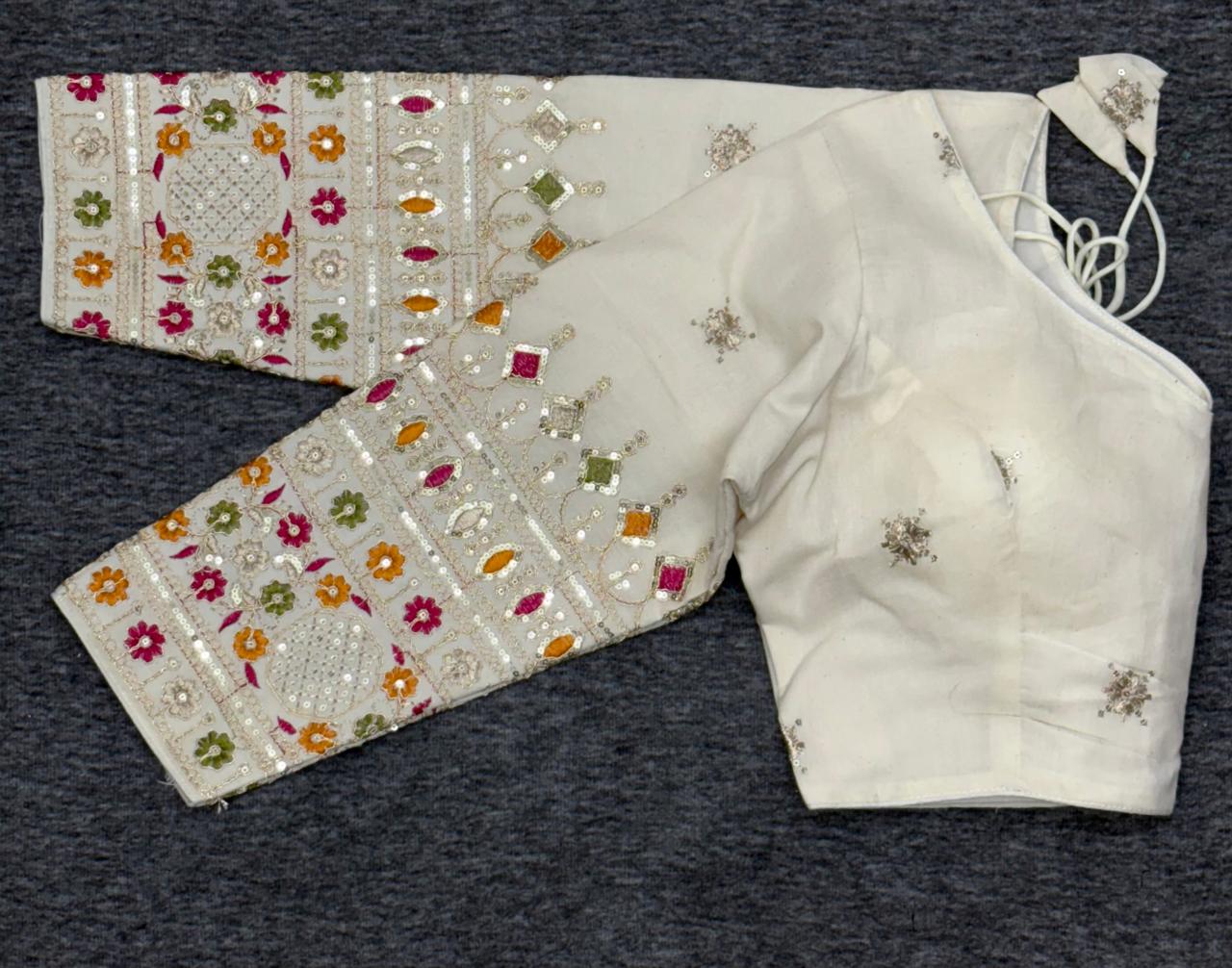
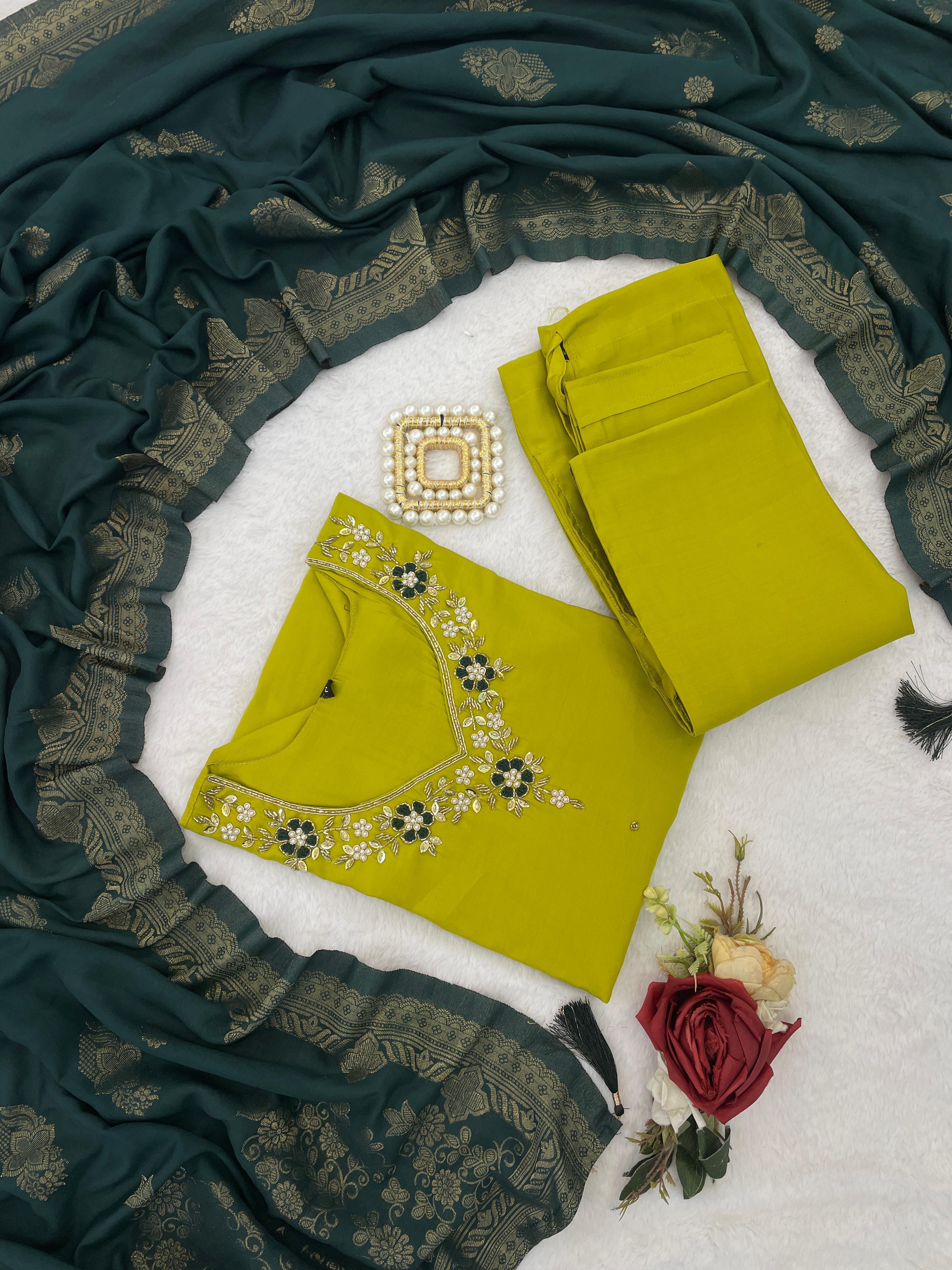
Fold embellished surfaces inward and place a layer of acid-free tissue or clean, unprinted cotton between raised sections. The barrier prevents sequins, beads and zari from rubbing against another garment. For a heavily decorated front panel, place tissue over the embroidery before folding the garment with the decorated side facing inward.
don't fold directly across a three-dimensional flower, pearl cluster or thick gota border. Shift the fold by a few centimetres so that the crease falls beside the raised work. Change the fold direction every two or three months if the garment will remain stored for a full season.
Use the right fold for each garment
A kurta should be folded with sleeves aligned inward, followed by a loose fold through the waist rather than a sharp fold across the embellished chest. A palazzo or trouser can be folded lengthwise once and then across the knees. A sharara should be folded at its widest flare with tissue separating layers, because tight compression can flatten pleats and gathered panels.
A dupatta should be folded lengthwise first, keeping the border straight, and then folded into a broad rectangle. Avoid making a very small square from a long dupatta because repeated tight folds can set deep creases into zari and printed silk. Place the dupatta above the heavier garment pieces, not below them.
For a lehenga skirt, support the waistband and fold the skirt in broad sections. A full circular skirt should not be forced into a narrow stack. If shelf space is limited, use a wide padded hanger with the waistband supported by both sides, but avoid hanging very heavy bridal pieces for months without checking the seams.
Choose Shelf Zones Instead of Packing by Outfit Alone
The safest small wardrobe arrangement separates heavy, delicate and frequently used garments into different shelf zones.
Place heavier silk sets and densely embroidered pieces on the lowest stable shelf, provided the shelf is dry and clean. Lower shelves reduce the chance of a tall stack tipping and allow heavier garments to support themselves without crushing lighter fabrics. Keep frequently worn cotton and rayon sets at waist height for easy access.
Reserve the top shelf for lightweight dupattas, plain blouses and occasional accessories rather than heavy embellished sets. Heat can collect near the top of some wardrobes, especially when the cupboard is against an exterior wall. Store zari and silk away from an uninsulated wall if that wall becomes hot during the day.
Use shallow stacks of three to five folded garments instead of one tall pile. A shallow stack lets you remove the bottom item without dragging every garment across the shelf. A thin cotton shelf liner can protect fabric from rough wood, but the liner must be clean, dry and free from loose fibres.
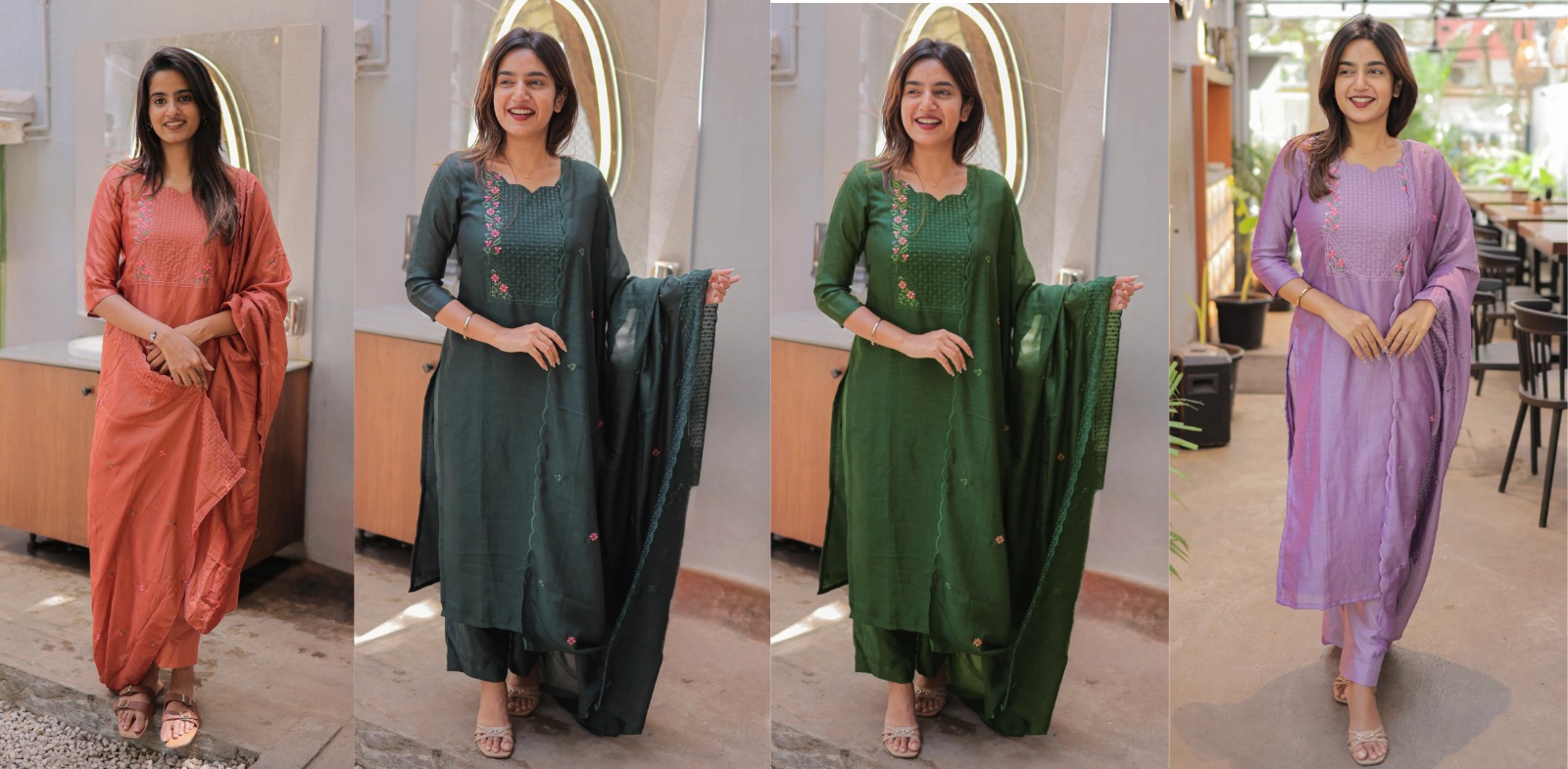
Outfit grouping is useful only after fabric safety has been considered. A complete set such as the Cream Silk Embroidered Kurti Pant with Printed Dupatta can be stored together in one breathable cotton bag, but the dupatta should not be tightly wrapped around the embellished kurti. Keep matching pieces together with a paper inventory note rather than a bulky plastic tag.
When to Hang and When to Fold Indian Garments
Fold most embroidered ethnic wear, while hanging only garments whose fabric, seams and embellishment can safely bear vertical weight.
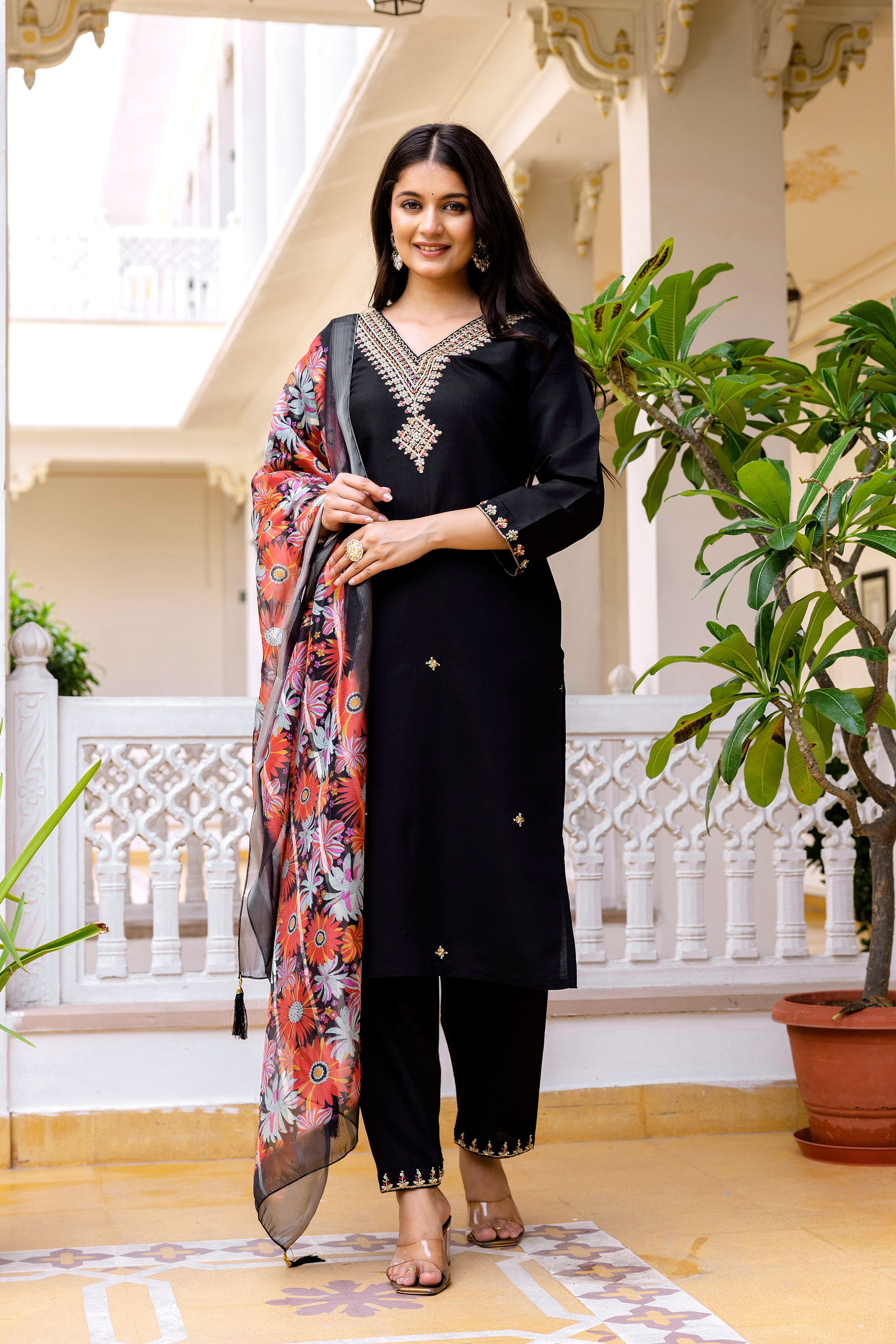
Fold Chanderi, lightweight silk, georgette dupattas and garments with dense beadwork. Folding distributes pressure across a broad surface and prevents shoulder distortion. A folded Black Embroidered Chanderi Kurti Pant Dupatta Set should have tissue between the embroidered kurti front and the next garment, especially when the set will remain untouched through summer.
Hang relatively light, structured kurtas when the hanger is broad and padded. Use a hanger with a smooth, rounded shoulder rather than a thin wire hanger. Keep at least 2 centimetres between hanging garments so sleeves and borders don't rub together.
don't hang a heavy lehenga, fully lined silk skirt or densely embellished kurta from a narrow loop for long periods. Hanging loops are often designed for temporary display, not permanent weight-bearing. The loop can stretch, and the garment can develop a ridge where the hanger presses into the fabric.
Fold a garment if the decision is uncertain. A correctly folded garment may show temporary creases that can be eased with airing, whereas a stretched shoulder seam or flattened beadwork can be difficult to restore.
How to Store Dupattas, Borders and Accessories in Limited Space
Dupattas stay in better condition when they're folded broadly, separated by fabric type and kept above heavy garments.
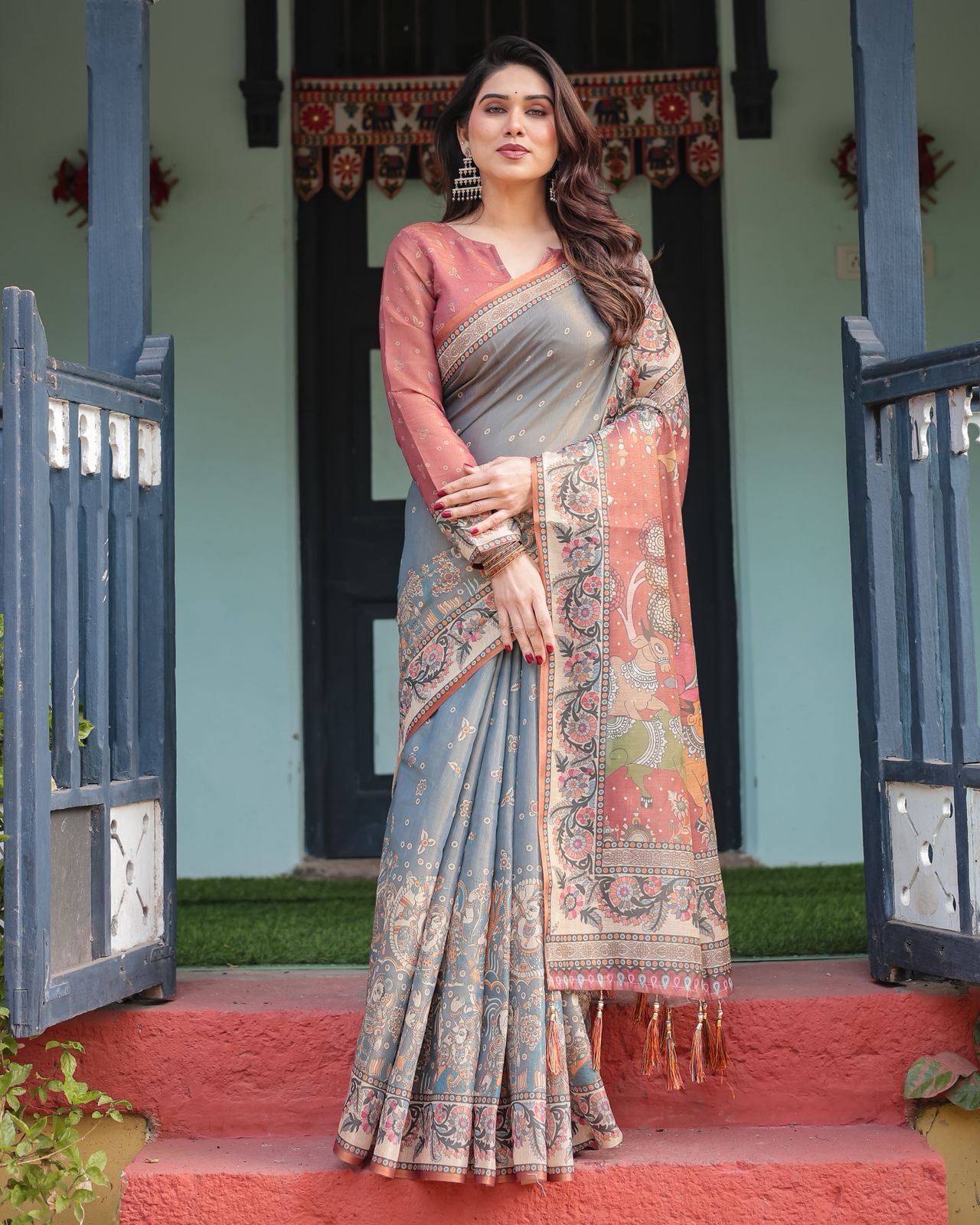
Keep zari borders from touching abrasive embroidery by placing tissue along the border before folding. A printed dupatta should not be stored damp or pressed against an undyed cotton garment, because colour transfer can occur in humid conditions. Test colourfastness with a white cotton swab only if the care label permits testing.
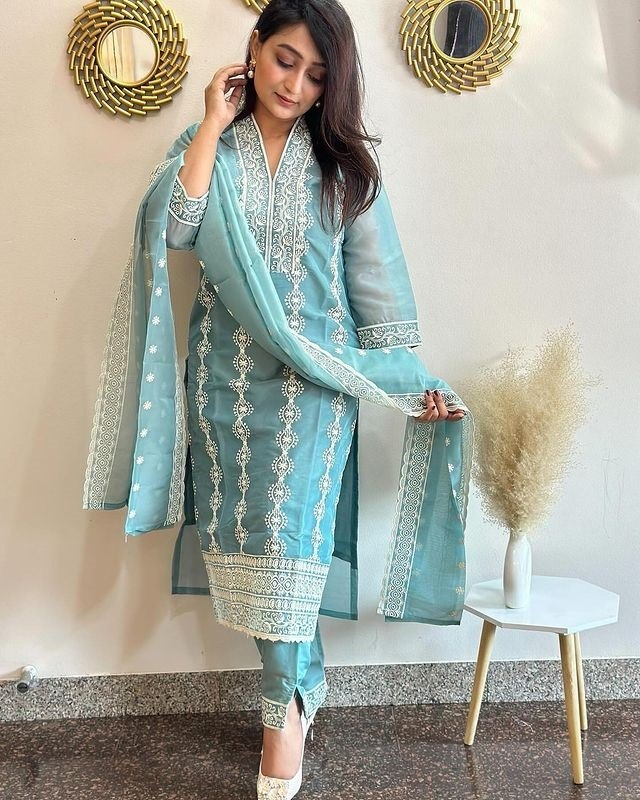
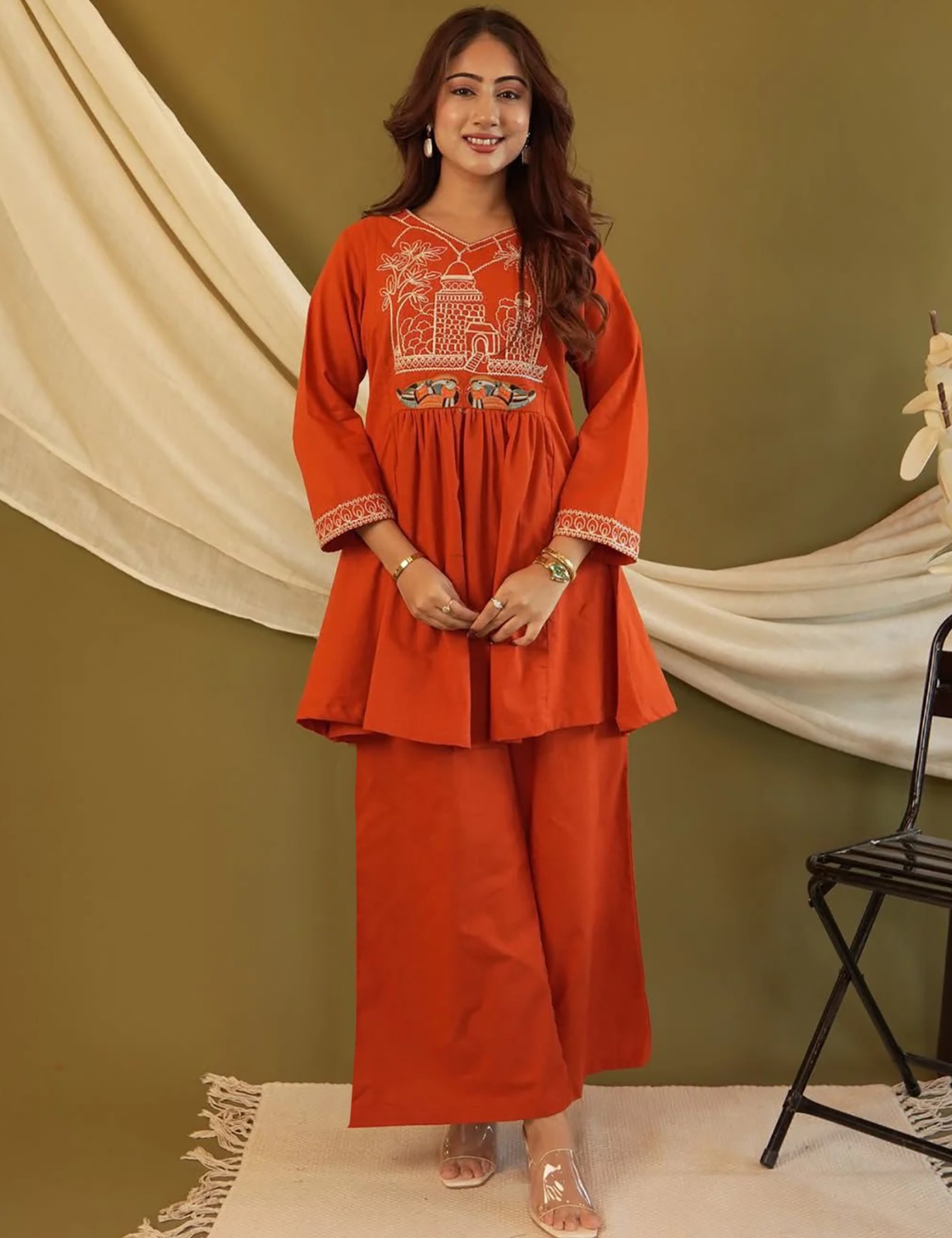
A set such as the Multicolor Embroidered Crepe Maxi Suit Set for Festive Wear benefits from separate layers for the crepe garment and its decorative components. Crepe can snag against rough beadwork, so a smooth tissue barrier is more useful than adding another thick fabric layer that increases pressure.
Use small breathable cotton pouches for belts, tassels and detachable sleeves. Do not place jewellery, safety pins or hair accessories inside the same pouch as clothing. Sharp objects can puncture fabric, while tarnishing metal may mark pale silk and cream cotton.
Label storage bags on the outside with the garment name, fabric and last-worn date. Labels reduce rummaging, which is one of the main causes of snagging in a small wardrobe. A simple list can also show which garments need airing during the next seasonal wardrobe rotation.
Breathable Covers, Humidity and Insect Protection
Breathable cotton or muslin covers are safer for long-term ethnic-wear storage than sealed plastic bags.
Choose a cover large enough for the folded garment without compressing its edges. Wash or replace cotton covers periodically because dust trapped in the cover can migrate to the garment. Transparent non-woven covers can work when they're clean and ventilated, but avoid tightly sealed covers for silk, zari and embellished Chanderi.
Maintain a dry, stable cupboard rather than relying only on fragrance sachets. Silica-gel packets can reduce local moisture when replaced according to their instructions, while calcium-chloride moisture tubs should remain upright and away from clothing because leaks can damage fabric. Do not place strongly scented mothballs directly beside silk, as their vapour can linger and their smell can transfer.
Inspect the wardrobe every 6 to 8 weeks during monsoon weather. Look for musty odour, small holes, powdery residue, loose sequins and pale spots. Remove affected clothing from the wardrobe, isolate it from clean pieces and seek appropriate cleaning advice instead of brushing insects or mould inside the cupboard.
Neem leaves may be used only when fully dry and contained in a breathable sachet, but neem doesn't replace cleaning or inspection. Fragrance alone doesn't prevent textile pests. Clean storage, low humidity and regular movement provide more dependable protection.
A Practical Rotation for a Compact Ethnic-Wear Wardrobe
A three-month rotation keeps compact wardrobes usable without leaving fragile garments compressed indefinitely.
At the start of each season, remove every stored piece and inspect seams, hems and embellishments in daylight. Air garments for several hours in shade, refold along a slightly different line and return the most frequently worn pieces to the easiest-to-reach shelf.
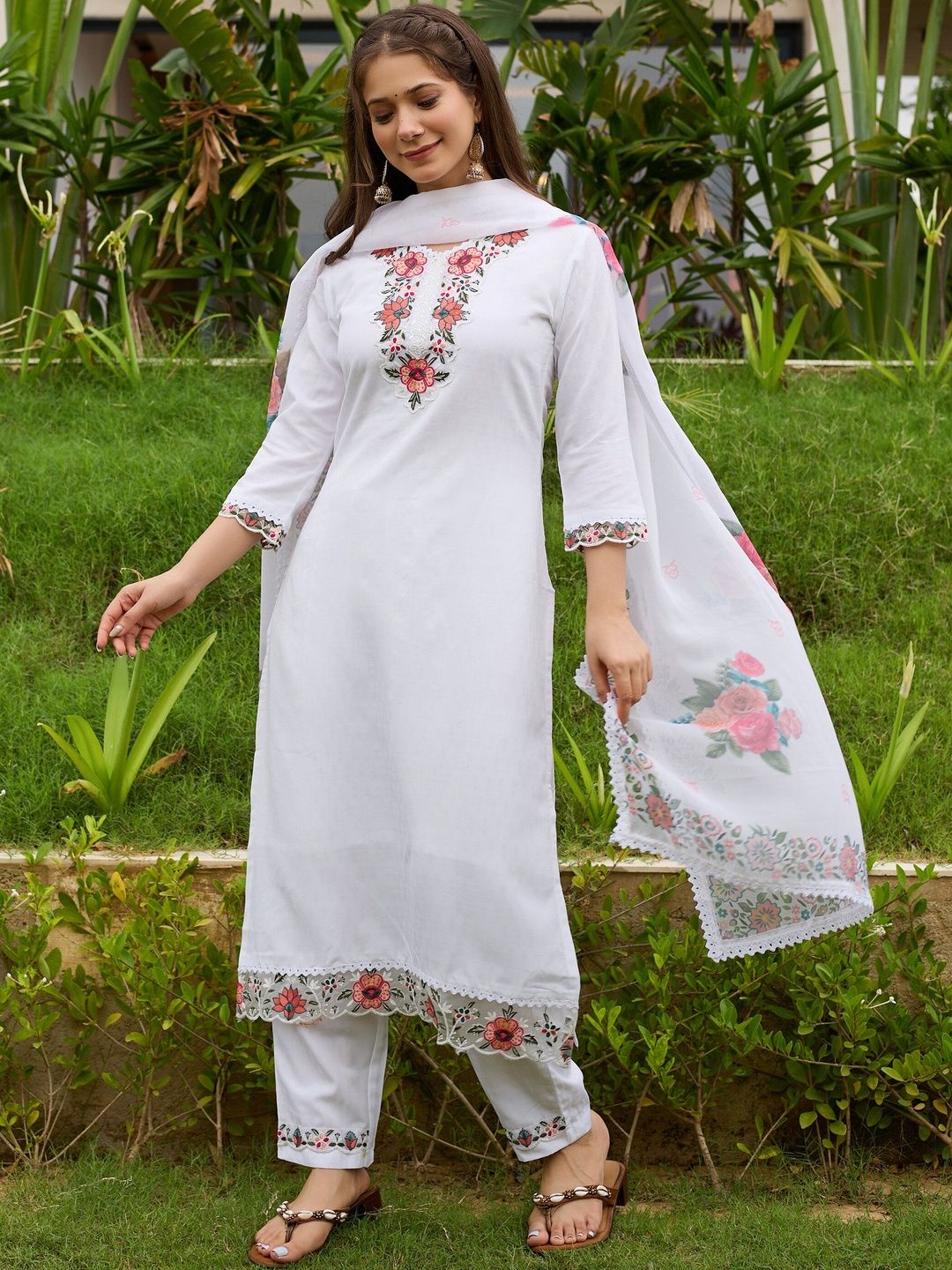
Place special-occasion pieces in a separate low-access zone, but inspect them before a wedding rather than on the morning of the event. A Cream Embroidered Silk Kurta Pant Ethnic Co-ord Set, Festive Wear Cream Embroidered Kurta Set or Cream Embroidered Silk Kurta Pant Set for Women should be checked at least 48 hours before wearing so creases, missing hooks or loose threads can be addressed calmly.
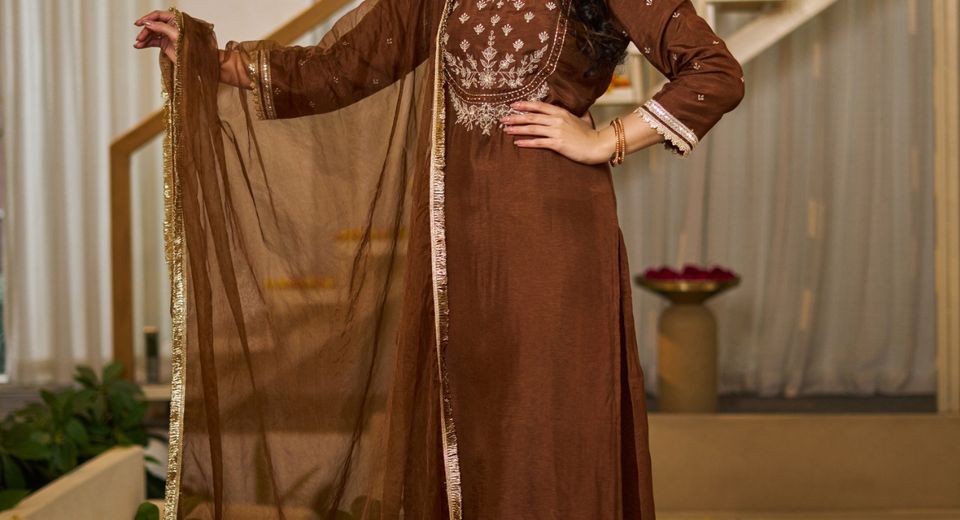
Keep cotton and washable everyday sets in a separate stack from silk and zari. A Brown Embroidered Cotton Kurta Pant Dupatta Set Women can tolerate different care and airing conditions from a silk garment, so combining both fabrics in one compressed pile makes organisation and cleaning decisions harder.
Leave one empty section on every shelf if possible. Empty space creates a handhold for removing garments and reduces the need to pull at decorated edges. A final example, the Cream Embroidered Chanderi Kurti Pant Dupatta Set, should sit in a shallow stack with the dupatta protected from the kurti's embroidery rather than squeezed into a narrow outfit bundle.
Quick Rules for Safer Small-Wardrobe Storage
- Air worn garments for 6 to 12 hours before returning them to a cupboard.
- Store only fully dry, clean clothing.
- Place tissue or smooth cotton between raised embroidery and neighbouring fabric.
- Keep stacks to three to five folded garments whenever possible.
- Fold dense beadwork and heavy silk instead of leaving them on narrow hangers.
- Use padded, broad hangers for lightweight structured kurtas.
- Keep dupattas above heavier garments and fold their borders broadly.
- Use breathable covers rather than tightly sealed plastic for long-term storage.
- Inspect stored ethnic wear every 6 to 8 weeks during humid weather.
- Refold garments every two or three months when they're stored for a long season.
A small wardrobe doesn't require sacrificing embroidery, zari or fabric quality. Correct folding, shallow stacking, breathable protection and regular inspection reduce the pressure and friction that cause most storage damage. Once every garment has a defined shelf zone, ethnic wear becomes easier to find and safer to preserve between celebrations.
Practical Questions About Protecting Embellished Ethnic Wear in Small Wardrobes
Should embroidered kurtas be folded or hung?
Most embroidered kurtas should be folded, particularly when they contain heavy beads, sequins or dense zari. A lightweight structured kurta may be hung on a broad padded hanger if the seams can support the weight without developing shoulder points.
How do I store zari and sequins without damaging the fabric?
Place acid-free tissue or smooth, clean cotton between embellished surfaces and fold the decoration inward. Avoid sharp folds across raised motifs, and keep zari or sequins away from rough shelf edges, exposed zippers and abrasive embroidery.
Can ethnic wear be stored in plastic covers?
Plastic covers are suitable for short-term transport but are not ideal for long-term storage because they can trap humidity. Use breathable cotton or muslin covers for silk, Chanderi, zari and embellished garments, especially during monsoon weather.
How should I store a dupatta in a small wardrobe?
Fold the dupatta lengthwise first, keep the border straight and then make a broad rectangle rather than a tight square. Store the dupatta above heavier garments with tissue along a dense zari or embroidered border.
How often should stored ethnic wear be aired?
Inspect and air stored ethnic wear every 6 to 8 weeks during humid weather. Garments that have just been worn should be aired for 6 to 12 hours before storage, always in shade rather than direct sunlight.
How can I prevent a crowded wardrobe from crushing embellishments?
Keep shelves no more than 60 to 70 percent full, use shallow stacks of three to five garments and separate raised embroidery with tissue. Leaving a small empty section makes garments easier to remove without dragging or compressing decorated surfaces.


